Home Blog Page 4943

ABS-CBN set to offer GMA Network programs on int’l streaming unit iWantTFC

PINHO-UNSPLASH

ABS-CBN International, Inc. and GMA Network, Inc. have tied up to offer the latter’s programs on iWantTFC starting May 1, the companies said in a press release on Wednesday.

“GMA Network remains true to our vision of enriching the lives of Filipinos with superior entertainment and the responsible, unbiased, and timely delivery of accurate news and information,” said Ronaldo P. Mastrili, senior vice-president for finance and information and communications technology of GMA Network.

“This collaboration with ABS-CBN is another validation of this commitment as we make our world-class content available to a wider audience. At the end of the day, the Filipino viewers – our boss — will greatly benefit from this,” he added.

Among the GMA programs that will be offered in ABS-CBN’s iWantTFC are GMA Pinoy TV, GMA Life TV, GMA News TV, and other on-demand programs including Maria Clara at Ibarra, Abot Kamay na Pangarap, Apoy sa Langit, First Yaya, and the World Between Us.

Through collaboration, the GMA programs will be available for iWantTFC viewers in Asia Pacific, Europe, the Middle East, North Africa, and the South Pacific or Caribbean Islands.

“Our iWantTFC platform is committed to providing the widest spectrum of Filipino content appreciated and enjoyed by our countrymen worldwide,” ABS-CBN International Managing Director Jun Del Rosario said.

“We are delighted to add a slate of live-streaming channels and popular shows from GMA to our ever-growing news and entertainment offerings,” he added.

ABS-CBN International is a wholly owned subsidiary of ABS-CBN Corp. based in California. It is the first distributor of Filipino content in the US.

iWantTFC is a Filipino streaming platform distributed by ABS-CBN International and its affiliates in their respective countries and territories. It is currently available in 247 countries and territories.

On Wednesday, shares in GMA Network climbed two centavos or by 0.19% to P10.44 each, while ABS-CBN Corp. lost 37 centavos or 5.28% to P6.64 apiece. — Justine Irish D. Tabile

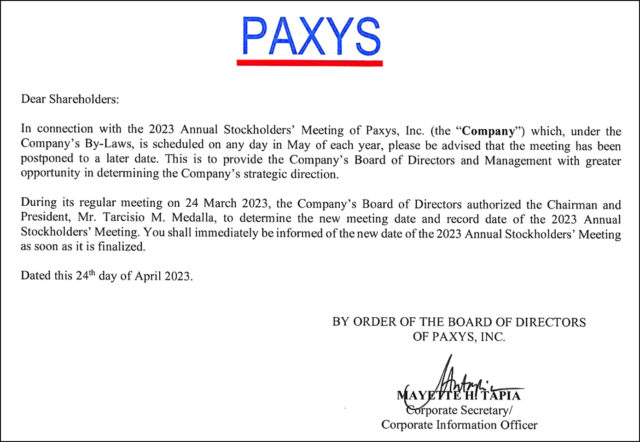
Paxys, Inc. postpones 2023 annual stockholders’ meeting


Spotlight is BusinessWorld’s sponsored section that allows advertisers to amplify their brand and connect with BusinessWorld’s audience by enabling them to publish their stories directly on the BusinessWorld Web site. For more information, send an email to online@bworldonline.com.

Join us on Viber at https://bit.ly/3hv6bLA to get more updates and subscribe to BusinessWorld’s titles and get exclusive content through www.bworld-x.com.

Yuan now China’s most used cross-border currency

CHINA passed another milestone in its bid to reduce reliance on the dollar, as yuan usage in its cross-border transactions jumped ahead of the greenback’s for the first time in March.

The local currency’s share of China’s cross-border payments and receipts rose to a record high 48% at the month end from nearly zero in 2010, according to research by Bloomberg Intelligence (BI) citing data from the State Administration of Foreign Exchange. The dollar’s share declined to 47% from 83% over the same period, the figures showed.

The ratio is calculated based on the volume on all types of transactions, which includes securities trading through the links between mainland China and Hong Kong’s capital markets. It doesn’t represent transactions used by the rest of the world — the yuan’s share in global payments was little changed at 2.3% in March, according to SWIFT.

“The rise in yuan usage could be a natural consequence of China opening up its capital account, with rising inflows for China bonds and outflows for Hong Kong stocks,” Stephen Chiu, chief Asia foreign-exchange and rates strategist at BI, wrote in a note.

The rising share allows local firms to reduce the risks of currency mismatch in transactions, a spokeswoman at the State Administration of Foreign Exchange said at a Friday briefing. China will further expand yuan settlement in cross-border transactions, the State Council said in a guideline aimed at boosting foreign trade issued Tuesday.

“Yuan internationalization is speeding up as other countries seek an alternative payment currency to diversify risks and as the credibility of the Federal Reserve is not as good as before,” said Chris Leung, an economist at DBS Bank. “But at the same time we are still talking about a long way from dollar dominance, and the yuan’s share in global payment might be forever small.” — Bloomberg

L Word TV show cast visit White House to mark Lesbian Visibility Week

WHITE House Press Secretary Karine Jean-Pierre hosts cast members from Showtime’s The L Word, Jennifer Beals, Kate Moennig, Leisha Hailey and co-creator of the series Ilene Chaiken to draw attention to Lesbian Visibility Week during a press briefing at the White House in Washington, US, April 25. —REUTERS/LEAH MILLIS

WASHINGTON — The cast of American TV show The L Word: Generation Q visited the White House Tuesday to mark Lesbian Visibility Week, touting the role the long-running show has played for gay women and girls across the country.

Karin Jean-Pierre, the first openly gay White House press secretary, welcomed the cast, saying it was “incredibly important” for young people to see characters in books and on television whose life stories and identities inspire them “to reach their highest potential.”

Shows like The L Word that tell LGBTQ stories help “save precious lives,” she said, adding the show made her feel less alone as she grew up.

The fictional Showtime drama that first debuted in 2004 inspired a reality TV spinoff and then a sequel 15 years later.

“This work is more important than ever as the LGBTQI+ community continues to face relentless attacks from some Republicans across the country,” Ms. Jean-Pierre said. “From books bans to ‘don’t say gay’ laws, MAGA extremists want to roll back the visibility and progress we fought so hard to achieve.”

Conservative American lawmakers have led a wave of nationwide actions in recent months that include banning discussion of gender identity and sexual orientation in schools and clamping down on drag shows, restrictions that they argue are necessary to protect children.

Ilene Chaiken, who created The L Word in 2004, said she was delighted the show had lived on and was now speaking to a new generation.

“They may try to erase our stories from classrooms and libraries, but we’re here. We’re here today at the White House, and we won’t be erased,” she said.

Ms. Jean-Pierre has previously used the White House podium to support LGBTQ rights, calling on states earlier this month to stop what she described as “legislative bullying.” — Reuters

Review: realme C55

REALME.COM

THE realme C55 is the newest device in the smartphone brand’s C-Series line, which was released in the Philippines last week.

The phone features a 6.72-inch display, which realme said is the largest in its C-Series lineup. Its screen is also the first to have a 90Hz refresh rate among C-Series smartphones.

The new phone comes with a 64-megapixel (MP) main camera and a 2-MP depth lens, as well as an 8-MP selfie camera.

It is powered by a Mediatek Helio G88 chipset and has a 5,000mAh battery.

It comes in three colors: Sunshower, Rainy Night, and Rainforest and has two variants: a 6GB memory + 128GB storage model and an 8GB+256GB version.

PROS:

1. The realme C55’s price point has to be its number one pro. This is a great phone at the cost of budget to mid-range devices in the market. The review unit furnished by realme to BusinessWorld is the C55’s top-of-the-line version that has 256GB of internal storage and 8GB RAM and costs just P10,999. Meanwhile, the 6GB+128GB model is priced at only P8,999. The phone’s storage is also expandable via microSD to up to 1 terabyte. Not bad at all.

2. The C55 has almost complete inclusions. Besides the usual charging cable, it also comes with a 33W SUPERVOOC fast charging adapter, a silicone phone case, and even a preinstalled screen protector. Most new smartphones no longer come with adapters (for sustainability reasons), with companies assuming that customers already have these accessories and will simply reuse them for their upgraded gadgets. But for first-time smartphone owners or those unwilling to make extra purchases, not being able to use their gadgets out of the box could be cumbersome. As for its fast charger, it takes a little more than an hour to get the battery from zero to 100%. Its 5,000 mAh battery is enough to power about half a day of light to moderate use.

3. Display quality is excellent. The phone’s 6.72-inch IPS LCD screen with Full HD+ resolution features a 90Hz refresh rate and a peak brightness of 680 nits at 180Hz touch sampling rate. The screen is big, bright, and colors are rendered nicely. The display is also very responsive, making usage smooth. The phone runs on realme UI 4.0 based on Android 13 and its settings are easily customizable.

4. Cameras are great. In particular, its 64-MP main camera captures details well, especially in good lighting conditions. Colors are a bit saturated, though, which is likely because of realme’s image processing. As expected, shutter speeds of both the main and the 8-MP selfie lens do lag a bit in the dark, but it isn’t really a deal-breaker.

5. The squared off design makes it comfortable to grip. The realme C55 has a boxy design with flat edges, which I personally prefer. Despite being a relatively big phone, it’s easy to hold, even with one hand. The mostly matte surface of its back panel also minimizes the accumulation of fingerprint marks. The phone is also light for a device its size but doesn’t have that plastic feel.

CONS:

1. Speaker quality is so-so. The C55 has a speaker grill at just one side of its bottom frame, placed beside its USB-C charging port and the 3.5mm audio jack. When using the phone horizontally while watching videos or playing games, it feels a bit weird to hear the sound coming from just one side. Audio quality is just okay. But again, at this price range, it’s acceptable. At least audiophiles will have the option to use their own earphones as the device comes with an audio jack.

2. The Mini Capsule has limited features for now. The Mini Capsule is the realme C55’s unique selling proposition, as the device is the first globally mass-produced Android smartphone to have this capability. Right now, information displayed on the Mini Capsule is limited to battery-related notifications, data usage, and step tracking, but the brand has said it plans to expand its features.

3. The phone is not for heavy, graphics-intensive gaming. While it can run most games, the playing experience is not that smooth for bigger titles. For me, the C55 is best suited for casual games.

Overall, the realme C55 is a really good phone at its price point. The device carries some flagship-level features while costing just P8,999 or P10,999 —  not even a fourth of the price of flagship phones from big brands in the market today. It has a great camera, an impressive display and a decent processor, making for a very capable “daily driver” smartphone. — Bettina V. Roc


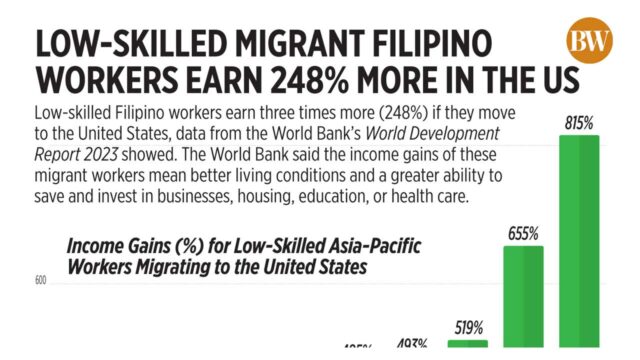
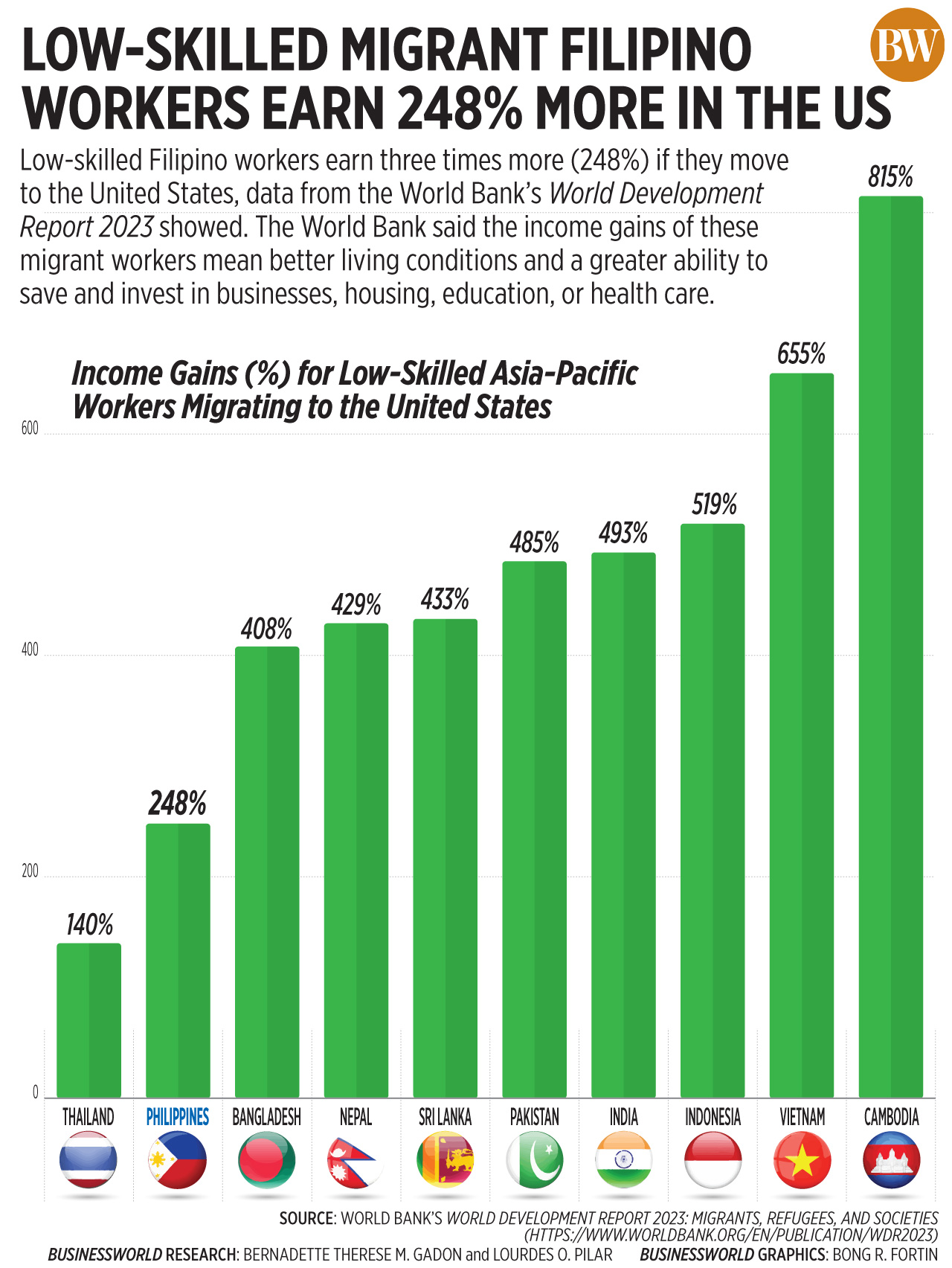
Low-skilled migrant Filipino workers earn 248% more in the US

MIGRATION must be viewed through the lens of capital and knowledge transfers to properly harness it for poverty reduction, the World Bank said. Read the full story.

Low-skilled migrant Filipino workers earn 248% more in the US

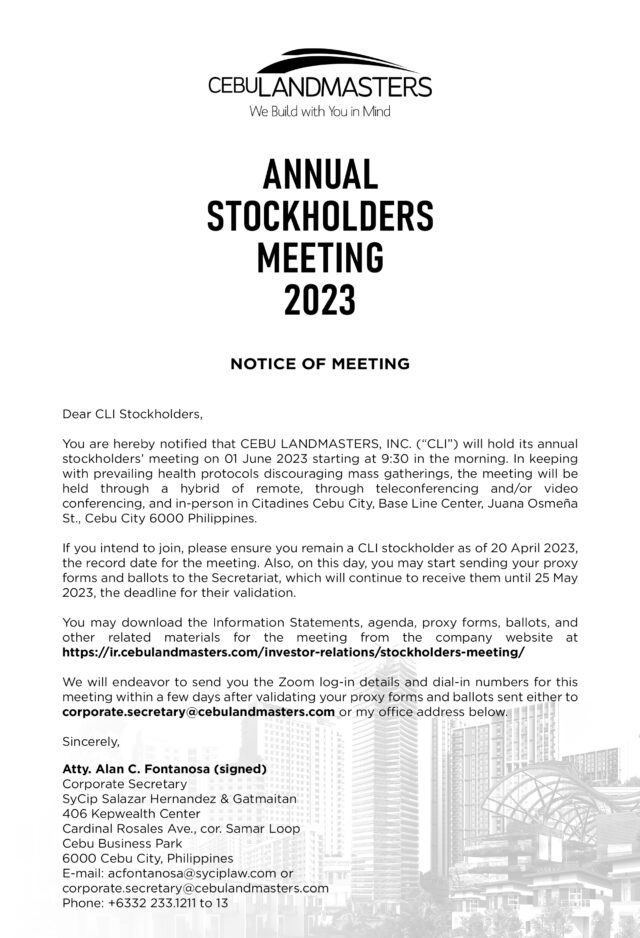
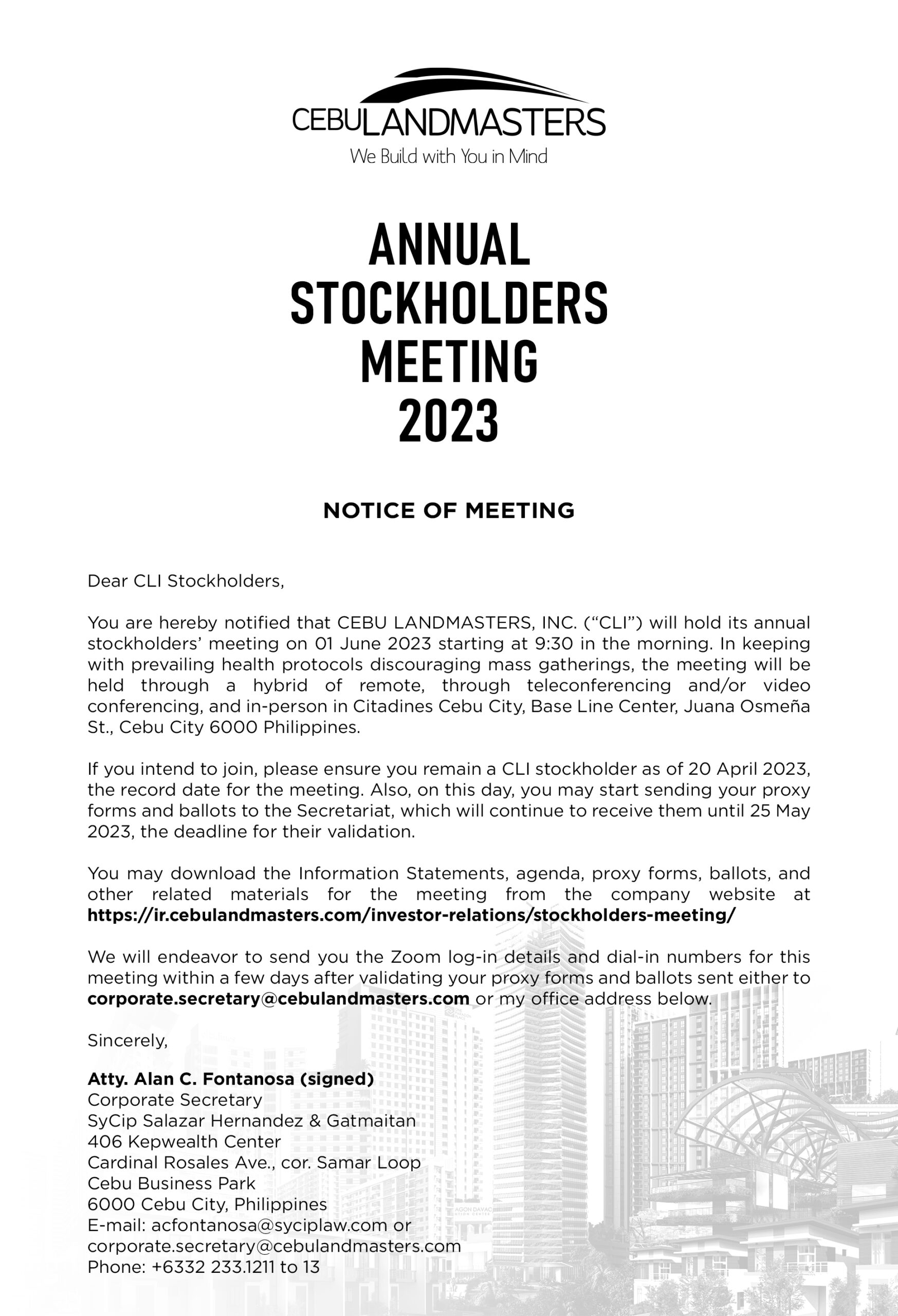
Cebu Landmasters, Inc. to hold annual stockholders’ meeting on June 1


Spotlight is BusinessWorld’s sponsored section that allows advertisers to amplify their brand and connect with BusinessWorld’s audience by enabling them to publish their stories directly on the BusinessWorld Web site. For more information, send an email to online@bworldonline.com.

Join us on Viber at https://bit.ly/3hv6bLA to get more updates and subscribe to BusinessWorld’s titles and get exclusive content through www.bworld-x.com.

Radisson Hotel Group plans Philippine expansion

RADISSON Hotel Group (RHG) is targeting to expand its presence in the Philippines after it signed an agreement with SM Hotels and Conventions Corp. (SMHCC) to put up 14 new hotels in the next five years.

“We are certain that this new milestone between SMHCC and RHG will complement the vibrant tourism landscape locally and set a new benchmark in the hospitality industry. SMHCC looks forward to benefiting from RHG’s vast global resources,” Peggy E. Angeles, executive vice-president of SMHCC, said during a media briefing.

On Wednesday, representatives from Radisson Hotel Group and SMHCC sealed a master development plan to expand hotels under the Park Inn by Radisson brand to 20 hotels by 2028. Currently, there are six operating Park Inn by Radisson hotels in the Philippines.

In a statement, Radisson Hotel Group said the first of these new properties will be a 516-room dual-branded property in Cebu, which is scheduled to open in 2027.

“We are delighted to embark on the latest phase of our expansion, which will offer outstanding opportunities for our diverse portfolio of brands in the Philippines while creating shareholder value to our trusted partners,” said Ramzy Fenianos, chief development officer for Asia Pacific at Radisson Hotel Group.

Aside from Cebu, Ms. Angeles also identified Isabela, Olongapo, Laoag, Fairview, Dasmariñas in Cavite, and Sta. Rosa in Laguna as target sites for Park Inn hotels. She said there is a need to provide “good quality” hotels outside Metro Manila.  

She said the sites were chosen to complement development in these areas. “We develop where there is a [presence of] SM [mall] already, to complement the city,” she said.

Ms. Angeles estimated that one hotel would cost between P700 million to P800 million.

SMHCC develops and manages the hotel and convention properties of SM Prime Holdings, Inc., while Park Inn by Radisson is the hotel group’s midscale to upper-midscale brand. — Ashley Erika O. Jose

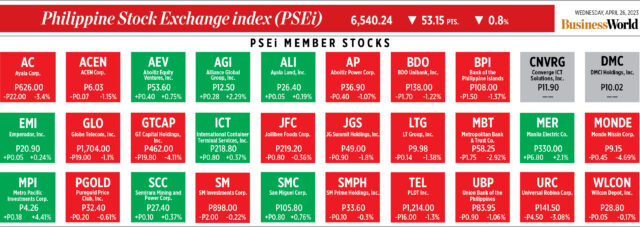
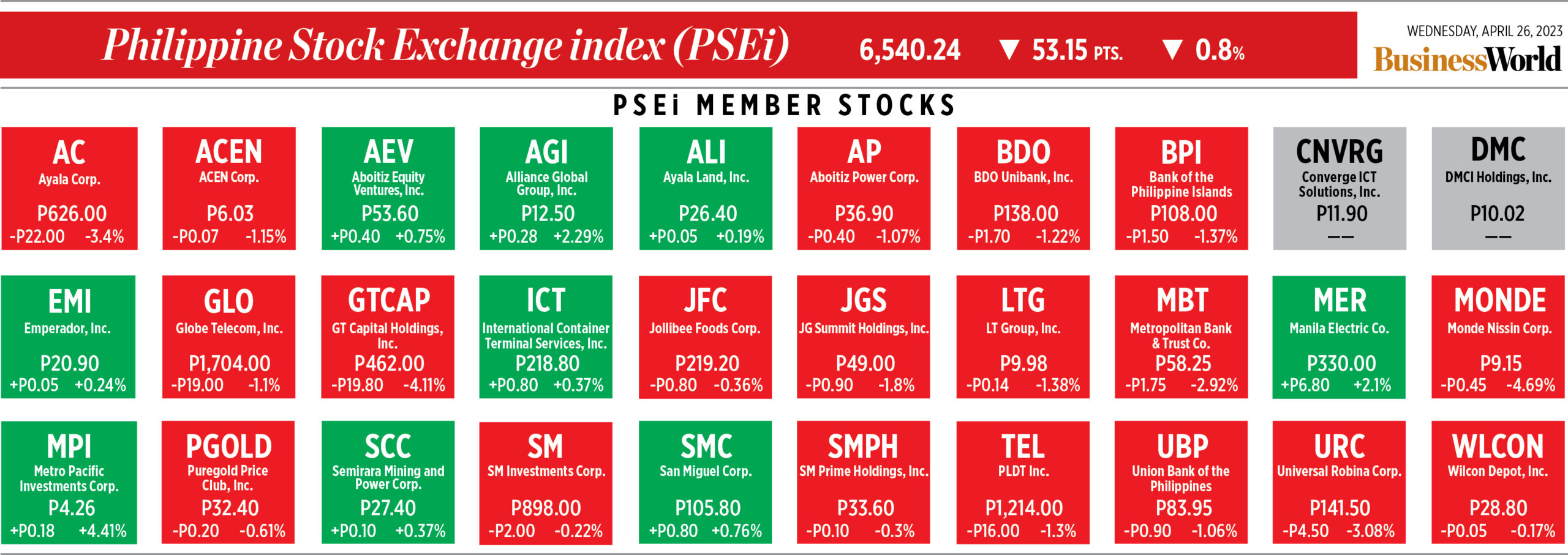
How PSEi member stocks performed — April 26, 2023

Here’s a quick glance at how PSEi stocks fared on Wednesday, April 26, 2023.


Peso weakens on safe-haven dollar demand

BW FILE PHOTO

THE PESO went down against the dollar on Wednesday on safe-haven demand for the greenback due to concerns over the US financial sector and economy.

The local currency closed at P55.62 versus the dollar on Wednesday, declining by eight centavos from Tuesday’s finish of P55.54, data from the Bankers Association of the Philippines’ website showed.

The local unit opened Wednesday’s session at P55.57 per dollar. Its worst showing was at P55.71, while its intraday best was at P55.54 versus the greenback.

Dollars traded went down to $1.23 billion on Wednesday from the $1.27 billion recorded on Tuesday.

The peso appreciated “after the recent slight upward correction in the gauge of the US currencies versus major global currencies,” Rizal Commercial Banking Corp. Chief Economist Michael L. Ricafort said in a Viber message.

The dollar strengthened “after mostly softer-than-expected US economic data lately… [and as] First Republic Bank stock price declined by 49% after disappointing earnings, rekindling fears over the health of the US banking sector,” Mr. Ricafort said.

The dollar was generally stronger overnight, a trader said likewise in a Viber message.

The US dollar and the yen were steady on Wednesday, holding onto overnight gains as concerns over the US banking sector and economy hit sentiment, while the Australian dollar slid after easing inflation suggested less pressure to raise interest rates, Reuters reported.

The dollar index, which measures the currency against six major rivals, nudged 0.01% higher to 101.80 after a 0.5% increase overnight. The index is down 0.76% for the month.

Shares of First Republic Bank slid nearly 50% on Tuesday after it reported a more than $100-billion plunge in deposits in the quarter, battered by lost confidence in the banking sector.

It faces dwindling and tough options to turn around its business with the creation of a “bad bank” or asset sales possibilities, a source familiar with the matter told Reuters.

Also weighing on sentiment was fresh economic data. US consumer confidence dropped to a nine-month low in April, data overnight showed, heightening the risk that the economy could fall into recession this year.

The US Richmond Fed manufacturing index slid as well, down to -10 in April, the fourth straight month of contraction.

For Thursday, the trader sees the peso trading between P55.25 and P56 against the dollar, while Mr. Ricafort expects it to move from P55.50 to P55.70. — AMCS with Reuters

PSEi slides amid renewed banking, virus concerns

PHILIPPINE SHARES declined on Wednesday amid renewed US banking sector and coronavirus disease 2019 (COVID-19) worries.

The benchmark Philippine Stock Exchange index (PSEi) fell by 53.15 points or 0.8% to close at 6,540.24 on Wednesday, while the broader all shares index went down by 14.53 points or 0.41% to 3,492.26.

“The local bourse lost 53.15 points (0.8%) to 6,540.24 following the negative spillovers from the US markets overnight as the banking fears resurfaced,” Philstocks Financial, Inc. Research Analyst Claire T. Alviar said in a Viber message.

“Philippine shares edged lower following First Republic Bank’s statement that its deposits dropped 40% year on year to $104.5 billion in the first quarter, which reignited concerns about the banking sector,” Regina Capital Development Corp. Head of Sales Luis A. Limlingan said in a Viber message.

Shares of First Republic Bank slid nearly 50% on Tuesday after it reported a more than $100 billion plunge in deposits in the quarter, battered by lost confidence in the banking sector, Reuters reported.

Wall Street’s major averages suffered their deepest declines so far this month as a downbeat UPS forecast exacerbated investor concerns about a slowing US economy on Tuesday while plunging deposits at regional First Republic Bank added to jitters about the bank sector’s health.

The Dow Jones Industrial Average fell 344.57 points or 1.02% to 33,530.83; the S&P 500 lost 65.41 points or 1.58% to end at 4,071.63; and the Nasdaq Composite dropped 238.05 points or 1.98% to 11,799.16.

“Meanwhile, local investors braced for a potential window dressing this Friday. Another factor that caused investors to stay on the sidelines was the detection of the first case of Omicron sub-variant XBB1.16 or Arcturus,” Mr. Limlingan added.

The Philippines detected its first case of the new COVID-19 Omicron subvariant, a patient in Western Visayas, the Department of Health said on Tuesday.

The majority of sectoral indices closed lower on Wednesday, except for mining and oil, which increased by 139.06 points or 1.3% to 10,833.33, and services, which climbed by 2.09 points or 0.13% to 1,604.51.

Meanwhile, financials went down by 27.11 points or 1.41% to 1,885.42; industrials dropped by 83.90 points or 0.89% to 9,308.24; holding firms fell by 43.79 points or 0.68% to 6,315.73; and property declined by 3.61 points or 0.13% to 2,705.30.

Value turnover inched up to P5.45 billion on Wednesday with 766.97-million shares changing hands from the P5.23 billion with 741.13-million issues traded on Tuesday.

Decliners beat advancers, 101 versus 95, while 47 names closed unchanged.

Net foreign selling dropped to P192.87 million on Wednesday from P224.66 million on Tuesday. — A.H. Halili with Reuters

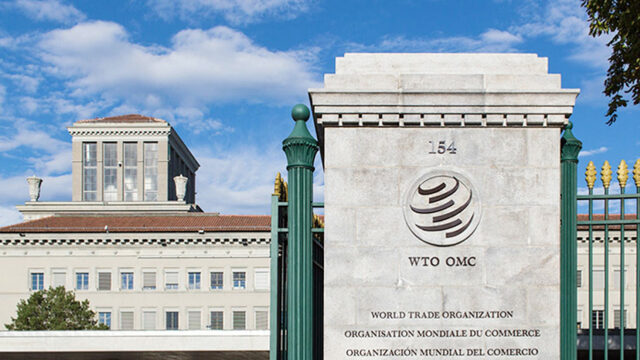
WTO warns of risk to growth if economies shun globalization

WORLD TRADE ORGANIZATION

BANGKOK — The World Trade Organization (WTO) warned against rolling back the tide of globalization, saying that such a process will make the world poorer, and added that the Asia-Pacific region’s prominent role in global trade will result in an outsized impact should trade become less seamless.

“(Southeast Asia and the Pacific) are important players in global trade and central to some of the issues which we are now grappling with,” WTO Director-General Ngozi Okonjo-Iweala said in a recorded message to participants at a WTO-organized conference in Bangkok on Tuesday.

“As the world navigates the polycrisis of climate change, pandemic, economic slowdown, inflation, food insecurity, and depletion of the oceans’ resources, we need multilateral cooperation and solidarity more than ever,” she added.

Ms. Okonjo-Iweala said the fragmentation of trading arrangements “would be costly for all economies, particularly poorer ones. WTO economists estimate that if the global economy decouples into two self-contained blocs, long-term global gross domestic product (GDP) would decrease by at least 5% — worse than the damage from the financial crisis of 2008-09.”

“Your region, where global supply chains are an important contributor to economic success, would no doubt be also impacted,” she added.

Ms. Okonjo-Iweala added that food security issues will be addressed during the WTO’s 13th Ministerial Conference (MC13) in February in Abu Dhabi, and called for a “pragmatic” approach to trading agricultural commodities.

“We need to look at how the growing concerns regarding food security can be incorporated and addressed holistically in the discussions. I do hope we can find a sensible and pragmatic approach to food security that will set members on the path to further progress in the years ahead,” Ms. Okonjo-Iweala said.

She was referring to the protectionist direction some countries have taken in keeping their agricultural goods from being exported as supplies of key commodities tightened in the wake of the Russian invasion of Ukraine.

“We also need to make progress on reforming agriculture trade.  We’ve been negotiating on this for more than two decades, with success in eliminating export subsidies. But big issues related to farm subsidies and tariffs remain unresolved,” she added.

Ms. Okonjo-Iweala urged members to move quicker in ratifying the fisheries subsidies agreement reached during MC12 in June 2022. The agreement seeks to restrict illegal, unreported, and unregulated fishing.

“(The agreement) will only enter into force once two-thirds of the WTO membership has accepted it,” Ms. Okongjo-Iweala said.

“We need to complete the ‘second wave’ of negotiations on fisheries subsidies by agreeing on new discipline (against) harmful subsidies that contribute to overfishing and overcapacity, while at the same time taking into account the needs of fishing communities in developing and least developed countries,” she added.

Ms. Okonjo-Iweala said MC13 is expected to focus on reforming the organization’s dispute settlement system.

“Many members have identified this as their top priority. Ministers agreed at MC12 to have a fully- and well-functioning dispute settlement system in place by 2024; discussions are under way, but this is a difficult issue and we don’t have a lot of time if we’re to engage in substantive negotiations and achieve results. Nevertheless, the ongoing work on this issue is moving in the right direction,” Ms. Okonjo-Iweala said.

She said the WTO is also hoping to deliver one or two accessions at MC13, while other issues that could be discussed in the conference include the effective application of special and differential treatment for developing and least developed members and access to COVID-19 therapeutics and diagnostics. — Revin Mikhael D. Ochave

ADVERTISEMENT
ADVERTISEMENT