Home Blog Page 4939

Even one American in Iraq is too many, says Iran leader

A man wearing a face mask walks past a wall of the former U.S. Embassy with anti-America images on it, in Tehran, Iran November 8, 2020. — MAJID ASGARIPOUR/WANA (WEST ASIA NEWS AGENCY) VIA REUTERS

DUBAI — The United States is an unreliable friend, and Iraq should not allow any US troops on its territory, Iran’s Supreme leader Ayatollah Ali Khamenei told visiting Iraqi President Abdul Latif Rashid on Saturday.

Iran, which has strong ties with Iraq, opposes the US military presence on its borders in Iraq and the Gulf, saying Western military intervention is the root of insecurity in the region.

“Americans are not friends of Iraq. Americans are not friends with anyone and are not even loyal to their European friends,” state media quoted Mr. Khamenei as saying.

US national security agencies are investigating after a leak of classified documents has suggested the United States spied on allies including Ukraine.

“Even the presence of one American in Iraq is too much,” Mr. Khamenei told Mr. Rashid, who was in Tehran with a delegation to boost ties between the two neighbors.

The United States has some 2,500 troops in Iraq to help advise and assist local troops in combating Islamic State, which in 2014 seized territory in the country.

“Iraq’s main effort is to deepen relations with Iran and resolve certain remaining issues between the two countries,” Mr. Rashid was quoted as saying, without referring to Iraq’s ties with the United States. — Reuters

Zelensky says would have fought to death had Russians attacked HQ

PRESIDENT.GOV.UA

LVIV, Ukraine — Ukrainian President Volodymyr Zelensky carries a pistol and would have fought to the death with his inner circle had the Russians stormed his Kyiv headquarters at the start of the war, he said in an interview shown on Saturday.

“I know how to shoot. Could you imagine (a headline like) ‘The President of Ukraine is taken captive by Russians?’ This is a disgrace. I believe this would be a disgrace,” he told the 1+1 television channel.

In the first days after the Feb. 24, 2022 invasion, Ukrainian officials said Russian intelligence units tried to break into Kyiv but were defeated and failed to reach Bankova Street in the center, home to the presidential offices.

Other Russian units launched an attack on the outskirts of Kyiv, but were unable to advance. Officials also reported several unsuccessful sabotage attempts inside the city.

“I think if they had gone inside, into the administration, we would not be here,” Mr. Zelensky said. It was not clear which Russian units he was referring to.

“No one would have been taken prisoner because we had a very seriously prepared defense of Bankova Street. We would have been there to the last,” he said.

Asked whether he carried a pistol and practiced using it, he replied that he did, while dismissing a suggestion he might have used it to kill himself rather than be captured.

“No, no, no. It’s not (to shoot) myself. To shoot back, surely,” he said. — Reuters

US consumer spending flattens in March; core inflation still hot

WASHINGTON — US consumer spending was unchanged in March as an increase in outlays on services was offset by a decline in goods, but persistent strength in underlying inflation pressures could see the Federal Reserve raising interest rates again next week.

Stubbornly high inflation was underscored by other data on Friday showing labor costs increasing solidly in the first quarter as a tight labor market continued to drive wage gains in the private sector. With the economy, however, shifting to lower gear, the anticipated rate hike next Wednesday could be the last in the current cycle, which is the fastest since the 1980s.

Tighter credit conditions following recent financial market turmoil have added to the risks of a recession this year. A fight to raise the federal government’s $31.4 trillion borrowing cap also poses a threat to the economy.

The unchanged reading in consumer spending last month, reported by the Commerce Department, followed a downwardly revised 0.1% gain in February. Consumer spending, which accounts for more than two-thirds of US economic activity, was previously reported to have increased 0.2% in February.

Spending on services rose 0.4%, driven by housing and utilities as well as healthcare. Goods outlays fell 0.6% as purchases of motor vehicles, mostly new light trucks, decreased. Lower gasoline prices also contributed to the decline in goods spending. Economists polled by Reuters had forecast consumer spending dipping 0.1%.

The data was included in the advance gross domestic product report for the first quarter published on Thursday, which showed consumer spending surging at a 3.7% annualized rate that period after rising at a 1.0% pace in the October-December quarter.

Last month’s flat reading in consumer spending set consumption and the overall economy on a lower growth path in the second quarter.

Consumer spending is plateauing likely as Americans become more averse to higher prices. Government social benefits are also dwindling. A temporary boost to the Supplemental Nutrition Assistance Program (SNAP) benefits authorized by the US Congress to cushion low-income people and families against the hardships of the COVID-19 pandemic expired in March.

SNAP is commonly known as food stamps. Researchers from the Commerce Department’s Census Bureau on Thursday estimated the end of the extra benefits had resulted in roughly 32 million people getting smaller monthly SNAP payments. They estimated that a household of four with a net monthly income of $2,000 was now getting $600 less in food stamps each month.

The Fed is expected to increase interest rates by another 25 basis points next week. The US central bank has raised its policy rate by 475 basis points since March of last year from the near-zero level to the current 4.75%-5.00% range.

Though inflation is gradually slowing it remains elevated. The personal consumption expenditures (PCE) price index gained 0.1% in March, the smallest increase since last July, after rising 0.3% in February. In the 12 months through March, the PCE price index increased 4.2%. That was the smallest advance since May 2021 and followed a 5.1% rise in February.

Excluding the volatile food and energy components, the PCE price index rose 0.3%, matching February’s gain. The so-called core PCE price index gained 4.6% on a year-on-year basis in March after rising 4.7% in February. The Fed tracks the PCE price indexes for its 2% inflation target.

Economists estimated that core services excluding housing, being closely watched by policymakers, increased 0.2%. The smallest gain since last July followed a 0.3% rise in February, and reflected a drop in portfolio management fees.

A separate report from the Labor Department showed its Employment Cost Index (ECI), the broadest measure of labor costs, accelerated 1.2% in the first quarter after increasing 1.1% in the October-December period. 

Labor costs increased 4.8% on a year-on-year basis after advancing 5.1% in the fourth quarter, remaining above the 3.5% that Fed officials say would be consistent with 2% inflation.

The ECI is widely viewed by policymakers and economists as one of the better measures of labor market slack and a predictor of core inflation, because it adjusts for composition and job-quality changes. There were 1.7 job openings for every unemployment person in February.

Private sector wages increased 1.2%, matching the fourth quarter’s gain. Goods producing industries were the main drivers of growth. Private wages advanced 5.1% year-on-year.

This is at odds with the moderation in average hourly earnings in the Labor Department’s monthly employment report.

Some economists argued that the stickiness in wages suggested the Fed could continue tightening policy beyond next week.

Solid wage gains are helping to support personal income, offseting the drag from declining government benefits like food stamps. Income rose 0.3%, matching February’s increase.

The saving rate jumped to 5.1%, the highest since December 2021, from 4.8% in February, boosted by a plunge in tax payments in January as well as fears of a recession. — Reuters


US expects business engagement, ‘military enhancements’ from Philippines summit

United States dollar banknotes and an American flag displayed on a laptop screen are seen in this illustration photo taken in Poland on Dec. 26, 2022. — JAKUB PORZYCKI/NURPHOTO VIA CONNECT
WASHINGTON – At a summit on Monday, U.S. President Joe Biden and Philippines counterpart Ferdinand Marcos Jr are expected to reach agreements on greater business engagement, as well as “military enhancements” amid shared concerns about China, a senior Biden administration official told Reuters.Marcos is due in the United States on Sunday for a four-day visit that Philippines official say is aimed at reaffirming the special relationship between the Philippines and the United States, which are long-time allies.The senior U.S. administration official said it was impossible to underestimate its strategic importance of the Philippines, although the relationship was more than just about security.“We will roll out some deliverables during the next week that will highlight business engagement but also some military enhancements as well,” he said on Saturday.The official said that as part of moves to boost commercial ties, U.S. Commerce Secretary Gina Raimondo would a lead a presidential business delegation to the Philippines.While Marcos was seeking good relations with both China and the United States, Manila was increasingly concerned about “provocative” diplomacy by Beijing and seeking stronger ties with allies, he said.“We’re seeking not to be provocative, but to provide both moral and practical support for the Philippines as they try to make their way in a complex Western Pacific,” the official said. “Their geographic position is critical,” he added.Experts say Washington sees the Philippines as a potential location for rockets, missiles and artillery systems to counter a Chinese amphibious invasion of Taiwan, which China claims as its own territory.Marcos’ Washington visit comes after Philippines on Friday accused China’s coast guard of “dangerous maneuvers” and “aggressive tactics” in the South China Sea, in another maritime confrontation between the two countries, despite a visit to Manila this weekend by Chinese Foreign Minister Qin Gang.In the face of such pressure from China, the Philippines and the United States have rapidly stepped up defense engagements, including large-scale military exercises and a recent expansion of U.S. access to Philippine bases. China has objected to the bases agreement.U.S. Defense Secretary Lloyd Austin said after the first combined meeting of top U.S. and Philippines defense officials earlier this month that it was “too early” to discuss what assets the United States would like to station at bases in the Philippines.It is a delicate issue for Manila, not only because of its concerns about China, its main trading partner, but given domestic opposition to U.S. military presence in the past.The two sides did agree to complete a road map in coming months for the delivery of U.S. defense assistance to the Southeast Asian nation over the next five to 10 years.Alluding to the difficult period in bilateral relations under Marcos’ predecessor, Rodrigo Duterte, the official said Monday’s summit would be part of efforts to build the “habits of alliance management” back to levels of the 1970s and 1980s.“It is an attempt to build a new relationship that will obviously have important security elements, but … the idea and goal while President Marcos is in town is to demonstrate other elements.”The official said the U.S. planned to enhance trilateral dialogue with Japan and the Philippines, and Marcos would have discussions at the Pentagon about joint maritime patrols.“We will and have stepped up our broader regional security discussions with the Philippines on all the issues in the South China Sea and elsewhere,” the official said, a reference to Manila’s disputed maritime claims with China and other nations.Separately, the official said no final decision had been made on whether Biden would stop in Papua New Guinea next month as part of stepped-up engagement with the Pacific-island region, but Washington was “in active discussions no matter what about our direct high-level interactions with the Pacific.”—Reuters

NBA sees surge in mobile app viewership among Filipino fans despite paid TV dominance

THE Philippines remains a strong market for the National Basketball Association (NBA) with a significant number of viewers, NBA Asia Managing Director Ramez Sheikh said.

The NBA boasts 15 million social media followers in the Philippines combined across the league’s global and localized platforms, as well as a 169% increase in unique NBA app visitors across mobile phones and tablets, he told reporters on April 27.

The NBA’s television viewership in the Philippines has grown by 15% in comparison to the previous year’s statistics, Mr. Sheikh also noted. 

“Popularity has never been better,” NBA Deputy Commissioner Mark A. Tatum said.

“We approach the [Philippine] market with three sharp focuses: participation, bringing the experience to the fans, and accessibility,” he added.

While the NBA acknowledged that the majority of Filipino fans continue to watch its games on paid television, a 200% increase in traffic was observed in its mobile application year to date compared to last year. 

In terms of partnerships, online food delivery platform Foodpanda and mobile banking service GCash are among the recent ones in the Philippines.

Foodpanda started partnership with the NBA for the 3-on-3 competition presented by soft drink brand Mountain Dew in February.

Media company iHeartMedia, Inc. partnered with the NBA in the first quarter to produce “Hoops Paradise: The Philippines’ Love for the Game,” a six-episode podcast exploring the country’s unique and prideful love affair with basketball.

Filipino filmmaker Carlo Ledesma’s work “The Mountain Ballers” was among the 24 short documentary films commissioned by the NBA and marketed for global fans to zoom in on unique cultural perspectives on basketball. It featured indigenous people from Tadian, Mountain Province, and their passion for the sport.

“The storytelling is important. People become fans for different reasons… There are so many great stories to be told about the NBA family, not just the players.” Mr. Tatum noted.

Operated by apparel partner Titan at SM Mall of Asia in Pasay City, the largest NBA store in the Philippines, the country’s second, is set to open on May 4. In terms of merchandise, the NBA Philippines will focus this store before expanding to other locations outside the capital region.

The NBA Philippines currently ships products to more than 200 main areas in the Philippines with 43 partners and sponsors.

With the continuously growing amount of support of Filipinos for the sport, there are only two Filipino-American players in the NBA.

There is a need to celebrate the Filipino players who do all of you proud, Mr. Sheikh said. “The Philippines is such a great ambassador for the game of basketball.”

Messrs. Tatum and Sheikh outlined a pathway established by the NBA for Filipino and Asian players to enter the league, starting with the Jr. NBA youth basketball program and then the Basketball Without Borders (BWB) development and community outreach program in collaboration with the International Basketball Federation (FIBA).

“There are more than 30 kids coming from the Philippines and participating [in the BWB],” Mr. Sheikh said.

What is next in the pipeline is undergoing intensive training, then getting the best development and thinking through one of the NBA’s academy systems.

“The talent is here. The passion for the game is here. Infrastructure is here. It’s a matter of identifying that talent and putting them in the competitive setting, playing against the best competition in the world,” Mr. Tatum said.

“I think it’s only a matter of time before a Filipino homegrown player plays in our league.”—Miguel Hanz L. Antivola

Unlock the future of smart condo living with RLC Residences’ Sierra Valley Gardens

Sierra Valley Gardens in Cainta, Rizal

In today’s fast-paced world, it’s essential to invest in a property that will offer convenience, comfort, and sustainability. As a young professional, you want to make sure that the investment you make in a property is a smart move – one that is ready for the future and is sure to appreciate in value with time. What better way to do that than to explore Sierra Valley Gardens in Cainta, Rizal.

Strategic Location

Cainta, Rizal is a bustling municipality that’s becoming increasingly urbanized. In 2021, it was named the top municipality in the Cities and Municipalities Competitiveness Index (CMCI) rankings and is now considered a significant industrial and commercial hub in the province of Rizal, making it a smart choice for those looking to build their careers while having the convenience of living near their workplace.

This is where Sierra Valley Gardens, a residential complex situated on an 18-hectare mixed-use estate, is located. The property was designed with the location’s urbanization in mind, and this vibrant city is just the right place for young professionals to relocate to. Soon, the estate will house a mall, office buildings, and other retail areas that are just within walking distance from Sierra Valley Gardens.

Well-situated along the Ortigas Avenue Extension, it guarantees accessibility to vital locations including core business areas in Pasig, Mandaluyong, Antipolo, and Makati, as well as commercial centers, schools, hospitals, and cultural experiences. Aside from the proximity to commercial and industrial establishments, public transportation (LRT 2 line and P2P terminal), residents will also profit from the government’s MRT 4 and the Southeast Metro Manila Expressway completion.

Sprawling landscaped areas

Convenience and Comfort

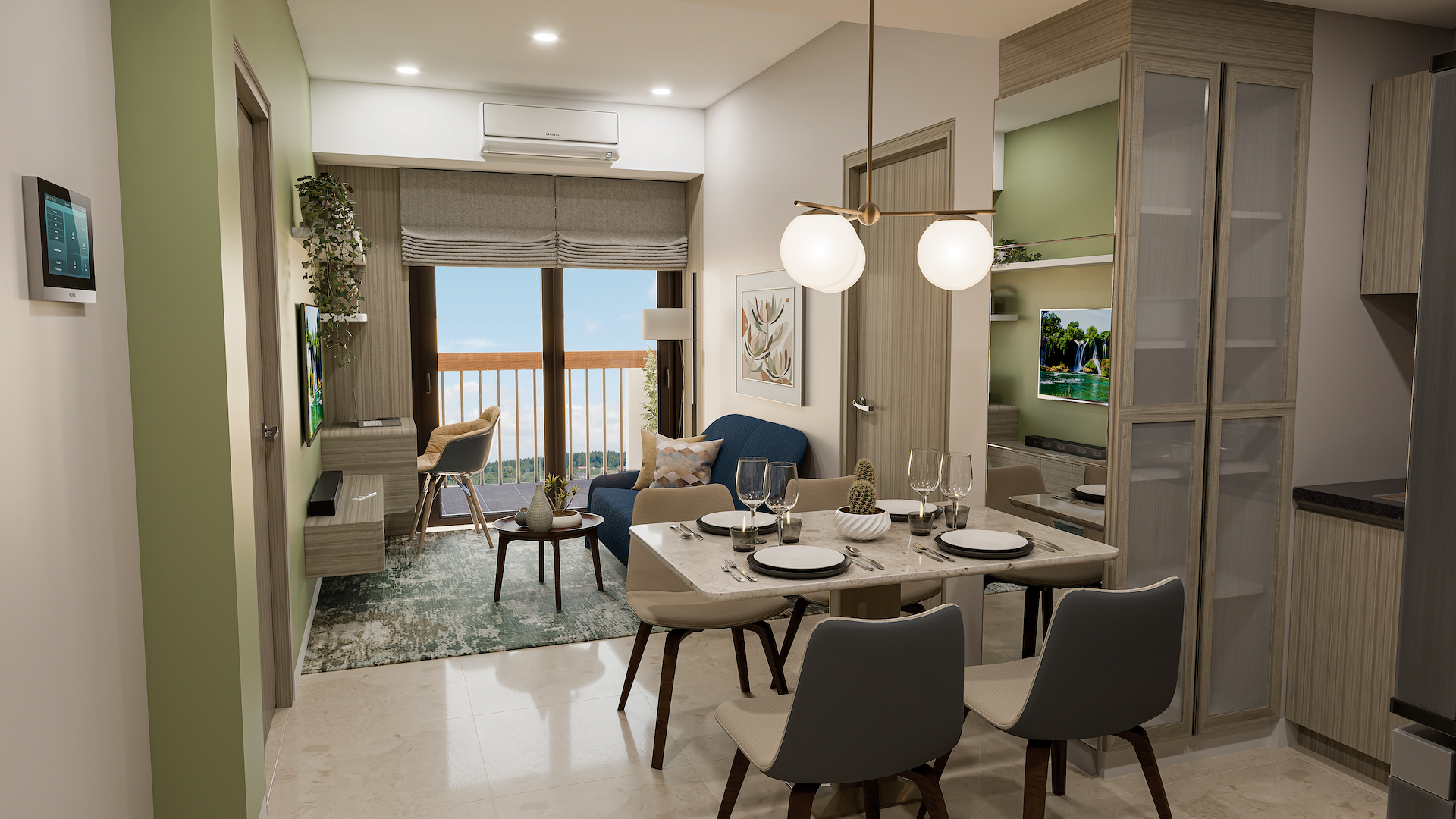
Another reason why Sierra Valley Gardens is a smart investment move is its diverse unit offerings – from studio, one-, and two-bedroom units with balcony options, all designed with unique features that are sure to provide comfort to future homeowners. With a dedicated work-from-home provision, you can focus on work, school, or simply for hobbies and passions in life.

The units are also equipped with smart home features for added convenience and security, making it the first of its kind in the area. With Smart Locks accessible via fingerprint, key card, PIN, or mechanical key; Audio-Video Intercom to screen visitors even before they proceed to the unit; and Smart Lights that can be easily controlled using a phone app.

The whole development is also designed to integrate fiber optic technology for a secure and stable network. With connectivity as a basic necessity, this property is indeed ready for the future.

Two-bedroom unit at Sierra Valley Gardens

For Diverse Lifestyles

Sierra Valley Gardens is also designed for those who prioritize health, wellness, and leisure, making this development a smart choice for well-being. This property offers fitness amenities such as a gym, jog trail, and yoga studio. Dedicated bike lanes and parking spaces are also available within the property, along with scenic landscapes and lush greeneries that provide a refreshing ambiance while roaming around the neighborhood.

For those who wish to have some bonding moments with the family, it offers a lap and kiddie pool with a grilling station and pool deck. There’s also a pet park dedicated to those with fur babies. In addition to all that, a multi-purpose court is available for sports enthusiasts, or they can even play inside the Game Room for a round or two of billiards and more.

RLC Residences takes pride in this property as it is recognized locally and internationally. It garnered the title Best Sustainable Residential Development at the DOT Property Philippines and Southeast Asia Awards 2022 and was Highly Commended as the Best Smart Development by The Outlook 2022: Philippine Real Estate Awards. By investing in Sierra Valley Gardens, you’re not just investing in a strategic physical space but a lifestyle that’s designed for the future.

Look forward to a higher standard of living. Inquire about Sierra Valley Gardens’ pre-selling units today by getting in touch with an RLC Residences Property Specialist or book an appointment at rlcresidences.com. You may also follow their social media pages on Facebook and Instagram for more updates on other award-winning developments in and out of the Metro.


Spotlight is BusinessWorld’s sponsored section that allows advertisers to amplify their brand and connect with BusinessWorld’s audience by enabling them to publish their stories directly on the BusinessWorld Web site. For more information, send an email to online@bworldonline.com.

Join us on Viber at https://bit.ly/3hv6bLA to get more updates and subscribe to BusinessWorld’s titles and get exclusive content through www.bworld-x.com.

NCR retail price growth slows to 6% in March

By Abigail Marie P. Yraola, Researcher

RETAIL PRICE growth of general goods in Metro Manila eased in March, the slowest in three months, the Philippine Statistics Authority (PSA) said on Friday.

According to preliminary data from the statistics agency ,the general retail price index (GRPI) in the National Capital Region (NCR) slowed to 6% last month, from the 14-year high of 6.6% in February and 2.7% a year ago.

March marked the slowest reading since December last year, hitting the same annual gain of 6%.

For the first quarter, the GRPI averaged 6.3%.

Domini S. Velasquez, chief economist at China Banking Corp., said the slowdown in the March GRPI is due to the contraction in fuel prices from last year.

“Dubai oil has gone down markedly from the height of the Ukraine war to March 2023. We might see further slowdown in chemicals and manufactured goods in the next few months as demand wanes,” she said in an e-mail.

In the last few months, she added, the uptick in food prices has likely been curbed by increased importation.

Last year, when Russia invaded Ukraine, global oil and commodity prices became unstable, pushing prices of oil above $100 per barrel amid supply concerns.

Meanwhile, soaring food prices have fueled accelerating inflation, which hit 8.7% in January but eased to 7.6% in March from 8.6% the prior month.

The PSA attributed the easing of GRPI in the country’s capital region to the year-on-year decline in mineral fuels, lubricants, and related materials index where price growth contracted to 2.9% from 7.9% in February.

Likewise, contributing to the slower growth in March is the price growth in manufactured goods classified primarily by materials which eased to 3.6% from 4.1% the prior month.

Slowdowns were also observed in the commodity groups of crude materials, inedible except fuels (6.5% in March from 7% in February), chemicals, including animal and vegetable oils and fats (3.7% from 4.1%), and miscellaneous manufactured articles (2% from 2.2%).

Meanwhile, beverages and tobacco logged higher annual gains, posting 7% in March from 6.4% the previous month.

Price growth in food and machinery and transport equipment, which stood at 11.1% and 1.6%, respectively, remains unchanged in March.

Ms. Velasquez said that slower economic growth will likely temper retail prices in the next few months.

“Seasonally, we might see an uptick towards the end of the year as the holiday approaches,” she added.

MAP, industry stakeholders launch program to support local startups

REUTERS

The Management Association of the Philippines (MAP) announced on Thursday a program aimed at supporting 15 “promising” local startups from different industries.

The Scale program is being carried out in partnership with PWC Philippines, QBO Innovation Hub, Foxmont Capital Partners, and the Department of Trade and Industry (DTI), MAP said in an e-mailed statement.

The program hopes to “develop promising local startups across various industries through a wide range of activities and opportunities to help them accelerate their growth,” it added.

It will run for three months, after which the startups will have worked with MAP corporate partners and been matched with strategic investors.

“It can be challenging for startups and entrepreneurs to access the resources they need to grow their businesses,” said Benedicta Du-Baladad, MAP’s president.

“That’s why we created the Scale program — to help bridge this gap and give them the support they need to succeed.”

PwC Philippines’ chairman and senior partner, Roderick M. Danao, said that scaling up a business is difficult due to “limited access to funding, finding the right talent, and lack of mentorship and guidance.”

Through the Scale program, participating startups will have support and mentorship by experienced business leaders, as well as access to resources that can help them grow, he noted.

The 15 shortlisted startups come from the digital solutions, logistics, healthcare, artificial intelligence, sustainability, climate change and environment, edtech, and fintech industries.

“Sessions on company valuation, data analytics, ESG, and sustainability can equip them with the right knowledge and capabilities to make strategic decisions,” added Butch Meily, president of QBO Innovation Hub, on the program’s specific features.

DTI Secretary Alfredo E. Pascual said that the program would also help the Philippines develop its highly skilled, tech-savvy workforce.

“Innovation-based programs like Scale help foster entrepreneurship and creativity in the country, forming a more vibrant and sustainable startup ecosystem,” he noted. — Brontë H. Lacsamana

Inflation likely further slowed in April – BSP

A worker arranges LPG tanks at a distributor in Kamuning in Quezon City. — PHILIPPINE STAR/MICHAEL VARCAS

Headline inflation likely further slowed in April due to lower electricity rates and easing food and cooking gas prices, the Bangko Sentral ng Pilipinas (BSP) said.

In a statement on Friday, the Philippine central bank said inflation likely settled within the 6.3-7.1% range in April, slower than the 7.6% in March.

If realized, inflation would surpass the BSP’s 2-4% target for the 13th consecutive month.

The lower end of the forecast range would match the 6.3% print in August 2022. It would also be the lowest inflation rate in 10 months or since June last year, when it stood at 6.1%.

“Lower electricity rates, the decline in prices of fish and vegetables, and rollback in LPG (liquefied petroleum) prices contributed to easing price pressures during the month,” the BSP said.

Manila Electric Co. (Meralco) earlier said the overall rate for a typical household went down P0.1180 to P11.3168 per kilowatt-hour (kWh) in April.
Oil companies also cut the prices of cooking gas products by around P9.18 to P9.20 per kilogram this month.

“Meanwhile, upward price pressures are expected to emanate from higher domestic petroleum prices, increased rice and meat prices, and peso depreciation,” the central bank said.

In April alone, pump price adjustments stood at a net increase of P2.9 per liter for gasoline, P1.1 per liter for diesel, and P2 per liter for kerosene.

The peso also returned to the P55-a-dollar mark in April. On Thursday, the peso closed at P55.72 on Thursday, down P1.36 or 2.4% from its P54.36 finish on March 31.

BSP Governor Felipe M. Medalla on Thursday said the Monetary Board may change the BSP’s full-year inflation forecast to 5.7% or 5.8%, lower than the previous forecast of 6%, at their next policy meeting.

This is due to the better-than-expected lower inflation rates in February and March, Mr. Medalla said in an ambush interview with reporters in Makati City.

“Going forward, the BSP remains prepared to respond appropriately to continuing inflation risks in line with its data-dependent approach to monetary policy formulation,” the central bank said.

Mr. Medalla earlier said if inflation eases further in April, the Monetary Board on May 18 will likely consider pausing its tightening cycle and keep rates on hold.

The BSP has increased borrowing costs by 425 basis points (bps) since May last year to tame inflation and stabilize the peso, bringing the key policy rate to 6.25% — the highest in nearly 16 years. – Keisha B. Ta-asan

Shinagawa now provides Japanese-standard healthcare in PHL

Shinagawa Lasik & Aesthetics amplifies its services in the Philippines.

Following the demands and needs in healthcare, Shinagawa now offers comprehensive Japanese-standard healthcare services with its specialized facility — Shinagawa Diagnostic and Preventive Care Center.

“The global COVID-19 pandemic has changed the people’s mindset when it comes to healthcare,” observes Shinagawa Philippines President Masako Uemori. “Filipinos, for example, are now more conscious of their health embracing the benefits of preventive healthcare. We saw this as an opportunity to offer more healthcare services in addition to our existing eye care.

BEYOND EYE CARE

The brand new medical facility provides services centered on diagnostic testing and preventive care. It also offers comprehensive and all-in medical checkup and screening services to all clients of all ages.

Boasting of its state-of-the-art facilities, Shinagawa is on the forefront of its medical philosophy providing holistic health needs for Filipinos of all ages. Patients may now avail of an all-inclusive health checkups.

“With our globally competitive medical experts and state-of-the-art technology, we can assure of giving you only the best healthcare services,” Ms. Uemori boasts. “Early detection of illnesses allows patients more time to seek effective medicines or procedures that can ultimately lessen or cure their symptoms. To quote a famous line, “an ounce of prevention is worth a pound of cure.”

SHINAGAWA AS HEALTH PARTNER

The Shinagawa Diagnostic and Preventive Care Center positions itself as the first one-stop medical hub that offers Japanese-standard health services providing a full lineup of comprehensive diagnostic tests and customizable screenings. These include brain exams (MRI/MRA), full body exams (CT scan), digestive scans (ultrasound and endoscopy), and women’s exams (mammography and ultrasound), among other medical checkups.

Ms. Uemori announced that the Shinagawa Diagnostic and Preventive Care Center is in the process of obtaining accreditation with all major Health Maintenance Organization (HMO) providers in the country to make its services more convenient and accessible to all Filipinos.

“It’s our commitment to providing high-quality and world-class healthcare accessible for individuals and organizations through HMO partnerships.”

EASY AND CONVENIENT MEDICAL CHECKUPS

With its high-tech facilities, medical checkups are done with ease and convenience — from booking, to undergoing procedures, to claiming results.

Patients are given all the information needed to guide them through each diagnostic exam upon confirmation of appointment. Each patient is given clear directions to navigate the whole medical hub, which is housed on the 8th and 23rd floor of Ore Central Building at the Bonifacio Global City in Taguig.

On the 8th floor, patients and their companions can relax and wait at the main lounge. The medical tests such as Computerized Tomography (CT) scan, Magnetic Resonance Imaging (MRI), Endoscopy are done here; while the rest of the general medical checkups as well as the women’s exams are conducted at the right and left wing; respectively, on the 23rd floor.

Aside from screening and imaging tests, Shinagawa also practices double reading and consultation with Japanese medical experts to ensure high precision of diagnosis and treatment plans. Patients can expect no waiting time as the Diagnostic and Preventive Care Center delivers same-day results. This is made possible through the Japanese Health Checkup Information System, which increases operational efficiency.

“Shinagawa’s commitment of ‘health and well-being for all’ is aligned with our continuous expansions and innovations by providing Filipinos with diagnostic and preventive care,” concludes Ms. Uemori.

For booking and schedule:

Visit Shinagawa website: https://shinagawa-healthcare.ph/ which includes a live chat feature and a patient portal to create your own profile to track your appointments, results, and other pertinent information. Patients can also contact Shinagawa’s Patient Care Lines via Landline (+632) 7368-5241, Globe (+63) 917-864-6762, Smart (+63) 962-067-3669. Customer service representatives will be readily available from 8:00 a.m.–5:00 p.m. to accommodate questions and bookings.

Shinagawa Diagnostic and Preventive Care Center is located at 8/F and 23/F Ore Central Building, 9th Avenue, cor 31st Street, BGC, Taguig City. Those who are interested can learn more by visiting the official website at www.shinagawa-healthcare.ph.


Spotlight is BusinessWorld’s sponsored section that allows advertisers to amplify their brand and connect with BusinessWorld’s audience by enabling them to publish their stories directly on the BusinessWorld Web site. For more information, send an email to online@bworldonline.com.

Join us on Viber at https://bit.ly/3hv6bLA to get more updates and subscribe to BusinessWorld’s titles and get exclusive content through www.bworld-x.com.

Philippines reports “confrontation” with Chinese vessels in South China Sea

REUTERS

MANILA – The Philippines Coast Guard said on Friday it was involved in a confrontation with Chinese vessels that made “dangerous maneuvers” in the South China Sea, the latest in a string of tense maritime interactions between the two countries.

The incident occurred as the Coast Guard undertook a week-long patrol in the strategic waterway and as Chinese Foreign Minister Qin Gang visited Manila last weekend to meet his Philippine counterpart and President Ferdinand Marcos Jr.

China claims most of the South China Sea, through which an estimated $3 trillion of dollars worth of goods pass each year. The Philippines has repeatedly called on Beijing to stop its “aggressive activities” in the area.

The Coast Guard said that during the April 18-24 mission, it identified more than 100 “alleged Chinese maritime militia vessels, a People’s Liberation Army Navy corvette class and two China Coast Guard vessels” within the Philippines’ 200-mile exclusive economic zone.

It added that one Chinese vessel “carried out dangerous maneuvers” at a distance of about 150 feet from a Philippine ship. Two other ships exhibited “aggressive tactics”, posing a “significant threat to the safety and security of the Philippine vessel and its crew”, it added.

The Chinese embassy in Manila did not immediately respond to a request for comment.

In February, the Philippine Coast Guard said a Chinese counterpart ship had directed a “military-grade laser” at one of its ships supporting a resupply mission to troops in the disputed waterway, temporarily blinding its crew on the bridge. — Reuters

Surging home loans in Philippines show rate hikes not biting yet

Home loans in the Philippines are still rising despite high interest rates. -- Bloomberg

Car and home loans in the Philippines are jumping while credit cards are being swiped relentlessly to pay for travel and dining in signs that 16-year-high borrowing costs aren’t deterring Filipinos from spending.

Bank of the Philippine Islands saw a 40% increase in housing loans and 30% rise in auto loans in the first quarter from a year ago, said Ginbee Go, head of BPI’s consumer banking. “You’d think that people would hold off borrowing, but the releases of our housing and auto loans show it’s the contrary,” she said at a briefing on Thursday.

Robust spending is evident across the industry as credit card base rose 14% while credit card loans rose nearly 30% in the first quarter, according to Jojo Ocampo, head of BPI’s mass retail segment responsible for unsecured lending.

That’s good news for the Philippines’ consumption-driven economy, which the government expects to grow as much as 7% in 2023 — slower than last year’s 7.6% but still among Asia’s bright spots. Economic managers see retail spending withstanding elevated inflation, which cooled to a six-month low in March, but is still well above the central bank’s 2%-4% target for the year.

Consumer credit is growing amid the Philippine central bank’s most aggressive monetary tightening in two decades that has boosted the benchmark interest rate to 6.25%, the highest since May 2007. The monetary authority will next decide on rate on May 18, a week after the government reports first-quarter economic performance.

“It’s a very exciting time. We continue to be bullish about the economy,” BPI Chief Executive Officer TG Limcaoco said at the same briefing, after the bank’s annual shareholders meeting. “The consumer sector remains very resilient,” he said, adding that nonperforming loans are muted.

The favorable outlook will likely continue for as long as there’s no major disruption in the supply chain, Mr. Limcaoco added. “Our pivot to the US has opened up interest from a lot of companies,” he said.

Although corporate lending comprises the bulk of its portfolio, consumer loans have been fueling the growth of BPI, the country’s oldest lender. — Bloomberg

ADVERTISEMENT
ADVERTISEMENT