Home Blog Page 4932

Defense

Ball Arena was rocking, and with reason. With a past-capacity crowd of 19,762 taking on the inspired play of the Nuggets, yesterday was far more than just the Nuggets making a statement as the National Basketball Association’s best kept secret. As they wound up taking the measure of the supposedly superior Suns, they proved their worth as top seeds in the Western Conference. For all the narratives that conventional wisdom has been putting out about their seeming lack of pedigree, they are most certainly not the same bunch that the blue and orange swept en route to the 2022 Finals.

Indeed, the current-version Nuggets are much, much better — and not simply because they have starting guard Jamal Murray healthy and in peak form. Their improved standing starts with the confidence of top dog Nikola Jokic, borne of two Most Valuable Player trophies and increased familiarity with those around him. To argue that he has become the league’s preeminent puppet master would be to understate the obvious. He plays at his own pace, bends defenses with his excellent court vision and decision making, and anchors an attack that begins with his power off the boards. Yesterday, he had 14 rebounds at the half, a mere one off the tally produced by all the Suns put together.

True, Murray was the difference maker in Game One of the West semifinal round series. As had been in full display throughout the Nuggets’ run to the conference finals in 2020, when he last graced the postseason, he went to a higher gear yesterday, his final line of 34 (on 24 shots), five, and nine justifying head coach Mike Malone’s reference to him as “Playoff Jamal.” That said, the manner in which the blue and yellow took control of the match — against opposition that boasted of proven marquee names in Kevin Durant, Chris Paul, and Devin Booker — highlighted their capacity to be greater the sum of their parts.

And, yes, the Nuggets do hang their hats on defense, the prevailing notion that Jokic has typically been less than adequate on that end of the court notwithstanding. The recipient of the last two Maurice Podoloff Trophies may not be fleet of foot, but he makes up for whatever deficiencies he has with uncanny intelligence, a willingness to bang bodies, and a keen understanding of the ebbs and flows of competition. If nothing else, the Suns know well enough not to underestimate him at their peril.

Tomorrow, the Nuggets will not be parading something new. They will continue to hit the notes they are best at trumpeting. And the bottom line is clear: The dance they know is the dance no one else can better with the same tune.


Anthony L. Cuaycong has been writing Courtside since BusinessWorld introduced a Sports section in 1994. He is a consultant on strategic planning, operations and human resources management, corporate communications, and business development.

Biden urged to put pressure on Marcos to uphold human rights

PHILIPPINE STAR/ MIGUEL DE GUZMAN

By Kyle Aristophere T. Atienza, Reporter

HUMAN rights groups on Sunday urged the Biden administration to exert pressure on Philippine President Ferdinand R. Marcos, Jr. to uphold human rights.

Mr. Marcos should pave the way for the release of former Senator Leila M. de Lima, one of ex-President Rodrigo R. Duterte’s fiercest critics, from jail and cooperate with the International Criminal Court (ICC) in its investigation of the tough-talking leader’s deadly drug war, they said.

Mr. Marcos left Manila on Sunday for Washington, where he will meet with US President Joseph R. Biden at the White House on May 1.

He will also meet with some members of the US Congress during his four-day visit that Philippine officials have said is aimed at reaffirming the special relationship between the long-time allies.

“Though their meeting will highlight socioeconomic cooperation and joint commitment to enhance defense and security cooperation, it will be an opportunity for each state to discuss what actions have been made and concrete steps to be taken to fulfill human rights obligations of the Philippine government,” the Philippine Alliance for Human Rights Advocates said in a Facebook Messenger chat.

The alliance noted that no less than Mr. Biden himself had promised to promote accountability for governments that abuse human rights when the US was elected to the Human Rights Council 2021 for a three-year term.

“Now is the chance for President Biden to put values before interest.”

Mr. Marcos will be joined by officials from the Justice, Defense and Foreign Affairs departments during his US trip.

In Defense of Human Rights and Dignity said the release of Ms. De Lima and rejoining the ICC “should be of utmost priority in terms of addressing government accountability in the Philippines.”

Ms. De Lima has been in jail since her arrest in 2017 on drug trafficking charges, which critics and European lawmakers have said are baseless and meant to harass her.

Since April 2022, some of the key witnesses have recanted their testimonies against Ms. De Lima, saying they were coerced by former government officials.

“The release of Senator De Lima would strengthen the country’s position on respect for human rights and the judicial process because many of the witnesses against her have recanted,” Philip Arnold “Randy” P. Tuaño, dean of the Ateneo de Manila University School of Government, said in a Messenger chat. “There is no more basis to hold her in government custody.”

Ms. De Lima was arrested amid an investigation by a Senate committee of alleged atrocities committed in Mr. Duterte’s drug war, which is now the subject of an ICC probe.

“It is important to raise these concerns since the Philippines is a state party to several international treaties including the International Covenant of Civil and Political Rights,” the human rights alliance said. “The Philippines assumes obligations and duties under international law to respect and protect human rights.”

Mr. Tuaño said the US has several laws that allow its government to withhold foreign assistance to countries that have poor democratic and human rights records.

“Civil society organizations would be able to push the agenda for greater political participation by asking the American government to just follow these laws,” he said.

Human Rights Watch in a separate statement noted that since Mr. Marcos took office in June, Washington has significantly increased assistance to the Philippines “primarily through defense spending.”

“In the past, the US government had conditioned military assistance for the Philippines on the government making progress on holding human rights abusers accountable,” it said on its website on April 27.

“Assistance has now grown, however, even as the Philippine government has failed to bring those responsible for serious abuses to justice.”

The human rights alliance said Mr. Biden had been criticized for failing to discuss human rights when he met leaders of several Middle Eastern countries in July 2022.

‘STRATEGIC BLACKMAIL’
“He was criticized during his visit and for apparently ingratiating himself with leaders of Saudi Arabia and Israel, close allies of the US, despite the killing of Al Jazeera correspondent Shireen Abu Akleh in May 2022 and Washington Post columnist Jamal Khashoggi in 2018,” it said.

“I really do not expect the Biden government to give in to the calls of US senators to pressure the Philippine government to drop charges against former Senator De Lima,” said Arjan P. Aguirre, who teaches political science at the Ateneo de Manila.

“Biden has just announced his plan for reelection and he intends to politicize the tension with China for this purpose.”

Mr. Aguirre said the US would likely use the ill-gotten wealth case of the Marcos family and human rights issues with his predecessor “as a leverage to get the nod of the Philippine government.” 

“The US government will guarantee that these issues won’t be raised against the Marcos government in the near future. This may be understood as strategic blackmailing.”

Mr. Marcos in his departure speech said he would meet with American business leaders to “further promote trade and investment opportunities in the Philippines.”

He and his economic team would be joined by key private sector leaders in exploring business opportunities to help boost economic growth, he said.

He said he would seek opportunities in the semiconductor industry, critical minerals, renewable and clean energy including nuclear, and infrastructure projects.

“One of my priorities for this visit is to push for greater economic engagement.”

Meanwhile, environmentalists urged Mr. Marcos to take the lead in demanding climate action and reparations from the US, one of the world’s top polluters, during his meeting with his American counterpart.

“We want to see the Philippine president putting the climate agenda on top of his agenda,” Greenpeace Philippines Country Director Lea Guerrero said by telephone.

“We also want to see him calling for payment from the US government for loss and damages, opening that topic with Biden and making sure that they are aware that the Philippines is going to call for compensation not just from the US government but also from fossil fuel companies that operate in the US,” she added.

Ms. Guerrero said it’s an opportunity for Mr. Marcos to represent small countries vulnerable to climate change during his meeting with Mr. Biden.

“We should be at the point where climate finance comes in the form of grants from the world’s top polluters, yet our president seems content with the complete lack of accountability from the US for its emissions that have caused climate change in our country in the first place,” Kalikasan spokesman Jon Bonifacio said in a Messenger chat.

“It also makes little sense to talk of the urgency of climate change on the one hand, yet encourage the expansion of the US military — the single-largest polluting institution in the world — in our country on the other.”

The Center for Energy, Ecology and Development asked Mr. Marcos to never betray his climate agenda by securing usual deals on gas and other fossil fuels.

“There should be no confusion as to what kinds of agreements the president should be demanding: that the US, as a historical climate polluter, deliver the financing it owes climate vulnerable countries like ours to advance our energy transition and put climate adaptation and mitigation efforts,” center Executive Director Gerry Arrances said in a Messenger chat.

“If he comes home with deals for more gas and other fossil fuels as he did in Japan, then the president exposes his climate agenda as ultimately nonexistent and recklessly chaining Filipinos to a catastrophic climate future,” he said.


US asks China to stop harassing Manila’s ships

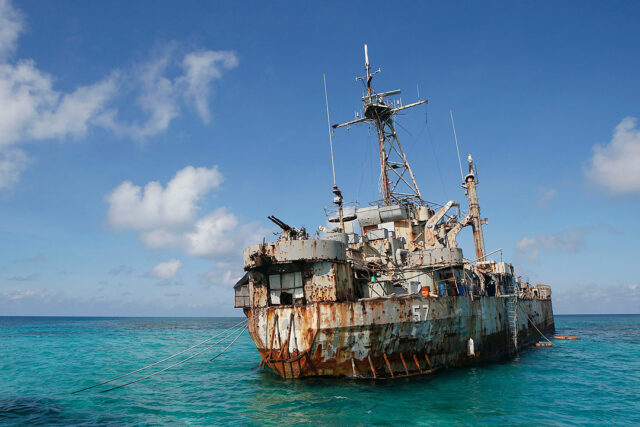
THE BRP SIERRA MADRE, a marooned transport ship which Philippine Marines live in as a military outpost, is pictured in the disputed Second Thomas Shoal, part of the Spratly Islands in the South China Sea. — REUTERS

THE UNITED STATES on Saturday called on China to stop harassing Philippine vessels in the South China Sea, pledging to stand with the Philippines at a time of simmering geopolitical tension.

“We call upon Beijing to desist from its provocative and unsafe conduct,” the US State Department said in a statement.

It said China’s action was an “infringement upon freedom of navigation” in the waterway. “Imagery and video recently published in the media is a stark reminder of [Chinese] harassment and intimidation of Philippine vessels as they undertake routine patrols within their exclusive economic zone.”

The Philippines on Friday accused China’s coast guard of “aggressive tactics” after an incident during a Philippine Coast Guard patrol close to the Philippine-held Second Thomas Shoal, a flashpoint for previous altercations located 105 nautical miles (195 km) off its coast.

Second Thomas Shoal is home to a small military contingent aboard a rusty World War II-era US ship that was intentionally grounded in 1999 to reinforce the Philippines’ territorial claims.

In February, the Philippines said a Chinese ship had directed a “military-grade laser” at one of its resupply vessels.

China claims sovereignty over almost the entire South China Sea based ona 1940s nine-dash line map. It’s expansive claims stretch more than 1,500 km off its mainland and cuts into the exclusive economic zones of Vietnam, the Philippines, Malaysia, Brunei and Indonesia.

A United Nations-backed international arbitral ruling in 2016 dismissed that line as having no legal basis.

China’s Foreign Ministry on Friday said the Philippine vessels had intruded into Chinese waters and made deliberate provocative moves.

The State Department said Washington “stands with our Philippine allies in upholding the rules-based international maritime order and reaffirms that an armed attack in the Pacific, which includes the South China Sea, on Philippine Armed Forces, public vessels, or aircraft, including those of the Coast Guard, would invoke US mutual defense commitments under Article IV of the 1951 US-Philippines Mutual Defense Treaty.”

The US State department was referring to the near-collision incident between  a Chinese coast guard ship and a Philippine patrol vessel carrying journalists on April 23.

It happened just a day after Chinese Foreign Minister Qin Gang met with President Ferdinand R. Marcos, Jr. in Manila where they agreed to establish more “lines of communications.”

Boosting communication lines between the two countries would help immediately resolve “any event that occurs in the West Philippine Sea that involves China and the Philippines,” Mr. Marcos said in a statement after their meeting.

The incident happened after BRP Malapascua and BRP Malabrigo of the Philippine Coast Guard approached Second Thomas Shoal, which the Philippines calls Ayungin.

The Philippine vessels were shadowed by Chinese Navy and coast guard ships while these were patrolling within the Philippines’ exclusive economic zone in the South China Sea.

The Philippine Coast Guard said it had spotted a swarm of more than 100 Chinese vessels during the April 18- 24 journey.

“It appears that the Philippines is being inexorably sucked into a dangerous military response to the alarming crisis in the West Philippine Sea,” Temario C. Rivera, a retired professor of international politics at the University of the Philippines, said.

“This is the classic dilemma of an immovable object being pressured by a relentless force,” he said in a Facebook Messenger chat. “More than ever, it is time to take seriously a political and diplomatic response to the crisis that avoids the real risk of a war in the region.”

Robin Michael Garcia, who teaches political economy at the University of Asia and the Pacific, said Washington’s statement “helps rebuild the decreased trust toward the US alliance in the Philippines and in Asia.”

“As long as there’s a constructive conversation between the Philippines and China amid the renewed US position in Asia, conflict may be put at bay,” he said.

Mr. Marcos on Sunday left Manila for Washington, where he is expected to meet with President Joseph R. Biden and talk about ways to enhance the two countries’ alliance.

The White House on April 21 said Mr. Biden would reaffirm the US’ ironclad commitment to the defense of the Philippines. They will discuss efforts “to strengthen the longstanding US-Philippine alliance.” — Kyle Aristophere T. Atienza with Reuters

Gov’t to create task force on labor rights violations; MBC bats for bill on private sector-led skills training 

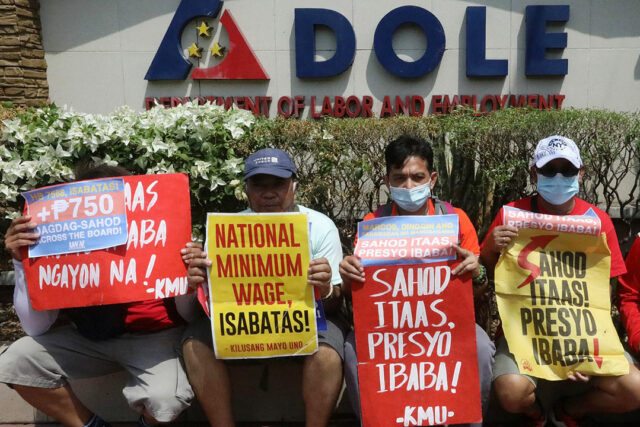
WORKERS’ groups banded by a common call for a wage hike hold a protest in front of the Department of Labor and Employment on March 30, 2023. — PHILIPPINE STAR/EDD GUMBAN

PRESIDENT Ferdinand R. Marcos, Jr. has approved a measure creating an inter-agency body that will investigate reported labor rights violations against trade unionists, the Department of Labor and Employment (DoLE) said on Sunday ahead of the Labor Day observance. 

“It will look into alleged violations of the freedom of association as contained in the report and recommendations of the International Labor Organization (ILO)-High Level Tripartite Mission,” Labor Secretary Bienvenido E. Laguesma told BusinessWorld in a Viber message.  

Under Executive Order No. 23 signed on April 30, the Inter-Agency Committee for the Protection of the Freedom of Association and Right to Organize of Workers will be chaired by the Executive Secretary while the Secretary of the Department of Labor and Employment will be its vice chair,” the Presidential Communications Office said in a statement.  

Labor groups earlier proposed the establishment of a presidential commission that would look into cases of violence against workers. 

In February, a team of ILO representatives met with trade unions and government officials to discuss human rights violations against workers and union organizers.  

That same month, Philippine trade unions submitted a joint report to the ILO mission on labor rights violations.  

The labor groups said the Philippine government has consistently failed to comply with ILO conventions on freedom of association and the right to organize. 

MBC
The Makati Business Club (MBC), meanwhile, pressed the Philippine government to take more steps to tame inflation and pass a bill on apprenticeship that will support private sector-led skills training.  

We respectfully urge the government to redouble its efforts to reduce inflation to make it easier for working Filipinos to enjoy the fruits of their labor,the MBC said in a statement on Sunday.    

The MBC honors Philippine workers on this Labor Day. They have enabled the recovery from the pandemic even as inflation reached a 14-year high,the group said.    

The countrys inflation eased to 7.6% in March from the 8.6% in February but was higher than the 4% logged in March last year.    

The MBC also called for the immediate passage of a measure that will give businesses more leeway to train workers for available jobs and higher-skill employment.   

Such a bill would allow adequate time for training in line with practices in some of the worlds most labor-friendly countries while ensuring it is not used to violate labor rights,the group said.   

We thank Labor Secretary Bienvenido E. Laguesma for supporting and the House of Representatives for passing House Bill 6253. We respectfully urge the Senate to prioritize passage of their version when Congress resumes session on May 8,the MBC said.   

The non-profit business association also asked government to expand public transportation and infrastructure to improve worker productivity and quality of life.” 

The organization also pushed for more flexibility for workers in various industries, similar to the policy adopted for the information technology (IT) and business process outsourcing (BPO) sectors.  

The amended implementing rules and regulations of Republic Act No. 11165 or the Telecommuting Act and a Fiscal Incentives Review Board resolution allowed 100% work-from-home for IT and BPO workers while retaining their incentives.   

We support more dialogue on other measures that will promote flexibility and competitiveness while protecting labor rights and improving healthcare and social protections, including or especially for the rising number of gig workers… We also support dialogue on issues including wage subsidies during crises such as the pandemic, unemployment insurance, and portability of retirement benefit,the MBC said.    

CASH AID 
DoLE on Sunday held job fairs and released over P1.88 billion in cash aid to beneficiaries of its employment program for displaced workers.  

The job fairs, which will also be held in malls nationwide on Monday, will have participation from 1,286 local employers offering 126,273 vacancies, according to data provided by the department. 

At DoLE’s advanced Labor Day celebration held at the SMX Convention Center in Pasay City, Mr. Marcos said the government is optimistic about creating more jobs given the improved employment numbers in the past month.  

“Rest assured, the government will not neglect the field of employment,” he said in Filipino at the live-streamed event.  

Labor groups have scheduled protest actions on May 1, also known as International Workers’ Day, that is observed in several other countries. John Victor D. Ordoñez and Revin Mikhael D. Ochave

New state witness’ testimony won’t prove De Lima’s guilt — rights lawyer

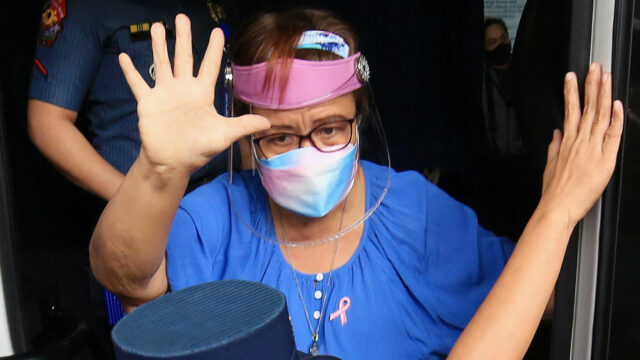
PHILIPPINE STAR/ RUSSELL PALMA

THE NEW state witness’ testimony against detained former senator Leila M. De Lima will unlikely add weight to the illegal drug trafficking charge against her, a human rights lawyer said at the weekend.  

“The rebuttal witness has no personal knowledge of the facts constituting the crime,” Ephraim B. Cortez, president of the National Union of Peoples’ Lawyers, said in a Viber message.  

“He cannot attest to the truth and veracity of the content of the sworn statements presented.” 

This comes after a Muntinlupa regional trial court allowed government prosecutors to have Demiteer U. Huerta, a lawyer from the Public Attorney’s Office (PAO), testify in Ms. De Lima’s drug trafficking case. The court maintained its date of decision of the case on May 12. 

Justice Spokesman Jose Dominic F. Clavano IV did not immediately reply to a Viber message seeking comment.  

“The court does not shrink from its responsibility to receive evidence in order to ferret out the truth,” Abraham Joseph B. Alcantara, presiding judge of the Muntinlupa Regional Trial Court Branch 204, said in the court order dated April 24 and made public on April 28.  

Mr. Huerta helped ex-prison chief Rafael Z. Ragos write an affidavit that accused Ms. De Lima of abetting the illegal drug train inside the national penitentiary when she was justice secretary  

In February, Mr. Ragos took back his allegations in open court, saying he had been coerced by a former Justice chief into testifying against one of ex-President Rodrigo R. Duterte’s most outspoken critics.  

Mr. Cortez said Mr. Huerta’s testimony will not prove anything since he only assisted in writing the affidavit and did not have personal knowledge of the allegations.  

“It will not prove any of the acts imputed against De Lima,” he said.  

Four witnesses have recanted their testimonies about Ms. De Lima’s alleged involvement in the illegal drug trade. All have claimed to have been coerced by the government of Mr. Duterte.  

One of the three-drug charges against the former lawmaker has been dismissed, while two are still pending in court. Last year, the Ombudsman cleared her and her former aide of bribery charges for lack of evidence.  

Ms. De Lima, who has been in jail since 2017, has asserted her innocence saying she was being tried for criticizing the former administrations deadly drug war.  

In 2016, Ms. De Lima led a Senate probe into vigilante-style killings in Davao when Mr. Duterte was still mayor and vice mayor of the city. She was arrested a year later after allegations of her involvement in the illegal drug trade.  

Political experts have said her imprisonment showed how easily the Philippine justice system can be abused.   

Amnesty International has called on the Philippine government to drop what it called “fabricated charges” against her. It said the government deprived her of her right to a fair trial through her arbitrary detention.  

Human Rights Watch has said Ms. De Lima’s imprisonment showed the continuation of human rights abuses in the country and urged the current government to release her. John Victor D. Ordoñez

New Bangsamoro shipping service to cut transport costs, open ASEAN link

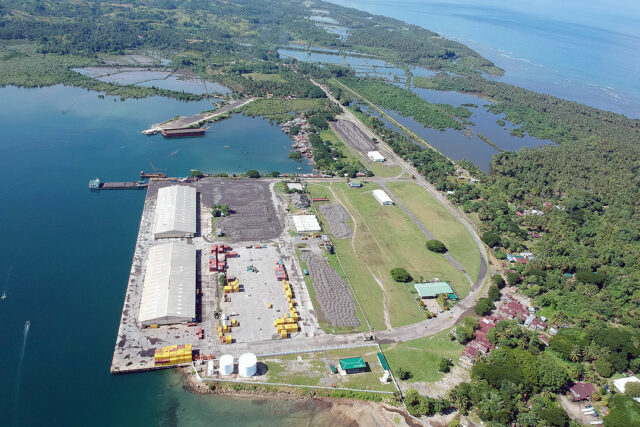
POLLOC FREEPORT AND ECOZONE — BARMM FACEBOOK PAGE

A DOMESTIC shipping route launched last week in the Bangsamoro region is seen to cut cargo transport costs by as much as 30% and opens an opportunity for expanded trade between southern Philippines and neighboring southeast Asian countries.  

Bangsamoro Transport Minister Paisalin P. Tago said the new roll-on, roll-off (RORO) service between Lamitan City in Basilan and Parang in Maguindanao del Norte is an initial step towards improving logistics and connectivity in the former restive region that is in transition.    

Speaking during the launch at the Polloc Freeport and Economic Zone in Parang, he said an international shipping company is looking into the inclusion of the port in an existing ASEAN RORO network that includes Singapore, Malaysia, and Indonesia.    

The Bangsamoro Ministry of Transportation and Communications has drawn up a Transport Logistics Roadmap that includes a list of priority projects and potential private sector investments on sea, air and land connectivity, and agro-industrial hubs.   

The strategically-located Parang is being eyed to become the new regional capital with a bill recently filed in the Bangamoro Autonomous Region in Muslim Mindanao (BARMM) Parliament proposing the transfer from Cotabato City.   

Strengthening maritime trade routes and intermodal transport systems will open doors for more trade and investment in the region, including in the tourism industry,United States Agency for International Development (USAID) Philippines Mission Director Ryan Washburn said in a recorded message at the launch ceremony.    

Additionally, this route will bring down transport cost of businesses by as much as 20 to 30 percent and reduce wastage of agricultural products that are inevitable if transported by land due to poor road conditions and connectivity, he said.   

USAID backed the RORO project through its Regulatory Reform Support Program for National Development that is being implemented by the University of the Philippines Public Administration Research and Extension Services Foundation.  

Bangsamoro Business Council Chair Ronald Halid D. Torres said the new shipping route will provide significant benefits to the business sectors in Cotabato City, in Maguindanao del Norte and in Lamitan City and other municipalities in Basilan. 

It can also create new trading avenues for the business communities in these areas,Mr. Torres said in an interview with the media on Saturday. 

Lamitan City Mayor Roderick H. Furigay said the direct sea link to the Bangsamoro center cuts travel time by half a day.     

Imagine the exhaustion you get from travelling first by boat from Basilan to Zamboanga City from where the long overland travel to Cotabato City begins,Mr. Furigay said.  

Basilan is mainly known for its rubber and coconut plantations, but it also produces fisheries and other agricultural commodities such as rice and coffee.  

The provincial government is also pursuing new farm income sources such as vegetable production using hydroponics with drip irrigation. John M. Unson

Sorsogon targets 1M visitors this year with new campaign

SORSOGON PROVINCIAL TOURISM OFFICE

SORSOGON, a coastal province most known for the whale sharks in Donsol town, is aiming to draw a million visitors this year through a new campaign that promotes its other attractions, including facilities for meetings and conventions.  

We worked together with the mayors of 14 towns and one city local government unit to promote our destinations. We are showcasing all destinations in various towns so that no one will be left behind in the development,Sorsogon Governor Jose Edwin B. Hamor said in a statement released by the Department of Tourisms (DoT) Bicol Region office.   

He said the one million target includes domestic and foreign travelers, including visitors for MICE (meetings, incentives, conventions and exhibitions). 

The Sorsogon City Convention Center and Sorsogon City Cultural Center for the Arts were recently completed, and the province has at least 40 DoT-accredited hotels, resorts, and other accommodation facilities. 

The Beautiful Sorsogon! Where Beauty is Everywhere campaign involves promotional videos that will be used for the global market, featuring nature sites and activities, cultural heritage, and culinary traditions.  

The Philippine Tour Operators Association (Philtoa) is also preparing tour packages for different markets.   

Sorsogon is the southernmost province in the northern mainland Luzon. The capital city is about 50 kilometers from the Bicol International Airport. It can also be reached by sea transport from Northern Samar and Cebu in central Philippines. Marifi S. Jara

Senator renews push to create a virology, vaccine institute

A SENATOR has reiterated the urgency for the Philippines to establish its own virology and vaccine institute amid the increasing positivity rate of coronavirus cases and a new subvariant detected in the country. 

The height of the COVID-19 pandemic emphasized the importance of always being ready especially in extending the Philippinescapacity to study different viruses and other viral diseases,Senator Sherwin T. Gatchalian said in a statement in time for the observance of World Immunization Week.  

Having our own virology and vaccine institute would ensure readiness and easier discovery of vaccines and remedies to sicknesses,he said in Filipino.  

Senate Bill No. 941, which Mr. Gatchalian authored, has been pending at the committee level. A similar measure in the House of Representatives has been given third reading approval.  

The proposed Virology and Vaccine Institute of the Philippines (VIP) will focus on building a body of research on virus strains and the diseases they cause to serve as the foundation of applied research studies and the development of diagnostic kits, vaccines, and therapeutics not just for humans, but also for animal and plant diseases that cause significant losses for local farmers and impact animal and agronomic health and food supplies,Mr. Gatchalian said in the bills explanatory note.  

The institute would also allow Filipino and foreign researchers to collaborate in studying viruses of agricultural, industrial, clinical, and environmental importance, the senator said.  

The VIP shall establish strategic partnerships with the world’s leading scientists, virology centers and institutes, and conduct innovative and pioneering researches that will advance the frontiers of virology in the country,according to the bill.  

The secretary of Science and Technology will serve as the VIPs governing board, with the Health secretary as co-chair.    

The Agriculture, Trade and Industry, and Environment and Natural Resources Secretaries will be among those who make up the board.  

Representatives from the academe, pharmaceutical industry, and a medical or allied-health association, will be appointed to the board by the Philippine president.  

The institute would need an initial funding of P2 billion from the national budget, according to the measure.  

The bill is included in the Legislative Executive Development Advisory Councils common legislative agenda. 

Pandemic monitoring group OCTA Research said last week that the Philippinescoronavirus infection rate increased to 12.3% last week from 8.1% previously.  

The country also detected its first case of Omicron subvariant XBB.1.16, which is spreading fast in more than 30 countries. 

Also called Arcturus, the subvariant is said to be highly contagious and more transmissible. The World Health Organization labeled XBB.1.16 a variant of interest. Beatriz Marie D. Cruz

Infrastructure, anyone?

ROBERT LINDER-UNSPLASH

I am pleased to share with readers, post below that Christine Tang and I wrote for subscribers of Globalsource Partners (globalsourcepartners.com). GSP is a New York based network of independent analysts of economic and political outlook in emerging markets.

In Washington for the World Bank/IMF Spring meetings earlier this month, the country’s economic managers turned the spotlight on infrastructure opportunities in the Philippines under the Marcos administration. In a half-day briefing that focused on the economy’s macro fundamentals and investment prospects, the economic team unveiled impressive headline grabbing numbers about the size (3,770 projects worth $317.5 billion) and breadth (six to nine sectors depending on which list) of the infrastructure program, including public-private partnership (PPP) projects in the pipeline (97 projects worth $42 billion).

Just like similar presentations in the early days of previous administrations, the usual comment we hear is that the latest infrastructure program looks more like a shopping list that has not taken budget constraints into account. Tagging 194 of these as “infrastructure flagship projects” appears to have done little to persuade observers that prioritization has been made. And like before, the strategy seems to be one of waving the list and letting the market pick and choose which ones are bankable and shovel-ready.

Talking to experienced on-the-ground players, we gather that despite the current administration’s more welcoming attitude, it will take time to get the PPP program up and running smoothly again. The program stalled under the six years of the Duterte administration when government opted for ODA/publicly-financed infrastructure projects. Moreover, the usual issues continue to hound project selection and implementation, including:

• Right of way delays. This is still the major bottleneck despite the enactment of Republic Act No. 10752 in 2016. One of the major changes that the law introduced was to use properties’ current market values, rather than the much lower zonal values, as bases for price offers. However, disputes over the current values reportedly continue as markets bring forward anticipated appreciation of land prices due to the infrastructure projects themselves. This is partly a reflection of the slow-moving bureaucracy where decision- makers tend to be risk averse due to possible political interference and audit disallowance, as well as shortfalls in planning and project management.

• Non-implementation of user fees, such as tolls and fares. Although automatic adjustments by formula are standard clauses in PPP contracts for the projects’ financial viability, these are especially vulnerable to political interference, resulting oftentimes in fixed prices for years on end. The most recent example is the President’s order to defer implementation of approved fare hikes on Metro Manila’s commuter rails, which have not adjusted fares since 2015, a period where average prices have gone up by over 20%. One of the three rail lines is operated by the private sector. Aside from adding to project risks which increases projects’ hurdle rates, the practice ends up burdening taxpayers with the cost of subsidizing a small set of users and beneficiaries of the affected infrastructure facilities.

• The lack of a national inter-modal framework to serve as basis for identifying, selecting, and prioritizing projects that will yield the highest economic returns for the archipelagic country. This, we gather, affects mass transport the most, with an overemphasis on rail vs. say, inter-island shipping. Further, we have been told that while integrated masterplans are available for metropolitan cities, e.g., Metro Manila, Cebu and Davao, even these have not been given sufficient attention when drawing up priority infrastructure lists. The problem is complicated by private sector-initiated “unsolicited” proposals that by law are not part of the development plan but involve some new innovation and would not require direct government subsidy or guarantee. Without a reference masterplan, evaluating these proposals would necessarily involve some ad hockery and create more confusion. The top-of-mind issue today is in air transport, particularly the lingering uncertainty over the rehabilitation of the Ninoy Aquino International Airport (NAIA), the main gateway to Metro Manila and surrounding provinces. A key issue appears to be the length of the contract to be bid out, which is affected by three other airports located just one to two hours away from NAIA, i.e., Clark which is already operating and Bulacan and Sangley, both unsolicited proposals that have yet to break ground.

• The problem that is the Department of Transportation (DoTr). Experts in the field tell us that while current Secretary Jaime Bautista is well-qualified for the job, he is handicapped not only by the above issue but also by: a.) a hollowed-out department, the result of decades of politicization of public investment decisions that underrated technical competence; and, b.) managing several quasi-independent bodies regulating land, rail, sea, and air transport, over which he exerts little influence, e.g., no power to dismiss people. This is unfortunate as DoTr is key to addressing transport and logistics bottlenecks, hurdles for raising investments in the country as well as attracting more tourists.

• Any number of challenges that could hold-up progress, from project preparation to award. The challenges start with the bureaucracy where a strong PPP Center is needed to facilitate projects and avoid papers being pushed from one department to the next, with requirements multiplying at every stage. After surmounting the project approval process, the competition stage is also prone to delays, especially in cases where bidders take for granted that calling on the courts, congress, or the President of the Republic to intervene on their behalf is part of the rules of the game. All this, a reflection of the country’s weak institutions, contribute to long delays in bringing projects to completion.

Overall, we get the sense that the building blocks for getting PPP off the ground are not yet in place. It took the Aquino government almost four years before its flagship PPP program roared to life. After three years of the pandemic that led to permanent income losses for the economy, economic managers know only too well that the country cannot afford to wait that long.


Romeo L. Bernardo is principal Philippine Adviser to GlobalSource Partners (globalsourcepartners.com). He serves as a board director in leading companies in banking and financial services, telecommunication, energy, food and beverage, education, real estate, and others. He has had a 20-year run in the public sector including stints in the Department of Finance (Undersecretary), the IMF, World Bank, and the ADB.

romeo.lopez.bernardo@gmail.com

The Philippine CDC and improving pandemic resiliency

CDC-UNSPLASH

After months of low COVID-19 positivity numbers, the Philippines is starting to see an uptick in cases. As of April 27, our weekly positivity rate is 14.3%, up from 9% on April 20. This comes after the detection of the more transmissible COVID-19 variant called Arcturus in the country.

While there has yet to be a reported change in severity, this development means that to prevent another surge, we need to reinforce the importance of COVID safety measures like wearing masks and ensuring good ventilation in public places.

At this point in the pandemic, we should ideally be confident in our health system’s ability to handle COVID cases. The virus has evolved and the illness has become less severe. Vaccine uptake in the Philippines is relatively high, although inequities exist among geographically isolated and poorer regions. We can only hope that the worst is over.

Despite all the learning moments and the three years we’ve had to build up our health systems, the Philippines’ ability to respond to pandemics, COVID-19 or otherwise, leaves much to be desired.

COVID is something we will be dealing with for years to come, whether in the form of the disease itself (long COVID, while still being studied in the Philippines, was reported to be experienced at one point by at least 15% of US adults as of January 2023, according to the US Centers for Disease Control and Prevention) or the repercussions of the lockdowns and pandemic policy.

In many ways, the pandemic held up a mirror to the Philippine government’s existing failures, especially those within our healthcare system.

The government’s pandemic response was painfully slow. The economy collapsed because of the one-size-fits-all lockdown, a policy decision which could have been avoided if we had a centralized contract tracing system and strong coordination between local government units and the National Government.

Perhaps the most important lesson that the pandemic taught us is that the voice of science and evidence in crafting policy cannot be belittled.

Science writer Philip Ball, in a 2021 article for Interface Focus, wrote that COVID required policymakers to work with scientists and doctors more closely than in any other recent event. However, he noted that science never operates in a vacuum; during the pandemic, science has been viewed as a savior (especially when vaccines emerged), and at times a villain or an inconvenience (when science ran into conflict with political leadership).

During the COVID-19 pandemic, the Philippine government, especially the highest-ranking officials, saw science and the scientific community as more of an inconvenience than an indispensable source of guidance.

Inevitably, political decisions do not rely on science alone; they need to have a wide range of considerations, including economic ones. But too often, in the most critical moments, the scientific community was shunned, and policies were not driven by data.

Our pandemic response was highly politicized. We saw the effects of the politicization of pandemic response many times: when local politicians endorsed and gave away ivermectin, a drug which was proven to be ineffective against COVID-19, to their constituents; when misinformation and inconsistent policies thrived; and when vaccine prioritization was pushed aside in favor of the well-connected and powerful.

Civil society and the medical community became a broken record, constantly calling on the government to listen to the doctors. But rather than listening to their critics, the highest-ranking government officials threatened them, even going as far as insulting the very doctors who played a crucial role in our pandemic response.

In an effort to address these shortcomings and prepare the Philippines for future public health emergencies, Congress proposed a bill creating the Philippine Centers for Disease Control and Prevention (CDC).

The bill was passed on third reading in the House of Representatives in December 2022. The counterpart in the Senate, Senate Bill 1869, containing Committee Report 28, has been sponsored by long-standing health champion, Senator Pia Cayetano, and is expected to move to the plenary floor soon. Health advocates are confident that Senator Pia, a staunch ally of the medical community and an advocate for data-driven policymaking even before the pandemic, will ensure the passage of the best possible version of the CDC bill.

The proposed CDC is a science-based organization with technical autonomy under the Department of Health (DoH), which uses data to drive decision-making. It is defined as “the technical authority on forecasting, analysis, strategy, and standards development for the prevention and control of all diseases of public health importance.” It also aims to clarify governance, decision-making, communication, and coordination processes with respect to public health threats.

One of the issues constraining the DoH in relation to COVID-19 response has been the lack of funding and positions for the ad hoc groups created, including the groups of technical experts crafting pandemic policies. The CDC addresses this by institutionalizing and creating offices, positions, and funding for the said units. Our technical experts who tirelessly worked pro bono for years deserve to be remunerated for their invaluable service. Hopefully, this will also strengthen the authority of our technical experts to contribute to policy discussions.

To further strengthen the voice of science, the bill needs stronger language, which emphasizes that the CDC’s decision and guidance must be given primordial consideration in coming up with health and health-related policies and decisions in times of a public health emergency.

We also believe that the Senate should reconsider a concerning provision found both in the House version and Senate Committee Report that undermines the Health Technology Assessment (HTA) process and gives the DoH the flexibility to bypass HTA for essential commodities.

The HTA process, carried out by the Health Technology Assessment Council (HTAC) and institutionalized in the Universal Health Care Act, plays an indispensable role in balancing the strength of clinical evidence with cost effectiveness, acceptability, social impact, and urgency of procuring health technology. Contrary to the criticism of the HTA process as a cause of unnecessary delay to the immediate implementation of measures to address public health emergencies due to the lack of suitable evidence, the HTA can actually recommend technology even when evidence on clinical effectiveness is of low quality, precisely because it weighs the urgency of a certain intervention. Without this process, recommendations from the World Health Organization and other international bodies would be adopted without proper evaluation of their feasibility within the Philippine context. International recommendations alone are not sufficient without assessing the health technology’s feasibility in the Philippine context.

The HTA process must be protected, especially during public health emergencies. Instead, the creation of a joint emergency HTA council during a public health emergency will streamline the evidence review process and guard against corruption.

Lastly, the current version of the bill simply provides that the appropriations be charged against the current year appropriations of the offices and agencies concerned. This could possibly constrain the budgets of the said offices and agencies. What resources CDC may get will be a loss of resources for other programs and vice versa.

More than anything, we need credible commitment that the CDC will be adequately funded and be able to fulfill its responsibilities. We can create this by enacting a baseline budgetary appropriation for the CDC, which will be the starting point for future appropriations.

The CDC will also absorb a number of offices of the DoH, some in full, including the Epidemiology Bureau. However, for the CDC to make an impact on our public health strategies, we hope that it will go beyond a mere reorganization or transfer of boxes on the DoH’s organizational chart, and truly strengthen the voice of science in crafting policy.


Pia Rodrigo coordinates the health policy team of Action for Economic Reforms.

The Sino-Indian rivalry is reshaping Asia

ANUJ YADAV-UNSPLASH

NEW DELHI — Three years after China stealthily began encroaching on India’s territory in the Himalayas, no end is in sight for the two countries’ border standoff. While the rival military buildups and intermittent clashes have received little attention in the West, the escalating border confrontation has set in motion a long-term rivalry that could reshape Asian geopolitics.

By locking horns with China despite the risk of a full-scale war, India has openly challenged Chinese power in a way no other world power, including the United States, has done in this century. Chinese President Xi Jinping’s strategic overreach has caused India to shift away from its previous appeasement policy and accelerate its military buildup, turning a potential partner into an enduring foe, while appearing determined to forestall a Sinocentric Asia.

Similarly, Xi’s muscular revisionism and geopolitical ambitions have forced Japan and Australia to readjust their strategic frameworks and work to counter China’s expansionism in the Indo-Pacific. By drawing up plans to double defense spending by 2027, Japan has effectively abandoned its pacifist postwar national-security policy. Australia, for its part, has renounced its previous hedging approach and joined the AUKUS defense pact with the US and the United Kingdom.

China’s attempt in spring 2020 to occupy hundreds of square kilometers in the icy borderlands of India’s northernmost Ladakh region, at a time when India was enforcing the world’s strictest national lockdown, amounted to a cynical effort to exploit the COVID-19 pandemic to further Xi’s strategic aims. But Xi miscalculated when he assumed that China could force India to accept the new status quo as a fait accompli. Since then, India has more than matched China’s military deployments, fueling the largest-ever military buildup in the Himalayas, one of the world’s most inhospitable regions.

With India refusing to buckle, Xi has sought to overwhelm its defenses by opening up a new front in the eastern Himalayas, more than 2,000 kilometers from China’s 2020 land grabs. In December 2022, a Chinese incursion into the strategically crucial border state of Arunachal Pradesh was repelled by Indian forces, reportedly with help from US intelligence.

In an effort to strengthen its territorial claim and provoke India, China has Sinicized the names of sites in Arunachal Pradesh. Calling Arunachal Pradesh “South Tibet,” the Chinese government has asserted that the sprawling state — more than twice the size of Taiwan — is “Chinese territory” and that Sinicizing Indian lands is its “sovereign right.”

All this has given India a stake in Taiwan’s continued autonomous status. If Taiwan were to fall to China, the Austria-sized Arunachal Pradesh could become the Chinese government’s next target for “reunification.” China’s annexation of Tibet in 1951 proved to be one of the most significant geopolitical developments in post-World War II history, giving China common borders with India, Nepal, Bhutan, and northwest Myanmar. A Chinese takeover of Taiwan could lead to a similar geopolitical reordering, enabling Chinese naval forces to break out of the “first island chain” and easily access the Pacific.

China’s claim that Taiwan has “always been” part of China is historically dubious. Taiwan did not become a Chinese province before the late 19th century, and China lost control of the island just eight years later, when the Qing Dynasty ceded it to Japan in perpetuity following its defeat in the 1895 Sino-Japanese War. But in laying claim to Taiwan, Xi is working to complete Mao Zedong’s expansionist vision of a “Greater China.”

Similarly, Tibet is the key to Chinese expansionism in the Himalayas despite the fact that it was a part of China only when China itself was occupied by outsiders like the Mongols and the Manchus. Because it cannot claim any Han-Chinese connection, its territorial claims in the Himalayas rest on alleged Tibetan ecclesial or tutelary links. Even tiny Bhutan has not been spared; China has been nibbling away at its borderlands.

Against this backdrop, India’s willingness to stand up to China is crimping Xi’s expansionist agenda. As Admiral Michael M. Gilday, the US Navy’s chief of naval operations, put it last year, India presents China with a “two-front” problem. “They [Indians] now force China to not only look east, toward the South China Sea and the Taiwan Strait, but they now have to be looking over their shoulder at India,” he said.

Moreover, the Sino-Indian rivalry has flared up at a time when China’s economy is running into long-term constraints, including a shrinking and rapidly aging population and slowing productivity growth. By contrast, India, which has one of the world’s youngest populations with a median age of 28.4, is reaping a demographic dividend. While its GDP is still smaller than China’s, it is the world’s fastest-growing major economy.

Given that its military is the world’s most experienced in hybrid mountain warfare, India has an edge in the high-altitude Himalayan environment. Moreover, in contrast to India’s all-volunteer military, the Chinese People’s Liberation Army largely relies on conscripts who ostensibly “volunteer” for two years of service after they reach the age of 18. That helps explain why China has chosen to engage in stealth encroachments rather than direct combat.

The current military stalemate in the Himalayas serves as yet another reminder that Xi has picked a border fight with India that he cannot win. With the US-China rivalry deepening, the last thing China needed was to make a permanent enemy of its largest neighbor. Ultimately, bringing India and America closer could prove to be Xi’s lasting legacy — an unintended consequence that threatens to undermine his regime’s aggressive irredentism.

PROJECT SYNDICATE


Brahma Chellaney, professor of Strategic Studies at the New Delhi-based Center for Policy Research and fellow at the Robert Bosch Academy in Berlin, is the author of Water, Peace, and War: Confronting the Global Water Crisis (Rowman & Littlefield, 2013).

How to cope when your job and your values clash

CALLUM SKELTON-UNSPLASH

MAYBE your boss has asked you to give harsher feedback than you think is warranted. Maybe you’ve given in to pressure to work weekends — again — when it’s your only time with your kid. Or maybe you’ve agreed to install monitoring software to track employees, something most IT professionals say makes them feel uneasy.

These moments aren’t only unpleasant. What makes them especially stressful is the mirror they hold up: I am someone who yells at subordinates. I am someone who puts work ahead of my own child. I am someone who spies on employees.

In their new book, The Microstress Effect: How Little Things Pile Up and Create Big Problems — and What to Do About It, Rob Cross and Karen Dillon explain that when jobs include tasks that challenge employees’ personal values, it creates stress in part by undermining their sense of identity. That can gradually wear people down. (Disclosure: Dillon was the editor of Harvard Business Review when I started working there in the late aughts.)

Microstresses have always existed, but a couple of aspects of modern work make them perhaps more common now — technology that allows irate clients and demanding bosses to reach employees day and night; jobs that demand not only time and effort, but deep emotional commitments; a lack of boundaries between the personal and professional. Today, many people look to their careers to provide the sense of community and identity they once got from religious organizations and social clubs.

Today’s polarized political environment can contribute to identity-challenging microstresses, too, by making so many conflicts feel all-or-nothing. Employees might never have relished working for a client whose political beliefs they found offensive, or upholding a maternity leave policy they thought was insultingly stingy. But today, doing so not only feels distressing. It feels complicit.

Megan Reitz, a professor at the Hult International Business School in the UK who studies employee activism, pinpoints the conundrum: Upholding the status quo is, itself, a kind of political statement. “There is no such thing as being apolitical. Inaction is as political as action.”

The problem, of course, is that it isn’t feasible to change jobs every time a task conflicts with personal values. And most jobs involve some level of moral compromise. “There is no perfect company,” Dillon admits.

Especially when someone is very invested in their job, it’s easier to go along with demands that make them uncomfortable. After all, these are hardly major moral transgressions — no one here is being asked to commit a crime. And yet the strain can build up over time. As one of the managers Cross and Dillon interviewed said, “I’ve become one of those people I never used to like. I don’t even know how this happened.”

That’s why, in the authors’ interviews with 300 people identified by their organizations as high achievers, the happiest were those who had “granular clarity” on their priorities, which made it easier to identify the lines they didn’t want to cross.

One subject in the study walked away from a job worth $500,000 in salary and bonuses because it involved a relocation that would conflict with the kind of life he wanted to live — one rooted in family, friends and community. He told Cross and Dillon he has no regrets about taking a less lucrative job.

Others found ways to make their jobs feel more meaningful by taking more initiative. For instance, one of Dillon and Cross’ interviewees was discouraged when her boss flatly told her their only job was to increase shareholder value; she managed to make the work feel more motivating by spearheading a corporate mentoring program. Similarly, an employee dismayed by the corporate carbon footprint could advocate for reform.

This approach isn’t without some risk, of course. Everyone has a finite amount of workplace capital. But Reitz told me that when she meets with employees who have been frustrated in their attempts to push for change, they can almost always identify something more to try — something different, or something more effective — that will allow their message to be more persuasive.

And yet there will be times when the best option is to walk away. Quitting a job that’s a constant source of microstress might feel like a personal failure, like you’ve let it win. But you can use what you’ve learned to find a new employer that’s more in line with your values. I’ve worked with many people who have no plans to need parental leave but who intentionally seek out employers who offer generous policies because of what it symbolizes.

Whether someone stays or leaves, Dillon suggests seeking sources of meaning outside work. Friendships, hobbies, physical exercise — all these things keep us grounded and help us gain perspective. This isn’t really about work-life balance; it’s about making work just one aspect of identity. It’s a kind of portfolio diversification: the totality of one’s eggs, the importance of multiple baskets.

Perhaps I should mention that in Cross and Dillon’s research, only 10% of the high achievers they interviewed stood out as rising above their stressors. I asked her: Does that mean the rest of us are doomed? “They intuitively had methods of coping with it,” says Dillon. But “I think we’re all capable of it.”

BLOOMBERG OPINION

ADVERTISEMENT
ADVERTISEMENT