Home Blog Page 4915

Outlook for Asia and the Philippines: Unabated recovery amid uncertainty

MIKEL-UNSPLASH

THIS LOOKS to be a challenging year for the global economy, with global growth decelerating owing to monetary tightening and Russia’s war in Ukraine continuing to weigh on activity. Persistent inflation pressures, and now financial sector problems in the US and Europe, are injecting additional uncertainty into an already complex economic landscape.

Against this somber backdrop, the Asia-Pacific remains a dynamic region. Despite weakening external demand — such as the downturn in demand for tech exports towards the end of 2022 — and monetary tightening, domestic demand has so far remained strong, with China’s reopening providing fresh impetus. Growth in Asia and the Pacific is projected to increase this year to 4.6%, up from 3.8% in 2022, an upgrade of 0.3% from the October 2022 World Economic Outlook. This means the region would contribute around 70% to global growth. Following an impressive acceleration to 7.6% in 2022 stemming from strong private consumption and investment, growth in the Philippines is projected to remain strong in 2023, even though it is expected to moderate to 6% due to the confluence of global shocks and recent monetary policy tightening.

However, this dynamic outlook does not imply that policymakers in the region can afford to be complacent. The pressures from diminished global demand will weigh on the outlook. Headline inflation has been easing, but remains above targets in most countries, while core inflation has proven to be sticky. Although spillovers from turmoil in the European and US banking sectors have been limited thus far, vulnerabilities to global financial tightening and volatile market conditions, especially in the corporate and household sectors, remain elevated. Growth is expected to fall to 3.9% five years out, the lowest medium-term forecast in recent history, thus contributing to one of the lowest medium-term global growth forecasts since 1990.

Risks to the outlook are to the downside, reflecting the possibility of stickier global and regional price pressures, the disconnect between markets’ anticipation of monetary policy paths and major central banks’ communications, additional turmoil in global financial markets, adverse spillovers to the region from China’s medium-term growth slowdown, and deeper geo-economic fragmentation.

Monetary policy should remain tight until inflation falls durably back within target. The exceptions are China and Japan, where output is below potential and inflation expectations have stayed muted. In the Philippines, where headline inflation appears to have peaked, core inflation has accelerated, and a continued tightening bias in the near term will help anchor inflation expectations and safeguard the country’s external position. Unless strains in financial markets increase and financial stability is at stake, central banks should separate monetary policy objectives from financial stability goals, using available tools aimed at addressing financial stability risks to allow them to continue to tighten policy to address inflationary pressures.

Monitoring pockets of vulnerability linked to elevated debt burdens in the corporate and household sectors, and market risks and corporate credit risk exposure in the financial sector, is essential for safeguarding financial stability. While the banking system in the Philippines remains sound, with sufficient liquidity and capital buffers, declining NPLs, and healthy credit growth, higher for longer interest rates and corporate credit risks warrant close monitoring. Capacity to assess financial stability risks and resolve troubled financial institutions if warranted should also be strengthened.

Elevated public debt and rising interest costs call for continued — and, in some cases accelerated — fiscal consolidation, which can also support the battle against inflation while protecting the vulnerable through targeted measures. Continued efforts to ensure spending discipline and enhance revenue mobilization should underpin medium-term consolidation in the Philippines, while creating fiscal space and securing adequate resources for education, infrastructure, food security, healthcare, and clean energy.

Lastly, structural reforms are needed to improve growth potential through innovation and digitalization, accelerate the green energy transition, and reduce risks from fragmentation. Combined with efforts to attract foreign direct investment, accelerating reforms to raise productivity, reduce infrastructure and education gaps, and harness benefits from the digital economy can boost the Philippine economy’s potential growth. These reforms should be complemented by strengthening existing social protection schemes and addressing climate change through a more integrated strategy that includes a carbon pricing scheme.

(See https://www.imf.org/en/Publications/REO/APAC/Issues/2023/04/11/regional-economic-outlook-for-asia-and-pacific-april-2023)


Ragnar Gudmundsson is the International Monetary Fund’s resident representative to the Philippines.

Filipino heritage and Alcala

PHILIPPINE STAR/ MIGUEL DE GUZMAN

“A country’s heritage gives its people its identity as a race, and an inspiration to unite for its future,” said Gil G. Chua, Filipino Heritage Festival, Inc. (FHFI) Trustee.

By virtue of Presidential Proclamation No. 438, S. 2003, National Heritage Month (NHM) is observed annually and celebrated in May. It is the month dedicated to the Blessed Mother.

“Filipino Heritage Festival, Inc. is a private non-profit organization has been in existence for 19 years. It works with the government to make the public aware of our own heritage and a deeper knowledge to know who we are,” remarked Armita B. Rufino, FHFI president. “We believe that by doing so, we will bring the Filipino people into the unity and love of country, to know more about our roots. This would bring about our appreciation, care, and concern.”

The youth is the country’s next generation of cultural heritage bearers. Thus, FHFI has been conducting the Youth Forum on Heritage since 2016. It is one of the major activities. Through strong public and private partnerships, FHFI organizes the annual forum to plant a seed and develop it into the passion of preserving and safeguarding the nation’s cultural treasures. The forum helps the youth understand the importance of cultural heritage in community development and nation-building.

During the pandemic, communities developed “hope muscles” as they learned to find opportunities from the painful experiences brought by COVID-19. Communities recognized the ability of culture to withstand or adapt to change though conservation initiatives of vast localities. The online heritage talks, conferences, and cultural mapping training became essential in NGO and LGU programs.

Cultural heritage preservation is relevant — in terms of research and management. It is crucial for the community’s conduct towards important local cultural properties in times of crisis. Cultural heritage is threatened by several factors like natural calamities, man-made disasters such as wars and terrorism, unsound modern development and, the most worrisome threat of all, neglect.

We are now in the process of healing from the devastation of the pandemic. Our heritage, through change and continuity, is healing.

“The FHFI and NCCA’s Youth Forum on heritage project will be a great endeavor towards fostering intergenerational connections and preserving cultural legacies. I wholeheartedly support its endeavors,” said Francisco “Kiko” Benitez, Ph.D., Representative of the 3rd district of Negros Occidental.

“In the hands of the youth lies the power to breathe new life into our cultural legacy, to infuse it with their own unique perspectives and to pass it on to future generations, richer and more vibrant than before. Through the youth forum on heritage, the FHFI and NCCA (National Commission for Culture and the Arts) will cultivate the value of cultural appreciation and preservation and the vital role all of us play in protecting and promoting our cultural heritage. I am honored to be part of these efforts,” he said.

“The youth are not just inheritors of the past but architects of the future, who must weave the threads of tradition and innovation together to create a tapestry that will stand the test of time. The youth forum in a testament to our commitment to cultivating cultural awareness and appreciation among the younger generation, and I am proud to offer my unwavering support.”

Among the cultural events scheduled during National Heritage Month include multiple exhibitions.

There is the National Heritage Month exhibition at The Metropolitan Museum of Manila (The M), done in partnership with the FHFI and NCCA. This has been an annual project for the last two decades. It has featured outstanding heritage personages and cultural legacies in art, architecture, music, photography, and design.

This year the focus is on the town plaza.

“For this year, 2023, Places of Memory, Places of the Heart goes to the heart of the Filipino urban and provincial life with a nostalgic and contemporary revisiting of town plazas around the country. A place of gathering, a space for community, the town plaza was witness to celebrations, fiestas, romance, grief, arrivals, and departures, and the hum of daily living,” said Tina Colayco, The M president.

“This exhibition is also a timely and relevant focus that adheres to his year’s Heritage Month theme of ‘Change and Continuity,’” she said.

“Urban heritage in the Philippine context is focused on the quintessential setting of the plaza. From the Spanish colonial era onwards, towns and cities in the country were organized based on guideline set by the Laws of the Indies. The urban form prescribed was based on the cuadricula, a grid. Within this, the most important structure — church, Presidencia (town hall) and homes of the elite were organized around and defined a central space — the plaza,” explains landscape architect Paulo G. Alcazaren in his curatorial notes for the exhibit.

The exhibit will run from May 4 to June 3.

Among the interesting events this Heritage Month is the much-awaited encore of the exhibition Larry Alcala: Slices of Life, Wit, and Humor – Travelling Exhibition 2023.

The exhibitions pay homage to National Artist for Visual Arts Larry Alcala, the cartoonist who was loved by millions of Filipinos. We all looked forward every morning to reading his serialized cartoons which depicted scenes of local everyday life throughout the 1970s and ’80s. Twenty years after his demise, Professor Alcala still has popular appeal to different audiences. The elements are his “humorous, hard-hitting and timeless visual commentaries about Philippine society.”

Up close and personal during a private interview with this writer, Alcala was witty, humble, and charming. He was always a part of the cartoon story. Everybody tried to spot him disguised discreetly in some unexpected obscure corner of his cartoons. It was a delightful, folksy game of “hide-and-seek” between artist and his broad audience of all ages.

Last year, the first exhibition series of works by Alcala was presented by FHFI, NCCA and The M, in cooperation with SM Malls. The curator for his exhibit is the award-winning artist Ruben “Totel” de Jesus (a former student of Prof. Alcala), a faculty member of UP College of Fine Arts.

This year the exhibit will be on view at the Museo ng Makati from May 11 to June 3, and at the Negros Museum from May 15 to July 31.

A major sponsor expressed his appreciation of the festival:

“As business leaders, we support the initiatives of FHFI and the National Commission for Culture and the Arts in organizing National Heritage Month because they have been doing a great service to Filipinos by leading the efforts toward our heritage preservation,” said Gil G. Chua, group chairman and CEO of the DDB Group Philippines.

Mabuhay ang Filipino!”

Best wishes to Filipino Heritage Festival, Inc., the organizers, the generous partners and sponsors. Thank you for keeping our cultural heritage vibrant for future generations.

The Youth Forum on Heritage 2023 will be hosted by the Office of Rep. Francisco “Kiko” B. Benitez and co-hosted by the mayors’ offices of Victorias City, Silay City, Talisay City, the municipalities of EB Magalona and Murcia, with the participation of LGU-Mayor’s Office of Bacolod City. The three-day forum workshop with fieldwork will heighten the youth’s sense of social responsibility and leadership within their communities. (The attendees will be between the ages of 17 to 23 years old.) For more information, contact Judith Neric, Project Coordinator of FHFI, at nericjudith@yahoo.com, the Museo ng Makati at mcao@makati.gov.ph, and the Negros Museum at thenegrosmuseum2014@gmail.com.


Maria Victoria Rufino is an artist, writer and businesswoman. She is president and executive producer of Maverick Productions.

mavrufino@gmail.com

Xencelabs unveils new Pen Display 24 Studio Series

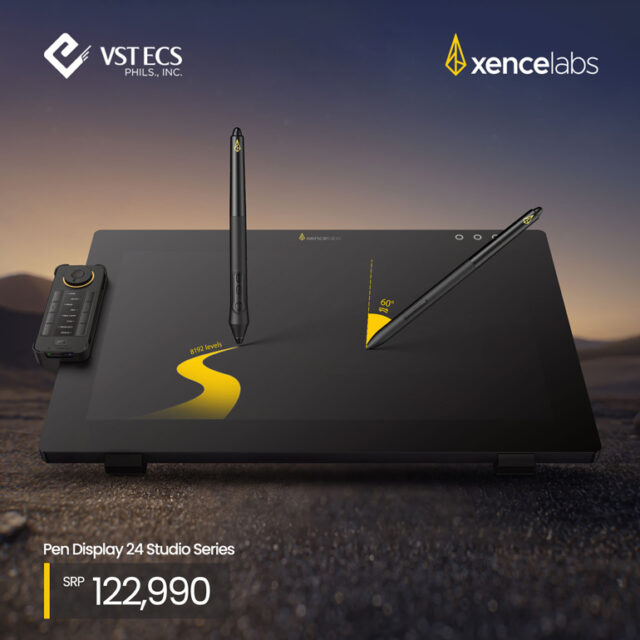
Xencelabs Technologies Ltd. is giving artists a new creative choice with its Pen Display 24 Studio Series. The new drawing display joins the company’s full line of professional digital design tools including its Pen Tablet Medium, Pen Tablet Small, and the Quick Keys customizable remote — creating a comprehensive portfolio of professional drawing tools available for creative communities worldwide.

The new drawing display made its public debut at the Game Developers Conference (GDC), last March 22 to 24, 2023 in San Francisco.

The Pen Display 24 offers a range of features and capabilities compared to competitive offerings, including enhanced glare reduction and fingerprint resistance, an edge-to-edge drawing surface, a natural drawing experience, Pantone® Color and SkinTone™ validation, the included Tilt Stand, VESA mount flexibility, silent and fanless operation and a security slot for the Kensington MicroSaver® 2.0 lock.

“Since we launched our first product, we’ve constantly looked for new ways to improve the creative workflow,” said Michael Thompson, head of Global Product at Xencelabs. “We listened to artists and their input is reflected in the Pen Display’s design: stunning display fidelity, excellent drawing experience, superior ergonomics and more. This device is designed for maximum productivity, adapting to the user’s preferences, not the other way around.”

The Pen Display 24 comes with all key accessories, including a Tilt Stand, to let users start working immediately after downloading their preferred driver (Mac, PC or Linux) and plugging in the display. The Linux driver works similarly to the Windows and Mac drivers and has full functionality.

Key Features and Benefits of the Xencelabs Pen Display 24:

Studio Quality Drawing Experience

The display features edge-to-edge tempered glass with Xencelabs’ Super-AG Etching™ for exceptional glare and reflection reduction, delivering clarity even in bright rooms with overhead lighting. The continuous surface is uninterrupted by buttons or seams. An anti-fingerprint coating reduces streaking and smudges caused by everyday use. The etched glass screen provides the right amount of friction for a natural drawing feel.

Two pen sizes are provided to fit different sized hands and preferences. One pen comes with three buttons, while the other has two buttons, and each has an eraser. The three-button pen is particularly useful for 3D work or for artists who prefer more pen buttons. Pens can match users’ preferred sensitivity and initial activation pressure is adjustable to as low as 3g.

The display’s pressure curve has been meticulously tuned for optimal responsiveness and stroke-to-stroke accuracy, with the pen response adjustable to each user’s drawing style.

Brilliant Imagery and Color Performance

The Pen Display delivers 1.07 billion colors for accurate color reproduction. Its 4K Ultra-High Definition resolution (up to 3840 x 2160) contributes to an improved workflow, as images that are enlarged several times still retain clarity and sharpness, helpful when sketching details. The display supports six industry-standard color spaces.

The new display meets key performance criteria from Pantone, recognized globally as a trusted and familiar color system used across many applications well-suited to the new display. The Pen Display 24 is Pantone Validated, assuring users of the product’s ability to faithfully simulate the full range of Pantone Colors. It is also Pantone SkinTone™ Validated, which means the Pen Display 24 meets Pantone’s testing criteria (a patent-pending process) and can authentically reproduce the diverse set of skin tones found in the Pantone SkinTone Guide.

The screen is optically bonded to minimize parallax and produce a bright, clear image with no “sparkling” effect to cause distraction or eye fatigue.

Increased Productivity

The included Xencelabs Quick Keys can be attached to anywhere on the side of the Pen Display 24 making it easy to find a comfortable location. The Xencelabs Quick Keys allows artists to incorporate shortcut keys into their workflow through an easy-to-use interface. The integrated OLED display lets users see button assignments at a glance. There can be up to 40 shortcuts per application using the set button which allows users to group eight keys into five different sets. The physical dial offers four function modes for zoom, rotation, brush size, and other functions. Button settings switch automatically when a new application is activated with the pen.

Users can quickly access settings via three programable LED buttons on the top of the Pen Display. By changing color, these buttons also provide a reminder that the pen buttons or Quick Key button assignments may have changed when a different application is in use.

A Virtual Tablet Mode allows pen control of multiple displays. Users can drag or manipulate objects from one display to the other using just the pen.

Ergonomics

The included Tilt Stand enables the Xencelabs Pen Display 24 to be tilted comfortably at any angle between 16 and 72 degrees and is easily adjusted with one hand. A standard VESA mount (100X100mm) allows the lightweight (5.8 kg / 12.8 lbs) Pen Display 24 to be easily used with additional stand options, such as an arm, with no adapter needed.

An adjustable clip holds the Quick Keys in place and allows it to be attached anywhere along the four sides of the display for maximum comfort and usefulness.

The Pen Display is designed for silent and fanless operation, with a magnesium alloy rear housing that dissipates heat and eliminates the need for a fan.

For more information about Xencelabs and the new Pen Display 24, visit www.xencelabs.com.


Spotlight is BusinessWorld’s sponsored section that allows advertisers to amplify their brand and connect with BusinessWorld’s audience by enabling them to publish their stories directly on the BusinessWorld Web site. For more information, send an email to online@bworldonline.com.

Join us on Viber at https://bit.ly/3hv6bLA to get more updates and subscribe to BusinessWorld’s titles and get exclusive content through www.bworld-x.com.

China’s holiday tourism rebound to pre-COVID levels boosts outlook

REUTERS

 – China’s tourism rebounded to preCOVID 19 levels in the May Day holiday as the number of domestic trips rose by more than two-thirds from a year earlier, government data showed on Wednesday, a welcome boost for the world’s second-biggest economy.

If sustained, a recovery in the service sector could ease worries that China’s post-pandemic economic recovery could soon lose momentum with the property market still soft, its vast manufacturing sector weak and exports facing persistent headwinds.

Travel-hungry Chinese made 274 million domestic trips during the five-day break that began on Saturday, a rise of 70.8% from a year earlier, and 19% more than during 2019, the Ministry of Culture and Tourism said on its website.

During these trips, Chinese tourists spent 148 billion yuan ($21 billion), a 128.9% increase from a year earlier, and on a par with 2019 levels.

The figures from this year’s May Day holiday – the first travel season since the pandemic without restrictions – are being monitored as a gauge of China’s economic health.

Official data on Sunday showed activity in China’s non-manufacturing sector grew in April, albeit at a slower pace than in March.

“The strong holiday tourism data, together with the still-solid April services PMI, bode well for consumption and services recovery in coming months, despite the softening in manufacturing growth momentum,” wrote Goldman Sachs in a note.

“This also adds conviction to our above-consensus 2023 GDP growth forecast (6.0%).”

The next leg of consumption recovery will rely on higher income growth and improved consumer confidence which will make the recovery model more sustainable, Goldman Sachs added.

Asset manager Vontobel said it believes China’s recovery should accelerate, benefitting companies that cater to domestic consumers across leisure and e-commerce, as well as travel-focused businesses in China and across Asia.

Total box office collections of May Day movies this year exceeded 1.5 billion yuan by the end of the holiday period, ranking third in May Day box office receipts in Chinese film history, state television reported on Thursday.

The travel boom during the May holiday “can be seen as a turning point of China’s tourism sector”, official Xinhua News Agency said on Wednesday.

The China Tourism Academy estimates about 4.55 billion domestic tourist trips will be made this year, up 73% from 2022, Xinhua reported. – Reuters

US oil and gas output growth set to slow sharply: Kemp

WIRESTOCK

 – US oil and gas production grew rapidly in the first two months of 2023 – a delayed response to the high prices and upturn in drilling that characterized much of last year following Russia’s invasion of Ukraine.

But growth is set to decelerate sharply as the more recent slump in prices curtails new drilling and well completions, with the impact evident by the fourth quarter of 2023.

US crude and condensates production fell by 53,000 barrels per day (bpd) in February from the month before, according to data from the U.S. Energy Information Administration (EIA).

Lower output from the US portion of the Gulf of Mexico (-79,000 bpd) and Alaska (-2,000 bpd) more than offset continued growth from the Lower 48 states (+28,000 bpd).

Total production nonetheless increased by almost 1.2 million bpd compared with the same month a year earlier (“Petroleum supply monthly”, EIA, April 28).

Cumulative output reached 738 million barrels in the first two months of 2023, up from 669 million barrels in the same period in 2022, and the second highest ever after 771 million in 2020, before the pandemic.

Much of the increase was the lagged effect of high prices and additional drilling during the first nine months of 2022.

Producers generally wait to confirm a price increase will last, and must then hire rigs, wait for them to move into position, finish boring, hire completion crews, fracture wells, flow test them, and connect them to gathering systems.

After prices increase, it typically takes an average of five months for oil drilling to accelerate and another six months for wells to be fractured and completed, resulting in an overall lag of up to 12 months.

In real terms, front-month futures prices for U.S. crude were well above $100 per barrel for most of the second quarter of 2022, putting them above the 80th percentile for all trading days since 1990.

The impact of that period of very high prices was still boosting output during the first quarter of 2023 as wells contracted earlier were completed and put into production.

Since then, however, front-month WTI prices have fallen to around $70, roughly the 60th percentile, diminishing the incentive to boost production.

In response, the number of rigs drilling for oil had fallen to 591 on April 28 from a post-pandemic high of 627 on Dec. 2, according to field services company Baker Hughes.

Slower drilling will filter through into slower production growth before the end of 2023, helping offset slower consumption growth as a result of the business cycle downturn.


GAS PRODUCTION

US gas production increased to a record 5,984 billion cubic feet in the first two months of 2023, up from 5,600 billion cubic feet in the same period in 2022, an increase of almost 7%.

Strong growth in output coupled with a relatively mild winter and the disruption of exports after the explosion at Freeport LNG resulted in a large build up of inventories and pressured prices.

Working gas inventories in underground storage amounted to 2,009 billion cubic feet on April 21 compared with 1,484 billion cubic feet at the same point a year earlier.

Stocks were in a surplus of 280 billion cubic feet (+16% or +0.61 standard deviations) over the ten-year seasonal average, having been in a deficit of 432 billion cubic feet (-14% or -1.50 standard deviations) as recently as September 2022.

The massive surplus has depressed prices to just $2.10 per million British thermal units (2nd percentile for all days since 1990 in real terms) down from more than $9.30 (90th percentile) in August 2022.

The number of rigs drilling for gas has remained steady at around 150-160 per week since September, after climbing steadily from just over 100 at the start of 2022.

The static rig count should slow production growth from the third quarter of 2023, and the restart of Freeport LNG’s export operations should help reduce some of the surplus inventory.

But the accumulated surplus is so large some reduction in drilling and completions will probably be needed to push production and consumption back into balance and eliminate excess stocks.

Ultra-low prices are providing the strongest possible incentive to postpone new drilling and completions to promote a return to balance as well as encourage gas-fired power generators to maximize their running hours. – Reuters

Google, Meta executives push back against Canada online news bill

STOCK PHOTO |

 – Google and Meta would withdraw access to news articles in Canada if legislation compelling internet companies to pay news publishers is passed, company executives told Canadian lawmakers on Wednesday.

Canada‘s proposed legislation would force platforms like Google parent Alphabet Inc. and Facebook parent Meta Platforms Inc. to negotiate commercial deals and pay Canadian news publishers for their content, part of a broader global trend to make tech firms pay for news.

Google may be forced to remove links to news articles found in Canadian search results if the bill passes, its vice president of news Richard Gingras said in testimony to a Senate committee, citing an “uncapped financial liability” if it had to pay publishers for linking to their sites.

Meta would also end the availability of news content in Canada if the bill is passed as currently drafted, said Rachel Curran, head of public policy for Meta in Canada.

Ottawa’s proposal is similar to a ground-breaking law that Australia passed in 2021, which also triggered threats from Google and Facebook to curtail their services. Both eventually struck deals with Australian media companies after amendments to the legislation were offered.

This year, Google tested blocking some Canadian users’ access to news as a potential response to the legislation, a move Prime Minister Justin Trudeau called a “terrible mistake.”

Google last year linked to Canadian news publishers more than 3.6 billion times, Gingras said, helping those companies make money on ads and new subscriptions.

Curran said Facebook feeds sent Canadian publishers more than 1.9 billion clicks in the 12 months ending April 2022, worth an estimated $230 million in free marketing.

A framework that requires us to compensate publishers for links or news content they voluntarily put on our platforms is unworkable,” Curran said.

The bill introduced in April 2022 by Heritage Minister Pablo Rodriguez is the latest legislation aiming to make digital media platforms pay for linking news content.

“All we’re asking the tech giants like Facebook and Google to do is negotiate fair deals with news outlets when they profit from their work,” Heritage Ministry spokesperson Laura Scaffidi said. – Reuters

Key moments in King Charles’ coronation

COACH PROCESSION

A grand procession by the royals in historic coaches through central London is always a highlight of any major state occasion.

For the coronation, Charles and his wife Camilla, who will also be crowned queen during the ceremony, will break with tradition and travel from Buckingham Palace to London’s Westminster Abbey in the modern Diamond Jubilee State Coach, made to commemorate his mother’s 60th year on the throne.

They will return from the Abbey in the Coronation Procession in the 260-year-old, Gold State Coach which weighs four tons and needs to be pulled by eight horses. It has been used at every coronation since King William IV’s in 1831 and was first used by George III to travel to the State Opening of Parliament in 1762.

The return journey will be much slower as the Gold State Coach can only travel at walking pace – but the distance itself will be about a third of the 7.2 km (4.5 mile) route taken by his mother Queen Elizabeth II in 1953 when millions thronged the streets of London to watch.

It will also involve some 4,000 armed forces personnel in a procession one mile long, making it the largest of its kind for a generation.


ANOINTING

During the service, Charles will be anointed with holy Chrism oil, made using olives from the Mount of Olives and consecrated in Jerusalem.

The tradition dates back to the Old Testament of the Bible which describes the anointing of King Solomon by Zadok the Priest and Nathan the Prophet, and has been maintained to emphasize the spiritual status of the monarch.

“This is often thought to be the most sacred part of the ceremony,” Charles Farris, Public Historian At Historic Royal Palaces, said. “It’s an ancient and very symbolic ceremony … historically it was akin to the anointing of priests and bishops.

“It’s a way of the church cementing their relationship with the new monarch but also a clear symbol to all present that the monarch has been marked out as very special.”


MUSIC

The ceremony will feature 12 new works, which Charles commissioned or selected, including a new coronation anthem by musical theatre impresario Andrew Lloyd Webber.

Along with the new, there will be the usual trumpet fanfares and music which has been historically used at coronations over the last four centuries.

Perhaps the most notable is “Zadok the Priest” which was composed by George Frideric Handel as a coronation anthem for King George II in 1727 and has been sung at every one since. Soccer fans might recognize the famous tune as the UEFA Champions League anthem.


CROWNING

The key moment of the ceremony will be when Charles – sitting on a coronation chair dating back more than 700 years – is given regalia, from bejeweled orbs and scepters to swords and a ring.

The culmination sees the 360-year-old St Edward’s Crown, weighing in at 2.2 kg (4 lb 12 ounces) and a replacement for an original dating back to the 11th Century, placed onto Charles’ head by the Archbishop of Canterbury.

“It is the most blingy way of signing your job contract,” said royal historian, Professor Kate Williams.

“The big moment, the big photograph moment, the big moment that everyone’s going to be talking about, making memes of, making TikToks of, that’s when the king is crowned, when the king has the crown put on his head”.


BALCONY SCENE

Having returned to Buckingham Palace, the big finale – as it is for weddings, jubilees and other major royal events – is the appearance by the senior Windsors on the balcony at Buckingham Palace.

There will be a fly past by military aircraft including the Red Arrows Royal Air Force aerobatic team and historic planes from World War Two.

While the newly-crowned king and queen will be the center of attention, all eyes will be on whether Charles’ younger son Prince Harry appears.

People will also be watching Prince Louis, the youngest child of heir Prince William, who stole the show last year during celebrations for Queen Elizabeth’s Platinum Jubilee by covering his ears and screaming amid the din caused by the aircraft fly past. – Reuters

Smart follows through ‘Best Network’ award with Ookla citation as Fastest Mobile Network in Q1

PLDT wireless unit Smart Communications, Inc. (Smart) builds on its prestigious distinction as the Philippines’ Best Mobile Network as it continued to provide significantly higher download speeds for customers in the first quarter of 2023, according to the latest report by Ookla®, the global leader in mobile and broadband network intelligence.

In its latest Speedtest Global Index covering Q1 2023, Ookla reported that Smart delivered the country’s fastest median download speeds at 33.39 Mbps. Its closest competitor clocked in with a median download speed of 22.29 Mbps.

Best Mobile Network for Best Customer Experience

The latest Speedtest results further strengthen Smart position as the first and only Philippine mobile operator to win Ookla’s Best Mobile Network Award for Q1-Q2 2022 and Q3-Q4 2022.

To clinch this rare citation, Smart won both the Fastest Mobile Network and Best Mobile Coverage awards within the same reporting periods of Ookla.

“Smart’s best mobile network puts us in the best position to provide the best customer experience and empower Filipinos to truly live more today,” said Francis E. Flores, SVP and Head of Consumer Business Group – Individual at Smart.

According to Flores, Smart’s fastest speeds and widest coverage are key in enabling customers to make the most of the moments that matter to them – from sharing updates with family and friends on social media instantly, making crystal-clear video calls with loved ones, uploading and downloading files for work and school in seconds, streaming the latest series and movies in high-definition seamlessly, and playing bandwidth-heavy games without lag, among others.

“At the heart of our network leadership is our obsession with providing Filipinos the best customer experience,” he added.

Speedtest leader across the country

Data from Ookla’s latest country report showed that Smart is the fastest mobile network in Metro Manila, Cebu City and Davao Region, as well as other key cities and provinces.

These include Abra, Agusan del Norte, Aklan Albay, Bataan, Batangas, Benguet, Biliran, Bohol, Bulacan, Bukidnon, Cagayan Valley, Camarines Norte, Camarines Sur, Catanduanes, Cavite, Davao del Sur, Ilocos Norte, Ilocos Sur, Iloilo, Isabela, La Union, Laguna, Leyte, Marinduque, Mountain Province, Negros Occidental, Nueva Ecija, Oriental Mindoro, Palawan, Pampanga, Pangasinan, Quezon, Rizal, Romblon, South Cotabato, Tarlac, Zambales, and Zamboanga del Sur.

Aligned with UN Sustainable Development Goals

Smart’s 3G, 4G/LTE and 5G network covers 97 percent of the country’s population, with its approximately 76,500 base stations, including more than 7,200 5G base stations and close to about 38,800 LTE base stations.

Smart’s continuous improvement of its mobile network is aligned with the PLDT Group’s endeavors to anchor initiatives on the United Nations Sustainable Development Goals (UNSDG), particularly on SDG No. 9 – Industry, Innovation, and Infrastructure.


Spotlight is BusinessWorld’s sponsored section that allows advertisers to amplify their brand and connect with BusinessWorld’s audience by enabling them to publish their stories directly on the BusinessWorld Web site. For more information, send an email to online@bworldonline.com.

Join us on Viber at https://bit.ly/3hv6bLA to get more updates and subscribe to BusinessWorld’s titles and get exclusive content through www.bworld-x.com.

How to spend your summer time at home

Summer is finally here, and there’s no better way to enjoy the warm weather than by spending time outdoors! Whether you are planning a family picnic at home or hosting a backyard barbecue, Wilcon Depot offers quality outdoor products for you to create a comfortable space where you can relax and unwind. With a wide range of outdoor product selections, you can enjoy this summer from the comfort of your home.

Start by making a list of all the outdoor activities you enjoy doing during the summer months.

CHARBROIL PERFORMANCE 4-BURNER GAS GRILL

A BBQ with your family and friends is the perfect way to spend your summer. This BBQ griller is an excellent investment given its features that can be used quickly and easily, and it has a modern design that is fit for any garden or lanai space.

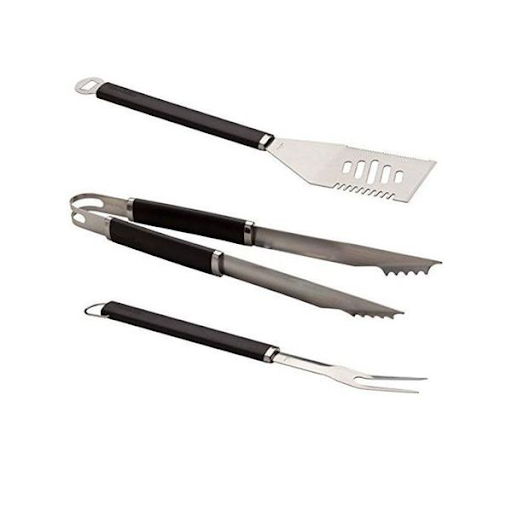
CHARBROIL TOOL SET

Elevate your backyard barbecue game with the Charbroil Tool Set. This set includes essential grilling tools such as tongs, spatula, and fork that are made with high-quality stainless steel for durability. These tools have been expertly crafted to make grilling hassle-free, so you can spend more time enjoying your summer cookouts.

EUROWARE MASON JAR 3.3L

Add a touch of summer charm to your kitchen with the EuroWare Mason Jar 3.3L. Perfect for storing refreshing summer drinks such as lemonade or iced tea, this mason jar is made with high-quality glass and comes with a lid to keep your drinks fresh.

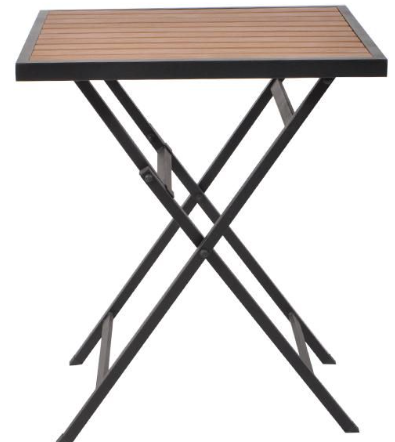
HEIM DINING CHAIR & TABLE

BBQ day is not complete without a cozy outdoor dining area. Invest in this elegant and durable table and chair made of sturdy material for a stable dining experience. With its versatile color and wooden-like design, it can accent any exterior home theme. 

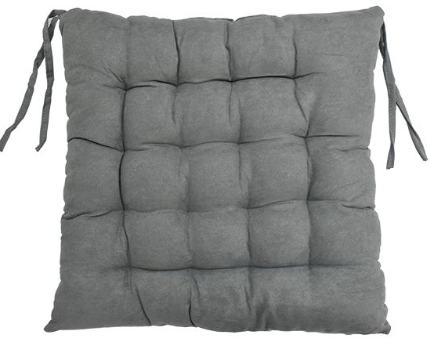
HEIM SEAT CUSHION

Add comfort to your outdoor seating with Heim Seat Cushions for added comfort while lounging under the sun. This seat cushion is perfect for outdoor furniture such as patio chairs and garden benches, and is soft yet durable, making it ideal for a relaxing summer day outdoors.

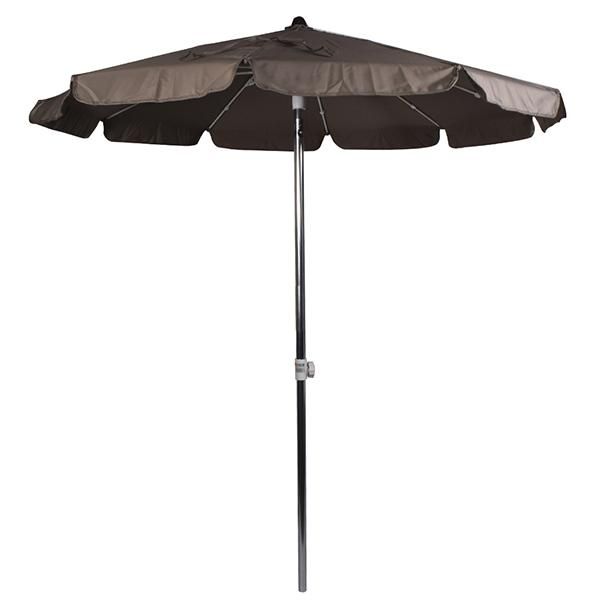
HEIM PATIO UMBRELLA

Stay cool and shaded while enjoying the outdoors with Heim Patio Umbrella. The umbrella’s durable and waterproof fabric provides excellent protection against the sun and rain, making it perfect for summer weather.

HEIM ARTIFICIAL PALM PLANT AND HEIM RUBBER PLANT POT

Bring the tropical vibe into your home with Heim Artificial Palm Plant and Heim Rubber Plant Pot. These plants are perfect for adding greenery to your outdoor space without the hassle of maintaining real plants.

LANDJACK BIKE

Stay active this summer with the Landjack Bike. This rugged and reliable bike is perfect for exploring trails and biking around the neighborhood and it is easy to maneuver, giving you a smooth and enjoyable riding experience.

Wilcon Depot offers Heim, Char Broil, Euroware, and Landjack goods for ultimate summer relaxation. From comfortable outdoor furniture to storage options, as well as reliable bikes, Wilcon Depot has got you covered.

Explore the limitless product selections that Wilcon offers, ranging from Tiles, Sanitarywares, Plumbing, Furniture, Home Interior, Building Materials, Hardware, Electrical, Appliances, and other DIY items.

Shop at any Wilcon Depot and Wilcon Home Essentials store nationwide or shop online at Wilcon Online Store by visiting shop.wilcon.com.ph.

For more information about Wilcon, you can log on to www.wilcon.com.ph or follow their social media accounts on Facebook, Instagram, and Tiktok and subscribe and connect with them on Viber Community, LinkedIn, and YouTube.


Spotlight is BusinessWorld’s sponsored section that allows advertisers to amplify their brand and connect with BusinessWorld’s audience by enabling them to publish their stories directly on the BusinessWorld Web site. For more information, send an email to online@bworldonline.com.

Join us on Viber at https://bit.ly/3hv6bLA to get more updates and subscribe to BusinessWorld’s titles and get exclusive content through www.bworld-x.com.

Marcos gets US investment pledges

PHILIPPINE STAR/KRIZ JOHN ROSALES

SEVERAL US COMPANIES are seeking to invest in the Philippines after company officials met with a delegation from Manila during President Ferdinand R. Marcos, Jr.’s four-day visit to Washington, D.C. this week, according to the Philippine Trade department.

The business delegation met with officials from Zero Motorcycles, Analog Devices, healthcare provider Optum (UHG), Inc., business process outsourcing (BPO) company Atento S.A., NuScale Power Corp., Ultra Safe Nuclear Corp. and Maxeon Solar Technologies, it said in a statement on Wednesday.

Optum will invest P800 million to establish a health information management service operation in Davao that will create 1,500 jobs, the agency said.

Analog Devices will set up a research and development center that will hire 1,000 engineers for semiconductors, it added.

“We are happy with the outcome as six of the companies have firm plans in the Philippines,” Trade Secretary Alfredo E. Pascual said in the statement. “The companies will put in billions of dollars’ worth of investments and will generate thousands of jobs for the Filipino people.”

Maxeon plans to produce its Max 7 product in the country.

“With this project, the most advanced solar cells in the world will be manufactured in the Philippines,” the Trade department said.

In a separate statement, the presidential palace said Atento would set up its first call center in the Philippines at the Iloilo Business Park.

Mr. Marcos told company officials at the Blair House in Washington, D.C. “Filipinos speak and write the best English,” the Presidential Communications Office said in a separate statement.

“I know it will be successful because it has been successful in the past,” he said, based on the palace statement. “It has been a go-to industry for the Philippine government for quite a long time now.”

“I don’t see how it could be a problem since this is really a line of work that has become well established in the Philippines,” he added.

Atento operates in Argentina, Brazil, Chile, Columbia, El Salvador, Guatemala, Mexico, Morocco, Panama, Peru, Puerto Rico, Spain, Uruguay and the US, the palace said.

The company is expected to employ more than 500 Filipinos in the first year and 665 workers in the second year, bringing P21.4 million in investments, it added.

Atento officials met with the Philippine Board of Investments (BoI) in July to discuss its BPO plan.

Also on Tuesday, vaccine maker Moderna, Inc. told Mr. Marcos it would set up an enterprise solution hub in the Philippines that will provide business services across the Asia-Pacific region, where Moderna has operations in six markets.

“Moderna also plans to establish commercial operations in the Philippines,” it said in a statement.

The company said it would provide enterprise solutions in the Philippines, similar to its counterparts in Warsaw and Atlanta, which were established in May 2021 and March 2022, respectively.

“The hub will initially house finance, pharmacovigilance, medical and HR personnel, in addition to commercial-focused roles, to support its direct presence in the market,” it said.

Moderna expects to employ 50 workers in the Philippines this year. It plans to start operations in the second or third quarter.

Meanwhile, British-American cruise operator Carnival Corp. announced a plan to hire about 75,000 Filipino seafarers in the next three to four years.

Company Chief Executive Officer (CEO) and President John Padget during a meeting with Mr. Marcos and other Philippine officials praised Filipino workers for their hospitality and competitiveness in the global workforce, the palace said.

NUCLEAR ENERGY
“It doesn’t matter whether it’s the marine, deck, hospitality, restaurant… Everything is based on the happiness, the smile and the greatness of Filipino employees.”

Meanwhile, Ultra Safe CEO Francesco Venneri told Mr. Marcos the company wants to bring clean and reliable nuclear energy to the Philippines, describing the move as “probably a very important way for us to enter the market.”

It will be Ultra Safe’s first nuclear energy facility in Southeast Asia.

“We also note that there’s a great deal of discussion about Mindoro having blackouts and that might be an excellent… a good science [solution],” Mr. Venneri told Mr. Marcos.

On Monday, Oregon-based NuScale said it would conduct a study to find a site in the Philippines. The company is known for developing small nuclear power systems.

The Philippines “essentially has a shortfall in power supply” and the entry of NuScale would help address this issue, Mr. Marcos told the company.

Khevin A. Yu, energy transition campaigner at Greenpeace Philippines, said nuclear energy companies are making the Philippines a “guinea pig” for “untested risky technologies.”

“Small modular reactors are still untested and unproven, and there is currently no way to safely store nuclear waste,” he said in a statement.

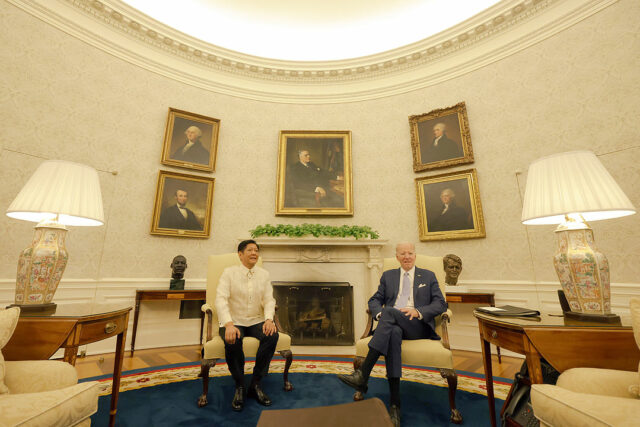
Mr. Marcos left the Philippines on Sunday for his five-day visit to Washington, where he meets with US President Joseph R. Biden, Jr.

The Philippine leader also met with US Vice-President Kamala Harris at the US Naval Observatory in Washington, D.C. on Tuesday, discussing a wide range of areas including digital inclusion and clean energy economy, according to the palace.
He thanked Ms. Harris for “laying the groundwork” for his Monday meeting with Mr. Biden.
“The vice-president and President Marcos also discussed strengthening the US-Philippine economic partnership and noted President Biden’s plan to dispatch a Presidential Trade and Investment Mission to the Philippines to grow investment between our countries,” the White House said in a statement.

It said the US vice-president had also emphasized Washington’s “commitment to the rule of law and respect for human rights, including labor rights, freedom of expression and the press, and other democratic principles and the importance of these areas for the US-Philippine partnership.” — Revin Mikhael D. Ochave and Kyle Aristophere T. Atienza

Consumer spending to boost PHL growth

PHILIPPINE STAR/ MIGUEL DE GUZMAN

HOUSEHOLD SPENDING in the Philippines is likely to grow by 5.9% yearly in the next four years, Fitch Solutions BMI said on Wednesday, putting the economy on track for faster growth.

In a report, the research firm upgraded the 2024-2027 forecast from 5.1% in January, saying consumer income growth would probably outpace rising prices. It kept this year’s forecast at 5.5%.

“Inflationary forces will remain elevated across 2023, but nominal income growth is still forecast to outpace inflation, which ensures real income growth for consumers, giving greater propensity for spending,” BMI said.

Last year, Philippine household consumption grew by 8.3% from 4.2% in 2021. It was the biggest contributor to growth in 2022, driven by restaurant and hotel spending.

BMI, a unit of Fitch Solutions, said its consumer spending forecast is in line with economic growth expectations for the Philippines.

Fitch Solutions earlier kept its growth outlook for the Philippines at 5.9% this year, while raising the forecast for 2024 to 6.6% from 6.1%.

This year’s growth forecast is lower than the government’s 6-7% target and the 7.6% expansion last year. The outlook for next year is within the government’s 6.5-8% target for 2024 to 2028.

BMI inflation that remains above the Bangko Sentral ng Pilipinas’ (BSP) 2-4% target might affect consumer spending.

“We forecast inflation will continue to worsen over 2023 (from 5.8% in 2022, to 6.5% over the year) and that this will continue to negatively impact the prospects for Filipino consumers,” it added. 

A BusinessWorld poll of 14 analysts yielded a median estimate of 7% for April inflation, settling near the upper end of the 6.3-7.1% forecast by the Philippine central bank. This could be slower than 7.6% in March and the slowest in seven months.

“Although [March inflation] is the lowest recorded inflation figure since September 2022, it is still one of the highest levels of inflationary spikes since the global financial crisis in 2008 as prices for household goods, clothing and nonessential spending categories have remained unchanged or have accelerated,” BMI said. 

The research firm said the Philippine peso might weaken to P56.50 a dollar this year from P54.50 in 2022 and could further add to inflationary pressures.

“Elevated inflation will thus continue to be a risk to the forecast, with respect to consumer spending in the Philippines,” it said. “However, our Country Risk team forecasts inflation to mediate downwards for 2023, averaging 6.5% year on year and ending the year at 4%.”

The BSP expects full-year inflation at 6% before easing to 2.9% in 2024. 

Central bank Governor Felipe M. Medalla earlier said inflation would slow to the 2-4% target by the fourth quarter.

To tame inflation, the Monetary Board has raised borrowing costs by 425 basis points (bps) since May last year, bringing the key policy rate to 6.25%. The BSP will meet on May 18 to discuss policy.

BMI said key rates in the Philippines might peak at 6.25% in the first half, with the central bank likely to keep rates steady at its May meeting.

“We forecast the central bank to leave rates on hold through the second half of the year as global monetary conditions stabilize and as headwinds to the Philippine economy mount,” it said.

Meanwhile, the global research and data firm said the demand for migrant Filipino workers has been increasing globally.

“In particular, there is a demand for Filipino workers skilled in jobs related to medical and health services, construction and housekeeping,” BMI said.

Cash remittances rose by 3.6% to $32.539 billion in 2022 from a year earlier, according to central bank data.

Elevated inflation across global markets might dent remittances, it said. The peso would probably weaken to P56.50 a dollar this year and could further add to inflationary pressures.

The likely weakening of the peso will also “reduce the amounts sent back by overseas workers in local currency.”

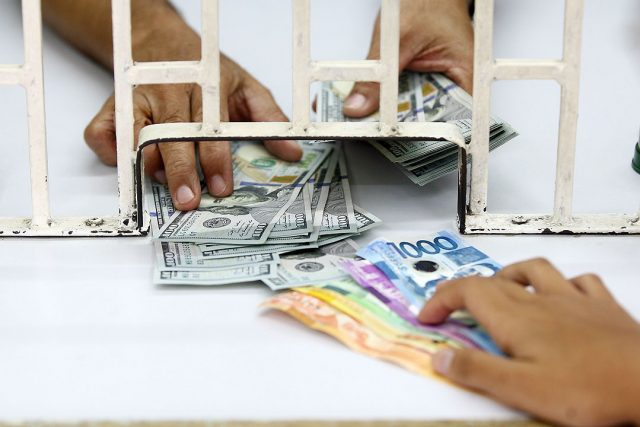
The peso closed at P55.335 a dollar on Wednesday, up by 0.50 centavo from its Tuesday close, according to data from the Bankers Association of the Philippines. — Keisha B. Ta-asan

Peso weakness vs dollar to persist, says MUFG

PHILIPPINE STAR/MIGUEL DE GUZMAN

THE PHILIPPINE PESO would probably continue to weaken in the near term given the country’s high current account deficit and a dovish central bank, according to MUFG Global Markets Research.

In a report, it said it expects the peso at P54.40 a dollar by the first quarter of 2024, weaker than its earlier forecast of P54.

The currency is likely to weaken to P55.30 a dollar by the second quarter this year, worse than its previous outlook of P55 and the peso’s close of P54.36 at the end of March.

By the end of the third quarter, the peso could strengthen to P55 a dollar before closing at P54.80 by yearend.

MUFG earlier saw the peso finishing the third quarter at P54, and the year at P53.50, before closing at P53 at the end of March 2024 against the greenback.

“We continue to think that the Philippine peso will underperform Asian currencies given its relatively high current account deficit, coupled with a more dovish central bank,” it said.

The country’s current account deficit widened to $17.8 billion last year, higher than the $5.9-billion shortfall a year earlier amid a wider trade in goods deficit.

The Bangko Sentral ng Pilipinas (BSP) has said it expects the current account deficit to narrow to $17.1 billion.

Central bank Governor Felipe M. Medalla said last month the Monetary Board might consider pausing its tightening cycle at its May 18 meeting if inflation eased further in April.

The Monetary Board last month hiked benchmark interest rates by 25 basis points (bps) to help bring down inflation, bringing its key rate to a 16-month high of 6.25%. The central bank has raised borrowing costs by 425 bps since May 2022.

The BSP said last week April inflation likely settled within 6.3-7.1%, slower than 7.6% in March. It could surpass the BSP’s 2-4% target for the 13th consecutive month.

Still, the lower end of the forecast will match 6.3% in August 2022 and will be the slowest in 10 months.

MUFG said core inflation, which excludes volatile food and fuel prices, remains sticky even if inflation has come off.

Core inflation quickened to 8% in March from 7.8% in February and 2.2% a year earlier. This was the highest in 22 years.

The Philippine Statistics Authority is scheduled to release inflation data on Friday.

The peso closed at P55.335 a dollar on Wednesday, up by 0.50 centavo from its Tuesday close, according to data from the Bankers Association of the Philippines. — Aaron Michael C. Sy

ADVERTISEMENT
ADVERTISEMENT