Home Blog Page 4904

Marcos dismisses criticism that his campaign played down family corruption

SCREENSHOT FROM THE KINGMAKER

WASHINGTON – Philippine President Ferdinand R. Marcos, Jr. dismissed criticism during an interview on Thursday that his presidential campaign played down the corruption and extravagance the Marcos family was known for during his father’s rule.

Marcos told Reuters at the end of a four-day visit to Washington that his country’s citizens could not continue to fight decades-old social battles.

“My opposition would try to bring up this old issue. But of course, we answer to the voting public and the voting public has given their very clear and loud response to that and that they are not worried,” he said.

“These are not the things that Filipinos feel we must be talking about,” he added. “We need to be talking about livelihoods, about jobs, about education, about the economy.

“A fractured society that continues to fight battles that are 45 years old is selling itself short because it’s the future that we’re worried about, not the past.”

During his campaign, critics said Marcos’ presidential bid tried to whitewash the corruption and authoritarianism associated with his father’s 20-year rule.

The elder Ferdinand Marcos ruled for two decades starting in 1965, almost half of it under martial law, helping him extend his power until his overthrow and his family’s retreat into exile during a “people-power” revolution.

During his rule the family name became associated with cronyism and billions of dollars’ worth of missing state wealth. The Marcos family denies wrongdoing.

Marcos Sr died in exile in Hawaii in 1989, but his family returned to the Philippines to launch a comeback that culminated in his son’s election in May.

Marcos’ Washington visit has been the first by a Philippine president in more than 10 years and included a summit on Monday with U.S. President Joe Biden. It was the latest of several high-level meetings Marcos has held with leaders of the United States and China, which are jostling for strategic advantage in the region.

U.S. officials describe the Philippines as strategically vital to efforts to push back against China’s expanding influence, and Biden has courted Marcos, who still faces a U.S. court judgment connected with $2 billion of plundered wealth under his father’s rule. As head of state Marcos is immune from U.S. prosecution.

The Philippines and the U.S. have drawn closer since Marcos won his election, a change from the administration of Marcos’ predecessor Rodrigo Duterte, who turned the Philippines sharply away from its oldest ally and built closer ties with China.– Reuters

Marcos says US access to PHL bases not meant for ‘offensive action’

PHILIPPINE STAR/KRIZJOHN ROSALES

WASHINGTON – Philippine President Ferdinand R. Marcos, Jr. said on Thursday his agreement this year to grant the United States access to more military bases in his country was not intended for use for “offensive action” against any country.

Speaking to a U.S. think-tank in Washington, Marcos said he had made that point to Chinese officials during recent talks. He also said the U.S. had not asked the Philippines to provide troops in case of war between China and the U.S. over Taiwan.

Marcos told the Center for Strategic and International Studies that the 2014 Enhanced Defense Cooperation Agreement (EDCA) that allows access to bases in the Philippines was conceived to deal with the effects of climate change.

“The foreign minister of China just visited with me … and I told him and I assured him that no, these are not … intended to be military bases to attack, to move against anyone, any country, not China, not any country,” Marcos said.

He said use of EDCA bases for “offensive action” would be outside the parameters of what Manila had discussed with the United States and added that Washington had never brought up the possibility that they would be used as “staging areas” for offensive action against any country.

Manila’s ties with Washington have deepened under Marcos and he granted the U.S. military access to four more bases in February, something China said was “stoking the fire” of regional tension.

Experts say the United States sees the Philippines as a potential location for rockets, missiles and artillery systems to counter a Chinese amphibious invasion of Taiwan, which China claims as its own territory.

U.S. Defense Secretary Lloyd Austin said after a meeting of the defense and foreign ministers of the United States and the Philippines last month that it was “too early” to discuss what assets the United States would like to station at Philippine bases.

Marcos came to Washington for a summit with President Joe Biden seeking clarity on the extent of Washington’s commitment to protect his country under a 1951 security pact, amid rising tensions in the South China Sea, where Manila has rival claims to Beijing’s, as well as tensions over Taiwan and North Korea.

Biden said after their meeting on Monday the U.S. commitment to the defense of its ally was “ironclad,” including in the South China Sea, and after a visit by Marcos to the Pentagon on Wednesday the two sides issued a six-page document of “bilateral defense guidelines” laying out the extent of U.S. commitments to the Philippines under their 1951 mutual defense treaty.

Marcos said relations between Washington and Manila were back on a “normal road of partnership” and needed to evolve to make them more responsive to present and emerging challenges.

Under his predecessor Rodrigo Duterte, relations with U.S. had soured as Duterte turned the Philippines sharply away from its former colonial ruler and built closer ties with Beijing. — Reuters

The M showcases documentation of heritage plazas

In his work as a city planner and landscape architect, Paulo Alcazaren has spent the past 15 years traveling all over the country and taking the opportunity to record the heritage of plazas, their landscapes, and their remaining structures of note. This documentation forms the backbone of The M’s latest exhibition in collaboration with the Filipino Heritage Festival Inc., with support from the National Commission for Culture and the Arts called Places of Memory, Places of the Heart: Plazas in the Philippines.

Plazas in the Philippines have been central to communal celebrations and other social and political events in over 1,600 towns and cities for hundreds of years. However, it has fallen prey to the pressures of population and economic growth, as well as the a endant consequences of urban densification and commercial real-estate development.

The exhibition narrates our contemporary understanding of Urban Heritage in the Philippines harking to this year’s National Heritage Month theme: Heritage: Change and Continuity. Set in an installation that represents the modern-day equivalent of the plaza for many Filipino urban dwellers – the basketball court – the exhibition will showcase a selection of 16 plazas from around the country, featured to show their contexts alongside archival images, interactive artworks, photo collages of Rizal Monuments that form part of the built environment of plazas, and a selection of artworks from The M’s own collection, highlighting the history and trajectory of town and city plazas in the Philippines.

Please check our social media profiles for public programs related to this exhibition: @MetMuseumManila #PlazasinthePH #UrbanHeritage #NHM2023

Places of Memory, Places of the Heart: Plazas in the Philippines is a co-production of Metropolitan Museum of Manila (The M) and Filipino Heritage Festival, Inc. (FHFI), supported by the National Commission for Culture and the Arts with partners Security Bank Corp., BusinessWorld, and DDB Group Philippines.


Spotlight is BusinessWorld’s sponsored section that allows advertisers to amplify their brand and connect with BusinessWorld’s audience by enabling them to publish their stories directly on the BusinessWorld Web site. For more information, send an email to online@bworldonline.com.

Join us on Viber at https://bit.ly/3hv6bLA to get more updates and subscribe to BusinessWorld’s titles and get exclusive content through www.bworld-x.com.

Charting the continuing development of fintech

Photo from FREEPIK

Perhaps one of the most notable effects of digital technology is the prevalence of fintech and its growing role in the daily life of their everyday users.

Technology-enabled financial services, or fintech, have revolutionized the financial services industry around the world in the span of a few short years. By offering new ways for financial institutions like banks to collect and use data, develop new investment assets, and extend services, fintech has influenced new financial products tailored to modern consumers, business models, markets, and even changed how people interact with their money.

It is undeniable that the constant advances in digital financial technology and banking facilitate the creation of more accessible and effective financial services that benefit the economy as a whole. In the World Bank’s (WB) recent report, Fintech and the Future of Finance, the organization delves into the tremendous shifts that were caused by advancements in fintech and highlighted the opportunities and risks brought about by the innovation.

“In developing economies, we can see tremendous progress in access to financial services. There has been a spectacular increase in the share of adults using financial accounts, which rose by 30 percentage points between 2011 and 2021 to 71%, is partly attributable to fintech developments such as mobile money,” the WB said.

The organization further noted that the share of adults making or receiving digital payments rose to 57% in 2021 from 35% in 2014, according to the latest round of World Bank Findex data surveys.

Fintech, WB found, is a net positive for the pursuit of economic expansion, poverty alleviation, and the elimination of the informal economy.

Notably, fintech is providing new opportunities for low-income people and small enterprises who lack access to traditional banking services.

Through the use of fintech, businesses and individuals are able to send and receive payments safely, as well as get access to a variety of savings, credit, and insurance products that can aid in business growth, risk management, and long-term financial planning.

Particularly relevant for a country like the Philippines is that the WB report found that remittance services, a crucial source of income for many families, are seeing their prices drop as a result of the fintech revolution.

According to the World Bank’s Remittances Price Worldwide data, the average cost of sending $200 via any service is roughly 6%, whereas using mobile money services costs less than 4%. This translates to increased household income, which can then be put toward more important priorities like food, healthcare, and education.

“This reduction in cost is possible because fintech is making the global financial system more efficient by overcoming geographic, physical, and social barriers and by making information more widely available to consumers and providers. The costs of serving poor people and small businesses, even in remote rural corners, has fallen sharply,” the WB said.

Pushing for more financially inclusive Philippines

Last year, the Bangko Sentral ng Pilipinas (BSP) rolled out an update to its National Strategy for Financial Inclusion (NSFI) 2022-2028, which builds on the gains of the previous strategy launched in 2015 and the advancements in fintech since then.

“The NSFI focuses on reducing disparities in financial inclusion; improving health and resilience; empowering consumers; and increasing access to finance micro, small and medium enterprises (MSMEs), including startups, and the agriculture sector,” Benjamin E. Diokno, then BSP’s governor and chairman of the Financial Inclusion Steering Committee, said.

Fintech and digital technology are integral to this strategy as the country’s fintech scene continues to garner much attention and investment. According to the report Fintech in ASEAN 2022 made by United Overseas Bank, PwC Singapore, and the Singapore Fintech Association, Filipino fintech startups raised roughly US$344 million in funding, accounting about 8% of overall fintech funding in ASEAN.

The continued investment in the space reflects investors’ optimism about the future of fintech in the market and ranks the country third in the region for fintech funding.

The central bank raised its target of making digital transactions comprise at least half of all retail transactions volume and onboard 70% of Filipino adults to the formal financial system by next year.

Much of this is due to the popularity of e-wallets and other digital wallet platforms among Filipinos. It is expected that there will be between 65 million and 76 million unique digital wallet users in the country by 2025, up from an estimated 25 million to 27 million in 2020. According to digital wallet GCash, approximately 80% of the country’s adult population uses their platform.

Moreover, the use of digital lending apps in the Philippines has increased dramatically in 2022, helping many people establish themselves in the financial sector. Such apps have been responsible for the growth of micro-lending in the country.

Major players like Union Bank of the Philippines (UnionBank) have done their part in promoting the banking industry’s digitization, with the lender even winning the “Digital Bank of the Year” recognition from The Asset Triple A awards for the sixth year in a row in 2022.

Ultimately, the digital transformation is driven by demand and having consumers be at the core of the change. UnionBank President and CEO Edwin R. Bautista said that “without customer centricity, innovation could become an end and not a means to an end. Often, we need to remind ourselves, lest we forget and get carried away—that Digital Transformation is anchored on having the customer at the center.”

The BSP’s decision to award banking licenses to virtual banking services in 2021 will further promote digital financial services among Filipinos. The six licensed digital banks, namely Tonik, Maya Bank, UnionDigital Bank, GoTyme Bank, Overseas Filipino Bank (the digital banking division of LANDBANK), and UNO Digital Bank, all accounted for 1.4 million transactions worth P8.45 billion in electronic payments and financial services in the first half of 2022.

However, the WB cautioned against letting fintech grow unmonitored, as it brought with it significant risks to a country’s consumers, businesses, and the broader financial system, such as creating challenges to competition, financial stability, integrity, consumer and investor protection, and data privacy.

“New areas of market concentration could impede future competition. Digital lending outside credit reporting systems may result in over-indebtedness among poorer consumers. Unregulated or under-regulated fintech and big tech firms may abuse their access to consumer data and market power. Crypto-assets, which have been shown to be very volatile, are marketed to investors and customers who may not fully understand the significant risks in these markets,” WB noted.

“The growing risks of technology and new business models could overshadow the gains that fintech provides if regulators and supervisors don’t fundamentally change the way they oversee the financial system. They need to shift to an approach more focused on risk and type of service, rather than on type of institution,” it added.

For an emerging market like the Philippines, WB advised regulators and supervisors to closely monitor firms under supervision and create structured frameworks to identify fintech companies large enough to undermine the health of the financial system and plan for how to deal with potential failures of such firms. — Bjorn Biel M. Beltran


Agricultural output likely flat in Q1

PHILIPPINE STAR/MICHAEL VARCAS

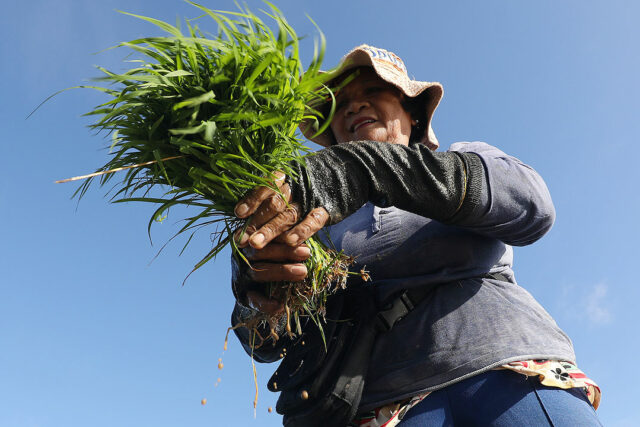
AGRICULTURAL PRODUCTION was likely flat in the first quarter, even as the livestock and poultry subsectors are expected to have performed well, analysts said.

“I have no great expectations. I think we will still be flat. The luckiest thing that can happen is that there will be some growth but minimal,” Elias Jose “Bong” M. Inciong, president of the United Broiler Raisers Association, said in a phone interview.

“It would be more or less the same as the first quarter of last year. Based on the breeders in place, the greater production should be during the second quarter,” he added.

Farm output contracted by 0.3% in the first quarter of 2022.

“I think it will be somewhat flat. It will be difficult to get towards a percent growth, but this will be about 0-1%, perhaps within that range,” Danilo V. Fausto, president of the Philippine Chamber of Agriculture and Food, Inc., said by phone.

“We will be able to achieve growth for the entire agricultural sector because the livestock sector will pull up the growth,” he added.

The Philippine Statistics Authority (PSA) is scheduled to release first-quarter farm data on May 10.

Agricultural production shrank by 0.1% in 2022, marking the third straight year of contraction, as crop and fishery output declined.

Data from the PSA showed the full-year value of production in agriculture and fisheries declined slower than the 1.7% contraction in 2021.

It also missed the Department of Agriculture’s (DA) 1.2%-1.5% full-year growth target.

Farm output declined by 1% in the fourth quarter of 2022, reversing a 0.5% growth a year earlier and 1.6% growth in the third quarter of 2022.

Only the livestock and poultry subsectors posted increases in agriculture production in the fourth quarter, growing by 2.5% and 1.9%, respectively.

The DA sees agricultural output growing by 2.5% this year.

Data from the National Livestock Program showed the domestic production of chicken is expected to hit 2.08 million metric tons (MT) this year, liveweight, with demand at about 1.6 million MT.

Mr. Inciong said the resurgence of type H5N1 avian influenza outbreaks had a huge impact on the layers but not on the broilers.

“The production cycle of layers can reach up to more than 18 months, while for broilers it is only 35 days,” he said. “The period for possible exposure to the virus is minimal for the latter.”

The Bureau of Animal Industry said six barangays had avian influenza cases in nine regions as of April 28.

National Livestock Director Ruth S. Sonaco earlier said the poultry industry was recovering faster than the livestock industry.

Mr. Inciong said the African Swine Fever (ASF) is a “far more challenging virus” compared with avian influenza.

“The production of hog fatteners is about five to six months — longer exposure.”

Meanwhile, Mr. Fausto said commercial hog farms are recovering after building their biosecurity protocols against ASF.

Latest data from the Animal Industry bureau showed ASF was still active in 78 villages in seven regions as of April 28.

Roehl M. Briones, a senior research fellow at the Philippine Institute for Development Studies, said by phone the ongoing clinical trials and field testing for vaccines showed slow progress.

“There were earlier hopes that the vaccine would be a game-changer but apparently, the efficacy wasn’t that higher than earlier imagined,” he said. “That’s still a lot of trial that needs to be done on a really effective vaccine.”

CROPS AND FISHERIES
Meanwhile, Mr. Fausto said crops, in particular palay or unmilled rice, have seen a good harvest so far amid favorable weather conditions.

“Usually, the first quarter has good weather especially in crops. We harvest good especially in the irrigated area and in our vegetable area because of a good weather,” he said.

Crop production, which accounts for more than half or 59.1% of total agricultural output, fell by 1% in the fourth quarter and full-year 2022, reversing the 2.6% and 2.2% expansion in the fourth quarter and full-year 2021.

PSA data showed fourth-quarter crop production declined by 2.5% for palay from 0.2% growth a year earlier and 6.9% for corn from 28.6% growth.

In terms of input costs, Mr. Fausto said fertilizer prices went down to P1,200 a bag of urea from about P3,000 a bag previously.

The Philippines imports most of its fertilizer needs.

However, he warned of the possible impact of El Niño in the second half. The Philippine Atmospheric, Geophysical and Astronomical Services Administration this week said El Niño is likely to persist until the first quarter of 2024.

Meanwhile, Mr. Briones said the fishery sector’s performance is “always an open question.”

“It has always been difficult to predict exactly how it’s going… It is highly erratic. I wouldn’t know one way or another whether the fishery sector would finally grow or continue to contract,”

The production of commercial fisheries likely improved, while municipal fisheries could have been challenged by the lack of post-harvest facilities, Mr. Fausto said.

“We cannot expect an increase in fisheries because in the agriculture sector, it is only the fishery sector that is going down,” he added.

PSA data showed fishery production slumped by 6.6% in the fourth quarter of 2022, worse than 1.1% growth a year earlier. It accounted for 13.8% of farm output during the period.

For the full year, fisheries shrank by 5%, reversing a 0.1% increase in 2021.

Mr. Briones said while the oil spill in Oriental Mindoro could affect the sector, the impact might not be severe. — Sheldeen Joy Talavera

BSP must be ‘more patient’ as inflation risks persist

PHILIPPINE STAR/ WALTER BOLLOZOS

By Keisha B. Ta-asan, Reporter

THE BANGKO Sentral ng Pilipinas (BSP) should be cautious and “more patient” before pausing its tightening cycle as it needs to anchor inflation expectations amid lingering risks, analysts said.

This, as the US Federal Reserve delivered a 25-basis-point (bp) rate hike at its policy meeting this week, as expected by financial markets.

The US central bank has now raised borrowing costs by 500 bps since March last year, bringing the Fed fund rate to 5-5.25%.

“The BSP has always been careful in keeping a positive differential between its policy rate and the US Fed’s, given that dollar assets are considered safe haven,” former BSP Deputy Governor Diwa C. Guinigundo said in a Viber message.

The Philippine central bank has raised borrowing costs by 425 bps since May last year, bringing its key rate to 6.25%, the highest in nearly 16 years.

The Monetary Board will hold its next policy meeting on May 18.

Inflation in the Philippines is beginning to stabilize, but wage increases and supply constraints due to El Niño may result in more price pressures, Mr. Guinigundo said.

The state weather bureau this week said El Niño would likely develop in the next three months and might last until the first quarter of next year.

“The BSP might continue to be cautious, but not as cautious as before, because of the better prospects of inflation,” he said. “But it will not be good for inflation expectations to quickly abandon a cautious monetary stance precisely because of the remaining price risks.”

“BSP should be expected to be more patient in monitoring additional data before it begins to keep its policy rate and ultimately shifts to an accommodative mode,” he added.

BSP Governor Felipe M. Medalla earlier said the BSP might consider keeping benchmark interest rates on hold at it’s policy meeting this month if inflation eased further in April. 

A BusinessWorld poll of 14 analysts yielded a median estimate of 7% for April inflation, near the upper end of the BSP’s 6.3-7.1% forecast for the month.

This could be below 7.6% in March and will also be the slowest in seven months.

April inflation data will be released on May 5.

Factors that could pose upside price pressures include the impact of African Swine Fever infections in the Philippines, El Niño, and geopolitical tensions abroad, eManagement for Business and Marketing Service Managing Director Jonathan L. Ravelas said. 

“The BSP will still hike rates by 25 bps. A pause is likely if we see the deceleration of inflation,” he said in a Viber message. 

Bank of the Philippine Islands Lead Economist Emilio S. Neri, Jr. said aside from the Fed’s decision, the country’s first-quarter gross domestic product (GDP) data, April core inflation and the foreign exchange market would also be key considerations for the BSP at its meeting this month.

The first-quarter GDP report is set to be released on May 11.

“The BSP still needs to hike as inflation is still too far from target and service inflation has been sticky,” Mr. Neri said in a Viber message. 

Core inflation quickened to 8% in March from 7.8% in February and 2.2% a year earlier. This was the highest since 8.2% in December 2000.   

Meanwhile, International Monetary Fund Representative to the Philippines Ragnar Gudmundsson said the Monetary Board’s decision would likely depend on both the headline and core inflation figures for April.

“Ultimately, the objective remains to anchor inflation expectations, gradually return to the 2-4% target range, and safeguard the country’s external position,” Mr. Gudmundsson said in an e-mail. 

The BSP currently sees inflation averaging 6% this year before slowing to 2.9% in 2024, well above its 2-4% target.

Mr. Medalla earlier said headline inflation is expected to be within their 2-4% goal by the fourth quarter.

He has said that if inflation further eases for the next six months, the BSP might consider cutting policy rates. 

However, the BSP chief also said it would be dangerous for the Philippine central bank to cut rates faster than the Fed because it could cause the peso to depreciate against the dollar.

NEDA sets investment target of P20 trillion for priority programs

PHILIPPINE STAR/ MIGUEL DE GUZMAN

THE NATIONAL Economic and Development Authority (NEDA) is targeting to get about P20 trillion in investments for its Public Investment Program (PIP).

“The PIP has 5,329 priority programs and projects with a total investment target of P20.218 trillion for the plan period from 2023 to 2028,” the NEDA said in a document uploaded on its website.

The PIP is aligned with the Philippine Development Plan (PDP) and contains the medium-term priority projects to be implemented by National Government agencies, government-owned and -controlled corporations, other National Government offices, and state universities and colleges (SUCs).

Under the Public Investment Program, the bulk or 85.75% of the investment target will go to infrastructure projects, for a total of 3,770 priority projects worth P17.34 trillion.

“As the Philippine Development Plan 2023-2028 has identified infrastructure as critical to the economic transformation of the country, and consistent with the current administration’s recognition of infrastructure as the ‘backbone of an economy,’ infrastructure has the largest share of investments over the medium term for projects related to transportation, water resources, energy, information and communications technology, and social and other public infrastructure,” the NEDA said.

This year, the government plans to spend 5.3% of the gross domestic product on infrastructure, equivalent to P1.29 trillion.

After infrastructure, agriculture and agribusiness were allotted 391 priority projects worth P806 billion and education with 62 priority PAPs worth P701.05 billion.

By agency, the Department of Public Works and Highways (DPWH) took more than half or 58.56% of the investment share target, equivalent to P11.48 trillion.

It was followed by the Department of Transportation (15.79% or P3.1 trillion), Department of Education (10.46% or P2.05 trillion) and Department of Agriculture (8.15% or P1.6 trillion).

“Infrastructure facilities and services remain inadequate in terms of accessibility, quality, safety and affordability. In line with the government’s thrust in prioritizing infrastructure, the Public Works and Highways and Transportation departments are the top two agencies in terms of total 2023-2028 investment targets,” the NEDA added.

Broken down, the DPWH has 161 priority projects that consist of construction and rehabilitation of roads, expressways and flood control projects.

Meanwhile, the Transportation department’s 197 priority projects include the development and construction of ports, airports and railways.

“Pursuant to the Philippine Constitution stating that education should have the highest budgetary priority, the Department of Education (DepEd) and state universities and colleges have medium-term investment targets amounting to P2.05 trillion and P225.39 billion, respectively,” the NEDA said.

“The DepEd has 17 priority programs and projects, which include the improvement and maintenance of school facilities. With regard to tertiary education, there are 3,123 priority programs and projects by various state universities and colleges,” it added.

The departments of Social Welfare and Development, Labor and Employment, Human Settlements and Urban Development, Agrarian Reform, and the Office of the President also have investment targets worth more than P100 billion.

“The agencies are expected to ensure that the priority programs and projects to be allocated with resources or submitted for inclusion in the National Expenditure Program and/or funded under the General Appropriations Act, are responsive to the PDP and included in the Public Investment Program,” the NEDA said.

“The Department of Budget and Management shall accord priority to programs and projects included in the Public Investment Program in its review of the submitted budget proposals,” it added.

In March, the NEDA Board, chaired by President Ferdinand R. Marcos, Jr., approved 194 flagship infrastructure projects worth P9 trillion. — Luisa Maria Jacinta C. Jocson

PHL banking penetration rate among lowest in region

BW FILE PHOTO

THE PHILIPPINES’ banking penetration rate was among the lowest in Southeast Asia in 2021, according to McKinsey & Company.

The country had a banking penetration rate of just 56%, based on central bank data, McKinsey said in a May 3 article on its website written by Guillaume de Gantès, senior partner at its Southeast Asia office, Associate Partner Hernan Gerson and Kristine Romano, a partner at its Manila office.

The Bangko Sentral ng Pilipinas (BSP) wants 50% of payments done online and 70% of Filipino adults to have a formal financial account by the end this year.

Latest BSP data showed banked Filipino adults almost doubled to 56% of the population in 2021 from 29% in 2019. The share of digital payments in total retail transactions also increased to 30.3% from 20.1% in 2020.

“The Philippines is one of the fastest-growing economies in Southeast Asia, yet the banking penetration rate ranks among the lowest in the region at 56% versus 96% in Thailand and 88% in Malaysia,” McKinsey said in a separate statement.

“The banking penetration rate remains among the lowest in the region, and traditional financial institutions focus heavily on commercial lending, leaving a rapidly growing, increasingly affluent, and digitally savvy population with little access to financial services that meet their needs,” it said in the article.

Philippine banks are “underinvested” in digital technologies, McKinsey added.

“Traditional banks remain focused on wholesale banking and have been slow to reach new customers outside their existing client base,” it said. “Rural areas are home to nearly half the population, yet rural households are especially underserved, and many have little or no access to brick-and-mortar banking infrastructure.” 

Data from McKinsey showed that Philippine banks use less than 10% of their revenues on information technology, lower than the 15% average in the Asia-Pacific region.

Meanwhile, digital channels account for only 5-15% of banks’ revenues, below the average of 25% for other banks in emerging Asian markets, it said.

Most Philippine financial technology firms also “concentrate almost exclusively on payments, and infrastructure constraints limit their reach.”

“The result is a widening gap between the country’s enormous underbanked population and the expanding range of innovative financial technologies lying just beyond its borders,” it added.

McKinsey said the Philippines is working to make the financial sector more inclusive through digitalization.

“Regulators are laying the necessary groundwork for digital financial services and digital-first business models. The sectoral regulator has recently introduced new digital banking licenses, created a real-time payment system, and established a standardized QR network,” it said.

The bankable population in the Philippines is expected to grow by 30% to 85 million in 2030 from 65 million in 2022, McKinsey said.

“In this dynamic environment, new entrants that move swiftly and offer products tailored to the needs of underbanked businesses and consumers, both in urban and rural areas, will be able to establish strong market positions, while latecomers will struggle to stand out in an increasingly crowded field,” it said.

“The rise of a young, tech-savvy consumer base is driving a surge in demand for innovative financial services, leading to the rapid expansion of mobile payments platforms ranging from e-wallets to the digital apps of incumbent banks. Meanwhile, other technology-driven financial subsectors have only begun to emerge,” it added.

However, the public’s lack of information about banking services is a challenge to inclusion, said McKinsey.

“Statutory balance requirements have long since been eliminated, and many banks offer accounts with no minimum balance, yet 45% of unbanked Filipinos believe balance requirements would prevent them from opening an account,” it said.

About 40% of the unbanked also said they lack adequate documentation, based on the BSP’s Financial Inclusion survey, but this is likely an exaggeration, McKinsey said.

Meanwhile, the remaining 15% of the unbanked point to a lack of trust in financial institutions as their chief reason for not opening an account, the BSP’s survey said. — K.B. Ta-asan

Living smarter, more sustainably with Garden City 

Rising at Bacoor City, Cavite, Garden City embodies a concept of a nature-inspired lifestyle that bridges a direct connection between people and nature through sustainable features and amenities.

In a competitive real estate market, more and more Filipinos are turning into socially conscious consumers. It is essential that they invest properly by looking for the best value for their hard-earned money, as well as observing socially responsible investing at the same time. Golden Bay Landholdings offers an ideal way to achieve that.

Real estate company Golden Bay Landholdings based their pioneering residential projects on a sustainable and purposeful design that prioritizes its residents’ well-being, which are evident in its leading residential development, Garde City.

“Garden City is quality and sustainable design at an accessible price, a masterpiece for the middle class,” Golden Bay’s Chief Operating Officer Jardin Wong said.

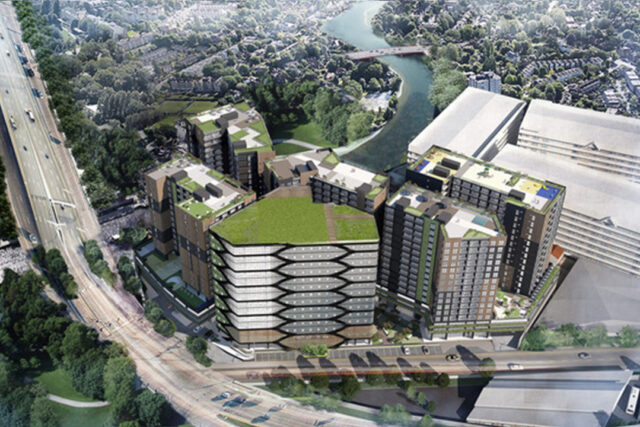
Dubbed as the urban core of the South, the six-tower and 18-story Garden City will be rising at Bacoor City, Cavite. The property is located near the upcoming LRT 1 Bacoor Station, Cavitex Toll Road, Cavite-Laguna Expressway (CALAX), Pasay Integrated Terminal Exchange (PITX), and the Ninoy Aquino International Airport (NAIA). It is also within a 10-minute drive away from the Macapagal Bay Area.

Garden City’s 30-sq.m. studio units are ideal for individuals living alone and for OFWs who are looking for a worthy investment.

The urbanization of Cavite resulted in growth in both residential neighborhoods, as well as commercial and industrial sectors, which make up the majority of the developed region. Emerging residential communities like Garden City are coming in time to accommodate the growing population in the city.

Moreover, Garden City is designed to help residents in achieving a well-rounded and balanced work-and-play lifestyle by providing them with a conducive environment to do so. Poised to be the “Ultimate Urban Paradise,” the property implements the beauty and benefits nature has to offer with everyday modern living.

Golden Bay is known for its commitment to making investments in smart and sustainable materials that won’t hurt the planet.

According to Mr. Wong, the company has gone out of its way in finding the best and most suitable partners who share the same vision and commitment to sustainability as they do.

Meanwhile, the 70-sq.m., two-bedroom units are designed for start-up families and retirees.

In collaboration with established industry leader WTA Architecture, Garden City takes pride in its Zen-inspired, organic, and natural flowing designs that strive to rejuvenate and recharge residents from the daily hustle and bustle of city life.

“Our concept was born out of a desire to offer nature-inspired living and to usher in a sustainable brand of lifestyle. This concept represents a direct connection between people and nature, bringing future residents closer to the environment,” Mr. Wong explained.

Notably, their dedication to green architecture has garnered Garden City a win at the prestigious OPAL Awards in London where the members of the jury are international design purveyors. This makes Garden City more than just a mere condo investment but a legacy to pass on.

“It’s our responsibility as a developer to do our part in taking care of the environment. We might incur high costs upfront but it’s definitely a wise investment in the long run,” he added.

On top of Garden City’s sustainable designs, Garden City is also designed for those who want to connect and heal to nature. The majority of the units have balcony views overlooking Manila Bay, where residents can enjoy the beauty of the sunsets; and the opposite views feature the skyline of Makati and Las Piñas.

Despite the size limitation with condos, Garden City is still a smart investment as it offers two efficient layouts that come in a square-cut shape (with minimum width of 3.9 meters) so that residents can maximize their living space. Garden City’s 30-square meter (sq. m.) studio units are ideal for individuals living alone, especially for OFWs who are looking for a worthy investment; while the 70-sq.m., two-bedroom units are designed for start-up families and retirees.

In case they need more room, clients are also free to combine nearby units.

All units, with an average of 18 allocated per floor, are also equipped with smart and convenient features, including air conditioning, full sliding doors to the balcony, and lofty floor-to-ceiling height of at least 2.6 meters. Additionally, residents are offered full privacy and exclusivity.

Committed to its name as a wellness escape for its dwellers, Garden City is dedicated to nature podiums and open space.

“The concept offers residents a nature-inspired lifestyle that will positively impact their well-being. From reducing stress, enhancing positivity, maintaining good health, connecting with family, and creating spaces for relaxation, solitude, and joy; we’ve designed every space purposefully with a selection of around 20 key amenities,” according to Mr. Wong.

The first few floors of the development will host a retail podium reserved for essential retailers like banks, shops, and more.

Soon, the Phase 1 of the development is scheduled to finish around 2028, while Phase 2 completion is aiming to be completed in mid-2031.

Enjoy a greater standard of living in the future with Garden City. Inquire about Garden City at +63 28539 8888 or +63 999 936 6605, or email them at info@goldenbayland.com and marketing@goldenbayland.com. For more information, you can also follow their social media profiles on Golden Bay Land Official on Facebook and @goldenbayland on Instagram.


Spotlight is BusinessWorld’s sponsored section that allows advertisers to amplify their brand and connect with BusinessWorld’s audience by enabling them to publish their stories directly on the BusinessWorld Web site. For more information, send an email to online@bworldonline.com.

Join us on Viber at https://bit.ly/3hv6bLA to get more updates and subscribe to BusinessWorld’s titles and get exclusive content through www.bworld-x.com.

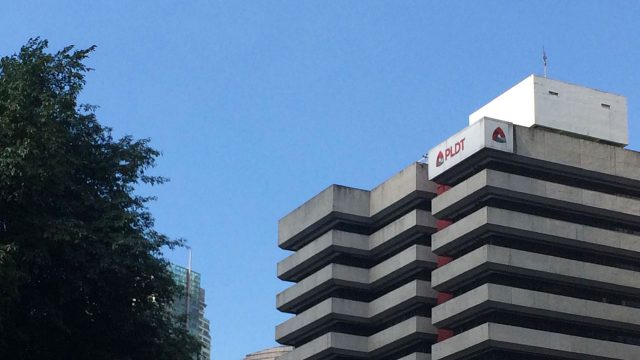
PLDT posts flat P9-B income, says core profit up

BW FILE PHOTO

PLDT Inc. reported an attributable net income of P9.02 billion in the first quarter, down by 0.7% from P9.08 billion in the same period last year when it booked non-recurring gains.

“Last year, we had this income from the prescription of preferred redemption liability worth P7.8 billion, which was not present this year,” said Danny Y. Yu, the newly appointed chief financial officer and chief risk management officer, on the sidelines of the company’s media briefing on Thursday.

“But in terms of telco core income, it’s higher even after the [share] losses in Voyager Innovations, Inc.,” he said, referring to the digital solutions provider under PLDT’s digital bank Maya Bank, Inc.

In the first quarter, the company booked P8.64 billion telco core income, which is 5.1% higher than the P8.22 billion recorded last year.

“We continue to reinforce our core infrastructure. We are now at 17.2 million in terms of homes passed, an increase of about 1.7 million homes from the previous period,” PLDT President and Chief Executive Officer Alfredo S. Panlilio said.

PLDT’s top line was 5.1% higher at P52.36 billion in the first three months of the year from P49.83-billion revenues booked in 2022. Its service revenues, gross of interconnection costs, reached P49.73 billion, up by 4.4% from P47.65 billion previously.

The individual wireless segment of the company contributed P19.8 billion of the service revenues. Home accounted for P15 billion, enterprise shared P11.8 billion, while the international segment accounted for P500 million.

In the first quarter, the company recorded a 4.8% decrease in its expenses, which included interconnection costs and marginal revenue product expenses at P39.7 billion from P41.69 billion.

Cost-cutting measures were implemented during the quarter such as those involving compensation and energy efficiencies, Mr. Panlilio said.

CAPITAL EXPENDITURE
The company’s capital expenditure (capex) during the quarter was at P19.3 billion, 22% higher than its spending of P15.8 billion in 2022. The bulk was used for network and information technology improvements, which amounted to P16.1 billion.

Meanwhile, Mr. Yu said that around P11 billion to P14 billion of the budget overrun was taken into account in the first quarter under property, plant and equipment.

The amount is for 5G orders, which is part of the capex overrun, the assets of which had already been received by the company, Mr. Panlilio said.

Previously, the company said that the agreement with vendors had reduced PLDT’s outstanding commitments to them for the acquisition of property equipment post-2022 to P33 billion.

For 2023, PLDT has earmarked a capex of P80 billion to P85 billion, which is lower than the P96.8 billion it used in 2022.

OUTLOOK
Mr. Panlilio said that the initial profit guidance presented to the company’s board of directors was P33.8 billion.

“The budget that we had approved from the board was P33.8 billion. It’s really a clean-up year for us, a lot of things are happening. There’s still work being done on the settlement, in terms of certain work we are reviewing,” he said.

“Obviously, we are pushing to do more but for now that’s the guidance that we are internally looking at, at this point,” he added.

Mr. Panlilio said that the company is hoping to record free cash flow in 2024, as the company continues to strengthen its core business.

“We are looking forward to serving our customers better through being more innovative and bringing more products and services into the market,” he said.

“Enterprise is going to be an interesting growth area for us,” he said. “There are a lot of possible growth initiatives in enterprise. We are pushing for cloud and solutions, and that’s where the growth area could possibly be coming from.”  

NEW APPOINTMENTS
Separately, the company announced in a regulatory filing the appointments of three officials to fill vacated positions.

Mr. Yu, senior vice president and PLDT group controller, was given the chief financial officer and chief risk management officer roles starting May 4.

First Vice President Luis S. Reñon was promoted to a senior vice president position starting Thursday.

Meanwhile, the PLDT board has elected Marilyn A. Victorio-Aquino as a director of the company to cover the unexpired term of the late Ambassador Albert F. del Rosario.

Ms. Victorio-Aquino is a senior vice president and the chief legal counsel, head of legal and regulatory affairs, and corporate secretary of PLDT. Her appointment as a director will start on May 8.

On Thursday, shares in PLDT went up by P55 or 4.59% to close at P1,254 apiece.

Hastings Holdings, Inc., a unit of PLDT Beneficial Trust Fund subsidiary MediaQuest Holdings, Inc., has a majority stake in BusinessWorld through the Philippine Star Group, which it controls. — Justine Irish DP. Tabile

Megaworld says Iloilo residential building to bring P4-billion sales

MEGAWORLD Corp. expects to generate up to P4 billion in sales as it launches a 22-storey residential building in Iloilo City, the company said on Thursday.

In a press release, the listed real estate developer said that the Firenze residential building will offer 415 “smart home” units and will be located at its 72-hectare development at the Iloilo Business Park in Mandurriao, Iloilo.

The company said that the construction of the building was inspired by the city of Florence, Italy. It expects completion of the Firenze residential building by 2028.

“We have chosen Florence as the inspiration of this new development because of its charm and interesting character that truly reflect what Iloilo Business Park has become through the years,” Megaworld Visayas First Vice-President for Sales and Marketing Jennifer Palmares-Fong said in a statement.

“This is the first time that we have a particular city as an inspiration for our condo in the township — not just Italian, but truly Florentine,” Ms. Palmares-Fong added.

Units would range from an up to 32 square meters (sq.m.) junior one-bedroom to a 60 sq.m. one-bedroom loft with balcony; two-bedroom units from 62 sq.m. up to 90 sq.m.; and 108 sq.m. to 132 sq.m. for the three-bedroom unit.

“Firenze will rise beside The Palladium at the northern portion of Megaworld Boulevard, just a short walk to and from Festive Walk Mall and Festive Walk Parade as well as the Iloilo Museum of Contemporary Art,” the company said.

The township developer said that amenities would include a pool area for adults and children, a hot tub, gardens, pavilion, playground, and an outdoor fitness area on the fifth floor.

“Future residents will also enjoy their time relaxing with their families or friends at the outdoor lounge located on the 21st floor of the tower,” it added.

Meanwhile, the company is also set to construct the 405-room Belmont Hotel Iloilo, its third hotel development within the Iloilo Business Park. The project adds to the 149-room Richmonde Hotel Iloilo, and the 326-room Courtyard by Marriott Iloilo.

Megaworld has launched six residential developments in the township and 11 office buildings offering about 182,000 sq.m. of leasable office spaces, of which three are still being constructed.

Shares in the company fell 1.47% or P0.03 to finish at 2.01 on Thursday. — Adrian H. Halili

ACEN income surges to P2 billion on higher power generation

AYALA-LED ACEN Corp. reported a surge in its net income for the first quarter to P2.03 billion, a fivefold increase from P405.03 million a year earlier, driven by higher net generation on better wind resources.

“After weathering several challenges in 2022, we began the year with encouraging results brought about by the growth in generation output,” Eric T. Francia, president and chief executive officer of ACEN, told the stock exchange on Thursday.

In the first quarter, ACEN recorded a 23.5% increase in its consolidated revenues to P9.14 billion from P7.40 billion in the previous year, fueled by higher revenues from electricity sales.

ACEN said its revenues were lifted by better output from its wind resources and the start of the commissioning of new power plants in the Philippines and Australia.

“As our renewable energy investments begin to bear fruit, ACEN is now on a stronger footing as we continue working towards our aspiration of reaching 20 GW (gigawatts) of renewables by 2030,” Mr. Francia said.

For the January-to-March period, ACEN’s attributable EBITDA or earnings before interest, taxes, depreciation, and amortization from non-consolidate associates and joint ventures increased by 76% to P4.6 billion.

ACEN said its total attributable renewables output increased by 20% to 1,058 gigawatt-hours (GWh) in the first quarter.

“The strong financial results reflect the resilience of our strategy to expand renewables capacity, supported by a robust balance sheet. ACEN’s strong cash position and diverse mix of financing options continue to enable the achievement of our 2030 aspirations,” said Maria Corazon G. Dizon, treasurer, chief finance officer and compliance officer of ACEN.

In the Philippines, ACEN’s renewable energy generation also saw a 31% increase to 310 GWh, while strong wind resources in Vietnam lifted the company’s international output by 15% to 748 GWh.

The figure also includes contributions from the partial commissioning of the first phase of its New England solar project in Australia and better availability of its geothermal facility in Indonesia.

To date, ACEN has 4,000 megawatts of attributable capacity spread across the Philippines, Vietnam, Indonesia, India, and Australia.

At the stock exchange on Thursday, shares in the company gained two centavos or 0.33% to end at P6.02 apiece. — Ashley Erika O. Jose

ADVERTISEMENT
ADVERTISEMENT