Home Blog Page 4865

DBM to release P5 billion for BARMM rehabilitation

PHILSTAR FILE PHOTO

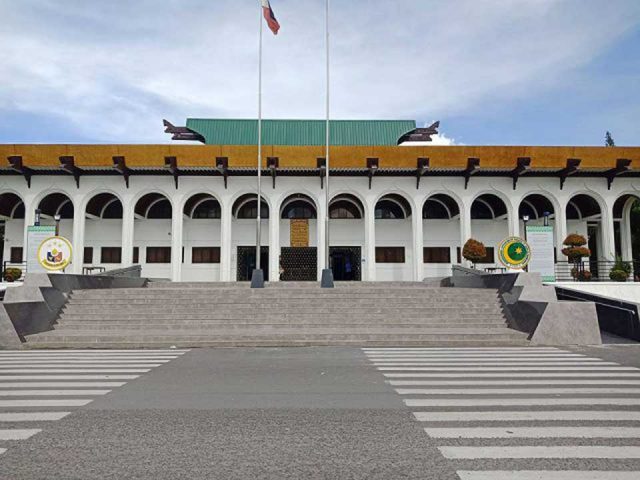
THE Department of Budget and Management (DBM) said it will release P5 billion for the Special Development Fund (SDF) of the Bangsamoro Autonomous Region in Muslim Mindanao (BARMM).

The government gives the fund P5 billion annually for 10 years “for the rebuilding, rehabilitation, and development of its conflict-affected communities,” the DBM said.

“We will ensure that we will help in its smooth transition process and strengthen its communities,” Budget Secretary Amenah F. Pangandaman said.

“We hope that BARMM takes advantage of this funding by fully utilizing it to help those in need, and to improve areas that need further development,” she added.

It also cited a Task Force Bangon Marawi finding in 2018 that P49.8 billion is needed to restore affected parts of Marawi.

The Bureau of the Treasury will release the allocations to the BARMM government through an authorized government servicing bank, subject to cash programming by the National Government.

Apart from the SDF, the government will also allocate P64.76 billion for BARMM’s annual block grant and P4.59 billion as its share of taxes, fees, and charges collected in the region. — Luisa Maria Jacinta C. Jocson

Hog, chicken production rise in 3 months to March

REUTERS

HOG and chicken output both rose in the three months to March, the Philippine Statistics Authority (PSA) said.

The PSA said hog output during the period was 437.99 thousand metric tons (MT) on a liveweight basis, up 5.1% from a year earlier.

Calabarzon (Cavite, Laguna, Batangas, Rizal, Quezon) was the top producer at 61.18 thousand MT, followed by Central Visayas (57.92 thousand MT), Northern Mindanao (55.46 thousand MT), Western Visayas (52.88 thousand MT) and Central Visayas (40.27 thousand MT).

These regions accounted for 61.1% of national production.

As of March 31, the PSA estimated the national hog herd at 10.18 million head, up 4.2% from a year earlier.

“About 76.5% of the country’s swine population came from smallhold farms, while the remaining 22.3% and 1.2% were from commercial and semi-commercial farms, respectively,” the PSA said.

The farmgate price of swine for slaughter was down 3.3% to P170.26 per kilogram during the quarter.

The PSA also reported that chicken production increased 3.3% year on year to 470.21 thousand MT.

Central Luzon was the top producer at 162.44 thousand MT, followed by Calabarzon (81.06 thousand MT), Northern Mindanao (44.22 thousand MT), Western Visayas (31.57 thousand MT), and Ilocos Region (25.53 thousand MT).

These regions accounted for 73.3% of overall chicken output.

“Of the total chicken inventory, native/improved chicken accounted for 43.4%, followed by broiler chicken with a 33.5% share, and layer chicken with 23.1%,” the PSA said.

The average farmgate price of broiler chicken during the quarter was P116.48 per kilogram, up 9.9% from a year earlier.

Chicken egg production during the quarter grew 2.8% to 175.73 thousand MT.

The top producer was Calabarzon with 57.71 thousand MT, followed by Central Luzon (33.82 thousand MT), Central Visayas (20.05 thousand MT), Northern Mindanao (13.81 thousand MT), and Western Visayas (9.52 thousand MT).

These regions accounted for about 76.8% of chicken egg output during the period.

The layer chicken flock declined 2.2% year on year to 65.22 million birds, with 34.7% consisting of native/improved chicken.

The average farmgate price of chicken egg during the period rose 34.3% to P7.12 per piece.

Cattle production amounted to 53.89 thousand MT, liveweight, up 1.9% from a year earlier.

Northern Mindanao was the top producer at 11.26 thousand MT, followed by Ilocos Region (5.46 thousand MT), Central Visayas (5.41 thousand MT), Western Visayas (4.70 thousand MT), and Calabarzon (4.11 thousand MT).

These regions accounted for 57.4% of national production during the quarter.

“As of March, the total cattle inventory reached 2.57 million head. This indicates a decrease of 0.2% from the previous year’s same-period count of 2.58 million head,” the agency said.

“About 82.1% of the country’s cattle population during the period came from smallhold farms, while the remaining 14.3% and 3.6% consisted of semi-commercial farms and commercial farms, respectively,” it added.

The PSA said dairy output fell 11.4% to 7.17 thousand MT, easing from the record year-earlier level of 8.09 thousand MT.

Calabarzon was the top dairy producer at 2.04 thousand MT, followed by Central Luzon (1.88 thousand MT), Western Visayas (0.61 thousand MT), and Davao Region (0.50 thousand MT).

These regions accounted for 81.7% of overall dairy production.

As of March 31, dairy animal numbers increased 9.2% year on year to 98.74 thousand MT.

“Of the dairy animal inventory as of March 31, dairy goats accounted for 39.2%. This was followed by dairy carabaos with a 33.9% share and dairy cattle with a 26.9% share,” the PSA said.

According to the PSA, the average farmgate price of all dairy animals declined 15.6% to P51.77 per liter. — Sheldeen Joy Talavera


Empowering tax operations with AI

As we embrace the business realities of the post-pandemic era, the need for digital transformation has become even more essential. Digital transformation generally involves the use of technology to fundamentally change how businesses operate and deliver value to customers. One of its core technologies is artificial intelligence, or AI.

Al has emerged as a critical component of digital transformation. It allows detailed, accurate data extraction from sources to drive more in-depth questions, answers and analyses that would previously be difficult, time consuming, or even impossible to accomplish. AI can perform structured or unstructured tasks, mimicking the actions of humans, but with greater speed and accuracy. With AI, organizations can automate routine tasks, analyze vast amounts of data and gain valuable insights that can drive innovation and growth. 

For the past years, we have seen how AI rapidly transformed the way business operates, and tax operations are no exception.

Tax operations are complex and time-consuming, and with the disruption in business caused by the pandemic, many companies have turned to AI to automate tax processes, among others, to improve efficiency. AI has helped businesses manage tax operations by streamlining processes, reducing errors, and providing real-time insights into tax compliance.  As a consequence, more and more tax professionals are turning to AI to leverage its capabilities and effectively manage tax operations, in general. These transformative capabilities of AI apply throughout the entire tax lifecycle from planning to compliance, reporting and controversy.

Among the most impactful uses of AI are the following:

1. Automating tax return preparation and filing

One of many ways in which AI can be used in tax operations is through the automation of routine tasks, such as periodic tax return preparation and filing.  Certain AI-powered software used solely or in tandem with Robotics Process Automation (RPA), for instance,  can accurately extract data directly from source, such as the trial balance, invoices, and other relevant documents, and organize them into the prescribed tax forms. Through its machine learning algorithms, these AI-powered systems can also analyze tax returns for errors or discrepancies, thus reducing the time and resources required for manual data entry, which frees up staff to focus on more strategic and value-adding tasks.

2. Monitoring tax compliance and improvement

Another area where AI can be useful is in tax compliance monitoring and improvement. With so many changes or updates in tax rules and regulations, AI can help businesses stay compliant by alerting them to new tax developments. Needless to say, monitoring compliance to changes in tax rules is not easy and can be even more challenging without a good and reliable tool.  With an AI-enabled monitoring tool, businesses can be updated on a more timely and regular basis, thus avoiding noncompliance which could lead to painful tax assessments and reputational risk.

AI can also help improve tax compliance by analyzing large datasets to identify trends and patterns that may indicate potential tax issues. This enables businesses to proactively address compliance issues before they become major problems and reduce tax assessment risks which could be costly and time consuming.

3. Enhancing the tax audit process and fraud detection

AI can also help businesses prepare for tax audits and improve the audit process. By analyzing past audits and identifying areas of weaknesses, AI can help businesses improve their compliance and reduce tax audit risks.

Tax authorities or agencies can also harness the power of AI in conducting tax audits.  In certain jurisdictions, AI is used by these agencies to identify cases that could indicate potential fraud. By analyzing huge amounts of data, AI can detect anomalies and suspicious activities that may indicate fraudulent behavior.

For example, in one country, tax officials have successfully incorporated AI into their Goods and Services Tax administration. In the first year of implementation, only a few cases of fake invoicing were detected and two people were arrested. However, in the following year, the tax agency saw improved detection with more than a thousand cases of fake invoicing being identified and more than a hundred people were arrested. 

Several European Union (EU) countries have also been using AI to detect tax fraud. In one EU country, tax officials were able to identify an estimated 60 out of 100 cases of tax fraud using advanced technologies. These show how AI can be powerful and is widely used across geographies.

4. Forecasting and predictive analytics

Another area where AI can be helpful is in the analysis of tax data to formulate business strategy and make better decisions about tax planning and forecasting. Predictive analytics can analyze historical data to identify trends and patterns. For instance, algorithms can analyze sales data to help detect trends within various tax filing cycles — an annual, quarterly, or monthly basis. Those trends can then be used as the basis for predicting what’s likely to happen next, which could be helpful in providing better sales forecasts and related tax obligations. By analyzing these data, businesses can gain insights into their operations and identify areas for improvement. This also guides and helps decision-makers optimize their business strategy by reducing costs in order to improve profitability.

The increasing demand for AI in tax operations shows how businesses are adapting to the new technologies to stay competitive in the post-pandemic era. As the technology continues to evolve, we can expect to see even greater innovation in tax operations and new opportunities for businesses to optimize their operations and reduce costs. Companies that embrace digital transformation and AI will be well positioned to stay afloat in the digital age and in this post-pandemic world.

The views or opinions expressed in this article are solely those of the author and do not necessarily represent those of Isla Lipana & Co. The content is for general information purposes only, and should not be used as a substitute for specific advice.


Nelson V. Soriano is a tax director at Isla Lipana & Co., the Philippine member firm of the PwC network.

+63 (2) 8845-2728

nelson.soriano@pwc.com

Senators slam NGCP over poor network, keeping high gains

BW FILE PHOTO

By Beatriz Marie D. Cruz, Reporter

LAWMAKERS on Wednesday slammed the privately-owned National Grid Corp. of the Philippines (NGCP) for failing to make sufficient and prompt investments to upgrade the country’s power transmission network while reporting high dividends.

Speaking at a joint Senate hearing, NGCP Assistant Corporate Secretary Ronald Dylan P. Concepcion said the corporation had a net income of P20.3 billion in 2019, with P15 billion kept as dividends.

“So 75% goes to dividends. This is what I’m talking about. This is what I’ve been saying early on, that a bigger share goes to dividends instead of the development (of the national grid),”  Senator Rafael T. Tulfo, who presided the hearing, said in mixed English and Filipino.

“It is only in the Philippines that transmission is for profit,” Mr. Tulfo said. “This is the reason why we are experiencing brownouts and other problems because there aren’t enough development activities.”

NGCP was awarded the contract to operate, maintain, and develop the state-owned power grid in 2009.

Mr. Concepcion explained that the NGCP in 2019 used P39 billion of its capital outlay and expenditures for the development of the transmission system.

He added that in 2017, the NGCP incurred a P20.6-billion net income, where P19 billion went to dividends. In 2014, its net income was P22 billion, with P24 billion allotted to dividends.

NGCP spokesperson Cynthia P. Alabanza said in the same hearing that the company’s “profits or dividends are taken from retained earnings… (it) does not necessarily come solely from the profits earned for that particular year (and they were) accumulated over the years.”

Dividends are profits paid to a company’s shareholders.

NGCP is 60% owned by Filipino companies Monte Oro Grid Resources Corp. and Calaca High Power Corporation, while the remaining 40% shares are held by the State Grid Corp. of China (SGCC).

Senators are looking to bar foreigners from having shares in the NGCP, noting that the Chinese government-owned SGCC presents a security risk amid increasing maritime tensions between the Philippines and China in the South China Sea.

Ms. Alabanza clarified that only four Chinese nationals are part of the NGCP and are not involved in the management of the corporation.

“From the beginning they’ve only exercised an advisory capacity or as members of the board,” she said, noting that three out of the four Chinese nationals are currently in the Philippines.

She also explained that the NGCP has a “standalone” operating system that controls the transmission network, which is not connected to the internet or rely on telecommunication companies.

“The NGCP has its own system of communications between our substations, (and) we don’t rely on Globe, Converge or Smart for our internet,” she said, noting this protects the transmission network from external threats.

Energy Undersecretary Sharon S. Garin said their department has asked for an audit of the NGCP, but the company asserted that only the Energy Regulatory Commission (ERC) has this authority as provided under its franchise and concession agreement.

ERC Chairperson Monalisa C. Dimalanta told the committee that the NGCP has 72 delayed projects.

Of these, 33 are in Luzon, 19 in the Visayas, and 14 in Mindanao. The tally also includes six delayed “Energy Projects of National Significance.”

The NGCP officials apologized for the delayed projects.

Senator Ana Theresia “Risa” N. Hontiveros-Baraquel said NGCP’s ownership structure and performance raises red flags.

“The issue here is trust and confidence… in terms of national security and poor performance in completing the numerous projects, including the backbone projects indicated in the DoE-approved (Department of Energy) transmission development plan,” she told reporters after the hearing.

DILG orders fire bureau to fast-track probe of Manila Post Office blaze

THE MANILA Central Post Office is cordoned off on May 23 as an investigation into the fire that razed the historic building is underway. — PHILIPPINE STAR/WALTER BOLLOZOS

THE DEPARTMENT of the Interior and Local Government (DILG) on Wednesday ordered the Bureau of Fire Protection (BFP) to fast-track the probe of the recent fire that razed the Manila Central Post Office on Sunday evening.

“I am calling on the BFP to prioritize the investigation of the Manila Central Post Office fire and exhaust all means necessary to find out the cause of this incident that destroyed one of the country’s architectural heritage and national historical landmarks,” Interior and Local Government Secretary Benjamin C. Abalos, Jr. said in a statement.

“We must get to the bottom of this unfortunate incident at all costs and at the soonest possible time.”

The fire, which started just before midnight on Sunday, caused more than P300 million in damage,  Manila Mayor Maria Sheilah Lacuna–Pangan told an online news briefing on Monday.

The Philippine Statistics Authority (PSA) said some of the national IDs that were due for delivery in Manila had been damaged by the fire.

In a separate statement on Wednesday, the Government Service Insurance System (GSIS) said the post office is insured for P604 million, and gave assurance that the agency would assist in its restoration.

“The building has been declared an Important Cultural Property by the National Museum of the Philippines and its loss will have a huge impact on our rich cultural heritage,” GSIS Chief Jose Arnulfo “Wick” A. Veloso said.

“We need to bring it back to its original splendor.”

He added that his agency already sent personnel to the site to facilitate the insurance claim, adding that the GSIS will offer its warehouse in Pasig City to serve as the Philippine Postal Corp.’s temporary headquarters.

The National Museum declared the country’s oldest post office in 2018 as an important cultural property. The label is given to properties with “exceptional cultural, artistic, and/or historical significance” to the country.

It is the second-highest level of protection next to the national cultural treasure, which is given by the National Museum and National Historical Commission of the Philippines.

The post office was rebuilt in 1946 after it was severely damaged during World War II. — John Victor D. Ordoñez

Labor groups want part in task force on rights

PHILIPPINE STAR/EDD GUMBAN

AN ALLIANCE of major labor groups in the Philippines called on government to work with representatives in their sector on upholding the right to organize, noting that a recently approved government task force lacked participation from workers.

“Nothing about us, without us,” the All Philippine Trade Unions (APTU) said in a statement on Wednesday. “Workers have conspicuously been left out of the new body despite being its main proponent.”

President Ferdinand R. Marcos, Jr. signed on April 30 an executive order creating an inter-agency body that will investigate labor rights violations targeting trade unionists.

The task force will be led by the executive secretary and co-headed by the labor secretary, according to Executive Order No. 23.

The labor alliance said the government is “duty-bound” to include workers and employers in implementing the measure,” citing its obligation to the International Labor Organization’s (ILO) treaty on upholding the freedom of association.

Labor Secretary Bienvenido E. Laguesma did not immediately reply to a Viber message seeking comment.

In February, a team of ILO representatives met with trade unions and government officials to discuss human rights violations against workers and union organizers.

The trade unions submitted a joint report to the ILO mission on labor rights violations, citing that the government has consistently failed to comply with ILO conventions on freedom of association and the right to organize.

The labor coalition said the country risks being called out by the ILO during the upcoming International Labor Conference on June 5, if it does not boost its efforts to uphold labor rights.

APTU also warned that the Philippines could also lose its trade perks under the European Union’s (EU) Generalized Scheme of Preferences Plus (GSP+).

The EU makes GSP+ preferences and trade relations subject to Philippine adherence to a number of international conventions on human rights, labor rights, environmental protection, and illegal fishing, among others.

The European Parliament in February last year passed a resolution asking the Philippines to act on human rights abuses or face losing trade perks under the GSP+.

Labor groups have proposed the establishment of a presidential commission that would look into cases of violence against workers.

“What we have been asking for since January when the ILO High-Level Tripartite Mission arrived, is a presidential commission that would oversee the full realization of all the recommendations of the ILO,” it said, citing 69 killings of trade unionists from 2016 to April this year. — John Victor D. Ordoñez

CAAP takes preparedness measures for northern Luzon airports ahead of typhoon Mawar 

CAAP

THE CIVIL Aviation Authority of the Philippines (CAAP) is taking precautionary measures in airports under its management as typhoon Mawar nears the Philippine area.  

Airports located within the possible path of Mawar, such as Ilocos region and Cagayan Valley airports, have already conducted pre-typhoon coordination meetings and assessments to gear up for possible weather disturbance,the CAAP said.  

As of Wednesday morning, Mawar was located about 2,305 kilometers (km) east of the Eastern Visayas region in central Philippines, according to the Philippine Atmospheric, Geophysical and Astronomical Services Administration (PAGASA). 

Mawar, which will be given the local name Betty once it enters the Philippine area, was packing maximum winds of 175 km per hour (km/h) and traveling northwestward at 10 km/h.  

PAGASA weather forecaster Obet Badrina said the slow-moving Mawar will possibly be within the country by Friday or Saturday.  

Based on the latest data, there is still a small chance of (Mawar) making landfall in the country,he said in Filipino during the state weather agencys daily weather update.   

However, he said the typhoon can trigger a stronger southwest monsoon,which will bring heavy rains by the weekend to early next week in northern Luzon and the western side of Visayas, even Mindanao in the south.  

The CAAP office in Tacloban City in Eastern Visayas has also conducted a regular in-airport incident drill along with pre-typhoon preparations, according to the agency.   

This comprehensive drill, which is performed every six months, allows airport personnel to practice and evaluate their response strategies, coordination, and communication procedures in simulated emergency situations,the CAAP said.  

PPA
The Philippine Ports Authority (PPA), in a separate statement on Wednesday, also said it has alerted the more than 100 sea ports nationwide to prepare and closely monitor PAGASA’s updates.    

“My directive since this morning is to ensure that standard operating procedures are in place to protect life and properties at the terminals,” PPA General Manager Jay Daniel R. Santiago said. Justine Irish D. Tabile 

Nearly 6,000 inmates freed under Marcos administration 

PHILIPPINE STAR/KRIZ JOHN ROSALES

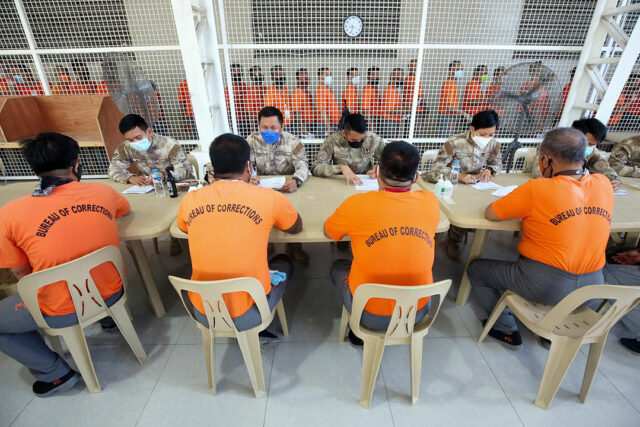
A TOTAL of 5,982 inmates have been freed under the administration of President Ferdinand R. Marcos, Jr., the country’s Justice secretary told the United Nations (UN) on Monday.  

“The principal guiding principle in our prison reform program is to consider PDLs (persons deprived of liberty) not as numbers but as human beings with dignity and rights,” Justice Secretary Jesus Crispin C. Remulla told the UN Commission on Crime Prevention and Criminal Justice in Vienna on May 22.  

“Making our prison facilities in the Philippines more humane and more dignified is one of our priorities,” he said in his UN speech, a copy of which was sent to reporters on Wednesday.   

He added that the Department of Justice (DoJ) had recommended granting executive clemency to 533 inmates who are elderly and sick.  

The speech was delivered during a side event at the UN Commission’s 32nd session.  

Mr. Remulla also cited the government’s efforts to accelerate legal proceedings for inmates detained due to pending criminal cases.  

The DoJ earlier raised the requirement for filing criminal cases, mandating government prosecutors to ensure cases lead to a “reasonable certainty of conviction” to ease jail congestion. It has also halved the bail for poor Filipinos.  

Mr. Remulla earlier told the UN Human Rights Council that the government aims to release 5,000 inmates by June.  

Political prisoners group Kapatid on Tuesday asked the Supreme Court (SC) to fast-track its decision on its plea to a Writ of Kalayaan, which could be used to release prisoners who are vulnerable to coronavirus.  

It said the DoJ has yet to release the elderly and sick political prisoners it informed the agency about. 

Many of the countrys jails fail to meet the UNs minimum standards given inadequate food, poor nutrition and unsanitary conditions, according to Human Rights Watch.    

“I wish to reiterate in closing, the Philippinesstrong commitment to promote and adhere to the international standards in the treatment of prisoners starting from their admission up to their release,” Mr. Remulla said.  

“In fact, we have embarked on a whole-of-government, whole-of-nation approach in order to improve, if not reform, our corrections system.” John Victor D. Ordoñez 

Bill mandates use of body-worn cameras in law enforcement operations 

PNP.GOV.PH

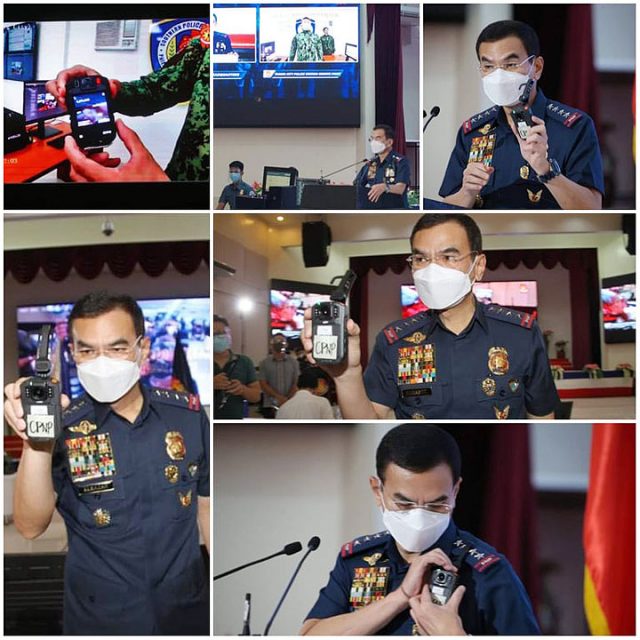
A SENATOR has filed a bill that would require law enforcement agencies to use body-worn cameras for special police operations. 

The use of body-worn cameras can speed up the resolution of crimes in the country by providing evidence of the circumstances surrounding the operation conducted,Senator Rafael T. Tulfo said in Senate Bill No. 2199.  

The measure will reinforce a 2021 resolution by the Supreme Court requiring law enforcers to use at least one body-worn camera and one alternative recording device when serving search and arrest warrants as well as during warrantless arrests.   

Under the bill, alternative recording devices may also be used if body-worn cameras are not available, with written authorization from the head of the agency. 

Under to the proposed Body-worn Camera Act, the equipment will be worn during law enforcement operations, including warrants of arrest, implementation of search warrants, visitorial powers of the Philippine National Police chief and unit commanders, as well as operations against illegal activities like drugs, gambling, smuggling, illegal logging, illegal fishing, carnapping, kidnapping, cybercrime.  

The bodycams may also be used in Special Police Operations, including checkpoints, roadblock operations, civil disturbance management operations, demolitions, searching and seizure of on-board marine vessels, and hostage situations, among others.  

Mr. Tulfo assured that the cameras will not be used for intelligence gathering.  

Recordings also cannot be used as a substitute for the presentation of witnesses.  

Corresponding penalties are also provided for violations of the law.   

A similar measure is currently being deliberated at a House committee. Beatriz Marie D. Cruz

Manila court convicts man behind videos vs Duterte of perjury 

A MANILA court has found guilty of perjury a man who had released videos online that linked the family of ex-President Rodrigo R. Duterte to the illegal drug trade. 

In a decision dated May 22, the Metropolitan Trial Court Branch 17 sentenced Peter Joemel Advincula to three months to a year and one day in prison over false claims linking three lawyers from the Free Legal Assistance Group (FLAG) to an alleged plot to oust Mr. Duterte.  

“Let the judgment of the court be entered in the court’s book of judgments, both parties are notified in open court of their right to avail of post-judgment remedies,” states part of the decision.   

The man who went by the moniker “Bikoy,” is also facing an estafa case for allegedly deceiving organizers of a beauty pageant in Polangui, Albay in 2018.  

FLAG Lawyers Jose Manuel I. Diokno, Theodore O. Te, and Lorenzo R. Tañada III filed the perjury complaint in 2019, calling the allegations against them “absolutely willful assertions of falsehoods in violation of the law.”  

They said they had never met with the man and denied involvement in the supposed plot.  

“Peter Joemel Advincula and his counsel were present in court,” according to the decision. John Victor D. Ordoñez

SSS urges informal sector workers in Bulacan to join as members 

SSS FACEBOOK PAGE

THE SOCIAL SECURITY SYSTEM (SSS) urged informal sector workers in Bulacan to apply for coverage, promoting the benefits and loans available through the social insurance agency.  

SSS Professional Sector Department Head Carlo C. Villacorta led a promotional campaign for residents in Villa Española, San Jose Del Monte, Bulacan to become self-employed members of the state-run program, it said in a statement. 

SSS said Villa Española is a community that consists primarily of informal sector self-employed workers.   

Mr. Villacorta conducted a seminar for 150 participants on SSS programs upon the invitation of Villa Española Homeowners Association, Inc. President Josephine Lusabia. 

For the protection of self-employed workers, we hope you could register with SSS as self-employed members and pay the appropriate contribution. In case you get caught in an accident or get sick that is work related, you will get an additional benefit which could be claimed through the EmployeesCompensation Program,Mr. Villacorta said in Filipino.  

He also highlighted the importance of learning how to navigate the My.SSS Portal for a more convenient way of transacting with the agency.   

We ask for a little bit of your time, effort, and patience to understand how to use the online platforms of SSS for easy transactions,he added.  

Mr. Villacorta also called on the members and officers of the homeowners association to encourage friends and relatives to consider joining the SSS, which covers private sector workers. Aaron Michael C. Sy

Philippine delegation to Para Games finalized at 259 athletes and officials

PARA GAMES CHEF-DE-MISSION WALTER TORRES — PSC_GOV

THE PHILIPPINES will sail out to eclipse its performance in the last staging of the ASEAN Para Games a year ago in Solo, Indonesia as it wades into battle in this year’s edition set June 3 to 9 in Phnom Penh, Cambodia.

“Surpass the medal haul of 28 gold, 30 silver and 46 bronze medals from the last APG,” said Philippine Sports Commission board member and the national team’s Phnom Penh Games chef-de-mission Walter Torres.

Mr. Torres said they would send a better team on this one as the 259-strong delegation boasts of veterans from the three sports that accounted for all its golden harvest in Solo — swimming (12 gold), chess (10) and athletics (six).

Interestingly, the country is also using the biennial tilt as part of its preparations for bigger competitions ahead — the Hangzhou Asian Para Games late this year and the Paris Paralympics next year.

“Our veteran Para athletes from athletics, swimming and chess are stronger and motivated to do even better in preparation for the Asian Para Games in Hangzhou and qualifying leading to the Paris Paralympics,” said Mr. Torres.

The squad has also inserted teams in goal ball and football for the first time with hopes to add to the nation’s medal haul.

“We also have new teams in goalball and football where we are making a debut with a possibility of a podium finish,” he said.

The team will be paced anew by Sander Severino, who emerged the most be-medalled Filipino with four gold in chess in Solo, and flag-bearer Ariel Alegarbes, who had three gold in swimming. — Joey Villar