Home Blog Page 4863

Senator bucks proposed transfer of PhilHealth to the Office of the President 

DOH-MMCHD HPU

A SENATOR has opposed the proposed transfer of the Philippine Health Insurance Corp. (PhilHealth) to the Office of the President (OP), saying the Health department must not relinquish its direct supervision over a key component of the universal healthcare program.     

Senator Ana Theresia RisaN. Hontiveros-Baraquel, in a statement on Monday, questioned the recent creation of a joint technical working group (TWG) to evaluate PhilHealths transfer under the OP.  

The May 12 department personnel order signed by Health Officer-in-charge Maria Rosario S. Vergeire assigns Department of Health (DoH) and PhilHealth officers who will make up the TWG, with the consent of the OP.   

Why would the DoH even consider relinquishing its responsibility and accountability as the principal national health authority in charge of PhilHealth?Ms. Hontiveros said. Why the sudden interest of the Office of the President in exercising authority over PhilHealth?”  

The lawmaker noted that existing laws provide that PhilHealth is and should remain attached to DoH for policy coordination and guidance towards the realization of universal healthcare.”   

Meanwhile, Rafaela David, president of Akbayan Party, which sent out a copy of the DoH personnel order to the media, said the planned transfer may also affect PhilHealths ability to provide health insurance coverage especially to the poor.  

Placing PhilHealth under the Office of the President could make it more vulnerable to vested interests and political pressure, which could undermine its ability to operate independently and make impartial decisions,Ms. David said in a statement.  

She added that the transfer may also raise transparency concerns.  

With less oversight and scrutiny, there is a risk that the agency could become less accountable to the public and ineffective in addressing corruption and other issues that have plagued it in the past.”  

Ms. David said President Ferdinand R. Marcos, Jr.s administration should instead prioritize appointing a Health secretary and address the pressing problem of lack of healthcare workers. Beatriz Marie D. Cruz

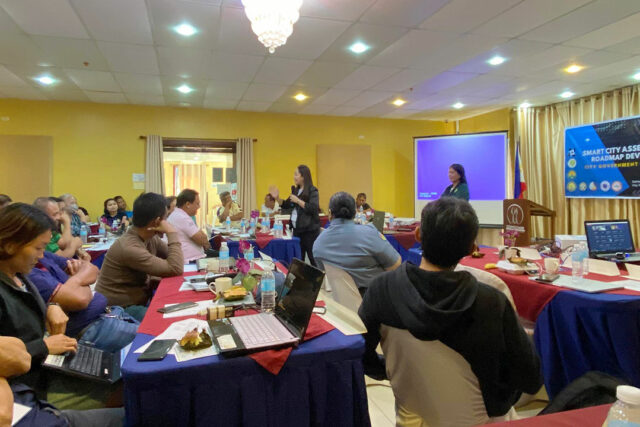
Borongan City drafts roadmap to become 1st smart city in Eastern Visayas 

DOST

BORONGAN City has drafted a roadmap towards becoming a smart city, with a focus on adopting technology and programs that will improve healthcare, education, and agriculture, among other sectors.   

“The implementation of this project aims to promote good governance and transparency,Borongan Mayor Jose Ivan C. Agda said in a statement following last weeks three-day assessment and roadmap formulation activity.  

Technology adaptation will make public service more efficient and will make civil servants more accountable to the people they serve,he said.    

The Department of Science and Technology (DoST) together with the Isabela State University-Cauayan Campus and the local government of Cauayan City are assisting Borongan in its smart city goal.   

Cauayan City was recognized by the DoST in 2015 as the first smart city in the country.   

The project stems from the first iSCENE2023 (International Smart City Exposition and Networking Engagement) held in March to encourage localities to implement and adopt various smart and sustainable initiatives.   

Mr. Agda emphasized the importance of agriculture in Borongan and using the smart city initiative to build on ongoing programs for improving the sector.  

He cited the Dukwag Agriculture Mapping Project, which aims to create a comprehensive database of the city’s agricultural resources, including land use and soil analysis, to help farmers make more informed decisions for better production.   

A stakeholders meeting to discuss the smart city program and next steps will be held on the second week of June, in time for the citys charter day celebration.   

The meeting will gather key stakeholders and partners to present and discuss the next steps of the project, review the roadmap, and identify potential areas for collaboration,the city government said.     

Philippine Airlines launched flights in December to Borongan City, capital of Eastern Samar province.  

The twice weekly flights are between Cebu and Borongan and scheduled to allow for connecting flights between Cebu and Manila.     

Eastern Samar was cited by the Philippine Statistics Authority in an Oct. last year as having one of the most significant improvements in poverty incidence with the 2021 level dropping to 29.4% from 40.9% in 2018.    

The province, however, still had the highest poverty incidence among the six provinces in the Eastern Visayas Region.    

Eastern Samar Governor Ben P. Evardone said in August that the next three years of his administration is geared towards bringing in investments and other support from the private sector as public funds are tight in the wake of the coronavirus pandemic. Marifi S. Jara

Marcos approves more sugar imports, delays milling start

BOC - PUBLIC INFORMATION AND ASSISTANCE DIVISION (BOC-PIAD)

PRESIDENT Ferdinand R. Marcos, Jr. approved imports of about 150,000 metric tons (MT) of sugar on the Sugar Regulatory Administration’s (SRA) recommendation, the Palace said in a statement.

The Presidential Communications Office (PCO) said Mr. Marcos, who is also Secretary of Agriculture, accepted the SRA recommendation in order to stabilize sugar prices and add to the sugar inventory.

He also approved delaying the start of the sugar milling season from August to September in order to improve raw sugar yields.

“We agreed to additional imports of sugar to stabilize prices,” the PCO quoted the President as saying after meeting with SRA Acting Administrator Pablo Luis S. Azcona and SRA Board Secretary Maria Mitzi V. Mangwag. “The maximum amount will be 150,000 MT but probably less.”

Executive Secretary Lucas P. Bersamin, Presidential Legal Counsel Juan Ponce Enrile, and SRA Board Secretary Rodney K. Rubrica were also at the meeting.

Sugar import permits will be open to all traders, the President added.

As of May 7, the Philippines had an inventory of 160,000 MT of sugar, according to the SRA, which estimated the import requirement this year at between 100,000 and 150,000 MT, based on estimate production of 2.4 million MT and the 440,000 MT earlier authorized for import by Sugar Order No. 6.

Mr. Marcos also ordered the SRA to fast-track block farming initiatives to boost production, which consolidates smaller farms into at least 30 hectares to improve efficiencies and streamline the distribution of financial and technical aid.

There are currently 21 block farms in the country averaging 40 hectares.

“We’re looking at increasing the budget for block farming to accelerate the process of organizing the block farms,” Mr. Marcos said.

Mr. Azcona said on May 2 that the farmgate price of raw sugar has been stable at P60 for the last two or three months, with supply improving from a year earlier.

According to DA price monitors, the prevailing market price of refined sugar in Metro Manila as of Tuesday was between P86 and P110, washed sugar P80-P95, and brown sugar P35-P95. — John Victor D. Ordoñez

Uniformed personnel pensions to need P1.5T in gov’t support by 2040

PHILIPPINE STAR/KRIZ JOHN ROSALES

THE GOVERNMENT will need to provide up to P1.5 trillion in 2040 to plug the funding hole in pensions for retired military and uniformed personnel (MUP) if the system is not reformed, National Treasurer Rosalia V. de Leon said on Monday.

Speaking before the Senate Committee on National Defense and Security, Peace, Unification and Reconciliation, Ms. De Leon said, “Without reform, pension spending is projected to increase tremendously in the succeeding years.”

Ms. De Leon told the panel that the government would have to spend P214 billion in 2023, P537 billion in 2030, and P1.5 trillion in 2040 to keep up with pension commitments for retired MUPs.

She added that the unfunded liabilities under the current MUP pension system are estimated at P9.6 trillion. “This represents around 53.4% of GDP in 2020 and does not yet include funding requirements for those who enlisted after the study was conducted.”

Borrowing for pension liabilities subjects the Philippines to interest rate risk. The Philippines paid about P11.5 billion in 2023 on interest expenses, Ms. De Leon told the committee.

This may increase to P40 billion in 2030 and P171 billion in 2040.

Ms. De Leon told the panel that the government is spending more on pension liabilities than on keeping the uniformed services “safe, competent, and in fighting shape.”

“While we recognize the important role and peculiar nature of work of our soldiers, policemen and women, and uniformed officers being exposed to constant risk and danger, we are also mindful of the enormous burden of the existing MUP pension system… especially to the taxpayers, as it is fully funded by the government,” Committee Chairman Senator Jose Ejercito Estrada said.

The Finance department proposes reforms applying to all active personnel and new entrants, and to adjust pension benefits by up to 1.5% within a given year, subject to evaluation of economic conditions and the actuarial life of the pension fund.

It also proposed that MUPs receive their monthly pensions at 57 years, and contribute more to the MUP trust fund to finance benefits, including increased disability pension and life insurance.

“Dependence on full government funding makes the pension system susceptible to economic and fiscal downturns which creates an unstable and unreliable benefit system for MUPs and their dependents,” Ms. De Leon said.

Officer-in-charge Defense Secretary Carlito G. Galvez, Jr. said that the “morale and welfare of our soldiers be given due weight” in pursuing reforms.

“At present, mere discussions of proposals related to retirement benefits — most especially the (adjustment of the) pensionable age — has affected the morale and caused unease” not only among active-service personnel but even among veterans and retirees, Mr. Galvez said.

He added that around 70% to 80% of personnel may retire in advance to lock in the current pension benefits.

President Ferdinand R. Marcos, Jr. is also “very much concerned” about the impact of any reforms on the morale and welfare of MUPs, Mr. Galvez said.

The MUP pension program covers members of the Armed Forces of the Philippines, Bureau of Jail Management and Penology, Bureau of Fire Protection, Philippine National Police, Philippine Public Safety College, Coast Guard, and Bureau of Corrections.

The Budget department in January said that the MUP pension program covered 137,649 retired personnel in the first quarter of 2023.

The proposed MUP pension reform is a priority legislative item. A similar bill in the House is pending at the committee level.

The Senate committee has formed a technical working group to work on the bill. Mr. Estrada said that the measure may not be approved before Congress adjourns on June 2, pushing deliberations past the President’s State of the Nation Address in July. 

Meanwhile, Senators on Monday approved on third reading Senate Bill No. 1480, which seeks to rationalize the disability pensions of veterans.

In a plenary session, 21 senators voted in favor of the bill, with no one opposing or abstaining.

The bill seeks to amend Republic Act No. 6948, or An Act Standardizing and Upgrading the Benefits for Military Veterans and their Beneficiaries. — Beatriz Marie D. Cruz

Agri rehab lending program funding raised to P750 million

MAFAR BARMM

THE Department of Agriculture said it raised the funding of a calamity rehabilitation lending program for farmers and fisherfolk to P750 million this year from P500 million previously.  

In a briefing on Monday, Cristina G. Lopez, deputy executive director of the Agricultural Credit Policy Council (ACPC), said the additional funds will bolster the Survival and Recovery loan program.

“We had a previous budget of around P500 million. Only the ACPC allocated (the funds) but we can always request for more if needed,” she said.

The program aims to help agricultural households in calamity-affected areas regain their earning capacity.

Ms. Lopez said the increased funding resulted from the experience of calamities in previous years, the outsized impact of the pandemic on farmers and fisherfolk, and in anticipation of the El Niño dry spell, she said.

Individual farmers and fisherfolk can borrow up to P25,000 each at zero interest, to be paid over three years, she said.

To qualify, farmers should own or till up to three hectares of farmland; be listed on the Registry for Basic Sectors in Agriculture database; and be endorsed by their municipal agriculture office.

Ms. Lopez said that the ACPC also allows P300,000 per borrower under its Agri-Negosyo Loan Program to provide capital for agri-fishery based micro and small enterprises (MSEs).

MSEs may be single proprietorships, partnerships, corporations, cooperatives, or associations.

“The processing of loans should be fast as long as the documents are complete because these are being verified by our lending conduits. We see an average of 5-10 working days’ (processing time). Kapag tumagal doon (If that period is exceeded), it means there is a problem in the documents,” Ms. Lopez said.

The ACPC uses a network of lending conduits within cooperatives, non-government organizations, associations, rural banks, and cooperative banks. — Sheldeen Joy Talavera

NEDA says proposed SDG council would duplicate panel’s functions

PHILSTAR FILE PHOTO

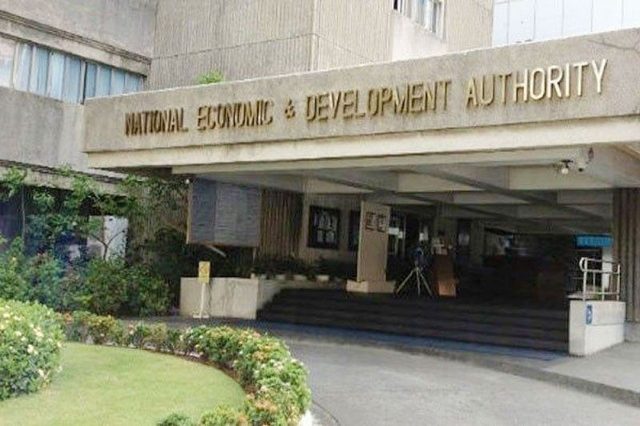
THE National Economic and Development Authority (NEDA) said it cannot support a proposal to create a Sustainable Development Goals (SDG) council, noting that a subcommittee is currently tasked with overseeing the SDGs.

“The NEDA is not entirely supportive of the creation of the council, in view of the fact there is already in place a subcommittee on SDGs that is directly under the Development Budget and Coordination Committee (DBCC),” NEDA Head of Secretariat to the Subcommittee on Sustainable Development Goals Reverie Pure G. Sapaen said at a hearing at the House of Representatives on Monday.

“This is also in keeping with our effort to streamline the functions of interagency bodies. Therefore, it is suggested that the current institutional set up be maintained to facilitate the achievement of the SDGs,” she added.

She was asked to provide NEDA’s views on House Bill No. 5092, which proposed the creation of the SDG council.

The proposed council will provide “strategic direction on the attainment of the SDGs in conjunction with the whole-of-nation approach and all other government strategies in place,” according to the bill.

It also aims to establish an evaluation and reward system for achieving the goals.

Ms. Sapaen said that “the subcommittee on SDGs, which is chaired by NEDA and co-chaired by the Department of Budget and Management, performs the following functions: assists in the coordination of SDGs through quarterly meetings with relevant stakeholders, and recommends to the DBCC and NEDA policies and projects related to meeting the SDGs consistent with national development priorities,” she said.

“Given these existing mechanisms, it is our view that the creation of the SDG council will no longer be necessary, considering the similarity of the current committee in place,” she said.

Agusan del Norte Rep. Dale B. Corvera said “There’s no focus” in the subcommittee’s operations. “There should be a council to focus on efforts to achieve the goals. There should be a council with an expanded membership. The SDGs affect a wide array of areas of human development. Agencies concerned should be members,” he said.

Leyte Rep. Richard I. Gomez also called for the regularization of voluntary reporting on progress made towards meeting the SDGs, which he said should be personally presented by the NEDA Secretary before Congress.

“We want the Secretary to report to us so we can keep track of the funds they use from Congress. (It should be) on an annual basis,” he said.

Ms. Sapaen said that it was also not necessary for NEDA to appear annually before the Congress to report on the SDGs.

“The SDG goals have been mainstreamed and integrated in the current Philippine Development Plan. The strategies are in place to accelerate the achievement of the goals. On the reporting requirement, every three years the Philippine has committed to report via the voluntary national review,” she said.

She also noted that the Philippine Statistics Authority assesses progress towards the SDGs via a pace of progress report, which is regularly updated.

“We also recognize with barely seven years left, the impetus to accelerate the implementation of SDG is right before our eyes. We do recognize the purpose of establishing the council. Our position is coming from the point of streamlining agency functions with respect to our secretariat functions,” Ms. Sapaen said.

She also noted that NEDA is not the implementing agency for the SDGs.

“We have the implementing agencies that carry out the projects and programs that will (achieve) the goals. For our part, as secretariat, we have been steering policies and other conversations,” she said.

“The programs are up to the agencies. There is also a regional body that works on SDG implementation on that level. In terms of localizing effort, we also have that body in place. The NEDA is very cognizant of this approach; we have adapted this to SDG implementation,” she added.

The Asia-Pacific region is expected to miss 90% of its SDGs by 2030, according to a recent report by the Economic and Social Commission for Asia and the Pacific. — Luisa Maria Jacinta C. Jocson

BPOs welcome ‘clarity’ after VAT zero-rating ruling

BW FILE PHOTO

A RULING by the Bureau of Internal Revenue (BIR) clarifying eligibility for the value-added tax (VAT) zero rating removes an element of uncertainty in qualifying for the incentive, the Information Technology and Business Process Management (IT-BPM) industry said.

“The release of Revenue Regulations (RR) No. 3-2023 by the BIR is a welcome development for the IT-BPM industry. After months of uncertainty on the VAT zero-rating of goods and services, IT-BPM registered export enterprises (REEs) and their local suppliers finally have much-needed clarity on this important matter,” IT and Business Process Association of the Philippines (IBPAP) President Jack Madrid said in a statement on Monday.  

According to Mr. Madrid, the BIR resolution said that health maintenance organization premiums are “appropriately” VAT zero-rated and that investment promotion agencies (IPAs) “are confirmed” to have jurisdiction over all issues related to VAT zero-rated purchases of their respective REEs.

“We are grateful that we now have this RR as basis in handling the issues that we have been grappling with for some time and we look forward to the further streamlining of the regulation to the effect that those exporting within the minimum threshold of 70% be allowed full VAT exemption or zero rating on their purchases given their compliance with the export condition of their registration,” Mr. Madrid said.  

Last month, the BIR issued RR No. 3-2023 which clarified that local purchases related to janitorial services, security services, financial services, consultancy services, and marketing and promotion are not covered by the zero-VAT rating incentive.  The RR also specified that local suppliers of goods and services for REEs are no longer required to apply for VAT zero-rating approval with the BIR. The VAT zero-rating incentive on the local purchases of goods or services could now instead be availed of on the basis of a certification issued by the IPA. 

For 2023, the IBPAP is aiming to generate $35.9 billion in revenue and employ 1.7 million full-time employees (FTEs), against the $32.5-billion revenue and 1.57 million FTEs recorded in 2022. — Revin Mikhael D. Ochave

House approves measure extending estate tax amnesty on 3rd reading

PHILSTAR FILE PHOTO

THE House of Representatives approved on third reading on Monday a bill extending an estate tax amnesty for another two years beyond its expiry in mid-June.

In a Monday plenary session, 259 legislators voted yes to House Bill (HB) No. 7909, with zero opposed or abstaining. The bill seeks to extend the estate tax amnesty deadline to June 14, 2025.

If passed into law, the measure would represent the second extension of the estate tax amnesty under Republic Act (RA) No. 11213, which initially ran from 2019 to June 14, 2021. RA 11569, which was passed by the previous Congress, had extended the amnesty period by two years to June 14, 2023.

HB 7909 is a substitute bill to HB 7409, which was originally co-authored by Speaker Ferdinand Martin G. Romualdez, Ilocos Norte Rep. Ferdinand Alexander A. Marcos, Majority Floor Leader and Zamboanga City Rep. Manuel Jose M. Dalipe and TINGOG party-list representatives Yedda Marie K. Romualdez and Jude A. Acidre.

The bill also seeks to extend the coverage of the availment of estate tax amnesty for those who died on or before Dec. 31 2017, to Dec. 31, 2021, amending section 4 of RA 11213.

The law currently allows taxpayers a one-time opportunity to settle unpaid tax obligations covering estates of those who died on or before Dec. 31, 2017. A 6% tax rate is imposed on each decedent’s total net taxable estate at the time of death without penalty.

“An extension of the estate tax amnesty program would allow more families to take advantage of the program to… settle outstanding estate taxes at an affordable 6% flat rate, in turn freeing up their assets and providing financial relief to families who were struggling in the wake of the pandemic,” Nueva Ecija Rep. Rosanna V. Vergara said during the bill’s second reading approval last week.

Ms. Vergara added that finalized estate tax cases, which includes properties involved in court cases like those under the jurisdiction of the Presidential Commission on Good Government, or those involving graft and corruption, money laundering, and other crimes under the tax code, will not be affected by the proposed amnesty.

Similar measures in the Senate are pending at the committee level.

During an April 25 Ways and Means Committee Meeting, Bureau of Internal Revenue Assistant Commissioner Maria Luisa I. Belen said that it had set a P6-billion collection target from the estate tax amnesty.

She said that a total of 133,860 taxpayers have availed of the amnesty from 2019 to present, generating P7.4 billion for the government. — Beatriz Marie D. Cruz

Not all discrepancies will result in automatic disallowance by the BIR

Many of us kick off our day with a cup of coffee. Coffee has become my staple beverage to boost my energy before starting my day. Yesterday, while I was having my favorite black roast coffee, I received an overseas call from my childhood friend, who told me in a low voice that she had won a lottery prize. I was curious why she was not excited when she said she had won. Later, she told me that she was disqualified from claiming the prize due to discrepancies in the documents produced for verification.

This is likewise true when dealing with the Bureau of Internal Revenue (BIR). During tax assessments and even in applications for tax refunds or credits, taxpayers are normally required to present documents to substantiate claims for expenses, exemptions, input taxes, and income tax credits. If the taxpayer fails to submit proper documents supporting the claim, the BIR will impose deficiency taxes, or even subject the taxpayer’s claim to disallowance due to discrepancies. But the question now is, should there be a discrepancy in the amount being claimed vis-à-vis the evidence presented, will that always amount to disallowance?

This was answered in the recently promulgated decision of the Court of Tax Appeals En Banc (CTA EB) on the consolidated petitions for review filed by Maersk Global Services Centres (Philippines) Ltd. vs. Commissioner of Internal Revenue (CTA EB No. 2541) and Commissioner of Internal Revenue vs. Maersk Global Services Centres (Philippines) Ltd. (CTA EB No. 2547).

In the case, the petitioner-taxpayer made a purchase from a service provider, which issued a corresponding VAT official receipt (OR) showing the VAT amount on the purchase. Later, the input VAT on this purchase was included in petitioner-taxpayer’s application for refund of its unutilized excess input VAT. It turned out that the input VAT being claimed by the petitioner-taxpayer is lower than the amount of VAT indicated in the OR; thus, the discrepancy. This resulted in disallowance by the BIR due to petitioner-taxpayer’s violation of the substantiation requirements.

Upon reaching the CTA En Banc, the latter ruled in favor of the petitioner-taxpayer and allowed the input VAT being claimed by it on its purchase. The CTA En Banc applied the well-settled rule for income tax, that is, taxpayers are free to deduct from their gross income a reduced amount, or not to claim any deduction at all. What is prohibited by the income tax law is claiming a deduction beyond the amount authorized. The rule, although pertaining to income tax, can be logically applied to input VAT refund or credit, according to the CTA En Banc. Clearly, the CTA En Banc applied by analogy this rule, and thus reasoned that a taxpayer should likewise be free to deduct from output VAT an input VAT which is lower than the actual amount of input VAT stated in the VAT invoice or VAT official receipt.

In ruling for the allowance of the input VAT being claimed despite the discrepancy in the actual amount of input VAT as appearing on the face of the VAT official receipt, one might think that the CTA En Banc has deviated from the time-honored principle that since a tax refund partakes the nature of an exemption, it must be strictly construed against the claimant who must discharge such burden convincingly, especially that in VAT cases, the main evidence that a taxpayer holds would be the VAT ORs and/or invoices. Thus, a taxpayer must clearly and properly substantiate its claim by following the rules on substantiation and invoicing requirements by the letter.

In the above-mentioned case, however, the CTA En Banc noted that although there was a discrepancy as to the amount of input VAT being claimed which is lower than the amount of input VAT amount appearing on the face of the receipt, the amount being claimed is still well within the input VAT that the petitioner-taxpayer is allowed to claim. Thus, it is but proper to allow the input VAT, according to the Court.

It is worth noting that in applications for refund of unutilized excess input VAT, it is incumbent on the part of the taxpayer to comply with the substantiation and invoicing requirements of the tax bureau. It is likewise the duty of every taxpayer to explain the differences and present related documents to support the same. Nevertheless, it can still be inferred, based on this persuasive decision of the CTA sitting En Banc, that not all differences or even discrepancies in the input VAT as stated in the VAT OR vis-à-vis the actual amount of input VAT being claimed, would be considered grounds for the automatic disallowance by the BIR.

Let’s Talk Tax is a weekly newspaper column of P&A Grant Thornton that aims to keep the public informed of various developments in taxation. This article is not intended to be a substitute for competent professional advice.


Ma. Jessica A. Guevarra is a manager from the Tax Advisory & Compliance division of P&A Grant Thornton, the Philippine member firm of Grant Thornton International Ltd.

pagrantthornton@ph.gt.com

Gilas women defeat Malaysia, 77-63, settle for SEAG silver

SBP

DETHRONED and all, Gilas Pilipinas women salvaged the silver medal with a 77-63 win over Malaysia at the close of the 32nd Southeast Asian Games women’s basketball tournament on May 15 at the Morodok Techo Stadium Elephant Hall 2 in Phnom Penh.

The Nationals led from the get-go and never surrendered the driver’s seat to end their campaign at 5-1, good for a second place behind new queen Indonesia that swept the entire tournament (6-0).

Indonesia, last edition’s silver medalist, previously smothered Gilas in their duel, 89-68, to deny the latter a three-peat as the women’s play format after the single-round robin elims automatically snare the gold.

Gilas still took care of business despite the costly defeat by clinching the next biggest prize in the win over Malaysia behind the 24 points of Janine Pontejos.

The Gilas team captain fired five triples on top of three rebounds, two assists and two steals with Khate Castillo (18) backstopping him on four treys of her own.

Camille Clarin, Afril Bernardino and Chack Cabinbin added nine, seven and six points, respectively, while Jack Animam hauled down six points and 13 rebounds in her SEA Games return.

Animam in Hanoi, Vietnam last edition did not play due to a knee injury as Gilas still defended the crown for a potential hat trick this year in Phnom Penh.

To no avail, the Filipinas fell just short of the mission despite scoring big wins against Cambodia, 114-54, Singapore, 94-63, Vietnam, 116-58 and Thailand, 82-70.

Malaysia, led by Hui Pin Pang (15), settled for the bronze medal anew. — John Bryan Ulanday

Petecio siblings help the PHL snare four golds, five silvers and one bronze

NESTHY PETECIO — PHILIPPINE STAR/JUN MENDOZA

PNHOM PENH — As she was prepping her pre-finals routines, Pinay boxing ace Nesthy Petecio took time to give her kid brother Norlan, fresh from his losing bout, a consoling hug.

Norlan (Petecio) fell short of his bid to score a Cinderella feat in the 32nd Southeast Asian Games (SEAG), yielding a unanimous decision to Thai champ Bunjong Sinsiri.

The Tokyo Olympics silver medalist made Norlan’s loss extra motivation when she took her turn to vie for the gold in the women’s 57kg class. Punching for Norlan, Ate Nesthy (Petecio) thoroughly defeated her rival, Ratna Devi of Indonesia, 5-0, to cop her second SEAG title in six appearances.

The Petecio siblings helped the Philippines snare four golds, five silvers and one bronze to rank second overall behind Thailand (9-2-1) in men’s and women’s boxing.

The output was an improvement from the 3-2-2 collection last time in Vietnam for the Pinoy pugilists, who were further driven to perform here in memory of their departed father figure, former boxing chief Ed Picson.

Karina Picson, widow of the former broadcaster, was with the boxers in the journey in the “Kingdom of Wonder.”

“I’m very, very happy with our boxers’ performance. We expected this. We knew they will do good here,” she said as she reflected on the performance of the boxers led by gold winners Nesthy, Carlo Paalam, Paul Bascon and Ian Clark Bautista. — Olmin Leyba

SEA Games  gold and silver medalists shortlisted for Asian Championship and Asian Games

EJ OBIENA — PHILIPPINE STAR/JUN MENDOZA

FILIPINO athletics gold and silver medalists in the 32nd Phnom Penh Southeast Asian Games will be heavily considered to make up the national team seeing action in both the Asian Championships and Asian Games.

“Those who significantly performed well in the SEA Games will be shortlisted to our team going to the Asian Championships and Asian Games,” said Philippine Athletics Track and Field Association Secretary-General and Executive Director Edward Kho in Sunday’s online presser.

“Silver medal is the minimum standard,” he added.

This meant those who could make the team are the four gold medalists EJ Obiena of pole vault, Eric Cray of 400-meter hurdles, Janrey Ubas of long jump and the 4x400m relay team of Clinton Bautista, Michael del Prado, Joyme Sequita and Umajesty Williams and the 10 silver winners headed by heptathlon’s Sarah Dequinan.

The country came a gold short in matching its five-gold, seven-silver and 14-bronze haul in last year’s Hanoi Games after finishing with a 4-10-8 harvest in this year’s edition held in the Cambodian capital.

Mr. Kho said the competition just got stronger.

“It was just the twist of the competition, it was really how it is,” he said.

The whole team has already returned safely home including Mr. Obiena, who vowed to deliver again in the Asian Championships set June 10 to 12 in Pattaya, Thailand and the Asiad set Sept. 23 to Oct. 8 in Hangzhou, China.

“Those two events are going to be part of my preparation,” said Mr. Obiena. — Joey Villar

ADVERTISEMENT
ADVERTISEMENT