Home Blog Page 4831

Veteran journalist Torres appointed to lead gov’t public information arm 

JOURNALIST Jose JoeTorres, Jr. has been named as director general of the Philippine Information Agency (PIA), the governments public information arm, according to Malacañang.  

The appointment of Mr. Torres was dated May 19, the Presidential Communications Office (PCO) said in a statement.  

He replaced Ramon Cualoping III, who announced late Monday his April 4 resignation supposedly to give PCO Secretary Cheloy Velicaria-Garafil “a free hand to choose whom she sees best.”  

Mr. Cualoping was a former campaign staff of then-senator and now President Ferdinand R. Marcos, Jr.  

Torres brings a wealth of experience and expertise to his new role,the PCO said. 

Mr. Torres, who has worked for both local and international media outlets, began his career as a writer for the alternative news service Philippine News and Features in the late 1980s.  

He worked as a sub-editor for Saudi Gazette, the national newspaper of Saudi Arabia, as an investigative reporter for the now-defunct Isyu newsmagazine, and wrote for The Manila Times, The Philippine Post, and The Sunday Paper 

The challenge for the new PIA director-general is to have a clear program for the agency’s editorial independence,Danilo A. Arao, a journalism professor, said via Messenger chat.  

He should prove his mettle not as a pro-government propagandist but as a real journalist given an opportunity to prove his worth,he added.   

Mr. Arao urged new PIA chief to help make the agency, which has 15 regional offices and 78 provincial centers, a model for state-funded responsible journalism,and not an enabler of “fake news.”  

Mr. Torres also has an extensive experience in online journalism joining ABS-CBNs online platform in 2001, playing a key role in the establishment of GMA Newsonline platform in 2005, and leading the creation of the online version of the tabloid Remate in 2009.  

He also joined news outlets that serve Catholic readers becoming the managing editor of Bangkok-based Union of Catholic Asian News in 2010 and later joining LiCAS.news, which is also based in Bangkok, as its editor-at-large. He also served as member of the editorial board of Radio Veritas Asia in 2018.

Mr. Torres was cited in the 2004 International Tolerance Prize for his article on Filipino Muslims titled “Troubled Return of the Faithful”. His piece “The Making of a Mindanao Mafia” bagged the third place in the Jaime V. Ongpin Awards for Excellence in Journalism in 2004.   

Torres has been actively involved in the journalism community, having served as chairman of the Philippine Center for Photojournalism and currently holding a board member position at the National Press Club of the Philippines,the PCO said. Kyle Aristophere T. Atienza

Tolentino: Team PHL to surpass four golds in Hangzhou Asiad

PHILSTAR FILE PHOTO

PHILIPPINE Olympic Committee (POC) President Abraham Tolentino is positive Team Philippines will build on its “strong performance” in the recent Southeast Asian Games (SEAG) and do a good job of surpassing the four-gold benchmark in the coming Asian Games in Hangzhou, China.

The Filipino accounted for four mints in the Palembang Asiad, led by Fil-Japanese golfer Yuka Saso, who snared the individual title and led Bianca Pagdanganan and Lois Go to the team plum.

Weighlifting superstar Hidilyn Diaz and skateboarder Margie Didal joined the golf aces in the honor roll there.

Mr. Tolentino is counting again on Tokyo golden girl Mmess. Diaz, Didal and Pagdanganan, the torchbearer of the golf team with Ms. Saso now representing Japan, together with world champion gymnast Carlos Yulo and world No. 3 pole vaulter EJ Obiena and the fancied boxers including Eumir Marcial in the medal rush in the China Asiad.

Two-time Olympic medalist Kayla Sanchez is also expected to make a big splash in her debut for the Philippines.

Mr. Tolentino said about 410 athletes are in the initial list, mostly composed of champions and runners-up of the last SEAG in Cambodia whose sports are part of the Asiad and world and Asian-rated bets vying for slots to the Paris Olympics.

Those outside the criteria may be allowed to go but will have to finance themselves, the POC top executive said.

Team Philippines will be going to battle in the Sept. 23 to Oct. 8 Asiad on the heels of a fighting fifth and 58-85-117 gold-silver-bronze production in the Cambodia SEA Games.

Not only did this improve on the 52-70-105 output in the preceding edition in Hanoi, but also marked the largest take in SEAG meets outside Manila since a 59-gold harvest in the 1987 edition in Indonesia.

“We got 80-plus silvers and 40-plus of that are subjective sports facing Cambodia and Vietnam. Analyze it. Twenty na lang kunin mo doon (as golds) and we would have been third, almost second.” — Olmin Leyba

Meralco Bolts battle with Northport in PBA On Tour

FACEBOOK.COM/MERALCOBOLTSOFFICIAL

Games Today
(Ynares Arena. Pasig)
5 p.m. — NorthPort vs Meralco
7:30 p.m. — Phoenix vs San Miguel Beer

MERALCO starts its new chapter under coach Luigi Trillo while NorthPort begins its post-Robert Bolick era today when they collide in the PBA On Tour at the Ynares Arena in Pasig City.

Mr. Trillo, a long-time assistant to Norman Black who was promoted to a head coaching role more than two weeks ago, gauges how his charges have adapted to his system so far in the 5 p.m. encounter.

“We’ve been together nine years na pero we’re trying to put some new things in,” said Mr. Trillo, who will have Serbian Nenad Vucinic as active consultant and Mr. Black himself as team consultant.

For NorthPort mentor Bonnie Tan, one of the major concerns is finding a go-to guy in the absence of Mr. Bolick, who signed up with Japanese B. League Division 2 club Fukushima after the Governors’ Cup.

Mr. Tan, who was promoted from interim to head mentor last month, vowed that the Batang Pier will treat the pre-season games as the real thing.

Meanwhile, reigning Philippine Cup titlist San Miguel Beer and Phoenix tangle at 7:30 p.m. to wrap up the day’s twin bill. — Olmin Leyba

Newcastle United qualifies for Champions League

NEWCASTLE — Qualifying Newcastle United for the Champions League was not even in Eddie Howe’s thoughts at the start of the season but on Monday the club’s remarkable transformation saw them secure their place back amongst Europe’s elite.

A 0-0 draw at home to Leicester City meant Newcastle will finish in the Premier League’s top four and will be mixing it with the continent’s big guns for the first time in two decades.

After celebrating on the St James’ Park pitch with his players, Mr. Howe was asked what the targets had been back in August.

“Certainly wasn’t (top four),” the former Bournemouth manager told Sky Sports. “You always hope and always believe and you have to dream. But we didn’t feel we were ready for that.

“After last season’s battle against relegation, it really was whether we could consolidate and become a better team and not flirt with relegation like last season.”

When Saudi Arabia’s Public Investment Fund bought an 80% stake in Newcastle in October 2021, ending Mike Ashley’s barren 14-year ownership of the North East club, the initial task was to keep them in the top flight.

Newcastle were 19th in the table and without a win and Steve Bruce was shortly sacked and replaced by Mr. Howe.

Even then it took Newcastle until the 15th game of the season to get a league win, but after that, with the help of some astute signings such as England right back Kieran Trippier, Brazil midfielder Bruno Guimaraes and defender Dan Burn, the fog that had shrouded the Tyneside club finally began to lift.

Newcastle eventually finished 11th and the momentum carried into this season with the club splashing some of the Saudi cash on club record purchase Swedish striker Alexander Isak.

While, on paper, Newcastle have riches to rival any club in the world, they have not yet signed the sort of galactico players the fans might have been dreaming about.

But the likes of Isak, former Burnley keeper Nick Pope and defender Sven Botman have enhanced Mr. Howe’s squad.

They began to turn a succession of draws at the start of the season into wins and apart from a mid-season dip when the goals dried up, Newcastle have been a model of consistency.

The fact they have finished above the likes of Liverpool, Chelsea and Tottenham Hotspur, speaks volumes for Mr. Howe’s impact and he can now start planning for the next step.

“We have to recruit wisely which we have done in every window so far,” Mr. Howe said. “But the next window will be the hardest. We know next season the challenge will be bigger.”

While Newcastle’s first top-four finish in the Premier League since 2003 sparked celebrations on Monday, Mr. Howe said the next step is to deliver a first major trophy since 1955 after falling in the League Cup final this year.

“I want success massively for this football club,” Mr. Howe said. “So we’ll try that. I feel like we’ve achieved something great but there’s no trophy. We’ll enjoy tonight be we want to bring silverware here in the future.” — Reuters

IBA suspends four federations for joining ‘rogue’ organization

LONDON — The International Boxing Association (IBA) has suspended federations from New Zealand, Germany, the Netherlands and Sweden for joining a ‘rogue’ rival organization, it said on Monday.

A group including the United States and Britain announced the establishment of Swiss-registered World Boxing last month in a breakaway aimed at securing the troubled sport’s Olympic future.

Its interim executive board features representatives from Germany, Britain, the Netherlands, New Zealand, the Philippines, Sweden and the United States.

The IBA said New Zealand, Germany, the Netherlands and Sweden were suspended “due to their participation in a rogue boxing organization” but could be readmitted if the involvement ceased.

They must also publish a statement on their official websites “explicitly condemning any attempts to establish an alternative international boxing federation”.

The IBA said the Czech federation was also suspended after organizing a tournament where USA Boxing fighters were allowed to take part.

Liberia and Equatorial Guinea were suspended for failing to provide annual reports. — Reuters

Nuggets sweep LA Lakers to reach first Finals

NIKOLA Jokic compiled 30 points, 14 rebounds and 13 assists as the visiting Denver Nuggets advanced to the NBA Finals for the first time in franchise history with a 113-111 victory over the Los Angeles Lakers on Monday.

Mr. Jokic, the NBA MVP in 2020-21 and 2021-22 seasons, set a record for total triple-doubles in a single playoffs with eight. He had been tied with Wilt Chamberlain, who had seven for the Philadelphia 76ers in 1967.

Jamal Murray scored 25 points and Aaron Gordon added 22 for the Nuggets, who trailed by 15 points at halftime and weathered a 31-point first half from Lakers star LeBron James.

Denver swept the series after losing once in the first round to the Minnesota Timberwolves and twice in the second round to the Phoenix Suns.

The Western Conference’s top seed will now await the winner of the Eastern Conference finals, in which the Miami Heat have a 3-0 lead over the Boston Celtics. There has never been a pair of conference-finals sweeps in NBA history.

Mr. James finished with 40 points, 10 rebounds and nine assists, cooling off from a 21-point first quarter when he was 7 of 9 from the field and 4 of 4 from 3-point range.

Mr. James’ last-second shot attempt inside to tie the game was blocked by Mr. Gordon. — Reuters

Celtics culture

Considering the way the Celtics got blown off the Kaseya Center the other day, even their diehard fans have cause to concede the inevitable. Including the Nuggets’ sweep of the Lakers yesterday, teams down zero to three in National Basketball Association annals have gone on to lose the best-of-seven series 150 out of 150 times. Perhaps the green and white would be given the benefit of the doubt were they at least competitive in Game Three. Instead, they managed to keep pace only for the better part of the first quarter; they were thoroughly outplayed the rest of the way.

The Celtics looked broken in the aftermath of the shellacking they received the other day. It wasn’t just that they looked clueless against the Heat, supposedly overmatched from the start of the East Finals as a shocking eighth seed. It was that they failed to meet expectations in both ends of the court. And because the challenges have permeated every aspect of their system, all and sundry have no idea what they need to fix first, not to mention how they will be addressing their concerns.

Defeat is not something the Celtics are normally associated with, but it was etched in the face of just about every single player after their embarrassing showing in Game Three. Significantly, head coach Joe Mazzulla’s shoulders were slumped when he faced members of the media and said the loss is “on me.” He said he did not prepare his charges properly for the task of winning on the road the other day. And unlike after their Game Two loss, few quarters came to his defense — in no smallmeasure because, well, he’s right.

It bears noting that the word “culture” has been brought up in explaining away the Celtics’ fall from grace. They were title favorites when the playoffs began. Now, as they’re about to bow to the Heat, they appear lost and unable to acknowledge their identity. Early in their 2022-23 campaign, they hung their hats on defense. As the season wore on, however, they seemed to show a purposeful predilection for producing points. Even their substitution patterns changed in favor of getting baskets instead of preventing the opinion from doing the same.

To be sure, hindsight provides 20/20 vision. That said, there can be no denying the enormity of the Celtics’ work in shaping their future. In the context of their monumental collapse, do they stick with their core? Or do they break it up and start over? Will Mazzulla be back for another run? Or will he be given the axe? These and more questions will determine their fate.


Anthony L. Cuaycong has been writing Courtside since BusinessWorld introduced a Sports section in 1994. He is a consultant on strategic planning, operations and Human Resources management, corporate communications, and business development.

How to Build Better More: Solar power and agri consolidation

WENERGYGLOBAL.COM

(Part 4)

Considering that Spain is one of the top European countries when it comes to such renewable energy sources as solar and wind, we included in the agenda an additional presentation on a specific investment case of solar energy in off-grid areas like some islands in Palawan.

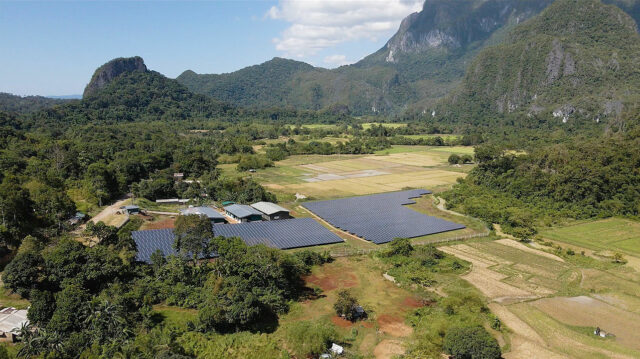
Representing WEnergy Company from Singapore, Quintin Pastrana shared with the audience his company’s renewable energy project in Palawan in which a microgrid system is being used. He described how his company is building modular solar plants in remote areas that are not part of a grid.

Palawan has some 1,200 islands, many of which are very attractive for beach tourism. It must be recalled that the Philippines has been adjudged as being the best beach destination in the world and Palawan as the best resort island in the world. What WEnergy is doing, therefore, can help the Philippines to truly be the “Spain” of the Orient.

It is well known that Spain is the No. 1 country in Europe when it comes to the number of tourists visiting (surpassed only by the religious tourism of France because of Lourdes). At any given year, there are more foreign tourists in Spain than the domestic population.

Mr. Pastrana complemented the earlier overall presentation on the energy sector by Guido Delgado (former head of the National Power Corp. during the administration of Fidel Ramos and now a leading energy executive) by presenting modular solar plants as the solution to the lack of electricity in key remote areas that have great potential for tourism, mining, and other productive investments in far flung regions within the Philippine archipelago’s 7,600+ islands.

He described his company’s successful project near the famous underground river in Puerto Princesa, Palawan. After they installed a modular solar plant there, a five-star hotel was built enhancing significantly the tourism potential of this natural resource. He presented a forecast showing that total solar and wind energy production can reach as high as 15 GW by the year 2030.

As regards large-scale agribusiness ventures, Christian Moeller — CEO of Lionheart Farms, also in Palawan — shared information about his innovative project in consolidating small coconut farms to attain economies of scale in manufacturing high-value products from coconuts. He was upfront enough to warn the potential investors that large-scale farming takes time to obtain adequate returns on the needed investments. In the case of Lionheart Farms, it took seven years before they reaped what they had invested.

He pointed out, however, that over and above the economic profitability, the most important impact of this agribusiness venture was the significant improvement in the lives of the entire community of small coconut farmers, who included some of the indigenous people of Palawan. In fact, the Lionheart Farm model is being considered by none other than President Ferdinand Marcos, Jr. — who is concurrently the Secretary of Agriculture — as a possible model for the very important strategy of consolidating millions of small coconut farms into larger units to attain the necessary economies of scale to be able to come out with high-value food and other products from the coconut tree. It is about time that we shift our production of manufactured coconut products from the very low-value copra and coconut oil to higher-value coconut products like coconut sugar, coconut water, coconut milk, and coconut coir, among others.

There is an ongoing plan to replicate the Lionheart experience in at least five other coconut regions and to scale up the size to 5,000 hectares in each site. The interest of the President in this model is so keen that during the roadshow, Mr. Moeller was recalled to Manila and could not join the Barcelona portion of the business-to-business meetings.

Fortunately, digital technology made it possible for him to record a video of his presentation and we were able to show it at the IESE Business School campus in Barcelona. This was providential since the region of Catalonia, whose capital is Barcelona, is well known for high-value agribusiness ventures. In fact, one of the Filipino entrepreneurs who helped in the organization of the roadshow, Martin Lorenzo, has a major business importing high-quality pork products from Catalonia.

The last speaker at the roadshow was Cesar Averia, the CEO of EDI-Staffbuilders, a human resource company. Mr. Averia addressed a critical problem of the Spanish economy, which is a shortage of young workers. Spain has one of the lowest fertility rates in the world at 1.3 babies per fertile woman.

The shortages are especially acute in the hospitality and health sectors. He presented vital information about the human resource endowments of the Philippines, one of the few emerging markets in the Indo-Pacific region with a young, growing, and highly literate (especially in English) population. He assured the Spanish businesspeople that both at the level of managers and workers, the Philippines can adequately supply Spain with the needed qualified human resources, not only for its domestic requirements but also for the many projects that Spanish infrastructure companies are undertaking in other parts of the world, such as in the Middle East. He shared the impressive record of EDI-Staffbuilders since the 1970s in providing manpower support to key global firms which include a leading Spanish conglomerate, OHLA.

To cap the presentations, a top executive of Acciona — one of the largest infrastructure firms in Spain — described the company’s experiences in building major infrastructure projects in the Philippines.

Acciona was part of the consortium of firms (together with DMCI, among others) that built the longest bridge in Central Visayas — the bridge connecting the municipality of Cordoba with Mactan. It is also part of the consortium building the train system from Clark to Bulacan. Another potential project that Acciona may be part of is the bridge that will connect Cavite to Bataan, passing through the island of Corregidor. 

It was encouraging to the other Spanish infrastructure firms who attended the roadshow to listen to the presentation of a Spanish firm that has succeeded in carrying out some major projects in the Philippines, despite the usual bureaucratic and other obstacles faced by foreign investors in the Philippines.

The most productive portion of the roadshow — both in Madrid and Barcelona — was the business-to-business meetings that followed the plenary sessions. Only time will tell how many of these potential strategic alliances will result in actual FDIs flowing into the Philippines. We are sure, however, that the roadshow has brought us closer to a higher inflow of FDIs than the mere declaration of interests and pledges to invest that follow every Presidential trip.

I have described the roadshow in great detail because I want to encourage other private initiatives of Philippine enterprises — working with private chambers of industry and think tanks — to organize similar trips to countries like South Korea, Japan, the United States, Germany, the Netherlands and other developed countries that have long-term capital, technology, and managerial expertise to help us in our Build More Better endeavors. I am sure such private initiatives will always find their counterparts in the public sectors who can help in identifying potential business partners on both sides of the strategic alliances being sought. 

Fortunately, in the case of Spain, we were able to identify a most cooperative group in the persons of Ambassador to Spain Philippe Lhuillier; Consul Monika Limpo of the Philippine Embassy in Madrid; Consul General Maria Theresa Lazaro of the Philippine Consulate in Barcelona; Silvia Torices, Economic and Commercial Counselor of the Spanish Embassy in the Philippines; and Primo Santos, Jr. of the Economic and Commercial Office of the Spanish Embassy in the Philippines. We also received much help from the IESE Business School in Spain, especially from Natalia Centenero. Last but not least, let me thank Federick Go of the Office of the Presidential Adviser on Investment and Economic Office, who provided us very valuable contacts with Philippine businesses with interest in striking strategic alliances with their counterparts in Spain. I hope we can continue to work with him in our future roadshows to other countries that can be sources of FDIs for the Philippines, especially in those three sectors of infrastructure, renewable energy, and agribusiness ventures.


Bernardo M. Villegas has a Ph.D. in Economics from Harvard, is professor emeritus at the University of Asia and the Pacific, and a visiting professor at the IESE Business School in Barcelona, Spain. He was a member of the 1986 Constitutional Commission.

bernardo.villegas@uap.asia

Revitalizing Philippine-Australian security partnership in a changing Indo-Pacific Region

FLATART-FREEPIK

In the past few months, defense and foreign affairs analysts, journalists, diplomats, and politicians have observed the Marcos administration’s efforts to revitalize the Philippine-US alliance. President Ferdinand “Bongbong” Marcos, Jr. considered a close security relationship with the United States as necessary because, based on the experience of the immediately preceding Duterte administration, there is no guarantee that more intimate economic relations with China would mitigate its coercive and expansionist behavior in the South China Sea. Marcos Jr. prioritized the maintenance of healthy and vibrant security ties with the US, which marks a departure from his predecessor, President Rodrigo Duterte, who initially tried to unravel the Philippine-US alliance to minimize Manila’s dependence on Washington and diversify the country’s security relations to include revisionist states such as China and Russia.

In August 2022, Marcos Jr. warmly welcomed US Secretary of State Anthony Blinken. More significantly, he allowed the Armed Forces of the Philippines (AFP) to boost its ties with the US armed services. In late September 2022, the Philippines and US armed services held the annual Mutual Defense and Security Engagement Boards meeting in the US Indo-Pacific Command in Hawaii, USA. The two sides agreed to ensure continued robust military-to-military relations between the two armed forces as both sides agreed to hold over 500 joint activities in 2023. These activities will include exercises, training, and capability-building in maritime security, combatting terrorism and transnational crime, cyber security, humanitarian assistance, and disaster relief (HADR). This will mark a 75%-increase from the more than 300 annual military engagements the two allies conducted in 2022 that ranged in size and scope from the huge Philippine-US Balikatan (Shoulder-to-Shoulder) joint military exercise, to port visits, to the exchange of Subject Matter Experts (SME) for table-top-exercises. Early this year, the AFP announced that four more bases would become Enhanced Defense Cooperation Agreement sites where US forces cannot construct military facilities for joint use by Filipino and American troops.

Unfortunately, the dramatic improvements in the Philippine-US alliance seem to have made people forget that the Philippines also has meaningful security partnerships with like-minded middle powers such as Japan, South Korea, and Australia.

Australian Foreign Minister and Senator Penny Wong’s four-day visit to the Philippines last week reminded Filipinos and Australians alike that to achieve a common goal of peace and prosperity for these two nations, the Philippines and Australia should work with like-minded security partners. She met Foreign Affairs Secretary Enrique Manalo to discuss issues of mutual interest, such as defense, security partnerships, development cooperation, trade and investment, and people-to-people ties. She stated that the Philippines and Australia have a long-standing security partnership. She added, however, that an intended outcome of her visit to the Philippines will be “to progress the uplifting of our relationship from a comprehensive partnership to a strategic partnership.”

THE PHILIPPINES’ MOST EXTENDED AND MOST RELIABLE SECURITY PARTNER
The 1995 Philippine-Australia Memorandum of Understanding on Cooperative Activities provides the legal basis for Philippine-Australian security relations. It enables the Australian Defense Force (ADF) and the AFP to undertake several defense-related activities in the holding of mutually beneficial cooperative defense activities such as the MTA LUMBAS (2001), the First Philippines-Australia Maritime Surveillance Exercise (Marsuvex), and the Australian-hosted multilateral Fleet Concentration Period Exercise KAKADU. Aside from these military exercises, there are regular exchange visits by Filipino and Australian defense and high-ranking military officials to boost confidence-building measures and common intelligence exchanges on various security issues.

Australia extended immediate and urgent assistance to the AFP during the Battle of Marawi City. The Royal Australian Air Force (RAAF) deployed two AP-3C Orion aircraft to provide surveillance and reconnaissance support to the AFP’s combat operation against Muslim militants who took control of the city. Signal and photographic intelligence provided by the American and Australian reconnaissance planes enabled the AFP to deploy its FA-50s fighter planes and OV-10 ground attack planes to launch surgical airstrikes on the ISIS’ positions in the city. During the fighting, Australia also considered sending ADF personnel to the Philippines to advise and assist the AFP in its counter-terrorism campaign against Islamic militants — something that the ADF had been doing in Iraq.

In the aftermath of the battle of Marawi City, Australia looked at further collaboration and capacity-building work with the Philippines and other regional partners on fostering cooperation among regional coast guards to tighten border control in the Sulu Sea. This was to limit the movement of money, technology, and fighters to extremist groups in the Southern Philippines.

FROM COMPREHENSIVE TO A STRATEGIC PARTNERSHIP
To show Canberra’s seriousness in uplifting its security relations with the Philippines from a comprehensive to a strategic partnership, Foreign Minister Wong announced initiatives to enhance maritime cooperation and more considerable official development assistance to the Philippines in 2023 and 2024. She said that maritime cooperation initiatives include technical assistance and capacity building for the Philippine Coast Guard; transfer of equipment, skills, and technology to improve maritime domain awareness and marine protection; and assistance to mitigate the oil spill’s environmental impact off Mindoro.

She also raised the prospect of Australia joining the Philippines, Japan, and the US in exercising freedom of navigation and overflight in the South China Sea. She added that Canberra is committed to continuing its long-standing naval presence in the Indo-Pacific region.

Finally, she discussed with Secretary Manalo the potential trilateral security cooperation between the Philippines, Japan, and Australia. Tokyo and Canberra coordinated their security assistance to the Philippines during the Duterte Administration when both middle powers became concerned over former President Duterte’s failed efforts to wean the Philippines away from the US and gravitate toward China. She announced that Australia is willing to work “with the Philippines and other parties, other nations to help shape the region.”

Our friendship and security partnership with Australia — one of the countries most trusted by Filipinos — is also something to be cherished.


Dr. Renato Cruz De Castro is a trustee and convenor of the National Security and East Asian Affairs Program of the Stratbase ADR Institute.

OPEC+ is trapped in an inflation storm of its making

TO UNDERSTAND the predicament OPEC+ is facing, start with a visit to an Ikea store.

A decade ago, if the Swedish furniture giant had accepted crude as payment, the oil cartel could have outfitted a good portion of the conference room where its ministers will be gathering on June 4 in Vienna — their first face-to-face meeting since the pandemic started — with a single barrel. Today, it wouldn’t even buy a humble bookcase.

It’s not just that oil prices have fallen 25% since late last year to $75 a barrel, but that relative to the price of manufactured goods oil is even cheaper.

In the global race against inflation, the cartel is losing. Perhaps it’s a case of poetic justice. After all, OPEC+ was a co-conspirator in making everything more expensive. But now, the group, led by Saudi Arabia and Russia, is finding that the purchasing power of a barrel of oil isn’t keeping up with global prices. I’m tempted to reach out for the Biblical quote: “For they have sown the wind, and they shall reap the whirlwind.”

Typically, commodity producers battle a treadmill that’s known as the Prebisch-Singer hypothesis, for the two development economists who proposed it in the 1950s. In simple terms, it says that over the long-term, the price of primary goods, such as commodities, falls relative to the price of manufactured goods. No matter how high producers raise prices, the cost of everything else eventually climbs faster. That’s why Raul Prebisch and Hans Singer argued that commodity-producing countries must diversify their economies, industrializing if they wanted a healthier future.

True, over shorter periods, the price of commodities can outstrip manufactured goods, improving the terms of trade of resource-rich nations. For much of the early 2000s, that’s precisely what happened. In 2010, Glenn Stevens, then the governor of the Reserve Bank of Australia, used a graphic metaphor to illustrate the point — and why Australia, rich in minerals, natural gas and grains, was benefiting.

“Five years ago, a shipload of iron ore was worth about the same as about 2,200 flatscreen television sets. Today it is worth roughly 22,000 flatscreen television sets,” he said.

Stevens was speaking at the peak of the commodities super-cycle, when the cost of iron ore, oil, copper, and other natural resources jumped thanks to the voracious demand of China. More recently, the terms of trade have changed dramatically: Commodity prices are still high by historical terms, but they aren’t keeping up with global inflation.

Rather than using flatscreen televisions as a benchmark, whose price goes up and down depending on evolving technology, I prefer a different yardstick: IKEA’s “Billy” bookcase. In production since 1979, the spartan shelving unit is everywhere — and thanks to the IKEA Museum, which maintains an online collection of yearly catalogues, its price can be traced back 44 years.*

Oil in Billys per barrel gives a rough measure of the purchasing power of the barrel. At its peak, in 2012, a single barrel of oil bought two bookcases. Today, it doesn’t pay even for one. At the IKEA till, oil is back to the level it was in 2005. To reclaim the buying heft it enjoyed a decade ago, the cartel would need to lift the annual average price of oil to about $155 a barrel. Put in IKEA terms, that’s about two Billys per barrel. Back in 2013, when oil averaged about $108 a barrel, a Billy cost 395 Swedish krona, according to the company’s catalogue. Today, it costs almost double that: 799 krona.

For OPEC+ nations, which import most of their manufactured goods, inflation has become a major issue. When adjusted by inflation, the $75-a-barrel oil of 2023 has the same purchasing power as the $55-a-barrel a decade ago. Back then, nominal oil prices were above $100 a barrel.

To be sure, OPEC+ isn’t the only reason inflation is elevated. Perhaps it isn’t even the biggest reason. Perhaps it was Western central banks’ dawdling before raising interest rates; or the impact of COVID-19 messing with global supply chains, or the Russian invasion of Ukraine, together with US-European sanctions, which all contributed to boost prices even more.

Yet, OPEC+ is racing on a speedy treadmill. The period between 2000 and 2020 saw OPEC+ winning purchasing power. The next decade may be the opposite. As the US Federal Reserve has found, inflation is a complex and determined nemesis. n

*The IKEA “Billy” bookcase has barely changed in more than four decades. For this column, we chose the most typical model: an 80x202x28 centimeters white bookcase. Between 1979 and 1988 the bookcase was a tiny bit wider, measuring 90x202x28 centimeters. Prices were retrieved from historical Sweden catalogues, denominated in krona. Oil prices reflect the cost of Arab Light, on an annual average, and expressed also in krona, using the annual exchange rate between the US dollar and the Swedish currency for any given year.

BLOOMBERG OPINION

Navigating social media as a lawyer: Key changes in the new Code of Professional Responsibility and Accountability

CAMILO JIMENEZ-UNSPLASH

The new Lawyer’s Code of Professional Responsibility and Accountability (CPRA) was approved unanimously by the Supreme Court Justices during their En Banc session on April 11.

With consultations from over 2,000 law practitioners nationwide, the newly revised CPRA (A.M. No. 22-09-01-SC) aims “for a more ethical and faithful practice of the profession” which is designed to be “a modern, relevant and responsive guide for a lawyer’s conduct.”1

With this, the Supreme Court ensured that the new CPRA is relevant, timely, and up-to-date, especially in this age where the use of social media is prevalent.

As you scroll through your timeline on TikTok, Twitter, or Facebook, it is now quite common to see medical practitioners giving free medical advice. In fact, the rise of influencers from the medical field has become mainstream. And nowadays, we can also see some lawyers engaging online with netizens in answering legal questions.

But what does the new CPRA say about this?

Among the significant changes under the New Code of Ethics is the incorporation of the new provisions promoting the responsible use of social media.

Canon II (Propriety) of the new CPRA now provides a section for “Responsible Use of Social Media.” It was introduced with a preliminary statement for lawyers to “uphold the dignity of the legal profession in all social media interactions in a manner that enhances the people’s confidence in the legal system, as well as promote its responsible use.”

The first paragraph of the section on Legal information, legal advice of Canon II of the new CPRA, recognizes that lawyers “may provide general legal information, including the answer to questions asked, at any fora, as well as social media.”2

In reality, giving free legal advice on social media is a good way for lawyers to reach a wider audience and connect with people who may not otherwise have access to legal services. This may improve access to justice and ensure that more individuals have the knowledge to make informed decisions about their legal rights and obligations, especially to those with limited access to legal resources.

On the other hand, the second paragraph of the same section provides that “A lawyer who gives legal advice on a specific set of facts as disclosed by any person in such fora or media creates a lawyer-client relationship and shall be bound by all the duties in this Code.”3

Part of these duties under the new CPRA on “Responsible Use of Social Media” is the duty of “a lawyer to ensure that his or her online posts uphold the dignity of the legal profession, as well as maintain respect for the law.”4 The new CPRA also explicitly provides that “lawyers should not maliciously post or disseminate false statements or commit any other act of disinformation.”5

The new CPRA provides that when lawyers start providing legal advice on a specific set of facts — instead of general legal information — from the public through social media platforms, a lawyer-client relationship is forged. This entails the duty of lawyers to maintain confidentiality with their clients.

In fact, the new CPRA has specific sections on “Non-disclosure of privileged information through online posts”6 and the “Duty of Lawyers to safeguard client confidences in social media.”7

Certainly, the new CPRA highlights lawyers’ duty to abstain from disclosing any information that may be covered by the privilege, even if it is in response to a client’s online inquiry. The new code of conduct requires lawyers to take appropriate measures to ensure that their social media activity does not compromise the confidentiality of their clients and the lawyer-client communication. The new code of conduct also expects lawyers to be judicious in giving legal advice online as this could create ethical and legal obligations, even if they did not intend to create such a relationship. This way, the lawyer-client privilege, which is a fundamental principle in establishing trust and confidence between lawyers and their clients, is protected in this age of social media.

The provisions on “Responsible Use of Social Media” in the new CPRA highlight the fact that the legal profession has always been held to high standards of conduct and ethics, both in and outside the courtroom. With the power of social media comes the potential for ethical breaches, and lawyers must be cautious in how they use these platforms.

While lawyers are free to engage and answer on Facebook, Twitter, TikTok or in any other social media platforms to provide legal advice in a creative and engaging way, they must always keep in mind their obligations to their clients, the legal profession, and the justice system.

1 Supreme Court, Supreme Court Officially Launches the Code of Professional Responsibility and Accountability <https://bit.ly/SC-CPRA.> last accessed on May 9, 2023.

2 A.M. No. 22-09-01-SC, Section 43, Par. 1.

3 A.M. No. 22-09-01-SC, Section 43, Par. 2.

4 A.M. No. 22-09-01-SC, Section 37.

5 A.M. No. 22-09-01-SC, Section 38.

6 A.M. No. 22-09-01-SC, Section 40.

7 A.M. No. 22-09-01-SC, Section 41.

This article is for informational and educational purposes only. It is not offered and does not constitute legal advice or legal opinion.


John Joshua R. Carillo is an associate of the Litigation and Dispute Resolution Department of the Angara Abello Concepcion Regala & Cruz Law Offices (ACCRALAW).

(632) 8830-8000

jrcarillo@accralaw.com

G7’s move to ‘de-risk’ from China reflected Europe’s concerns

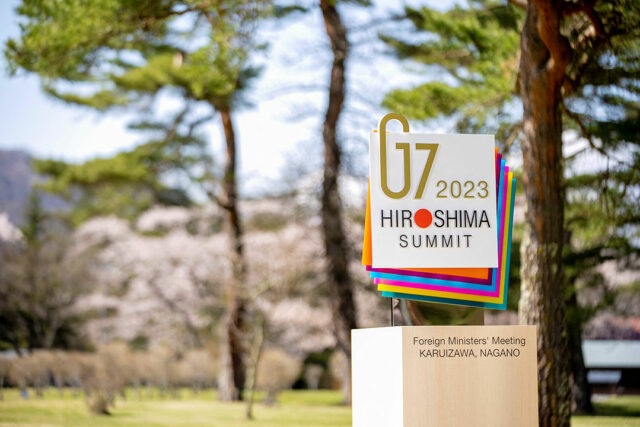
THE LOGO for the G7 is visible at the G7 Foreign Ministers’ Meeting at The Prince Karuizawa hotel in Karuizawa, Japan April 17, 2023. — ANDREW HARNIK/POOL VIA REUTERS

TOKYO — The leaders of the Group of Seven (G7) rich democracies this weekend pledged to “de-risk” without “decoupling” from China, an approach that reflected European and Japanese concerns about pushing Beijing too hard, officials and experts said.

US President Joseph R. Biden and other G7 leaders wrapped up a three-day summit in the Japanese city of Hiroshima on Sunday where they took aim at China over “economic coercion” and said they would reduce exposure to the world’s second-largest economy in everything from chips to minerals.

Differences between G7 members emerged in the run-up to Hiroshima, with the United States calling for targeted controls in investment to China. Germany, France and Japan were all more cautious, given the potential impact on their economies.

The diverging outlook came into sharp focus after French President Emmanuel Macron visited Beijing last month and called for the European Union to reduce dependence on the United States.

But the language of the G7 communique was tempered by pragmatism, with the leaders noting they did not seek to “thwart China’s economic progress and development” and that each country would work in its national interest.

“There are differences among the G7 nations in terms of issues such as the US investment restrictions on China,” a Japanese government official said, speaking on condition of anonymity.

The summit was still able to send a message that transcended those differences, the official said.

As talks continued between G7 members, the language of the communique was “made a little more balanced,” a French presidential official said.

“At the heart of the message we wanted to get across at this G7 was the European position that China is a partner, complements us and is a systemic rival, all presented in G7 language,” the official said.

ANTI-CHINA WORKSHOP
The G7 was also keen to use language that wouldn’t alienate members of the “Global South,” the non-aligned emerging countries such as India the G7 is trying to woo.

“This was an active attempt of G7 not to give China a pretext to complain, not to push the Global South away and to keep the balance within the G7,” said Mikko Huotari of the Mercator Institute for China Studies.

“That is the right approach.”

White House national security adviser Jake Sullivan told reporters in Hiroshima the United States would lay out its own approach on outbound investment controls after “full consultations” with G7 partners.

China rebuked the statement and summoned host Japan’s envoy in protest. The state-backed mouthpiece Global Times on Monday called the G7 an “anti-China workshop”.

Separately, China on Sunday said it would block US firm Micron Technology, Inc. from selling memory chips to key domestic industries, a potential sign of further tension to come.

“The de-risking approach I think was the easiest way for the G7 to reach some consensus moving forward on China,” said Jonathan Berkshire Miller, a director at the Macdonald Laurier Institute, a public policy think tank.

“The language shift indicates that US allies understand the risks of deep economic engagement with China but also realize that a complete severance of economic ties is not realistic.”

Japan, the only Asian member of the G7, arguably has more to lose if China were to retaliate. Last year mainland China was both Japan’s largest export market, at $145 billion, and its biggest source of imports, at $189 billion, International Monetary Fund data shows.

After the release communique, the leaders themselves largely spoke in measured terms about China.

Mr. Biden said he expected a thaw with Beijing “very shortly,” while German Chancellor Olaf Scholz said G7 nations would ensure big investments in China continue even as they pare riskier exposure.

Mr. Biden also said the “de-risking” was aimed at ensuring the United States wasn’t dependent on any one country for a necessary product.

“They don’t want to decouple because it’s difficult, it’s a lot of trouble, and it’s not feasible,” said Kunihiko Miyake, research director at the Canon Institute for Global Studies.

“It’s about doing their best to stop any technology and manufacturing technology that would be an issue for security from reaching China,” Mr. Miyake said, adding that in substance de-risking and decoupling were the same.

There’s also the question of whether Beijing sees a distinction between the two ideas.

“It’s not like China will be fine” because the wording changed to de-risking instead of decoupling, Mr. Miyake said. — Reuters

ADVERTISEMENT
ADVERTISEMENT