Home Blog Page 4808

Poor GenXers without dependents targeted by US debt ceiling work requirements

STOCK PHOTO | Image by Mohamed Hassan from Pixabay

 – The debt ceiling deal that US President Joe Biden and House Republican Kevin McCarthy agreed over the weekend adds new conditions to food aid that will impact one segment of the US population specifically – GenXers with no dependents.

The deal targets recipients of the Supplementary Nutrition Program, or SNAP, between the ages of 50 and 54, adding new requirements that they work 20 hours a week to receive the aid.

Previously, work requirements to receive SNAP ended at age 50.

After weeks of negotiations, McCarthy and Biden forged a tentative agreement late on Saturday. The deal needs to still pass through the narrowly divided Congress before the Treasury Department runs short of money to cover all its obligations.

People who have dependents, including children under age 18 or elderly people who rely on them, or people with disabilities, are already exempt from these work requirements, and will remain so. The deal also exempts veterans and homeless people.

“The agreement phases in and then sunsets SNAP time limits to people up to age 54, which the president fought hard against,” one source briefed on the negotiations said.

Republicans argue that the work requirements encourage people to get back to work.

The US’s approximately 65 million members of Gen X, those born between 1965 and 1980, are sandwiched between Baby Boomers, the generation born after World War II, and millennials.

As a group, they saw their wealth jump during the Trump administration and even during the COVID pandemic.

However, hundreds of thousands of GenXers living below or near the poverty line are likely to be impacted by the new work requirements.

SNAP benefits are available for Americans whose income is less than 130% of the federal poverty line, or about $1,500 a month for a one person household, or $2,000 for a two-person household in many areas.

Before temporary increases during the COVID pandemic that have since been reversed, these benefits averaged about $121 per person per month, or about $4.00 per person per day, the Center on Budget and Policy Priorities found. – Reuters

Wilcon Depot: A continuous journey for sustainability

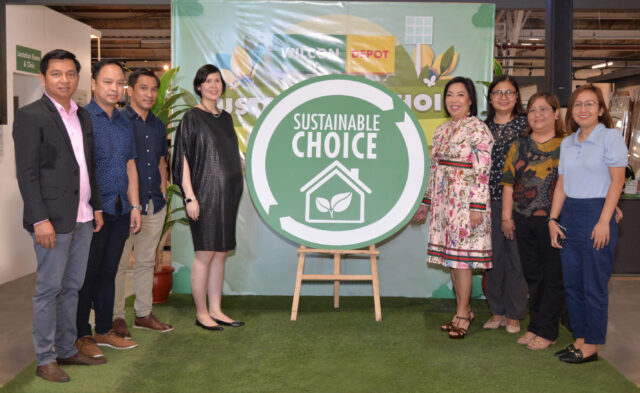
Wilcon Depot, the leading home improvement and construction retailer, takes a step towards a greener future with Sustainable Choice Media Launch on March 26, 2023 at Wilcon Depot Balintawak. The sustainable home improvement initiative campaign is an initiative that aligns with Wilcon Depot's belief in creating a better and more sustainable future for all. Present at the event were (from left to right) Wilcon Depot AVP for Sales and Operations Francisco Lazaro, Rowell Suarez, Harvy Cruz, President and CEO Lorraine Belo-Cincochan, SEVP and COO Rosemarie Bosch-Ong, AVP for Sales and Operations Desiree Cuerdo, Rubylyn Candelaria and Erine Borja.

Wilcon Depot, the Philippines’ leading home improvement and construction supply retailer, finally unveiled its “Wilcon Sustainable Choice” with a media launch last May 26 at Wilcon Depot Balintawak.

After years of conducting sustainability practices across various aspects of the business, Wilcon Depot has taken its commitment to sustainability a step further through this campaign. The event was attended by Wilcon executives, AVPs and various media partners who were enthusiastic about the company’s move toward sustainability.

The event began with Wilcon Depot SEVP-COO Rosemarie Bosch-Ong as she welcomed the attendees and introduced the company’s commitment to sustainability. She explained the sustainable initiatives of the company’s Sustainable Choice. “We believe that sustainability starts with every one of us, from the individual to the organizational level. That is why we have implemented initiatives within Wilcon Depot to reduce our carbon footprint, minimize waste and water consumption and promote eco-friendly products. From installing solar panels in our store to segregating waste and paperless transactions, we are taking these steps to be more environmentally responsible.”

Wilcon Depot’s journey toward sustainability started years ago, and the company has been making impressive strides through various campaigns and initiatives in promoting eco-friendly business practices. This journey has been cemented with the integration of sustainable practices in its daily operations, such as the implementation of a plastic reduction program and increasing energy efficiency through the use of LED lighting systems and HVAC units to improve indoor air quality and provide comfort for everyone inside warehouses. The company also educates employees and customers on eco-friendly practices.

Wilcon also understands the importance of using recycled materials in products that’s why they carry items that are made of up to 98% recycled materials. By choosing these products, customers can help to reduce waste and support a circular economy, where materials are recycled and reused instead of being disposed of in landfills.

During the speech of President and CEO Lorraine Belo-Cincochan, she emphasized that Wilcon Depot’s commitment to sustainability extends far beyond corporate social responsibility. “These are just small steps, but we believe that every little progress counts in making a big difference. And as we move forward with our sustainability initiatives, we will continue to prioritize our role as responsible citizens while also driving innovation and growth in our industry”.

Wilcon Depot offers home products and solutions that conform to energy and environmental design factors such as durability, easily recyclable or reusable, free of toxic materials, energy efficiency, zero or low emissions of toxic chemicals, manufactured in a low-pollution process, and low maintenance, for instance, Wilcon has Pozzi, a sanitaryware brand that integrates water-saving features, which lessen water usage by means of its dual lever flush. Wilcon also brings Alphalux, an energy-efficient lighting solution that can significantly reduce energy consumption, which not only helps to conserve natural resources but also saves homeowners money on their energy bills.

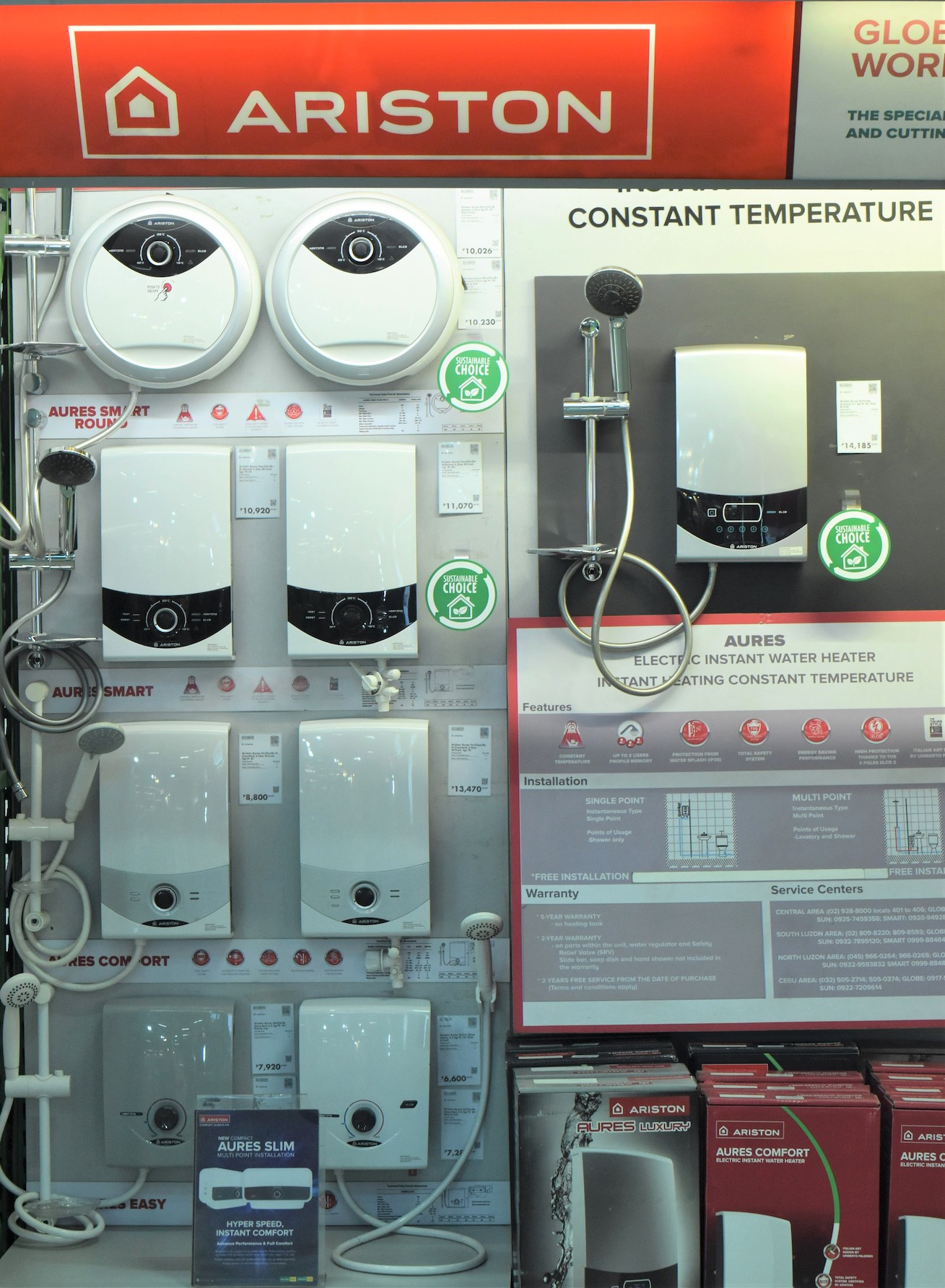
To further promote sustainable living, Wilcon has sustainable product displays for building materials, sanitarywares, housewares, outdoor and indoor living items, and more in its stores to encourage customers to choose eco-friendly options when designing and renovating their homes.

Aside from offering eco-friendly products, Wilcon Depot also has solar power installations in 60% of its stores, which augment their daily energy consumption. In order to include sustainable practices and solutions in its business, the company intends to install solar electricity at all of its operating locations nationwide. Utilizing renewable energy is a smart investment in terms of electricity consumption for daily shop operations.

In addition, Wilcon Depot has implemented green building practices such as using environmentally-friendly materials and maximizing natural lighting and ventilation. These measures not only reduce the company’s environmental impact but also create a healthier and more comfortable environment for its customers and employees.

Waste management is another important sustainability practice adopted by Wilcon Depot. The company has implemented a waste management program that includes recycling, composting, and responsible disposal of hazardous materials.

Wilcon Depot also conducts various community outreach programs to promote sustainability and environmental awareness. The company partners with local organizations to organize tree-planting activities and eco-friendly seminars for its employees and customers.

Making sustainability at the heart of Wilcon and aligning its strategic and operational goals by continuously going greener, Wilcon Depot has been recognized by the Manila Bulletin in its recent award for Manila Bulletin Beyond Green: Sustainability Recognition Night. The award was in honor of the noteworthy sustainability programs and initiatives of companies and organizations.

The company will constantly invest and commit to taking care of the environment through responsible sourcing, selling of green-certified products, utilizing solar energy and natural lighting in their stores, and many more initiatives. As a retailer, Wilcon will help customers make a positive impact on the environment while still achieving their home improvement goals. The company believes that sustainability is not just a choice but a responsibility.

For more information about Wilcon, you can log on to www.wilcon.com.ph or follow their social media accounts on Facebook, Instagram, Tiktok and subscribe and connect with them on Viber Community, LinkedIn, and YouTube.


Spotlight is BusinessWorld’s sponsored section that allows advertisers to amplify their brand and connect with BusinessWorld’s audience by enabling them to publish their stories directly on the BusinessWorld Web site. For more information, send an email to online@bworldonline.com.

Join us on Viber at https://bit.ly/3hv6bLA to get more updates and subscribe to BusinessWorld’s titles and get exclusive content through www.bworld-x.com.

Investing in a changing, challenging stock market with BDO Securities

Investing may seem complicated, especially in the stock market with stock movements often volatile as economic news, interest rates, and global events affect financial markets. As such, investors, whether new or advanced ones, should have the knowledge to navigate the ever-moving world of stocks.

Looking at the Philippine Stock Exchange Index (PCOMP), the trading range has been hovering between 6,400 and 6,600 since the past month. This reflects the continuing assessment among investors of the possibilities for inflation, interest rates, and economic growth, plus the uncertainties concerning the ongoing discussions on the US debt ceiling and Federal Reserve direction for interest rates, said BDO Securities.

“We believe, however, that sustained signs of slowing inflation, a pause in monetary policy tightening, and an improved corporate earnings picture could revive interest in local stocks,” it said.

The Bangko Sentral ng Pilipinas (BSP) has decided to take a pause in its monetary policy tightening after raising policy rates by a cumulative 425 basis points since May 2022 and has signaled that the key rate will likely remain at 6.25% in the next two to three meetings. The BSP decision comes after inflation slowed for a third straight month to 6.6% in April (from 8.7% in January), and as economic growth showed signs of moderation.

BDO Securities expects PCOMP to end at 7,700 this 2023, supposing an earnings growth of 14.9% and target price-to-earnings (P/E) multiple of 15 times. Banking stocks, meanwhile, are seen to do well as economic recovery is perceived to support demand for loans, while higher rates are projected to boost lender margins.

To help investors explore the stock market moving forward, BDO Securities can provide insights and a platform to guide them in the market.

Through broker-assisted trading, investors may place their market orders by calling and engaging BDO Securities’ licensed and experienced traders. Meanwhile, for investors who prefer to execute out their own trades, BDO Securities also offers an Online Trading platform.

BDO Securities also has a team of expert analysts and comes up with a variety of content to give knowledge to investors on the stock market.

“We regularly publish relevant content, research materials, and trade idea commentaries that are easily understandable for investors with different market expertise,” BDO Securities shared.

Starting with the basics, BDO Securities has educational sections on its website where beginner investors can have a grasp on the basics of the stock market, investing in the country’s stock market, and how to trade stocks through BDO Securities, among others. These, therefore, can clear the common concept complexities and jargons encountered in the stock market.

In addition, investors can join discussions in TradeTalks, an event regularly conducted by BDO, where they can listen to Tutorial Sessions, Market Outlook, and Corporate Access.

BDO Securities also creates a video called “Technically Speaking,” elaborating its commentaries about present market conditions. Released at the start of every trading week, the video seeks to guide investors to navigate the week and get valuable ideas.

Investors can also have a better understanding of the stock market’s current state and get insights from financial commentators through BDO Securities’ “Market Says What?!,” where new episodes are shown every month.

“It aims to provide relatable market insights and scenarios that are related to what’s happening in the market. In this way, watchers will be able to learn the market through a fun discussion,” BDO said.

With BDO Securities’ constant updates and insights, investors can thus have information about the movement of the stock market. They can also remain conversant with the current and potential factors that cause market volatility. These can serve as a valuable guide for investors to move forward in the market.

“The Philippine stock market had been trading sideways since 2014. It’s different [from] how it used to be back in the 2000s when the PSEi just trended upwards where majority of the stock prices in the PSE just rise. In our market environment today, careful stock picking is very crucial,” BDO Securities said.

“BDO Securities is here for its clients to help them navigate the ever-challenging and changing market by continuing to provide market guidance through webinar sessions, research reports, market commentaries, and video content,” it assured.


Spotlight is BusinessWorld’s sponsored section that allows advertisers to amplify their brand and connect with BusinessWorld’s audience by enabling them to publish their stories directly on the BusinessWorld Web site. For more information, send an email to online@bworldonline.com.

Join us on Viber at https://bit.ly/3hv6bLA to get more updates and subscribe to BusinessWorld’s titles and get exclusive content through www.bworld-x.com.

Recovery in residential; residents rethinking choices

Photo from vectorjuice on Freepik

Residential real estate welcomed the current year with several improvements. The segment is projected to see a rebound in demand, vacancies, rents, and prices, though a slower pace was expected for new supply.

In the first quarter of 2023, demand in pre-selling and secondary condominium markets is becoming better, according to property consultancy firm Colliers.

Metro Manila’s pre-selling market saw a 5,900 take-up of condo units in the said period, which was a 70% rise year-on-year (YoY). The lower mid-income segment has the most take-up, with 37% of the total units sold. “In our view, take-up for these units will partly be sustained by remittance-receiving households,” Colliers said in its report.

Cash remittances from overseas Filipino workers (OFWs) increased by 3% last March, according to the Bangko Sentral ng Pilipinas (BSP). It anticipated remittances to grow by 3% for 2023 and 2024, trimming its initial target of 4%.

Take-up in the pre-selling market this year was also expected to likely be boosted by the rising interest in upscale to luxury projects. These segments made up almost 40% of the new launches during the first quarter.

Meanwhile, vacancy in Metro Manila’s secondary market dipped to 17.4% in the first quarter of the year from 17.6% in the quarter prior. This year, vacancy in the secondary market is expected to lessen to 16.8%, “due partly to continued recovery in office leasing, slower delivery of new units, and sustained improvement in business sentiment which should support take-up from both investors and end-users,” Colliers noted.

As vacancies improved, an increase of 0.5% was seen in rents quarter-on-quarter (QoQ), as well as 1.4% in prices. For the present year, Colliers projected prices to rise more quickly than rents, with 3.9% growth in prices in the secondary market. Rents, meanwhile, are forecasted to increase by 2%.

Residential Real Estate Prices Index (RREPI) went up faster in the fourth quarter of last year, according to BSP. Prices registered an increase of 7.7% YoY, yet slower at QoQ with 2.2%.

The central bank recorded positive contributions to the country’s RREPI growth from the prices of duplex housing units, which index rose by 42.9%; condo units with 12.9% increase, and single-detached/attached houses with 10%. Meanwhile, townhouses’ index shrank by 6.8%, contributing negatively to the RREPI for the second consecutive quarter.

Colliers expected further improvement in the take-up of condo units with the comeback of more expatriates and local professionals, said Joey Roi Bondoc, research director of Colliers Philippines.

“In our view, the appetite for residential units will likely be buoyed by improving business and consumer sentiment,” he added in the firm’s report.

Improved demand for the residential market was also seen as likely by real estate services firm Cushman & Wakefield, though it expects the growth to be subdued.

“Whilst residential demand will still likely improve amidst better consumer income and improved overall economic sentiment, the growth is likely tamer due to ongoing financial market uncertainties,” the firm said in its report.

Cushman & Wakefield also noted on the gloomy outlook towards interest rates, thus expecting the growth of demand for consumer loans to be affected in the medium term while economic conditions were still in recovery.

BSP’s data showed that availments of residential real estate loans (RRELs) for new housing units declined by 10.3% YoY in the fourth quarter of 2022. The central bank recorded that 81.1% of RRELs in the said period were for procurement of new housing units.

Most of the RRELs granted were for the purchase of single-detached/attached houses, accounting for 47.2%; condo units followed with 33%; 18.9% for townhouses; and 0.8% for duplex. In Metro Manila, most of the loans were used to buy condo units; while loans granted in areas outside of the capital region were for single-detached/attached houses.

Meanwhile, in terms of supply, Colliers recorded slower completions in the first quarter of 2023. With 1,200 units, completions were 70% less than the quarter before. This 2023, the firm foresaw 3,540 units to be completed, which is lower by 61% from 2022’s 8,970 completed units.

“While pre-selling take-up in Q1 2023 appears decent, launches are still likely to be curtailed by rising prices of construction materials as well as elevated interest and mortgage rates. We still see developers taking a more cautious stance in launching new condominium projects for the remainder of the year,” Mr. Bondoc said.

Home preferences in APAC

What people look for a home was said to have changed after a period of lockdown due to the pandemic. The residential sector can thus expect shifts in people’s criteria in choosing their housing.

People are gaining more confidence to plan their future amid the waning of the pandemic, according to CBRE. A 2022 survey conducted by the real estate services and investment firm found that respondents from the Asia-Pacific (APAC) region showed stronger intentions to relocate in the next couple of years as 32% said they are planning to move; whereas, 23% said they have relocated in the previous two years.

The survey’s coverage in APAC included Australia, China, Hong Kong, India, Japan, Korea, and Singapore.

Among those looking to move their home in the next two years, over half of them (59%) are thinking to relocate near the city center.

Furthermore, the survey showed that almost half of Gen Z and late millennial respondents, or those aged 33 or younger, intend to move their homes in the following couple of years.

The top reasons why respondents from APAC would want to move in the next two years are for better quality property and surroundings, a bigger home, and housing affordability.

Meanwhile, in terms of people’s home selection criteria, CBRE found that health and safety, transportation infrastructure, dedicated space for working from home, and sustainability feature become more important.

The pricing of property is the second most important home selection criterion (next to health and safety) for respondents in APAC. However, CBRE expected buying confidence to be afflicted in the short term by the uncertainty because of the weakening economic outlook. — Chelsey Keith P. Ignacio


OPPO’s Inspiration Challenge calls anew for innovative technical solutions

OPPO Research Institute, together with global partners Qualcomm Technologies, GSMA 5G IN, Amazon Web Services and LinkedIn, announced the launch of 2023 OPPO Inspiration Challenge. Based on the brand proposition of “Inspiration Ahead,” OPPO and its global technology ecosystem partners aim to bring new and innovative solutions to life by providing funding, support and partnership opportunities. By working together, OPPO hopes these innovations can create a positive impact, and encourage greater awareness of the issues that affect global communities.

“OPPO believes deeply in the idea of ‘Virtuous Innovation.’ As we continue to explore new technology, we remain dedicated to doing so in a way that puts people first,” OPPO Research Institute said in a statement. “With the global issues like public health, accessible technology and environmental protection being the key concerns, we could not rely on our own efforts to provide solutions. We have therefore initiated the Inspiration Challenge to empower like-minded innovators to tackle these big issues together with us using the power of technology and create a better world for all.”

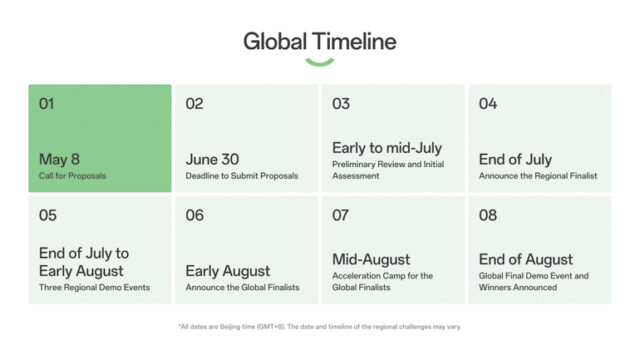
Applications for the 2023 OPPO Inspiration Challenge will start from May 8 to June 30, with three regional demo events set to take place in Bangkok, Boston and Shenzhen in August. Finalists from each regional demo event will be invited to join the Inspiration Challenge Acceleration Camp and meet with OPPO executives and technical experts to revise their proposals before the global final demo event at the end of August.

All the proposals for OPPO Inspiration Challenge this year will be evaluated based on the four criteria of Feasibility, Technological Innovation, Long-term Potential, and Social Values.

A total of 15 qualified proposals from regional demo events will be selected as global finalists and the top five winning proposals will be selected in the global final demo event, each being awarded a grant of US$50,000.

Further partnership opportunities are open to the top 45 proposals worldwide — made up of the top 15 proposals in each regional challenge — including, but not limited to productization and commercialization opportunities (i.e., incubation fund totaling US$190,000); strategic partnership and investment opportunities to showcase at global technology events; and an opportunity to receive cloud resources and technical support from Amazon Web Services.

During the OPPO Inspiration Challenge last year, 536 proposals were collected from innovators around the world aimed at tackling key challenges in accessible technology and digital health. OPPO has since worked with 18 of these teams to further implement their proposals and has brought some of them to global platforms such as OPPO INNO DAY 2022 and MWC 2023.

For this year, OPPO Inspiration Challenge will focus on the two categories of Inspiration for People and Inspiration for the Planet, supporting technology professionals around the world to develop innovative solutions in these two areas.

The Inspiration for People category is a call for technologies, products and services related to digital health and accessible technology. It includes health algorithms; hardware sensor innovations (i.e. the integration of new and advanced sensors into daily health monitoring devices); innovative products for digital health monitoring; accessibility assistive technologies; and technology designed for the elderly. The primary focus of this category is to make technology accessible and beneficial to everyone.

Aligned with OPPO’s pledge to achieve carbon neutrality in its operations by 2050, the Inspiration for the Planet category calls for innovative solutions related to environmental protection and low-carbon development as applied to consumer electronics. It includes renewable energy; sustainable materials and packaging; green production processes; recycling of electronic products; and carbon emission digital management. The primary focus of this category is to minimize the environmental impact of electronic product manufacturing or usage, and to promote sustainable development through technology.

To learn more about the program or register, please visit the official webpage at https://www.oppo.com/en/proposal/.

Bossjob attracts 2.9 million users in PHL

Secures $5-million funding to boost globalization efforts

Bossjob, the chat-first career platform for professional hiring in Southeast Asia (SEA) and designed for small and medium enterprises (SMEs), announced it had garnered over 2.9 million registered users in the Philippines, making it the leading career platform in the country’s recruitment industry.

This marks a significant milestone for Bossjob, which entered the Philippine market in 2018 at a time when the local recruitment market is relatively traditional, indicating a need for innovation.

“Legacy recruitment websites, created in the Web 1.0 era, have outdated matching capabilities and business models based on selling job ads and resumes, which do not meet the expectations of companies nowadays in terms of efficiency and effective cost per hire. Some firms rely on headhunters, but their high commission rates, typically 20%-30% of a hire’s annual salary, pose a significant burden for SMEs,” Bossjob Co-Founder and Chief Operating Officer Kiat How Quak shared.

The team sees the opportunity and has since focused on improving hiring efficiency by offering direct chat and highly accurate artificial intelligence (AI)-matching for both talents and employers on Bossjob’s mobile application.

So far, more than 10,000 companies in the Philippines are utilizing their platform, including reputable brands such as SM Investments Corp. and Accenture as well as BPO firms like Acquire BPO Philippines and Foundever.

Bossjob, which some investors dub the SEA version of China’s BOSS Zhipin and Tianyancha, entered the Philippine market with its innovative MDD model of “mobile + direct chat + AI-matching,” introducing direct chat into the recruitment scene. With the help of cutting-edge artificial intelligence technologies and big data, the platform recommends highly suitable and active candidates to employers and relevant job opportunities to job seekers. This enhances matching accuracy for both parties, reduces information asymmetry, and improves recruitment efficiency.

On Bossjob, companies pay for engagement with potential employees instead of job ad views, leading to a higher payment penetration rate and reduced average revenue per paying user (ARPPU) compared to conventional recruitment platforms, thereby lowering the entry threshold for businesses.

Upon onboarding, more than 80% of job seekers on Bossjob have initiated chats with employers, indicating users are recommended with highly relevant job openings. Employers are actively engaging job seekers with response rates between 60%-80%. The platform sees a successful matching rate of about 50%.

Following the successful $5-million funding round and its significant traction in the Philippine market, Bossjob announced on May 8 the official launch of its globalization strategy. The company is venturing into Singapore and Indonesian markets this month with the Hong Kong market in plan for the third quarter of 2023. They also anticipate serving more than 30 million users in SEA by 2026. To accelerate its expansion goals, Bossjob is offering free trials to companies this year.

On Bossjob’s platform, employers from countries such as Hong Kong, Singapore, and Japan are looking for talent in the Philippines, showing that there is a global demand for skilled talent from SEA.

“Demand has significantly increased among global employers for talents from SEA, particularly in the Philippines. The quality of talent and the effectiveness of matching on online recruitment platforms are becoming increasingly important to employers in the face of intense competition for talent, which presents an opportunity for Bossjob’s globalization strategy to take hold,” Mr. Kiat said.

The region is projected to be the world’s fourth-largest economy by 2030, with global investors keeping a close eye mainly driven by factors such as the Regional Comprehensive Economic Partnership agreement, continuous technological advancements, foreign trade transformation, and economic growth.

PDRF highlights MSME resilience in comic book series

The Philippine Disaster Resilience Foundation (PDRF), together with the Asian Preparedness Partnership (APP) and its local offshoot, the Philippine Preparedness Partnership (PHILPREP), recently launched a comic book series that highlights stories of micro, small, and medium enterprises (MSMEs) that struggled and succeeded at the height of the coronavirus disease 2019 (COVID-19) pandemic.

The MSME Success Stories Comics Compendium features five stories of recovery of small business owners affected by the pandemic that aims to increase awareness and appreciation of business continuity planning among MSMEs. It also highlights the best practices and challenges of MSMEs in times of disaster and business continuity planning processes that other businesses can replicate.

This initiative is under PDRF’s MSME Resilience Program in partnership with APP, a multi-year program which highlights the need to promote business resilience through development of different tools and knowledge products for MSMEs and key stakeholders from different sectors.

PHILPREP, composed of PDRF, the Center for Disaster Preparedness, and the Office of Civil Defense, is the localized tripartite platform of APP under the Asian Disaster Preparedness Center with support from the Bill and Melinda Gates Foundation and the United States Agency for International Development — Bureau of Humanitarian Assistance.

The comics compendium can be accessed through signing up on PDRF’s e-learning platform, iADAPT (https://iadapt.pdrf.org/msme-stories-of-resilience/).

Blockchain-based fintech platform for financing MSMEs launched

Earlier this May, a world-class team of capital markets experts launched Jia, a blockchain-based fintech platform that provides accessible, affordable, and rewarding financing to micro, small, and medium enterprises (MSMEs) in emerging markets. Jia’s model is designed to ensure entrepreneurs can grow their businesses and build wealth for their communities.

Jia is announcing $4.3 million in equity funding with an additional $1 million committed for on-chain liquidity through a partnership with Huma Finance, a decentralized finance protocol. The round was led by TCG Crypto, with participation from BlockTower, Hashed Emergent, Saison Capital, Draft Ventures, and other strategic fintech and blockchain funds, as well as prominent angel investors including Packy McCormick (Not Boring), Anand Iyer (Canonical Crypto), Jared Hecht and Rory Eakin (founders of fintech lending companies Fundera and CircleUp).

MSMEs in emerging markets are often excluded from access to affordable financing from banks and forced to rely on informal local lenders for capital to operate their businesses. Entrepreneurs often face triple-digit APRs, forcing them to give up the lion’s share of their profits in order to expand their businesses.

Mobile lending apps, which emerged with broader internet access in emerging markets, are an improvement. They often underwrite and pay out small loans in hours. But while these apps have seen strong adoption, they remain expensive and typically cap loans at low amounts, leaving a massive hole in the market for $500-$10,000 loans — precisely the size that many MSMEs in emerging markets need to purchase inventory and grow their businesses.

To fill this gap, four emerging market finance veterans — Zach Marks, Cheng Cheng, Ivan Orone, and Yuting Wang — teamed up to launch Jia.

The four met at Tala, where they worked together to help scale the startup’s user base from six thousand to six million borrowers across three continents in six years. At Tala, they saw a need to turn banking from a transactional relationship with value flowing from borrower to lender, into a two-way street, where borrowers are compensated for the value they create with ownership. In less than a year, Jia has built a new fintech stack that uses blockchain technology to distribute ownership, building off the principles of community finance groups where borrowers are owners and not just customers.

“There are millions of brilliant entrepreneurs across emerging markets who are locked out of the legacy financial system,” said Zach Marks, chief executive officer and co-founder of Jia, who began his career working in economic development at McKinsey & Co. after researching street vendors in India on a Fulbright Fellowship.

“We created Jia to give those business owners fair access to the right tools to continue creating new jobs, growing their operations, and expanding opportunities in their communities,” he added.

Jia is one of the few blockchain-based solutions aimed at addressing financial inclusion in emerging markets, a long-touted application of the technology. Jia’s platform allows investors to deploy capital to real-world businesses and earn competitive returns. In tandem, small business owners build sustainable wealth in their communities.

Jia employs an automated underwriting model to evaluate potential borrowers, and deploys capital to them from on-chain liquidity pools backed by global investors. When borrowers repay, they receive token rewards, giving them an ownership stake in Jia’s long-term growth. Local partner organizations who co-sign for approved borrowers can also receive token rewards and yields upon successful loan repayment. Jia’s token incentives unlock lower interest rates, longer repayment periods, and more flexible credit terms, along with broader access to the Web3 economy.

Jia borrower Armando Porlares, a bakery owner in Manila

Starting in Kenya and the Philippines, Jia supports entrepreneurs across industries, from healthcare to education to local retailers and restaurants, including Armando Porlares, a bakery owner in Manila.

Mr. Porlares makes a healthy profit and employs fifty people. He needed financing to continue growing his business but had trouble accessing affordable options as an MSME in an emerging market.

“I tried to get a loan from a local lender, but when I saw the price, I realized it would take my whole profit,” said Mr. Porlares. “When I found Jia, I found a lender who wanted to work hard alongside me, and invest back into my business and our community, too.”

“The Jia team’s expertise in scaling businesses in emerging markets and dedication to building an ownership economy for entrepreneurs around the world made us confident they are the right group to tackle this,” said Gaby Goldberg, an investor at TCG Crypto who led the deal to back Jia. “We’ve all been waiting for crypto’s killer app to expand financial inclusion, and Jia is using blockchain technology to create real-world impact and phenomenal economic opportunity.”

“We believe the future of finance is bringing real-world assets on-chain, leveraging DeFi liquidity to unlock access to new financing opportunities — especially for those who may be outside the traditional financial system,” said Winnie Lau, an investor at BlockTower Capital. “Over the last year, we’ve seen how crazy high DeFi yields are unsustainable. With Jia, liquidity providers can earn real yield uncorrelated with crypto volatility while supporting MSMEs in emerging markets. This team has a strong record of building transformative credit business in emerging markets and are replicating the playbook with crypto under the hood.”

BSP to extend relief for small banks

BW FILE PHOTO

THE BANGKO SENTRAL ng Pilipinas (BSP) will extend the alternative reserve compliance for small banks to ensure there will be no adverse impact after the relief measure expires on June 30.

BSP Governor Felipe M. Medalla said the relief measure is no longer necessary since the economy has clearly recovered from the pandemic, but the central bank will make some considerations for small lenders.   

“There may be provisions for small banks to allow (the relief measure) to go on until the loans have matured, para ’di sila mabigla (so they won’t be shocked),” he said during a book launch event on Friday.

“Pag nag mature na ’yung loans, ’yung bagong loans hindi na (Once the loans have matured, the new loans won’t be counted as reserve compliance).”

Mr. Medalla said these considerations will be extended only to thrift banks and rural banks.

During the pandemic, the BSP allowed banks to count their lending to micro, small, and medium enterprises (MSMEs) and pandemic-hit large enterprises as part of their alternative compliance with the reserve requirements.

The relief measure has been extended three times since it was implemented in April 2020, and is now set to expire on June 30.

“It won’t be a complete drop immediately, as long as the original loan, the remaining unpaid principal, will still qualify as reserves until they mature,” Mr. Medalla said.   

Reserve requirements refer to the percentage of bank deposits and deposit substitute liabilities that banks must set aside in deposits with the BSP which they cannot lent out.

Based on central bank data, banks lent P493.5 billion to MSMEs as alternative compliance with reserve requirements as of December 2022. This is 6.6% higher than the P463.1 billion in the same period a year prior.

By banking group, universal and commercial banks extended P390.9 billion in loans to MSMEs, while rural and cooperative banks lent P52.7 billion.

RRR CUT
Meanwhile, the BSP will cut the reserve requirements for big banks as the relief measure expires by the end of June, Mr. Medalla reiterated.   

The BSP earlier committed to bringing down the reserve requirement ratio (RRR) of big banks to single digits by 2023.

The RRR for big banks is currently at 12%, one of the highest in the region. Reserve requirements for thrift and rural lenders are at 3% and 2%, respectively.

However, Mr. Medalla said the BSP will not cut the RRR of big banks during a policy meeting.   

“We want to always distinguish between policies and operations. Cutting the reserve requirements are operations because we can always offset the effects of the changes in the reserve requirement by increasing or decreasing our borrowings,” he said.   

A cut in RRR is a move intended to be an operational adjustment to facilitate the BSP’s shift to market-based instruments for managing liquidity in the financial system, particularly the term deposit facility and the BSP securities. 

Meanwhile, the BSP governor said it is crucial to prioritize the protection of depositors over business owners as 80% of funds lent by banks are from depositors.

“In a sense, a banker is almost like a public servant; he’s taking care of the people’s money. That’s why it’s very important that banking laws give regulators great cover when they do their jobs,” Mr. Medalla said in a speech during the launch of Banking Laws of the Philippines – Annotated book on Friday.

During the same event, Chief Justice Alexander G. Gesmundo said banking laws in the Philippines have evolved amid the increasing Filipino participation in the banking practice and the growing demands of globalization.

“The importance of our banking laws cannot be overstated. To begin with, our banking laws instill in us the sense of trust and confidence in our financial institutions, assuring both individuals and businesses that their hard-earned resources are protected and nurtured,” Mr. Gesmundo said.   

He said that banking laws create an environment that enables financial institutions to provide accessible financial services to individuals, businesses, and communities, especially in rural communities and agricultural households.   

The Banking Laws of the Philippines – Annotated is the fourth legal book published by the BSP. — Keisha B. Ta-asan

PHL roads, railways and ports highly vulnerable to climate risks — experts

The International Transport Forum (ITF) 2023 was held in Leipzig, Germany.

By Arjay L. Balinbin, Multimedia Editor

LEIPZIG, Germany — Road, railway, and port infrastructure in the Philippines are among those most at risk of multihazard damage caused by climate change, according to experts at the International Transport Forum (ITF).

“In the Philippines, up to 25,000 kilometers of roads are exposed to increased flooding by 2050 if global emissions continue to rise,” said Sudhir Gota, co-team leader of Asia Transport Outlook, in an interview with BusinessWorld on the sidelines of the ITF Summit 2023 on May 25.

Citing data from the latest Asia Transport Outlook report, he said that the projected annual damage to roads and railways in the Philippines may reach as much as $410 million a year.

To compare, Indonesia may incur up to $730 million worth of damage to roads and railways, while Vietnam may face up to $465 million worth of damage.

Projected annual damage to roads and railways are also significant in other Southeast Asian countries such as Myanmar ($293 million), Thailand ($149 million), and Malaysia ($99 million).

Mr. Sudhir said the Philippines also needs to strengthen its ports against the impact of climate change, as the projected damage may reach up to $196 million — the highest among its peers. To compare, Vietnam’s ports may face up to $128 million in damage, followed by Indonesia ($70 million), Thailand ($31 million), Malaysia ($27 million), and Myanmar ($15 million).

The Philippines accounts for 42% of potential damage due to hazards in Southeast Asia, he said.

He also noted that disruptions caused by climate hazards can result in downtime at ports, which would hamper the flow of goods.

Among countries in Asia, the Philippines has the highest share of trades at risk due to climate hazards, at 1.3%, followed by China and Vietnam with less than 1.2% each, he said.

While Philippine ports are improving, Mr. Sudhir said there is a need to build resilience due to future threats arising from climate change.

“Resilience means developing a green port plan, a climate adaptation strategy, particularly to make the ports resilient against rising sea levels… You need to strengthen your ports against these risks, which implies that for building resilience for your ports, you will require a significant investment,” he said.

In a presentation, Stefanie Sohm, a transport consultant for the Asian Development Bank (ADB)-United Nations Centre for Regional Development, said that the transportation sector in Asia may hinder the attainment of the sustainable development goals (SDGs) and the objectives outlined in the Paris Agreement.

Sought for comment, James A. Leather, the chief of the Transport Sector Group at the Asian Development Bank, said: “If we don’t take better action, we won’t achieve those goals, whether it’s aligning with the Paris Agreement, addressing climate change, or meeting the SDGs.”

One of the challenges is fulfilling the substantial investment requirements, he noted.

“Let’s take the Philippines, for instance, where numerous rural communities lack adequate access due to the country’s archipelago nature,” he said.

“The question arises: Where should the investment be directed? Should it be focused on Manila or spread across rural areas? The investment needs to be widespread, but the available capital for such ventures is limited, considering that the needs outweigh the available funding.”

Mr. Leather said this presents a roadblock because, unless investments increase, these projects will be competing with power generation, hospitals, schools, and other sectors.

Mr. Leather noted that the significant underinvestment in infrastructure over the last two to three decades has been addressed by both the previous and current administrations.

“The continuity between the last administration and the current administration’s shift from ‘Build, Build, Build’ to ‘Build, Better, More’ is absolutely fantastic because a long-term goal in infrastructure investments is essential,” he said.

The Philippine government is targeting an infrastructure spending-to-gross domestic product (GDP) ratio of 5-6% annually through 2028.

This year, the government plans to spend 5.3% of GDP on infrastructure, equivalent to P1.29 trillion.

Tax reforms generated P202.8B in revenues in 2022

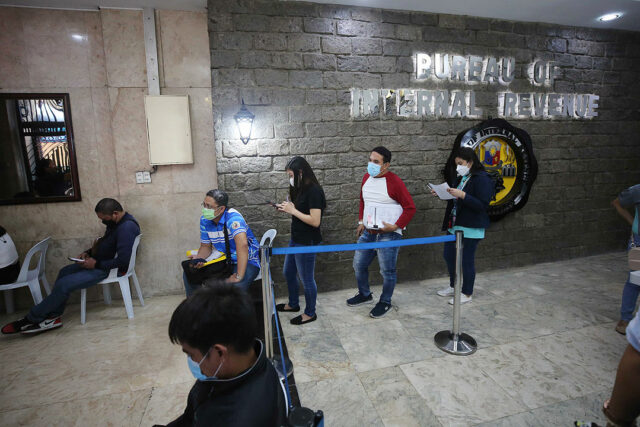
People line up to file their income tax returns at the Bureau of Internal Revenue office in Intramuros, Manila, April 18, 2022. — PHILIPPINE STAR/ RUSSELL A. PALMA

THE IMPLEMENTATION of key tax reform laws generated P202.8 billion in additional revenues in 2022, the Department of Finance (DoF) said.

“The total collection last year was 26.3% or P42.3 billion higher than the 2021 full-year incremental revenue of P160.5 billion on the back of full economic recovery due to lifting of stringent quarantine measures,” Finance Secretary Benjamin E. Diokno said in a statement.

Higher revenues were attributed to the comprehensive tax reform program (CTRP), which included the Tax Reform for Acceleration and Inclusion (TRAIN) law; the Corporate Recovery and Tax Incentives for Enterprises Act (CREATE) law; the Tax Amnesty Law, and “sin” taxes on alcohol and tobacco.

Data provided by the DoF showed these tax reforms generated P709.9 billion in total revenues since 2018.

Total collections from the TRAIN law reached P216.5 billion, up by 27% from the P171 billion in 2021.

Excise tax collections on imported petroleum rose by 10.7% to P132.6 billion, “due to higher volume of oil imports,” the DoF said.

Meanwhile, collections from sweetened beverages rose by 12.7% to P44.3 billion, while those from tobacco jumped by 2.5% to P15.7 billion. Excise taxes from alcohol increased by 23% to P31.8 billion.

Also, documentary stamp tax collection jumped by 58.8% to P58.8 billion.

Data from the DoF showed that the government lost P51.1 billion from the reduced income tax rates in 2022, slightly lower than the P77.1 billion losses in 2021.

Meanwhile, collections from package 1B or the Tax Amnesty Law fell by 69.6% to P1.4 billion in 2022 from P4.6 billion in the previous year. The law granted an amnesty to unsettled estate taxes and delinquent accounts.

Data from the DoF showed revenue losses from the CREATE law reached P80.4 billion, higher than P68 billion in losses in 2021. This included P59.2 billion in losses arising from the reduction in corporate income tax rates.

The CREATE law was implemented as a pandemic relief measure for businesses through income tax reductions. Corporate income tax rate for micro, small and medium enterprises was lowered to 20% from 35%. Large corporations with taxable income above P5 million also saw rates reduced to 25% from 30%.

Actual collections from corporate income tax grew by 5.2% to P495.5 billion from P471 billion a year ago, reflecting “the full reopening of the economy,” the DoF said.

PROPOSED MEASURES
Meanwhile, Mr. Diokno said the government is expected to generate around P29.1 billion from several proposed tax measures that would be implemented in 2024.

The Passive Income and Financial Intermediary Taxation Act is seen to generate P8.5 billion next year. It is currently pending at the Senate committee level.

Data from the DoF also showed that the value-added tax on digital service providers is expected to raise P13.7 billion in revenues next year. It is also pending at the Senate committee level. If passed into law, it is seen to generate up to P18.2 billion in revenues by 2028.

The proposed excise taxes on single-use plastics and pre-mixed alcohol are also expected to generate P6.5 billion and P400 million, respectively, in fresh revenues.

The House approved on final reading the bill seeking to impose an excise tax on single-use plastics. The bill has been transmitted to the Senate.

Meanwhile, the bill imposing an excise tax for pre-mixed alcohol is pending at the House Committee on Ways and Means. — Luisa Maria Jacinta C. Jocson

ADVERTISEMENT
ADVERTISEMENT