Home Blog Page 4797

Martial law and the stories we tell

ORIGINAL PHOTO BY DANIEL BERNARD-UNSPLASH

This year, on the 50th anniversary of martial law’s proclamation, the days leading up to the 21st of September have me feeling a new, more palpable grief and anger.

In past years, Sept. 21 was a day to reflect on these difficult questions: Are we doomed to repeat our mistakes? Are we at risk of being taken advantage of by another authoritarian regime? More recently, after the Marcos burial in the Libingan ng mga Bayani, the question became: Have we resigned ourselves to sweeping the Marcos regime’s atrocities under the rug in the interest of “moving forward”?

Back then, a good number of people still believed that there was still space to fight disinformation and that we could dismiss the idea of the Marcoses’ return to power as absurd.

But today, the 31 million votes won by President Ferdinand “Bongbong” Marcos, Jr. in this year’s election have given us an answer to our questions: Yes, we have failed to resist the attempts to undermine our collective memory. People have been forced to “fight against their own memory and unknow what they clearly knew” (a term used by Charles Pierce in a 2016 piece on David Remnick’s Lenin’s Tomb).

The Marcoses asked us for a “second chance,” admitted that Marcos Jr. sought the Presidency to clear his family name, and the great majority of the Philippines supported him, essentially pardoning the Marcoses for past crimes.

How did we get here? How did we allow lies to distort our understanding of the past? And how can we get people to value the truth in this world of lies? How do we get people to remember?

An offshoot, I think, of my experience of losing my father at a young age is my obsession with my memory and fear of forgetting. When the people we love are no longer with us, we need to do the difficult work of keeping their memory alive. But time passes and without a conscious effort to remember, we sometimes find ourselves grasping for details about our loved ones that we used to know so well.

The same goes for our collective memory as a nation. If we don’t make an effort to tell the stories of those who came before us, we are bound to eventually forget them. Information now comes to us at lightning speed in the form of one-minute TikToks, and the sheer amount of media to consume slowly makes us more prone to unknowing things we already know. The social media managers behind the Marcos campaign know this, which is why they used this short form content to distort the narrative in their favor.

Some stories are more convincing and harder to forget, however — those told to you by people you already trust. Marcos propaganda is pushed mainly by community influencers who already have their own established spheres of influence. It is much easier to believe stories, no matter how false they may be, when they come from someone they have a relationship with.

In my freshman year of college, I was tasked to write a profile on someone who lived through martial law. I interviewed a family friend who was jailed for two years during martial law for his work as an activist. He casually described how he was tortured, and I couldn’t believe him when he said it “wasn’t too bad.” The quote that still rings in my head from that afternoon was when he told me what he learned from his time as an activist: “Most people don’t find a cause they’re willing to give up everything for; I was lucky that I found mine.”

That family friend was one of the first people I thought of on the evening of May 9 when election returns started trickling in and Bongbong Marcos quickly became presumptive president. I couldn’t imagine how he and the rest of my parents’ and grandparents’ generation, many of whom were activists during martial law, felt upon seeing another Marcos winning by a landslide. Many of these activists were the best and the brightest of their generation who chose to dedicate their lives to the struggle for change, and yet suffered in ways still unimaginable to me.

I couldn’t fathom how it might feel for their darkest experiences to be invalidated and brushed off as chismis (gossip), when many of them lost loved ones, and parts of themselves, in the fight for freedom. I couldn’t stop thinking of the martial law activists I know who fought with all that they could to educate people on the truth about martial law.

The Marcos victory has merely empowered its disinformation machinery. The antidote for forgetting is constantly telling and repeating good truthful stories, no matter how long it takes.


Pia Rodrigo is Action for Economic Reforms’ strategic communication officer.
P57.43/$: Where do we go from this record low?

KENNY ELIASON-UNSPLASH

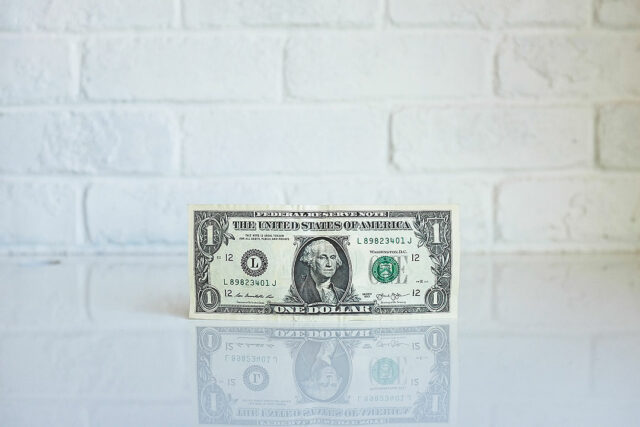
On Sept. 15, 2022, the peso-dollar exchange rate reached a milestone at P57.43/$, a record low in our history. While worrying to many, this presents a challenge and an opportunity. The challenge is how to respond moving forward so that the adversity it has sown is turned into the seed of a better, more resilient future harvest. History has object lessons here.

In 2012, to keep the peso-dollar exchange rate from going below P40/$ due to heavy portfolio inflows thanks to the aggressive quantitative easing by the US Federal Reserve Board, the Bangko Sentral ng Pilipinas (BSP), then under Governor Amando Tetangco, Jr., waged a scorched-earth war against further peso appreciation. It switched to becoming a determined buyer of dollars, which resulted in the BSP’s Gross International Reserve (GIR) climbing to unprecedented heights (~$80-billion, at that time a record). The BSP effectively borrowed pesos from the public and the banks through the Special Deposit Account (SDA) where billions of banking sector resources were parked to soak up on hefty risk-free interest rate. This exceptionally high interest rate is contractionary and meant little lending to the private investing public and a consequent slowdown of the economy. The BSP could also have just printed pesos or reduced the banking reserve requirement which, however, would have risked inflation exceeding its self-imposed ceiling.

It was the correct policy move then since a further drop to P35/$ would have decimated the Manufacturing sector already emaciated by almost a decade-long appreciation of the peso from its low in 2004. But this determined defense of the peso sat uncomfortably with the BSP’s self-imposed inflation targeting, with the market being the ultimate arbiter of the exchange rate. The headline inflation target was between 3-5% in 2012-2024 (Tetangco, 2012, Inflation Report Q2 2012). The actual headline inflation was 3.3% in November 2013. There was no call for appreciation resistance from the inflation front! The BSP’s action, though correct, revealed a quirk in its inflation targeting commitment — it will go to war to defend a notional line of resistance on the exchange rate level.

This attitude echoes the Chinese central bank’s refusal to allow any but puny movements in the exchange rate in the first decades of this century. Because the ammunition for the defense of an undervalued currency is the domestic currency which it can easily print apart from some capital controls, this was easy.

Both the yuan case and the BSP 2012 cases revealed a line of resistance. The difference is where the line of resistance is drawn. The Chinese monetary authority’s line of resistance is drawn where a trade surplus becomes a permanent fixture of the Chinese economy; this means a manufacturing sector that outsells competitors at foreign outlets like Walmart or Sainsbury’s. The Philippine monetary authority’s line of resistance seems to be where the Philippine manufactures, or whatever is left of it, can barely hold their own in SM North or Robinson’s. And yet the line of resistance in the Philippines could have been drawn at P50/$; the Philippines peso-dollar exchange rate was already at P56.45/$ in October 2004. In other words, we already paid the inflationary price of the depreciation (inflation was 7.7% in 2005). It was a wasted crisis.

What the BSP did after 2004 was underwhelming if not out-rightly self-lacerating. Brandishing the well-worn excuse of a market-determined exchange rate, it allowed the peso to appreciate back to P40.67/$ by February 2013 from its 2004 low as portfolio investment flocked back when the US Federal Reserve walked back its quantitative easing. To the Chinese monetary authority, our excuse reads like surrendering to the US Federal Reserve Board and portfolio investors the prerogative of determining the domestic investment and poverty alleviation program! Investors in the Philippines and abroad, rightly seeing that 2004 peso/dollar level had no legs, rightly refused to shift investment towards tradables. Indeed, tradables suffered a hollowing out. Is it any wonder that the Philippines now imports everything?

What happened between 2004-2012 echoed the 41% interest rate on one year maturity treasury bill in 1984 (BSP’s Selected Domestic Interest Rates, http://www.bsp.gov.ph) and the central bank’s employment of JOBO bills with high interest rate to maintain a grossly misaligned peso value. The banks with ready cash became filthy rich while the Philippine economy shrunk and the Filipinos went hungry. No different from the use of high-interest SDAs to push the peso from P29.83/$ in September 1993 back to P23.87 in November 1994. That was when a group of then-young economists (Benjamin Diokno, Cayetano Paderanga, Emmanuel de Dios, Calixto Chikiamco, and this author) recommended that we devalue the peso to P35/$ to keep the People’s Republic of China (PRC), which had devalued the yuan 40%, from eating our lunch. This group was instead subjected to vicious attacks as “jukebox economists” (lackeys following International Monetary Fund-World Bank money). In truth, the recommendation went squarely against the IMF-WB. The latter was then bamboozling LDC central bankers into the “fear of fixing” with the gobbledygook of the impossible trinity favoring an open capital account and a flexible exchange rate. They, however, could not stampede PRC, and especially not Robert Mundell, co-author of the seminal paper on policy trilemma. He knew better and supported PRC’s heretical yuan policy. To the clamor by the private business for relief from killer high interest rates, the BSP responded with, “Let them borrow abroad!” The private sector, heeding the BSP advice, was thus led like lambs into the slaughter of the 1998 Asian Financial Crisis! And President Fidel Ramos’ highly touted tiger cub economy became the collateral damage!

WHAT WE COULD DO: FLEXRD
Now that we are at P57.43/$, we can do either of two things: repeat the mistakes of the past — surrender the fate of our investment and poverty-reduction programs to the US Federal Reserve and the global portfolio forces — that means the exchange rate will be pushed back to P48/$ or thereabouts, or we can seize the opportunity in this crisis to shift to an economic regime where we determine our own investment and poverty reduction future.

This we do by adopting a regime of a flexible exchange rate with a ratchet downward (FLEXRD) with the following features: (i) sway with an externally induced pressure for a depreciation (don’t waste precious forex reserve resisting such pressure which the BSP wisely did in early 2022), (ii) lean against an externally induced pressure for appreciation (as the BSP did in 2012, as Vietnam did in 2020, and as PRC still does), and, (iii) adopt (ii) when the wind reverses from a depreciation to appreciation pressure. This implies choosing a line of resistance that opens the door for a permanent trade surplus.

Historians Will and Ariel Durant observed in their monumental 11 volume opus (The Story of Civilization) that “History teaches but man never learns!” Fortunately, history is not destiny! Although our own policy history suggests our response will again reprise past mistakes, proving the Durants right again, the opportunity and the challenge before our economic authorities today is for once to prove the Durants wrong.


Raul V. Fabella is a retired professor of the UP School of Economics, a member of the National Academy of Science and Technology and an honorary professor of the Asian Institute of Management. He gets his dopamine fix from bicycling and tending flowers with wife Teena.

A string of pearls and a diamond necklace. The Cold war between China and India

VIEW of the Gateway of India — RENZO D SOUZA-UNSPLASH

China’s ambition to become the world’s economic and military superpower has railroaded the sovereignty of nations and caused tensions of war. This is true not only in the West Philippine Sea but also in the Indian Ocean.

China’s nine-dash line, the basis for its territorial grab of the West Philippine Sea, has been deemed inferior to the historical claim of the Philippines. No less than the Permanent Court of Arbitration of the United Nations has ruled on this. Yet, in defiance to the UN Tribunal’s decision, China pressed on it with its territorial grab.

Why is the West Philippine Sea so important to China? Dominion over disputed waters will allow China to control world trade as the seas serves as the nautical superhighway where two-thirds of world trade traverses. Freedom of navigation, passage and overflight will fall solely to China’s discretion. Additionally, China will become self-sufficient in fuel and food given the immense natural resources beneath the disputed waters.

The Indian Ocean serves the same purpose. The waters span the coasts of 28 countries including mighty adversaries such as India, Australia, and members of ASEAN. About 27.9% of the world’s natural gas reserves are found in the Indian Ocean. More importantly, the Indian Ocean is where 80% of global oil supply passes through.

Command over the Indian Ocean and the West Philippine Sea will give China unprecedented economic and military advantage over its adversaries.

There are three major choke points within the Indian Ocean — they are the Strait of Hormuz in the Persian Gulf, the Strait of Malacca in the Malay Peninsula, and the Strait of Bab el-Mandeb in the Arabian Peninsula. There are other choke points, albeit less critical, namely, the Mozambique Channel, Suez Canal, and the Sunda and Lombok Straits. Choking any of these straits can bring the flow of oil and global trade to a standstill. This is why it is important for China to control the Indian Ocean.

Enter the Belt & Road Initiative. Presented under the guise of official development assistance, the Belt & Road Initiative is, in reality, a debt trap meant to give China control over vital infrastructure installations in the Indian Ocean and other strategic areas.

How does it work? China lures weak nations into acquiring massive loans for the development of infrastructure. It then imposes stiff terms designed to cause these nations to default. Interest rates could reach 4% per annum as compared to 1% from development lenders such as the ADB. Chinese debt duration usually spans 10 to 15 years whereas it is typically 30 years with others. All construction suppliers, labor, and engineers are sourced from China causing the funds to flow back to the mainland, not the host country. In the event that a debtor country defaults, China takes over the asset and treats it like its sovereign property. At present, China has already assumed control of Pakistan’s Gwadar Port, Sri Lanka’s Hambantota Port, and is moving closer towards controlling the Kyaukpyu Port in Myanmar.

The Gwadar Port in Pakistan gives the Chinese easy access to the Strait of Hormuz and the Suez Canal. Its naval base in Djibouti gives it access to the Bab el-Mandeb Port. The Port of Dar es Salaam in Tanzania gives it access to the Mozambique Channel.

Each of the Chinese-controlled ports and/or military installations in the Indian Ocean constitutes a nugget in its “string of pearls strategy.” Together, they form a lethal necklace that hangs around India’s neck, another emerging military and economic superpower. China has surrounded India with its deadly string of pearls which it could tighten anytime should India challenge its dominance.

While India has no self-serving ambition for world domination, it must still protect its interests. China’s String of Pearls Strategy has caused tension between the two superpowers. Indian Minister of External Affairs Subrahmanyam Jaishankar admitted that the relationship between the two is “not normal and that a cold war exists.”

So, just as China has hung a string of pearls around India’s neck, so has India hung a Diamond Necklace around China.

Since becoming prime minister of India in 2014, Narendra Modi has established multiple alliances with like-minded countries towards military cooperation.

Among these alliances is the Quadrilateral Security Dialogue (QUAD), a strategic alliance between India, the US, Japan, and Australia. The QUAD works to maintain a free and open Indo-Pacific region and a rule-based maritime order in the East China Sea and West Philippine Sea.

India was granted military access to the Port of Duqm in Oman, situated between China’s Gwadar Port and the Djibouti Military Base.

India was granted military access to the Changi Naval Base in Singapore. This gives it easy access to the Malacca, Lombok and Sunda Straits.

India was granted military access to the Sabang port in Indonesia, within striking distance of the Malacca Strait. The Malacca Strait is where 70% of China’s oil supply and 60% of trade pass through.

India was granted military access to the Cam Ranh Port in Vietnam.

India and Japan signed an Acquisition and Cross-Servicing Agreement. This allows the militaries of both nations to exchange supplies and services including the use of ports.

India has established close relations with Mongolia via the extension of a $500-million credit line. In exchange, India is assured of cooperation from Mongolia, a country situated north of China.

India was granted military access to the Chabahar Port in Iran.

Connect the countries to which India has military access and you will find a diamond necklace around mainland China.

China’s ambitions for economic and military dominance have put it in the crosshairs of peace-loving nations like India, the US, Japan, Australia, and the ASEAN who only want continued peace and prosperity on the planet. India is right, the only way to combat China’s escalating aggression is to form alliances with like-minded counties to defend our way of life.


Andrew J. Masigan is an economist

andrew_rs6@yahoo.com

Facebook@AndrewJ. Masigan

Twitter @aj_masigan

A weakened Putin is no use to Russia

A DEMONSTRATOR’S PLACARD against the invasion of Ukraine by Russia. — MARKUS SPISKE-UNSPLASH

AS UKRAINIAN troops probe Russian defenses along the entire front and only the Wagner Group mercenaries continue a small-scale offensive operation in the Donetsk region, the initiative in the Russo-Ukrainian war is firmly in the hands of the invaded, not the invader. While that can still change, perhaps more than once, it’s a good moment to consider whether the man who got Russia into this mess retains any legitimacy — domestically or internationally. To put it even more bluntly, who, if anyone, still needs a weak Vladimir Putin?

Putin’s claim to power has evolved over his nearly 22 years atop the Kremlin. In 2000, he was President Boris Yeltsin’s chosen successor, then the president elected in a vote that, while not problem-free, reflected the will of Russian voters. By the end of the first eight years of his rule, he was the architect of a corruption-plagued, but broadly beneficial economic upsurge; because Russians credited him for that, they cared little about the erosion of electoral democracy as he consolidated power. After the intermission of Dmitry Medvedev’s presidency, he briefly struggled to find a new source of legitimacy until he seized on the annexation of Crimea, an event so inspiring to a large majority of Russians that even a harsh pension reform four years later didn’t appreciably dent his popularity.

Putin went into the COVID-19 pandemic riding an ebbing Crimea wave of support while relying increasingly on a swollen, well-fed security apparatus — a full-fledged dictator now, with elections a joke and all major issues, and lots of minor ones, requiring his personal intervention. The pandemic, when most visitors had to quarantine for weeks before being admitted to Putin’s presence, seems to have shrunk his trusted entourage to a handful of yes-men. The Kremlin’s erratic policies made Russia one of COVID’s biggest victims, and only the disease and increasing oppression kept Russians from looking up too much. By then, Putin’s legitimacy rested on the general impression of undefeated, unbeatable strength, backed up by a military success in Syria and the steamrolling of domestic opposition.

As in the tough streets of any big city, however, be it St. Petersburg or Sao Paolo, the reputation of a strongman as the head of a country needs constant reinforcing by further feats of strength. For his next one, Putin chose Ukraine again, launching what he clearly thought would be a blitzkrieg ending with the swift fall of Kyiv and the annexation of a large swathe of Ukrainian territory. Even though the outcome of the war is far from decided, this show of force has failed spectacularly. Russia has revealed itself to be vulnerable militarily after years of bravado that deceived even the experts.

Russia’s weakness is not lost on foreign leaders, from once-cautious Western adversaries shipping increasingly deadly weaponry to Ukraine to neighbors like Azerbaijan’s leader Ilham Aliyev, who appears to see a new opportunity to improve his country’s position in Nagorno-Karabakh while Putin is bogged down in Ukraine. Putin may have hoped for more active support from China, but he’s not getting anything beyond discounted energy purchases; if he was winning, China would doubtless be more forthcoming.

The domestic audience, too, appears to be shedding its illusions of Russia’s greatness, no matter what one might say about the efficiency of Putin’s propaganda. His media mouthpieces Vladimir Solovyov and Margarita Simonyan no longer own the narrative. Even on state television, not to mention nationalist Telegram channels with hundreds of thousands of readers, Russia’s defeats are engendering much bitterness and hurt. The hard-core propagandists look lost, sometimes downright bizarre, with Simonyan retreating into sentimental memories and poetry and Solovyov appearing on the air with bruises and scratches on his face.

Putin himself, stubbornly maintaining a business-as-usual program of meetings of little relevance to the Ukrainian elephant in the room, looks like a denizen of “Pink Pony Planet,” as far-right commentator Igor Girkin (Strelkov) calls the distant realm of the Russian elite.

And what of Putin’s suppression machine, his vaunted FSB domestic intelligence and more than 300,000-strong Rosgvardia riot police? Despite its extensive network, the former failed to predict Ukraine’s stiff resistance. A large part of the latter was sent across the border, initially to police the conquered territories, but ending up in the meat grinder of trench warfare, something for which its personnel never trained. Whether they will return from the war with any respect for Putin is questionable; even the dictator’s faithful servant, Chechen leader Ramzan Kadyrov, whose fighting force in Ukraine is part of Rosgvardia, has doubted the campaign’s conduct, if not (yet) Putin’s leadership and goal-setting.

If a strong Putin was widely tolerated, often appeased, and, in Russia itself, feared and obeyed, what could be the basis of a weak Putin’s power? Certainly not sympathy: Russians aren’t known to respect weak leaders — witness the political fate of the last Soviet President, the late Mikhail Gorbachev, and many a Russian czar before him. A Ukraine-style popular revolution in Russia is unlikely, even if Western sanctions begin to bite in earnest: The new leaders needed for something like that will not emerge overnight from Russia’s thoroughly purged civil society. But you can at least expect popular indifference in the face of top-down change. Despite appearances, an unquestioning pro-Putin majority doesn’t exist, according to a recent report by the Carnegie Endowment for International Peace — and the number of the dictator’s diehard backers won’t increase with more defeats.

Internationally, what might prop up Putin even if he loses the war is a fear that what comes after him may be far worse. The far right, inspired by the same ideals of imperial greatness as Putin himself, can be much more ruthless when it comes to its choice of means to that end. Someone of Strelkov’s ilk with a finger on the nuclear button is indeed a scary thought.

Domestically, though, Putin risks losing control as soon as the fear subsides. Military and police commanders, spies, even the timid oligarchs will be scheming — and likely already are, as a matter of contingency planning — to put forward a figure who could maintain their positions while pulling out of the Ukraine nosedive and offering a calming alternative to the rest of the world. The tightening of Putin’s close circle during the pandemic has, as an unintended consequence, shortened his reach and provided more opportunity for plots and intrigues behind his back.

None of this means, of course, that Putin is about to be toppled. Speculation concerning potential replacements is being dribbled into Telegram and foreign media mostly as a way to damage specific figures. For now, the dictator is still in control: All his years in power have earned him the benefit of the doubt among Russia’s powerful, a group moth-eaten by negative selection. He must, however, realize that if military defeats continue, retaining his clout will require surprising, even drastic moves. The world might yet be treated to a re-enactment of the tired cornered rat metaphor from Putin’s childhood — something to keep in mind but not to fear: All dictatorships end someday, and few go out in a blaze of glory.

BLOOMBERG OPINION

Manila Broadcasting Company to conduct annual stockholders’ meeting on Oct. 6

NOTICE OF 2022 ANNUAL STOCKHOLDERS’ MEETING
October 6, 2022 | 3:00 pm | Zoom

AGENDA

  1. Call to order
  2. Certification of notice or quorum
  3. President’s report
  4. Approval of the audited financial statements for the year ended December 31, 2021
  5. Approval and ratification of the acts of the Board of Directors and Officers of the Company from the date of last Stockholders’ Meeting up to October 6, 2022
  6. Election of directors and officers for 2022 to 2023
  7. Appointment of external auditors
  8. Other matters
  9. Adjournment

Visit our website for the registration guidelines:
https://manilabroadcasting.com.ph/

PSE Edge:
https://edge.pse.com.ph/companyDisclosures/form.do?cmpy_id=117

Email:
corp.sec@manilabroadcasting.com


Spotlight is BusinessWorld’s sponsored section that allows advertisers to amplify their brand and connect with BusinessWorld’s audience by enabling them to publish their stories directly on the BusinessWorld Web site. For more information, send an email to online@bworldonline.com.

Join us on Viber to get more updates from BusinessWorld: https://bit.ly/3hv6bLA.

BSP expects bigger BoP, current account deficits as global demand weakens

BW FILE PHOTO

THE PHILIPPINES’ balance of payments (BoP) deficit could end this year wider than initially expected due to darker global growth prospects that have caused weaker demand.

The Bangko Sentral ng Pilipinas (BSP) announced its revised BoP projections for 2022 and 2023 approved during the Monetary Board’s meeting on Friday.

The BoP gives a glimpse of the country’s transactions with the rest of the world at a given time. A deficit shows more funds exited the country than what went in, while a surplus means more money entered the economy.

“The emerging BoP outlook over the near term remains subdued as external risks have intensified relative to the last forecast round in June 2022. These risks of further downward revision in global growth prospects, record-high inflation print worldwide, more aggressive monetary policy tightening by major central banks, continued economic slump in China, and lingering Ukraine-Russia conflict, among others, are expected to broadly weaken global demand conditions, and hence, the country’s external sector,” the BSP said.

“In particular, these are expected to moderate the growth in merchandise exports and, along with increased imports, will result in a further widening of the goods trade gap,” it added.

The BSP said while global financial conditions remain tight, the economy’s continued recovery from the coronavirus disease 2019 (COVID-19) pandemic could offset their impact on the Philippines’ external position.

“This, along with the expected revival of foreign travel receipts, sustained resilience of overseas Filipinos (OF) remittances and business process outsourcing (BPO) revenues, as well as inflows from foreign direct investments are expected to positively contribute to the external sector outlook,” the central bank said.

The country’s BoP is now expected to yield a deficit of $8.4 billion this year, equivalent to -2% of gross domestic product (GDP), bigger than the previous projection of a $6.3-billion gap (-1.5% of GDP) announced in June.

Latest BSP data showed the country’s BoP stood at a $3.1-billion deficit in the January-June period from the $1.9-billion deficit in the comparable period in 2021.

The central bank said it expects a wider balance of payments gap this year as it expects a current account deficit of $20.6 billion (-5% of GDP) from the earlier forecast of $19.1 billion (-4.6% of GDP) “owing to the sustained acceleration of goods imports alongside moderation of goods exports.”

Broken down, imports of goods are now expected to grow by 20%, up from 18% previously, amid higher commodity prices and the continued reopening of the domestic economy. Meanwhile, goods exports are seen to increase by a more moderate 4% from 7% previously “amid expectations of continued softening of global demand, persistent supply bottlenecks, and the rise in input costs.”

On the other hand, services imports and exports are both expected to expand by 14% this year (from 13% and 11%, respectively) “based on stronger-than-expected recovery in travel receipts and BPO revenues in the first half of 2022 following the further reopening of the domestic economy and easing of travel restrictions for foreign tourists beginning February 2022.”

BPO receipts are seen to grow by 9%, faster than 8% previously, while travel receipts are projected to surge by 250%, also up from the June forecast of 100%.

Meanwhile, the BSP retained its 4% growth forecast for overseas Filipino workers’ cash remittances on the back of rising deployment amid renewed hiring interest and wider use of digital financial services. In the first seven months of 2022, cash remittances rose by 2.8% year-on-year to $18.26 billion.

The country’s current account deficit was at $7.9 billion in the second quarter, higher than the $1.3-billion gap seen the year prior amid a wider trade in goods deficit.

In the first semester, the current account balance ballooned to a $12-billion deficit from the $1.3-billion gap seen in the same period last year.

Meanwhile, for the financial account, it is expected to register net inflows of $11.1 billion this year, slightly lower than the previous projection of $11.8 billion, as the central bank still sees a sustained rise in foreign direct and portfolio investments.

The central bank expects foreign direct investments (FDI) to end the year at a net inflow of $10.5 billion, lower than the June outlook of $11 billion, while foreign portfolio investments (FPI) or hot money are expected to post a $4.5-billion net inflow, steady from its previous projection, amid planned initial public offerings.

Latest BSP data showed total FDI net inflows in the first semester rose by 3.1% to $4.641 billion.

Meanwhile, FPI yielded a net inflow of $625 million from January to July, a turnaround from the $446-million net outflow seen in the same period last year.

Lastly, the country is now expected to end the year with gross international reserves (GIR) of $99 billion, equivalent to 7.5 months of import cover, lower than the previous forecast of $105 billion (8 months).

The BSP said this is “reflective of the latest actual data as well as the buildup in external risks that could weigh on the country’s major sources of foreign exchange.”

The Philippines’ dollar reserves declined for a sixth straight month in August, hitting a two-year low of $99.98 billion from $99.83 billion as of July.


OUTLOOK FOR 2023

For 2023, the BSP kept its forecast of a $2.6-billion BoP deficit, equivalent to -0.6% of GDP, “underpinned mainly by expectations of sustained inflows in the financial account supported by improved business and consumer sentiments for next year, resilient domestic demand, and continued operationalization of key legislations aimed at improving the country’s overall investment climate alongside narrower current account deficit.”

The central bank said it expects a slightly narrower current account deficit of $20.1 billion (-4.5% of GDP) next year from $20.5 billion (-4.4% of GDP) previously as the country’s trade in goods gap is expected to taper.

Goods exports growth is now seen at a slower 3% next year from 6% in the June forecast round and imports of goods are seen to rise by 4%, down from 6% previously.

Services exports are now expected to increase by 12% next year from 9% previously. Meanwhile, growth projections for services imports, BPO receipts and travel receipts were retained at 8%, 5% and 150%, respectively.

The BSP likewise kept its cash remittances growth forecast for 2023 at 4%.

“The foreseen sustained recovery momentum of trade in services … as well as the steady inflow of OF remittances … are expected to lend some offsetting effect to the current account imbalance. As the COVID-19 situation becomes more manageable and international travel restrictions further lifted across jurisdictions, both international tourism and OF workers’ deployment prospects will remain favorable,” the central bank said.

On the other hand, the financial account is now expected to register slightly lower net inflows of $16.5 billion in 2023 from $16.8 billion previously.

FDI net inflows are now seen at $12.5 billion in 2023 from the previous forecast of $12 billion, while the FPI net inflows are still expected to come in at $6.7 billion.

Lastly, the central bank lowered its 2023 GIR projection to $100 billion from the June forecast of $106 billion on expectations of foreign exchange flows amid continued external risks, which could be “tempered by domestic economic resilience.”

“Looking further ahead, while there is scope for global economic conditions to improve next year, particularly with regard to commodity price conditions, the downside risks to external demand amid tighter global financial conditions also highlight the importance of building up domestic sources of resilience to cushion the domestic economy from external shocks,” the BSP said.

“Preserving strong macroeconomic fundamentals will be a key factor that will be relied upon to sustain external sector resilience over the near term,” it added.

The central bank said it will continue to monitor external sector developments and their potential impact on price and financial stability. — Keisha B. Ta-asan

Century Pacific Food partners with Etaily to grow e-commerce business

Singapore-based e-commerce company Etaily announced on Sept. 15 that it was partnering with Century Pacific Food, Inc. (CPFI) to help grow Goodest, a pet food range that contributes 25% to CPFI’s e-commerce business despite representing only 0.5% of its consumer packaged goods business.

And according to Etaily, short-form videos on TikTok could be as important to brands as the landing page on e-commerce platforms.

“If a brand is still thinking [only] about the landing page on Lazada and not taking this into account, then we have a big problem,” said Alexander Friedhoff, Etaily co-founder and chief executive officer.

In e-commerce, “it will be your efforts, your understanding of how the landscape works, that helps drive your success — or failure,” said Alexander Lim, CPFI general manager of pet foods, adding that e-commerce has been an “equalizer” for the pet food industry.

Launched October 2021, Goodest is third among pet care products on Shopee and fifth among pet food products on Lazada.

“E-commerce isn’t just another channel. It really is something that you need to study independently, that you have to study as operating with a different set of dynamics,” Mr. Lim said. “You can learn from all sorts of different places on how best to do it.”

Mr. Friedhoff said that retailers and enablers need to work on four fronts to create a seamless omnichannel experience: operations, technology, data, and brand.

Omnichannel, in e-commerce and retail parlance, refers to a shopping experience across in-store, mobile, and online channels.

It’s every retailer’s dream to have an omnichannel experience where consumers can fulfill, buy, and return from anywhere — “but there’s a very long path to execute this,” Mr. Friedhoff said in a Sept. 15 event organized by Etaily.

“Southeast Asia, in comparison to Europe and the US, is not there yet in terms of integration of points-of-sale, and in fulfilling seamlessly in every location,” he said.

He added that, while supply chain issues exist worldwide, businesses can prepare through better forecasting plus adapting their sales infrastructure to the demand being generated.

Gone are the days when having a billboard or TV commercial is enough, said Alexandra Garcia, FMCG (fast moving consumer goods) category director for Etaily, who is working with CPFI.

“E-commerce is digital in nature,” she said. “The purchase happens on different touchpoints.”

TIKTOK SELLING
At the same event, Jonah Michael Ople, acquisition and incubation lead for Tiktok Shop Philippines, suggested a combination of affiliate- and self-generated content for getting discovered in the video hosting service.

Tiktok Shop sellers have the option to collaborate with content creators; the latter also have the option on the platform to apply to sellers to promote their products.

“We show videos based on your connections, not your interests,” Mr. Ople said. “Based on that, this is where the brand should go. If you find creators that resonate with the interests of your target consumers, then it makes sense to get them.”

“There are…a lot of users you want to target who believe in these creators, and in the authenticity they present,” added Mr. Ople. — Patricia B. Mirasol

Russian economy will not return to pre-war levels until 2030 – Scope

STOCK PHOTO

Russia’s economy is not likely to return to prewar levels before the end of this decade as the Ukraine war and stricter sanctions worsen long-standing economic deficiencies, Scope Ratings said in a report seen by Reuters on Friday.

By the end of 2023, gross domestic product (GDP) will be about 8% below where output was in 2021, according to the credit rating watchdog’s forecast.

The Russian economy expanded by 4.7% in 2021, according to federal statistics service Rosstat. Read full story

After 2023, potential growth will drop to 1.0-1.5% a year from the 1.5-2.0% achieved before the war, the agency said.

“The Russian government, helped by the Bank of Russia, has used windfall export revenues to mitigate the immediate domestic economic impact of the war in Ukraine and sanctions, but the longer-term outlook has worsened,” said Scope analyst Levon Kameryan.

Accelerating capital outflows, limited access to Western technology and negative demographic trends will continue to hamper growth and compound the effects of the war and sanctions in the absence of any significant economic restructuring, according to the report.

About four times as much private capital – $64.2 billion – flowed out of Russia in the first quarter of 2022 alone compared with the same quarter last year, said the report.

The Scope report predicts that the private sector will withdraw more capital from Russia this year than the $152 billion pulled out in 2014, when Russia annexed the Crimea. – Reuters

Norway to help ease the power price pain for businesses

STOCK PHOTO | Image by Alexandra von Gutthenbach-Lindau from Pixabay

Norway‘s government on Friday presented a long-awaited package of loans and subsidies to reduce the impact of sky-high power prices for businesses, joining other European countries seeking to ease the energy crunch.

Governments across the region have been racing to present measures to protect consumers and industry from more expensive energy bills. Read full story

The subsidy scheme will cover companies with power costs exceeding 3% of revenue in the first half of 2022, costing a total of 3 billion Norwegian crowns ($292.5 million), industry minister Jan Christian Vestre told a news conference.

“On the one hand, we must avoid creating further pressure on the Norwegian economy, while at the same time we want to give electricity-intensive companies help to adapt,” Mr. Vestre said.

Norway‘s NHO business lobby, which took part in negotiations on the measures, said it backed the plan.

The subsidy presented by the center-left government will compensate 25% of power rates above a threshold of 0.70 Norwegian crowns per kilowatt hour and will be capped at 3.5 million crowns per company.

In addition, companies can borrow up to 50 million crowns, he said.

The scheme is intended to last until the end of the year, with the government planning tax changes from January to simplify and provide incentives for fixed-price, long-term power supply deals at less than current elevated levels.

Wholesale power prices in southern parts of Norway have soared by 700% over the past year from 0.50 crowns/kWh to 4 crowns/kWh owing to a combination of high European gas prices and a dry year in the hydropower-dependent country. Read full story

Norway is already subsidizing household electricity bills and has also provided help to agriculture and greenhouses. However, other businesses with relatively high power consumption, such as bakeries, butchers and dry-cleaners, have had to absorb price spikes in full. – Reuters

EU regulator backs wider use of AstraZeneca COVID therapy

Europe’s medicines regulator has backed using AstraZeneca‘s preventative COVID-19 therapy as a treatment for the disease and also endorsed another medicine as preventative option for another common virus.

The regulator‘s recommendations are usually followed by the European Commission when it takes a final decision on drug approvals.

AstraZeneca said on Friday the European Medicines Agency (EMA) had backed Evusheld as a treatment for adults and adolescents with COVID who do not need supplemental oxygen and who are at increased risk of their disease worsening.

Last month, Japan became the first country to approve the long-acting antibody as a treatment for COVID – making Evusheld the first such therapy authorised for both prevention and treatment of the viral disease.

Evusheld had previously had largely secured global approvals, including in Europe, as a preventative therapy for people with compromised immune systems who see little or no benefit from COVID vaccines.

AstraZeneca is leaning on Evusheld to help offset tepid sales of its COVID vaccine that has rapidly lost ground to mRNA shots in the fight against the rapidly evolving virus.

Evusheld, first launched in December, generated $914 million in the first half of 2022 for the Anglo-Swedish drugmaker.

Separately on Friday, the EMA also endorsed AstraZeneca and partner Sanofi’s SASY.PA experimental long-acting therapy Beyfortus for the prevention of lower respiratory tract infections caused by respiratory syncytial virus (RSV).

RSV causes thousands of hospitalizations and deaths globally each year in toddlers and the elderly, but the complex molecular structure of the virus and safety concerns have stymied efforts to develop a vaccine since the virus was first discovered in 1956.

But there is one therapy, Synagis, also developed by AstraZeneca but sold by Swedish Orphan Biovitrum in the United States.

It is designed to prevent lower respiratory tract infections caused by RSV in high-risk infants and requires up to five injections to cover a typical RSV season.

Meanwhile, if Beyfortus were approved, it would be the first single-dose preventative RSV therapy for the broad infant population – including those born healthy or are deemed high-risk – during their first RSV season. – Reuters

Pound falls to 37-year low as poor retail sales lift economic woes

STOCK PHOTO | Image by Stefan Schweihofer from Pixabay

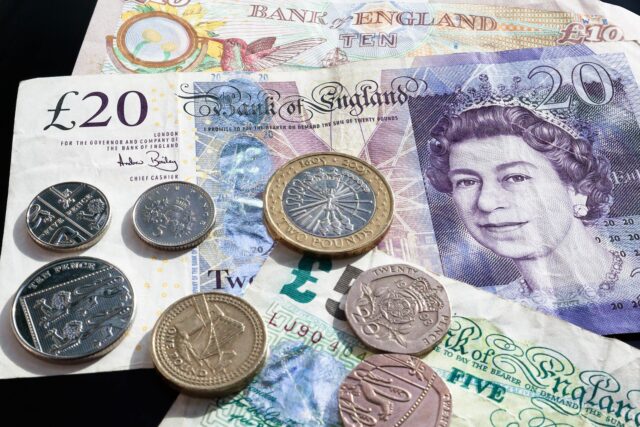
The pound on Friday tumbled to a fresh 37-year low on the U.S. dollar, and a 17-month trough on the euro, after weaker-than-expected figures of retail sales added to worries about the health of Britain’s economy.

The pound fell more than 1% against the dollar GBP=D3 to 1.1351, its lowest since 1985, its fall accelerating once it passed through the then 37-year low hit last week.

The euro rose to as high as 87.66 pence, its highest level since Feb 2021, and was last up 0.39% at 97.52 pence.

Retail sales volumes dropped 1.6% in monthly terms in August, the Office for National Statistics said on Friday – the biggest fall since December 2021 and worse than all forecasts in a Reuters poll of economists that had pointed to a 0.5% fall. Read full story

But this was just the latest bad news for the British currency.

“The grinding backdrop of everything that’s going on is weighing on sterling, with the UK running these massive external deficits and the risks around the new prime minister’s policies adding to that,” said John Hardy, head of FX strategy at Saxobank.

Britain’s new leader, Liz Truss, last week announced a cap on soaring consumer energy bills for two years to cushion the economic shock of war in Ukraine with measures likely to cost the country upwards of 100 billion pounds ($115 billion). Read full story

British finance minister Kwasi Kwarteng is due to make a fiscal statement this month to explain how this will be funded, and also is expected to say how he will deliver the tax cuts promised by Ms. Truss during her campaign for leadership of the Conservative Party. Read full story

“In addition, markets are “risk-off” following Fedex’s withdrawing its forecast, and US equities dropping below a key support level. In a risk-off environment, sterling is like a worse euro,” said Foley.

FedEx Corp. on Thursday withdrew the financial forecast issued just three months ago, sending its shares plunging and weighing on markets more broadly. Read full storyReuters

Philippines antitrust body orders more firms to report takeovers, mergers

MANILA – More merger and acquisition deals in the Philippines will be required to secure prior approval, its competition watchdog said on Friday, as it seeks to expand its reviews of transactions to better protect consumers.

Dozens of companies in the past two years were exempted from notifying the antitrust body and seeking approval for takeovers and mergers, as part of a government effort to encourage and fasttrack deals during the pandemic.

But effective Friday, mergers and acquisitions above P2.5 billion ($43 million) are subject to review, the Philippine Competition Commission (PCC) said in a statement.

Companies with more than P6.1 billion ($106.35 million) in assets or revenues engaging in such deals must also seek PCC approval.

Those compare to a much larger deals threshold of above P50 billion ($871 million) that was introduced for a two-year period from September 2020.
During that time, the PCC exempted 55 corporate deals from a mandatory review and approved six transactions.

The Philippines launched operations of the anti-trust body in 2016, to encourage foreign investment and increase competition in sectors where consumers have long complained of high costs and bad services.

It has since received 227 notifications and approved 205 transactions with a combined value of P4.63 trillion ($80.73 billion).

“Parties who know of mergers and acquisitions that did not meet the thresholds in the last two years but which may have led to monopolies or adverse effects in the market may report these,” the PCC said in its statement. — Reuters