Home Blog Page 4772

BDO, Metrobank CEOs elected as BancNet’s new heads
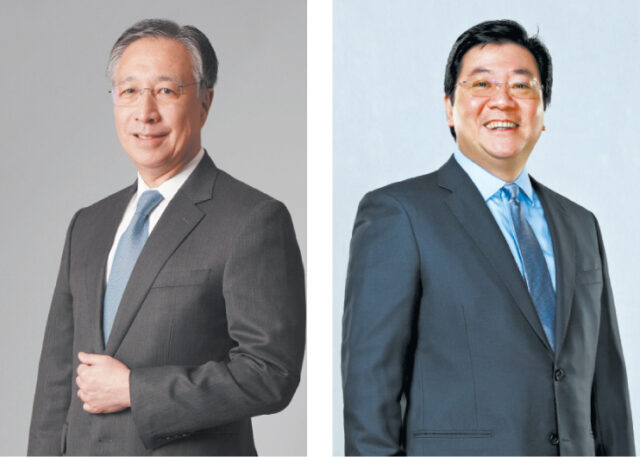
From left: BDO President and CEO Nestor V. Tan, and Metrobank President and CEO Fabian S. Dee

The shareholders of electronic banking consortium BancNet, Inc. elected the company’s board of directors during their annual stockholders’ meeting held last May 23. At the board’s organizational meeting that followed, Nestor V. Tan and Fabian S. Dee were given a fresh mandate to lead the company as chairman of the board and president, respectively, for the term 2023-2024.

Mr. Tan is currently the president and CEO of BDO, while Mr. Dee is the president and CEO of Metrobank.

Mr. Dee told the stockholders that 2022 was a record year for BancNet as it played a pivotal role in expanding digital payments as the country returned to near normalcy and the economy gradually recovered with the waning of the COVID-19 pandemic.

“Our two main businesses — InstaPay and ATM reached new heights in 2022, setting new records in both volume and value. As a result, we closed the year with a net income of P99.14 million and an ROE of 9.82%,” he reported.

“We expect the upward trend in transactions to continue in 2023 and beyond. For Instapay, the interoperable BillsPay Ph, a service we launched in 2022; our various efforts to expand the adoption of payments to merchants using a QR Ph code; and a new use case we will introduce this year will contribute to this trend,” Mr. Dee added.

The elected members of the 15-man board are: Michaelangelo R. Aguilar, president and CEO of Bank of Commerce; Charina D.C. Balanquit, first vice-president of Veterans Bank; Dennis C. Bancod, senior executive vice-president of RCBC; Edwin R. Bautista, president and CEO of UnionBank; Florido P. Casuela, president of PNB; Michael O. De Jesus, president and CEO of DBP; Mr. Dee of Metrobank; Maria Alicia C. Marasigan, senior vice-president of CTBC Bank; Leila C. Martin, senior vice-president of Landbank; John Howard D. Medina, chief operations officer of PBCom; John Cary L. Ong, executive vice-president of Security Bank; Alexander G. Seminiano, senior vice-president of BPI; Salvador R. Serrano, senior vice-president of East West Bank; Manuel C. Tagaza, senior vice-president of China Bank; and Mr. Tan of BDO.

In a message to shareholders, Mr. Tan said, “BancNet will continue to be an enabler. Our key role is to allow financial institutions and money or electronic wallets to have interconnectivity with each other. BancNet is the link that opens a new entrance into the whole ecosystem. This is why, now and in the future, stability of operations is crucial. We can sum it up in two words: No surprises. We have to keep on top of capacity, keep on top of resiliency, keep on top of the battle against cyberattacks, keep on top of technology. A lot of work is involved in making sure that we stay on top of developments. We cannot be left behind because we have the whole industry relying on us. If BancNet falls behind, it will have an impact on the whole economy.”

For her part, BancNet CEO Elmarie S. Reyes reported to the shareholders that BancNet processed a record 1.27 billion interbank transactions in 2022, 19% more than the total in 2021. This includes 538 million InstaPay transactions which grew by 25%, ATM withdrawal transactions of 389 million which grew by 16% and 124 million POS transactions, up by 25% from 2021.

The board elected the following key officers of the company aside from Messrs. Tan and Dee: Ms. Reyes (CEO); Edwin R. Bautista (Treasurer); and Agnes H. Maranan (Corporate Secretary).

The board also appointed the members of the Audit Committee, Corporate Governance Committee, Risk Oversight Committee, and Operations Committee. The latter is responsible for translating board-defined policies into detailed operating policies and procedures. Its members for the 2023-2024 term are: Melanie Marie D. Aguirre (BPI), Ma. Antonia C. Bacabac (Veterans Bank), Dennis C. Bancod (RCBC), Allan V. Bornas (Land Bank), Reynaldo C. Burgos (PNB), Expedito G. Garcia, Jr. (PBCom), George S. Inocencio (DBP), Michael P. Magbanua (Union Bank), Maria Alicia C. Marasigan (CTBC Bank), Tomas Victor A. Mendoza (BDO), Salvador R. Serrano (East West Bank), Richard Benedict S. So (Metrobank), Manuel C. Tagaza, (China Bank), Ricardo G. Torres (Security Bank), and Jay S. Velasco (Bank of Commerce).


Spotlight is BusinessWorld’s sponsored section that allows advertisers to amplify their brand and connect with BusinessWorld’s audience by enabling them to publish their stories directly on the BusinessWorld Web site. For more information, send an email to online@bworldonline.com.

Join us on Viber at https://bit.ly/3hv6bLA to get more updates and subscribe to BusinessWorld’s titles and get exclusive content through www.bworld-x.com.

ISOG commences I AM SECURE cybersecurity campaign 2023 with a bang at first-ever ISOG Shootfest

Information Security Officers Group (ISOG), the leading professional information security organization in the Philippines, commenced its annual I AM SECURE cybersecurity campaign with the first ISOG Shootfest held on May 18, 2023 at the Philippine Marine Corps Firing range.

With the theme “Strengthening the Shield: Continuing Digital Transformation,” the ISOG Shootfest drew hundreds of partners and stakeholders from more than 80 companies in the Philippines. The event fostered camaraderie among the country’s top-ranked Information Security professionals from various industries including banking and finance, technology, cybersecurity, and the public sector.

“The launch of the ISOG Shootfest is another milestone for our organization. The event speaks of our direction for the year, which is to strengthen our defenses. It also symbolizes the shared mission of ISOG and the Philippine Marine Corps, which is to safeguard the country and our fellowmen. As PMC protects the nation at sea, land, and air, ISOG protects the country’s digital landscape,” said ISOG President Archie Tolentino.

ISOG’s partner institutions for the ISOG Shootfest were the National Privacy Commission, Department of Information and Communications Technology, PNP Anti-Cybercrime Group, IT Interaction Philippines, Rootcon, ISACA Manila Chapter, and TG Group. The event was sponsored by Titanium Sponsors: Trends-CISCO; Pentera; Trendmicro-Netsec-VSTECS; Sangfor-WSI; Sophos-WSI; Checkpoint; Rubrik-Exclusive Networks; Arcon; Fortinet-VSTECS-Netsec; Crowdstrike-Netskope-Nextgen; Platinum Sponsors: Forcepoint; Kaseya-NMI; Security Scorecard-WSI; F5-Westcon; Palo Alto-Westcon; Extrahop-Westcon; Zscaler-Westcon; Sailpoint-Delinea-ITSDI; Gold Sponsors: Yubico-WSI; Trellix-VSTECS; Wallix-Gatewatcher-Bizsecure; Cyfirma-Nextgen; StellarCyber-Microgenesis-Nextgen; Okta-Nextgen; and Silver Sponsor: Gigamon-Westcon.

Strengthening defenses through I AM SECURE 2023 activities

The ISOG Shootfest is just one of ISOG’s many activities for the year. To be organized by Xiameer Marketing Services (XMS), the ISOG I AM SECURE 2023 forum series will take place on June 22 at the Makati Diamond Residences and on Aug. 10 at Dusit Thani Hotel, Makati. ISOG will also celebrate cybersecurity month by holding its annual conference and exhibition on Oct. 26 at Shangri-La at the Fort. The highlight of the conference will be the ISOGx: Cybersecurity Solution Pitch. Modeled after TEDx events, this portion of the conference will put the spotlight on local and global thought leaders who will present a series of short, carefully prepared talks and demonstrations on cybersecurity.

Through the I AM SECURE Forum and Conference 2023, ISOG aims to reinforce cybersecurity experts’ knowledge, skills, and abilities when it comes to combating cyber threats. All learning series will gather experts, decision-makers, and cyber leaders to discuss the latest strategies and solutions that help strengthen cybersecurity in a digital society.

Other activities in the pipeline are ISOG’s special 9th anniversary celebration, technical training sessions, and a yearend donation drive called “Balik Eskwela or Back to School Program: Scholarship and School Supplies Grant,” the annual corporate social responsibility project of ISOG.

Expanding the Turf

This year, ISOG will also roll out programs that will ramp up its membership growth and empower the country’s white hat experts. Skilled in uncovering security failings, white hat experts are the good guys in the cybersecurity world who help safeguard individuals and organizations from evolving cyber threats as they embrace digital transformation.

To continue its mission of strengthening information security in the Philippines, ISOG aims to expand its turf by renewing alliances, welcoming new members, and opening membership to more industries and sectors. The organization will also connect its members to the Philippine cybersecurity ecosystem and provide continuous learning opportunities for its members. Likewise, ISOG is committed to setting the standard for a sustainable and safe information security environment and espousing a new culture of information security with a far-reaching impact on the Philippines’ cybersecurity landscape.

“ISOG’s membership has always been exclusive to information security professionals in the banking and finance industry. As we see the need to strengthen cybersecurity in every industry, we believe that it is about time to expand our reach so we can do more and be more for others. For the first time, we are opening our doors to more industries that want to be part of ISOG. We are looking forward to sharing our info security campaigns with more industries and we are open to receiving insights from new members,” said ISOG Vice-President and 2023 Events and Membership Chairman Chito Jacinto.

ISOG membership is now open to Micro Small and Medium Enterprises, large organizations, and end-user organizations. However, as an association that prides itself on being vendor-neutral, ISOG limits its membership to a prospective member organization’s staff with non-sales or non-marketing functions.

For more details about ISOG and its campaigns, visit ISOG’s official website at isog-org.ph and socials at Facebook: Information Security Officers Group – ISOG Facebook, YouTube Channel: ISOG SUMMIT and LinkedIn: ISOG (Information Security Officers Group): Company | LinkedIn.

#ISOG #IAMSECURE #Cybersecuity


Spotlight is BusinessWorld’s sponsored section that allows advertisers to amplify their brand and connect with BusinessWorld’s audience by enabling them to publish their stories directly on the BusinessWorld Web site. For more information, send an email to online@bworldonline.com.

Join us on Viber at https://bit.ly/3hv6bLA to get more updates and subscribe to BusinessWorld’s titles and get exclusive content through www.bworld-x.com.

Inflation seen easing to 6.1% in May

A woman buys food items at a supermarket in Quezon City, March 4, 2022. — PHILIPPINE STAR/ MICHAEL VARCAS

By Keisha B. Ta-asan, Reporter

INFLATION likely slowed for a fourth straight month in May due to favorable base effects and a decline in prices of energy and some food items, analysts said.

A BusinessWorld poll of 15 analysts last week yielded a median estimate of 6.1% for May inflation, settling near the lower end of the 5.8-6.6% forecast range by the Bangko Sentral ng Pilipinas (BSP).

If realized, the May inflation rate would be slower than 6.6% in April but quicker than the 5.4% print in the same month a year earlier. Inflation has been on a downtrend since the 8.7% print seen in January.

Analysts’ May inflation rate estimates

The consumer price index (CPI) in May would also exceed the BSP’s annual 2-4% target range for the 14th consecutive month. The BSP sees inflation averaging 5.5% for the full year.

The Philippine Statistics Authority will release inflation data on June 6.

“Favorable base effects coupled with moderating prices for select food and energy items should push headline inflation closer towards target,” ING Bank N.V. Manila Senior Economist Nicholas Antonio T. Mapa said in an e-mail.

“Although some key CPI items increased, such as Manila Electric Co. (Meralco) electricity rates, favorable base effects will continue to be the most dominant factor driving inflation to decelerate from 6.6% in April,” Philippine National Bank economist Alvin Joseph A. Arogo said in an e-mail.

Meralco raised the overall rate for a typical household by P0.1761 to P11.4929 per kilowatt-hour in May.

Lower prices of some food items like fish and poultry may have contributed to the decelerating inflation in May, Hongkong and Shanghai Banking Corp. (HSBC) economist for the Association of Southeast Asian Nations (ASEAN) Aris Dacanay said.

“(This,) as the government’s efforts to augment the food supply through imports continued to work their way through the economy, and ultimately, to prices,” Mr. Dacanay said.

The average price of bangus fell to P120-P240 per kilogram by end-May from P150-P240 by end-April, while the price of tilapia ranged at P100-P200 per kilogram during the month, data from the Department of Agriculture (DA) showed.

However, China Banking Corp. Chief Economist Domini S. Velasquez noted that rice, meat, and vegetable prices in May were higher compared with the previous month.

“This was somewhat offset by lower prices of fish, chicken, and eggs. Additionally, it looks like price increases in regions increased much more than in Metro Manila,” she said.

Based on data from the DA, the price of a whole chicken fell to as low as P150 per kilo as of end-May, while prices of medium eggs were also around P6 to P8.8 per piece.

“Diesel prices, too, saw a gradual decline, which likely helped to keep transport CPI negative on an annual basis,” Mr. Dacanay said.

In May, pump price adjustments stood at a net decrease of P1.45 a liter for gasoline, P2 a liter for diesel, and P3.2 a liter for kerosene.

“The fall in food and energy CPI then likely dragged core CPI, and as a result, we expect year-on-year core inflation to begin showing signs of easing,” Mr. Dacanay said.

Core inflation, which excludes volatile prices of food and fuel, slowed to 7.9% in April from 8% in March. March saw the highest core inflation print since December 2000.

However, Mr. Dacanay noted upside risks remain as imports likely became more expensive as the peso weakened against the US dollar.

In May, the peso depreciated by 77 centavos or 1.37% to P56.15 on May 31 from its April 28 close of P55.38.

OUTLOOK
Inflation may continue to tread lower for the rest of the year until it reaches the BSP’S 2-4% target range by the fourth quarter, analysts said.

“We expect inflation to sustain its downward trend as favorable base effects and improved supply chains take hold,” ING’s Mr. Mapa said.

However, food inflation faces upside risks due to the El Niño weather event and shortages in food items, Ms. Velasquez said.

According to the state weather agency, El Niño has an 80% chance to emerge in June, July and August, and would likely persist until first quarter next year.

“We also expect minimum wage hikes this year due to elevated inflation in the past two years,” Ms. Velasquez added.

The Senate Committee on Labor and Employment last month approved “in principle” Senate Bill No. 2002 which proposes an across-the-board daily minimum wage hike of P150.

Analysts expect the BSP to maintain its current monetary stance as inflation continues to slow.

“I don’t think the coming inflation report will have any bearing on the BSP’s meeting next month, assuming it shows a continued slowdown. The prints will only really start to matter for monetary policy once they return to the 2-4% target range,” Pantheon Chief Emerging Asia Economist Miguel Chanco said.

The BSP paused its aggressive monetary policy tightening campaign last month. Since May 2022, the Monetary Board has raised key rates by 425 basis points (bps) to 6.25%.

BSP Governor Felipe M. Medalla earlier said the central bank is prepared to keep the benchmark interest rate unchanged for two to three meetings if inflation continues to ease.

“Inflation trends will figure into the BSP decision on (June) 22nd, which could be the final meeting for Governor Medalla’s stellar tenure. One additional input would be the Fed’s decision a week earlier with some investors pricing in a policy rate hike by the Federal Open Market Committee (FOMC),” Mr. Mapa said.

The US central bank, which has raised borrowing costs by a total of 500 bps since March last year, is set to meet next on June 13-14.

“With latest data on first-quarter GDP growth at 6.4% (higher than expected) and May PMI (Manufacturing Purchasing Managers’ Index) rising to 52.2 (previous period at 51.4), we are inclined to expect the BSP to pause until may be the next two meetings,” Union Bank of the Philippines, Inc. Chief Economist Ruben Carlo O. Asuncion said.

He noted the BSP may also cut the big banks’ reserve requirement ratio (RRR) and release more liquidity as the aggressive rate hikes stifle bank loan growth.

The RRR for big banks is currently at 12%, one of the highest in the region. Reserve requirements for thrift and rural lenders are at 3% and 2%, respectively.

The central bank targets to cut the RRR to single-digit levels by the end of the year.

“Nevertheless, we may see a rate cut toward the end of 2023 as more disinflation happens in the next months,” Mr. Asuncion added.

The BSP’s next three policy meetings are scheduled on June 22, Aug. 17, and Sept. 21.

Debt service bill more than doubles in March

BW FILE PHOTO

By Luisa Maria Jacinta C. Jocson, Reporter

THE NATIONAL Government’s (NG) debt service bill more than doubled in March from a year ago, data from the Bureau of the Treasury (BTr) showed.

The government’s debt payments surged by 111% to P142.171 billion in March from P67.389 billion in the same month a year ago.

Month on month, debt service payments fell by 62.2% from P375.714 billion in February.

In March, more than half or 57.17% of debt servicing went to amortization.

Overall principal payments jumped by more than sixfold to P81.273 billion from P11.841 billion in the same month a year ago.

The BTr settled P73.361 billion with domestic lenders and P7.912 billion to foreign creditors.

Meanwhile, interest payments rose by 9.6% to P60.898 billion in March from P55.548 billion in the same month in 2022.

Broken down, interest paid on domestic debt slipped by 1.22% to P46.754 billion from P47.332 billion last year.

Domestic debt consisted of P25.62 billion in retail Treasury bonds, P19.671 billion in fixed-rate Treasury bonds, and P1.435 billion in Treasury bills.

Interest on foreign debt increased by 72.2% to P14.144 billion from P8.216 billion a year ago.

For the first quarter, debt service payments surged by 80.4% to P565.716 billion from P313.65 billion a year ago.

Principal repayments made up three-fourths (74.9%) of the debt service bill in the January-to-March period.

Amortization payments climbed by 157.9% to P423.739 billion in the first quarter.

Total interest payments went down by 4.9% to P141.977 billion in the first three months from P149.329 billion in the same period last year.

ING Bank N.V. Manila Senior Economist Nicholas Antonio T. Mapa said that the rise in debt servicing in March can be attributed to higher borrowing costs.

“Higher debt stock plus higher interest rates contributed to this after global central banks hiked rates aggressively over the past few months,” Mr. Mapa said in a Viber message.

Since March last year, the US Federal Reserve raised borrowing costs by 500 basis points (bps), bringing the Fed funds rate to 5-5.25%.

The Bangko Sentral ng Pilipinas raised key interest rates by a total of 425 basis points to 6.25% since May 2022.

“This is consistent with the higher budget deficit during the month amid higher inflation and higher interest rates that increased the government’s interest expenses and borrowing costs,” Rizal Commercial Banking Corp. Chief Economist Michael L. Ricafort said in a Viber message.

In March alone, the budget deficit widened by 12.04% to P210.3 billion from P187.7 billion a year ago, driven by a decline in spending and revenues.

Headline inflation averaged 8.3% in the first three months, well above the central bank’s revised 5.5% full-year forecast and 2-4% target range.

“The weaker peso exchange rate versus the US dollar year on year also increased the debt servicing of US dollar and other foreign currency-denominated debts,” Mr. Ricafort added.

For 2023, the government programmed debt payments to reach P1.6 trillion, 23.3% higher than last year’s P1.298-trillion program.

In 2022, actual debt service payments reached P1.293 trillion, up by 7.4% year on year.

The government borrows from external and local sources to fund a budget deficit capped at 6.1% of gross domestic product (GDP) this year.

The National Government’s total outstanding debt reached P13.91 trillion at the end of April.

CREDIT RATING
Meanwhile, Finance Secretary Benjamin E. Diokno said that it is “possible” for the Philippines to secure the coveted “A” rating from credit watchers by 2028.

“We’re getting there… For example, we have an ‘A’ rating from the Japan Credit Rating Agency (JCR)… If you look at the rest of the world, around a third were downgraded. But we are doing okay. (We are still) on the road to ‘A,’” he said in mixed English and Filipino during a press chat on Friday.

In March, the JCR maintained the country’s credit rating at “A-” with a stable outlook.

Meanwhile, Fitch Ratings kept its long-term foreign currency issuer default rating at “BBB” for the Philippines in May, while S&P Global Ratings affirmed its “BBB+” in November last year.

Moody’s Investors Service also kept the Philippines’ “Baa2” credit rating with a stable outlook in September last year.

In 2021, China Lianhe Credit Rating Co. maintained its “AAA” credit rating with a stable outlook.

To achieve an A-level investment grade, Mr. Diokno said that the government must continue its fiscal consolidation plans and improve spending on infrastructure.

“(In the previous) years, we only spent 2-3% of gross domestic product (GDP) on infrastructure. Now, we ramped it up to 5-6% of GDP,” he said.

This year, the government plans to spend 5.3% of GDP on infrastructure, equivalent to P1.29 trillion.

BoI approves P532B worth of investment pledges

Philippine flags line the road in the City of Dasmariñas in Cavite, June 2, 2023. — PHILIPPINE STAR/EDD GUMBAN

INVESTMENT APPROVALS by the Board of Investments (BoI) more than doubled as of mid-May, led by renewable energy projects.

The Board of Investments (BoI) said it approved investment pledges worth P532.27 billion from 106 projects as of May 18, 158.72% higher than the pledges worth P205.73 billion from 86 projects a year ago.

This puts the BoI on track to hit its target of P1.5 trillion worth of investment approvals for this year.

Ceferino S. Rodolfo, BoI managing head and Trade undersecretary, said the new investment pledges were mostly in renewable energy projects as the government allowed 100% foreign ownership in the sector.

“Most of the projects registering with us are renewable energy projects. The Department of Energy (DoE) is no longer endorsing coal projects,” Mr. Rodolfo told reporters in Makati City last week.

Last year, the Philippines opened its renewable energy sector to full foreign ownership. Prior to this policy, foreign ownership of renewable energy projects was capped at 40%.

“When President (Marcos) instructed, and the DoE removed the ceiling on foreign equity participation in renewable energy, (the investments increased),” Mr. Rodolfo said.

Some of the renewable energy projects approved by the BoI include a P95-billion project by German-owned company wpd; renewable energy projects in Negros Occidental, Cavite, and Guimaras; solar projects in Pangasinan; a hydropower project in Kalinga; and a solar power project in Isabela.

BoI data showed foreign investments stood at P403.86 billion as of May 18, which accounted for 75.9% of the total. This is significantly higher than P5.63 billion in foreign investments a year ago.

Local investments, on the other hand, declined by 35.8% to P128.41 billion as of mid-May from P200.11 billion last year.

“Our foreign investments are increasing. Before, the BoI had a ratio of 80% local and 20% foreign investments. Now, I think it is already reversed,” Mr. Rodolfo said.

Meanwhile, Mr. Rodolfo said the BoI still has P1 trillion worth of investment leads in the pipeline but declined to provide details.

Last year, the BoI approved P729-billion approved investments, 11% higher than the P655.4-billion investment approvals in 2021. — Revin Mikhael D. Ochave

Gov’t targeting to privatize P2.5-B assets this year

Finance Secretary Benjamin E. Diokno holds a press briefing in Malacañang on May 30, 2023. — PHILIPPINE STAR/KRIZ JOHN ROSALES

THE DEPARTMENT of Finance’s (DoF) Privatization and Management Office (PMO) is targeting to dispose of at least 143 properties worth P2.5 billion for the rest of the year.

“The aggressive disposition of nonperforming assets will provide much-needed revenues for priority projects. It will also clear the National Government’s books of stagnant assets,” Finance Secretary Benjamin E. Diokno said in a press chat on Friday.

Mr. Diokno said that the government last week approved the sale of six properties worth P152.8 million, which will be bid out by the PMO. These include a P25 million worth property owned by the Al-Amanah Islamic Investment Bank of the Philippines in Davao City and two lots worth P25.34 billion in Davao City also owned by the bank.

Also included is a P1.92-million property owned by the Central Bank Board of Liquidators in Pasay City; and two lots in Visayas owned by the Technology Resource Center worth P50.4 million and P50.2 million.

In the first quarter, the PMO approved the disposition of 31 properties worth P912.17 million via public auction. It plans to sell 19 properties worth P799.05 million in the second quarter.

The government is also targeting to sell 36 properties worth P397.73 million by the third quarter and 57 properties worth P431.4 million in the fourth quarter.

The PMO is also targeting to dispose of the government’s 3.46% stake in NLEX Corp. by the third quarter, although this is still subject to third-party valuation. This plan is expected to be endorsed to the Privatization Council within the month.

Meanwhile, Mr. Diokno said that the government also approved the final sale of P800 million worth of assets in the second half of 2022.

“I’d like to share that within the first six months of the administration, the Privatization Council approved the final sale of P800 million from the approved P1.9 billion worth of assets for disposition,” he said. — Luisa Maria Jacinta C. Jocson

ACEN set to expand battery system in Australia

ACEN Corp. has secured approval from the government of New South Wales to increase the capacity of its battery energy storage system in Australia.

In a statement on Sunday, the Ayala-led energy company said the facility’s capacity will be increased to 2,800 megawatt-hours (MW) or 1,400 MW per two hours from the initial 200 MW per two hours.

“The New England Solar battery storage can charge using excess power generated from solar and wind, and discharge that energy when required,” Anton Rohner, chief executive officer of ACEN Australia, said.

The higher storage capacity will allow the project to increase its energy potential, which can generate power to supply about 175,000 households.

Mr. Rohner said the additional storage will help provide “reliable, cheaper and greener” energy generation for New South Wales.

“We look forward to continuing to work together to decarbonize New South Wales and Australia at large,” said Patrice R. Clausse, chief operating officer for ACEN International, as he thanked the foreign government “for their continuing support for our projects.”

ACEN’s 720-MW-alternating current (MWac) New England battery storage is being constructed in two phases. The first stage, which involves a 400-MWac or 521-megawatt direct current (MWdc), was opened in March this year.

ACEN said because of the approval of the proposed expansion, planning for the project’s second phase has stepped closer to construction.

“The modification also includes some changes to Stage 2 of the solar project area, helping to optimize the project, and move it another step towards construction,” ACEN said.

The approval of the proposed additional storage capacity comes after the company’s Australian unit secured a 20-year long-term energy service agreement for the New England solar project.

ACEN said the nod was part of the New South Wales government’s first renewable energy and storage auction, which it said offers an option “to access a minimum price for generation projects.”

The company has more than 1 gigawatt (GW) capacity in construction and at least 8 GW capacity being developed in Australia.

Across Australia, its renewable energy projects include solar, wind, pumped hydro, and energy storage. Its first operational project will be the New England solar facility, which it started building in 2021.

“ACEN Australia has also made significant financial commitments to support community initiatives, regional manufacturing and employment, and Indigenous participation in its projects,” the company said.

In all, it aims to install 20 GW of renewable energy capacity by 2030. It currently has about 4,200 MW of attributable capacity from its facilities in the Philippines, Vietnam, Indonesia, India, and Australia.

ACEN has said that it is committed to transitioning its power generation portfolio to fully renewable energy by 2025 and to becoming a net-zero greenhouse gas emissions company by 2050. — Ashley Erika O. Jose

EDC plans to drill two geothermal prospects

LOPEZ-LED Energy Development Corp. (EDC) is further expanding its geothermal power generation capacity in the Philippines with two prospects scheduled for drilling next year, its president said.

Richard B. Tantoco, EDC president and chief operating officer, said between now and next year, the renewable energy arm of listed First Gen Corp. would be “in the middle of a major build-out — seven new facilities.”

“By [the] end of next year, we are intending to drill in two new exploration areas. One is Amacan in Mindanao — this is going to be exciting subject to obtaining the permits,” he said in a media briefing last week.

Mr. Tantoco said EDC has a total of 90 megawatts (MW) of pipeline projects, which include four power generation projects and three battery energy storage systems with a potential capacity of 40 MW.

“The investments for these, all together, [are] between P26 [billion and] P27 billion, and we are going to start drilling these two prospect areas,” he said.

Mr. Tantoco said EDC’s Palayan Bayan, which has a capacity of 28.9 MW, is scheduled for commercial operations by August or October this year. Mindanao 3, which has a capacity of 3.6 MW, was inaugurated last year. Both projects are binary power plants, which use brine from existing geothermal power facilities to generate energy without the need for new drilling.

He said the Tanawon project, which has a capacity of 20 MW, and the Mahanagdong geothermal brine optimization plant with a capacity of 28 MW will be coming online in a couple of years.

Mr. Tantoco said the renewable energy company also has offshore wind concessions, which he placed at about 3 gigawatts (GW). He identified these to be in the provinces of Guimaras, Iloilo, and Negros Occidental, which the company plans to develop by 2030.

“I think the situation right now, not just here in the Philippines, but across the region, the concession holders are getting approached by people with capital and expertise,” he said, adding that it is too early to talk about partnerships.

NO COMPLETE EXIT FROM PERU
Meanwhile, Mr. Tantoco said the company is not completely exiting its Peru geothermal project.

“We are looking for those assets, maybe a better parent or a partner. As a foreign company, maybe there will be a local conglomerate there [that] can work with us. We have been looking,” he said.

In a stock exchange disclosure on May 26, First Gen said the board of directors and stockholders of its subsidiary Energy Development Corp. Peru S.A.C. had agreed to withdraw exploration and development activities in Peru “due to political and market factors.”

“[The exit] is more on manpower, but the progress is on slowdown,” Francis Giles B. Puno, president and chief operating officer of First Gen, earlier told reporters.

“We have to face the fact that we have to prioritize the investments here than there, but when the time comes, we will restart. We hope to restart all of those at some point down the road especially when the market, regulatory environment and incentives are aligned,” he said.

EDC has an installed capacity of 1,480.19 MW of renewable energy, of which 1185.40 MW comes from geothermal sources. — Ashley Erika O. Jose

A tale of two Kia shops

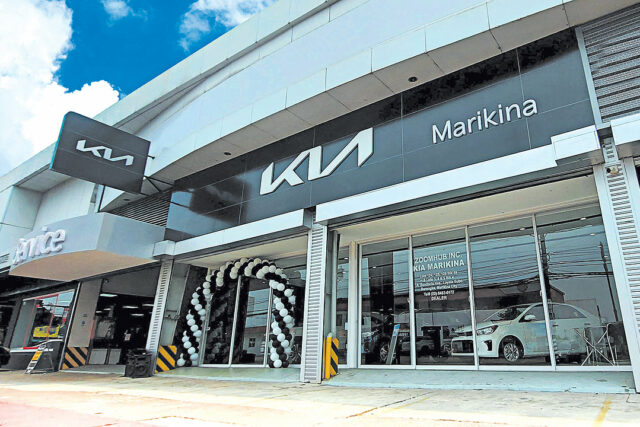
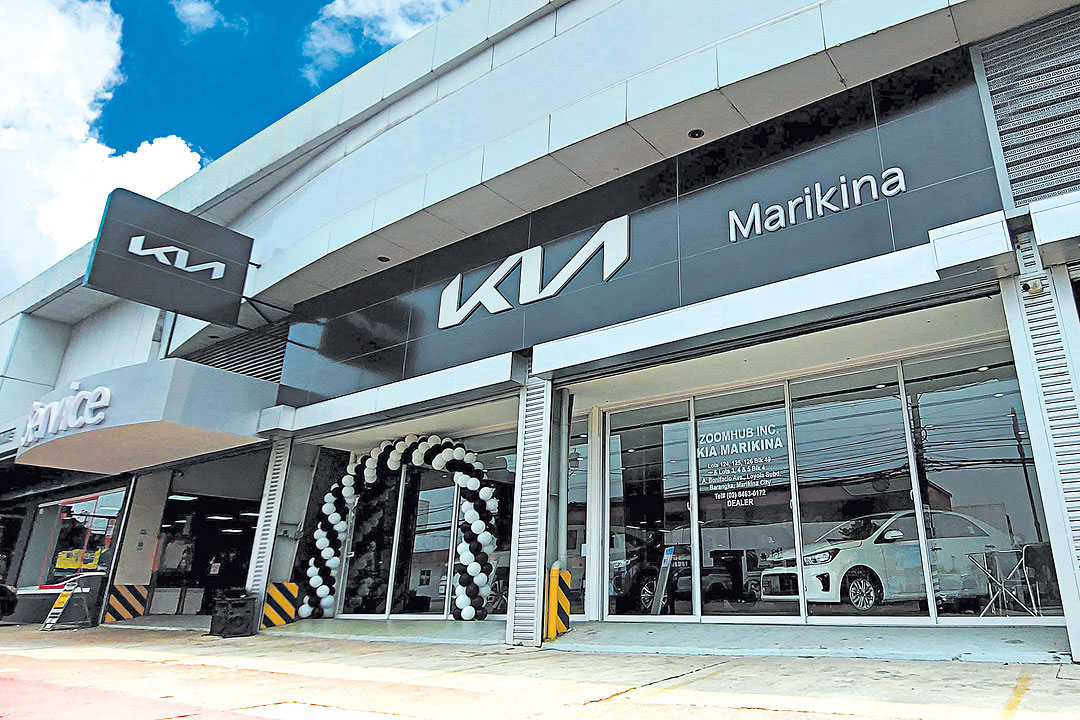
PHOTO FROM AUTOHUB GROUP

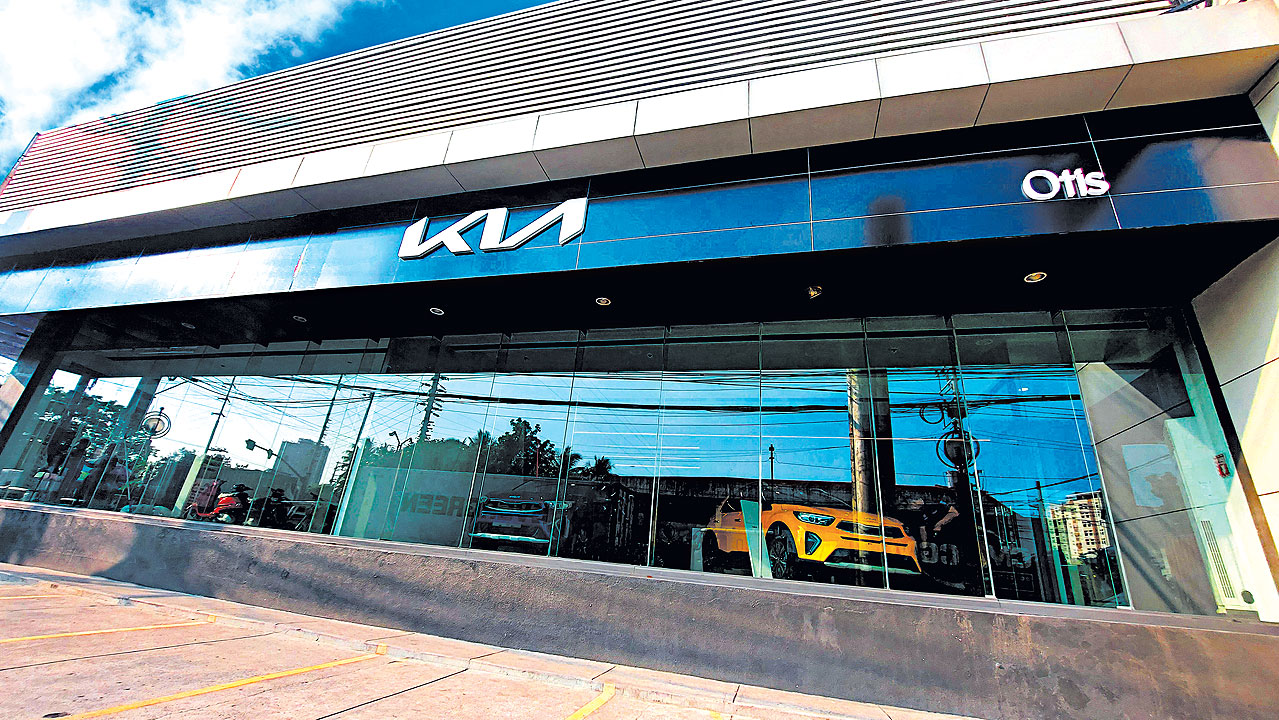
Autohub Group holds simultaneous opening of Kia Otis and Kia Marikina

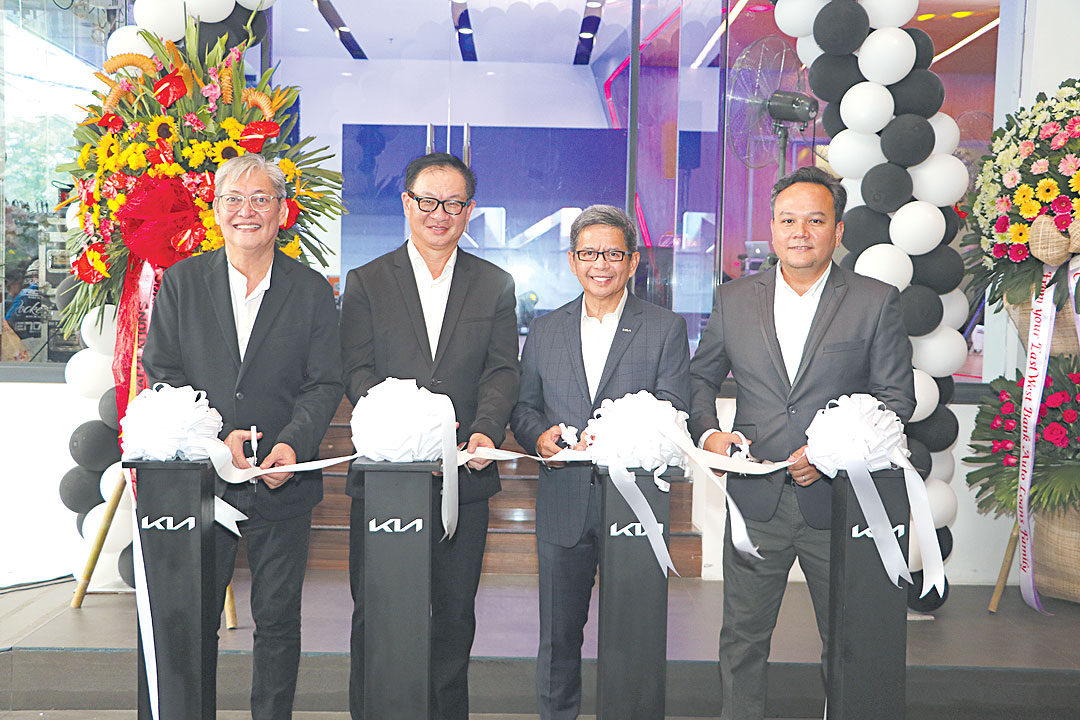
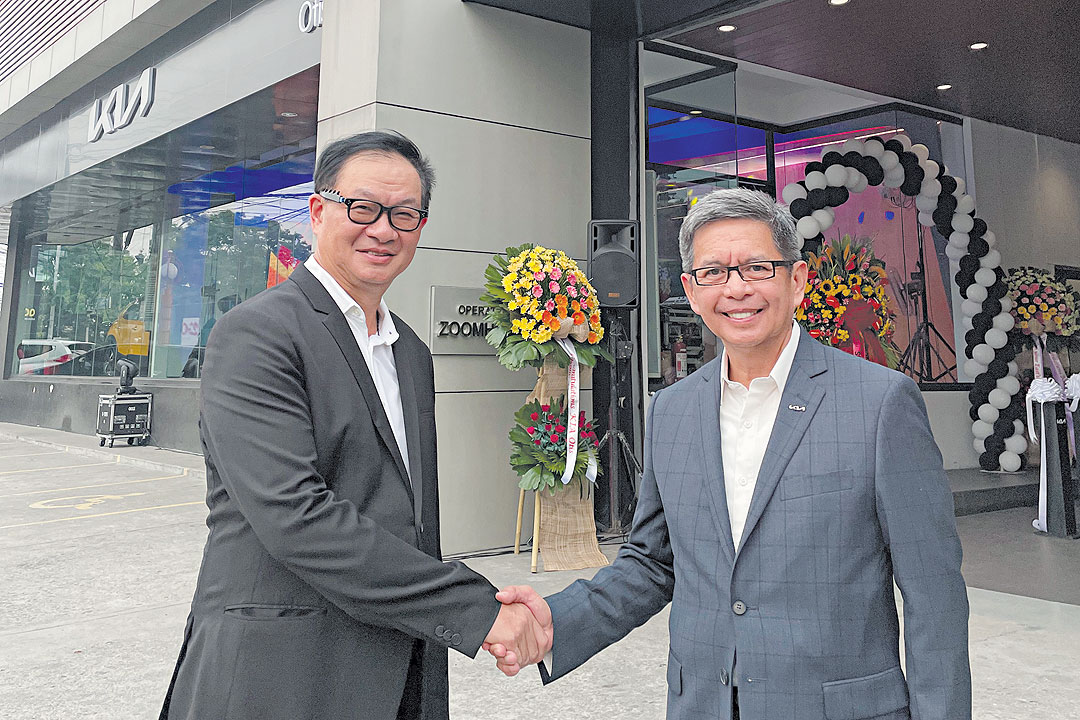
THE RAPID EXPANSION of Kia Philippines has been further accelerated by the simultaneous opening of Kia Otis and Kia Marikina — both under the multi-branded Autohub Group.

These dealerships are the 43rd and 44th Kia dealerships in the country. Both dealerships, which also showcase Kia’s new global look, bring the Kia brand experience closer to car buyers in the Manila and Marikina areas.

Kia Otis and Kia Marikina will enhance the ownership journey by offering next-level service, thanks to their very convenient locations and comfortable facilities. Sales, after-sales, maintenance, and support services make sure that all customers’ needs are taken care of in a timely and professional manner.

These two new dealerships are strategic in their locations. Kia Otis, located in the heart of the bustling city of Manila, offers a convenient venue that is easily accessible to those who live and work near Manila Bay and the Port Area.

Meanwhile, Kia Marikina will cater to the growing population in the shoemaking capital of the Philippines, and the sprawling urbanized eastern countryside.

The opening of Kia Otis and Kia Marikina embodies Kia’s tagline and its commitment to its loyal customers. “This event brings a ‘Movement that Inspires’ closer to the people, and we are proud to welcome the Autohub Group into our growing family,” said Kia Philippines President Manny Aligada.

“Opening not just one but two new dealerships is indeed a milestone for us. Under the experienced management of the Autohub Group, we are confident that Kia Otis and Kia Marikina will bring even more joy to our treasured customers. We look forward to a meaningful and fruitful partnership with the Autohub Group in the years to come,” Mr. Aligada added.

The Autohub Group has been the purveyor of some of the most iconic brands renowned throughout the world like Mini, Rolls-Royce, Lotus, Vespa, and Triumph. With 24 years of experience in the automotive industry, the Autohub Group continues to forge new partnerships.

“We believe in the Kia brand, which is why we have committed to opening two dealerships at the same time. Kia is very desirable, its model mix is very timely, and we feel that it is a perfect fit for our growing portfolio of trusted car brands — while providing an array of automotive choices in all segments and fleet solutions to our customers,” said Autohub Group President Willy Tee Ten.

“The decision to carry Kia is an obvious one. The brand has shown strong growth and has massive potential, and that’s what we need now in Autohub,” added Mr. Tee Ten.

Kia Otis is located at 1120 Pres. Quirino Avenue Extension Brgy. 827 Zone 89, Paco, Manila with contact numbers (02) 8561-0973 or 74 and 0917-834-7986, while Kia Marikina is located at A. Bonifacio Avenue, Loyola Subdivision, Barangka, Marikina City with contact numbers (02) 846-30172 and 0916-544-1142.

For more information on Kia, visit the Kia Philippines website at kia.com, like and follow Kia Philippines on Facebook and Instagram, and subscribe to its YouTube channel.

BlueFloat: Offshore wind to bring PHL energy security

GLOBAL offshore wind developer BlueFloat Energy said accelerating the development of the vast wind energy resources in the Philippines will help hasten the country’s energy security ambition.

“We are thrilled to bring BlueFloat Energy’s expertise and experience in offshore wind energy to the Philippines. We believe that by tapping into the country’s vast clean energy potential, we can make a significant contribution towards reducing carbon emissions and fostering a sustainable future for generations to come,” Carlos Martin, chief executive officer of BlueFloat Energy, said in a media briefing on Friday.

Headquartered in Spain, the company said that it had secured four wind energy service contracts in four sites in the Philippines, namely: Central Luzon, Northern Luzon, Southern Luzon, and Southern Mindoro.

The four service contracts have a combined potential capacity of 7.6 gigawatts (GW) or 7,600 megawatts (MW), with each project having an estimated capacity of about 1.5 GW to 3.5 GW.

Mr. Martin said the projects require an estimated investment cost of between $3 million and $5 million per MW at current prices.

Pierre-Antoine Tetard, vice-president for business development of BlueFloat Energy, said the projects will not be developed simultaneously but the estimated timeline for the execution phase and operations of at least one of four projects will be by the end of the decade.

Meanwhile, Mr. Martin said that while they acknowledge the country’s wind energy potential, the development of the grid is also needed to integrate additional renewable energy capacity.

“It is never easy [to address grid integration]. First of all, offshore wind is probably easier to integrate. Production is more stable and predictable, you can produce more power,” Mr. Martin said.

In May, the Department of Energy issued implementing guidelines for Executive Order 21, which will adopt a whole-of-government approach to expedite the processing of permits and requirements for offshore wind energy projects.

Last month, the department said it had awarded 65 offshore wind contracts with a combined potential capacity of 51.23 GW, which it deemed enough to supply the country’s future energy demand.

Under the Philippine Offshore Wind Roadmap, the Philippines has an estimated potential capacity of 178 GW from offshore wind resources. This is expected to help the country reach its aim of increasing the share of renewables to 35% to the country’s energy mix by 2030 and 50% by 2040. — Ashley Erika O. Jose

Is the future of motoring (still) electric?

PHOTO BY KAP MACEDA AGUILA

Yes, but not yet — at least for most of us

A TRIP to any of the advanced economies in Asia and Europe will show how ubiquitous electric vehicles (or EVs) are in the motoring landscape of these countries. The recently held Manila International Auto Show (MIAS) clearly highlighted the investments that automotive brands are making on EVs.

This is especially true for manufacturers from China, as this focus on electrics is mandated by the central government, which strongly encourages use of what it terms “new energy vehicles” in highly urbanized city centers, such as Shanghai. In Beijing, EVs are also given preference for vehicle registration, while non-EV buyers are subjected to a “license plate lottery” just to get their cars registered.

So where does that leave our market? In the ASEAN region, many other countries have already adapted government policies to encourage the use of EVs. Thailand, for example, gives substantial subsidies (equivalent to P200,000) to buyers of EVs. In Singapore, electric vehicles accounted for 12% of new car sales last year — spurred on by government incentives (worth more than P1 million) to promote the sales of EVs. Of course, Singapore is an anomaly in the region, as the prohibitively high COE (Certificate of Entitlement) means that the typical Singaporean buyer is skewed toward a more affluent demographic. This same demographic is where we may start to see some headway for EVs in the Philippine market.

I am fortunate to have experience in both the mainstream and luxury automotive segments, and it is absolutely true that the purchase considerations of mainstream automobile clients are vastly different from those in the luxury segment. EVs have already become a fixture in the premium showrooms throughout Metro Manila, and within this segment, the electrified dream has already become a present reality.

As expected, this is largely due to the luxury car buyer being able to consider the extensive number of benefits of an electric vehicle — and there are many — without being put off by a price tag that may be prohibitive for most. It also helps that many premium car buyers live in gated villages or high-end apartments, and have access to an enclosed garage with electrical access for charging. Additionally, since vehicle cost is not the primary consideration of these buyers, other more altruistic issues such as protecting air quality and preventing the depletion of fossil fuels may come into play. Though the environmental impact of the traditional internal combustion engine (ICE) is widely known, for many, the ability to find a safe and reliable mode of transportation is a more pressing necessity.

If EVs are going to establish a significant presence in the mainstream Philippine automotive market, they are going to need to have a clear fiscal benefit to the buyer.

The first, and perhaps most significant, hurdle for widespread EV sales is the cost of the vehicle itself. The cost of EV technology, specifically battery technology, has gone down drastically over the past decade. Despite this, the cost to produce an EV is still roughly double that of an equivalent ICE-powered vehicle. As mentioned earlier, some markets have established tax incentives and subsidies to push buyers toward EV choices. Over here, the Electric Vehicle Industry Development Act (EVIDA) Law held much promise in its initial versions. However, the final form that was passed turned out to be severely watered down, and the primary fiscal incentive for imported EVs is merely exemption from excise taxes, which was already available during the rollout of the TRAIN law in 2018. Perhaps the most talked-about benefit of EVs is the exemption from the UVVRP (Unified Vehicular Volume Reduction Program) in Metro Manila, commonly referred to as number coding. Being able to use your car for another day in the week, however, is not compelling enough to pay double the price for a new car. Most households would then just buy two cars, which is precisely what they did — further aggravating the traffic congestion in the city.

But what about the reduced cost of fuel? Surely, that is a strong enough reason to choose an EV. Well, if you spend P15,000 a month on fuel, and an EV is P1 million more expensive than a gasoline or diesel counterpart, then it would take more than five years for you to recover the marginal cost of the EV. And that does not even consider the increased electricity bill from home charging.

One may also argue that maintenance costs of EVs are significantly lower than traditional fossil fuel-powered engines, and that would partially offset the high upfront purchase cost. This is true, as EVs remove many of the traditional engine components that need to be tightened, lubricated, or replaced on a periodic basis. But one challenge that remains is the battery, which only has a limited number of useful charging cycles before the entire unit needs to be replaced. As most dedicated EV platforms are essentially built around the battery, the effort and cost in replacing an obsolete battery can be higher than the depreciated value of the vehicle, which can affect the resale value of an EV. One quick search on Facebook Marketplace will show that early adapters of EV technology bore the brunt of heavy depreciation. An EV with an obsolete battery is similar to a modern cellular phone with an obsolete battery. For the affluent, this simply signals the need to purchase a new unit.

Perhaps one factor that needs to also be considered in the promotion of electric vehicles is the availability and cost of electricity in our country. While we in Metro Manila often take electric supply for granted, for many of our countrymen, electricity remains to be an elusive luxury. In regions where rotating blackouts of several hours are a regular part of life, and the hum of diesel generators permeate the rural silence, how can EVs possibly gain a foothold? It doesn’t help that the Philippines continues to have one of the most expensive electricity rates in the region. And to top it all off, nearly half of the electricity produced in our country comes from the burning of coal and other fossil fuels. Without nuclear power plants, our electricity will remain expensive. And without sustainable power solutions, our electricity will remain dirty.

Hybrids provide a sort of compromise, where customers enjoy a measure of the benefits of electric propulsion, while having both feet still firmly planted in internal combustion technology.

We must remember that the whole concept of a car powered by electricity is not a new idea. Electric motors were used in the early 20th century to propel some of the first examples of horseless carriages. One of the primary reasons why the world had widely adopted internal combustion vehicles is because petrol was one of the cheapest fuels available when automobile use started gaining popularity. It made the most fiscal sense.

EVs are powerful, dependable, sustainable, enjoyable, and environmentally friendly. They are the next step in the evolution of the automobile. But until we are able to make them affordable to buy and to own, they will continue to be a dream for majority of the motoring public.


Chris Lee Yu, with 12 years of experience in the automotive industry, is an executive of The Covenant Car Company, Inc. and Scandinavian Motors Corp.

Wearing your faith on your wrist, and neck, and ears

Italian religious jewelry brand opens shop in PHL

IN SEEKING the divine, we turn to the best of what the earth has to offer. Jewelry is never too far from religion: we remember the Breastplate of Judgment in the Bible, made of 12 precious stones; and the numerous rosaries, reliquaries, and other religious items made of precious stones and metals that adorn Catholics and their ceremonies.

Amen, an Italian jewelry brand, arrived at the Philippines earlier this year, and it urges one to wear their faith. The line consists of bracelets and necklaces that could function as rosaries, made of silver and crystals. Other items include earrings in the shape of four-leaf clovers, and crucifix pendants studded with crystals, in sterling silver.

Another item is the Prayer bracelet, made of Italian leather stamped with either the words of the “Our Father” prayer or the “Hail Mary.” There’s also the Vita Cristi et Maria line, which shows highlights from the life of Jesus Christ and the Virgin Mary.

The brand’s website says, “Amen comes from the desire to give words of faith in order to be close to their loved ones because they feel protected, loved, never alone.” Meanwhile, its founder, Giovanni Licastro, who once designed jewelry for an Italian luxury brand, said in a release, “At the heart of this project, there is faith and love and a deep willingness to share words and meaningful symbols through jewelry with the loved ones so that they can feel protected. Amen means wearing a feeling, an emotion that rises almost casually but that stands by choice and brings us every day wherever we want to be with the people we want to share our deepest values with.”

Dawn Dacanay, Director of Amen Philippines and the person who brought the brand here, talked about how she discovered it. “On a business trip, a friend saw my scapular around my neck and he immediately said that he knows of a brand that would just be perfect for us,” she told BusinessWorld in an e-mail. “He did not lose time in patching us up with Giovanni Licastro, the founder of Amen, whom we met in the flagship store in Florence.

“The message, the collections, and the designs are what appealed to me personally and I was confident that it will resonate with my fellow Filipinos. The brand’s message ‘Wear Your Faith’ meant that I could wear uniquely designed jewelry pieces that carried a personal touch of something I am proud to live by,” said Ms. Dacanay. “To share such a powerful emotion in a fashionable accessory is something I knew Filipinos would appreciate as well and would share with everyone.”

The Filipino is no stranger to religious jewelry: frequently, a Filipino’s first piece is a gold cross, and we remember Maria Clara’s locket/reliquary in Noli me Tangere (that would play a role as well in its sequel, El Filibusterismo), made of emeralds and diamonds and (supposedly) carried a piece of the True Cross.

Ms. Dacanay said, “The Philippines is strong in both faith and fashion. We see them in everyday life with rosaries hanging from the rearview mirror of cars, to crosses accenting the outfits of fashionistas. There is a natural connection between faith and fashion for Filipinos.”

Ms. Dacanay as well points to the brand’s Italian origins, citing that the country is one of the world’s capitals for design — but also religion. “Historically, Italy, or Rome… was once the center of the world and later on became the center of Christianity. Given how naturally inclined Italians are for fashion and design and combined with a strong history rooted in Christianity, it comes as no surprise how Amen is able to stylishly blend design, fashion, and faith,” she said. She quotes Mr. Licastro, saying, “Faith and fashion need not clash.”

She points to her own experience of wearing Amen: “I wear my leather prayer bracelets by Amen every day and I mix and match the colors depending on my outfit,” she said. Discussing the prayer stamped on it, she said, “It is this subtle yet powerful detail that constantly reassures me when I am anxious or reminds me to be thankful of everything that happens in my day.”

Amen comes at a price: the prayer bracelets cost about P2,800, while a sterling silver and multicolored jade rosary/necklace costs P7,000.

Matthew 6:19-21 says, “Do not lay up for yourselves treasures on earth, where moth and rust destroy and where thieves break in and steal, but lay up for yourselves treasures in heaven, where neither moth nor rust destroys and where thieves do not break in and steal. For where your treasure is, there your heart will be also.” How does one then reconcile an expensive expression of faith with what the bible says about luxury?

“The word ‘celebrate’ is mostly associated with faith and coincidentally, with fashion as well. Faith and fashion go hand-in-hand and to do it in a trendy way is to get the best of both worlds while celebrating one’s individuality in both faith and fashion,” said Ms. Dacanay. “This is what Amen brings to the forefront – fashionable jewelry pieces that serve as a reminder of something greater, an affirmation of our own style, and a stylish way to intimately celebrate and share what we personally believe in.”

Amen’s first kiosk location is in Alabang Town Center, and one can shop through their website at amenshop.asia. — Joseph L. Garcia

ADVERTISEMENT
ADVERTISEMENT