Home Blog Page 4762

Shares up on dovish BSP bets as inflation slows

BW FILE PHOTO

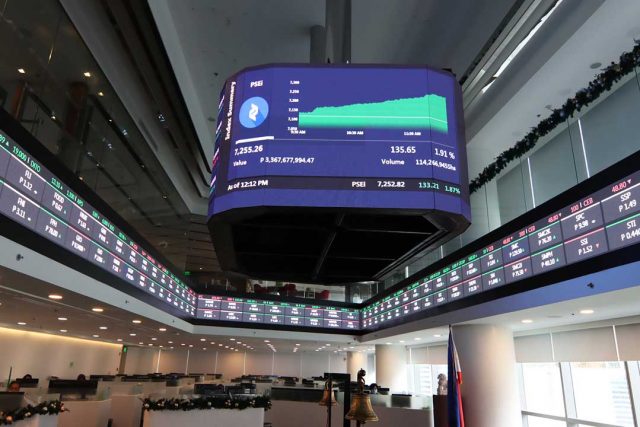
PHILIPPINE STOCKS rose on Wednesday as the market continued to digest data showing that inflation eased further in May, which could lead to an extended pause in the central bank’s tightening cycle.

The Philippine Stock Exchange index (PSEi) climbed by 84.77 points or 1.3% to 6,564.70 on Wednesday, while the broader all shares index went up by 26.18 points or 0.75% to close at 3,495.65.

“The local bourse jumped by 84.77 points to 6,564.70 as investors digested the slower inflation rate in May,” Philstocks Financial, Inc. Research Analyst Claire T. Alviar said in a Viber message.

“This data, coupled with the anticipation that the Bangko Sentral ng Pilipinas (BSP) might pause hiking interest rates in their upcoming meeting, brought optimism among market participants,” Ms. Alviar added.

China Bank Capital Corp. Managing Director Juan Paolo E. Colet likewise said in a Viber message that the PSEi’s rebound came on the back of slower inflation in May.

Headline inflation eased for a fourth straight month to 6.1% in May from 6.6% in April.

This was the slowest rate seen in a year or since the 5.4% in May 2022.

The May consumer price index matched the 6.1% median in a BusinessWorld poll conducted last week. It was also within the BSP’s 5.8-6.6% forecast for the month.

For the first five months, headline inflation averaged 7.5%, still well above the BSP’s 2-4% target and 5.5% forecast for the year.

The BSP last month paused its tightening cycle and signaled the policy rate will remain unchanged at 6.25% at its next two to three meetings as inflation continues to ease.

This was the first time the Monetary Board left rates untouched after nine meetings. Since it began its aggressive monetary tightening cycle in May 2022, the BSP had raised borrowing costs by a total of 425 basis points.

The BSP’s next policy meeting is on June 22.

As the central bank forecasts inflation to fall within the 2-4% target range by September, another rate hike is unlikely unless there is a new supply shock or a rise in inflationary expectations, BSP Governor Felipe M. Medalla said.

All sectoral indices closed higher on Wednesday. Holding firms surged by 116.73 points or 1.81% to 6,544.96; financials went up by 18.56 points or 1.02% to 1,833.76; property rose by 20.05 points or 0.74% to 2,703.06; industrials increased by 62.23 points or 0.67% to 9,312; mining and oil climbed by 62.32 points or 0.61% to 10,124.23; and services inched up by 5.76 points or 0.37% to 1,540.77.

Value turnover rose to P4.14 billion on Wednesday with 801.79 million shares changing hands from the P3.88 billion with 1.8 billion issues traded on Tuesday.

Advancers outnumbered decliners, 97 versus 79, while 44 names closed unchanged.

Net foreign buying went up to P155.14 million on Wednesday from P104.02 million on Tuesday. — A.H. Halili

Peso rises further on easing oil prices

THE PESO extended its rise against the dollar on Wednesday on easing global crude prices and as the World Bank hiked its economic growth forecast for the Philippines.

The local currency closed at P56.098 versus the dollar on Wednesday, rising by 12.20 centavos from Tuesday’s P56.22 finish, data from the Bankers Association of the Philippines’ website showed.

The local unit opened Wednesday’s session at P56.10 per dollar. Its weakest showing was at P56.185, while its intraday best was at P55.99 against the greenback.

Dollars traded dropped to $841.55 million on Wednesday from the $917.45 million recorded on Tuesday.

“The peso appreciated along with the decline in international crude prices after spiking earlier this week following the surprise production cut from Saudi Arabia,” a trader said in an e-mail.

Oil fell for a second day on Wednesday as concerns over global economic headwinds deepened, erasing the price gains booked after top crude exporter Saudi Arabia’s surprise weekend pledge to deepen output cuts, Reuters reported.

Brent crude futures were down by 56 cents or 0.7% at $75.73 a barrel at 0705 GMT. The US West Texas Intermediate crude futures fell by 52 cents or 0.7% to $71.22 a barrel.

Both benchmarks jumped more than $1 on Monday after Saudi Arabia’s decision over the weekend to reduce output by 1 million barrels per day (bpd) to 9 million bpd in July.

US gasoline inventories rose by about 2.4 million barrels and distillates inventories were up by about 4.5 million barrels in the week ended June 2, market sources said on Tuesday, citing American Petroleum Institute figures.

The peso rose after the World Bank raised gross domestic product (GDP) growth forecast for the Philippines, Rizal Commercial Banking Corp. Chief Economist Michael L. Ricafort added in a Viber message.

The World Bank has raised its Philippine GDP growth forecast to 6% from the 5.4% projection in January amid resilient domestic demand despite elevated inflation, it said in its Global Economic Prospects report.

Still, this is slower than the 7.6% expansion notched in 2022.

This is also at the lower end of the government’s 6-7% GDP growth target for the year.

The economy expanded by 6.4% in the first quarter.

Mr. Ricafort added that gains at the local stock market also boosted the peso.

The benchmark Philippine Stock Exchange index rose by 84.77 points or 1.3% to 6,564.70 on Wednesday, while the broader all shares index went up by 26.18 points or 0.75% to close at 3,495.65.

For Thursday, the trader said the peso could strengthen further against the dollar amid a potentially downbeat US initial jobless claims report.

The trader and Mr. Ricafort expect the peso to trade between P56 and P56.20 on Thursday. — AMCS with Reuters

NAIA privatization ‘doable’ by early 2024

PHILSTAR FILE PHOTO

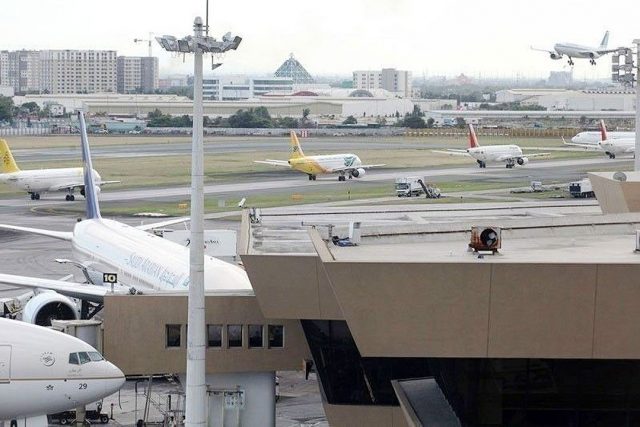
THE privatization of the Ninoy Aquino International Airport (NAIA) could kick off in the first quarter of 2024, the Department of Transportation (DoTr) said.

“That is a very tough and tight schedule. We can say that is doable in the first quarter of next year. It is doable that there will be a conclusion that could possibly be proclaimed by the government,” Undersecretary for Aviation and Airports Roberto Lim said in an interview with ANC.

“That takes time. If there is more than one participant, we will have to talk to all of them. It will take time,” he said.

Mr. Lim said that the privatization will help improve the airport’s efficiency in terms of passenger and flight movements while generating more income for the government.

Mr. Lim said he expects no job losses upon the airport’s privatization as the Manila International Airport Authority (MIAA) will remain its regulator.

“The relationship between MIAA and the concessionaire will be regulator-operator. The MIAA will continue to operate as a body that will regulate, oversee,” he said.

“Generally, no loss of employment. Airport employees will be offered the opportunity to work when the airport facilities are privatized,” he added.

Mr. Lim said that the airport will still belong to the government even after the privatization with the concessionaire limited to an operations and management role.

Last week, the DoTr and the MIAA submitted a joint proposal for the NAIA solicited public-private partnership project for approval by the National Economic and Development Authority.

Under the proposal, the private concessionaire will have 15 years to operate the airport and recover its investment.

Solicited and unsolicited modes are both being pursued by the DoTr and MIAA with the assistance of their Transaction Advisor, the Asian Development Bank.

In April, the Manila International Airport Consortium, consisting of six Philippine conglomerates and Global Infrastructure Partners (GIP) of the US, submitted an unsolicited proposal to the government.

The consortium is composed of Aboitiz Infracapital, Inc., AC Infrastructure Holdings Corp., Asia’s Emerging Dragon Corp., Alliance Global – Infracorp Development, Inc., Filinvest Development Corp., JG Summit Infrastructure Holdings Corp. and GIP. — Justine Irish D. Tabile

PHL metal output up 22.83% by value in Q1

DAVID HELLMANN-UNSPLASH

PHILIPPINE metal production by value rose 22.83% in the first quarter on stronger prices and higher output of gold, nickel ore, and chromite, according to the Mines and Geosciences Bureau (MGB).

In a report, the MGB said the value of production was P58.92 billion, of which gold accounted for P27.74 billion or 47.08%.

Nickel ore and other nickel byproducts were valued at P23.85 billion, copper P6.52 billion, and combined output of silver, chromite, and iron P0.81 billion.

The price of gold increased by $14.14 from a year earlier to $1,889.05 per troy ounce.

Nickel ore prices fell to $12.74 per pound during the quarter from $11.78 a year earlier while those of copper fell to $4.53 per pound from $4.05.

Silver prices dropped $1.02 year on year to $22.94 per troy ounce.

“If we go beyond the review period by looking closely at the second half of 2022, the prices during the first quarter of 2023 were still at a higher level and prices are still way above their pre-pandemic levels,” the MGB noted.

In terms of volume, gold output grew 17% to 8,327 kilograms while that of nickel direct shipping ore rose 5% to 3,997,829 dry metric tons (DMT).

Chromite production increased 14% year on year to 20,496 DMT.

Copper and iron ore production, on other hand, dropped 0.17% to 64,730 DMT and 24% to 33,497 DMT, respectively.

“The outlook for the minerals sector remains optimistic with the expected growth in the demand for nickel and gold,” the bureau said.

“This expectation will be driven by the lifting of China’s zero COVID-19 policy last December,” it added.

The MGB also reported that the government is “looking for ways to level up the country’s mineral markets in the field of semi-processed and fully processed mineral products” through establishing processing, refineries, and downstream industries.

“This move will also strategically position the country both in the value chain and the global supply chain and eventually level up its position from a mere vendor of ores,” the MGB said. — Sheldeen Joy Talavera

Philippines receives second-most climate financing in ASEAN at $1.6B per year, behind only Indonesia

ILIGAN CITY DRRMO

THE PHILIPPINES is the number two recipient of climate financing in Southeast Asia, after Indonesia, the Lowy Institute said in a report.

“Climate development finance disbursements to the Philippines average $1.6 billion per year, making it the second-largest destination of such finance in the region, behind Indonesia,” it said.

“The Philippines is highly vulnerable to natural hazards, facing some of the highest disaster risk levels in the world. Accordingly, multi-hazard response preparedness is the primary purpose of finance for principal projects,” it added.

In 2021, climate development finance to the Philippines was a cumulative $11.1 billion, against Indonesia’s $16.3 billion.

“In Southeast Asia’s larger emerging economies such as Vietnam, Indonesia, and Philippines, official development financing (ODF) is a major source of finance for critical development priorities. All of this makes an understanding of the scale and contours of ODF in Southeast Asia of critical interest to governments in the region and their development partners,” it said.

In the Philippines, financing classified as other official flows are a major form of climate development finance, accounting for 68% of all climate-related disbursements.

The Asian Development Bank was the biggest provider of climate development finance in the Philippines, it said. — Luisa Maria Jacinta C. Jocson

Marcos sees streamlining of gov’t processes improving climate for private-sector ‘partners’

PRESIDENT Ferdinand R. Marcos, Jr. said on Wednesday that the streamlining of government processes, including permit issuance and tax administration, will make the investment environment more attractive for private-sector partners.

In a speech before a gathering of the Federation of Filipino-Chinese Chambers of Commerce and Industry, Inc. (FFCCCII), Mr. Marcos added that public-private partnerships will remain an important element of his governance toolkit.

“As part of this administration’s agenda, partnership with the private sector has been actively pursued and nurtured in recognition of this essential role that you play in our development,” Mr. Marcos said.

“We are now exerting efforts to provide and improve our tax administration and fiscal incentives system amongst other strategic interventions,” he said. “We are also streamlining existing regulatory mechanisms through expedited and integrated processes and digitalization of key government services.”

Mr. Marcos said his administration has acted to address issues raised by the FFCCCII last year.

“We will continue to listen and exert efforts to improve the business climate and foster ease and efficiency of doing business. We have taken note of the issues that you have raised during our meeting last year and have already initiated many steps and adjustments to address those challenges,” he said. — Kyle Aristophere T. Atienza

RCEP, IPEF expected to strengthen PHL-Japan bilateral relationship

REUTERS

THE Department of Trade and Industry (DTI) said two trade deals are expected to strengthen the Philippines-Japan economic relationship.

The DTI said in a statement on Wednesday that the Regional Comprehensive Economic Partnership (RCEP) and the Indo-Pacific Economic Framework (IPEF) are already producing agreements to deepen ties between the two countries.

Trade Secretary Alfredo E. Pascual and the Japanese Economy, Trade, and Industry Minister Yasutoshi Nishimura agreed to explore investment in energy, critical minerals, carbon neutrality, innovation, and digital trade under RCEP, which the Philippines recently joined.

“These strong economic relations can be further strengthened by the IPEF which is currently under negotiations,” the DTI said.

According to the DTI, Japan was the Philippines’ No. 2 trading partner in 2022, with the Philippines serving as a crucial market for Japanese exports.

The ASEAN-Japan Business Week 2023 resulted in investment agreements with Japanese companies like ITOCHU Corp., Nidec Drive Technology Corp., and Murata Manufacturing Co., Ltd. 

ITOCHU subsidiary DOLE Philippines, plans to increase pineapple production volume to 1 million metric tons by 2025.

Meanwhile, Nidec will expand the production capacity of its nearly four-hectare plant in Subic to close to 300,000 pieces at peak operations, equivalent to P5.1 billion in export receipts for the Philippines.

Murata, which operates in the Philippines as Philippine Manufacturing Co. of Murata, Inc., will be expanding its multilayer ceramic capacitor business in response to growing demand in the automotive industry.

According to the DTI, the Murata unit has invested P33 billion in its manufacturing facility, which employs 3,300 workers. The company has generated export sales of $1.27 billion since 2012. 

“With their long and established presence in the Philippines, sogo shoshas, or trading companies, have played a large role in the development of the country’s economy,” the DTI said.

“Japan’s sogo shoshas are beginning to branch out in the Philippines from the traditional space of trade and investment to integrated financing, logistics and commercial distribution, digitalization, green energy, environment, food security and all-around pioneering technologies,” it added. — Justine Irish D. Tabile

UK trade scheme expected to save PHL exporters 21-M pounds in annual tariffs

REUTERS

THE UK Developing Countries Trading Scheme (DCTS) is expected to help Philippine exporters save around 21 million pounds a year in tariffs.

The projected savings will be the result of access to duty-free, quota-free trade on 92% of eligible goods under DCTS, which covers 99% of Philippine exports to the UK.

“The DCTS lowers or removes tariffs on more than 150 products. The coverage extends to our agricultural products, such as tomatoes, milk and cream, cheese, grains, tropical fruits, and animal and vegetable oils,” Trade and Industry Secretary Alfredo E. Pascual said at the DCTS launch event on Wednesday.

The DCTS takes effect in the Philippines on June 19, UK Ambassador to the Philippines Laure Beaufils said.

“DCTS is about supporting Filipino exports to the UK, so making them easier and cheaper, basically. It’s a trading scheme which is about additional product lines for which there will be reduced or zero tariffs,” Ms. Beaufils said on the sidelines of the launch.

“It’s about simplifying rules of origin and other trade requirements. And it is also about removing conditionality for trading. So, it’s about really boosting Filipino exports to the UK by making them cheaper,” she added.

Four categories of goods are expected to benefit the most from UK’s new unilateral trading scheme — tuna, shirts, maize starch and durum wheat flour.

“The Philippine products that will benefit much are tuna and shirts and T-shirts. For instance, our annual exports of tuna, worth 40 million pounds so far, will enjoy a 20-percentage-point reduction in import duty,” Mr. Pascual said.

On average, shirt and T-shirt exports to the UK account for 8 million pounds. The import duty on both will fall by 20% and 12%, respectively.

Although the DCTS has similarities with the European Union’s Generalized Scheme of Preferences Plus (GSP+), Ms. Beaufils said the two schemes differ in terms of “new product lines, the simplification of some of the requirements, and no conditionality… We don’t expect to have to see any international agreements that are signed in order for this to be in effect.”

DCTS will have three tiers: comprehensive preferences which allow for duty-free and quota-free access for least developed countries; enhanced preferences which will remove import duties on product lines for low and lower-middle income countries; and standard preferences which will reduce import duties on certain product lines that are subject to goods graduation.

In 2022, trade between the Philippines and the UK was at a record 2.4 billion pounds.

“I think we’re already going to see that the DCTS will make a real difference to further boost our trade. Our trade is already higher than it’s ever been… this is already a really exciting tool as it is,” Ms. Beaufils said.

“As the scheme strengthens the UK and the Philippines’ economic ties, the UK can also look forward to the Philippines’ continued development — focused on trade and investments. UK businesses will find immense potential in the Philippines as a destination for their investments,” Mr. Pascual said. — Justine Irish D. Tabile

Poultry industry calls for urgent gov’t action on bird flu vaccines

REUTERS

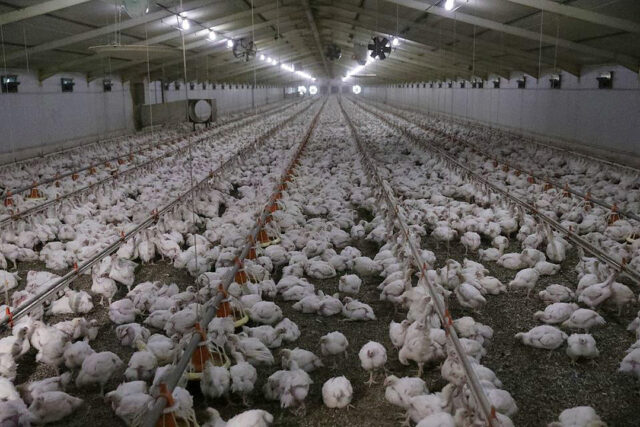
THE GOVERNMENT needs to act urgently in acquiring vaccines to contain the spread of avian influenza (AI) or bird flu, poultry industry officials said.

On the sidelines of a poultry industry event, Elias Jose M. Inciong, president of the United Broiler Raisers Association, said the government must match measures taken by other countries.

“The (Department of Agriculture) should seriously study vaccination for bird flu. Indonesia is doing it, Malaysia is also doing it, China of course. The US (is) doing trial work on vaccination,” he told reporters on Wednesday.

Mr. Inciong said imports will be the likely source of vaccines, which are currently commercially available in some markets.

He noted that the Philippines has yet to establish a virology institute.

“We really need that capability in the event new bird flu strains emerge,” he said.

Gregorio A. San Diego, Jr., chairman of the Philippine Egg Board Association, inquired about the source of the delay.

“This outbreak has been (taking place) since last year. Bakit hindi mag-endorse ang DA, ano hinihintay nila kasi dadaan pa ng FDA (Food and Drug Administration) iyan (Why can’t the DA endorse the vaccine? Don’t they realize that there will be further delays when the FDA studies the application?),” Mr. San Diego told reporters separately.

The Bureau of Animal Industry said outbreaks are ongoing in two regions, two provinces, four municipalities, and seven barangays as of May 30.

Mr. San Diego said retailers are buying fewer eggs from traders with demand remaining weak. He added that the cost of feed is still high, adding to growers’ losses.

As of Tuesday, the price of whole chickens in Metro Manila markets was between P150 and P200 while medium-sized eggs sold for between P6 and P8.50 each. — Sheldeen Joy Talavera

PHL envoys encouraged to develop trade, defense ties with ‘non-traditional’ partners

President Ferdinand Marcos Jr. answers questions from the media after his first Cabinet meeting in Malacañan Palace, July 5, 2022. — PHILIPPINE STAR/KRIZ JOHN ROSALES

PRESIDENT Ferdinand R. Marcos, Jr. has directed his diplomats to work towards expanding trade  and security relationships with the Philippines’ non-traditional partners.

Seeking fresh markets and defense ties will help the Philippines minimize the impact of global disruptions, Mr. Marcos said at a meeting with recently appointed Filipino chiefs of mission and ambassadors in Malacañang.

“We are constantly now — after all the changes that have been imposed upon us, like the pandemic economy and the world situation — looking for what we sometimes refer to as non-traditional partners in trade… security and defense issues. In all these things, we are always looking for partners,” he was quoted as telling the diplomats in a statement issued by the Presidential Communications Office.

The President said he does not want the Philippines to be drawn into a “bipolar” division of the world between two competing camps.

“We do not subscribe to any notion of a bipolar world. Our only side, of course, is the Philippines, not to US, not Beijing, not Moscow. (We are) very much independent in what we do,” he said.

Mr. Marcos reminded the envoys that the government’s priorities remain agriculture, energy, digitalization, and infrastructure development.

“Now, if there are opportunities that come up, you should explore them and if they’re promising enough, then we’ll take them up,” he said. “There’s no harm in trying and kung anuman ang mangyari (whatever happens), at least we tried.”

“What I have found many times (is that) you talk about agri and something else comes up.”

Present at the meeting were Carlos Deymek Sorreta, chief of Mission and Permanent Representative of the Philippines to the United Nations in Geneva; Ambassadors Extraordinary and Plenipotentiary Henry Sicad Bensurto Jr. (Turkiye), Renato Pedro Oabel Villa (Saudi Arabia), Raul Salavarria Hernandez (Oman), Paul Raymund Pasion Cortez (Portugal), Joel Francisco Ignacio (India), and Maria Angela Abrera Ponce (Malaysia). — Kyle Aristophere T. Atienza

E-commerce growth in 2023 projected at 15% to $16 billion, logistics company says

BW FILE PHOTO

THE Philippine e-commerce market is expected to grow 15% to at least $16 billion in 2023, logistics platform Locad said.

Constantin Robertz, Locad chief executive officer, said growth rates are slowing with the reopening of physical stores, though further e-commerce growth will continue.

“While of course, the growth in percentage jump is no longer as exponential, as it was during the pandemic, we’re still seeing growth (against) a much higher base than what we had last year and even more so two years ago,” he said on Wednesday at the Philippine Global E-commerce Summit 2023.

“If we look at e-commerce today, we estimated it to be about $16 billion this year, which could be $17 billion, and that is just domestic e-commerce in the Philippines,” he added.

Trade and Industry Assistant Secretary Glenn G. Peñaranda said the Philippine e-commerce market could hit $24 billion by 2025.

“According to Global Data, the Philippines is poised for further e-commerce growth, with a projected annual increase of 15.8% in transaction value from 2022 to 2025. By 2025, e-commerce transactions are estimated to reach P495.2 billion or $9.7 billion, a substantial increase from the nearly P270 billion recorded in 2021,” Mr. Peñaranda said.

“The future of trade is sustainable and inclusive. We want to have more of our exporters from all over the country, evolved as it has to be digital. That is the future, so e-commerce will be very important,” he said. — Justine Irish D. Tabile

‘Directly and exclusively used’

The CREATE Law (Republic Act No. 11534) which took effect in 2021 introduced tax reforms which are thought to benefit the government and the country in the long run. The law rationalized tax incentives granted to enterprises registered with Investment Promotion Agencies (IPAs) while also amending the powers vested upon such agencies. Primarily, the law put a timeline on the incentives by limiting the number of years that Registered Enterprises or REs (those registered with various IPAs such as BoI, PEZA, etc.) may enjoy certain tax incentives, and made the incentives uniform across all IPAs.

To implement the value-added tax (VAT) provisions of the CREATE Law, the Bureau of Internal Revenue (BIR) issued Revenue Regulations (RR) No. 21-2021, defining what transactions are subject to 0% VAT. The RR basically enumerates expenses that would fall under the phrase “direct and exclusive use” in the registered activity. It also imposed administrative requirements (e.g., endorsement from the IPA) before the VAT incentives can be enjoyed.

The RR attracted a lot of inquiries (to say the least) such that affected taxpayers and their suppliers sought clarification as to how the phrase “used directly and exclusively” should be defined. More specifically, what expenses may qualify under this phrase.

As such, the BIR issued Revenue Memorandum Circular (RMC) No. 24-2022 to clarify the phrase. The RMC provided guidance on the documentary support needed for RE suppliers to obtain prior BIR approval for the VAT zero-rating. It also specifically mentioned that legal, accounting and other such services do not qualify as expenses used directly and exclusively in the registered activities of an RE.

Now comes RR 3-2023, which was issued on April 20. In my view, there are the important points which must be (re)considered.

The following services were specifically identified as not “directly and exclusively used” in the registered project or activity of an RE:

1. Janitorial services;

2. Security services;

3. Financial services;

4. Consultancy services;

5. Marketing and Promotion; and

6. Services rendered for administrative operations such as Human Resources (HR), legal and accounting.

This is a sort of “Negative List” of services where 12% VAT may be passed on to an RE by its service providers. Note though that even with this Negative List, the RR still allows the REs a measure of flexibility. As long as the RE is able to provide supporting evidence to the IPA, justifying that the purchase of the above-listed service items can be categorized as “directly and exclusively used” for their registered activities, such expenses may still be entitled to 0% VAT.

Flexibility is key since although the expenses listed above may not qualify as “directly and exclusively used’ in the registered operations of the REs, they are necessary for them to do business in the Philippines. Some of these expenses are even incurred to comply with regulatory requirements. Now, REs will be further burdened by the added cost of the 12% VAT, which will be passed on by suppliers.

The RR also reiterated the guidance provided in RMC 24-2022 for the IPAs when issuing the VAT Zero Rating Certification. As provided in the regulation, “In issuing the 0% VAT certification, the concerned IPA shall be guided by the rule that such local purchases of services are directly attributable to the registered project or activity without which such registered project or activity cannot be carried out. These are costs that are indispensable to the project or activity, i.e., without which the project or activity cannot proceed, and these include expenses that are necessary or required depending on the nature of the registered project or activity of the export enterprise.”

While there are no guidelines yet as to the procedures that REs need to follow if they are going to justify such expenses as directly and exclusively used in their registered activities with the IPAs, the BIR has the right to conduct a post-audit verification of goods/services which were subjected to 0% VAT. However, if a VAT zero rating Certification has already been issued by the IPAs, this should be given great weight. It must be assumed that REs were able to properly support the nature of the relevant expenses as they relate to the definition of the phrase ‘direct and exclusively used.’ Otherwise, the efforts of both the REs and IPAs would be futile.

As before, where the purchased goods or services are used in both the registered project or activity and administrative operations, the RE may apply the best allocation method to allocate such purchases. However, note that if a proper allocation cannot be made, the entire purchase price is subject to 12% VAT.

A welcome development in this regulation is the fact that it will now just be the IPA that issues the 0% VAT Certification. This means that suppliers of REs are no longer required to apply for approval of VAT zero-rating with the BIR, and any pending application will be accorded 0% VAT treatment from the date of filing, as long as a 0% VAT certification has been secured from the IPA. Health Maintenance Organization (HMO) plans acquired by REs for their employees who are directly and exclusively involved in the operations of their registered projects or activities may also be categorized as “directly and exclusively used” in the registered activity. 

Since some HMO plans may also cover dependents of employees, this is a case where the allocation of purchased services, as provided in the preceding paragraph, may apply.

One of the most critical issues is whether RR 3-2023 applies retroactively. PEZA, in its Memorandum Circular No. 2023-31 reiterating the provisions of the RR, said it lobbied for retroactive effectivity. This makes sense given that RR 3-2023 merely clarifies and expounds upon the provisions of RR 21-2021 and RMC 24-2022.

As it is currently worded, however, RR 3-2023 applies prospectively. In fact, the regulations only explicitly discuss what will happen to the pending VAT zero-rating applications. Nothing was mentioned about previously denied applications. I believe this should be revisited. As provided in jurisprudence, the BIR’s administrative requirements should not impair a taxpayer’s right to avail of tax incentives which are clearly provided under the law without any limitations. The law must always prevail.

The views or opinions expressed in this article are solely those of the author and do not necessarily represent those of Isla Lipana & Co. The content is for general information purposes only, and should not be used as a substitute for specific advice.


John Edgar S. Maghinay is a director at the Tax Services department of Isla Lipana & Co., the Philippine member firm of the PwC network.

+63 (2) 8845-272

john.edgar.s.maghinay@pwc.com

ADVERTISEMENT
ADVERTISEMENT