Home Blog Page 4761

What it’s like to try Apple’s new Vision Pro headset

Source: https://www.apple.com/apple-vision-pro/

Apple Inc. on Monday let analysts and media, including Reuters, try its $3,499 Vision Pro headset.

What is immediately clear is the device is not yet meant for a mass market: a test drive requires a setup session with Apple staff and a quick visit with a vision specialist to ensure the headset fits and functions as intended. And the price tag is likely to keep all but the most dedicated Apple fans and business users away.

Instead of starting with a consumer version and working up to a “Pro” model, Apple is starting with the premium tier and hoping to bring prices down as the technology matures, said Carolina Milanesi, an analyst with Creative Strategies.

Apple released the Vision Pro in an attempt to wrest the nascent headset category away from Meta Platforms Inc., which has already released several headsets but struggled to break out of a virtual reality market long dominated by video games.

The Vision Pro headset has a “digital crown” similar to an Apple watch crown, which can be tapped and turned to make the display transition fluidly between the real world outside and the virtual world inside. Walking around a room or viewing a 3D film both feel natural as does watching a virtual butterfly settle on the user’s outstretched hand.

The device also glitched at least once during a demonstration to Reuters, requiring Apple staff to reboot and showing that the iPhone maker still has some kinks to iron out.

Here are some key takeaways from the demonstration:

– The real world and other people are always present. The default mode while wearing the device is to see the outside world in full color. Even when fully immersed in a virtual world, exterior cameras keep an eye out for other humans. If another person approaches the user, that person starts to materialize through the virtual world.

– Hollywood will likely take an interest. Apple demonstrated a series of “immersive videos”, shot on special proprietary cameras where the viewer can step inside and look around.

– The sense of place can be startling. In one video, a tightrope walker suspended between two mountains edges toward the viewer, creating an unsettling urge to look down at an intimidating chasm below. At the same time, the realism can make mundane details look out of place in a polished production, like a cheap plastic water bottle sitting on the piano during a recording session with a famous singer.

– From the outset, Apple has focused on the business case for Vision Pro, demonstrating how to use multiple apps at once in the headset, which is akin to having several high resolution displays. It also showed how two users could share, and manipulate, three-dimensional virtual objects during a conference call. Both are functions that could find some use in the corporate world, where Vision Pro‘s price tag would sit on cost centers rather than household budgets.

– Video calls will take some getting used to. Apple showed a FaceTime video call between two people wearing the headset. The experience is similar to a standard video call, but uses complicated technology to project an image of the caller, not a conventional face-pointing handset or monitor camera.

– To construct a virtual “persona” of the caller that shows their facial expressions, the system uses pre-loaded pictures combined with data from the Vision Pro‘s interior eye-tracking system and exterior hand-tracking cameras. But the net effect is human-but-not-quite, a phenomenon robotics experts call the “uncanny valley” effect where faces that resemble humans but are slightly off can make users feel uneasy. – Reuters

Cancer vaccines poised to unlock ‘new treatment paradigm’ with Merck/Moderna data

PIKISUPERSTAR-FREEPIK

 – Adding an experimental mRNA-based vaccine from Moderna Inc. and Merck & Co. reduced the risk that the most deadly skin cancer would spread by 65% over treatment with an immunotherapy alone in a mid-stage trial, the companies reported on Monday.

With this and earlier data, Moderna is considering seeking faster approval from regulators for the treatment, the company told investors after having presented the results at the American Society of Clinical Oncology meeting in Chicago.

“Some of the residual uncertainty seems to be going away on that potential (option),” said Moderna President Stephen Hoge.

The data followed earlier promising data from the trial showing the customized mRNA vaccine given in combination with Merck‘s Keytruda cut the risk of death or recurrence of melanoma by 44% compared with Keytruda alone.

The findings add to a growing body of evidence suggesting that mRNA technology, which rose to prominence during the COVID-19 pandemic, can be used to assemble personalized vaccines that train the immune system to attack the specific type of cancer cells in a patient’s tumors.

Scientists have been chasing the dream of vaccines to treat cancer for decades with few successes. Experts say mRNA vaccines, which can be produced in as little as eight weeks, paired with drugs that rev up the immune system may lead to a new generation of cancer therapies.

The hope is for “a completely new treatment paradigm in cancer that will be better tolerated and unique to individual patients’ tumors,” said Dr. Jane Healy, an executive overseeing in early cancer treatment development at Merck.

Moderna said during its investor call that it was starting a Phase 3 confirmatory study, which it hoped to open in the third quarter of this year.

The Merck/Moderna collaboration is one of several combining powerful drugs that unleash the immune system to target cancers with mRNA vaccine technology. Pfizer’s COVID vaccine partner BioNTech SE and Gritstone Bio Inc. are taking similar approaches using mRNA technology.

The vaccines all target neoantigens, new mutations that are only present on tumors. Aiming at these unique proteins allows the immune system to kill cancer cells while leaving healthy tissue unscathed.

The trick is determining which of many mutations is driving the cancer.

To accomplish this, tumors are removed and their genetic makeup is mapped using next-generation DNA sequencing. Companies use artificial intelligence to predict which mutations will be the most effective targets. These are used to build an individualized vaccine targeting only mutations in the patient’s tumor.

During this process, patients typically receive an immunotherapy such as Keytruda or Roche’s ROG.S Tecentriq, which block a mechanismcancer uses to hide from the immune system.


‘A STARTING POINT’

Long before COVID, companies had been eyeing messenger RNA (mRNA) technology, which carries instructions for cells to make specific proteins, as a vehicle for delivering a cancer vaccine.

Merck and Moderna have been collaborating since 2016. Researchers at Memorial Sloan Kettering Cancer Center (MSK) in New York began working with Germany’s BioNTech in 2017.

At that time, there was already proof that immunotherapy could work in so-called “hot” tumors, or highly mutated cancers, such as melanoma. There was little hope it would work in “cold” cancers with few mutations, such as pancreatic cancer, said MSK’s Dr. Vinod Balachandran.

With standard treatment, 90% of pancreatic cancer patients die within five years of diagnosis.

Balachandran’s team studied the rare long-term survivors and found an immune system component called T cells in these individuals were able to recognize mutations derived from the cancer, raising the possibility of a targeted vaccine.

In a small ongoing trial testing a made-to-order BioNTech vaccine plus Roche’s Tecentriq, half of the 16 pancreatic cancer patients mounted an immune response, and none showed signs of relapse after 18 months, according to data published last month in Nature.

Gritstone Bio is taking a different tack, combining two types of customized vaccines in hopes of treating patients with metastatic coloncancer, another cancer that has been largely unresponsive to immunotherapy.

The approach first primes the immune system with an older technology called a chimpanzee adenovirus vaccine that targets patients’ tumors. That is followed by a personalized self-amplifying mRNA vaccine, which includes an enzyme that makes extra copies of the antigens, reducing the required dose.

Gritstone is expecting data from a later-stage trial testing its dual vaccine therapy in the first quarter of 2024.

“Based on everything we’ve shown and we’ve published, we’re really excited,” said Gritstone CEO Andrew Allen.

Merck and Moderna are planning a larger Phase 3 trial in melanoma and are also testing its combination in lung cancer.

“We see this as a starting point,” Healy said. – Reuters

Roche looking to sell or shut down California biologic drug plant

Swiss drugmaker Roche Holding AG plans to sell its 800-employee drug manufacturing plant in Vacaville, California, or it will shut the factory by 2029, according to e-mailed letters to workers seen by Reuters on Wednesday.

In a statement, Roche confirmed the divestiture plan for the site, which makes monoclonal antibodies from genetically modified living cells, but did not address the potential closing of the plant or its timeline.

The company said in the statement it does not expect to need the very large volumes of the medicines the plant provides, and large-scale production will be done in one of the company’s newer plants.

It also plans to focus on drugs targeting smaller patient populations moving forward and to draw on a range of biotechnology methods beyond monoclonal antibodies, it said, adding there would be no impact to operations or employees at this time.

Roche is under new leadership this year after CEO Thomas Schinecker took the helm and Teresa Graham became head of the pharmaceuticals division in March.

The Swiss group is under pressure to develop new treatments to offset the loss of billions in sales due to cheap biotech copies of its established cancer medicines Herceptin, Avastin and Rituxan, some of which are made in Vacaville.

It is also contending with dipping revenue for its COVID-19 therapies and tests.

The company said it is seeking a buyer that will continue to use the plant as an operating facility.

If the company is unable to find a buyer, it will ramp down production and close the plant in 2028 to 2029, the emails said.

Roche acquired the plant more than a decade ago with its purchase of US biotech Genentech. The plant makes drugs for cancer including Avastin and Herceptin, as well as Actemra for rheumatoid arthritis.

During the pandemic, Roche collaborated with Regeneron Pharmaceuticals REGN.O to increase supply of that drugmaker’s COVID-19 antibody treatment. Roche manufactured the treatment at the Vacaville plant, which it sells outside the U.S. under the brand name Ronapreve. – Reuters

Microsoft to pay $20 million to settle US charges for violating children’s privacy

 – Microsoft will pay $20 million to settle US Federal Trade Commission (FTC) charges that the tech company illegally collected personal information from children without their parents’ consent, the FTC said on Monday.

The company had been charged with violating the US Children’s Online Privacy Protection Act (COPPA) by collecting personal information from children who signed up to its Xbox gaming system without notifying their parents or obtaining their parents’ consent, and by retaining children’s personal information, the FTC said in a statement.

The order requires Microsoft to take steps to improve privacy protections for child users of its Xbox system. It will extend COPPA protections to third-party gaming publishers with whom Microsoft shares children’s data, the FTC said.

A Microsoft spokesperson said the company was committed to complying with the order. The spokesperson added the account creation process will be updated and a data retention glitch found in the company’s system will be resolved.

“Our proposed order makes it easier for parents to protect their children’s privacy on Xbox, and limits what information Microsoft can collect and retain about kids,” said Samuel Levine, director of the FTC’s Bureau of Consumer Protection.

“This action should also make it abundantly clear that kids’ avatars, biometric data, and health information are not exempt from COPPA,” Mr. Levine added.

The law requires online services and websites directed to children under 13 to notify parents about the personal information they collect and to obtain verifiable parental consent before collecting and using any personal information of the children.

From 2015 to 2020, Microsoft retained the data that it collected from children during the account creation process, even when a parent failed to complete the process, according to the complaint. – Reuters

SEIPI to hold Q2 General Membership Meeting 2023 on June 6

The Semiconductor and Electronics Industries in the Philippines Foundation, Inc. (SEIPI) will hold its Q2 General Membership Meeting (GMM) on June 6, 2023, at 9:00 a.m. at Camp John Hay, Baguio City. This GMM will cover advancements in technology as well as initiatives in partnership with the government and academe that will support the Philippine semiconductor and electronics industries’ recovery and growth. Among the notable industry and government leaders that will present are Benguet Province’s Governor Melchor Diclas; Baguio City Mayor Benjamin Magalong; SEIPI’s Association of Purchasing Managers (ASPM) Chairman and Director of Supply Chain Management, Gruppo EMS, Danny Javid; Vice-President and Head of Product Management for Cloud Tech Services of ePLDT, Inc. Jerameel Azurin; Site Quality Manager of Moog Controls Corp. Engr. Reynaldo Balanon; Dean of the University of Baguio’s School of Information Technology Engr. Elisabeth Calub, SEIPI Chairman and Chairman & CEO, Gruppo EMS, Perry Ferrer; and SEIPI President Dan Lachica. This GMM will likewise feature one of SEIPI’s Annual Business Partners, PLDT Enterprise.

In 2022, the Philippine semiconductor and electronics industry accounted for US$49.09 billion, a 6.88% annual growth from 2021. It was 62.27% of the US$78.84 billion in total Philippine commodity exports. Month-on-month electronics exports rose by 27.35% in March 2023 to US$3.83 billion, or 58.72% of the US$6.53 billion total Philippine exports, enabling the industry to retain its position as the country’s top commodity exporter and a significant contributor to the economic recovery.

SEIPI’s unwavering support for its member companies and the industry in addressing their concerns by working with various government agencies has yielded positive results. These include allowing PEZA-registered companies to continue alternative work arrangements, establishing a technical working group to streamline the Certificate of Authority to Transport (CA-TT) application process during the upcoming Barangay and Sangguniang Kabataan Elections’ controlled chemicals ban, enacting VAT zero-rating for goods and services directly and exclusively used in registered projects, implementing the Electronic Zone Transfer (EZTS) System for inter-zone transport of goods, and limiting surety bonds to seven days as part of the EZTS implementation in Cavite. Despite the challenges, SEIPI remains steadfast and actively works towards the reconsideration of the PEZA Travel Pass requirement, BOC’s ETRACC System, parameters for ‘red-tagging’ shipments, and unauthorized overtime charges for exporters. SEIPI has made significant strides forward through the collaborative efforts of all stakeholders, including the Philippine Economic Zone Authority (PEZA), the Export Development Council, and the Anti- Red Tape Authority (ARTA).

The organization continuously implements projects under its roadmap called the Product and Technology Holistic Strategy (PATHS) in order to move the local industry up the global value chain. Some of these are being led by SEIPI’s Technical Working Groups (TWGs).

The initiatives this year of the Parts Localization TWG, will concentrate on packing materials and chemicals. Packing materials have a long qualification period, while chemicals were difficult to bring in due to the pandemic and national elections. The initial packing material strategy may include, but is not limited to, completing the conversion of low-hanging fruits. The initial strategy for chemicals may include, but is not limited to, routing surveys on chemicals to prioritize and identify the specification requirements of each member for technical discussion. The TWG intends to evaluate and compare suppliers’ performance and quality against industry standards or best practices, and develop a roadmap for other items. It likewise plans to organize collaborative events with business chambers and key government agencies to promote local companies through trade fairs in order to achieve its main goal of helping the industry decrease its dependence on imports and form new linkages with local suppliers.

The Industrial Revolution 4.0 (IR 4.0) TWG continues to guide the SEIPI members on Industry 4.0 implementation through its initiatives, webinars, and collaboration with the government, academe, and private partners. It organized two events during the first half of the year that provided members with ideas and best practices on a more comprehensive, interconnected, and holistic approach to manufacturing.

The Power TWG consists of experts from different companies to resolve power and energy issues, and related industry concerns. This year, the TWG will focus on the stability of supply and demand, power quality, clarity on the roadmap of resources, reasonable electricity power costs, and policy updates. It will support the industry in addressing the increasing power costs here in the Philippines, which will enhance the country’s competitiveness and make it a more attractive investment destination.

SEIPI undertakes various initiatives with its partners to equip the industry’s over 3 million direct and indirect workers with the necessary skills and knowledge, and develop future industry-ready talents. Its Sector Skills Council (SSC), a project in partnership with the Philippine Business for Education and funded by the Australian Department of Foreign Affairs and Trade, will continue addressing the mismatch of jobs available and skills required in the industry. These will include recommending and implementing curricula improvements in collaboration with CHEd, and preparing Training Regulations (TRs) or micro-credentials with TESDA to upskill the industry workers. SEIPI is collaborating with the Advanced Manufacturing Workforce Development (AMDev) program, a USAID-Unilab Foundation project to develop a skilled and flexible workforce that adapts to the requirements of the IR 4.0 environment. Its Affiliates Networking Committee, which consists of leaders of the public and private universities and colleges, as well as its VisMin and North Luzon Chapters, are implementing industry-academe projects such as OJT and internship partnerships, research collaborations, technical and soft skills trainings for faculty members and students, and information-sharing events for the academe members.

SEIPI will hold the country’s premier electronics event, the 18th Philippine Semiconductor and Electronics Convention and Exhibition (PSECE), on Oct. 25 to 27, 2023, at the World Trade Center, Pasay City, Metro Manila. It features both local and international exhibitors, themed plenary sessions, breakout sessions, and a technical symposium, which makes PSECE the most anticipated annual event of the organization.

To know more about SEIPI’s projects and events, please visit www.seipi.org.ph.


Spotlight is BusinessWorld’s sponsored section that allows advertisers to amplify their brand and connect with BusinessWorld’s audience by enabling them to publish their stories directly on the BusinessWorld Web site. For more information, send an email to online@bworldonline.com.

Join us on Viber at https://bit.ly/3hv6bLA to get more updates and subscribe to BusinessWorld’s titles and get exclusive content through www.bworld-x.com.

GCash, RAFI continue reforestation initiatives in Cebu

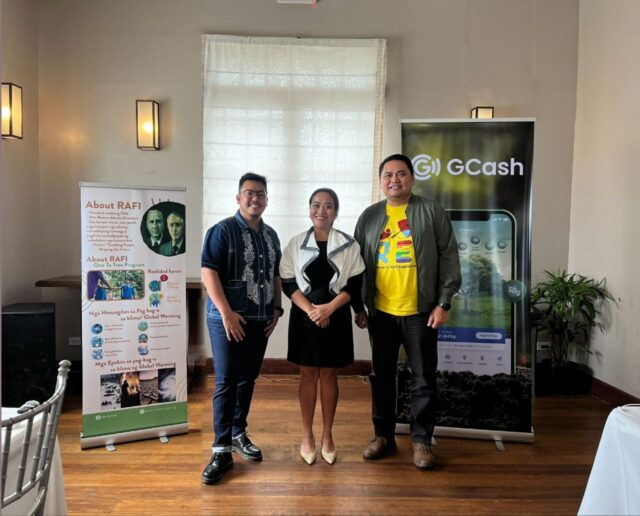
From left to right: GCash Sustainability Head CJ Alegre, RAFI Chief Communications, Advocacy, and Partnerships Officer Estee Plunket, and One To Tree Program Director Anton Dignadice

With 1M mangroves and trees planted

Committed to support sustainable development and address climate change, the Philippines’ leading mobile wallet GCash, together with the Ramon Aboitiz Foundation Inc. (RAFI), are continuing their initiatives to increase forest coverage and enhance existing mangrove areas in Cebu.

Through GCash’s GForest and RAFI’s One to Tree Program, a total of 1,075,000 mangroves and upland trees have been planted since 2021. For the remainder of 2023, 75,000 more mangroves will be planted, completing the target of 1,150,000 trees spread across three projects in the province.

The two GForests cover the Luyang Watershed in the northern town of Carmen. One project has 375 hectares of farmland in the barangays of Caurasan, Upper Natimao-an, Liboron, Ipil, Cantumog, and Lower Natimao-an. Meanwhile, the other consists of 355 hectares of farmland with planting sites in the barangays of Upper Natimao-an, Corte, Ipil, Caurasan, Hagnaya, Lanipga, and Cantumog.

Among the 600,000 native trees planted in the two GForests are Avocado, Bangkal, Cacao, Cashew, Coffee, Guyabano, Jackfruit, Mamalis, Mangosteen, Molave, Nangka, Narra and Rambutan with a high survivability rate between 92 to 94% as of March 2023.

RAFI Client Engagement Officer Arianne Magtarayo and GForest Head Patricia Manio

The Luyang Watershed is a significant ecological area in Cebu as it supplies at least twenty-four thousand cubic meters of surface fresh water. The enhancement of tree cover in the two GForests will improve rainwater percolation.

As a result, this increases the water table under the horizon that supplies springs that support surface water along rivers. The neighboring urban cities of Cebu, Mandaue, and Lapu-Lapu will benefit from this in terms of water supply.

The third project is GForest Mangroves which aims to plant 550,000 seedlings in Daanbantayan, San Remigio, and Medellin. The three municipalities are facing the Tañon Strait, the biggest marine protected area in the Philippines under the National Integrated Protected Areas System.

As of May 2023, about 47.5 hectares have been covered for enrichment planting with 475,000 seedlings of the Bakhaw Lalaki (Rhizopora apiculata), Bakhaw Babae (Rhizopora mucronata), Bakhaw Bato (Rhizopora stylosa), Bungalon (Aviccenia alba), Miapi (Aviccenia marina), Aviccenia officinallis, Aviccenia rumphiana, Pagatpat (Sonneratia alba), Pedada (Sonneratia caseolaris), and Sonneratia ovata species.

Aside from mitigating the risks of natural disasters and augmenting water supply, the partnership has also helped in the livelihood of local communities. GCash and RAFI have engaged 200 landowners, 687 individuals, and ten people’s organizations in the site preparation, tree-planting, and maintenance activities of the projects.

“GCash is steadfast in playing an active role in minimizing the effects of climate change. Through GForest, we encourage Filipinos to take part in our eco-friendly initiatives and be Green Heroes. With partner organizations like RAFI, we continue to plant the seeds for a better tomorrow,” said CJ Alegre, GCash Head for Sustainability.

“This partnership with GCash allows us to reach more people and enable them to take part in caring for our environment even in simple ways. Through this partnershxqip people can build GForests one tree at a time, and also help in community-building and income augmentation of locals. This is a win for the environment and a win for Cebuanos,” said Amaya Aboitiz-Fansler, RAFI President and Chief Executive Officer.

GForest is an in-app feature rolled out in 2019 in line with GCash’s sustainability agenda. Users earn green energy for cashless transactions done in the app such as paying bills, buying load, and sending money. Green energy is collected and used to plant virtual trees.

GCash partners with international and local organizations in planting actual trees around the country. At present, they have planted 2.2 million trees and aim to plant a total of 5 million trees by 2025.

For more information about GForest and other sustainability initiatives, visit www.gcash.com.ph.


Spotlight is BusinessWorld’s sponsored section that allows advertisers to amplify their brand and connect with BusinessWorld’s audience by enabling them to publish their stories directly on the BusinessWorld website. For more information, send an email to online@bworldonline.com.

Join us on Viber at https://bit.ly/3hv6bLA to get more updates and subscribe to BusinessWorld’s titles and get exclusive content through www.bworld-x.com.

Growth on track to hit 6-7% — BSP

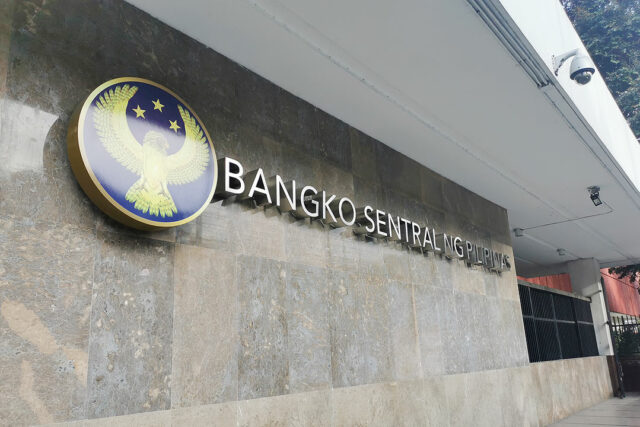
Bangko Sentral ng Pilipinas main office in Manila. — BW FILE PHOTO

By Keisha B. Ta-asan, Reporter

THE PHILIPPINES is on track to grow by as much as 7% this year, but a global economic slowdown amid tighter monetary conditions and elevated inflation is a key risk, according to the central bank.

The Philippine economy’s growth prospects remained “favorable” in the near term, the Bangko Sentral ng Pilipinas (BSP) said in an e-mailed reply to questions.

“The expected growth over the near term is supported by the expansion in the industry sector as manufacturers signaled greater local demand, as well as the release of pent-up demand from China’s reopening,” it said.

In April, the Development Budget Coordination Committee (DBCC) kept the growth target at 6-7% for 2023 and 6.5-8% for 2024 to 2028. It will meet on June 9 to review its macroeconomic targets.

Improved labor conditions, increased tourism demand and continued face-to-face schooling would support growth in the country’s service sector, said the central bank, which is a member of the DBCC.

“In addition, the scheduled reduction in personal income taxes this year from the Tax Reform for Acceleration and Inclusion or TRAIN Law is expected to boost household consumption,” the BSP said.

Under the law, there will be personal income tax cuts starting Jan. 1. Taxpayers whose annual taxable income is below P250,000 are exempt from personal income tax. Those whose income is more than P250,000 but less than P8 million will pay lower taxes between 15% and 30%.

The tax rate on people earning more than P8 million was raised to 35% from 32%.   

“Nonetheless, the emerging forecasts for the Philippine economy remain fluid and dominated by significant downside risks, mainly from the projected slowdown in global growth,” the BSP said. 

Global growth is expected to drop to a three-decade low of 1.7% in 2023, according to the World Bank’s latest Global Economic Prospects report.

In its World Economic Outlook in April, the International Monetary Fund expected global expansion at 2.8% this year, lower than its April 2022 projection of 3.6%.

The slower global growth forecasts of these multilateral institutions were due to tighter monetary conditions and elevated inflation all over the world.

In the Philippines, the BSP has increased its key policy rate by 425 basis points (bps) since May last year, bringing it to 6.25%. The Monetary Board paused tightening on May 18, but inflation remains above its 2-4% target.

A BusinessWorld poll of 15 analysts last week yielded a 6.1% median for May inflation, settling near the lower end of the central bank’s 5.8-6.6% forecast.

May inflation could be slower than 6.6% in April but quicker than 5.4% a year earlier. It has been slowing since January.

The BSP said inflation would average by 7.2% in the first half before easing to 4.6% in the third quarter and to 3% in the last quarter.

By the first quarter of 2024, inflation may hit close to the lower end of the 2-4% target due to base effects and a likely decline in global oil and nonoil prices.

“The risks to the inflation outlook continue to be skewed toward the upside for both 2023 and 2024, warranting continued readiness to resume monetary action if necessary,” the central bank said in its e-mail.

It flagged the impact of fare and wage increases, higher food prices and El Niño as risks to the outlook.

Potential wage hikes based on recent debates in Congress and shocks to food and energy prices from El Niño might also spur second-round effects, the BSP said.

‘SET OF TOOLS’
BSP Governor Felipe M. Medalla earlier said he expected inflation to ease back to the 2-4% target by September or October.  The central bank expects inflation to average at 5.5% for this year before slowing to 2.8% in 2024.

The US central bank’s aggressive monetary policy tightening has continued to influence Philippine financial markets, the BSP said. 

The US Federal Reserve raised the key rate by 25 bps in May and has increased it by 500 bps since March last year, bringing the Fed fund rate to 5-5.25%.

But a pause in the Fed’s policy tightening is possible amid financial stability concerns in the US after the collapse of some banks, the BSP said.

The Fed will meet on June 13-14 to discuss monetary policy.

“These developments sparked worries over potential spillovers to the international financial system, which prompted the US Fed to reevaluate the trade-offs between policy tightening to arrest elevated inflation and maintaining the policy rate to mitigate the risk of further bank fallouts,” the BSP said. 

But the US banking turmoil had limited effects on Philippine financial markets because local banks had little exposure to the collapsed US banks, the central bank said.

“Structural reforms that were put in place by the BSP even prior to the onset of the banking failures played an essential role in limiting potential spillovers on the country’s financial system and macroeconomy,” it added.

These banking reforms include sound governance and risk management standards, prudential limits and requirements, as well as strengthened surveillance.

“In the event of a possible further tightening of the global financial condition and serious liquidity problems, the BSP has a set of tools to provide liquidity to the banking system, if necessary, even though the current health of the domestic banking system is relatively sound,” the BSP said.

PEZA-approved outlays hit P14.9 billion in May, poised for 10% growth

THE PHILIPPINE Economic Zone Authority (PEZA) on Monday said it is on track to hit its 10% growth target for approved investments this year, after greenlighting P14.93 billion worth of 20 new and expansion projects in May.

This brought PEZA’s approved investments for January to May to P48.03 billion, which is 2.5 times higher than a year earlier, PEZA Director-General Tereso O. Panga said in an e-mailed statement.

Among the 20 projects approved by the PEZA board on May 26, 11 are into export manufacturing, seven are in the information technology sector, and one each in facility and economic zone development.

The projects will be located in the cities of Makati, Pasig, Taguig and Baguio, and the provinces of Pampanga, Cavite, Batangas, Laguna, Cebu, Iloilo and South Cotabato, PEZA said.

The biggest project pre-qualified by the PEZA board for approval by the Fiscal Incentives Review Board is owned by the maker of solar wafer cells with Maxeon 7 technology, it said. The project will be in Sto. Tomas, Batangas province with investments worth P11.63 billion.

“These projects are expected to generate about $293.55-million (P16.5-billion) exports and create 4,480 direct jobs,” the agency said in the statement.

“We are continuously seeing an uptrend with our investment approvals as we enter the first half of the year,” Mr. Panga said. “We are more aggressive in our initiatives to help our investors make the Philippines their smart investment choice, taking the cue from President Ferdinand R. Marcos, Jr., who has been most active in promoting the Philippines in his outbound missions.”

PEZA approved 80 projects for January to May that are expected to generate $1.31 billion in exports and 11,949 jobs, up from 70 projects a year earlier.

The agency said it is partnering with government agencies and industry associations to address the “pain points” that hinder investors to unlock the untapped potentials of the Philippines.

These agencies include the Department of Finance, Commission on Election, National Economic and Development Authority, with which PEZA discussed the concerns of investors.

PEZA has also discussed with Senator Lorna Regina “Loren” B. Legarda the creation of more economic zones in Antique and other provinces to spur development in the countryside.

It had also signed a deal with the Information and Communications Technology department to boost digitalization in the government to ensure the fast delivery of public services and bolster the country’s competitiveness, Mr. Panga said.

The agency aims to continue the government’s export-led growth strategy by having 98% of 3,431 registered business enterprises export-oriented.

PEZA locators account for 82% of the country’s total annual commodity exports and 60% of service exports.

“We vow to continuously perform our mandate to the best of our ability and help the administration in achieving its bid for the country to graduate to upper middle-income status within the term of President Marcos,” Mr. Panga said. — Justine Irish D. Tabile

Philippine credit card delinquency rate falls

FREEPIK

THE COUNTRY’S credit card delinquency rate dropped to 3.26% in the first quarter, even as credit card billings surged, the Credit Card Association of the Philippines (CCAP) said on Monday.

The rate, which refers to the percentage of borrowers who fail to pay the minimum amount due, has been falling since peaking at 8.37% in 2020 at the height of a coronavirus pandemic, CCAP data showed. It was 3.32% in 2022 and 4.03% in 2021.

Card delinquency also refers to the payment of less than the minimum amount of credit card debt for at least three billing cycles.

Card delinquency has been falling even as credit card billings climbed by 47% to P410 billion in the first quarter from a year earlier, CCAP said in a statement.

This was the highest growth since the pandemic, as Filipinos spent more on shopping, traveling and buying goods after two years of lockdowns.

Consumers should be reminded that using a credit card does not give them free money, CCAP Executive Director Alex Ilagan said in the statement. “While Filipinos’ spending spree keeps the economic engine chugging along, we must bear in mind that a credit card is not free money.”

CCAP, which is made up of 17 credit card issuers, has been conducting credit awareness programs for colleges, universities and companies since 2017 as part of efforts to teach more Filipinos to become responsible borrowers.

“Our aim is to educate them as early as possible so they know what credit is and how they can manage their credit cards well when they get theirs,” Mr. Ilagan said. “Any organization, not just schools, can reach us for these enlightening seminars.”

CCAP has been reminding consumers to use credit cards wisely. This includes not using a credit card beyond one’s capability, which could lead one to become mired in debt.

Credit card users should also monitor their total monthly spending to avoid exceeding their credit limit.

“A maxed-out credit card can also cause financial strain, especially for people who can only manage to make minimum payments each month,” CCAP said. “The minimum monthly payments will likely grow past the cardholder’s paying capability, causing them to miss their dues.”

Consumers should also settle their bills on time to avoid late fees and other penalties. — Keisha B. Ta-asan

AREIT to acquire five properties in swap deal

AYALA-LED real estate investment trust company AREIT, Inc. has signed the deed of exchange for a P22.48-billion property-for-share swap with Ayala Land, Inc., Ayalaland Malls, Inc., and Northbeacon Commercial Corp.

In a regulatory filing on Monday, AREIT said 607.56-million primary common shares will be issued to the companies at P37 apiece in exchange for flagship offices and malls.

It said the price per share represents a 3% premium over the 30-day volume-weighted average price of AREIT. The shares will be issued out of the increase in its authorized capital stock, which will amount to P40.5 billion.

“Ayala Land, Ayalaland Malls, and Northbeacon will transfer, cede, and assign the properties to AREIT, while the latter grants the corresponding shares to the parties upon the [Securities and Exchange Commission’s] approval of the property-for-share swap,” the company said.

It added that AREIT had submitted an application to the commission for the increase in its authorized capital stock, a request for confirmation of exemption from the registration of securities, and the confirmation of valuation of the involved properties.

“Once approved, the parties shall apply for the certificate authorizing registration with the Bureau of Internal Revenue and the listing of the additional shares with the Philippine Stock Exchange within the first quarter of 2024,” it added.

Three office buildings will be added to AREIT’s portfolio, which are Glorietta 1 and 2 business process outsourcing (BPO) buildings, which have a gross leasable area (GLA) of 60,632.84 square meters (sq.m.), One Ayala West and East Tower, which has a GLA of 117,365.2 sq.m.

Additionally, two regional malls will be infused, which are Glorietta 1 and 2 Mall at Ayala Center, Makati City with a GLA of 68,763.84 sq.m., and Marquee Mall in Pampanga with a GLA of 66,041.04 sq.m.

AREIT said that since its initial public offering, it has exceeded its growth plans, resulting in a 52% total shareholder return based on the closing price of P35.85 on March 6, 2023. It started with assets under management (AUM) of 153,000 sq.m. equivalent to P30 billion.

To date, AREIT has recorded 673,000 sq.m. equivalent to P64 billion in AUM.

The new infusion of properties will nearly triple its AUM to P87 billion and boost its GLA more than five times to 863,000 sq.m., “making AREIT one of the largest and the most diversified commercial REIT in the Philippines.”

On Monday, its shares rose by 1.64% or P0.55 to P34.05 apiece. — Adrian H. Halili

Filipino culture as soft power

L-R Top row: Len Cabili, Gino Gonzales, Leigh Reyes; Bottom row: Bayang Barrios, Ito Kish, Jenny Yrasuegui

SOFT POWER is referred to as a nation’s ability to attract and influence various actors in the global arena — and the Philippines has the potential to wield this power more effectively, according to Filipino artists, creatives, and craftspeople.

Dama Ko Lahi Ko, a volunteer-driven initiative established by the Filipino Culture Collective in 2021, marked its third year of spreading awareness about Filipino products, services, and experiences.

“This campaign is what we hope to contribute to improve our culture’s global standing,” said Leigh Reyes, one of the movement’s co-founders, at a May 31 event in Makati City.

The Philippines, known for its warm and welcoming people, ranks 61st out of 121 countries when it comes to soft power, according to the 2023 Global Soft Power Index by brand valuation consultancy Brand Finance.

Though the country’s performance could be better, its high score in the “people” metric “speaks volumes in terms of who we are as Filipinos,” according to Ms. Reyes.

“We’re nurturing, and we’ve reached other countries through different professions by always being rooted in malasakit (concern),” she said.

Whether it’s giving a visual platform to icons such as tribal tattooist Apo Whang-od, like Vogue photographer Artu Nepomuceno did, or showing the beauty of the terno in local TV, film, and theater, as scenographer Gino Gonzales does, Filipinos must be proud of their own.

For restaurateur Jenny Yrasuegui, who showcases local cuisine at her food joint Lunes Everyday Dining, it’s not that Filipino culture must be “elevated” — it’s that it must be championed and creatively presented.

CULTURE AS ECONOMIC STIMULUS
Award-winning furniture designer Margarito “Ito” Kish drew tactile inspirations for his work from his upbringing in San Pablo, Laguna, largely influenced by his mother and grandmothers.

“Filipino will always be my design language,” he said, recalling solihiya chairs at the family’s ancestral home and wooden balusters that beckoned cool air. “My memories are woven into my creativity. “

This is why his Gregoria two-seater chair, named after his own mother, was able to win awards for best design at various events and continuously sell over the years. It is representative of looking back.

Meanwhile, ethnic music diva Bayang Barrios maintained that it’s possible to find one’s way back to local culture, even after resenting it.

“When I was younger, I didn’t want anything to do with being Manobo,” she said. Her college years weren’t defined at all by any sort of care for indigenous culture — but destiny would have her music and dance groups at school take it up anyway. “It really seemed like destiny.”

Now, her lilting voice captivates audiences, and she is a proud pioneer of Manobo music.

Kung hindi natin mamahalin ang kulturang atin, tayo po ay magkakawatak-watak, at ang mismong bansa ay hihina at walang mapa-tutunguhan (If we don’t love our culture, we will fall apart and the country itself will weaken and lose direction),” said Ms. Barrios.

Dama Ko Lahi Ko co-founder Lenora “Len” Cabili gave Hallyu, or the Korean cultural wave, as an example of how a country can invest in soft power.

“The economic implication is that the same way people eat food, people also consume media and culture,” she said, likening it to how Filipinos may reach for another suman or another empanada or another lumpia.

“It must be very intentional on the part of the country and its government and its people to spread that throughout the world.” — Brontë H. Lacsamana

ACEN secures regulatory nod to acquire Texas wind assets 

AYALE-LED ACEN Corp. said that the acquisition by its joint-venture company UPC Power Solutions LLC of eight operating wind projects in Texas is nearing completion after it secured regulatory approval for the purchase of the assets.

In a stock exchange disclosure on Monday, ACEN said the US Federal Energy Regulatory Commission (FERC) had given its go signal for the planned acquisition.

In March, ACEN said UPC Power had signed a purchase and sale agreement with US-based GlidePath Power Solutions LLC for the acquisition of 136 megawatts (MW) of wind assets.

With the recent development, ACEN said UPC Power and GlidePath could now complete the acquisition under their agreement.

The FERC serves as an independent agency and regulator of interstate transmission of electricity, natural gas, and oil.

ACEN said the wind operating assets could generate about 360 gigawatt-hours (GWh) of wind energy per year, which can power around 24,000 households.

In 2022, ACEN, through its subsidiary ACEN USA LLC, partnered with Pivot Power Management, or PivotGen, and UPC Solar & Wind Investments LLC to explore opportunities to acquire operating wind projects in the US.

The energy company of the Ayala group has committed to shifting its power generation portfolio to fully renewable energy by 2025, while also aiming to reduce its greenhouse gas emissions to as close as zero by 2050.

ACEN has around 4,200 MW of attributable capacity spread across the Philippines, Vietnam, Indonesia, India, and Australia. The energy company is targeting to expand its renewable energy portfolio to 20 gigawatts by 2030.

The update in the US comes after ACEN said that it had secured approval from the government of New South Wales to increase the capacity of its battery energy storage system in Australia.

It said the facility’s capacity will be increased to 2,800 MW or 1,400 MW per two hours from the initial 200 MW per two hours.

At the local bourse on Monday, shares in the company gained four centavos or 0.67% to end at P6.03 apiece. — Ashley Erika O. Jose

ADVERTISEMENT
ADVERTISEMENT