Home Blog Page 4760

Philippine inflation slowest in a year

PHILIPPINE STAR/WALTER BOLLOZOS

By Keisha B. Ta-asan, Reporter

PHILIPPINE inflation cooled for a fourth straight month in May to the lowest in a year as food and transport prices eased, the local statistics agency said on Tuesday, giving the central bank room to keep key rates steady.

The consumer price index slowed to 6.1% from 6.6% in April, though it was faster than 5.4% a year earlier, matching the median estimate in a BusinessWorld poll last week. Still, it was the 14th straight month that inflation breached the central bank’s 2-4% goal.

In a statement, the Bangko Sentral ng Pilipinas (BSP) said the Monetary Board would consider its inflation and macroeconomic outlook at its monetary policy meeting on June 22.

Inflation rate in the Philippines

“The BSP stands ready to adjust the monetary policy stance as necessary to prevent the further broadening of price pressures, as well as the emergence of additional second-order effects,” it said. It also backs timely and effective nonmonetary state measures to ease the impact of persistent supply-side pressures on inflation, it added.

There is still a chance for another rate increase given uncertainties surrounding the US Federal Reserve, said Emilio S. Neri, Jr., lead economist at Bank of the Philippine Islands.

“Keeping an appropriate interest rate differential between the US and the Philippines is still important because this could affect the exchange rate,” he said in a note. “With the country becoming more reliant on imports, the depreciation of the peso may prevent inflation from declining faster.”

The Fed, which has raised borrowing costs by 500 basis points (bps) since March last year, will meet on June 13-14 to discuss policy.

Mr. Neri also cited the need to monitor rice prices in the coming months given the expected global shortage mainly due to lower production in China and Pakistan. “As the country becomes more reliant on imported rice, the local supply may be at risk and this could lead to higher prices,” he said.

Rice is almost 9% of the inflation basket, he pointed out.

The BSP said the balance of risks to the inflation outlook for 2023 and 2024 remains tilted to the upside due to persistent constraints in the supply of key food items, a looming El Niño and potentially higher fares and wages.

Inflation has averaged 7.5% this year, higher than the revised 5.5% forecast by the central bank.

Core inflation, which excludes volatile food and fuel prices, slowed to 7.7% last month from 7.9% a month earlier. It has averaged 7.8% this year.

The slowdown in May was driven by a decline in transport, food and nonalcoholic beverages, National Statistician Claire Dennis S. Mapa told a news briefing. Philippine Statistics Authority data showed the inflation transport index was -0.5%.

“Significant and favorable base effects were the biggest factor since global oil prices were peaking from May to July of last year,” Aris Dacanay, HSBC economist for the Association of Southeast Asian Nations, said in a note.

Domestic fuel prices fell by double digits last month and should continue doing so in the next two months barring any external and domestic surprises, he added. 

The statistics agency said prices of heavily weighted food and nonalcoholic beverages rose by 7.4% in May, easing from 7.9% in April. Food inflation alone fell to 7.5% from 8%. 

Mr. Mapa attributed the downtrend to the slower rise in prices of fish and other seafoods, meat and other parts of slaughtered land animals, as well as milk, eggs and other dairy products.

Price increases for corn; flour, bread and other bakery products; oils and fats; fruits and nuts; sugar, confectionery and desserts; and ready-made food also slowed. Restaurants and accommodation services posted slower inflation at 8.3%.

On the other hand, rice prices rose by 3.4%, while vegetables, tubers, plantains, cooking bananas and pulses increased by 12.6%.

‘BOTTLENECKS’
Meanwhile, inflation experienced by poor households eased to 6.7% from 7.4% in April. Year to date, inflation for the bottom 30% income households was 8.4%.
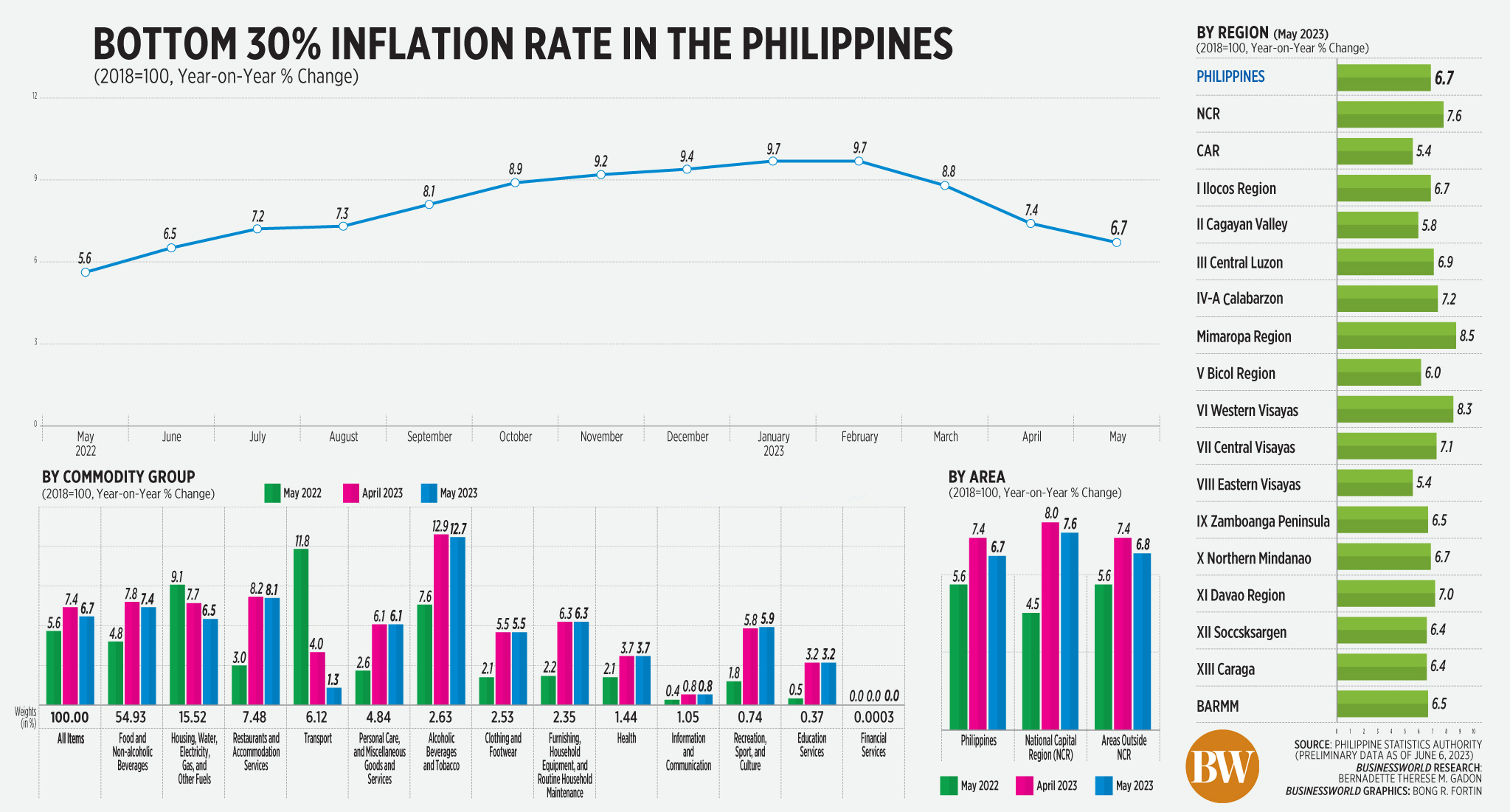
Bottom 30% inflation rate in the Philippines

“The new inflation number and the declining trend give confidence that inflation would be within the target range of 2-4% by September this year,” Finance Secretary Benjamin E. Diokno said in a separate statement.

“It is also encouraging to see that inflation has gone down in all regions,” he said. “The government is committed to identifying bottlenecks in the country’s supply chain and improving the distribution of commodities down to the localities.”

Trade Secretary Alfredo E. Pascual told a separate news briefing removing bottlenecks in the supply chain would help ease prices.

“For example, the harvest from a certain area does not reach places with high demand,” he said in mixed English and Filipino. “The solution there is to make sure that logistics can deliver the harvest to where the demand is.”

Meanwhile, National Economic and Development Authority (NEDA) Secretary Arsenio M. Balisacan said the government is working to keep prices low and stable.

“With accurate data at hand, we can anticipate possible food and energy shortages and provide timely recommendations to prevent increases in commodity prices,” he said in an e-mailed statement. “This will ensure food and energy security and safeguard the purchasing power of Filipino families, especially the poor and vulnerable.”

The Philippine central bank paused its aggressive monetary policy tightening campaign last month. The Monetary Board has raised key rates by 425 basis points (bps) to 6.25% since May 2022.

BSP Governor Felipe M. Medalla earlier said the central bank is prepared to keep the benchmark interest rate unchanged for two to three meetings if inflation continues to ease.

HSBC’s Mr. Dacanay said the May inflation could spur the BSP to keep policy rates steady not only on June 22 but also at the next meetings. “Our baseline view is for the BSP to be on hold until the second half of 2024.”


Marcos approves export industry blueprint

PHILSTAR FILE PHOTO

By Kyle Aristophere T. Atienza, Reporter

PRESIDENT Ferdinand R. Marcos, Jr. has approved the blueprint for the Philippine export industry, days after its membership in the world’s biggest free trade agreement took effect, according to the Trade department.

Under the Philippine Export Development Plan, the government will enforce “industry-level” interventions to address challenges facing the sector, which has lagged regional rivals, Trade Secretary Alfredo E. Pascual told a televised news briefing.

“In the past, we simply did policies at the macro level that applied to the whole economy,” he said. “But what we’re proposing in the export development plan is industry-level intervention or policy issuances that will support the sector’s development.”

The agency also wants company-level intervention “because we believe that we need to work closely with individual firms to be able to take care of their needs as they venture into a potential export business for their companies,” he added.

“We must develop reliable, design-driven, technology-driven, sustainable and forward-looking exporters to make the Philippines an agile export powerhouse,” he said.

The Philippines ratified the Regional Comprehensive Economic Partnership (RCEP) in April. The trade deal, which covers nearly a third of the global population and about 30% of its global gross domestic product, took effect locally on June 2.

Under the Export Development Act of 1994, the Trade department must prepare a rolling three-year plan for the sector. It is part of the Medium-Term Philippine Development Plan, which is now called the Philippine Development Plan.

Mr. Marcos is expected to sign a memo defining the roles of various agencies in the development plan, Mr. Pascual said.

He said the Philippines remains an export laggard because local companies can’t come up with the quantity and quality of export products. The Philippine Development Plan will hopefully fix this.

He cited as an example the big market for durian in China, but the Philippines can’t cope with the required quantity, apart from its lack of skilled manpower. “We’re starting to do software development, but we need more skilled manpower,” he added.

The Trade chief said the state would try to address the constraints faced by various sectors at the industry level.

He said some local companies need greater state support, which the government would provide just like what it’s doing for micro, small and medium enterprises.

The first challenge in boosting the export industry is helping companies produce products that can compete globally, Mr. Pascual said.

The Philippines, an agricultural country, imports much of its food and farm inputs, making the Southeast Asian nation vulnerable to imported inflation.

China is the Philippines’ top source of imports, valued at $2.32 billion (P130 billion) or 21% of the total in January, according to the local statistics agency.

Mr. Pascual said the export plan seeks to address production constraints, develop a strong and innovative export ecosystem and increase the Philippines’ mindshare in the global market.

The second goal is a major task that needs the help of various regulatory agencies, including the Bureau of Customs, which enforces export rules, he said.

He added that under the export development, the Trade department has identified four priority industry clusters in line with the Philippine Development Plan, which was approved in January to help the country become an upper middle-income country by 2025.

The clusters include industrial machinery and transport; technology, media and telecommunications; health and life sciences; and modern basic needs of a resilient economy.

Mr. Pascual said the Philippine export sector would highly benefit from RCEP. “That opens up certain countries for exports of the Philippines with reduced or preferential tariffs, so it becomes more competitive vis-à-vis exports coming from competing countries,” he said.

RCEP members include Association of Southeast Asian Nations (ASEAN), Australia, China, Japan, New Zealand and South Korea.

The trade deal is heavily supported by China, whose trade with member countries, according to a May 2022 analysis from China Briefing, accounted for 30% of Beijing’s total foreign trade value.

Critics of RCEP have warned that the trade deal would only make the Philippines heavily reliant on imports from China and prevent the Southeast Asian nation from pursuing trade diversification.

The Philippines would experience declining imports from Southeast Asian countries and rising imports from China and South Korea due to RCEP, the Philippine Institute for Development Studies (PIDS) said in a 2021 paper.

It would likely import arms and ammunition, electrical machinery and equipment, and plastics from South Korea, the state think tank said.

From China, Manila is expected to import plastics, rubber, apparel and clothing and other produced textiles, footwear, glass and glassware, machinery and mechanical appliances, electrical machinery and equipment, it added.

The institute said imports from China of nearly all Southeast Asian countries would increase, except Lao PDR and Vietnam.

It added that ASEAN member states would likely experience rising imports worth $7.8 billion post-RCEP.

“Among ASEAN members, Malaysia will potentially have the largest increase in imports ($3.7 billion yearly), followed by Cambodia ($2.3 billion) and Thailand ($876 million),” it said.

“Non-ASEAN countries are also expected to see a rise in imports particularly for China ($11.4 billion), Republic of Korea ($6.3 billion) and Japan ($2.2 billion).”

Nomura sees increased Philippine infra projects

President Ferdinand R. Marcos, Jr. (left) and Transportation Secretary Jaime J. Bautista led the groundbreaking ceremony for the Ortigas and Shaw Boulevard stations of the Metro Manila Subway Project Phase 1, Oct. 3. — COURTESY OF THE DEPARTMENT OF TRANSPORTATION

INFRASTRUCTURE development in the Philippines and its regional peers would continue to accelerate in the coming years as they improve project execution, Nomura Global Markets Research said.

In a note dated June 5, the research firm said states that prioritize infrastructure development have been making significant progress in project execution, especially in India and parts of Southeast Asia.

“We see a few reasons to remain optimistic that infrastructure development will accelerate in the medium term, particularly in India, Indonesia and the Philippines,” Nomura said.

India, Indonesia and the Philippines have addressed underspending issues, improved planning, simplified procurement rules, increased the participation of state-owned enterprises and strengthened project monitoring systems, it said.

“We remain optimistic that infrastructure development in these countries will accelerate in the next few years,” the research firm said. “Despite the recent improvement, there remains substantial scope for more progress, and governments are setting more ambitious targets to narrow this gap, building on earlier successes.”

It added that concrete progress in executing public infrastructure plans is boosting private sector participation from both local and foreign sources, helping to ease fiscal funding constraints that have increased after the coronavirus pandemic.

This year, the Philippines plans to spend 5.3% of its gross domestic product (GDP) on infrastructure, equivalent to about P1.29 trillion. Infrastructure spending is expected at 5-6% of GDP until 2028.

“While comparable data on infrastructure are not consistently available, proxy indicators such as the GDP share of the construction sector are showing increases in Indonesia, India and the Philippines,” Nomura said. “Specifically on spending by the public sector, capital outlays on infrastructure have similarly improved.”

In the first quarter, Philippine infrastructure spending rose by 7.3% to P196.7 billion from a year earlier, data from the Budget department showed.

Transport-related infrastructure makes up the bulk of projects in Indonesia and the Philippines, such as toll roads, airports, seaports and railways. “The overarching goal of their governments is to decongest economic centers and to support poverty reduction targets,” Nomura said.

Road infrastructure projects of the Public Works department and foreign-assisted rail transport projects of the Transportation department boosted infrastructure spending in the first quarter.

Nomura said fiscal constraints have forced India, Indonesia and the Philippines to increase public-private partnerships (PPP) and change regulations.

In the Philippines, PPP schemes are planned to finance about 30% of flagship projects.

In March, the government of President Ferdinand R. Marcos, Jr. approved 194 flagship infrastructure projects with total investments of P8.2 trillion. PPPs are expected to fund P2.5 trillion of the projects. 

As of May 9, there were 68 of such projects, 25 for implementation, nine for approval, 52 under project preparation and 40 under pre-project preparation.

The government has also come out with the rules that will enforce an amended Build Operate Transfer (BOT) law to improve transparency.

The revised rules, which aim to attract more private investments in infrastructure projects by addressing concerns on financial viability PPPs, took effect in October.

Meanwhile, Nomura said there is room to improve government spending without adding pressure to the national budget.

“Governance has been improving, and this could support public investment spending efficiency, which is key to increasing the growth impact of infrastructure projects in the face of higher fiscal constraints,” it said.

Closing the “efficiency gap” would increase Philippine economic growth by about 1.1 percentage points, Nomura said, citing data from the International Monetary Fund. However, a wider current account and fiscal deficit could affect infrastructure development.

“Governments in emerging markets in Asia after the pandemic have set ambitious fiscal consolidation targets that may be difficult to achieve, given a slowing economic environment and spending priorities, including infrastructure,” it added.

In the first four months of the year, the National Government’s fiscal deficit narrowed by 34.57% to P204.1 billion. This year, the government has set a budget deficit ceiling of P1.499 trillion, equivalent to 6.1% of GDP.

“In addition, imports are likely to surge with faster infrastructure implementation, widening current account deficits, as we have seen in the Philippines recently,” Nomura said.

The country’s current account deficit hit $17.8 billion last year, higher than $5.9 billion in 2021, according to central bank data.

The Bangko Sentral ng Pilipinas expects the current account deficit to end the year at a $17.1 billion, equivalent to -4% of GDP. — Keisha B. Ta-asan

US public sees no clear winner in debt ceiling deal

PEXELS-JOHN GUCCIONE

WASHINGTON — Neither US President Joseph R. Biden, Jr.’s Democrats nor Republicans in Congress emerged as a clear winner in the battle to raise the $31.4-trillion debt ceiling, according to a Reuters/Ipsos poll.

The survey, conducted after Congress passed a bipartisan deal to raise the borrowing limit, found that 50% of Americans thought neither party emerged as a winner, while a fifth said both sides won.

Another 20% said they thought Democrats emerged with the better side of the deal, while 11% said Republicans had done better, according to the four-day poll that concluded on Monday.

The poll found self-identified Democrats were more likely to be satisfied with the outcome. Some 80% of Democrats liked how Mr. Biden handled their side’s end of the talks, while just 13% took a dim view of his performance.

By contrast, only 44% of Republicans approved of how their party’s top congressional official, US House Speaker Kevin McCarthy, drove the bargain for Republicans. Forty-two percent disapproved.

Mr. McCarthy’s poor marks reflect the deep divisions within his party. Hard-line Republicans who sought deeper government spending cuts in the talks have warned that Mr. McCarthy’s job could be in danger.

Mr. Biden and Mr. McCarthy reached a deal last week to suspend the debt ceiling weeks of negotiations between Mr. Biden’s White House and Republicans who control the House of Representatives.

Mr. Biden signed the deal into law on Saturday, averting the financial disaster that would have unfolded if Washington were forced to stop paying all its bills.

Politicians on both sides have presented the deal as a victory, with Republicans touting a reduction in nonmilitary spending. Mr. Biden said the compromises in the deal were a sign the polarized nation could bridge its political divides.

Critics of the deal on the right said the cuts did not go far enough, while progressives criticized increased work requirements for struggling Americans receiving food or monetary assistance and provisions streamlining approvals for fossil fuel projects amid a climate change crisis.

The deal would cut spending by $1.3 trillion, less than the $4.8-trillion Republicans had sought. It does little to slow growth in federal debt that is on pace to exceed $50 trillion in a decade.

The Reuters/Ipsos poll surveyed 1,004 US adults nationwide and had a credibility interval, a measure of precision, of about 4% in either direction. — Reuters

Globe Group cheers passage of bill strengthening Intellectual Property Code, cites benefits of effective site blocking vs piracy

The Philippines will reap significant benefits from enforcing site blocking to combat piracy, the latest YouGov consumer surveys commissioned by the Coalition Against Piracy (CAP) showed, redounding to the vibrancy of the P1.60-trillion creative industry, a top contributor to the economy.

The Globe Group said this as it celebrated the passage of House Bill No. 7600, which proposes revisions to the country’s 26-year-old Intellectual Property (IP) Code, including allowing site blocking, to address gaps that have allowed online piracy to endure and to empower regulators to act against violators.

The bill, authored by Albay 2nd District Rep. Joey Salceda, was approved on third and final reading at the House of Representatives on Monday, May 22. The bill will then be transmitted to the Senate.

“The Globe Group congratulates Albay 2nd District Rep. Joey Salceda for steering House Bill No. 7600 towards its triumphant passage at the House. This is a landmark achievement for the creative industry, with the bill a step closer to becoming a law. We are inching closer towards ensuring more stringent protection for our content creators and their livelihood,” said Globe Group Chief Sustainability and Corporate Communications Officer Yoly Crisanto.

“Piracy not only jeopardizes the livelihood of content creators and other works in the creative industry but also worsens consumer exposure to malware risks. Revisions to the IP code are essential for bolstering a digital landscape that is secure and equitable,” she said.

CAP surveys showed that in countries where site blocking is being effectively implemented, positive behavioral change has been observed, with 62% of consumers in Indonesia and 64% in Malaysia changing their viewing habits, opting instead to watch free and legal streaming or either stopping or reducing use of pirate sites.

In the Philippines, 58% of consumers engage with pirated content, yet they expressed willingness to pay for legal content if not available on piracy services. Based on multiple answers, the survey revealed that 53% of respondents would pay for subscription services, 15% for individual pay-per-view, 28% for cinema viewings, 13% for Blu-Ray or DVD, and 39% would opt for legitimate ad-supported media such as free-to-air or online platforms.

Filipino consumers are in favor of government intervention against piracy. Allowed to give multiple answers, 45% of the respondents advocate for government or court orders for Internet Service Providers to block pirate websites, 27% favor banning the sale of Android TV Boxes providing access to pirated content, and 39% support banning apps that provide access to pirated content.

“Site blocking is an effective tool for steering consumers towards legitimate content sources. This, coupled with legislative reform, can safeguard our creative industry, which is a vital part of our economy,” Crisanto said.

The creative industry is a vital contributor to the country’s Gross Domestic Product (GDP), accounting for approximately 7.3 percent or P1.6 trillion of the gross value-added in 2022, according to data from the Philippine Statistics Authority. However, this figure was already lower than the 7.5 percent reported in 2018, primarily due to piracy.

Globe has long been advocating against piracy through the #PlayItRight program, which seeks support for the protection of content creators amid the prevalence of pirated content.

It is part of the Video Coalition of the Philippines, formed last year with key industry stakeholders and the Asia Video Industry Association (AVIA) to champion stronger intellectual property protection in the country. Currently, the IP code’s definition of pirated goods excludes electronic or online content.  It also lacks provision for the effective blocking of pirate sites.

To learn more about Globe, visit www.globe.com.ph.


Spotlight is BusinessWorld’s sponsored section that allows advertisers to amplify their brand and connect with BusinessWorld’s audience by enabling them to publish their stories directly on the BusinessWorld website. For more information, send an email to online@bworldonline.com.

Join us on Viber at https://bit.ly/3hv6bLA to get more updates and subscribe to BusinessWorld’s titles and get exclusive content through www.bworld-x.com.

Beyond the Sistine Chapel, Vatican Museums says ‘We are much more’

VATICAN CITY — Barbara Jatta, the first woman to head the Vatican Museums, wants visitors to avoid being suffocated by the crowds and take in the lesser-known — but spectacular — attractions she helps to oversee.

The Vatican Museums, a UNESCO World Heritage Site that closed or limited openings during the COVID-19 pandemic, have almost returned to their pre-pandemic level of about six million visitors a year.

Many, particularly day trippers on fast-paced package tours of Rome, head straight for the Sistine Chapel, bypassing the museums’ other wonders.

“Not everyone in the Sistine Chapel. Please! We are much more,” she told Reuters at the opening of an exhibition of ceramics within meters of Michelangelo’s frescoed masterpiece.

“We have so many things that speak of history, it is important to get to know them too,” added Ms. Jatta, 60.

They include a 17th-century pharmacy and apothecary that was run by Benedictine nuns in the Monastery of St. Cecilia in Rome’s Trastevere district.

Open to the public since May 25, the pharmacy that served the public until 1936 has been reassembled with contents dating from the 17th and 18th centuries.

Cabinet shelves are filled with dozens of finely decorated blue-and-white ceramic jars that once held medicinal plants and herbs used to treat anything from insect bites to urinary infections.

The exhibition also includes tools for cutting and pressing the plants and extracting their essential essences. The nuns fashioned a large stone mortar from the capital of an ancient Roman column.

“This is an incredible patrimony of history, art and medicine,” said Luca Pesante, one of the curators of the exhibit, which also includes mediaeval floor tiles and decorative plates, some made from designs by Raphael.

Ms. Jatta, appointed by Pope Francis in 2016, said she and her staff has set as a priority to give visitors “the most marvelous visit possible” and that they should not be suffocated by too many people.

She added that the museums, which close at 6 p.m. on most days, may extend opening hours. Already, they stay open later on Fridays and Saturdays.

Nearly all tickets are booked online and are often sold out weeks in advance.

The need for extended opening hours may increase during the 2025 Holy Year, when millions more people than usual are expected to travel to Rome to participate in religious pilgrimages, she said. — Reuters

A Filipino classic comes home

JL JAVIER

BOOK REVIEW
But for the Lovers
By Wilfrido D. Nolledo
Exploding Galaxies, 440 pp

THE DAY I hunkered down to read the new and ridiculously overdue Philippine edition of Wilfrido Nolledo’s “lost” masterpiece But for the Lovers was the day of the Manila Central Post Office fire. When people woke up to harrowing footage of massive flames gutting the interiors of the pre-war structure, its austere neoclassical columns and ornate cornice beat and blackened by thick billowing smoke.

The last time the building endured similar damage, many were quick to point out, was during the apocalyptic Battle of Manila, which is also the grueling, convulsive climax of Nolledo’s famously demanding novel, first published by E. P. Dutton in 1970 then reissued a quarter of a century later by Dalkey Archive in 1994, a decade before Nolledo died in California in 2004.

From the first and only time I tried to read the book more than a decade ago, what survives is a vague memory of being astounded by the Manila resurrected in it, ill-equipped as I was to “get” everything.

Reading it now, this also became my initial point of entry. I absently waited for the post office to make an appearance amid the languid, scrupulous flânerie through which it maps the occupied city: the looting and scavenging and breadlines, “Japanese soldiers tramping on pavements” on Avenida Rizal, Intramuros “maimed forever” by tanks and convoys, the nasty violence at the internment camp in UST, the periodic air raids during which “the sky overcasts with bombers.”

But also, we are told: “envoys in aloha shirts [gorging] themselves with huge bowls of mami” on Calle Salazar, “matronly entrepreneurs” buying and selling jewelry with “huge bayongs heaping with paper money” in Divisoria, local and foreign patrons trooping to a “brick-and-banyan polyglot period piece” on Raon to watch a famous belly dancer.

It is a place brutalized but also bored and business-as-usual, “deafened by sirens and strafings” and “astir with Nipponese army and moving with American bombs,” but also peopled by “skeletons roaming the sidewalks, dreaming of American Invaders,” erstwhile colonizers who are “always coming” but whose promised arrival is “as distant as the moon.”

Manila drawn this way, adrift in a war dizzyingly planetary and heinously local, is a primal pleasure in the book, the capital’s history of ruin and survival palpable in the chaotic present. And viewed from today’s megalopolis, interminably besieged by the brutal force of capital even during peacetime, its built heritage always on the verge of banal destruction, war is generative metaphor.

A microcosm of Nolledo’s surreal world is the creaking but buoyant Ojos Verdes boardinghouse, a “two-story monstrosity pasted together with adobe and aluminum” that had seen better days, a “Shangri-La for sectless shamans” where “lodgers desultory and deregionalized flitted in and out.”

The three main characters share one room (13 — the novel not shy with its auguries): the wistful, pathetic Spanish theater veteran Hidalgo de Anuncio; the wily scavenger who is “so ugly it hurt the eyes” Molave Amoran; and a delicate young woman who spends most of the novel nameless and seemingly asleep.

Other than the morose wait for the inevitable “liberation” of the city, the afable tug-of-war between Hidalgo and Amoran over Alma — the woman — may be the only steady narrative line here, tenuous as it is. At one point, the two offer their respective worlds to Alma, as if she were an empty vessel:

“Like a guidon Hidalgo introduced her to a Spanish thesaurus. She was taught grammar, syntax, conjugations in the morning; at night she absorbed the adenoidal dialects of a city that Amoran slit open to her like a goiterous throat. Her mornings were mannered and orchidaceous with Hidalgo’s invocations of dons and dowagers; her evenings were malodorous, were morbific with Amoran’s influx of urchins and lepers. Two heads had her deity.”

It’s sequences such as this that invite the sort of pat nation-nation allegorical reading to which But for the Lovers is often subjected, and which Gina Apostol, in her capacious Foreword, decries: “Reading Laura in Balagtas, Maria Clara in Rizal, and Alma in Nolledo as allegories of motherland disturbs me … the conjoining of women with violence and oppression in this allegorization of nation is a reduction that, in my view, does not read Rizal, Nolledo, or the nation as well as one could.”

It doesn’t help that such gestures abound: when Hidalgo, Alma’s “discoverer,” whispers “Hija” to her, the word is said to be “caressed … by four hundred years of Spanish romance”; the arduous mission to transport an American pilot from the north back to the city turns almost touristic with someone’s thesis on “the mountain culture” and what it signals for the Filipino; the boardinghouse is “regionalized” between “ground-floor Southerners” and “second-story Northerners” who debate on “their star placements on the three-star Filipino flag”; even Rizal’s fiction and life make an appearance in a POW’s hallucinatory soliloquy.

The casual, overwrought, often needless brutality that women’s bodies have to endure in the novel, which Apostol helpfully contextualizes, also doesn’t help.

Most characters, however temptingly archetypal, thankfully benefit from Nolledo’s otherwise deepening, individuating portraiture. A favorite presence is Tira Colombo, the huge, horny landlady of Ojos Verdes who enters the novel rolling out of her sagging bed bemoaning a lackluster encounter (“she had supervised the love-play; he’d simply melted away”). Delinquent tenants can settle their obligations this way, which she tracks on a ledger filled with helpful marginalia — “niñgas-kugon for flash-in-the-pan; hilaw-na-hilaw was still-wet-behind-the-ears; barako meant brute, the ideal category.”

Other figures, in varying states of weariness, crowd and construct the world: a loquacious one-armed POW at the UST camp, a skilled American pilot turned feckless “symbol,” a ragtag army of “underground hotheads” killing Japanese soldiers and bombing munitions trains after dark, a soft-spoken horse-riding Japanese officer “longing to be murdered,” a tranvia conductor also conducting “Manila’s underground orchestra,” a locksmith named Zerrado Susi, etc. etc.

This cacophony — and Nolledo’s command of voice is singular — offers another entry point to the book, and toward unpacking how it makes sense of its arguments about history.

The idea of war as both monstrous and mundane, savagery and stupor, is beguiling, probably necessary for a project like Nolledo’s, which deliberately directs the shrapnels of one war outward, to sporadically illuminate the rest of Philippine history.

Here, the agony of the Japanese Occupation converses with crumbling Hispanic nostalgia. Pragmatism jostles against “politics, government, religion … big, fat gobs of one rotten yolk.” And the genocidal “liberation” of Manila is textually entwined with the first time the self-same American empire came half a century earlier — an “inexorable doubling” toward the book’s climax that, Apostol writes, “doubles one over with history’s grief.”

(In an early scene, “desiccated old men” who were “patriarchal echoes of the Revolution” huddle under Hidalgo’s window after being waylaid by a foiled operation — more signals of the novel’s sense of empire’s coherence and calculated continuity.)

Particularly instructive is the figure of Amoran, the novel’s monstrous everyman, looting and foraging through the scraps that litter Manila’s barren landscape, swimming in ponds for kangkong, salvaging animal entrails from the talipapa, selling dug-up nails to talliers in Binondo and mowed grass to stables in Galas. In other words, the dirty work that keeps Hidalgo and Alma and other people around them alive.

Such nocturnal trawl through ruins — not to mention the final escape as American bombs finally rain on the city — speaks to a key facet of our historical experience, Filipinos as “survivors, imperishable through laws and rainstorms,” so banally, existentially captured by Nolledo thus: “During these crucial months of the Japanese Occupation, rumor had it that Filipinos were still alive in Manila.”

And all of it orchestrated by the kind of fervid, hypnotic, untiring prose that in itself is a site of this violent history, an English overloaded with a Filipino writer’s keen sense of irony, play, and delight in multiple tongues — busabos boys, eskinita hymns, at saka didn’t he already…, anak ng kwago the Americans are coming! There is not one flat paragraph here, in style as in thought.

This narrative bravura — reminiscent of anyone from Carpentier and Genet to Joyce and Morrison, with Joaquinesque set pieces here and there — of course means the book’s readership will be select, although even at its most prolix, it is never completely impenetrable. These and many other points of entry — of visceral pleasure, of profound historical pain — should open up But for the Lovers to readers who are willing to participate in Nolledo’s fever dream of brutality, fatigue, grit, and transcendence.

The first Philippine edition of Wilfrido D. Nolledo’s But for the Lovers is available at www.explodinggalaxies.com.

Glenn Diaz’s first book The Quiet Ones (2017) won the Palanca Grand Prize and the Philippine National Book Award. His second novel Yñiga (2022) was shortlisted for the 2020 Novel Prize. His writing has appeared in The New York Times, Rosa Mercedes, Liminal, The Johannesburg Review of Books, and others. He is a recipient of residencies in Bangalore, New York, Hong Kong, and Jakarta. He teaches literature and creative writing at the Ateneo de Manila University and holds a PhD from the University of Adelaide. He lives in Quezon City.

MPIC awaits new price offer, restart of delisting

THE CONSORTIUM of companies that offered to take Metro Pacific Investments Corp. (MPIC) private may still quote a price different from what it offered minority shareholders of the listed conglomerate, its top official said, as he expects a restart of the delisting process.

Manuel V. Pangilinan, MPIC president and chief executive officer, told reporters on Tuesday that the bidders are “back to square one” as their selected independent financial advisor (IFA) was rejected by the Philippine Stock Exchange (PSE).

“The process will restart after the IFA has determined the price. They would probably give a range from X to Y, and they would have to submit that again to the PSE and the SEC (Securities and Exchange Commission),” he said on the sidelines of the company’s annual stockholders meeting.

In April, the bidding consortium offered to acquire MPIC common shares at P4.63 apiece, which represents a 22% premium over the company’s one-year volume-weighted average price. MPIC shares rose by 0.45% or two centavos to P4.46 apiece on Tuesday.

Mr. Pangilinan, who is also MPIC chairman, said the bidders are likely to appoint a new IFA, resulting in a restart of the delisting process when the new advisor has determined the tender offer price.

He said the previous independent advisor was not considered “independent enough” as it had conducted business with the shareholders of MPIC and some of the bidders.

“We have been given an accredited list… and there are probably only two that have not done much work or no work for us, so they would probably narrow it down to [one of them],” he said.

The selection of a new advisor comes after GT Capital Holdings, Inc. — which is a member of the bidding consortium along with Metro Pacific Holdings, Inc., MIG Holdings Inc., and Mit-Pacific Infrastructure Holdings Corp. — sent a notice to MPIC last week to postpone shareholders’ voting for or against its delisting, which was initially set on June 6.

GT Capital said that the fairness opinion and valuation reports for the tender offer on the minority shares had not yet been completed in time for the company’s annual stockholders’ meeting. MPIC accepted the consortium’s request for voting during a special stockholders’ meeting at a later but unspecified date.

MPIC has yet to determine a date for the special meeting, Mr. Pangilinan said, but “hopes” to complete the delisting process within the year.

The consortium said that once the reports have been finalized, another notice of intent will be submitted to undertake a tender offer, which will replace the one it previously sent.

Under the initial tender offer, First Pacific Co. Ltd., through Metro Pacific Holdings, will spend around $90 million to increase its stake by as much as 3.8%, while GT Capital will pay $70 million for an additional 2.9% stake. Mit-Pacific Infrastructure Holdings will buy up to 20% and MIG Holdings will acquire up to 10%.

The consortium would need to achieve 95% tender offer acceptance from minority shareholders for the voluntary delisting.

MPIC is one of the three key Philippine units of Hong Kong based First Pacific, the others being Philex Mining Corp. and PLDT Inc.

Hastings Holdings, Inc., a unit of PLDT Beneficial Trust Fund subsidiary MediaQuest Holdings, Inc., has a majority share in BusinessWorld through the Philippine Star Group, which it controls. — Adrian H. Halili

Zen living for city dwellers at The Grand Midori Ortigas

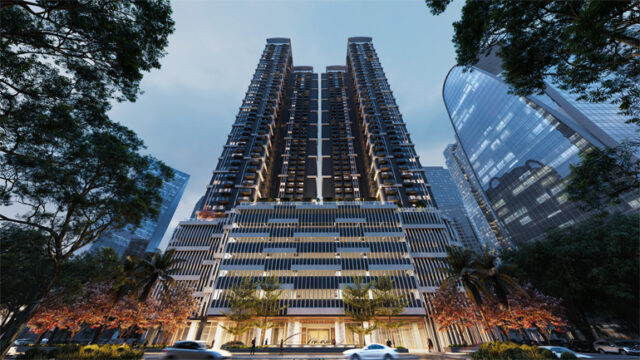
The Grand Midori Ortigas in Ortigas Center, Pasig City. Artist’s perspective.

Where can you find Zen in the city? Being in Zen is about being mindful and at peace. The urban side seems to have a dynamic atmosphere with all the hustling; But one’s home in the city can play a part in fostering mindfulness, harmony, and a well-balanced lifestyle for a Zen living.

In the bustling Ortigas Center, city dwellers can find a sanctuary inspired by the concept of Zen at The Grand Midori Ortigas by Federal Land, which has recently launched its second tower. Featuring Zen-inspired design and amenities, The Grand Midori Ortigas provides urbanites a unique living experience that is both elegant and purposeful.

The Amenity Deck at The Grand Midori Ortigas. Artist’s Perspective.

The two-tower condominium is designed by world-renowned architecture firm Tange Associates from Tokyo, whose creativity can be seen in establishments such as the Yoyogi Gymnasium, St. Mary Cathedral, and Tokyo Aquatics Center. Tange Associates brought the blend of Japanese design and innovation that made up the sophistication and functionality of The Grand Midori Ortigas’ architecture.

From the façade of The Grand Midori Ortigas is a fusion of Japanese tatami and Filipino banig to feature a flowing weave pattern and bring forth the feeling of a Filipino home. The building also delivers better airflow and quality as well as a sunshade with its horizontal and vertical louvers on the façade.

The Grand Midori Ortigas’ residential units are also made to be easily harmonious with the particular design the homeowners want for their spaces to live their mindful and balanced lifestyles. Every unit presents simplicity with its light and airy interiors surrounded with expansive windows.

The newly-launched second tower is built with around 429 units. The variations come in a studio unit, which space ranged from 35.5 square meters (sq.m.) to 38 sq.m.; a one-bedroom unit of 48 sq.m to 64 sq.m. in size; and a two-bedroom unit of 69 sq.m. to 107 sq.m.

Flex Suite at The Grand Midori Ortigas. Artist’s perspective.

In addition, The Grand Midori Ortigas offers a Flex Suite in its second tower, giving residents a flexible living space to match their respective lifestyles. The Flex Suite is a 64 sq.m. one-bedroom unit with a 13 sq.m. multi-purpose area called the Flex Space, plus a built-in sliding room partition. The Flex Space can serve as a home office, art studio, workout area, nursery, or whatever the needs of homeowners may be for their Zen home living.

Meanwhile, the array of Zen-inspired indoor and outdoor amenities within The Grand Midori Ortigas are especially designed to promote a balanced living.

To take a break after a busy work day, residents can get active at the fitness gym, yoga room, exercise lawn, and lap pool. For a more leisurely respite, they can unwind in the game room and videoke room, or relax at the pool lounge and Jacuzzi. For residing families with kids, they can enjoy children’s playroom, children’s pool, and children’s play area.

Amenities also included a conference room and a study lounge to provide another space for those who want to study outside their units or those working from home.

There is also a Zen garden and landscaped area with a lounge in the place, which can be an ideal space for city dwellers to have a tranquil time and practice mindfulness.

Studio Unit at The Grand Midori Ortigas. Artist’s perspective.

The amenity spaces inside The Grand Midori Ortigas got their inspiration from the Japanese concept “wabi-sabi”, which pertains to finding beauty from imperfection, as well as the concept of “miyabi”, which means the expression of elegance and refinement.

The Grand Midori Ortigas further enables a balanced lifestyle for its convenient location along the Exchange Road in Ortigas Center, giving residents access to various lifestyle choices, including shopping malls, leisure spaces, and restaurants. The place is also close to exclusive schools, hospitals, and upcoming infrastructure developments.

With its spaces designed with your Zen in mind, The Grand Midori Ortigas is an ideal sanctuary for people seeking to embrace serenity and bliss. For inquiries, visit The Grand Midori Ortigas website or email invest@federalland.ph.


Spotlight is BusinessWorld’s sponsored section that allows advertisers to amplify their brand and connect with BusinessWorld’s audience by enabling them to publish their stories directly on the BusinessWorld Web site. For more information, send an email to online@bworldonline.com.

Join us on Viber at https://bit.ly/3hv6bLA to get more updates and subscribe to BusinessWorld’s titles and get exclusive content through www.bworld-x.com.

Empire East earmarks P25-B capex

EMPIRE East Land Holdings, Inc. said on Tuesday that it plans to invest P25 billion in capital expenditure (capex) projects in the next five years in line with its portfolio expansion.

In a media release, the listed housing developer said the capex infusion was driven by its efforts to “further solidify its commitment to meeting all project timelines.”

It added that the company acquired 426 hectares of prime properties adding to its land bank for future developments.

“Our portfolio is continuously expanding due to the progressing demands of Filipinos aspiring to own a home,” said Empire East President and Chief Executive Officer Anthony Charlemagne C. Yu in a statement.

The company said that it had spent P3 billion last year on construction and development activities.

Meanwhile, during the first quarter, the company reported a 15.1% jump in attributable net income to P205.78 million from P178.72 million in the same period last year.

The company’s consolidated revenues amounted to P1.31 billion in the three-month period, up 7.4% from P1.22 billion the previous year.

Its real estate sales for the period increased by 4.6% to P1.14 billion from P1.09 billion in the same quarter last year.

Sales growth was mainly driven by its various projects, which include San Lorenzo Place, The Paddington Place, Kasara Urban Resort Residences, Pioneer Woodlands, The Rochester Garden, Covent Garden, The Cambridge Village, The Sonoma, Mango Tree Residences, and Little Baguio Terraces.

Empire East is engaged in the development of mid-cost housing projects such as condominiums, subdivision lots, house and lot units, and commercial units.

Its subsidiaries include Eastwood Property Holdings, Inc.; Valle Verde Properties, Inc.; Sherman Oak Holdings, Inc.; Empire East Communities, Inc.; and 20th Century Nylon Shirt Co., Inc.

It also has ownership interests in companies such as Laguna BelAir Science School, Inc.; Sonoma Premier Land, Inc.; and Pacific Coast Megacity, Inc.

On Tuesday, Empire East shares fell by 2.98% or a centavo to P0.16 apiece. — Adrian H. Halili

PHL fintech players rally behind campaign vs fraud

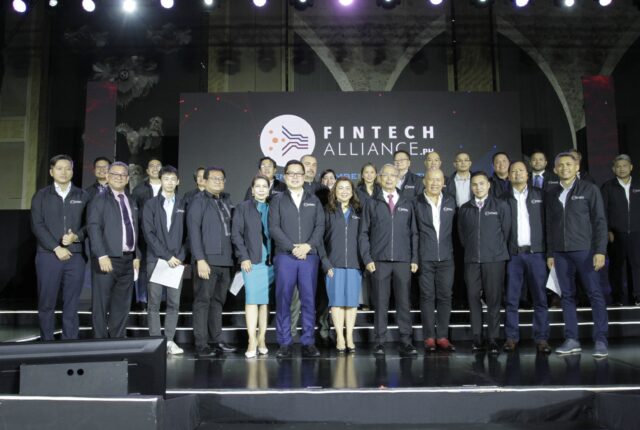
(6th from left to right) FintechAlliance.ph founding chairman Lito Villanueva, GCash President and CEO Martha Sazon, BSP Governor Felipe Medalla, and Globe Group President and CEO Ernest Cu, join other members of the FintechAlliance.ph to launch the Nationwide Consumer Cybersecurity Awareness and Education Campaign Against Scams, "'Wag Magpaloko Maging Scam Alerto!"

Fintechalliance.ph members meet with BSP and top cybersecurity officials

As part of its campaign to combat fraudulent activities such as phishing scams, members of FintechAlliance.ph rallied behind the launch of the Nationwide Consumer Cybersecurity Awareness and Education Campaign Against Scams, “Wag Magpaloko Maging Scam Alerto!”

Launched on May 29, 2023, during the Fintech Alliance Ph’s General Membership Meeting, the campaign gained support from the Bangko Sentral ng Pilipinas (BSP), the Department of Information and Communications Technology (DICT), the Philippine National Police (PNP), and the National Bureau of Investigation (NBI).

GCash officials with PNP-ACG Spokesperson PCapt Michelle Sabino

FintechAlliance.ph is the Philippines’ leading digital and fintech association that accounts for over 90% of the country’s digitally-initiated financial transactions with close to 100 corporate members.

“We are coming together as a united industry against phishing and other cybercrimes – which has been an urgent issue not just here in the Philippines but also globally. In order to build an inclusive digital economy, we need to reinforce trust and confidence by arming users with the right information and working closely with the PNP and the NBI. This is a shared responsibility not just among alliance members but also along with regulators, law enforcers, media, and the consumers,” said Fintech Alliance PH founding chairman Lito Villanueva.

Among the members of the FinTech Alliance.ph which committed to aggressively promote the industry-led cybersecurity education initiative include GCash, Maya Bank, UNO Digital Bank, Grab, RCBC, CIMB, Palawan Pay, Cebuana Lhuillier, P.J. Lhuillier, Alibaba Cloud, AllEasy, Asialink, Avaloq, Ayannah, Bank Genie, Betur, Brankas, BTI Payments, Bukas, Card MRI, CIBI, CIS Bayad Center, CRIF, Cyfirma, Food Panda, Digido, Direct Agent 5, Disini Law, Finantier, Finscore, BillEase, Geniusto, Gorriceta Law, Home Credit, HT Financial, iMoney, Investagrams, Investree, IT Group, KwikTech, Manulife, Novare, Moneyguru, Mount Fuji Lending, Multisys, NATCCO, and Netbank. Other key fintech players like Amazon, Cashalo, True Money, Xendit, Netcore, OF Bank, Paymongo, PeraHub, MOCASA, 7-Eleven, Pru Life UK, Rockbird, Salesforce, SAVii, SeedBox, SeedIn, Share Treats, Smart, Sun Life, Tala,  InLife, Togetech, TransUnion, Traxion, Vesta Payment also threw their support for the campaign.

FintechAlllianceph members rally behind anti-fraund campaign

“I am proud to see everyone working hard to make the Nationwide Consumer Cybersecurity Awareness and Education Campaign an effective and invaluable tool in helping accelerate the Philippines’ digital economy. You can count on the BSP to be a staunch supporter of this project. We will continue to work hand in hand with all of our stakeholders and ensure the far-reaching impact of this campaign,” BSP governor Felipe Medalla said.

Aside from the BSP, key officials from cybersecurity enforcement agencies were on hand during the launch led by NBI-CCD Chief Atty. Jeremy Lotoc and PNP-ACG Spokesperson P/Capt. Michelle Sabino.

“We at the PNP-ACG, are committed to help the FintechAlliance.ph promote its cybersecurity campaign to protect and safeguard our countrymen against cybercrimes”, said Sabino.

United under the Alliance, Philippine fintech players are keen on demonstrating their commitment to driving financial inclusion in the country.


Spotlight is BusinessWorld’s sponsored section that allows advertisers to amplify their brand and connect with BusinessWorld’s audience by enabling them to publish their stories directly on the BusinessWorld website. For more information, send an email to online@bworldonline.com.

Join us on Viber at https://bit.ly/3hv6bLA to get more updates and subscribe to BusinessWorld’s titles and get exclusive content through www.bworld-x.com.

Settling down at a new home

The Virgin Lab Fest is ready for its audience

STAGING a popular annual festival of plays that have yet to be tried and tested onstage is hard enough in regular circumstances. It has been all the more difficult given the myriad of uncertainties Philippine theater has faced in recent years.

As the Virgin Labfest (VLF) turns 18 this year, it challenges veteran and upcoming playwrights, directors, and crew alike to adjust to its new home, Tanghalang Ignacio Gimenez (the Cultural Center of the Philippines’ Blackbox Theater), while the iconic CCP structure itself is undergoing a three-year renovation.

Coming from a pandemic that forced VLF’s 2020 and 2021 editions online followed by a victorious physical return to the CCP in 2022, this year’s offerings are determined to keep up to standards.

“We’d like to thank audiences for coming back to see the amazing plays we have in store. I’ve no doubt that you will enjoy the show,” said VLF co-festival director Tess Jamias at the start of the technical dress rehearsals on May 31.

“This will be our first time staging the Virgin Labfest here in our new home, and we’re all very excited,” she said during the open rehearsals.

With this year’s festival themed “Hitik,” which translates to laden or overflowing with fruit or riches, it’s no surprise that the crowd of playwrights, directors, crew members, and close friends granted a preview of the coming shows were noticeably abuzz with excitement before and after rehearsal.

The night saw the curtain open on Set E (the one-act plays are grouped together into sets during the festival), which was titled “Hinog,” to imply the ripeness of the three revisited plays from last year.

After a disclaimer by Ms. Jamias that dress rehearsals mean possible hiccups or delays, the wildly funny yet socially relevant Punks Not Dead by playwright Andrew Bonifacio Clete and director Roobak Valle began, feeding the palpably giddy energy in the theater.

Though the crowd was nearly not as packed as it surely will be during the actual run, the laughs and gasps felt just as sharp. When it ended, some of its cast and crew piled into the audience during intermission, excited to watch the other two performances.

Fermata by playwright Dustin Celestino and director Antonette Go-Yadao continued to feed the crowd’s highly receptive energy as the chill atmosphere of a jazz bar was recreated onstage. With this one, pin-drop silences validated the actors’ heavy exchange of dialogue.

During the intermission before the final play of the night, the hallway outside was filled with conversation as audience members and some cast and crew discussed the various elements that were tweaked over time, like the lighting and the blocking.

The last play began — ‘Nay May Dala Akong Pansit by playwright Juan Ekis and director Karl Jingco — which involved audience interaction to some degree — ending the night with high spirits and positive outlooks on how the rest of this year’s VLF will go.

On the way out of the hall and speaking with artists and theater crew involved in the three productions, Ms. Jamias expressed high hopes for “Hitik.”

“It’s exciting that everyone is doing their best to give the best theater experience,” she said.

VLF 18 will present 12 new plays from both veteran and upcoming playwrights from June 7 to 25 at the CCP Blackbox Theater. Aside from the set of revisited plays seen by BusinessWorld, there will be four sets of new one-act plays — Adulting 101 (Set A), REBELasyon (Set B), Y.O.LO. (Set C), and Muwang (Set D) — and two sets of staged readings.

For tickets and other inquiries, contact the CCP Box Office at salesandpromotions@culturalcenter.gov.ph.) — Brontë H. Lacsamana

ADVERTISEMENT
ADVERTISEMENT