Home Blog Page 4746

Starbucks brews up cheaper India drinks as domestic rivals expand

STARBUCKS

MUMBAI/NEW DELHI – Starbucks is revamping its strategy to lure Indians, including children, with smaller, cheaper beverages as it looks to expand in small towns amid a fierce challenge from domestic startups in one of its fastest-growing markets.

Among the first foreign coffee brands to enter tea-loving India, the U.S. giant has taken almost 11 years to open 343 stores, in contrast with private equity-backed chains Third Wave and Blue Tokai that opened about 150 in the last three years.

“As you grow in size, you need to get new consumers,” said Sushant Dash, the chief executive of Starbucks in India, adding that the chain’s “pricing play” would help shatter a perception that it is expensive.

The company has launched a six-ounce drink, “Picco”, which starts at $2.24, and milkshakes for $3.33 as part of its revamp to target affluent Indians who prefer smaller servings.

Starbucks plans to open more stores in smaller towns, said an industry source, who spoke on condition of anonymity.

Both its new offerings are unique to India and unavailable in China, Singapore and the United States.

India’s small but fast-growing specialty tea and coffee cafe market is worth $300 million and set to grow 12% each year, Euromonitor estimates. Canada’s Tim Hortons and Britain’s Pret A Manger are also expanding, but have only a handful of outlets.

“Excessively large portion sizes are an American phenomenon,” said Devangshu Dutta, head of retail consultancy Third Eyesight.

“Indian consumers are value-conscious. If adjusting portion sizes down to what is more normal helps make prices accessible, that’s a double win.”

He was among the analysts who felt the move by Starbucks, operating in India in a joint venture with Tata Group, could further boost its sales, which hit a record $132 million in fiscal 2022/23.

Although Starbucks still dominates in India, rivalry is fizzing in the capital, New Delhi, and the technology hub of Bengaluru, where many Third Wave cafes are often as crowded as Starbucks outlets.

“We’ve lost 30 cups a day to them,” said a barista at a Starbucks shop in Delhi that sells 7,500 drinks a month, referring to a Third Wave that opened nearby months ago, but already sells 3,700.

Starbucks has faced homegrown challengers elsewhere, most notably in China, where its 6,200 stores service the biggest market outside the United States.

There, in just the last five years, Luckin Coffee has used discounts to lure customers to its 10,000 mostly pickup or delivery stores.

BET ON CHAI
In India, where Starbucks has added domestic touches to its offerings over the years to boost their appeal, it is now stepping up that game, just as global giants McDonald’s and Domino’s have done.

It estimates that just 11% of Indian homes drink coffee, as opposed to 91% drinking tea. Hot milky tea, or “chai” as it is known in Hindi, is sold at roadside stalls by the hundreds of cups each day for as little as 10 rupees (12 U.S. cents).

Starbucks, which offered for years just one milk chai “latte” made with tea syrup, has launched “Indian-inspired” tea offerings laced with spices and cardamom, both favourites in many Indian homes, which start at 185 rupees ($2.24).

The drinks were introduced to attract those who do not drink coffee and shun Starbucks, said Dash, adding the company would retain its focus on coffee and not make chai a primary offering.

The launch of smaller, cheaper beverages in India indicates Starbucks may have seen “a decline in traffic related to a pushback” on higher prices, said Chas Hermann, a U.S.-based restaurant consultant and former Starbucks executive.

COMPETITION, SMALL CITIES PUSH
In May, people lured by a one-for-one offer queued in a street outside the first Starbucks store in the western city of Aurangabad, a YouTube video showed in scenes reminiscent of when it first opened in India.

But its rivals are catching up and a price war has begun.

Soon after Starbucks’ May launch of $3.33 milkshakes, designed to attract children, Third Wave launched its own range, a fifth cheaper at $2.71.

In Bengaluru, startup investors and founders hold meetings in Third Wave outlets. It has more than 40 stores there, exceeding the 35 of Starbucks, data from real estate analytics firm CRE Matrix shows.

Third Wave’s chief executive, Sushant Goel, said he planned to add 60 to 70 stores every year, with a focus on big cities. He saw Starbucks’ cheaper, small-sized drinks as a response to competition in “an incredibly price-sensitive market”.

Matt Chitharanjan, chief executive of Blue Tokai, said it had “seen success in converting customers from Starbucks”, partly because of lower prices.

While Dash said he was undeterred by competition, Starbucks recognises the threat, although privately.

In one lease deal for a Bengaluru mall reviewed by Reuters, Starbucks inserted a “cafe exclusivity” clause barring the mall owner from allotting space on the same floor to rival “premium” brands, including Third Wave and Blue Tokai.

“Going deeper into smaller cities, beyond the metros, is the only way to grow,” said Ankur Bisen, head of retail at India’s Technopak Advisors. — Reuters


UK must seize opportunities of AI to remain a tech capital – PM Sunak

STOCK PHOTO | Image by Gerd Altmann from Pixabay

Britain must act quickly to remain a tech capital, Prime Minister Rishi Sunak will tell tech leaders on Monday, urging them to grasp the opportunities and challenges of artificial intelligence.

Mr. Sunak, speaking at the start of London Tech Week, will say the “tectonic plates of technology are shifting”.

“We must act – and act quickly – if we want not only to retain our position as one of the world’s tech capitals … but to go even further, and make this the best country in the world to start, grow and invest in tech businesses,” Sunak will say, according to advance extracts released by his office.

“That is my goal. And I feel a sense of urgency and responsibility to make sure we seize it.”

Governments around the world are now trying to find a balance whereby they can assess and rein in some of the potential negative consequences of AI without stifling innovation.

Britain in March opted to split regulatory responsibility for AI between those bodies that oversee human rights, health and safety, and competition, rather than creating a new body dedicated to the technology.

Mr.Sunak will say the tech sector is at the heart of his priority to grow the economy and outline how the government will work with businesses to capitalise on opportunities presented by transformative technologies, such as AI, which proponents have compared with the arrival of the internet.

During a visit to Washington last week, Mr.Sunak said Britain would host a global summit on artificial intelligence safety later this year to consider the risks of AI and discuss how they can be mitigated through internationally coordinated action.

“The possibilities are extraordinary. But we must – and we will – do it safely,” he will say on Monday. “I want to make the UK not just the intellectual home, but the geographical home of global AI safety regulation.” – Reuters

World Bank must drive private investment in climate transition – Banga

WASHINGTON – The World Bank must use “informed risk-taking” to encourage private investors to get more engaged in helping developing countries deal with climate change and leapfrog fossil-fuel energy sources, its new president Ajay Banga said on Sunday.

Mr. Banga told CNN’s ‘Fareed Zakaria GPS’ program that efforts now underway to stretch the World Bank’s lending capacity and revamp its business model could potentially free up “tens of billions” of dollars, but not the estimated trillions of dollars needed to ensure a just energy transition.

Private sector capital was critical since funds from governments, philanthrophy, the World Bank and other multilateral development banks (MDBs) would never suffice to help poor countries adapt to and mitigate climate change, said Banga, a former Mastercard CEO who took office on June 2.

“The only way forward is to find a way to get the private sector to believe that this is part of their future,” said Mr.Banga, who will visit Peru and Jamaica this week as part of a tour to visit countries in every region where the bank operates.

“What I think we have to do is… to find ways in the MDB system to think of a different playbook – to take on the risks that they cannot take on,” he said.

Private companies were bound to deliver returns for shareholders and could not take on the risks involved, but the bank could help, he said.

“That’s kind of a thing that we can do with informed risk-taking,” Mr.Banga said, noting that renewable energy was now cheaper in many cases than fossil fuels due to improvements in storage and duration.

Affordable electricity was the key starting point for social and economic development in emerging economies, but new solutions were needed to avoid the “emissions-intensive growth model” followed by advanced economies, or there was no hope of curbing emissions by 2050, he added.

The Indian-born executive was nominated by the US for the job precisely because of his previous work in the private sector, and he has pledged to identify barriers for greater investment and find ways to maximize the bank’s impact.

Mr.Banga told CNN he would also work closely with other multilateral lenders and development organizations, noting that he would be joined in his visits this week by Inter-American Development Bank President Ilan Golfajn.

“We need so much to be done. We need all shoulders at the wheel,” he said. “What we don’t need is silos in this effort.” – Reuters

UN nuclear watchdog concerned over water levels at Ukraine plant

The UN atomic watchdog said on Sunday that it needs wider access around the Zaporizhzhia nuclear plant to check “a significant discrepancy” in water level data at the breached Kakhovka dam used for cooling the plant’s reactors.

International Atomic Energy Agency head Rafael Grossi, who is to visit the plant this week, said that measurements the agency received from the inlet of the plant showed that the dam’s water levels were stable for about a day over the weekend.

“However, the height is reportedly continuing to fall elsewhere in the huge reservoir, causing a possible difference of about two metres,” Mr. Grossi said in a statement.

“The height of the water level is a key parameter for the continued operability of the water pumps.”

The destruction of the Kakhovka hydropower dam in southern Ukraine last week has flooded towns downstream and forced thousands of people from their homes.

Both the Kakhovka hydropower dam and the Zaporizhzhia nuclear plant have been occupied by Russia since the early days of its invasion in February 2022.

The water from the reservoir is used to cool the facility’s six reactors and spent fuel storage, the IAEA said.

“It is possible that this discrepancy in the measured levels is caused by an isolated body of water separated from the larger body of the reservoir,” Mr. Grossi said in the statement. “But we will only be able to know when we gain access to the thermal power plant.”

Mr. Grossi said the thermal power plant “plays a key role for the safety and security of the nuclear power plant a few kilometres away,” hence the need for access and independent assessment.

The agency has said earlier that the Zaporizhzhia plant can fall back on other water sources when the reservoir’s water is no longer available, including a large cooling pond above the reservoir with several months’ worth of water. – Reuters

Looking back on the Philippines’ hard-fought independence

Independence Day, much more than another national holiday, signifies hope, freedom, and patriotism for Filipinos. The observance serves as a reminder that after decades of struggle amid periods of colonization, the Philippines has been working hard for its independence and sovereignty.

The journey to Philippine independence was described as “long and tenuous” in an article written by Professor Ricardo Trota Jose of the University of the Philippines. During this time, many revolutions and uprisings took place, giving way to the anti-colonial movement. After the many revolutions that occurred, Spain gave up with the Treaty of Paris, concluding the Spanish-American War, which then led to the country’s proclamation of independence on June 12, 1898.

The Philippines was not truly free yet, however. While a part of the said treaty swore that Spain will give up the Philippines, it also said that the country will become a colony of the United States, which soon sparked the battle and resistance against American colonial rule.

The fight for independence thus continued, ushering in the Commonwealth era, a 10-year transitional period to prepare the Philippines for independence from American colonial rule.

But it was not long after the Japanese invaded the country and the Commonwealth era came to an end.

According to a short documentary titled Liberation: Battle of Manila by the then Presidential Communications Development and Strategic Planning Office and the Presidential Museum and Library, the Philippines and the United States have joined hands together, preparing in taking back the city of Manila; but, unfortunately, the Japanese forces had no intention in declaring Manila as an open city.

The Battle of Manila soon followed, from February 3 to March 3, 1945. The month-long battle caused an extreme downfall in the city as many lives were killed and many people suffered.

“Due to extreme inflation, the city has been suffering from starvation, and there’s a sense of abandonment, confusion, and a breakdown of peace and order,” the documentary narrated.

“The Japanese fired many commercial areas in Manila, causing a panic among the civilian population. The streets have been barricaded. Electricity has been cut off. The food supply is quickly depleting,” it added.

The battle became extreme, and the Japanese used all their forces in stopping the American advance. While Filipinos sought refuge, the massacre and killings continued for days. Slowly, the Filipino-American forces saved several areas in the city which were occupied by the enemy; and soon the battle was put to an end. Yet, the battle’s aftermath saw tremendous damage and a tragedy for the country.

“As the war ended, the Philippines counted the cost. Over a million Filipinos had died or were killed, out of a population of 18 million. Manila and most of the major cities were in ruins. Severe inflation had set in as a result of the Japanese occupation, and farms were fallow; farm animals too had died because of the war. Industries, transportation, and communication facilities were destroyed,” as Mr. Jose wrote in his article.

From then on, the control of the civil government was handed back to the Philippines; and a new Commonwealth era has begun, where Manuel Roxas was elected as president in 1946. Afterward, as soon as July came, the country was busy in preparation for the most-awaited independence celebration of the Philippines.

First celebrated on July 4, 1946, the Philippines held a grand celebration that lasted for two days, and many festivities include religious services, exhibitions, contests, parades, concerts, and dinner feasts. However, in 1962, through Republic Act No. 4166, the country’s Independence Day was changed from July 4 to June 12, recalling the first proclamation if Independence.

This year, the 125th celebration of Independence Day is themed “Kalayaan, Kinabukasan, Kasaysayan” (Freedom, Future, History).

According to Administrative Order 8, which created an interagency committee that will plan and implement programs and projects for the commemoration of the 125th anniversary of Philippine independence, the country will commemorate this anniversary from 2023 to 2026 to “give focus on the freedom that our forebears struggled for towards that they dreamed for the country and the history that we seek to remember and honor them with.”

Moreover to commemorate the 125th anniversary of Philippine Independence, the Bangko Sentral ng Pilipinas (BSP) held a launch event of a brand new collection of commemorative coins to mark the country’s independence and nationhood.

According to BSP Governor Felipe M. Medalla, the commemorative coin set was created in an effort to “preserve the cultural heritage and promote pride in our shared history.”

“It is particularly significant when we do these via coinages that we have created for the 125th Independence Day because in a very real sense, the establishment of a formal currency by any country is part of the definition of being a sovereign nation. And that’s why we have to see it not just a very, very nice souvenir but really a commemoration of the creation of the Republic of the Philippines,” President Ferdinand R. Marcos, Jr. said in his speech delivered during the commemorative coin launch.

This commemorative coin set was produced by the central bank using the most recent digital technology; and it comes in different colors: blue, signifying peace; red, standing for valor; and yellow, symbolizing freedom and sovereignty. The set also comes in different types, namely the P5, P20, and P100 coins.

“We have used the most modern technology which also signifies that the Philippines is at that stage in its development that we are now at the forefront. We will use the best technologies, the best techniques, and everything that is good and new for our country, that’s what it means,” Mr. Marcos also explained in his speech.

“It also reminds us of how far we have come and the significance of what we have achieved in 125 years,” he added.

The coins were designed to signify important events in Philippine history. For instance, the P5 coin pays tribute to Filipino soldiers who defended the country during the Philippine-American war; while the P20 coin honors the first day of being a republic country, and the P100 coin symbolizes the declaration of the country’s independence in 1898. — Angela Kiara S. Brillantes

64% of Filipinos actively engage in ‘woke’ culture to amplify social issues, poll finds

Filipinos are stepping up in the era of digital activism, a study produced by data analytics firm concluded.

A study by Agile Data Solutions notes that 64% of Filipinos are engaging in “woke” discussions primarily “to ignite conversations and awareness about social issues,” and 43% are engaging in “cancel culture” content “to hold individuals or organizations accountable for their actions or statements.”

The study was rolled out online in May 2023 to 600 Filipino participants aged 18 and above using Agile Data Solution’s Hustle PH data gathering app.

Four out of 10 Filipinos expressed that these kinds of content heightened their levels of political engagement, encompassing activities such as activism, voting in elections, and engaging in campaign efforts.

The study also found that 30% identified women’s empowerment as the most critical issue to discuss online, 26% pointed to live-in relationships, and 24% highlighted LGBTQIA+ (lesbian, gay, bisexual, transgender, queer/questioning, intersex, asexual) rights as equally essential topics of online discourse.

“The study reveals that even though most Filipinos may be confused by current ‘woke jargon,’ they actively take a progressive stand on women empowerment, LGBTQ rights and environmental protection,” said Jason Gaguan, founder of Agile Data Solutions.

“The broad range of topics also suggests a community that values diverse perspectives and is actively seeking to broaden its understanding of various lifestyle choices,” he added.

The influence of these cultures is also evident in the respondents’ buying patterns as consumers increasingly prioritize aligning brands’ values with their own. More than half of Filipinos — 57% — said “woke” culture made them “put more emphasis on how goods and services are being marketed or promoted,” and 55% said the same due to being exposed to ‘cancel’ culture.

“Consumers are increasingly becoming conscious of a brand’s values and integrity, and they are willing to make purchasing decisions based on these factors,” Mr. Gaguan said.

Additionally, 51% of those surveyed said “woke” content made them “more focused on who’s selling the goods and services rather than the actual products.” The same goes for 52% of the respondents.

The survey also reveals 44% are “more likely to support brands that share my values or promote social justice.” In comparison, 30% reported avoiding purchasing from companies that had been “canceled” due to offensive or harmful behavior.

“Businesses and organizations should recognize these changing societal norms to better align their marketing efforts to stay relevant and connected to their consumers.”

The poll also finds that Facebook, the most popular social media platform in the Philippines, is also the choice of 81% of participants as a platform for these kinds of discussions. The remaining percentage is split evenly between those who prefer using the short-form video app TikTok and those who favor traditional in-person discussions.

“Whatever trends may come in social media, its overarching objective remains to promote social awareness and ensure accountability,” Mr. Gaguan added.

A historic unfurling worth honoring

Photo from Pixabay

Aside from reminiscences of the nation’s journey toward freedom, Philippine Independence Day often brings to mind one of the important emblems that has served as a reminder of our national identity and the history and heritage that have nurtured such identity — our National Flag.

While our National Flag Day is observed on May 28, as declared by Presidential Proclamation No. 374 on March 6, 1965, the celebration of the said day extends until June 12, as ordered by Executive Order No. 179 on May 23, 1994.

Executive Order No. 179, which was signed by Former President Fidel V. Ramos, recognized that the period spanning the commemoration of the National Flag Day and Independence Day is an “opportune time for all Filipinos to collectively reflect on the significance of the National Flag.”

Furthermore, as Proclamation No. 374 signed by Former President Diosdado Macapagal stressed, the National Flag “is the consecrated repository of our ideals and traditions and the historic symbol of our nation as a sovereign people,” and so the National Flag Day seeks to address the “need of instilling and perpetuating in the minds and hearts of the citizenry greater honor, respect and reverence for our flag.”

The National Flag Day recognizes the significant day when the Philippine flag was first unfurled and “received its baptism of fire and victory,” as Presidential Proclamation No. 374 puts it, in the Battle of Alapan in Imus, Cavite, on May 28, 1898.

The Battle of Alapan resulted in Filipino revolutionaries winning a major battle against Spanish forces, capturing close to 300 troops. After the victory, Gen. Emilio Aguinaldo first unfurled and hoisted the Philippine Flag at Teatro Caviteño at the present-day Cavite.

The flag he waved there was sewn in Hong Kong by Marcela Agoncillo, the so-called “Mother of the Philippine Flag,” and her daughter, with the help of Delfina Herbosa de Natividad, the niece of José Rizal.

Bookending the National Flag Days is June 12, 1898, when the Philippine flag was waved following the formal proclamation of independence at the ancestral home of Mr. Aguinaldo in Kawit, Cavite.

The Proclamation of Philippine Independence stated the flag’s original symbolism: “the three aforementioned forces representing the white triangle as the distinctive symbol of the famed Society of the Katipunan, which through the blood compact impelled the masses to rise in revolt; the three stars representing the three principal islands of this Archipelago — Luzon, Mindanao, and Panay (Visayas) in which the revolutionary movement broke out; the sun indicating the gigantic steps taken by the children of this country on the road to progress and civilization; the eight rays symbolizing the eight provinces of the Philippines; and the colors of blue, red and white commemorating the flag of the United States of North America as a manifestation of our profound gratitude towards this Great Nation for its disinterested protection which it lends us, and continues to lend us.”

At present, the white equilateral triangle symbolizes liberty, equality, and fraternity. The horizontal blue stripe stands for peace, truth, and justice; while the horizontal red stripe symbolizes patriotism and valor.

The golden sun at the center of the white triangle symbolizes unity, freedom, people’s democracy, and sovereignty. The eight rays, meanwhile, have been found to symbolize the first eight provinces of the Philippines which was declared under Martial Law during the Philippine Revolution; namely Batangas, Bulacan, Cavite, Manila, Laguna, Nueva Ecija, Pampanga and Tarlac.

Throughout the National Flag Days, all Filipinos are encouraged to display the Philippine flag in all offices, agencies and instruments of government, business establishments, schools, and private homes.

A statement by then Presidential Spokesperson Edwin Lacierda on the National Flag Days back in 2011 even gave a fresh reminder of the significance of honoring our flag.

“May our flag be a symbol that unites us as a people moving toward progress. It is time we recognize this, and build a nation that every Filipino deserves,” the statement read. — Adrian Paul B. Conoza

JA Philippines and FWD’s SparktheDream to educate youth on financial literacy

In photo are (left to right) JA Philippines’ Jed Velarde, FWD Life Insurance’s Roche Vandenberghe, singer Elha Nympha, FWD’s Sonia Pascual, Grace Maulion, Nikkie Tumacder, Shecky Magbanua, with children from the JA Philippines program

By Chelsey Keith P. Ignacio, Special Features and Content Senior Writer

Money matters may seem like an adult thing. But lessons about finances, like other necessary learnings in life, can also be useful to be taught at an early age.

With an objective to educate the youth about money, Junior Achievement of the Philippines, Inc. (JA Philippines) and FWD Life Insurance have launched the SparktheDream  program to foster primary school students to become financially literate and eventually empower them to live their dreams.

“The JA SparktheDream  says exactly like that — we want to SparktheDream  of ordinary students. And because of financial literacy, that would create a change on [their] perspective that it’s capable pala, kaya naman pala (becoming financially literate is possible). ‘My dream, once I’m empowered to do and achieve something, can actually be done,’” Jed Velarde, senior financial literacy trainer and adviser at JA Philippines, said during the program’s launch.

Financial literacy meant being capable to comprehend the value of money, which involves wise saving, spending, and earning, said FWD Life Insurance President and CEO Antonio “Jumbing” De Rosas in a video message during the event.

“We want to set up the next generation for success with the right tools and skills, help them develop their financial know-how, and empower them to become positive contributors in their communities,” he said.

The SparktheDream  program will include four sessions covering three aspects: financial awareness, financial capability, and economic and social inclusion. Students will be educated in the program with the help of business volunteers as well as through an interactive online learning platform, a competition, community engagement, and family activities.

These sessions would impart knowledge to enable the students to recognize the part that money plays in daily life, manage their personal budget, and create sound financial choices. They will also find out more about the community’s needs and explore creative solutions through the application of user-centric thinking skills.

“When a young person possesses the knowledge, they can develop the confidence and diskarte to make money work for them and support themselves, their families, and the businesses within their community,” Mr. De Rosas said.

The program also seeks to break the financial concepts passed on by the parents, particularly if those notions were “messed up,” such as considering children as insurance when they grow up, said Mr. Velarde of JA Philippines.
“What we want is to change and break it into something really proper,” he said. “That’s why we’re creating a new generation of students, of young people, who are really empowered. And imagine that translated to several generations.”

Beyond teaching students about money management through the SparktheDream  program, there will also be a workshop curriculum called “It’s My Dream” this year, which will prime students with skills in entrepreneurship and business planning. The program will be made up of six sessions centered on entrepreneurship, while also focusing on social studies, reading, and writing skills.

For students to exercise business concepts and manifest an entrepreneurial mindset, the Kiddie Entrepreneur Bazaar will also be set up as part of the program, which will serve as a platform for them to showcase and sell their products. But before doing these, a mentoring session will be held for students to understand about utilizing technology for business, such as e-wallets and digital marketing, as well as learn about sustainability and tips on how to sell and pitch their products.

For parents like Gracie Maulion, known online as Tipid Mommy, it is a “blessing” to know that there are programs like that of SparktheDream  for their children.

“For me, a program like this is really helpful, especially for raising up children [who are] financially literate,” Ms. Maulion said in a panel discussion during the launch.

“Financial literacy is really a big help for a family and talagang kailangan siya ng mga kids natin (it’s really essential for our kids) and for the future generation,” she further emphasized.

As nation-building begins with the young people, FWD’s Mr. De Rosas hoped the program would create a difference among the participating students, and “help them learn to become their best selves and in turn, share that spark with their families and communities.”

Also released during the SparktheDream  program launch was the SparkTheDream theme song, performed by The Voice Kids season two winner Elha Nympha.

JA Philippines and FWD’s SparktheDream  program was launched last June 8 at the Heroes Headquarters at Shangri-La Plaza. The financial literacy program is also supported by the Department of Education.

More than 400 small businesses in the Philippines accept Bitcoin payments — fintech firm

A payment fintech launched in 2021 says it is now enabling more than 400 small businesses to accept and process Bitcoin payments.

Pouch.ph, the fintech firm behind the first lightning wallet for the Philippines, is tapping into the country’s vast pool of tiny merchants — from mom-and-pop stores to boutique hotels.

Pouch.ph utilizes Lightning Network built atop Bitcoin to make digital payments quicker, cheaper, and more user-friendly. This payment protocol allows customers to pay by scanning a merchant’s QR code with any Bitcoin wallet. Pouch.ph then converts that Bitcoin to Pesos and sends the money directly to the merchant’s bank or mobile money account, making the process easy and efficient for both parties.

“One of the most significant challenges for the growth of small businesses is the availability of payment methods, with credit cards charging fees up to three percent. With the growing number of internet and smartphone users in the Philippines, Bitcoin as a payment method will allow those who do not have credit cards or even local fiat currency to make online or in-store purchases. We’re helping businesses open up a vast market that was previously untapped,” Pouch.ph CEO Ethan Rose said in a statement.

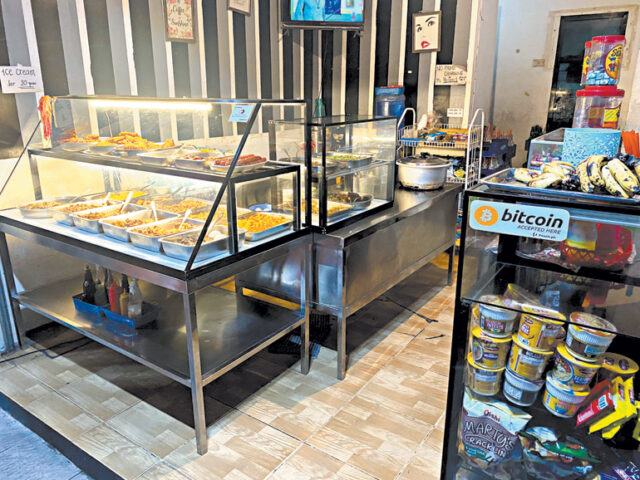
More than 250 local businesses in the popular tourist destination of Boracay, including convenience stores, cafes, hotels, and restaurants, have already enrolled with Pouch.ph and have been integrating Bitcoin payments into their daily operations.

For Erielyn Gaston, owner of Kasbar restaurant, accepting Bitcoin as payment allowed her to attract a wider customer base and increase sales.

“[Pouch.ph] has been very helpful as another mode of payment other than credit cards and e-wallets which is the usual mode of payment here [in Boracay],” she said in a panel discussion during the Bitcoin Island conference.

“It’s very convenient to have a payment service that’s fast and easily available so that for us, in regards to increasing the revenue, it allows people to stay longer because the other alternative that is there is one of these ATMs that are not from the banks the tourists [use]. If you ever add up the fees they charge for credit card users minus the exchange rate difference, you end up paying 10% to 11% if you withdraw from these ATMs,” Tindahan It Boracay Manager Marcel Selfer said.

Building on this success, the fintech firm is actively expanding its reach beyond “Boracay Bitcoin Island” and has onboarded merchants in Cebu City, Dumaguete, Iloilo, and Bacolod City.

In Metro Manila, some establishments have also started accepting Bitcoin as a valid form of payment through Pouch.ph such as the night bar URBN QC in Quezon City, Draper Startup House in Makati City, and niche retailer KosneyLand located inside a mall in Mandaluyong City.

Aside from receiving payments, some partner merchants use Pouch.ph for payroll. With Batch Pay feature, business owners can instantly send money in batches to employees, suppliers, and other recipients, including transfers to all major banks and e-wallets. They can transfer payroll directly to a Pouch Netbank Account with no fees, or to a nominated bank account for a minimal fee. This innovative solution aims to simplify and streamline payment processes for businesses across the country.

Pouch.ph is also preparing to extend its Batch Pay services for over-the-counter remittances through LBC, M Lhuillier, and Palawan Pawnshop.

Locals and tourists can find merchants that accept Bitcoin payments using BTCMap.org.

Historical places to explore on Independence Day

Aguinaldo Shrine and Museum — Photo by Ramon FVelasquez / WIKIMEDIA COMMONS

The Philippines marks the 125th year since its proclamation of independence from the colonial rule of Spain. As June 12 is considered a national holiday in the country, Filipinos can spend the time commemorating Independence Day with an exploration of historical landmarks and museums in the country.

From the exact location where the declaration of independence transpired, the significant sites related to the revolution, to the places marked by the nation’s heroes who lived during that period, here are the various places to trace back historic events to commemorate the country’s struggle for freedom and independence.

Aguinaldo Shrine and Museum

The house where the proclamation of independence took place on June 12, 1898. Such a history makes the Aguinaldo Shrine and Museum in Kawit, Cavite a must to visit in honoring the country’s Independence Day.

The shrine is an ancestral home of Emilio Aguinaldo, who donated it to the Philippine Government in 1963 “to perpetuate the spirit of the Philippine Revolution of 1896 that put an end to Spanish colonization in the country.” A year after, through Republic Act No. 4039, the house was considered a National Shrine.

Today, Filipinos can visit the Aguinaldo Shrine and Museum for learning and leisure. The mansion houses historical relics and antique furniture. At the back of the mansion is a garden, wherein the middle was the resting place of Aguinaldo.

Pamitinan Cave

Pamitinan Cave — Photo by Ramon FVelasquez / WIKIMEDIA COMMONS

Another place that also has a mark of Philippine Independence is the Pamitinan Cave. While associated with the legendary figure Bernardo Carpio from Philippine mythology, the Pamitinan Cave at the foothills of the Sierra Madre mountain range in Montalban, Rizal was also marked with historic significance by Andres Bonifacio and other members of the Katipunan.

On the walls of Pamitinan Cave, the words “Viva la Independencia Filipinas” were carved using charcoal. Mr. Bonifacio and his companions also signed their names on the walls. Those who were with him at that time were Emilio Jacinto, Aurelio Tolentino, Faustino Mañalac, and  Guillermo Masangkay, among others. This declaration of independence took place on April 12, 1895.

The Pamitinan Cave was declared a historic site by the National Historical Institute, now known as the National Historical Commission of the Philippines, in 1996.

Barasoain Church

Several significant events in Philippine history happened in Barasoain Church in Malolos, Bulacan, which makes it a meaningful spot to explore in celebrating a historic day.

The Barasoain Church is known as the place of the First Philippine Republic. The spiritual place witnessed the formation of the First Philippine Congress or the Malolos congress in September 1898. The election of delegates went on from June to September of that year, after the proclamation of independence in Aguinaldo’s residence in Kawit, Cavite. This was also where the Malolos Constitution was drafted in 1899.

As one remembers the historical events in visiting Barasoain Church, they could also admire the place’s Baroque Revival and Early Rennaissance design. The church started as a chapel in 1859. It was declared as a National Shrine through Presidential Decree No. 260 in 1973.

Luneta Park

In finding a place to commemorate the country’s proclamation of independence from Spain, one of the famous destinations to go to is the place marked by one of the prominent figures during the Spanish period.

Luneta is a historic urban park, then known as Bagumbayan, where the execution of Jose Rizal happened on December 30, 1896. In 1913, the Rizal Monument was built in Luneta Park in memory of the national hero. Today, the park remains to be frequently visited by many Filipinos.

But aside from Luneta Park, there are various places across the country that one could visit to trace the footsteps of Jose Rizal. Among these places are Fort Santiago in Intramuros, Manila; Rizal Shrine in Calamba, Laguna; and the Jose Rizal Memorial Protected Landscape near Dapitan in Zamboanga del Norte.

Calle Crisologo and Casa Manila

If one prefers a location that makes them feel that they are taken back in time, Calle Crisologo in Vigan, Ilocos Sur is one of the most popular places to visit for being a best-preserved heritage site.

Calle Crisologo is filled with ancestral houses, cobblestone pathways, and tungsten lamps. The place comprises several cafes and shops selling antiques and other souvenirs.

Meanwhile, for people in Manila who want to feel a place with a historic atmosphere without having to travel to Calle Crisologo, they can visit Casa Manila in Intramuros, a museum that shows the life of an affluent Filipino family during the 19th century.

Museums in the metro

A great place to get immersed in history is a museum. As part of one’s exploration during Independence Day, there are several museums to know more about Philippine history.

One could discover the history in pictures at the Museo Filipino, a photo exhibit gallery in Intramuros, Manila.

If one seeks to know more about Andres Bonifacio and the Katipunan, they can go to San Juan and visit the Museo ng Katipunan. — Chelsey Keith P. Ignacio

Bitskwela gathers key leaders, entrepreneurs, creatives to discuss issues on Web3

Guided by its mission to provide Filipinos with logical, factual, and insightful Web3 education, Filipino-led edutech firm Bitskwela brings back the Bull or Bear Web3 debates where thought leaders, entrepreneurs, and artists will convene to discuss complex issues about the disruptive technology.

“The key to Web3 mass adoption is education, and Bitskwela has always been keen on working with key operator leaders and decision-makers in the space to forward education. Through Bull or Bear, we’re able to provide level-headed education on pivotal Web3 topics,” said Jiro Reyes, chief executive officer of Bitskwela.

It’s upcoming debate in the series will tackle the so-called art on blockchain or non-fungible tokens (NFT), which has been a hot topic in the Web3 realm. To give light on controversies swirling around the traditional and NFTs, Bitskwela will hold “Brushes and Pixels: A Debate on NFTs and Fine Arts” on June 16 at the Imahica Art Gallery, Mandaluyong City.

Among the debaters is Brian Poe Llamanzares, co-founder of Artifract.io, a platform that democratizes Fine Arts ownership by fractionalizing them as NFTs.

A prominent figure in the Philippine art scene, Ian Fulgar, founder of Imahica Art Gallery and principal for Fulgar Architects, is expected to bring a unique perspective to the table and shed light on the evolving landscape of digital art.

Rising Filipino illustrator Marso Ya from community-driven groups Crypto Art PH and LevelArtGuild; serial entrepreneur, content creator, and cryptocurrency investor Chris Tan; and Jeffrey Bondoc, founder of the Filipino group of Bored Ape and Mutant Ape holders from the Bored Ape Yacht Club (BAYC) collection or BAYCkada, will also be in attendance to share their insights on complex issues about so-called crypto or blockchain arts.

Mr. Reyes said the event aims to foster a dialogue on the future of art through NFTs and traditional art.

“In this debate, we’ll see leaders from both industries share their thoughts on what the future of art, both in the physical world and the internet will be,” he said.

More recently, Bitskwela kick-started its debate series on its Twitter Space last June 9 with “The Limits of DYOR: A Debate on Web3 Influencers and Promotions.” YGG Country Manager Luis Buenaventura, Bitcoin firm Pouch.ph CEO Ethan Rose, Suzuverse PH and Web3 games influencer Em “Kaisaya” Dangla, Web3 content creator MJ Aguilar, and Favx Capital and Cryptoverse Academy CEO Marvin Favis presented their views on the dynamics between influencers and the “Do Your Own Research” or DYOR mantra in the Web3 realm.

“As Web3 revolutionizes sectors with its focus on decentralization, privacy, and user control, influencers are becoming pivotal voices that offer insights into its myriad applications. Meanwhile, the DYOR principle encourages independent research before making decisions in the digital space,” said JC Macalintal, chief marketing officer of Bitskwela.

The said debates are the official kickoff to Bitskwela’s “Bull or Bear: Philippine Web3 Debate 2023” Cebu edition, which will be held at the Ayala Malls Central Bloc, Cebu IT Park, Cebu City on July 15.

Co-presented by GCash and Blockceler8, the Bull or Bear Cebu edition is backed by the Department of Information and Communications Technology, Go Digital Pilipinas, Ayala Malls, Philippine Airlines, Likha NFT platform, and Likhaan. Other key partners include Web3 firms Tekkon and Hive, and crypto exchange and copy trading platform Bitget.

To reserve a seat for the onsite debates, interested audience can secure their tickets at www.bitskwela.com/bull-or-bear.

Reserve ratio cut may have little effect

BW FILE PHOTO

By Keisha B. Ta-asan, Reporter

THE CUT in Philippine banks’ reserve requirement ratio (RRR) would have minimal effect on liquidity because these would only replace an expiring relief measure given to lenders amid a coronavirus pandemic, analysts said at the weekend.

“The reserve requirement cut is expected to be liquidity-neutral because it offsets pandemic-era relief measures,” Nicholas Antonio T. Mapa, senior economist at ING Bank N.V. Manila, said in a Viber message.

“Any excess created can also be absorbed via the new Bangko Sentral ng Pilipinas (BSP) bill tenor. Thus, we are not expecting any adverse reaction to the move,” he added.

Last week, central bank Governor Felipe M. Medalla said the Monetary Board had cut the reserve ratio for big banks and nonbank financial institutions with quasi-banking functions by 250 basis points (bps) to 9.5% effective June 30.

The ratio for digital banks was also cut by 200 bps to 6%, and by 100 bps to 2% for thrift banks. The reserve ratio for rural and cooperative banks was likewise lowered by 100 bps to 1%.

The cuts will coincide with the expiration of a pandemic relief measure that counts loans to micro, small and medium enterprises (MSME) as an alternative compliance with reserve requirements.

“Although the RRR in the Philippines will still be the highest in the Association of Southeast Asian Nations (ASEAN), it is still a big benefit to banks as the level came from the heights of 20% in 2018,” Aris Dacanay, an economist for ASEAN at HSBC, said in a note.

He added that the expiration of alternative compliance for big banks is estimated to mop up P272.4 billion ($4.9 billion) worth of liquidity, while the 250-bp cut in the RRR will likely release P360.1 billion of liquidity.

“Taken all together, we estimate the net effect to be P87.7 billion,” he said. “This will be a net injection of liquidity in the system, but a limited one, given that it represents just 6.3% of the excess liquidity currently being absorbed by the BSP.”

He noted that when the reserve ratio cut takes effect, the BSP will be issuing its 56-day bill. “The liquidity injected by the RRR cut will likely be absorbed by this new tool on that same day,” Mr. Dacanay said.

While the cut will free up more money for banks to lend to consumers, it will have a small effect on the foreign exchange market, Robert Dan J. Roces, chief economist and assistant vice-president at Security Bank Corp., said in a Viber message.

“The Philippine forex market is currently in a state of flux,” he said. “The direction of the peso will likely depend on the outcome of a number of factors, including the strength of the dollar, the performance of the Philippine economy, trade levels and stability in interest rates.”

The peso has weakened against the dollar in the past months amid the US Federal Reserve’s mixed signals on its future policy moves and talks about the US debt ceiling, he said. “The speculative nature of the policy directions will lend to volatility in the dollar-peso exchange rate.”

Last month, the Monetary Board paused its policy tightening and signaled it would keep the key rate on hold until the third quarter. The BSP has raised policy rates by 425 bps to 6.25%.

On the other hand, the Federal Open Market Committee delivered a 25-bp rate increase last month, bringing the Fed fund rate to 5-5.25%. The Fed, which has hiked borrowing costs by 500 bps, will meet on June 13-14.   

WELL-TELEGRAPHED
The impact of China’s economic slowdown on Philippine exports could also widen the trade gap, putting more pressure on the peso, Mr. Roces said. “June is traditionally import season and as such, we will continue to see fluctuations in the exchange rate.”

The local currency closed at P56.05 a dollar on Friday, strengthening by six centavos from Thursday, data from the Bankers Association of the Philippines website showed. Week on week, the peso declined by 16 centavos.

Meanwhile, the central bank would be more effective in carrying out the reserve ratio cut than in 2018, when the market reacted negatively to a surprise reduction that was accompanied by rate increases, Mr. Mapa said.   

He added that the cut had been well-telegraphed and well-executed, while the BSP has tools now to absorb any excess liquidity — something that was absent in 2018.

Since March 2018, the BSP has been targeting to reduce big banks’ reserve requirement ratio to below 10%.

Mr. Dacanay said the timing of the cut is crucial. If the relief measures were not expiring, the cut could be interpreted as a “dovish signal” at a time when inflation is still elevated.

DBS Bank economist Chua Han Teng said in a note the cut does not imply a shift in the BSP’s monetary policy stance.

As inflation returns to the central bank’s 2-4% target by the fourth quarter, “we think that policy makers can wait and see for now,” he said.

Inflation eased for a fourth straight month in May to 6.1% — the lowest in a year. Still, it surpassed the central bank’s 2-4% goal for the 14th straight month. To date, inflation has averaged 7.5%.

The Monetary Board will meet on June 22 to review its policy settings.

ADVERTISEMENT
ADVERTISEMENT