Home Blog Page 4671

NG to borrow P180B from domestic market in July

BW FILE PHOTO

THE NATIONAL GOVERNMENT (NG) plans to borrow P180 billion from the domestic market in July, the Bureau of the Treasury (BTr) said on Tuesday.

Next month’s borrowing plan is 2.78% lower than the P185-billion program for June. Actual borrowings for June reached P172.989 billion, which is 6.49% below the program.

Broken down, the government will offer P5 billion worth of 91-day, 182-day, and 364-day T-bills on July 3, 10, 17, and 24.

National Government fiscal performanceFor the long-term tenors, the BTr will auction off P30 billion in nine-year T-bonds on July 4, and P30 billion in 15-year T-bonds on July 11.

It also will offer P30 billion in six-year debt papers on July 18, and P30 billion in seven-year bonds on July 25.

“The lower National Government borrowing plan for July 2023 may reflect the lower amount of maturing government securities/Treasury bonds versus June 2023,” Rizal Commercial Banking Corp. Chief Economist Michael L. Ricafort said in a Viber message. 

He also attributed the slightly lower borrowing plan to the recent improvement in tax revenue collections in recent months, and “more disciplined” spending.

Data from the Department of Finance (DoF) showed revenue collections jumped by 10.83% to P1.59 trillion in the January-to-May period, from P1.44 trillion recorded in the same period a year ago.

Demand for T-bills could be weaker this month as the US Federal Reserve and the Bangko Sentral ng Pilipinas (BSP) have signaled they may not cut rates this year, China Banking Corp. Chief Economist Domini S. Velasquez said in a Viber message.

BSP Governor Felipe M. Medalla on Friday signaled the central bank would probably keep its key policy rate unchanged at near 16-year high for the rest of the year.

“Waiting is the better strategy. Maybe the optimal waiting time is up to January or February if current conditions remain,” he told Bloomberg Television on Friday, a day after the Monetary Board left benchmark interest rates steady.

Fed Chair Jerome H. Powell has also signaled the central bank is not done with its aggressive tightening cycle, after policy makers held rates steady earlier this month. The next Fed meeting will be on July 25-26.

“On yields, we will likely see sideways movement this July with offsetting impact from lower domestic inflation and a possible hike from the Fed at their July meeting,” Ms. Velasquez said.

Headline inflation slowed to 6.1% in May from 6.6% in April. For the first five months, the consumer price index averaged 7.5%, still well above the BSP’s 2-4% target and 5.4% forecast for the year.

The gross domestic borrowing program this year is set at P1.654 trillion, composed of P54.1 billion in T-bills and P1.6 trillion in fixed-rate T-bonds.

The government borrows from local and external sources to help fund a budget deficit capped at 6.1% of the gross domestic product this year. — AMCS

Investors overly optimistic on speed, cost of taming inflation, says IMF

SINTRA, Portugal — The world’s top central banks may need longer to get inflation back down to target and a fresh bout of financial turbulence could make the process even more protracted, the International Monetary Fund’s (IMF) second-in-command said on Monday.

Central banks have raised interest rates at a brisk pace over the past year-and-a-half to fight off a historic surge in prices, but they have persistently underestimated inflationary pressures.

Describing what she called uncomfortable truths, Gita Gopinath argued that the financial community may be too optimistic about the cost and difficulty of taming inflation, which then raises the sort of stability risk central banks might not be equipped to handle.

“Inflation is taking too long to get back to target,” Ms. Gopinath told the European Central Bank’s annual get-together in Sintra, Portugal. “While headline inflation has eased significantly, inflation in services has stayed high, and the date by when it is expected to return to target could slip further.”

Such a delay would be costly, so central banks need to keep policy tight, despite an obvious cost to growth, she said.

The problem is that investors seem overly optimistic about the inflation path and do not see much of a hit to economic growth, an unlikely combination, especially if high rates persist for longer than currently predicted, Ms. Gopinath argued.

“It is useful to bear in mind that there is not much historical precedent for such an outcome,” she said.

Once the reality hits, asset prices could reprice, potentially setting off the sort of financial turbulence seen around the collapse of Silicon Valley Bank and the sale of Credit Suisse earlier this year, she warned.

While central banks have been adamant that they have the tools to manage both price and financial stability risks, the reality is that their powers are limited when financial stress threatens to morph into a systemic crisis, she added.

It is then up to governments to forestall a crisis, but their fiscal capacity is quite limited now, so central banks may need to let inflation come down even more slowly to avoid their own policy triggering a crisis.

“Financial stresses could generate tensions between central banks’ price and financial stability objectives,” Ms. Gopinath said. “While central banks must never lose sight of their commitment to price stability, they could tolerate a somewhat slower return to the inflation target to avert systemic stress.”

Still, for now, policy is not tight enough and central banks need to expect more persistent price pressures than in the past decade, that was characterized by anemic price growth, Ms. Gopinath said.

“Monetary policy should continue to tighten and then remain in restrictive territory until core inflation is on a clear downward path,” Ms. Gopinath said. — Reuters

ACEN steps up expansion with Vietnam acquisition

AYALA-LED ACEN Corp. through its subsidiary in Vietnam has completed the first-phase acquisition of a solar power business in the regional neighbor.

Patrice R. Clausse, chief executive officer (CEO) of ACEN International, said the partnership between ACEN Vietnam Investments Pte. Ltd. and Super Energy Corp. Public Co. Ltd.’s solar power business in Vietnam “marks the beginning of a long-term collaboration.”

He told the stock exchange on Tuesday that the group “will continue to look for new opportunities to grow our portfolio and jointly develop renewable energy projects across ASEAN.”

ACEN said the acquisition will take four phases, with the first phase adding about 141 megawatts (MW) of attributable capacity to the company’s renewable energy portfolio in Vietnam. ACEN will then acquire 49% of the Super Energy platform to bring its renewable energy portfolio in Vietnam-Lao People’s Democratic Republic to 1,200 MW of attributable capacity.

ACEN said the remaining phases of the acquisition are expected to be completed this year at an estimated investment of $165 million.

Super Energy is the operator and owner of 837 MW of solar projects in Vietnam through Solar NT, which is a solar energy platform owned by Super Energy Group Hong Kong Co., Ltd.

Jormsup Lochaya, chairman and CEO of Super Energy, said the groups’ synergy will enhance the foreign firm’s “growth potential and strengthen the renewable energy business structure, which will support our strategic partnership in many areas, including capital, personnel, technology, and networks for additional investment opportunities in the future.”

FORCE MAJEURE FOR ENEX’S OPERATIONS
In a separate regulatory filing, ACEN subsidiary ENEX Energy Corp. said the Department of Energy (DoE) granted the declaration of force majeure for its unit’s drilling operations in Service Contract (SC) 55.

ENEX said the DoE agreed to allow the request of its subsidiary, Palawan55 Exploration and Production Corp., for a force majeure relief due to the “operational and financial risks” associated with drilling operations in the West Philippine Sea (WPS).

It added that the department found a basis to place SC 55 under force majeure starting Dec. 6, 2022 “until such time that a clearance to proceed with exploration activities” in WPS has been issued by the national government. SC 55 is a deep-water block in the southwest Palawan Basin covering an area of 9,880 square kilometers.

At the local bourse on Tuesday, ACEN shares gained four centavos or 0.77% to end at P5.26 apiece, while ENEX shares fell by eight centavos or 0.86% to close at P9.18 each. — Ashley Erika O. Jose

San Miguel secures P100-B loan for MRT-7 project

SAN MIGUEL Corp.’s (SMC) infrastructure unit has a P100-billion loan that is expected to hasten the construction of the Metro Rail Transit 7 (MRT-7) project.

“The fund, which reached financial close last June 1, will help further speed up the construction of MRT-7, which is at 61.92% completion as of June 14,” the company said in a press release.

Data from the Public-Private Partnership Center showed that the cost of the MRT-7 project is P77 billion. The train system will have 14 stations.

The company said the closed syndicated loan agreement was between SMC Infrastructure and a consortium of Philippine banks: BDO Unibank, Inc., Philippine National Bank (PNB), Bank of Commerce (BankCom), Security Bank Corp., and the Government Service Insurance System (GSIS).

“We are grateful to our lenders as this facility will allow us to remain on track to meeting our target to start operations in 2025 bringing us closer to a future where Filipinos can reap the benefits of enhanced mobility and accessibility,” SMC President and Chief Executive Officer (CEO) Ramon S. Ang said.

MRT-7, which will run from Quezon City to San Jose del Monte, Bulacan, is expected to carry 300,000 passengers daily in its first year, and up to 850,000 passengers a day in its 12th year.

“With this project, we are truly proud to enable a convenient, alternative means of transportation that will help commuters from Quezon City to Bulacan to have more time for work, family, and recreation,” Security Bank President and CEO Sanjiv Vohra said in the press release.

GSIS President and General Manager Jose Arnulfo A. Veloso said: “state involvement in infrastructure projects plays a crucial role in establishing a robust economy.”

“SMC’s investments in various infrastructure projects boost the economy as these initiatives facilitate improved connectivity between regions and communities, positively impacting trade, tourism, and overall social integration,” said BDO Capital & Investment Corp. President Eduardo V. Francisco.

Cenon C. Audencial, Jr., PNB institutional banking head and executive vice-president, said: “SMC helps provide job opportunities for Filipinos and make the country more industrially competitive. Infrastructure investments are a step towards economic recovery and growth, and nation-building.”

BankCom President and CEO Michelangelo R. Aguilar said infrastructure projects such as the MRT-7 are crucial in nation-building.

“As SMC Infrastructure continues to strengthen its portfolio and operate the largest infrastructure network in the country, the lives of thousands of Filipinos are made better through safe, sustainable, and accessible transport systems,” he added. — Justine Irish D. Tabile

DMCI construction unit keen on more contracts to build data centers

THE CONSTRUCTION unit of DMCI Holdings, Inc. is aiming for more contracts to build data centers, which its top official sees as having good prospects.

“Of course, we are looking forward [to more data center contracts] because that looks to be the growth area,” D.M. Consunji, Inc. President and Chief Executive Officer Jorge A. Consunji told BusinessWorld at a recent corporate event.

He said the construction of a data center would mainly depend on the client’s needs for a specific site, while the company would need to study the structure’s contents.

“The structure is not the problem, it is a simple structure, but what is inside depends on who the clients are, so medyo (it’s a bit) tricky,” Mr. Consunji said.

“What we have been gathering is that it depends on who are the clients,” he said, referring to whether they are hyperscalers or middle scalers. “Iba-iba ang mga (They have different) requirements nila so we have to work with them as the contractor and or designer,” he added.

The company said earlier that its P42.4-billion order book for the year included the early work for the construction of a data center site.

“We want to start soft [for now] and feel our weight,” he said.

In its order book, D.M. Consunji included the second contract package of the South Commuter Railway Project, which involves the construction of railway tracks and stations along España Blvd., Sta. Mesa, and Paco in Manila.

It also listed the Dinapigue causeway expansion, Xavier School’s junior high school building, and the dredging and hauling of a lagoon in the La Mesa water treatment plant.

During the first quarter, the company reported a net income of P263 million, down 26% from P355 million, due to lower construction accomplishments and fewer projects in its pipeline.

D.M. Consunji is the construction arm of listed infrastructure and engineering conglomerate DMCI Holdings, which also has investments in coal mining, water, off-grid power generation, and property development.

DMCI Holdings’ shares went up by 3.3% or 30 centavos to P9.39 apiece. — Adrian H. Halili

A gift of music for Antonio and Andres Maigue

ANTONIO MAIGUE and Michel Rabaud with Andres Maigue

By Giselle P. Kasilag

IN 2014, FLUTIST Antonio Maigue received a life-changing gift: his son, Andres. And just like every other milestone in Mr. Maigue’s life, Andres’ arrival was marked with music. The child’s godfather, French pianist and composer Michel Rabaud, wrote Pour Andres Maigue to celebrate the occasion.

Making up the piece are “Aubade,” “Berceuse,” and “Serenade-valse” – three types of lullabies for morning, afternoon, and evening written for flute and piano. It was the result of eight years of trading notes, editing, and tweaking, all done through e-mail and messaging apps. In between were a pandemic and life-threatening illnesses for both men.

Finally satisfied with their efforts, they decided that the piece deserved to be performed before a proper audience rather than simply being posted on social media. Thus, the family packed their bags and flew to France.

On June 18, Pour Andres Maigue finally debuted at a salon in Paris. It was a full-circle moment witnessed by family, friends, and some of France’s up and coming musicians hoping to catch the same break that he did as a student learning flute from the masters at Conservatoire National Rueil-Malmaison.

An intimate concert with an audience of 50 was the appropriate venue to premiere a very personal composition.

“Even if only three-fourths of what we rehearsed was achieved, I would have been happy already. But we did better than that!” said Mr. Maigue, visibly still on cloud-nine after a successful performance. “Ang challenging were iyung mga parts na emotional. Naiiyak kasi ako! Like nung nage-ensayo kami, I had to stop and ask for a minute naiiyak kasi ako! May isang part na mabagal, na-incorporate iyungSa Ugoy ng Duyan.’ Kasama siya sa melody pero naka French harmony siya so hindi masyadong halata pero alam mong yuun iyun. Iba lang ang time signature (What was challenging were the parts that were emotional. I’d get tearful! Like when we were rehearsing, I had to stop and ask for a minute because I was tearing up! There’s one part that’s slow which incorporated [Filipino lullaby] ‘Sa Ugoy ng Duyan.’ It’s part of the melody but in French harmony so it’s subtle but you know it’s there. It’s in a different time signature).”

The emotions came from a mix of beautiful memories with his family and the threat to his life when he contracted COVID during the early part of the pandemic. It weighed heavily in his heart that Andres had yet to hear the music dedicated to him performed. The concert, in a way, was a fulfillment of this promise to his eldest child.

Si Andres, tinawag ko pa nung performance. Pinatayo ko sa harap at sabi ko heto si Andres. Para sa kanya itong piyesang ‘to (I called for Andres during the performance. I made him stand in front and told everyone this is Andres. This composition is for him),” Mr. Maigue shared.

Clearly, fatherhood has affected Mr. Maigue’s musicianship so deeply that he is now drawing from a whole new set of experiences and infusing them into his artistry.

“I guess being a father also made me more mature,” he admitted. “Noon kasi, as a musician, wala kang pasensiya kasi sa sarili mo, ganon ka. Ang nangyari sa akin, parang mas lalo kong naintindihan iyung pagkabata. Naiintindihan ko iyung psychology nung bata, kung bakit siya ganun. Iyung mas gusto mong curious siya or magulo siya kaysa tahimik lang siya. You learn by listening, not by talking. I’ve embraced that idea (Before, as a musician, I didn’t have patience because that was how I was with myself. But what happened to me was, I’ve come to understand what it means to be a child. I understood the psychology of children, why they’re like that. You want them curious or rowdy rather than just being quiet. You learn by listening, not by talking. I’ve embraced that idea).”

Unsurprisingly, both the Maigue children have inherited the musicality of their parents. Mr. Maigue’s wife, Mai Gensolin-Maigue, is an accomplished pianist and has performed with her husband in the past. Andres, the proud father enthused, has been writing his own songs. Luna, artist friends noticed, has an ear for the beat. They are both taking piano lessons along with taekwondo for Andres and ballet for Luna.

Family and music continue to be his source of strength. They helped him fight COVID when it was threatening his life. They inspired him when recovery was difficult. At some point, he was unsure if he could still play the flute but giving up was out of the question. He pushed himself till he could play again.

When he survived his first public performance at the University of the Philippines, it gave him the confidence to keep going. And now, back to his full strength, he is even able to play the alto flute which requires more strength to achieve a full sound.

The alto flute is at the center of another composition, this time dedicated to Luna, which he hopes to premiere in the Philippines when he returns to the country.

But for now, he is still basking in the afterglow of a successful performance and enjoying the precious gifts of family and music.

SMIC geothermal unit targets 600-MW capacity

SM Investments Corp. (SMIC) said its wholly owned subsidiary Philippine Geothermal Production Co., Inc. (PGPC) is expanding its renewable energy capacity to 600 megawatts (MW) through new exploration projects.

“[SMIC] is committed towards harnessing clean energy by increasing its capacity to provide steam. The Philippines’ location within the ‘Ring of Fire’ provides a huge opportunity for a low-carbon source of power,” Frederic C. DyBuncio, president and chief executive officer of SMIC, said in a statement on Tuesday.

PGPC aims to expand its steam output by another 300-MW worth of renewable energy capacity, the company said, adding that this development will increase its geothermal capacity to an estimated 600 MW.

“This is proven by PGPC’s half a century of reliable and consistent production of steam converted into renewable baseload electricity for its communities,” Mr. DyBuncio said. 

The company’s new projects are spread across Luzon, specifically in Kalinga, Daklan, Cagayan, and mounts Labo and Malinao. These projects are part of the company’s P3-billion investment per year, PGPC said.

PGPC is the operator of the Tiwi and Mak-Ban steam fields, which SMIC said helped reduce about 57.5 billion kilograms worth of carbon dioxide emissions since the start of its commercial operation.

The steam fields in Tiwi in Albay and Mak-Ban (Makiling-Banahaw) in Laguna and Batangas generate combined geothermal steam enough to produce 300 MW of electricity.

Tiwi is the first commercial-scale geothermal steam field development in Southeast Asia, followed by Mak-Ban. Both have been in operation since 1979.

SMIC said it would remain committed to helping further boost sustainability initiatives through investments in renewable energy, which is part of its “SM Green Movement.”

At the local bourse on Tuesday, shares in the company closed P10 or 1.08% lower at P919 each. — Ashley Erika O. Jose

The folly of making art with text-to-image generative AI

MAKING ART using artificial intelligence (AI) isn’t new. It’s as old as AI itself.

What’s new is that a wave of tools now let most people generate images by entering a text prompt. All you need to do is write “a landscape in the style of Van Gogh” into a text box, and the AI can create a beautiful image as instructed.

The power of this technology lies in its capacity to use human language to control art generation. But do these systems accurately translate an artist’s vision? Can bringing language into art-making truly lead to artistic breakthroughs?

I’ve worked with generative AI as an artist and computer scientist for years, and I would argue that this new type of tool constrains the creative process.

When you write a text prompt to generate an image with AI, there are infinite possibilities. If you’re a casual user, you might be happy with what AI generates for you. And startups and investors have poured billions into this technology, seeing it as an easy way to generate graphics for articles, video game characters, and advertisements.

In contrast, an artist might need to write an essay-like prompt to generate a high-quality image that reflects their vision — with the right composition, the right lighting, and the correct shading. That long prompt is not necessarily descriptive of the image but typically uses lots of keywords to invoke the system of what’s in the artist’s mind. There’s a relatively new term for this: prompt engineering.

Basically, the role of an artist using these tools is reduced to reverse-engineering the system to find the right keywords to compel the system to generate the desired output. It takes a lot of effort, and much trial and error, to find the right words.

To learn how to better control the outputs, it’s important to recognize that most of these systems are trained on images and captions from the internet.

Think about what a typical image caption tells about an image. Captions are typically written to complement the visual experience in web browsing.

For example, the caption might describe the name of the photographer and the copyright holder. On some websites, like Flickr, a caption typically describes the type of camera and the lens used. On other sites, the caption describes the graphic engine and hardware used to render an image.

So to write a useful text prompt, users need to insert many nondescriptive keywords for the AI system to create a corresponding image.

Today’s AI systems are not as intelligent as they seem; they are essentially smart retrieval systems that have a huge memory and work by association.

Is this really the sort of tool that can help artists create great work?

At Playform AI, a generative AI art platform that I founded, we conducted a survey to better understand artists’ experiences with generative AI. We collected responses from over 500 digital artists, traditional painters, photographers, illustrators, and graphic designers who had used platforms such as DALL-E, Stable Diffusion, and Midjourney, among others.

Only 46% of the respondents found such tools to be “very useful,” while 32% found them somewhat useful but couldn’t integrate them into their workflow. The rest of the users — 22% — didn’t find them useful at all.

The main limitation artists and designers highlighted was a lack of control. On a scale 0 to 10, with 10 being most control, respondents described their ability to control the outcome to be between 4 and 5. Half the respondents found the outputs interesting, but not of a high enough quality to be used in their practice.

When it came to beliefs about whether generative AI would influence their practice, 90% of the artists surveyed thought that it would; 46% believed that the effect would be a positive one, with 7% predicting that it would have a negative effect. And 37% thought their practice would be affected but weren’t sure in what way.

Are these limitations fundamental, or will they just go away as the technology improves?

Of course, newer versions of generative AI will give users more control over outputs, along with higher resolutions and better image quality.

But to me, the main limitation, as far as art is concerned, is foundational: it’s the process of using language as the main driver in generating the image.

Visual artists, by definition, are visual thinkers. When they imagine their work, they usually draw from visual references, not words — a memory, a collection of photographs or other art they’ve encountered.

When language is in the driver’s seat of image generation, I see an extra barrier between the artist and the digital canvas. Pixels will be rendered only through the lens of language. Artists lose the freedom of manipulating pixels outside the boundaries of semantics.

There’s another fundamental limitation in text-to-image technology.

If two artists enter the exact same prompt, it’s very unlikely that the system will generate the same image. That’s not due to anything the artist did; the different outcomes are simply due the AI’s starting from different random initial images.

In other words, the artist’s output is boiled down to chance.

Nearly two-thirds of the artists we surveyed had concerns that their AI generations might be similar to other artists’ works and that the technology does not reflect their identity — or even replaces it altogether.

The issue of artist identity is crucial when it comes to making and recognizing art. In the 19th century, when photography started to become popular, there was a debate about whether photography was a form of art. It came down to a court case in France in 1861 to decide whether photography could be copyrighted as an art form. The decision hinged on whether an artist’s unique identity could be expressed through photographs.

Those same questions emerge when considering AI systems that are taught with the internet’s existing images.

Before the emergence of text-to-image prompting, creating art with AI was a more elaborate process: Artists usually trained their own AI models based on their own images. That allowed them to use their own work as visual references and retain more control over the outputs, which better reflected their unique style.

Text-to-image tools might be useful for certain creators and casual everyday users who want to create graphics for a work presentation or a social media post.

But when it comes to art, I can’t see how text-to-image software can adequately reflect the artist’s true intentions or capture the beauty and emotional resonance or works that grip viewers and makes them see the world anew. — The Conversation via Reuters Connect

Ahmed Elgammal is a Professor of Computer Science and Director of the Art & AI Lab, Rutgers University. He is the founder of Playform AI.


Ayala Land expects to sustain growth 

AYALA Land, Inc. expects to continue its sales growth trajectory into the second half of the year, driven by its residential property business, its treasurer said.

“We have always said that as long as the economy is growing at 5% or better, then our businesses will continue to do well,” Ayala Land Senior Vice-President and Chief Finance Officer Augusto Cesar D. Bengzon told reporters on the sidelines of a company event.

Mr. Bengzon, who is also the company’s treasurer, said Ayala Land remains optimistic about its residential sales, which have been growing close to pre-pandemic numbers.

“We are quite pleased with the performance of our residential business,” he said.

He said sales have been trending at about 60% to 70% of pre-pandemic periods, “which were boom years.”

“The past three years, despite the pandemic, it has been growing at mid-teen levels,” he said.

The company targets to launch about P100-billion worth of residential projects this year depending on market demand.

“So we track our inventory levels, and we would like to move our inventory. Once we get it within our desired levels then we can launch,” Mr. Bengzon said.

“But what’s more important is that we are prepared to launch depending on the demand on the ground,” he added.

He said that for the year, the bulk of the company’s capital spending will be allocated for the completion of its residential projects.

Ayala Land said earlier that it allocated about P85 billion for capital expenditure projects this year.

During the first quarter, the company’s attributable net income rose by 42% to P4.5 billion, while revenues jumped by 26% to P30.9 billion due to higher contributions from its business lines.

Residential sales reservations rose by 15% to P27.7 billion due to resilient demand despite elevated interest rates. Commercial leasing revenues amounted to P10.1 billion, a 57% jump from the prior year. Revenues from property development increased by 8% to P17.1 billion.

On Tuesday, Ayala Land rose by 1.62% or 40 centavos to P25.10 per share. — Adrian H. Halili 


Note: This story has been updated to reflect changes requested by the company on its residential business performance numbers. 

DigiPlus Interactive Corp. to hold 2023 Annual Meeting of Stockholders on July 28


Spotlight is BusinessWorld’s sponsored section that allows advertisers to amplify their brand and connect with BusinessWorld’s audience by enabling them to publish their stories directly on the BusinessWorld website. For more information, send an email to online@bworldonline.com.

Join us on Viber at https://bit.ly/3hv6bLA to get more updates and subscribe to BusinessWorld’s titles and get exclusive content through www.bworld-x.com.

Devotion to beauty

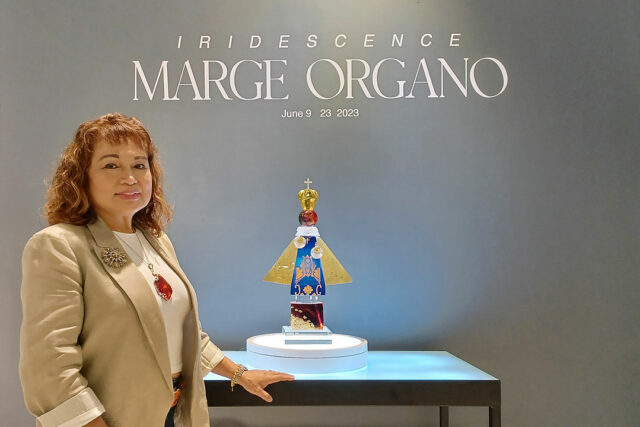
THERE is a brilliance in how human existence can be reflected in light, in color, and in complexity. For sculptor Marge Organo, this very uniqueness and beauty of glass is what drew her to the medium. 

“Glass sculpture is such a brilliant art form,” she told BusinessWorld

At Galerie Joaquin in Bonifacio Global City (BGC), her recent exhibit “Iridescence” showcased her many works, from the naked female Torso and the mourning Belle Femme, to the tender Mother and Child and the grand Sto. Niño in various colors. 

These sculptures, iridescent in nature, stem from her experiences and beliefs as a woman, a mother, and a devoted Catholic. They’ve resonated with many people, resulting in shows where most, if not all, of her works are sold. 

Having started later in life, she wasn’t always sure of how to make her mark through art, however. 

“I started with clay and resin but noticed there were so many talented women sculptors using the same media, so what chance did I have to stand out?” Ms. Organo said in an interview during her exhibit. 

The solution to this conundrum was glass casting, since she figured she had always wanted a glass sculpture of her own. Armed with a love of tinkering with things, she set off to find someplace to learn the art. 

This led her to the Corning Museum of Glass in New York, known as the most prestigious glass-making school in the world, and later to Kamenicky Senov in Prague, the oldest glass-making school in the world. 

“I learned everything I could about glass sculpting,” said Ms. Organo. “But my chosen medium is optical glass, also called crystal, which has a very brilliant shine when polished.” 

In Prague, the Shrine of the Infant Jesus was the inspiration for her shining and colorful Sto. Niño collection, now renowned locally. 

“There were different Infant Jesus of Prague images in various colors. They were not just clothed in the usual red, green, or gold like the ones in the Philippines. That’s why I did my own version in glass,” she said. 

Even as the only Filipino and only woman in the schools she had enrolled in abroad, Ms. Organo made it a point to “push the boundaries of glass-making techniques” to prove her talent. 

“I discovered new tools, new shapes that I can make, and I was able to come up with new uses from the tools that I have,” she explained. 

“Many people ask me how I’m able to achieve such vibrant color in my glass sculptures, and I tell them it’s my secret recipe.” 

 “Iridescence” was on view at the Galerie Joaquin in BGC in June. “Glass House,” an exhibit that focuses on Filipino glass sculptures, will showcase some of Ms. Organo’s works at the Modern and Contemporary Art Festival at the Fairmont Hotel, Makati, on July 28-30. — Brontë H. Lacsamana

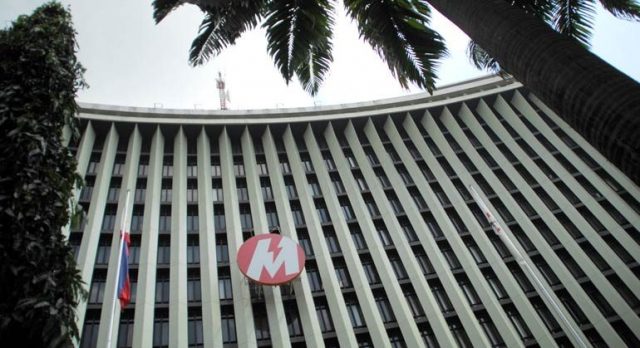
Meralco board clears management changes

MANILA ELECTRIC CO. (Meralco) on Tuesday announced changes in the company’s leadership.

In a disclosure to the stock exchange, Meralco said its board of directors had approved management changes effective July 1.

Manuel V. Pangilinan will now only hold two positions in the company — as its chairman and chief executive officer (CEO) from being its chairman, president, and CEO.

Ronnie L. Aperocho will serve as the company’s executive vice-president and chief operating officer starting next month. He previously served as Meralco’s senior vice-president and its head of networks.

“This is part of the changes in designation aligned with Meralco’s goal to streamline its operations,” said Joe R. Zaldarriaga, Meralco spokesperson and vice-president for corporate communications, in a statement issued via Viber.

He said Mr. Pangilinan continues to lead Meralco as its chairman and CEO while Mr. Aperocho will oversee the day-to-day operations of the distribution utility after his promotion.

During the company’s annual stockholders meeting last month, it was announced that Ray C. Espinosa is stepping down as president and CEO, with Mr. Pangilinan taking over the posts.

At the local bourse on Tuesday, shares in the company gained P5 or 1.52% to end at P334 each.

Meralco’s controlling stakeholder, Beacon Electric Asset Holdings, Inc., is partly owned by PLDT Inc. Hastings Holdings, Inc., a unit of PLDT Beneficial Trust Fund subsidiary MediaQuest Holdings, Inc., has an interest in BusinessWorld through the Philippine Star Group, which it controls. — Ashley Erika O. Jose

ADVERTISEMENT
ADVERTISEMENT