Home Blog Page 458

Japan sets sail on rare earth hunt as China tightens supplies
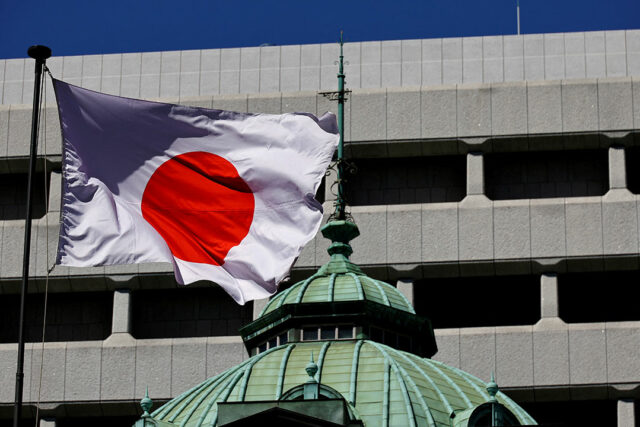
THE Japanese national flag waves at the Bank of Japan building in Tokyo, Japan on March 18, 2024. — REUTERS/KIM KYUNG-HOON/FILE PHOTO

SHIZUOKA, Japan — A Japanese mining ship departed on Monday for a remote coral atoll to probe mud rich in rare earths, part of Tokyo’s drive to curb its reliance on China for critical minerals as Beijing tightens supply.

The month-long mission of the test vessel Chikyu near Minamitori Island some 1,900 kilometers (km) (1,200 miles) southeast of Tokyo, will mark the world’s first attempt to continuously lift rare earth seabed sludge from 6 km (4 miles) deep onto a ship.

Japan, like its Western allies, has been reducing its dependence on China for the minerals vital to the production of cars, smartphones and military equipment, an effort that has taken on urgency amid a major diplomatic dispute with Beijing.

“After seven years of steady preparation, we can finally begin the confirmation tests. It’s deeply moving,” Shoichi Ishii, the head of the government-backed project told Reuters, as the vessel departed the port city of Shizuoka on a bright sunny day, with a snow-capped Mount Fuji in the background.

“If this project succeeds, it will be of great significance in diversifying Japan’s rare earth resource procurement,” he said, adding that recovering the key minerals from 6 km below sea level would be a major technological achievement.

The vessel, with 130 crew and researchers, is scheduled to return to the port on Feb. 14.

REDUCING RELIANCE ON CHINA WON’T BE EASY
Last week, China banned exports of items destined for Japan’s military that have civilian and military uses, including some critical minerals. The Wall Street Journal reported Beijing has also begun restricting rare earth exports to Japan more broadly.

Japan has condemned China’s dual-use ban but declined to comment on the report of a broader ban, which China has not confirmed or denied. Chinese state media, though, have said Beijing was weighing the measure.

Finance ministers from the Group of Seven industrial powers will discuss rare earth supplies at a meeting in Washington on Monday, sources familiar with the matter told Reuters.

Japan is no stranger to facing China’s wrath over rare earths. In 2010, China held back exports following an incident near disputed islands in the East China Sea.

Since then, Japan has reduced its reliance on China to 60% from 90% by investing in overseas projects like trading house Sojitz’s tie-up with Australia’s Lynas Rare Earths, and promoting rare earths recycling and manufacturing processes that rely less on the minerals.

The Minamitori Island project, however, is the first to attempt to source rare earths domestically.

“The fundamental solution is to be able to produce rare earths inside Japan,” said Takahide Kiuchi, executive economist at Nomura Research Institute.

“If this new round of export controls ends up covering a lot of rare earths, Japanese companies will again make efforts to move away from China, but I don’t think it will be easy,” he said.

For some heavy rare earths, such as those used for magnets in electric- and hybrid-vehicle motors, Japan is almost totally dependent on China, analysts say — a major risk for its key automotive industry.

LONG-TERM PROJECT
Since the 2010 scare, the Japanese government and private companies have built stockpiles of the minerals, though they do not disclose volumes.

At a New Year’s party for Japan’s mining industry on Wednesday, several executives said they were better prepared than before to cope with the potential disruption, citing Japan’s diversification efforts and stockpiles.

But Kazumi Nishikawa, principal director of economic security at the trade ministry, said the government had to continually remind companies to diversify their supply chains.

“Sometimes, you know, some event happened, then the business reacts, but the event finishes, the business forgets. We have to maintain continuous efforts,” Mr. Nishikawa said on the China Talk podcast this week.

The Minamitori Island project, into which the government has sunk 40 billion yen ($250 million) since 2018, is also a long-term play.

Its estimated reserves have not been disclosed, and no production target has been set. But if it succeeds, a full-scale mining trial will be conducted in February 2027.

Mining the mud was previously viewed as uneconomical due to high costs. But if supply disruption from China continues and buyers become willing to pay higher prices, the project could become viable in coming years, said Kotaro Shimizu, principal analyst at Mitsubishi UFJ Research and Consulting.

China is keeping a close watch. When the ship was conducting surveys around the island in June last year, a fleet of Chinese naval ships sailed nearby, Mr. Ishii said.

“We feel a strong sense of crisis that such intimidating actions were taken,” he said. China said its actions were in line with international law and called on Japan to “refrain from hyping up threats.” — Reuters

Vietnam’s Communist Party chief Lam seeks presidency in China-style expanded power mandate

STOCK PHOTO | Image by Georgios Domouchtsidis from Unsplash

HANOI — Vietnam’s Communist Party chief To Lam is seeking to combine his party role with the state presidency, officials said, in a move that would align Vietnam’s political structure more closely to China’s where President Xi Jinping heads the party and state.

Next week some 1,600 delegates will gather in Hanoi to kick off a week-long Communist Party congress, held every five years to select new leaders and set policy goals for the single-party state.

Mr. Lam, 68, bid for both top positions at a party meeting in December, seeking initial party approval ahead of the congress, three people briefed by the delegates and another three officials familiar with the matter told Reuters.

While the sources said the party meeting backed Mr. Lam to remain party chief, the three people briefed by delegates gave differing accounts on the question of the presidency, a largely ceremonial role but one currently held by the military.

Two said Mr. Lam won support for his bid, while the third said the conclusion was unclear. In any case, the final decision rests with delegates who will be elected at the congress.

The party’s secretariat did not immediately reply to a request for comment.

The combination of the two top jobs for the next five years would mark a significant departure from Vietnam’s traditional power-sharing model. Only in exceptional periods after the death of incumbents have the positions been merged, including in 2024 when Mr. Lam held both positions for about three months.

POWER-SHARING TALKS
Should Mr. Lam succeed, the military, a powerful faction within the party, would give up the presidency in exchange for maintaining a broad autonomy over the promotion of its senior officers, two sources said.

One official said military leaders are negotiating “safeguards” to limit Mr. Lam’s authority. The defense ministry was not immediately available for comment.

In possible signs of early concessions, some controversial economic policies pursued under Mr. Lam’s first term were revised or faced unexpected hurdles ahead of the congress, including credit growth and a high-speed railway.

Supporters of combining the two roles argue all other communist countries — China, North Korea, Cuba and Laos — vest both positions in a single leader and note the move would bolster Mr. Lam’s economic reform agenda and strengthen his standing in meetings with foreign leaders.

Skeptics see the change as emboldening a leader seen as a risk-taker who has already vastly expanded the powers of the security apparatus.

The merger would be “the natural outcome of streamlining Vietnam’s political structure,” said Carl Thayer, a senior expert on Vietnam at the Australian Defense Force Academy, noting Mr. Lam has already effectively taken over some of the president’s powers with frequent overseas trips last year.

Starting Jan. 19, the week-long congress will elect 200 members of the new central committee, with a large number of newcomers expected to join, raising questions about whether they will confirm decisions made by the roughly 140 delegates who voted in December.

The central committee will elect the party chief and the politburo. Mr. Lam in July said the new politburo will have 17-19 members, but the size will depend on delegates’ votes on a pre-arranged shortlist.

The politburo will then nominate the president, prime minister and speaker of the parliament, whose appointments lawmakers must confirm. — Reuters

Australian parliament to return to pass hate speech laws after Bondi attack

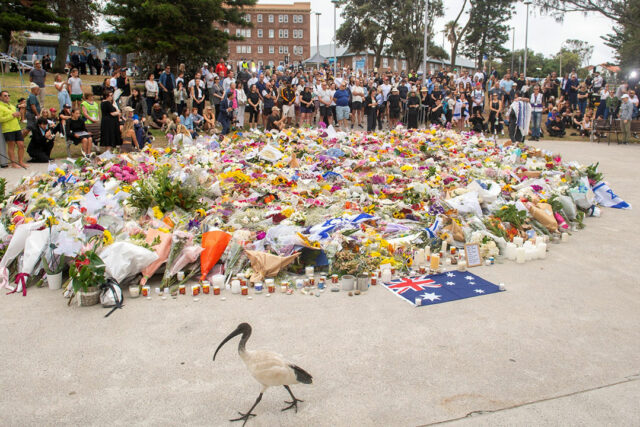
People gather at the floral tribute at Bondi Beach to honor the victims of a mass shooting targeting a Hanukkah celebration on Sunday at Bondi Beach in Sydney, Australia. — REUTERS

SYDNEY — Australia’s national parliament will cut short its summer break to pass laws tackling hate speech after the Bondi Beach mass shooting, Prime Minister Anthony Albanese said on Monday, as concerns were also expressed over free speech.

The December 14 shooting in Sydney that killed 15 people at a Jewish Hanukkah celebration sparked nationwide calls to tackle antisemitism. Police say the alleged gunmen were inspired by the Islamic State militant group.

The federal parliament will return next Monday, and Mr. Albanese said he wanted legislation to step up penalties for hate speech and authorize a gun buyback to pass the following day.

Australians were entitled to express different views about the Middle East, he told reporters in Canberra.

“What they are not entitled to do, is to hold someone to account for the actions of others because they are a young boy wearing a school uniform going to a Jewish school or a young woman wearing a hijab,” he said.

The proposed laws will also ease visa denials on the ground of racial bigotry, and lower the threshold for banning hate organizations including neo-Nazi groups, officials said.

ALBANESE FACED CRITICISM FROM JEWISH GROUPS, ISRAEL
In the days after the Bondi Beach attack, Jewish community groups and the Israeli government criticized Mr. Albanese for failing to act on a rise in antisemitic attacks and criticized protest marches against Israel’s war in Gaza held since 2023.

Last week, Mr. Albanese said a Royal Commission would consider the events of the shooting as well as antisemitism and social cohesion in Australia.

A top Australian arts festival has seen the withdrawal of dozens of writers in a backlash against its decision to bar an Australian Palestinian author.

The Adelaide Festival board said last Thursday it would disinvite Randa Abdel-Fattah from February’s Writers Week in the state of South Australia because “it would not be culturally sensitive to continue her program at this unprecedented time, so soon after Bondi”.

A Macquarie University academic who researches Islamophobia and Palestine, Ms. Abdel-Fattah responded criticizing the move as “a blatant and shameless act of anti-Palestinian racism and censorship”.

Around 100 authors have since withdrawn from the festival in protest, local media reported.

The festival’s executive director, Julian Hobba, said the arts body was “navigating a complex and unprecedented moment” after the “significant community response” to the board decision. Three board members and the chairperson had resigned.

MOST POPULOUS STATE ADOPTS TOUGHER RULES
New South Wales state premier Chris Minns unveiled new rules on Monday that allow local councils to cut off power and water to illegally operating prayer halls and impose bigger fines, as part of measures to curb “hate preachers”.

Mr. Minns said the move was prompted by the difficulty in closing a Muslim prayer hall in Sydney linked to a cleric found by a court to have made statements intimidating Jewish Australians.

The mayor of the western Sydney suburb of Fairfield, which has a large Muslim community, said councils should not be responsible for determining hate speech.

“Freedom of speech is something that should always be allowed, as long as it is done in a peaceful way,” Mayor Frank Carbone told Reuters. — Reuters

South Korea to probe drones North Korea says violated its airspace

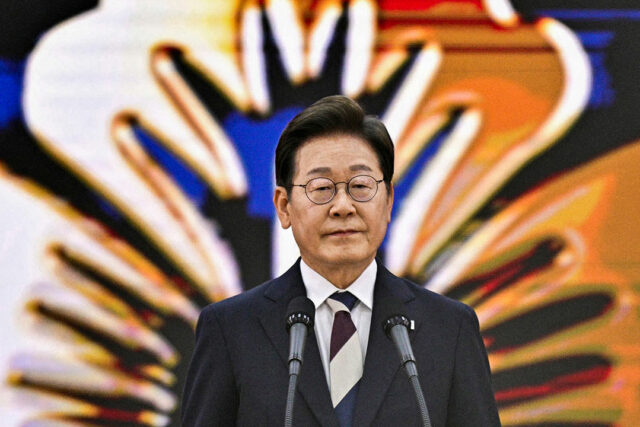
SOUTH KOREA’S President Lee Jae-myung delivers a speech after taking his oath during his inauguration ceremony at the National Assembly in Seoul on June 4, 2025. — REUTERS

SEOUL — South Korean authorities have launched an investigation focused on the possibility civilians may have flown drones that North Korea said violated its airspace, the defense ministry said on Monday.

President Lee Jae Myung has vowed a swift probe and said on Saturday if civilians had indeed operated the unmanned aircraft, it would be a “serious crime” that threatened South Korea’s security and peace on the Korean peninsula.

South Korea is willing to jointly conduct the investigation with North Korea but has not made the proposal, a defense ministry spokesperson said citing Minister Ahn Gyu-back.

North Korea has not responded to previous attempts by Mr. Lee’s government to initiate dialogue.

North Korea’s military on Saturday accused the South of “acts of provocation” by sending the drones, saying it had shot down the aircraft and disclosed what it said were pieces of the drones and aerial photos they took.

South Korea’s military said it did not operate the drone model in question or operate any on the date cited by the North of the intrusion. It had no intention to provoke the North, it said.

Tensions frequently flare up between South Korea and its nuclear-armed northern neighbor.

Former South Korean President Yoon Suk Yeol went on trial on Monday on charges of trying to provoke North Korea in 2024 as a pretext for declaring martial law later that year. He is facing a separate trial for insurrection over the martial law attempt. — Reuters

Thailand’s liberal opposition tops polls as election looms

PIXABAY

BANGKOK — Thailand’s progressive opposition People’s Party and its leader are most favored among voters for next month’s general election, two surveys showed, underlining the stiff challenge facing Prime Minister Anutin Charnvirakul’s bid to stay in power.

Thailand’s February 8 election could usher in a new round of turmoil in Thailand, and will be a showdown between the anti-establishment People’s Party, Mr. Anutin’s conservative Bhumjaithai and the former ruling party Pheu Thai, with bitter histories of betrayal that could complicate efforts to form a government.

The People’s Party was backed by 34.2% of respondents in a January 6-9 poll by Suan Dusit released on Sunday, with Bhumjaithai second on 16.2% and the once-dominant Pheu Thai on 16.0%.

People’s Party head and opposition leader Natthaphong Ruengpanyawut was the top choice for prime minister among 32% of the 2,682 people surveyed, followed by Pheu Thai’s Yodchanan Wongsawat on 17.4% and Mr. Anutin third on 15.1%.

With huge support among young and urban Thais for its bold reform agenda, the People’s Party’s predecessor Move Forward won the most votes in the 2023 election but was blocked from power by lawmakers allied with the royalist military.

Move Forward was later dissolved by a court, one of a series of dramatic twists in an unrelenting cycle of upheaval that has seen three Thai premiers in less than three years.

Mr. Anutin called a snap election on December 12 after less than 100 days in office during a turbulent parliamentary session that could have led to a no-confidence vote and the collapse of his fragile minority government. It came also as Thailand’s military was embroiled in a fierce three-week border conflict with Cambodia.

A poll released on Sunday by the National Institute for Development Administration also showed Mr. Natthaphong as the top choice for premier, backed by 24.7% of the people surveyed, followed closely by Mr. Anutin with 20.8% and Mr. Yodchanan fifth on 9.6%.

NIDA’s January 5-8 survey of 2,500 people showed the People’s Party as the most popular with about 30.5% of support, followed by Bhumjaithai at 22.3%.

The billionaire Shinawatra family’s Pheu Thai was third, picked by 15.4% of respondents, indicating declining support for the populist outfit following the collapse of its government in September after Paetongtarn Shinawatra’s sacking by a court and the jailing its influential founder, Thaksin Shinawatra. — Reuters

South Korea’s Lee to head for Japan summit a week after meeting China’s Xi

SOUTH KOREA’S President Lee Jae-myung delivers a speech after taking his oath during his inauguration ceremony at the National Assembly in Seoul on June 4, 2025. — REUTERS

SEOUL — South Korean President Lee Jae Myung is set for a summit with Japanese Prime Minister Sanae Takaichi on Tuesday, a week after one with Chinese President Xi Jinping, as Seoul seeks to balance ties with both neighbors.

The summit in Japan’s Nara City comes amid a growing diplomatic dispute between Beijing and Tokyo, and analysts expect Ms. Takaichi to highlight the stability of three-way ties between the United States, Japan, and South Korea.

Mr. Lee has taken an approach of “pragmatic diplomacy” in seeking to balance ties with China and Japan, which could making it easier to reach pacts in business fields such as artificial intelligence (AI).

“Historically, disputes between China and Japan go on for a long time,” said Yang Kee-ho, a Japanese studies professor at South Korea’s Sungkonghoe University.

“It is very likely that the Sino-Japanese relationship will deteriorate throughout (Takaichi’s) term in office.”

Beijing was infuriated after Ms. Takaichi said in November a Chinese attack on democratically governed Taiwan could be deemed an existential threat to Japan, which could trigger a military response from Tokyo.

China regards Taiwan as part of its territory, a claim the island’s government rejects.

In the face of the tension with China, Japan may seek to bolster diplomatic ties with South Korea, possibly through a strategic partnership, said Lee Chang-min, another Japan expert at Hankuk University of Foreign Studies.

“Not only has Japan’s relationship with China deteriorated, the United States has also put a little distance from Japan in its (Taiwan) stance,” said Mr. Lee.

South Korea’s Mr. Lee and Ms. Takaichi may discuss the Japan-China dispute during their meeting, a security adviser to Lee, Wi Sung-lac said on Friday. However, South Korea is unlikely to take sides, analysts said.

“Our relationship with Japan is as important as our relationship with China,” Mr. Lee told reporters during his state visit to China last week.

NORTH KOREA ISSUES
Perennial concerns, such as the denuclearization of the Korean peninsula and the fate of Japanese nationals abducted by neighboring North Korea are also expected to figure on the agenda.

However, analysts said the areas offering the easiest scope for concrete agreements may lie in business, such as cooperation in artificial intelligence and chips, and easing travel for business executives between the countries.

The two leaders are expected to extensively discuss “areas directly related to people’s livelihoods … such as intellectual property and AI,” Mr. Wi said.

The summit in Ms. Takaichi’s home prefecture of Nara also offers Mr. Lee an opportunity to take up issues of regional cooperation, as part of a pledge to spur development in areas outside Seoul.

Ties are still plagued by longstanding tension on topics such as Japan’s colonization of Korea, including the treatment of Korean women forced to work in its wartime military brothels.

Such historical issues have moved from the center stage of relations for now, analysts said, though some in South Korea still want them to stay high on the agenda.

Mr. Lee’s two-day visit to Japan, shorter than his four-day trip to China, is part of “shuttle diplomacy” efforts that the two countries agreed last year.

Even if the trip has no tangible outcome, said Mr. Yang, “The most important thing is to keep the shuttle meetings going … and eventually reaching concrete results.” — Reuters

Over 1,000 families inside evacuation center amid Mayon Volcano’s unrest

Incandescent pyroclastic density currents (PDC) or “uson” and rockfall being shed from the summit lava dome of Mayon Volcano on Jan. 9, 2026.—PHIVOLCS-DOST FB PAGE

The ongoing unrest of Mayon Volcano in Albay has caused 1,116 families to take shelter in 14 evacuation centers across the province, according to the National Disaster Risk Reduction and Management Council (NDRRMC) on Monday.

Another 15 families are staying outside the evacuation centers, bringing the total number of affected families to 1,131, the NDRRMC said in its 11:00 a.m. report.
All families sheltered in evacuation centers are from Albay, mostly from the municipality of Malilipot and Tabaco City.

The NDRRMC said that food and relief assistance were provided to 1,127 families in need, with a total cost of over P8.6 million.

Mayon Volcano has remained at Alert Level 3 since Jan. 6 due to its heightened unrest, during which magmatic eruptions on its lava dome and other volcanic activities were observed.— Edg Adrian A. Eva

Fed’s Powell says Trump administration has threatened him with a criminal indictment

US FEDERAL RESERVE Chairman Jerome Powell — REUTERS/KEVIN LAMARQUE/FILE PHOTO

WASHINGTON — The Trump administration has threatened to indict Federal Reserve Chair Jerome Powell over Congressional testimony he gave last summer about a Fed building project, an action Powell called a “pretext” to gain more influence over the central bank and monetary policy.

The development in the long-simmering effort by President Donald Trump for greater control over the Fed had immediate fallout, with Republican Senator Thom Tillis, a member of the Senate Banking Committee that vets Presidential nominees for the Fed, saying in a statement on X that the threatened indictment puts the Department of Justice’s “independence and credibility” in question. Tillis said he would oppose any Trump nominees to the Fed, including the president’s coming choice of a new chair, “until this legal matter is fully resolved.”

Powell revealed the subpoenas and threats in a Sunday night statement.

“On Friday, the Department of Justice served the Federal Reserve with grand jury subpoenas, threatening a criminal indictment related to my testimony before the Senate Banking Committee last June,” Powell said. “I have deep respect for the rule of law and for accountability in our democracy. No one — certainly not the chair of the Federal Reserve — is above the law.”

“But this unprecedented action should be seen in the broader context of the administration’s threats and ongoing pressure” for lower interest rates and more broadly for greater say over the Fed, he said.

“This new threat is not about my testimony last June or about the renovation of the Federal Reserve buildings. It is not about Congress’s oversight role…Those are pretexts. The threat of criminal charges is a consequence of the Federal Reserve setting interest rates based on our best assessment of what will serve the public, rather than following the preferences of the President.”

Trump told NBC News Sunday that he had no knowledge of the Justice Department’s actions. “I don’t know anything about it, but he’s certainly not very good at the Fed, and he’s not very good at building buildings,” Trump said.

A Justice Department spokesperson declined to comment on the case but added: “The Attorney General has instructed her US Attorneys to prioritize investigating any abuse of taxpayer dollars.”

POWELL INQUIRY A ‘LOW POINT’ IN TRUMP PRESIDENCY
Trump has demanded the Fed cut rates sharply since resuming office in January, blaming its policy for holding back the economy and musing about firing Powell despite the legal protections ostensibly covering the Fed chair from removal. He is also trying to fire Fed Governor Lisa Cook in a case that is now pending before the Supreme Court.

The independence of central banks, at least in setting interest rates in order to control inflation, is considered a central tenet of robust economic policy, insulating monetary policymakers from short-term political considerations and allowing them to focus on longer-term efforts to keep prices relatively stable.

The inquiry into Powell “is a low point in Trump’s presidency and a low point in the history of central banking in America,” said Peter Conti-Brown, a Fed historian at the University of Pennsylvania. “Congress did not design the Fed to reflect the president’s daily fluctuations, and because the Fed has rebuffed President Trump’s efforts to take the Fed down, he is launching the full weight of American criminal law against its Chair.”

Financial markets reflected little change in near-term expectations for Fed policy even after Powell’s term as chair ends in May, with rate-futures continuing to price in two rate cuts for the year.

The dollar fell and US equity futures slid on the latest news, but the moves were relatively modest so far.

LATEST TRUMP ADMINISTRATION MOVES MARK TURNING POINT?
The subpoenas and statement by Powell mark a stark shift in the now longstanding battle between Trump and Powell. Trump elevated Powell to the chair’s job during his first term but quickly soured on him and made his opinions clear in a series of rebukes and threats.

Powell, for his part, had largely eschewed comment on the president’s actions or statements, instead acknowledging that chief executives often express opinions about a variety of issues, and pledging, as he did in the Sunday statement, to “continue to do the job the Senate confirmed me to do.”

However, the Trump administration’s latest moves, coming within months of the end of Powell’s term as chair in May, appear to have marked a turning point, with Powell directly accusing the administration of using the legal system to try to achieve its goal of getting the Fed to lower interest rates further and faster than the central bank’s body of 19 policymakers feels is appropriate.

While Powell’s term as chair ends in May, he has the right to continue on the Fed board until January 31, 2028, depriving the president of an additional Fed appointment — what would be Trump’s fourth on the seven-member board — until near the end of his term.

The White House began early last year criticizing the Fed’s $2.5-billion renovation of two of its buildings in Washington, describing it as overly costly and ostentatious.

Some analysts at the time did call it a pretext for the Trump administration’s pressure campaign for lower interest rates, but Powell did not. The Fed chair instead posted detailed explanations of the work on the central bank’s website and sent letters to members of the Trump administration providing background.

In June, when Powell gave his usual twice-yearly testimony on monetary policy to Congress, he was asked repeatedly about the work, which he explained as being necessary updates to outdated infrastructure. In July Trump made a rare presidential visit to the site, and Powell gave him a tour. — Reuters

Mayon Volcano logs 133 rockfalls, 30 pyroclastic density currents, says PHIVOLCS

Mayon Volcano shedding a pyroclastic density current (PDC) or "uson" on the Miisi Gully on the southern upper slopes on Jan. 8, 2026. — NDRRMC FB PAGE

A total of 133 rockfall events and 30 pyroclastic density currents (PDC), locally known as “uson,” were recorded at Mayon Volcano in Albay over the past 24 hours, the Philippine Institute of Volcanology and Seismology (PHIVOLCS) reported on Monday.

Lava dome formation and lava flow effusion were also observed during the same monitoring period, PHIVOLCS said. This indicates a slow extrusion of thick molten lava that accumulates near the crater before moving down the volcano’s slopes.

Meanwhile, the volcano emitted 526 tons of sulfur dioxide and a moderate volcanic plume rising about 800 meters above the crater.

Ground deformation measurements also indicate swelling of the volcano, PHIVOLCS added.

Mayon, the country’s most active volcano, remains at Alert Level 3 since January 6 due to heightened activity, notably the magmatic eruptions on its lava dome.

The state volcanologist continues to caution nearby residents to avoid the six-kilometer Permanent Danger Zone amid hazards such as rockfalls, PDCs, and ballistic fragments. — Edg Adrian A. Eva

DPWH to start Maharlika, C5 rehab this year

THE PHILIPPINE STAR

The Department of Public Works and Highways (DPWH) said it targets to start the P16‑billion rehabilitation of the Maharlika Highway this year, part of its broader infrastructure upgrade program for 2026.

“For this year, we will start the construction and completion of the Maharlika Highway. There will be massive rehabilitation starting this year,” Public Works and Highways Secretary Vivencio B. Dizon said during a media briefing on Monday.

He did not provide a specific timeline for the Maharlika Highway upgrade, saying the planned rehabilitation is still under assessment.

The Maharlika Highway, also known as the Pan-Philippine Highway, is a road and bridge network linking Luzon, Visayas, and Mindanao.

DPWH is also targeting the rehabilitation of six additional key highways, including Circumferential Road 5 (C5) in Metro Manila, Andaya Highway, MacArthur Highway in Apalit, Pampanga, Buot-Taop Bridge in Cebu City, Oyungan Bridge in Iloilo, and Tubod-Nabuna Bridge in Aloran, Misamis Occidental.

The agency is also implementing the ongoing rehabilitation of Epifanio de los Santos Avenue (EDSA), which is expected to be fully completed by May.– Ashley Erika O. Jose

Landmark Myanmar Rohingya genocide case to open at UN’s top court

FLOWERS hang during a nationwide flower campaign against the military coup in Yangon, Myanmar, April 2, 2021. — REUTERS

THE HAGUE — A landmark case accusing Myanmar of committing genocide against minority Muslim Rohingya will open at the United Nations’ top court on Monday.

It will be the first genocide case the International Court of Justice (ICJ) will hear in full in over a decade. The outcome will have repercussions beyond Myanmar, likely affecting South Africa’s genocide case at the ICJ against Israel over the war in Gaza.

Myanmar has denied accusations of genocide.

“The case is likely to set critical precedents for how genocide is defined and how it can be proven, and how violations can be remedied,” Nicholas Koumjian, head of the UN’s Independent Investigative Mechanism for Myanmar, told Reuters.

The predominantly Muslim West African country of Gambia filed the case at the ICJ – also known as the World Court – in 2019, accusing Myanmar of committing genocide against the Rohingya, a mainly Muslim minority in the remote western Rakhine state.

Myanmar’s armed forces launched an offensive in 2017 that forced at least 730,000 Rohingya from their homes and into neighboring Bangladesh, where they recounted killings, mass rape, and arson.

A UN fact-finding mission concluded the 2017 military offensive had included “genocidal acts”.

Myanmar authorities rejected that report, saying its military offensive was a legitimate counter-terrorism campaign in response to attacks by Muslim militants.

In 2019 preliminary hearings in the ICJ case, Myanmar’s then leader, Aung San Suu Kyi, rejected Gambia’s accusations of genocide as “incomplete and misleading”.

The hearings at the ICJ will mark the first time that Rohingya victims of the alleged atrocities will be heard by an international court although those sessions will be closed to the public and the media for sensitivity and privacy reasons.

The hearings start at 10 a.m. (0900 GMT) on Monday and will span three weeks.

Myanmar has been in further turmoil since 2021, when the military toppled the elected civilian government and violently suppressed pro-democracy protests, sparking a nationwide armed rebellion.

The country is currently holding phased elections that have been criticized by the United Nations, some Western countries and human rights groups as not free or fair.— Reuters

Malaysia restricts access to Grok AI as backlash over sexualized images widens

REUTERS

KUALA LUMPUR — Malaysia on Sunday temporarily blocked access to Grok, joining a growing list of countries taking action after the generative artificial intelligence chatbot sparked a global backlash by allowing users to create and publish sexualized images.

xAI, the Elon Musk-led firm behind Grok, on Thursday said it would restrict image generation and editing to paying subscribers as it addressed lapses that allowed users on X to produce sexualized content of others, often without consent.

On Saturday, Indonesia became the first country to temporarily deny access to the bot.

In a statement on Sunday, the Malaysian Communications and Multimedia Commission (MCMC) said it would restrict access to Grok following repeated misuse of the tool “to generate obscene, sexually explicit, indecent, grossly offensive, and non-consensual manipulated images, including content involving women and minors.”

MCMC said it issued notices to X and xAI this month to demand the implementation of effective technical and moderation safeguards, but the received responses relied primarily on user-initiated reporting mechanisms and failed to address the risks posed by the design and operation of the AI tools.

“MCMC considers this insufficient to prevent harm or ensure legal compliance,” it said.

xAI replied to a Reuters email seeking comment with what seemed to be an automated response: “Legacy Media Lies.” X did not immediately respond to a request for comment.

MCMC said access to Grok would be restricted until effective safeguards were implemented, adding that it was open to engaging with the firms.

Muslim-majority Malaysia has strict laws governing online content, including a ban on obscene and pornographic materials. It has put internet companies under greater scrutiny in recent years in response to what it calls a rise in harmful content. Malaysia is considering barring users younger than 16 from accessing social media.— Reuters

ADVERTISEMENT
ADVERTISEMENT