Home Blog Page 4574

June BoP deficit narrows to $606M

THE PHILIPPINES’ balance of payments (BoP) position remained in a deficit in June, as the National Government (NG) settled foreign currency debt obligations.

Data from the Bangko Sentral ng Pilipinas (BSP) showed the BoP deficit narrowed to $606 million in June from the $1.6-billion gap in the same month last year.

Month on month, the BoP gap widened from the $439-million deficit in May.

“The BoP deficit in June 2023 reflected outflows arising mainly from the National Government’s net foreign currency withdrawals from its deposits with the BSP to settle its foreign currency debt obligations and pay for its various expenditures,” the central bank said in a statement.

The BoP is a gauge to show the country’s economic transactions with the rest of the world at a given time. A deficit means more funds exited the economy than went in, while a surplus shows more money flowed into the country.

Despite incurring a deficit for the last three months, the BoP position stood at a surplus of $2.3 billion in the first six months of 2023. This is a reversal of the $3.1-billion deficit in the same period in 2022.

“Based on preliminary data, the cumulative BoP surplus reflected inflows that stemmed mainly from personal remittances, net foreign borrowings by the NG, trade in services, and foreign direct investments,” the central bank said. 

Security Bank Corp. Chief Economist Robert Dan J. Roces said the narrower deficit in June compared with a year ago reflects the stability of the Philippine peso as well as easing inflation, which made import costs cheaper.

Inflation slowed to 5.4% in June from 6.1% in May, marking the fifth straight month inflation declined since it peaked at 8.7% in January. For the first six months of the year, inflation averaged 7.2%.

The peso closed at P55.20 on June 30, strengthening by 1.7% or 95 centavos from its P56.15 finish on May 31.   

However, a slowdown in China’s economy affected the country’s exports, Mr. Roces said.

In the first five months of the year, exports fell by 11.5% to $28.21 billion. This brought the trade deficit to $23.99 billion in the January-to-May period, nearly flat from a year ago.

“The resilience in remittances also was a factor, considering there’s an economic slowdown and elevated inflation in the major host economies; this helped boost the country’s foreign exchange reserves,” Mr. Roces added.

The BSP also noted that the BoP position reflects the final gross international reserves (GIR) level of $99.4 billion as of end-June, 1.2% lower than the $100.6 billion as of end-May.

The GIR represents 7.3 months’ worth of imports of goods and payments of services and primary income.

It can also cover up to 5.7 times the country’s short-term external debt based on original maturity and four times based on residual maturity.

“Short-term debt based on residual maturity refers to outstanding external debt with original maturity of one year or less, plus principal payments on medium- and long-term loans of the public and private sectors falling due within the next 12 months,” the BSP said.

Rizal Commercial Banking Corp. Chief Economist Michael L. Ricafort said the BoP position could be supported by further narrowing of the trade deficit amid a decline in the prices of oil and other commodities imported by the Philippines. 

The proposed $2-billion retail bonds to be offered by the government in the third quarter will also support the BoP position and dollar reserves in the latter part of the year, Mr. Ricafort said.

Finance Secretary Benjamin E. Diokno earlier said the government is planning to launch a retail dollar bond offering, marketed to overseas Filipino workers and the investing public.

The Philippines’ last retail dollar bond sale was in 2021, when it raised $1.6 billion.

Last month, the BSP said it expects the country to post a narrower BoP deficit this year as trade and capital flows were seen to moderate amid weak global demand.

The BSP revised its BoP deficit forecast to $1.2 billion, or equivalent to -0.3% of gross domestic product (GDP), lower than the previous projection of a $1.6-billion gap (-1.3% of GDP) in March.

The BSP also projected a narrower current account deficit of $15.1 billion (-3.4% of GDP) this year from $17.1 billion (-4% of GDP) previously.

The country’s GIR is expected to hit $100 billion by end-2023 and $102 billion by end-2024. — Keisha B. Ta-asan

Strong domestic demand to support PHL growth outlook 

Commuters walk along Taft Avenue in Manila, July 13, 2023. — PHILIPPINE STAR/ EDD GUMBAN

By Luisa Maria Jacinta C. Jocson, Reporter

STRONG domestic demand and easing inflation will support the continued growth of the Philippine economy, but faces risks from the El Niño weather phenomenon, the Asian Development Bank (ADB) said.

“Current trends align with our forecasts of continued strength in domestic demand countering the weakness in external demand,” ADB Country Director for the Philippines Pavit Ramachandran said in an e-mail.

The Philippines is a domestic demand-driven country, with household spending contributing to around three-fourths to gross domestic product (GDP).

The ADB expects Philippine GDP to expand by 6% this year and 6.2% in 2024 — the fastest growth in Southeast Asia.

Economic managers are targeting 6-7% GDP growth for this year and 6.5-8% for 2024.

“The downtrend in inflation, as earlier projected, bodes well for domestic investment and consumption,” Mr. Ramachandran said.

Headline inflation settled at a 14-month low of 5.4% in June.

For the first six months of the year, inflation averaged 7.2%, well above the central bank’s 5.4% full-year forecast.

The ADB sees Philippine inflation averaging 6.2% this year and easing to 4% in 2024.

However, Mr. Ramachandran said that the country is still vulnerable to risks such as the El Niño weather pattern.

“While inflationary pressures have dissipated, risks remain, including an El Niño disruption which could affect agriculture production and food supply,” he said.

The El Niño weather pattern is seen to persist in the Philippines until the first quarter of 2024 and is showing signs of strengthening in the coming months. El Niño increases the likelihood of below-normal rainfall conditions, which could bring dry spells and droughts in some areas of the country, according to the Philippine Atmospheric, Geophysical and Astronomical Services Administration (PAGASA).

“These changes in weather patterns could again raise food supply challenges and place upward pressure on global and domestic prices,” Mr. Ramachandran added.

National Economic and Development Authority (NEDA) Secretary Arsenio M. Balisacan on Wednesday said that the impact of El Niño on growth will not be significant.

“The impact is not very significant in terms of GDP. Our assessment of the impact of the El Niño given the data we have received from PAGASA is that it is not going to be substantial,” he said at a separate briefing on Wednesday.

However, Mr. Balisacan emphasized the need to support the agriculture sector.

“Agriculture is where a lot of the poor are working. We have to be extra active there. We have to be proactive in providing assistance measures to ensure that they are taken care of, especially in relation to access to inputs, even for maintenance, like some form of subsidies,” he said.

The Philippines’ last El Niño weather event was in 2019, with agricultural damage estimated at up to P8 billion.

The country’s worst El Niño episode was in 1998. That year, the economy shrank by 0.5% while agricultural production declined by 7%.

Aside from El Niño, Mr. Ramachandran said a spike in global inflation and geopolitical tensions may also affect the Philippine growth outlook.

“On the external front, the possibility of higher-than-expected global inflation and escalation of geopolitical tensions could further disrupt global activity, further tempering external demand,” he said.

In its Asian Development Outlook July 2023, the ADB kept its 2023 growth forecast for developing Asia at 4.8%. It trimmed its growth estimate for next year to 4.7% from 4.8% in April.

“Uncertainty persists over the Russian invasion of Ukraine, and any escalation there could renew energy and food security challenges and rekindle inflation,” it said.

DoTr expects winning bidder for NAIA rehab to take over by mid-2024

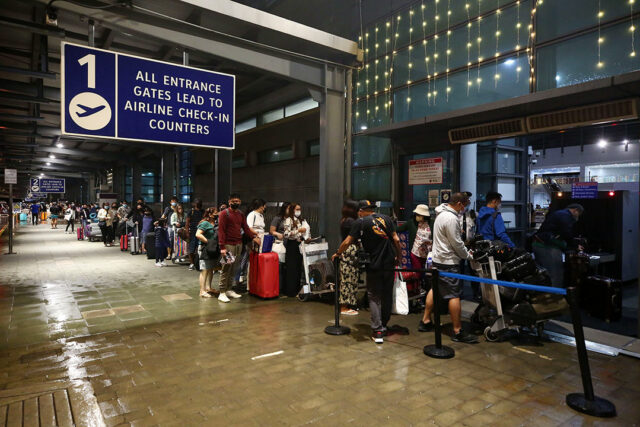
Passengers queue at the Ninoy Aquino International Airport (NAIA) Terminal 3 in Pasay City, Oct. 29, 2022. — PHILIPPINE STAR/MIGUEL DE GUZMAN

THE DEPARTMENT of Transportation (DoTr) expects the winning bidder for the P170.6-billion Ninoy Aquino International Airport (NAIA) rehabilitation project to take over by mid-2024.

Transportation Secretary Jaime J. Bautista on Wednesday said the government will conduct the solicited bidding for the NAIA public-private partnership (PPP) project as soon as the terms are published.

He told reporters that the government hopes to award the project by December.

“This has no Swiss challenge, so if we give the award, what happens next is what we call financial closing, which will take three to six months. So, hopefully by the middle of 2024 we can already start the concession agreement with the winning bidder,” he said in mixed English and Filipino.

On Wednesday, the National Economic and Development Authority (NEDA) Board approved the project to rehabilitate, operate and expand the country’s main gateway.

The NAIA rehabilitation project aims to increase the current annual passenger capacity of the airport to at least 62 million from 35 million.

“The critical issue now is the bid parameter, particularly the basis for choosing the winning bidder,” transportation expert Rene S. Santiago said in a Viber message.

Nigel Paul C. Villarete, senior adviser at a technical advisory group on PPP with Libra Konsult, Inc., said that the NAIA rehabilitation project is on the right track as it will be undertaken as a solicited proposal similar to the Mactan-Cebu International Airport.

However, he said the bidding for the NAIA project should not be “rushed” even though there is dire need to rehabilitate the aging airport.

“Haste will only result in an inferior product, not to mention a failing transaction. The existing terminals can always continue to take the excess capacity, and they normally do all over the world,” he said.

“We’re doing a NAIA terminal to serve for 25 years, maybe even 50 years, [so we should] allow the planning and preparation to take its due course. Rushing will only endanger the end result or product,” he added.

To ensure the project’s success, Mr. Villarete said the government should conduct thorough consultations with stakeholders and prospective bidders and follow the NEDA guidelines to the letter without taking any shortcuts. — Justine Irish D. Tabile 

US retains sugar export quota for Philippines

PHILIPPINE STAR/ EDD GUMBAN

By Sheldeen Joy Talavera, Reporter

THE UNITED STATES retained the Philippines’ export quota for raw cane sugar for the coming crop year, the Office of the US Trade Representative (USTR) said.

On its website, the USTR said that the Foreign Agricultural Service of the US Department of Agriculture kept the Philippines’ export quota of 145,235 metric tons raw value (MTRV) of raw cane sugar under the tariff rate quota (TRQ) scheme of the World Trade Organization.

This is the third-largest quota after those of the Dominican Republic with 189,343 MTRV and Brazil with 155,993 MTRV.

The TRQ sets a volume limit for goods which can enter the US at a lower tariff.

However, the Sugar Regulatory Administration (SRA) is not sure if the Philippines will be able to fulfill the quota.

“If the quota is retained then we will plan how to supply the sugar because the (US) buying price is lower compared to our domestic price,” SRA Acting Administrator and Chief Executive Officer Pablo Luis S. Azcona said in a Viber message.

Based on his estimate, the US buying price of sugar is at around P2,500 per 50-kilo bag, which is 20% lower than the domestic price of P3,000.

Aside from the lower price, Mr. Azcona said that the Philippines was not able to fulfill the export quota in recent years due to the shortfall in the domestic production of sugar.

“It’s hard to defend sugar exports to the US at a cheaper price if we have a shortage here,” he said in mixed Filipino and English.

National Federation of Sugarcane Planters President Enrique D. Rojas welcomed the US decision to retain the sugar quota allocation as it shows the Philippines is still a valued trade partner.

“Maintaining access to the US sugar market is ideal for the Philippine sugar industry, because we will have a ready market when our production exceeds our domestic consumption,” he said.

“Unfortunately, our production in the past years and the years to come falls short of our domestic consumption, prompting us to be a net importer of sugar,” he added.

As of July 2, the SRA supply and demand situation report showed raw sugar production for crop year 2022-2023 inched up by 0.42% to 1.799 million MT.

The production of refined sugar declined by 11.5% to 640,980 MT during the crop year.

The Philippines continues to experience a shortage in the supply of sugar, which has driven up prices.

To address the supply shortfall and stabilize prices, the Philippines is importing another 150,000 MT of refined sugar by mid-September.

In Sugar Order No. 7, the SRA said the sugar import program would “ensure sufficient actual supply of sugar for domestic consumption, as well as a two-month buffer stock.”

Asian wheat buyers to seek alternative supplies after attacks on Ukraine ports

MELISSA ASKEW-UNSPLASH

SINGAPORE — Asian millers, which have bought more than one million metric tons of Black Sea wheat for shipment in the coming months, will seek alternatives as attacks on Ukrainian ports after the collapse of a safe passage deal spark longer-term supply risks, traders and analysts said.

Supply constraints from the key Black Sea region add further uncertainty amid the prospect of dry El Niño weather threatening crops across Asia, exacerbating worries over food inflation.

Chicago wheat futures climbed more than 2% to hit a three-week high on Thursday as infrastructure damage following Russia’s attacks on Ukrainian ports buoyed prices.

“Traders and mills will be looking for alternative sources of supply,” said one Singapore-based trader at an international trading company.

“They are going to be potentially looking at Europe and cargoes from other Black Sea exporters like Romania and Bulgaria. Australia still has wheat to sell from its harvest last year.”

Russian strikes on Ukrainian port areas continued on Thursday, local authorities said, after Moscow warned that ships heading to Ukraine’s Black Sea ports could be considered military targets.

Russia attacked the Odesa region on Monday and Tuesday nights. The attack on the southern Ukrainian port of Chornomorsk damaged grain export infrastructure and destroyed thousands of tons of stored grain.

“The market was hopeful that navies of other countries might escort shipment of goods in and out of Ukraine regardless of Russia not renewing the grain corridor,” said Rabobank Senior Grains Analyst Dennis Voznesenski.

“But the attack on Odesa port and subsequent statement from Russia that any ship sailing to Ukraine’s Black Sea ports would be seen as carrying military cargoes has made that very unlikely,” he said.

Millers in the Middle East, Africa and Asia, which are heavily reliant on Black Sea supplies, have bought millions of metric tons of wheat and corn from the region, which is entering its peak export season with freshly harvested crops reaching the market.

“It is hard to put an exact number as traders have signed private deals but mills in Asia have easily booked more than one million tons of Black Sea wheat for shipment in July, August and September,” said a second trader in Singapore.

Indonesia, the world’s second-largest wheat importer, Malaysia and Vietnam have bought Black Sea cargoes for milling into flour for making products such as noodles and bread. South Korea, Thailand and the Philippines take Ukrainian wheat mainly for animal feed. 

Prices of Black Sea wheat offered in Asia are expected to rise as supplies tighten, traders said.

“As of now not many exporters are quoting prices but before the attacks, mills in Indonesia bought Black Sea wheat at around $275 a ton, including cost and freight,” the first Singapore trader said. — Reuters

A minute with: Greta Gerwig on making Barbie a surprising movie

DIRECTOR Greta Gerwig attends the European premiere of Barbie in London, Britain, July 12. —REUTERS

LOS ANGELES — Director, writer and actor Greta Gerwig has plunged into the world of the iconic Barbie doll to make a movie that promises to be one of the cinematic hits of the summer.

Making Barbie was no easy task, and when Ms. Gerwig wrote the script with her partner, Noah Baumbach, she didn’t even know she would be directing the film starring Margot Robbie and Ryan Gosling.

Ms. Gerwig, who made waves as the director and writer of coming-of-age comedy-drama Lady Bird in 2017, spoke with Reuters about the decisions behind her version of Barbie, which opens in theaters on Friday.

Below are excerpts edited for length and clarity.

Q: I wasn’t expecting to wake up this morning thinking about gender politics and the history of Barbie. There is so much in this film.

Gerwig: “It’s a spicy margarita. There’s like a lot packed into it. I’m so glad you woke up thinking thoughts you didn’t know you’d have. I always wanted it to surprise people. I wanted it to make people laugh, but then I also wanted it to kind of almost in that unexpectedly make people think and cry.”

Q: Even though the film is set in Barbie World, how much would you say it makes people reflect on reality?

Gerwig: “There were so many interesting things about Barbie to me as a cultural icon and a totem. It was invented in 1959 and it’s changed and expanded, but it persists until today and it also seems to be so human to me, just this idea of like we make a doll and then we get angry at the doll. Well, that’s such a funny thing that humans do, and what does that mean and what is that interaction? And how we invest in inanimate objects and then let them transform us and then we transform them back. I think in a way we think of ourselves as quite evolved, but that to me seems to be a very, you know, almost mystical investment in an object, which I thought was an interesting place to start anyway.”

Q: It also feels I’ve watched a documentary about Barbie and learned a lot about her history and what went right and what went wrong. How difficult was it to have that conversation?

Gerwig: “There were plenty of times when they thought, ‘Oh we shouldn’t do this.’”

“It wasn’t until we had the script and I loved it that I thought, ‘now I can’t bear to let anyone direct it but me,’ but I didn’t know I was going to direct it.”

“It’s a miracle that they let us do this, but when we would talk about it, I’d say, ‘I think we just have to confront everything about it head on.’ I think there’s no reason to do it if we’re making a commercial for it. You guys sell lots of dolls. You do not need that to sell a doll, so unless you’re interested in doing it this way, well, that’s fine. But you can’t fake that. You either have to mean it or not.” — Reuters

7-Eleven operator allots up to P4B for expansion

@7ELEVEN11THAVE

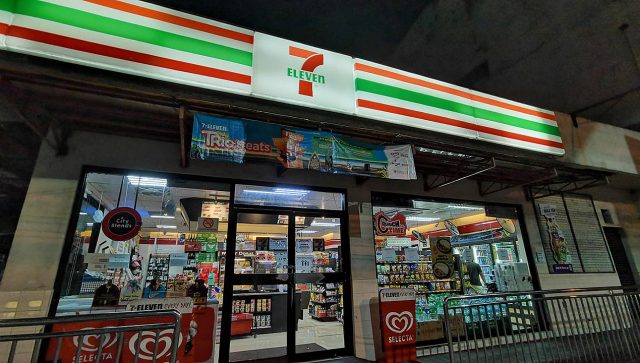
7-ELEVEN operator Philippine Seven Corp. has allotted P3.5 billion to P4 billion for this year’s capital spending budget to support its store expansion.

“We opened about 150 stores so far this year out of [the] 400 new stores target,” Philippine Seven Head of Finance and Investor Relations Lawrence M. De Leon said during the company’s annual stockholders meeting on Thursday.

The company allotted up to P2 billion for its 300-store target for 2022.

Last year, the company opened 320 new stores and ended with a total of 3,393 stores nationwide, a 10.4% increase from 2021.

Philippine Seven is expecting a split of the 400-store count target between company-owned and franchise-operated stores, which would be mainly concentrated outside Metro Manila, Mr. De Leon said.

“We find ourselves in a situation where geographic shifts in demand have fortuitously opened up opportunities to expand in areas beyond the current reach of competition,” Philippine Seven President and Chief Executive Officer Jose Victor P. Paterno said in a statement.

“Our market development plan will be implemented as we recognize the growing customer preference towards innovation, proximity, and convenience,” Mr. Paterno added.

He said the company is expecting another record year in 2023 coming off the “record” earnings results during the first quarter.

“We believe 2023 will be a very much record year. What we are hoping is… 2023 becomes an inflection point where the curve steepens again,” he added.

During the first quarter of the year, the company more than doubled its net income to P527.62 million from P199.13 million, driven by better same-store sales growth, which went up by 23.3%.

Its top line in the first quarter rose by 35.8% to P17.52 billion from P12.9 billion in the same period last year.

In 2022, the company turned profitable, reporting P2.06 billion in net income, a reversal of the P461 million net loss in 2021.

Its revenues grew by 39.7% to P63.45 billion from the P45.43 billion reported the previous year.

Philippine Seven shares closed unchanged at P88 apiece on Thursday. — Adrian H. Halili

Building a life out of plastic

MOVIE REVIEW
Barbie
Directed by Greta Gerwig
MTRCB Rating: PG

THE FEMALE coming-of-age is a complex journey, mapped out by converging and diverging lines that girls must learn to toe carefully to achieve a fabulous yet respectable image of womanhood.

This movie is an ode to that journey.

It follows Barbie (Margot Robbie) and Ken (Ryan Gosling) having the time of their lives in the Barbie Land. When an unexpected existential crisis prompts Barbie to go on an adventure to the real world, they soon discover the joys and perils of living among humans.

Women who grew up with Barbie dolls will instantly recognize the “dream girl, dream life” concept and aesthetics that this movie presents, with the stellar production design giving both pink slumber party and Malibu beach. Children of today will also enjoy it because Barbie iconography has become so ubiquitous in little girls’ lives.

But there are many of us who have had shifting, complicated experiences with the idea of the doll as the perfect woman. Maybe we believed in it once, long ago, no matter how fleeting or involuntary that stage in life was (hands up, girls who were given Barbies as their default toy!). Now, with the realities of life, maybe not so much.

Simply put, this movie is dedicated to the well-meaning intentions behind why Barbie came to exist, as well as the conflicting feelings about what Barbie has become.

And yes, this is a big blockbuster, meant to make Mattel loads of money.

Greta Gerwig is the director behind this messy mishmash of all those intentions present in Barbie (2023), and one would think that the heart of it would get lost. I’m happy to report that, despite all that, this movie still has the sheer sincerity that has characterized Ms. Gerwig’s work in smaller projects (coming-of-age flick Lady Bird being the most notable).

Margot Robbie proves that she goes beyond looking like Barbie and understands how important the woman’s journey is. She rolls with the punches of the movie’s sincere storytelling, her expressions going from picture-perfect to being utterly marred by the disappointments of reality.

Meanwhile, Ryan Gosling gives his all as Ken, at first playing the ideal supportive boyfriend to a T and later displaying complex emotions of his own as the story progresses. Without spoiling anything, his character arc sends vital messages about manhood in relation to women that the men watching can take away from the movie (whether they’re there accompanying their daughters or their girlfriends).

But as great and entertaining as Mr. Gosling is, the Barbie and Ken duo might not even be the core of the film. The true partner who joins hands with Barbie over the course of the movie is Gloria (America Ferrera). Coming from the real world, she is the stand-in for the women in the audience.

It’s through Gloria that we can engage with long-standing critiques of Barbie being an unhealthy, artificial and consumerist symbol for girls to emulate. Having a movie that opens with the Mattel logo be so open about how profit drives the machinery of the beloved toy brand today is fascinatingly compelling.

The movie acknowledges that, at some point in time, girls have wanted to be Barbie, and at others, girls have rejected Barbie and her dated messaging. The movie, as with all coming-of-age tales, provides its own, cynical-yet-heartwarming mix of a conclusion to that complex journey.

It has kid humor, moments of in-your-face women empowerment,  silly but elegant dance numbers, set pieces and well-orchestrated plots to allow the characters to grow.

It’s pretty, cynical, heartwarming, and imperfect, but ultimately sincere. Girls will resonate so much to the sad parts, but for sure they’ll have a quite a bit of fun. — Bronte H. Lacsamana

Globe eyes 200,000 prepaid fiber users a year after product’s launch

GLOBE TELECOM, Inc. expects to reach at least 200,000 customers for its prepaid fiber internet within the first year of the product’s launch, an official said on Thursday.

Raymond Policarpio, vice-president for brand management of Globe’s broadband business group, told reporters the target is possible as the new product, which offers high-speed internet connection, will be tapping less saturated markets.

“[Prepaid fiber] penetration right now for the Philippines is geared towards the A, B, and C markets, which are highly saturated at around 78%, but that’s just around 30% of the total Philippine households,” he said.

“The 70% of the household — the D and E markets — remains to be penetrated at only about 26%. So there’s a huge opportunity there,” he said.

Mr. Policarpio said the company is expecting to have new entrants to the fiber market, which receives data transmitted via fiber optic cables, after the rollout of its GFiber Prepaid.

“What we are trying to target here is the D and E markets so we will be getting a lot of new entrants to the fiber market. We are aiming to get some acquisitions new to the category,” he said.

Globe subscribers can enjoy fiber connectivity through its pay-per-use promos starting from P299 for seven days, and P999 for 30 days.

“The GFiber Prepaid is available nationwide. It is not limited to Metro Manila; we’ve launched it across the whole country. Customers will just have to check their serviceability,” Mr. Policarpio said.

DATA CENTER JOINT VENTURE
Meanwhile, the joint venture between Globe, the Ayala group, and Singapore-based ST Telemedia Global Data Centres (STT GDC) partnered with three local universities to build a data center talent pool.

In a press release on Thursday, STT GDC Philippines — the joint venture between the Ayala group and STT GDC — said that it has collaborated with the De La Salle University, the University of Santo Tomas, and the National University.

“This partnership merges the academic expertise of our esteemed university partners with industry insights from STT GDC Philippines, offering an enriched learning journey for students and a fortified future for our nation’s digital revolution,” said Carlomagno F. Malana, president and chief executive officer of STT GDC Philippines.

The Globe group said the collaboration will help achieve three strategic objectives: enhancing awareness of the data center industry, integrating industry-relevant content into engineering curricula, and providing hands-on internship programs.

“Looking forward, STT GDC Philippines plans to scale up the program, inviting more universities and training institutions to participate, to create a robust talent pipeline for the country’s data center industry,” it added. — Justine Irish D. Tabile

Rachelle Ann Go joins Philippine production of Hamilton

RACHELLE ANN GO will be joining the cast of the Philippine production of the hit musical Hamilton.

The musical — which has won Tony, Grammy, and Olivier awards, and a Pulitzer Prize for Drama — will have a limited run at The Theatre at Solaire in Parañaque City starting Sept. 17.

In a post on its Instagram page, GMG Productions announced that Ms. Go will play the role of Alexander Hamilton’s wife Eliza Schuyler in the Philippine production.

Ms. Go previously played the same role in the West End production in London.

Lin-Manuel Miranda wrote the book, music and lyrics of Hamilton, which blends hip-hop, jazz, R&B, and Broadway. The musical tells the story of one of America’s founding fathers, Alexander Hamilton, based on Ron Chernow’s acclaimed biography.
The musical premiered on Broadway in 2015 to wide acclaim.

Aside from Ms. Go, the cast will include Jason Arrow as Alexander Hamilton, DeAundre’ Woods as Aaron Burr, Akina Edmonds as Angelica Schuyler, Darnell Abraham as George Washington, David Park as Marquis de Lafayette/Thomas Jefferson, Elandrah Eramiha as Peggy Schuyler/Maria Reynolds, and Brent Hill as King George.

The Philippine production, presented by GMG Productions, is part of the international tour produced by Jeffrey Seller, Sander Jacobs, Jill Furman, The Public Theater and Michael Cassel.
Hamilton will run at Solaire until November 26. — Brontë H. Lacsamana

Mapúa University aims to double enrollment

MAPUA.EDU.PH

MAPÚA University targets to double its enrollment count in the coming years in line with the 10-year development plan of Ayala-Yuchengco-led iPeople, Inc., its top official said on Thursday.

“Our target is to continually increase [the number of enrollments],” Mapúa President and Chief Executive Officer Dodjie S. Maestrecampo said in a media briefing. “I think we will have to double or triple the current size of our system.”

Mr. Maestrecampo said growth in student numbers would be mainly achieved through the expansion of the school’s network or the building of new campuses.

“We are also keen on growing our digital or fully online programs,” he added.

Additionally, he said the university will mainly focus on the 10-year development plan earlier implemented by iPeople that aims to increase the number of students and achieve sustainable financing.

iPeople, together with House of Investments, owns and operates its main subsidiary, Malayan Education System, Inc., which operates under the name of Mapúa University.

“We have just started our collaboration, and this is just three or four years after the merger. We crafted a 10-year development plan under the whole iPeople group, and we are focused on achieving those targets,” he added.

The company, in 2019, merged with AC Education, Inc., the education arm of Ayala Corp., with iPeople as the surviving entity.

The merger resulted in the acquisition of three additional operating subsidiaries: National Teachers College, University of Nueva Caceres, and Affordable Private Education Center, Inc., which is doing business under the name of APEC Schools.

During the first quarter, iPeople reported an attributable net income of P244.73 million, up 25.1% from P195.59 million in the same period last year.

In the three-month period, the company’s topline rose by 23% to P1.07 billion from P870.5 million the prior year.

Meanwhile, Mapúa announced the appointment of Mr. Maestrecampo as president and chief executive, making him the university’s fourth president since 1925.

He concurrently serves as president of its higher education units in Laguna and Mindanao, under the Ayala-Yuchengco partnership.

“I am committed to leading Mapúa into a new era of excellence and ensuring our university is where students can thrive, learn, and grow,” he said in a statement.

The university said that under Mr. Maestrecampo’s tenure, it will continue to introduce more groundbreaking, future-ready programs and courses to enable students to hone global competencies using cutting-edge technologies. — Adrian H. Halili

Ice Seguerra is front act for upcoming Alanis Morissette concerts

SINGER-songwriter Ice Seguerra will perform as the front act for Canadian-American singer Alanis Morissette’s concerts in the Philippines.

The celebration of the anniversary tour of Ms. Morissette’s Jagged Little Pill, which was postponed twice due to the pandemic, will take place on Aug. 1 and 2 at the Mall of Asia Arena.

Mr. Seguerra, a Filipino singer, songwriter, and actor, is known for his soulful voice and heartfelt performances. His single “Pagdating ng Panahon” became a major hit in 2001, which enabled him to start a music career.

Meanwhile, Ms. Morissette rose to fame in the 1990s with hit songs like “Ironic,” “You Oughta Know,” and “Hand in My Pocket.”

Tickets for the Aug. 2 concert are still available at smtickets.com. Prices are P14,750 (SVIP), P13,750 (VIP), P11,750 (Patron), P9,750 (Lower Box A), P8,750 (Lower Box B), P5,750 (Upper Box), and P2,750 (Gen Ad).

ADVERTISEMENT
ADVERTISEMENT