Home Blog Page 4504

Bryson DeChambeau shoots a historic LIV-record 58 to win at Greenbrier

BRYSON DeChambeau won his first LIV Golf League title on Sunday, and he did it in historic fashion, shooting a 58 at the LIV Golf Greenbrier in White Sulfur Springs, West Virginia.

His 12-under performance was the first round under 60 in the two-year history of the fledgling league.

He won $4 million for his effort as he finished with a 23-under 187 for the tournament, topping second-place finisher Mito Pereira (63) of Chile on Sunday by six shots.

Matthew Wolff fired a 61 on Friday at the Old White course, tying Harold Varner III for the lowest score in LIV’s brief history.

But Mr. DeChambeau obliterated the mark on Sunday with 13 birdies. He had seven on the first nine holes, combined with a bogey on the par-3 No. 8, then six more on the back nine. He closed the round with four consecutive birdies.

It certainly was enough for Ryder Cup captain Zach Johnson to take notice as he prepares to make his captain’s picks for his team later this summer. LIV players do not earn points toward automatic qualification for the Ryder Cup, which begins Sept. 29 at Marco Simone Golf and Country Club in Rome.

“I’m playing really well. I’ve got some equipment that’s performing quite nicely off the driver, and that’s a deadly combination with my putting,” Mr. DeChambeau said. “So clearly I putted well, drove it well, wedged it pretty well. You couldn’t have written it up better than this, but if I do get a call, that would be awesome. If not, I’ll be rooting them on over in Rome.”

Richard Bland of England (65), Spain’s David Puig (66) and Mr. Wolff (66) all finished at 16-under for the tournament.

Two shots behind them was Mr. Varner, who shot 66 on Sunday.

The team title went to Torque GC , which consists of Pereira, Puig, Joaquin Niemann of Chile and Sebastian Munoz of Colombia.

LIV Golf resumes Friday at Trump National Golf Club in Bedminster, New Jersey. — Reuters

Lucas Glover captures Wyndham Championship

LUCAS Glover waited out a weather delay, received a lucky bounce on the last hole and claimed his fifth career PGA Tour title by winning the Wyndham Championship on Sunday at Sedgefield Country Club in Greensboro, N.C.

Mr. Glover followed a third-round 62 with a 2-under-par 68 on Sunday to finish at 20-under 260, two strokes better than Russell Henley (69 on Sunday) and South Korean Byeong Hun An (67). Billy Horschel (72), who shared the lead with Mr. Glover after three rounds, faded to fourth place at 16 under. — Reuters

Indonesian economy grows by 5.17% in Q2, fastest in 3 quarters

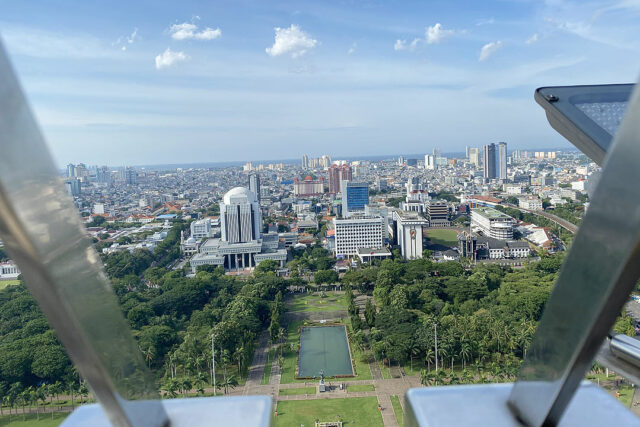
JAKARTA SKYLINE — the view from the top of the National Monument. — JOHN VICTOR D. ORDOÑEZ

JAKARTA — Indonesia’s economic growth in the second quarter (Q2) accelerated unexpectedly to its highest rate in three quarters, shored up by strong household and government spending, and despite its exports weakening amid falling commodity prices.

However, some economists still expect activity to slow in the second half of the year, with exports likely to fall due to weaker global demand and businesses potentially delaying investments ahead of general elections due in February 2024.

Southeast Asia’s biggest economy expanded 5.17% in the April-June quarter from the same period a year earlier, Statistics Indonesia data showed, outpacing the 4.93% growth predicted by economists polled by Reuters. First-quarter growth was revised up slightly to 5.04%.

On a quarterly, non-seasonally adjusted basis, gross domestic product (GDP) expanded 3.86%, compared with the poll’s prediction of 3.72% growth.

A commodities-led export boom last year boosted Indonesia’s post-pandemic recovery, but analysts expect momentum to cool as prices for its top products, like palm oil and coal, fall as global demand weakens on interest rate hikes in many countries.

Despite Indonesia’s own monetary tightening of 225 basis points from August 2022 to January 2023, household consumption, which makes up over half of GDP, expanded 5.23% on a yearly basis last quarter, the quickest pace since the third quarter of 2022.

That was due to rising household spending for the Muslim fasting month and Eid al-Fitr festivities in late April and school holidays in June, the statistics bureau said.

Growth in investment and government spending also more than doubled to 4.63% and 10.62%, respectively, as the government expedited construction of roads and irrigation systems ahead of the end of President Joko Widodo’s final term in 2024.

Meanwhile, exports contracted 2.75% in the second quarter on a yearly basis, in stark contrast to last quarter’s growth of more than 10%.

Myrdal Gunarto, economist with Maybank Indonesia, said he might raise his bank’s full-year 2023 GDP growth outlook of 5.05%, but described the second quarter data as “a sign that economic activities had peaked.”

Mr. Myrdal said companies would likely pause investment decisions ahead of the elections, pointing to slower loan growth already in June.

The better-than-expected data may spur monetary policymakers to shift their focus from growth to the current account, as strong domestic demand typically leads to rising imports, said Fakhrul Fulvian, economist with Trimegah Securities, who maintained his full-year 2023 GDP growth outlook at 5%.

Indonesia has reported a current account surplus every quarter from the July-September period of 2021 due to the export boom, helping the rupiah perform better than most other emerging Asian currencies against the US dollar.

The rupiah fell 0.1% against the dollar on Monday.

“2Q GDP outcome aligns with the BI’s (Bank Indonesia) constructive view on the economy’s growth prospects, providing them with the room to extend the pause on rates and focus on currency stability,” said Radhika Rao, economist with DBS Bank.

Last year’s growth was 5.3%, a nine-year high. The government is targeting the same growth rate for 2023. The central bank predicts GDP will expand in a range of 4.5% to 5.3% this year. — Reuters

Climate change puts sovereigns at downgrade risk, study finds

REUTERS

A GLOBAL FAILURE to curb carbon emissions will lead to rising debt-servicing costs for 59 nations within the next decade, according to a study that simulated the economic impact of climate change on current sovereign credit ratings.

Among them, China, India, the United States and Canada could expect higher costs as their credit scores fall by two notches under a “climate-adjusted” ratings system, the study published in the Management Science journal on Monday found.

“Our results support the idea that deferring green investments will increase costs of borrowing for nations, which will translate into higher costs of corporate debt,” researcher Patrycja Klusak said of the study led by the University of East Anglia (UEA) and the University of Cambridge.

Rising debt costs would be just one extra facet of the overall economic damage which climate change is already causing. Insurance giant Allianz estimates that recent heatwaves will already have shaved 0.6% points off global output this year.

While ratings agencies acknowledge the vulnerability of economies to climate change, they have so far been cautious in quantifying those risks in their ratings exercises because of uncertainties about the likely extent of the damage.

The UEA/Cambridge study trained artificial intelligence models on S&P Global’s existing ratings and then combined that with climate economic models and S&P’s own natural disaster risk assessments to create new ratings for various climate scenarios.

A downgrade to 59 sovereigns emerged from a so-called RCP 8.5 scenario of emissions that keep rising. By comparison, 48 sovereigns experienced downgrades between January 2020 and February 2021 during the turmoil of the COVID-19 pandemic.

If the planet manages to stick to the goal of the Paris Climate Agreement, with temperatures held under a two-degree rise, sovereign credit ratings would under the simulation see no impact in the short-term and only limited long-term effects.

A worst-case scenario of high emissions through to the end of the century would on the other hand result in higher global debt-servicing costs, rising up to the hundreds of billions of dollars in current money, the model found.

While developing nations with lower credit scores are seen hit hardest by the physical effects of climate change, nations with the highest ranking credit scores were likely to face more severe downgrades simply because they have furthest to fall.

“There are no winners,” Ms. Klusak said in an interview.

The findings come as regulators around the world seek to better understand just how much damage to economies and the global financial system to expect from climate change. A European Central Bank paper last year urged greater clarity in how those risks were being built into credit ratings.

S&P Global Ratings has published the environmental, social and governance (ESG) principles used in its credit ratings which include reference to the risk of economic damage from climate change and the costs associated with mitigating it. It declined to comment on the UEA/Cambridge study.

Fitch Ratings pointed to its system of “ESG Relevance Scores” as including factors such as exposure to environment impacts as one component in its assessments. 

“These are longstanding and increasingly important rating factors which we continue to weigh in our analysis and publish frequent research and commentary upon,” it said in response to a request for comment. — Reuters

Solar power to the rescue as Europe’s energy system weathers extreme heat

STOCK PHOTO | Image from Pixabay

BRUSSELS/LONDON — A major increase in solar power generation in southern Europe played a leading role in averting energy shortages during the heatwaves of recent weeks when temperatures broke records and drove unprecedented demand for air conditioning.

Solar power is particularly suited to coping with summer heat as the sun’s radiation is strongest around the hottest part of the day, when electricity demand for cooling is also at its highest.

“The very significant growth in solar basically compensates for the peaks that are caused by air conditioning,” Kristian Ruby, secretary general of electricity industry group Eurelectric, said of the situation in Spain.

Spain and Greece are among the countries that have installed many more solar panels in the face of record high energy prices last year and the quest for increased energy security linked to Russia’s invasion of Ukraine.

Spain added a record 4.5 gigawatts of solar photovoltaic capacity last year, resulting in solar energy output in July — typically one of the sunniest months — that was higher than any month to date, Spanish electricity grid operator Red Electrica said.

Data from Ember showed solar provided almost 24% of Spain’s electricity in July this year, up from 16% in July 2022.

When soaring temperatures and demand for cooling led to a peak in Sicilian power demand on July 24, nearly half of the excess demand — which totalled 1.3 GW — was covered by solar, Refinitiv data show. Sicily’s solar production last month was more than double that of July 2022.

“Without the additional solar, the system stability impact would have turned out much worse,” Refinitiv power analyst Nathalie Gerl said.

Solar alone cannot hold up grids under severe strain. Catania, below Mount Etna in eastern Sicily, has faced power and water supply cuts that local officials blamed in part on the heat. In Athens, power grid operator IPTO said wildfires had damaged sections of the electricity grid.

But higher solar output helped to satisfy demand in both countries. During Greece’s peak power demand this year, also on July 24, solar photovoltaics covered 3.5GW of the total 10.35GW demand, grid operator IPTO said.

Even in cooler and less sunny western countries such as Belgium, solar energy has covered more than 100% of the extra energy needed during midday spikes in power demand.

DEMAND DESTRUCTION
Despite its fast growth, solar is still a relatively small share of the power mix in most countries, where sources including wind, gas, coal and nuclear power typically cover the bulk of demand over the year.

Analysts say a second factor has helped to keep Europe’s energy systems running this summer: overall, power demand has been relatively low.

That has been the case since Europe’s energy crisis last year, when Russia cut gas deliveries to Europe. Energy prices in Europe are still high compared with historic levels – and consumers and industries have responded by using less power.

Extreme heat this summer has broken through this trend at times. But overall, demand has been below normal — Italy’s average hourly power use in July was 4.4% lower than in July 2022, while Spain’s was down by 3.6%, Refinitiv data show.

“The only reason why this has been bearable is the low power demand environment that we’re currently in,” Refinitiv’s Ms. Gerl said.

WORST IS YET TO COME
Scientists expect climate change will make heatwaves of the kind southern Europe has suffered this summer more frequent and even more severe in the coming years — adding to the burden on Europe’s energy infrastructure.

“Our energy systems are indeed not designed to cope with such situations,” said Simone Tagliapietra, senior fellow at think tank Bruegel.

Even before this year’s wildfires and record temperatures, heat and drought last year reduced hydropower generation, hampered fuel transport by river, and forced some nuclear power plants to curtail their output when cooling of the plants was limited by high river temperatures.

In a letter to the European Commission last week, industry groups including SolarPower Europe urged policymakers to speed up investments in energy grids and promote projects that couple solar with energy storage, to ensure solar power expands quickly enough to meet climate change goals. — Reuters

Aboitiz InfraCapital: Driving Japanese investment and economic growth in the PHL

The Philippine delegation represented by Aboitiz InfraCapital and its Economic Estates, the Philippine Economic Zone Authority and the Philippine Trade and Investment Center in Osaka showcased the Philippines as a prime choice for Japanese businesses seeking to tap into new markets.

Aboitiz InfraCapital (AIC) Economic Estates, the leading developer and operator of smart and sustainable industrial-anchored Economic Estates in the Philippines, recently joined forces with the Philippine Economic Zone Authority (PEZA) and the Philippine Trade & Investment Centers in Osaka and Tokyo for an investment roadshow in Japan. The Philippine-Japan Investment Forum aimed to showcase the Philippines as an ideal investment destination, leveraging the country’s business-friendly policies and next-generation sustainable economic estates.

“Japan is one of the Philippines’ largest and longest-tenured investment partners, making it the top source of foreign investments for our developer/operators, especially those who lead the industry such as AIC Economic Estates,” stated PEZA Director General Tereso O. Panga. “The Philippines continues to be an attractive investment destination, because of the multitude of opportunities it presents, including a large and highly skilled English-speaking workforce, a business-friendly environment, a strategic location, cost-effective operations, and developed infrastructure and connectivity.” According to Panga, 27.34% of PEZA-approved foreign investments come from Japanese companies, bringing in Php 766.550 Billion worth of investments in the country and generating up to 340,000 jobs for Filipinos.

AIC Economic Estates has been a preferred choice for Japanese businesses seeking expansion into new markets. “We are proud to have developed a thriving ecosystem that attracts industry leaders in various sectors, including automotive components, electronics, medical technologies, printers, motorcycle production, and food and beverage. Notably, about 36% or 74 of our 207 locators are esteemed Japanese companies that have chosen the Philippines for their expansion ventures,” stated Rafael Fernandez de Mesa, Head of Aboitiz InfraCapital Economic Estates.

President Kayako Omura of OB Kogyo, a Japanese plastic mold manufacturing company, discusses the factors driving the resounding success of their plant operations in LIMA Estate, Lipa-Malvar, Batangas, at the Philippine Investment Forum.

Prominent Japanese companies, such as Yamaha, Kurabe Industrial Philippines Inc., Epson Precision Philippines, Proterial, Japan Tobacco International, and Bandai Namco Philippines, among others, have found a conducive environment in AIC Economic Estates, reaffirming the Philippines’ status as a premier investment destination. 

Aboitiz InfraCapital has also established a significant partnership with the Japanese shipbuilding giant, Tsuneishi Holdings. In collaboration, they developed and operated the expansive 540-hectare West Cebu Estate in Balamban, Cebu, which has now earned the prestigious title of the “Shipbuilding Capital of the Philippines.” This achievement further diversifies and enhances AIC’s portfolio of offerings.

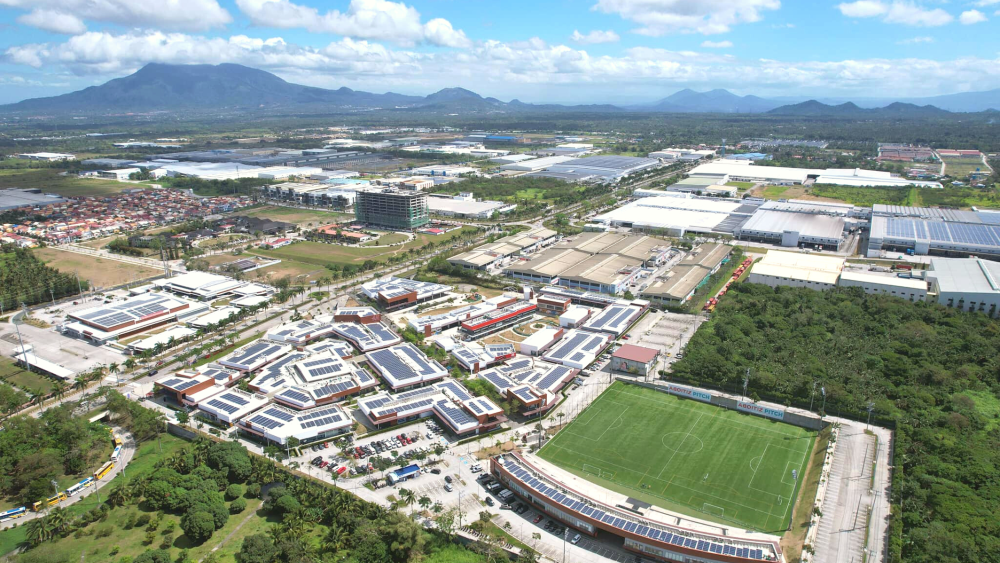
Aboitiz InfraCapital leads the way in developing smart and sustainable industrial-anchored estates in the Philippines, prioritizing smart city technology adoption and environmental sustainability at the core of its operations.

Situated in fast-growing economies across the Philippines, AIC’s Economic Estates provide a dynamic and thriving business environment for companies. Strategically located near major seaports, airports, and road networks, each Economic Estate features world-class power and water facilities owned by the Aboitiz Group.

Japanese investors and business owners explore growth opportunities in the Philippine market during the Philippine Investment Forum in Tokyo, Japan.

Cosette Canilao, President and CEO of Aboitiz InfraCapital Inc., emphasizes their distinctive approach: “We are not an ordinary infrastructure company. We build infrastructure ecosystems to ensure seamless operations for all our businesses. When you invest in our economic estates, we guarantee that your power, water, and connectivity needs are fully taken care of, enabling your business to function with ease and convenience.”

Currently, AIC’s LIMA Estate and MEZ2 Estate cater to companies engaged in light to medium manufacturing, packaging, industrial logistics, and warehousing, serving both domestic consumption and export markets. Simultaneously, the West Cebu Estate in Balamban hosts world-renowned shipbuilding firms producing some of the world’s largest and most advanced sea vessels.

The success of the Philippine Investment Forum in Tokyo organized by the Philippine Delegation in collaboration with Marubeni Corporation of Japan and Japan Bank for International Cooperation is a testament to the fruitful relationship between two countries.

To meet the growing demand from foreign investors, Aboitiz InfraCapital’s LIMA Estate and West Cebu Estate are embarking on a 200-hectare industrial and commercial expansion. This expansion is expected to create an additional 75,000 job opportunities, adding to the current 100,000 jobs across Economic Estates, significantly bolstering the local workforce and reaffirming the Philippines as a highly attractive destination for foreign investments.

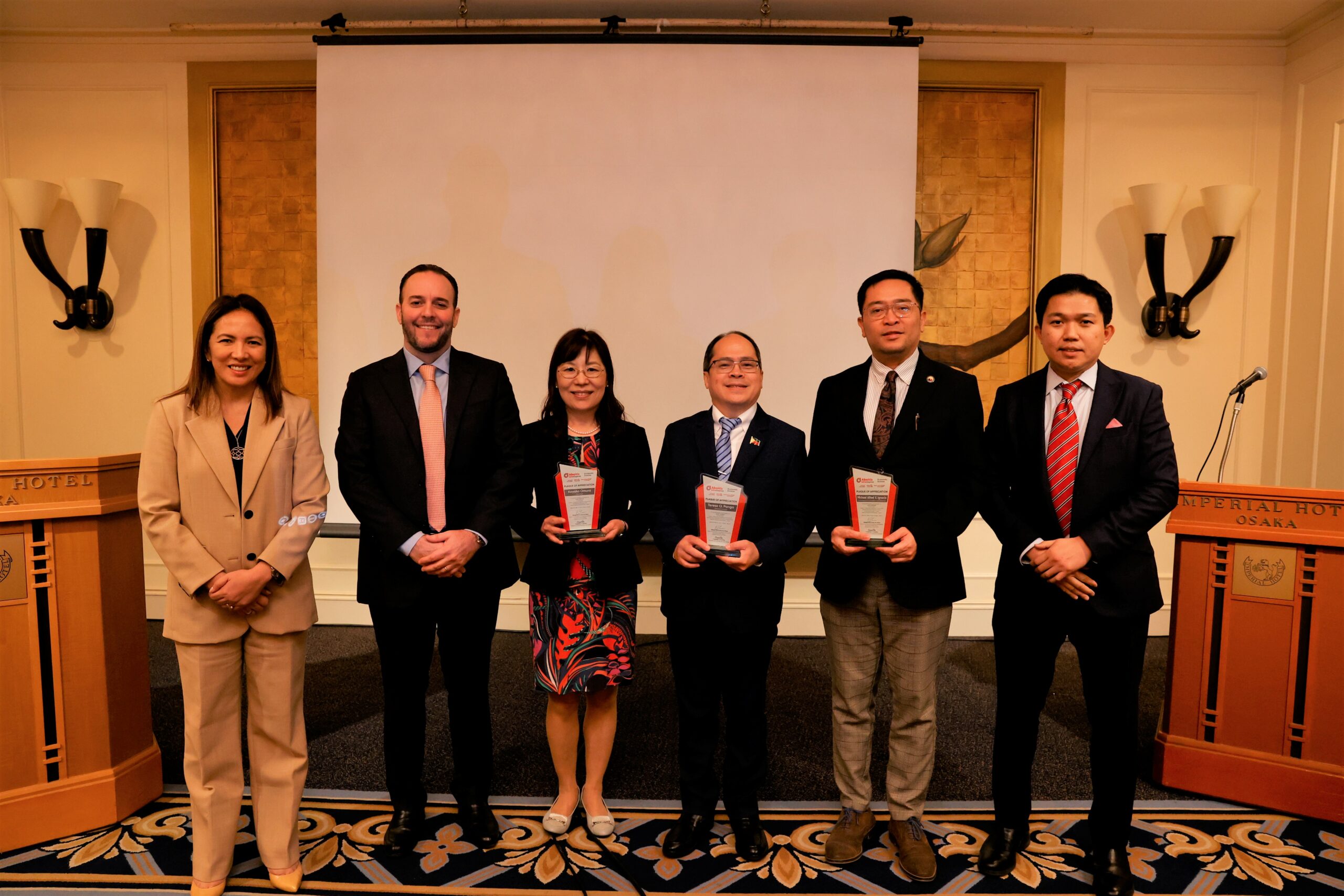
Aboitiz InfraCapital Economic Estates awards plaques of recognition to event partners Kayako Omura, President of OB Kogyo (3rd from left), Director General Tereso Panga, of PEZA (4th from left), and Director Michael Alfred Ignacio (2nd from right), of PTIC – Osaka. From left: Cosette Canilao, President and CEO of Aboitiz InfraCapital Inc., Rafael Fernandez de Mesa, Head of Aboitiz InfraCapital Economic Estates, and Raymond Domingo, Vice President for Business Development, Sales & Leasing of Aboitiz InfraCapital Economic Estates.

Aboitiz InfraCapital’s strategic collaboration with PEZA and the Philippine Trade & Investment Centers in Japan has proven instrumental in driving Japanese investment and contributing to the sustained economic growth of the Philippines. With its robust portfolio of smart and sustainable Economic Estates, AIC continues to solidify the Philippines’ position as an optimal choice for Japanese businesses seeking expansion and long-term success in the dynamic Southeast Asian region.


Spotlight is BusinessWorld’s sponsored section that allows advertisers to amplify their brand and connect with BusinessWorld’s audience by enabling them to publish their stories directly on the BusinessWorld website. For more information, send an email to online@bworldonline.com.

Join us on Viber at https://bit.ly/3hv6bLA to get more updates and subscribe to BusinessWorld’s titles and get exclusive content through www.bworld-x.com.

Back-Office Outsourcing Philippines: Cynergy BPO — Propelling Fintech Innovation with Advanced Tech & Superior CX

The dawn of financial technology, or fintech, has ignited a revolutionary transformation in financial services, redefining interactions, service delivery, and customer experience (CX). Amidst this technological tidal wave, the power of back-office outsourcing, particularly in the Philippines, has emerged as a key differentiator in the competitive fintech landscape. A crucial player in catalyzing this trend is Cynergy BPO, the world’s leading outsourcing advisory firm specializing in the fintech industry.

Collaborating with industry-leading contact centers, Cynergy BPO helps fintech companies harness the power of cutting-edge technology and the skilled workforce in the Philippines to deliver superior customer support and drive competitive edge. These partnerships play an instrumental role in enhancing the back-office operations, contributing significantly to the fintech ecosystem.

“Fintech isn’t just about innovating with new financial tools or platforms,” explains John Maczynski, CEO of Cynergy BPO. “It’s a paradigm shift in customer interactions, creating personalized experiences that build trust, loyalty, and customer satisfaction. Our BPO partners recognize this transformation and have adopted innovative strategies to redefine their back-office functions accordingly.”

The advent of advanced technologies like artificial intelligence (AI), machine learning, and blockchain has infused the fintech back-office operations with unprecedented efficiency and security. AI-powered chatbots and customer service tools handle customer queries in real-time, while machine learning algorithms predict customer behavior, enabling personalized and proactive solutions.

“Our partners are not merely using AI to streamline their back-office processes,” says Ralf Ellspermann, CSO of Cynergy BPO. “They are harnessing the power of AI to foresee customer needs, offer prompt solutions, and contribute to a superior CX — a critical factor in the competitive fintech landscape.”

On the other hand, blockchain technology’s role extends beyond cryptocurrencies. It is now a cornerstone of data security and transparency in fintech customer support. “Our BPO partners leverage the capabilities of blockchain to ensure the integrity and security of transactions and customer data,” adds Mr. Maczynski.

Cloud computing further bolsters back-office operations by enabling fintech companies to offer uninterrupted customer support. Irrespective of geographical locations, customers can now avail real-time solutions, enhancing their overall experience and satisfaction.

Yet, amidst this tech-driven whirlwind, the significance of human interaction remains paramount. “No matter how sophisticated the technology, it’s the human touch that leaves a lasting impression,” Mr. Ellspermann highlights. “That’s why our BPO partners ensure that their technology empowers their agents to deliver empathetic, personalized service rather than replacing them.”

With its strategic alliances, Cynergy BPO is not just facilitating the trend of fintech back-office outsourcing to the Philippines; it’s steering it. Their unwavering focus on technology, CX, and understanding of the fintech landscape helps fintech companies navigate the dynamic, often challenging, ecosystem.

The fintech industry is witnessing rapid changes,” Mr. Ellspermann concludes. “As an advisory firm, we’re proud to help shape these transformations. We connect fintech innovators with premier BPO partners. These partners don’t merely react to these changes; they lead them. They offer world-class back-office outsourcing solutions from the Philippines, and employ a customer-centric approach to service.


Spotlight is BusinessWorld’s sponsored section that allows advertisers to amplify their brand and connect with BusinessWorld’s audience by enabling them to publish their stories directly on the BusinessWorld website. For more information, send an email to online@bworldonline.com.

Join us on Viber at https://bit.ly/3hv6bLA to get more updates and subscribe to BusinessWorld’s titles and get exclusive content through www.bworld-x.com.

China urges PHL to remove grounded warship from Ayungin Shoal

THE BRP SIERRA MADRE, a marooned transport ship which Philippine Marines live in as a military outpost, is pictured in the disputed Second Thomas Shoal, part of the Spratly Islands in the South China Sea. — REUTERS

BEIJING — China’s coast guard said on Monday it urged the Philippines to remove a grounded warship from the Second Thomas Shoal (also known as Ayungin Shoal), after it was accused of blocking and water-cannoning a Philippine military supply boat in the West Philippine Sea.

Meanwhile, Philippine President Ferdinand R. Marcos, Jr. said the country continues to assert its sovereignty and territorial rights despite challenges in the West Philippine Sea.

The Philippines on Sunday accused China’s coast guard of blocking and water-cannoning a Philippine military supply boat in the West Philippine Sea.  Reuters

Pope says Church open to everyone, including LGBT people, but has rules

Pope Francis said on Sunday that the Catholic Church is open to everyone, including the gay community, and that it has a duty to accompany them on a personal path of spirituality but within the framework of its rules.

Francis, speaking to reporters on the plane returning to Rome from Portugal, also said his health was good following surgery for an abdominal hernia in June. He said his stitches had been removed but had to wear an abdominal band for another two or three months until his muscles strengthened.

Flying back from the World Youth Day Catholic festival in Portugal, the 86-year-old pope appeared in good form as he took questions for about half an hour at his customary freewheeling post-trip press conference while seated at the front of the reporters’ section in the rear part of the plane.

One reporter reminded him that during the trip, he said the Church was open to “everyone, everyone, everyone” and asked if it was not incoherent that some, such as women and gay people, did not have the same rights and could not receive some sacraments.

This was an apparent reference to women not being allowed to become priests through the sacrament of Holy Orders and same-sex couples not allowed to contract marriage, which is also a sacrament.

“The Church is open to everyone but there are laws that regulate life inside the church,” he said.

“According to the legislation, they cannot partake in (some) sacraments. This does not mean that it is closed. Each person encounters God in their own way inside the Church,” he said.

He said ministers in the Church had to accompany all people, including those not conforming to the rules, with the patience and love of a mother.

The Church teaches that women cannot become priests because Jesus chose only men as his apostles.

The Church does not allow same-sex marriage or even blessings for same-sex couples, but Francis supports civil legislation that gives same-sex couples rights in areas such as pensions, health insurance and inheritance.

It teaches that same-sex attraction is not sinful but same-sex acts are.

Since the start of his papacy, Francis has been trying to make the Church more welcoming and less condemning, including to members of the LGBT community, but without changing teachings that urge those with same-sex attraction to be chaste.

During one event during the trip to Portugal, he told a crowd that the Church had room for everyone, “including those who make mistakes, who fall or struggle”, and led the crowd in a chant of “Todos, todos, todos!” (Everyone, everyone, everyone!).

In another section of the news conference, referring to young people, he said: “Who among us has not made a moral error at some point in their lives?”

Francis has pushed a series of reforms since he became pope 10 years ago, including giving more roles to women, particularly in high-ranking Vatican positions, but faces a delicate balance between appealing to more liberal believers and upsetting conservatives.

On the plane, he said he was rejuvenated by what he had seen at the World Youth Day Catholic festival in Portugal, including by the orderly nature of the crowds and their size.

About 1.5 million people attended his closing Mass at a riverside park in the Portuguese capital on Sunday. Many of the faithful slept outdoors, having attended a vigil there on Saturday night, and they gathered in sweltering heat. — Reuters

[B-SIDE Podcast] Building stronger healthcare

Follow us on Spotify BusinessWorld B-Side

How are Philippine hospitals evolving after the pandemic? What important lessons have they learned from the crisis? In this B-Side episode, BusinessWorld reporter Patricia B. Mirasol speaks with Eugenio F. Ramos, president and group chief executive officer of The Medical City (TMC), about the importance of public-private partnerships, embracing technology, and addressing staff-related difficulties.

Continue to foster public-private partnerships.

The COVID-19 pandemic was a time for everyone in the public and private sectors to set aside their differences and work together, according to Mr. Ramos.

He said that such collaborations, which he called the “silver lining” of a “traumatic” period, need to continue.

“The Philippine healthcare system was really dismal,” he said. “The DoH (Department of Health) needed help. It wasn’t a time for appointing blame [but] for working together.”

TMC initiated calls with other hospitals to ensure that those who cannot be accommodated in its hospital can be sent elsewhere. “We had to collaborate in terms of providing healthcare to those in need,” Mr. Ramos said.

Such collaborations are also necessary because the likelihood of another pandemic lurks, he added.

The complex drivers of zoonosis – such as climate change, pollution, and disasters – are some of the reasons for emerging pandemic threats, according to Noel Lee J. Miranda, a consultant specializing in the topic.

The Philippines already has three viruses that are in the same family as pathogens identified by the World Health Organization as having “pandemic potential”, with a fourth one on the horizon.

Utilize technology for better decision-making and improved efficiency.

TMC’s enterprise – with its flagship complex in Pasig, Manila, four provincial hospitals, and over 50 clinics – is in varying stages of the digital journey.

The company started to use artificial intelligence (AI) for its diagnostic services such as mammograms.

It is also “getting into AI for its ECG (electrocardiogram) and echo (electrocardiogram),” Mr. Ramos said. It is not to replace people but to improve the processes’ efficiency, he added.

The secret to AI is people, according to an August 2020 article by Harvard Business Review.

Gaining a competitive advantage in AI requires transforming “the way companies do business so human resources can be augmented with machine power.”

AI can likewise be used to make faster data-driven changes, a 2023 McKinsey report noted.

“Post-pandemic, we have to prepare ourselves in terms of how we get data. Sometimes, the decisions may not be the best decisions, but those that are quick and helpful to the most number of people,” Mr. Ramos said.

Give staff good reasons to stay.

Healthcare staff are not commodities and should not be treated as such, Mr. Ramos said.

“Filipino nurses are the best in the world, [but] a lot have been siphoned off the country.”

The Philippines is the second-largest exporter of human labor in the world, a 2017 Human Resources for Health study found.

The World Health Organization has projected that by 2030, there will be a shortfall of 18 million healthcare workers in low- to middle-income countries.

The same McKinsey report noted that 39% of its respondents from seven countries plan to leave their jobs within the next three to six months.

Local hospitals need to give them better reasons to stay, said Mr. Ramos.

“Other than giving them a decent salary, empower them with better chances of mobility as far as the career is concerned… A lot want to stay because of their families here.”

Follow us on Spotify BusinessWorld B-Side

Musk says fight with Zuckerberg to be live-streamed on X

TWITTER.COM/ELONMUSK

NEW YORK/BENGALARU – Elon Musk said in a social media post on Sunday that his proposed fight with Meta META.OChief Executive Officer Mark Zuckerberg would be live-streamed on social media platform X, formerly known as Twitter.

The social media and tech moguls have been egging each other into a mixed martial arts cage match in Las Vegas since June.

“Zuck v Musk fight will be live-streamed on X. All proceeds will go to charity for veterans,” Mr. Musk said in a post on X early on Sunday morning, without giving any further details.

Mr. Zuckerberg, responding on his social media app Threads, said late Sunday: “I’m ready today. I suggested Aug. 26 when he first challenged, but he hasn’t confirmed. Not holding my breath.”

He also suggested that they use a more “reliable platform” that can raise money for charity.

Earlier on Sunday, Musk had said on X he was “lifting weights throughout the day, preparing for the fight”, adding that he did not have time to work out so brings the weights to work.

When a user on X asked Mr. Musk the point of the fight, Mr. Musk responded by saying “It’s a civilized form of war. Men love war”.

The brouhaha began when Mr. Musk said in a June 20 post that he was “up for a cage match” with Zuckerberg, who is trained in jiujitsu.

A day later, Mr. Zuckerberg, 39, who has posted pictures of matches he has won on his company’s Instagram platform, asked Mr.Musk, 52, to “send location” for the proposed throwdown, to which Musk replied “Vegas Octagon”, referring to an events center where mixed martial arts (MMA) championship bouts are held.

Mr. Musk then said he would start training if the cage fight took shape. — Reuters

How climate change will affect your pet – and how to help them cope

A young man hugs his pet dog in this undated file photo. — PHILIPPINE STAR/ MICHAEL VARCAS

SOURCE: THE CONVERSATION

Earth has just experienced its hottest month since records began and Australia is now gearing up for an El Niño-fuelled summer. Extreme heat isn’t just challenging for humans – it brings suffering to our beloved pets, too.

Research I was involved in examined how climate change affects the welfare of animals, including pets. My colleagues and I used a concept for assessing animal welfare known as the “five-domains model”. It’s a science-based structure for examining an animal’s:

  • nutrition
  • environment
  • physical health
  • behavior
  • mental state.

The model evaluates the complete physiological and behavioral responses of animals to environmental stressors. While the effects of climate change on animals have been studied before, ours is the first study to apply the model to animal welfare specifically.

We examined the academic literature and found climate change will harm animals across all five welfare domains. This applies to both wild and domesticated animals, including pets. So let’s take a look at how various types of pets will fare in a warming world – and how we can help them.

Fish are “ectotherms” – that is, they use external sources of heat to regulate their body temperature. So pet fish are vulnerable to changes in the water temperature of your home aquarium, which may occur during a heatwave.

Extreme water temperatures can cause physical harm to fish. For example, it can increase a fish’s metabolic rate – meaning it needs more oxygen to breathe . It can also cause changes such as slowed growth and reduced feeding.

According to official advice, water in an indoor aquarium should generally be kept at between 20℃ and 25℃ (unless you are keeping tropical fish).

Depending on your budget and aquarium size, you could opt to use a device to control the water temperature. Either way, it’s important to monitor the water temperature regularly.

Also make sure the aquarium isn’t located near a window where it’s exposed to direct sunlight.

Leaving your aquarium unattended for days or weeks in summer can be dangerous, due to the risk of heatwaves. If you’re going on a summer holiday, consider organizing a fish sitter to check on the animal regularly.

Heat stress can change the physiology of birds. For example, research into a wild population of small Australian robins showed during a heatwave, the birds lost body mass and abandoned their nests, and some died.

Heat stress can also cause abnormal behavior in pet birds such as feather picking, when one bird repeatedly pecks at the feathers of another.

In hot weather, regularly check your bird’s cage to make sure it’s clean and stocked with food and water. If the bird is in an outdoor cage or aviary, ensure it is shaded. And a shallow bird bath will help your feathered friend cool off.

Dogs and cats can suffer on hot days. That’s especially true if they are:

  • older or overweight
  • have thick coats
  • have short snouts/flat faces (which restricts air flow and makes it harder for them to cool down).

Heat stress can cause canine hyperthermia, which means the dog’s body temperature becomes dangerously hot.

Watch for early warning signs of heat stress such as excessive panting and erratic movements. These symptoms can quickly escalate, leading to heat stroke and possible death.

More than 80% of dog owners report exercising their dogs less vigorously, or for shorter periods, during hot weather. That can help avoid heat-related illness. But don’t reduce your dog’s activity levels too much, as that may lead to other health problems. Just time the walks to avoid the heat of the day.

Refrain from leaving dogs unattended in vehicles, because they can easily overheat. In fact, it’s better to leave your dog inside home on a hot day, as long as they have a cool place to rest and plenty of water – perhaps even with ice cubes in it. And dogs love to cool off in a kiddie pool or under a sprinkler.

If you take your dog out on a hot day, carry a container of fresh, cool water for them. And don’t forget to slip-slop-slap: apply a sparing amount of pet sunscreen to your dogs’ exposed pink skin such as ear tips and nose.

Like other animals, cats can overheat in hot weather. Symptoms include panting heavily, drooling and a rapid pulse. Like with other animals, if you suspect your cat is suffering from heatstroke, call a vet immediately.

Climate change and associated heat and floods is likely to aid the spread of parasites and illness including tick-borne diseases, flea infestations and heartworm. This puts both cats and dogs at risk.

In hot weather, the advice for cat owners is similar to that of dog owners: ensure your cat has plenty of shade and water, and put pet sunscreen on their ear tips and noses, especially if the cat is white.

If possible, keep the cat inside during the hottest part of the day. Ensure at least one room is cool and ventilated. And in a heatwave, play with your cat either in the early morning or evening, when the temperature has cooled.

While humans have the capacity to understand and prepare for climate change, pets will need our help to cope. This includes not just the pets listed above, but others too, including reptiles, guinea pigs and rabbits.

As heatwaves and other extreme weather events become more common, the onus is on us to keep our pets safe. — Reuters


ADVERTISEMENT
ADVERTISEMENT