Home Blog Page 4487

Rising prices for travel do not appear to be curbing wanderlust
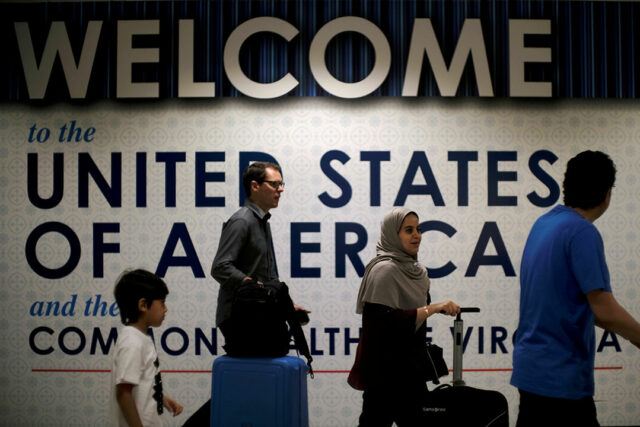
International passengers arrive at Washington Dulles International Airport in Dulles, Virginia, U.S., June 26, 2017. — REUTERS

LONDON/CHICAGO/NEW YORK — The post-pandemic travel boom and the high ticket prices that come with it show no signs of slowing well into next year, despite economic uncertainty and dwindling household savings.

While questions linger about how much longer consumers will continue to indulge, airlines, hotels and analysts say travel has remained a top priority instead of the “nice to have” purchase as in years past.

International travel reached around 90% of pre-pandemic levels this year, according to the International Air Transport Association. The rebound was led by visitors to Southern Europe from cooler climates despite soaring temperatures and included swaths of American tourists flying overseas.

“In the wake of the pandemic, a number of folks have reset their priorities and have focused on splurging on travel,” said Dan McKone, a senior partner at strategy consultancy L.E.K. Consulting.

That desire may even strengthen next year, according to travel tech firm Amadeus, whose recent survey showed that 47% of respondents said international travel was a high-priority discretionary spending category for 2023 and 2024, compared with 42% who ranked it as such the previous year. Amadeus sampled travelers from Britain, France, the United States, Germany and Singapore.

Those trends lifted quarterly earnings of travel companies, with cruise operators like Royal Caribbean reporting record results in recent weeks. Travel operators Booking Holdings and Airbnb said revenue was up 27% and 18%, respectively, and air carrier Delta and hotel giant Marriott International forecast strong future demand.

German carrier Lufthansa said bookings for the rest of the year currently exceed 90% of the pre-pandemic level and the summer season extending into October. United Airlines is expanding Pacific coverage this autumn with new flights to Manila, Hong Kong, Taipei and Tokyo.

Overall, global passenger demand is estimated to grow 22% year on year in 2023 and 6% in 2024, Moody’s investor service said on Tuesday. Ticket prices, which in some cases have increased by double-digit percentages since the pandemic, are unlikely to plummet.

“Everyone is pricing against demand and this is the basic economic equation,” Jozsef Varadi, Chief Executive Officer (CEO) of budget carrier Wizz Air, told Reuters. “We are in a high-input cost environment. So, that puts pressure on pricing.”

Hayley Berg, lead economist at online travel agency Hopper, said travelers to Europe and Asia are not expected to see substantial price relief this autumn. She expects air fares on long-haul international routes to remain high until supply outpaces pre-pandemic levels, demand normalizes and jet fuel prices decline further.

The weak spot is US domestic travel, as the end of COVID-19 testing restrictions has unleashed pent-up demand by Americans to take vacations overseas.

“They said earlier in the year, ‘Look, I’m going to do that international trip that we’ve been meaning to do,’ and that’s created a lot of crowded places with Americans in Europe,” Booking Holdings CEO Glenn Fogel told Reuters.

International inbound travel to the United States in May rose 26% year over year to 5.37 million visitors but is still about 20% lower than pre-pandemic visitor volumes reported in May 2019, according to the US National Travel and Tourism Office.

Average domestic airfare is currently $246 round-trip, down 8% from 2022, according to travel booking app Hopper.

Executives said US hotel rooms may become more expensive due to lack of supply, but softening demand may moderate that effect.

“Growth is expected to remain higher internationally than in the US and Canada, where we’re seeing a return to more normal seasonal patterns,” said Marriott CFO Kathleen Oberg.

Looking ahead, some airline groups like British Airways owner IAG said it is unclear whether demand can be sustained. Analysts have said dwindling consumer savings could cause a downturn in spending if inflation fails to let up. — Reuters
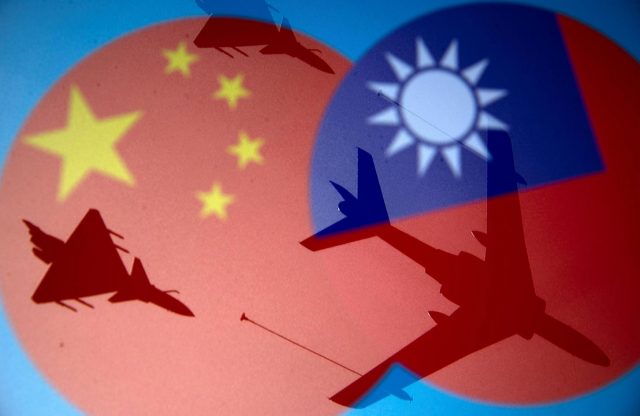
Taiwan reports second large-scale China air force incursion this week

REUTERS

TAIPEI — Ten Chinese air force aircraft entered Taiwan’s air defense zone on Wednesday accompanying five Chinese warships engaged in “combat readiness” patrols, the island’s defense ministry said, the second such incursion this week.

Taiwan, which China claims as its territory, has repeatedly complained of Chinese military activity near it over the past three years, as Beijing steps up pressure to try to force the island to accept its sovereignty.

Taiwan’s defense ministry said that starting at around 9 a.m. (0100 GMT), it detected a total of 25 Chinese aircraft engaging in operations out at sea, including J-10 and J-16 fighters, as well as H-6 bombers.

Of those aircraft, the ministry said 10 had either crossed the median line of the Taiwan Strait, which previously served as an unofficial barrier between the two sides or entered the southwestern part of Taiwan’s air defense identification zone, or ADIZ.

Those aircraft were acting in coordination with five Chinese warships engaging in “combat readiness” patrols, it said.

Taiwan’s military dispatched ships and aircraft to keep watch, the ministry said.

The ADIZ is a broad area Taiwan monitors and patrols to give its forces more time to respond to threats, and Chinese aircraft have not entered territorial Taiwanese air space.

On Sunday, Taiwan reported a similar level of activity by Chinese warplanes and warships near the island.

China staged war games around Taiwan in April after President Tsai Ing-wen returned home from a visit to the United States where she met US House Speaker Kevin McCarthy.

Last August, it also held war games around Taiwan to protest against a trip to Taipei by then-House Speaker Nancy Pelosi.

Taiwan Vice President William Lai leaves for the United States this week on his way to Paraguay on what is officially only a transit but which has angered China.

It was China’s “priority” to stop Mr. Lai from visiting the United States, Beijing’s ambassador to the US said last month.

Taiwan’s democratically elected government rejects China’s sovereignty claim and says only the island’s people can decide their future. — Reuters

Desperate for a drink: Indonesian villagers dig up dry river bed in drought

SUNARDI, a 52-year-old tobacco farmer, collects murky water for daily needs from a hand-dug well on a dry riverbed, the only remainder of what was once a flowing river as drought strikes in Grobogan, Central Java province, Indonesia, July 27, 2023. — REUTERS

KARANGANYAR — It’s been four, long, hot months since Sunardi’s village has seen any rainfall as an El Niño-induced drought parches Indonesia, so the tobacco farmer does the only thing he can do to get water: dig up a dry river bed.

In an hour or two, water — salty and muddy — will fill the freshly dug hole. Mr. Sunardi, and scores of other residents in Karanganyar village in Central Java province, then take the water home to drink, wash and irrigate their slowly dying crops.

“The drought in this village has been felt since April, and there has been no rain until now. The wells in this area have dried out, so residents can only get water from the river bed,” Mr. Sunardi, who only goes by one name, told Reuters.

“The plants here, such as corn, have all withered. Tobacco can live, but it doesn’t grow optimally, so we have to keep watering it with the river bed water too.”

Mr. Sunardi’s village has been digging up the river bed since June, when the water in their wells ran out.

Indonesia’s weather agency (BMKG) said the El Niño weather phenomenon, which brings prolonged hot and dry weather, is affecting more than two-thirds of the vast nation, including all of Java, the northern areas of Kalimantan and all but the coastal areas of Sumatra.

The population of those areas exceeds 70% of Indonesia’s total population of more than 200 million people, Ardhasena Sopaheluwakan, deputy head of climatology at the BMKG, said.

Scientists say El Niño has caused record heatwaves in cities from Beijing to Rome, increasing the risk of forest fires and affecting crops such as wheat, palm oil and rice.

Agriculture accounts of nearly 14% of Indonesia’s gross domestic product, and a third of the labor force works in farming, government data shows.

Tris Adi Sukoco, an official at the BMKG in Central Java, said that with rainfall rates in the region drastically lower, villagers like Mr. Sunardi should alter their crop patterns.

The farmer, however, said it was too late.

“Even if the river here is completely dry, we’ll have to find it wherever it is,” he said. — Reuters

Florida player wins US Mega Millions jackpot worth $1.58 billion

A PLAYER in Florida won a $1.58-billion Mega Millions lottery jackpot on Tuesday, the lottery website showed.

The winning numbers drawn were 13, 19, 20, 32, 33, and the Megaplier was 14, according to the Mega Millions website.

The winner can choose between receiving the $1.58 billion in annual payments, or taking a lump sum cash payment of $783.3 million.

The last Mega Millions jackpot was won by a player in New York in April, at $20 million.

A $2.04-billion Powerball jackpot in November 2022 ranks as the record highest lottery prize, according to media reports. — Reuters

Iraq bans media from using term ‘homosexuality,’ says they must use ‘sexual deviance’

EN.WIKIPEDIA.ORG

IRAQ’s official media regulator on Tuesday ordered all media and social media companies operating in the Arab state not to use the term “homosexuality” and instead to say “sexual deviance,” the regulator said.

The Iraqi Communications and Media Commission (CMC) said in a statement that the use of the term “gender” was also banned. It prohibited all phone and internet companies licensed by it from using the terms in any of their mobile applications.

The regulator “directs media organizations … not to use the term ‘homosexuality’ and to use the correct term ‘sexual deviance’,” the Arabic-language statement said.

A government spokesperson said a penalty for violating the rule had not yet been set but could include a fine.

Iraq does not explicitly criminalize gay sex but loosely defined morality clauses in its penal code have been used to target members of the LGBT community.

Major Iraqi parties have in the past two months stepped up criticism of LGBT rights, with rainbow flags frequently being burned in protests by Shi’ite Muslim factions opposed to recent Koran burnings in Sweden and Denmark.

More than 60 countries criminalize gay sex, while same-sex sexual acts are legal in more than 130 countries, according to Our World in Data. — Reuters

vivo X100 configured with groundbreaking telephoto lens

vivo X100

Latest reports revealed that the upcoming vivo X100 would be equipped with a groundbreaking periscopic telephoto lens, with its Pro version expected to surpass the 90 Pro+ performance in dark scenes due to its upgraded chip.

The highly anticipated vivo X100 is rumored to have Zeiss HD lens with 12MP periscope telephoto. Its Pro+ version is expected to have an unmatched 200MP telephoto lens with 10x zoom.

Aside from the telephoto lens, the phone’s rear cameras consist of a 50MP Sony IMX989 main camera and 32MP ultra-clear wide-angle lens. The camera system is also expected to be supported by dual optical image stabilization.

With the said features and cutting-edge image algorithms, expect high-quality and stunning portraits from the upcoming vivo X100.

Users will be able to produce stunning, detailed, and precise photos even from a distance or in low-light environments.

Powerful chipsets

Chinese tipsters said that the vivo X100 and its Pro version will be powered by MediaTek Dimensity 9300 with four Cortex-X4 mega-cores and four Cortex-A720 macro cores. The chipset’s performance is benchmarked from the A17 Bionic.

The Cortex-X4 mega-core has an average of 15% higher performance than the previous X3. In addition, the chipset is believed to be manufactured using TSMC’s N4P process, which reduces power consumption by 40%.

Meanwhile, the vivo X100 Pro+ is anticipated to come with the upcoming Snapdragon 8 Gen 3 chipset.

Be updated by following vivo’s official channels on Facebook, Instagram, YouTube, Twitter, and TikTok.


Spotlight is BusinessWorld’s sponsored section that allows advertisers to amplify their brand and connect with BusinessWorld’s audience by enabling them to publish their stories directly on the BusinessWorld website. For more information, send an email to online@bworldonline.com.

Join us on Viber at https://bit.ly/3hv6bLA to get more updates and subscribe to BusinessWorld’s titles and get exclusive content through www.bworld-x.com.

British water companies face $1-B lawsuits over pollution — law firm

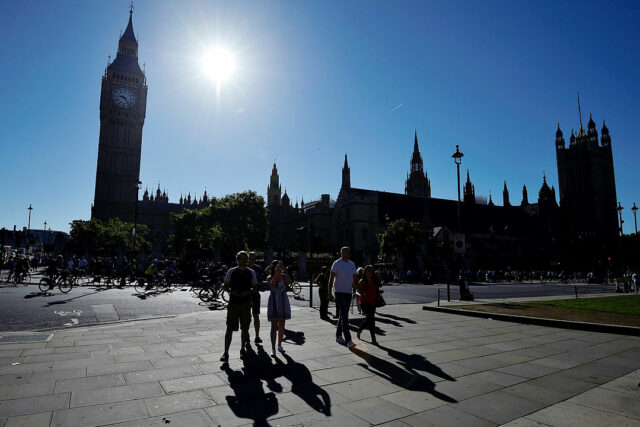
People walk past the Houses of Parliament and the Big Ben clock tower in London, Britain, August 23, 2016. — REUTERS/HANNAH MCKAY

LONDON — Six British water companies are facing lawsuits valued at over 800 million pounds ($1 billion) brought on behalf of millions of customers for allegedly overcharging customers by under-reporting sewage discharges, a law firm said on Wednesday.

Environmental and water consultant Carolyn Roberts, who plans to bring the claims, says water companies would have faced penalties if they had properly reported pollution incidents.

Roberts says the companies’ alleged failure to report pollution incidents had led to customers being overcharged.

A 330-million-pound case against Severn Trent was filed at London’s Competition Appeal Tribunal (CAT), law firm Leigh Day said in a statement.

The firm said it will also be filing cases against five other companies – Thames Water, United Utilities, Anglian Water, Yorkshire Water and Northumbrian Water – in the coming months.

The lawsuits follow the biggest wave of public criticism over the dumping of raw sewage and the poor quality of rivers and beaches since the water industry was privatized in 1989.

Water companies have pushed back against the proposed claims, describing them as “highly speculative”.

A Severn Trent spokesperson said any pollution incidents have been reported to Britain’s Environment Agency, adding: “Any claim to the contrary is wholly and completely wrong.”

A Thames Water spokesperson said the company was aware of the potential claim, which they said was without merit.

A spokesperson for industry body Water UK said: “This highly speculative claim is entirely without merit.”

“The regulator has confirmed that over 99% of sewage works comply with their legal requirements. If companies fail to deliver on their commitments, then customer bills are already adjusted accordingly.”

Yorkshire Water declined to comment on ongoing legal proceedings. Anglian Water referred to Water UK’s statement and Northumbrian Water did not respond to a request for comment.

The cases are being brought as collective proceedings – which are roughly equivalent to class actions in the United States – by environmental consultant Roberts.

Water companies have avoided being penalized by regulator Ofwat for “serial and serious under-reporting” of pollution incidents, she said in a statement.

“I believe this has resulted in consumers being unfairly overcharged for sewage services,” Roberts added. — Reuters

World Bank says Uganda’s anti-LGBTQ law violates its values

REUTERS

WASHINGTON — The World Bank said on Tuesday it would halt new lending to the Ugandan government after concluding that its anti-LGBTQ law, which has been condemned by many countries and the United Nations, contradicts the bank’s values.

A World Bank team traveled to Uganda immediately after the law was enacted in May and determined that additional measures were needed to ensure projects were being implemented in line with the bank’s environmental and social standards.

“No new public financing to Uganda will be presented to our Board of Executive Directors until the efficacy of the additional measures has been tested,” the bank said in a statement, adding that such measures were now under discussion with Ugandan authorities.

“Uganda’s Anti-Homosexuality Act fundamentally contradicts the World Bank Group’s values. We believe our vision to eradicate poverty on a livable planet can only succeed if it includes everyone irrespective of race, gender, or sexuality,” the bank said.

“We remain committed to helping all Ugandans – without exception – escape poverty, access vital services, and improve their lives.”

World Bank President Ajay Banga, who took office in June after the Ugandan law was enacted, has come under pressure to respond to the Ugandan law. On June 15, 170 civic groups urged Banga to take “specific, concrete and timely actions” in response to the Uganda anti-LGBTQ law, including suspending future lending.

The World Bank had provided $5.4 billion in International Development Association financing to Uganda by the end of 2022, including many health and education projects that could be affected by the new law.

The existing portfolio will continue to disburse funds, even as new lending is put on hold, a World Bank source said.

Private sector projects backed by the International Finance Corporation and the Multilateral Investment Guarantee Agency (MIGA) would proceed only “on a selective basis,” the bank said in a separate note to staff seen by Reuters.

It said the IFC and MIGA would also implement additional measures to “ensure inclusion and non-discrimination as needed.”

In its statement, the World Bank said it would significantly increase third-party monitoring and grievance redress mechanisms with regard to the Uganda portfolio to allow the bank to take corrective action as necessary.

The law was enacted in May and carries the death penalty for “aggravated homosexuality,” an offense that includes transmitting HIV through gay sex. — Reuters

Top Brazilian airlines say passengers not willing to pay to offset emissions

NATANAELGINTING-FREEPIK

SAO PAULO – Most airline passengers are still not willing to pay to offset carbon emissions from their flights, two of Brazil’s largest carriers said on Tuesday, as the sector searches for ways to fulfill its goal of reaching net zero emissions by 2050.

Initial experiments by Gol and Azul saw only a tiny proportion of their flyers engage in voluntary carbon reduction projects, the firms said, suggesting passengers do not wish to spend their own money to offset emissions.

Gol partnered with Brazilian startup Moss in 2021 to offer flyers the option of buying carbon credits to offset emissions from their flights, while Azul earlier this year announced a similar partnership with climate tech CHOOOSE.

Moss sells carbon credits – tradable permits that allow the owner to emit certain amounts of greenhouse gases – which it generates by preserving parts of the Amazon.

According to the startup, the credits needed to offset emissions from a Gol flight between Sao Paulo and Rio de Janeiro would cost the passenger less than 3.00 reais ($0.6128).

The companies did not say how much the credits would cost the company in a quarter to offset all of their flights.

The global aviation sector has committed to reaching net zero emissions by 2050 through a combination of the use of sustainable fuel, new technology and carbon offsets but reducing emissions remains a challenge.

“It does not bring me any pride, but I think it’s important to share that when we started our program, there was a very low adherence of 0.01%,” Gol’s Operations Control Center Director Eduardo Calderon said at an event hosted by Boeing and Roundtable on Sustainable Biomaterials.

When the company upgraded its system to add the carbon-offset platform to its own website, giving the travelers the option of buying the carbon credits at the same time they purchase the ticket, adherence jumped some 30%, Calderon said.

But that means it rose from 0.01% to 0.013%.

Azul’s sustainability manager, Filipe Alvarez, told the same panel that even though at seven months the carrier’s carbon-offsetting program was far newer than Gol’s, results from its first months were similar, with very low adherence.

“People still don’t have that sense of commitment,” Gol’s Calderon said.

“Everyone loves talking about sustainability, but when it’s time to pay from their own pocket, that doesn’t happen. Even in Europe that level reaches only 4% or 5% for companies offering carbon-offsetting options.” — Reuters

Biden’s carbon proposal is unworkable, US power sector warns

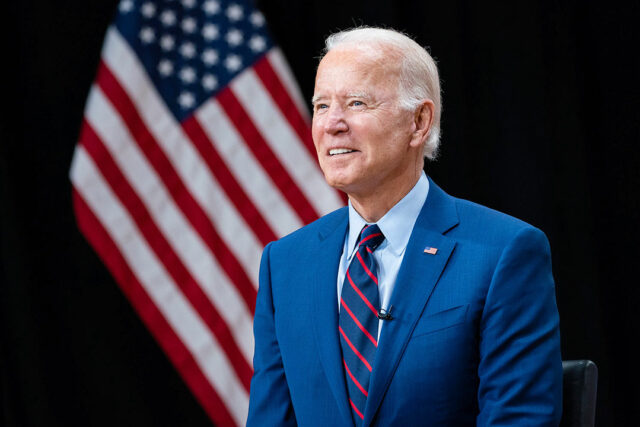
US PRESIDENT JOSEPH R. BIDEN — WHITEHOUSE.GOV

United States power plant owners warned the Biden administration on Tuesday that its sweeping plan to slash carbon emissions from the electricity sector is unworkable, relying too heavily on costly technologies that are not yet proven at scale.

Top utility trade group the Edison Electric Institute (EEI) asked the U.S. Environmental Protection Agency (EPA) for revisions of the proposed power plant standards, which hinge on the widespread commercial availability of carbon capture and storage (CCS) and low-emissions green hydrogen, adding the agency’s vision was “not legally or technically sound.”

“Electric companies are not confident that the new technologies EPA has designated to serve as the basis for proposed standards for new and existing fossil-based generation will satisfy performance and cost requirements on the timelines that EPA projects,” EEI said in a public comment released on Tuesday on the agency’s deadline for feedback.

Resistance from the EEI and other energy-related groups poses a potentially big challenge to the administration’s climate agenda.

U.S. President Joe Biden has a goal to achieve net-zero emissions by 2035 in the power sector, the source of a quarter of the nation’s climate-warming gases. That target is a central part of Washington’s pledge to halve U.S. greenhouse gas output by 2030 as part of an international agreement to fight global climate change.

Proposed in May, the EPA plan would for the first time limit how much carbon dioxide power plants can emit, after previous efforts were struck down in court.

West Virginia, which led a lawsuit against the Obama-era Clean Power Plan, also said it and 20 other states were opposed to the rule because the standards would leave coal plant operators with no choice but to close.

The proposed limits for both new and existing power plants assume availability of CCS technology that can siphon the CO2 from a plant’s smokestack before it reaches the atmosphere, or the use of hydrogen as a fuel. The EPA said that last year’s passage of the Inflation Reduction Act, which subsidizes those technologies, makes them cost-effective and viable.

Environmental groups Clean Air Task Force and Natural Resources Defense Council said the proposal “provides generous lead times for implementation and compliance and will not cause reliability problems if finalized.”

Industry is particularly concerned about proposed standards for existing natural gas power plants, saying those facilities would be hard to retrofit with CCS, or hydrogen, due to space constraints and other limitations.

The EPA’s plan would require large existing gas-fired plants that run at least 50% of the time to install carbon capture by 2035, or co-fire with 30% hydrogen by 2032. EEI asked the agency to “repropose or significantly supplement” the proposed rules for existing gas plants.

One investor-owned utility, Baltimore-based Constellation , distanced itself from EEI’s position and said it supported the EPA’s proposed guidelines. The company said, however, that it was seeking improvements to the rule.

The National Rural Electric Cooperative Association, which represents 900 member-owned electric utilities, asked the EPA to withdraw the proposed rule, saying it would compromise reliability and affordability, said CEO Jim Matheson.

Labor unions, the United Mine Workers of America and the International Brotherhood of Electricity Workers, also called on the EPA to redo the rule and criticized its reliance on CCS, saying it puts jobs at risk.

The EPA’s proposal had been crafted to reflect constraints the Supreme Court imposed on the agency last year after it ruled that the Obama era’s Clean Power Plan went too far by imposing a system-wide shift from fossil fuels to renewable energy. — Reuters

WTO, Nigeria’s Tinubu discuss measures to ease pain of fuel price hike — WTO director-general

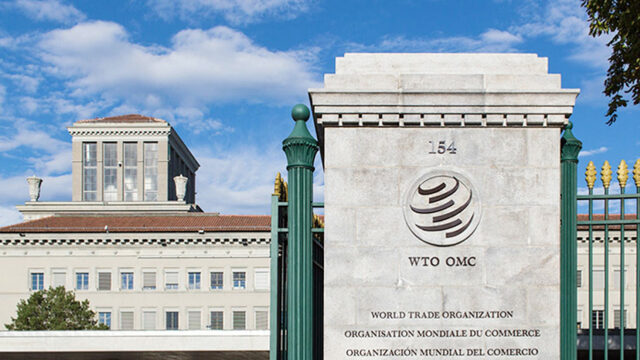
WORLD TRADE ORGANIZATION

ABUJA — The World Trade Organization’s director-general said on Tuesday she discussed measures, including support from the agency, with Nigerian President Bola Tinubu that could help cushion the impact of ending a subsidy on petrol that has increased the cost of living in Africa’s largest economy. 

Ngozi Okonjo-Iweala, who is on a private visit to her home country, said talks focussed on immediate community programs to create jobs for young people and women “who are those bearing the brunt” and long-term opportunities that Nigeria can seize, including investment in the pharmaceutical industry.

“We are already working in Nigeria with women in particular, who own small and medium enterprises, to try to help them upgrade the quality of their products, whether it’s in agricultural, textiles, and in other areas so that they can sell more internationally,” she told reporters in Abuja, the capital.

“We are going to try to do the most we can to support Nigerians at this particular time,” she said.

Since being sworn into office on May 29, Tinubu has embarked on the country’s boldest reforms in decades, scrapping the popular but expensive subsidy, which cost $10 billion last year, and relaxing foreign exchange regime.

Tinubu, who is under pressure as prices soar following his reform agenda, has defended his decision saying Nigeria has saved over 1 trillion naira ($1.31 billion) in just over two months since reforms were started.  Reuters

Magnitude 5.4 earthquake strikes Mindanao

MANILA – An earthquake of magnitude 5.4 struck Mindanao, Philippines, the German Research Centre for Geosciences (GFZ) reported on Wednesday.
The quake was at a depth of 10 kilometers (6.21 miles), GFZ said.

The Philippines seismology agency reported it at magnitude 5.3 in Davao Oriental province and said it was expecting damage and aftershocks. — Reuters

ADVERTISEMENT
ADVERTISEMENT