Home Blog Page 4334

US CDC recommends broad use of updated COVID-19 vaccines
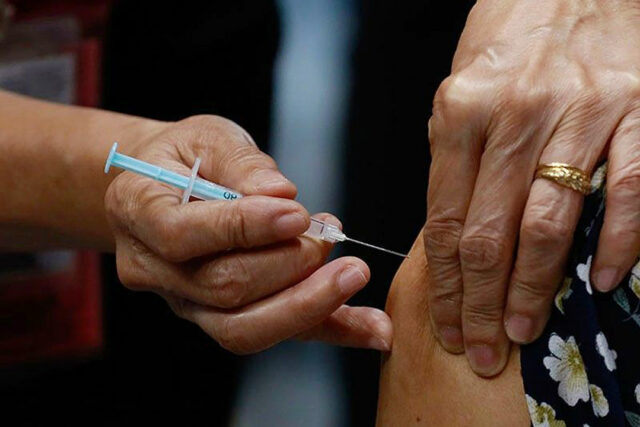
PHILIPPINE STAR/ MICHAEL VARCAS

THE US Centers for Disease Control (CDC) and Prevention director on Tuesday signed off on broad use of updated COVID-19 vaccines approved by the government — covering ages 6 months and up — as the country prepares to start a vaccination campaign within days.

The final recommendation from director Mandy Cohen comes after a panel of advisers to the agency voted 13-1 to recommend the shots made by Pfizer and partner BioNTech as well as Moderna.

They did not choose to target the shots at specific high-risk populations as some experts have suggested, and other countries have recommended. The shots are part of a push by public health officials to align the next COVID vaccines more closely with the actual circulating variant of the virus, much as annual flu shots are designed.

The recommendation differs from those in most European countries that have issued guidance. This month, the European Centre for Disease Prevention and Control (ECDC) said vaccination programs in European Union countries should prioritize people aged 60 and older as well as other vulnerable groups.

In Germany, booster shots have been targeted to these groups, while the British government’s vaccine committee said only adults 65 and older and some other categories will be offered the shot as they are the most likely to benefit.

US CDC panel members said simply recommending the vaccine for everybody outweighed complications created by tailoring recommendations more precisely.

“I’m strongly in favor of a universal recommendation,” panel member and professor at Harvard Medical School Dr. Camille Kotton said. “Let’s do away with COVID-19 as best we can by prevention of disease through vaccines.”

The CDC advisers met a day after the US Food and Drug Administration (FDA) approved updated COVID vaccines made by Pfizer and its German partner BioNTech as well as by Moderna for people ages 12 and above, and authorized them for emergency use in children ages 6 months through 11 years.

Pfizer and Moderna have said shots can roll out in coming days and the CDC said they will be available later this week.

Novavax’s protein-based shot is still under review by the FDA and a recommendation for the same is expected to be in line with the FDA’s decision.

AN EVER-EVOLVING VIRUS
Formulating vaccines to target the latest variants of the ever-evolving coronavirus has been a challenge for public health officials globally since the pandemic began in 2020, with some variants more worrisome than others. Variants circulating the most widely in the United States now are subvariants of what is called the XBB lineage of the virus.

The updated shots are monovalent, or single-target vaccines, aimed at what is called the XBB.1.5 variant, as requested by the FDA.

“I do think that a broad boosting strategy makes sense,” said Caitlin Rivers, a senior scholar at the Johns Hopkins Center for Health Security in Baltimore, adding that while the virus was not causing as many hospitalizations and deaths as before, it is still circulating.

Ms. Rivers added she was curious to hear the committee’s recommendation for young men, “because we do see that, in rare cases, young men can develop myocarditis or related effects,” referring to a condition in which inflammation develops in the middle muscular layer of the heart wall.

The rate of myocarditis after receiving booster doses in adolescent and young adult males are lower than that observed after the primary series of shots, CDC official Megan Wallace said at the meeting.

She said the data is limited because of the fewer number of booster doses given out and added that longer intervals between updated doses may also have an impact on the myocarditis rates in this population.

COVID infections and hospitalizations have been rising in the United States, Europe and Asia but remain well below previous peaks. Deaths are relatively low in the United States — reported at around 2,000 last month — though the country has experienced 1.1 million COVID deaths since the outset of the pandemic. — Reuters


‘Say bye to diesel’: India warns automakers of higher taxes in pollution fight

PHILIPPINE STAR/KRIZ JOHN ROSALES

NEW DELHI — India’s road transport minister on Tuesday said he will propose an additional 10% tax on diesel vehicles and warned automakers of even higher levies to come to force them away from diesel-burners and cut fuel emissions and pollution.

Nitin Gadkari made the comments at the Society of Indian Automobile Manufacturers (SIAM) annual conference in New Delhi, where executives of Tata Motors, Mahindra and Mahindra, Maruti Suzuki and foreign carmakers such as Mercedes and Volkswagen had gathered.

Mr. Gadkari said he will ask the finance minister later on Tuesday for an “additional 10%” goods and services tax on diesel vehicles to tackle problems related to pollution. India currently imposes a 28% tax and additional so-called “cess” is levied depending on the vehicles’ engine capacity.

“Say bye to diesel soon, otherwise we will increase so much tax that it will become difficult for you to sell these vehicles,” Mr. Gadkari told the conference.

“We have to leave petrol and diesel soon and walk on the new path of being pollution free … There should be diversification (by companies) as soon as possible,” he said in a warning to automakers.

Mr. Gadkari’s comments sparked widespread discussion among auto executives at the Delhi conference, with some describing the move to Reuters as a “bombshell” announcement. Mercedes India managing director, Santosh Iyer, said many customers still prefer diesel vehicles and any change in tax policies will lead to a shift in automakers’ “portfolio strategy.”

“We will need six-odd months to change our production planning processes but we can always vary and shift based on the demand,” he said.

Pollution is a growing problem across India. Attempts to cut vehicular emissions, reduce fuel imports and curb stubble burning have not yielded great results in a country where the proposed coal power capacity is the highest after China.

The minister later wrote on social media platform X, formerly Twitter, the proposal to increase tax was not “currently under active consideration by the government”.

Shares of automakers Mahindra and Mahindra, Tata Motors and commercial vehicle maker, Ashok Leyland ASOK.NS, dropped between 2.2% and 2.5%.

The finance ministry did not immediately respond to a request for comment.

Gadkari has also issued warnings at past SIAM conferences. In 2017, Mr. Gadkari told auto executives they should move towards electric vehicles (EVs), saying: “I am going to do this, whether you like it or not. And I am not going to ask you. I will bulldoze it.”

India has in recent years promoted electric vehicle sales with tax incentives, though less than 2% of India’s nearly 4 million in car sales last fiscal year were EVs. The government has said it wants EVs to make up 30% of total car sales by 2030.

The number of diesel vehicles in the world’s third-largest car market has fallen to 18% from 50% a decade ago, Mr. Gadkari said, warning that just like India pushed through stricter fuel emission norms against opposition from the industry, it will similarly drive up taxes to push out diesel vehicles.

Veejay Ram Nakra, chief executive officer for the automotive division of Mahindra and Mahindra, told TV news channel ET Now that any change in duty structure “will certainly have an impact on volume of sales.”

Ashok Leyland Chief Executive Shenu Agarwal told CNBC-TV18 that instead of taxation, more incentives should be given on electric, hydrogen and other alternate fuels.

About 962,000 commercial vehicles were sold in India from April 2022 to March 2023, up 34% from a year earlier, while passenger vehicles sales rose 27% to 3.9 million for the period.

“If implemented, this would be a huge negative for commercial vehicle makers, potentially bringing degrowth to the segment,” said Amit Hiranandani, analyst at brokerage SMIFS. — Reuters

Asia apparel hubs face $65-B export hit from extreme weather, study shows

LONDON — Extreme heat and flooding could erase $65 billion in apparel export earnings from four Asian countries by 2030, as workers struggle under high temperatures and factories close, research from Schroders and Cornell University showed on Wednesday.

The study also mapped out the supply chains of six unidentified global apparel brands operating in the four countries studied – Bangladesh, Cambodia, Pakistan and Vietnam — and found all six would be hit materially. For one sample brand that could amount to 5% of annual group operating profits.

The findings should act as a wake-up call to both an apparel industry facing significant financial costs, and to investors confronted with sparse information on companies’ exposures, the report’s authors told Reuters.

“Among the suppliers and the buyers we talked to, not one had their eye on these two issues (heat and flooding),” said Jason Judd, executive director of Cornell Global Labor Institute.

“The climate response by the industry is all about mitigation, about emissions and recycling, and little or nothing with respect to flooding and heat,” Judd said.

Understanding climate-related physical risks to companies in a warming world is critical, but the process is in its infancy with few businesses disclosing enough information and few investors undertaking proper assessments.

“There is so little data on this … There are some [apparel] brands not disclosing the factory locations of their suppliers,” said Angus Bauer, Schroders’ head of sustainable investment research.

Mr. Bauer said Schroders, which manages more than 700 billion pounds ($874 billion) in assets, would increase engagement with companies over their disclosures and he called on firms to work with suppliers and policymakers to build adaptation strategies that consider the impact on workers.

Using projections, the researchers analyzed future heat and flooding levels to estimate what would happen under a “climate adaptive” scenario and a “high heat and flooding” scenario.

Under the second, workers would suffer more “heat stress”, with worker output declining as the wet-bulb globe temperature, which measures heat and humidity, rises.

Flooding will also force factories to close in the four countries, which account for 18% of global apparel exports and employ 10.6 million workers in apparel and footwear factories.

The overall fall in productivity would lead to a $65 billion shortfall in projected earnings between 2025 and 2030 — equivalent to a 22% decline —å and 950,000 fewer jobs being created, the study found.

By 2050, lost export earnings would reach 68.6% and there would be 8.64 million fewer jobs. — Reuters

Crack open the fun at Sanrio’s ‘The South Eggventures with Gudetama’ at SM Southmall

Gudetama lovers, listen up! Partnering with Sanrio, SM Southmall is throwing an eggstraordinary bash you won’t want to miss this Sept. 1-30. Swing by the Food Street Concourse for a Gudetama-packed party that’s pure excitement!

Eggs-quisite Setup: A first in the Philippines, step into an egg-citing large-scale Gudetama-themed setup that’s bound to whisk you away! Explore a playful ball pit, discover Insta-worthy spots for the perfect selfie, and let the little ones loose in a specially designed kids’ corner.

Gudetama Goodies: If you’re a fan of all things Gudetama, you’re in for a treat! The event will feature an eggs-tensive range of Gudetama merchandise available for purchase at The SM Store. From adorable plushies to quirky accessories, there’s something for every egg-thusiast.

Meet the Laziest Egg: Mark your calendars for a meet-and-greet with the one and only Gudetama Tamago Mascot! Catch this lovably lazy character live on Sept. 1, 15, and 16, 2023, at 3 p.m. and 6 p.m. Get ready for some egg-ceptional fun and eggs-tra special moments.

Join the Eggventure: Go gather your explorers and #SeeYouDownSouth at The South Eggventures with Gudetama in SM Southmall this September. Whether you’re a dedicated fan or just looking for a dose of egg-ceptional fun, this event is cracking good fun for everyone!


Spotlight is BusinessWorld’s sponsored section that allows advertisers to amplify their brand and connect with BusinessWorld’s audience by enabling them to publish their stories directly on the BusinessWorld website. For more information, send an email to online@bworldonline.com.

Join us on Viber at https://bit.ly/3hv6bLA to get more updates and subscribe to BusinessWorld’s titles and get exclusive content through www.bworld-x.com.

Diokno optimistic rice tariff cut will get presidential approval

PHILIPPINE STAR/ MICHAEL VARCAS

DUBAI — The Philippines’ finance minister on Tuesday expressed optimism that President Ferdinand Marcos Jr will approve a proposal to cut tariffs on imported rice, and that the measure could be implemented as soon as next month.

The finance and economic planning departments are proposing a tariff reduction to between zero and 10%, from the current 35% level, for rice imports as the government seeks to ease pressure on inflation. The country is one of the world’s biggest buyers of the grain.

Retail prices of rice further climbed in August, pushing up Philippine inflation, which accelerated for the first time in seven months to 5.3% year-on-year.

Asked if he thinks the tariff cut proposal will be approved, Finance Secretary Benjamin Diokno said: “I think so.”

Mr. Diokno was speaking to Reuters in an interview in Dubai, where he together with other Philippine economic officials held a briefing on the country’s economic growth prospects.

The briefing, organised by a group of local and global banks including HSBC, was part of the Philippine delegation’s broader aim to gauge investor interest from the United Arab Emirates in infrastructure and other opportunities in the Southeast Asian nation.

According to Mr. Diokno, Marcos can cut tariffs only when Congress, which is scheduled to adjourn by the end of this month, is not in session.

“I think in a week or two Congress will be out of session so that will be the perfect time (to cut tariffs),” he said.

National Economic and Development Authority Secretary Arsenio Balisacan, during the briefing, said inflation was the government’s “most immediate concern”, and efforts were being undertaken to bring it down.

The Philippine economy grew 4.3% in the second quarter from a year earlier, its slowest expansion pace in nearly 12 years, as high inflation and interest rates hurt consumer demand. That brought first-half growth to 5.3%, below the government’s 6.0%-7.0% target for the year.

Mr. Balisacan, however, said the government remained confident of hitting “at least the lower point of that range”. — Reuters

F&B, nutraceutical innovations to take center stage at back-to-back trade shows in Bangkok

A wide range of products and ingredients in the food and beverage, and nutraceutical industries can be sampled in Food Innovation (Fi) Asia Thailand 2023 and Vitafoods Asia 2023, which will be held from Sept. 20 to 22 at the Queen Sirikit National Convention Center (QSNCC) in Bangkok, Thailand.

Fi Asia Thailand 2023 has the reputation of being the primary meeting place for the food and beverage sector in Southeast Asia. Over 600 international exhibitors from more than 40 countries, alongside leading players, distributors, and key decision-makers, are expected to make the trip to Bangkok.

“Fi Asia Thailand 2023 is not just a trade show; it’s a thriving community dedicated to inspiring and fostering growth in the ASEAN food and beverage industry. With an array of opportunities to network, learn and collaborate, it is an unmissable event for anyone looking to make their mark in this sector,” explained Rungphech Chitanuwat, regional portfolio director for ASEAN and the new country general manager for the Philippines at Informa Markets and organizer of Vitafoods Asia 2023 and Fi Asia Thailand 2023.

Visitors at Fi Asia Thailand 2023 will get the opportunity to attend international conferences that will help participants discover innovative products and applications in the industry. There will also be technical presentations and an innovation zone which is dedicated to new ingredients. For those who are into beverages, a must visit is the Beverage Ingredients (Bi) Theatre.

Participants can also look out for the Sustainability Square where they can experience the authentic Thai delight called the Kanom Look Choup, a mung bean paste dessert that is used to be eaten only by Thai royalty, and how it can be created using mung bean flour and natural food colorants.

To be held simultaneously with Fi Asia Thailand is Vitafoods Asia 2023, Asia’s leading event for functional ingredients and dietary supplement products and solutions.

Nutraceutical products are considered one of the elements to maintain a sound body and mind or even combat specific diseases. The nutraceutical industry has been undergoing a remarkable transformation, driven by the growing emphasis on health and wellness, coupled with the unprecedented advancements in nutrition knowledge.

In Asia, the nutraceutical industry is expected to grow at a compound annual growth rate of 6% and attain a value of US$229 billion by 2023, according to reports from specialist agency Healthy Marketing Team.

“With more exhibit spaces, we are expecting more than 8,000 participants from around the globe to join the event. In addition to the product showcasing, Vitafoods Asia 2023 will allow participants to immerse themselves in a global hub of nutraceutical knowledge,” said Ms. Chitanuwat.

The event will feature insightful topics by renowned experts and successful entrepreneurs, sharing market trends, technical and product presentations, and tips and tricks for business — equipping attendees with new tools and knowledge in propelling their businesses forward.


Vitafoods Asia 2023 will also have resource centers on Omega 3 and Probiotics. Other attractions include Innovation Tours, International Pavilions that showcase the latest in nutraceutical products; New Ingredients and New Products Zone; NutraFocus and Tasting Bar.

“There will also be an ‘Innovative Health Hub’ that will showcase Asia’s top health and nutrition trends. You are all invited to join us and look into a world of innovation for a healthier tomorrow,” Ms. Chitanuwat said.

DBP bags five awards for investment deals

State-owned Development Bank of the Philippines (DBP) has won five awards from an association of investment houses for its laudable contributions in advancing the development of capital markets in the country, a top official said.

DBP President and Chief Executive Officer Michael O. de Jesus said the Bank was cited by the Investment House Association of the Philippines (IHAP) for its support to various public-private sector undertakings that promoted innovation in the areas of infrastructure, agriculture, and tourism.

“We are grateful to IHAP for recognizing DBP’s critical role as an essential developer and driver of the Philippine capital markets,” de Jesus said. “We are committed to formulating new and innovative ways to support investment transactions that will boost critical sectors such as infrastructure, agriculture, and tourism.”

DBP is the eighth largest bank in the country in terms of assets and provides strategic financing support to critical economic sectors such as infrastructure and logistics, micro, small and medium enterprises, social services, and the environment.

IHAP is a non-stock, non-profit organization established in 1974 to raise public awareness on the investment houses in the country and their contribution in the growth of Philippine businesses and the economy through the development of the capital markets.

De Jesus said the Bank was cited in the 8th IHAP Awards for deals completed in 2022 for the Best Fixed Income Deal (Small Mid Cap) for its support to Ada Manufacturing Corporation’s (AdamCo) P1.5-billion Corporate Notes Deal to support farm mechanization of the Rice Competitiveness Enhancement Fund.

He said DBP was awarded Best Project Finance Deal (Large Cap) for its role in SMC SLEX Holdings Company, Inc.’s P20-billion Syndicated Term Loan Facility to finance the expansion of the South Luzon Expressway.

“We are humbled and honored to be recognized alongside other full-service investment houses in the country. These awards truly highlight our unwavering commitment to strengthen and develop the investment banking and capital markets by providing advisory, and debt syndication services to our valued clients,” de Jesus said.

DBP was also cited by IHAP in the 7th annual awards for the following transactions in 2021: Best Advisory Deal (Large Cap) for Cebu Air Inc.’s P16-billion Business Transformation and Fund Raising Program; Best Advisory Deal (Large Cap) for GMR Megawide Cebu Airport, Inc.’s P23-billion Loan Facility Advisory Deal; and Best Fixed Income Deal awards (Small Mid Cap) for Science Park of the Philippines, Inc.’s P800-million Syndicated Term Loan and Security Arrangement Deal.


Spotlight is BusinessWorld’s sponsored section that allows advertisers to amplify their brand and connect with BusinessWorld’s audience by enabling them to publish their stories directly on the BusinessWorld website. For more information, send an email to online@bworldonline.com.

Join us on Viber at https://bit.ly/3hv6bLA to get more updates and subscribe to BusinessWorld’s titles and get exclusive content through www.bworld-x.com.

N.Korea’s Kim stresses ‘strategic importance’ of Russia ties ahead of Putin summit

REUTERS

 – North Korean leader Kim Jong Un has said his visit to Russia shows the “strategic importance” of the two countries’ ties, state news agency KCNA reported on Wednesday ahead of an expected summit with President Vladimir Putin.

The meeting, which could be as early as Wednesday, is being watched apprehensively by Washington and allies, who suspect the two leaders will discuss military cooperation and could agree on a deal to trade arms and defense technology.

Hours ahead of the anticipated summit, North Korea launched at least two ballistic missile into the sea off its east coast, South Korea’s military and Japan’s coast guard said. Details on the type of missiles were not yet released.

The Japanese government said a second missile was launched and both fell outside the country’s exclusive economic zone.

Mr. Kim arrived in Russia by private train on Tuesday in the Russian Far East accompanied by top defense industry and military aides, and was welcomed by an honor guard and senior Russian and regional officials, KCNA said.

Kim Jong Un said that his visit to the Russian Federation … is a clear manifestation of the stand of the WPK and the government of the DPRK prioritizing the strategic importance of DPRK-Russia relations,” the KCNA report said.

The DPRK stands for North Korea’s official name, the Democratic People’s Republic of Korea, while the WPK is the Workers’ Party of Korea, the country’s ruling party.

US officials have said arms talks between Russia and North Korea were actively advancing, and Washington and allies have expressed concern that Kim and Putin would discuss providing Russia with weapons for the war in Ukraine.

Pyongyang and Moscow have denied shipments of ammunition to Russia or any future plans by the North to supply arms.

Images released by KCNA showed Mr. Kim arriving at the train station in the border town of Khasan on Tuesday morning, stepping off the train for the welcome ceremony and moving indoors for discussions with Russian officials.

He met with Russian Natural Resources Minister Alexander Kozlov and far eastern Primorsky region governor Oleg Kozhemyako before leaving “for his destination”, KCNA said. It made no mention of a summit with Mr. Putin or where Mr. Kim was headed.

Japan’s Kyodo news said Putin and Kim are expected to meet on Wednesday afternoon at Russia‘s Vostochny cosmodrome, a space centre more than 1,700 km (1,056 miles) north of Khasan, citing an unnamed Russian official.

On Tuesday, Mr. Putin said at the Eastern Economic Forum in Vladivostok that he was planning to go to the Vostochny space centre, without saying whether he planned to meet Kim there.

Kremlin spokesman Dmitry Peskov said Mr. Kim‘s visit will be a “fully fledged” one and the two sides will conduct “negotiations”. Humanitarian aid to North Korea and U.N. Security Council resolutions imposed on Pyongyang may also be discussed, Russian officials have said.

Russia’s foreign ministry said the upcoming talks between Putin and Kim are important against the backdrop of geopolitical changes in the world.

“Bilateral contacts are very important. And the situation on the Korean Peninsula is, of course, of utmost importance for security and stability in the region,” state news agency RIA quoted ministry spokeswoman Maria Zakharova as saying.

The United States and South Korea have warned any arms trade with the North is violation of Security Council resolutions that Moscow voted to approve.

The trip marks Kim‘s first visit to Russia in nearly four years and his first foreign visit after the worldwide public health crisis, according to KCNA, referring to the COVID-19 pandemic.

His visit seeks to put DPRK-Russia relations of friendship and cooperation on a “fresh higher level,” the report said. – Reuters

Alibaba opens AI model Tongyi Qianwen to the public

 – Alibaba said on Wednesday it would open its artificial intelligence model Tongyi Qianwen to the public, in a sign it has gained Chinese regulatory approval to mass-market the model.

Authorities in China have recently accelerated efforts to support companies developing AI as the technology increasingly becomes a focus of competition with the United States.

The Alibaba Cloud Intelligence Division said organizations including OPPO, Taobao, DingTalk and Zhejiang University have reached cooperation agreements to train their own large language models or develop language model applications based on Tongyi Qianwen, according to a post published on its WeChat account.

The post also said that in the near future, an open source version of the large language model would become available for free commercial use “by the whole society”.

Earlier this week, Alibaba‘s Cloud division’s chief, former group CEO Daniel Zhang, stepped down from his post. He was replaced by newly installed Alibaba Group CEO, Eddie Wu.

In an internal letter to Alibaba staff on Tuesday, Wu said that AI would be at the centre of Alibaba Group’s future strategy.

“Over the next decade, the most significant change agent will be the disruptions bought about by AI across all sectors,” Wu said in the letter.

“If we don’t keep up with the changes of the AI era, we will be displaced.”

Alibaba first unveiled Tongyi Qianwen in April, saying at the time that the AI large language model, which is similar to ChatGPT, would be integrated into all business applications. – Reuters

Apple rolls out iPhone 15, watches with ‘double tap’ feature at flagship event

REUTERS

Apple on Tuesday took the wraps off newer variants of some of its best-selling devices against the backdrop of flagging discretionary spending and expanded curbs on its flagship iPhone in China.

The world’s most valuable listed company will make available the new products from Sept. 22, hoping that they make it to the top of customers’ wish lists during the all-important holiday shopping season.

Here are the details of the key announcements:


The iPhone

Apple launched iPhone 15 and iPhone 15 Plus, sporting 6.1-inch and 6.7-inch displays, respectively, similar to their predecessors.

The higher-end iPhone 15 Pro and iPhone 15 Pro Max models, priced at $999 and $1,199, respectively, will sport an “action button” in place of the mute switch that can be customized for a variety of functions. They will use titanium instead of stainless steel for the side bars.

Apple has also switched to the USB-C charging standard from the current Lightning port, in accordance with a European law, on the new iPhones and AirPods Pro. The USB-C connectivity will make it easier for professionals to transfer high-quality video from the iPhone directly onto their hard drives.

All the new models feature a 48-megapixel main camera, with the flagship Pro Max having 5X optical zoom and 3X telephoto capability. With the Pro devices, users can record “spatial” or three-dimensional videos that could be viewed on Apple‘s upcoming Vision Pro headset.

The latest iPhone‘s satellite connectivity can now be used to summon roadside assistance, a feature launched in the US in partnership with American Automobile Association.

The iPhone 15 and iPhone 15 Plus get A16 bionic chip, while the iPhone 15 Pro and the Pro Max will be powered by the A17 pro chip. The hardware on the Pro line makes the devices suitable for high-end mobile gaming, the company said.

Apple also said the batteries of iPhone 15 and iPhone 15 Plus, which start at $799 and $899, respectively, are made of 100% recycled cobalt.


Watches

Apple announced Watch Series 9 and the second generation of Watch Ultra, sporting the same dimensions as the previous variants.

The latest watches get the next generation S9 chip, capable of better animation and effects. It is the first processor upgrade since Apple released the Series 6 line in 2020.

New features include “double tap”, a new gesture feature to control the watch without touching its face, and improved dictation and brightness.

Ultra 2 gets a new customized watch face that packs more information on workouts, and improved battery that lasts up to 36 hours on normal use and 72 hours on low-power setting.

The Series 9 starts at $399, while the Ultra 2, at $799, is priced at the same level as the earlier base model.

The Series 9 is the company’s first carbon neutral product, and starting this year all watch manufacturing will be powered by 100% clean energy. Apple will also drop leather from all its products, including the watch bands.


AirPods

Apple released the second-generation AirPods Pro, priced at $249, which will feature improved sound quality and double the active noise cancellation than its predecessor. It will also come in more ear tip sizes. – Reuters

US jobless aid programs bilked of up to $135 bln during COVID, watchdog says

PEXELS-JOHN GUCCIONE

Up to $135 billion of jobless benefits paid out by US states during the coronavirus pandemic may have arisen from fraudulent claims, Washington’s top government watchdog said on Tuesday in a report suggesting the problem is much bigger than previously estimated.

Waves of fraudulent claims for unemployment insurance benefits have episodically inflated the volumes of new filings reported each week to the Labor Department by all 50 states, the District of Columbia, Puerto Rico and the US Virgin Islands, often confounding economists tracking the data for a read on the health of the job market.

But a new General Accountability Office report estimates the problem is much bigger: Between $100 billion and $135 billion of the roughly $900 billion in jobless benefits payouts from April 2020 through May 2023 may have been fraudulent. At the high end, that would equal about $1 of every $7 paid in aid over that time.

The GAO’s fraud estimate is around two times or more higher than the nearly $56 billion it said states themselves have estimated paying in either fraudulent payments or non-fraudulent overpayments between March 2020 and March 2023.

“The full extent of UI fraud during the pandemic will likely never be known with certainty,” the GAO report summary said.

The Labor Department disputed the magnitude of the GAO finding, saying it was based on a small sample of questionable claims under the Pandemic Unemployment Assistance program.

The PUA was established under the $2.2 trillion Coronavirus Aid, Relief, and Economic Security (CARES) Act as U.S. unemployment benefits rolls surged from fewer than 2 million recipients to more than 23 million in a matter of weeks in the spring of 2020 due to lockdowns early in the pandemic. After several extensions, the PUA – which provided benefits to jobless individuals who would not typically have been eligible for them – expired in September 2021.

“For this reason, the Department believes that the GAO’s report overestimates the level of fraud and that this report can best be understood as an estimate of UI fraud risk rather than a fraud estimate,” Brent Parton, the department’s principal deputy assistant secretary, wrote to the GAO investigators.

Fraudulent claims activity has periodically distorted the data reported weekly by the Labor Department, befuddling economists who count on the data for gauging the wherewithal of the job market.

In early May a surge in new benefits claims to the highest level since October 2021 briefly led economists to conclude a long-awaited softening in the labor market was taking hold. The increase soon afterward was attributed almost entirely to a wave of fraudulent claims in Massachusetts, and the initial estimate of claims for that period was later revised down by 32,000, or more than 12%.

Another short-lived increase in new claims in August was seen by some economists as related to an increase in fraudulent claims activity in Ohio. – Reuters

PHL plans sukuk issue by yearend

PHILIPPINE STAR/EDD GUMBAN

By Luisa Maria Jacinta C. Jocson, Reporter

THE PHILIPPINE government is looking to issue Islamic bonds, also known as sukuk bonds, by yearend or in the first quarter, National Treasurer Rosalia V. de Leon said.

This would mark the Philippines’ debut in the Islamic bond market, as the government looks to fund its budget deficit.

“As for the timing, we’ve been told that there would have to be a 12-week preparatory lead time that would be needed, so hopefully we can do this before the end of the year or if ever, it would have to slip to the first quarter of 2024,” Ms. De Leon said during the Philippine Economic Briefing in Dubai on Tuesday.

She said that the government is now consulting potential underwriters for the details of the issuance, including its structure, which may be a “hybrid Wakalah, Ijara or Murabaha.”

“In terms of the tenor size, I think the sweet spot would be between the long (tenors of) five and the 10-year (bonds) because this would also be something that would be catering to our small investors and at the same time also to the institutional investors,” she said.

Ms. De Leon did not give the offer size for the planned sukuk bonds. In July, Finance Secretary Benjamin E. Diokno told Bloomberg that the government was eyeing to raise $1 billion from the sukuk bond deal.

Bangko Sentral ng Pilipinas (BSP) Assistant Governor Arifa A. Ala said that the sukuk issuance is a “good complement” for the central bank’s efforts to promote Islamic banking in the country.

“Having sukuk bonds being issued by the National Government will send a strong signal that the Philippines is now ready to accept applicants (and) new players in the Islamic banking system,” she added.

Ms. De Leon also reaffirmed the government’s plan to offer US dollar-denominated retail Treasury bonds within the month.

“Even in terms of the tenor, we’re looking at the belly of the curve, so that would be a long five. The other feature is that the tax would be assumed by the government, that means the full coupon would be going to our Filipino investors. That’s something we hope to launch (by) the end of the month,” she added.

The government is planning to offer $5 billion worth of bonds this year, the national treasurer said.

“We’re looking at another billion-dollar issuance and maybe this time around, if we make it to the 12-week preparation time, then we’ll be issuing a sukuk structure bond as the remaining issuance from the Republic for the rest of the year,” she added.

MAHARLIKA FUND
Meanwhile, the economic team presented the country’s first sovereign wealth fund, the Maharlika Investment Fund (MIF), to potential investors in Dubai.

“During this visit to Dubai, we’ve been in touch with sovereign wealth funds, but even with infrastructure funds and potential co-investors, looking into joint ventures,” Ms. De Leon said.

“We’ve been able to present a list of our infrastructure flagship projects and how these would complement their own priorities.”

In July, President Ferdinand R. Marcos, Jr. signed into law the Maharlika Investment Fund Act of 2023, which creates the MIF.

The sovereign wealth fund will be managed by the Maharlika Investment Corp. (MIC), which will have authorized capital stock of P500 billion.

“It’s intended to be an additional funding source. We’ll probably graduate to upper middle-income status within two years and will no longer be entitled to concessional loans. This is in preparation for that,’ Mr. Diokno said.

The Finance chief said that the Philippines must ramp up investments in projects that will improve physical and digital connectivity, as well as boost the country’s transition to clean energy.

ADVERTISEMENT
ADVERTISEMENT