Home Blog Page 4323

San Miguel sets preferred share offering in Nov. 

LISTED CONGLOMERATE San Miguel Corp. (SMC) is eyeing Nov. 20 as the issuance date of its preferred shares, with the proceeds to be used as payment for short-term loans and added investments in its New Manila International Airport in Bulacan province. 

In a stock exchange disclosure on Wednesday, the Ramon S. Ang-led firm said it had submitted a copy of its registration statement with the preliminary prospectus for its shelf registration, as well as the offer supplement for the initial offering, to the Securities and Exchange Commission. Both the prospectus and the offer supplement, uploaded on SMC’s website, are dated Sept. 12. 

SMC said in its offer supplement that the net proceeds of the issuance will be used for the repayment of its short-term loan facilities, repayment of its Series B bonds and Series H bonds, as well as additional investments for its P735-billion Bulacan airport and other airport-related projects in the event that the oversubscription option is exercised.

It added that the offer period is targeted to begin on Nov. 6 at 9 a.m., and will end at noon on Nov. 13.

SMC previously disclosed that its board of directors had approved a shelf registration of its Series 2 preferred shares for up to a total of P65 billion at P75 per share, which will be issued over the next three years. It consists of up to 866,666,700 Series 2 preferred shares.   

The company’s initial offering will have a maximum issue size of up to P50 billion or 666,666,700 shares. It consists of 400,000,000 Series 2 preferred shares with an oversubscription option of up to 266,666,700 Series 2 preferred shares.

Meanwhile, SMC said the joint issue managers for the Series 2 preferred shares are the Bank of Commerce, BDO Capital & Investment Corp., and China Bank Capital Corp.

It added that the joint lead underwriters and bookrunners are Asia United Bank Corp., Bank of Commerce, BDO Capital & Investment Corp., BPI Capital Corp., China Bank Capital Corp., Land Bank of the Philippines, Philippine Commercial Capital, Inc., PNB Capital and Investment Corp., RCBC Capital Corp., SB Capital Investment Corp., and Union Bank of the Philippines.

SMC has business interests in sectors such as food and beverage, packaging, energy, fuel and oil, infrastructure, cement, property, and banking services.

In the first half, it posted an 18% growth in net income to P23.3 billion due to improvements in its beer, spirits, infrastructure, and packaging units.   

On Wednesday, shares of SMC at the local bourse increased 50 centavos or 0.48% to end at P105.50 each. — Revin Mikhael D. Ochave

Vista Land plans P35-billion bond offering

THE VILLARS’ Vista Land & Lifescapes, Inc. said on Wednesday that it is planning to register a three-year bond offering of up to P35 billion.   

In a stock exchange disclosure, Vista Land said its board had approved the company’s application with the Securities and Exchange Commission (SEC) to register the peso-denominated fixed-rate bonds.   

According to the company, the bonds will be issued in tranches within a three-year period. The initial tranche will involve the offer and issuance of up to P10 billion fixed-rate bonds consisting of up to P6 billion base offer and an oversubscription option of up to P4 billion.  

Vista Land is tycoon Manuel B. Villar, Jr.’s listed holding firm engaged in developing residential subdivisions and construction of housing and condominium units.

“The board of directors of the company has authorized management to determine such other terms and conditions of the offer, as may be advantageous to the company and in accordance with the scope of authority given by the board, including, but not limited to, the determination of the interest rate of the offer bonds, and the subsequent offerings out of the shelf registration of the shelf bonds,” Vista Land said.   

Vista Land said China Bank Capital Corp., SB Capital Investment Corp., and Union Bank of the Philippines are the joint lead underwriters and joint bookrunners for the issuance.   

The listed firm’s counsel for the offer is Picazo Buyco Tan Fider & Santos while Romulo Mabanta Buenaventura Sayoc & de los Angeles will serve as counsel to the joint lead underwriters and joint bookrunners.

“The company shall make additional disclosures in respect of the offer in due course,” Vista Land said.   

In the first half, Vista Land posted an 83% increase in net income to P5.8 billion from P3.18 billion a year ago. The company’s consolidated revenues rose 8% to P18.35 billion versus P16.97 billion previously.   

On Wednesday, shares of Vista Land at the local bourse increased four centavos or 2.55% to close at 1.61 apiece.  Revin Mikhael D. Ochave

Honda expects monthly sales of 300 units of its latest CR-V

HONDA Cars Philippines, Inc. (HCPI) is expecting to hit its sales target of 300 units a month for its newly launched sixth-generation Honda CR-V starting in October.

“Because of the newness of this model, I think we are going to achieve the [sales] target of 300 units per month. And the composition [will be] more or less 30% for electric vehicles and 70% for the petrol cars,” said Louie C. Soriano, HCPI vice-president and sales division general manager, on the sidelines of the vehicle’s launch on Wednesday.

The latest generation of the Honda CR-V is the first model to receive the company’s e:HEV technology, which is the latest generation of its full-hybrid system.

“But while I said that we could achieve that, I would also like to mention that e:HEV will just be available next month, while the petrol cars are already available in our dealerships,” Mr. Soriano said.

The company is optimistic about reaching the sales target after receiving early interest from prospective buyers, he said.

“We had a pre-selling campaign [where] we received a lot of bookings. And we over-achieved our target for pre-selling bookings because I think the existing booking now is more than 200,” he said.

The pre-selling campaign started running three weeks prior to the car’s launch. The company had expected the pre-selling bookings at 100, Mr. Soriano said. The new product line is said to cater to luxury-seeking business owners and professionals.

The sixth generation Honda CR-V will have three grades with a suggested retail price of P2.1 million to P2.59 million depending on the product grade.

Meanwhile, HCPI President Rie Miyake said that the company had set its eyes on network development and expansion with three more dealer stores bound to start construction soon.

“[Our] sales performance is a testament to the unwavering commitment of our dealer partners. [With that], we are moving forward with the network development efforts and expansion,” she said.

She added that new stores will follow a store in Sta. Rosa, Laguna which is set to open by the end of September to bring the network to 38 dealerships nationwide.

“We also have three more dealers set to break ground in new locations soon,” she said.

In the first half of the year, HCPI’s sales stood at more than 11,000 units, a growth of 21% compared to the level in the previous year, Ms. Miyake said. — Justine Irish D. Tabile

From wedding rituals to fancy distilleries, Asia is taking over the world’s whisky market

CLAY BANKS- UNSPLASH

By David Ramli

IF YOU’RE invited to a wedding in Southern China you might see couples perform an unexpected ritual. First their hands are bound together, then the pair imbibe a shared toast of Scotch whisky. It’s an invariably heart-warming symbol of shared destiny that might seem to hark back to ancient Celtic lore.

In fact, according to Chivas Brothers Chief Executive Officer Jean-Etienne Gourgues, the whole thing is a modern invention by his firm’s parent company French drinks giant Pernod Ricard SA — promoted to wedding planners who work with the brand to boost its premium booze to couples who’d otherwise toast with Chinese maotai (a fiery distillation of fermented sorghum).

The yearslong efforts by Pernod, Diageo Plc and other major whiskey producers to get Asian drinkers to spend more on their premium spirits are finally paying off, just as sales in established markets in the US and Europe show signs of slowing. Last year, the Asia-Pacific region overtook the European Union to become the biggest buyer in the £6 billion ($7.5 billion) Scotch whisky export market, according to the Scotch Whisky Association. In the first half of this year, six of the 10 largest export destinations for the vaunted spirit — which must be distilled in Scotland following specific processes to have a “Scotch” designation — were in Asia.

“Asia is where the longer-term growth will be, especially as you convert people from whatever the local whiskies are or the cheaper blends to more expensive whiskies over time,” said Bloomberg Intelligence consumer goods analyst Duncan Fox. Euromonitor International valued the global market for whiskies at $139.5 billion in 2022.

Asians will soon become the world’s biggest drinkers of all whiskies, Fox added. That’s as long as countries there don’t introduce additional hurdles, such as the alcohol bans in some states in India or the government-led drives against conspicuous consumption sometimes seen in China.

“You’re probably looking at a five-year horizon because they will just buy more,” Mr. Fox says about the potential timeline for Asia becoming the largest consumers of the spirit.

Recent earnings reports bear this out. In late August, Pernod announced that Scotch sales had increased 17% for the year ended in June to hit a 10-year high; Asia was the biggest contributor to that growth, with sales up 21% there. Chivas’ Royal Salute, whose bottles can sell for tens of thousands of dollars each, saw revenue rise 32% — an increase Mr. Gourgues says was mostly driven by rising Asian consumption. And while Johnnie Walker distributor Diageo only saw 2% growth in the volume of Scotch it shipped, net sales leapt by 12% — evidence that more buyers in places like Asia are willing to pay more money for less volume.

The process of getting Asians to spend increasingly large sums on whiskey, even as the global economy slows, has been a blend of education, marketing, and wile. Diageo and Pernod — two of the world’s largest liquor companies — have spent huge amounts on digital and traditional marketing and promotional events, even launching production distilleries in India and China.

Take Pernod’s $150 million Chuan Malt Whisky Distillery on Mount Emei in the Sichuan province of China. With its sleek concrete and stone structures embedded into the mountainside and subterranean whisky lounges, the focus is very much on luxe experiences rather than mass production.

Understanding the hyper-niche areas in Asia’s markets has been key to beverage producers making inroads in the region. India’s cultures and regulations vary state by state, while the Chinese market requires focusing on individual cities and age groups divided into targeted five-year segments (Mr. Gourgues argues generational tastes in Europe, by contrast, coalesce into 20-year blocks). That’s why weddings have been such a good opportunity for the whisky industry, bringing together cultures and generations. Pernod’s research showed nuptials in Guangdong province are often elaborate multi-day affairs with several dinners offering more drinking opportunities than the lunch banquets common in the Sichuan region.

“What is interesting with the whisky category is that it’s where consumers are more attracted to try new brands or products — usually three times the average compared to any other spirits in the world,” says Mr. Gourgues, who led Pernod’s operations in China until 2021. “The beauty of a place like China is that you have a lot of consumers and opportunities and possibilities. It’s not a question of purchasing power. It’s much more a question of cultural relevance.”

The tiny city-state of Singapore is an example of the strategy’s success: an increasingly wealthy community buying more high-priced liquor as they also buy the stories behind them. Take James Phang who, as a young corporate consultant in 2015, was introduced by friends to the world of premium whiskies, when most Singapore bars served relatively generic pours available in supermarkets.

“It was pretty dead — there were seven or eight bars for whiskey and they didn’t bring in many different products,” he says.

So, Mr. Phang joined with friends and fellow fanatics to get better options. He created a Facebook page for bottle swaps and sales while organizing gatherings where connoisseurs shared their collections and knowledge. Eight years later, Singapore is replete with whisky-focused bars and even private members clubs focused on the spirit such as 35A Scotts. Mr. Phang is advising a whiskies and cognac investment vehicle set to be called the JAG Liquid Gold Fund.

The island nation has even become the world’s third-largest Scotch whisky importer behind the US and France. In the first half of 2023, sales rose 59% from a year earlier, to £165 million. Some of this business is due to Singapore’s position as a regional hub for distributing goods across Southeast Asia, where sales are rising overall. But local interest is at an all-time high.

In November, fans of the spirit will make their way to the annual Whiskey Live Singapore event at the Singapore Flyer, an observation wheel that dominates the bay-front skyline. There, they’ll have the chance to experience a ritualistic toast where participants yell “dram full” before they down their glass. It’s an invented take on the celebratory, and extended, Yam Seng cry that’s a staple of weddings in Singaporean and Malaysian Chinese communities.

The popularity of such events is yet another indication of the region’s increasing devotion to whiskey. “Asia’s share of the market will go up, because you’ve got 50% of the [world’s] population or more there and a huge percentage of newborns are in Asia,” BI’s Mr. Fox says. “It’s just going to be bigger in terms of math, and it should grow in value as well as volume.” — Bloomberg

Cargill’s C-Joy says production to gradually rise in next 2 to 3 years

POULTRY grower Cargill-Joy Poultry Meats Production, Inc. (C-Joy) is aiming to increase its annual production in the next two to three years to bolster its operations, according to its country head.

“We have plans to increase the 50 million annual capacity, although I cannot divulge [the figure] right now. But we have a plan,” said Mija Darlene Cachapero, who was recently appointed as C-Joy’s new country director.

“We will increase it gradually in the next two to three years,” she said in an interview on Wednesday.

C-Joy is a joint venture between Cargill Philippines, Inc. and listed food giant Jollibee Foods Corp. (JFC). Its poultry processing facility in Sto. Tomas, Batangas province has a production capacity of 50 million birds yearly. The plant produces raw and marinated chicken products for JFC brands such as Jollibee, Chowking, and Mang Inasal.

According to Ms. Cachapero, the planned production increase is in line with the industry’s projected growth, which is pegged at 4-5%.

“By growing these birds, we are able to turn them into chicken products that are fed to Filipino tables. We are basically an integrator,” she added. 

Meanwhile, Ms. Cachapero said that there are no plans yet for C-Joy to establish another facility in addition to its Batangas plant.

She also disclosed that C-Joy has no plans to employ more workers. C-Joy currently employs over 1,200 workers.

“We don’t have plans yet to expand our facility. Although we have toll partners where we are able to expand our capacity without having to stand up our own facility,” Ms. Cachapero said.

Cargill Philippines is the local unit of the American food company Cargill, which is engaged in agriculture, animal nutrition, bio-industrial, starches and sweeteners, and texturizers and emulsifiers. — Revin Mikhael D. Ochave

The Way, according to Ninong Ry

The vlogging sensation talks about his love for food, his father, Malabon, and chicken powder

By Joseph L. Garcia, Senior Reporter

SOCIAL MEDIA darling Ninong Ry (Ryan Reyes in real life) was presented as Knorr Professional’s first ambassador in the Philippines in an event at Makati’s Mess Hall on Sept. 7. How did a guy cooking (sometimes) in an undershirt get there?

For starters, his Facebook page has 6.7 million followers; while his YouTube channel has over two million. His unhinged online persona is truly engaging, cooking such delights like crispy kare-kare (beef stewed in peanut sauce), siopao (Chinese steamed buns) made three ways (you have to watch the video), and several ways to make sisig (the Filipino favorite made of pig’s face; Mr. Reyes makes his with twists). Ninong (that’s “godfather” in Filipino), and his merry crew make cooking exciting, but relatable -— when he splatters oil on himself, he swears like most everybody does. Yet when it’s all done, the cooking professional in him kicks in, and we’re presented with something truly beautiful. Seeing Mr. Reyes, his face gleaming with kitchen sweat looking satisfied at what he made makes one feel that you can do exactly the same thing (including the swearing).

“Ever since he started vlogging, we’ve seen how he taught many cooks the right techniques and recipes that elevate ordinary dishes. We’ve seen him — unprompted, unseeded — really use Knorr in his cooking, even teaching his followers this best-kept secret in restaurants. And of course, we’ve seen how he not so subtly said ‘Knorr, baka naman… (Knorr, perhaps….)’ whenever he used it! Of course, na-excite kami at Knorr, and we thought, here’s somebody who really embodies foodservice operators and chefs, is a loyal user of Knorr, and is not afraid to share his secret. We definitely needed to partner with him,” said Nicki Gutierrez, Unilever Food Solutions (UFS) Brand Manager in a speech.

(Knorr Professional is a line of seasonings streamlined and packed for professional kitchens – think Knorr Liquid seasoning by the quart)

To that effect, Mr. Reyes, who made smoked sisig and his own version of fried chicken during a cooking demo last week, told BusinessWorld his own favorite Knorr ingredient. “Knorr Chicken Powder,” he said. “It really brings out the flavor.” He uses it in almost all of his savory preparations, and to explain, his inner food nerd comes out: “I believe -— this is not scientifically proven — the taste of chicken is the taste of protein,” he said, citing that exotic meats often “taste like chicken.”

NINONG
His own online handle immediately makes him endearing, evoking memories of an occasionally present godfather who always brought a good time. It’s also effective branding: he calls his fans and audience his “inaanak” (godchildren), effectively creating a community.

“It’s a very uninspiring story,” he said on how he chose his screen name in an interview with BusinessWorld. He said he was looking for a word to attach to his own name that wouldn’t include the word “chef,” and saw the multitude of kuyas (older brothers), titos (uncles), and papas online. Not many used the word “ninong” for their online channels, so he used that instead. “It’s for branding.”

“It’s me. It’s not a persona. It’s me,” he said when asked who Ninong Ry stood for away from the camera. “For the camera, I usually just try to keep my energy high. I can’t say that even off-camera I maintain high levels of energy. We’re people. Our energy fluctuates,” he said in a mix of English and Filipino.

“‘Pag nagmumura ako, nagmumura talaga ako (when I swear, I really swear). ‘Pag bastos ako, bastos talaga ako (when I’m rude, I’m really rude).” After our interview, somebody asked Mr. Reyes to swear at his friend on camera (nothing too personal). Mr. Reyes gamely obliged. “Mahirap magsuot ng maskara. Ang dami mong maskarang isusuot at kailangan alalahanin kung kanino mo isusuot (it’s hard to wear a mask. You’ll have to wear many, and you’ll have to remember with whom to wear them).”

To him, the unfiltered self was what attracted the millions of followers anyway. “Kayang makita ng tao kung totoo ka o hindi (people can see if you’re real or not).” As for the successful online career (he’s had partnerships and sponsorships with many brands, as one will see on his channel; and enough corresponding coin to indulge his watch collection), he said, “Monetization came second.”

He started his channel as a pandemic distraction in 2020, at the height of lockdowns — after their family’s market stall closed, his father had died, and his then-girlfriend left him.

Asked how one could parlay their own personas into a lucrative career, he said, “If I had the formula, sasabihin ko. Hindi ko ipagdadamot (I’ll say it; I won’t keep it from others)… but that’s it. Hindi ko alam talaga (I really don’t know).”

In a mix of English and Filipino, he said, “It’s all an accident. What you see on camera, that’s the product of all my life experiences. That’s really me. That’s why it’s effective; because it’s not curated.”

He does tell people (not only for those looking into a career in content creation) to be consistent. “If you say you can only upload once a week, fine. Stick with once a week.”

LOVE FOR FOOD; AND HOW PLACES MAKE A PERSON
While Mr. Reyes’ family made their living through a stall in a Malabon market, that’s not how he began to love food.

“’Pag nagtitinda ka sa palengke (when you sell in the market), you don’t think of it as food. It’s raw. You just see chicken,” he said. He recalls instances when he helped out in the kitchen as a child, but he becomes more animated when speaking of his late father. “Nakakahawa iyong passion ng tatay ko sa pagkain (my father’s passion for food was infectious). Sobrang katarantaduhan ng mga pinaglululuto noon (his cooking was crazy). Absurd! Pero ang sarap (but it was so good).”

He recalls a chicken his father roasted in a turbo broiler, stuffed with ham. He thought it was silly while it was being made, but bit into it and realized that the ham’s juices penetrated the chicken’s flesh. “Ganon pala iyon. Dapat pala, matapang ka gumawa ng mga bagay na puwedeng isipin ng mga tao na malamang katarantaduhan, pero importante iyong output. Masarap ba? Natuwa ba pamilya mo? (That, it turns out, is how you do it. You have to be brave to do something that people might think is crazy, but the output is important. Did it taste good? Did you make your family happy?)”

His culinary studies at De La Salle-College of Saint Benilde (CSB) may have also fired up his own senses, but Malabon, his hometown, has a lot to do with it. Even now, he shoots video in the family home, or around the neighborhood. The city that gave its name to a kind of pancit must have something special in it (aside from the seafood markets, of course). To Mr. Reyes, we told him that it was in Malabon where we first got a taste of horse meat. He laughed, saying, “May kabayo kami sa ref ngayon (we have horse in the fridge right now)!”

“I didn’t realize this until college,” he said. In enrolling at CSB’s School of Hotel, Restaurant and Institution Management, he thought he would be with people similarly inclined to love food. “But for some reason, none of my classmates had a deep emotional experience when it came to food. I have a deep emotional connection to my father’s sinampalukan (chicken in a tamarind broth; seasoned with tamarind leaves).” He credits this to his friends’ city upbringing, but then, we point out that Malabon is right next to Quezon City; it is still considered to be within the country’s capital region. “That’s what you think.”

He goes back to the story of his classmates, and while he gamely pointed out where to get the best food in his city, his classmates said that at home, they didn’t have anything like that, citing only mainstream restaurants. “Malabon is a city. But it has a probinsya vibe. There’s a sense of community. There’s a sense of identity.”

KITCHEN STRESS VS ONLINE STRESS
Mr. Reyes has of course worked inside the kitchen, but the relationship didn’t end too well.

His description of working in a kitchen sounds a bit like how Tolstoy described Levin working in a field. “There’s a certain level of flow that you experience. The stress and pressure are there. But in the middle of the day, you experience flow. It’s like watching yourself in third person doing your thing, and you’re not really thinking about it. It’s a very good feeling. Everything becomes second nature.”

In front of the camera, it’s different: “Everything that becomes second nature in a restaurant, you have to explain it in front of the camera.” He talks about 16-hour shoots for a 30-minute video. “Sometimes, you feel like you have no control over things. You can’t grind out the problem. You really have to sit down, slow down, and think.”

In 2023, our lives online and in real life often overlap. Sometimes, what we do online is looked at as worth less: friendships, education, work. If Ninong Ry cooks on camera, seen through our screens, does that work mean less than if he had done it nicely plated in a restaurant?

“Where does the value lie? Where is the value of what we do?,” he asked.

Ang value ba ng ginagawa natin is (Is the value of what we do) for me to impress other professionals, for them to say good things about me? Or is the value of what I do to give entertainment and education at the same time?”

He recalled a story where a follower sent him a message, thanking him for saving her marriage. Prior to watching Ninong Ry’s videos, her spouse did not do his share of household chores. After watching Ninong Ry’s videos, the husband began to cook as well, and finding that pleasurable, and also began to help out more at home. “That’s where my value is. I can stop all of this now because I already put a family back together,” he said in a mix of English and Filipino. “I do it because I love it.”

But when will he stop? “I will only stop vlogging when people stop watching. I’ll just cook for my family and my friends.” That, or, “Baka mamaya, sobrang taba na ako, hindi na ako makalakad. (Or if I get too fat, and I won’t be able to walk anymore.)

Basta kaya ko.” (As long as I can hack it.)

Meralco to test 5,000 ‘smart’ meters

MANILA ELECTRIC Co. (Meralco) will pilot test about 5,000 “smart” meters as part of its advanced metering infrastructure (AMI) program, a company official said on Wednesday.

Ronnie L. Aperocho, executive vice-president and chief operating officer of Meralco, told reporters on the third day of Meralco’s Giga Summit 2023, that the company is still waiting for the approval of the Energy Regulatory Commission for the full implementation of the project.

“Maybe to have some sort of a significant pilot, maybe we are looking at least 5,000 [smart meters] to demonstrate,” he said, adding that the move is for the customers to realize the value of having a smart meter.

Smart meters allow electricity consumers to monitor their power consumption in real time. The pilot test will be for both prepaid and postpaid electricity services.

The integrated system of smart meters is part of Meralco’s AMI program, which serves as a two-way communication avenue between the company and customers and enables the former to monitor what is happening in its electric grid.

Based on Meralco’s website, the prepaid electricity service is available in residential areas in the cities of Manila, Mandaluyong, Pasig, and Makati.

It is also available in the municipalities of Angono, Binangonan, Cainta, and Taytay in Rizal province, and parts of Cavite, Parañaque, Pasay, San Juan, Taguig, Quezon City, Caloocan, and Bulacan.

Meralco’s controlling stakeholder, Beacon Electric Asset Holdings, Inc., is partly owned by PLDT Inc.

Hastings Holdings, Inc., a unit of PLDT Beneficial Trust Fund subsidiary MediaQuest Holdings, Inc., has an interest in BusinessWorld through the Philippine Star Group, which it controls. — Sheldeen Joy Talavera

Polish your tubas and your beer goggles, because Oktoberfest is rolling into town

THEY’RE PULLING OUT all the stops on Oct. 19 to 21: they’re bringing in beer from Bayerische Staatsbrauerei Weihenstephan (the Bavarian State Brewery of Weihenstephan; or just Weihenstephan), the world’s oldest brewery — if one goes by records that date it to 1040 (though the first written record is from the 1600s; scholars are out whether the 1040 record is authentic). Either way, Newport World Resorts’s beer fest will include Weihenstephan’s Helles lager and Korbinian dark beer.

David Jorden, Chief Marketing Officer for Newport World Resorts also said, “The chefs have spent a lot of time researching specific German food.” For a preview held on Sept. 7 (which included a chugging contest and a stein-lifting contest), guests were treated to platters of Laugen pretzels and soft rolls, Munich-style sausage salad, an assortment of bratwurst, sauerkraut, and regional sausages, pork knuckle and chicken schnitzel, and finally, apfelstrudel (really an Austrian dessert). Mr. Jorden did point out, “We’ve got an Austrian band — which is really close to Bavaria.”

The bonds between Austria and Bavaria run deep, both nations having been ruled by Catholics in an increasingly Protestant Germany. Austrian Archdukes favored Bavarian brides for this purpose, and in fact, Oktoberfest goes back to a wedding. The first Oktoberfest (traditionally opened in mid-September) in 1810 was for the wedding of then-Prince Ludwig I of Bavaria to Princess Therese of Saxe-Hildburghausen.

While it was announced that this was the property’s first Oktoberfest, we recall that we attended a Filipino craft beer event last year centered around the same theme. Mr. Jorden said that that had been an “October-fiesta.” “We played around with a craft beer Filipino October-Fiesta,” he said. But now, “If we’re going to do this, we’ll do it properly and traditionally.”

Oktoberfest is an effort to have another occasion to celebrate before Christmas, according to Mr. Jorden. The other is Halloween. “It seemed like the city locks into Christmas from there,” he said. “It’s really about giving people a reason to come out. Something different, something very substantial, and authentic.”

Meanwhile, he gave other reasons to come out to Newport: “We’ve got a huge array of Filipino and international artists (coming) as well,” he said, pointing out Air Supply’s show in December, among others. (Ticket to the Air Supply show sold out in 72 hours, according to Mr. Jorden.)

Oktoberfest will be held on Oct. 19-21 at the Hilton Manila’s Grand Ballroom. Early birds can still avail themselves of the discount promo rate of P4,800 net per head until Sept. 17. The regular price of P5,200 net starts from Sept. 18 to Oct. 21. For tickets, visit https://www.newportworldresorts.com/oktoberfest2023 or e-mail hiltonmanila_events@hilton.com. JLG

Dining In/Out (09/14/23)


Newport World restaurants celebrate ube

UNTIL Oct. 5, restaurants at Newport World Resorts celebrate ube (purple yam) with the YAM it up! Ube-licious Feast. Held in partnership with the Department of Tourism and Ube Cream Liquer, this month-long food festival offers more than a dozen ube-infused choices across 10 restaurants at Newport Mall. At the Newport Garden Wing, Fiery Style serves Cheesy Ube Quesadilla (P348 net), made with grated cheese, homemade ube, and sweetened langka (jackfruit) in a tortilla and served with honey syrup; the Kao Day & Night Club offers Ube Buchi with Cheese (P198 net), deep fried sesame balls filled with ube and melted cheese; Parmigiano’s dish is Dolce Viola, an ube panna cotta (P320 net); Chairman Fu Hotpot Bar serves Purple YAM Soy Milk Pudding (P180 net) and bite-sized Purple YAM-Filled Sesame Balls (P280 net); Wolfgang’s Steakhouse serves an ube cocktail, Purple Haze (P650 net) made with Tito’s Handmade Vodka, ube liqueur, Frangelico, lemon, and simple syrup with sugary ube pastillas; ROB’s has a limited-edition cocktail that features bourbon, ube liqueur, lemon juice, simple syrup, and egg white called Purple Hills (P395 net), plus an Oyster and Ube Float (P265 net), a dish of smothered oysters on top of a soft serving of ube grit; Barcino serves the Pocion de Ube (P390 net) a cocktail/dessert using ube cream liqueur, salted caramel vodka, and ube ice cream, plus the Conquito con Ube (P320 net) that matches coconut milk with Luisita rum and ube cream liqueur; The Grove offers Purple Bolognese (P380 net), a fresh pasta dish with ground beef and ube, Tres Leches ala Ube (P180 net), a sponge dessert with three kinds of cheese and whipped cream; Red Crab Alimango House blended classic Filipino desserts into Ginataang Bilo Bilo with Ube Halaya (P220 net); the Garden Wing Cafe carries over a dozen purple yam pastries and desserts, from ube crinkles (P130 net) and ube bibingka (P550 net) to ube truffles (P78 net), ube eclairs (P210 net), and ube cheesecakes (P180 net).


FooDee opening 3 restaurants at Gateway Mall 2

FOODEE Global Concepts is opening branches of three restaurants at Cubao’s Gateway Mall 2 — Tim Ho Wan, Hawker Chan, and Pound — with promos celebrating their openings. Hawker Chan, which is the first hawker stall to earn a Michelin star, will be opening two new branches this month, at Ayala Malls TriNoma on Sept. 16 and at Gateway Mall 2 on Sept. 20. Customers have a chance to win a one-year supply of soya sauce chicken to mark the occasion. The promo starts at TriNoma on Sept. 18 and at Gateway Mall 2 on Sept 25. To celebrate its 9th store opening, Tim Ho Wan will offer its popular BBQ Pork Bun for only P9 to the first 100 diners at its new Gateway Mall 2 on Sept. 16. Strictly one purchase is allowed per person. This promo will also be held on Sept. 25, 26, 27 (100 people per day). Pound, the homegrown joint known for their burgers, is opening their 11th branch in Gateway Mall 2. As a treat, they’re letting customers pay whatever they want on their second burger from Sept. 25 to 27.


Restaurants open at One Ayala

ONE AYALA, a mixed-use development that now stands where the Inter-Continental Hotel used to be in Ayala Center, Makati, is set to officially launch in October. One Ayala will feature a variety of restaurants including: NYX, exclusively available at One Ayala, it is a new luxury buffet restaurant concept from The Vikings Group; Bom Gosto!, a Southern European restaurant from The Vikings Group Philippines and led by chef Chele Gonzalez; Manduca, a Spanish tapas bar; Khao Khai Thai Chicken House, a branch of the restaurant that gained popularity in Poblacion for their unconventional take on Thai street food; Tiger Sugar which, aside from its Brown Sugar Milk variants, will be introducing a new Asian-inspired menu; the first Philippine branch of NeNe Chicken, one of Korea’s leading fried chicken brands; and Japanese restaurant Ikinari Steak. For more information, visit https://www.ayalamalls.com/ or head to /OneAyala on Facebook and @oneayala_ on Instagram.


Richmonde Hotel Ortigas’ pre-holiday sale

AS SEPTEMBER marks the beginning of the Christmas season in the Philippines, Richmonde Hotel Ortigas welcomes the “–ber” months a with a Pre-Holiday Sale on room stays and special buffets. Get in the holiday spirit and reserve seats now for Richmonde Cafe’s Noche Buena and Media Noche feasts and enjoy up to P300 off the regular rates. Secure a table for a Christmas Eve Dinner Buffet for P1,380 net per person. There is a discount deal of P1,680 net per person for the New Year’s Eve Dinner Buffet, and P1,080 net for the New Year’s Eve Countdown Party. A New Year’s bundle package is also available for P2,580 net per person, inclusive of the dinner buffet and countdown party. A minimum of four adults per reservation is required to avail of the discounted dinner buffet and countdown party rates. Limited seats are available for sale during the promotion period. Meanwhile, early birds can get a P1,000 discount on their Christmas Eve and New Year’s Eve room bookings, with Superior Room rates dropping from P5,000 to P4,000 net for Dec. 24, and from P5,500 to P4,500 net for Dec. 31 stays. Rates for other room types are also available with the same P1,000 discount. These deals are inclusive of a breakfast buffet for two persons and a 15% discount on a la carte food & beverage orders from the Richmonde Café and room service, as well as access to the Health Club facilities such as the gym, indoor heated swimming pool, and steam and sauna room. The Pre-Holiday Sale is ongoing until Sept. 30 or while allocated slots last. It is available only via direct bookings. To make a reservation, call 8638-7777 or e-mail stay@richmondeortigas.com.


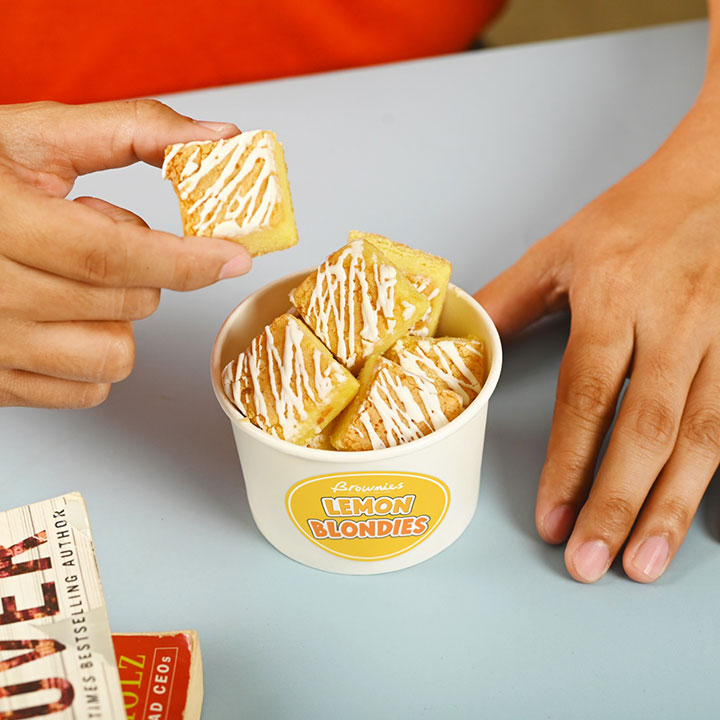
Brownies Unlimited introduces Lemon Blondies

BROWNIES Unlimited’s latest creation is Lemon Blondies, bite-sized lemon-infused blondies with a white lemon chocolate drizzle. This new snack is priced at ₱99 for a cup containing eight bite-sized pieces. The Lemon Blondies are available at any Brownies Unlimited store nationwide. To order online, visit www.browniesunlimited.com or follow @browniesunlimited on Facebook and Instagram.


McDonald’s Twister Fries are back

MCDONALD’S Twister Fries made their way back to McDonald’s stores yesterday, Sept. 13, and can now be enjoyed with the Big Mac and Twister Fries Meal, which is available for a limited time only. The Twister Fries can also be enjoyed as a solo item or as a free upgrade to any McDonald’s Large Meal with Fries, and is available via dine-in, take-out, drive-through, and McDelivery, in Regular and Sharing sizes. They may also be purchased via channels such as GrabFood, foodpanda, PickARoo, and SM Online from Sept. 16 onwards.


Del Monte launches new juice flavors

DEL MONTE Juices now has 14 flavors made with real fruits, ranging from the classic 100% Pineapple Juice to new flavors like Melon Cucumber, White Grape, Pineapple Lychee, and Pineapple Blueberry. Del Monte Juices also has a new ambassador, actress Anne Curtis.

East Coast Vulcan moves to increase shares’ public float

LISTED East Coast Vulcan Corp. has executed a deed of assignment of partially paid shares with Techno-Asia Construction and Development, Inc. (TACD) to increase its public float.

In a stock exchange disclosure on Wednesday, East Coast Vulcan said spouses Hilario G. Pagauitan and Sofia G. Pagauitan and TACD executed the deed for the assignment of around 486 million shares.

The shares represent 7.33% of East Coast Vulcan’s outstanding capital stock of 6.63 billion common shares.

In June, the company said that the execution of the deed of assignment and the transfer of shares to TACD would increase its public float.

“The execution of the deed of assignment and the transfer of the shares to TACD is expected to result in a change in public ownership to 21.80% which is in compliance with the Philippine Stock Exchange’s (PSE’s) 20% minimum public ownership requirement,” East Coast Vulcan said.

East Coast Vulcan, formerly known as Vulcan Industrial and Mining Corp., disclosed in June that a memorandum of agreement was signed between the Pagauitans and TACD for the acquisition of the listed company’s shares.

The company added that TACD assumes the obligation to pay East Coast Vulcan the unpaid subscription balance for the shares not later than Sept. 21 in either cash, shares, and/or assets acceptable to the listed firm’s board of directors.

“Under the [agreement], spouses Pagauitan and TACD shall enter into a deed of assignment evidencing the assignment and transfer of the shares to TACD upon the issuance by the Bureau of Internal Revenue of the certificate authorizing registration for the previous transfer of shares from National Book Store to spouses Pagauitan,” East Coast Vulcan said.

In 2021, the Pagauitans, through East Coast Mineral Resources Co., Inc. (ECMRC), bought 85.5% of Vulcan Industrial from the Ramos family, which opted not to backdoor-list its National Book Store chain via Vulcan.

In June, the PSE suspended the trading of East Coast Vulcan shares after the Securities and Exchange Commission approved the increase in the company’s authorized capital stock to P12 billion, which allowed the listed firm to issue new shares to ECMRC as part of its backdoor listing plan.

However, East Coast Vulcan’s public float fell to 14.47% as a result of the move, breaching the minimum public float requirement. — Revin Mikhael D. Ochave 

Targeting the youth market

RAINIER RIDAO-UNSPLASH

The government over the years has been raising the excise tax on cigarettes for two reasons: to reduce cigarette consumption; and, to earn more revenues. Theoretically, a tobacco tax is a tax on smoking’s “negative externalities”: smoking-related health problems such as lung cancer, heart disease, and respiratory diseases that raise healthcare costs and lower labor productivity.

While it can be argued that a high tax is anti-poor, and that by now cigarettes are probably over-taxed (with tax revenues exceeding related public healthcare costs), it appears to have done its work in cutting Philippine cigarette consumption. One study indicates that smoking prevalence fell from 34% in 2000 to 24.5% in 2015, and is seen to fall further to 20% by 2025.

These numbers, however, cover only tobacco smoking, and exclude alternatives such as e-cigarettes (also known as vape, which uses an electronic atomizer fed with flavored liquid), snus (tobacco product that is a variant of dry snuff), and heated tobacco products (where tobacco is heated and not burned).

The concern moving forward, however, is that non-tax initiatives aiming to reduce smoking (including tobacco alternatives) now appear to be lagging. While the tobacco tax is doing its part, and while smoking has been banned in many public places, other measures intended to further reduce smoking prevalence are requiring more attention.

In a press statement, the Institute for Global Tobacco Control (IGTC) said that its recent observational study found “that tobacco and nicotine product sale and advertising persist within proximity of schools in the Philippines, despite regulations prohibiting sales, displays, advertisements, and promotions of tobacco products within 100 meters.”

IGTC was formed in 1998 as part of the Department of Health, Behavior and Society at the Johns Hopkins Bloomberg School of Public Health in Baltimore, Maryland. IGTC is a partner in the Bloomberg Initiative to Reduce Tobacco Use and a Collaborating Center of the World Health Organization. Its mission is to prevent death and disease from tobacco products by generating evidence to support tobacco interventions.

In December 2022 to January 2023, IGTC monitored the local sale and marketing of cigarettes, e-cigarettes, and heated tobacco products (HTP) at over 6,000 retailers within 200 meters of 353 schools nine cities and regions. And it found that “2,070 cigarette, 43 e-cigarette, and 33 HTP retail locations were observed within 100 meters of the majority of schools,” in violation of Philippine law.

“The proximity of tobacco and nicotine product stores, shops, street vendors, and kiosks to schools contribute to the wide availability of these products and leave Filipino youth exposed to tobacco marketing strategies,” IGTC said. It thus noted the need for stricter enforcement of existing regulations against tobacco advertising, promotion, and sponsorship, particularly those that target the young at “points of sale.”

IGTC noted these “are common tobacco industry tactics that can lead to youth tobacco initiation and reinforce use among those who currently use these products. Young people and adolescents can be particularly susceptible to the influential effects of point-of-sale marketing such as strategically located product displays, sales of single stick cigarettes (which make cigarettes more affordable), and prominent advertising — including at children’s eye level.”

During its observational study in the Philippines, IGTC found that even with regulation requiring signage indicating that sales are prohibited to those under 21 years of age, “only 11% of cigarette retailers, 4% of e-cigarette retailers, and 48% of HTP retailers had the requisite signage visible; 98% of cigarette retailers sold single stick cigarettes; and, indoor and outdoor advertising (e.g., graphic printed signage/posters) were common across all retailer types.”

In addition, “flavored tobacco and nicotine products were also commonly available across retailers, including 90% of cigarette retailers and 98% of e-cigarette and HTP retailers. Flavors can expand product appeal by masking the harsh taste of tobacco. Flavored products are also linked to increased product appeal and initiation among young people,” IGTC said.

It is in this line that IGTC is calling for “stricter enforcement of existing policies prohibiting sales and advertising of tobacco products within 100 meters of schools and implementation of a national comprehensive policy on tobacco advertising, promotion, and sponsorship.” It added that “a comprehensive ban on tobacco advertising, promotion, and sponsorship is one of the most cost-effective and high-impact ways that countries can reduce demand for tobacco.”

Unlike regular cigarettes, e-cigarettes are small devices that are easy to hide. They make use of small pods filled with flavored liquid. A vape kit can cost around P500, and a pack of three pods about P375. These pods can be bought in vape shops or even online. On the other hand, a flip-top box of cigarettes can cost as much as P1,800 per ream, or P190 per pack. It is no wonder that younger “smokers” are opting for vape or e-cigarettes.

Obviously, despite the excise tax on tobacco and e-cigarettes, vape kits remain relatively affordable compared to regular cigarettes. Moreover, they are offered in various “flavors.” And, they do not require heating or burning to be consumed or enjoyed. It is thus unsurprising that cigarette smoking is declining and vaping is attracting the youth.

And this is where the strict and effective enforcement of regulations on advertising, promotion, and sale becomes crucial. It is obvious that a high excise tax is not enough. Access to tobacco products and alternatives should be further limited, and promotion, advertising, and sales should be effectively monitored to prevent access particularly by the young.

The government can work on this by first reviewing the IGTC study and then tapping local governments. Local officials issue business permits and enforce zoning restrictions. If tobacco products should not be sold near schools, then local officials should be held jointly liable with licensed retailers for any violation of the law. But, if erring retailers are penalized with fines, then local governments should collect the penalties as well.

It is only in working with local governments and empowering them that the National Government can expect some degree of success in the campaign against under-age smoking. Even with additional policies and regulations against tobacco sale and marketing, unless restrictions are strictly enforced at the “street” level, the young will always find ways to beat the system.


Marvin Tort is a former managing editor of BusinessWorld, and a former chairman of the Philippine Press Council

matort@yahoo.com

British firm Inchcape mulls distribution of mass-market cars in the Philippine market

BRITISH AUTOMOTIVE distributor Inchcape PLC said it is looking at the distribution of mass-market vehicles in the Philippines with its aim to serve all market segments.

“It is our job to make sure that we are bringing the right vehicles that are affordable to the consumers,” Duncan Andrew Tait, chief executive officer of Inchcape, said in an interview with ANC on Wednesday.

He said the company’s recent deal with China’s Changan International Corp. will help it achieve this goal. The deal made the joint venture of Inchcape and CATS Group of Companies the official distributor of the Chinese company’s products.

Last month, Inchcape announced that the joint venture — Inchcape Philippines — will be operating the distributorship of Changan vehicles in the Philippines.

The partnership covers Changan’s Alsvin Sedan, CS35 Plus compact crossover, CS55 Plus compact SUV, UNI-T, and UNI-K.

Changan has continuing investments in new energy vehicles, which are seen to expand its electric vehicle (EV) offering, Inchcape has said.

“We are also now looking at new energy vehicles like hybrids and EVs. And to make sure that they are affordable for the consumers as we bring it into the markets,” said Mr. Tait.

On whether the move to enter the mass market would dilute the luxury branding attached to CATS Group of Companies, Mr. Tait said the company’s job is to “serve all segments of the market and do so successfully for consumers and our automotive manufacturing partners.”

He added that it is just about time for the company to enter the mass market considering the growth in its market share in the Philippines.

“Today we have a reasonable market share in the Philippines. When you look at some markets like Chile, where we have 25% market share, we are able to support consumers from their first ever vehicle right to the point where the consumers are super financially successful and want to move to more luxury vehicles,” he said.

“Our job is to make sure that we can serve for their whole life regardless of where they are in their mobility journey,” he added.

Mr. Tait also said that Inchcape is optimistic about the Philippine market, adding that the company entered the market believing in its medium- and long-term growth

“We don’t enter the market for how we are going to perform in the next month, next quarter, or the next six months. We enter them for the medium- and longer-term,” he said.

“And we are very positive about the market here, with the good gross domestic product growth, 110 million population inside the Philippines, a young vibrant population that bodes well for the future growth of automotive,” he added. — Justine Irish D. Tabile

ADVERTISEMENT
ADVERTISEMENT