Home Blog Page 4316

China newspaper says EU probe into EVs ‘excessive’, sparked by ‘jealousy’

REUTERS

 – The nationalist Chinese newspaper Global Times described as “excessive” Europe’s probe into cheaper Chinese electric vehicles (EVs), and said China‘s superior offering are the envy of other automakers.

European Commission President Ursula von der Leyen announced on Wednesday the investigation a week after executives at Munich’s IAA mobility show said European carmakers had a fight on their hands to produce lower-cost EVs and to close the gap on China‘s lead in making cheaper, more consumer-friendly models.

Beijing has since blasted the investigation as a protectionist act aimed at shielding Europe’s own industry in the name of “fair competition”, and warned economic ties could be harmed.

“To tell the truth, when Chinese new energy vehicles shone brightly at the recent 2023 International Motor Show in Germany, we heard some envious and even jealous remarks but we didn’t expect Europe’s response to be so ‘excessive’,” the Global Times said in an editorial.

Analysts have warned that should the EU levy duties against Chinese EVs after the probe, which could take up to 13 months, China would likely impose countermeasures, hitting European industries.

“If Europe lacks the confidence and courage to win the market through fair competition, it will be impossible to establish competitiveness in the EV industry,” the newspaper wrote.

The investigation is expected to be a focus of talks when EU trade chief Valdis Dombrovskis visits China later this month, where he is expected to renew calls for fair competition. – Reuters

‘Alien bodies’ presented in Mexican Congress panned as ‘stunt’

STOCK PHOTO | Image by Paweł from Pixabay

 – A UFO hearing in Mexico’s congress that featured the presentation of alleged remains of non-human beings faced swift international backlash on Thursday, with critics labeling it a “stunt,” and questions from officials in Peru, where the apparent specimens first emerged.

Mexican journalist and long-time UFO enthusiast Jaime Maussan showed politicians at the hearing on Tuesday two tiny “bodies” displayed in cases, with three fingers on each hand and elongated heads. He claimed they were found in Peru in 2017 and were not related to any life on Earth.

Mr. Maussan has made similar controversial claims in the past.

The images from the congressional hearing, the first of its kind in Mexico, sparked international curiosity as well as substantial scorn.

Former US Navy pilot Ryan Graves, who also attended the hearing to share his personal experience with sightings of “unidentified anomalous phenomena,” or UAP, heaped criticism on the presentation.

“Yesterday’s demonstration was a huge step backwards for this issue,” Mr. Graves said on the X social media platform, formerly known as Twitter. “I am deeply disappointed by this unsubstantiated stunt.”

Graves participated in US Congressional hearings on UAP in July, when he said that airspace sightings of unexplained phenomena were “grossly under-reported.”

Mr. Maussan said in the presentation that the specimens were recovered near Peru’s ancient Nazca Lines and had been carbon-dated by Mexico’s National Autonomous University (UNAM) and concluded to be about 1,000 years old. He claimed they were not related to any species on Earth.

Similar such finds in the past have turned out to be the remains of mummified children.

Peruvian Culture Minister Leslie Urteaga said no scientific institution in the South American country had identified the remains as non-human and questioned how the specimens had left Peru.

“There is a criminal complaint from the Ministry of Culture against some people who had a relationship with these gentlemen,” Ms. Urteaga told journalists late on Wednesday in reference to Mr. Maussan and his associates.

“I am going to ask for information to see what has happened … about the removal of pre-Hispanic objects, because I understand they are part of pre-Hispanic bone remains,” she added.

Mr. Maussan, speaking to Reuters on Thursday, said his critics had yet to present evidence to counter his claims.

“What they want is to take away the force that this discovery has, but only with testimonies, with questioning and without a single piece of evidence,” Mr. Maussan said. “We have been doing investigations for years… they want to come here to investigate with just talk.”

UNAM, in a statement republished on Wednesday that it first issued in 2017, said the work by its National Laboratory of Mass Spectrometry with Accelerators (LEMA) was only intended to determine the age of the samples. UNAM declined a request by Reuters to see the full study results or interview researchers who participated. It also declined to say how old its study had found the samples to be.

In a press conference on Thursday, NASA officials fielded questions about the Mexican presentation as they released their own report on recommendations for helping the Pentagon detect and examine UAP.

David Spergel, former head of Princeton University’s astrophysics department and chair of the report, said he did not know the nature of the samples but urged transparency.

“If you have something strange, make samples available to the world’s scientific community, and we’ll see what’s there,” he said. – Reuters

Remolona sees no need for rate hike if there are no new supply shocks

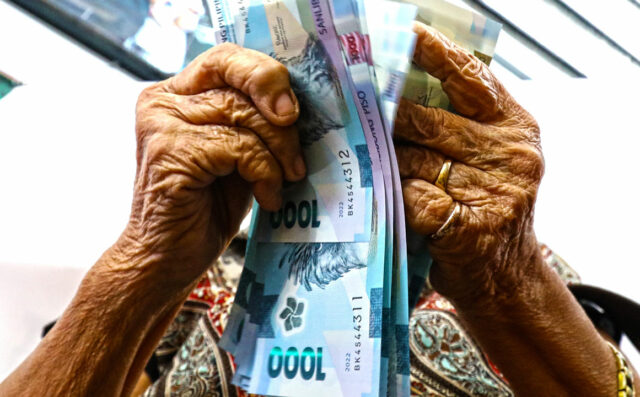
A woman receives cash as part of the government’s subsidy program for small retailers affected by the imposition of a price ceiling on rice. — PHILIPPINE STAR/WALTER BOLLOZOS

By Keisha B. Ta-asan,  Reporter

THE BANGKO SENTRAL ng Pilipinas (BSP) does not see the need to resume monetary tightening if there are no more supply shocks such as those that fueled the uptick in August inflation.

BSP Governor Eli M. Remolona, Jr. told reporters on Thursday that the acceleration in August inflation was caused by supply shocks in food and fuel, which dissipate “fairly quickly.”

“If that’s all there is, if there are no further supply shocks beyond that uptick in August, then it won’t be necessary to hike the policy rate,” he said in a press briefing during the Alliance for Financial Inclusion (AFI) Global Policy Forum. “It won’t justify an easing, (but) it won’t be necessary to raise the policy rate.”

The BSP has kept its key policy rate at a near 16-year high of 6.25% for the last three meetings. It has hiked borrowing costs by 425 basis points (bps) from May 2022 to March 2023.

Headline inflation quickened for the first time in seven months in August, hitting an annual 5.3%. It marked the 17th consecutive month that inflation surpassed the BSP’s 2-4% target range. Inflation averaged 6.6% in the eight-month period.

“I think we should hit the (2-4%) target range by October if there are no further supply shocks. But hitting the target range is not enough. We want to be comfortably within the target range for the year,” Mr. Remolona said.

The BSP projects inflation to hit 5.6% in 2023, before easing within the target to 3.3% in 2024 and 3.5% in 2025.   

Makoto Tsuchiya, assistant economist from Oxford Economics Japan, said the Philippine central bank is expected to maintain its pause despite the quicker inflation in August.

“The central bank is likely to see through the transitory rise in prices. Inflation is still too high to pivot to easing, but the weakening growth picture means a hike is also undesirable,” he said.

Mr. Tsuchiya said inflation could settle within the 2-4% target range by the end of the year, bringing the full-year average to 5.8%. This will allow the Monetary Board to start cutting rates in the first quarter of 2024, he added.

Security Bank Corp. Chief Economist Robert Dan J. Roces in a note said the central bank will consider inflation, economic growth, and other external factors at next week’s policy-setting meeting.

“The recent uptick in the August inflation alone is unlikely to prompt the BSP to resume tightening, recognizing the supply-side nature of the uptick and the fact that there would only be so much that monetary policy can do in such a situation, which requires fiscal complement,” he said.   

Mr. Roces said the BSP will likely keep interest rates unchanged on Sept. 21.   

Nicholas Antonio T. Mapa, senior economist at ING Bank N.V. Manila, also expects the BSP to keep rates untouched at its next meeting.

“We believe the hurdle for additional rate hikes will be quite high given the glaring slowdown in growth momentum. BSP admits that tightening efforts have yet to be fully felt with the lagged impact still feeding through to bank lending,” Mr. Mapa said.   

The Philippine economy expanded by 4.3% in the second quarter, the slowest in two years. This was slower than the 6.4% growth in the first quarter and 7.5% in the same period last year. For the first half, economic growth averaged 5.3%, lower than the government’s 6-7% target. 

Mr. Mapa noted recent price shocks to inflation are supply side in nature and is best dealt with non-monetary measures.   

“BSP will only hike should inflation expectations become disanchored or to steady the currency,” he said, adding that the Philippine central bank will likely consider the policy decision of the US Federal Reserve.   

The Federal Open Market Committee is scheduled to meet on Sept. 19 and 20.

The Monetary Board will be having its sixth policy review of the year on Sept. 21.

Mr. Remolona told reporters that the new Monetary Board members will be participating in next week’s meeting.

National Treasurer Rosalia V. de Leon and former Finance undersecretary Romeo L. Bernardo were recently appointed as the new members of the policy-making body of the BSP.

Vehicle sales jump by annual 22% in August

New vehicle sales climbed by 22% in August. — REUTERS

AUTOMOBILE SALES in the Philippines registered a double-digit annual growth in August but saw a month-on-month sales decline amid elevated inflation.

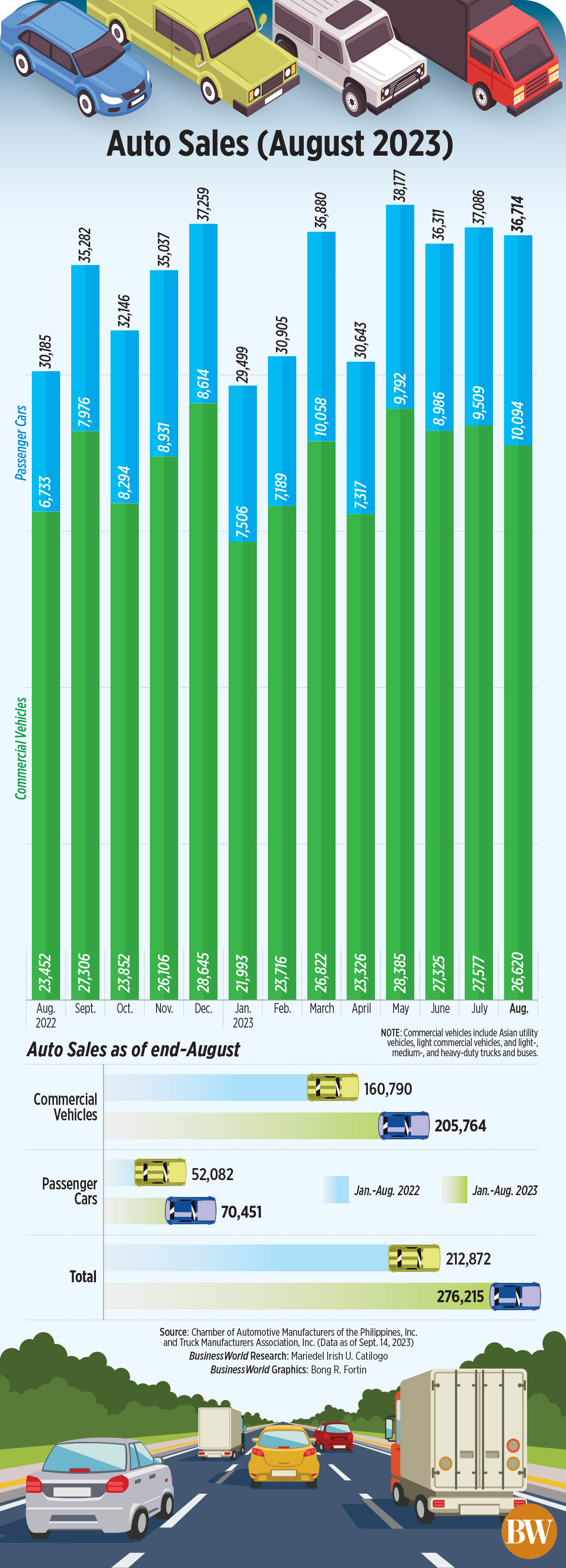
A joint report by the Chamber of Automotive Manufacturers of the Philippines, Inc. (CAMPI) and the Truck Manufacturers Association (TMA) showed new vehicle sales rose by 21.6% to 36,714 units in August from 30,185 units in the same month a year ago.

“Consumer demand drives the auto sales further… from an already considered pre-pandemic performance a year prior amidst the above inflation target recorded anew in the same period,” CAMPI President Rommel R. Gutierrez said in a statement.

Auto Sales (August 2023)However, vehicle sales slipped by 1% from 37,086 units that were sold in July, reflecting the impact of rising prices.

Headline inflation unexpectedly picked up to 5.3% in August from 4.7% in July amid rising costs of fuel and food.

CAMPI-TMA data showed commercial vehicles accounted for the bulk of the August sales. Sales of commercial vehicles rose by 13.5% to 26,620 units in August from 23,452 in the same month in 2022.

Month on month, commercial vehicle sales declined by 3.5% from 27,577 units in July.

In particular, light commercial vehicles (LCV) climbed by 16.8% to 20,991 during the month. Month on month, sales of LCVs fell by 2.9%.

Sales of Asian utility vehicles (AUV) dipped by 0.3% year on year to 4,576 in August. AUV sales slumped by 8.3% month on month.

Sales of light trucks increased by an annual 29.5% to 597 in August, while heavy truck sales surged by 50.6% to 128. However, sales of medium trucks went down by 4.7% to 328 units.

Meanwhile, passenger car sales accelerated by an annual 49.9% to 10,094 units in August from 6,733 units a year ago. Month on month, sales of passenger cars rose by 6.15% from 9,509 units in July.

For the first eight months of the year, CAMPI-TMA members sold 276,215 units, increasing by 29.8% from 212,872 a year ago.

“The 276,215 units year-to-date sales of CAMPI-TMA, up by 30% from the same period a year ago — equivalent to 70% of the 395,000 sales forecast is certainly giving optimism of a sustained and even stronger post-pandemic recovery for the auto industry,” Mr. Gutierrez said.

Commercial vehicles, which accounted for 75% of the total industry sales, reported a 28% increase in sales to 205,764 units in the January-to-August period.

Passenger car sales jumped by 35.3% to 70,451 in the eight-month period.

“The auto industry is mindful of the challenges brought by high inflation and its effect on the overall consumer confidence particularly for big-ticket items — not welcome news to the consumers and industry alike if it will persist,” Mr. Gutierrez said.

For the eight-month period, inflation averaged 6.6%. The Philippine central bank is projecting inflation to average 5.6% this year.

Toyota Motor Philippines Corp. (TMP) remained the market leader with a 45.9% share as eight-month sales rose by 16.6% to 126,795.

Mitsubishi Motors Philippines Corp. came in second spot with a 67% surge in sales to 50,439 in the January-to-August period.

In third spot is Ford Motor Company Phils., Inc. as its sales jumped by 47.6% to 19,700 units in the period ending in August.

Rounding out the top five are Nissan Philippines, Inc., which saw a 23.4% increase in sales to 17,873 units, and Suzuki Phils., Inc. whose sales dropped by 7.9% to 11,821 units.

In 2022, CAMPI-TMA members sold a total of 352,596 units. — Justine Irish D. Tabile

WTO chief pushes deals on fishery, agri subsidies, says it will be tough

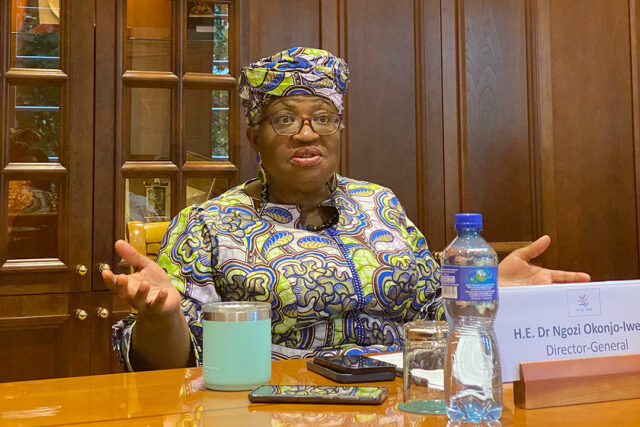
World Trade Organization Director-General Ngozi Okonjo-Iweala talked about her expectations for the 13th Ministerial Conference in Abu Dhabi in February during a briefing with journalists in Geneva on Sept. 13. — NORMAN P. AQUINO

By Norman P. Aquino, Special Reports Editor

GENEVA — World Trade Organization (WTO) Director-General Ngozi Okonjo-Iweala expects several groundbreaking deliverables at the 13th Ministerial Conference in Abu Dhabi in February, including the entry into force of a deal against overfishing and making headway in doing away with harmful subsidies in agriculture.

“Let’s concentrate on those things that the multilateral trading system can deliver,” she told a news briefing on Wednesday, as she cited an “atmosphere of pessimism” in the leadup to the conference amid protectionist policies that are slowly eroding the world’s trading system.

“There is quite a list and if we can get two or three out of that list, I think we would have had success,” she added.

WTO ministers are also working on reforms to make the WTO process more open, transparent and inclusive, as well as fix the dispute settlement system that has been hampered by a nonfunctioning Appellate Body for almost four years now.

The WTO Agreement on Fishery Subsidies is part of the “Geneva Package” adopted at the 12th Ministerial Conference in June 2022 and marks a major step forward for ocean sustainability by prohibiting harmful fishery subsidies that the WTO said are a key factor in the depletion of the world’s fish stocks.

“Our oceans are 50% overfished, which means we cannot waste so much time in ratifying this agreement,” Ms. Okonjo-Iweala said. “The longer we wait, the more overfishing there is. This is one reason why we are fighting for it.”

Forty-three WTO members have ratified the deal, and the WTO needs 110 votes for it to take effect, she said.

The Philippines has yet to ratify the accord.

The Geneva Package also includes the WTO response to emergencies including a waiver of certain requirements on compulsory licensing for coronavirus disease 2019 (COVID-19) vaccines, food safety and agriculture, and WTO reforms.

Ms. Okonjo-Iweala said the next step is to complete the second wave of fishery subsidy negotiations, which will consider giving developing nations policy space, special and differential treatment that will allow other members to treat them more favorably.

“We want to make sure that their development needs are factored into this second part,” the WTO chief said. “We hope to complete that. It will not be easy. It’s very tough but so far, we are moving on with it.”

WTO ministers are also working on the food security aspect of agriculture amid volatile global prices, Ms. Okonjo-Iweala said.

The WTO, for one, wants to ensure that governments don’t impose export restrictions on food bought for humanitarian purposes under the World Food Program.

Some WTO members want to work on how much trade-distorting subsidies in agriculture are harming competition, while others are focusing on how countries with a big population can safeguard food stocks while still facilitating trade, Ms. Okonjo-Iweala said.

“This is one where we have not had one success in the past,” the WTO chief said, referring to agricultural subsidies. “Agriculture is quite difficult. If we can get some agreements on the food security aspect again, and how to make that work better, that will also be a good thing.”

‘COMMON GOOD’
Also on the table in Abu Dhabi is the existing moratorium on customs duties on electronic transmissions, the last extension of which was agreed in June 2022, Ms. Okonjo-Iweala said.

“Now that trade is going digital, this is a very important agreement,” she said. “We’ve been able to extend it every year. We need to now decide: Do we do that again or do we permanently agree [about not imposing it]?”

The WTO chief said the consensus system gives each country a voice — no matter how small it is. “I still think it works in the sense that we should at MC12 (12th Ministerial Conference), that you can still get a multilateral agreement, that members can still overcome differences and make an agreement for the common good.”

Ms. Okonjo-Iweala admitted though that decisions could not be enforced in the absence of the WTO’s Appellate Body, which is the final arbiter of trade disputes.

The global economy is said to be edging closer to survival-of-the-fittest mode as major economies skirt the post-World War II trading system in favor of a more restrictive and transactional approach to world commerce.

US President Joseph R. Biden, Jr. has kept his predecessor’s tariffs on steel, aluminum and about $200 billion worth of Chinese imports, all illegal under the WTO rules.

He has also kept the paralysis of the seven-member WTO Appellate Body, which stopped functioning in December 2019 after the US blocked the appointment of new members, citing “judicial overreach” among other issues.

This has led to most panel reports being appealed into the void and leaving the disputes unresolved. As a result, members can’t enforce WTO obligations through complaints against alleged trade violations.

The WTO is now reviewing at least 17 international trade disputes.

Ms. Okonjo-Iweala said Guatemala’s permanent ambassador to the WTO is compiling ideas from members on how to improve the dispute settlement system, adding that it is not just the US that has issues with it.

“What will emanate will be a text on how the system should look like, and ministers will then look at it and negotiate,” she said. “That work is ongoing now.”


More banks urged to remove fees on small transfers

STOCK PHOTO | Image by David Dvořáček from Unsplash

THE PHILIPPINE central bank is looking to formalize the removal of fees for electronic fund transfers on small-value transactions to encourage more Filipinos to use digital payments, its chief said.

BSP Governor Eli M. Remolona, Jr. said three big banks have already removed fees on small fund transfers.

“(Fund transfers of) up to P1,000 I think are free for these three major banks and we’re trying to shame the other major banks into following the same policy,” he said on the sidelines of the 2023 Alliance for Financial Inclusion (AFI) Global Policy Forum in Pasay City.

Bank of the Philippine Islands (BPI), Metropolitan Bank & Trust Co. (Metrobank), and Union Bank of the Philippines (UnionBank) are currently the only banks that have temporarily waived charges for InstaPay transactions. 

For BPI customers, Instapay transfers of up to P1,000 made using the mobile app will be free until Sept. 30. Customers of UnionBank and Metrobank will be able to make similar transfers for free until Nov. 11 and Dec. 31, respectively.

Mr. Remolona said the BSP is currently using moral suasion to persuade the Bankers Association of the Philippines (BAP) to remove or lower the transfer charges for small-value transactions.

“(Moral suasion) works to a large extent, but we’re formalizing it into a whole payments framework,” he said. “So, we’re talking to the BAP on Friday about payments in general. We have some discussions and out of that we expect something more formal to come out.” 

Aside from the BAP, the central bank is also in discussions with digital payment providers GCash and Maya Bank to reduce fund transfer fees.

Sought for comment, the BAP was unable to send a statement as of press time.

Earlier this year, then-BSP governor Felipe M. Medalla proposed to remove the transaction fees for small-value online transfers among banks and other financial institutions.

Based on BSP data as of end-July, some banks and non-lenders offer free InstaPay service while others charge a rate of P8 to P25 per transaction.

There are currently 82 BSP-supervised financial institutions that participate in InstaPay. This includes 22 big banks, 19 thrift banks, 17 rural banks, and five digital banks.

There are also 19 e-money issuers in InstaPay.

As of July, the value of transactions done through InstaPay surged by 40.8% year on year to P2.69 trillion from P1.91 trillion a year prior, separate data from the BSP showed. 

The volume of InstaPay transactions rose by 41.6% to 425.07 million as of end-July from 300.18 million a year ago.

InstaPay is a real-time, low-value electronic fund transfer facility for transactions up to P50,000 and is currently being handled by BancNet, Inc.

PESONet and InstaPay are automated clearing houses launched under the BSP’s National Retail Payment System that was rolled out in December 2015 to promote a safe, efficient, affordable, inclusive and reliable retail payment system.

Meanwhile, Mr. Remolona said the Philippine central bank is pushing for more transparency in the country’s payment system.

“In general, when it comes to payments, you want to make sure that the poor don’t subsidize the rich. If you have a credit card and if you’re a big spender using credit cards you get rewards, right? Who pays for those rewards? The small guys who only charge a small amount,” he said.

“We also want the system to be transparent. If you’re going to be charged for something, you want to know what you are being charged for,” he added. — Keisha B. Ta-asan

Aboitiz unit expects artificial intelligence to bring more jobs

STOCK PHOTO | Image by Rawpixel.Com from Freepik

ARTIFICIAL INTELLIGENCE (AI) is expected to boost the country’s workforce, the top official of Aboitiz Data Innovation Pte. Ltd. (ADI) said over concerns that emerging technologies will potentially disrupt traditional jobs in the Philippines.

“Artificial intelligence will not replace people. We are critically important and in fact, I can guarantee that the outcome of AI is needing more people because AI is about knowledge and providing information,” David R. Hardoon, chief executive officer of ADI, said in BusinessWorld One-on-One interview.

The interview with Mr.  Hardoon will be streamed on BusinessWorld and The Philippine Star’s Facebook pages, as well as the BusinessWorldTV YouTube page on Sept. 15.

Headquartered in Singapore, ADI is the data innovation unit of the listed holding company of Aboitiz Equity Ventures, Inc.

One of the top concerns over the changing digital landscape is the emergence of artificial intelligence and how it can potentially replace traditional jobs.

Mr. Hardoon said data and technology would not replace jobs but would create more opportunities in unexplored areas.

“You are not going to wake up someday and no humans have to work on anything, no. We are critically important. The outcome of using AI is needing more people. I have yet to see an organization that needs less people when it has more information and knowledge,” he added.

ADI has also been working towards technology transformation, Mr. Hardoon said, adding that it is integrating and utilizing artificial intelligence for the operations of the units under the Aboitiz group.

For Aboitiz Power Corp., which is the energy company under the Aboitiz group, ADI has tapped the capabilities of AI to advance its operations, Mr. Hardoon said.

“One of the applications we have built and deployed in fact for our power plant is AI-powered asset inspection,” he said, describing it as software that allows visual inspection.

He added that AI is also utilized for its financial units as alternative data allow them to easily identify risks.

Further, Mr. Hardoon said ADI also targets to expand its presence in Asia.

“This is an exciting step, very openly as you know we were born as a company to serve our companies. In that process we are focusing on making AI real, operationalizing it. In that process, we realized that we are solving real problems in the industry. We are now at the stage where we are providing solutions to others. We want to support the industry,” he said.

Mr. Hardoon said that ADI is looking to operationalize AI to support financial space, improving the capabilities of other organizations to accelerate their AI journeys and other industrial areas where advancing AI is deemed critically important. — Ashley Erika O. Jose

Buskowitz eyes $12-M ADB loan for solar rooftops

STOCK PHOTO | Image from Pixabay

BUSKOWITZ Solar, Inc. is seeking a $12-million loan from the Asian Development Bank (ADB) to develop solar rooftop systems in the Philippines.

The loan aims to “finance the development, construction, and operations of a portfolio of photovoltaic power systems on the rooftops of commercial and industrial buildings in the Philippines of up to 70 megawatts (MW),” according to a document on the ADB website.

“With ADB’s assistance, the project will develop the nascent Philippine rooftop solar market with a current installed capacity of 191.8 MW which is highly fragmented with more than 40 participants,” it added.

The project will support small- to medium-sized companies “with a market niche, which would increase installed capacity by 36% and promote rooftop solar coverage.”

It will cover urban areas outside of Metro Manila, namely: Pampanga, Bulacan, Laguna, Pangasinan, Bacolod, Zamboanga, and Misamis Oriental.

“The Philippines is highly susceptible to the effects of climate change affecting the socioeconomic development of the country. The poor are often the most vulnerable and are impacted by natural disasters through the loss of lives, livelihoods, assets, and well-being. Climate change mitigation through investing in renewable energy can help reduce poverty by reducing disaster risk losses,” according to the document.

“The project supports the Government of the Philippines’ efforts to reduce greenhouse gas emissions through the installation of rooftop solar power on commercial or industrial (C&I) buildings and will improve the quality of life of the poor,” it added.

The solar project is also aligned with the government’s goal to expand its renewables share to 35% by 2030 and 50% by 2040.

The loan is up for approval on Oct. 31.

Buskowitz Solar is a subsidiary of Buskowitz Energy, Inc., which has 40 MW peak in the pipeline this year for commercial and residential installations, the company said when asked to give details about the group.

The Buskowitz group has 300 solar rooftop projects across the country. It has installed solar photovoltaic systems and provided renewable energy for international brands such as Coca-Cola and Shell, along with local companies Petron Corp., NLEX Corp., Amherst Laboratories, Inc., as well as SM and Robinsons malls.

To date, Buskowitz has a portfolio of about 85 MW-peak of operational and under-construction projects, including the 40 MWp in the pipeline, which would bring its total installed capacity to 125 MWp.

Based on the ADB document, the company or borrower is Buskowitz Solar while the sponsor is Buskowitz Energy.

Sponsors are required to bear the costs of third-party legal, technical, and other experts required to complete ADB’s due diligence. — Luisa Maria Jacinta C. Jocson

SEC clarifies required comparative periods for companies filing their registration statements

COMPANIES registering their shares with the Securities and Exchange Commission (SEC) are required to submit two comparative periods for the past three fiscal years to show changes in their financial condition, the regulator said.

The commission issued the clarification amid mixed interpretations of a specific provision under the Securities Regulations Code (SRC).

In Memorandum Circular No. 13 signed by SEC Chairperson Emilio B. Aquino on Sept. 12, the securities regulator clarified Part III, paragraph A, subparagraph 2 (a) of Annex C of the SRC regarding the comparative periods required in the management’s discussion and analysis in a company’s prospectus. 

Annex C of Rule 12 contains details for the non-financial disclosure requirements in the registration statements that should be filed with the SEC.

The circular clarified that a registrant should provide the following disclosure comprising two comparative periods for the last three fiscal years in the management’s discussion and analysis portion of its prospectus.

“The foregoing portion of Annex C gave rise to conflicting views and varying interpretations as to the number of fiscal years required to be disclosed in the management’s discussion and analysis portion of the prospectus,” the circular said.

The SEC’s markets and securities regulation department sought guidance from the commission en banc on the interpretation of the phrase “for each of the last three fiscal years” as provided in Annex C, which was subsequently clarified during an en banc meeting on Sept. 5.

According to the circular, the interpretation will apply prospectively to registrants required to file registration statements and other reportorial documents, which include disclosure of a management’s discussion and analysis.

Sought for further comment, SEC Commissioner Kelvin Lester K. Lee said the circular aims to allow easier ways to raise capital. 

“The rationale is to make it easier to file registration statements and as a result make it easier to raise capital.  This covers registration statements and/or other reportorial documents, which include a disclosure of a management’s discussion and analysis,” Mr. Lee told BusinessWorld in a Viber message.

“This is for those that intend to file registration statements,” he added.

The SEC said the interpretation under the circular would take effect 15 days from its publication. — Revin Mikhael D. Ochave

MTRCB head target of online hate

THE MOVIE and Television Review and Classification Board (MTRCB) released a statement yesterday defending its head, MTRCB chairperson Diorella “Lala” Sotto-Antonio, who it says has become “the target of alarming online attacks.”

“Over the past weeks, we have experienced an unfortunate surge in threatening messages on our official social media pages, including explicit rape and death threats directed at Chairperson Lala Sotto,” said the MTRCB statement.

The statement came with screenshots of what seem to be Messenger posts sent to the MTRCB. The names and faces of the senders were partially blurred. Most of the post seemed to be insults such as “Tangina ni Lala Sotto noh? Walang delicadeza! Ang kapal!” and “pakisabi sa chairman nyo na napakabobo niya” (“Lala Sotto is a son of a bitch, no? She has no dignity. Shameless!” and “please tell your chairman that is is so stupid”).

Other though made what seem to be threats. One post read “kailan po mamatay ang pamiliya ni lala sotto sana mauna na ung mama nia” (when will lala sotto’s family die, hopefully her mother goes first). Another read “#RapeLalaSotto,” while yet another message, which was all in emojis, included three knife emojis. One message is a photo of Ms. Sotto with the words “rest in peace” written on it along with her full name and designation, and “Died: Sept. 05, 2023.”

Some of the messages made mention of the “icing” incident which led the MTRCB to suspend the airing of the noon time show It’s Showtime (see story on this page).

The statement included messages of support for the MTRCB chairperson from her fellow board members.

“(She) is a dedicated public servant who has spent her career advocating for responsible and inclusive media content. She has consistently championed the importance of media content that respects cultural sensitivities while contributing positively to the Philippine entertainment industry,” said MTRCB Vice-Chairman Njel De Mesa.

“No Filipino deserves such kind of unfounded personal attack. We must not resort to personal attacks because our agency is just doing its mandate. We are happy that our Chair is very active in discharging the functions of our office based on existing laws,” the statement quoted MTRCB Executive Director II Atty. Mamarico Sansarona, Jr.

The statement says that while the MTRCB “recognizes the importance of constructive criticism and open dialogue, it strongly condemns any form of threats, harassment, or violence, both online and offline. Such behavior is not only illegal but also runs counter to the principles of a Filipino value-based media and entertainment culture that the MTRCB upholds.”

It does not say if the MTRCB or its chairperson will pursue legal relief. — Brontë H. Lacsamana

MTRCB denies ‘special meeting’ triggered Vice Ganda case

AFTER photos circulated on social media of a meeting between the Movie and Television Review and Classification Board (MTRCB) and the Kapisanan ng Social Media Broadcasters ng Pilipinas, Inc. (KSMBPI), MTRCB chairperson Diorella “Lala” Sotto-Antonio has released a statement clarifying that the visit was simply a courtesy call.

The photos in question were posted on Facebook by a certain Commander Red. The photos show members of KSMBPI at the MTRCB’s office for an agreement ceremony and meeting with Ms. Sotto on Aug. 24.

On Sept. 4, the MTRCB announced that it was suspending It’s Showtime for 12 airing days because of the cake icing incident.

The KSMBPI filed a criminal case at the Quezon City Prosecutor’s Office on Sept. 11 against It’s Showtime comedian-host Vice Ganda and her partner Ion Perez for violating Republic Act 10175, or the Cybercrime Prevention Act of 2012, for “emulation of sexual activity.”

The meeting has been pointed out by netizens as proof that the two groups purposefully planned to target the noontime show for its “immoral content.”

In the statement issued Sept. 13, board chairperson Ms. Sotto said this was not the case, with the purpose of the visit merely to “express [KSMBPI’s] support for our efforts in monitoring film and TV broadcasts, recognizing that the MTRCB operates as a small agency with limited manpower.”

She also reiterated the KSMBPI’s recent statement that its decision to file a case “was never triggered nor influenced in any way by the MTRCB.”

“We urge everyone not to interpret these photos with any malicious intent,” the statement reads.

According to KSMBPI, It’s Showtime’s July 25 episode showed “emulation of a sexual activity” when Mr. Ganda licked cake icing off Mr. Perez’s finger.

The group claimed that broadcasting the video on television and uploading it on ABS-CBN’s social media platforms was detrimental to the general public and a violation of the cybercrime law.

ABS-CBN and It’s Showtime have yet to release official comments regarding the whole issue. — Brontë H. Lacsamana

Meralco plans to invest in electric cooperatives

MANILA Electric Co. (Meralco) is looking beyond its franchise areas for investment opportunities, its top official said, pointing to electric cooperatives.

“There is one last idea that I have encouraged Meralco to adopt, which is broadening these investments in electric cooperatives in the country,” said Manuel V. Pangilinan, chairman and chief executive officer of Meralco.

“We might be efficient on the generation side of the business but Meralco’s distribution footprint is limited to a franchise area,” he said at a conference earlier this week.

Mr. Pangilinan said there are key areas in the country where electric cooperatives will need to “level up to the kind of standards and the kind of efficiency that Meralco as a distribution company has achieved.”

Currently, Meralco’s franchise area covers 9,685 square kilometers, which provides power to over 7.7 million customer accounts in 38 cities and 73 municipalities.

The company manages the electric distribution facilities of Pampanga Electric Cooperative II through Comstech Integration Alliance, Inc. under a 25-year investment management contract.

Michael L. Ricafort, chief economist at Rizal Banking Corp., said in a Viber message that Meralco’s investment plan could lead to “some economies of scale through vertical integration.”

“Its expertise and experience in the electricity distribution business would help and complement its existing electricity generation and distribution businesses,” he said.

He added that the move “could lead to better operational efficiencies, economies of scale, supply chain management that could help translate to better finances and lower electricity prices for the households, businesses, industries, and other institutional customers.

Meanwhile, Luis A. Limlingan, head of sales at Regina Capital Corp., said that Meralco should carefully evaluate the opportunities.

“That’s an interesting area of investment should [Meralco] proceed with MVP’s suggestion,” he said, referring to Mr. Pangilinan’s initials.

“Electric cooperatives usually have a strong community focus, which could help expand [Meralco’s] reach. However, it’s essential for [Meralco] to thoroughly evaluate these opportunities and ensure they align with the company’s broader strategy,” he added.

Meralco’s controlling stakeholder, Beacon Electric Asset Holdings, Inc., is partly owned by PLDT Inc.

Hastings Holdings, Inc., a unit of PLDT Beneficial Trust Fund subsidiary MediaQuest Holdings, Inc., has an interest in BusinessWorld through the Philippine Star Group, which it controls. — Sheldeen Joy Talavera

ADVERTISEMENT
ADVERTISEMENT