Home Blog Page 4270

DMCI Mining expects record nickel ore shipments

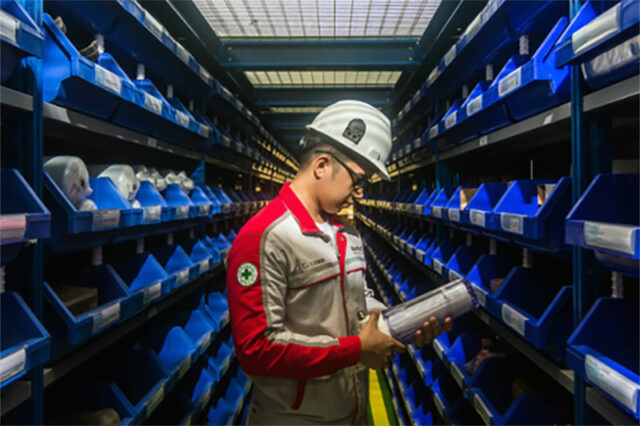
DMCI Mining Corp. is on track to surpass last year’s nickel ore shipments, its president said, as the company recorded robust production in 2023 while also targeting to start operating a new mine site by December.

“We’re very pleased that we will have a historical year in terms of shipments this year and that will help offset the lower prices because [we’ve recorded] volume gain,” DMCI Mining President Tulsi Das C. Reyes said in a media briefing on Friday.

His optimism comes as the mining firm’s subsidiary, Zambales Diversified Metals Corp. (ZDMC), produced more than one million tons of nickel ore in the first six months.

“Kung mataas ’yung volume mo, bababa ’yung cost per ton mo (If your volume is high, your cost per ton will go down),” he added.

Company data show its nickel ore production stood at 1.12 million wet metric tons (WMT) in the January-to-June period, nearly double the 567,000 million WMT a year earlier.

First-half output is also higher than the 1.03 million WMT produced during the full-year 2022.

Meanwhile, shipments reached 1.06 million WMT, equivalent to 73% of the total sales volume of 1.45 million WMT.

“We attribute our strong performance to improved operational efficiency and permit timing,” Mr. Reyes said.

“Shortly after [ZDMC] was granted an ECC (environmental compliance certificate) amendment, we worked on securing the auxiliary permits, local manpower and heavy equipment needed to boost our production capacity,” he said.

In January, ZDMC was granted an amended ECC that allowed it to produce two million WMT of nickel ore from the previously permitted one million WMT.

DMCI Mining has said that it is eyeing to ship out 1.5 WMT of nickel ore this year.

Meanwhile, Mr. Reyes said that the company is looking to open a mine in Zambales which is targeted to be operational by December this year, and another mine by the second quarter of next year.

DMCI Mining is currently securing a tree-cutting permit for an area inside ZDMC that is likely to produce 20 million tons of nickel ore, he said.

“I strongly believe that we have a very good chance to get this permit before year-end,” he said. “Once we get the tree-cutting permit, we can already mine.” 

The new mine site will be operated by another subsidiary, Zambales Chromite Metals Corp. It was not operating in 2019 due to the lack of permits to commence.

Mr. Reyes did not disclose the location of the other mine prospect.

He said he was bullish about ending the year with good results amid the projected higher selling prices with the closures of some mining operations in Surigao.

“With Surigao shutting down or closing for the season in October, we feel that prices will go high because the supply is naturally decreased,” he said.

“So I’m very positive for the outlook for the last quarter of this year and the first quarter of next year, for me, personally, because our mine sites normally operate when Surigao closes,” he added.

DMCI Mining is the mining subsidiary of Consunji-led listed holding firm DMCI Holdings, Inc. — Sheldeen Joy Talavera

San Miguel says its power unit is still ‘viable’

SMCGLOBALPOWER.COM.PH

LISTED CONGLOMERATE San Miguel Corp. (SMC) said that the businesses of its power unit, San Miguel Global Power Holdings Corp. (SMGP), and its subsidiaries are still “viable” and are able to meet financial obligations.

“SMGP remained profitable in 2022, as it has been since it started operations in 2011, in spite of the rise of coal and other fuel prices to unprecedented levels,” SMC told the local bourse on Monday.

The company said the unit’s consolidated revenues of P221.4 billion and earnings before interests, taxes, depreciation, and amortization (EBITDA) of P42.32 billion are “both at par with results in prior years.”

It said that this is due to the implementation of “various power plant operating cost optimization strategies combined with viable commercial arrangements with its existing bilateral customers.”

SMC said that certain loan maturities this year have been refinanced and SMGP is currently closing a project financing arrangement for its battery energy storage systems, which is expected to contribute to its revenues.

“SMGP remains confident of its ability to tap the local market as proven by its successful issuance of the P40 [billion] peso retail bonds,” the company said.

Meanwhile, SMC said the unit is still on track with the development of solar-based power generation projects while remaining “fully compliant” with existing local and international requirements, laws, and regulations.

“To date, the Company and its subsidiaries, including SMGP, are fully compliant with and continue to comply with their financial obligations,” it said.

As of June, it said SMGP had a combined installed capacity of about 19% of the national grid, 25% of the Luzon grid, and 7% of the Mindanao grid, with power supply agreements with distributors and other end users.

On Monday, SMC shares rose by 30 centavos or 0.29% to close at P104.80 apiece. — Sheldeen Joy Talavera

SEC advises against investing in unlicensed Eatcited, Amelia Mall 

THE Securities and Exchange Commission (SEC) warned the public against investing in Eatcited Pasalubong Center and Amelia Mall Online as these are not authorized to solicit investments. 

In two separate advisories posted on its website, the corporate regulator said that Eatcited and Amelia Mall are operating without the necessary license to solicit, accept, or take investments from the public. 

According to the SEC, Eatcited and its representatives are enticing the public to invest in its wholesale and retail food product services. The entity allegedly promises a guaranteed 5% earnings per month for a minimum investment of P20,000 and a guaranteed 10% earnings per month for a maximum investment of P500,000. 

Eatcited, located in Tayabas, Quezon province, is registered with the Department of Trade and Industry as a sole proprietorship.

“As appearing in its social media posts, Eatcited Pasalubong Center claims that it is looking for partners/silent investors for a short- or long-term contract with the possibility of earning money up to 120% for a period of 12 months,” the SEC said. 

“The scheme employed by Eatcited Pasalubong Center has the characteristics of a Ponzi scheme where money from new investors are used in paying fake profits to prior investors and is designed mainly to favor its top recruiters and prior risk takers and is detrimental to subsequent members in case of scarcity of new investors,” it added. 

Meanwhile, the SEC said Amelia Mall Online/AriaMall/Amelia-Mall Philippines, Inc. allegedly offers a part-time job by placing orders online with a promise of receiving a commission, which could only be withdrawn upon payment of a tax charge. 

The corporate regulator added that the certificate of registration being shown by Amelia Mall to the public is bogus, as the commission’s records showed that the entity is not registered as a corporation, partnership, or one-person corporation. 

“Reports revealed that the entity is engaged in a scheme known as tasking and recharging where the public is invited on purported online jobs by performing certain tasks for a promise of receiving monetary rewards or what they call commission and once the tasks are completed, the investor will be given another task to perform for the same promise of receiving commissions which can only be withdrawn upon payment of what they call a tax charge,” the SEC said. — Revin Mikhael D. Ochave

AbaCore to invest in 15-hectare Batangas property

ABACORE CAPITAL Holdings, Inc. is investing in a 15-hectare property at Simlong, Batangas as the listed firm aims to increase its investment properties. 

In a stock exchange disclosure on Monday, AbaCore said the location of the property is contiguous to the company’s current properties in Simlong. The investment was approved by its board on Sept. 22.

According to the company, the target investment property is “at a discount of around P225 million to the most recent appraised value.” 

“The investment will result in the increase in investment properties of the corporation and a replenishment of the inventory of its assets, in line with the previously adopted principle of the board to replace assets sold with new assets even in other areas,” the company said. 

In a separate statement, AbaCore said it would repurchase up to P45 million of its common stock upon the board’s approval to finalize details of the company’s buyback program.

The buyback program will run from October this year until September 2025. Guild Securities, Inc. will serve as the broker for the program.

To repurchase shares, AbaCore will spend the remaining funds after allocating for operational expenditures, capital expenditures, a 10% annual dividend, taxes, and payment of advances from related parties.

“We are pursuing this program as we believe our stock has strong fundamentals. We look forward to providing value to our shareholders and instilling confidence in our company’s future,” AbaCore President, Chairman, and Chief Executive Officer Raul B. de Mesa said. 

Meanwhile, AbaCore’s board also approved a business development incentive program that seeks to diversify the company’s operations and generate “regular” cash flows from its investment properties.

“The business development incentive program aims to ensure that AbaCore will continue to adapt to various evolving trends within the markets it operates in,” Mr. De Mesa said.

“While investing in properties will remain a core part of our operations, we acknowledge there is untapped potential coming from business ventures we could enter in the future with local and foreign partners,” he added. 

AbaCore is a listed holding company that has interests in sectors such as tourism, real estate, financial services, and energy. It recorded P384.6 million in net income as of August, a reversal of the P15.5 million net loss in the first half of last year. 

On Monday, shares of AbaCore at the local bourse rose two centavos or 1.8% to finish at P1.13 each. — Revin Mikhael D. Ochave

EDC plans to drill more wells for geothermal sources

LOPEZ-LED Energy Development Corp. (EDC) is looking into drilling more wells in the next three years to sustain its operations via geothermal energy sources.

“The main focus of EDC over the next three years is to make sure that we can continue to deliver the amount of renewable source of geothermal for our customers,” EDC Vice-Chairman and Chief Executive Officer Francis Giles B. Puno said during a conference organized by Net Zero Carbon Alliance (NZCA) on Monday.

“Part of that is a need to drill close to 40 wells over the next three years. It means an investment of roughly in excess of half a billion dollars just to make sure that we can continue to extract sustainable steam from the ground,” he added.

EDC, the renewable energy arm of listed First Gen Corp., will drill the new wells mostly in Leyte province.

On its website, the company said that it has an installed capacity of 1,480.19 megawatts (MW) of renewable energy, of which 1,185.40 MW comes from geothermal sources.

NZCA, in partnership with media and business intelligence organization Eco-Business, organized the conference to gather international and local experts on climate and sustainability and discuss the challenges, opportunities, and solutions to expedite the private sector’s net-zero journey.

“As always, climate action is a matter of urgency as we continue to experience the ever-increasing impacts of our warming planet around the world, most especially in the Philippines,” said Allan V. Barcena, executive director of NZCA and assistant vice-president and head of corporate relations and communications of EDC.

“NZCA aims to contribute practical measures toward decarbonization that Philippine businesses can take, starting with interventions such as renewable energy,” he added. — Sheldeen Joy Talavera

DFNN clears sale of offshore gaming subsidiary

THE board of listed gaming technology company DFNN, Inc. has approved the sale of an offshore gaming subsidiary to Vanguard Investments to streamline its operations. 

In a stock exchange disclosure on Monday, DFNN said its board authorized on Sept. 22 the sale of its wholly owned unit Nico Bayan, Inc. to Vanguard Investments for P2 million. The listed firm said it has no relationship with Vanguard Investments.

Nico Bayan is in the business of developing software solutions.

“[This sale is] to streamline its current technology operations reporting thus focusing on revenue generation and optimizing wholly owned resources and improving overall profitability under the main listed company,” DFNN said.

“The manner of the acquisition shall be through a contractual arrangement,” it added.

In 2019, DFNN incorporated Nico Bayan to expand the company’s offshore gaming operations.

“The incorporation of Nico Bayan is intended to be used as a vehicle for the expansion of its offshore gaming operations,” DFNN said in a previous disclosure. 

Last week, the Senate Committee on Ways and Means recommended the gradual phase-out and the eventual termination of Philippine offshore gaming operators or POGOs from the country due to the negative social impact in communities where their operations are located.

In a separate disclosure, DFNN said that it added Nicholas Te to its board of directors.

“This strategic move is not only aimed at expanding revenue streams but also at aligning the company’s organizational structure with the burgeoning opportunities in the technology sector,” DFNN said.

“Mr. Te brings a wealth of expertise in cutting-edge technology solutions. And with the majority of our business pipeline deeply entrenched in pioneering technology, this strategic appointment underscores our commitment to staying at the forefront of technological advancements,” the company added.

According to DFNN, Mr. Te has a Bachelor’s Degree in Materials Science and Engineering from the University of California in Berkeley. He is an engineer at Tesla, Inc., which is owned by American billionaire Elon Musk.

In the first six months, DFNN recorded P41.8 million in net income, down 71.2% from P144.9 million a year ago as its consolidated cost and expenses rose 30.6% to P606.6 million.

The company attributed the higher cost and expenses to a surge in variable costs and other costs associated with the continued development of its interactive technology platforms.

Shares of DFNN at the local bourse were last traded on Sept. 22, when it closed unchanged at P3.08 apiece. — Revin Mikhael D. Ochave

When the scene calls for more than a kiss: Filipino intimacy coordinators enter the scene

MARLON BRANDO and Maria Schneider in the 1972 film Last Tango in Paris.

By Brontë H. Lacsamana Reporter

THOUGH AN actor’s job entails sometimes being in intimate situations to truthfully play a role, sometimes things can go too far, or a director wants too much.

Take as an example, the Last Tango in Paris. The erotic Bernardo Bertolucci film famously features a rape scene between Marlon Brando and Maria Schneider. Ms. Schneider said, during a 2006 interview with The Sydney Morning Herald, that the scene was not in the script. “When they told me, I had a burst of anger. Woo! I threw everything. And nobody can force someone to do something not in the script. But I did not know that. I was too young.” Ms. Schneider, when the film was made in 1972, was only 19. “Marlon said to me; ‘Maria, don’t worry, it’s just a movie.’ But during the scene, even though what Marlon was doing wasn’t real, I was crying real tears. I felt humiliated and to be honest, I felt a little raped, both by Marlon and by Bertolucci,” she said in an interview with the Washington Post in 2007.

Today, such a situation is less likely to happen. A cultural shift in the entertainment industry over the last decade has led to the professionalizing of intimacy work, even in the Philippines.

WHAT CHANGED?
In 2017, the #MeToo movement arose from sexual harassment accusations against American producer Harvey Weinstein, among many other powerful Hollywood abusers.

Things took off after that, with the first intimacy coordinator role created at HBO in 2018, and the first intimacy director for Broadway hired in 2019.

Intimacy coordination for film, or intimacy direction for stage, is about fostering consent and care-based collaboration between actors and the rest of the directorial team — especially when intimate scenes get uncomfortable.

Missy Maramara, a Filipino theater actress and director who is also a certified intimacy coordinator, has been advocating for this line of work to be more commonplace in local film and theater. All this while she herself is working on completing intimacy work certifications from international acting groups.

“The #MeToo movement started in the entertainment industry in the United States, but that doesn’t mean it’s only then and there that abuses due to power dynamics started happening,” said Ms. Maramara, in a conversation with BusinessWorld.

What changed is the younger generations, who now finally have the agency and the courage to speak up when boundaries are “challenged or even broken, whether on purpose or not,” she said via Zoom.

OF COMBAT CHOREOGRAPHERS AND INTIMACY COORDINATORS
Ms. Maramara explained that the goal is for actors not to get injured, much like a fight choreographer’s job.

“If there’s violence and combat, there should be a fight choreographer. On the other hand, if there’s intimate physical contact and emotional vulnerability, there should be an intimacy coordinator,” she said.

This view references the 2006 study of intimacy work by Tonia Sina (co-founder of Intimacy Directors International, or IDI), which connects the parallels of fight choreography with intimacy choreography.

As per this thesis, the safety principles used for fight scenes — choreographing safe, repeatable movements — have to also apply to intimate scenes, especially given the power dynamics between directors and actors.

THE IMPORTANCE OF COMMUNICATION
Intimacy coordination for film, or intimacy direction for stage, is about fostering consent and care-based collaboration between actors and the rest of the directorial team — especially when intimate scenes get uncomfortable.

“Over the course of my career, there were times I wish I knew nudity and lots of kissing were required before I was cast in a role,” Ms. Maramara said, to explain her personal realizations once the trend took off.

“I wish I could have spoken to someone about those instances, not just the director, whom I fully respect but wouldn’t talk to for fear of career repercussions,” she added.

Speaking as a director, it would also help to have someone mediate, even if the actor were a friend, since they could just feel pressured to comply so as not to be seen as “difficult.”

Jaime Wilson, a theater actor and director, told BusinessWorld in an FB message that, though he hasn’t worked with an intimacy professional yet, there were times where “another person watching out for the actors involved might have been useful.”

Mr. Wilson mentioned a particular scene on stage where his head was to be in between a co-actor’s legs. “At rehearsals I went a little too far in, and the discussion of parameters only happened after the fact. Knowing what I know now, it’s important to discuss it beforehand!”

“Discussing parameters and limits with actors is always a must. I’ve done that with my co-actors a few times, but there were a few instances where that discussion didn’t take place and we just winged it and went for it,” he said.

PREPPING FOR SAFETY
Regina De Vera, an acting coach and intimacy coordinator for film, worked in Ryan Machado’s film Huling Palabas, an entry in the 2023 Cinemalaya Independent Film Festival.

This involved intimacy prep calls with the directorial team to discuss the scope of nudity and intimate physical contact required in their storytelling vision. After that, she relayed all that information via one-on-one intimacy prep calls with the actors, to check how that worked for their personal boundaries.

“We begin this back and forth until we reach a collaborative agreement between all parties,” she told BusinessWorld in an e-mail interview.

Agreements can include preferences for costume and modesty garments (clothes placed strategically on actors’ bodies in scenes where they need to appear nude on-camera).

Afterwards, everything is written down and signed by the actors and the line producer at least a week before shooting begins. This allows everyone involved to “come into the set with clear expectations on what is required of each department, with as little to no last-minute changes.

“On set, I assist the directorial team and the actors in the choreography of the intimate scenes in a consent-forward manner,” said Ms. De Vera.

Ms. De Vera became an intimacy coordinator after returning to the Philippines after completing a Master’s in Acting at Juilliard, inspired to do so after she learned of what had happened in the Philippine High School for the Arts — students and alumni came out in November 2021 to expose the abuse that they had experienced from members of their faculty.

“I knew that if I was this angry about something, it’s a sign that I had to do something about it,” she said. “We are overdue in updating the paradigms we’ve inherited that believe abuse and force builds ‘character.’”

According to Ms. Maramara, while there are only a handful of intimacy professionals working in the Philippines, the awareness is beginning to spread.

“I’ve been sharing what I’ve learned with universities, the Theater Actors Guild, and the Guild of Assistant Directors and Script Continuity, because I really want the industries to understand that it’s absolutely necessary to have intimacy professionals in the country,” she said.

SEEKING CERTIFICATION
Ms. Maramara is currently working towards an intimacy certification for theater with the Intimacy Directors and Coordinators (IDC) and for film with the Intimacy Professionals Association (IPA).

She is the first coordinator from the Philippines to reach level three of the IPA process.

Aside from beefing up her credentials as a professor at the Ateneo de Manila University, it will also help her get hired for upcoming projects under Amazon Prime Video, which is expanding to Southeast Asia.

“Since I’m with IDC, an American SAG (Screen Actors Guild) member who’s coming to the Philippines (to film) might require me as a domestic coordinator. They won’t have to fly someone in from the US because I’m already here,” she said.

However, the certification process is an expensive one.

For example, to achieve certification with IDC, one must first complete the Level 1 Foundations of Intimacy online course that costs $399 and then the Level 2 Foundations of Intimacy Course that costs $549.

“The challenge in the Philippines is really resource allocation. People would rather not develop skill sets that aren’t funded,” Ms. Maramara said.

She explained that, although being certified shouldn’t be a hard requirement for a set to be safe, it would definitely open up a lot of opportunities for the professional and his/her country.

Meanwhile, for Ms. De Vera, being certified means that one is giving power to an institution to document your training, which legitimizes your practice, which is not necessarily bad.

“I find it problematic that, in a field that promotes care-based and consent-based practices, there is a certification ecosystem that is overpriced and accessible mainly to people with financial and geographical access,” she said.

This is why Ms. De Vera instead trained via online intimacy courses at Theatrical Intimacy Education (TIE), which does not certify but offers scholarships.

Though both intimacy professionals took different paths, they share the same goal — that hopefully, the Philippines develops its own robust ecosystem of intimacy work that provides support and advocates for Filipino actors.


EEI to divest from BiotechJP

EEI Corp. is set to unload its stake in BiotechJP Corp., its subsidiary engaged in food manufacturing and therapeutic food products.

In a stock exchange disclosure on Monday, EEI said its board had approved the divestment of its 60% interest or a total of about 181,815 common shares in BiotechJP.

It also noted that the company is still finalizing the terms and conditions of the sale.

Meanwhile, EEI announced the retirement of Ferdinand M. Del Prado, its current senior vice-president and commercial division head, effective Dec. 31.

Earlier this year, the listed construction company said that the board of its parent firm — House of Investments, Inc. — had approved the sale of about 14.35% of EEI’s common shares to Industry Holdings and Development Corp.

The transaction is part of the Yuchengco group’s strategy to assess its business interests and consolidate its other businesses into House of Investments.

This development follows the company’s announcement of the sale of its 20% stake in EEI to the Romualdez family-led firm RYM Business Management Corp. for P1.25 billion at P6.03 each of the 207.26 million common shares.

For the April-to-June period, EEI’s attributable net loss widened to P255.03 million from P94.03 million in the same period last year, pulled down by higher gross expense, its financial statement showed.

EEI recorded P3.88 billion in gross revenues for the second quarter, 24.4% higher than the P3.12 billion recorded last year. Its gross expense went up by 25.2% to P4.12 billion from P3.29 billion previously.

On Monday, shares in the company closed seven centavos or 1.49% higher at P4.77 apiece. — Ashley Erika O. Jose

Striking Hollywood writers reach tentative deal with studios

GABE—UNSPLASH

LOS ANGELES — Hollywood’s writers union reached a preliminary labor agreement with major studios on Sunday, a deal expected to end one of two strikes that have halted most film and television production and cost the California economy billions.

The three-year contract still must be approved by leadership of the Writers Guild of America (WGA,) as well as union members, before it can take effect.

The WGA, which represents 11,500 film and television writers, described the deal as “exceptional” with “meaningful gains and protections for writers.”

“This was made possible by the enduring solidarity of WGA members and extraordinary support of our union siblings who joined us on the picket lines for over 146 days,” the negotiating committee said in a statement Sunday.

The WGA settlement, while a milestone, will not return Hollywood to business as usual even if it is ratified. While writing may resume, the SAG-AFTRA actors’ union remains on strike.

Writers walked off the job on May 2 after negotiations reached an impasse over compensation, minimum staffing of writers’ rooms, the use of artificial intelligence (AI), and residuals that reward writers for popular streaming shows, among other issues.

“We stuck it out,” WGA liaison Caroline Renard said Sunday. “This is a union industry, and it’s about the people that make the actual product that makes these company billions of dollars.”

One writer posted an image on social media of a picket sign that read simply: “The End.”

The only comment from the Alliance of Motion Picture and Television Producers, the trade group representing Walt Disney, Netflix, Warner Bros. Discovery and other major studios, came in a brief statement with the union.

“The WGA and AMPTP have reached a tentative agreement,” the statement said.

The proposed contract is still preliminary. The WGA’s negotiating committee said it would share details only after it receives final contract language. After that, the negotiators will vote on whether to recommend the deal to leadership, which must then decide if they will present it to members for a vote.

Hollywood’s dual strikes had shut down production of movies and TV series and sent late-night talk shows into re-runs. Efforts to restart daytime talk shows without writers, such as The Drew Barrymore Show, collapsed this month, in the face of criticism from striking writers and actors.

At picket lines, protests took on the rhetoric of class warfare. Writers assailed media executives’ compensation and said working conditions had made it hard for them to earn a middle-class living.

Executives at times fanned tensions. Disney Chief Executive Bob Iger, fresh off a contract extension that offered an annual bonus of five times his base salary, criticized striking writers and actors as “just not realistic” in their demands.

Mr. Iger subsequently struck a conciliatory note, citing his “deep respect” for creative professionals.

“It’s been a long road, and I’m ready to take the next step forward, which is just like healing for our guild and getting back to work on ourselves,” Harlem writer Brandon K. Hines said on Sunday.

BILLIONS LOST
The work stoppages took a toll on camera operators, carpenters, production assistants and other crew members, as well as the caterers, florists, costume suppliers, and other small businesses that support film and television production.

The economic cost is expected to total at least $5 billion in California and the other US production hubs of New Mexico, Georgia, and New York, according to an estimate from Milken Institute economist Kevin Klowden.

Four top industry executives — Mr. Iger, Warner Bros. Discovery chief executive officer (CEO) David Zaslav, Netflix co-CEO Ted Sarandos, and NBCUniversal Studio Group Chair Donna Langley — joined negotiations this week, helping to break the months-long impasse.

As with past writers’ strikes, this job action responds to Hollywood capitalizing on a new form of distribution — and writers seek to participate in the newfound revenue. The 100-day strike in 2007-08 focused, in part, on extending guild protections to “new media,” including movies and TV downloads as well as content delivered via ad-supported internet services. This time around, a central issue is residual payments for streaming services, which writers said represented a fraction of the compensation they would receive for a broadcast television show.

Writers also sought limits on AI’s role in the creative process. Some feared that studio executives would hand a writer an AI-generated script to revise, and pay the writer at a lower rate to rewrite or polish it. Others expressed concerns about intellectual property theft if existing scripts are used to train artificial intelligence. Reuters reported that Disney has created a task force to study artificial intelligence and how it can be applied across the entertainment conglomerate, signaling its importance.

Even as studio executives celebrated the end of the longest-running writers’ strike since 1988, it is only half the labor battle. The studios must still find a way to get actors back to work.

SAG-AFTRA, representing 160,000 film and television actors, stunt performers, voiceover artists, and other media professionals, walked off the job in July, the first time in 63 years that Hollywood faced a strike by two unions at the same time.

In a statement late Sunday, SAG-AFTRA urged studio CEOs and their negotiators “to return to the table and make the fair deal that our members deserve and demand.”

At issue are questions of minimum wages for performers, protections against the use of artificial intelligence replacing human performances, and compensation that reflects the value actors bring to the streaming services. — Reuters

Globe secures P15-B bank loan for the year’s capex

GLOBE Telecom, Inc. has secured a P15-billion loan from Metropolitan Bank & Trust Co., the listed telecommunications company said in a regulatory filing on Monday.

The loan will fund part of the company’s capital expenditures (capex) for the year, its debt refinancing and other corporate requirements, Globe said.

For the first six months of the year, the company said it had invested about P37.7 billion in capex projects, lower than what it had spent a year earlier.

Its first-semester spending represents a 25% decline from the level in the same period last year. The company said it is expecting to reach about P71.5 billion or $1.3 billion in spending by the end of the year.

Ninety percent of the company’s capex spending was set aside for data network rollouts to meet the growing data demand in the country, Globe said.

As of June, it said the company had built around 542 new cell sites and upgraded 5,087 mobile sites to LTE (long-term evolution), while also deploying 148,000 fiber-to-the-home (FTTH) lines.

Globe said that it had also built about 356 new fifth-generation (5G) sites as it aims to expand 5G coverage in the country

Its efforts to deploy 5G sites have resulted in 5G outdoor coverage of 97.44% in the National Capital Region and 91% in parts of Visayas and Mindanao, the company said.

At the local bourse on Monday, shares in the company gained P22 or 1.24% to end at P1,800 apiece. — Ashley Erika O. Jose

What to expect from Citadines Benavidez Makati

THE Citadines Benavidez Makati, a serviced residence property, is located along Benavidez St., Legazpi Village, Makati City. — CATHY ROSE A. GARCIA

By Cathy Rose A. Garcia, Managing Editor

THE Ascott Limited is hoping to attract business travelers, tourists, corporate clients and staycationers to its newest Philippine property — the Citadines Benavidez Makati.

Philip Barnes, Ascott’s country general manager, said the opening is a new milestone for Ascott and shows the company’s dedication to meeting the evolving needs of its guests.

“We are excited to provide the finest accommodations in the heart of Makati, ensuring that every guest enjoys an exceptional stay with us. The opening of Citadines Benavidez propels us forward in our mission to deliver unparalleled hospitality and sets a benchmark for excellence in the industry,” Mr. Barnes said during the Sept. 15 launch event.

Citadines, a French word that literally means “from the city,” is the serviced residence brand of The Ascott Limited.  The Citadines Benavidez is the 13th Ascott property in the Philippines, and the seventh under the Citadines brand.

“Our property offers a blend of not only accommodation spaces, but we also offer an area for them to work and to have a good time,” Cecille Teodoro, general manager of Citadines Benavidez Makati, told BusinessWorld in an interview on Sept. 15.

The property offers 207 units, composed of studio (29 square meters), one-bedroom (56 sq.m.) and two-bedroom units (87-130 sq.m.).

As a serviced residence, all units are equipped with a bed, a working desk and chair, kitchen, flat-screen TVs and high-speed internet.

“What sets us apart is that our rooms are fully equipped… It’s not a typical hotel room. This is an upgrade of the hotel suite,” Ms. Teodoro said. “We (Citadines) are the pioneers when it comes to this business. We know how to operate it and we know what is needed by our guests.”

The Citadines Benavidez’s amenities can all be found on the roof deck at the 32nd floor. There is a fully-equipped gym, a function room and a laundrette. Guests can also take a dip at the swimming pool where they can enjoy stunning views of the city.

For families, Citadines Benavidez offers a choice of two-bedroom unit deluxe (87 sq.m.) or two-bedroom premier (130 sq.m.). These units are perfect for four people, since it has a queen-sized bed in one bedroom and two single beds in another. These units also comes with a four-seater dining table, couch, work desk and chair, walk-in closet, a fully-equipped kitchen, and a washing machine. A premier unit also features a balcony.

As part of the Ascott’s sustainability initiative to eliminate single-use plastics in their properties, there are no mini-hotel amenities available in the room. Instead, the shampoo, conditioner, shower gel and lotion are in large bottles mounted on the bathroom walls. A two-gallon water dispenser is also provided instead of single-use water bottles.

Guests can also bring their pets, although there is a small fee that covers cleaning expenses and treats.

Unlike renting an apartment on Airbnb, Citadines provides guests with a more secure environment.

“Our edge over Airbnb is our strong security. We have CCTVs everywhere and have 24-hour security,” Ms. Teodoro said.

The Citadines Benavidez also has an in-house restaurant, Catalogue, headed by chef Katrina Alcantara. This is Ms. Alcantara’s second partnership with the Ascott group after Mesclun at Ascott Makati.

Coffee is also part of the Citadines’ brand identity. For the Benavidez property, Citadines came up with a unique concoction called Lime Barako.

REVITALIZING THE AREA
One of the key attractions of Ascott’s newest property is its location. Surrounded by drab buildings along Benavidez Street in Legazpi Village, the Citadines Benavidez is a standout with its gleaming red and silver facade.

“I feel this property will be popular… This area is mostly buildings that have been here for a while, so having a new one, one that is very bright and aesthetically pleasing, it draws attention,” Ms. Teodoro said.

Citadines Benavidez is just a short walk to the Asian Institute of Management (AIM), Greenbelt, The Landmark, Glorietta, Makati Cinema Square and Little Tokyo.

“The Legazpi area has a lot of new and old restaurants, coffee shops, places to drink… There’s also an active park, jogging path and the Legazpi market,” she said.

The Legaspi Sunday Market offers a wide variety of food such as paella, samosas, onigiri, pad thai, Filipino dishes, Turkish pastries, kakanin, taho, as well as fresh fruits and vegetables.

Ms. Teodoro expects the presence of Citadines to help revitalize the area filled with office buildings and condominiums.

“I think it will help attract other investors to the area. They know hotels have a lot of foot traffic,” she said.

There are already a few new shops next to Citadines, such as Thai restaurant Chang Thai and coffee shop Primal Brew.

Citadines Benavidez Makati is Ascott’s seventh Citadines property in the Philippines. The other six Citadines properties are Citadines Cebu City, Citadines Bay City Manila, Citadines Millennium Ortigas Manila, Citadines Amigo Iloilo, Citadines Cebu City, and Citadines Salcedo Makati.

Promo rates for Citadines Benavidez Makati are available on www.discoveryasr.com until Dec. 31, 2023.

Making small communities big through puppetry

STORYTELLING has always been magical. Be it through oral or visual means, telling stories is simply human nature. Since the dawn of time, humans have created connections through their stories.

For Filipino puppet designer-maker and director Kayla Teodoro, stories are made all the more magical with puppetry. One of the creators of the life-sized Yubaba from the stage adaptation of Hayao Miyazaki’s film Spirited Away, Teodoro attended the official launch of the CCP National Theatre Live, with a screening of The Life of Pi.

Her work can be seen tonight at the Greenbelt 5 as Life of Pi the first film in the new program of the Cultural Center of the Philippines (CCP), CCP National Theatre Live, which brings filmed plays presented by NTL to the Philippines.

WORKING IN LONDON
“I was fortunate enough to work on the show last year while it was on the West End. I took care of the puppets. I took care of the tiger, and all of the other big puppets. I also worked very closely with the puppeteers because I also helped run the show,” said Ms. Teodoro who is the artistic director of the Puppet Theater Manila.

Life of Pi, the award-winning stage adaptation of Yann Martel’s best-selling novel, centers on a 16-year-old boy named Pi stranded on a lifeboat after a cargo ship sinks in the vast Pacific Ocean. Alongside Pi are four other survivors — a hyena, a zebra, an orangutan, and a Bengal tiger.

As a puppet assistant stage manager, the bulk of her work entails making sure that all big puppets are in tip-top shape for every show: “I helped make sure that puppets were in the right place at the right time. I made sure that when puppeteers needed help, I was there to help them. All of the puppets really have to be up to par every night before the show.”

Grateful for the added richness in her overall experience, Ms. Teodoro was elated to work with fellow Asians for Life of Pi. As an Indian story, South Asians were prominent members of the company. “I think the UK is still trying to get its footing when it comes to Asian representation behind the scenes. But it was definitely nice to work with South Asian people in the cast.”

PUPPETRY IN THE PHILIPPINES
She emphasizes that the puppet community is generally small — all the more so in the Philippines, the lone Southeast Asian country without an ancient form of puppetry.

“It’s really baby steps but it’s exciting because it’s so small. Because of that, I formed Puppet Theater Manila, and Puppet Theater Manila is trying to bring puppetry around the Philippines,” said Ms. Teodoro who finished her master’s degree in puppetry in the United Kingdom.

Determined to propel Filipino storytelling through puppetry, she explained how the art form is a rich outlet for Filipino stories rooted in folklore, especially for the benefit of children. “Since before the Spanish arrived, we were a very pagan culture, and because of that, there is so much rich folklore and rich origin stories,” she said.

“Thanks to puppetry, you now have an option on how to tell these stories — you could show children what an aswang or even what a butanding looks like. And because the Philippines is so rich in indigenous materials and craftsmen, you can get everyone involved when it comes to telling stories through puppetry.”

Between running Puppet Theater Manila and working as a freelancer, Ms. Teodoro makes time to teach puppetry to children of all ages. She also directs puppetry for the new Repertory Philippines musical. Starting out as a set and costume designer, her journey in puppetry has since blossomed into major projects like My Neighbor Totoro, Spirited Away, Spitting Image, Lion King, and Life of Pi.

CCP NATIONAL THEATER LIVE
Life of Pi was the first production lined up under the CCP’s new program, CCP National Theater Live, which aims to provide the best of London National Theater to the Philippine big screen and make international theater accessible to local theater enthusiasts, playwrights, artists, and the broader public.

“That’s the most important to us — to make sure that Filipino audiences are seeing the capabilities of puppetry, and not only that, you also have artists, theater professionals and film professionals who are now starting to embrace that,” said Ms. Teodoro.

Through the CCP National Theatre Live program, the CCP, in partnership with the National Theatre of London and the Ayala Malls Cinema, will bring nine stage plays, filmed live from the United Kingdom’s most exciting stages, every month starting Sept. 26 up to May 28, 2024, exclusively at Greenbelt cinemas in Makati.

The lineup features Life of Pi, Frankenstein, The Seagull, Much Ado About Nothing, The Crucible, Fleabag, Othello, King Lear, and Hamlet, all digitally filmed in high-definition quality. NTL films their plays in front of live theater audiences but optimized for the big screen and made accessible to theater fans across the globe.

For updates, follow the official CCP social media accounts in Facebook, X, Instagram, TikTok, and YouTube. Visit the CCP website (www.culturalcenter.gov.ph).

ADVERTISEMENT
ADVERTISEMENT