Home Blog Page 425

Agriculture spending refocused on reducing poverty, stabilizing supply

BW FILE PHOTO

THE Department of Agriculture (DA) said it is recalibrating its spending with a shift away from “fragmented, input-driven” programs toward a results-based framework aimed at raising farmer income and minimizing supply shocks.

Speaking at the Big Bold Reform forum organized by the Department of Finance and the Bangko Sentral ng Pilipinas, Agriculture Secretary Francisco P. Tiu Laurel, Jr. said decades of government spending have failed to significantly improve rural incomes or stabilize food supply, prompting the administration to rethink the economics of Philippine agriculture.

“Despite sustained public spending, outcomes on the ground remain fixed… Productivity gains have been uneven, farmer incomes remain low, and food supply shocks continue to affect consumers,” he was quoted as saying in a statement.

The DA said its new approach will focus on investing in poor areas with weak productivity and strong production potential.

The DA is also moving away from rice-centric policies and expanding support for fisheries, livestock, and high-value crops to diversify farm incomes and reduce vulnerability to weather and market disruption.

Mr. Laurel said the department will also promote transparency and accountability across the project cycle, including open access to program information and formal feedback mechanisms for farmers and fisherfolk.

“Effective policies are not only about what we implement, but how transparently and accountable we do so,” Mr. Laurel said.

The DA said it is allocating P33 billion for logistics and post-harvest infrastructure, including farm-to-market roads, cold storage facilities, agricultural food hubs, ports, and processing facilities.

Mr. Laurel said investments in agricultural infrastructure will help address the “missing middle” in farm value chains. — Vonn Andrei E. Villamiel

VAT oversight on local sales transferred to BIR from BoC

BW FILE PHOTO

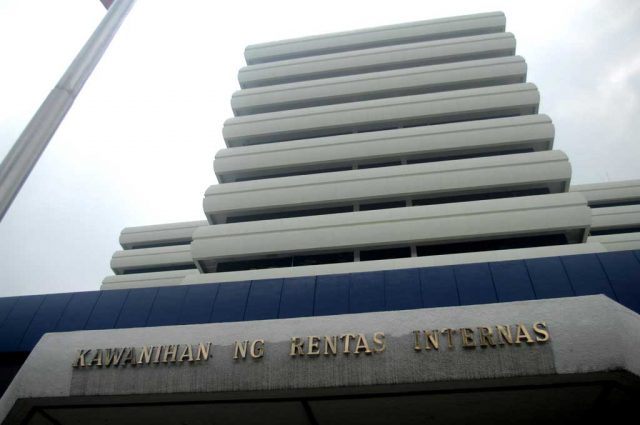
THE Bureau of Customs (BoC) has clarified that sales to domestic market enterprises will now be treated as local transactions, shifting oversight to the Bureau of Internal Revenue (BIR) for value-added tax (VAT) purposes.

“The sales of goods and services to domestic market enterprises or nori-Registered Business Enterprises (RBEs) are now considered ‘local sales,’ which fall outside the mandate of the BoC, and is now under the jurisdiction of the BIR,” the agency said in a memorandum circular.

The change followed Revenue Regulations No. 009-2025, outlining the rules for implementing the provisions of the Corporate Recovery and Tax Incentives for Enterprises to Maximize Opportunities for Reinvigorating the Economy (CREATE MORE) Act.

President Ferdinand R. Marcos Jr. signed the CREATE MORE Act in 2024, which further reduced the corporate income tax to 20% from 25% for RBEs.

RBEs are individuals or companies registered with an Investment Promotion Agency qualify for special tax incentives, particularly export-oriented or high-value domestic ventures. — Aubrey Rose A. Inosante

Farm exports value addition seen key to maximizing FTAs

PHILSTAR FILE PHOTO

By Vonn Andrei E. Villamiel

PROPER TRAINING in sanitary procedures for farm exports  training, increased productivity, and value addition are considered crucial for maximizing the benefits of free trade for the agriculture industry, analysts said.

“We need to properly train our agri exporters to comply with international sanitary and phytosanitary standards, particularly those of importing countries we are targeting,” Former Agriculture Undersecretary Fermin D. Adriano told BusinessWorld via Viber.

He said this would require the Department of Agriculture (DA) to do more developmental work to help local producers gain the skills required for exporting.

Mr. Adriano also cited the need for investments in food packaging engineering to improve the packaging of food and processed food products to make them attractive to buyers in importing countries.

On Jan. 13, the Philippines signed a Comprehensive Economic Partnership Agreement (CEPA) with the United Arab Emirates (UAE), its first free trade agreement (FTA) with a Middle Eastern country.

The agreement provides for the reduction or elimination of tariffs on key exports, including agricultural goods, electronics, and processed food products, improving market access to the UAE.

The Philippine Statistics Authority (PSA) reported that the UAE was the Philippines’ 18th largest trading partner in 2024, with bilateral trade amounting to $1.83 billion.

The Department of Trade and Industry (DTI) said the pact is expected to boost agricultural exports, particularly fruit, seafood, and processed products.

The Presidential Communications Office said key products poised to benefit from the CEPA include bananas, pineapples, tuna, and tuna-based products.

The PSA said in the first 11 months of 2025, exports of fresh pineapple to the UAE amounted to $14.39 million, while banana shipments totaled $12.23 million. Exports of pineapple products were valued at $1.36 million, and tuna and tuna-based products $2.61 million.

For farmers and exporters of agricultural products to realize the potential of FTAs, investments must be poured into training, upskilling, and increasing productivity, former Agriculture Secretary William D. Dar told BusinessWorld.

“The government must partner with these agribusiness companies to continue developing new varieties and promote the best technologies to boost productivity and sustain quality and volume,” he said via Viber.

Mr. Adriano said improving farm and agrifood processing productivity will also improve price competitiveness against rival exporters without compromising product quality.

Mr. Dar said exporters should also diversify markets for their products. “With diversified markets, the companies exporting such products can demand better prices,” he said.

Jose Enrique A. Africa, executive director of think tank IBON Foundation, said the full benefits of any FTA lies in producing higher value-added products.

“As it is, our export profile remains concentrated in primary and low-processed goods, and there is, for instance, no national industrialization policy to move into higher value-added products,” he told BusinessWorld via Viber.

Mr. Africa said priority should be given to value addition and product quality, which should be done sustainably and inclusively. “In particular, small rural producers should be supported to make export gains more broad-based among communities in the countryside,” he said.

Preliminary waste-to-energy price proposed at P8.0167/kWh

REUTERS

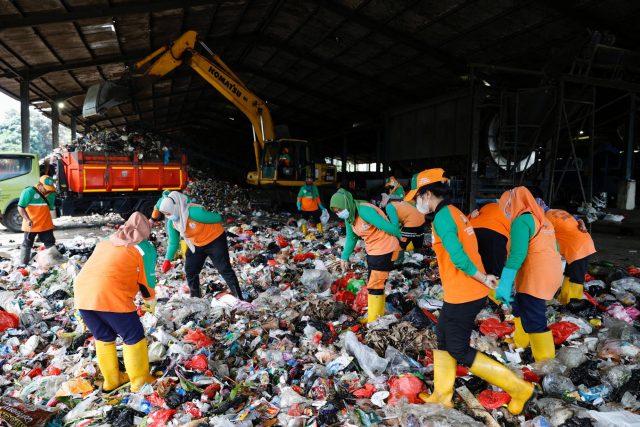
THE Energy Regulatory Commission (ERC) has set a preliminary price of P8.0167 per kilowatt-hour (kWh) for waste-to-energy (WTE), which will serve as the ceiling price to guide participants in the sixth green energy auction round (GEA-6), which will also cater to prospective biomass providers.

In a notice, the ERC asked interested parties to comment on the proposed green energy auction reserve (GEAR) price prior to public consultations on Feb. 5 and 6.

The Department of Energy (DoE) has yet to issue the terms of reference for GEA-6, but it hopes to organize an auction by the second quarter.

A special auction round designed for WTE projects is targeted for this month. According to the terms of reference, the DoE has set an installation target of 230 megawatts (MW), with delivery targeted within the first quarter of 2028.

WTE is the process of converting non-recyclable waste materials into usable heat, electricity, or fuel using various technologies.

According to 2024 estimates from the National Solid Waste Management Commission, Metro Manila and highly urbanized cities areas generate an estimated 6.12 million metric tons of municipal solid waste, which can be converted to about 335 MW of baseload power.

The DoE is pushing WTE as a strategy to address solid waste management, mitigate floods, and provide additional clean energy.

“The integration of WTE projects into the GEA framework underscores the DoE’s commitment to ensuring energy security, environmental protection, and private-sector participation in the transition to clean and sustainable energy,” the DoE said.

The GEA program aims to promote renewable energy as a primary source of energy through competitive selection.

As a flagship government initiative, the program is expected to contribute to the national target of achieving a 35% renewable energy share in the power generation mix by 2030 and 50% by 2040. — Sheldeen Joy Talavera

CARS funding seen as ‘small step’ in boosting investor confidence

USERTRMK-FREEPIK

THE RESTORATION of funding for the Comprehensive Automotive Resurgence Strategy (CARS) program can be the starting point for restoring investor confidence, industry groups said.

Philippine Chamber of Commerce and Industry (PCCI) President Ferdinand A. Ferrer called the restoration of the vetoed funding “a small step” among the “several tasks that need to be done to restore investor confidence in the country.”

He said the return of the withdrawn funding for the CARS program “is a clear indication that the government will support critical industries and prior commitments.” 

The Philippine Parts Makers Association (PPMA) said  funding for the programs, which serve as an incentive for automakers assembling cars in the Philippines, “would reaffirm the government’s commitment to revitalizing domestic automotive manufacturing.”

“PPMA notes that the P4.32-billion allocation for CARS is vital in supporting the continued operations and production plans of the program’s participants, including vehicle manufacturers and the supplier base that supports them,” it said.

“This resolution strengthens policy stability, protects jobs, and helps preserve the manufacturing ecosystem that the Philippines has worked hard to build over the years,” it added.

The Federation of Philippine Industries (FPI) said reinstating the funding “is a vital step toward rebuilding investor confidence and honoring commitments to manufacturers.”

“Policy consistency is the true cornerstone of competitiveness, and we call on government agencies to turn bold pronouncements into timely, transparent action,” FPI Chair Elizabeth H. Lee said via Viber.

“Only by sustaining industrial programs with credibility can the Philippines position itself as a trusted destination for long-term manufacturing investments,” she added.

President Ferdinand R. Marcos, Jr.’s veto of unprogrammed funds included P4.32 billion in fiscal support for the CARS program and P250 million for the Revitalizing the Automotive Industry for Competitiveness Enhancement (RACE) program.

On Friday, Finance Secretary Frederick D. Go said the government has arrived at a funding solution for the CARS program.

“We are truly thankful to the secretaries of the different departments who have worked diligently through a whole-of-government approach to find a funding solution,” Board of Investments Managing Head and Trade Undersecretary Ceferino S. Rodolfo said in a Viber message.

“This conveys a strong positive signal to the investor community in general and to auto and auto parts companies in particular. At the end of the day, the thousands of workers in the automotive supply chain will be the ultimate beneficiaries,” he added.

However, PPMA urged the government to implement the RACE program as soon as possible, as its fiscal support remains unfunded.

“We underscore that only P125 million is needed to initiate and operationalize RACE, an amount that can unlock significant benefits for the broader industry, especially for local automotive parts manufacturers who are key contributors to inclusive industrial growth,” it said.

The group said that the program will help strengthen the domestic supply chain by “supporting investments in tooling, technology upgrades, quality and safety certifications, productivity improvements, and local-content expansion.”

“These are critical interventions that enable more Filipino parts makers to participate meaningfully in vehicle production and compete within the Association of Southeast Asian Nations (ASEAN) region,” it added.

It also cited the role of the program in laying the foundation for the upcoming Electric Vehicle Incentive Strategy (EVIS), which aims to build the electric vehicle (EV) supply chain.

EVs require a wide range of components that Philippine manufacturers can supply, including wiring harnesses, stamped and structural parts, body components, electronics housings, thermal systems, and eventually power electronics and battery-related components,” it said.

“Strengthening the parts sector today through programs like RACE will ensure that the Philippines is ready to capture these EV opportunities as EVIS accelerates industry transformation,” it added. — Justine Irish D. Tabile

BCDA hires SGV to update Bonifacio master plan

PHILSTAR FILE PHOTO

THE Bases Conversion and Development Authority (BCDA) said it tapped SyCip  Gorres Velayo & Co. (SGV) to update the master plan for Bonifacio Global City (BGC).

In a social media post, the BCDA said that it signed an agreement with the professional services firm “to maximize the growth potential of the country’s most dynamic and high-value urban district.”

BGC has attracted top-tier commercial, residential, and institutional investments over the years, the BCDA said.

“The goal is to keep BGC balanced, resilient, accessible. Not only for investors, but for workers, residents, and the public who use this city every day,” BCDA President and Chief Executive Officer Joshua M. Bingcang said. — Justine Irish D. Tabile

Governance, risk, and compliance as a strategic advantage

IN BRIEF:

• Governance, risk, and compliance (GRC) is shifting from back-office control to a strategic function that anticipates risks, protects value, and guides executive decisions in a volatile world.

• Mature GRC programs feature strong leadership, fast and reliable information, clear ownership by the first line, and GRC leaders who challenge board and management decisions.

• While AI and new technologies improve risk detection, the real advantage comes from integrating risk insights across the organization to enable timely, practical governance for boards and management.

In November, board members, senior executives, chief audit executives, compliance officers, chief risk officers, and other professionals gathered at the SGV Knowledge Institute and SGV Consulting forum, “Navigating Enterprise Resilience through the Synergy of Governance, Risk, and Compliance.” It examined how governance, risk, and compliance (GRC) is being reshaped by business realities that are faster, more volatile and less forgiving than ever.

The first panel session, “GRC Integration: Aligning Governance, Risk, and Compliance with Business Strategy,” centered on how GRC can evolve from a defensive control function into a source of strategic clarity.

REDEFINING RISK
One theme dominated the discussion: the traditional definition of risk has become inadequate. Compliance risk, once the focal point of GRC programs, is now only one part of a broader risk universe that includes liquidity, market and operational exposures. Above these sit strategic and reputational risks, which panelists describe as one of the most consequential threats to long-term value.

Risk today, they argued, is best described as NAVI: nonlinear, accelerated, volatile and interconnected. A single disruption can rapidly propagate across functions, geographies and stakeholders. A cyber breach becomes an operational and a regulatory issue; an operational or regulatory issue becomes a reputational crisis; a reputational crisis erodes shareholder confidence.

“Mature GRCs ensure collaboration and are capable of addressing events that trigger multiple risks,” said Vicky Lee Salas, Senior Vice-President for Special Projects and Chief Risk and Compliance Officer of SM Investments Corp. The implication for executives is clear: managing risks in silos is not merely inefficient, it is also dangerous.

SPEED AS A STRATEGIC ASSET
In a NAVI risk environment, speed of information is important. The panel repeatedly returned to the idea that effective GRC programs are those that move relevant insights to decision-makers before choices are constrained.

Narlette Manacap, Compliance Risk Country Officer of Citibank Philippines, framed the shift as follows: “If you have a mature GRC, information flow is faster, reaching stakeholders on time to make smarter choices,” she said. “GRC has shifted from defensive to proactive: we identify pain points early and appropriately plan for situations. In some cases, controls are there to prevent, not mitigate, crises. A healthy GRC helps manage crises and control disruptions.”

Despite the abundance of frameworks, the panelists converged on a simple view of what constitutes GRC maturity, which rests on three identified pillars.

First, leadership must be strong, visible and unambiguous. GRC cannot operate effectively when its mandate is unclear or inconsistently supported at the top. Second, information must flow quickly and credibly to those empowered to act. Risk insights that arrive late, or are filtered to avoid discomfort, serve little purpose. Third, the organization must be proactive, that is, able to identify emerging risks early enough to prevent a crisis rather than merely respond to one. Without all three, even well-designed GRC structures struggle to deliver value.

LEADERSHIP AND ACCOUNTABILITY
Beyond structure, the panel emphasized mindset. Effective risk leaders must operate with a “positive intent mindset,” defined as an ability to appreciate differing perspectives, remain open during debate, and engage constructively with business leaders whose intentions may not always align with risk considerations.

Clear accountability is equally critical. A well-defined RACI grid — clarifying who is responsible, accountable, consulted and informed — becomes indispensable during moments of stress, when ambiguity can paralyze response. Indeed, human behavior remains the persistent roadblock. Differing interpretations of risk appetite, uneven risk awareness and organizational politics can undermine even the most sophisticated systems. In such moments, risk leaders must be willing to stand their ground. Knowing when to say “no,” and articulating why, is a defining leadership skill in modern GRC.

FROM DEFENSE TO VALUE CREATION
The panel described the evolution from three lines of defense to the three lines model, a subtle but significant shift in language. The new emphasis is not solely on prevention and control, but on value creation. For the three lines to function effectively, they must share objectives, operate within a common framework and be supported by effective enablers: leadership, culture and technology.

Manacap underscored the importance of empowering the first line. When business units own risks, the organization becomes more agile and less dependent on second-line intervention. Risk, in this model, is shared responsibility rather than a centralized policing function.

That shift also has implications for how risk leaders are positioned. Salas stated that credibility starts with recognition. Chief risk officers and senior risk leaders, she said, need to be “paid well, credible enough to mean business.” Too often, risk is viewed as a cost center. In reality, strong GRC functions act as “revenue protectors,” safeguarding value that might otherwise be lost to disruption, fines, or reputational damage.

THE EXPANDING ROLE AND LIMITS OF TECHNOLOGY
Artificial intelligence and emerging technologies featured prominently in the discussion. Sing Hwee Neo, EY Global Client Service Partner for Government and Public Sector, reflected on the transformation he has witnessed throughout his career. “GRC has gone a long way since I started,” he said. “When I look back at when I started internal audit, the tools were very rudimentary. Experienced practitioners can now use AI to detect control failures in real time.”

He pointed to autonomous risk management agents that monitor multiple data sources, dynamically adjust risk scoring and help organizations prioritize and respond to potential incidents more effectively.

However, the panel was careful to temper enthusiasm with caution. Integration is more important than any individual tool, as technology that reinforces silos merely accelerates confusion. Aligning risk categories, consolidating assurance activities, and enabling senior management to see a comprehensive, timely picture of enterprise risk remain the real differentiators.

INSIGHTS FOR BOARDS
Audience questions reflected common executive concerns, including the availability of combined assurance tools and how organizations can preserve the independence and strength of second and third-line functions. The responses returned to familiar themes: empowerment of the first line, clarity of roles and visible support from the top.

One clear message was directed at boards. The panelists urged that governance should be implemented consistently across the group, but in a proportional and practical manner. Over-engineering governance can be damaging as under-governance, particularly in complex organizations.

SYNERGY IN GRC
The session closed with a set of succinct reflections that captured the panel’s shared philosophy. Governance sets direction, risk provides foresight and compliance ensures alignment, said Neo. Manacap described GRC as “one in action, moving in sync.” Salas offered a phrase likely to resonate with executives: “risk in rhythm.”

What ultimately distinguishes effective GRC is not sophistication for its own sake, but synergy. It is about open dialogue, shared accountability and leadership willing to treat risk not as a constraint but as a strategic instrument.

This article is for general information only and is not a substitute for professional advice where the facts and circumstances warrant. The views and opinions expressed above are those of the authors and do not necessarily represent the views of SGV & Co.


Joseph Ian M. Canlas and Christiane Joymiel C. Say-Mendoza are risk consulting partners of SGV & Co.


‘AO ready’ Alex Eala braces for lightning-quick Alycia Parks

ALEX EALA — AUSOPEN.COM

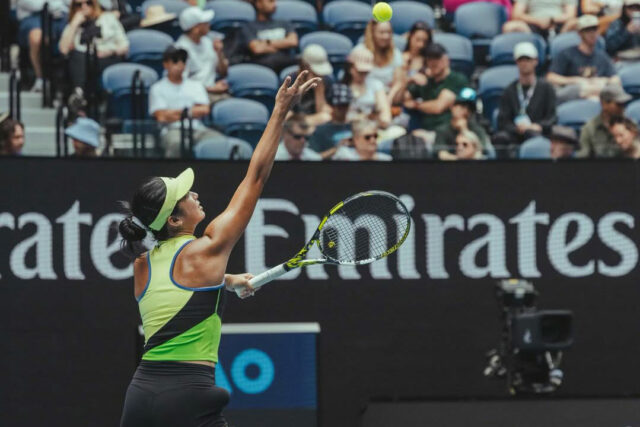
WITH an entire country behind and millions of other supporters around the globe, Alexandra “Alex” Eala threads an uncharted territory of the world tennis map as she plunges into her main draw debut in the Australian Open (AO).

Already boasting a bevy of firsts for Philippine tennis, Ms. Eala blazes another trail against Alycia Parks of the United States at 9:10 a.m. on Monday (Manila time) for the highly-anticipated first round of the season’s first major — with the biggest prize pool ever at $74.9 million — at Court 6 of the Melbourne Park in Victoria.

“AO ready,” declared the 20-year-old sensation after the opening ceremony on Sunday highlighted by the flag parade of participating nations, including the Philippines for the first time ever in the women’s main draw.

Winner of the AO girls doubles Slam in 2020 with Indonesian pal Priska Madelyn Nugroho in 2020, Ms. Eala ranks higher in the Women’s Tennis Association (WTA) as of the moment at No. 49, her new career-best after reaching No. 50 last year, compared to the 25-year-old Ms. Parks at No. 100. Ms. Parks had a career-high at No. 40 in 2023.

Both rising stars have lone WTA titles, the 2025 Guadalajara Open for Ms. Eala and the 2023 Lyon Open for Ms. Parks. Ms. Parks will be in her seventh Slam main draw, including second in the AO, while Ms. Eala will be only in her fourth and first in the Land Down Under.

But there’s more to it than just numbers.

Known for her lethal counter-attack game, Ms. Eala’s mettle will be tested against a no ordinary initiator in Ms. Parks, who shares the fastest serve in history for a female player at 129 miles per hour, a record she netted in 2021 US Open to tie Venus Williams (2007).

And that should serve as enough obstacle for the gigantic mountain Ms. Eala has to set foot and conquer before even thinking of even bigger hurdles down the road of a star-studded 128-player cast.

The AO, where she got the boot as early as the qualifiers as a wildcard in the past three years, remains as the only unchecked Slam off Ms. Eala’s list after also vying in the US Open, French Open and Wimbledon in banner 2025 campaign.

With Brazilian partner Ingrid Martins (WTA doubles No. 79), Ms. Eala will also strut her stuff in the women’s doubles main draw against the tandem of Japan’s Shuko Aoyama (WTA doubles No. 52) and Poland’s Magda Linette (WTA singles No. 50 and doubles No. 140) later this week.

The pressure is on, the challenge is up and Ms. Eala is as ready as ever for go time to not only score her second main draw win ever, after becoming the first Filipina player ever to do it in the 2024 US Open, but to go deeper in AO as well.

“Coming in as a main draw player gives a different vibe, especially with the struggles I had in the past coming here. So, I’m super excited coming here in full force,” added Ms. Eala during the pre-tournament presser featuring top-ranked and rising stars.

Ms. Eala sharpened her saws for this moment, reaching the final four of the Auckland tourney, her third WTA semis appearance, and captured the Evonne Goolagong Cawley Trophy as Kooyong Classic exhibition champion following a 6-3, 6-4 mastery of Paris Olympics silver medalist and 2024 Wimbledon semifinalist Donna Vekic of Croatia.

Win or lose, Ms. Eala is already assured of history and a purse of $100,000 (roughly P5.9 million) for first-round participants but she wants more than just a piece of cake and that’s a shot against the world’s behemoths.

Waiting in the second round is either WTA No. 19 Karolina Muchova of Czechia or WTA No. 35 Jaqueline Cristian of Romania. The climb gets steeper from there with world No. 15 Emma Navarro and No. 3 Coco Gauff projected to wait in the next two rounds.

Then it would be either No. 7 Mirra Andreeva of Russia or No. 12 Elina Svitolina of Ukraine by the quarterfinals and either No. 1 Aryna Sabalenka of Belarus or No. 8 Jasmine Paolini in the final four.

One among No. 2 Iga Swiatek, No. 4 Amanda Anisimova of the United States, No. 5 Elena Rybakina of Kazakhstan and a familiar foe in No. 6 Jessica Pegula of the US, her tormentor in the Miami Open that ignited her WTA rise and Slam qualification, is expected to wait from other bracket for a grand finale.

Whether Ms. Eala is already ripe for any of those titans remains to be seen and she will have a say on that starting with pivotal duel against the lightning-quick Ms. Parks. — John Bryan Ulanday

Fans frustrated by long queues, ticket sales halt on day one of AO

FACEBOOK.COM/AUSTRALIANOPEN

MELBOURNE — Australian Open (AO) organizers came under fire on the Grand Slam’s opening day on Sunday as frustrated fans sweated in long queues to the gates of Melbourne Park and complained of confusion over the suspension of ticket sales.

With heightened security at the event in the wake of the Bondi Beach shooting in Sydney last month, hundreds of spectators gathered outside the venue in hot weather before tournament officials paused sales of the cheaper “ground pass” tickets within the first hour of play due to intense demand.

Ground passes, which cost A$65 ($43) for adults during day sessions, allow largely unfettered access to the minor courts and are hugely popular at the year’s first Grand Slam.

Tournament director Craig Tiley confirmed in the morning that only the more expensive tickets to the main showcourts were available but fans were oblivious as they queued for extended periods outside the venue.

Josh Main, a visitor from the Netherlands, said the experience was a letdown during a family trip that coincided with the Grand Slam.

“We went to look for tickets but there was a big line, so I thought, are we in the right line?” he told Reuters. “They told us there are no tickets left, so we can’t get in.

“They did say there were tickets left for Rod Laver (Arena) but we’re not going to sit there today and it’s expensive… I think they said it was 300 bucks or something.”

Local fans also voiced disappointment, with Melbourne resident Elton Yu surprised to find ground passes unavailable.

“Never expected to not have any tickets for the ground pass which I always do,” he told Reuters.

Susan Walsh, another Melbourne resident, said she and her group had already purchased arena tickets but hoped to enter earlier.

“We tried to buy a ground pass and they just told us it was only tickets that were $229 per person,” she said. “Didn’t want to spend that much money… So, a bit disappointed.”

Tiley said the sales halt was just for the Sunday day session and that there were ground passes available for the evening.

“We’ve had to pause them because obviously we want people to come on site and have a great time,” he told reporters.

“There’s still the ‘After 5’ (o’clock) ground passes available, which is $49, come on-site for that.”

Governing body Tennis Australia did not respond to requests for comment from Reuters. — Reuters

Nambatac, TNT duel with Beermen for the league crown jewel

HE helplessly watched on the bench with a groin injury last season while TNT attempted in vain to ascend to the PBA Philippine Cup (PC) throne.

Now Rey Nambatac gets his chance to help the Tropang 5G complete the unfinished business in the All-Filipino and get back at conqueror San Miguel Beermen (SMB) in another blockbuster duel for the league’s crown jewel.

Mr. Nambatac, who sparked TNT’s epic 99-96 come-from-behind Game 5 clincher over Meralco in Game 5, looks to flash the deadly form that led to his Finals MVP-winning performance in their Season 49 Governors’ Cup title run as they take another shot at the PC trophy held by the Beermen.

The former Letran star actually dealt with back and ankle issues throughout the conference but managed to get back to near full-strength in time for the Last Dance.

“Hopefully because he’s gotten a lot of games now under his belt,” TNT coach Chot Reyes said of “Sting Rey” in the Power and Play program on Cignal.

The Tropang 5G and the Beermen go at it again beginning on Wednesday. This marks their third title dispute in the last four seasons, with SMB prevailing in the first two instances, 4-3 (Season 47) and 4-2 (Season 49).

But San Miguel Beermen titan June Mar Fajardo was quick to downplay past records. — Olmin Leyba

New Novak Djokovic

Novak Djokovic arrives in Melbourne with the record already in hand, but still with a craving for more. Twenty-four Grand Slam singles titles sit on his mantel, a number that he once deemed provisional, even incomplete. Now, with Father Time waiting on his doorstep, it stands as a statement in and of itself. The pursuit of a milestone-extending 25th remains, but it no longer consumes him the way it once did. Age has not softened his competitiveness, but it has given him a more nuanced view of his place in the sport’s annals. At 38, he is no longer angling for more hardware with urgency. He is instead acknowledging context, and doing so with the confidence of an accomplished would-be Hall of Famer who has earned the right to choose his battles.

Predictably, the Australian Open is Djokovic’s battlefront of choice. Ten titles in Melbourne grant him historical leverage, and Rod Laver Arena has long functioned as both his sanctuary and proving ground. His preparation this year has been selective, even guarded, at best, shaped by an understanding that longevity now demands restraint rather than excess. He speaks openly about managing his body, about picking his spots, about choosing moments rather than hoarding matches. There is no grand declaration, no manufactured drama; he understands precisely where his margins now lie.

Perhaps it’s fair to argue that tennis is on the verge of passing Djokovic by. Carlos Alcaraz and Jannik Sinner have arrived, and with authority. They have imposed a new pecking order; they own the majors, playing a brand of tennis rooted in speed, power, and will. To his credit, he accepts the new reality without an ounce of defensiveness. He understands that he is no longer in their league, and openly names them as THE gold standards, not as interlopers. His admission matters, but it signals his status as a competitor prepared to overcome the odds.

What distinguishes the new Djokovic, arguably the greatest of all time and yet the underdog, is his adaptability. He is no longer chasing dominance; instead, he willingly takes on the role of an opportunist. The Australian Open draw places him in Sinner’s half, with the possibility of a semifinal-round meeting. Alcaraz waits on the opposite side as the sport’s current North Star seeking a title Down Under to complete the career Grand Slam. The structure itself reads like a referendum on continuity: the past standing proudly, the present assertive, the outcome likely but nonetheless undecided.

At this stage, Djokovic is shaping his legacy in increments: a tournament on occasion, but always refusing to accept irrelevance. In Melbourne, he is not asking the opposition to bend backward so he can meet his ultimate objective. Rather, he is stepping onto the court on his terms, fully aware that real success needs to be earned, not given.


Anthony L. Cuaycong has been writing Courtside since BusinessWorld introduced a Sports section in 1994. He is a consultant on strategic planning, operations and human resources management, corporate communications, and business development.

Trump vows tariffs on eight European nations over Greenland

A 3D‑printed miniature model of US President Donald Trump, EU and Greenland flags, and the word “Tariffs” appear in this illustration taken January 17, 2026. — REUTERS/DADO RUVIC/ILLUSTRATION

WASHINGTON — President Donald Trump on Saturday vowed to implement a wave of increasing tariffs on European allies until the United States is allowed to buy Greenland, escalating a row over the future of Denmark’s vast Arctic island.

In a post on Truth Social, Trump said additional 10% import tariffs would take effect on February 1 on goods from Denmark, Norway, Sweden, France, Germany, the Netherlands, Finland and Great Britain — all already subject to tariffs imposed by Trump.

Those tariffs would increase to 25% on June 1 and would continue until a deal was reached for the US to purchase Greenland, Trump wrote.

Trump has repeatedly insisted he will settle for nothing less than ownership of Greenland, an autonomous territory of Denmark. Leaders of both Denmark and Greenland have insisted the island is not for sale and does not want to be part of the United States.

A Reuters/Ipsos poll of US residents this week found that less than one in five respondents support the idea of acquiring Greenland.

TRUMP WANTS GREENLAND FOR SECURITY, MINERALS
The president has repeatedly said Greenland is vital to US security because of its strategic location and large mineral deposits, and has not ruled out using force to take it. European nations this week sent military personnel to the island at Denmark’s request.

“These Countries, who are playing this very dangerous game, have put a level of risk in play that is not tenable or sustainable,” Trump wrote.

Protesters in Denmark and Greenland demonstrated on Saturday against Trump’s demands and called for the territory to be left to determine its own future.

The countries named by Trump on Saturday have backed Denmark, warning that the US military seizure of a territory in NATO could collapse the military alliance that Washington leads.

“The president’s announcement comes as a surprise,” Denmark’s Foreign Minister Lars Lokke Rasmussen said in a statement.

British Prime Minister Keir Starmer was unusually blunt in condemning Trump’s threat, saying on X that his country would raise the issue directly with Washington.

“Applying tariffs on allies for pursuing the collective security of NATO allies is completely wrong,” Starmer said.

European Commission President Ursula von der Leyen and European Council President Antonio Costa said in separate but identical posts on X that the European Union stood in “full solidarity” with Denmark and Greenland.

“Tariffs would undermine transatlantic relations and risk a dangerous downward spiral. Europe will remain united, coordinated, and committed to upholding its sovereignty,” they said.

Officials from Norway, Sweden, France and Germany reiterated support for Denmark on Saturday and said tariffs should not be part of Greenland discussions.

Cyprus, which currently holds the EU presidency, said it has called for an emergency meeting of ambassadors from the union’s 27 countries on Sunday.

TRADE DEALS UNDER THREAT?
Saturday’s threat could derail tentative deals Trump struck last year with the European Union and Great Britain. The deals included baseline levies of 15% on imports from Europe and 10% on most British goods.

“The biggest danger, it seems to me, is his decision to treat some EU countries different from others,” said William Reinsch, a trade expert at the Center for Strategic and International Studies. “I’m not surprised … It may well convince the European Parliament that it is pointless to approve the trade agreement with the US, since Trump is already bypassing it.”

Trump floated the general idea of tariffs over Greenland on Friday, without citing a legal basis for doing so. Tariffs have become his weapon of choice in seeking to compel American adversaries and allies alike to meet his demands.

He said this week he would put 25% tariffs on any country trading with Iran as that country suppressed anti-government protests, though there has been no official documentation from the White House of the policy on its website, nor information about the legal authority Trump would use.

The US Supreme Court has heard arguments on the legality of Trump’s sweeping tariffs, and any decision by the top US judicial body would have major implications on the global economy and US presidential powers.

The encroaching presence of China and Russia makes Greenland vital to US security interests, Trump has said. Danish and other European officials have pointed out that Greenland is already covered by NATO’s collective security pact.

A US military base, Pituffik Space Base, is already in Greenland, with around 200 personnel, and a 1951 agreement allows the United States to deploy as many forces as it wants in the Danish territory.

That has led many European officials to conclude that Trump is motivated more by a desire to expand US territory than by security concerns.

“China and Russia must be having a field day. They are the ones who benefit from divisions among allies,” EU foreign policy chief Kaja Kallas said on X in response to Trump’s threat.

Some US senators also pushed back. “Continuing down this path is bad for America, bad for American businesses and bad for America’s allies,” Senators Jeanne Shaheen and Thom Tillis, bipartisan co-chairs of the Senate NATO Observer Group, said in a statement.

Europeans should not react hastily to Trump’s tariff threat, said Carsten Brzeski, global head of macro at ING Research.

“Just ignore it and wait and see,” Brzeski told Reuters. “Europe has shown that it will not accept everything, and so the tariffs are actually already a step forward compared to the threatened military invasion.” — Reuters

ADVERTISEMENT
ADVERTISEMENT