Home Blog Page 4222

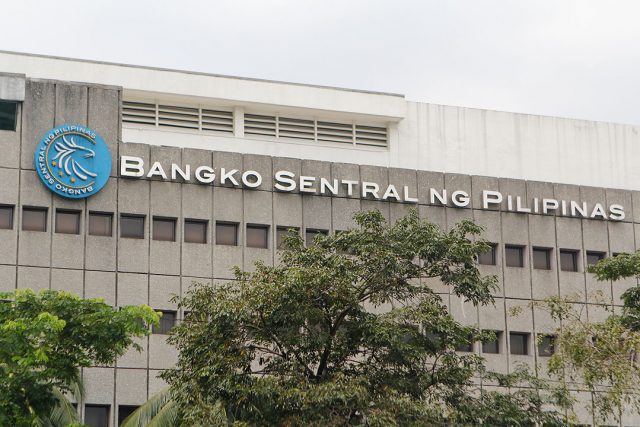
BSP ready to resume tightening as needed

BW FILE PHOTO

The Bangkok Sentral ng Pilipinas (BSP) stands ready to resume policy tightening as necessary, it said in a statement on Thursday, after inflation quickened for a second straight month in September.

The central bank said it still expects inflation to decelerate back to within its target by end-2023 in the absence of further supply shocks.

The central bank’s statement followed the release of data from the Philippine Statistics Authority showing a double-digit gain in the price of rice drove the inflation rate last month to accelerate to 6.1% compared to a year ago, its fastest pace in four months.

Days before the data’s release, BSP Governor Eli M. Remolona raised the possibility of an off-cycle rate hike, but economists said the probability of that happening is low, although a hike at the central bank’s Nov. 16 meeting looked certain.

“I think this inflation print is enough to drive one more hike….I doubt an off-cycle hike is possible, but 16 November should see one more hike,” Shreya Sodhani, regional economist at Barclays, said in an email.

Last month’s inflation print, which was higher than August’s 5.3% rate and above the 5.3% forecast in a Reuters poll, brought year-to-date average inflation to 6.6%.

The central bank, which kept interest rates steady at 6.25% at its last four meetings, said it “stands ready to resume monetary policy tightening as necessary to prevent the renewed broadening of price pressures.”

Rice inflation quickened by 17.9% in September, the fastest in over 14 years, the statistics authority said, helping fuel the 10% food inflation rate for the month.

However, there are some signs the inflation gains from rising rice prices may be easing.

The country’s economic planning agency on Thursday said it would recommend extending the lowered tariff rates on rice until December 2024, a day after Philippine President Ferdinand Marcos Jr lifted a cap on rice prices.

With the supply of rice adequate, Marcos has pinned the blame on the increase in the cost of the national staple on hoarders, smugglers and price manipulators.

Overall, the Philippines saw some slight moderation in underlying price pressures, with core inflation, which doesn’t include volatile food and energy prices, easing to 5.9% in September from 6.1% in August.

“This data point and the shift in the inflation path likely prompts one or two (rate hikes) this year although we feel the timing might be more tied to a potential, if it happens, Fed hike in early November,” ING Economist Nicholas Mapa said. — Reuters

Igniting campus spirit with first leg of vivo School Tour in Lyceum

In an electrifying display of youthful energy and enthusiasm, vivo, the official smartphone partner of the National Basketball Association (NBA), kicked off the first leg of its much-anticipated vivo School Tour at Lyceum University of the Philippines on Sept. 29, 2023.

The highlight of the event was the riveting 3 on 3 basketball challenge, where six teams from Lyceum competed fiercely and two teams won for the honor of representing their school at the Grand Finals scheduled for November. The exhilarating competition showcased the passion and sporting prowess of the students, as they dribbled, dunked, and displayed their basketball skills.

But the excitement didn’t stop there. The event also featured lively TikTok dance competitions, bringing out the students’ creativity and flair for entertainment.

vivo also took the opportunity to introduce the vivo Club, a platform where students can sign up to receive various perks and benefits. These include exclusive internship opportunities, invitations to exciting events, team-building activities, and other exciting experiences. Registration is now for all students nationwide.

Adding to the thrill of the event, vivo set up an experiential table for its latest devices, including the vivo V29 5G, Y36, Y27, and Y02t. Attendees had the chance to explore and experience these cutting-edge gadgets firsthand.

The vivo School Tour is a testament to vivo’s commitment to promoting a healthy and active lifestyle among the youth. Through sports and entertainment, vivo aims to engage and inspire young individuals to lead an active and fulfilling life.

Glenn Chiu, vivo assistant brand marketing manager

“Our goal is to bring together university students from all courses, and use the power of sports to improve their well-being,” said vivo Assistant Brand Marketing Manager Glenn Chiu. “Today’s vivo 3 on 3 basketball challenge is about fostering camaraderie, teamwork, and personal growth.”

About vivo School Tour

The tour is set to continue its journey to five other prestigious universities, spreading the spirit of competition and camaraderie.

The upcoming schedule includes stops at the University of the Philippines Diliman on Oct. 7, Jose Rizal University on Oct. 12, National University on Oct. 18, De La Salle University College of St. Benilde on Oct. 25, and De La Salle University on Nov. 8.

The winning teams from each school in the 3 on 3 basketball challenge will earn the privilege of representing their institution at the grand finals. Mark your calendars for Nov. 18 and 19, 2023, when the Grand Finals will take place at the Music Hall in SM Mall of Asia.

Follow vivo Philippines on Facebook, Instagram, YouTube, Twitter, and TikTok for the latest news and announcements. Get the vivo V29 5G, Y36, Y27, and Y02t in e-stores such as Shopee, Lazada and TikTok, as well as physical stores nationwide.


Spotlight is BusinessWorld’s sponsored section that allows advertisers to amplify their brand and connect with BusinessWorld’s audience by enabling them to publish their stories directly on the BusinessWorld website. For more information, send an email to online@bworldonline.com.

Join us on Viber at https://bit.ly/3hv6bLA to get more updates and subscribe to BusinessWorld’s titles and get exclusive content through www.bworld-x.com.

South Asia’s all-female health workers fight for recognition

STOCK PHOTO | Image by ORION HOSPITAL from Pixabay

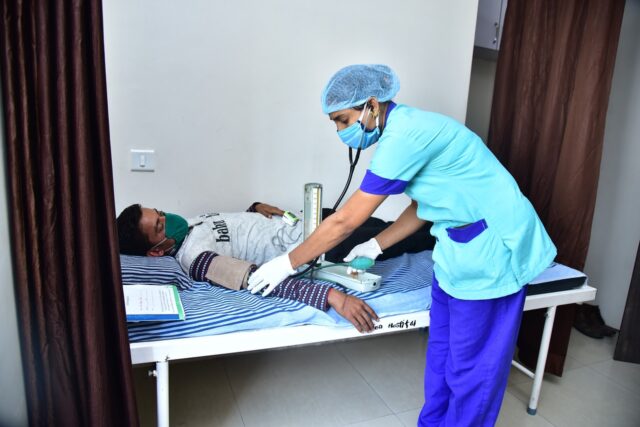
 – Hobbling out of a tuk-tuk, Pooja Gupta joined fellow community health workers as they punched their fists in the air and chanted slogans against authorities in India who, they say, pay poorly despite giving them more and more work to do.

Like Gupta, tens of thousands of female health workers across South Asia are demanding basic rights and social protections that are currently denied to them such as the minimum wage, sick leave, maternity benefits and pensions.

“We work nonstop. Woman in labour at midnight? Run to her. Injured child? Tend to them … We break our backs for our communities but we get nothing in return,” Gupta told the Thomson Reuters Foundation during a protest last month outside an administrative office in the northern Indian state of Haryana.

“We are exploited and mistreated,” said Gupta, who has a torn ligament in her right leg, which makes her door-to-door job painful but draws little sympathy from her supervisor.

She said surgery would cost at least 75,000 Indian rupees ($900) – nearly 20 times of what she makes in a month.

Gupta, 39, is one of more than 1 million Accredited Social Health Activists – or ASHA workers – who are usually the first point of contact in mostly rural India, where there is often limited access to healthcare facilities.

Many members of this all-women workforce have been on strike in different parts of India since early August, mainly demanding formal job contracts so they can receive a salary and employment benefits.

Currently they are treated as volunteers who receive allowances and incentives, and are not covered by state governments’ minimum wage legislation.

The Haryana state and federal health ministries did not respond to several requests for comment.

More than 20,000 ASHAs in Haryana are demanding their monthly pay be increased from 4,000 rupees to 26,000 rupees to reflect their growing list of responsibilities – from conducting surveys on different diseases and substance abuse to helping families get on a public health insurance scheme.

“It is impossible to survive on this money. Why do we always have to beg for basic things?” said Sarita Devia widow with three children, who depends on gifts of money, food and clothes from the families she helps.

“Without them, I would not be able to feed or educate my children.”


INVESTMENT ‘A NO-BRAINER’

The situation is similar elsewhere in the region.

Female health workers in India, Nepal and Pakistan released a joint “Charter of Demands” in August via global union Public Services International (PSI) to call on governments and international agencies to recognize and uphold their rights.

“It’s extraordinary that they can’t make that small amount of budget available, and it just shows the disregard for the work these women do. Investing in them should be a no-brainer,” said Kate Lappin, Asia secretary at PSI.

Lappin urged big funders such as the World Bank and the Asian Development Bank (ADB) to back the women, who often face grave dangers – from violence to extreme heat, floods and landslides exacerbated by climate change – when serving their communities.

“Primary health is a huge economic benefit,” she said.

Balika Subedi, a 55-year-old health worker who earns 400 Nepalese rupees ($3) a day in Nepal’s midwestern Pyuthan district, said she wanted to be paid a higher monthly salary with extra benefits such as fixed work hours and pension cover.

“I have climbed steep hills on scorching sunny days and through heavy downpours to deliver health services,” said Subedi, adding that a lack of transport options means she often walks days without food and water to reach remote villages.

“But the compensation that we are provided for our effort is very low.”

While Lady Health Workers‘ (LHW) in Pakistan are recognized as formal government employees, receiving guaranteed salaries instead of stipends, they also have complaints.

They say they want regular pay hikes commensurate with their experience, full healthcare cover, paid sick leave and maternity entitlements among others.

“We have never said no to any work or protested that our workload has increased,” said Bushra Bano Arain, chairperson of the All Pakistan Lady Health Workers Union.

“What we want is to be treated fairly and given what is due to us.”

None of the three countries or individual provinces and states have officially responded to the demands so far.


WOMEN’S HEALTH AT RISK?

Indian Prime Minister Narendra Modi lauded ASHA workers – who are behind a series of high-profile health campaigns, including India’s COVID-19 response and vaccination drive – last year after the World Health Organization gave them an award for their “outstanding contribution” to public health.

“Without them, the entire system would have collapsed,” said Sona Mitra, principal economist at Delhi-based IWWAGE, an organization that works to boost the economic prospects of women and girls.

Mitra said that the returns to the society from ASHAs’ work far outweighed the meagre economic cost in regularizing them.

“Care is emerging as a sector which is actually a super employment generator for women, and it is also a facilitator for other women,” she said.

“If the government does not have resources, it should … lure the private sector and show them that this is an attractive sector where their positive returns to investments, and there is a need for investments.”

Campaigners warn that the health of women and children would suffer the most without community health workers, as demonstrated by their recent walkout.

The strike meant Lata, a 24-year-old woman from Haryana’s Karnal district, could not reach her “ASHA Didi” (big sister) when she experienced a uterine rupture in late August two weeks after giving birth by caesarean.

“I was in so much pain. I didn’t know what to do without her,” Lata, who goes by one name, said by phone.

“I kept calling, but her (mobile) was off,” she said as she recovered at home following a brief hospital stay. “I miss her a lot.” – Reuters

Indonesia must be prudent with military spending, president says

STOCK PHOTO | Image by Mufid Majnun from Pixabay

 – Indonesian President Joko Widodo on Thursday emphasized the importance of military hardware modernization but warned any spending should be done wisely as the state budget was limited.

The archipelago nation of 270 million people, Southeast Asia’s biggest economy, is seeking to modernize its military but has lagged its regional peers in recent years.

Spending for military hardware must be done wisely, in terms of the amount or allocation,” Mr. Jokowi, as the president is known, said during an armed forces parade.

Defence Minister Prabowo Subianto, a likely presidential candidate seeking to replace the outgoing Mr. Jokowi next year, has led a series of procurements of late, including 42 Dassault Rafale fighter jets for $8.1 billion, 12 new drones from Turkish Aerospace worth $300 million, and 12 Mirage 2000-5 fighter jets valued at $800 million.

Mr. Jokowi in July also warned his cabinet to maintain a “healthy” budget as he highlighted outsized spending by the security agencies, including the defense ministry.

For the past decade, Indonesia‘s defense spending per capita and as a percentage of gross domestic product has been the lowest among Southeast Asia’s six emerging market economies, according to data from the Stockholm International Peace Research Institute (SIPRI) think tank. – Reuters

Renaissance anime

Denmark Maribojoc exchanged engineering for art

Soft lighting and soft femininity are the focus of Denmark Maribojoc’s second solo show, As Light Whispers, in Art Underground.

The 24-year-old was discovered through social media, where he posted his pandemic-born artwork; and then he was invited to join group shows, including one in Art Underground’s sister gallery, Galerie Joaquin. His first solo show in Art Underground was concluded in May, and then he sat down to work on this next exhibit, on view until Oct. 6. Mr. Maribojoc led BusinessWorld on a walkthrough of the exhibit earlier this week.

As Light Whispers sees 11 female figures in various period dress (some outfits are Victorian, some are from the Renaissance, and some are sourced from the medieval period), with soft chiaroscuro lighting shone on their faces. The old Italian technique of highlighting features on a subject while keeping the background dark and obscured is used frequently in portraiture. Mr. Maribojoc’s own favorite painter, Italian master Caravaggio, used this technique extensively, especially in religious and mythological-themed paintings. Mr. Maribojoc’s work costs between P30,000 to P75,000. As of the day of the viewing, all the works had been sold.

While the clothes are close copies of the magnificent detail in earlier masterpieces (details in lace; creases and folds on fabric), the faces have been updated for the 21st century, resembling the wide-eyed figures in modern animation (think Tangled and Frozen). Disney animator Preston Blair in his book, Advanced Animation, gives a definition for cuteness in art: “Cuteness is based on the basic proportions of a baby and the expressions of shyness or coyness,” with cute features described as “[eyes] spaced low on the head… usually large and wide-set; the nose and mouth are always small.” These features can be seen on the faces of Mr. Maribojoc’s subjects.

But he talks less about the faces, but more on the light shining on them: “Mas nalalaro ko iyong ilaw, mas nabibigay ko iyong emosyon (the more I play with light, the more I give it emotion).” This might reflect shifts in art paradigms, where in the past, light was used to emphasize art’s proximity to reality; while now (with artist’s subject’s proximity to animated works), light is being used to emphasize emotion.

As for concentrating on female faces, Mr. Maribojoc points to feminism. “Through my art, I want to prove that women are both soft and powerful.”

He concentrated on art during the pandemic, pausing his studies in engineering when he figured that the online class format was not working for him. His once-hobby has now become his livelihood. “Parang mas nae-enjoy ko na iyong pagpipinta (I think I enjoy painting more),” he said about this career shift. “Unlike dati, pressure. Sobrang masakit sa ulo. (Unlike what I was doing before, there was a lot of pressure. It gave me a headache).”

As Light Whispers by Denmark Maribojoc is on view at Art Underground until Oct. 6. Art Underground is located at 2F Mabini180, 180 A. Mabini, Brgy. Addition Hills, San Juan, Metro Manila, and is open 10 a.m. to 7 p.m., Mondays to Saturdays. For inquiries, send an e-mail to artundergroundmanila@gmail.com. — JL Garcia

2023 on track to become another record-breaking year as temperature hits new high

STOCK PHOTO | Image by G.C. from Pixabay

– This year is on track to become the hottest year on record, with the global mean temperature to date this year 0.52 degrees Celsius higher than average, the European Union’s Copernicus Climate Change Service said on Thursday.

The global temperature for January-September is also 1.4C higher than the preindustrial average (from the years 1850 to 1900), the institute added, as climate change pushes global temperatures to new records and short-term weather patterns also drive temperature movements.

Last month was the warmest September on record globally, with 0.93C above the average temperature for the same month in 1991-2020, and the global temperature of the month was the most atypical warm month of any year in the ERA5 dataset, which dates back to 1940.

Scientists have said climate change combined with the emergence this year of the El Nino weather pattern, which warms the surface waters in the eastern and central Pacific Ocean, have fueled recent recordbreaking temperatures.

“The unprecedented temperatures for the time of year observed in September – following a record summer – have broken records by an extraordinary amount. This extreme month has pushed 2023 into the dubious honor of first place – on track to be the warmest year and around 1.4C above preindustrial average temperatures”, Samantha Burgess, Deputy Director of Copernicus, said in a statement.

“Two months out from COP28, the sense of urgency for ambitious climate action has never been more critical,” she said referring to the United Nations Climate Change Conference.

Last year was not a record, though the world was 1.2C warmer than pre-industrial times. The previous record belonged to 2016 and 2020 when temperatures were an average of 1.25 degrees C higher.

The average sea surface temperature for September over 60°S–60°N reached 20.92C, which is the highest on record for September and the second highest across all months, behind August 2023, Copernicus said.

The body’s analysis is based on billions of measurements from satellites, ships, aircraft and weather stations.

Antarctic sea ice extent remained at a record low level for the time of year, while the Arctic Sea ice extent is 18% below average. – Reuters

Millions off work as Typhoon Koinu brushes past Taiwan with lashing rain

STOCK PHOTO | Image by Bruno from Pixabay

 – Typhoon Koinu began brushing past the rural far southern tip of Taiwan on Thursday, injuring 190 but causing no deaths, as lashing rains and strong winds cancelled work and classes for millions in a swathe of cities across the island.

Koinuwhich means “puppy” in Japanese, made landfall on Taiwan‘s Hengchun peninsula as a category four typhoon – indicating winds of up to 252kph (156mph) – but is forecast to weaken as it crosses into the Taiwan Strait and heads toward the Chinese province of Guangdong, according to Tropical Storm Risk.

The heaviest rain is falling along mountainous and sparsely populated parts of Pingtung county in the south, and the east coast counties of Taitung and Hualien, but the typhoon will also affect the major southern port city of Kaohsiung.

Most cities and counties in Taiwan declared a day off work and school on Thursday, though the capital Taipei, home to the stock and financial markets, is not affected and operating as normal.

Taiwan’s fire department reported 190 injuries but no deaths, as well as some minor damage to buildings.

Taiwan‘s two main domestic airlines, UNI Air and Mandarin Airlines, cancelled most of their flights for Thursday, while ferries to outlying islands were also stopped.

total of 42 international flights were also cancelled, the transport ministry, said, but the high speed rail connecting northern and southern Taiwan was unaffected. – Reuters

Philippines inflation quickens in September, opens door to further rate hike

PHILIPPINE STAR/ MICHAEL VARCAS

MANILA – Philippine inflation quickened for a second straight month in September due to increases in food and transport costs, the statistics agency said on Thursday, opening the door to further central bank interest rate hikes.

The consumer price index rose to 6.1% in September, blowing past the 5.3% forecast in a Reuters poll, and hit the top end of the central bank’s 5.3% to 6.1% projection for the month.

That brought year-to-date average inflation to 6.6%, still outside the central bank’s 2% to 4% target for the year.
Core inflation, which strips out volatile food and fuel items, eased to 5.9% from 6.1% in August.

Ahead of Thursday’s data, Philippine President Ferdinand Marcos Jr lifted a cap on the price of rice, the staple in a country dependent on imports of the grain.

ING Economist Nicholas Mapa said on platform X the central bank would hike rates further in the near term after inflation surpassed expectations.

The central bank, which next meets on Nov. 16, has kept interest rates steady at its last two meetings, but left the door open to further rate hikes to bring inflation back to its target for the year.

The economic planning agency on Thursday said it would recommend extending the lowered tariff rates on rice until December 2024. — Reuters

Asia CEO Awards to honor exemplars of leadership and excellence this October

Now in its 14th year, the Asia CEO Awards is returning to celebrate the industry leaders who are shaping the Philippine business landscape.

Reimagining its mission and vision, the Asia CEO Awards is reinforcing the Philippines’ standing as the center of business excellence. Hence, this year’s awards will honor the commitment of individuals and organizations, particularly in the face of challenges and opportunities presented by the rapidly shifting landscape.

A notable feature of the Asia CEO Awards is its Circle of Excellence, which recognizes individuals and organizations that have made significant contributions to their respective industries and the country’s overall development.

This year’s Asia CEO Awards has unveiled its Circle of Excellence awardees with top companies and personalities in the following categories: ADEC Innovations Executive Leadership Team of the Year; Airspeed SME Company of the Year; Filinvest Expatriate Executive of the Year; Figari Entrepreneur of the Year; Foundever Young Leader of the Year; ibex CSR Company of the Year; iCXeed Diversity Company of the Year; Kyani Wellness Company of the Year; Lionheart Farms Sustainability Company of the Year; Microsourcing Service Excellence Company of the Year; PLDT Enterprise Global Filipino Executive of the Year; PSG Global Solutions Woman Leader of the Year; RELX Reed Elsevier Top Employer of the Year; Sprout Solutions Technology Company of the Year; and United Neon Most Innovative Company of the Year.

The ADEC Innovations Executive Leadership Team of the Year celebrates the executive management teams of achievement-oriented organizations that pioneer leadership initiatives in their respective industries.

Included in the ADEC Innovations Executive Leadership Team of the Year are as follows: Airspeed Group of Companies; Datamatics Global Services Corp.; Eastvantage Business Solutions, Inc.; Filinvest Land Inc.; IBM in the Philippines Consulting Client Innovation Center (CIC); Maya; Northern Operating Services Asia Inc.; Sante International Inc.; Sprout Solutions; and VXI Global Holdings B.V. (Philippines)

The Airspeed SME Company of the Year recognizes outstanding small and medium-sized enterprises (SMEs) that lead innovation, culture, and employment growth.

Included in the Airspeed SME Company of the Year are as follows: Autokid Subic Trading Corp.; DynaQuest Technology Services Inc.; eBiZolution Inc.; Embiggen Group; Hytec Power Inc.; Immuni Global Inc.; Motovita; OVA VIRTUAL; PSO (Manila) Limited Philippine Branch Office; and What’s Your FLAN International Group of Franchise Companies.

Meanwhile, the Filinvest Expatriate Executive of the Year is awarded to non-Filipino leaders who contribute to developing the country’s economic capabilities and human capital.

Included in the Filinvest Expatriate Executive of the Year are as follows: Amit Jagga, senior vice-president (SVP) and country leader of Concentrix Philippines; Aseem Roy, country head of Wipro Philippines; Eng Teng Wong, president and chief executive officer (CEO) of Pru Life UK; Kais Marzouki, chairman and CEO of Nestlé Philippines, Inc.; Praveer Chadha, SVP for Customer Management Services at Datamatics Global Services Corp.; Sanjiv Gupta, president and country head of IBM Solutions Delivery, Inc.; Shiju K. Varghese, country head and president of TATA Consultancy Services (Philippines), Inc.; and Sudhir Agarwal, founder & CEO of Everise.

The Figari Entrepreneur of the Year recognizes individuals who initiated businesses from scratch and built them into successful organizations.

Included in the Figari Entrepreneur of the Year are as the following: Charlotte Reyes, founder and president of OVA VIRTUAL; Chet Pastrana, president and CEO of Archipelago Philippine Ferries Corp. (APFC); Francisco Magsaysay, founder of Carmen’s Best Dairy Products Inc.; Jesus Joey Marcelo, CEO of Sante International, Inc.; Joash Tubaga, owner and founder of FIXMYMAC I.T. SERVICES; Maria Angeline Fon, founder of Thinkstitute PHL; Mharicar Castillo-Reyes, president and CEO of Asticom Group of Companies; Regieno Valencia, owner of Interior Construction Services; Rolan Marco Garcia, founding CEO and managing partner of Embiggen Group; Rommel Carlos, chief executive officer of Nokarin & Arcus; and Victor Lim, co-founder and CEO of Kraver’s.

The Foundever Young Leader of the Year recognizes outstanding young leaders who have made significant contributions to the nation’s economy and global reputation.

Included in the Foundever Young Leader of the Year are as follows: Eric Darryl Lim, executive vice-president of Autokid Subic Trading Corp.; James Aaron Lacsamana, head of IT of Eastvantage Business Solutions, Inc.; Joshua Palisoc, COO of Ask Lex PH Academy; Mark Alvarez, managing partner & senior business director for Southeast Asia at Human8; Ralph Ray Chua, chairman of the board and president of Immuni Global Incorporated and Shireli Manufacturing Company; Rolan Marco Garcia, founding CEO and managing partner of Embiggen Group, Sean Gabriel Villoria, CEO of GerWeiss Motors Corp., and Walther Buenavista, president and CEO of Shawarma Shack Group.

The ibex CSR Company of the Year recognizes corporate and non-corporate organizations’ contributions to Filipinos through environmental protection, livelihood programs, and youth development projects.

Included in the ibex CSR Company of the Year are as follows: DynaQuest Technology Services Inc.; EXL Service Philippines, Inc.; Gardenia Bakeries (Philippines), Inc.; Genpact Services LLC – Philippines Branch; HSBC Global Service Centre Philippines; Innodata Knowledge Services, Inc.; KMC Solutions; Manila Water Foundation; Maybank Philippines; Nezda Technologies Inc.; OpenText (Philippines), Inc.; Personal Collection; Procter and Gamble Philippines; TDCX (PH), Inc.; and Wipro Philippines Inc.

Recognizing human differences, the iCXeed Diversity Company of the Year awards organizations that demonstrate proactive acceptance and respect.

Included in the iCXeed Diversity Company of the Year are as follows: Aboitiz Land, Inc.; Foundever Philippines Corp.; Genpact Services LLC – Philippines Branch; Hewlett Packard Enterprise; HSBC GSC Philippines; loveyourself inc.; Manulife Business Processing Services; Nestle Philippines, Inc.; Northern Operating Services Asia Inc.; Shell Companies in the Philippines (SCiP); Teleperformance Philippines; TTEC; and Ubisoft Philippines.

The Kyani Wellness Company of the Year celebrates organizations that succeed in workplace health promotion activities or policies designed to support healthy behavior and improve employees’ overall health.

Included in the Kyani Wellness Company of the Year are as follows: CBRE; Diageo APAC SSC LTD INC.; Dyson (Dyson Electronics Pte. Ltd. – Philippine Branch); Hewlett Packard Enterprise; Infosys BPM Philippines; Manulife Business Processing Services; Seda Hotels; TDCX (PH), Inc.; Teleperformance Philippines; VXI Global Holdings B.V. (Philippines).

The Lionheart Farms Sustainability Company of the Year recognizes organizations that achieve significant success in environmental causes and demonstrate commitment to sustainability.

Included in the Lionheart Farms Sustainability Company of the Year are as follows: Aboitiz InfraCapital; Alaska Milk Corporation; Bank of the Philippine Islands; Concentrix Philippines; DynaQuest Technology Services Inc.; Filinvest REIT Corp.; Foundever Philippines Corp.; Land Bank of the Philippines; Lexmark Research and Development Corp.; Nestle Philippines, Inc.; Robinsons Land Corp. – Commercial Centers Division (Robinsons Malls); and Securities and Exchange Commission Philippines.

The Microsourcing Service Excellence Company of the Year is given to organizations that maintain high-level service standards.

Included in the Microsourcing Service Excellence Company of the Year are as follows: Amaia Land Corp.; Asian Hospital and Medical Center; CGI Philippines, Inc.; Eastvantage Business Solutions, Inc.; GoTyme Bank; ING Hubs Philippines; Public Attorney’s Office (PAO); Sprout Solutions; Sutherland Global Services; Tech Mahindra Limited; Theos Cyber Solutions; and Unified Internship Program.

The PLDT Enterprise Global Filipino Executive of the Year is presented to Filipinos who have achieved significant success as leaders in the Philippines and internationally.

Included in the PLDT Enterprise Global Filipino Executive of the Year are as follows: Dante Abando, president of Makati Development Corp. (MDC); Eppie Titong III, SVP & Country Manager of VXI Global Holdings B.V. (Philippines); Jennire Torres, CEO of Atos; Atty. Jose Martin Loon, president and CEO of United Coconut

Planters Life Assurance Corp. (COCOLIFE); Lito Villanueva, executive vice president and chief innovation and inclusion officer of Rizal Commercial Banking Corp.; Ma. Rhodora Campos, country head of Infosys BPM Philippines; and Raymund Berja, chief financial officer of AirAsia Philippines.

The PSG Global Solutions Woman Leader of the Year recognizes the successful careers of Filipino women who have contributed to the country’s economy and social status.

Included in the PSG Global Solutions Woman Leader of the Year are the following: Abigail Del Rosario, country director for Philippines of Maybank; Annalyn Cuisia, CEO, founder and president of Traxion Tech; Cosette Canilao, president and CEO of Aboitiz InfraCapital; Divine Gomez, partner for Business Process Operations and Talent Transformation at IBM Business Services; Grace Vera Cruz, country head of Grab Philippines; Haidee Enriquez, CEO of MicroSourcing and Beepo; Lotis Ramin, country president of AstraZeneca; Ma. Rhodora Campos, country head of Infosys BPM; Marilene Acosta, CEO of Pag-IBIG Fund; Nerissa Gerial, deputy executive director for Nursing Service of NKTI; Rosemarie Rafael, chairperson and president of Airspeed Group of Companies; and Tonichi Parekh, vice-president of Concentrix Philippines.

Presented to Philippine-based organizations, the RELX Reed Elsevier Top Employer of the Year highlights the importance of employer success while overseeing a business enterprise within or outside the country.

Included in the RELX Reed Elsevier Top Employer of the Year are as follows: [24]7.ai Philippines; United Coconut Planters Life Assurance Corporation (COCOLIFE); Concentrix Philippines; Gardenia Bakeries (Philippines), Inc.; Hewlett Packard Enterprise; HSBC Global Service Centre Philippines; IBM in the Philippines; PepsiCo, Inc. Philippine Branch; Shopping Center Management Corporation; Tech Mahindra Limited; Teleperformance Philippines; TTEC; and Wipro Philippines Inc.

Sprout Solutions Technology Company of the Year celebrates the success of organizations prioritizing information and communication technology, biotechnology, material science, mathematics, and engineering.

Included in the Sprout Solutions Technology Company of the Year are as follows: Ask Lex PH Academy; Dyson (Dyson Electronics Pte. Ltd. – Philippine Branch); EdukSine Production Corp.; GoTyme Bank; PCCW Solutions Philippines Inc.; Pili Seal; and TATA Consultancy Services (Philippines), Inc.

The United Neon Most Innovative Company of the Year recognizes organizations with exceptional management skills and global significance.

Included in the United Neon Most Innovative Company of the Year are as follows: ALLCARE Technologies Philippines, Inc.; CGI Philippines, Inc.; Converge ICT Solutions, Inc.; Embiggen Group; GoTyme Bank; Maya; Maybank Philippines; MDI Novare; Ramco Systems; Traxion Tech; VXI Global Holdings B.V. (Philippines); and Western Digital Storage Technologies (Philippines) Corp.

The Asia CEO Awards 2023 Circle of Excellence Awardees and the Grand Winners will be presented on Oct. 24 at the Manila Marriott Grand Ballroom. Learn more about the event at https://www.asia-ceo-awards.org.


Spotlight is BusinessWorld’s sponsored section that allows advertisers to amplify their brand and connect with BusinessWorld’s audience by enabling them to publish their stories directly on the BusinessWorld website. For more information, send an email to online@bworldonline.com.

Join us on Viber at https://bit.ly/3hv6bLA to get more updates and subscribe to BusinessWorld’s titles and get exclusive content through www.bworld-x.com.

Marcos removes cap on rice prices

PHILIPPINE STAR/KRIZ JOHN ROSALES

By Kyle Aristophere T. Atienza and Adrian H. Halili, Reporters

PRESIDENT Ferdinand R. Marcos, Jr. on Wednesday said he has lifted the cap on rice prices, a month after it was imposed to temper inflation.

Analysts said the decision — two days after a national survey showed a double-digit decline in Mr. Marcos’ approval ratings — was more of a political move than an economic one.

“As of today, we are lifting the price caps on the rice, for the regular milled rice and for the well-milled rice. So, we are removing the controls,” Mr. Marcos told reporters on the sidelines of a rice distribution event in Taguig City on Wednesday.

The government imposed the price ceiling on Sept. 5, in a bid to rein in the spike in rice prices which the President had attributed to hoarding and collusion among cartels. Prices were capped at P41 a kilo for regular milled rice and P45 for well-milled rice.

However, Mr. Marcos admitted the government still needs to address the staple grain’s high prices in Metro Manila.

“When we were looking at the statistics yesterday, the real problem is here in the National Capital Region, where the price of rice is high,” he said. “But that’s natural because we’re in the city. It takes a long time for the rice to arrive here, and the transportation, storage, and processing fees become expensive.” 

Mr. Marcos said he had instructed House Speaker Ferdinand Martin G. Romualdez to create a program for the capital region, where rice prices are “most volatile.” Thirty-three congressmen from Metro Manila would be tasked to distribute rice to poor people, he added.

Arjan P. Aguirre, who teaches politics at the Ateneo de Manila University, said the move only confirms that the administration’s agriculture decisions, especially on rice issues, have been driven by politics.

“This hasty and sudden decision to lift the price cap can be explained by two things: they finally realized that the price cap is not really a sound policy and that they need to arrest the drop in the President’s approval ratings,” he said in a Facebook Messenger chat.

Mr. Marcos’ approval ratings fell by double digits across all areas and socioeconomic classes, according to a Pulse Asia Research, Inc. survey conducted from Sept. 10 to 14, with economists attributing this decline to the high prices of basic commodities like rice.

Mr. Aguirre noted that Mr. Marcos’ decision to appoint himself Agriculture secretary was meant “to target the largest political base in our society — classes D and E.”

“They are the ones who are vulnerable to any changes in commodity prices and that most of them are invested in any industry attached to agriculture,” he said.

Mr. Marcos, speaking at the chance briefing, said the decline in his approval ratings was “not surprising” since people are “having a hard time.”

‘WRONG POLICY’
“Of course, the lifting of the price cap is welcome,” Action for Economic Reforms coordinator Filomeno S. Sta. Ana III said. “In effect, the government concedes that it was a wrong policy.”

Mr. Sta. Ana said the announcement was not “transparent” enough since there are still questions on the real reasons behind the price cap order.

Mr. Marcos has been saying that the country has enough rice supply, blaming economic saboteurs — hoarders and smugglers alike — for the commodity’s spiraling prices.

Federation of Free Farmers National Manager Raul Q. Montemayor said the lifting of the price ceiling will stabilize palay prices amid the ongoing harvest season.

“And it will provide incentives for farmers to expand their production and reduce our reliance on imports… We also expect retail prices of rice to go down without the need for price caps,” Mr. Montemayor said via Viber.

Samahang Industriya ng Agrikultura Executive Director Jayson H. Cainglet estimated that with palay farmgate prices now at P23 to P25 per kilo the “retail prices of well-milled rice can be sold between P43 and P44 per kilo, way below the price cap.”

The National Food Authority Council last month set a new purchase rate for dry and wet palay at P19-P23 and P16-P19 per kilogram, respectively. The previous buying price was P16 per kilo for wet and P19 per kilo for dry palay.

Leonardo A. Lanzona, an economics professor from Ateneo de Manila University, said that there was “no point” for the price cap as the harvest would have been enough to pull down prices and discourage hoarding.

“Rice is perishable so it is unlikely that these traders can keep their contraband for long,” Mr. Lanzona said in a Messenger chat.

Philippine Institute for Development Studies Senior Research Fellow Roehl M. Briones said that supply of regular milled and well-milled rice had disappeared as retailers were just waiting for the lifting of the price ceiling.

“The lasting effect of the price ceiling spells a business climate where the policy environment is less predictable,” he said in a phone call.

Former Finance Undersecretary Cielo D. Magno said to keep rice prices low, the government needs to ensure that the NFA has sufficient buffer stock and improve the productivity of the rice sector by providing them with adequate and efficient drying facilities and introducing them to more resilient and climate smart rice varieties.

“We have to be mindful of the effect of climate change on the rice sector,” she added.

Meanwhile, the Department of Trade and Industry (DTI) said it will still give financial aid to small rice retailers who were affected by the price ceiling.

“It was just a one-time financial aid. We are going to continue giving the financial aid so that it would be fair for all,” Trade Secretary Alfredo E. Pascual told reporters in Filipino at a press briefing on Wednesday.

As of Sept. 29, only 14,480 out of the targeted 19,685 micro and small rice retailers nationwide have received financial aid.

Fhillip D. Sawali, DTI Fair Trade Enforcement Bureau director, said the government was able to release P217.2 million worth of cash as of Sept. 29. — with inputs from Justine Irish D. Tabile

Bank lending growth slowest in nearly 2 years

BW FILE PHOTO

By Keisha B. Ta-asan, Reporter

BANK LENDING GROWTH slowed to its lowest in nearly two years in August as high borrowing costs dampened demand for loans.

Outstanding loans issued by big banks expanded by 7.2% year on year to P11.06 trillion in August, based on preliminary data from the Bangko Sentral ng Pilipinas (BSP) released on Wednesday.

The growth in August eased from the 7.7% print in July and was the slowest in 20 months or since 4.8% in December 2021. August was also the fifth straight month that loan growth eased.

Month on month, outstanding loans disbursed by big banks grew by 0.6%.

“Looking ahead, the BSP will continue to ensure that domestic liquidity and lending dynamics remain consistent with its price and financial stability mandates,” BSP Governor Eli M. Remolona, Jr. said in a statement.

Nicholas Antonio T. Mapa, a senior economist at ING Bank N.V. Manila, said bank lending growth continued to moderate due to elevated borrowing costs.

The BSP’s key policy rate has been at a near 16-year high of 6.25% since its March 23 meeting. The BSP has hiked borrowing costs by 425 basis points from May 2022 to March 2023.

“Loans to productive activities are now at the 5% level suggesting investments are slowing. This suggests that rate hikes have already impacted economic growth both in the near term and the medium term as productivity is set to slow,” Mr. Mapa said.

Based on BSP data, loans for productive activities grew by 5.5% to P9.58 trillion in August, slowing from 6.2% in July.

Annual loan growth was recorded in several sectors such as real estate (5.7%), electricity, gas, steam, and air-conditioning supply (9%), wholesale and retail trade and repair of motor vehicles and motorcycles (7.1%), information and communication (10.7%), and financial and insurance activities (6.1%).

Meanwhile, there was an annual decline in loans for manufacturing (-3.7%) and education (-8.9%) sectors.

Total loans to residents also jumped by 7.2% to P10.75 trillion in August from P10.03 trillion a year earlier. However, growth was slower than 7.7% seen in July.

China Banking Corp. Chief Economist Domini S. Velasquez said some sectors remain resilient despite the high interest rate environment.

“For example, businesses engaged in utilities, transport and storage, ICT (information and communication technologies), and other support services took out more (loans) as the outlook for these sectors remains generally positive despite a moderation in economic activities,” she said.

Ms. Velasquez noted the services industry, especially those involved in tourism, will likely outperform as well.

“Consumer lending is the only thing supporting bank lending as households have no choice but to accept higher rates which in turn will impact on disposable income and eventually all-important household spending,” Mr. Mapa said.

Consumer credit jumped by 22.7% to P1.17 trillion from P950.8 billion a year ago. This was slightly faster than the 22.6% in July.

Credit card loans expanded by 29.7% year on year in August, salary-based general purpose consumption loans grew by 17.7%, and motor vehicle loans rose by 10.9%.

“Moving forward, we expect bank lending to slow down some more until interest rate conditions improve,” Ms. Velasquez added.

M3 GROWTH PICKS UP
Despite the continued slowdown in bank lending growth, money supply picked up in August, based on preliminary BSP data also released on Wednesday.

M3 — which is considered as the broadest measure of liquidity in an economy — rose by 6.8% to P16.5 trillion in August. This was faster than the 5.7% growth in July.

Month on month, M3 rose by 1.6%.

Domestic claims increased by 9.1% in August, faster than the 8.9% expansion in July.

Net claims on the central government rose to 14.7% in August, faster than 12.5% a month prior, mainly driven by the continued borrowings of the National Government.

Meanwhile, claims on the private sector went up by 7.3% in August, but slower than the 8.2% growth a month ago. The growth was driven by continued expansion in bank lending to nonfinancial private corporations and households.

Net foreign assets (NFA) in peso terms increased by 3.2% in August, a turnaround from the 2.6% decline a month earlier.

“The BSP’s NFA grew by 3.2% in August after contracting by 0.5% in the previous month. Similarly, the NFA of banks went up on account of lower bonds payable,” Mr. Remolona said.

“Looking ahead, the BSP will continue to ensure that domestic liquidity conditions are in line with its price and financial stability objectives,” he added.

AMRO sees PHL as fastest-growing economy in the region

AMRO expects the Philippines’ gross domestic product (GDP) to grow by 5.9% this year. — PHILIPPINE STAR/MIGUEL DE GUZMAN

By Luisa Maria Jacinta C. Jocson, Reporter

THE PHILIPPINES is projected to be the fastest-growing economy in the region for this year and the next, the ASEAN+3 Macroeconomic Research Office (AMRO) said.

“For the Philippines, the second-quarter (growth) turned out to be weaker than we expected, but we are still quite bullish on the Philippines compared to the consensus,” AMRO Chief Economist Hoe Ee Khor said in a virtual briefing on its Regional Economic Outlook Update on Wednesday.

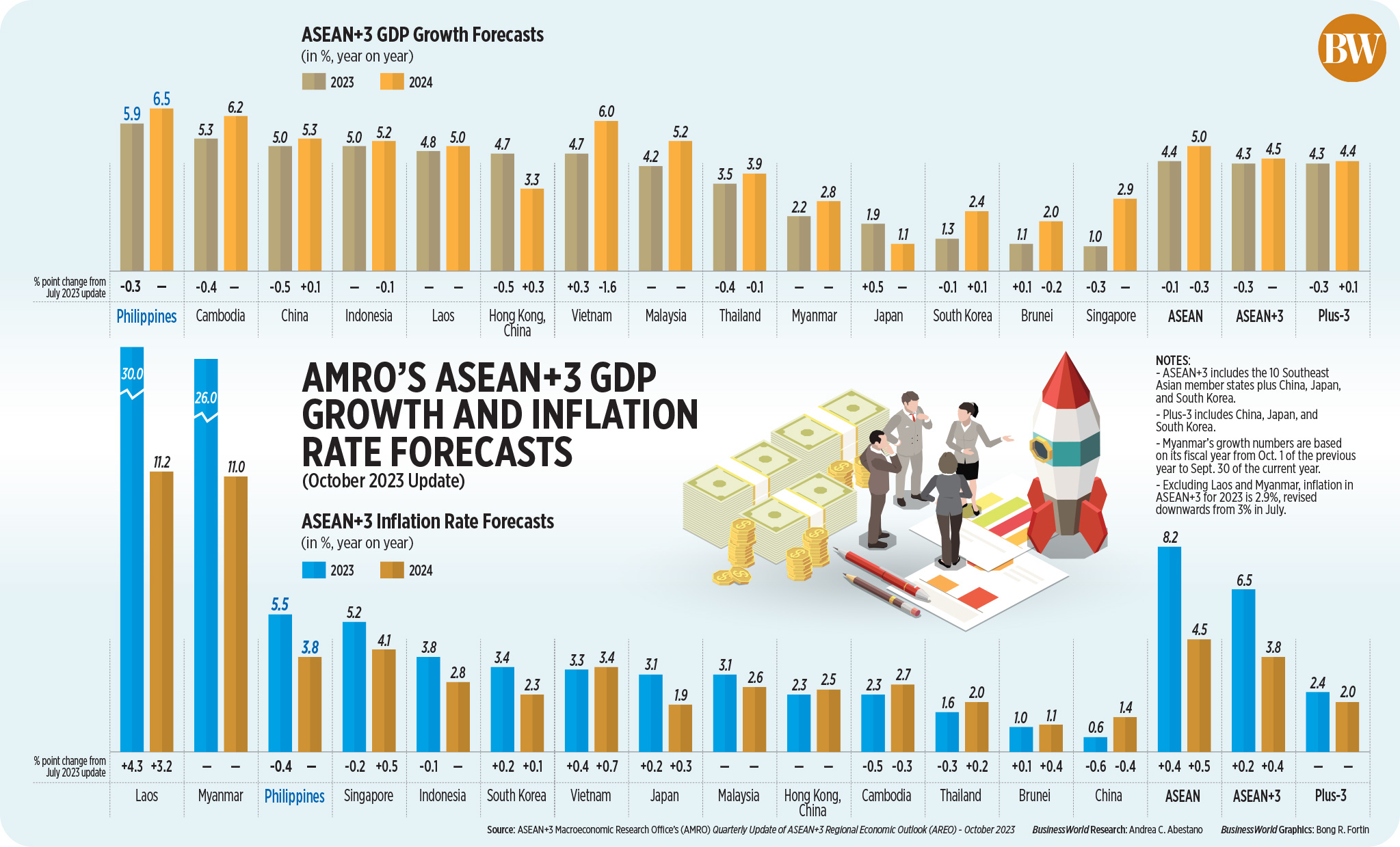
AMRO expects the Philippines’ gross domestic product (GDP) to grow by 5.9% this year, the fastest among ASEAN+3 economies. This is lower than the 6.2% forecast given in July.

AMRO's ASEAN+3 GDP growth and inflation rate forecasts

“The Philippines has surprised us (these) last two years because domestic demand has been quite strong and is holding up quite well despite the increase in interest rates, and we think this will continue,” Mr. Khor added.

AMRO’s growth forecast for the Philippines is above the regional consensus. It expects ASEAN+3 growth to average 4.3% this year, lower than the 4.6% it gave earlier. The region is composed of the 10-member Association of Southeast Asian Nations (ASEAN) plus China, Japan and South Korea.

For the ASEAN region, AMRO also trimmed its forecast to 4.4% from 4.5% previously, “largely unchanged, buttressed in part by strong private sector spending and continuing recovery in tourism.”

For 2024, AMRO expects Philippine GDP to expand by 6.5%, which is still the fastest growth in the region. It is also the lower end of the government’s 6.5-8% target.

The think tank projects ASEAN+3 to grow by 4.5% and ASEAN by 5% next year.

Mr. Khor said economic growth next year will be robust, reflecting “an improvement in external demand.”

“Gradual adjustment in its property sector should help augment growth in China, with positive spillover effects across the ASEAN+3. Stronger tourism flows will be supplemented by the expected pickup in manufacturing exports. However, the weaker pace in global growth will keep a lid on the speed of the region’s expansion,” AMRO said.

ELEVATED INFLATION
Meanwhile, Mr. Khor noted that inflation in the Philippines has “come off faster than expected.” It sees inflation averaging 5.5% this year, below the Bangko Sentral ng Pilipinas’ (BSP) revised 5.8% full-year forecast.

“Inflation is coming off, although because of the recent increase in food prices, headline inflation picked up a bit. That’s going to be a drag on growth… otherwise, domestic demand is quite strong, and it’s being supported by remittance inflows,” Mr. Khor said.

Next year, AMRO sees Philippine inflation further easing to 3.8%, although above the BSP’s 3.5% 2024 forecast.

“We still expect inflation next year to be lower than this year… so that will be below (or) within the inflation target band of the central bank,” Mr. Khor said.

AMRO identified risks that could continue to stoke inflation in the region, such as rising global commodity prices, a possible recession in the US and Europe, and the slowdown in China.

“The overall balance of risk to the outlook has shifted, with the risk of higher inflation becoming more salient. While the risk of financial spillovers from tighter US monetary policy has subsided somewhat since the (July) update, the risk of a surge in global energy and food prices has heightened,” AMRO said.

Mr. Khor expects the BSP to hold policy rates higher for longer in order to contain stubborn inflation.

“I think even the (BSP governor) has expressed that (interest rates) will have to stay high until inflation comes down to meeting the target band. And, he has not ruled out the increase, if necessary,” Mr. Khor said.

BSP Governor Eli M. Remolona, Jr. earlier signaled that a policy rate hike in the fourth quarter this year is not off the table. He has also hinted at the possibility of an off-cycle hike.

“I think it’s important for central banks in the region to be clear in the objective to bring down inflation… how much longer (it’s) going to stay will very much depend on what happens,” Mr. Khor said.

From May 2022 to March 2023, the Monetary Board hiked borrowing costs by 425 basis points. It left interest rates unchanged at a near 16-year high of 6.25% for a fourth straight time last month.

The BSP is set to have its next policy-setting meeting this year on Nov. 16.

ADVERTISEMENT
ADVERTISEMENT