The Philippine education sector must maintain the strides it has made in technology adoption to upgrade teaching methods and prepare students for future jobs that require a deep understanding of technology, an expert said.
Modern digital education platforms offer educators data that can help address students’ needs.
In this B-Side episode, Ryan Lufkin, vice president of Global Strategy at Instructure, a New York-listed education technology innovator, discusses with BusinessWorld reporter John Victor D. Ordoñez how modern technology can be used to ensure that Philippine education remains relevant.
TAKEAWAYS
As we transition out of the coronavirus pandemic, teachers worldwide are leveraging digital classrooms and blended learning platforms, Mr. Lufkin noted. They collect data from online assessments to make “data-informed decisions” and craft curricula based on student performance, he said.
“Data assists us on many levels. At an organizational level, data across the learning experience helps educators understand the effectiveness and efficacy of their learning tools.”
“In classroom settings, data can identify at-risk students or those struggling with learning early enough in the process, allowing for timely support,” he added.
He also emphasized the importance of teachers using data from these platforms to refine course offerings and assist students in setting and achieving academic goals.
“The more data we possess, the easier it becomes to provide a comprehensive view of not just student success but also program and overall institutional success,” he said.
A big population of students globally has experienced learning loss due to pandemic-related disruptions.
“Using data gathered from these platforms, we can pinpoint where students stand in comparison to established standards and devise pathways to bridge those gaps,” Mr. Lufkin said.
“We should reconsider traditional assignments like ‘write a 10-page paper’ as the primary measure of skill mastery. It’s time to reevaluate this approach,” he added.
“Initially, artificial intelligence (AI) was perceived as a cheating tool, leading many schools to ban it,” he noted. “However, just ten months after the launch of ChatGPT, the narrative has shifted towards how AI can enhance students’ learning experiences.”
Mr. Lufkin also said AI can alleviate some burdens for teachers by eliminating many mundane tasks. “I urge educators globally to recognize the positive potential of AI in fostering student success.”
BEIJING – China’s embassy in Manila said on Monday it had lodged stern representations to the Philippines over the “trespassing” of Philippine vessels at the disputed Second Thomas shoal in the South China Sea.
The embassy repeated China’s call for the Philippines to stop “causing trouble and provocation” at sea and to end “groundless attacks and smearing” against China. — Reuters
THE shadow of the Central Park Tower stretches over the west side of Manhattan as seen from the window of the building in New York, US, Sept. 17, 2019. — REUTERS/LUCAS JACKSON
PARIS – Governments should open a new front in the international clampdown on tax evasion with a global minimum tax on billionaires, which could raise $250 billion annually, the EU Tax Observatory said on Monday.
If levied, the sum would be equivalent to only 2% of the nearly $13 trillion in wealth owned by the 2,700 billionaires globally, the research group hosted at the Paris School of Economics said.
Currently billionaires’ effective personal tax is often far less than what other taxpayers of more modest means pay because they can park wealth in shell companies sheltering them from income tax, the group said in its 2024 Global Tax Evasion Report.
“In our view, this is difficult to justify because it risks to undermine the sustainability of tax systems and the social acceptability of taxation,” the observatory’s director Gabriel Zucman told journalists.
Billionaires’ personal tax in the United States is estimated to be close to 0.5% and as low as zero in otherwise high-tax France, the Observatory estimated.
Growing wealth inequality in some countries is fueling calls for the richest citizens to bear more of the tax burden as public finances struggle to cope with aging populations, huge financing needs for climate transition and legacy COVID debt.
U.S. President Joe Biden’s 2024 budget included plans for a 25% minimum tax on the wealthiest 0.01%, but that proposal has since fallen by the wayside with lawmakers in Washington preoccupied with government shutdown threats and looming funding deadlines.
Though a coordinated international push to tax billionaires could take years, the Observatory pointed to the example of governments’ success in all but ending bank secrecy and reducing opportunities for multinationals to shift profits to low-tax countries.
The 2018 launch of automatic sharing of account information has reduced the amount of wealth held in offshore tax havens by a factor of three, the observatory estimated.
A 2021 agreement between 140 countries will limit multinationals’ scope to reduce tax by booking profits in low-tax countries by setting a global 15% floor on corporate taxation from next year.
“Something that many people thought would be impossible, now we know can actually be done,” Zucman said. “The logical next step is to apply that logic to billionaires, and not only to multinational companies.”
In the absence of a broad international push for a minimum tax on billionaires, Zucman said a “coalition of willing countries” could unilaterally lead the way.
Although the end of banking secrecy and the corporate minimum tax have put an end to decades-long competition between countries on tax rates, numerous opportunities remain to reduce tax bills, the report said.
For example the rich increasingly park wealth in real estate instead of offshore accounts while companies can exploit loopholes in the 15% corporate tax minimum.
Meanwhile, governments are increasingly competing for investment through subsidies even though that is less harmful to their tax bases than competing only on low tax rates, the Observatory said. — Reuters
A VIEW of the city skyline in Shanghai, China, Feb. 24, 2022. — REUTERS
BEIJING – China views the situation in Gaza as “very serious” with the risk of a large-scale ground conflict rising and the spread of armed conflicts along neighboring borders, Chinese state media said on Monday, citing the country’s Middle East special envoy.
The envoy Zhai Jun, who is visiting the Middle East, said spillover effects in the region and internationally are widening, as conflict along the Israeli-Lebanese and Israeli-Syrian borders spread, “making the outlook worrisome”.
Zhai called on the international community to be “highly vigilant in this regard” and to take immediate action urging parties concerned to strictly abide by international humanitarian law and avoid a serious humanitarian disaster while putting in “joint efforts to control the situation”.
Zhai also said China is willing to do “whatever is conducive” to promote dialogue, achieve ceasefire and restore peace, as well as to promote the two-state solution and a just and lasting resolution to the conflict, China Central Television said.
Last week, Zhai pinned the cause of the Israel-Gaza crisis on the lack of guarantees for Palestinian rights as he met with his Russian counterpart in Qatar, a go-between in the conflict.
Zhai said China will continue maintaining close communication with the international community, including the Arab countries and will next visit the United Arab Emirates, Saudi Arabia, Jordan and other countries in the region to further strengthen coordination aimed at ending the crisis.
Prior to his trip, Zhai had phone calls with the foreign ministry heads of the Palestinians, Israel, Egypt, Saudi Arabia, the United Arab Emirates and Norway, as well as with the special representatives at United Nations and European Union.
China has provided and will continue to provide emergency humanitarian assistance to Palestinians through the United Nations and via bilateral channels to help alleviate the humanitarian crisis, Zhai added. — Reuters
A WOMAN walks on the ice to a measuring point on the Pers Glacier near the Alpine resort of Pontresina, Switzerland, July 21, 2022. — REUTERS
ZURICH – Switzerland looked set to shift to the right in national elections on Sunday, as concerns about immigration trumped fears about climate change and melting glaciers, though the vote is unlikely to change the make-up of the Swiss government.
The right-wing Swiss People’s Party (SVP), Switzerland’s biggest political party, increased its share of the vote to 29%, 3.4 percentage points higher than the last election in 2019, according to the final projection by Swiss broadcaster SRF.
The party campaigned on a platform of preventing the country’s population – currently at 8.7 million people – exceeding 10 million.
“We have problems with immigration, illegal immigrants, and problems with the security of energy supply,” said SVP leader Marco Chiesa. “We already have asylum chaos … A population of 10 million people in Switzerland is a topic we really have to solve.”
The projected result means the SVP will increase its number of seats by eight to 61 in the 200-member lower house of parliament, increasing its presence in the chamber where no party has an overall majority.
Rising health costs also looked set to benefit the left-wing Social Democrats (SP). Switzerland’s second-biggest party was poised to increase its share by 0.7 percentage points of the vote to 17.4%, increasing its representation by one to 40 seats.
In contrast, the Greens were expected to see their share of the votes fall by 4 percentage points to 9%, and lose six seats.
“The result means it will be more difficult for progressive issues or issues like the environment and sustainability,” said Cloe Jans from pollsters GFS Bern. “Politicians will feel less pressure from outside to push this agenda in the next four years after this result.”
The outcome is unlikely to change the make-up of Switzerland’s government, the Federal Council, where seven cabinet positions are divided among the top four parties, according to their share of the vote.
“The progressive zeitgeist of the four years ago has disappeared. After four years of crises, with coronavirus and Ukraine, people are more conservative than they were in 2019,” said Michael Hermann, a political analyst at pollsters Sotomo.
Still, he did not think the election would have a major impact on Swiss politics, with big issues like pensions still settled via referendums. — Reuters
Israeli warplanes bombarded areas near three hospitals in the Gaza Strip early on Monday, Palestinian media reported, but it was not immediately clear whether the hospitals themselves suffered damage.
There was no immediate comment from the Israeli military on the reports, which said Israel had struck near Gaza City’s Shifa and Al-Quds hospitals and near the Indonesian Hospital, in the enclave’s north.
The director of the Indonesian Hospital told Al Jazeera the Israeli bombardment caused “serious damage and injuries,” without providing details.
Reuters was not immediately able to confirm the reports. There were no immediate reports of damage or injuries at or near the other two hospitals.
The Palestinian Red Crescent Society said on Oct. 14 that Israel had ordered them to evacuate Al-Quds hospital. The group said it was not possible to move the sick and wounded. — Reuters
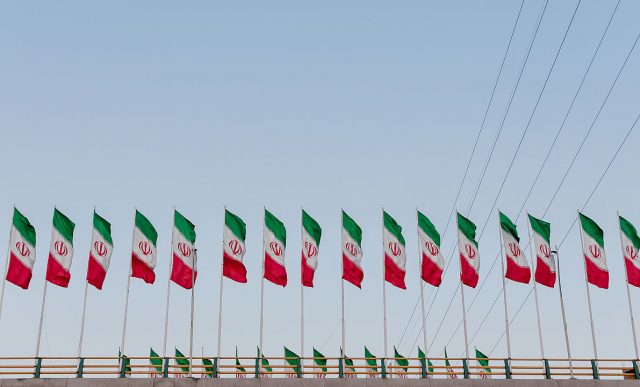
DUBAI – An Iranian Revolutionary Court sentenced two journalists to years in prison for their coverage of the death in custody of Kurdish-Iranian Mahsa Amini last year, state media reported on Sunday.
The death of 22-year-old Amini last September while in the custody of the morality police for allegedly violating the Islamic dress code unleashed months of mass protests across Iran, marking the biggest challenge to Iran’s clerical leaders in decades.
Iran’s state news agency IRNA said Niloofar Hamedi and Elaheh Mohammadi were sentenced to 13 and 12 years in prison respectively on charges, including collaboration with the U.S. government and acting against national security.
Lawyers for the two women have rejected the charges.
“They received seven years and six years each respectively for collaborating with the hostile U.S. government. Then each five years in prison for acting against the national security and each one year in prison for propaganda against the system,” IRNA reported.
Hamedi was detained after she took a picture of Amini’s parents hugging each other in a Tehran hospital where their daughter was lying in a coma and Mohammadi after she covered Amini’s funeral in her Kurdish hometown Saqez, where the protests began.
IRNA said the “issued verdicts” were subject to appeal.
The United States condemned the sentences.
“(They) should never have been jailed, and we condemn their sentences. The Iranian regime jails journalists because it fears the truth,” Deputy Special Envoy for Iran Abram Paley said on social media.
If confirmed, the time the women have already spent at the Evin jail, where most political prisoners are held, would be deducted from the sentences, according to the judiciary’s Mizan news agency.
A statement released by Iran’s intelligence ministry in October last year accused Mohammadi and Hamedi of being agents for the United States’ Central Intelligence Agency.
“There is documented evidence of Hamedi and Mohammadi’s intentional connections with certain entities and individuals affiliated with the U.S. government,” Mizan reported. — Reuters
The Philippines repeated its call for China to stop its “provocative actions”, warning that its continued attempts to block Manila’s resupply missions to a disputed atoll in the South China Sea could have “disastrous results”.
Jonathan E. Malaya, spokesperson at the National Security Council, said in a press conference on Monday that China’s move to interfere with a resupply mission on Sunday resulted in damage to one of Manila’s boats but no one was harmed.
In the incident early on Sunday, China’s coastguard said there had been a “slight collision” between one of its ships and the Philippine boat while the coastguard was “lawfully” blocking the boat from transporting “illegal construction materials” to the warship.
Manila responded by condemning “in the strongest degree” the “dangerous blocking maneuvers” of the Chinese vessel.
“We are relieved and thankful that no Filipino personnel were harmed. But we are concerned by the escalation and provocations by Chinese vessels who have no business being in the West Philippine Sea,” Mr. Malaya said. — Reuters
Breast cancer occurs when abnormal breast cells expand and form tumors uncontrollably. It can cause breast lumps, a change in shape or size, or even nipple discharge. According to World Health Organization (WHO), “breast cancer cells begin inside the milk ducts and/or the milk-producing lobules of the breast. Cancer cells can spread into nearby breast tissue and this creates tumors that cause lumps or thickening.”
Males and females are both prone to breast cancer, but females are usually at a higher risk of developing breast cancer, such as those with a family history of breast cancer, those with a history of radiation exposure, those who have reproductive history, and those who have undergone hormonal therapy or improper use of tobacco and birth control, among others.
Globally, millions of people suffer from breast cancer. It remains the second most common disease affecting women, resulting in 2.3 million diagnosed women and 685,000 deaths worldwide. WHO added that in 95% of the countries worldwide, breast cancer is leading cause as the most fatal cancer among women, and 80% of breast cancer deaths comes from low- and middle-income countries.
Moreover, as a 2020 study by the International Agency for Research on Cancer suggests 4.4 million women died of cancer that year and over one million children became orphan because of cancer. Children who lost their mothers due to breast cancer have suffered a lot, making breast cancer a cause of horrific impact on future generations.
“Countries with weaker health systems are least able to manage the increasing burden of breast cancer. It places a tremendous strain on individuals, families, communities, health systems, and economies, so it must be a priority for ministries of health and governments everywhere,” WHO Director-General Dr. Tedros Adhanom Ghebreyesus said in an article.
In the Philippines, breast cancer is a common type of cancer that can affect women of all ages. According to the Philippine Institute for Development Studies (PIDS), there are 25,000 new cases of breast cancer reported every year, 9,000 of which have led to death. Moreover, 70% of them belong to the lower socio-economic class.
“Previous data by the Department of Health (DoH) showed that 3 in every 100 women in the country will be diagnosed with breast cancer in their lifetime. While women have a higher risk, the Philippine Cancer Society noted that the disease does not spare men — at least one in 1,000 men will have breast cancer in their lifetime,” PIDS reported.
Photo by JCOMP / Freepik
In recent years, a wide variety of cancer treatments have been developed and made available for cancer patients throughout the country. For instance, the most common types of treatments include therapies (i.e. targeted therapy, chemotherapy, and radiation therapy), surgeries, and medication.
Since breast cancer remains a large battle for the world to fight, it is important that more people become more aware of the risk factors, diagnosis, and treatments for breast cancer. Such knowledge can be key to preventing this disease or treating it immediately upon diagnosis before it becomes more fatal.
Through increased awareness, education, and proper access to healthcare services, the incidence of breast cancer disease can decrease.
“By providing public health education to improve awareness among women of the signs and symptoms of breast cancer and, together with their families, understand the importance of early detection and treatment, more women would consult medical practitioners when breast cancer is first suspected, and before any cancer present is advanced,” WHO said.
According to a recent study entitled “Impact and opportunity: the case for investing in women’s cancers in Asia Pacific,” the Philippines is found to be among the countries that are leading with breast cancer awareness and prevention. The country, noted the study, is committed to implementing many programs and campaigns that are focused on screening, preventing, as well as raising awareness about the disease.
For instance, the Philippines celebrates Breast Cancer Awareness Month every October to promote public awareness and implement educational programs that support communities, as well as breast cancer screening and health consultations for early prevention of the disease.
However, the study also found that the country has poor performance in terms of healthcare access, diagnosis, policy and planning, and resource capacity.
In addition, citing a study published in the open-access journal Preventive Medicine Reports, the report noted that due to the inaccessible and unaffordable breast cancer screening in the Philippines, 53% of breast cancer patients are diagnosed without mammographic screening, resulting in late-stage diagnosis, which can be fatal for those patients.
In addition, according to a study by PIDS’ senior research fellow Valerie Ulep, the country’s screening rates for breast and cervical cancer are lower than those of middle and high-income countries. Ms. Ulep claimed that despite the development of advanced treatments, many Filipino women still lack access to preventive screening for breast and cervical cancers.
Given this situation, calls for better funding for cancer programs have recently been raised.For instance, an increase of P1 billion in funding for DoH’s cancer programs has been recommended to the Congress by advocacy groups like the Cancer Coalition and Citizen’s Watch. An additional P5 billion in funding to the DoH is also suggested to help reduce unnecessary cancer deaths each year.
More recently, a member of the House of Representatives has filed a resolution for purposes of increasing breast cancer awareness.
“With the alarming growth of breast cancer cases in the Philippines, there is a need to strengthen dedicated programs against breast cancer and to allocate adequate budgetary support for programs involving early detection in hospitals and at the local level,” House Deputy Speaker Camille Vilar said in a statement.
“There is a seeming absence of comprehensive screening programs especially in far-flung areas, thereby depriving women to seek immediate early screening or medical help,” Ms. Villar added.
“Considering that one of the goals of the national economy is more equitable distribution of opportunities and raising the quality of life for all, especially the underprivileged, it is high time that those who are less in life be given the lifeline to fight cancer despite their lack of resources,” she continued. — Angela Kiara S. Brillantes
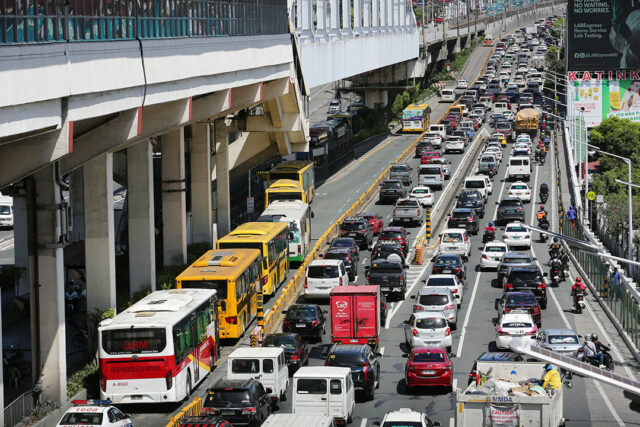
A general view of the traffic along EDSA.
— PHILIPPINE STAR/MICHAEL VARCAS
NEW VEHICLE SALES grew by an annual 9.5% in September, the slowest pace in 19 months, according to the joint report by the Chamber of Automotive Manufacturers of the Philippines, Inc. (CAMPI) and the Truck Manufacturers Association (TMA).
The CAMPI-TMA report showed new vehicle sales increased to 38,628 units in September from 35,282 units in the same month a year ago.
“We recorded the highest monthly sales performance in September and we hope that a positive consumer outlook will be sustained in (the fourth quarter),” CAMPI President Rommel R. Gutierrez said in a statement.
However, September saw the end of 18 straight months of double-digit growth. At 9.5%, this was the weakest expansion in 19 months or since the 7.3% contraction in February 2022.
Month on month, vehicle sales went up by 5.2%.
Mr. Gutierrez said vehicle sales were driven by “promotional campaigns and new model launches in August.”
Data showed commercial vehicles accounted for two-thirds of the sales in September. Commercial vehicle sales rose by 6.5% to 29,070 units in September from 27,306 units in the same month last year.
Month on month, commercial vehicle sales went up by 9.2% from 26,620 units in August.
Broken down, light commercial vehicle sales inched up by 4.6% to 23,098 units, while sales of Asian utility vehicles went up by 14.9% to 4,955 units in September.
Sales of light trucks increased by 21.7% to 611 units in September, but sales of medium and heavy trucks declined by 2.4% and 5.8% to 325 and 81 units, respectively.
Meanwhile, passenger car sales jumped by 19.8% to 9,558 units in September from 7,976 units a year ago.
Month on month, sales of passenger cars dropped by 5.31% from 10,094 units in August.
Despite the slower growth in September, CAMPI-TMA members sold 314,843 units in the nine-month period, up by 26.9% from 248,154 units a year ago.
Mr. Gutierrez said the nine-month tally puts the industry on track to fully recover this year.
“The automotive market has remained resilient since 2021 and the current trend indicates that we will breach the highest pre-pandemic sales performance and achieve full industry recovery in 2023,” said Mr. Gutierrez.
CAMPI revised its 2023 sales target last month to 423,000 units from 395,000 units previously. If realized, this would be 20% higher than the 352,596 sales in 2022.
For the January-to-September period, commercial vehicle sales increased by 24.8% to 234,834 units, while passenger car sales rose by 33.2% to 80,009 units.
Toyota Motor Philippines Corp. remained the market leader with a 45.81% share as nine-month sales rose by 15.5% to 144,232 units.
Mitsubishi Motors Philippines Corp. came in second spot with a 65.2% increase in sales to 58,065 units in the first three quarters.
In third spot was Ford Motor Co. Phils., Inc. as sales jumped by 42.2% to 23,091 units.
Rounding out the top five were Nissan Philippines, Inc., which saw a 24.7% increase in sales to 20,037 units, and Suzuki Phils., Inc. whose sales fell by 6.8% to 13,490 units. — Justine Irish D. Tabile
THE BANGKO SENTRAL ng Pilipinas (BSP) may be compelled to resume monetary tightening next month to mitigate inflationary pressures, although a likely pause by the US Federal Reserve could ease the pressure on the BSP to hike further, analysts said.
Jonathan L. Ravelas, senior adviser at Reyes Tacandong & Co., said there are more upside risks to inflation such as rising oil prices due to heightened geopolitical tensions in the Middle East.
“(We) may need more (rate) hikes to suppress inflation,” he said in a Viber message.
GlobalSource Partners Country Analyst Diwa C. Guinigundo said inflation’s upward trend may continue after the spike seen in August and September, as well as higher electricity rates, transport fares, and wages.
“On top of that, the latest forecasts of the BSP for the next two years are uncomfortably above the midpoint of the official (2-4%) inflation target, something that could upset inflation expectations,” he said in a Viber message.
“With the BSP’s suggestive forward guidance, it looks like the BSP is set to resume tightening monetary policy. To me, that is most appropriate,” he added.
BSP Governor Eli M. Remolona, Jr. earlier said he is not ruling out a 25-basis-point (bp) rate hike at its Nov. 16 meeting, after inflation accelerated for a second straight month in September to 6.1%.
September marked the 18th straight month that inflation exceeded the central bank’s 2-4% target. Year to date, inflation averaged 6.6%.
The BSP sees average inflation at 5.8% this year, before declining to 3.5% in 2024 and 3.4% in 2025.
Mr. Remolona has also hinted at the possibility of an off-cycle rate hike, but the BSP still needs to review the latest data before making a policy decision.
China Banking Corp. Chief Economist Domini S. Velasquez said they have raised their average inflation forecast to 5.9% for 2023, slightly higher than the BSP’s projection.
“We do think there is an increasing chance that BSP will hike its policy rate if the Fed hikes once more to keep interest rate differentials stable,” Ms. Velasquez said.
The US Federal Reserve’s next policy meeting is scheduled for Nov. 2. The Fed earlier signaled it would keep rates higher for longer, even as it kept the target Fed fund rate unchanged at 5.25-5.5% last month.
“However, we maintain our base scenario that there is less of a need to hike interest rates further given that the BSP has probably done enough with the cumulative rate hikes previously. Moreover, most of the recent shocks are supply side in nature,” Ms. Velasquez said.
The Monetary Board has kept the key interest rate unchanged at a near 16-year high of 6.25%. This was after hiking borrowing costs by 425 basis points from May 2022 to March 2023.
University of the Philippines Los Baños Senior Lecturer of Economics Enrico P. Villanueva said the BSP would consider a rate hike if the October inflation is considerably faster.
“The BSP is also conscious of growth impact and should consider lags in impact of previous rate hikes,” he said in a text message.
The statistics agency will release the October inflation data on Nov. 7, and the third-quarter GDP data on Nov. 9.
To mitigate the volatility in the foreign exchange market and manage dollar reserves more efficiently, Mr. Ravelas said the BSP can use advanced data analytics and artificial intelligence. This would help reduce currency risks and stabilize exchange rates.
At a press briefing on Friday, Richard Yorke, head of global corporate and investment banking for Asia Pacific at MUFG Bank, said it may be the end of the tightening cycle in the United States.
“We are waiting for the light at the end of the tunnel in terms of how far interest rates will rise. It looks like we’re getting to the end of the rising cycle. So, we are seeing a slow pick up in terms of confidence (from our clients) in making (investment) decisions,” he said.
However, Marie Diana Lynn Coronel-Singson, deputy country head at MUFG in Manila, said growth and inflation remain major concerns in the Philippines.
“Historically, the BSP has somehow followed more or less how the Fed moves. But the BSP will have to look at a lot of factors in the Philippines,” she said.
But despite a tighter interest rate environment, the MUFG executives said they still see strong economic growth in the Philippines amid new investment initiatives and business opportunities in the country.
Mr. Guinigundo said that resuming monetary tightening could compromise economic growth.
“Monetary policy can manage demand pressure which remains strong as the economy continues to grow. This is indicated by the elevated reading on core inflation,” he said.
Core inflation, which excludes volatile prices of food and fuel, further eased to 5.9% year on year in September, lower than 6.1% seen in August. Year to date, core inflation averaged 7.2%.
Meanwhile, the Philippine economy grew by 4.3% in the second quarter, much weaker than 6.4% in the first quarter and 7.5% in the second quarter a year ago.
In the first half, GDP growth averaged 5.3%, still below the government’s 6-7% target for 2023.
President Ferdinand R. Marcos, Jr. said Saudi Arabia and other Gulf nations are keen on the Philippines’ first sovereign wealth fund. Mr. Marcos attended the ASEAN-Gulf Cooperation Council (GCC) Summit in Riyadh, Saudi Arabia. — RENE DILAN/PPA POOL
By Luisa Maria Jacinta C.Jocson, Reporter
IMPROVING the governance structure of the Maharlika Investment Fund (MIF) and ensuring the financial stability of the contributing state banks should be among the top priorities of the government’s review of the law’s implementing rules and regulations (IRR), analysts said.
“One clear provision that needs to be considered is the insulation of the MIF from government interference,” Ateneo de Manila University economics professor Leonardo A. Lanzona said in an e-mail.
He noted a crucial element of the Santiago principles on sovereign wealth funds (SWFs) is the independence of the board, “ensuring that investment vehicles can operate independently, and investment decisions are based on financial considerations rather than political or short-term interests.”
“The very act of the President suspending the MIF implementation because of its organizational structure, specifically the composition of the board members, of the fund is itself a violation of this principle,” Mr. Lanzona said.
President Ferdinand R. Marcos, Jr. last week suspended the MIF law’s IRR in order to improve its organization structure and make it as close to “perfect and ideal as possible.”
Mr. Marcos also clarified the suspension would not impact on the MIF’s target to begin operations by the end of the year.
The economic team said they are working with the Office of the President to review the MIF rules. However, the government has yet to specify which exact provisions from the IRR need revision.
“The suspension of the Maharlika fund IRR is only the latest stain on the Marcos Jr. administration’s ill-conceived pet economic project. It doesn’t help that the purported reason for improving its organizational structure is so vague,” Sonny A. Africa, executive director of think tank Ibon Foundation, said in a Viber message.
“Astute investors will note that the fund’s very conception is reflective of the poor standards of governance in the country, which in turn does not give confidence that fund management will not be similarly afflicted,” he added.
Under the MIF law, the Maharlika Investment Corp. (MIC) is tasked to manage the wealth fund. The board will consist of the president and chief executive officer (CEO) of the MIC, the president and CEO of the Landbank of the Philippines (LANDBANK) and the Development Bank of the Philippines (DBP), as well as the two regular directors and three independent directors from the private sector. The Finance secretary will serve as the board chairperson in ex-officio capacity.
Mr. Africa said that the board of directors should consist of less government officials and include more private sector representatives. He recommended that only two to three of the nine-member board should come from the government.
“The extremely politicized internal governance structure is a glaring problem. If the government has any seriousness in removing doubts about the fund’s independence, transparency and accountability, it should err on the side of overcompensating,” he added.
Mr. Africa also said private firms should be in charge of the headhunting and that appointments can be made by the government, just not by the President alone.
“The President has so much political and economic power as it is and appointments to the board and its officers, risk management committee and advisory body can be made by someone else. Even the choice of officials can be made by private executive search firms,” he said.
The deadline for the nomination and application of the MIC president and CEO, independent directors, and regular directors closed on Sept. 27. Under the law, Mr. Marcos will then make an appointment based on the shortlisted candidates.
Mr. Lanzona said that allowing the government to design the MIC’s organization structure “creates the risk of political pressure influencing financial decisions, rather than allowing the fund to operate independently based on financial considerations.”
“While the funds are public in nature, the government’s role should only be limited to providing a clear roadmap for the operations of the MIF and ensuring that it aligns with the government’s intentions and the interests of the public,” he added.
Mr. Lanzona also called for more transparency on how the fund will be managed.
“The public needs to see the financial statements as well as the assets and liabilities of these banks to judge whether the operations and integrity of these banks are being compromised by its remittances to the MIF,” he added.
Mr. Africa also noted that much of the MIF’s capital is coming at theexpense of weakening government financial institutions (GFIs).
“GFIs should not be made to contribute to begin with and regulations should not be tweaked to stop MIF contributions from undermining capital adequacy ratios,” he said.
The LANDBANK and DBP are required to contribute P50 billion and P25 billion, respectively, for the MIC’s P125-billion initial funding.
After they made the remittances, the DBP and LANDBANK sought regulatory relief from the Bangko Sentral ng Pilipinas (BSP) from its minimum capital requirements.
The Department of Finance (DoF) on Sunday reiterated that both banks “maintain their solid financial positions” despite their contributions to the fund.
“We are continuously talking to all stakeholders involved in order to ensure the best possible outcome for the Fund. Both LANDBANK and DBP are resolute in their commitment to responsible financial management and shall have proper representation in the board,” DoF Secretary Benjamin E. Diokno said in a statement.
Mr. Diokno also clarified the banks’ contributions to the fund are taken from their investible funds and not from the loanable funds to farmers and other sectors.
Terry L. Ridon, a public investment analyst and convenor of think tank InfraWatch PH, said that the suspension of the IRR will allow the government to study the actual impact on the state banks.
“This is critical as the nation cannot afford both the LANDBANK and DBP facing viability concerns at this time of limited fiscal space. However, as soon as the banks’ financial situation becomes clearer in the next few months, the government can dive right ahead towards focusing on MIF investing in its priority areas,” he said in an e-mail.
The DoF on Sunday also said that there has been “robust interest” in the MIF from Saudi Arabia investors.
Mr. Diokno met with Saudi businessmen to promote the MIF on Oct. 19 in Riyadh, Saudi Arabia on the sidelines of the Southeast Asian Nations – Gulf Cooperation Council Summit.
“Maharlika seeks to work with other sovereign wealth funds, both as an investment partner and peer in the global sovereign wealth fund community. We look forward to exchanging views and learning from the best practices of top-of-class funds, such as those here in Saudi Arabia,” Mr. Diokno was quoted saying in the statement.