Home Blog Page 4142

Argentina’s Peronists soar in polls to seal runoff with Milei
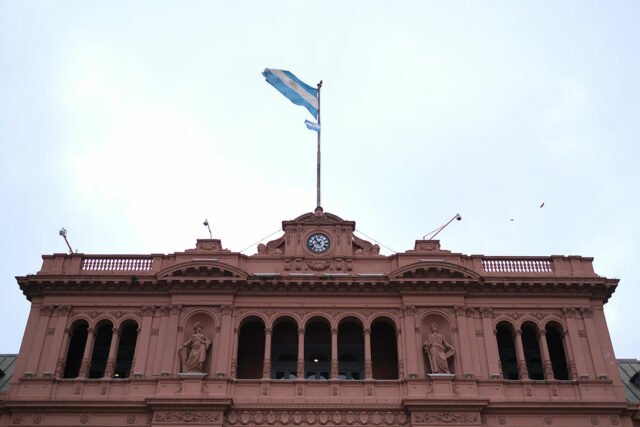
AN ARGENTINIAN FLAG waves at the Presidential Palace Casa Rosada in Buenos Aires, Argentina, Oct. 29, 2019. — REUTERS

BUENOS AIRES – Argentina’s ruling Peronist coalition smashed expectations to lead the country’s general election on Sunday, setting the stage for a polarized runoff vote next month between Economy Minister Sergio Massa and far-right libertarian radical Javier Milei.

Mr. Massa had 36.6% of the vote, ahead of Mr. Milei on just over 30%, while conservative Patricia Bullrich was behind on 23.8% with nearly 98% of the vote counted, a result that defied pre-election polls that had predicted a libertarian win.

The surprise strength of the Peronists, despite overseeing inflation hitting triple digits for the first time since 1991, sets up an intriguing second round on Nov. 19 between two polar opposite economic models for the embattled country.

The result eases concerns about a radical shift in policies in the event of a decisive win for Mr. Milei who has proposed dollarizing the economy and shutting the central bank, but it still leaves the country with few answers to its worst economic crisis in two decades.

Argentines had flocked to the polls on Sunday amid the economic woes and rising anger with the traditional elite.

“I know that many of those who voted for us are the ones who are suffering the most,” Mr. Massa said after the results. “Our country is experiencing a complex, difficult situation, full of challenges to face… I am not going to fail them.”

Many blamed the Peronists, but Mr. Massa — a moderate — had shot back that the government’s social safety nets and subsidies were key for many hard-up Argentines, including a recent stunt showing how train and bus fares could rise sharply if he lost.

That message seems to have hit home.

“Peronism is the only space that offers the possibility that the poorest of us can have basic things at our fingertips,” said bricklayer Carlos Gutierrez, 61, as he went to vote on Sunday.

Mr. Milei, meanwhile, is proposing radical moves such as dollarizing the economy and has criticized major trade partners China and Brazil. He also is in favor of slashing the size of government and is anti-abortion.

To win outright on Sunday, a candidate would have needed over 45% of the vote or 40% and a 10-point lead.

The result, leaving things delicately poised and pushing out of the race establishment candidate Ms. Bullrich, will likely give already wobbly markets the jitters on Monday, with little clarity about the country’s route forward.

“We have never had so much polarization,” said 72-year-old pensioner Silvia Monto as she voted in Buenos Aires on Sunday.

‘SINKING US A LITTLE MORE’
Mr. Milei has pledged to “chainsaw” the economic and political status quo, luring some angry voters to his tear-it-all-down message, fed up with rising prices outstripping salaries.

“He is the only one who understands the situation in the country and understands how to save it,” said Buenos Aires student Nicolas Mercado, 22.

Milei, in a defiant speech after the result, said he would fight on to win in the second round next month.

“We are faced with the most important election of the last 100 years,” he said. “If we work together we can win, if we work together we can recover our country.”

Election authorities said turnout was around 74%, up from the August primaries, but considerably lower than the 81% participation at the last election and the lowest general election turnout since the 1983 return to democracy.

Whoever emerges victorious will have to deal with an economy on life support: central bank reserves are empty, recession is expected after a major drought, and a $44-billion program with the International Monetary Fund   is wobbling.

Silvana Dezilio, 37, a housewife in Buenos Aires province, said it was hard to see a positive outcome whoever won.

“All governments promise things and end up sinking us a little more. It seems unbelievable, but we are getting worse and worse. We read that other countries have overcome the problems that for us are getting worse every day,” she said. — Reuters

Israel bombards Gaza, Lebanon as Netanyahu convenes war cabinet

Image via Wikipedia

GAZA/JERUSALEM — Israel bombarded Gaza with air strikes early on Monday and its aircraft struck southern Lebanon overnight, as Israeli Prime Minister Benjamin Netanyahu convened a meeting of his top generals and his war cabinet to assess the escalating conflict.

Israel’s attacks concentrated on the Gaza Strip’s center and north, Palestinian media reported. A strike on a house near the Jabalia refugee camp, in northern Gaza, killed several Palestinians and wounded others, according to media reports.

In the Israeli-occupied West Bank, two Palestinians were killed at the Jalazone refugee camp near Ramallah, the Palestinian health ministry said on Monday.

Residents told Reuters that Israeli forces raided the camp and carried out widespread arrests, as they clashed with gunmen and some youths who threw stones. The Israeli army has not issued a statement about the incident.

Health authorities in Gaza said at least 4,600 people were killed in Israel’s two-week bombardment that began after a Hamas Oct. 7 rampage on southern Israeli communities in which 1,400 people were killed and 212 were taken into Gaza as hostages.

Palestinian Hamas leader Ismail Haniyeh and Iranian Foreign Minister Hossein Amirabdollahian discussed in a call late on Sunday the means of stopping Israel’s “brutal crimes” in Gaza, Hamas said in a statement.

Israel has amassed tanks and troops near the fenced border around Gaza for a planned ground invasion aiming to annihilate Hamas.

Fears that the Israel-Hamas war could mushroom into a wider Middle East conflict rose over the weekend with Washington warning of a significant risk to US interests in the region and announcing a new deployment of advanced air defenses.

The Pentagon has already dispatched a significant amount of naval power to the Middle East, including two aircraft carriers, support ships and about 2,000 Marines, to help deter attacks by Iran-affiliated forces.

“What we’re seeing … is the prospect of a significant escalation of attacks on our troops and our people throughout the region,” US Defense Secretary Lloyd Austin told ABC’s This Week program on Sunday.

China’s Middle East special envoy Zhai Jun, who is visiting the region, warned that the risk of a large-scale ground conflict was rising and that spillover conflicts in the region were “worrisome,” Chinese state media said on Monday.

Iranian security officials told Reuters Iran’s strategy was for Middle East proxies like Hezbollah to pursue limited strikes on Israeli and US targets but to avoid a major escalation that would draw in Tehran, a high-wire act for the Islamic Republic.

In neighboring Syria, where Hamas’ main regional backer Iran has a military presence, Israeli missiles hit Damascus and Aleppo international airports early on Sunday, putting both out of service and killing two workers, Syrian state media said.

Along Israel’s northern border with Lebanon, the Iran-backed Hezbollah group has clashed with Israeli forces in support of Hamas in the deadliest escalation of frontier violence since an Israel-Hezbollah war in 2006.

Early on Monday, Israeli aircraft struck two Hezbollah cells in Lebanon that were planning to launch anti-tank missiles and rockets toward Israel, its military said. Israel’s military also said it struck other Hezbollah targets, including a compound and an observation post.

Hezbollah said on Monday that one of its fighters was killed, without providing details. Israel’s military said 7 troops have been killed on the Lebanese border since the latest conflict began.

With violence around its heavily guarded borders increasing, Israel on Sunday added 14 communities close to Lebanon and Syria to its evacuation contingency plan in the north of the country.

MORE AID ARRIVES IN GAZA
Palestinian Prime Minister Mohammad Shtayyeh called on the international community to create “a united front” to stop Israel’s attacks in Gaza and allow desperately needed aid which has only begun to trickle in.

A second convoy of 14 aid trucks entered the Rafah crossing to the besieged Gaza Strip on Sunday night, and US President Joseph R. Biden and Mr. Netanyahu affirmed in a call “there will now be continued flow of this critical assistance into Gaza,” the White House said.

The U.N. humanitarian office said the volume of aid entering so far was just 4% of the daily average before the hostilities and a fraction of what was needed with food, water, medicines and fuel stocks running out.

Mr. Biden also ramped up his diplomacy, convening calls on Sunday with Netanyahu and Pope Francis and speaking with the leaders of Canada, France, Britain, Germany, Italy and Britain about getting aid into Gaza and preventing the conflict from spreading.

In a joint statement, the leaders voiced support for Israel’s right to defend itself. They also called for adherence to international humanitarian law, including the protection of civilians.

Mr. Netanyahu also held a phone call with the leaders of France, Spain and the Netherlands late on Sunday, the Israeli leader’s office said. — Reuters

France boosts air, rail security amid rise in bomb hoaxes

REUTERS

PARIS — France, already on its highest security alert, is to boost security at airports around the capital and on trains after a wave of bomb hoaxes, the transport minister said on Sunday.

Security patrols at Paris airports will be increased by 40% and staff at the national railway company SNCF will be reinforced by 20% in addition to extra police patrolling railway stations, minister Clement Beaune said on France Inter.

France has been on its highest alert since Oct. 13 after a 20-year-old man fatally stabbed a teacher in the city of Arras in northern France.

“Transport (networks) have been places that have seen heavy tolls in attacks in the history of our country and in Europe,” said Mr. Beaune.

Alongside the heightened risk, there were “people who are playing with fear,” he said, referring to the wave of fake bomb alerts that have hit transport networks, schools and cultural centers over the last week.

Since last Wednesday, there have been 70 bomb hoaxes in airports in France, he said, adding that almost all of these alerts were sent from the same Swiss-based email address.

False alerts are generally punishable by two years in prison and a 30,000-euro fine. This can rise to three years in prison and a 45,000 euro fine if the alert includes a threat.

Mr. Beaune told France Inter that hoaxes are not “small jokes, they are serious crimes” and that they will be investigated.

The Palace of Versailles outside Paris was evacuated for security reasons at midday on Sunday for the seventh time in the last eight days, re-opening two hours later after checks were made, a spokesperson said. — Reuters

Three listed Chinese firms used endangered animal parts as ingredients- report

EN.WIKIPEDIA.ORG

SHANGHAI/HONG KONG — Three publicly traded Chinese drugmakers which count global banks such as UBS and HSBC as investors have used parts of endangered animals as ingredients in their products, an environmental group said.

In a report published Monday, the London-based Environmental Investigation Agency urged global investors in the three firms – Beijing Tong Ren Tang group, Tianjin Pharmaceutical group and Jilin Aodong Pharmaceutical Group – to divest their stakes.

The three companies are among a list of 72 firms the environmental non-profit organization (NGO) said used body parts of threatened leopards and pangolins as ingredients in at least 88 traditional Chinese medicine (TCM) products.

The group said it focused on the pharmaceutical companies because they are publicly listed, and display products that include leopard or pangolin parts on their websites.

TCM products are known for using a wide variety of animal parts as ingredients, and manufacturers often publicly tout the efficacy of such ingredients and list them in on their product packages.

“It’s particularly disappointing to see so many major banks and financial institutions effectively endorsing this damaging exploitation,” said Avinash Basker, a legal and policy specialist for the NGO, in a media release.

“They need to divest from TCM manufacturers using threatened species at the soonest opportunity.”

Beijing Tong Ren Tang and Tianjin Pharmaceutical group did not respond to several emails and calls from Reuters asking for comment. Jilin Aodong Pharmaceutical Group could not be reached for comment.

The NGO said 62 financial institutions have invested an unspecified amount in at least one of the three firms, and include UBS, Deutsche Bank, HSBC Holdings, Citigroup and BlackRock.

Some investors, including Wells Fargo & Co said they had either sold the funds which were invested in the TCM firms or had sold their shares in the companies, the agency said.

HSBC Global Asset Management Canada and Royal Bank of Canada told the agency their investments in the companies were limited to passive or tracker funds, while UBS told the agency its shareholdings were held on behalf of clients.

The environmental group said Deutsche Bank, HSBC Holdings, Citigroup and BlackRock did not respond to its queries.

CitigroupDeutsche Bank, BlackRock declined to comment when asked by Reuters.

The activist group urged the Chinese government to prohibit the use of parts of endangered animals for all commercial purposes in its domestic markets.

China’s National Medical Products Administration did not respond to a Reuters’ request for comment.

China’s amended Wildlife Protection law, which came into effect in May, bans trade in most wild animals for consumption as food, but permissions for breeding and utilization can still be issued for certain circumstances. — Reuters

Philippines may face more cyberattacks in 2024 — experts

PIXABAY

By Miguel Hanz L. Antivola, Reporter

As digital reliance increases, the Philippines is expected to face more cyberattacks in 2024, experts said, urging organizations and individuals to ramp up their cybersecurity measures. 

“For 2024, expect higher incidents of cyber hacks,” Sam Jacoba, founding president of the National Association of Data Protection Officers of the Philippines (NADPOP), said in a Viber message to BusinessWorld on Monday. 

“The government, private sector, and communities of practice have to be more vigilant,” he said. “Do not let up in awareness, education, training, certification, and consistent hardening of critical infrastructure.”

Internet security company Kaspersky earlier said the Philippines was the second most attacked country by web threats last year, with 39,387,052 internet-borne threats detected. The country placed fourth in 2021. 

It also saw 2,409,085 brute force or trial-and-error attacks among remote workers, 52,914 financial phishing cases among businesses, 24,737 crypto-phishing cases, 15,732 mobile malware cases, and 50 mobile banking Trojan cases last year, according to data from Kaspersky. 

Ronald B. Gustilo, national campaigner for Digital Pinoys, said the Department of Information and Communications Technology should set a base standard of cybersecurity infrastructure and recommendations for government agencies, especially those who hold huge amounts of critical data.

“Such agencies should be required to employ stronger cybersecurity infrastructure,” he said in a separate phone message. “All government agencies should also have first responder teams in case of possible data breach.” 

Included in this proposed proactive cybersecurity framework is the need to allocate sufficient budget for necessary technologies and experts, Mr. Gustilo said. 

“It has been so easy to attack the Philippines,” Dominic Ligot, founder and executive director of Data Ethics PH, said on the sidelines of the DevConnect Philippines, Inc. Pro Summit 2023 on Friday last week. 

“If you have an amount to insure, let’s say the GDP [gross domestic product] of the Philippines, then you must be willing to pay a fraction of that amount — anywhere from 1-5%,” he said on cybersecurity equal to economic growth.

NADPOP’s Mr. Jacoba noted the need to deliver at least 1,800 new world-class cybersecurity practitioners in three years, which is 1% of the 180,000 he said the country needs. 

“It will be a significant number that can inspire others to pursue careers in cybersecurity,” he said.

Winston L. Damarillo, DEVCON president, told BusinessWorld that upskilling to produce more cybersecurity experts will continue next year, alongside the mainstream adoption of cybersecurity insurance akin to regulations in the United States. 

“Even our VCs [venture capitalists] are now making sure we have cybersecurity insurance,” he said as an entrepreneur as well.

“People will learn, and some will learn the hard way,” he said about next year. “The consciousness around having cybersecurity readiness and posture will improve.” 

“More companies shall collaborate and work together for resilience. It’s going to get more complicated, but cooperatively we’ll combat it.”

Additionally, Mr. Gustilo of Digital Pinoys recommended adding cybersecurity to the education curriculum. 

“This topic should be taught from basic until secondary education, covering the matter of the pros and cons of using technology, cybersecurity, data privacy, and other relevant matters,” he said.

[B-Side Podcast] Future-proofing Philippine education with technology

Follow us on Spotify BusinessWorld B-Side

The Philippine education sector must maintain the strides it has made in technology adoption to upgrade teaching methods and prepare students for future jobs that require a deep understanding of technology, an expert said.

Modern digital education platforms offer educators data that can help address students’ needs.

In this B-Side episode, Ryan Lufkin, vice president of Global Strategy at Instructure, a New York-listed education technology innovator, discusses with BusinessWorld reporter John Victor D. Ordoñez how modern technology can be used to ensure that Philippine education remains relevant.

TAKEAWAYS

As we transition out of the coronavirus pandemic, teachers worldwide are leveraging digital classrooms and blended learning platforms, Mr. Lufkin noted. They collect data from online assessments to make “data-informed decisions” and craft curricula based on student performance, he said.

“Data assists us on many levels. At an organizational level, data across the learning experience helps educators understand the effectiveness and efficacy of their learning tools.”

“In classroom settings, data can identify at-risk students or those struggling with learning early enough in the process, allowing for timely support,” he added.

He also emphasized the importance of teachers using data from these platforms to refine course offerings and assist students in setting and achieving academic goals.

“The more data we possess, the easier it becomes to provide a comprehensive view of not just student success but also program and overall institutional success,” he said.

A big population of students globally has experienced learning loss due to pandemic-related disruptions.

“Using data gathered from these platforms, we can pinpoint where students stand in comparison to established standards and devise pathways to bridge those gaps,” Mr. Lufkin said.

“We should reconsider traditional assignments like ‘write a 10-page paper’ as the primary measure of skill mastery. It’s time to reevaluate this approach,” he added.

“Initially, artificial intelligence (AI) was perceived as a cheating tool, leading many schools to ban it,” he noted. “However, just ten months after the launch of ChatGPT, the narrative has shifted towards how AI can enhance students’ learning experiences.”

Mr. Lufkin also said AI can alleviate some burdens for teachers by eliminating many mundane tasks. “I urge educators globally to recognize the positive potential of AI in fostering student success.”

Follow us on Spotify BusinessWorld B-Side

China lodges complaint to Philippines over ‘trespassing’ at disputed shoal

PHOTO FROM PHILIPPINE COAST GUARD FB PAGE

BEIJING – China’s embassy in Manila said on Monday it had lodged stern representations to the Philippines over the “trespassing” of Philippine vessels at the disputed Second Thomas shoal in the South China Sea.

The embassy repeated China’s call for the Philippines to stop “causing trouble and provocation” at sea and to end “groundless attacks and smearing” against China. — Reuters

Global billionaire tax could yield $250 billion – study

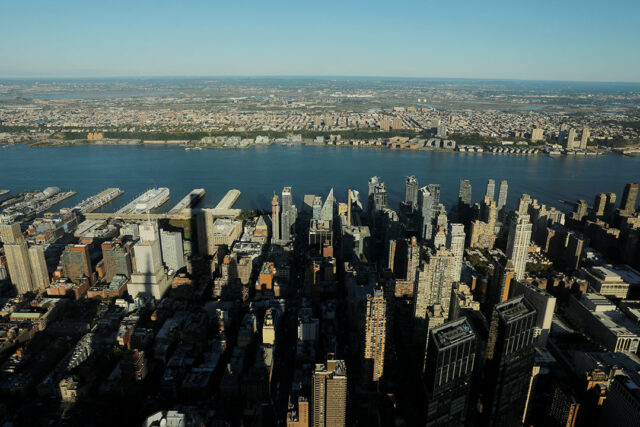
THE shadow of the Central Park Tower stretches over the west side of Manhattan as seen from the window of the building in New York, US, Sept. 17, 2019. — REUTERS/LUCAS JACKSON

PARIS – Governments should open a new front in the international clampdown on tax evasion with a global minimum tax on billionaires, which could raise $250 billion annually, the EU Tax Observatory said on Monday.

If levied, the sum would be equivalent to only 2% of the nearly $13 trillion in wealth owned by the 2,700 billionaires globally, the research group hosted at the Paris School of Economics said.

Currently billionaires’ effective personal tax is often far less than what other taxpayers of more modest means pay because they can park wealth in shell companies sheltering them from income tax, the group said in its 2024 Global Tax Evasion Report.

“In our view, this is difficult to justify because it risks to undermine the sustainability of tax systems and the social acceptability of taxation,” the observatory’s director Gabriel Zucman told journalists.

Billionaires’ personal tax in the United States is estimated to be close to 0.5% and as low as zero in otherwise high-tax France, the Observatory estimated.

Growing wealth inequality in some countries is fueling calls for the richest citizens to bear more of the tax burden as public finances struggle to cope with aging populations, huge financing needs for climate transition and legacy COVID debt.

U.S. President Joe Biden’s 2024 budget included plans for a 25% minimum tax on the wealthiest 0.01%, but that proposal has since fallen by the wayside with lawmakers in Washington preoccupied with government shutdown threats and looming funding deadlines.

Though a coordinated international push to tax billionaires could take years, the Observatory pointed to the example of governments’ success in all but ending bank secrecy and reducing opportunities for multinationals to shift profits to low-tax countries.

The 2018 launch of automatic sharing of account information has reduced the amount of wealth held in offshore tax havens by a factor of three, the observatory estimated.

A 2021 agreement between 140 countries will limit multinationals’ scope to reduce tax by booking profits in low-tax countries by setting a global 15% floor on corporate taxation from next year.

“Something that many people thought would be impossible, now we know can actually be done,” Zucman said. “The logical next step is to apply that logic to billionaires, and not only to multinational companies.”

In the absence of a broad international push for a minimum tax on billionaires, Zucman said a “coalition of willing countries” could unilaterally lead the way.

Although the end of banking secrecy and the corporate minimum tax have put an end to decades-long competition between countries on tax rates, numerous opportunities remain to reduce tax bills, the report said.

For example the rich increasingly park wealth in real estate instead of offshore accounts while companies can exploit loopholes in the 15% corporate tax minimum.

Meanwhile, governments are increasingly competing for investment through subsidies even though that is less harmful to their tax bases than competing only on low tax rates, the Observatory said. — Reuters

China says outlook worrisome as conflict spreads in Middle East – state media

A VIEW of the city skyline in Shanghai, China, Feb. 24, 2022. — REUTERS

BEIJING – China views the situation in Gaza as “very serious” with the risk of a large-scale ground conflict rising and the spread of armed conflicts along neighboring borders, Chinese state media said on Monday, citing the country’s Middle East special envoy.

The envoy Zhai Jun, who is visiting the Middle East, said spillover effects in the region and internationally are widening, as conflict along the Israeli-Lebanese and Israeli-Syrian borders spread, “making the outlook worrisome”.

Zhai called on the international community to be “highly vigilant in this regard” and to take immediate action urging parties concerned to strictly abide by international humanitarian law and avoid a serious humanitarian disaster while putting in “joint efforts to control the situation”.

Zhai also said China is willing to do “whatever is conducive” to promote dialogue, achieve ceasefire and restore peace, as well as to promote the two-state solution and a just and lasting resolution to the conflict, China Central Television said.

Last week, Zhai pinned the cause of the Israel-Gaza crisis on the lack of guarantees for Palestinian rights as he met with his Russian counterpart in Qatar, a go-between in the conflict.

Zhai said China will continue maintaining close communication with the international community, including the Arab countries and will next visit the United Arab Emirates, Saudi Arabia, Jordan and other countries in the region to further strengthen coordination aimed at ending the crisis.

Prior to his trip, Zhai had phone calls with the foreign ministry heads of the Palestinians, Israel, Egypt, Saudi Arabia, the United Arab Emirates and Norway, as well as with the special representatives at United Nations and European Union.

China has provided and will continue to provide emergency humanitarian assistance to Palestinians through the United Nations and via bilateral channels to help alleviate the humanitarian crisis, Zhai added. — Reuters

Swiss turn to right at election as immigration fears weigh

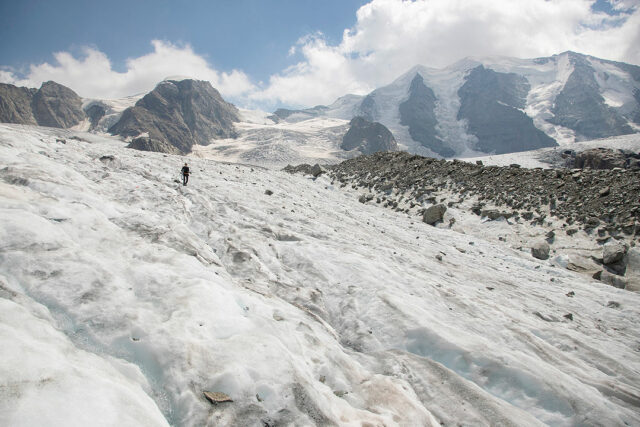
A WOMAN walks on the ice to a measuring point on the Pers Glacier near the Alpine resort of Pontresina, Switzerland, July 21, 2022. — REUTERS

ZURICH – Switzerland looked set to shift to the right in national elections on Sunday, as concerns about immigration trumped fears about climate change and melting glaciers, though the vote is unlikely to change the make-up of the Swiss government.

The right-wing Swiss People’s Party (SVP), Switzerland’s biggest political party, increased its share of the vote to 29%, 3.4 percentage points higher than the last election in 2019, according to the final projection by Swiss broadcaster SRF.

The party campaigned on a platform of preventing the country’s population – currently at 8.7 million people – exceeding 10 million.

“We have problems with immigration, illegal immigrants, and problems with the security of energy supply,” said SVP leader Marco Chiesa. “We already have asylum chaos … A population of 10 million people in Switzerland is a topic we really have to solve.”

The projected result means the SVP will increase its number of seats by eight to 61 in the 200-member lower house of parliament, increasing its presence in the chamber where no party has an overall majority.

Rising health costs also looked set to benefit the left-wing Social Democrats (SP). Switzerland’s second-biggest party was poised to increase its share by 0.7 percentage points of the vote to 17.4%, increasing its representation by one to 40 seats.

In contrast, the Greens were expected to see their share of the votes fall by 4 percentage points to 9%, and lose six seats.

“The result means it will be more difficult for progressive issues or issues like the environment and sustainability,” said Cloe Jans from pollsters GFS Bern. “Politicians will feel less pressure from outside to push this agenda in the next four years after this result.”

The outcome is unlikely to change the make-up of Switzerland’s government, the Federal Council, where seven cabinet positions are divided among the top four parties, according to their share of the vote.

“The progressive zeitgeist of the four years ago has disappeared. After four years of crises, with coronavirus and Ukraine, people are more conservative than they were in 2019,” said Michael Hermann, a political analyst at pollsters Sotomo.

Still, he did not think the election would have a major impact on Swiss politics, with big issues like pensions still settled via referendums. — Reuters

Israel strikes hit areas near three Gaza hospitals – Palestinian media

Israeli warplanes bombarded areas near three hospitals in the Gaza Strip early on Monday, Palestinian media reported, but it was not immediately clear whether the hospitals themselves suffered damage.

There was no immediate comment from the Israeli military on the reports, which said Israel had struck near Gaza City’s Shifa and Al-Quds hospitals and near the Indonesian Hospital, in the enclave’s north.

The director of the Indonesian Hospital told Al Jazeera the Israeli bombardment caused “serious damage and injuries,” without providing details.

Reuters was not immediately able to confirm the reports. There were no immediate reports of damage or injuries at or near the other two hospitals.

The Palestinian Red Crescent Society said on Oct. 14 that Israel had ordered them to evacuate Al-Quds hospital. The group said it was not possible to move the sick and wounded. — Reuters

Iran jails two journalists for covering protests sparked by death of Mahsa Amini

UNSPLASH

DUBAI – An Iranian Revolutionary Court sentenced two journalists to years in prison for their coverage of the death in custody of Kurdish-Iranian Mahsa Amini last year, state media reported on Sunday.

The death of 22-year-old Amini last September while in the custody of the morality police for allegedly violating the Islamic dress code unleashed months of mass protests across Iran, marking the biggest challenge to Iran’s clerical leaders in decades.

Iran’s state news agency IRNA said Niloofar Hamedi and Elaheh Mohammadi were sentenced to 13 and 12 years in prison respectively on charges, including collaboration with the U.S. government and acting against national security.

Lawyers for the two women have rejected the charges.

“They received seven years and six years each respectively for collaborating with the hostile U.S. government. Then each five years in prison for acting against the national security and each one year in prison for propaganda against the system,” IRNA reported.

Hamedi was detained after she took a picture of Amini’s parents hugging each other in a Tehran hospital where their daughter was lying in a coma and Mohammadi after she covered Amini’s funeral in her Kurdish hometown Saqez, where the protests began.

IRNA said the “issued verdicts” were subject to appeal.

The United States condemned the sentences.

“(They) should never have been jailed, and we condemn their sentences. The Iranian regime jails journalists because it fears the truth,” Deputy Special Envoy for Iran Abram Paley said on social media.

If confirmed, the time the women have already spent at the Evin jail, where most political prisoners are held, would be deducted from the sentences, according to the judiciary’s Mizan news agency.

A statement released by Iran’s intelligence ministry in October last year accused Mohammadi and Hamedi of being agents for the United States’ Central Intelligence Agency.

“There is documented evidence of Hamedi and Mohammadi’s intentional connections with certain entities and individuals affiliated with the U.S. government,” Mizan reported. — Reuters