Home Blog Page 411

BARMM parliamentary elections deferred
@BANGSAMOROGOVT

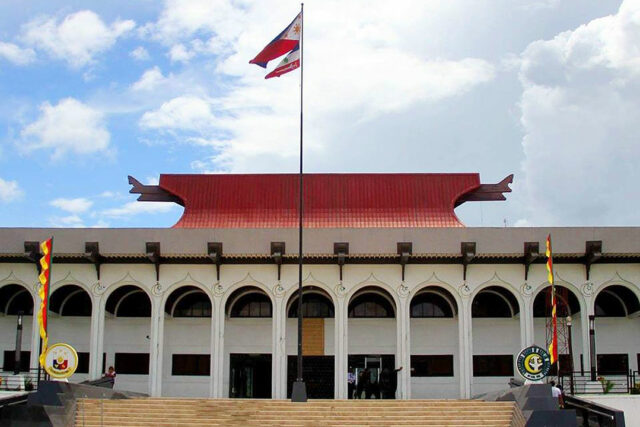
THE Commission on Elections (Comelec) has deferred the March 30, 2026 Bangsamoro Autonomous Region in Muslim Mindanao (BARMM) parliamentary elections, citing legal restrictions and operational hurdles after the delayed passage of a parliamentary districting law.

In a minute resolution issued after its Jan. 28 en banc meeting, the agency announced that the Bangsamoro parliamentary elections are postponed “until a new date is fixed by law,” and terminated all activities under previous election calendars.

The postponement stems from the belated approval of Parliament Bill No. 415 on Jan. 13, which establishes parliamentary districts in BARMM. The measure, however, has yet to be signed by the chief minister and published, a prerequisite for its effectivity.

The Comelec Law Department said the delay conflicts with election rules meant to protect voters from confusion. “No territory comprising an election precinct shall be altered or a new precinct be established at the start of the election period,” according to the Voter’s Registration Act.

The districting arrangement would inevitably change town, municipal and voting cluster boundaries — a process that the election law freezes once the election period begins.

The Supreme Court earlier warned that late redistricting could render preparations useless, disrupt precincts anchored in villages and disfranchise voters.

Comelec also stressed that partial elections could not be held while some district seats remain unsettled. “The laws governing the conduct of the BARMM Parliamentary Elections do not contemplate piecemeal polls,” according to the resolution.

The Supreme Court has cautioned that electing only a portion of Parliament members would create governance gaps, noting that a Parliament composed of only 60% of its legal membership has “no legal basis.”

Operational constraints were also cited. Key processes such as ballot printing, machine configuration, personnel training and voter education rely on finalized districts and candidate lists, both of which remain incomplete.

“An election held in haste defiles the people’s right to vote,” the commission said, adding that proceeding without proper preparation could compromise the integrity of the election.

Until legislation sets an election date, all election-related activities for the March 2026 BARMM parliamentary polls are terminated. — Erika Mae P. Sinaking


Palace awaits Justice panel finding

PHILIPPINE STAR/NOEL B PABALATE

PRESIDENT Ferdinand R. Marcos, Jr.’s appearance before the House Committee on Justice will depend on his legal counsel, the Palace said on Wednesday, as he faces two ouster complaints regarding his alleged hand in the flood control scandal.

“Let’s look at the work of the House of Representatives first, regarding the… substance of the impeachment complaints, and let’s just wait and see if they will extend an invitation to our President,” Palace Press Officer Clarissa A. Castro told a news briefing in Filipino.

Two ouster complaints were filed against the President before the House, both of which alleged graft, constitutional violations and betrayal of public trust — three of the five grounds for impeachment under the 1987 Constitution, alongside bribery and other high crimes.

The accusations focused on his alleged hand in siphoning billions of pesos for flood control projects to congressional districts.

The Justice committee set the hearing for the complaints next week. 

Meanwhile, Mr. Marcos skipped a separate event earlier on Wednesday as he caught up with paperwork, said Executive Secretary Ralph G. Recto.

Mr. Recto said the President’s absence from the Pagpupugay 2025: Parangal sa mga Lingkod Bayani was not due to his recent health scare.

“He’s fine,” he told BusinessWorld via Viber. “It’s only natural for his (doctor) to recommend that he rest for a week.”

Ms. Castro, in a separate press briefing, said the Palace sees no need to issue a medical bulletin regarding the President’s health.

“As far as we know, when a medical bulletin is issued, it must be a serious illness. If the President said it is not life-threatening, then why is the medical bulletin needed now when we are providing you with the President’s health status?” she said in Filipino.

The President was hospitalized for a night last week due to diverticulitis or the inflammation or infection of small pouches (diverticula) in the colon wall. — Chloe Mari A. Hufana

Marcos pushes corruption probe

PPA POOL/MARIANNE BERMUDEZ

PHILIPPINE President Ferdinand R. Marcos, Jr. will continue to order the probe into anomalous flood control projects this year despite their negative impact on the country’s gross domestic product (GDP) growth, the Palace said on Wednesday.

Palace Press Officer Clarissa A. Castro said Mr. Marcos ordered to improve the growth plan of the administration to generate more jobs and attract more tourists.

Mr. Marcos had seen the GDP report ahead of its release on Thursday, said Ms. Castro, but refused to elaborate if the President was satisfied with the figures. She noted the Palace remains optimistic on the country’s growth projection for the medium-term.

“We will repeat this again because of the much noise caused by the investigation into the anomalous flood control projects that have really affected the economy, but there is really nothing we can do but cleanse our country from corruption and an investigation is needed to hold those involved accountable,” she told a news briefing in Filipino.

Ms. Castro attributed last year’s economic slowdown to the result of lingering geopolitical tensions and the impact of the flood control issue on disbursement and investment reforms.

“The reforms on budgeting and disbursements and project monitoring initiated last year take round and with recent investor-friendly reforms and sound macroeconomic fundamentals, we would expect better GDP growth in the coming period,” she said, quoting the President.

She added that according to Finance Secretary Frederick D. Go, the President wants to attract more investments to aid economic growth.

The Philippine Statistics Authority on Wednesday revised down the country’s third-quarter GDP estimate to 3.9% from 4% initially.

The administration earlier set the GDP growth for 2025 to 5.5% to 6.5%, but Economic Secretary Arsenio M. Balisacan estimated it to settle between 4.8% to 5%. — Chloe Mari A. Hufana

Nartatez takes oath as PNP chief

PRESIDENT Ferdinand R. Marcos, Jr. administered the oath taking of General Jose Melencio C. Nartatez, Jr. as Philippine National Police (PNP) chief, Jan. 28. — PCO

PRESIDENT Ferdinand R. Marcos, Jr. on Wednesday administered the oath of office of General Jose Melencio C. Nartatez, Jr. as full-fledged Philippine National Police (PNP) chief.

“The President extended his congratulations and support to General Nartatez for his leadership skills in the ranks of the police force,” Palace Press Officer Clarissa A. Castro told a press briefing in Filipino.

Mr. Nartatez replaced Nicolas D. Torre III last September 2025.

He held a series of senior leadership roles in the PNP, most recently serving as deputy chief for administration from 2024 to 2025.

His previous postings include director of the National Capital Region Police Office from 2023 to 2024, regional director of Police Regional Office IV-A (Calabarzon) from 2022 to 2023, and director of the Ilocos Norte Police Provincial Office from 2016 to 2018.

Since joining the police force in 1992, the newly appointed PNP chief has occupied several key positions, including director for comptrollership and intelligence, and assignments with the elite Special Action Force and the Criminal Investigation and Detection Group.

He was promoted to police lieutenant colonel in 2006 in recognition of outstanding service.

He belongs to the Philippine Military Academy Tanglaw-Diwa Class of 1992 and holds a master’s degree in public administration from the Polytechnic University of the Philippines. — Chloe Mari A. Hufana

Former Comelec spox Jaime Jimenez passes away at 52

FACEBOOK.COM/COMELEC.PH

FORMER Commission on Elections (Comelec) Spokesperson Jaime B. Jimenez passed away on Wednesday, the agency announced. He was 52 years old.

Mr. Jimenez, who was born on Feb. 14, 1973, was Comelec’s longest-serving and youngest spokesperson. He also sat as director IV of its Education and Information Department.

In an official statement, the commission said Mr. Jimenez served “with integrity, clarity, and utmost dedication,” describing him as a key figure in communicating complex electoral processes to the public and defending democratic institutions during critical periods.

“From July 2006 to September 2022, he was the public face and steady voice of the commission — explaining complex electoral processes with precision, defending democratic institutions with calm courage, and engaging citizens and media with respect, wit, and transparency,” according to Comelec.

The poll body credited him for helping bridge communication gaps between the institution and the electorate, including pioneering the commission’s official social media presence to provide citizens with direct access to share questions and concerns. He was known for translating legal and technical election matters into more accessible language, a contribution the commission said strengthened public trust in the electoral process.

Beyond his official role, colleagues remembered Mr. Jimenez for his intellectual rigor, humor, and steady presence during challenging periods in election administration.

Comelec extended its sympathies to his family, friends, and loved ones, saying his “voice, professionalism, and quiet courage” will be remembered. — Erika Mae P. Sinaking

DPWH orders completion of Cebu expressway segment within 6 months

THE Department of Public Works and Highways (DPWH) has ordered to expedite the completion of the four-kilometer (km) segment of the Metro Cebu Expressway within six months.

“This Metro Cebu Expressway is one example of a repeated problem; it is only four kilometers. We need to fast-track its completion,” Public Works Secretary Vivencio B. Dizon said in a statement on Wednesday.

The construction of the 4.55-km segment of the Metro Cebu Expressway began in 2018 but remains incomplete due to slow implementation and its collapse in 2023.

Mr. Dizon said he has also ordered the deployment of additional equipment and personnel to ensure the completion of the segment of Metro Cebu Expressway.

The Metro Cebu Expressway is a 56.9-km-long high-standard arterial toll road designed to meet Metro Cebu’s current and future traffic demand.

Segment 3A, which is being implemented by the DPWH, is from Naga City, Cebu to Minglanilla. The project is expected to boost and enhance Metro Cebu’s urban inter-modal transport, economic, and tourism corridors. — Ashley Erika O. Jose

Customs seizes nearly P10-B illegal drugs in Clark, Pasay

PHILSTAR FILE PHOTO

THE Bureau of Customs (BoC) on Wednesday said it seized P9.86 billion worth of marijuana concealed in separate parcels in Clark and Pasay City, as the government intensified border enforcement measures.

In a statement, Customs said it intercepted a shipment from California, intended for San Mateo, Rizal, containing 4.11 kilograms of high-grade marijuana valued at P6.16 million and declared as a “polyester rug runner.”

In addition, the BoC also announced that P3.72 million worth of marijuana was seized by authorities, tucked in inbound parcels at the Central Mail Exchange Center in Pasay City.

The eight inbound parcels declared as various consumer items, including clothing, dog food, and board games, were intercepted on Jan. 22 by authorities, it said.

Customs said the shipments contained a total of 2,482 grams of dried marijuana concealed inside the declared items, which were later turned over to the Philippine Drug Enforcement Agency for proper disposition.

“The successful interception of these illegal drugs reflects the bureau’s sustained efforts to monitor inbound mail and prevent criminal syndicates from exploiting postal channels,” BoC Commissioner Ariel F. Nepomuceno said.

Mr. Nepomuceno pledged to strengthen the bureau’s enforcement to protect the public from dangerous substances.

Customs confiscated P61.7 billion in smuggled goods last year. — Aubrey Rose A. Inosante

Anti-poverty body pushes database integration for faster aid disbursement

PHILIPPINE STAR/ MICHAEL VARCAS

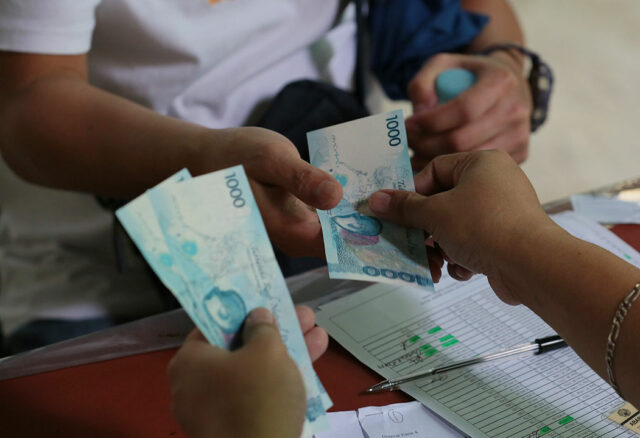
THE National Anti-Poverty Commission on Wednesday called for the integration of government databases to ensure more efficient distribution of aid to beneficiaries under the Assistance to Individuals in Crisis Situation (AICS) program.

During a Senate hearing, Anti-Poverty Secretary Lope B. Santos III said that the integration of the AICS database with the community-based monitoring systems would help streamline the process for beneficiaries.

“This will reduce the documentary burdens to the beneficiaries, and will ensure assistance,” Mr. Santos told a Senate hearing.

The Senate on Wednesday deliberated a proposed measure seeking to institutionalize the AICS program and avoid further cases of misuse and patronage politics.

The agency also pushed for the non-diminution of local social benefit programs, noting that this would augment the AICS program.

“There are already local government units (LGUs) that provide similar assistance, and the AICS should be considered as an augmentation to and not a substitute to the existing local assistance being provided by the LGUs,” Mr. Santos added.

He also called for the strengthening of coordination between the Department of Social Welfare and Development (DSWD) and LGU social workers to hasten the processing of aid for beneficiaries.

“The case study, assessments, and recommendations of LGU social development workers will complement the DSWD personnel on the ground,” he said.

The AICS program provides distressed Filipinos with medical, burial, educational, and transportation aid, along with short term financial aid and psychosocial support. — Adrian H. Halili

DBCC projecting tax revenue to grow 9% per annum until 2030

PHILIPPINE STAR/WALTER BOLLOZOS

THE Development Budget Coordination Committee (DBCC) is projecting 9% growth per annum in tax revenue until 2030, even after assuming weaker than initially expected growth in the near term.

According to DBCC forecasts obtained by reporters on Wednesday, the government eventually intends to generate P6.075 trillion in overall revenue, including non-tax sources, by 2030.

The 2030 projection for overall revenue, if borne out, would represent an increase of 50.11% from the P4.419 trillion raised in 2024.

The projections were arrived at during the DBCC’s December meeting, which also downgraded the Philippine growth outlook through 2027, with the economy still weighed down by the slowdown in government spending and the collapse of confidence following the flood control corruption scandal.

The government slashed its gross domestic product growth target to 5-6% this year, from 6-7% previously. It set a 5.5-6.5% growth goal for 2027.

The government has lowered its revenue targets for this year through 2028 from the original projections contained in the 2026 Budget of Expenditures and Sources of Financing, with weaker economic activity expected to weigh on fiscal performance.

Economic managers said the government is now expected to collect P4.824 trillion this year, about 3.19% less than the P4.983 trillion goal set in June 2025.

For 2027, overall revenue collections are now expected to come in at P5.122 trillion, a 4.55% downgrade from the original target of P5.366 trillion.

The revenue target for 2028 was also cut by 5.86% to P5.568 trillion.

The Bureau of the Treasury’s cash operations report, which includes the December and full-year revenue collections, will be released on March 3.

In the first 11 months of 2025, overall revenue collections rose 1.09% to P4.15 trillion, equivalent to 91.79% of the revised full-year forecast of P4.52 trillion.

This month, the Bureau of Internal Revenue and the Bureau of Customs announced that they missed their targets for 2025 but hope to rebound in 2026. — Aubrey Rose A. Inosante

Tariff on imported rice to stay at 15% until Feb.

PHILSTAR FILE PHOTO

THE Department of Agriculture (DA) said the tariff on imported rice from most favored nations  will remain at 15% until February, with global rice prices not yet at levels that would trigger a higher duty.

Agriculture Assistant Secretary Arnel V. de Mesa told reporters on Wednesday that the benchmark price that will warrant raising the tariff to 20% is $367 per metric ton (MT).

“To trigger a higher 20% tariff, international rice prices must breach the trigger price of $367 per metric ton. Since this has not happened, we have not discussed it yet,” he said.

Under the implementing guidelines of Executive Order (EO) No. 105, rice imports starting this year are subject to a “flexible” tariff scheme that allows duties to rise or fall depending on global prices. The EO permits tariff adjustments in increments of five percentage points, with rates set at a minimum of 15% and a maximum of 35%.

Tariff adjustments are based on the monthly average price of Vietnam 5% broken rice, the grade that accounts for the bulk of Philippine rice imports, as reported by the Food and Agriculture Organization (FAO).

Mr. De Mesa said the FAO’s December price for Vietnam 5% broken rice was $361.3 per metric ton.

He added that the DA decided to retain the P43-per-kilo maximum suggested retail price (MSRP) for imported rice, which was set in July. The DA had earlier considered raising the MSRP to P45 per kilo if tariffs were to rise to 20%.

Meanwhile, the Bureau of Plant Industry reported that between Jan. 1 and 22, around 248,000 MT of imported rice entered the country.

“In January last year, 279,000 MT of imported rice came in. So, for this month (so far), it’s almost the same volume,” Mr. De Mesa said.

He also clarified that the 300,000 MT of rice expected to arrive by the end of February is separate from the projected January import volume. — Vonn Andrei E. Villamiel

GEA for offshore wind could take place in Q3

BUHAWIND.COM.PH

THE green energy auction (GEA) round for offshore wind could take place by the third quarter after the Energy Regulatory Commission sets the ceiling price for project developers next month, Energy Undersecretary Giovanni Carlo J. Bacordo told reporters last week.

“Definitely, there’s going to be a next GEA specific for offshore wind,” Mr. Bacordo said, with the government keen to  unlock the potential of nearly 70 gigawatts (GW) of capacity from identified renewable-energy sites.

The Philippines is hoping to harness electricity from offshore wind farms starting 2028 on the way to generating 35% of its power from renewable energy by 2030.

Last year, the Department of Energy (DoE) launched the first GEA round for fixed-bottom offshore wind power projects, offering an installation target of 3.3 GW.

To date, the DoE has awarded 92 service contracts for offshore wind with a total potential capacity of around 68 GW.

While there is significant potential from upcoming projects, Mr. Bacordo said the constraints are grid and port limitations, resulting in a modest installation target of 3.3 GW.

“That’s why we have to catch up with the grid and with the ports,” he said.

The government has designated Pambujan, Camarines Norte and Sta. Clara, Batangas as ports that will service the industry.

He said the Philippine Ports Authority has committed to finish the repurposing of Pambujan Port by the first quarter of 2027.

Meanwhile, Sta. Clara Port will require a feasibility study to determine its attractiveness to private developers. The project is estimated to cost P3.1 billion, Mr. Bacordo said.

Mr. Bacordo said other ports emerging as candidates to service the offshore industry are Bulalacao, Oriental Mindoro and San Carlos, Negros Occidental. — Sheldeen Joy Talavera

Stiffer regulation of online gaming expected to stall industry’s growth

STOCK PHOTO | Image by NAIPO.DE from Unsplash

THE gaming industry’s growth could stagnate this year in the wake of stiffer regulation imposed by the government, S&P Global said.

“(T)he Philippines may see (its) GGR (gross gaming revenue) dip with declining visitors and regulatory headwinds on online gaming,” S&P Global associate director Flora Chang said in a report on Wednesday.

In the third quarter of 2025, the industry’s GGR slipped 0.11% to P94.51 billion, according to the Philippine Amusement and Gaming Corp.

In August, the Bangko Sentral ng Pilipinas’ ordered electronic wallet companies to remove their payment links to online gambling platforms amid growing concerns about gambling addiction. 

In October, President Ferdinand R. Marcos, Jr. also signed Republic Act No. 12312 or the Anti-POGO Act of 2025 revoking all work permits and visas of individuals in the Philippine Offshore Gaming Operators (POGO) industry.

They signed the official shutdown of offshore gaming hubs in the Philippines.

Analysts have said that modest growth is still possible this year, with online gaming expected to dominate the industry and drive growth further.

However, Ms. Chang said the crackdown may have discouraged the clientele.

“Stricter regulations towards online gambling operators in the Philippines could alter player behavior or increase customer acquisition costs, potentially hindering revenue growth and profitability,” Ms. Chang said.

A law on online gambling is also on the Legislative-Executive Development Advisory Council’s list of 44 priority bills for the 20th Congress.

According to the Development of Economy, Planning, and Development, the online gaming industry accounted for P81.6 billion or 0.37% of gross domestic product in 2024. — Katherine K. Chan

ADVERTISEMENT
ADVERTISEMENT