Home Blog Page 403

PHL stocks rise on strong peso before GDP data

REUTERS

PHILIPPINE SHARES climbed further on Wednesday amid a stronger peso and as investors took positions before the release of fourth-quarter and full-year 2025 gross domestic product (GDP) data.

The Philippine Stock Exchange index (PSEi) increased by 0.77% or 48.88 points to end at 6,355.78, while the broader all shares index rose by 0.44% or 15.96 points to close at 3,597.04.

“The local bourse moved higher as investors positioned ahead of the GDP print announcement tomorrow while seeing sustained weakness in the dollar,” AP Securities, Inc. said in a market note.

“The local market advanced, backed by the appreciation of our local currency against the US dollar,” Philstocks Financial, Inc. Research Manager Japhet Louis O. Tantiangco likewise said in a Viber message. “The bourse had its negative moments within the day, reflecting investors’ cautiousness while waiting for the Federal Reserve’s policy decision and the Philippines’ fourth quarter and full-year 2025 GDP data.”

The PSEi opened Wednesday’s trading session at 6,303.34, a tad lower than the previous day’s finish of 6,306.90. It sank to an intraday low of 6,287.04 but recouped its losses to close at its high for the session.

On Wednesday, the peso soared to a one-month high versus the greenback as US President Donald J. Trump said the dollar’s value remains “great” despite its recent slide.

The local unit surged by 34.5 centavos to end at P58.74 from its P59.085 finish on Tuesday, data from the Bankers Association of the Philippines showed.

This was the peso’s strongest close in more than a month or since it ended at P58.71 on Dec. 26.

Meanwhile, Philippine GDP likely grew by 4.2% in the fourth quarter, based on a BusinessWorld poll of 18 economists and analysts. This would put the full-year average at 4.8%, below the government’s 5.5%-6.5% target.

Most sectoral indices closed in the green on Wednesday. Services jumped by 2.53% or 64.22 points to 2,600.12; mining and oil increased by 2.22% or 412.77 points to 18,928.16; financials climbed by 0.38% or 8.12 points to 2,116.72; and industrials went up by 0.23% or 21.11 points to 9,008.63.

Meanwhile, property dropped by 0.22% or 5.01 points to 2,247.06, and holding firms declined by 0.14% or 7.49 points to 5,080.91.

“International Container Terminal Services, Inc. was the day’s index leader, climbing 4.12% to P645. ACEN Corp. was the main index laggard, falling 5.1% to P2.79,” Mr. Tantiangco said.

Decliners narrowly outnumbered advancers, 106 to 102, while 54 names closed unchanged.

Value turnover went down to P7.53 billion on Wednesday with 1.58 million shares traded from the P15.85 billion with 2.23 billion issues that changed hands on Tuesday.

Net foreign buying decreased to P463.37 million from P7.41 billion. — Alexandria Grace C. Magno
Filipinos see China as top security threat, OCTA Research poll shows

REUTERS

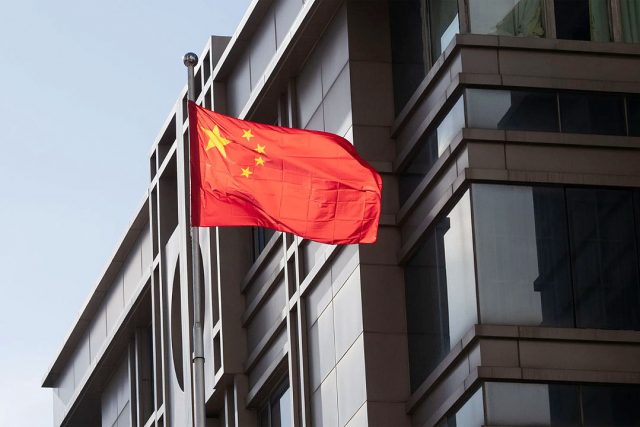
A GROWING majority of Filipinos see China as the country’s biggest external threat, according to a December survey by OCTA Research, as tensions between Manila and Beijing continue to simmer over disputed areas in the South China Sea.

About 79% of adult Filipinos identified China as the Philippines’ greatest threat, up from 74% in a similar poll conducted in July, OCTA said in a report released on Wednesday.

The increase points to a deepening and widespread perception that has remained dominant for years.

“Across all major areas, China is consistently viewed as the country’s top threat,” OCTA said. “This reflects a broad and geographically widespread national consensus.”

The Chinese Embassy in Manila did not immediately reply to a Viber message seeking comment.

OCTA said the rise between July and December did not signal a sudden change in sentiment but rather an intensification of an already entrenched view.

Public concern, the group added, appears responsive to recent developments while remaining anchored to a high baseline of threat perception.

Relations between the Philippines and China have deteriorated in recent years as Beijing continues to assert expansive claims in the South China Sea, a strategic waterway through which trillions of dollars in global trade pass each year.

China claims most of the area under its U-shaped nine-dash line, overlapping with the exclusive economic zones of the Philippines, Vietnam, Malaysia, Brunei, Indonesia and Taiwan.

Manila has repeatedly rejected China’s claims, citing a 2016 ruling by a United Nations-backed arbitral tribunal that voided Beijing’s position under international law. China has refused to recognize the decision.

Confrontations between Philippine and Chinese vessels have become more frequent, with Manila accusing Chinese coast guard and maritime militia ships of harassment and dangerous maneuvers, including the use of water cannons near contested features.

The survey showed that perceptions of China as a threat were strongest in the National Capital Region, where 84% of respondents shared that view. This was followed by Mindanao at 79%, and both Luzon and the Visayas at 78%.

“China has been identified by a clear majority of Filipinos as the country’s greatest threat consistently from January 2021 to December 2025, far outpacing all other countries across survey waves,” the pollster said.

Other countries trailed far behind in perceived threat levels. About 5% of respondents named Russia, 4% pointed to the US and 2% cited North Korea. Another 4% said the Philippines had no external threats.

The poll also showed persistent distrust toward China. 60% of Filipinos said the Philippines should not trust China, while only 13% said they trusted the country. About 23% were undecided.

“Overall, the findings indicate broad-based distrust toward China across demographic, regional and socioeconomic groups,” OCTA said.

Distrust was highest in Luzon at 63%, followed by the National Capital Region at 62%, Mindanao at 58%, and the Visayas at 56%. Trust in China was highest in Mindanao at 18%, compared with 12% in Luzon and the Visayas and 8% in Metro Manila.

“While small pockets of higher trust exist in specific regions and among younger age groups, skepticism remains the dominant sentiment nationwide,” according to the report.

The OCTA survey was conducted through face-to-face interviews with 1,200 respondents aged 18 and above from Dec. 3 to 11. It has a margin of error of ±3 percentage points. — Adrian H. Halili

NMC urges restraint, clarity after Chinese Embassy spat

PHILIPPINE COAST GUARD/FACEBOOK PAGE

THE NATIONAL Maritime Council (NMC) on Wednesday urged restraint and factual clarity in public discourse on the South China Sea, after a series of sharp exchanges between Chinese diplomats and Philippine officials that have further strained bilateral ties.

In a statement, the council said discussions on the West Philippine Sea should be guided by respect for international law and conducted through established diplomatic and legal channels, rather than through public rhetoric.

“The NMC calls for restraint, factual clarity, and respect for international law in all discussions relating to the West Philippine Sea,” it said, adding that official engagement between states should remain institutional and rules-based.

The Chinese Embassy in Manila did not immediately reply to a Viber message seeking comment.

The council’s remarks come after Beijing’s embassy in Manila issued several statements criticizing Philippine politicians and security officials who have taken a more vocal stance in asserting Philippine maritime claims.

Those statements, some of which directly called out individual officials, prompted pushback from Philippine authorities, who said the messaging crossed diplomatic norms.

The NMC warned that public exchanges marked by “rhetoric, misinformation and disinformation” risk inflaming sentiment and undermining efforts to manage disputes peacefully.

“Such engagements are governed by international law and mutual respect, not by… attempts to inflame public sentiment,” it said.

The council stressed that the Philippines does not seek confrontation in the South China Sea, instead pursuing what it described as a measured and responsible approach aimed at protecting citizens, defending sovereign rights and maritime entitlements and resolving disputes through lawful and diplomatic means.

“Our approach is measured and responsible: to protect our people, uphold our sovereign rights and maritime entitlements, and pursue peaceful resolution of disputes through lawful and diplomatic means, consistent with our obligations as a responsible member of the international community,” the NMC said.

China claims most of the South China Sea under its U-shaped nine-dash line, overlapping with the maritime zones of several Southeast Asian countries, including the Philippines. Manila has consistently rejected Beijing’s claims, citing a 2016 arbitral ruling that invalidated China’s position under international law. China has refused to recognize the ruling.

The NMC said it fully supports the Department of Foreign Affairs’ recent move to lodge a “firm representation” with the Chinese Embassy over what it described as unfounded and misleading claims about developments in the disputed waters.

“We remain united with the Department of Foreign Affairs and other government institutions in advancing a principled, coherent, and credible national position that safeguards our sovereignty, sovereign rights, and jurisdiction,” the council said.

It also underscored the importance of evidence-based public discourse on maritime issues, noting that documented facts gathered through lawful and transparent means remain central to national maritime policy and informed public understanding.

Tensions between Manila and Beijing have intensified amid repeated encounters at sea. Philippine officials have reported incidents involving Chinese coast guard and maritime militia vessels, including harassment and dangerous maneuvers such as the use of water cannons near features Manila considers part of its exclusive economic zone.

Local authorities have said the Philippines remains committed to diplomacy and international law as the primary tools for managing disputes in one of the world’s most strategically important waterways. — Adrian H. Halili

Palace eyes scaled-down anti-dynasty law before 2028 elections

PHILIPPINE STAR/KRIZ JOHN ROSALES

PROPOSALS to regulate political dynasties in the Philippines should avoid being “extreme,” Executive Secretary Ralph G. Recto said on Wednesday, as the Marcos administration pushes the passage of a long-delayed measure ahead of the 2028 elections.

Mr. Recto said the objective of an anti-political dynasty law should be incremental reform rather than sweeping prohibitions, expressing confidence that a version of the measure could be enacted before the filing of certificates of candidacy for the next national elections.

“As long as it’s not too extreme and the idea is to move the needle, so to speak, we should have a version of the anti-political dynasty law,” he said on the sidelines of an event at Malacañan Palace.

Political power in the Philippines has long been concentrated in families, with elected posts often passed from one generation to the next.

This has entrenched political dynasties across provinces and cities, shaping both local and national governance.

About eight of 10 lawmakers belong to political families, according to the Philippine Center for Investigative Journalism, underscoring the difficulty of advancing legislation that would limit dynastic rule.

President Ferdinand R. Marcos, Jr. comes from a political family in Ilocos Norte, while Mr. Recto is also a member of a prominent political clan. Both have acknowledged the sensitivity of regulating dynasties in a Congress dominated by such families.

Mr. Recto said proposals are being reviewed by lawmakers and the Office of the President, signaling coordination between the Executive and Legislature.

“That is being studied by the House, the Senate and the Office of the President,” he said. “That is a priority.”

Mr. Marcos earlier called on Congress to prioritize an anti-dynasty bill, and some lawmakers have urged him to certify the measure as urgent to fast-track deliberations.

The 1987 Constitution explicitly prohibits political dynasties “as may be defined by law,” but Congress has failed for decades to pass an enabling law. Past efforts have repeatedly stalled, largely due to resistance from lawmakers who would be directly affected.

Election watchdogs and governance advocates have said the absence of an anti-dynasty law weakens political competition and reinforces inequality in access to public office, particularly at the local level.

The renewed push comes as the administration seeks to advance governance reforms ahead of the 2028 elections, with the filing of certificates of candidacy expected in late 2027.

The Palace has said Mr. Marcos supports regulating political dynasties after seeing how the system has been abused, a shift from earlier remarks made when he was still a presidential aspirant, when he said there was nothing inherently wrong with political dynasties. — Chloe Mari A. Hufana

BARMM parliamentary elections deferred

@BANGSAMOROGOVT

THE Commission on Elections (Comelec) has deferred the March 30, 2026 Bangsamoro Autonomous Region in Muslim Mindanao (BARMM) parliamentary elections, citing legal restrictions and operational hurdles after the delayed passage of a parliamentary districting law.

In a minute resolution issued after its Jan. 28 en banc meeting, the agency announced that the Bangsamoro parliamentary elections are postponed “until a new date is fixed by law,” and terminated all activities under previous election calendars.

The postponement stems from the belated approval of Parliament Bill No. 415 on Jan. 13, which establishes parliamentary districts in BARMM. The measure, however, has yet to be signed by the chief minister and published, a prerequisite for its effectivity.

The Comelec Law Department said the delay conflicts with election rules meant to protect voters from confusion. “No territory comprising an election precinct shall be altered or a new precinct be established at the start of the election period,” according to the Voter’s Registration Act.

The districting arrangement would inevitably change town, municipal and voting cluster boundaries — a process that the election law freezes once the election period begins.

The Supreme Court earlier warned that late redistricting could render preparations useless, disrupt precincts anchored in villages and disfranchise voters.

Comelec also stressed that partial elections could not be held while some district seats remain unsettled. “The laws governing the conduct of the BARMM Parliamentary Elections do not contemplate piecemeal polls,” according to the resolution.

The Supreme Court has cautioned that electing only a portion of Parliament members would create governance gaps, noting that a Parliament composed of only 60% of its legal membership has “no legal basis.”

Operational constraints were also cited. Key processes such as ballot printing, machine configuration, personnel training and voter education rely on finalized districts and candidate lists, both of which remain incomplete.

“An election held in haste defiles the people’s right to vote,” the commission said, adding that proceeding without proper preparation could compromise the integrity of the election.

Until legislation sets an election date, all election-related activities for the March 2026 BARMM parliamentary polls are terminated. — Erika Mae P. Sinaking

Palace awaits Justice panel finding

PHILIPPINE STAR/NOEL B PABALATE

PRESIDENT Ferdinand R. Marcos, Jr.’s appearance before the House Committee on Justice will depend on his legal counsel, the Palace said on Wednesday, as he faces two ouster complaints regarding his alleged hand in the flood control scandal.

“Let’s look at the work of the House of Representatives first, regarding the… substance of the impeachment complaints, and let’s just wait and see if they will extend an invitation to our President,” Palace Press Officer Clarissa A. Castro told a news briefing in Filipino.

Two ouster complaints were filed against the President before the House, both of which alleged graft, constitutional violations and betrayal of public trust — three of the five grounds for impeachment under the 1987 Constitution, alongside bribery and other high crimes.

The accusations focused on his alleged hand in siphoning billions of pesos for flood control projects to congressional districts.

The Justice committee set the hearing for the complaints next week. 

Meanwhile, Mr. Marcos skipped a separate event earlier on Wednesday as he caught up with paperwork, said Executive Secretary Ralph G. Recto.

Mr. Recto said the President’s absence from the Pagpupugay 2025: Parangal sa mga Lingkod Bayani was not due to his recent health scare.

“He’s fine,” he told BusinessWorld via Viber. “It’s only natural for his (doctor) to recommend that he rest for a week.”

Ms. Castro, in a separate press briefing, said the Palace sees no need to issue a medical bulletin regarding the President’s health.

“As far as we know, when a medical bulletin is issued, it must be a serious illness. If the President said it is not life-threatening, then why is the medical bulletin needed now when we are providing you with the President’s health status?” she said in Filipino.

The President was hospitalized for a night last week due to diverticulitis or the inflammation or infection of small pouches (diverticula) in the colon wall. — Chloe Mari A. Hufana

Marcos pushes corruption probe

PPA POOL/MARIANNE BERMUDEZ

PHILIPPINE President Ferdinand R. Marcos, Jr. will continue to order the probe into anomalous flood control projects this year despite their negative impact on the country’s gross domestic product (GDP) growth, the Palace said on Wednesday.

Palace Press Officer Clarissa A. Castro said Mr. Marcos ordered to improve the growth plan of the administration to generate more jobs and attract more tourists.

Mr. Marcos had seen the GDP report ahead of its release on Thursday, said Ms. Castro, but refused to elaborate if the President was satisfied with the figures. She noted the Palace remains optimistic on the country’s growth projection for the medium-term.

“We will repeat this again because of the much noise caused by the investigation into the anomalous flood control projects that have really affected the economy, but there is really nothing we can do but cleanse our country from corruption and an investigation is needed to hold those involved accountable,” she told a news briefing in Filipino.

Ms. Castro attributed last year’s economic slowdown to the result of lingering geopolitical tensions and the impact of the flood control issue on disbursement and investment reforms.

“The reforms on budgeting and disbursements and project monitoring initiated last year take round and with recent investor-friendly reforms and sound macroeconomic fundamentals, we would expect better GDP growth in the coming period,” she said, quoting the President.

She added that according to Finance Secretary Frederick D. Go, the President wants to attract more investments to aid economic growth.

The Philippine Statistics Authority on Wednesday revised down the country’s third-quarter GDP estimate to 3.9% from 4% initially.

The administration earlier set the GDP growth for 2025 to 5.5% to 6.5%, but Economic Secretary Arsenio M. Balisacan estimated it to settle between 4.8% to 5%. — Chloe Mari A. Hufana

Nartatez takes oath as PNP chief

PRESIDENT Ferdinand R. Marcos, Jr. administered the oath taking of General Jose Melencio C. Nartatez, Jr. as Philippine National Police (PNP) chief, Jan. 28. — PCO

PRESIDENT Ferdinand R. Marcos, Jr. on Wednesday administered the oath of office of General Jose Melencio C. Nartatez, Jr. as full-fledged Philippine National Police (PNP) chief.

“The President extended his congratulations and support to General Nartatez for his leadership skills in the ranks of the police force,” Palace Press Officer Clarissa A. Castro told a press briefing in Filipino.

Mr. Nartatez replaced Nicolas D. Torre III last September 2025.

He held a series of senior leadership roles in the PNP, most recently serving as deputy chief for administration from 2024 to 2025.

His previous postings include director of the National Capital Region Police Office from 2023 to 2024, regional director of Police Regional Office IV-A (Calabarzon) from 2022 to 2023, and director of the Ilocos Norte Police Provincial Office from 2016 to 2018.

Since joining the police force in 1992, the newly appointed PNP chief has occupied several key positions, including director for comptrollership and intelligence, and assignments with the elite Special Action Force and the Criminal Investigation and Detection Group.

He was promoted to police lieutenant colonel in 2006 in recognition of outstanding service.

He belongs to the Philippine Military Academy Tanglaw-Diwa Class of 1992 and holds a master’s degree in public administration from the Polytechnic University of the Philippines. — Chloe Mari A. Hufana

Former Comelec spox Jaime Jimenez passes away at 52

FACEBOOK.COM/COMELEC.PH

FORMER Commission on Elections (Comelec) Spokesperson Jaime B. Jimenez passed away on Wednesday, the agency announced. He was 52 years old.

Mr. Jimenez, who was born on Feb. 14, 1973, was Comelec’s longest-serving and youngest spokesperson. He also sat as director IV of its Education and Information Department.

In an official statement, the commission said Mr. Jimenez served “with integrity, clarity, and utmost dedication,” describing him as a key figure in communicating complex electoral processes to the public and defending democratic institutions during critical periods.

“From July 2006 to September 2022, he was the public face and steady voice of the commission — explaining complex electoral processes with precision, defending democratic institutions with calm courage, and engaging citizens and media with respect, wit, and transparency,” according to Comelec.

The poll body credited him for helping bridge communication gaps between the institution and the electorate, including pioneering the commission’s official social media presence to provide citizens with direct access to share questions and concerns. He was known for translating legal and technical election matters into more accessible language, a contribution the commission said strengthened public trust in the electoral process.

Beyond his official role, colleagues remembered Mr. Jimenez for his intellectual rigor, humor, and steady presence during challenging periods in election administration.

Comelec extended its sympathies to his family, friends, and loved ones, saying his “voice, professionalism, and quiet courage” will be remembered. — Erika Mae P. Sinaking

DPWH orders completion of Cebu expressway segment within 6 months

THE Department of Public Works and Highways (DPWH) has ordered to expedite the completion of the four-kilometer (km) segment of the Metro Cebu Expressway within six months.

“This Metro Cebu Expressway is one example of a repeated problem; it is only four kilometers. We need to fast-track its completion,” Public Works Secretary Vivencio B. Dizon said in a statement on Wednesday.

The construction of the 4.55-km segment of the Metro Cebu Expressway began in 2018 but remains incomplete due to slow implementation and its collapse in 2023.

Mr. Dizon said he has also ordered the deployment of additional equipment and personnel to ensure the completion of the segment of Metro Cebu Expressway.

The Metro Cebu Expressway is a 56.9-km-long high-standard arterial toll road designed to meet Metro Cebu’s current and future traffic demand.

Segment 3A, which is being implemented by the DPWH, is from Naga City, Cebu to Minglanilla. The project is expected to boost and enhance Metro Cebu’s urban inter-modal transport, economic, and tourism corridors. — Ashley Erika O. Jose

Customs seizes nearly P10-B illegal drugs in Clark, Pasay

PHILSTAR FILE PHOTO

THE Bureau of Customs (BoC) on Wednesday said it seized P9.86 billion worth of marijuana concealed in separate parcels in Clark and Pasay City, as the government intensified border enforcement measures.

In a statement, Customs said it intercepted a shipment from California, intended for San Mateo, Rizal, containing 4.11 kilograms of high-grade marijuana valued at P6.16 million and declared as a “polyester rug runner.”

In addition, the BoC also announced that P3.72 million worth of marijuana was seized by authorities, tucked in inbound parcels at the Central Mail Exchange Center in Pasay City.

The eight inbound parcels declared as various consumer items, including clothing, dog food, and board games, were intercepted on Jan. 22 by authorities, it said.

Customs said the shipments contained a total of 2,482 grams of dried marijuana concealed inside the declared items, which were later turned over to the Philippine Drug Enforcement Agency for proper disposition.

“The successful interception of these illegal drugs reflects the bureau’s sustained efforts to monitor inbound mail and prevent criminal syndicates from exploiting postal channels,” BoC Commissioner Ariel F. Nepomuceno said.

Mr. Nepomuceno pledged to strengthen the bureau’s enforcement to protect the public from dangerous substances.

Customs confiscated P61.7 billion in smuggled goods last year. — Aubrey Rose A. Inosante

Anti-poverty body pushes database integration for faster aid disbursement

PHILIPPINE STAR/ MICHAEL VARCAS

THE National Anti-Poverty Commission on Wednesday called for the integration of government databases to ensure more efficient distribution of aid to beneficiaries under the Assistance to Individuals in Crisis Situation (AICS) program.

During a Senate hearing, Anti-Poverty Secretary Lope B. Santos III said that the integration of the AICS database with the community-based monitoring systems would help streamline the process for beneficiaries.

“This will reduce the documentary burdens to the beneficiaries, and will ensure assistance,” Mr. Santos told a Senate hearing.

The Senate on Wednesday deliberated a proposed measure seeking to institutionalize the AICS program and avoid further cases of misuse and patronage politics.

The agency also pushed for the non-diminution of local social benefit programs, noting that this would augment the AICS program.

“There are already local government units (LGUs) that provide similar assistance, and the AICS should be considered as an augmentation to and not a substitute to the existing local assistance being provided by the LGUs,” Mr. Santos added.

He also called for the strengthening of coordination between the Department of Social Welfare and Development (DSWD) and LGU social workers to hasten the processing of aid for beneficiaries.

“The case study, assessments, and recommendations of LGU social development workers will complement the DSWD personnel on the ground,” he said.

The AICS program provides distressed Filipinos with medical, burial, educational, and transportation aid, along with short term financial aid and psychosocial support. — Adrian H. Halili