UnionDigital Bank, the digital lender of UnionBank of the Philippines, Inc., plans to launch its high-frequency lending product next year, allowing consumers to avail themselves of short-term loans, its president said on Thursday.
“We’re moving to more frequent lending in shorter tenors,” UnionDigital President and Chief Executive Henry Aguda said during a media roundtable at the Singapore Fintech Festival.
“We want to make it configurable. Soon, we’ll come out with the lending on our app where you can configure the tenor. The underwriting is there instantaneously when you download your app,” he added.
Mike Singh, UnionDigital’s Chief Commercial and Revenue Officer, said that the product will be targeted towards the mass market that lives “day-to-day.”
“A lot of the gig economy is not fixed-pay. Maybe (their) expenses this month exceeded (their) income. So, (they) need a short-term loan. We want to give them the choice: you can take a loan in the morning and you can pay it off maybe in the evening if you get paid through commission,” he said.
“The faster we can collect and the shorter the tenor loan, the faster the turnaround. We have to mimic how it is (in the informal lending market). If not, they will not adapt to the structure of normal banking lending operations,” Mr. Aguda said.
The product will likely be launched in the second quarter or second half of next year.
“The first version of that maybe is a 30-day minimum but no prepayment penalty,” Mr. Singh said.
“Right now it’s monthly. We’ll move to two weeks, then we’ll do weekly, then the aspiration is on a daily basis. One month is too long for somebody in that segment,” Mr. Aguda added.
The loans will also be priced for risk and are slightly above credit card rates. “What’s good is the interest rate is not fixed to a specific cohort or product. It changes based on how risky you are,” Mr. Aguda said.
“Obviously, the cards segment has money so its lower risk. Our segment has very high risk. So, we have to price for it. But if you pay your loan, the Artificial Intelligence (AI) will read that and your score will go up so your next loan, the interest rate will be lower,” Mr. Singh added.
UnionDigital is also planning to infuse additional capital to accommodate this new lending feature. “We’re in the process now of writing up our capital requirements for the next 24 months, we haven’t placed the figure,” Mr. Singh added.
Meanwhile, UnionDigital said it is also launching a product geared towards making processing more efficient for micro-, small and medium-sized Enterprises (MSMEs).
“MSMEs, as you know, are the driver of our economy. Our vision for MSMEs is what we call straight-through processing. Automated. faceless, paperless, same-day approval. That’s another product in the pipeline,” Mr. Singh added.
With these new products in the pipeline, Mr. Singh said he expects UnionDigital’s loan portfolio to double or even triple.
UnionDigital said its outstanding loan balance has reached at least P12 billion.
The lender was granted a digital banking license by the Bangko Sentral ng Pilipinas in July 2021 and began operations in July 2022. — Luisa Maria Jacinta C. Jocson
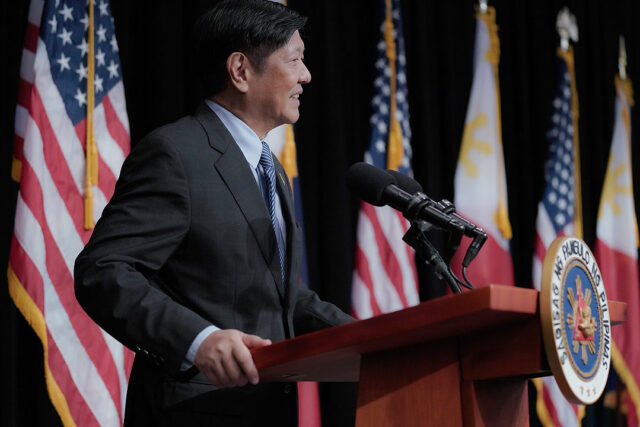
PRESIDENT Ferdinand R. Marcos, Jr. at the New York Stock Exchange. — OFFICE OF THE PRESS SECRETARY
Philippines President Ferdinand R. Marcos, Jr. said on Friday he will meet with his Chinese counterpart Xi Jinping at the sidelines of the APEC Summit in San Francisco to discuss tensions and formulate ways forward in the South China Sea.
“We will get the view of the Chinese president on what we can do to bring down the temperature, to not escalate the situation in the West Philippine Sea,” Mr. Marcos said in a video message.
Manila refers to the part of the South China Sea that it claims as the West Philippine Sea.
“We will put together the ways forward because we are continuously trying to maintain the peace,” Mr. Marcos said ahead of a meeting with Mr. Xi at the sidelines of the APEC Summit in San Francisco.
Mr. Marcos said he also discussed South China Sea issues with US Vice President Kamala Harris.
China’s embassy in Manila did not immediately respond to a request for comment.
China claims sovereignty over nearly the entire South China Sea, pointing to a line on its maps that cuts into the exclusive economic zones of Vietnam, the Philippines, Malaysia, Brunei and Indonesia. Taiwan, which China also claims as part of its territory, has said it does not accept Beijing’s maps.
The Permanent Court of Arbitration in 2016 said the line on China’s maps had no legal basis, which Beijing rejects.
The Philippines’ foreign ministry on Thursday committed to continue resupply missions and an “upkeep” of a grounded navy ship in a disputed South China Sea atoll, saying it does not have to give prior notice to China.
The Department of Foreign Affairs also called on China to remove all “illegal structures” it built within the Philippines’ exclusive economic zone, cease reclamation in those areas and be accountable for the damage the activities caused. — Reuters
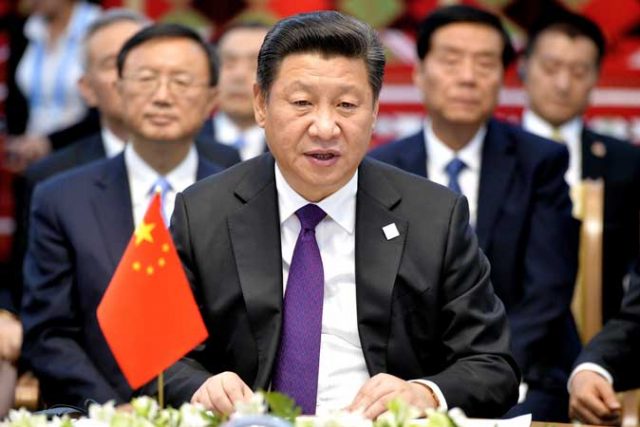
CHINESE PRESIDENT XI JINPING — HTTP://KREMLIN.RU/EVENTS/PRESIDENT/NEWS/49899/PHOTOS
Chinese President Xi Jinping told Japanese Prime Minister Fumio Kishida that Asia’s two largest economies should reaffirm their strategic relationship in their first face-to-face talks in a year that look to put a floor under strained ties.
The remarks, reported by Chinese state media, came at the start of talks on the sidelines of the APEC summit in San Francisco on Thursday evening.
The two leaders are also expected to discuss the creation of a new dialogue framework on export control issues and fostering a safe business environment, Japanese media reported.
The countries should “focus on common interests and properly handle differences,” Mr. Xi told Mr. Kishida as they sat across from one another at a table flanked by their delegations.
China and Japan should reaffirm their “strategic relationship of mutual benefit and give it new meaning”, he added.
In a joint statement in 2008, Japan and China agreed to pursue a “mutually beneficial relationship based on common strategic interests” designed to ensure frequent leadership exchanges on issues such as security.
But the phrasing has been used less frequently in recent years as the historic rivals have clashed over a series of issues such as territorial disputes, trade tensions and Taiwan, the democratic island near Japan that Beijing claims as its own.
Most recently, ties have been tested by China‘s ban on Japanese seafood following Tokyo’s decision to release treated water from its crippled Fukushima nuclear plant into the sea in August.
Mr. Kishida plans to call for the reversal of China‘s ban and will also insist on the early release of Japanese nationals arrested by Chinese authorities, while global issues like the conflict in Gaza are also expected to be on the agenda, Japanese media reported.
In brief remarks at the start of the meeting, Mr. Kishida told Mr. Xi: “Japan and China coexist and prosper as neighbors and have a responsibility to contribute to world peace and prosperity.”
Their meeting followed a highly-anticipated summit between US President Joe Biden and Mr. Xi in which the two superpowers agreed to open a presidential hotline and resume military-to-military communications, among other matters.
Mr. Kishida also met Mr. Biden at the summit where they discussed issues including “common challenges” that they share with China.
China‘s push to reaffirm relations with Japan could be partly driven by Tokyo’s close ties with its arch-rival Washington, said Rumi Aoyama, an expert on Japan–China relations.
“I think there is a desire to drive a wedge between Japan and the United States by establishing a so-called strategic relationship with Japan amid the US-China confrontation,” said Aoyama, director of Waseda Institute of Contemporary Chinese Studies.
On the sidelines of the APEC summit, Mr. Kishida has also met South Korean President Yoon Suk Yeol in their seventh meeting this year. The pair promised to push for deeper cooperation and discussed shared concerns like North Korea’s missile tests.
Mr. Yoon, Mr. Kishida and Mr. Biden also held a brief trilateral meeting on Thursday.
Leaders from the 21-member Asia-Pacific Economic Cooperation forum are in San Francisco for the 30th summit from Nov. 15-17. – Reuters
SAN FRANCISCO – President Joe Biden will highlight strong US ties to the Asia Pacific Economic Cooperation (APEC) forum economies on Thursday, despite a failure to make progress on key trade provisions sought by regional countries.
Mr. Biden, who held a high-stakes summit with Chinese President Xi Jinping on Wednesday, is due to address a summit of CEOs on Thursday before speaking to leaders from the 21-member APEC gathered in San Francisco for the organization’s annual summit.
Mr. Biden will also take part in an event with the 14-member Indo-Pacific Economic Framework (IPEF) that his administration established to bolster economic engagement after former President Donald Trump quit a long-negotiated regional trade pact in 2017.
US hopes for an IPEF trade deal were dashed this week, after members could not agree on improving labor and environmental standards or compliance, people briefed on the talks said.
In remarks to APEC leaders, Mr. Biden will highlight US progress to combat climate change, call for collective APEC action, and “demonstrate this administration’s commitment to deepening economic engagement with the region,” a senior US official told journalists.
US exports to the region have grown 12%, 60% of U.S. exports are sent to a fellow APEC economy, and APEC members have invested $1.7 trillion into the US economy since 2016, the official said.
He said leaders of Japan, Vietnam and Singapore would join Biden at an IPEF event and highlight progress in reaching an agreement on supply chains. The official said the IPEF countries would “substantially conclude” clean economy and fair economy agreements.
US Commerce Secretary Gina Raimondo said earlier on Thursday IPEF countries had agreed on several “pillars” of the IPEF initiative, covering cooperation on clean energy and anti-corruption measures. Ministers also formally signed a previously agreed text of a third pillar, covering supply chain resiliency.
Biden plans to emphasize his administration’s efforts to advance workers’ rights in remarks on Thursday, the U.S. official said. He said Biden was “committed to ensuring high labor standards, bringing workers’ voices decision making table and enforcing rules against unfair labor practices.”
Asked how long the IPEF trade pillar could take to conclude, the official said most negotiations take years but the US administration had said it would be working on an “accelerated timeline.”
Mr. Biden will note that companies based in other APEC economies had invested more than $200 billion into the US since the start of his administration, the official said, and that U.S. companies have invested at least $40 billion in other APEC economies in 2023 alone.
APEC members have been closely watching developments between the US and China, the world’s two largest economies and strategic rivals, concerned that ever more intense competition could upset global trade and security.
China is ready to be a partner and friend of the United States, Mr. Xi told them, and he said there was plenty of room for bilateral cooperation, part of a charm offensive to reassure global business and counter his country’s struggles to entice foreign investment. – Reuters
HONG KONG – Alibaba Group’s Hong Kong shares slumped 10% on Friday after it scrapped plans to spin off its cloud business, citing uncertainties fuelled by U.S. curbs on exports to China of chips used in artificial intelligence applications.
The stock opened down 7.8% and then deepened its loss to 10.3% by mid-morning, heading for its biggest one-day drop in more than a year.
It was the first reaction in Asia since the stunning strategy reversal was announced late on Thursday. The company’s U.S. listed securities BABA.N closed down 9%.
“The cancellation of a full spin–off of AliCloud is a negative surprise,” said Nomura analyst Shi Jialong in a note.
Alibaba’s concerns over the U.S. export curbs announced by Washington in October come on the heels of similar worries raised this week by Chinese social media and gaming company Tencent Holdings 0700.HK which said the restrictions would force it to seek domestically produced alternatives.
Alibaba, once Asia’s most valuable stock, was worth around $830 billion at its peak in October 2020 but is now valued at less than one fourth, as the e-commerce company took centre-stage in Beijing’s technology sector crackdown and as the Chinese economy slowed.
The latest Alibaba news underscores broader hurdles facing China’s big tech companies as the export curbs make it harder for them to get crucial chip supplies from U.S. companies.
In March, Alibaba announced plans to carve out the cloud business as part of the biggest restructuring in its 24-year history that broke the company up into six units.
Analysts had estimated then the cloud division could be worth $41-$60 billion but had warned that its listing could attract scrutiny from both Chinese and overseas regulators due to the reams of data it manages.
FOCUS ON AI
On Thursday, Alibaba Chairman Joseph Tsai told a post-earnings call that the company would now focus on growing the cloud business and providing investment for its artificial intelligence (AI) drivers.
Some analysts said the reversal on the spin–off would assist Alibaba’s AI push.
“The company believes the chip ban might materially and adversely affect its ability to offer products and services in the longer term. But (it) also points to the increasing importance of retaining the cloud unit given the surging demand for AI computing in China,” said US Tiger Research analyst Bo Pei.
The Hangzhou-based company, in announcing its quarterly earnings on Thursday, also put on hold a listing plan for its Freshippo groceries business.
Alibaba reported second-quarter revenue of 224.79 billion yuan ($31.01 billion), in line with the 224.32 billion expected by analysts, LSEG data showed.
Eddie Wu, chief executive of Alibaba, detailed the company’s future strategy on the call, saying that each of its businesses would face the market more independently and that they would conduct a strategic review to distinguish between “core” and “non-core” businesses. – Reuters
Pag-IBIG Fund disbursed P50.79 billion in cash loans in the last ten months, breaking its record for the highest amount of cash loans released for any January to October period. The amount released benefitted 2,281,042 Pag-IBIG Fund members, also a record high.
From January to October, the amount of short-term loans released by the agency increased by 12% or P5.5 billion compared to the P45.29 billion released during the same period in 2022. The number of members assisted through the program also increased by 6% or 127,494 more than the 2,153,548 members from the previous year as more members utilized the agency’s online channel, the Virtual Pag-IBIG, to apply for cash loans. During the period, 743,362 members filed their loans online, an increase of 266,281 borrowers or 56% year-on-year.
“We are happy to report that Pag-IBIG Fund continues to provide Filipino workers with assistance on their immediate financial needs through our cash loans. The record-high amount of loans we released, as well as the highest ever number of members aided through these loan program, show that our short-term loans are among the top choices of Filipino workers in gaining additional funds for their needs. All these are part of our efforts in heeding the call of President Ferdinand Marcos, Jr. to provide the best service to the Filipino people,” said Secretary Jose Rizalino L. Acuzar, who heads the Department of Human Settlements and Urban Development (DHSUD) and the 11-member Pag-IBIG Fund Board of Trustees.
Pag-IBIG Fund’s Short-Term Loan Program includes the agency’s Multi-Purpose Loan (MPL) and Calamity Loan. Under the Pag-IBIG MPL, qualified members can borrow up to 80% of their total Pag-IBIG Regular Savings, which consists of their monthly contributions, their employer’s contributions, and accumulated dividends earned. The proceeds can be used to pay for tuition fees, medical expenses, minor home improvement, a family trip, or even serve as business capital. Borrowers may choose between a 24 or 36-month payment term, with the first payment deferred for two months. The Pag-IBIG Calamity Loan, on the other hand, is available to members residing or working in areas declared under a state of calamity. In the past years, the agency has returned more than 90% of its income, mostly derived from interest on loans, to members in the form of dividends.
Of the total amount of cash loans released by the agency, P48.32 billion were in the form of Pag-IBIG MPLs which helped 2,131,435 members, while P2.48 billion were in the form of Calamity Loans which in turn aided 149,607 members.
Pag-IBIG Fund Chief Executive Officer Marilene C. Acosta, meanwhile, cited the reliability and ease of access in availing the Pag-IBIG’s Short-Term Loans as the main drivers for its strong growth. She further noted that with more members applying for loans using the Virtual Pag-IBIG, the amount of cash loans released by the agency in January to October from online applications surged to P16.65 billion, an increase of P6.51 billion or a 64% increase year-on-year.
“We at Pag-IBIG Fund recognize that each and every year, millions of our members rely on our Pag-IBIG MPL for their immediate financial needs. That is why we have made the application for our cash loans more accessible and easier for our members. Today, our members can easily and conveniently apply for these loans through many channels, which include their employers or at any of our more than 200 branches nationwide. Members may now also apply for a cash loan anytime, anywhere by using our online channels, the Virtual Pag-IBIG or the Virtual Pag-IBIG Mobile App. Our members can rest assured that our programs shall always be reliable, and that we shall continuously find ways to make their benefits accessible them,” Acosta said.
Spotlight is BusinessWorld’s sponsored section that allows advertisers to amplify their brand and connect with BusinessWorld’s audience by enabling them to publish their stories directly on the BusinessWorld website. For more information, send an email to online@bworldonline.com.
Join us on Viber at https://bit.ly/3hv6bLA to get more updates and subscribe to BusinessWorld’s titles and get exclusive content through www.bworld-x.com.
The United States and the Philippines on Friday signed a landmark deal that would allow Washington to export nuclear technology and material to Manila, which is exploring nuclear power in its bid to decarbonize and boost energy independence.
Philippines President Ferdinand R. Marcos, Jr. witnessed the signing between US Secretary of State Antony Blinken and Philippines’ Energy Secretary Raphael P.M. Lotilla.
“The United States will be able to share equipment and material with the Philippines as they work to develop small modular reactors and other civilian nuclear energy infrastructure,” Mr. Blinken said.
Negotiations for the 123 Agreement started in November 2022.
“We see nuclear energy becoming a part of the Philippines’ energy mix by 2032 and we are more than happy to pursue this path with the United States,” Mr. Marcos said in a speech. “Nuclear energy is one area where we can show the Philippines-U.S. alliance and partnership truly works.”
US Congress approval is needed for the deal, which will allow a peaceful transfer of nuclear material, equipment and information in adherence with non-proliferation requirements.
As of end-2022, the United States had 23 agreements covering 47 countries, the International Atomic Energy Agency, and democratically governed Taiwan.
The Philippines wants to tap nuclear power as a viable alternative baseload power source as it seeks to retire coal plants to help meet climate goals and boost energy security. The Southeast Asian nation is vulnerable to volatile global oil prices, seasonal power outages, and high electricity rates.
Previous attempts to pursue nuclear energy in the Philippines were halted over safety concerns, but Mr. Marcos has discussed the possibility of reviving a mothballed nuclear power plant, built in response to an energy crisis during the rule of the late Philippines strongman and his namesake father.
Completed in 1984, the Bataan Nuclear Power Plant was mothballed two years later following the ouster of the older Marcos, the deadly Chernobyl nuclear disaster, and corruption allegations. — Reuters
From L to R: Baby Aquino, VP and Strategy Head of Fuse Lending; JT Solis, Co-Founder and CEO of Mayani, Inc.; Tony Isidro, President and CEO of Fuse Lending; and Jeff Barreiro, Co-Founder and Executive Chairman of Mayani, Inc.
As part of its commitment to promoting financial inclusion and digital adoption for all Filipinos, GCash has joined forces with Mayani Philippines through its lending arm, Fuse, to empower and improve the financial capabilities of the agricultural community by providing a safe, accessible, and secure source of credit to farmers and fisherfolks across the nation.
Through this strategic partnership, GCash will initially extend its suite of products and services initially to farmers in Lian, Batangas, ultimately allowing Filipino farmers to take advantage of agritech and fintech, and help them improve their livelihoods while having easy access to innovative and convenient financial services and tools.
CEOs shake hands to seal partnership: (from L-R) JT Solis, Co-Founder and CEO of Mayani, Inc., alongside Tony Isidro, President and CEO of Fuse Lending.
Signing the agreement were Fuse Lending President and CEO Tony Isidro, Vice-President for Product and Strategy Baby Aquino, and Mayani Founder and Executive Chair Jeff Barreiro, together with Co-founder and CEO JT Solis.
“Agriculture has always been one of the most important industries of our nation. As we leverage modern technology’s financial transformation, rapid growth and sustainability are expected. We are honored to have Mayani onboard as one of our key partners as we continue introducing innovations that will help connect farmers with finance and enhance the power of financial inclusion in the Philippines,” said Mr. Isidro.
Since 2016, Fuse Lending has disbursed over P100 billion in loans and has supported millions of Filipinos in achieving their financial aspirations and goals. By providing non-collateralized lending products such as GCredit, GGives, and GLoan through the GCash app, Fuse seeks to broaden access to financial services, especially for the unbanked sector, including the agri-fishery community, which has largely been traditional for decades.
For its part, Mayani, a fast-growing farm-to-table platform with over 144,000 smallholder farmers and fisherfolks across seven regions of the Philippines, 30,000 business-to-consumer customers, and a solid business-to-business portfolio, helps provide communities with sustainable livelihoods through its end-to-end digital agri-fisheries value chain innovation and scale-driven market partnerships. By integrating its digital ecosystem with GCash and Fuse, it is able to provide more Filipino farmers and fishermen access to borrowing means that truly prioritize their needs.
“We’ve always held the belief that financial rails for the agri-fishery sector are best built on top of existing market rails for our smallholder farmers and fisherfolks. This partnership with GCash and Fuse accelerates our agri-fintech aspiration of cultivating financial inclusion for rural Philippines. By situating any loan transaction within a trade and supply chain context, I think we are able to finally crack the code towards making our farmers and fisherfolks bankable, credit-worthy, and financially-empowered,” said Mr. Solis.
Spotlight is BusinessWorld’s sponsored section that allows advertisers to amplify their brand and connect with BusinessWorld’s audience by enabling them to publish their stories directly on the BusinessWorld website. For more information, send an email to online@bworldonline.com.
Join us on Viber at https://bit.ly/3hv6bLA to get more updates and subscribe to BusinessWorld’s titles and get exclusive content through www.bworld-x.com.
The Christmas season is a time of increased consumer spending in the Philippines, and businesses are following suit with the festive spirit with initiatives to attract more customers and more purchases. This trend is especially true for the automotive industry, where strategic marketing and sales efforts can benefit from the holiday season.
The initial surge in automotive purchases during the holiday season is frequently attributed to the financial capacity of Filipinos. With Christmas bonuses being distributed, a significant number of individuals enjoy an increase in their disposable income, making it an ideal opportunity to invest in a new vehicle.
Despite the economic challenges the country faces, such as interest rate hikes and slow economic growth, the demand for vehicles has increased remarkably.
According to a report published by the Chamber of Automotive Manufacturers of the Philippines Inc. (CAMPI) and the Truck Manufacturers Association (TMA), the Philippine new vehicle market rebounded strongly every December of the year.
In 2021, December recorded the highest number of sales since the COVID-19 pandemic started. A total of 27,846 units were sold, slightly increasing the 27,596 units sold in December 2020. The slight increase in the numbers indicated a slow but stable economic recovery and a resurgence in consumer confidence within the market.
Similarly, December recorded the highest monthly performance in 2022, with a total of 37,259 units sold, rising to 33.8% year-on-year. These figures include 28,645 sales of commercial vehicles and 8,614 sales of passenger vehicles.
As the industry navigates through the first seven months of 2023, the upward trajectory in vehicle sales continues, maintaining a double-digit growth rate. Vehicle sales have experienced a 31.1% surge when compared to the same period last year. The sustained increase indicates a growing resilience in the market and a positive response from consumers.
Looking ahead to December 2023, industry experts are anticipating another strong performance that builds on the success of previous years. The positive trend in the first seven months of the year is expected to continue, leading to a strong finish this year.
All these figures indicate that the Philippine automotive industry is continuously growing, with Christmas sales increasing year-on-year.
Strategic timing
Car manufacturers often release new models during the Christmas season to take advantage of increased consumer spending.
In addition, automakers often launch special editions of their popular car models during “-ber months.” These limited-edition vehicles are created to commemorate the holiday season and create a sense of exclusivity. Often, these vehicles feature unique design elements, upgraded features, and even performance enhancements.
Automakers also showcase these special models to attract the attention of consumers, giving them a glimpse of what’s to come in terms of innovation and design in the new year.
The launch of these new cars not only boosts sales but also creates excitement for the upcoming year. The timing enables them to grab the attention of potential buyers looking for a special gift or considering a big purchase as the year approaches.
On the other hand, dealerships strategically sell off their current inventory to make space for the upcoming models slated for the following year. This practice not only helps dealerships keep an updated lineup but also enables them to offer attractive deals to clear out existing stock.
Dealerships often try to attract customers by offering discounts, rebates, and special financing rates. Manufacturers also work with dealerships to provide factory incentives, resulting in additional savings for consumers.
The mutually beneficial arrangement of the strategy helps dealerships clear inventory while also allowing customers to purchase a new vehicle at a significantly reduced cost.
Several dealerships host year-end clearance events and special promotions to increase the excitement. These events attract potential buyers with promises of exclusive discounts and additional perks.
Limited-time offers and bundled packages, such as free maintenance plans or extended warranties, make the deal more enticing for consumers who are considering a purchase.
Exclusive discounts and promotions
The holiday brings more than just gifts and feasts as several dealerships strategically offer special discounts to attract potential buyers.
Car sellers in the Philippines are leveraging the festive spirit to create a sense of urgency and excitement. For instance, car manufacturers take advantage of the opportunity to offer discounts and incentives.
Dealerships provide Christmas coupons and other holiday-themed promotions to make the car-buying experience more appealing to customers. Some may offer free accessories, discounted packages, and aftermarket support to sweeten the deal.
In addition, showrooms undergo festive transformations during the Christmas season, with Christmas trees, twinkling lights, and bows adorning the featured car models. Test drives may also come complete with complimentary seasonal refreshments and sometimes even a surprise gift for those who make a purchase.
Automotive companies are also extending their holiday-themed campaigns to social media, online advertising, and even virtual showrooms. Interactive online experiences, virtual test drives, and personalized holiday messages from dealerships contribute to a comprehensive and engaging online presence.
Family-centric holiday
Filipinos are known for their strong family-centric culture, and this is especially evident during the Christmas season. Since extended families frequently live in various parts of the city or even across islands, the challenge of gathering together becomes a logistical obstacle. Hence, family transportation is considered important by many.
In a study published in Applied Energy journal in 2020, private vehicles were responsible for 71.3% of vehicle trips in Metro Manila, highlighting the significance of personal transportation for families in urban settings.
Understanding the importance of Christmas and family-centric activities for Filipinos, automotive dealerships focus on providing vehicles that cater to the needs of families, such as spacious and comfortable cars, vehicles with advanced safety features, and those suitable for long drives and family outings.
Family-friendly deals are common, such as discounts on larger vehicles or bundled accessories that cater to the needs of those with children. The idea is to position the purchase of a new vehicle as a family-oriented decision, aligning with the values of the season.
Family transportation goes beyond just logistics as it symbolizes the dedication to keeping strong family bonds and the realization that the true essence of Christmas lies in the company of loved ones. — Mhicole A. Moral
It is the season to rev up the holiday spirit once more, especially for the driver or motoring enthusiast in your family or among your peers. From all-new tech-savvy gadgets to cozy comforts, there’s a sleigh full of presents one can choose from to make any car enthusiast’s heart race.
Instead of opting for generic presents, consider personalized items, tech gadgets, or even subscription services that cater to their love for all things automotive. Whether it’s for a classic car collector or a modern-day driver, there’s a perfect gift waiting to rev up their holiday spirit. We have prepared some suggestions below.
For the practical, reliable designated driver
This one’s for that friend in the group that is the designated driver every outing, or the often-unsung hero of every family trip. This holiday season offers a chance to show your appreciation for all the times that they came in clutch with their dependability. And what better way to do that than by giving them something practical and has an everyday use?
Practicality can be found in a range of useful car accessories. Consider items such as high-quality car covers, precision tire pressure gauges, or innovative storage solutions that cater to their on-the-go lifestyle.
From trunk organizers to versatile car chargers, these accessories not only enhance the driving experience but also add a touch of convenience to their daily routines.
For those who appreciate the finer details, or simply those drivers who value comfort and quality of life, why not splurge on some luxury car care products and detailing kits for some elegant and thoughtful gifts?
Anyone who takes good care of their cars would delight at some premium microfiber towels, top-tier detailing sprays, or professional-grade car wax. These gifts not only showcase your thoughtful consideration but also help them maintain their beloved vehicles in pristine condition.
For the highly personalized custom car enthusiast
For many people, their cars are an extension of themselves. They load it up with stickers to show their personality, pillows and adornments from the shows and movies they love, and even get custom decals to show off their passions even while on the road.
For such people, nothing captures the essence of thoughtful gift-giving quite like personalized items. How about considering custom license plate frames, engraved keychains, or bespoke car mats that proudly display their unique style and personality? If both of you are fans of movies, shows, or games, you can get them figures or merchandise that would be a joy to look at while stuck in traffic.
For the tech-savvy motorhead
There are also many people today who view cars as the pinnacle of human technology, with good reason. Cars have exemplified many of humanity’s biggest breakthroughs. Just take a look at the latest concept cars making headlines: self-driving vehicles powered by artificial intelligence, running on renewable electricity, and equipped with smart technology connected to the Internet of Things.
If you know someone like this, you probably don’t need to get them any of that as a Christmas gift, nor do they expect you to. Consider instead gifting them clever and innovative gadgets that enhance their driving experience and make them feel as if they are on the cutting edge of tech.
How about upgrading their vehicles with a high-quality dash cam, wireless charging pads, or a Bluetooth stereo? Even advanced GPS navigation systems and smart car adapters that provide real-time diagnostics are out there for those willing to shell out the cash.
For the careful chauffeur or the haste driver
On the road, safety should always come first. But for better or worse, some people value it more than others. These gift ideas are suited to both types of people.
Consider safety and emergency preparedness essentials that provide peace of mind on the road. These can be anything from premium roadside assistance kits to advanced emergency car escape tools. How about investing in high-quality vehicle emergency kits, compact first aid supplies, or multi-functional survival gear? Tire pumps, car jacks, or even car maintenance tools would be great to ensure peace of mind every trip, for you and for them.
Gift-giving does not have to break the bank, nonetheless. There are many budget-friendly options such as car-themed apparel, novelty car air fresheners, or DIY car care recipe books that offer creative and affordable ways to enhance the driving experience of those you care about.
Maybe look into affordable car accessories, such as stylish key fobs, decorative car decals, or practical car organization solutions that add a touch of personality to your loved ones’ vehicle without exceeding your budget. — Bjorn Biel M. Beltran
BusinessWorld, The Freeman hold forum tackling ‘smart’ potentials of cities across country
By Chelsey Keith P. Ignacio, Special Features and Content Senior Writer
As urban spaces and population expand, there is a rising need for solutions to address existing challenges with urbanization and to prevent more issues to come along the establishment of cities. And nowadays, advancements in technology are being utilized or integrated into developing existing and upcoming cities to address such issues and transform these urban areas into smart cities.
But smart city development would also stipulate for comprehensive planning to ensure that its innovative solutions do address the issues and enable better urban life. From minding the city’s energy source, sustainability of homes, to inclusivity in transport, drafting “A Blueprint for Philippine Smart Cities” was discussed by experts and leaders from relevant industries during the business forum organized by BusinessWorld and The Freeman last Nov. 10 at Belmont Hotel Mactan in Cebu.
BusinessWorld and The Freeman President and CEO Miguel G. Belmonte
“We all know how a lack of comprehensive urban planning can negatively affect our lives and the environment we live in. In drafting a blueprint for smart cities in the Philippines…we hope to explore opportunities, innovations, and developments that will positively impact our lives and the world we live in,” BusinessWorld and The Freeman President and Chief Executive Officer (CEO) Miguel G. Belmonte said in his welcome remarks.
Opportunities are seen to be found in smart cities, particularly in benefiting people’s lives and the economy.
“When we talk about technologies, we actually have a lot,” Department of Human Settlements and Urban Development (DHSUD) Secretary Jose Rizalino L. Acuzar said. “When brought together, there is a potential of making life more comfortable than ever and sustainable for future generations.”
“For me, that’s the essence of developing smart cities, to bring forward the vision of improving quality of life,” he continued with his keynote on “The Prospect of Smart Cities: From A Real Estate Perspective.”
However, citing The Economist Impact’s Digital Cities Index, Mr. Acuzar pointed out that the Philippines, as a developing country, is lagging behind. Manila placed last in the index, scoring 39.1, which is below the global average of 63.3 and Asia-Pacific’s average score of 59.4. The index looked at 30 cities across the world.
Mr. Acuzar nonetheless shared initiatives planned to develop more homes under the Pambansang Pabahay Para sa Pilipino program, which he said was not only building houses but also targeting township development encompassing amenities, services for housing communities, livelihood, and digital connectivity. It also seeks to develop megacities that will generate opportunities for economic growth.
From L-R: PhilSTAR Media Group Executive Vice-President Lucien C. Dy Tioco, Department of Human Settlements and Urban Development Secretary Jose Rizalino L. Acuzar, PhilSTAR Media Group President and CEO Miguel G. Belmonte, and Belmont Hotel Mactan General Manager Johnson del Valle — Photo by Matthew Ortoño
Among the other prospect developments he mentioned was the transit-oriented North-South Development Project. Yet, he noted the need for investment and an active policy environment from both government and business sides.
“We are literally drawing smart cities on a laid canvass. With holistic point of view, we are taking one step at a time, but also minding all angles to connect the dots toward our vision of genuine urban development,” Mr. Acuzar said.
Meanwhile, aside from improving quality of life, smart cities are also seen to support economic competitiveness.
“Technology is transforming the way our cities work in Southeast Asia. This presents a unique opportunity for countries like us to embrace smart city solutions that can boost economic competitiveness and improve our overall quality of life,” Cyel Auza, vice-president for Cebu Operations at Aboitiz InfraCapital Economic Estates, said in her keynote on “Economic Opportunities from Smart Cities.”
From L-R: PhilSTAR Media Group President and CEO Miguel G. Belmonte, Aboitiz InfraCapital Economic Estates Vice-President for Cebu Operations Cyel Auza, PhilSTAR Media Group Executive Vice-President Lucien C. Dy Tioco, and Belmont Hotel Mactan General Manager Johnson del Valle — Photo by Matthew Ortoño
Ms. Auza perceived the capabilities of technologies in smart city solutions to forecast and address risks and uncertainties caused by climate change and cyber threats. Developing smart cities also involves infrastructure and services in the urban space to deal with environmental and social issues.
“The ultimate goal is to find a balance between economic growth, protecting the environment, and enhancing the well-being of our citizens, ensuring a prosperous and harmonious future for our communities,” she said.
As cities seek to become smart, the development would not only hinge on the local government. Kellie Ko, president of the Mandaue Chamber of Commerce and Industry, further underscored the importance of collaborating with the government in developing smart cities during the forum’s first panel discussion themed “The Circuitry of Cities: Innovations powering smart city development”.
“It’s a two-way thing now. A city has to do their part,” Mr. Ko said.
“We don’t wait for the city government to make our city smart. We have to work with with the government to achieve it,” he added.
Mr. Ko also highlighted the value of pursuing smart city development moving forward in terms of competitiveness and livability.
“From the general public and economic perspective, the strive toward smart and resilient cities is really worthwhile. It’s a necessity [that] if we do not do it, we will be uncompetitive and cities will be unlivable. So definitely, that is the future we should strive for,” he said.
Core components
When talking about smart cities, it does not solely revolve around being innovative. Sustainability also makes certain to be embedded in various areas, among which is in property developments in the city.
Colliers International Director and Head of Office Services – Landlord Representation Maricris Sarino-Joson
In the real estate sector, Maricris Sarino-Joson, director and head of Office Services – Landlord Representation at Colliers International, gave several recommendations to incorporate diversity, equity, and inclusion (DEI) and environmental, social, and governance (ESG) standards.
“These are very important components if you’re building a community,” she said.
Ms. Sarino-Joson presented property market updates centered on the office sector in starting off the forum’s first panel discussion.
For DEI, some of Ms. Sarino-Joson’s recommendations included, among others, collaborating with locally-based suppliers to reduce carbon footprint; supporting local communities; acknowledging the impact of establishments or institutions on the lower-income group, indigenous people, and people of color; and making adjustments contingent to how these groups are affected.
Meanwhile, some recommended pursuits for ESG involved bringing in sustainable alternatives for a company’s resources, investing in sustainable and higher quality materials; and having green lease in companies, among others.
Broadly looking into masterplanned communities, Joey Bondoc, head of Research Team – Manila at Colliers International, also mentioned that developers should integrate green sustainable features in these projects. At the same time, they should consider leveraging technology advancements, such as the Internet of Things.
“Overall, Internet of Things and other advanced advancements in technology, it’s really important that you integrate these features into the new property department,” Mr. Bondoc said.
“Internet of Things will really play a role in advancing the technologies and the features of these masterplanned communities,” he added.
Powering the city
Panel Discussion 1 (from L-R): Greg Rubio of The Freeman (moderator), Arlene Sy Soriano of First Gen Corp., Kellie Ko of Mandaue Chamber of Commerce and Industry, Anton Perdices of Aboitiz Power Corp., and Joey Bondoc of Colliers International — Photo by Matthew Ortoño
As urban areas are transformed to function with digital technologies, energy is a necessity to power these smart cities.
“Cities are not only centers of culture, education, and economic activity, but also centers for energy,” Anton Perdices, chief operating officer at Aboitiz Power Corp. Distribution Group, said during the first panel discussion.
“In fact, cities account as much as 80% of world global energy consumption. This underscores the critical importance of energy security and maintaining residents’ quality of life and attracting investments — both key elements in fostering smart city growth,” he continued.
Mr. Perdices also considered that energy democratization and electrification of the economy would be vital for cities’ future, especially with the anticipated rise of electric vehicles, smarter city grids, digital substations, digitalization through smart meters, and net metering.
“To make these aspirations a reality, a well-planned transition in the city’s energy system is essential. This transition demands cross-border collaboration and learning from successful cities that have walked this path before,” he said.
As smart cities ensure the availability of their energy sources, considering renewables would also further sustainability.
“One way to support or help achieve the smart city goal to reduce carbon emissions, the people of the smart cities or the businesses can choose clean and renewable energy resources,” said Arlene Sy Soriano, assistant vice-president of First Gen Corp.
Ms. Soriano mentioned the Retail Competition and Open Access (RCOA) and Green Energy Option Program (GEOP), which enable qualified end-users to select an electricity supplier according to their preference.
“Again, if they want to help push decarbonization within the cities, hopefully, they can also choose clean and renewable energy sources. So aggregation, for example, include condominium buildings, business districts, malls, multi-purpose business complex, as well as economic zones,” she said.
And in furthering the power sector, working with the government is crucial as well.
“It is essential to emphasize the importance of active participation and collaboration between distribution units, governments, and the private sector in realizing the vision of smart cities. Each and every one of us can’t do it alone; we really need to work together,” said AboitizPower’s Mr. Perdices, who also highlighted that individuals in the city have to do their part as well.
Building smart homes
Panel Discussion 2 (from L-R): Jester delos Santos of News5 (moderator), Rosemarie B. Ong of Wilcon Depot, Inc., Stephen Rhey Ralota of Palafox Architecture Group, Inc., and Jennifer H. Latoga of AAC Lightweight Block Corp. — Photo by Matthew Ortoño
Smart cities also serve ashome to citizens. And their housing could also keep pace with the innovative and sustainable developments in their cities, from the construction materials, design, and things that make up the homes in a city.
“Having sustainable material and design is very much part of a smart city,” said Jennifer H. Latoga, general manager at AAC Lightweight Block Corp., during the panel discussion on “Home in the Smart City: Building Sustainable and Green Communities.”
Smart homes, for Ms. Latoga, start with green materials.
Environmental consciousness among consumers has also risen during the pandemic, thus considering the environmental impact of products they purchase for their homes, according to Rosemarie B. Ong, senior executive vice-president and chief operating officer of Wilcon Depot, Inc.
“We believe that technology and automation hold a significant role in improving the lives of everyone. And we believe also that having sustainable products available can help improve the quality of life,” said Ms. Ong.
Accessibility is also important for smart homes, for Ms. Ong. As such homes are all about controlling and powered by the Internet.
And with smart and sustainable objects being placed in their houses, smart homes are supposed to improve the lives of people residing there. “Having a smart home is not just to live there, but you have to enjoy [living there] as well,” Ms. Ong said.
Some of the benefits she also saw for residents in smart homes include enhancing their convenience, energy efficiency, and security.
“Let’s all be smart in our choices and practices so that we can create smart communities and smart homes,” Ms. Ong reminded.
Focusing on home design, Stephen Rhey Ralota, director and project manager at the Cebu Office of Palafox Architecture Group, Inc. addressed the issue of merely copying designs from the Internet or magazines without considering the climate of the area.
“Sometimes, they just tend to copy and then the topography of the property is not applicable. So that’s where the connection comes in,” he added.
Smart cities, as further elaborated by Mr. Ralota, are “meant to permit citizens who make important choices to their environment in order to make everyday life more efficient and less stressful.” He presented the components of smart cities, which involve smart governance, economy, living, people, mobility, environment, and connectivity.
While Mr. Ralota acknowledged the “smart move” of Cebu with the bus rapid transit system, he looked to the digitalization of traffic management in the place.
Mobility in smart city
Panel Discussion 3 (from L-R): Jester delos Santos of News5 (moderator), Benedict L. Camara of the National Bicycle Organization, Neil Stephen Lopez of Electric Vehicles Association of the Philippines, and Ma. Cristina Fe N. Arevalo of Toyota Mobility Solutions Philippnes, Inc. — Photo by Matthew Ortoño
In supporting citizens to move around smart cities, mobility would also need to be sustainable and inclusive.
One of the ways to make transport sustainable is electrification. “We believe electrification is the future of transportation,” said Neil Stephen Lopez, assistant executive director at the Electric Vehicles Association of the Philippines, in the panel discussion on “Advancing Smart and Inclusive Mobility in the City.”
At the same time, Mr. Lopez noted the importance of transport accessibility in underserved areas.
“If we will be developing smart cities, one of the opportunities is to improve the accessibility of transport to underserved areas,” he said.
“Mobility is not a luxury; it’s a basic need. With the advent of technology, I hope we get to improve accessibility, make transportation affordable, make electric vehicles cheaper, and give good quality public transportation,” he added.
Meanwhile, Benedict L. Camara, director and founder of the National Bicycle Organization, further promoted active mobility, particularly the use of bicycles as transport.
“[I’m] hoping the government will make more policies to promote or support [active mobility], he said. “It starts with a simple policy. It doesn’t have to be big, but from there it can branch out.”
Mr. Camara further promoted active mobility by recommending businesses set up private bike shares and bike parking.
Ride sharing is also highlighted by Ma. Cristina Fe N. Arevalo, CEO of Toyota Mobility Solutions Philippines, Inc.
“[A] ride doesn’t have to be exclusive, it can be shared. But we have to address the safety and security issues,” she said. “And that will, I think, contribute to having a smart city and achieve more carbon neutrality and a sustainable society.”
The forum, jointly held by BusinessWorld and The Freeman, took place at Belmont Hotel Mactan in Cebu last Nov. 10. — Photo by Matthew Ortoño
“A Blueprint for Philippine Smart Cities” was presented by BusinessWorld Publishing Corp. and The Freeman, in partnership with AboitizPower and Wilcon Depot; with the support of GCash, Energy Development Corp., Aboitiz InfraCapital Economic Estates, CCLEX Corp., and Primeworld Land Holdings, Inc.; and was sponsored by AppleOne Properties, Inc.; Meralco PowerGen Corp., Global Business Power Corp., Primary Homes Inc., Sto. Niño Mactan College School of Law, SM Supermalls, and Visayan Electric Company; with media partner The Philippine STAR.
Holiday spending may drive prices higher in the remaining weeks of 2023. — PHILIPPINE STAR/EDD GUMBAN
By Keisha B. Ta-asan, Reporter
THE BANGKO SENTRAL ng Pilipinas (BSP) left policy rates unchanged on Thursday as inflation eased in October, but reiterated it was prepared to resume tightening if needed.
At its policy meeting on Thursday, the Monetary Board kept its benchmark interest rate steady at 6.5% as expected by 15 of 18 analysts in a BusinessWorld poll last week.
Interest rates on the overnight deposit and lending facilities were also maintained at 6% and 7%, respectively.
This was the first Monetary Board meeting after a 25-basis-point (bp) off-cycle rate hike on Oct. 26, which brought the policy rate to the highest since mid-2007.
Since it began its aggressive monetary tightening cycle in May 2022, the BSP has raised borrowing costs by a total of 450 bps.
BSP Deputy Governor Francisco G. Dakila, Jr. said keeping rates steady would allow previous tightening to continue to work their way through the economy.
“The Monetary Board continues to deem it necessary to keep monetary policy settings sufficiently tight until a sustained downtrend in inflation becomes fully evident and inflation expectations are firmly anchored,” he said at a press briefing on Thursday. “Guided by incoming data, the BSP remains prepared to resume monetary policy tightening as necessary to steer inflation towards a target-consistent path, in line with its price stability mandate.”
Mr. Dakila said the latest projections show the inflation outlook has moderated over the policy horizon.
Headline inflation slowed to 4.9% in October from 6.1% in September and 7.7% in October 2022. This was the slowest pace in three months. Still, inflation breached the 2-4% target for the 19th straight month in October. For the 10-month period, inflation averaged 6.4%.
BSP Governor Eli M. Remolona, Jr. said the Philippines is not “out of the woods” yet despite the slowdown in October inflation.
“We’re not out of the woods but we’re within striking distance of our 2-4% target range. For 2024, I think we will, for most of the year, be between 2-4%. But maybe around April to July, (inflation) will approach the (2-4%) ceiling and maybe even exceed the ceiling,” Mr. Remolona said during the Philippine economic briefing in San Francisco, California on Wednesday ahead of the policy meeting in Manila.
“But for most of the year, inflation should be between 2-4%,” he added.
The BSP lowered its risk-adjusted inflation forecast for 2023 to 6.1% (from 6.2% in October), to 4.4% (from 4.7%) for 2024, and to 3.4% (from 3.5%) for 2025.
On the other hand, the BSP’s baseline inflation forecast stood at 6% in 2023 and at 3.7% in 2024, higher than the 5.8% and 3.5% previously given in September, respectively. But the BSP trimmed its 2025 inflation forecast to 3.2% from 3.4%.
Despite the policy pause and slowing inflation, the balance of risks to the inflation outlook are still leaning significantly towards the upside, BSP Department of Economic Research Officer-in-Charge Dennis D. Lapid said.
“Key upside risks are associated with the potential impact of higher transport charges, electricity rates, and international oil prices, as well as of higher-than-expected minimum wage adjustments in areas outside the National Capital Region,” he said.
But the impact of a slower-than-expected global economy and government interventions to mitigate the effects of the El Niño weather phenomenon could prompt the BSP to reduce its inflation forecasts.
However, Mr. Dakila noted the rebound in gross domestic product (GDP) expansion in the third quarter shows the economy’s medium-term growth prospects remain intact, even as pent-up demand wanes.
Philippine GDP expanded by 5.9% in the July-to-September period, faster than the 4.3% growth in the second quarter but slower than the 7.7% expansion in the same quarter in 2022.
For the first nine months of the year, economic growth averaged 5.5%, still below the government’s 6-7% full-year target.
“The BSP will also continue to assess how firms and households are responding to tighter monetary policy conditions, especially as credit growth continues to moderate,” Mr. Dakila said.
NO CUTS YET Meanwhile, HSBC ASEAN economist Aris Dacanay said with the peso still below the P57-a-dollar level and a slower-than-expected October inflation, there was no urgent need for the BSP to hike following the off-cycle move last month.
After the BSP’s policy decision, the peso closed at P55.79 on Thursday, strengthening by 3.5 centavos from its P55.825 finish on Wednesday. Year to date, it depreciated by 3.5 centavos or 0.06% from its P55.755 close on Dec. 29, 2022.
“The off-cycle move was for the central bank to give itself legroom in case the Fed hiked in November, which it did not. Global rice and oil prices are also off their peaks (albeit still elevated), which also gives the BSP some room to breathe,” he said in a note.
Mr. Dacanay said the BSP may keep the key policy rate at 6.5% at its last meeting next month, but noted the Philippines is still sensitive to inflation shocks.
“We continue to believe that rate cuts are off the table until the third quarter of 2024, when inflation is credibly well within the BSP’s 2-4% target band and when the Fed begins cutting rates,” he said.
Mr. Dacanay said headline inflation may pick up in the first quarter of next year before returning to the 2-4% target in the third quarter of 2024.
“This expected inflation flare up should keep the BSP on its toes and prevent the BSP from cutting rates before the second half of 2024 unless authorities extend Executive Order 10,” he said, referring to the order reducing import duties on pork, rice and corn.
“With the current account in the Philippines still wider than pre-pandemic levels, we expect the BSP to follow the easing cycle of the Fed to help support the peso and prevent ‘imported inflation’ from complicating the outlook,” he added.
In a Viber message, China Banking Corp. Chief Economist Domini S. Velasquez said policy rates may have already reached its peak as the inflation outlook improves.
“However, we still maintain our view that the BSP might hold its target policy rate at 6.5% until the fourth quarter next year given that inflation will likely print above the target until the second half of the year,” she said.
Meanwhile, Pantheon Macroeconomics Chief Emerging Asia Economist Miguel Chanco said inflation may still return to the 2-4% target before the end of the year, which would close the door to further rate increases.
“We continue to believe that average inflation will drop sharply next year to 2.8%, from an estimated 6% this year, thanks primarily to a sustained moderation in food inflation,” he said.
This would give the Monetary Board “the space to unwind one of Asia’s most aggressive tightening cycles; our current base case is for 100 bps worth of cuts in 2024,” Mr. Chanco added.
The BSP’s last policy meeting for the year is scheduled for Dec. 14.