Home Blog Page 3915

INSIGHT: Storm hitting Chinese ports is a wakeup call for climate risk to markets

CARLOS DE SOUZA-UNSPLASH

DUBAI — As Typhoon Doksuri aimed toward mainland China, major southeast ports were forced to turn away dozens of vessels for days.

The storm, supercharged by the warm July waters of the Pacific, delivered Beijing’s worst flooding in more than 50 years, shuttering factories, ruining crops, collapsing homes and displacing tens of thousands of people. China’s losses from natural disasters in July and August stood at an estimated $10 billion.

But that official Chinese damage tally reflected only a fraction of the costs wrought by the typhoon. 

Rebuilding flood-hit areas and climate-proofing infrastructure will cost far more – with China issuing 1 trillion yuan ($139 billion) of sovereign bonds to help.

Beyond that amount, Chinese exports and imports were weaker than expected in July, at least in part from the storm, said economist Robin Koepke at the International Monetary Fund.

Such disasters will become more frequent, increasingly testing the world’s 1,340 major ports and global shipping routes.

Despite the increasing risk, companies and financial systems remain unprepared for the disruptions to come due to patchy data, short-term pressures and an over-reliance on insurance, more than two dozen sources told Reuters.

Many companies are not reporting the risks and in some cases are not even aware of it, according to data shared exclusively with Reuters by CDP, the world’s biggest corporate disclosure platform for environmental issues.

About 80% of the near 5,000 companies to report in 2023 said they were exposed to climate risks, yet only 53% reported physical risks such as typhoons could damage their operations. Even fewer – about 40% – disclosed the potential financial impacts. Countries at this year’s U.N. climate conference in Dubai are grappling with an enormous deficit of up to $366 billion per year in how much money is available for adapting to climate change — including climate-proofing infrastructure like ports.

“Physical climate and natural hazard risks have barely been factored into financial markets,” said Rowan Douglas, CEO, Climate Risk and Resilience at insurance broker Howden.

“But it is critical that they are — and fast,” Douglas said.

SUPPLY CHAIN STRAIN
In the case of Doksuri, the damage wouldn’t have been limited to China, the IMF’s Koepke said.

Those port disruptions would have cascaded further to affect trading partners as far as Malta, in the Mediterranean, and Djibouti, the East African coastal gateway to landlocked Ethiopia.

As the front doors to the global economy, ports are especially vulnerable – handling about 50% of global trade while being exposed to worsening storms and rising seas.

Extreme weather is already costing more than $7.5 billion a year in port infrastructure damage and lost revenues, according to risk analysis researcher Jasper Verschuur at Oxford University. When factoring for the hits to global trade, the damage estimate shoots up to just over $100 billion a year.

The same weather, seen even more broadly, is risking at least $120 billion per year in global economic activity, as those cargo disruptions ripple out to affect manufacturing and export activities.

To help governments and companies prepare for these hits, a team from the IMF and Oxford last month launched a storm monitoring system called PortWatch – offering real-time warnings and analysis of the possible economic consequences, including to downstream countries in disrupted supply chains.

“It doesn’t behoove anyone to disclose those risks,” said Alexander Martonik, who heads the business solutions team for financial services and insurance at ESRI, which provided the satellite and data mapping technology that underpins PortWatch.

Alerts to potential disruption can let manufacturers plan for delayed shipments or help to calm jittery financial markets.

But “when everyone has the same information, there’s more transparency, it’s more proactive investments that can help overall minimize disruptions before they occur,” Martonik said.

For water-related risks to infrastructure companies, including port managers, 55% said they were vulnerable but only 45% reported on those risks this year – and just 33% provided financial impact estimates, the CDP data show.

FINANCIAL BLIND SPOT
In coming years, the financial pressure on companies, and by extension the world’s economy, will only become more acute.

Data from analysis firm Sustainalytics shared exclusively with Reuters looked at the potential cost to companies in different sectors based on two climate scenarios: capping global warming at 2 degrees Celsius or maintaining business as usual.

Direct cumulative losses due to physical climate risks would average $285 million per company by 2050 even in the more benign scenario, while the higher emissions scenario would see this rise to $352 million, the data show.

Within sectors, the impact varied: energy companies, for example, could each expect an average hit of $1.3 billion to $1.6 billion from damaged assets, with utilities at $931 million to $1.2 billion.

For the entire energy sector, those losses through 2050 would tally to $423 billion in the worst-case scenario. All sectors combined are looking at losing nearly $2 trillion, the data show.

The likeliest cause of damage? In all sectors, flooding and coastal inundation pose the biggest threats, as many companies have operations centered around coastal cities and ports.

“I don’t think that financial institutions are doing a good job in understanding the risks,” said Ommid Saberi, who heads the building resilience index at the World Bank’s private finance arm, the International Finance Corporation (IFC).

There is “a level of due diligence happening” on direct investments, but it is based largely on historical conditions and not on the projections of how climate change will play out, Saberi said.

NOT SO INSURED
Months after Typhoon Doksuri tore across China, one Chinese television company knew it had a problem.

The company, Beijing Gehua CATV Network Co, flagged to the stock market in October that it had suffered asset losses from the storm that totaled 44.81 million yuan ($6.24 million). Most of those losses came from damage to fixed assets, including fiber optic cables, server room equipment, office buildings and inventory.

The company’s insurance plan only partly covered the losses, Gehua said in October.

The disaster “would have certain impact on the company’s 2023 operating results,” it said, cautioning investors “to pay attention to investment risks.”

Gehua did not reply to Reuters’ requests for comment.

Despite the certainty of such examples increasing, business experts warn that many companies do not have plans to climate-proof their business.

Of the world’s 2,500 largest companies, 59% do not have a plan for adapting to climate impacts — a statistic that has not changed in three years, according to data from S&P Global Sustainable1 shared with Reuters.

Companies that do have climate adaptation plans don’t necessarily have timelines for those plans, even as climate change escalates, the data show.

That leaves them overly reliant on insurance, experts said – a problem as some insurance carriers begin to balk at climate-risky regions, for example home insurance near California’s fire-prone forests.

“The insurance bodies always have a horizon interest of one year, so they insure the properties always one year, one year, one year,” the IFC’s Saberi said.

That quick-turn timeline can present a conflict for companies and banks that broker longer-term loans. “The financial institutions provide financing for five years, 10 years, 20 years, 30 years,” Saberi said.

For daily comprehensive coverage on COP28 in your inbox, sign up for the Reuters Sustainable Switch newsletter here. — Reuters

US House passes bill banning uranium imports from Russia

SAMUEL SCHROTH-UNSPLASH

WASHINGTON — The United States House of Representatives on Monday passed a ban on imports of Russian uranium as lawmakers seek to add pressure on Moscow for its war on Ukraine, though the measure has waivers in case of supply concerns for domestic reactors.

The bill must pass the Senate and be signed by President Joe Biden before becoming law. It is uncertain whether there will be enough time in the Senate schedule for it to be voted on this year.

The bill, passed by voice vote in the House after the chamber suspended usual voting rules on the measure, would ban the imports 90 days after enactment, subject to the waivers.

The House bill contains waivers allowing the import of low-enriched uranium from Russia if the U.S. energy secretary determines there is no alternative source available for operation of a nuclear reactor or a U.S. nuclear energy company, or if the shipments are in the national interest.

“The risks of continuing this dependence on Russia for our nuclear fuels are simply too great,” said Republican Representative Cathy McMorris Rodgers before the vote. “It’s weakening America’s nuclear fuel infrastructure, which has declined significantly because of reliance on these cheap fuels.”

The United States banned imports of Russia oil after the invasion of Ukraine last year and imposed a price cap with other Western countries on sea-borne exports of its crude and oil products, but it has not banned imports of its uranium.

U.S. nuclear power plants imported about 12% of their uranium from Russia in 2022, compared to 27% from Canada and 25% from Kazakhstan, according to the U.S. Energy Information Administration. The United States was the source of about 5% of uranium used domestically that year, the EIA said.

Allowed imports of Russian uranium under the waiver would be gradually reduced to 459 metric tons in 2027 from about 476.5 tons in 2024. — Reuters

[B-SIDE Podcast] Augmenting human capabilities and creativity with generative AI

Follow us on Spotify BusinessWorld B-Side

The constant pursuit of innovation is a testament to human’s inherent curiosity and creativity. With the advancement of technology, people are constantly seeking innovative solutions to enhance their efficiency and productivity. In this regard, generative artificial intelligence (AI) is one of the most promising technologies, which complements human capabilities, augments creativity, and drives progress in various fields.

In this B-Side episode, David Hardoon, chief data and AI officer at Union Bank of the Philippines and chief executive officer of Aboitiz Data Innovation, discusses with BusinessWorld Multimedia Editor Arjay L. Balinbin the capabilities of Generative AI.

Read the full story by Mhicole A. Moral:
https://www.bworldonline.com/special-features/2023/12/06/562187/augmenting-human-capabilities-and-creativity-with-generative-artificial-intelligence/

Follow us on Spotify BusinessWorld B-Side

BPI nurtures next generation of data science, AI talents

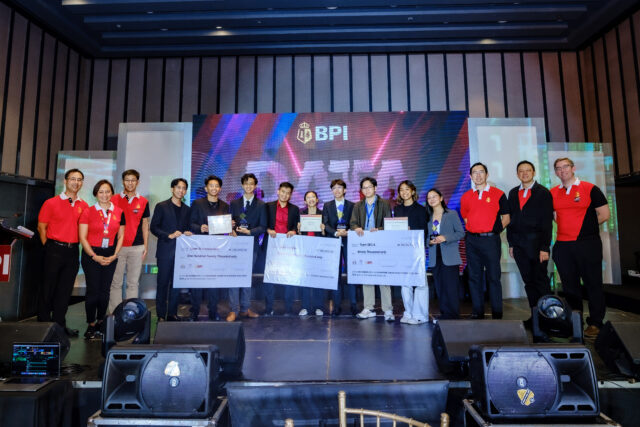
Photo shows the winning teams from Mapua University, Mapua Malayan Colleges Mindanao, and Ateneo de Manila University (center) at the BPI D.A.T.A Wave Summit Hackathon. They are with (from left) Eric Luchangco; BPI Chief Finance Officer and Chief Sustainability Officer; Gina Eala, BPI Chief Human Resources Officer; Karl Kendrick Chua, BPI Director and Ayala Corporation Managing Director of Data Science and AI; TG Limcaoco, BPI President and CEO; Joaquin Abola, BPI Business Transformation and Data Analytics Group Head; and Nicholas Huber, BPI Data Analytics Head.

The Bank of the Philippine Islands (BPI) drew over 200 students from campuses nationwide to its recent Data, Analytics, Transformation, and AI (D.A.T.A.) Wave Summit Hackathon, part of its efforts to enhance the skills of Filipinos in the fields of data science and AI.

The event marked the culmination of the Philippine Junior Data Science Challenge (PJDSC), which was organized by the University of the Philippines’ Data Science Society in partnership with BPI. The PJDSC attracted more than 150 team registrations spanning 43 colleges from all over the country. The top 10 finalists received cash prizes and an opportunity to work as interns at the BPI data science team.

“In this era of rapid change, data and digital transformation are the keys to unlocking new avenues for banking. With the proper use of data, we can reach and serve more customers in pursuit of our vision to help build a better Philippines – one family, one community at a time,” said TG Limcaoco, BPI President and CEO.

Centered around the theme of financial inclusion, participating teams in the BPI D.A.T.A. Wave Summit Hackathon delved into data analysis using diverse synthetic datasets and designed a prototype product fitting for the requirement.

Additionally, the top three teams—Mapua University, Mapua Malayan Colleges Mindanao, and Ateneo de Manila University—showcased their projects in the summit, earning recognition for their outstanding performance in both challenges and ideation.

In his speech, Eric Luchangco, BPI Chief Finance Officer and Chief Sustainability Officer, underscored the significance of data science in BPI’s aim to provide more Filipinos access to financial services.

“Financial inclusion is very important to BPI because it ties into the S of the ESG components under sustainability, or the Social aspect – making significant contributions to improving society. Data is the ultimate power tool for addressing this, enabling us to quickly understand the needs and behavior over a large number of people,” he said.

A pioneer of transformative banking technology in the Philippines, BPI remains committed to advancing digitalization to support students in expanding their knowledge, exploring best practices, and exchanging ideas on how data science can advance financial inclusion in the country.


Spotlight is BusinessWorld’s sponsored section that allows advertisers to amplify their brand and connect with BusinessWorld’s audience by enabling them to publish their stories directly on the BusinessWorld website. For more information, send an email to online@bworldonline.com.

Join us on Viber at https://bit.ly/3hv6bLA to get more updates and subscribe to BusinessWorld’s titles and get exclusive content through www.bworld-x.com.

UK condemns China over incidents in the South China Sea against Philippines

IAN TAYLOR-UNSPLASH

LONDON – Britain on Monday condemned what it called “unsafe and escalatory tactics deployed by Chinese vessels” against the Philippines over the weekend in the South China Sea.

“The UK opposes any action which raises tensions, including harassment, unsafe conduct and intimidation tactics which increase the risk of miscalculation and threaten regional peace and stability,” the foreign office said in a statement.

“Both China and the Philippines must adhere to the findings of the 2016 Arbitral Award proceedings, which are legally binding on both parties, it added.

A spokesperson at the Chinese embassy in London said Beijing firmly opposes and strongly condemns the UK’s “groundless accusations”, and has lodged stern representations with the British side on this.

“We urge the British side to respect China’s territorial sovereignty and maritime rights and interests in the South China Sea, stop stirring up trouble and sowing discord,” the remarks posted on the embassy website said. — Reuters

Leadership fueled by dedication, nourished by teamwork

Jollibee Group CEO named MAP Management Person of the Year 2023

In celebration of his outstanding leadership, dedication, and exceptional contributions to nation-building, the Management Association of the Philippines (MAP) has recognized Ernesto Tanmantiong, the President and Chief Executive Officer of Jollibee Foods Corporation (JFC), as the 2023 Management Person of the Year.

In his acceptance speech, Mr. Tanmantiong shared the story of Jollibee and highlighted the lessons he learned along the way.

At a young age, Mr. Tanmantiong discovered his passion for the food industry while assisting in his family’s Chinese restaurant in Davao City. He learned the value of discipline, hard work, and customer service directly from his father, who encouraged him to strive for excellence in everything in all aspects of their job. Later on, this lesson would guide the way Jollibee operated its businesses.

In 1975, he and his family opened their first ice cream parlors, eventually leading to Jollibee’s birth after customers demanded warm meals.

According to Mr. Tanmantiong, the first secret to Jollibee’s success was the beefy aroma of their burgers that attracted customers. This later became the inspiration for Jollibee’s “Langhap Sarap” campaign.

However, like any other brand, Jollibee has encountered numerous obstacles throughout its journey.

“One of the biggest [challenges] in the early years was the entry of McDonald’s to the Philippines in 1981,” he shared. ”At that time, we only had 12 stores. We were warned that McDonald’s tended to wipe out their local competition, so a lot of friends advised us to close the business.”

“So, instead of chickening out, we served Chickenjoy. And today, Chickenjoy has been voted the ‘best fried chicken’ not just in the Philippines but also in the United States, Hong Kong, and Singapore,” Mr. Tanmantiong added.

The COVID-19 pandemic in 2020 was another significant challenge for the industry, but it also presented opportunities for JFC’s growth. The JFC executive emphasized that the company quickly redirected its business model to offer delivery options and implemented an accelerated digital roadmap to better understand and connect with customers.

Despite the obstacles, JFC returned to profitability in 2021 through robust cost restructuring and management. In 2022, they achieved record highs in sales and operating income, increasing by 40.2% and 58.4 % respectively from the previous year. The Jollibee Group also earned its best-ever first three quarters in its 45-year history, outperforming even the record-high quarter sales and operating income in 2022.

Under Mr. Tanmantiong’s leadership, the Jollibee Group expanded its global presence by opening Jollibee chains and acquiring restaurant brands in different countries, such as the Philippines, China, and the USA. JFC continued to grow and adapt, soon becoming a global restaurant company with 18 brands operating over 6,600 stores across 34 countries.

The Jollibee Group has also been recognized internationally for its commitment to excellence. They have received numerous awards, including TIME magazine’s World’s Best Companies and the Gallup Exceptional Workplace Award. Forbes also listed Jollibee Group among the World’s Best Employers for three consecutive years. In the US, Jollibee and its affiliated brands have been featured on Newsweek magazine’s list of America’s Favorite Restaurant Chains.

Meanwhile, Mr. Tanmantiong emphasized the essential role of leadership and responsible corporate citizenship in today’s global landscape, sharing the company’s commitment to sustainable business practices.

Earlier this year, JFC launched its Global Sustainability Agenda, aptly named “Joy for Tomorrow,” to create a more sustainable future. The agenda is based on three key pillars: Food, which focuses on providing quality food that can be trusted; Planet, which emphasizes treating the planet with care; and People, which aims to uplift the lives of people in our communities.

Central to JFC’s sustainability efforts is the commitment to supporting communities with the following programs: Farmer’s Entrepreneurship Program; Busog, Lusog, Talino (BLT) School Feeding Program; and the Jollibee Group FoodAID disaster response program.

Lessons on leadership

As Jollibee celebrated its 45th anniversary, Mr. Tanmantiong reflected on the leadership lessons he learned throughout the company’s journey.

First, he emphasized the importance of building a team of skilled, enthusiastic, and committed individuals. Since the early days of Jollibee, he acknowledged the necessity of working together with professionals who shared the company’s principles and could aid in its development.

“All of this would not have been possible without the dedication of all the people who have worked at Jollibee throughout the years… To me, they are the rightful recipients of this leadership award. I am blessed to work with so many talented and hardworking leaders and individuals who continue to support our journey to be one of the world’s best restaurant companies,” said Mr. Tanmantiong.

JFC’s success story, according to him, is also based on the principle of genuine sharing. He underlined the importance of giving, even if it requires sacrificing personal resources or time.

Moreover, he urged leaders to maintain a positive outlook on the future, highlighting the importance of viewing challenges as opportunities for growth.

“For me, I take comfort in this thought: that every crisis or setback comes with a learning moment to progress myself or the company,” he said.

Lastly, Mr. Tanmantiong emphasized the significance of dreaming big with passion and commitment. He attributed Jollibee’s success to the company’s ambitious dream 45 years ago, highlighting the importance of dedication and perseverance in overcoming failures.

“People often ask, ‘What is the secret to JFC’s success?’ My four lessons above sum up my answer. It all starts with lesson 1. The competition may have had all the resources, but there is one thing they didn’t have and that is the JFC team,” said Mr. Tanmantiong. It is that team, coupled with Mr. Tanmantiong’s inspiring leadership, that will propel the company to its vision of becoming one of the top five restaurant companies in the world.


Spotlight is BusinessWorld’s sponsored section that allows advertisers to amplify their brand and connect with BusinessWorld’s audience by enabling them to publish their stories directly on the BusinessWorld website. For more information, send an email to online@bworldonline.com.

Join us on Viber at https://bit.ly/3hv6bLA to get more updates and subscribe to BusinessWorld’s titles and get exclusive content through www.bworld-x.com.

FDI inflows drop to 3-year low in Sept.

A US dollar note is seen in this June 22, 2017 illustration photo. — REUTERS

By Keisha B. Ta-asan, Reporter

NET INFLOWS of foreign direct investments (FDI) slumped to the lowest level in over three years in September, as the uncertain global economic environment dampened investor sentiment.

Data released by the Bangko Sentral ng Pilipinas (BSP) on Monday showed FDI net inflows plunged by 42.2% to $422 million in September from $731 million in the same month in 2022.

This was also 46.5% lower than the $790-million FDI net inflows in August.

The September figure was the lowest monthly net inflow of FDI in over three years, or since the $314 million in April 2020 at the height of the coronavirus disease 2019 (COVID-19) pandemic lockdowns.

Security Bank Corp. Chief Economist Robert Dan J. Roces attributed the FDI slump in September to global economic uncertainties such as possible recessions and trade disputes.

“Domestic policy shifts, and currency fluctuations have further dampened confidence. Challenges in key sectors and the attractiveness of other regions also play a role,” he said in a Viber message.

BSP data showed all major FDI components posted a decline in net inflows in September.

Nonresidents’ net investments in debt instruments of local affiliates fell by 47.8% to $238 million in September from $456 million in the same month in 2022.

Meanwhile, investments in equity and investment fund shares slid by 33.1% to $184 million in September from $275 million a year ago.

Reinvestment of earnings also slipped by 9.9% year on year to $79 million in September.

Nonresidents’ net investments in equity capital (other than reinvestment of earnings) also declined by 43.9% to $105 million in September from $187 million in the same month last year.

Broken down, equity capital placements slumped by 25.2% to $172 million, while withdrawals climbed by 57% to $67 million.

The equity placements were mainly from Japan, Singapore, and the United States, and invested mostly in financial and insurance, construction, manufacturing, and other industries.

“Net FDI inflow in September was the lowest since April 2020, indicating the continued impact of a challenging global economic environment on investor sentiment,” China Banking Corp. Chief Economist Domini S. Velasquez said in a Viber message.

9-MONTH SLUMP
For the first nine months of the year, FDI net inflows dropped by 15.9% to $5.9 billion from $7 billion in the comparable year-ago period.    

“FDI declined on the back of persistent global economic uncertainties, which continued to affect investor decisions,” the central bank said.

BSP data showed foreign investments in debt instruments declined by 17.2% year on year to $4.06 billion in the January-to-September period.

Investments in equity and investment fund shares also dropped by 12.9% to $1.8 billion in the nine-month period.

Net foreign investments in equity capital went down by 18.5% to $945 million. Equity capital placements inched up by 2.7% to $1.39 billion, while withdrawals surged by 126.5% to $448 million.

Most of these placements were from Japan, Singapore, the United States, and Germany.

Reinvestment of earnings dipped by 6.1% to $869 million in the January-to-September period.

Ms. Velasquez said that if economic conditions improve in 2024, net FDI inflows may improve.

“The country’s favorable growth prospects and the government’s efforts to attract investors such as trade liberalization reforms and overseas roadshows, could also contribute to boosting investor sentiment,” she said.

Ms. Velasquez said the government can still improve infrastructure and the ease of doing business in the Philippines in order to make the country more competitive in attracting investments.

“Moving forward, the Philippines’ FDI outlook hinges on global economic recovery, consistent domestic policies, strong economic performance, and a more competitive regional stance,” Mr. Roces said.

The BSP expects FDI net inflows to end the year at $8 billion.

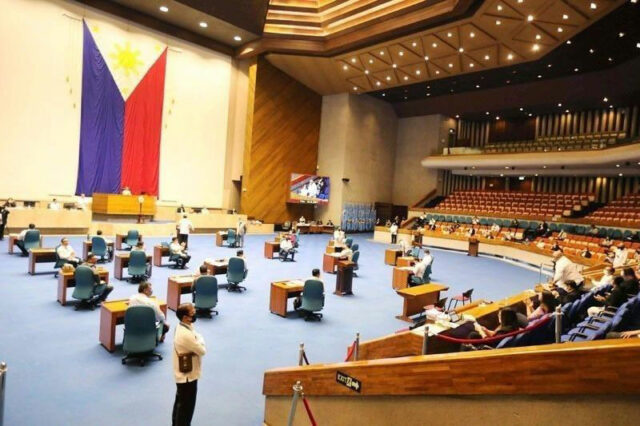
Congress ratifies P5.77-T national budget

PHILSTAR FILE PHOTO

By John Victor D. Ordoñez, Reporter

PHILIPPINE LAWMAKERS on Monday ratified the Bicameral Conference Committee report on the P5.768-trillion national budget for 2024, with the education, infrastructure, and defense agencies receiving the biggest increases.

This came after the Bicameral Conference Committee reconciled the conflicting provisions of the proposed General Appropriations Act of 2024 and approved around P450 billion in changes to new appropriations.

After Congress’ ratification, the budget measure will be sent to Malacañang for President Ferdinand R. Marcos, Jr.’s signature.

Mr. Marcos is expected to sign the 2024 national budget before he leaves for Japan to attend the 50th anniversary of the Association of Southeast Asian Nations-Japan Friendship and Cooperation commemorative summit from Dec. 16 to 18.

“Education remains a top priority in our expenditure plan for 2024. The increases made to our education agencies support ongoing efforts to make educational opportunities more available and accessible,” Senator Juan Edgardo M. Angara, who heads the Senate Finance Committee, said during Monday’s plenary session before the ratification of the report.

Under the Constitution, the government must prioritize funding the education sector. For 2024, the education sector has been allocated P924.7 billion, of which the Department of Education (DepEd) will receive P758.6 billion.

Citing the consolidated measure, Senate Majority Leader Emmanuel Joel J. Villanueva told plenary that the budgets of Technical Skills and Development Authority (TESDA), DepEd, the Commission on Higher Education (CHED), and state universities and colleges (SUCs) were increased by almost P30 billion.

Mr. Angara said additional funds were given to education agencies to implement scholarship programs, employment training programs and a voucher program for senior high school students.

However, Senate Minority Leader Aquilino Martin D. Pimentel III questioned why the bicam panel approved a P450-billion increase in unprogrammed appropriations, bringing the total to P731.4 billion. This despite the Department of Budget and Management (DBM) initially recommending a total of P281.9 billion in unprogrammed appropriations, which are funds that are put on standby in case of additional priority programs or projects when revenue collection exceeds targets.

“The reason is to carve out fiscal space in the programmed appropriations for other items that are proposed by our colleagues both here and in the House,” Mr. Angara said.

Also, Mr. Villanueva said the Department of Trade and Industry’s budget was increased by about P686 million for the government’s efforts to boost domestic production and make Philippine products more competitive with their global counterparts.

Mr. Angara said the national budget will provide “significant” funds for infrastructure, particularly roads, bridges, railways, and seaports.

“We also kept provisions to ensure that active transport infrastructure like bike lanes, pedestrian walkways, and other commuter safety features are included in their major projects,” he said.

Meanwhile, Party-List Rep. Elizaldy S. Co, who heads the House Committee on Appropriations, said bicam panel increased the allocation for irrigation projects under the National Irrigation Administration by at least P40 billion.

He told reporters that lawmakers granted the request of the Department of Agriculture (DA) for an additional P25 billion to boost the sector.

The national budget also allotted P10 billion in subsidies for the Pambansang Pabahay para sa Pilipino Program (4PH) housing program, Mr. Co said.

The spending plan also includes funding for the Ayuda sa Kapos sa Kita Program (AKAP), a social amelioration program for families earning P23,000 or less monthly.

Each beneficiary of the AKAP program would receive about P5,000 and free medical assistance, Mr. Co. said.

Lawmakers also added P 1 billion for the development of the Philippine General Hospital, National Kidney Center, Philippine Children’s Medical Center, and National Cancer Center.

Mr. Co said the panel denied the Department of Information and Communications Technology’s (DICT) request to restore its confidential funds worth P280 million for its cybersecurity programs.

Congress also stripped confidential funds from civilian agencies. Mr. Angara noted that only about P9.5 billion of these funds were realigned to security agencies mandated to use them.

The senator said the funds were transferred to defense agencies amid tensions with China in the South China Sea, citing a P2-billion budget increase for the Philippine Coast Guard.

Legislators also adopted a provision proposed by Senator Ana Theresia N. Hontiveros-Baraquel barring civilian agencies from using their contingency funds to increase their confidential and intelligence funds.

“(House Appropriations Chair) Mr. Co correctly proposed funding increases for irrigation projects as this ensures a medium-term plan to raise productivity levels in our agricultural sector, particularly rice production,” Terry L. Ridon, a public investment analyst and convenor of think tank InfraWatch PH, said in Facebook Messenger chat.

He said the move was consistent with the government’s commitment to lower the price of rice.

I-Lead Executive Director Zyza Nadine M. Suzara said Congress needs to bolster its oversight over the spending performance of state agencies after the budget bill is passed.

“We have to remember that boosts in funding allocations come with additional targets,” she said in a Viber message. “Public funds ought to be strategically allocated to what taxpayers urgently need.”

Meralco customers to see lower bills in December

Residential customers of Manila Electric Co. will face lower electricity bills in December. — PHILIPPINE STAR/WALTER BOLLOZOS

By Sheldeen Joy Talavera, Reporter

RESIDENTIAL CUSTOMERS in areas served by Manila Electric Co. (Meralco) will see lower electricity bills in December amid a drop in generation charges.

Meralco said in a statement that it will cut the rates by P0.7961 per kilowatt-hour (kWh) to P11.2584 per kWh in December from P12.0545 in November.

“This month’s reduction was able to more than offset the increases implemented in the past two months,” Meralco said.

Households consuming 200 kWh will see their monthly electricity bills reduced by around P159.

Meanwhile, households consuming 300 kWh, 400 kWh, and 500 kWh will see a decrease of P239, P318, and P398, respectively, in their December bills.

The distribution utility attributed the lower rates to the P0.6606 reduction in generation charge to P6.5332 in December, as charges from the Wholesale Electricity Spot Market (WESM) and independent power producers (IPPs) fell.

The generation charge accounts for nearly 83% of a consumer’s total monthly electricity bill.

WESM charges fell by P2.7624 per kWh as the demand in Luzon went down by around 421 megawatts (MW) and average plant capacity on outage decreased by about 679 MW.

“Lower spot market prices avoided the imposition of the secondary price cap in November,” Meralco said.

Meralco said charges from IPPs slipped by P0.4731 per kWh as First Gas’ plants reduced the use of liquid fuel and international coal prices dropped.

Joe R. Zaldarriaga, Meralco spokesperson and vice-president for corporate communications, said at a virtual briefing that the peso appreciation also contributed to lower rates for the month.

“The peso slightly strengthened and as you know, the operations of these plants are predominantly dollar denominated, especially fuel that’s why this helps… in terms of managing costs,” Mr. Zaldarriaga said partly in Filipino.

The peso closed at P55.485 per dollar on Nov. 30, down by P1.245 from its finish of P56.73 on Oct. 31, based on Bankers Association of the Philippines data.

Meanwhile, the power distributor saw a slight uptick in charges from power supply agreements (PSAs) of P0.0805 per kWh due to lower average PSA dispatch.

WESM, IPPs, and PSAs accounted for 20%, 32%, and 48%, respectively, of the company’s total energy requirement for December.

Transmission and other charges, which include taxes and subsidies, also slipped by P0.1355 per kWh, Meralco said.

The collection of the feed-in tariff allowance (FIT-All) stood at a rate of 0.0364 per kWh. FIT-All collection, however, remains suspended as directed by the Energy Regulatory Commission.

Meralco’s distribution charge has remained unchanged at P0.0360 per kWh since August last year.

Citing a study from the International Energy Consultants, Meralco said that its rates “remain fair and reasonable” as its average tariff last year ranked 21st out of 46 energy markets in the world, and 3% below the global average.

“It shows that in the past five months, even if the electricity tariffs of Meralco increased by 24%, [it] is almost the same with the 23% global rates,” Mr. Zaldarriaga said.

“Considering that the Luzon power market is unsubsidized, and the majority of the electricity is produced using imported fuel, Meralco appears to have done a very good job of minimizing tariff increases,” the power distributor said.

Meralco’s controlling stakeholder, Beacon Electric Asset Holdings, Inc., is partly owned by PLDT Inc.

Hastings Holdings, Inc., a unit of PLDT Beneficial Trust Fund subsidiary MediaQuest Holdings, Inc., has a majority stake in BusinessWorld through the Philippine Star Group, which it controls.

Gov’t still has room to hike sin taxes — experts

A man arranges bottles inside a liquor store in Quezon City, March 15, 2021. — PHILIPPINE STAR/MICHAEL VARCAS

SIN TAX REFORMS have helped generate much-needed revenues to support healthcare programs and curb consumption, but the government still has room to hike taxes on sin products, the Institute for Leadership, Empowerment, and Democracy (iLEAD) said.

“Our findings suggest that there is room for further tax increases on alcohol, tobacco, e-cigarettes, vape, and heated tobacco products, both in terms of reducing the health burden and generating additional revenue,” iLEAD consultant Kenneth Isaiah I. Abante said at a forum on Monday.

“These should be accompanied by stronger tax administration and illicit trade enforcement,” he added.

Republic Act No. 10351 or the Sin Tax Reform Act in 2012 increased excise taxes on tobacco, alcohol, and e-cigarette products. This was to reduce consumption and help finance the government’s priority health programs.

“Sin tax reforms simplified the tax structure and increased rates for tobacco products that made them artificially more affordable to the young and poor,” iLEAD consultant Lyonel Tanganco said.

He cited data that showed that cigarette prices in the country almost quadrupled from 2012 to 2022.

“More Filipinos have attempted to quit smoking because of high prices. We see current smoking among the youth fell significantly,” he added.

However, the absolute prices of tobacco products are still relatively low. “Cigarettes remain affordable. At P100 per pack, it’s P5 per stick. Single stick sales continue to make cigarettes affordable to the population,” he added.

Meanwhile, data also showed that taxes on alcohol failed to raise prices to a level that would discourage consumption.

“Alcohol prices have risen by around 70% from 2012 to 2022 but nowhere near the price increase in cigarettes,” Mr. Tanganco said, noting that alcohol prevalence and binge drinking still remained high.

On the revenue side, sin taxes boosted collections but were not as robust as initially projected for alcohol, vape, and heated tobacco products.

Total sin tax collections went beyond what was promised, but collections were below what was promised for the first few years for alcohol and below for all years for e-cigarettes, vape and heated tobacco products,” Mr. Tanganco said.

“Nevertheless, sin tax revenues have tripled as a percent of gross domestic product (GDP). The health budget has tripled over the past decade,” he added.

Latest data from the Department of Finance (DoF) showed that collections from sin taxes amounted to P65.3 billion in 2022, up by 23% from the year earlier.

“Sin taxes are a very important source of revenue for health. As of 2023, sin tax revenues now support nearly 80% of the national health insurance program,” Mr. Abante said.

Sin tax revenues also cover 100% of the medical assistance to indigents program, almost half of universal healthcare program budget, and a quarter of the health facilities enhancement program.

Mr. Abante said these tax reforms helped fund the expansion of health insurance, but the majority of households still lack adequate coverage.

“Quality of care may have improved in some areas but more study is needed to attribute this to sin taxes,” he added.

The think tank also said that there is no sufficient evidence that increases in tobacco tax leads to illicit trade.

“The case of the Philippines affirms that illicit trade cannot be used as an argument against tobacco tax reforms. The country achieved lower smoking prevalence through higher taxes and can achieve lower prevalence with better enforcement,” Mr. Abante added.

Albay Rep. and House Ways and Means Chair Jose Maria Clemente S. Salceda earlier said that the government could lose at least P60 billion in revenue this year due to illicit tobacco.

“Sin tax reforms fulfilled many of its promises. But again, we have a dream of universal healthcare. We still need greater benefits, so every Filipino has access to healthcare,” Mr. Abante said.

He also called for better accountability mechanisms to ensure efficient tax administration. Congress should also be able to exercise oversight and coordinate with government agencies to ramp up monitoring.

“We recommend that civil society lead multisectoral working groups on each of the issues above, who will be tasked to constantly update the evidence, fill in the gaps in research, and publish an annual consolidated report on sin tax reform performance,” he added. — Luisa Maria Jacinta C. Jocson

Okada listing, Uy relief seen in PH Resorts deal

By Revin Mikhael D. Ochave, Reporter

THE partnership of listed gaming and tourism holding company PH Resorts Group Holdings, Inc. with Okada Manila’s operator could become a possible mode of backdoor listing, according to analysts.

BDO Capital and Investment Corp. President Eduardo V. Francisco said in a Viber message that the move could be Okada’s opening for a backdoor listing in the local market. 

“PH Resorts can be [an] effective back-door [listing] vehicle for Okada,” Mr. Francisco said.

“We need to know the terms of the acquisition but it should also relieve Mr. Uy of pressure if Okada will absorb existing debts of PH Resorts,” he added, referring to Dennis A. Uy, chairman of PH Resorts. 

China Bank Capital Corp. Managing Director Juan Paolo E. Colet said in a Viber message that the partnership could be seen as Okada’s move to expand its presence in the Philippines.   

“For Okada, it’s an expansion play. They already have a presence in Metro Manila, so they now want to break into a new geographic market,” Mr. Colet said.

“Nothing is final yet as the deal is still subject to conditions,” he added. 

Gabriel U. Lim, BDO Unibank, Inc. head of corporate finance, said in a Viber message said the transaction, if concluded, would be “a positive for both parties” while providing a vehicle for listing Okada Manila.

He added that the market listing would offer two sites in major Philippine cities “for investors to benefit from.”

Mr. Lim added that the transaction would provide “some financial relief” for the budget of the unfinished Cebu project.

Recently, Okada Manila’s operator Tiger Resort Leisure & Entertainment Inc. (TRLEI) announced that it entered into a tentative agreement with Lapulapu Leisure, Inc. and Lapulapu Land Corp., for an exclusive partnership to complete Emerald Bay Resort. 

Lapulapu Leisure and Lapulapu Land are subsidiaries of PH Travel and Leisure Holdings Corp., which is a unit of PH Resorts. 

TRLEI executed a term sheet on Dec. 8 with PH Travel and Leisure to acquire a “significant majority ownership” of the subsidiaries as operators of the Emerald Bay project, allowing it to take over the development.

“The terms and conditions of the transaction will be further disclosed once the parties have executed the definitive agreements, which are subject to negotiation and execution and are targeted to finish by July 2024, unless otherwise extended,” PH Resorts said. 

PH Resorts previously said its partnership with Okada Manila for the Emerald Bay Resort in Mactan, Cebu would boost the Visayas tourism market.

“In PH Resorts’ partnership with Okada Manila, we hope to turn Emerald Bay Resort into a symbol for, and a catalyst of, the development of Cebu as the center of the Visayan tourism market in the Philippines,” said PH Resorts Chairman Mr. Uy in a stock exchange disclosure on Monday. 

Emerald Bay is a proposed integrated resort with a five-star hotel adjacent to 300 meters of beachfront, with two 15-storey towers offering 642 rooms, four pools, 18 food and beverage outlets, retail spaces, conference and exhibition facilities, and a large-scale gaming floor with over 700 electronic gaming machines and over 140 tables.

“This new venture is aligned with our strategy to increase our footprint in the Philippines, given our remarkable success with Okada Manila. We are excited to bring our signature level of hospitality and service excellence to a new and discerning market,” TRLEI President and Chief Operating Officer Byron Yip said. 

Shares of PH Resorts at the local bourse fell 14 centavos or 12.73% to 96 centavos apiece.

SEC clears Angeles Electric’s direct public offering

THE Securities and Exchange Commission (SEC) has given the green light for the direct public offering of Pampanga-based electricity provider Angeles Electric Corp. amounting to P708.01 million to fund the company’s projects. 

In a statement on Monday, the SEC said the commission en banc approved during a meeting on Dec. 7 to render effective the registration statement of the Nepomuceno family’s Angeles Electric covering 1.178 billion common shares.

Angeles Electric plans to offer 207.02 million common shares at P3.42 per share.

“The company expects proceeds to amount to P708.01 million, which will be used to fund a portion of its capital expenditure projects over the next two years,” the SEC said.

According to the SEC, Angeles Electric’s offering is done in compliance with Republic Act No. 9136 or the Electric Power Industry Reform Act, which provides that generation companies should offer and sell to the public a portion not less than 15% of their common shares. 

The planned offering of Angeles Electric is set to run from Dec. 18 to 22 based on its latest submitted timetable. The shares may be sold to any person, domestic corporation, association, or partnership. 

“In the case of domestic corporations and associations, 60% of its total voting shares and total outstanding capital stock must be owned and held by Filipinos, in line with the foreign ownership limit for public utility companies at 40% of its outstanding capital stock,” the SEC said. 

Meanwhile, the SEC disclosed that Angeles Electric tapped Penta Capital and Investment Corp. as the lone underwriter for the transaction.

Angeles Electric operates an electric light, heat, and power system in Angeles City, Pampanga that serves about 132,000 customer accounts as of December last year. — Revin Mikhael D. Ochave

ADVERTISEMENT
ADVERTISEMENT