Home Blog Page 3871

McDonald’s PH, Coca-Cola PH gift Noche Buena packs and 1.5 million Happy Meal toys to communities this Christmas

McDonald’s Philippines ‘Share the Light’ celebration held last December 9, 2023 at the Ronald McDonald Bahay Bulilit Learning Center, Matandang Balara, Quezon City

McDonald’s Philippines returns with its partner Coca-Cola Philippines to brighten the holiday season for Filipino children and families through “Share the Light” where they brought Christmas celebrations and gave away 1.5 million pieces of Happy Meal toys to different communities nationwide.

“Share The Light” is an initiative of McDonald’s Philippines and Coca-Cola Philippines which aims to spread kindness and cheer to partner communities this Christmas season. During its launch event in Brgy. Matandang Balara, Quezon City and Brgy. Pajo, Lapu-Lapu City, “Share the Light” brought fun games, various activity booths, and hot meals. Families also took home Noche Buena packs consisting of a 6-pc McShare Box, 1.5L Coke bottle, and Happy Meal toys. Employees from both McDonald’s and Coca-Cola also volunteered to serve meals and help host the festivities.

“At McDonald’s, it is important for us to make a positive impact in the lives of Filipinos—whether it is our customers, partners, or families in need—especially during this time of the year. We are very happy to once again partner with Coca-Cola to share feel-good moments with Filipino families through our food,” said Kenneth S. Yang, CEO and President of McDonald’s Philippines.

“During our celebrations in Quezon City and Lapu-Lapu City, we were able to spread cheer to over 400 families. Next year, we hope to extend this celebration to more partner communities. Beyond the holidays, our goal is to share the light we experience not only during this season but every day. Through Ronald McDonald House Charities’ McDonald’s Kindness Kitchen, we can serve warm meals to communities in need.”

Both “Share the Light” celebrations were done in communities supported by McDonald’s Philippines’ charity of choice, Ronald McDonald House Charities, through its Bahay Bulilit Learning Center program. Bahay Bulilit stands as one of McDonald’s Philippines’ flagship programs, offering children a safe space to play and learn while their parents work. The goal is to establish nationwide learning centers in areas where they are most needed, and this is achieved through partnerships with the DSWD and local government units. Currently, there are 39 learning centers nationwide through this initiative.

As part of this year’s initiative, McDonald’s Philippines will also be giving 1.5 million pieces of Happy Meal toys to various communities nationwide.

For more information on RMHC’s programs and how you can help, visit its official website rmhc.org.ph and the online donation portal at rmhc.org.ph/donate/.

Stay updated on McDonald’s Philippines by following McDonald’s PH on Facebook, Twitter, and Instagram.


Spotlight is BusinessWorld’s sponsored section that allows advertisers to amplify their brand and connect with BusinessWorld’s audience by enabling them to publish their stories directly on the BusinessWorld website. For more information, send an email to online@bworldonline.com.

Join us on Viber at https://bit.ly/3hv6bLA to get more updates and subscribe to BusinessWorld’s titles and get exclusive content through www.bworld-x.com.

China warns Philippines to resolve South China Sea tensions via dialogue

FILE PHOTO: Chinese Foreign Minister Wang Yi speaks during the 10th trilateral foreign ministers' meeting in Busan, South Korea, Sunday, Nov. 26, 2023. -- Ahn Young-joon/Pool via REUTERS/File Photo

BEIJING/MANILA – Chinese Foreign Minister Wang Yi warned the Philippines to address through dialogue what China sees as “serious difficulties” in their relations over the South China Sea, where incidents between vessels from the two sides have escalated.

Beijing and Manila have traded sharp accusations in recent months over run-ins involving fishing boats, coastguard ships and other vessels in the South China Sea, a strategic trade corridor where the two countries have overlapping claims.

Mr. Wang told his Philippine counterpart, Foreign Affairs Secretary Enrique Manalo, in a phone call on Wednesday that if the Southeast Asian nation misjudges or colludes with “ill-intentioned” external forces in the disputed waters, China would defend its rights and respond resolutely, according to a statement by China’s foreign ministry.

“China-Philippines relations are at a crossroads,” the statement cited Mr. Wang as saying. “The top priority is to properly handle and control the current maritime situation.”

Mr. Manalo said on Thursday he had a frank and candid exchange with Wang.

“We both noted the importance of dialogue in addressing these issues,” Mr. Manalo said, according to a foreign ministry statement. It was not immediately clear who initiated the phone call.

China lays claim to most of the waters within a so-called Nine Dash Line, which is also contested by Brunei, Malaysia, Taiwan and Vietnam.

An international tribunal invalidated China’s claim to 90% of the South China Sea in 2016 but Beijing does not recognise the ruling. China has built man-made islands in the disputed area in recent years and put air strips on several of them. — Reuters

UnionBank’s ‘Powered UP’ campaign launches UB Negosyante

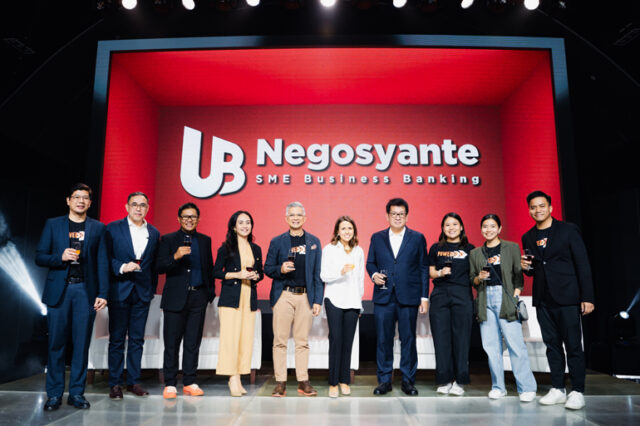
In photo (from left): Dino Velasco, Institutional Segment Marketing Head; Jorge Wieneke, Entrepreneur and Mentor; Jaypee Soliman, Business Banking Head; Nene Tamayo, CEO Nene Prime Foods; Albert Cuadrante, Chief Marketing Officer; Ana Aboitiz Delgado, Executive Vice-President; Josiah Go, Marketing Mentor and Independent Director; Marga Bellosillo, Marketing Manager; Trixie Cruz, Content and Platforms Manager; and Vince Dizon, Marketing Manager

Solidifying its reputation of being a bank for MSMEs, Union Bank of the Philippines (UnionBank) recently launched UB Negosyante, its “Powered UP” solution for micro, small, and medium enterprises (MSMEs), at the Podium Hall in Mandaluyong last Nov. 8. The new brand for UnionBank’s MSME business banking was unveiled to the media and launched to a gathering of MSME clients and prospects.

UB Negosyante’s “Powered UP” campaign comes on the heels of the Bank’s business banking app being recognized as the Best Smart Payments Solution by an SME Bank by The Digital Banker at the recently held Global Retail Banking Innovation Awards 2023 in Singapore. UB Negosyante was launched with the aim of supporting MSMEs in their entrepreneurial journey by prioritizing their needs, whether they’re small and medium business owners, sole proprietors, or micropreneurs who want to take their business to the next level.

UnionBank launched the MSME Business Banking app in 2021 and the powered up UB Negosyante builds on the benefits of the original app as it has enhanced tools that can help entrepreneurs take their business even further. During the launch, UnionBank showcased successful MSME clients while Marketing Entrepreneurship Mentor (and UnionBank independent director) Josiah Go shared Innovation tips for the attendees and participated in a fireside chat with seasoned entrepreneurs, Jorge Wieneke and Nene Tamayo-Plamio, in a program hosted by Lia Cruz.

According to UnionBank Institutional Segment Marketing Head Dino Velasco, the new name “UB Negosyante” represents UnionBank’s commitment to support the Filipino MSME and help them rapidly grow their businesses though digital means.

“The new UB Negosyante app will ensure that the growth and momentum of our current clients will continue as we enable new clients to enjoy the same success,” Velasco said.

“SMEs face so many challenges due to various pain points which can be discouraging to them. We wanted to address those pain points, so we put together a single user experience through the UB Negosyante app that will address those pain points, may they be related to collection, reconciliation, disbursement, just to name a few,” said UnionBank Business Banking Head Jaypee Soliman.

At the “Powered UP” campaign launch, best practice tips meant to aid entrepreneurs on their entrepreneurial journeys were shared with the attendees while highlighting the features of the new solution. In 2022, UnionBank launched the “Power to Grow” #WalangMaliitNaBusiness campaign, and “Powered UP” is the next level of the Bank’s continuing MSME story of accelerating growth through technological  and financial enablement and inclusion.

UB Negosyante has an improved mobile app. It has a fully-featured mobile application that allows SMEs to transfer funds, pay bills, collect payments, and deposit checks on the go. It comes with BizStarter, a basic checking account that requires a low opening and maintaining balance of just P5,000.

There’s also QRPH/UPAY for MSMEs, an all-in-one payment acceptance hub that allows merchants to collect payments easily via QR or link. In return, customers can pay through various channels such as banks, E-wallets, over the counter, and more.

Through the new app, customers can also apply for loans with a multi-purpose credit line up to P10 million; an MD line which is a credit line up to P10 million, available to medical practitioners; and the Dealer Financing Line, a non-secured credit line that enables buyers from supply chain companies to pay their dues efficiently through a digital platform, among many others.

The UB Negosyante suite of solutions includes UnionBank GlobalLinker, an online platform where SMEs can set up a free online store to boost their online marketing, make the right SME business connections, access exclusive SME benefits on essential business services, and learn from other SMEs and experts.

These solutions are in line with UnionBank’s advocacy of helping MSMEs in the digital economy, and is also one of the many ways the Bank is contributing to nation-building by helping Filipino entrepreneurs digitize their business as part of its Tech-Up Pilipinas advocacy.


Spotlight is BusinessWorld’s sponsored section that allows advertisers to amplify their brand and connect with BusinessWorld’s audience by enabling them to publish their stories directly on the BusinessWorld website. For more information, send an email to online@bworldonline.com.

Join us on Viber at https://bit.ly/3hv6bLA to get more updates and subscribe to BusinessWorld’s titles and get exclusive content through www.bworld-x.com.

Pag-IBIG approves P12 billion funding for over 9,000 4PH housing units 

Pag-IBIG Fund has approved a P12-billion revolving credit line for the National Housing Authority (NHA), adequate to finance the development of 9,110 housing units, with an initial 6,967 homes to be built in Quezon City, Valenzuela, Zamboanga and San Juan as part of the government’s Pambansang Pabahay para sa Pilipino Housing or 4PH Program, top officials announced on Dec. 20.

“We are happy to report that the Pambansang Pabahay para sa Pilipino Program of the Marcos Administration continues to gain momentum. Pag-IBIG Fund’s approval of a revolving credit line for its fellow key shelter agency, the National Housing Authority, not only shows the government’s united front in addressing the housing backlog but also shows our shared commitment to provide our fellow Filipinos with decent yet affordable shelter in sustainable communities,” said Secretary Jose Rizalino L. Acuzar, who heads the Department of Human Settlements and Urban Development (DHSUD) and the 11-member Pag-IBIG Fund Board of Trustees.

Pag-IBIG Fund’s revolving credit line for the NHA shall initially finance the construction of medium and high-rise condominiums consisting of 4,111 units in Quezon City, 1,377 units in Valenzuela, 944 units in Zamboanga and 535 units in San Juan. The revolving credit line is equipped with safeguards for the proper and efficient use of funds, with the NHA providing the corresponding loan collaterals. Each drawdown from the credit line has a maximum payment term of three (3) years and includes provisions to ensure the release of funds for the intended housing projects. Once constructed, intended beneficiaries of these projects who are active Pag-IBIG Fund members may purchase the housing units through a Pag-IBIG Housing Loan under the 4PH Program.

Pag-IBIG Fund Chief Executive Officer Marilene C. Acosta, meanwhile, stated that Pag-IBIG Fund’s credit line for the NHA is part of its commitment to the Marcos Administration’s efforts of addressing the housing backlog under the 4PH Program.

“Since day one, Pag-IBIG Fund has provided its full support to President Marcos’ 4PH Program as it aligns with our mandate of providing our members with the opportunity to own a home.  With the housing projects under the 4PH Program, not only will Pag-IBIG Fund members have the opportunity to own quality homes at lower-than-market prices, they may also purchase these under the most affordable terms through a Pag-IBIG Housing Loan under the 4PH program. We are happy to be able to work with the NHA and provide added funding for their housing projects under the most secure and affordable terms, so that we can advance our common objective of empowering our fellow Filipinos to achieve homeownership,” Ms. Acosta said.

Last week, Pag-IBIG Fund announced that it approved a P929-million revolving credit line for the Social Housing Finance Corporation (SHFC) to finance the construction of 2,264 4PH housing units in Pampanga, Manila, Misamis Oriental, and Davao.


Spotlight is BusinessWorld’s sponsored section that allows advertisers to amplify their brand and connect with BusinessWorld’s audience by enabling them to publish their stories directly on the BusinessWorld website. For more information, send an email to online@bworldonline.com.

Join us on Viber at https://bit.ly/3hv6bLA to get more updates and subscribe to BusinessWorld’s titles and get exclusive content through www.bworld-x.com.

Rates to stay ‘higher for longer’ — BSP

Shoppers flock to Divisoria for holiday shopping on Wednesday, five days before Christmas, Dec. 20, 2023. — PHILIPPINE STAR/WALTER BOLLOZOS

THE BANGKO SENTRAL ng Pilipinas (BSP) is unlikely to start policy easing in the next few months and will only consider cutting rates if inflation settles at the midpoint of the 2-4% target, its governor said on Wednesday.

“We’re unlikely to cut rates in the next few months. We’re in a higher for longer (scenario). When I say hawkish, that basically means high for a while,” BSP Governor Eli M. Remolona, Jr. told reporters.

The Monetary Board last week kept its benchmark rate at a 16-year high of 6.5% for a second straight meeting. Interest rates on the overnight deposit and lending facilities were also left unchanged at 6% and 7%, respectively.

From May 2022 to October this year, the BSP raised borrowing costs by a cumulative 450 bps to tame inflation.

Mr. Remolona said policy easing will only be considered if inflation expectations are within a “comfortable” range.

“If most of the numbers point in the right direction, including expectations, if they really settle into this comfortable range of 3% for inflation, then we would consider cutting rates,” he said.

“If inflation remains higher than we thought and expectations begin to get de-anchored, then we have to do more about inflation. On the other hand… if inflation continues on its path and the expectations should be well-anchored, then we will start to consider easing,” he added.

Headline inflation slowed to 4.1% in November, bringing the 11-month inflation average to 6.2%. November marked the 20th straight month that inflation breached the BSP’s 2-4% target band for this year.

The central bank expects inflation to average 6% this year.

For 2024, Mr. Remolona said inflation will likely hit the upper end of its target band, “closer to 4% than 3%.”

“We’re still not out of the woods when it comes to inflation. If there are further supply shocks, it makes it all the harder,” he said.

The BSP sees inflation averaging 3.7% in 2024.

The central bank earlier said inflation will settle within the 2-4% target in the first quarter but could potentially spike above target from April to July partly due to the El Niño weather event.

“In our analysis, the first quarter (El Niño) might be bad. Second-quarter El Niño is 50-50. We’re more or less anticipating supply shocks,” Mr. Remolona said.

Latest data from the state weather bureau showed that a strong El Niño is present in the tropical Pacific and is showing signs of further intensification in the coming months. It is expected to continue until the second quarter of 2024.

According to the Philippine Atmospheric, Geophysical and Astronomical Services Administration, the El Niño weather pattern increases the likelihood of below-normal rainfall conditions, which could bring dry spells and droughts in some areas of the country.

BSP estimates show that the El Niño weather event could impact inflation by 0.02 percentage point next year.   

“We also included the possibility of the strong episode extending to the second quarter,” BSP Department of Economic Research Director Dennis D. Lapid added.

National Economic and Development Authority Secretary Arsenio M. Balisacan earlier said that the dry spell is one of the major risks to inflation next year.

The Marcos administration reactivated a task force on El Niño to mitigate the impact on the economy. Economic managers are targeting 6.5%-7.5% gross domestic product growth in 2024. — Luisa Maria Jacinta C. Jocson

PHL posts BoP deficit of $216M in November

THE PHILIPPINES’ balance of payments (BoP) deficit narrowed to $216 million in November from the $756-million gap a year ago, preliminary data from the Bangko Sentral ng Pilipinas (BSP) showed.

“The BoP deficit in November 2023 reflected outflows arising mainly from the National Government’s (NG) payments of its foreign currency debt obligations,” the BSP said in a statement.

On a month-on-month basis, the BoP position swung to a deficit from the $1.5-billion surplus recorded in October.

The BoP deficit in November was also the smallest since the $57 million in August.

The BoP measures the country’s transactions with the rest of the world at a given time. A deficit means more funds fled the economy than what went in, while a surplus shows that more money entered the Philippines.

“The US dollar-Philippine peso exchange rate was lower in November at P55.81 (vs P57.65 in the same period last year) and this may have been the significant reason for the narrowing of the deficit for the period,” Union Bank of the Philippines, Inc. Chief Economist Ruben Carlo O. Asuncion said in a Viber message.

Mr. Asuncion said the narrower BoP deficit reflected recent trade data.

“We must also understand that in terms of merchandise imports, (it) has been on the declining trend from lower global oil prices. Moreover, the exports side continues to be challenged by the current weak external trade environment. These combined factors are seemingly contributing to the narrower BoP deficit,” he said.

In the first 10 months, the trade gap narrowed by 11.9% to $44.07 billion. This as exports declined by 7.8% to $60.91 billion and imports fell by 9.6% to $104.97 billion.

The Development Budget Coordination Committee (DBCC) expects goods exports and imports to contract by 4% and 3%, respectively, this year.

In the first 11 months, the BoP position stood at a surplus of $3.03 billion, a turnaround from the $7.875-billion deficit in the same period in 2022.

“Based on preliminary data, this development reflected mainly the improvement in the balance of trade alongside the higher net inflows from personal remittances, trade in services, and foreign borrowings by the National Government,” the central bank said.

The BSP said net inflows from foreign direct investments also contributed to the surplus.

Rizal Commercial Banking Corp. Chief Economist Michael L. Ricafort said that the BoP surplus in the January-November period was due to the NG’s recent foreign borrowings.

The government raised $1 billion from its maiden offering of Sukuk bonds in late November.

At its end-November position, the BoP reflected a final gross international reserve (GIR) level of $102.7 billion. This was 1.7% higher than $101 billion as of end-October.

The GIR was enough to cover six times the country’s short-term external debt based on original maturity and 3.7 times based on residual maturity.

It also represents 7.6 months’ worth of imports of goods and payments of services and primary income.

For the coming months, Mr. Ricafort said that the country’s BoP position could be further supported by growth in cash remittances, revenues from business process outsourcing firms, foreign direct investments, and a narrower trade deficit.

“Going forward, any improvement in BoP data and in GIR data for the coming months could help provide a greater cushion for the peso exchange rate against the US dollar especially versus any speculative attacks,” he added.

This year, the BSP is expecting the BoP to end with a surplus of $1.1 billion, equivalent to 0.2% of gross domestic product. — Luisa Maria Jacinta C. Jocson

NG plans to borrow P585B domestically in Q1

THE NATIONAL Government (NG) plans to borrow P585 billion from the domestic market in the first quarter, the Bureau of the Treasury (BTr) said on Wednesday.

In a notice on its website, the BTr said it seeks to raise P195 billion from the issuance of Treasury bills (T-bills) and P390 billion from Treasury bonds (T-bonds) in the January to March period.

In January alone, the government eyes to borrow P195 billion from the domestic market, more than triple the P60-billion borrowing plan for December. This consists of P75 billion in T-bills and P120 billion in T-bonds.

The short-dated T-bills will be offered at P5 billion each with benchmark tenors of 91, 182, and 364 days. Auctions will be held on Jan. 2, 8, 15, 22, and 29.

For the long-term tenors, the BTr will offer P30 billion in three-year T-bonds on Jan. 3 and P30 billion in five-year T-bonds on Jan. 9

It will auction off P30 billion in seven-year T-bonds on Jan. 16, and P30 billion in 10-year bonds on Jan. 23.

The T-bill auction on Jan. 1 will be moved to Jan. 2, while the T-bond auction for Jan. 2 will be moved to Jan. 3 due to the New Year holiday.

For February, the government plans to borrow P210 billion from the domestic market, 7.69% higher than the January program. This is composed of P60 billion in T-bills and P150 billion in T-bonds.

The BTr will offer P5 billion worth of 91-day, 182-day, and 364-day T-bills on Feb. 5, 12, 19, and 26.

For the long-term tenors, the BTr will offer P30 billion in three-year T-bonds on Jan. 30 and P30 billion in five-year T-bonds on Feb. 6.

It will auction off P30 billion in seven-year T-bonds on Feb. 13, P30 billion in 10-year bonds on Feb. 20, and P30 billion in P20-year T-bonds on Feb. 27.

In March, the BTr seeks to raise P180 billion from the domestic market in March via P60 billion in T-bills and P120 billion in T-bonds. This is 14.29% lower than the borrowing plan for February.

It plans to raise P5 billion each from the offer of 91-day, 182-day, and 364-day T-bills on March 4, 11, 18, and 25.

It is seeking to generate P30 billion each from three-year T-bonds on March 5, five-year T-bonds on March 12, seven-year T-bonds on March 19, and 10-year bonds on March 26.

Union Bank of the Philippines, Inc. Chief Economist Ruben Carlo O. Asuncion said in a Viber message the P585-billion borrowing plan for the first quarter was “just right.”

“We continue to expect the market to ask for premium on debt instruments as BTr plans to borrow more in 2024 than this year, which means that there will be more debt supply. Plus, a clear-as-day dovish BSP may put pressure on yields to decline as inflation gets tamed and key interest rates are actually cut,” Mr. Asuncion said.

“Thus, banks and other financial institutions may start lending out more rather than parking their resources on government debt instruments.”

The government’s borrowing program for next year is set at P2.46 trillion, of which P1.85 trillion is from domestic sources.

“Timing is favorable amid lower long-term interest rates/bond yields recently that would reduce the borrowing cost of the government,” Rizal Commercial Banking Corp. Chief Economist Michael L. Ricafort said in a Viber message.

“It is also a sweet spot, not just for the government and other borrowers, but also to investors or buyers of government securities as they will still earn relatively higher interest rate income, with potential for investment gains if yields go down further and would lead to more trading gains from an investment perspective,” he added. — A.M.C. Sy

DBCC’s revised growth target is too ‘meager,’ say analysts

BUILDINGS are seen from the Estrella-Pantaleon Bridge in Makati City, Dec. 4, 2022. — PHILIPPINE STAR/ MIGUEL DE GUZMAN

By Luisa Maria Jacinta C. Jocson, Reporter

THE DEVELOPMENT Budget Coordination Committee’s (DBCC) latest revision to the 2024 growth outlook is too insignificant, analysts said as they urged the government to focus on efforts to mitigate local and global headwinds.

At its Dec. 15 meeting, the DBCC narrowed next year’s gross domestic product (GDP) growth target to 6.5-7.5% from 6.5-8% previously. However, the DBCC kept this year’s goal at 6-7%.

“The adjustment is meager, and it is almost meaningless to make the revision. The only way to make sense of it is to think of it as a credibility problem,” Leonardo A. Lanzona, an economics professor at the Ateneo de Manila University, said in an e-mail. “Foreign investors would like to invest in countries where managers are accountable and credible.”

Most multilateral institutions’ Philippine growth forecasts do not meet the lower end of the DBCC’s target range for 2024, including the World Bank (5.8%), the International Monetary Fund (6%) and the Asian Development Bank (6.2%).

Mr. Lanzona said the growth targets should reflect expectations of a global economic slowdown and persistent inflation next year.

Sonny A. Africa, executive director of think tank Ibon Foundation, said the lower end of the target should have also been revised.

“The DBCC revising the upper end of its growth targets, however, does not really correct this chronic overestimation and seems to be mainly a response to clearly adverse trends. Even the lower end should have been adjusted downwards,” he said in a Viber message.

Mr. Africa noted that household consumption, the biggest source of growth, has been slowing down. This could be further exacerbated by poor employment figures.

“Less work and, it must be stressed, worsening informality and quality of work even among reported employment is not a favorable leading indicator for household consumption that still accounts for over 70% of GDP,” he added.

Private consumption grew by 5% in the third quarter, its weakest pace in two years.

Mr. Africa also said that government expenditures cannot be relied on for growth as the administration focuses on fiscal consolidation.

“Foreign investments and exports have become an unfortunate crutch for aggregate demand and these are set to weaken with slowing growth in the United States, Japan, China and most of Europe next year,” he added.

On the other hand, Bienvenido S. Oplas, Jr., president of a research consultancy and of the Minimal Government Thinkers think tank, said the revised DBCC growth target for next year is still within reach.

“It’s a good adjustment while keeping the optimism… a target of 6.5-7.5% in 2024 is achievable for the Philippines,” he said in a Viber message.

“Our big population — more workers and entrepreneurs, more producers and consumers — can have a dynamic domestic economy (and serve as a) buffer should the external economy deteriorate further in 2024 and beyond,” he added.

Mr. Lanzona said the government must focus on programs to mitigate the impact of a global slowdown.

“The crucial issue nonetheless is whether these global trends are going to have an impact on the country’s aspirations to reach upper middle-income status by 2025 or 2026. The position that we cannot do anything about world conditions, as the revised DBCC growth rates would indicate, does not seem consistent and forward-looking with these objectives,” he said.

“It would have been more optimistic to say that because they are cognizant of the slowing economic trends globally and inflationary pressures, the government will be putting in place reforms and programs that can offset these trends. Instead, they have chosen a lower growth rate,” he added.

The Marcos administration is hoping the Philippines will reach upper middle-income status by 2025.

An upper middle-income country means having a gross national income (GNI) per capita income range of $4,466 to $13,845. The World Bank currently classifies the Philippines as a lower middle-income country with a GNI per capita of $3,950.

REFORMS NEEDED
The government should implement reforms to support inclusive growth without leaving the most vulnerable behind, Mr. Africa said.

“The administration needs to drastically rethink its approach to the economy with more concern for improving employment and family incomes, spending more to improve agriculture and establish Filipino industries rather than be a mere low value-added location for foreign investors and mobilizing domestic finance for development rather than keep wealth passive in the hands of a few,” he said.

The DBCC in its statement last Friday said that it is committed to “continuing its proactive efforts to sustain the high-growth trajectory of the Philippine economy and mitigate the lingering effects of high inflation amid a slower global economic scenario.”

“Pursuing a whole-of-government approach and a whole-of-society approach, we will strive to implement targeted measures, structural reforms, and strategies that will create a sustainable and future-proof economy for a significant improvement in the quality of life of Filipinos,” it added.

DBCC REVISIONS
Aside from adjusting its GDP target, the DBCC also revised its inflation assumption to 6% this year from a range of 5-6% previously. This would be in line with the Bangko Sentral ng Pilipinas’ (BSP) baseline forecast for 2023.

“The inflation rate is expected to return to the target range of 2% to 4% in 2024 until 2028,” the DBCC added.

Assumptions for Dubai crude oil were also adjusted to $82 to $85 per barrel this year from $70 to $90 per barrel previously due to the decline in global oil inventories. It is expected to ease further to $65 to $85 per barrel from 2025 to 2028.

Foreign exchange rate assumptions were also revised to P55.50-P56 per dollar this year from P54-P57.

“It is expected to reach P55 to P58 against the US dollar from 2024 to 2028. The peso will continue to be supported by structural foreign exchange inflows, narrower current account deficit projections, and ample foreign exchange reserves,” the DBCC added.

Exports and imports of goods are now expected to contract by 4% and 3% respectively this year. This is a reversal of the 1% growth in exports and 2% growth in imports earlier projected by the DBCC.

For next year, goods exports and imports are seen growing by 5% and 7% respectively, a revision from the 6% and 8% assumptions previously.

“For 2024, goods exports growth forecast is supported mainly by the upturn in demand for semiconductors, while goods imports are expected to be propped up by infrastructure investments and increased domestic production capacity,” the DBCC said.

“Meanwhile, for 2025 to 2028, goods exports and imports growth rates are expected to return to their pre-pandemic levels of 6% and 8%, respectively, reflecting the anticipated increase in demand and trade activities globally and domestically,” it added.

Meanwhile, the DBCC also revised its medium-term fiscal program.

This year, it sees revenues hitting P3.847 trillion from P3.729 trillion earlier due to the “anticipated implementation of priority tax measures over the medium term.”

The outlook for government expenditures was also revised upward to P5.34 trillion from P5.228 trillion previously. The DBCC said this was driven by accelerated spending by government agencies.

“Based on the revenue and spending outlook, it is anticipated that the deficit program will gradually return to pre-pandemic levels by 2027 from this year’s emerging deficit-to-GDP ratio of 6.1%,” it added.

For 2025, the national budget is also proposed to be set at P6.12 trillion, equivalent to 20.5% of GDP. This is also 6% higher than the P5.768-trillion budget for 2024.


Marcos inks P5.77-T national budget

President Ferdinand R. Marcos, Jr. signs into law the General Appropriations Act (GAA) of 2024 at the Ceremonial Hall of the Malacañan Palace, Dec. 20. — KRIZ JOHN ROSALES/PPA POOL

By John Victor D. Ordoñez, Reporter

PRESIDENT Ferdinand R. Marcos, Jr. on Wednesday signed the P5.768-trillion national budget for 2024, as Congress focused on developing sectors such as education and national defense, among others.

“This budget is more than a spreadsheet of amounts or a ledger of projects,” he said during the signing of Republic Act No. 11975 at Malacañang.

“Rather, it details our battle plan in fighting poverty and combating illiteracy, in producing food and ending hunger, in protecting our homes, in securing our border, and in funding our livelihoods.”

The President reminded government officials to eliminate and steer clear of red tape that would lead to delays in implementing the budget as intended.

“Implementations, delays, and illegal deviations inflict the same havoc of denying the people of the progress and development that they deserve,” Mr. Marcos said.

He called the spending plan a “social contract” with Filipino taxpayers to ensure the government uses their funds for

Next year’s budget is 9.5% higher than this year’s budget and is equivalent to 21.7% of the country’s gross domestic product.

Earlier this month, Congress reconciled the General Appropriations Act of 2024 and approved about P450 billion in new appropriations.

The education sector in the 2024 budget has the biggest allocation of P924.7 billion, as the Department of Education will receive P758.6 billion.

House Speaker Ferdinand Martin G. Romualdez on Tuesday said Congress has allotted  P500 billion worth of financial assistance to at least 12 million poor Filipino families next year.

At least P10 billion has been earmarked to provide farmers with free irrigation, seeds, fertilizer and other agricultural products.

Lawmakers have allocated an additional P25 billion to the Department of Agriculture to raise production and P80 billion for irrigation projects under the National Irrigation Administration.

“Higher budgetary allocations for infrastructure, agriculture, and education are vital to improving the country’s productivity,” China Banking Corp. Chief Economist Domini S. Velasquez said in a Viber message.

“The Philippines has been lagging behind in infrastructure development and this remains crucial in reducing the cost of doing business.”

Ms. Velasquez said the government needs to boost its spending on education after the Philippines’ weak performance in the 2022 Program for International Student Assessment (PISA), a global ranking of student performance in math, reading, and science.

Filipino students ranked 77th out of 81 countries as they performed worse than the global average in these subjects.

Lawmakers had boosted the budgets of the Technical Skills and Development Authority, Department of Education, the Commission on Higher Education, and state universities and colleges were increased by almost P30 billion.

Senator Juan Edgardo M. Angara, who heads the Senate Finance Committee, earlier said the budget includes provisions that ensure active transport infrastructure such as bike lanes, and pedestrian walkways are included in major projects.

The budget will also include an additional P1 billion for the expansion of the Philippine General Hospital in Manila, and a separate P1 billion for the Philippine Cancer Center, while P1.5 billion will be used to develop the National Kidney and Transplant Institute.

Senate Majority Leader Joel J. Villanueva earlier said lawmakers boosted the budget of the Department of Trade and Industry by P686 million to boost domestic production and enhance the quality of Philippine products.

Congress also focused on boosting the budgets of defense agencies to ensure national security amid tensions with China in the South China Sea.

Senate President Juan Miguel F. Zubiri has said P6.17 billion has been added to the budgets of the Department of National Defense and Armed Forces of the Philippines. At the same time, the Philippine Coast Guard saw a P2.8 billion budget hike.

Security Bank Corp. Chief Economist Robert Dan J. Roces said state agencies should ensure transparency and accountability in implementing the funding given to them next year.

“Carefully allocating resources based on pressing needs across sectors like agriculture, manufacturing, and more will be key in improving sentiment and also laying the groundwork for long-term growth,” he said in a Viber message.

Mr. Roces said the government should spend more on modernizing infrastructure and programs that foster innovation.

Lawmakers had granted a request from the National Economic and Development Authority to establish an innovations revolving fund to provide grants for innovation programs and projects.

“In this budget, we have included what we consider to be the means that will boost both the physical and human capital of a nation blessed with talent waiting to be tapped with resources ready to be harnessed,” Mr. Marcos said.

Serving it Hot! GrabFood’s Trending Faves Restaurants to Watch Out for

Foodies, listen up! GrabFood, our best buddy in food deliveries, makes it a breeze to uncover tasty treasures from different joints. The recently concluded Fan Faves 2023 revealed the most-loved food delivery choices across the country.

After almost a month-long voting from Sept. 4 to Oct. 1, 2023, the verdict is in — millions of Grab users have officially crowned their culinary champions across a diverse array of 19 categories. Within this culinary showcase lies the Trending Faves category, spotlighting menu choices curated by emerging culinary innovators nationwide.

1. Tropical Hut Hamburger Chicken Macaroni Salad, Clubhouse Sandwich – Solo, and Chicken Sandwich – Solo

A local culinary icon since 1965, Tropical Hut has been satisfying taste buds with its no-nonsense, tasty burgers, chicken, and fast-food classics. Recently, the restaurant has become a social media sensation, sparking waves of nostalgia. Capitalizing on this newfound interest, three menu stars — Chicken Macaroni Salad, Clubhouse Sandwich – Solo, and Chicken Sandwich-Solo — have risen to fame and joined the Trending Fan Faves winners, earning the votes of food delivery enthusiasts.

2. Balai Pandesal Siksik Pandesal 10 pcs

Even in a country where rice reigns supreme, our collective affection for baked goods shines through — the abundance of bakeries nationwide would be enough proof of that. Balai Pandesal takes this love to the next level with their oven-fresh bread, a nostalgic journey back to childhood memories. Among the list of good bread options, Balai Pandesal’s Piksik Pandesal joined the winners of the Trending Faves, proving once again that Filipinos genuinely love a good flour-rolled goodness.
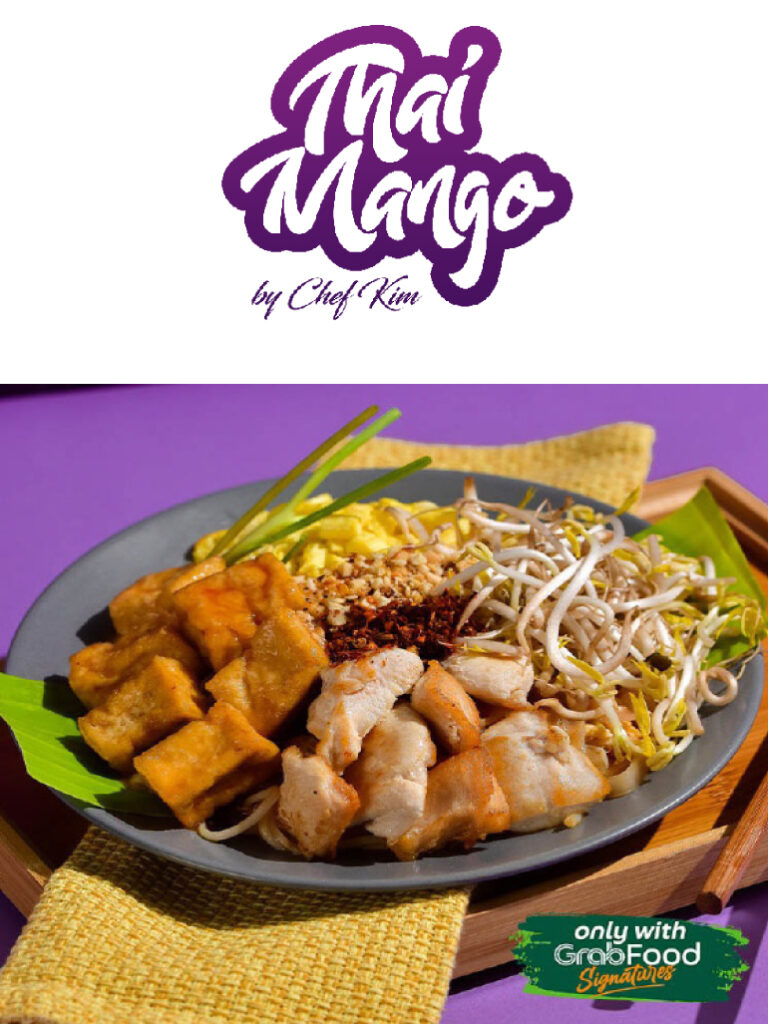
3. Thai Mango Chicken Pad Thai

As Filipinos develop a deeper fondness for Asian flavors, it opens the door for more international culinary ventures in the country. Thai cuisine, celebrated for its harmonious blend of sweet, sour, salty, and spicy notes, creates a flavorful dance on your palate. Thai Mango, a restaurant committed to providing authentic Thai delights for Filipinos, offers a diverse menu featuring pad thai, mango sticky rice, coconut ice cream, and more. In the Fan Faves 2023, their Chicken Pad Thai emerged as one of the trending favorites, capturing the taste buds of discerning food enthusiasts.

4. Seattle’s Best Coffee Buy 1, Take 1 Large White Chocolate Mocha

Whether it’s a steaming cup or an icy blend, Filipinos display an unparalleled passion for coffee in all its forms. From specialty cafes to expansive coffee chains, our nation is adorned with options for a quick caffeine fix. Among the many options, Seattle’s Best Coffee stands out with numerous branches nationwide with delivery options available, making it one of the favorite choice for coffee enthusiasts both for in-store chill and on-demand coffee fixes via delivery. Beyond just coffee, the restaurant offers a tempting variety of pastries and meals. Their Iced White Chocolate Mocha, especially the Buy 1, Take 1 large option, was listed among the Trending Faves.

5. Manam House Crispy Sisig

Celebrations resonate deeply with Filipinos, and restaurants exuding a warm, familial atmosphere effortlessly capture the crowd’s interest. Manam Comfort Filipino, in particular, honors traditional Filipino favorites by transforming them into contemporary culinary delights. While savoring your beloved Pinoy dishes, anticipate a subtly different yet warmly welcomed interpretation such as their acclaimed House Crispy Sisig.

6. BOK Korean Fried Chicken Double Double Box

With the ever-growing allure of Korean cuisine, credit partly goes to our favorite K-drama stars for sparking this culinary obsession. Among them, BOK Korean Fried Chicken, a pandemic-born restaurant dedicated to perfecting the creation of flawlessly fried chicken infused with authentic Korean taste. Indulge in their diverse flavor offerings, from the classic Yangnyeom to the perfectly balanced Soy Garlic, the lively Honey Lemon, the Snow Cheese delight, and the tantalizing Yangnyeom with a garlic twist.

7. Happilee Korean Kitchen Mini Kimbap – Spicy Pork (5 pcs)

Another restaurant that vows to satisfy everyone’s k-ravings is Happilee Korean Kitchen. They’ve got all the classics like tteokbokki, jjigae, dakgalbi, kimchi fried rice, kimbap, and more. And the recently concluded Fan Faves 2023 spilled the beans that everyone’s hooked on their Mini Kimbap in Spicy Pork.

8. David’s Tea House Shrimp Siomai

From sizzling dim sum to aromatic stir-fries, every dish from Chinese cuisine grew a special place in our taste palette. Filipinos embrace the delicate balance of sweet and savory, and the comforting warmth of hot noodles. David’s Tea House’s menu contains dishes from spring rolls to stir-fried noodles to various dumpling options that will surely satisfy your Chinese food cravings. And joining the list of Trending Faves is the much beloved Shrimp Siomai — and rightfully so as this particular offering has been delighting generations of fans of Chinese cuisine.
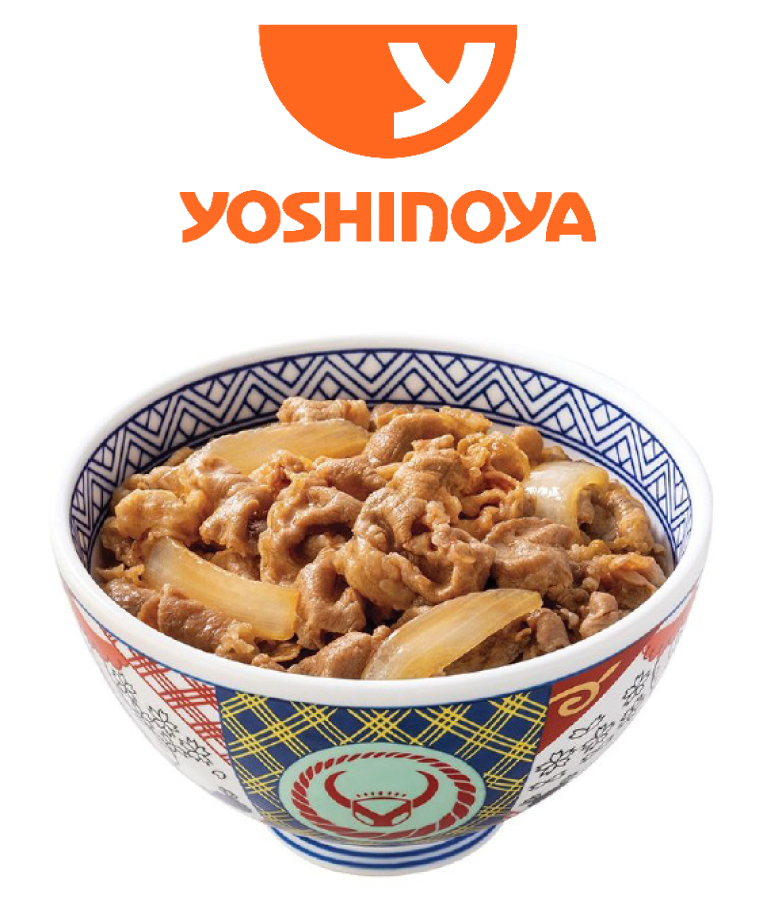
9. Yoshinoya Gyudon

When the Japanese fast-food urge hits, Yoshinoya is the answer to your cravings. Filipinos can’t get enough of the iconic Gyudon, as proven in the Fan Faves 2023, which is a tempting bowl featuring thinly sliced beef luxuriating in savory broth over a bed of piping-hot rice. The perfect fusion of flavors, affordability, and quick service makes Yoshinoya a top pick restaurant option for deliveries and foodie hangouts, providing a taste of Japan that resonates with the Filipino palate.

10. 99 Peso Sulit Chicken Soy Garlic Chicken Karaage Bowl (Best Seller!)

When quality meets affordability, capturing the hearts and attention of customers becomes easy. 99 Peso Sulit Chicken stands out among emerging restaurants, delivering filling bowl meals that truly satiate one’s hunger. Beyond the pocket-friendly prices, the real charm lies in the delectable and generously portioned chicken dishes that cater to both taste buds and budgets. A standout is their best-seller, the Soy Garlic Chicken Karaage Bowl, that earned its spot on the list.


Fan Faves 2023 stands as a testament to the wide selection of restaurants on the GrabFood platform that continue to be relentless in satisfying the various cravings of the everyday Filipino eater. To know more of the restaurants that made it to the GrabFood Fan Faves 2023, visit https://grabfanfaves.com.


Spotlight is BusinessWorld’s sponsored section that allows advertisers to amplify their brand and connect with BusinessWorld’s audience by enabling them to publish their stories directly on the BusinessWorld website. For more information, send an email to online@bworldonline.com.

Join us on Viber at https://bit.ly/3hv6bLA to get more updates and subscribe to BusinessWorld’s titles and get exclusive content through www.bworld-x.com.

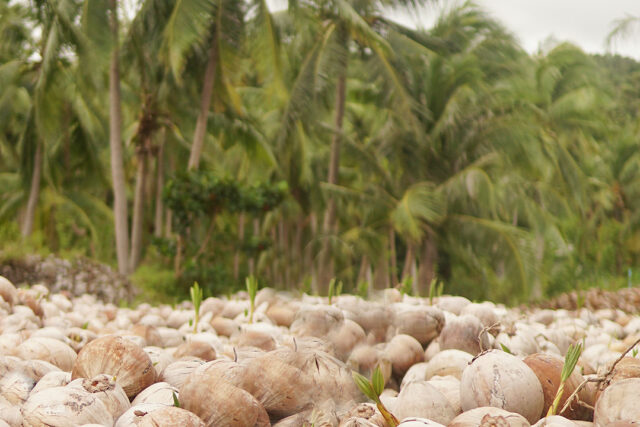
MPAV finalizes deal to own 34.76% stake in Axelum

CHEN MIZRACH-UNSPLASH

Some payments tied to profitability goals

METRO PACIFIC Agro Ventures (MPAV), a subsidiary of Metro Pacific Investments Corp. (MPIC), has finalized a deal to acquire a 34.76% stake in Axelum Resources Corp., a food manufacturing company that exports coconut products, with some payments contingent on achieving specific financial goals.

The agreement, initially announced in February, is seen to fortify the Metro Pacific group’s foothold in the Philippine agriculture industry.

In a regulatory filing on Wednesday, Axelum said that both companies agreed to extend the settlement of MPAV’s P5.32-billion subscription agreement until January 15, 2024.

In February, MPIC announced that it was acquiring a 34.76% stake in Axelum for P5.32 billion through its subsidiary MPAV, mainly to strengthen its presence in the local agriculture industry.

MPAV planned to acquire 1.19 billion common shares and 200 million redeemable preferred shares in Axelum.

While the total highest consideration for the transactions remains at approximately P5.32 billion or P3.83 per share, the basis for payment has undergone changes, MPIC parent company First Pacific Co. Ltd. said in a statement on Monday.

The payment structure now involves installments, with an initial payment of P3.37 billion due on or around Dec. 22.

Additional payments are contingent upon the “achievement of certain EBITDA (earnings before interest, taxes, depreciation, and amortization) milestones up to the original purchase price under the original SPA (sale purchase agreement),” First Pacific said.

First Pacific noted that these amendments resulted from “arms’ length negotiations,” emphasizing the parties’ commitment to a transparent and equitable agreement.

The company added that “for the avoidance of doubt,” a payment of P500 million will be issued for the redeemable preferred shares of Axelum on or around Dec. 22.

Axelum Resources Corp. expressed optimism for the partnership, emphasizing a shared vision to modernize the local coconut industry. 

“This partnership is built on a shared vision and profound commitment to spearhead initiatives that will modernize our local coconut industry. We aim to achieve this by leveraging our joint expertise, network and resources,” said Axelum Chairman and Chief Executive Officer Romeo I. Chan.

For his part, MPIC President and Chief Executive Officer Manuel V. Pangilinan said: “Axelum’s expertise in the coconut industry, combined with MPAV’s ambition for Philippine agriculture, position us to make lasting contributions to the nation.”

“We look forward to promoting sustainability and competitiveness in the country’s agricultural sector,” he added.

In terms of financial performance, Axelum recently reported a net loss of P428 million for the nine months ending in September, a reversal from the P717.28-million net income recorded in the same period the previous year.

The company’s top line also saw a 19% decline, dropping from P5.31 billion to P4.28 billion.

Axelum shares closed 3% higher at P2.40 apiece on Wednesday.

MPIC is one of three key Philippine units of First Pacific, the others being Philex Mining Corp. and PLDT Inc.

Hastings Holdings, Inc., a unit of PLDT Beneficial Trust Fund subsidiary MediaQuest Holdings, Inc., has a majority stake in BusinessWorld through the Philippine Star Group, which it controls. — Adrian H. Halili

Holiday best gift guides: Last-minute gift ideas for DIYers

The holiday season has arrived, and with it comes the joy of giving. So, if you’re looking for the perfect present for the DIY enthusiast, look no further than Wilcon’s expertly selected collection of holiday gift ideas. Wilcon has something for everyone, from kitchen connoisseurs to home improvement enthusiasts. Let’s look at the best items for DIYers who like to get things with their hands.

Alphalux Led Portable Solar Floodlight

Whether it’s lighting the driveway, patio, or garden, this innovative and sustainable lighting option is ideal. The lightweight design and energy-efficient features of the Alphalux Led Portable Solar Floodlight make it a cost-effective and useful gift for anyone who enjoys enhancing their outdoor ambiance.

Hills Angle Grinder

An excellent addition to any DIYer’s toolbox is the Hills Angle Grinder, particularly for those who love working with a variety of materials.  This multifunctional tool can be used for cutting, grinding, or polishing, and it is made to do a variety of tasks efficiently and accurately.

Truper Dual Screwdriver

Every DIYer needs a versatile screwdriver in their toolkit. The Truper Dual Screwdriver combines functionality and convenience with its dual-ended design, making it a go-to tool for various projects around the house.

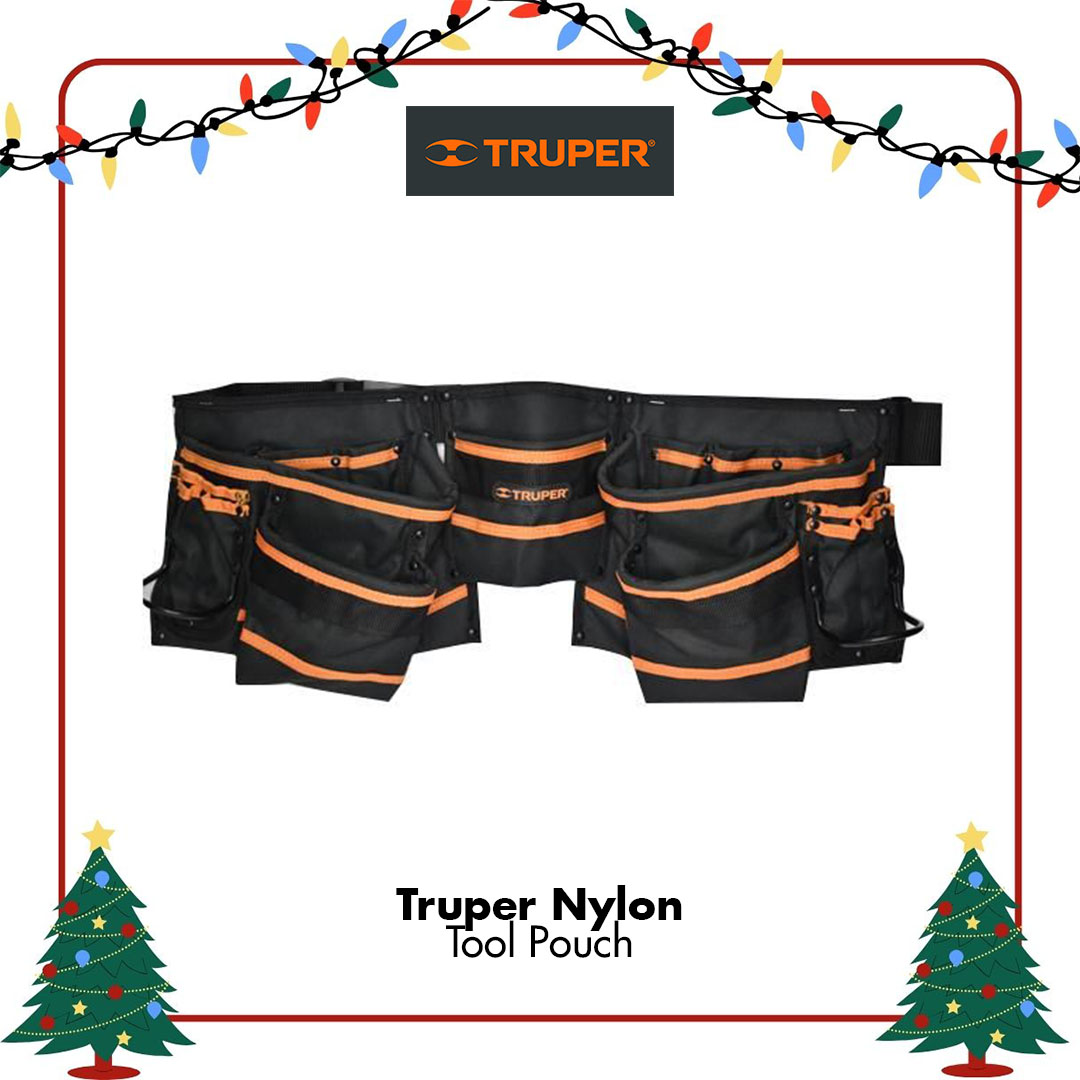
Truper Nylon Tool Pouch

Keep tools organized and within easy reach with the Truper Nylon Tool Pouch. This durable and practical pouch ensures that essential tools are always at hand, whether it’s a quick fix or a more extensive DIY endeavor.

Truper Industrial Plastic Toolbox

Give the Truper Industrial Plastic Toolbox as a present of the organization. This toolbox is built to withstand the demands of the DIY lifestyle while keeping everything in order, with ample space for tools of all shapes and sizes.

Hills Cordless Impact Drill

With the Hills Cordless Impact Drill, you can take your DIY projects to the next level. This adaptable and durable tool is ideal for activities, ranging from minor repairs to more complex woodworking projects. It’s a must-have for any DIYer who wants to improve their skills.

Wilcon E-GC

If you don’t know what to give to your loved ones during Christmas, give them a Wilcon E-GC, which is available in P500 and P1,000 denominations. Having Wilcon E-GC will provide both of you with a fun day of shopping for your home improvement items at the Wilcon Depot store this holiday season.

With Wilcon’s selection of gifts for DIYers, you can be confident that your loved ones will receive tools and accessories that enhance their craft and passion for creating. These thoughtful gifts are not only practical but also reflect the quality and innovation that Wilcon is known for.

Wilcon’s Gift Ideas for DIYers are sure to bring joy and inspiration to those who love to roll up their sleeves and turn their creative visions into reality.

Happy holidays and happy DIYing!

For more information about Wilcon, visit www.wilcon.com.ph or follow their social media accounts on Facebook, Instagram, and Tiktok. or subscribe and connect with them on Viber Community, LinkedIn, and YouTube. Or you may contact the Wilcon Depot Hotline at 88-WILCON (88-945266) for inquiries.


Spotlight is BusinessWorld’s sponsored section that allows advertisers to amplify their brand and connect with BusinessWorld’s audience by enabling them to publish their stories directly on the BusinessWorld website. For more information, send an email to online@bworldonline.com.

Join us on Viber at https://bit.ly/3hv6bLA to get more updates and subscribe to BusinessWorld’s titles and get exclusive content through www.bworld-x.com.

ADVERTISEMENT
ADVERTISEMENT