Home Blog Page 3867

Jet fuel surcharge to decline in January

Image by Andy Choinski from Pixabay

THE trend of falling jet fuel prices is expected to continue early next year, the Energy department said, triggering a lowering of the jet fuel surcharge.

In an advisory on Thursday, the Civil Aeronautics Board (CAB) said it is further lowering the surcharge for domestic and international flights in January.

Rino E. Abad, director of the Oil Industry Management Bureau at the Department of Energy (DoE) said fuel prices will likely continue their decline in the first quarter. 

“For next year, actually, there is an oversupply globally. Based on the global Platts projection, the oversupply will run until the end of 2024. Lower oil prices will be maintained, including jet fuel,” Mr. Abad told BusinessWorld on Thursday.

The CAB downgraded the fuel surcharge to Level 6 for Jan. 1-31 from Level 7 in December. At Level 6, the domestic passenger surcharge is between P185 and P665, while the international surcharge is between P610.37 and P4,538.40.

For December, the domestic passenger surcharge was between P219 and P739, while the international surcharge was between P722.71 and P5,373.69.

A fuel surcharge may be collected by airlines based on the movements in jet fuel prices, based on a benchmark known as MOPS (Mean of Platts Singapore).

“Airlines wishing to impose or collect fuel surcharges for the same period must file their applications with this Office on or before the effectivity period, with fuel surcharge rates not to exceed the above-stated level,” CAB said in the advisory.

The CAB added that the applicable conversion rate for October is P56.60 to the dollar.

This week, the retail price of gasoline remained unchanged, while diesel rose 10 centavos while kerosene declined 85 centavos. These price adjustments resulted in a year-to-date net increase of P11 per liter for gasoline, P3.95 for diesel and a net decrease of 30 centavos for kerosene. 

The week-on-week price of Dubai crude has fallen by about $2.00 per barrel, while MOPS gasoline, diesel and kerosene have also decreased by about $0.90, $1.20, and $2.80 per barrel, respectively, according to the Energy department. 

However, despite the oversupply conditions, Mr. Abad warned of a looming output cut by the Organization of the Petroleum Exporting Countries and their allies including Russia (OPEC+), which will tighten supply conditions. 

“Now the only threat we are seeing is a possible additional cut by OPEC+ by 900,000 barrels which could drive oil prices up,” Mr. Abad said, adding that if this cut materializes, about 2.2 million barrels will be taken off the market.

This month, OPEC+ oil producers said they intend to cut output early next year in response to surpluses.

In April, OPEC+ announced further output target cuts of around 1.16 million barrels per day from May through the rest of 2023.

“If OPEC+ delivered on this oil output cut, this will overturn any oversupply,” he added. — Ashley Erika O. Jose

Chamber backs changes to apprenticeship rules

REUTERS

THE German-Philippine Chamber of Commerce and Industry (GPCCI) said it supports amendments to the rules governing apprenticeship, citing the need to prolong worker training depending on the skills required.

The chamber expressed its position in the context of greater interest by German companies in establishing or expanding Philippine operations.

GPCCI President Stefan Schmitz said in a statement that results of an internal survey show that German businesses are interested in creating more jobs in the Philippines.

“Aside from continuing to liberalize the Philippine economy for foreign players, we urge the Philippine government to take advantage of this momentum by instituting laws that seek to improve skills development of Filipinos such as amending the outdated apprenticeship system and strengthening enterprise-based education,” Mr. Schmitz said.

According to GPCCI, needed changes to the apprenticeship rules include the elimination of the cap on the duration of apprenticeships.

“The necessary length of training should be determined based on the specific skill or curriculum requirements,” it said.

On Dec. 12, 2022, the House of Representatives passed on third reading House Bill (HB) 6523 which proposes to amend the apprenticeship provisions of the Labor Code of the Philippines.

Section 9 of HB 6523 provides for apprenticeship periods that are “based on the duration of training required in the training plan and on the complexity of the skills to be learned by the apprentices.”

The bill has been consolidated in the committee report by the Senate on Nov. 22 and is among President Ferdinand R. Marcos, Jr.’s priority bills.

The GPCCI said that the Philippines has attracted significant attention among German businesses, which reported raised expectations for improving business (63% of survey respondents).

The Philippines also scored the highest among German multinationals in terms of economic expectations over the next 12 months at 22%.

“Furthermore, the country also led in employment intentions, with 48% of participants planning to hire more within the country in the next 12 months,” GPCCI said.

“Moreover, the Philippines has established dominance in the services sector (as rated by 47% of respondents), which was a pivotal factor for investment,” it added. — Justine Irish D. Tabile

Palay production estimate downgraded by 0.5% for Q4

PHILIPPINE STAR/EDD GUMBAN

PRODUCTION of palay, or unmilled rice, is expected to come in at 7.32 million metric tons (MT) during the fourth quarter, based on the standing crop as of Nov. 1, according to the Philippine Statistics Authority (PSA).

PSA’s estimates reflect a 0.5% downgrade from the initial 7.35 million MT projected on Oct. 1.

If realized, palay production would drop 1.3% year on year against actual output recorded in the fourth quarter of 2022.

The PSA said that the estimated harvest area for the fourth quarter is expected to decline 1.5% year on year to 1.75 million hectares.

“Based on standing crop for the period October to December 2023, the yield per hectare of palay may improve to 4.17 metric tons or by 2.7%,” it added.

About 1.01 million hectares of the standing crop had been harvested as of Nov. 1, or 57.8% of the land planted to rice.

Production within the harvested area was about 4.35 million MT, it said.

About 7.9% of the crop yet to be harvested was in the vegetative stage, 32.1% in the reproductive stage, and 60.1% in the maturing stage.

Meanwhile, the PSA said corn production is estimated to decline by 2% to 1.94 million MT in the quarter.

The area planted to corn is estimated to decrease 1.9% to 615.98 thousand hectares, while yields are expected to be flat at 3.15 MT per hectare.

The PSA said that about 47.4% or 615.98 thousand hectares of the standing crop has been harvested, producing about 1.01 million MT of corn.

“Of the 323.79 thousand hectares of standing corn yet to be harvested as of Nov. 1, about 1.4% were in the vegetative stage, 43.5% in the reproductive stage, and 55.1% in the maturing stage,” it added. — Adrian H. Halili

Farmers call for improved agri data system

DA.GOV.PH

FARMERS said agriculture continues to be burdened by inadequate data that the industry relies on to make production decisions.

The Federation of Free Farmers (FFF) said in a statement that data discrepancies will continue to “haunt” the industry until data collection systems improve.

The gathering of agricultural data is currently undertaken by the Philippine Statistics Authority (PSA), local government units, Department of Agriculture (DA) regional offices, and institutional stakeholders.

“Information is indispensable for proper analysis, planning and decision making. We cannot properly address our recurrent food shortages and problems if we continue to have a shortage in timely, correct and meaningful data,” FFF National Manager Raul Q. Montemayor said.

Mr. Montemayor added that the PSA needs additional manpower and technical expertise to implement a dedicated agricultural data collection system.

“Within the DA, a system must be set up to gather and link data from various agencies and programs and to process these into meaningful and timely information for program implementors and policy makers,” he said.

Agriculture Secretary Francisco Tiu Laurel, Jr., has said that he supports the revival of the Bureau of Agricultural Statistics (BAS), the former agency in charge of farm data.

The BAS was established under a 1987 executive order, mandated to collect, compile, and release official agricultural data from the DA.

The agency was abolished and absorbed by the PSA in 2013.

Mr. Montemayor also urged the private sector to contribute to agricultural data collection by providing regular feedback to check the accuracy of the data generated by the system.

In an earlier interview with BusinessWorld, Edwin C. Mapanao, president of the Philippine Association of Feed Millers, Inc. likewise called for better government forecasts of crop output.

Mr. Mapanao added that crop status reports, planting intentions, and forecasts, would “go a long way in helping corn-reliant industries in planning their purchases.” — Adrian H. Halili

Trade remedy process migrated to electronic filing system — DTI

THE Department of Trade and Industry’s (DTI) Bureau of Import Service (BIS) will start receiving trade remedy applications via an electronic filing system.

In a statement on Thursday, the BIS said it launched the Trade Remedy Electronic Filing System (TREFS) as an ease of doing business initiative.

“The soft launch of TREFS is a prime example of the DTI’s innovative approach to easing doing business in the trade industry,” Trade Secretary Alfredo E. Pascual said.

“This is our way forward… as we address the challenges faced by our domestic producers in navigating the complexities of filing trade remedy petitions,” he added.

According to the BIS, the electronic system gives petitioners a streamlined filing experience.

“By utilizing the system, domestic producers will experience a streamlined submission process, providing step-by-step guidance on the filing of trade remedy petitions and extensions,” the BIS said.

The electronic system is configured to send instant alerts to users and will automate the validation protocols enforced by the Import Remedy Measures Division of the BIS.

“This means that submissions are meticulously examined, assuring compliance with the requirements outlined in the trade remedy laws,” the BIS said. — Justine Irish D. Tabile

Labor groups call for passage of security of tenure, wage hike measures

PHILSTAR FILE PHOTO

By Beatriz Marie D. Cruz, Reporter

LABOR GROUPS have urged Congress to pass bills improving security of tenure and raising wages next year, citing workers’ rights norms set by the International Labor Organization (ILO).

The Federation of Free Workers (FFW) said such bills are “crucial for advancing workers’ rights and improving working conditions across the nation.”

“Their enactment will ensure more stable and secure employment for millions, leading to a more committed and productive workforce,” FFW President Jose G. Matula said in a Viber message.

He said a security of tenure law would end contractual employment schemes that do not offer a path to permanent employment and its associated benefits.

Mr. Matula also called for a review of the current mechanism for approving regional wages “in favor of a one national minimum wage mechanism to remove wage discrimination and simplify implementation.”

The group also supported the passage of a P150 minimum wage hike to “combat the rising cost of living, ensuring [that] workers can maintain a decent standard of living.”

“Higher wages will boost consumption demand and drive wage-led growth,” Trade Union Congress of the Philippines (TUCP) legislative officer Carlos Miguel S. Oñate said via Viber.

Senate President Juan Miguel F. Zubiri in March filed a bill seeking to increase the minimum wage for workers by P150.

However, Finance Secretary Benjamin E. Diokno and National Economic and Development Authority Secretary Arsenio M. Balisacan have warned that a P150 legislated wage hike would stoke inflation.

“The Philippines’ minimum wage figures are lower compared with those of other Southeast Asian countries,” Mr. Matula said, citing the equivalent minimum wages for Indonesia (P842 per day), Malaysia (P854 per day), and Singapore (P2,486 per day).

The FFW also supported the passage of the Freedom of Association bill to safeguard the rights of workers seeking to form unions and engage in collective bargaining free of harassment.

“The bill also must remove harsh penalties on illegal strikes and to curb the power of the Secretary of Labor to assume jurisdiction over industries in the national interest,” Mr. Matula added, saying that such powers should be limited to essential services only.

The TUCP also called for the passage of the Union Formation bill, in “response to the ILO’s longstanding observation of excessive registration requirements for workers’ organizations.”

House Bill (HB) No. 5536, or the proposed Assumption of Jurisdiction bill, Mr. Oñate said, would amend the Labor Code by limiting the Secretary of Labor’s power to assume jurisdiction in the case of labor disputes in “industries providing essential services,” as against his current power to intervene in “industries indispensable to national interest.”

TUCP also expressed support for HB 7043, which seeks to remove dismissal and imprisonment as penalties for illegal strikes and lockouts; for HB 1514, recognizing civil service equivalency for public sector casual and contractual workers; and for HB 1516 or the magna carta for informal economy workers.

Confederation for Unity, Recognition, and Advancement of Government Employees (COURAGE) President Santiago Y. Dasmariñas, Jr. said the organization supports measures on legislated wage hikes, the regularization of contractuals, and the Public Service Labor Relations bill.

Congress will resume its regular sessions on Jan. 22.

Last week, the Senate ratified the 2019 ILO convention to eliminate workplace violence and harassment.

The jobless rate fell to 4.2% in October, the Philippine Statistics Authority said on Dec. 7. Job quality improved with underemployment rate falling to 11.7%, translating to 5.6 million underemployed workers who are seeking more work or longer working hours.

Lawmaker suggests invoking defense treaty with US; China raises ‘caution’

SCREENGRAB FROM PHILIPPINE COAST GUARD

By Beatriz Marie D. Cruz and John Victor D. Ordonez, Reporters

ONE of the leading legal minds in Congress urged the government on Thursday to seek United States assistance against potential attacks on Philippine vessels in the South China Sea, assuring President Ferdinand R. Marcos, Jr. that Manila’s 72-year-old defense treaty with Washington can be invoked.

In a statement, Cagayan De Oro Rep. Rufus B. Rodriguez underscored the need for consultation with the US under the 1951 Mutual Defense Treaty, citing the threat to personnel, fishermen, and the Philippines’ territorial integrity.

“It’s obvious that there has been no ‘armed attack’ yet — [or] an assault that is within the purview of the treaty. But certainly, there is threat to our personnel and fishermen and to our country’s territorial integrity or security,” he said in a statement.

The Philippines has been unable to enforce a 2016 ruling by a United Nations-backed arbitration court voiding China’s claim over most of the South China Sea due to the latter’s harassment of Philippine vessels within its exclusive economic zone (EEZ).

Mr. Rodriguez said the Philippines’ diplomatic protests against China — a total of 132 filings by the Department of Foreign Affairs (DFA) from the time Mr. Marcos assumed office in mid-2022 until last Wednesday — have “fallen on deaf ears.”

He said it is about time the country considered consulting its strongest defense ally.

Citing Article III of the defense treaty with the US, Mr. Rodriguez said that parties involved may consult each other on whether an external armed attack in the Asia Pacific serves as a threat to the territorial integrity, political independence or security of either states involved.

Mr. Rodriguez also referred to Article V, which states that an armed attack on either parties is “deemed to include an armed attack on the metropolitan territory of either of the Parties, or on the island territories under its jurisdiction in the Pacific.”

CHINA TO PHILIPPINES: ACT WITH CAUTION
In a statement on Thursday, the Embassy of China in Manila said its Foreign Ministry has urged the Philippines to “act with caution” in dealing with issues related to the South China Sea, adding that both states agreed to hold a dialogue soon.

The embassy said Chinese Foreign Minister Wang Yi and Philippine Foreign Affairs Secretary Enrique A. Manalo had a phone call on Wednesday to discuss possible future bilateral talks on diplomatic ties between the two countries.

Mr. Yi urged the Philippines to avoid any more provocations in the disputed waterway, citing risks of further escalations in the area.

“If the Philippine side miscalculates the situation and is bent on having its own way, or even colludes with ill-intentioned external forces and continues to cause trouble, China will defend its rights in accordance with the law and respond resolutely,” he said.

“The most urgent task is to properly handle and control the current maritime situation… and any disputes should be discussed and resolved.”

China’s top envoy and Mr. Manalo also agreed on engaging in more diplomatic mechanisms tackling maritime issues.

In a separate statement, the DFA said Mr. Manalo’s phone call with his Chinese counterpart was a “frank and candid exchange” about the concerns surrounding the South China Sea.

Over the weekend, Mr. Marcos told reporters that his government is eyeing a “paradigm shift” in its strategy to deal with China amid incidents of aggression in the South China Sea.

It was issued hours after Philippine Defense Secretary Gilberto C. Teodoro, Jr. rebuked China for accusing the Philippines of provoking and escalating tensions in the South China Sea, saying only Beijing believed its claim.

Tensions between the Philippines and China have worsened after the Chinese Coast Guard fired water cannons to block Manila’s attempt to deliver food and other supplies to troops stationed at BRP Sierra Madre.

In 2016, a United Nations-backed arbitration court based in The Hague said China’s claim to nearly the entire South China Sea has no legal basis, but Beijing has largely ignored the ruling.

In a Senate hearing earlier this year, Mr. Manalo said the US could invoke its Mutual Defense Treaty with the Philippines, but this would still be subject to congressional review.

Last February, Mr. Marcos gave the US access to four additional sites on top of five under the Philippines’ 2014 Enhanced Defense Cooperation Agreement (EDCA).

In March, the President said EDCA sites will not be used to launch offensives. Mr. Manalo also told Philippine senators that the EDCA cannot be invoked to defend Taiwan from China.

National Security Council spokesman Jonathan E. Malaya previously said the Philippines subscribes to the One China Policy, which recognizes Taiwan as part of China.

Gov’t told to ensure transparency in using unprogrammed funds

BW FILE PHOTO

By John Victor D. Ordoñez, Reporter

THE PHILIPPINE government should ensure transparency in how they decide to use the unprogrammed funds which it increased by P450 billion in the P5.768-trillion national budget for next year.

“Notwithstanding the issue on constitutionality, it is quite concerning that bloated unprogrammed appropriations has become as pattern in the enacted budgets due to ‘pork’ projects,” I-Lead Executive Director Zyza Nadine M. Suzara said in a Viber message.

“It is imperative for the government to be transparent in this whole process of using unprogrammed appropriations,” she said.

Ms. Suzara also raised concern over a provision in the 2024 General Appropriations Act (GAA) that authorizes the Executive branch to tap into coffers of government-owned-and-controlled corporations (GOCCs), particularly funds that would remain unused or undisbursed. “It is a reality that some GOCCs do not efficiently disburse funds, but their programs have beneficiaries,” she explained.

Unprogrammed appropriations are funds on standby in case of additional priority programs or projects when revenue collection exceeds targets.

Earlier, Senate Minority Leader Aquilino Martin “Koko” D. Pimentel, III said he would challenge the legality of the boosted allocation in unprogrammed appropriations since the Budget department only recommended a total of P281.9 in these funds.

On Wednesday, Budget Secretary Amenah F. Pangandaman told reporters that she did not see a problem with the increase, noting that unprogrammed funds may only be used in particular cases of excess revenue.

Under the Constitution, Congress is barred from increasing appropriations recommended by the President “for the operation of the government as specified in the budget.”

“They (state agencies) should focus on utilizing the budget on productive spending that will reap benefits only in the short term but also in the long term,” John Paolo R. Rivera, president and chief economist at Oikonomia Advisory & Research, Inc., said in a Viber message.

He said it was crucial for the government to boost spending on modernizing the agriculture sector and improving salaries of teachers and nurses.

Last Wednesday, President Ferdinand R. Marcos, Jr. signed into law the bill on the state spending plan next year, which he called a “battle plan” to boost education, combat hunger and to create more jobs.

Terry L. Ridon, a public investor analyst and convenor of the think tank InfraWatch PH, said the state should focus on delivering its social protection programs and irrigation infrastructure lined up next year.

“Government has rightfully placed social protection programs front and center of the 2024 budget, as this will have a major impact on ordinary families facing economic

House Speaker Ferdinand Martin G. Romualdez on Tuesday said Congress has allotted P500 billion worth of financial assistance to at least 12 million poor Filipino families next year.

P3 Fund bill seeks to boost microenterprise growth

PHILIPPINE STAR/ MICHAEL VARCAS

By Beatriz Marie D. Cruz, Reporter

A LAWMAKER has filed a bill seeking to institutionalize the Pondo sa Pagbabago at Pag-asenso (P3) Fund to provide financial assistance specific to micro-enterprises.

“This bill will contribute to the strengthening and facilitating the growth and development of the sector towards the creation of more income and jobs,” Party-list Rep. Eduardo C. Villanueva said in House Bill No. 9634.

Institutionalizing the P3 Fund would “ensure availability and accessibility of micro-financing to millions of micro-entrepreneurs such as market vendors, sari-sari store owners, and stall owners to help them sustain and grow their businesses,” Mr. Villanueva said.

Microenterprises make up 90.49% or over 1 million of the Philippines’ total number of establishments, according to 2022 data released by the Philippine Statistics Authority (PSA).

Under the bill, financial assistance will be given to micro-enterprises through direct lending or lending through an accredited partner financial institution (PFI).

Accredited PFIs include rural and cooperative banks, micro-financing institutions, or lending companies licensed by the central bank, the Cooperative Development Authority, or the Securities and Exchange Commission.

Other features of the P3 fund include a 2% interest rate to be imposed on the loan availed of by the beneficiary per month as well as interest earnings that will accrue to the fund. There will also be no collateral requirement for P3 fund beneficiaries, according to the bill.

The total loanable amount will be set and reviewed by the Micro, Small, and Medium Enterprise Development (MSMED) Council.

The Small Business Corp. (SBC), which is currently handling the P3 fund, will be the implementing agency once it is enacted into law.

An amount of up to 5% of the total loans disbursed will be sourced from the national budget to support the operations of the SBC.

The Labor department would also be tasked to assist micro-entrepreneurs’ transition to formal work engagements.

According to the PSA, small enterprises only make up 8.69% or 96,464 of the Philippines’ total number of establishments. This is followed by medium enterprises at 0.40% or 4,484, and large enterprises at 0.41% or 4,541 establishments.

NTC suspends SMNI operations for 30 days

PHILSTAR FILE PHOTO

By Ashley Erika O. Jose, Reporter

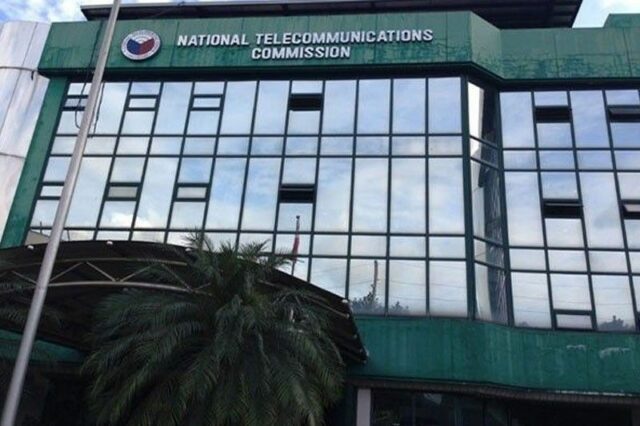
THE NATIONAL Telecommunication Commission (NTC) has slapped Sonshine Media Network International (SMNI) with a suspension that stops it from broadcasting for 30 days.

In a media release on Thursday, the NTC said the suspension of SMNI comes with a show cause order directing Swara Sug Corp., operator of the broadcasting station, to submit within 15 days from the date of receipt of the order a written explanation on why it should not face administrative sanctions.

The NTC said its order stemmed from a House of Representatives resolution, urging it to suspend the operations of SMNI for violating the terms and conditions of its franchise.

SMNI’s legislative franchise was granted in 2019 under Republic Act No. 11422. The administrative hearing for the issuance of the order has been set for Jan. 4 next year, the NTC said.

However, the House committee on legislative franchises recently conducted a hearing following corruption allegations made by its anchors against House Speaker Ferdinand Martin G. Romualdez, a cousin of President Ferdinand R. Marcos, Jr.

This move comes after host Jeffrey Celiz in SMNI’s Laban Kasama ng Bayan program said that Mr. Romualdez allegedly spent P1.8 billion on travel expenses in one year.

Earlier this month, the Movie and Television Review and Classification Board (MTRCB) ordered a 14-day preventive suspension order for the program and another SMNI TV show because of alleged broadcast violations.

DoH: No mandated masking yet

PHILIPPINE STAR/MIGUEL DE GUZMAN

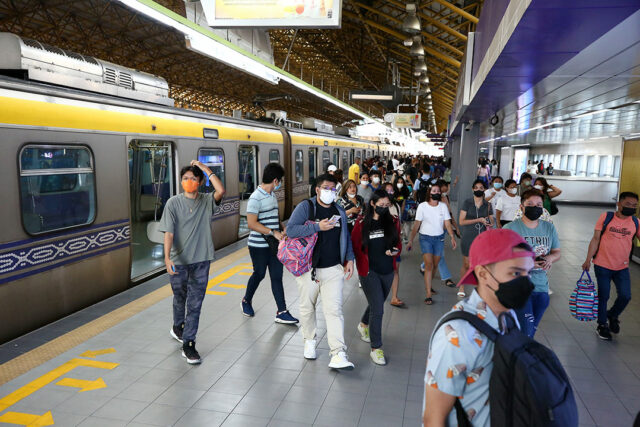
THE DEPARTMENT of Health (DoH) said on Wednesday that there is no need to revert to mandatory wearing of face masks in public despite a 50% uptick in coronavirus cases this month.

“We expected this higher number (in COVID-19 cases)… but of course, we were asked several times if we’re going to bring back the mask mandate, not right now,” Health Undersecretary Eric A. Tayag said in an interview on Cignal TV’s One News PH.

The Philippines recorded 2,275 COVID-19 cases from Dec. 12 to Dec. 18, which brings to 389 the daily average of newly reported infections for a 50% increase in cases from a week earlier.

President Ferdinand R. Marcos, Jr. lifted the mandatory mask requirement for public places in October last year when the numbers tapered down.

At least 78.4 million people in the country have been fully vaccinated against the virus, with about 23.8 million of them having received their booster shots.

Mr. Tayag also said the DoH is expecting a slowdown in influenza-like illnesses but called on senior-citizens to get vaccinated against these sicknesses.

“We have reminded the public to check measures on how to prevent transmitting any infection not only for COVID but other respiratory illnesses as well… and this is to wear a mask,” he said. — John Victor D. Ordoñez

Retired cop admits De Lima lie

PHILSTAR FILE PHOTO

A RETIRED police general who testified against former senator Leila M. de Lima in her drug trafficking cases has expressed his intention to recant his sworn statements before a Muntinlupa City trial court.

In a one-page letter to Judge Gener M. Gito dated Dec. 18 and released to media on Thursday, retired police brigadier general Jerry C. Valeroso said he has decided to recant his testimony “to set free all accused who were wrongfully charged.”

Mr. Valeroso added that the criminal complaints filed against the accused, which includes Ms. De Lima “are pure hearsay and full of lies.”

“Because I was disturbed by my conscience, I planned to recant in early 2019. However, due to fearing for my life and the safety of my family and loved one, I lost the guts to do so,” read part of his letter.

According to Ms. De Lima’s lawyer and spokesman, Filibon F. Tacardon, Mr. Valeroso testified that he took part in an undercover investigation on the illegal drug trade inside the New Bilibid Prisons (NBP), with former police sergeant Nonilo Arile acting as his informant.

Mr. Tacardon told reporters in a Viber message that the retired police official claimed to have met during his probe an alleged influential Chinese prisoner, Sam Li Chua, who purportedly showed him P65 million, intended for Ms. De Lima. He also claimed to have seen the ex-senator watching the concert organized by high-profile inmate Herbert Collango inside NBP.

Mr. Valeroso becomes the 13th witness to retract statements implicating the former senator in the illegal drugs trade. — Jomel R. Paguian