Home Blog Page 3802

Palay production targeted to exceed 20 million MT in 2024

REUTERS

THE palay production target has been set at no less than 20 million metric tons (MT) this year, the Department of Agriculture (DA) said.

“Last year, our target was 20 million MT, so it shouldn’t be below than (that),” DA Spokesperson Arnel V. de Mesa told reporters on Monday.

Mr. De Mesa added that the DA is taking steps to mitigate the impact of El Niño on rice production during the dry season.

“The harvest (tends to be higher) during the wet season, because the area planted to rice is bigger especially for rain-fed areas. El Niño will hit during the dry season and the water in the dams is still good,” he added.

The El Niño is expected to bring dry spells and drought to 63 provinces.

The government weather service, known as PAGASA (Philippine Atmospheric, Geophysical and Astronomical Services Administration), has said that the most intense phase of El Niño may run until the second quarter.

President Ferdinand R. Marcos, Jr., has ordered the creation of an interagency task force to address the effects of the weather phenomenon.

“Our mitigation measures are already in place. One of our strategies is to plant hybrid (seed), at least 1 million hectares, this dry season due to their higher yields,” Mr. De Mesa said.

He added that the DA is expecting the land planted to hybrid seed to offset the loss of riceland that cannot be cultivated due to the lack of water.

Meanwhile, Mr. De Mesa said that rice prices will continue to rise entering the lean months between harvests.

“Right now, rice prices are a bit higher because we are entering the lean season, and we have no more local production,” he added. “Our only source is imports and the price of imports is high right now.”

The DA has said that it is expecting 500,000 MT of imported rice to arrive as the government builds up reserves in preparation for the worst of El Niño.

The government has also extended the lowered tariffs on rice via Executive Order No. 50. Rates for rice imports were kept at 35% regardless of the minimum access volume and country of origin.

As of Jan. 8, the price of well-milled rice in Metro Manila markets was P40-55 per kilogram, while regular-milled rice was fetched P43 to P52 per kilo. 

On the other hand, imported well-milled rice was selling for P50 to P58 per kilo. — Adrian H. Halili

Agri officials making big push to enhance dry-season rice harvest

A farmer guides his carabao on dry and cracked farmland in San Juan town, Batangas, April 18, 2010. — REUTERS

THE Department of Agriculture (DA) said it will meet with rice farmers to identify strategies to boost production for the dry-season crop.

In a special order, the DA authorized the Masagana Rice Industry Development Program (MRIDP) to consult with the rice industry to identify and map areas deemed vulnerable during the dry season.

According to the government weather service, known as PAGASA (Philippine Atmospheric, Geophysical and Astronomical Services Administration), droughts and dry spells brought about by El Niño will affect about 63 provinces and dampen their rice output.

PAGASA expects El Niño to intensify this month, persisting until May.

It added that the consultations will develop plans for distributing seed, fertilizer discount vouchers, soil ameliorants and biocontrol agents.

The Visayas agriculture cluster, which includes Region 6,7, and 8, will meet on Jan. 9, while the Mindanao cluster meeting (Regions 9 to 11) will meet on Jan. 11.

It added that the date has not been set for the Calabarzon, Mimaropa, and Region 5 cluster meetings.

The MRIDP aims to stabilize the rice supply at between 24.99 million metric tons (MT) and 26.86 million MT, in the process lowering growth in rice prices to less than 1% annually.

It also seeks to increase farmer incomes by 54% and ensure adequate reserves held by the National Food Authority. — Adrian H. Halili

Philippine current account deficit seen possibly widening in 2024 — BMI

ICTSI

THE current account deficit may widen in 2024 as the global economy will likely slow further this year, with the resulting weak external demand dampening exports and tourism receipts, BMI Country Risk & Industry Research said.

In a report on Monday, BMI Country Risk & Industry Research said the current account deficit as a percentage of gross domestic product (GDP) could widen to 2.8% in 2024, from an estimated 2.6% in 2023.

“We expect the current account shortfall to widen from an estimated 2.6% of GDP in 2023 to 2.8% in 2024, leaving the deficit much larger than its 2015-2019 average of 0.4%,” BMI said.

The 2024 forecast is less optimistic than that issued by the Bangko Sentral ng Pilipinas (BSP), which projects a $9.5-billion deficit, equivalent to 2% of GDP this year.

The BSP also sees the current account deficit to narrow to $11.2 billion (2.5% of GDP) in 2023, from the $18.1 billion (4.5% of GDP) shortfall in 2022.

“Our 2024 forecast stands in stark contrast to the government’s expectations for a further narrowing. The BSP thinks that trade activity will rebound in 2024 but we believe otherwise. Instead, we think that the global economy is set to slow further which will exert pressure on the country’s external sector,” BMI said.

The BSP reported a current account deficit of $10.9 billion in the first nine months of 2023, equivalent to 3.5% of GDP.

According to BMI, global economic growth may slow to 2.1% in 2024 from an estimated 2.5% last year, as the US and China could experience shallow recessions in the second half.

“Contrary to regional trends, the Chinese economy is expected to miss out on the impending recovery, with growth decelerating significantly from an estimated 5.5% in 2023 to 4.7% in 2024,” BMI said.

“This is particularly relevant for the Philippines, as the US and China combined represent nearly one-third of the Philippines’ outbound shipments,” it added.

The Philippine Statistics Authority reported a trade deficit of $4.17 billion in October, against the $3.31-billion deficit a year earlier.  

Export revenue dropped 17.5% year on year to $6.36 billion in October while merchandise imports declined 4.4% to $10.54 billion.

The US remained the top destination of Philippine exports, accounting for $1.02 billion or 16% of the total in October. This was followed by Japan ($902.65 million or 14.2%) and China ($880.37 million or 13.8%). 

On the other hand, imports will likely surge this year due to a rebound in domestic demand and an improvement in economic activity.

“Diminishing price pressures are projected to bolster real household incomes and consequently, consumer spending,” BMI said.

Headline inflation eased for a third straight month in December, hitting a 22-month low of 3.9% from 4.1% in November. This was also the first time inflation settled within the 2-4% target range in 20 months.

Full-year inflation stood at 6% in 2023, higher than the 5.8% in 2022. It marked the second straight year that average inflation breached the BSP’s 2-4% target.

The central bank expects full-year inflation to ease to 3.7% this year and 3.2% in 2025, according to its baseline inflation forecasts.

Income from tourism receipts may also moderate in 2024, BMI said. International visitors to the Philippines totaled 1.3 million in the third quarter, 35% lower than pre-pandemic levels.

“Our calculations suggest that in 2023, a traveler’s expenditure was 23% (after accounting for inflation) higher than the average from 2015 to 2019,” BMI said.

“A plausible explanation for this is the significant build-up in travel demand created by lockdowns during the coronavirus pandemic, a phenomenon that we anticipate will eventually subside,” it said.

Meanwhile, foreign direct investment (FDI) may pick up in the coming quarters as central banks, including the Federal Reserve, will likely start policy easing in the second half.

“Consequently, the investment climate for the coming year appears more promising than it did in 2023. A growing emphasis from (the government) on fostering a business-friendly environment should also contribute positively to attracting foreign investments,” BMI said.

Net FDI inflows declined 42.2% year on year to $422 million in September. This was also 46.5% lower than the $790 million worth of net inflows in August.

The September total was the lowest monthly net inflow of FDI in over three years, or since the $314 million posted in April 2020 at the height of the coronavirus pandemic lockdowns. — Keisha B. Ta-asan

Food exporters warned of China crackdown on expired registrations

THE Department of Trade and Industry (DTI) said the Import and Export Food Safety Bureau of the General Administration of Customs of China (GACC) has called on Philippine producers to renew their registrations.

In an advisory posted last week, the DTI said the GACC has noted that a number of Philippine aquaculture enterprises hold expired registrations or are close to expiry.

The GACC said that it is requiring overseas food production enterprises exporting to China to renew their registrations and file their applications for renewal three to six months before the expiry date.

“Failure to apply for renewal of registration or failure to provide timely explanation, in writing, the reason for late renewal may result in deregistration,” according to the advisory. 

Asked to comment, the Philippine Exporters Confederation, Inc. said this it has previously aired its concern the first time the requirement was imposed by China as it “poses another burden to our exporters.”

According to the advisory, Philippine aquaculture companies planning to renew their GACC registration should work through with the Fisheries Inspection Section of the Bureau of Fisheries and Aquatic Resources.

Meanwhile, exporters of fresh fruit and vegetables and of processed foods work with the Bureau of Plant Industry’s National Plant Quarantine Services Division and the Food and Drug Administration’s Center for Food Regulation and Research, respectively.

Exporters of other food products are required to directly register through the GACC website.

GACC registration takes place via the China Single Window online system, also known as CIFER. Registrations are valid for five years.

China was among the top five export trading partners of the Philippines in October, accounting for $880.37 million or 13.8% of the Philippines’ total exports, according to preliminary data from the Philippine Statistics Authority. 

In the 10 months to October, Philippine exports to China amounted to $9.12 billion, or about 15% of total export.

In the 10 months, $643.35 million of the exports consisted of fresh food, processed food, aquaculture and beverages. — Justine Irish D. Tabile

DTI: Senior citizen discount issues form tiny share of consumer complaints

PHILIPPINE STAR/MIGUEL DE GUZMAN

THE Department of Trade and Industry (DTI) said that it received relatively few complaints in 2023 from senior citizens over the honoring of their discount privileges.

“We received only 136 complaints… so it is a very small number and most of them have been referred to the Office for Senior Citizens Affairs (OSCA),” Trade Secretary Alfredo E. Pascual told reporters last week.

Asked to comment, Assistant Trade Secretary for the Consumer Protection Group Amanda F. Nograles said in a Viber message that overall, consumer-related complaints received by the department last year totaled less than 30,000.

“Of the total, only 136 complaints (concern) senior citizen discounts and privileges,” she said.

Ms. Nograles said that the 20% discount for senior citizens and their value-added tax exemption is within the mandate of OSCA and National Commission of Senior Citizens (NCSC). 

“The role of the DTI concerning senior citizens’ discounts will (involve) the 5% special discount for basic necessities and prime commodities (BNPCs) if senior citizens are buying from supermarkets and groceries,” Ms. Nograles said. 

Ms. Nograles said that the department has been accepting complaints about the implementation of the 20% discount in observance of a “no wrong door policy.”

“Since this is ultimately a consumer issue, we accept the complaints and then we refer those to OSCA in the respective local government units to file a case,” she said.

“The primary mandate of the DTI is only to ensure the 5% discount on the selling of BNPCs to senior citizens, but the 20% discount in pharmacies and other establishments (is) within the mandate of the OSCA and NCSC,” she added.

Republic Act No. 9994 or the Expanded Senior Citizens Act of 2010 grants senior citizens a 20% discount and an exemption from the value-added tax on applicable goods for their exclusive use and enjoyment.

The government may also grant special discounts to senior citizens on the purchase of BNPCs, subject to the guidelines set by the DTI and the Department of Agriculture.

Ms. Nograles, however, reminded consumers that they are not allowed to avail of double discounts and that establishments should allow consumers to choose whatever they deem is a better discount.

“The rule is if the item is on a promotional discount and a senior citizen is buying the item, it should be the consumer’s choice what discount to use whichever is more favorable,” she said. — Justine Irish D. Tabile

FSCC to work on deepening market for corporate bonds

BW FILE PHOTO

THE Financial Stability Coordination Council (FSCC) said it is preparing a work program that aims to further deepen the corporate bond market this year, the Bangko Sentral ng Pilipinas (BSP) said.

The FSCC, in a statement released by the BSP on Monday, described the financial markets as strong amid geopolitical risks last year, but deepening the bond market has yet to be achieved.

“Its work program for 2024, however, will be targeted, engaging the different constituents in the market. The Council’s long-term objective is for a much more diverse set of corporate borrowers to issue bonds, and for the risks to be actively priced while the bond remains outstanding,” the FSCC said.  

This will help the economy move forward and become better positioned to attract investors, it added.

According to the FSCC, the current market is characterized by a “risk on” stance, which will likely boost economic activity.  

The BSP noted that in the risk on – risk off (RORO) investment paradigm, the perception of market traders will be reflected in financial prices. A “risk on” sentiment shows market optimism and a perception of low risks ahead.

FSCC Chairman and BSP Governor Eli M. Remolona, Jr. said he expects an increase in the funding requirements of corporations during this “risk on” phase.

“The banking system has enough space to support the increased demand for funding. But this is also a great time for us to continue broadening the funding opportunities by having in place a viable and competitive corporate bond market,” he said.  

He also said that an active bond market will benefit the financial sector by creating wider access to funding for all types of borrowers. It would also expand opportunities for investors of various risk appetites, thereby better managing risk.

“The FSCC is all about making the different components of the financial system work better with each other. We also need to communicate continuously with stakeholders, so that they can make informed decisions,” Mr. Remolona said.

“All these are collective responsibilities, but the FSCC is more than happy to be at the forefront of all these in pursuit of its responsibility of managing systemic risks,” he added.

The FSCC is an interagency body composed of representatives of the BSP, the Department of Finance, the Insurance Commission, the Philippine Deposit Insurance Corp., and the Securities and Exchange Commission.

In July 2021, Executive Order 144 authorized the FSCC to focus on assessing and implementing policies to prevent systemic risk factors or company- and industry-level events that have the potential to trigger severe instability within entire industries, or even the economy.

The FSCC convenes on a quarterly basis. The regularity of their meetings may be increased “when market conditions warrant.” — Keisha B. Ta-asan

A fresh start: LGU business permit renewal

The new year symbolizes a new start and an opportunity to move on from the mistakes made in the previous year. Surely, a lot of people are looking forward to kickstarting 2024 with a bang.

But the other side of the coin is the dread felt by many businesses. Not only does 2024 symbolize a new year, but it also represents the start of one of the busiest months in their working lives. It’s business permit renewal season at local government units (LGUs), which means unending paperwork, bargaining, and phone calls from various people.

LGU permit renewal is one of the most essential processes businesses go through each year. Obtaining a valid business permit allows them to continue to operate in their city. Without such a permit, businesses risk their whole operation getting shut down and being charged a penalty. Although the process may sound tedious, it isn’t always the case, especially for long-standing businesses that have perfected the art of LGU business permit renewal.

Whether you’re new to business permit renewal or consider yourself experienced in the process, here are some of the basics that you should never forget.

BUSINESS PERMITS: WHY AND WHAT FOR?
Consider your business permit as one of the A-B-Cs of your business. It gives Authority to your Business and is issued only if the business is Compliant with the rules and regulations in a particular city. A business permit isn’t just a piece of paper handed to you by your LGU representative. If at all, it is THE piece of paper that every business needs to signify the validity of their existence for the year.

One can’t simply do away with this requirement, regardless of how big or small your business is. The absence of a valid permit can lead to the closure of a business, penalties, and fines. All the hard work and effort you put into building your business could be for nothing if you fail to apply for this coveted piece of paper.

THE NITTY GRITTY OF LGU PERMIT RENEWAL
The requirements for LGU permit renewal usually vary per city or municipality. Notwithstanding, the procedure is similar in almost all cities.

The first step usually begins at the barangay level, where a permit to operate and a clearance must first be obtained. The whole procedure could take no more than a day to accomplish, so be sure to come prepared with the necessary documents.

After the barangay, you can now proceed with the LGU permit renewal. You can start as early as Jan. 1, but no later than Jan. 20. In previous years, some cities extended the period for LGU renewal due to the volume of applications.

Businesses must also prepare for the local business tax they have to pay during renewal. This is perhaps one of the biggest difficulties some businesses face, especially if they’re assessed a large amount. Unfortunately, companies have no other option but to pay the local business tax, as it is mandated by the Local Government Code (LGC). Sections 166 and 167 of the LGC provide that all local taxes, fees, and charges accrue on the first of January each year and must be paid within the first 20 days of January. Failure to make such a payment will subject a business to a surcharge and penalty of no more than 25% of the amount of taxes, fees, or charges not paid on time. In addition, a rate not exceeding 2% will be imposed as interest for every month of unpaid taxes, fees, or charges.

DIGITALIZING LGU PERMIT RENEWAL
In an effort to make renewal accessible and convenient for everyone, some LGUs have adopted a system of online submission. There’s hardly any difference between in-person and online submission, except for the fact that you’re skipping lines and experiencing a much more convenient way of doing business. Businesses can also expect feedback immediately from their LGU assessors so that they’ll be able to work on additional requests, if any. Now that this option has been made available in some cities, it begs the question of when other cities will apply it, especially in cities that are densely populated by corporations.

FINAL WORDS
Mark your calendars because the season for LGU permit renewal has officially begun. It’s a busy start for many companies, which can make the month of January pass by fast. Make sure to take note of the basic requirements and have them ready for submission. More importantly, make sure to get the full set of requirements from your respective LGUs. Now that you know the basics of LGU renewal, you have at least a few bullets in your arsenal as you welcome 2024 by dealing with this tedious task.

Let’s Talk Tax is a weekly newspaper column of P&A Grant Thornton that aims to keep the public informed of various developments in taxation. This article is not intended to be a substitute for competent professional advice.


Joselle Mariano is an associate from the Tax Advisory & Compliance division of P&A Grant Thornton. P&A Grant Thornton is one of the leading audits, tax, advisory, and outsourcing firms in the Philippines, with 29 Partners and more than 1000 staff members.

Tweet us: GrantThorntonPH, like us on Facebook: P&A Grant Thornton

pagrantthornton@ph.gt.com

www.grantthornton.com.ph

US investigators recover key part from Alaska Airlines 737 MAX jet

REUTERS

WASHINGTON — The US National Transportation Safety Board (NTSB) said late on Sunday the “key missing component” from the Boeing MAX 9 jet involved in an Alaska Airlines emergency landing had been recovered from the backyard of a suburban home.

The plug door tore off the left side of an Alaska Airlines jet on Friday following takeoff from Portland, Oregon, en route to Ontario, California, depressurizing the plane and forcing pilots to turn back and land safely with all 171 passengers and six crew on board.

The Federal Aviation Administration (FAA) on Saturday ordered the temporary grounding of 171 Boeing MAX 9 jets installed with the same panel, which weighs about 60 pounds (27 kg) and covers an optional exit door mainly used by low-cost airlines.

The missing plug door was recovered on Sunday by a Portland school teacher identified only as “Bob” in the Cedar Hills neighborhood who found it in his backyard, NTSB Chair Jennifer Homendy said, saying she was “very relieved” it had been found.

She had earlier told reporters the aircraft part was a “key missing component” to determine why the accident occurred.

“Our structures team will want to look at everything on the door – all of the components on the door to see, to look at witness marks, to look at any paint transfer, what shape the door was in when found. That can tell them a lot about what occurred,” she said.

The force from the loss of the plug door was strong enough to blow open the cockpit door during flight, said Ms. Homendy, who said it must have been a “terrifying event” to experience.

“They heard a bang,” Ms. Homendy said of the pilots, who were interviewed by investigators.

A quick reference laminated checklist flew out the door, while the first officer lost her headset, she said. “Communication was a serious issue… It was described as chaos.”

Ms. Homendy said the cockpit voice recorder did not capture any data because it had been overwritten and again called on regulators to mandate retrofitting existing planes with recorders that capture 25 hours of data, up from the two hours required at present.

EARLIER PRESSURIZATION ISSUES
Ms. Homendy said the auto pressurization fail light illuminated on the same Alaska Airlines aircraft on Dec. 7, Jan. 3 and Jan. 4, but it was unclear if there was any connection between those incidents and the accident. 

Alaska Airlines made a decision after the warnings to restrict the aircraft from making long flights over water to Hawaii so that it could return quickly to an airport if needed, Ms. Homendy said.

The Seattle-based carrier said earlier in a response to questions about the warning lights that aircraft pressurization system write-ups were typical in commercial aviation operations with large planes.

The airline said “in every case, the write up was fully evaluated and resolved per approved maintenance procedures and in full compliance with all applicable FAA regulations.”

Alaska Airlines added it has an internal policy to restrict aircraft with multiple maintenance write-ups on some systems from long flights over water that was not required by the FAA.

PLANES GROUNDED
The FAA said on Sunday the affected fleet of Boeing MAX 9 planes, including those operators by other carriers including United Airlines, would remain grounded until the regulator was satisfied they were safe.

The FAA initially said on Saturday the required inspections would take four to eight hours, leading many in the industry to assume the planes could very quickly return to service.

But criteria for the checks have yet to be agreed between the FAA and Boeing, meaning airlines have yet to receive detailed instructions, people familiar with the matter said.

The FAA must approve Boeing’s inspection criteria before the checks can be completed and planes can resume flights. Alaska said late Sunday it had still not received instructions from Boeing.

Alaska Airlines canceled 170 flights on Sunday and a further 60 on Monday and said travel disruptions from the grounding were expected to last through at least midweek. United, which has grounded its 79 MAX 9s, canceled 230 flights on Sunday, or 8% of scheduled departures.

The accident has put Boeing back under scrutiny as it awaits certification of its smaller MAX 7 as well as the larger MAX 10, which is needed to compete with a key Airbus model.

In 2019, global authorities subjected all MAX planes to a wider grounding that lasted 20 months after crashes in Ethiopia and Indonesia linked to poorly designed cockpit software killed a total of 346 people. — Reuters

Asia wealth managers setting up office in Dubai as clients look to diversify

REUTERS

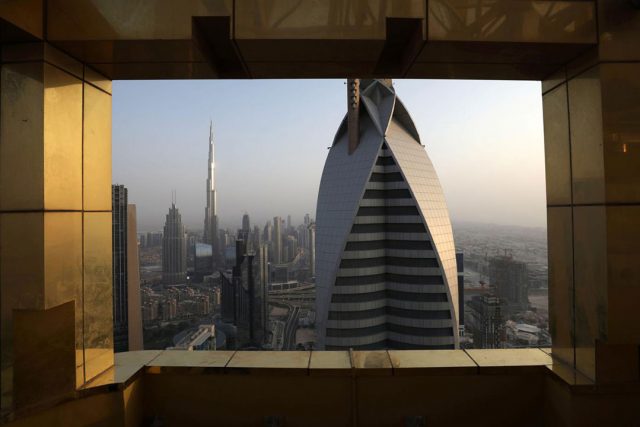
HONG KONG/SINGAPORE — A growing number of wealth managers in Asia are setting up offices in Dubai, capitalizing on warming diplomatic ties between China and the Middle East and betting on a surge in demand from clients for geographical diversification.

Dubai, a major financial hub in the Gulf region, is emerging as a preferred wealth hub for many entrepreneurs and rich families in Asia, mainly China, as they look to take advantage of favorable policies and expand their businesses, wealth managers said.

Noah Holdings, one of China’s top wealth managers overseeing round $23 billion in client assets, for example, is expecting to get a business license in Dubai by the end of this year, said Qing Pan, its chief financial officer.

The Dubai office will serve Chinese entrepreneurs who are setting up their businesses in that market, he said.

“Noah’s strategy has been following the growth of clients’ wealth. That’s why we will have to be there and take care of the wealth generated locally,” Mr. Pan said, adding that the firm plans to send some staff from China first and recruit locally later. “Many Chinese entrepreneurs are looking for new markets and diversifying their supply chains, and many are excited by the opportunities offered by the Middle East.”

The Middle East has grown increasingly important to Beijing as its ties with Washington have soured amid disagreements on a range of issues from trade and technology to human rights and Taiwan.

A post-COVID economic rebound, neutral political stance, ease of doing business, convenient time zones, and tax-free status have all contributed to the Middle East attracting droves of wealthy individuals in recent years.

The United Arab Emirates (UAE) has in the recent past introduced incentives such as the ‘golden visa’ system. Dubai launched a ‘family wealth center’ last year to help wealthy individuals and businesses deal with cultural issues and governance.

As a result, western wealth managers including Swiss private bank Lombard Odier are looking to expand their business presence in the region to tap into the influx of expatriates and growing population of rich individuals. 

INVESTMENT OPPORTUNITIES
In Asia, Hong Kong and Singapore have long been the most preferred offshore wealth hubs for rich individuals. But some clients are now looking to diversify into other markets and get exposure to new investment opportunities, said wealth managers.

The global number of high-net-worth individuals (HNWI) fell 3.3% to 21.7 million in 2022, but the Middle East’s HNWI population increased 2.8% in the same year, according to Capgemini’s 2023 wealth report.

The UAE saw the highest net inflow of millionaires in the world in 2022, and the private wealth hub was estimated to have received a net inflow of another 4,500 in 2023, according to data from Dubai-based wealth and immigration adviser Henley & Partners.

Betting on the trend, Singapore-based multi-family office Farro Capital set up an office in Dubai last month. Patrick Tsang, chairman of Hong Kong-based single family office Tsang Group, said the firm was planning to launch new offices in Abu Dhabi and Saudi Arabia’s Riyadh this year after its Dubai foray in 2022.

Hong Kong-based Landmark Family Office is also planning to set up an office in Dubai in the coming months. Landmark’s founder and CEO Cameron Harvey said the firm’s Dubai office would be used to help clients based in China, Southeast Asia, and Australia find investment opportunities in the Middle East.

A recent survey of 76 Asia Pacific-based single and multi-family offices, done by Campden Wealth and Raffles Family Office, found average asset allocation to the Middle East region at only 1%, with 7% of the respondents planning to increase that.

“We live in very interesting times where geopolitics have become more critical to families than ever before,” said Manish Tibrewal, co-founder of Singapore’s Farro Capital, adding Dubai’s push to regulate virtual assets, and the golden visa system, among others, have enhanced its appeal. — Reuters

Ignoring Taiwan’s complaints, more Chinese balloons spotted over strait

REUTERS

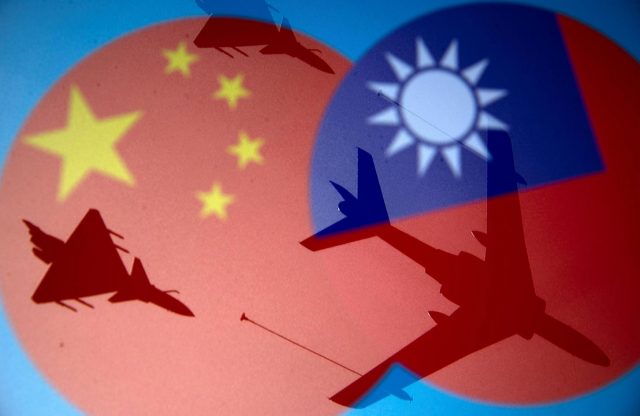
TAIPEI — Taiwan’s defense ministry said it detected three more Chinese balloons flying over the Taiwan Strait on Sunday, one of which crossed the island, the latest in a spate of such balloons the ministry says it has spotted over the past month.

The ministry on Saturday, in a strongly worded statement, accused China of threatening aviation safety and waging psychological warfare on the island’s people with the balloons, days before key Taiwanese elections.

China’s defense ministry, which last month declined to comment on the balloons, did not immediately respond to a request for comment.

The potential for China to use balloons for spying became a global issue last February when the United States shot down what it said was a Chinese surveillance balloon. China said the balloon was a civilian craft that accidentally drifted astray.

Taiwan is on high alert for Chinese military and political activity ahead of this Saturday’s presidential and parliamentary elections. It says China is exerting military and economic pressure in an attempt to interfere in the elections.

China views the island as its own territory, a claim Taiwan’s government rejects.

Since last month Taiwan’s defense ministry has reported several instances of Chinese balloons flying over the Taiwan Strait. It has said over the past week some balloons have flown over Taiwan island near major air bases.

In the latest incident, revealed by the ministry on Monday in its daily report on Chinese military activities over the past 24 hours, it said three balloons had flown over the strait’s sensitive median line on Sunday.

However, only one crossed Taiwan island, right at its southern tip, according to a map the ministry provided.

The balloons all headed east before vanishing, it added.

On Monday, the ruling Democratic Progressive Party’s (DPP) vice presidential candidate Hsiao Bi-khim said China should stop harassing Taiwan.

“We do not welcome the use of intimidation and threats to interfere with the lives of Taiwan’s people at any time,” she said. “Not only this week, we hope peace and stability in the Taiwan Strait can continue for a long time.”

Speaking to reporters on Sunday, Jaw Shaw-kong, the vice-presidential candidate for Taiwan’s largest opposition party the Kuomintang (KMT), called for China to stop sending aircraft and warships in the strait with one week to go before the election.

“Please allow the Taiwan Strait to remain peaceful and allow our election to be very gentle,” Jaw said.

The Taiwan Strait’s median line previously served as an unofficial barrier between Taiwan and China, but Chinese fighter jets, drones and now balloons regularly fly over it.

China’s Taiwan Affairs Office reiterated last week that the strait’s median line “does not exist” and that Taiwan’s ruling Democratic Progressive Party (DPP) is “hyping up the threat from the mainland as the election approaches” and inciting confrontation. — Reuters

New Vulcan rocket blasts off to carry privately built lander to the moon

WASHINGTON — A robotic lander built by a private company was bound for the moon on Monday in an attempt to make the first US lunar soft landing in half a century, after launching to space aboard a new Vulcan rocket debuted by a joint venture of Boeing  and Lockheed Martin.

Space robotics firm Astrobotic’s Peregrine lunar lander launched to space at 2:18 a.m. EST from Cape Canaveral, Florida on the first flight of Vulcan, a powerful rocket that had been under development for a decade by the Boeing-Lockheed venture United Launch Alliance (ULA).

“Yee haw, I am so thrilled,” ULA Chief Executive Officer (CEO) Tory Bruno said in the company’s launch control room. “This has been years of hard work. So far this has been an absolutely beautiful mission.”

If all goes well, Peregrine would mark the first US soft landing on the moon since the final Apollo landing in 1972, and the first-ever lunar landing by a private company — a feat that has proved elusive in recent years.

“This is the moment we’ve been waiting for 16 years,” Astrobotic CEO John Thornton said. Applause roared in the launch control room when Peregrine was released from its booster stage, setting the golf cart-sized craft on its 46-day journey to the moon.

The mission is the latest in recent years among countries and private companies sprinting to the moon, a reemergent stage of international competition where scientists hope its water-bearing minerals can be exploited to sustain long-term astronaut missions.

The launch of Vulcan, a 200-foot (60-m) tall rocket with engines made by Jeff Bezos’ Blue Origin, was a crucial first for ULA, which developed the rocket to replace its workhorse Atlas V rocket and rival the reusable Falcon 9 from Elon Musk’s SpaceX in the satellite launch market.

The stakes were high for Vulcan. Boeing and Lockheed, which own ULA in a 50-50 split, have been seeking a sale of the business for roughly a year. And the launch was the first of two certification flights required by the US Space Force before Vulcan can fly lucrative missions for the Pentagon, a key customer.

Peregrine is set to land on the moon on Feb. 23 with scientific payloads aboard that will seek to gather data about the lunar surface ahead of planned future human missions. It marks the first trek to the moon’s surface as part of NASA’s Artemis moon program.

India last year became the fourth country to achieve a soft lunar landing after Russia failed an attempt the same month. Private companies betting on a lunar marketplace have had hard times, with Japan’s ispace and an Israeli company crash-landing on their first attempts. — Reuters

Marcos says diplomatic efforts with China heading ‘in poor direction’

PRESIDENT FERDINAND R. MARCOS, JR. — PHILIPPINE STAR/KRIZ JOHN ROSALES

MANILA — Philippine President Ferdinand R. Marcos, Jr. said a “paradigm shift” was needed in how his country approaches the South China Sea issue, as diplomatic efforts with Beijing were headed “in a poor direction.”

Mr. Marcos, in an interview with Japanese media on Dec. 16, parts of which were shared with Philippine media on Monday, said traditional diplomatic efforts were being disregarded by China, according to a presidential palace release.

“To this point, we have resorted to the traditional methods of diplomacy … but we have been doing this for many years now, with very little progress,” said Mr. Marcos, who was in Japan for Tokyo’s commemorative summit with the Association of Southeast Asian nations (ASEAN).

“It’s time that the countries that feel that they have an involvement in this situation, we have to come up with a paradigm shift,” Marcos said, while reiterating the Philippines wants to avoid violent conflict. 

He added his government will continue talking to its partners and come up with a joint position stating their responsibilities as far as the West Philippines Sea is concerned. 

The Philippines refers to the part of South China Sea within its exclusive economic zone as the West Philippines Sea.

Last week, Manila and Beijing traded accusations over a collision of their vessels near a disputed shoal in the South China Sea as tensions over claims in the vital waterway escalate.

In addition to the Philippines, ASEAN members Vietnam, Malaysia and Brunei have overlapping claims with China in parts of the South China Sea, a conduit for more than $3 trillion of annual ship-borne commerce.

The Permanent Court of Arbitration in 2016 said China’s claims had no legal basis, a ruling the United States supports but Beijing rejects.

There was no immediate comment from the Chinese Embassy in Manila. — Reuters