Home Blog Page 3795

Lawmakers question unprogrammed funds before SC

BW FILE PHOTO

By Beatriz Marie D. Cruz, Reporter

SEVERAL lawmakers have filed before the Supreme Court (SC) a petition challenging the legality of adding P449.54 billion in unprogrammed appropriations under the 2024 national budget.

In a 27-page petition filed on Monday, the petitioners said: “The Constitutional prohibition on the Congress from exceeding the totality of ceiling of the appropriations proposed by the President in the National Expenditure Program includes the ban on increasing the amount proposed by the chief executive for both the programmed and unprogrammed appropriations.”

Under the 2024 National Expenditure Plan (NEP), the President proposed a total of P281.9 billion in unprogrammed appropriations. This jumped to a total of P731.45 billion under the 2024 General Appropriations Act (GAA), the congressmen noted.

They said that both the House and Senate versions of the 2024 budget reflected unprogrammed appropriations totaling to P289.1 billion only. However, the bicameral conference committee added P449.54 billion in the unprogrammed appropriations.

Lawmakers who petitioned against the move cited section 25(1) under Article 6 of the Constitution, which states that “Congress may not increase the appropriations recommended by the President for the operation of the government as specified in the budget.”

“It is indubitable that the excess of P449.54 billion in unprogrammed appropriations is constitutionally infirm. It is an expenditure outlay inside the Constitution. It is akin to an outlaw which must be slain on sight,” read a portion of the petition.

“This unconstitutional excess outlay was appropriated with grave abuse of discretion,” it added.

The petition was filed against Congress, represented by Senate President Juan Miguel F. Zubiri and House Speaker Ferdinand Martin G. Romualdez, as well as Sen. Juan Edgardo M. Angara and Party-list Rep. Elizaldy S. Co, who head both Chambers’ respective appropriations panels.

Aside from the lawmakers, the petition was also filed against Executive Secretary Lucas P. Bersamin, Budget Secretary Amenah F. Pangandaman, and National Treasurer Rosalia V. De Leon.

Petitioners of the case were Albay Rep. Edcel C. Lagman, Camarines Sur Rep. Gabriel H. Bordado, and Basilan Rep. Mujiv S. Hataman.

In December, Senate Minority Leader Aquilino D. Pimentel III also said the bicameral committee’s increase in the unprogrammed appropriations is “unconstitutional.”

Citing the Constitution, Mr. Pimentel told reporters: “Congress may approve the appropriations proposed by the President for the operation of the government, but it cannot increase the appropriations.”

House measure promoting extensive use of organic and biofertilizers filed

PHILSTAR

A LAWMAKER has filed a bill promoting the extensive use of organic and biofertilizers to ensure a more affordable option for farmers while addressing other concerns such as food security and environmental sustainability.

“This bill seeks to accelerate the transition from inorganic to organic fertilizer use as a viable solution to the aforementioned concerns,” Cagayan de Oro Rep. Lordan G. Suan said in filing House Bill No. 9751.

The measure proposes the establishment of a National Organic and Biofertilizers Support Program for farmers with up to five hectares of land for rice, sugar and corn production.

The program also includes a P5,000 voucher per hectare and its equivalent value for a fraction of a hectare, to be given every crop season.

In addition, farmers will be given training under the Department of Agriculture (DA) on the proper use of organic or biofertilizer, which will be part of all existing government fertilizer assistance programs.

A groundbreaking aspect of the bill is its integration of organic and biofertilizers into existing government fertilizer assistance programs.

To incentivize the production and distribution of these eco-friendly fertilizers, the measure proposes that companies involved in their manufacture within 10 years of its enactment into law will be exempted from tariffs and duties on importing materials and equipment.

“The reduction of the productive capacity of the land due to chemical saturation is even more evident with the heavy use of inorganic fertilizer,” Mr. Suan noted.

This aligns with President Ferdinand R. Marcos, Jr.’s call last year to enhance the use of biofertilizers, aiming to decrease reliance on imported petroleum-based fertilizers.

Acknowledging the need for a balanced approach, the Philippine Rice Research Institute recommends a combination of organic and inorganic fertilizers, potentially saving farmers between P2,000 to P4,000 per hectare, depending on factors such as amounts used, timing, and fertilizer type.

“There will still be a mix,” Mr. Marcos was quoted in a Palace statement. “But we will reduce our dependence on imports.”

The Philippines’ agricultural output fell by 0.3% P412.41 billion in the third quarter of 2023 due to lower crops and fisheries production, data from the Philippine Statistics Authority has shown. — Beatriz Marie D. Cruz

‘Cha-cha’ ad gets negative review

A TELEVISION advertisement promoting the amendment of the 1987 Constitution garnered mostly negative reactions from Filipinos online, research firm Capstone-Intel Corp. reported on Tuesday.

It said the advertisement known for using the phrase “EDSA-pwera” garnered 94.8% of negative mentions on social media, while only 5.2% of the times it had been mentioned were positive.

“This means that the article mentions about ‘EDSA-pwera’ campaign was mostly angled negatively, and that forums had a variety of discussions hitting the commercial,” Capstone-Intel said.

The report added that Twitter received the highest count of negative mentions on the advertisement supporting Charter change or “Cha-cha” among the social media platforms at 52.6%. News platforms accounted for 20.4% of the negative mentions, while Facebook stood for 9.9%.

In total, the EDSA-pwera ad received a social media reach of 4.52 million. Non-social media reach was at 508,820. 

The research firm noted that the mentions, whether in social media platforms or in the news, were “mostly negative, emphasizing the failure of the campaign to persuade people why there is a need to amend the 1987 Philippine Constitution.” — Beatriz Marie D. Cruz

LWUA order: Conserve water

PHILIPPINE STAR/EDD GUMBAN

THE LOCAL Water Utilities Administration (LWUA) said it directed its water districts to conduct water conservation measures and have a non-revenue water (NRW) of less than 20% amid the threat of droughts posed by El Niño.

“We gave a directive [to water districts] that the non-revenue water or the water losses… should be less than 20%. Those having leaks, it should be no more than 20%,” LWUA Administrator

Vicente Homer B. Revil, speaking partly in Filipino, said in a televised interview on Tuesday.

Last year, the LWUA said that an average of 488 cubic meters of water a year is lost to waste — half of the size of Angat Dam.

The LWUA oversees 533 water districts which serve 648 local government units and 22.3 million of population in the country.

Mr. Revil said the agency has spent P1 billion worth of projects in 2023, eight of which were implemented last year.

“We will have about 135 water sources that will be opened up through irrigation dams for multipurpose use. It can be used for household, domestic, and commercial,” he said.

Mr. Revil also assured enough supply amid the onset of El Niño. “We are just preparing for the worst scenario that can happen but for now we have enough water for the countrymen.”

El Niño is projected to enter a stronger phase in January, persisting until May, according to the Philippine Atmospheric Geophysical and Astronomical Services Administration or PAGASA.

The LWUA is a government-owned and -controlled corporation that manages the development of water systems outside of Metro Manila. — Sheldeen Joy Talavera

UN to check PHL media freedom

REPRESENTATIVES of media groups, artists, and freedom advocates hold up placards of emojis to champion freedom of expression during a press conference at a restaurant in Quezon City on Tuesday, ahead of the official visit in Manila of UN Special Rapporteur on Freedom of Expression and Opinion Irene Khan. — PHILIPPINE STAR/MICHAEL VARCAS

THE UNITED NATIONS (UN) Special Rapporteur on freedom of expression is set to visit Manila on Jan. 23 to Feb. 2 to look into issues surrounding freedom of speech involving media workers and civic organizations in the Philippines.

The UN officer, Irene Khan, will hold dialogues with media and civil society groups to discuss current laws and regulations on free speech, according to the UN Human Rights Office of the High Commissioner’s website.

It said she will “examine, in the spirit of cooperation and dialogue, the situation of the rights to freedom of opinion and expression in the country” and check on Philippine laws on digital privacy and access, and fake news.

Human rights group, Karapatan, urged Ms. Khan on Tuesday to investigate alleged trumped-up lawsuits filed by the government against human rights defenders and journalists.

“Red-tagging has quickly evolved into terrorist-tagging and the use of such laws to impede human rights and development work and quell free expression and dissent — all under the pretext of counterinsurgency and counterterrorism,” Karapatan said in a statement.

The National Union of Journalists in the Philippines (NUJP) said there had been 109 incidents of attacks and threats against journalists in the current administration of President Ferdinand R. Marcos, Jr.

In a statement, the NUJP also cited 36 incidents of harassment, which includes cases of surveillance of media practitioners and of journalists being tailed by unknown individuals.

“We welcome the visit of UN Special Rapporteur Irene Khan and we look forward to discussing the Philippine press situation with her,” the group said.

“We hope that she will heed our recommendations for a freer press and an environment more conducive to the exercise of freedom of expression in the Philippines,” it added. — John Victor D. Ordoñez

Surigao del Norte housing pushed

PHILSTAR FILE PHOTO

THE OFFICE of the Presidential Assistant for Eastern Mindanao (OPAMINE) is gearing up to take the lead in launching President Ferdinand R. Marcos Jr.’s flagship housing program in San Benito, Surigao del Norte.

Presidential Assistant for Eastern Mindanao Leo Tereso Magno disclosed that the initiative came about after a request from San Benito Mayor Ma. Gina Menil to include her municipality in the Pambansang Pabahay Para sa Pilipino (4PH) program.

During their meeting last Monday, Mr. Magno underscored the crucial role of the local government in expediting the housing program’s implementation. In turn, Ms. Menil assured her local administration’s swift preparation of the necessary documents to initiate the project in San Benito. 

Since signing a memorandum of agreement with the Department of Human Settlement and Urban Development (DHSUD) last year, Mr. Magno has been lobbying for the 4PH program in Eastern Mindanao to help create sustainable communities by providing quality housing for Filipinos.

“It is our job at OPAMINE to bring President BBM’s housing program to every municipality, city, and province, led by DHSUD under Sec Jerry Acuzar. We are ready to assist anyone interested in realizing the dream of providing homes for their fellow citizens,” he told Businessworld.

Last December, Mr. Magno announced at a media forum that the DHSUD and OPAMINE are eyeing the construction of about 180,000 housing units in Davao City. — Maya M. Padillo

Filipino now heads Aseanpol

PHILIPPINE Police Colonel David M. Vinluan has been named the executive director of Aseanpol, an organization composed of all chiefs of police in Southeast Asia that addresses transnational crimes.

According to the Department of Foreign Affairs (DFA), Mr. Vinluan will be the first Filipino to hold the position since the organization was founded in 1981.

Aseanpol, which is based in Kuala Lumpur, Malaysia, deals with operational, enforcement and preventive measures against transnational crimes.

In his speech during the handover ceremony held on Monday in Kuala Lumpur, Mr. Vinluan vowed to “carry on the fight against organized threats of transnational crimes in the region.”

Mr. Vinluan, is also a member of the United Nations Peacekeeping Mission in Kosovo and had been a member of the UN Police Division in the UN Headquarters in New York.

In October last year, the Philippine Department of Justice (DoJ) said it was working with the Department of Interior and Local Government, the Supreme Court, and their regional counterparts to identify crime hotspots in the Philippines.

“We are committed to continued collaboration with our international partners to address the shared challenge of transnational organized crime,” Justice spokesman Jose Dominic F. Clavano IV said at a United Nations regional conference in Bangkok in October. — John Victor D. Ordoñez

Philippine foreign affairs chief to visit Uganda

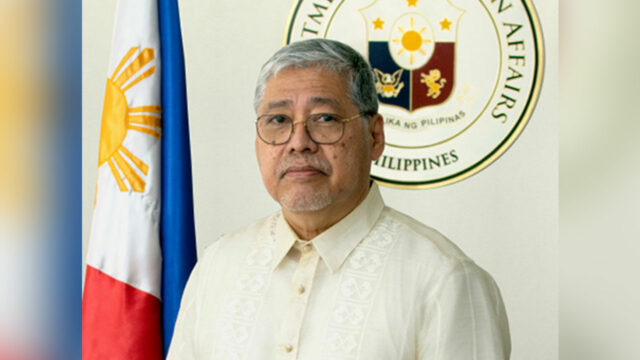
ENRIQUE A. MANALO — DFA.GOV.PH

PHILIPPINE Foreign Affairs Secretary Enrique A. Manalo on Tuesday said he will be going to Uganda on Jan. 19 to 20 to discuss global security issues .

In a statement, he said the Summit of the Non-Aligned Movement (NAM) in Uganda will cover issues climate change and sustainable development.

“This trip will be excellent opportunity to engage with countries from Africa and other regions to boost South-South cooperation and promote the shared interests… of developing countries,” Mr. Manalo said.

“NAM’s role in maintaining global peace and security and sustaining constructive and credible multilateralism that works for the people is important especially in the current international context.”

The visit will be his first to the African continent.

Department of Information and Communications Technology (DICT) Secretary Ivan John E. Uy will also be going to Uganda to represent the Philippines in the Third South Summit of the Group of 77 on Jan. 21 and 22 in Kampala, Uganda.

The summit aims to boost cooperation in the areas of trade, investment, sustainable development and climate change, among others. — John Victor D. Ordoñez

Bangsamoro parliament eyeing 2 island hospitals

A SOLDIER from the Navy’s 1st Marine Brigade and a volunteer physician treat a sick child during a medical mission on Bongo Island, which will soon have a hospital through an enabling measure filed before the Bangsamoro parliament. — PHILIPPINE STAR/JOHN FELIX M. UNSON

COTABATO CITY — Members of the Bangsamoro parliament want to improve a small medical dispensary and create a new one to service patients on two remote islands where sick islanders can hardly be evacuated to modern hospitals when seas are rough.

The Information Office of the Bangsamoro Autonomous Region in Muslim Mindanao (BARMM) parliament announced on Tuesday that regional lawmakers have filed Bill 269, an enabling measure for the setting up of the Bongo Community Hospital in Bongo Island in Parang, Maguindanao del Norte, and Bill 264, meant to improve the Siasi District Hospital in Siasi, Sulu.

Siasi is an island town close to the border of the territorial seas of Sulu and Tawi-Tawi, both component-provinces of BARMM.

The proposal to create the Bongo Community Hospital, or BCH, was authored by BARMM parliament members Suwaib L. Oranon and the physician-ophthalmologist Kadil M. Sinolinding, Jr., most known as “the doctor in the Bangsamoro parliament.”

His humanitarian team has treated free 3,116 marginalized people with eye problems from across the Bangsamoro region and Region 12 since he was appointed member of the regional parliament last August.

Bongo Island, covering Barangays Litayen, Tagudtungan, Tuka Maror, Gadungan Pibpandaran, Macarimbang, Limbayan and Kutungan, is home to mixed Iranun, Tausug, Sama and Badjao communities, is about seven miles off the shores of the seaside Parang town in northwest of Maguindanao del Norte.

Parang Mayor Cahar P. Ibay told reporters on Tuesday that he and his constituent barangay officials in Bongo are thankful to Mr. Sinolinding and Mr. Oranon for authoring a bill aiming to set up a community hospital in the island.

“We are wishing for its immediate enactment into a regional law. We are ready to help put up that medical facility in Bongo once its creation gets the approval of the 80-member BARMM parliament,” Mr. Ibay said.

The BARMM parliament’s Information Office said Bill 264 is also an enabling measure for the expansion of the Siasi District Hospital, or SDH, operating for 58 years now.

The bill, if approved by the BARMM parliament, shall double the 25-bed capacity of the facility and make facilities hospital-grade.

Bill 264 was authored by parliament members Mr. Sinolinding, Hamid U. Malik, Nurredha I. Misuari, Deputy Speaker Abdulkarim T. Misuari, Tarhata M. Maglangit, Amilbahar S. Mawallil, Rasol Y. Mitmog, Hashemi N. Dilangalen, Albakil D. Jikiri, Romeo K. Sema, Muslimin A. Jakilan, Adzfar H. Usman, Denmartin A. Kahalan, Randolph C. Parcasio, and Abdulazis M. Amenoden.

Both Bills 264 and 269 compel the Ministry of Health-BARMM to oversee and bankroll the operations of the proposed hospitals. — John Felix M. Unson

In show of strength, Trump dominates Iowa caucus

REUTERS

DES MOINES, Iowa — Donald Trump secured a resounding victory in the first 2024 Republican presidential contest in Iowa on Monday, asserting his command over the party despite facing scores of criminal charges as he seeks a rematch with Democratic President Joseph r. Biden.

Florida Governor Ron DeSantis, 45, finished well behind in second place, edging out former UN Ambassador Nikki Haley, 51, as they battle to emerge as the chief alternative to Mr. Trump.

Mr. Trump, 77, won by an unprecedented margin for an Iowa Republican contest, strengthening his case that his nomination is a foregone conclusion given his massive lead in national polls.

“THANK YOU IOWA, I LOVE YOU ALL!!!,” Mr. Trump wrote on his social media platform, Truth Social.

With 95% of the expected vote tallied, Mr. Trump had 51%, while Mr. DeSantis was at 21%, and Ms. Haley 19%, according to Edison Research. The largest margin of victory for an Iowa Republican caucus had been 12.8 percentage points for Bob Dole in 1988.

Entrepreneur Vivek Ramaswamy ended his long-shot presidential bid after earning just under 8% of the vote on Monday and endorsed Mr. Trump in a speech to supporters.

If Mr. Trump finishes above 50%, winning more than all his rivals combined, it will further weaken his opponents’ argument that his march to the nomination can be derailed.

His performance reflected his popularity among Republican voters — even after two impeachments, his involvement in the Jan. 6, 2021, attack on the US Capitol by a mob of supporters and his 91 criminal charges for trying to overturn the 2020 election, retaining classified documents after leaving the White House and falsifying records connected to hush money payments to a porn star.

Nearly two-thirds of caucus-goers embraced his false claims about voter fraud, saying they did not think Mr. Biden legitimately won the presidency. More than 60% said Mr. Trump would still be fit to serve as president even if convicted of a crime.

Mr. Trump dominated across the board, according to an Edison entrance poll: he won a majority among men and among women; among those who consider themselves very conservative, somewhat conservative and independent; among those who graduated college and those who did not.

He captured a majority of Republicans who put immigration as their top concern — and a majority of those who said the economy was their main worry.

“The Iowa caucus results demonstrate the strength of Trump’s grip on the Republican Party,” said Jimmy Centers, an Iowa-based Republican strategist. “Absent a quick consolidation of the field, Trump appears to be on a fast track to the nomination.”

That consolidation appears unlikely, with both Mr. DeSantis and Ms. Haley vowing to press ahead following Monday’s results, ensuring Trump’s opposition will remain fractured as the campaign moves to other states.

Mr. DeSantis in particular had wagered his campaign on Iowa, barnstorming all of its 99 counties and pouring resources into the state.

“We’ve got our ticket punched out of Iowa!,” Mr. DeSantis told supporters in West Des Moines on Monday.

Ms. Haley, who has enjoyed a steady rise in polls over the last few months, sought to position herself as the leading Trump challenger.

“At one point in this campaign there were 14 of us running. I was at 2% in the polls,” Ms. Haley told a crowd of supporters. “When you look at how we’re doing, in New Hampshire, in South Carolina and beyond, I can safely say tonight Iowa made this Republican primary a two-person race.”

Republicans in more moderate New Hampshire will choose their nominee eight days from now. Polls show Mr. Trump with a smaller lead over Ms. Haley there, with Mr. DeSantis far behind.

Trump has aimed to create an air of inevitability around his campaign, skipping all five of the Republican debates thus far and largely eschewing the county-by-county politicking that most candidates do ahead of the Iowa vote.

LIFE-THREATENING COLD
Iowans braved life-threatening temperatures to gather at more than 1,600 schools, community centers, and other sites for the state’s first-in-the-nation caucus, as the 2024 presidential campaign officially got under way after months of debates, rallies, and advertisements.

“Trump is very narcissistic, he’s very cocky, but he’s going to get stuff done,” said Rita Stone, 53, a Trump backer, who attended a caucus at a West Des Moines high school. Like many other voters, Ms. Stone said her leading concern was the US southern border with Mexico, praising Mr. Trump’s effort to build a wall when he was president.

Unlike a regular election, Iowa’s caucus requires voters to gather in person in small groups, where they cast secret ballots after speeches from campaign representatives.

Edison projected there would be approximately 120,000 votes counted, far short of the record 187,000 cast in the 2016 Republican caucus.

With the cold weather depressing turnout, Mr. Trump’s grip on his most loyal supporters may have given him an edge.

Iowa Democrats did not vote on Monday for their presidential nominees because the party has reshuffled its nominating calendar to put states with more diverse populations ahead of Iowa this year. They will cast their ballots by mail, with the results to be released in March.

Iowa has historically played an outsized role in presidential campaigns due to its early spot on the campaign calendar.

But the winner of Iowa’s Republican caucuses did not go on to secure the nomination in the last three competitive contests in 2008, 2012, and 2016.

A political battleground that backed Democrat Barack Obama in 2008 and 2012, the state is now seen as reliably Republican in presidential elections as registered Republicans edge out Democrats. — Reuters


Artificial intelligence lab OpenAI seeks to allay election meddling fears

STOCK PHOTO | Image by Gerd Altmann from Pixabay

SAN FRANCISCO — Artificial intelligence (AI) lab OpenAI published a blog post Monday seeking to address fears that its technology will meddle with elections, as more than a third of the globe prepares to head to the polls this year.

The use of AI to interfere with election integrity has been a concern since the Microsoft-backed company released two products: ChatGPT, which can mimic human writing convincingly, and DALL-E, whose technology can be used to create “deepfakes,” or realistic-looking images that are fabricated.

Those worried include OpenAI’s own CEO Sam Altman, who testified in Congress in May that he was “nervous” about generative AI’s ability to compromise election integrity through “one-on-one interactive disinformation.”

The San Francisco-based company said that in the United States, which will hold presidential elections this year, it is working with the National Association of Secretaries of State, an organization that focuses on promoting effective democratic processes such as elections.

ChatGPT will direct users to CanIVote.org when asked certain election-related questions, it added.

The company also said it is working on making it more obvious when images are AI-generated using DALL-E, and is planning to put a “cr” icon on images to indicate it was AI-generated, following a protocol created by the Coalition for Content Provenance and Authenticity.

It is also working on ways to identify DALL-E-generated content even after images have been modified.

In its blog post, OpenAI emphasized that its policies prohibit its technology to be used in ways it has identified as potentially abusive, such as creating chatbots pretending to be real people, or discouraging voting.

It also prohibits DALL-E from creating images of real people, including political candidates, it said.

The company faces challenges policing what is actually happening on its platform.

When Reuters last year tried to create images of Donald Trump and Joseph Biden, the request was blocked and a message appeared saying it “may not follow our content policy.”

Reuters, however, was able to create images of at least a dozen other US politicians, including former Vice-President Mike Pence. — Reuters

N. Korean hackers, criminals share money laundering networks in Southeast Asia

STOCK PHOTO | Image by geralt from Pixabay

LONDON — North Korean hackers are sharing money-laundering and underground banking networks with fraudsters and drug traffickers in Southeast Asia, according to a United Nations report published on Monday, with casinos and crypto exchanges emerging as key venues for organized crime.

The United Nations Office of Drugs and Crime (UNODC) said without elaborating it had observed “several instances” of such sharing in the Mekong area — which includes Myanmar, Thailand, Laos, and Cambodia — by hackers including North Korea’s Lazarus Group.

The UNODC said it had identified the activity via analysis of case information and blockchain data.

Contacted by phone about the UNODC report, a person at North Korea’s mission to the United Nations in Geneva said, without giving his name, that he was “not familiar with the issue” and that previous reporting on Lazarus was “all speculation and misinformation.”

Lazarus, which the United States has said is controlled by North Korea’s primary intelligence bureau, has been accused of involvement in a string of high-profile cyberheists and ransomware attacks. Funds stolen by North Korean hackers are a key source of funding for Pyongyang and its weapons programs.

The UNODC report said Southeast Asia’s casinos and junkets, which facilitate gambling by high-wealth players, as well as unregulated cryptocurrency exchanges, have become “foundational pieces” of the banking architecture used by organized crime in the region.

Casinos have proven “capable and efficient in moving and laundering massive volumes” of crypto and traditional cash undetected, it said, “creating channels for effectively integrating billions in criminal proceeds into the formal financial system.”

The junket sector has been infiltrated by organized crime for “industrial-scale money laundering and underground banking operations,” with links to drug trafficking and cyberfraud, the report said.

It cited licensed casinos and junket operators in the Philippines which helped launder around $81 million stolen in a cyber-attack on Bangladesh’s Central Bank in 2016, which was attributed to the Lazarus Group.

The proliferation of casinos and crypto have “supercharged” organized crime groups in Southeast Asia, UNODC Regional Representative for Southeast Asia and the Pacific Jeremy Douglas told Reuters.

“It’s no surprise sophisticated threat actors would look to leverage the same underground banking systems and service providers,” he said. — Reuters