Home Blog Page 367

The dubious art of explaining what Trump ‘really means’

STOCK PHOTO | Image from Rawpixel

By David M. Drucker

PROMINENT Republicans insist on treating President Donald Trump like a child or a clueless old man, telling Americans that he does not mean what he says — despite the commander in chief making quite clear he means exactly that.

Trump’s threat to use military force to seize Greenland from Denmark, a US ally via the North Atlantic Treaty Organization, is a recent example. “I don’t think it’s a threat,” Senator Tommy Tuberville of Alabama told The Bulwark. “I think it’s a promise that we’ll offer some money for it.” Senator John Kennedy offered his own, colorful reimagining of the president’s saber rattling. “Even a modestly intelligent ninth grader knows that to invade Greenland would be weapons-grade stupid. Now, President Trump is not weapons-grade stupid,” the Louisiana Republican told CNN. Trump, Kennedy added, does “not plan to invade Greenland. That does not mean they’re not going to seek a legal, formal partnership with Greenland.”

Trump’s subsequent comments on the matter? All options are on the table, including a military invasion. “We are going to do something on Greenland whether they like it or not,” the president told reporters during a White House news conference last week. “If we don’t do it the easy way we’re going to do it the hard way.”

The phenomenon of redefining Trump’s rhetoric was somewhat understandable during his first presidency. He was new to elected office and still learning how the federal government operated. Although still somewhat infantilizing of a man who had reached high office, Republicans uncomfortable with the president’s rhetoric could theoretically make the case that Trump didn’t understand the implications of what he was saying, or of his policy proposals.

But as we head toward Year 2 of his second presidency, those excuses have worn thin. Trump has plenty of on-the-job experience and has demonstrated an understanding of executive power, so much so that he rejects most limits on it.

What gives? In my experience, it’s about political expediency. Republicans’ clumsy verbal cartwheels are obvious attempts to avoid publicly disagreeing with Trump while simultaneously attempting to avoid publicly agreeing with him.

It’s been more of the same regarding what’s next for Venezuela following an American military operation that led to the capture of dictator Nicolas Maduro and his wife and their arrest by federal law enforcement. During a Jan. 3 news conference , Trump, 79, said the US is “going to run” the South American nation “until such time as we can do a safe, proper and judicious transition.”

The president elaborated under questioning by reporters, suggesting his declaration was hardly flippant. “It’s largely going to be, for a period of time, the people that are standing right behind me,” Trump said, when asked who inside the US government would be running Venezuela.

Flanking Trump on stage: Air Force General Dan Cain, chairman of the joint chiefs of staff; Defense Secretary Pete Hegseth, and Secretary of State Marco Rubio, among others.

Yet the very next day, Rubio revised his boss’ remarks. “What we are running is the direction that this is going to move, going forward. And that is, we have leverage. This leverage we are using and we intend to use,” the secretary said Jan. 4 in an interview on the ABC News public affairs program This Week. To be fair, Rubio’s argument wasn’t wholly inaccurate.

But: Want to guess what Trump said later that day when asked, during a gaggle with reporters on Air Force One , if Washington was running the show in Caracas? “Don’t ask me who’s in charge because I’ll give you an answer and it will be very controversial,” Trump said. When asked what he meant, the president was blunt: “It means we’re in charge. We’re in charge.”

Naturally, Trump’s unequivocal comments didn’t discourage Senator Jim Risch, chairman of the Senate Foreign Relations Committee, from claiming the president’s rhetoric was equivocal. “I think that’s a matter of interpretation,” the Idaho Republican told NOTUS,  when asked what the commander in chief meant by repeatedly saying the US is “running” Venezuela.

Shawn J. Parry-Giles, a University of Maryland professor who studies political communication and rhetoric, explained the ongoing dilemma posed by Trump and his penchant for provocative rhetoric and proposals.

“His messaging puts members of his party in difficult positions. They manage the rhetorical and political messiness by providing different interpretations that reshape the message into one they can support that appears more reasoned and grounded in legal [and] political principles,” said Parry-Giles, director of the Rosenker Center for Political Communication and Civic Leadership . “This is also happening with members of his cabinet. They are trying to reshape his messages into something that would be more acceptable politically.”

They’re hoping to “send” Trump “a subtle message of how the president would better express his views,” she added, while maintaining a sense of decorum that the commander in chief does not. “He routinely flouts such decorous practices,” Parry-Giles said.

All true and all understandable.

But after all this time, it should be crystal clear to Republicans — on Capitol Hill and everywhere else — that Trump knows what he’s saying and knows what he’s doing (or what he wants to do.) When he speaks and when he acts, it’s with deliberate intent. Congressional Republicans who oppose an American invasion of Greenland might want to ponder that rather than soothe themselves with fantasies that Trump’s tough talk is about “leverage.”

BLOOMBERG OPINION
PLDT, Smart test direct-to-device satellite service in Catanduanes

WIKIMEDIA COMMONS/PATRICKROQUE01

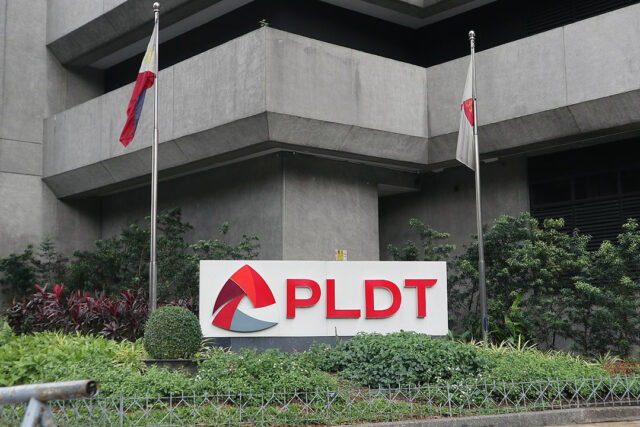
PLDT INC., through its wireless unit Smart Communications, Inc., has successfully tested a direct-to-device satellite service in Catanduanes to expand mobile connectivity in underserved areas, with a commercial rollout planned for next year.

“Our investments in technologies that strengthen and expand our network all reflect our core mission to connect last-mile communities, empower them to participate in the digital economy,” PLDT Chief Operating Officer Menardo G. Jimenez said in a media release on Wednesday.

Smart, together with its technology partner Lynk Global, Inc., conducted a series of tests to assess satellite technology in the country. The recent development, carried out by Smart’s Network Strategy and Architecture team with Lynk Global’s technical team, involved transmitting text messages via Lynk satellite between a phone in Catanduanes and a phone in Metro Manila.

The teams were also able to access Smart’s website, demonstrating Lynk Global’s satellite light data capabilities.

Smart said the tests confirmed successful data downloads via direct-to-device satellite technology in Catanduanes.

“With 97% of the population already covered by our cellular network, it is important that we evaluate our satellite partners on the basis of not just their technology but also cost effectiveness. Our partnership with Lynk Global delivers both,” Mr. Jimenez said.

The company noted that its collaboration with Lynk allows mobile communications in areas without cellular signal by connecting ordinary mobile phones directly to satellites.

Smart will begin by integrating its core systems with Lynk’s satellite-to-mobile network before conducting live field tests using its existing spectrum.

Smart is targeting expanded tests across more areas and pilot diverse use cases, including maritime routes, Smart First Vice-President Lloyd R. Manaloto said.

“Smart and Lynk will continue to conduct these tests as Lynk’s technology matures, more Lynk satellites are deployed, and service availability significantly improves,” said Smart Head of Network Strategy and Transformation Radames Vittorio B. Zalameda.

PLDT shares closed at P1,360, up 3.03% or P40, on the Philippine Stock Exchange.

Hastings Holdings, Inc., a unit of the PLDT Beneficial Trust Fund subsidiary MediaQuest Holdings, Inc., holds a majority stake in BusinessWorld through the Philippine Star Group. — Ashley Erika O. Jose

Cisco, Entropy team up to expand Philippine AI infrastructure

STOCK PHOTO | Image by Rawpixel.Com from Freepik

CISCO SYSTEMS, INC. has partnered with local firm Entropy Technology to accelerate the deployment of artificial intelligence (AI) infrastructure for Philippine organizations.

Entropy will use the Cisco Secure AI Factory in collaboration with Nvidia Corp. to develop and scale AI solutions for telecommunication firms, internet service providers and enterprises. This marks the first local deployment of the Cisco Secure AI Factory.

The partnership aims to enable applications such as network automation, predictive maintenance, broadband analytics, smart traffic management, public safety and cybersecurity.

“As AI adoption accelerates in the Philippines, the need for secure, scalable, and high-performance AI infrastructure has never been greater,” Cisco said in a statement.

The collaboration will allow organizations to process large volumes of data securely, bringing automation and actionable insights into telecommunication networks while supporting broader industry use cases.

According to Cisco’s AI Readiness Index 2025, half of Philippine organizations expect AI workloads to grow by 50% in the next three to five years, but only half have the infrastructure to support this expansion.

“By working together with Entropy, we are empowering local industries to harness emerging technologies securely, reliably, and at scale,” said Cisco Philippines Managing Director Zaza Soriano-Nicart. — Beatriz Marie D. Cruz

Netflix prepares all-cash offer for Warner Bros., source says

NETFLIX is preparing to make an all-cash offer for Warner Bros. Discovery’s studios and streaming businesses, a source familiar with the matter told Reuters on Tuesday.

The changes are designed to expedite a sale, which will take months to close and has faced opposition from politicians and rival bidder Paramount Skydance, according to the source.

Bloomberg News reported on the news earlier in the day. Netflix declined to comment on the Bloomberg report, while Warner Bros. did not immediately respond to a Reuters request for comment.

Upon close on Tuesday, shares of Netflix were up 1.02% and Warner Bros. closed 1.62% higher. Paramount shares remained flat.

Netflix’s $82.7-billion deal initially consisted of cash and stock for Warner Bros.’ film and streaming assets, while Paramount offered $108.4 billion in cash for the whole company, including its cable TV business.

Still, Warner Bros. has favored Netflix’s deal despite amendments to Paramount’s bid, including a $40-billion equity backing by Oracle co-founder Larry Ellison and father of Paramount Chief Executive Officer (CEO) David Ellison.

Warner Bros.’ board has argued that Paramount’s offer hinges on a significant amount of debt financing that heightens the risk of closing and the offer “remains inadequate.”

Paramount and Netflix have been in a heated battle for Warner Bros., its prized film and television studios, and its extensive content library.

Its lucrative entertainment franchises include Harry Potter, Game of Thrones, Friends, and the DC Comics universe, as well as coveted classic films such as Casablanca and Citizen Kane.

The bidding war has become Hollywood’s most closely watched takeover battle, as studios navigate a landscape increasingly dominated by streaming platforms and volatile theatrical revenues.

Meanwhile, lawmakers across the political spectrum have voiced concerns that further media consolidation could drive up prices and reduce consumer choice.

Paramount on Monday sued Warner Bros. for more information on its deal with Netflix and said it planned to nominate directors to Warner Bros.’ board.

Paramount has argued that the company’s all-cash bid of $30 per share for the entirety of Warner Bros. is superior to Netflix’s previous cash-and-stock offer of $27.75 apiece for the studios and streaming assets and will more easily clear regulatory hurdles.

Netflix has agreed to a $5.8-billion termination fee if it cannot obtain regulatory approval, while Warner Bros. would be obligated to pay the streaming service a $2.8-billion termination fee for abandoning its agreement with Netflix. — Reuters

LANDBANK raises bond target to P30 billion

BW FILE PHOTO

LAND BANK of the Philippines (LANDBANK) has raised the minimum target for its dual-tenor sustainability bond offering to P30 billion, up from the initial P5 billion, as investor interest in green and social finance continues to grow, the state-run lender said on Wednesday.

The bonds, branded as Agriculture, Sustainability, Environment, and Socioeconomic Development (ASENSO) bonds, are peso-denominated and fixed-rate, with tenors of 1.5 and three years.

The public offer period runs from Jan. 28 to Feb. 26 through the LANDBANK mobile banking app, and the notes are scheduled for listing on the Philippine Dealing & Exchange Corp. on Feb. 16.

Investors can participate with a minimum investment of P10,000, in increments of P10,000. Interest will be paid quarterly, subject to final withholding tax.

Proceeds will be allocated exclusively to projects with environmental and social impact, including renewable energy, energy efficiency, green buildings, clean transport, sustainable water management, pollution prevention, food security, affordable housing, health, education, access to essential services, employment generation and broader socioeconomic development, the state lender said.

China Bank Capital Corp. serves as the sole issue manager, with LANDBANK and Chinabank Capital acting as selling agents.

The offering marks LANDBANK’s return to the domestic bond market since November 2020, when it raised P5 billion via a two-year ASEAN austainability bond at an interest rate of 2.5872% per annum.

Meanwhile, LANDBANK has partnered with the Social Security System (SSS) to launch a microloan facility through the bank’s mobile platform.

The SSS Loan Lite Program allows members to apply for loans digitally via the LANDBANK app, with automated eligibility checks, streamlined processing and rapid crediting of proceeds.

“This new product clearly is something that is going to be a game changer,” LANDBANK President and Chief Executive Officer Lynette V. Ortiz said in a separate statement. “What we are really hoping to bring to the table will be all our digital solutions to make loans and credit facilities available in a more accessible, efficient way.”

The program, set for launch in the first half, will allow members without LANDBANK accounts to open one seamlessly. Loan repayments can be made through automatic debit or other convenient channels, supported by robust audit, security and data privacy measures.

LANDBANK will also provide regular electronic reports to SSS for monitoring and compliance.

LANDBANK’s digital initiatives have driven significant growth. Digital transactions had jumped 51% to 550.73 million as of September 2025, with a total value of P3.14 trillion.

Net income for the first nine months of 2025 rose 41.8% year-on-year to P35.64 billion, reflecting the bank’s expanding core operations. — AMCS

Promises to keep

STOCK PHOTO | Image from Freepik

IT’S A NEW YEAR AGAIN. Resolutions are not always written down. Too many such promises are often not kept anyway. But here’s a list to refresh the memory.

1. I will not pass on what looks like fake news in social media. Neither will I check authenticity. If it looks too ridiculous to be true, it must be fake. And if it’s not, it will pop up again, if only to be denounced as fake.

2. I will practice intermittent fasting, the interval to be determined on the day itself. To be able to see my toes (and other protuberances) in the shower without bending is my goal. I will eat only salads, fish, and fruit. I will reduce the intake of meat and carbs. I will eat heartily only to be polite and not displease a host by turning down lechon and Peking duck.

There will be times when there are no business or social meetings over meals. There is no problem with a solo lunch. (Table for one, please). Even places for dining in can accommodate a solo customer who orders only soup and salad, with a glass of water.

3. I will stop whining. It is unproductive and irritates other people. They don’t really care about health issues or the problems of charging EVs.

4. Road rage is an expression of mental instability. I will try to ignore motorcycles that swerve three lanes to get to a U-turn. It’s true I don’t drive anymore. But backseat drivers can also succumb to opening the passenger window and shaking their walking sticks at offending cars and motorcycles. (Is that old man shouting?)

5. Envy is a deadly sin I should not succumb to. If good fortune is bestowed on people close to me, I can only wish them well. Their happiness will have no effect on how I feel about myself. A sense of self-worth comes from within. It needs no confirmation from others.

6. Love it or hate it, my country is my country. I will not allow others, including fellow countrymen, especially those living abroad and just visiting, to denigrate it. It may not have the best government. Still, the place is plodding along, forgotten perhaps by foreign investors but left in peace. I will always endeavor to present its good side to anyone who will listen. I will make a list of its attributes and memorize these for delivery in the next get-together where topic A always seems to be: What I hate about this country.

7. I reject cynicism. I believe things can always improve. This optimism extends to the economy. There are men of integrity trying to make the country better. They are unsung heroes and should be recognized. It may be difficult to find these people but the knowledge that they are out there — though never where I can meet them — is enough consolation. I know the country will one day join the community of nations of whom good things are said. It may not happen in the next five years, but someday it will.

8. I will maintain my sense of perspective and sense of humor. The country is not going to the dogs. Otherwise, we need too many dog catchers. True, laughing at adversity and crisis reveals a shallow mind. But getting bogged down with pessimism and a state of despair is equally crippling.

9. I will look at the bright side of political reform. At the local government level, there are many successes to celebrate and good people in charge. Can this be the start of a true national revitalization?

Anyway, there are far more interesting topics to talk about than floods and corruption. What about superficial things like the impact of social media in the rise of online shopping and the possible decline of physical stores? Is AI going to replace human beings even in choosing blind dates?

10. I will try to listen more and not interrupt others while discoursing about the merits of crypto currency. It’s time to take a toilet break anyway.

I will try to keep these promises as well as I can. If I fail in some, there’s always the coming year to make up.


Tony Samson is chairman and CEO of TOUCH xda

ar.samson@yahoo.com

NLEX-C5 Northlink Section 1A reaches 50% completion

NLEX CORP.

NLEX CORP., a subsidiary of Metro Pacific Tollways Corp. (MPTC), said the Section 1A of the NLEX-C5 Northlink Segment 8.2 project is now 50% complete.

“Reaching the halfway mark of this major infrastructure project reaffirms our commitment to delivering this segment at the earliest possible time… This project will significantly improve connectivity and help relieve congestion on local roads,” NLEX President and General Manager Luis S. Reñon said in a media release on Wednesday.

The two-kilometer section is advancing substantially, NLEX said, with construction works on the elevated expressway structures ongoing.

Once completed, Section 1A will link the Mindanao Toll Plaza to Quirino Highway through an all-weather elevated expressway passing over Mindanao Avenue and the Tullahan River.

The elevated expressway will operate 24/7 for all vehicle classes, NLEX said, adding that around 11,000 vehicles daily are expected to benefit, easing congestion along Quirino Highway and Mindanao Avenue.

The entire NLEX-C5 Northlink project spans 11.3 kilometers and serves as a vital corridor connecting the northern and southern parts of Luzon via Metro Manila’s eastern side.

Last year, NLEX partnered with China Road and Bridge Corp. (CRBC) for the construction of Section 1A, which has an overall cost of P2.2 billion.

NLEX is also the builder-concessionaire and operator of major expressways, including the North Luzon Expressway, Subic-Clark-Tarlac Expressway, and NLEX Connector.

MPTC is the tollway unit of Metro Pacific Investments Corp., one of the three key Philippine subsidiaries of Hong Kong-based First Pacific Co. Ltd., alongside Philex Mining Corp. and PLDT Inc.

Hastings Holdings, Inc., a unit of the PLDT Beneficial Trust Fund subsidiary MediaQuest Holdings, Inc., holds a majority stake in BusinessWorld through the Philippine Star Group. — Ashley Erika O. Jose

Resilience is the new security: What Philippine CISOs must learn in 2026

FORTINET

By Bambi Escalante

EVERY YEAR, the cybersecurity landscape presents new challenges — and 2026 is no exception. Across industries and borders, companies are navigating AI, emerging technologies, escalating geopolitical risks, persistent cybersecurity skills gaps, and evolving regulatory pressures — all while pursuing growth and innovation.

The role of the chief information security officer (CISO) is evolving in response to these challenges. Today, CISOs must focus not on whether an organization will face disruption, but on how prepared it is to respond, recover, and maintain resilience against increasingly complex threats.

To help CISOs, particularly those in the Philippines, navigate this environment, we highlight a selection of trends and forces shaping cybersecurity in 2026 and beyond, based on insights from Fortinet’s newly inaugurated annual CISO Predictions Report:

1. Balancing innovation and risk in AI – Artificial intelligence is transforming business operations by automating processes and driving smarter decisions across teams. Yet rapid adoption brings new risks, including limited visibility into AI decision-making, data exposure, and threats like adversarial attacks, data poisoning, and prompt injection. The growing use of autonomous AI agents also creates identity and interaction risks that can expose critical systems.

Prediction: Breaches involving AI models will increase in both frequency and severity in 2026, as organizations entrust AI with more sensitive data and enable autonomous agent interactions without fully addressing identity and security implications.

2. AI in malicious hands – AI is increasingly exploited by cybercriminals to enhance the realism and impact of attacks. Advanced generative models make it easier to create highly convincing fake images, audio, and video, significantly amplifying the effectiveness of social engineering schemes and business e-mail compromise (BEC).

Prediction: In 2026, deepfake technology is expected to elevate BEC and other targeted attacks to a new level. Organizations may face a surge of AI-generated audio and video content designed to deceive individuals. If text-based attacks have already caused billions in losses, AI-driven voice and video scams could result in even greater financial and reputational damage. Fortinet anticipates a significant increase in both the frequency and impact of these attacks, with multiple high-value incidents likely throughout the year.

3. Cyberwar and geopolitical risks – Cyber has become an integral part of modern warfare, with recent conflicts showing how digital offensives can disrupt economies, financial systems, and critical infrastructure. What once seemed like distant geopolitical struggles now directly affect organizations worldwide, as cyber operations have become a standard component of global power plays.

Over the past two years, there has been a rise in state-linked activity focused on data theft and long-term infiltration of networks. These “preparatory attacks” are expected to intensify as nations seek to strengthen their strategic positions in an increasingly volatile global environment. Meanwhile, attacks on critical infrastructure continue — from global internet systems to undersea cables that connect economies and industries — underscoring how deeply intertwined geopolitical tensions and cybersecurity have become.

Prediction: Cyberwarfare is no longer a distant concern. It is reshaping the security landscape for every organization. In 2026, CISOs must anticipate spillover attacks, even from conflicts far beyond their borders, and ensure readiness against state-sponsored threats targeting supply chains, networks, and partners.

4. Expanding threats in space – Cyber conflict has extended into space. The growing reliance on GPS for navigation, logistics, and critical systems makes it a prime target for disruption, particularly in conflict zones. Jamming and spoofing activities can misdirect drones, aircraft, and even weapons systems, while also degrading IT systems and other critical infrastructure.

Prediction: GPS interference is expected to increase, especially in and around areas of conflict. While the risk remains low for most businesses, sectors such as aviation, shipping, and defense should take precautions, including strengthening receivers, validating multiple data sources, and enabling autopilot lockout to prevent navigation errors and operational disruptions.

5. The growing risks in satellite communications – Satellite technology is expanding connectivity across land, sea, and air, making the internet more pervasive than ever—but this growth also brings new challenges. Unencrypted satellite signals can be intercepted with relatively simple equipment, potentially exposing sensitive government, corporate, and military communications, including calls, messages, and internal data.

Prediction: As satellite technology adoption accelerates, organizations must address these vulnerabilities by implementing additional layers of security, such as IPsec encryption, to prevent data interception and misuse.

6. Closing the cybersecurity skills gap – Despite progress, the global cybersecurity skills gap remains a pressing challenge. Fortinet’s 2025 Cybersecurity Skills Gap Report shows that the leading causes of breaches worldwide are insufficient security awareness (56%) and lack of IT security skills and training (54%). Nearly half of IT leaders also believe their board members are unaware of the risks posed by AI and emerging technologies.

Encouragingly, 89% of organizations now prioritize hiring candidates with certifications, highlighting the strategic importance of cybersecurity talent. Complementing this trend, Fortinet offers the Network Security Expert Certification Program at the Fortinet Training Institute and is actively training one million people by the end of 2026, equipping organizations with the skilled workforce they need to close this critical gap.

Prediction: In 2026, CISOs will play an increasingly essential role in the boardroom. Security leaders must clearly communicate both the opportunities and risks of technologies like AI, helping boards determine their appetite for risk. As cybersecurity becomes ever more critical, CISOs themselves are increasingly being invited to serve as board members, broadening the board’s expertise and strengthening organizational resilience.

Bambi Escalante is the country manager, Fortinet Philippines.

7. Preparing the next generation of cyber experts – The cybersecurity workforce is evolving as Gen Z enters and Gen Alpha follows — digital natives accustomed to instant information and interactive learning. Traditional training tools are losing relevance, and as AI automates more entry-level tasks, pathways to build practical experience are narrowing. Organizations must evolve how they attract, train, and retain these future experts to prevent an even deeper skills shortage.

Prediction: AI fluency will become a foundational skill for cybersecurity professionals. Educational institutions and employers must embed AI literacy and cybersecurity fundamentals into every curriculum and training program to ensure readiness for an AI-driven workplace. Without this, industries risk losing an entire generation of capable defenders before they even begin their careers.

8. Navigating regulations and privacy pressure – Cybersecurity regulations continue to expand worldwide, including in the Philippines, where the Data Privacy Act establishes baseline accountability for handling sensitive data. While these frameworks promote trust and consistency, they also heighten compliance demands, requiring investment in governance, risk management, and reporting.

Prediction: Organizations that fall short, risk fines and reputational damage. Fragmented standards across countries create extra work, but 2026 may bring greater global collaboration and wider acceptance of existing certifications, helping companies align compliance while maintaining strong security.

9. Confronting the quantum challenge – Quantum computing is a complex technology that poses little immediate risk, as machines capable of breaking current encryption are likely more than a decade away. Yet, the potential for “harvest now, decrypt later” attacks is real, where adversaries collect sensitive data today to decrypt in the future. This highlights the need for long-term planning, even if the threat seems distant.

Prediction: Rather than delaying action, organizations should begin incorporating quantum readiness into procurement and security strategies now. Preparing today ensures that critical systems and data remain protected as quantum capabilities mature.

10. The rise of the Chief Resilience Officer – The CISO role goes beyond security. Today, CISOs are business enablers, ensuring operations continue while supporting innovation and managing risk. Defending against constant attacks requires layered security, network segmentation, and tested response plans. Most importantly, CISOs must identify the minimum viable business — the core functions that must stay running during a crisis.

Prediction: Attacks on large organizations will continue in 2026, driven by AI, Cybercrime-as-a-Service, and state-sponsored activity. CISOs need to plan for worst-case scenarios, strengthen continuity measures, and conduct regular testing, effectively acting as Chief Resilience Officers to keep the business operational under any circumstance.

2026: THE YEAR OF RESILIENCE
2026 will test how organizations anticipate and respond to disruption. CISOs must place resilience at the center of their strategy, preparing for inevitable challenges while ensuring business continuity, robust recovery plans, and secure management of both human and AI-driven systems.

Equally important is fostering collaboration across security, operations, and leadership. A shared understanding of risk and a coordinated response will determine how effectively organizations withstand evolving threats. Continuous learning, rigorous testing, and proactive planning have become core responsibilities of every security leader.

Ultimately, the CISO’s role extends beyond protecting systems. Those who combine technical expertise with strategic vision will transform security into a source of trust, stability, and growth — ensuring their organizations are prepared not only to survive 2026 but to emerge stronger and more resilient.


Bambi Escalante is the country manager, Fortinet Philippines.

Scott Adams, Dilbert comic strip creator and Trump fan, 68

A POSTER from the 1999 animated series Dilbert.

WASHINGTON — Dilbert comic strip creator Scott Adams, a vocal supporter of President Donald J. Trump whose career flagged after a racist rant, died on Tuesday, his former wife said. He was 68.

Shelly Miles announced Mr. Adams’ passing in an online livestream in which she read a final message from the artist, whose strip lampooned life in the cubicle farms of corporate America, framed around its titular character, an engineer known for his glasses and perennially bent tie.

Mr. Adams first announced he had metastatic prostate cancer in May 2025 in his Coffee with Scott Adams video show and said he only had a few months to live.

He continued to document his decline on social media and made a direct appeal to Mr. Trump to get his healthcare provider, Kaiser Permanente of Northern California, to schedule treatment with the targeted radiotherapy drug Pluvicto.

“On it,” Mr. Trump responded in a Nov. 2 social media post. A day later Mr. Adams wrote on social media that he would begin receiving Pluvicto the next day.

On Tuesday, the Republican president noted the cartoonist’s passing on Truth Social.

“Sadly, the Great Influencer, Scott Adams, has passed away. He was a fantastic guy, who liked and respected me when it wasn’t fashionable to do so. He bravely fought a long battle against a terrible disease,” Mr. Trump wrote.

The Dilbert comic strip was first published in 1989 and ran for decades. At its peak, it was one of the most widely circulated comic strips in the US, but many newspapers dropped it in 2023 after a racist rant by Mr. Adams appeared on YouTube.

Billionaire Elon Musk defended Mr. Adams and accused the media of having a bias against whites and Asians.

Mr. Adams called Black Americans a “hate group” and suggested white Americans “get the hell away from Black people,” in response to a conservative organization’s poll purporting to show that many African-Americans do not think it is OK to be white.

He later said that his comments were intended as hyperbole and that he disavowed racists, and said that media reports had ignored the context of his comments. — Reuters

Visa, GCash launch cross-border funding for OFWs, tourists

REUTERS

VISA has partnered with GCash to roll out cross-border account funding solutions, providing overseas Filipino workers (OFWs) and tourists easier access to international funds.

“Visa shares with GCash a longstanding commitment to make payments safer, more secure and seamless,” Visa Philippines Country Manager Jeffrey Navarro said in a statement on Wednesday. “With this cross-border account funding solution, we hope to make payments even more flexible for millions of overseas Filipinos and tourists.”

He added that the initiative supports the government’s push for financial inclusion and a cash-lite economy.

Under the partnership, GCash integrates Visa’s real-time money transfer platform Visa Direct, which was launched on the app on Dec. 11, 2025.

The collaboration also allows foreign-issued Visa cards to fund GCash accounts via the cross-border account funding solution. The move targets the Philippines’ growing digital remittance market.

About 74% of Filipinos prefer sending money digitally, while 66% opt to receive funds through digital channels, according to a Visa report. Almost half of respondents cited digital remittances as a safe and private method.

“Our mission at GCash is to make financial services accessible to every Filipino,” Paul Albano, GCash International general manager, said in the same statement.

“By teaming up with Visa, we’re expanding our reach and delivering even greater value to our users, both at home and abroad,” he added.

Visa said the partnership aligns with the country’s digital remittance trend and the government’s broader agenda to promote financial inclusion and support a cash-lite economy. — AMCS

How PSEi member stocks performed — January 14, 2026

Here’s a quick glance at how PSEi stocks fared on Wednesday, January 14, 2026.


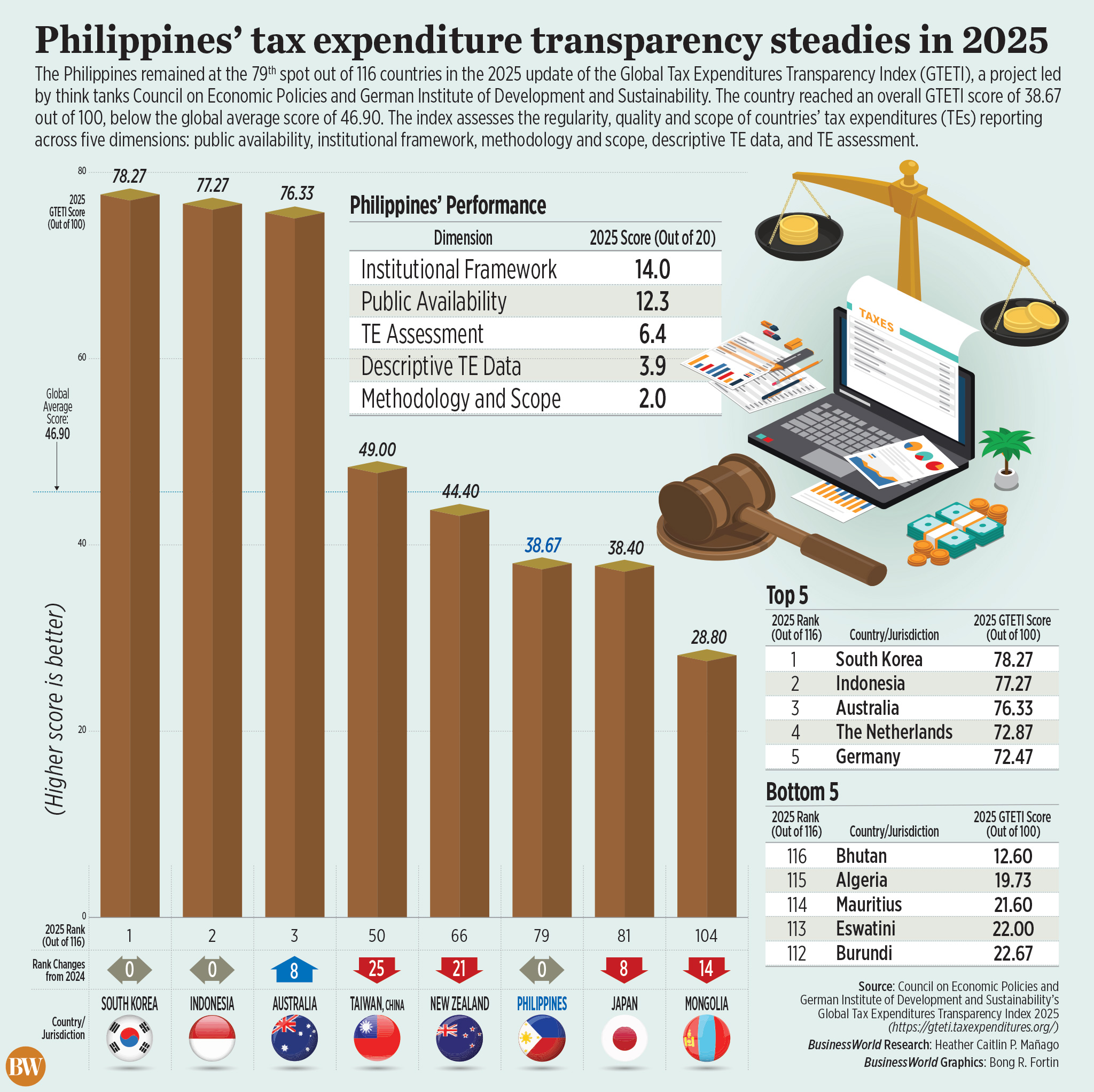
Philippines’ tax expenditure transparency steadies in 2025

The Philippines remained at the 79th spot out of 116 countries in the 2025 update of the Global Tax Expenditures Transparency Index (GTETI), a project led by think tanks Council on Economic Policies and German Institute of Development and Sustainability. The country reached an overall GTETI score of 38.67 out of 100, below the global average score of 46.90. The index assesses the regularity, quality and scope of countries’ tax expenditures (TEs) reporting across five dimensions: public availability, institutional framework, methodology and scope, descriptive TE data, and TE assessment.