Home Blog Page 366

NFL Hall of Fame

Bill Belichick’s name has been synonymous with National Football League (NFL) greatness for so long that his absence on the first ballot of the Pro Football Hall of Fame comes off less like news and more like a categorical mistyping of history. How could the coach with six Super Bowls to his credit — the most for a bench tactician in the modern era — not garner the 40 of 50 votes required for induction in his first year of eligibility?

Belichick’s reaction, as relayed by those close to him per ESPN.com, was telling in its bluntness: “Six Super Bowls isn’t enough?” he asked an associate. To another, he said simply, “What does a guy have to do?” His incredulity captures the broader dissonance between his resume and the voting outcome this year. His career victories (333 for the regular season and playoffs combined) trail only Don Shula, and his imprint on the game is indelible. Yet, in a jury composed largely of veteran NFL media and former figures in the sport, more than enough withheld support for him.

There is speculation that Belichick’s case was weakened by questions about his role on Spygate and Deflategate, controversial chapters in his dynastic story that still provoke debate even after all these years. That the developments could color a Hall vote reflect the varying degrees with which sporting achievement is celebrated. Is legacy determined purely from statistical and strategic standpoints, or does it have to be tempered by character and context? The shock exhibited by players and peers underscores how clear the answer is to them. As far as they’re concerned, the process is meant to honor the NFL’s most influential contributors, period.

The sentiments effectively underscore the chasm between institutional ritual and popular judgment. The Hall’s purpose is to honor the architects of the sport and provide a locus for collective memory. When the voters’ supposed mission collides with procedural opacity and idiosyncratic reasoning, the institution’s credibility takes a hit. Which is not to say Belichick won’t ultimately be inducted. To the contrary, he most certainly will. All the same, the denial of his first-ballot enshrinement raises concerns about the so-called stewards’ adjudication of greatness. If nothing else, the unnecessary complication of his Hall of Fame journey shines the spotlight on them.


Anthony L. Cuaycong has been writing Courtside since BusinessWorld introduced a Sports section in 1994. He is a consultant on strategic planning, operations and human resources management, corporate communications, and business development.

British PM Starmer seeks fresh start with China, economic wins

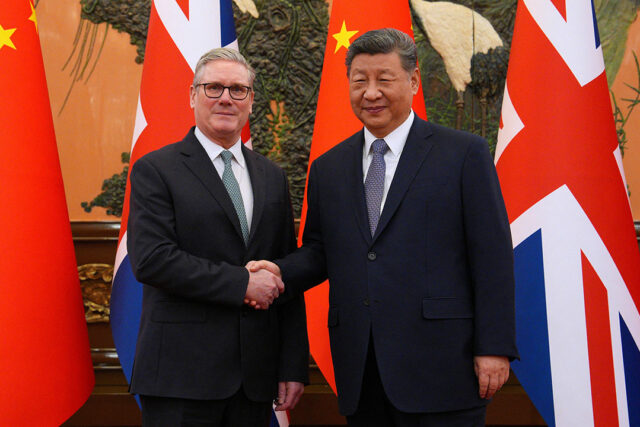
Britain’s Prime Minister Keir Starmer (L) shakes hands with Chinese President Xi Jinping ahead of a bilateral meeting during his visit to China, in Beijing, China, Jan. 29. — CARL COURT/POOL VIA REUTERS

BEIJING — British Prime Minister (PM) Keir Starmer told Chinese President Xi Jinping on Thursday that he wanted to build a “sophisticated relationship” aiming to boost growth and security, signaling a breakthrough in ties after years of acrimony.

On the most important day of his four-day visit to China, the first by a British prime minister in eight years, Mr. Starmer held talks with Mr. Xi at the Great Hall of the People before they lunched together.

Mr. Starmer, whose center-left Labour Party government has struggled to deliver the growth it promised, has made improving relations with the world’s second-largest economy a priority, despite lingering misgivings about espionage and human rights.

“China is a vital player on the global stage, and it’s vital that we build a more sophisticated relationship where we can identify opportunities to collaborate, but of course, also allow a meaningful dialogue on areas where we disagree,” Mr. Starmer told Mr. Xi at the start of their meeting.

Mr. Xi said ties with Britain had gone through “twists and turns” that did not serve the interests of either country and that China stood ready to develop a long-term strategic partnership.

Mr. Starmer is the latest Western leader to engage in a flurry of diplomacy with China, as nations hedge against unpredictability from the United States under President Donald J. Trump.

Mr. Trump’s on-off threats of trade tariffs and pledges to grab control of Greenland, an autonomous territory of Denmark, have rankled longstanding allies like Britain.

Mr. Starmer’s visit immediately follows that of Canadian Prime Minister Mark Carney, who signed an economic deal with Beijing to tear down trade barriers, drawing Mr. Trump’s ire.

Kerry Brown, professor of Chinese studies at King’s College London, said he expected that a number of deals between Britain and China would be announced to show how their relationship has improved.

“This must look like it’s been a success,” he said. “For both sides, they don’t want a meeting which is going to be arguing about things they disagree on.”

BIG BUSINESS DELEGATION IN TOW
Mr. Starmer has adopted a new policy of engagement with China after ties deteriorated for years under previous Conservative governments, when London curbed some Chinese investment over national security worries and expressed concern over a crackdown on political freedoms in Hong Kong.

“I made the promise 18 months ago, when we were elected into government, that I would make Britain face outwards again,” Mr. Starmer told Mr. Xi.

“Because, as we all know, events abroad affect everything that happens back in our home countries, to prices on the supermarket shelves to how secure we feel.”

Kemi Badenoch, the leader of Britain’s opposition Conservative Party, said on Wednesday she would not have gone to China because of the security risks the country poses.

British security services have said China routinely spies on the government. China has denied the claims.

In a sign of how the countries can work together, Downing Street said Mr. Starmer and Mr. Xi would announce that Britain and China would jointly tackle gangs involved in trafficking illegal migrants.

The deal will focus on reducing use of Chinese-made engines for small boats that transport people across Europe to claim asylum.

British and Chinese officials will share intelligence to identify smugglers’ supply routes and work with Chinese manufacturers to prevent legitimate businesses from being exploited by organized crime, Downing Street said.

Mr. Starmer told reporters on the airplane to China that he would “raise the issues that need to be raised” on human rights with Mr. Xi, when asked if he will bring up the case of Jimmy Lai, the former Hong Kong media tycoon and British citizen who was convicted in December of national security crimes.

But the presence of more than 50 business leaders accompanying Mr. Starmer and his itinerary shows the priority for this trip is economic ties.

It was time for a “mature” relationship with China, Mr. Starmer told a business delegation hours after arriving on Wednesday.

He then dined at a Chinese restaurant known for its mushroom-laden dishes that also hosted former US Treasury Secretary Janet Yellen during her 2023 visit.

He discussed how to pronounce the Chinese word for thank you — xie xie — as he posed for photographs with restaurant staff, a video posted on Weibo showed. — Reuters

Trump, Schumer move towards deal to avert US government shutdown, NYT says

A US flag is draped at Union Station with the US Capitol dome in the background on Capitol Hill in Washington, DC, June 28, 2025. — REUTERS/KEN CEDENO

US PRESIDENT Donald J. Trump and Democratic Senator Chuck Schumer moved on Wednesday night to reach an agreement to negotiate new restrictions on federal immigration agents, potentially averting a government shutdown, the New York Times (NYT) reported on Wednesday, citing officials familiar with the matter.

Under the plan, the Senate would carve out legislation funding the Department of Homeland Security (DHS) from a six-bill package of spending measures required to fund the military, health programs and other federal agencies through the rest of the fiscal year, the Times said.

Reuters could not immediately verify the report. The White House and a spokesperson for Mr. Schumer did not immediately respond to Reuters’ requests for comment.

The Senate would pass the bills before a Friday midnight deadline, and Congress would also consider a short-term extension of homeland security operations to avoid service gaps at the Transportation Security Agency, Coast Guard and the Federal Emergency Management Agency, NYT added.

The report comes after the Senate Democrats called for new restrictions on immigration agents earlier in the day, paving the way for a partial US government shutdown this weekend.

Democrats have said that they will not agree to extend DHS funding through September without new limits on Mr. Trump’s immigration crackdown.

Immigration and Customs Enforcement (ICE) and Border Patrol agents have come under widespread criticism after agents killed a second US citizen in Minneapolis last Saturday during immigration enforcement operations.

According to the New York Times report, the stopgap bill would provide time for talks to draft a new homeland security spending bill that would include new restrictions on the tactics of immigration enforcement officers.

Minority leader Mr. Schumer said earlier in the day that DHS agents including ICE must stop wearing face masks, use body cameras, and follow the same use-of-force rules as local police. — Reuters

China expects record 9.5 billion passenger trips during Lunar New Year

A LIGHT INSTALLATION depicting a horse at the 32nd Zigong International Lantern Festival ahead of the Chinese Lunar New Year, which will welcome the Year of the Horse, in Zigong, China, Jan. 23. — REUTERS/MAXIM SHEMETOV 

BEIJING — China expects a record 9.5 billion passenger trips to be made during the 40-day spring festival holiday travel period, higher than the 9.02 billion domestic trips last year, a state planning official said on Thursday. 

China has extended its official Lunar New Year holiday week to nine days for the first time, aiming to boost domestic consumption. It will be held from Feb. 15 to Feb. 23.

Travel and tourism are among the sectors China is targeting in a new services-led consumption push to boost domestic demand.

The 40-day travel rush during the country’s biggest holiday is often read as a barometer of China’s economic health and a pressure test for its vast transportation system. 

Railway passenger trips are expected to reach 540 million, with aviation trips expected to hit 95 million, both likely exceeding historical peaks for the period, state officials said.

Transportation capacity will be strengthened on popular routes and in favoured areas to meet travel needs, they said. — Reuters

Puregold CinePanalo announces top 20 Student Shorts finalists for 2026 festival run

Puregold CinePanalo, currently on its third iteration, has unveiled the top 20 student short films culled from an impressive pool of 267 submissions nationwide. Chosen from an initial top 53 shortlist, the select entries were crafted by the Philippines’ most promising student filmmakers who are poised to shape the future of Philippine cinema.

The following are the 20 Student Shorts selected for this year’s Puregold CinePanalo:

Starfish by John Clite Apolinar, Polytechnic University of the Philippines 

Alumahan by Christian Melvin M. Arejola, Polytechnic University of the Philippines 

A MILLION DREAM by Ace Joven Balleta, University of Eastern Philippines 

Kanibal by Michael Baylon, University of the Philippines (Visayas) 

Miss Intrams by Henri Marie C. Belimac, University of the Philippines (Mindanao) 

THE SOUND OF K by Jay Gabriel A. Cañada, Visayas State University 

TEKS BATTLE: SHOOT PATI PATO! by John Russel Capule, University of Caloocan City 

TINGI by Rowan De Aro, Tanza National Comprehensive High School 

Pulis Dunggab by Maxine Dela Bajan, iACADEMY Cebu 

Kapag Tapos na ang Umpukan by Justine Lee Estinor, Manuel S. Enverga University Foundation 

Ang Huling Banlaw ni Susan by Hezekiah M. Estorque, University of the Philippines (Visayas) 

Sa Mga Nagdaan at Lumipas by Ezaldea Carla Fernandez, University of the Philippines (Open University) 

12 Shots by Minnesota Flores, University of the Philippines (Diliman) 

No Mad is An Island by Carl Geronimo, City of Malabon University 

Nakabinbin by Carlo M. Gula, Colegio de San Juan de Letran – Manila 

When Heaven Inched Towards Earth by Vinh Marco, University of the Philippines (Diliman) 

Limlim by Samantha Beatriz Acoja Palaje, St. Dominic College of Asia 

Bumtak Sara ti Nuangen (The Carabao’s Horns Have Cracked) by Lloyd Pereira, Polytechnic University of the Philippines  

Kun Hain? Bisan Diin by Jomarie Reyes, University of the Philippines (Diliman) 

Nang Matakasan ang Tagay by Giancarlo Santiago, University of the Philippines (Diliman)

The young filmmakers behind these top entries will benefit from this year’s more expansive Puregold CinePanalo, which offers a production grant of P200,000 and sponsorship of equipment packages to support the production of their films.

Furthermore, Puregold CinePanalo, in partnership with the Asia Pacific Film Institute (APFI), presents expanded educational incentives for the student filmmakers. Winners of the Best Film, Jury Prize, and Best Director categories will be eligible for full scholarships at APFI, alongside additional tuition benefits and career guidance programs.

Ivy Hayagan-Piedad, senior marketing manager of Puregold, extends her congratulations to the top 20 finalists. “Reaching this stage was no easy task. We believe these young filmmakers carry some of the most important stories that need to be told today. We are proud to provide them with a platform to bring these stories to life, and we look forward to seeing how the Filipino audiences connect with and respond to these films created especially for them.”

Now a recognized platform in the Filipino film industry, Puregold CinePanalo is a festival dedicated to amplifying young Filipino voices and their craft. Since its launch, the festival has awarded hundreds of thousands of pesos in grants to student filmmakers, creating opportunities for their professional development and exposure.

The festival is scheduled for Sept. 23 to Oct. 4, 2026 at Araneta City’s Gateway Cineplex 18 and select Ayala Cinemas, where the 20 student shorts will screen alongside seven full-length feature films.

Films produced and launched through previous Puregold CinePanalo festivals have gone on to garner critical acclaim, with alumni works screening and earning awards at notable film festivals here and abroad.

For more information on the Puregold CinePanalo Film Festival, you may stay updated through the official festival Facebook page at facebook.com/puregoldcinepanalo.


Spotlight is BusinessWorld’s sponsored section that allows advertisers to amplify their brand and connect with BusinessWorld’s audience by publishing their stories on the BusinessWorld Web site. For more information, send an email to online@bworldonline.com.

Join us on Viber at https://bit.ly/3hv6bLA to get more updates and subscribe to BusinessWorld’s titles and get exclusive content through www.bworld-x.com.

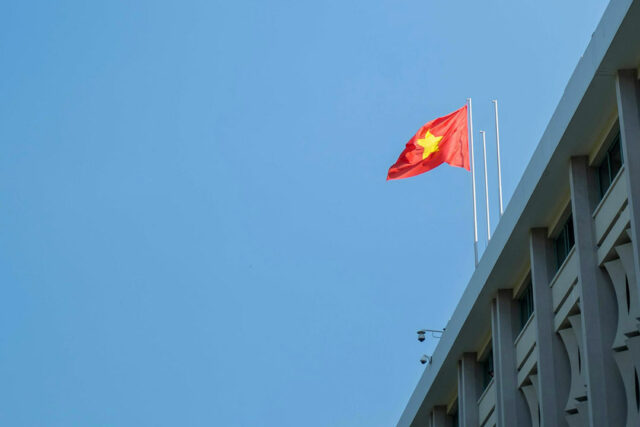
Vietnam, EU elevate diplomatic ties as international order “is under threat”

MATT W NEWMAN-UNSPLASH

HANOI — Vietnam and the European Union said on Thursday they elevated diplomatic relations, as both sides seek to expand international partnerships amid global disruptions.

The largely diplomatic move entails no binding commitments but carries political weight at a time when the EU and Vietnam are seeking to deepen international ties as they both face up to higher levies on their exports to the United States.

The upgrade is “a historical milestone underlining the great achievements that the two sides have made,” Vietnam’s President Luong Cuong said at the start of a meeting in Hanoi with European Council President Antonio Costa.

A free trade agreement between Vietnam and the 27-country EU entered into force in 2020.

Mr. Costa, who arrived in Hanoi after the EU struck a major trade deal with India on Tuesday, said the upgraded partnership “highlights the importance we attach to the region and to Vietnam’s growing role”.

“At a moment when the international rules-based order is under threat from multiple sides, we need to start to stand side by side as reliable and predictable partners,” Mr. Costa added.

The elevation of ties to Vietnam’s highest level, the same as the United States, China, and Russia, usually involves more frequent high-level meetings.

It is also expected to generate a stronger partnership, according to a joint statement adopted on Thursday, which says the two sides will explore and deepen cooperation in multiple sectors, including defense, critical minerals, semiconductors, transport and “trusted communications infrastructure”, confirming a Reuters report on Wednesday.

Mr. Costa acknowledged different views with Vietnam, a long-time Russian partner, over the war in Ukraine and human rights.

But he added that the two countries agree on their support of multilateralism and “the principles of independence, territorial integrity and sovereignty.” — Reuters

China vows to develop space tourism, explore deep space as it races US

THE Chang’e 6 lunar probe and the Long March-5 Y8 carrier rocket combination sit atop the launch pad at the Wenchang Space Launch Site in Hainan province, China, May 3, 2024. — REUTERS

BEIJING — China’s main space contractor vowed to develop space tourism in the next five years, state media reported on Thursday, as Beijing revs up its commercial spaceflight and deep space exploration ambitions amid a technology race with the US.

State-owned China Aerospace Science and Technology Corporation (CASC) said it would “achieve the flight operation of suborbital space tourism and gradually develop orbital space tourism,” as well as “build a gigawatt-level space digital intelligence infrastructure”, state broadcaster CCTV reported.

China and the US are competing as they look to turn space exploration into a commercially viable business similar to civil aviation, as well as becoming the first to exploit the military and strategic advantages of space dominance. CASC has vowed to transform China into a “world-leading space power” by 2045.

Beijing’s key bottleneck so far is its failure to complete a reusable rocket test. US rival SpaceX’s Falcon 9 reusable rocket has allowed its subsidiary Starlink to achieve a near-monopoly on low Earth orbit (LEO) satellites and it is also used for orbital space tourism.

Reusability is crucial to lowering the costs of rocket launches and making it cheaper to send satellites into space. China achieved a record 93 space launches last year, according to official announcements, buoyed by its rapidly maturing commercial spaceflight startups.

However, China has repeatedly described SpaceX’s monopoly on LEO satellites as a national security risk and is launching its own satellite constellations, which it hopes will number in the tens of thousands within the next decades.

In late December, Chinese entities submitted filings with the International Telecommunications Union (ITU) laying out plans to put about 200,000 satellites in orbit over the next 14 years. Two mega-constellations account for the vast majority, and the move would strategically reserve suborbital slots and frequencies for Beijing.

CASC’s plans were announced after China inaugurated its first School of Interstellar Navigation housed in the Chinese Academy of Sciences on Tuesday, aiming to foster the next generation of space talent in frontier fields including interstellar propulsion and deep space navigation.

The new institution signals China’s ambitions to strategically transition from near-Earth orbit operations to deep space exploration, and will support China’s planned lunar research station and efforts in detecting planets outside our solar system, according to a Xinhua report on the inauguration.

“The next 10 to 20 years will be a window for leapfrog development in China’s interstellar navigation field. Original innovation in basic research and technological breakthroughs will reshape the pattern of deep space exploration,” Xinhua wrote.

Thursday’s CCTV report said CASC would also focus on breakthroughs in key technologies such as small celestial resource exploration and intelligent independent mining and step up monitoring of space debris and the formulation of international space traffic management rules.

China’s Chang’e-6 lunar probe was the first spacecraft to bring back samples from the far side of the moon in 2024, and Beijing is actively setting international standards for spaceflight and space infrastructure to establish itself as a dominant space power.

The US faces intense competition this decade from China in its effort to return astronauts to the moon, where no humans have gone since the final US Apollo mission in 1972. — Reuters

Pakistan becomes latest Asian country to introduce checks for deadly Nipah virus

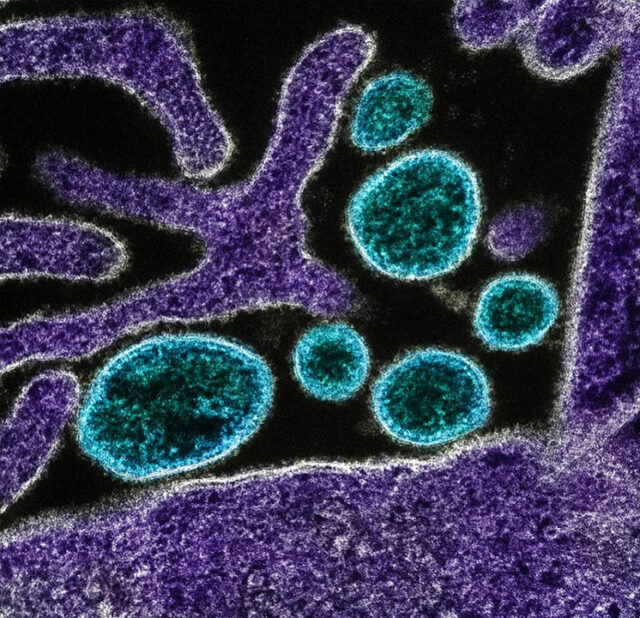
Colorized transmission electron micrograph of mature extracellular Nipah virus particles (blue) near the periphery of an infected VERO cell (purple). — NATIONAL INSTITUTE OF ALLERGY AND INFECTIOUS DISEASES (NIAID)

LAHORE/HANOI — Authorities in Pakistan have ordered enhanced screening of people entering the country for signs of infections of the deadly Nipah virus after India confirmed two cases, adding to the number of Asian countries stepping up controls.

Thailand, Singapore, Hong Kong, Malaysia, Indonesia, and Vietnam have also tightened screening at airports.

The Nipah virus can cause fever and brain inflammation and has a high mortality rate. There is also no vaccine. But transmission from person to person is not easy and typically requires prolonged contact with an infected individual.

“It has become imperative to strengthen preventative and surveillance measures at Pakistan’s borders,” the Border Health Services department said in a statement.

“All travelers shall undergo thermal screening and clinical assessment at the Point of Entry,” which includes seaports, land borders and airports, the department added.

The agency said travelers would need to provide transit history for the preceding 21-day period to check whether they had been through “Nipah-affected or high-risk regions”.

There are no direct flights between Pakistan and India and travel between the two countries is extremely limited, particularly since their worst fighting in decades in May last year.

In Hanoi, the Vietnamese capital’s health department on Wednesday also ordered the screening of incoming passengers at Noi Bai airport, particularly those arriving from India and the eastern state of West Bengal, where the two health workers were confirmed to have the virus in late December.

Passengers will be checked with body temperature scanners to detect suspected cases. “This allows for timely isolation, epidemiological investigation,” the department said in a statement.

That follows measures by authorities in Ho Chi Minh City, Vietnam’s largest city, who said they had tightened health controls at international border crossings.

India’s health ministry said this week that authorities have identified and traced 196 contacts linked to the two cases with none showing symptoms and all testing negative for the virus.

Nipah is a rare viral infection that spreads largely from infected animals, mainly fruit bats, to humans. It can be asymptomatic but it is often very dangerous, with a case fatality rate of 40% to 75%, depending on the local healthcare system’s capacity for detection and management, according to the World Health Organization.

The virus was first identified just over 25 years ago during an outbreak among pig farmers in Malaysia and Singapore, although scientists believe it has circulated in flying foxes, or fruit bats, for thousands of years.

The WHO classifies Nipah as a priority pathogen. India regularly reports sporadic infections, particularly in the southern state of Kerala, regarded as one of the world’s highest-risk regions for Nipah.

As of December 2025, there have been 750 confirmed Nipah infections globally, with 415 deaths, according to the Coalition for Epidemic Preparedness Innovations, which is funding a vaccine trial to help stop Nipah. — Reuters

UK PM Starmer tells Xi he wants ‘sophisticated’ ties with China

BRITAIN’S PRIME MINISTER KEIR STARMER — POOL VIA REUTERS

BEIJING — British Prime Minister Keir Starmer told Chinese President Xi Jinping on Thursday that he wanted to build a “sophisticated relationship” with Beijing to boost growth and security, signaling a reset after years of strained ties.

On the most important day of his four-day visit to China, the first by a British prime minister in eight years, Mr. Starmer held an 80-minute summit with Mr. Xi at the Great Hall of the People before they lunched together. He will later meet Premier Li Qiang.

Mr. Starmer, whose center-left Labor Party government has struggled to deliver the growth it promised, has made improving relations with the world’s second-largest economy a priority, despite lingering misgivings about espionage and human rights.

“China is a vital player on the global stage, and it’s vital that we build a more sophisticated relationship where we can identify opportunities to collaborate, but of course, also allow a meaningful dialogue on areas where we disagree,” Mr. Starmer told Mr. Xi at the start of their meeting.

Mr. Xi said ties with Britain had gone through “twists and turns” that did not serve the interests of either country and that China stood ready to develop a long-term strategic partnership.

“We can deliver a result that can withstand the test of history,” the Chinese leader said, flanked by his top ministers.

Mr. Starmer is the latest Western leader to engage in a flurry of diplomacy with China, as nations hedge against unpredictability from the United States under President Donald Trump.

Mr. Trump’s on-off threats of trade tariffs and pledges to grab control of Greenland, an autonomous territory of Denmark, have rankled long-standing allies like Britain.

Mr. Starmer’s visit immediately follows that of Canadian Prime Minister Mark Carney, who signed an economic deal with Beijing to tear down trade barriers, drawing Mr. Trump’s ire.

Kerry Brown, professor of Chinese studies at King’s College London, said he expected a number of deals between Britain and China would be announced to show how their relationship has improved. Mr. Starmer is being accompanied by more than 50 business leaders, another signal that he is seeking economic wins.

TACKLING MIGRANT SMUGGLING GANGS
Mr. Starmer has adopted a new policy of engagement with China after ties deteriorated for years under previous Conservative governments, when London curbed some Chinese investment over national security worries and expressed concern over a crackdown on political freedoms in Hong Kong.

“I made the promise 18 months ago, when we were elected into government, that I would make Britain face outwards again,” Mr. Starmer told Mr. Xi.

“Because, as we all know, events abroad affect everything that happens back in our home countries, to prices on the supermarket shelves to how secure we feel.”

Kemi Badenoch, the leader of Britain’s opposition Conservative Party, said on Wednesday she would not have gone to China because of the security risks the country poses.

British security services have said China routinely spies on the government. China has denied the claims.

In a sign of how the countries can work together, Downing Street said Mr. Starmer and Mr. Xi would announce that Britain and China would jointly tackle gangs involved in trafficking illegal migrants.

The deal will focus on reducing the use of Chinese-made engines for small boats that transport people across Europe to claim asylum.

British and Chinese officials will share intelligence to identify smugglers’ supply routes and work with Chinese manufacturers to prevent legitimate businesses from being exploited by organized crime, Downing Street said.

Mr. Starmer told reporters on the airplane to China that he would “raise the issues that need to be raised” on human rights with Mr. Xi, when asked if he would bring up the case of Jimmy Lai, the former Hong Kong media tycoon and British citizen who was convicted in December of national security crimes.

After arriving late Wednesday, Mr. Starmer dined at a restaurant in the capital known for its mushroom-laden dishes that also hosted former US Treasury Secretary Janet Yellen during her 2023 visit.

He practiced pronouncing the Chinese word for thank you – ‘xie xie’ – with restaurant staff as he posed for photographs, a video posted on Weibo showed. — Reuters

Villar City helps shape a sustainable future for Metro South

Evia, the premium arts district of Villar City, is alive with culture, dining, shopping, and vibrant community experiences.

There’s no doubt that Metro South is on the cusp of growth. What remains to be seen, however, is whether the region is prepared to manage that expected expansion effectively.

One answer to that challenge is already beginning to take shape in Villar City. Envisioned as the new center of gravity of Metro South, this 3,500-hectare megacity has been designed as a network of interconnected districts, proactively absorbing growth, easing pressure on surrounding areas, and laying the groundwork for the region’s next stage of development.
Improving connectivity

One of the most immediate challenges of Metro South’s growth is congestion. As population and commercial activity increase, older road networks struggle to keep pace, this slowing movement, raising logistics costs, and reducing overall productivity.

Villar City addresses this upstream. Its integrated road network, anchored by direct connections to Daang Hari Road and the Muntinlupa-Cavite Expressway (MCX), was put in place early. Major thoroughfares such as Villar Avenue, supported by secondary roads, provide alternative routes and new circulation patterns across the region.

The effect extends beyond the development itself. By offering additional access points and dispersing traffic, Villar City helps reduce strain on existing corridors, making movement across southern Metro Manila and Cavite more efficient as growth continues.

Creating new centers of economic gravity

Emporia is Villar City’s global trade and business district, designed to drive commerce, enterprise, and economic growth.

Metro South has long functioned as a residential extension of Metro Manila, with employment and commercial activity heavily concentrated elsewhere.

Villar City is now helping decentralize that dynamic growth.

Instead of a single central business district, the city is organized into multiple districts that are being developed simultaneously, each with its own distinct character and strengths. 

Evia, for example, strengthens the area’s cultural and lifestyle economy, driving foot traffic, tourism, and service-sector activity. Emporia, with its focus on commerce and trade, provides conducive spaces for enterprises that also get to benefit from regional connectivity without the high costs of traditional urban cores.

University Town is a future-ready academic district in Villar City dedicated to shaping tomorrow’s leaders through learning and innovation.

University Town adds a longer term economic layer. Anchored by the University of the Philippines Dasmariñas Campus, it attracts students, researchers, and professionals, thus laying groundwork for innovation-led industries and a more skilled regional workforce.

NOMO, as a commercial garden district, meanwhile supports a growing preference for mixed-use, lower-density environments that appeal to both businesses and residents seeking balance between work and quality of life.

Touted as Villar City’s garden commercial district, NOMO is thoughtfully built for everyday life, connection, and convenience.

Collectively, these districts help generate quality jobs as well as provide services and opportunities closer to where people live. It ensures ease of access and reduces commute dependency, all while strengthening Metro South’s internal economy.

Building the social and civic backbone early

Regional readiness is not only about roads and offices. It also depends on whether places can support community life at scale.

Villar City introduces civic, cultural, and recreational spaces early in its development cycle through parks, lifestyle destinations, event venues, and public gathering areas that allow communities to form before density peaks. These spaces encourage repeat visits, local spending, and long-term attachment to places.

The Villar City Golf Course is a championship course rising at the heart of the city, offering a premier leisure and sporting destination.

Planned features within Villar City include a golf course, convention and events spaces, pocket gardens, and large public parks. Among its most significant upcoming projects is The Stadium at Villar City, a 30,000-sq.m. facility designed to host sports training, competitions, and major community events.

The Stadium at Villar City is a world-class destination designed for sports, entertainment, and shared city moments.

Preparing for growth

By investing early in connectivity, diversifying economic districts, and establishing civic infrastructure ahead of demand, Villar City helps ensure that any upcoming expansion will not overwhelm the region’s capacity to function.

Indeed, Villar City stands as a model for how large-scale developments can create the right opportunities, absorb and stabilize expansion, and give Metro South that conducive space to grow in a more resilient and sustainable way.

About Villar City

Villar City is a 3,500-hectare master-planned megacity in Metro South, integrating communities, business districts, lifestyle centers, and green spaces into one connected urban destination. It is the flagship development of Villar Land, together with Globale and Lakefront.


Spotlight is BusinessWorld’s sponsored section that allows advertisers to amplify their brand and connect with BusinessWorld’s audience by publishing their stories on the BusinessWorld Web site. For more information, send an email to online@bworldonline.com.

Join us on Viber at https://bit.ly/3hv6bLA to get more updates and subscribe to BusinessWorld’s titles and get exclusive content through www.bworld-x.com.

Nvidia, Microsoft, Amazon in talks to invest up to $60 billion in OpenAI, The Information reports

REUTERS

NVIDIA, Amazon, and Microsoft are in talks to invest up to $60 billion in OpenAI, The Information reported on Wednesday.

Nvidia, an existing investor whose chips power OpenAI’s AI models, is in talks to invest up to $30 billion, The Information said, citing a person with knowledge of the situation.

Microsoft, a longstanding backer, is in talks to invest less than $10 billion, the report said. It added that Amazon, which would be a new investor, is in discussions to invest significantly more than $10 billion, potentially even more than $20 billion.

OpenAI is close to receiving term sheets, or an investment commitment, from these firms, the report said.

Amazon and Microsoft declined to comment, while Nvidia and OpenAI did not immediately respond to Reuters’ requests for comment outside regular business hours.

Reuters could not immediately verify the report.

Amazon’s investment could depend on separate negotiations, including a possible expansion of OpenAI’s cloud server rental deal with Amazon and a commercial agreement for OpenAI to sell its products, such as enterprise ChatGPT subscriptions, to Amazon, The Information said.

This follows reports from earlier this week that said that SoftBank Group is in talks to invest as much as an additional $30 billion in OpenAI.

OpenAI is grappling with rising costs to train and run its AI models as competition from Alphabet’s Google heats up. — Reuters

Intellicare’s 30-year legacy sets the tone for a strong 2026

HMO leader continues to expand the ripple of care to employees, members, partners

Leading HMO provider Intellicare reinforces its longstanding commitment to Leading the Ripple of Care, a philosophy rooted in gratitude, performance, and purposeful growth, as it marks 30 years in healthcare management and advances its vision to 2026.

Intellicare commemorated this milestone in a recent Thanksgiving event with the theme Pearls of Celebration at the SMX Convention Center Manila, bringing together employees and steadfast clients and long-time partners, including employee health care benefit administrators and intermediaries, to recognize the shared efforts that have shaped the organization over the years.

“As we gather to celebrate Intellicare’s 30th anniversary, I am filled with a quiet sense of reflection and an overwhelming sense of honor. ‘Leading the Ripples of Care,’ beautifully captures who we are at our core. Because at Intellicare, every act of service creates a ripple that reaches families, communities, and lives far beyond what we witness in a single moment,” said Intellicare Executive Vice-President Audrey Gallardo.

Featuring performances, announcements, and awards, the gathering reflected Intellicare’s three-decade culture of care, one that begins internally, extends to valued partners, providers, members, and eventually to the greater whole of the Philippine healthcare landscape.

“Intellicare’s vision is rooted in a dream embedded in our hearts 30 years ago, carried individually and collectively through challenges, and steadfastly sustained through every high water and storm. With care at our core, we aim to lead the ripple, to have it grow further and be felt deeper,” said Intellicare Chairman Mario Silos.

Robust industry performance

Intellicare demonstrated its dedication to reliable healthcare management following its robust third-quarter performance based on the Insurance Commission’s (IC) 2025 Third Quarter HMO Report. The company recorded a net income of PHP 715 million, the highest among HMOs in the said period. Together with its sister company, Avega Managed Care, Inc., Intellicare accounted for approximately 39% of the industry’s net income for the quarter.

While the company’s numbers have been positive, Intellicare emphasizes that its performance has been rooted in care and humanity.

“Healthcare only happens when people choose to care consistently, ethically, and courageously. We may measure our progress in numbers — lives served, clinics built, teams grown — but our true impact lives in moments: relief after uncertainty, recovery after illness, dignity restored, hope renewed,” said Intellicare President Jeremy Matti.

He ends it with a promise: “Intellicare will continue to lead with integrity, resilience, and heart.”

From L-R: Intellicare President Jeremy Matti, Executive Vice-President Audrey Gallardo, and Intellicare Group Chairman Mario Silos joined by Avega President Norman Amora

Expanding the Ripple of Care

Looking ahead, Intellicare seeks to deliver digital enhancements to the AGORA App as the primary gateway for member services, wider use of electronic RCS (eRCS Express) to simplify referrals and requests for consultations and procedures, as well as improvements to customer service lines through better feedback systems and tools.

The company is also expanding access through Intellicare Locale, a suite of HMO programs designed for budget-conscious MSMEs in regional growth centers.

In addition, Intellicare is deepening the integration of Economic, Environmental, Social, and Governance (EESG) pillars across its operations, from mindful sourcing and support for local suppliers to encouraging sustainable everyday practices among employees.

To know more about Intellicare, visit their website at intellicare.com.ph, or their social media accounts, @Intellicare on Facebook or @IntellicarePH on Instagram, and linkedin.com/company/intellicare-ph on LinkedIn.

About Intellicare

Intellicare (Asalus Corp.) is the Philippines’ preeminent Health Maintenance Organization (HMO) provider that leads and innovates a holistic approach to healthcare management.

Guided by values such as integrity, fairness, honesty, hard work, and enduring sense of humanity, Intellicare upholds every individual’s right to health by making quality healthcare efficient, accessible, affordable, and compassionate, empowering Filipinos to have better and healthier lives.

Intellicare is dedicated to improving the health and well-being of its members, providing reliable support and peace of mind during times of medical need.

Intellicare is part of Fullerton Health Group, a leading integrated healthcare provider in Asia-Pacific, offering end-to-end services from managed care to diagnostics, specialty care, and ancillary services.


Spotlight is BusinessWorld’s sponsored section that allows advertisers to amplify their brand and connect with BusinessWorld’s audience by publishing their stories on the BusinessWorld Web site. For more information, send an email to online@bworldonline.com.

Join us on Viber at https://bit.ly/3hv6bLA to get more updates and subscribe to BusinessWorld’s titles and get exclusive content through www.bworld-x.com.

ADVERTISEMENT
ADVERTISEMENT