Home Blog Page 3613

Lawmaker mulls hourly pay rate

REUTERS

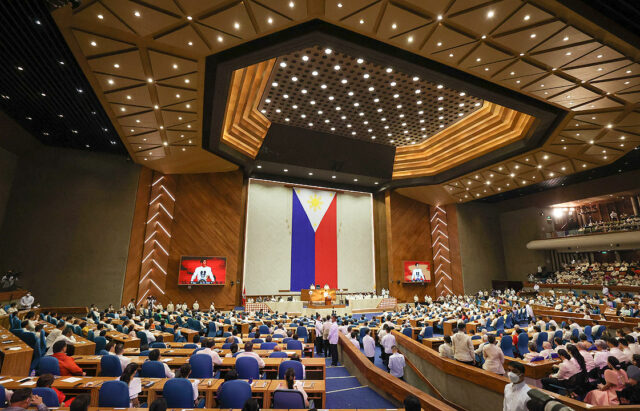
ONE of the leading economists in the House of Representatives is studying a national hourly wage rate, citing its flexibility for employers and workers as smaller enterprises find it difficult to keep up with a legislated daily wage hike.

“The International Labor Organization tends to prefer an hourly rate, because it doesn’t discriminate against part-timers or the gig economy,” Albay Rep. Jose Ma. Clemente S. Salceda said in a Viber message.

An hourly wage rate is also more flexible for enterprises and their workers and could be established across all regions, he said. “Most provincial economies also do not need workers to be in the office the whole eight hours,” he pointed out.

Ser Percival K. Peña-Reyes, director of the Ateneo Center for Economic Research and Development, said employers in the regions would find it more difficult to implement a wage hike.

“If you mandate that increase, proportionally, the impact is bigger on them, especially firms [in the] regions [where] wages are lower than what they are in [Metro] Manila,” Mr. Peña-Reyes said via telephone.

The House Committee on Labor and Employment is set to deliberate on several wage hike measures on Wednesday.

Congressmen filed several bills seeking P150 and P750 across-the-board wage hikes. Iloilo Rep. Janette L. Garin said earlier that the chamber is also looking at a wage increase of P350 to P400.

If a wage hike is implemented, Mr. Salceda said the construction, transportation and storage sectors will experience the sharpest increase in cost.

He said a “reasonable” wage hike could help employers and workers manage looming price impacts.

“The price impacts of legislated wake hikes depend on how much the hike will be, how fast the hikes are to be implemented, and which sectors are exempt,” he said.

Last week, the Senate approved on final reading a bill seeking an across-the-board P100 minimum wage increase for private-sector workers.

For Emmanuel J. Lopez, an associate professor at the Colegio de San Juan de Letran Graduate School, the wage increase would boost the purchasing power of minimum-wage workers and spur a consumer-driven economy.

“While it is true that the legislated wage hike of 100 pesos per day will likely push upward the inflation rate by 1.2 percentage points (from 3.9 to 4.2 percent), the increase will more than support the presumed increase in prices,” Mr. Lopez said in an e-mail.

“In the long run, it will be attractive to investment because of the existence of economies of scale.”

But Enrico P. Villanueva, a senior lecturer at the University of the Philippines Los Baños Economics Department, warned that a high wage increase may push the central bank to raise interest rates.

“Legislated wage hike may compel the BSP (Bangko Sentral ng Pilipinas) to increase interest rate if the magnitude of the rate hike is substantial enough to fan second-round inflation,” he said in an X (formerly Twitter) chat.

The BSP kept its key rate at 6.5% for a third straight meeting in February. Analysts are expecting the central bank to cut policy rates by the second quarter of this year.

Last week, National Economic Development Authority (NEDA) Secretary Arsenio M. Balisacan the Philippine economy could fail to meet its inflation target if a wage hike is implemented.

Inflation eased to 2.8% in January from 3.9% in December, settling within the central bank’s 2-4% target for two straight months.

The last legislated wage hike was implemented in 1989 under the Wage Rationalization Act. Since then, regional wage boards study and approve wage hikes.

House Majority Leader and Zamboanga City Rep. Manuel Jose M. Dalipe said congressmen will carefully study the proposed wage hike.

“While any increase is a step in the right direction, we must ensure that our legislative actions truly make a meaningful difference in the lives of our workers, particularly when considering the substantial challenges faced by the business sector,” he said in a statement. — Beatriz Marie D. Cruz with a report from John Victor D. Ordoñez
Honor discounts, pharmacies told

PHILIPPINE STAR/ GEREMY PINTOLO

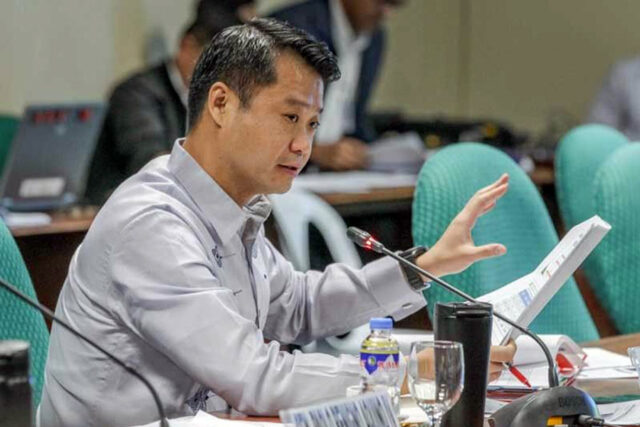
A PHILIPPINE senator called on drugstores and pharmaceutical retailers on Sunday to immediately provide its clients discounted rates for cancer, hypertension and diabetes medications that have been recently exempted from value-added tax (VAT).

“Given the high prices of basic commodities, it is important that affordable medicines are made available to those who have existing medical conditions,” Senator Sherwin T. Gatchalian said in a statement. “This should be implemented immediately for the welfare of our sick countrymen.”

Last month the Bureau of Internal Revenue (BIR) issued a memo that updated the list of drugs exempted from VAT such as medicines treating kidney disease, mental illness, and tuberculosis.

Panitumumab and Fulvestrant, which are used to treat cancer, are also added to the VAT-exempt list which took effect on Feb. 19.

The BIR added 25 cancer treatment drugs to the list in June last year.

Under the Corporate Recovery and Tax Incentives for Enterprises Act (CREATE), approved drugs, medicines, vaccines and medical devices are to be considered exempt from VAT, as identified by the Food and Drug Administration.

“The public needs to be aware of the price of their medications and they need to see the VAT exemption on their receipts,” Mr. Gatchalian said in mixed English and Filipino. —  John Victor D. Ordoñez

Biodiversity offset site launched

BW FILE PHOTO

SAN MIGUEL Corp. (SMC) has launched a biodiversity offset site in Malolos City, Bulacan as part of the company’s efforts to help address flooding in the area.

The conglomerate said in a statement that the biodiversity offset site in Barangay Pamarawan, called Saribuhay sa Dampalit project, was launched via its unit San Miguel Aerocity, Inc. (SMAI).

It claimed that the biodiversity offset site is the first in the country and covers 40 hectares with plans for expansion to 800 hectares in strategic areas.

SMC’s project, which adheres to International Finance Corp. environment and social standards, provides a feeding ground for migratory birds. The project also generated employment and raised awareness on the importance of preserving migratory shorebirds.

According to SMC, the initiative aims to balance development efforts with environmental preservation, support local livelihoods, and address flooding issues in Bulacan’s flood-prone areas.

It added that the project is among the company’s “nature-based solutions” to building the New Manila International Airport project in Bulacan.

“By involving local residents in our efforts, we’re not just building infrastructure, we are cultivating a community that values and actively contributes to environmental preservation,” SMAI Project Director Cecile L. Ang said.

SMC President and chief executive officer Ramon S. Ang said the project could potentially turn into a location for bird-watching, which could boost tourism and generate more jobs.

“The Saribuhay sa Dampalit project is an integrative approach to development that respects and enhances the natural environment alongside our infrastructure objectives. We firmly believe that progress and nature can co-exist, benefiting both the ecosystem and the local community,” he said. — Revin Mikhael D. Ochave

Speaker pushes motorcycle taxis

MMDA PHOTO

HOUSE Speaker Ferdinand Martin G. Romualdez asked congressmen on Sunday to fast track a measure that would allow the operation of motorcycle taxis to provide more transportation options to the commuting public.

“It’s imperative to adapt our laws to the evolving transportation landscape to ensure the well-being and convenience of our citizens,” Mr. Romualdez said in a statement.

The motorcycle taxi industry has provided job opportunities, the House leader said.

“The legalization of motorcycle taxis and the relaxation of TNVS (transportation network vehicle service) regulations align with our goals to provide more choices for passengers, drivers, and businesses, particularly MSMEs (micro, small, and medium enterprises),” he said.

Since 2019, the Department of Transportation (DoTr) has allowed the operation of motorcycle taxis under a pilot study of its reliability and safety as a means of public transportation.

Last year, the House transportation committee and the DoTr’s technical working group called on the need to extend motorcycle taxi pilot studies outside the capital region.

Republic Act (RA) No. 4136, or the Land Transportation and Traffic Code, prohibits the use of two-wheeled vehicles for public transport.

House Bill No. 3412, the proposed Motorcycles-For-Hire Act, which will amend RA 4136, is still pending at the committee levels in both the Senate and the House of Representatives.

The bill seeks to keep up with the development of application-driven transport network companies “which have highlighted the necessity for updated regulations that keep pace with technological advancements and evolving public needs.” — Beatriz Marie D. Cruz

Upgrade of BARMM ports eyed

PHILSTAR FILE PHOTO

COTABATO CITY — The Bangsamoro government and the Mindanao Development Authority (MinDA) are working closely together for the upgrading of operations at airports and seaports in the autonomous region to help boost investments.

BARMM Transportation and Communications Minister Paisalin P. Tago told a radio station here last Saturday that MinDA officials have already discussed with the Bangsamoro Ports Management Authority how agencies under the Bangsamoro Autonomous Region in Muslim Mindanao (BARMM) are supporting interventions to help the business climate in the region.

“The Ministry of Transportation and Communications-BARMM is committed to its partnership with MinDA. Together we can improve the seaports in the region, plan out the construction of more as projects of the regional government with imprimatur from our chief minister, Ahod Ebrahim,” Mr. Tago said.

MinDA, which is based in Davao City, is operating directly under the Office of the President.

Three island provinces in BARMM, Basilan, Sulu and Tawi-Tawi are connected to trading centers in Zamboanga City in Region 9 via sea routes jointly guarded by the Armed Forces and the Philippine National Police.

An agency of the national government, the Office on Transportation Security (OTS), and the Bangsamoro Airport Authority under MoTC-BARMM are now planning bilateral protection programs for the Cotabato Airport in Datu Odin Sinsuat town in Maguindanao del Norte.

The Cotabato Airport is only about eight kilometers south of the BARMM capitol in this city.

“All is well with the partnership of the OTS. The MoTC-BARMM and this agency of the national government together aim to put in place security measures to protect the Cotabato Airport based on international standards,” Mr. Tago said. — John Felix M. Unson

Gov’t urged to spur investments

LABOR coalition Nagkaisa said over the weekend that the government must push for measures to encourage investment in tandem with a legislated wage hike.

“A thriving business sector can lead to more dynamic labor markets where merit and productivity are rightly rewarded,” Nagkaisa chairperson Jose “Sonny” G. Matula said in a Viber message. “We believe that these efforts should complement each other to achieve sustainable economic growth that benefits all stakeholders, particularly the working class.”

Last week, the Senate approved on final reading a bill seeking an across-the-board P100 minimum wage increase for private-sector workers, the first legislated wage hike since the Wage Rationalization Act of 1989.

The Employers Confederation of the Philippines (ECoP) called the legislated wage hike “catastrophic [and] inflationary,” adding that microenterprises would find it difficult to pay their workers and be forced to lay off staff. — John Victor D. Ordoñez

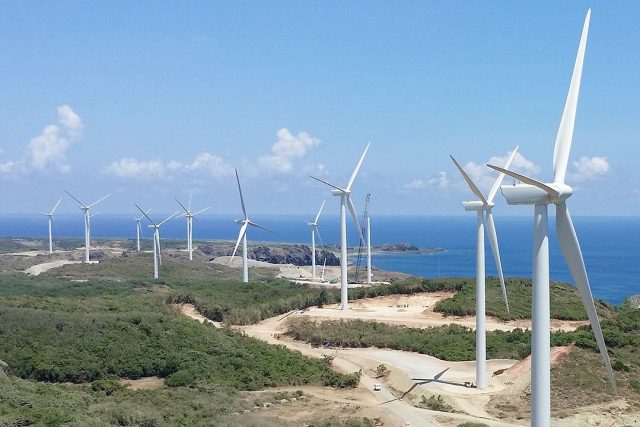
RE transition seen accelerated by Maharlika fund investments

By Sheldeen Joy Talavera, Reporter

ENERGY investments by the Maharlika sovereign wealth fund are expected to help ramp up the renewable energy (RE) buildout, a think tank said.

Energy projects are consistent with the goal of the Maharlika Investment Fund (MIF) of backing “high-impact projects,” according to the Institute for Climate and Sustainable Cities (ICSC).

“The fund can catalyze the advancement of RE and expedite the shift towards a sustainable energy landscape,” the ICSC said in an e-mail to BusinessWorld.

Maharlika Chief Executive Officer and President Rafael D. Consing, Jr. said in a forum last week that the energy sector will take in the bulk of the MIF’s initial investments.

“In terms of the amount we will commit for the year, I think a big portion of it really will be coming from energy,” Mr. Consing said.

MIF has an initial capital of P125 billion and initial authorized capital stock of P500 billion. It is set to make its first investment by the end of the year.

The Department of Energy (DoE) expects the energy sector to require a total investment of about $153 billion, with a $97-billion goal for RE, including the pre-development and construction of power plants.

As of January, the DoE awarded RE service contracts to 1,267 projects with total potential capacity of around 129,000 megawatts across various technologies.

The ICSC said that the board governing the MIF should align energy investment policy with national energy plans, particularly on climate action.

“It is also important to ensure transparency and accountability in the MIF’s allocation and utilization,” the ICSC said.

Obtaining loans and financing for RE projects can be challenging, it said, making it necessary for the industry to have access to financing options to make their projects viable.

It warned that the energy transition agenda could be “jeopardized” by any indication of an industry plagued by “slow and stagnant returns.”

Energy Secretary Raphael P.M. Lotilla said the DoE has yet to discuss potential investments with the MIF.

“Although we have heard the emphasis that was given to energy being an area of investment for Maharlika, it is too early, I think, at this point. We will have to really discuss the details,” he said in a forum last week.

Favorable beverage tax outcomes depend on ‘efficient design’ — WB

PHILSTAR FILE PHOTO

POSITIVE OUTCOMES from a sugar-sweetened beverage taxes like reduced consumption and improved health will depend on how well the tax is designed, the World Bank (WB) said.

“Sugar-sweetened beverage (SSB) taxes are an important fiscal and health policy tool since they raise tax revenue and improve health by reducing demand, as well as reduce health expenditures by alleviating the burden on the health system,” the bank said in a note.

“SSB taxes can be designed efficiently to reduce costs of over-consumption related to both negative externalities and internalities and do not generally distort other aspects of economic activity,” it added.

Last year, former Finance Secretary Benjamin E. Diokno proposed to increase the excise tax on sweetened beverages. The initial proposal sought to raise the tax to P12 per liter for beverages using any kind of sweetener.

Under the Tax Reform for Acceleration and Inclusion law, the government introduced an excise tax of P6 per liter for drinks containing caloric or non-caloric sweetener, and P12 per liter for drinks containing high-fructose corn syrup or any such sweeteners in combination.

The tax increase on sweetened beverages along with another proposal for a “junk food” tax could yield up to P76 billion in revenue in the first year of implementation, according to Mr. Diokno.

Current Finance Secretary Ralph G. Recto said he is not pursuing his predecessor’s proposals for these taxes.

The World Bank said that SSB taxes must take into account each government’s capacity to implement taxes.

“Overall, SSB taxes can be considered a win-win policy that can help to improve health outcomes and at the same time generate tax revenue, while generating benefits for equity, health system efficiency, and further societal gains,” it added.

The bank noted that one concern often raised about SSB taxes is that they “lead to job losses.”

“However, it is important to keep in mind that when consumers reduce their purchases of SSBs they will reallocate their spending to other goods and services, including untaxed products from the same beverage industries, and governments will spend the revenue generated by the tax,” it said.

“Studies of employment and unemployment outcomes following the introduction of SSB taxes in Mexico, Peru and two local jurisdictions in the US have found no impact on jobs or unemployment claims, including in industries that produce and sell SSBs,” it added.

It also noted concerns on the tax’s impact on lower-income groups.

“Indeed, while consumption taxes can be regressive because lower-income individuals spend a higher share of their income on consumption, from a health tax perspective they can be considered progressive for several reasons.”

“Low-income individuals tend to be more price sensitive and so are likely to be more responsive to the tax and reduce their consumption to a greater extent. They therefore garner a relatively higher health improvement and, therefore, a commensurate benefit,” it added. — Luisa Maria Jacinta C. Jocson

Energy dep’t seeking to gauge major data centers’ RE needs

BW FILE PHOTO

THE Department of Energy (DoE) said it has asked hyperscale data center developers to submit their plans to draw power from renewable sources in order to properly gauge the industry’s demand.

“If we’re going to become the hub for hyperscale data centers, the requirement is very high for renewable energy and it’s a good opportunity for us,” Energy Undersecretary Rowena Cristina L. Guevara told reporters on Feb. 22.

Each hyperscale data center facility requires an electricity supply of between eight megawatts (MW) and 125 MW, she said.

“When I talked to them yesterday, I said, ‘You better come up with a roadmap so that we can match demand with the supply from renewables,’ and they promised to come up with a map,” Ms. Guevara said.

She said the response may take time as the hyperscale developers have yet to organize themselves as an industry.

Hyperscale data centers are massive business-critical facilities for companies with major data processing and storage needs. The Philippines is positioning itself as “the next hyperscale destination in Southeast Asia.”

In 2023, the Department of Information and Communications Technology said it is expecting a fivefold increase in the capacity of data centers in the Philippines with a power requirement of approximately 300 MW by 2025.

Separately, the DoE said it will conduct energy audits and spot checks in government offices and facilities in conjunction with the accelerated implementation of the Government Energy Management Program (GEMP).

GEMP aims to reduce the government’s electricity and fuel consumption by at least 10% through energy efficiency and conservation initiatives.

“All (government entities) are subject to energy audit within the current year and every three (3) years thereafter,” according to the DoE’s Administrative Order No. 15. — Sheldeen Joy Talavera

Privatization office raises P1.94 billion in 2023

PHILSTAR FILE PHOTO

THE Department of Finance (DoF) said its Privatization and Management Office (PMO) generated P1.94 billion last year, far exceeding its target.

The DoF reported that collections exceeded the target by 168%, while remittances to the Treasury of P1.88 billion surpassed the target by 187.9%.

Finance Undersecretary Catherine L. Fong has said that the PMO is working on revising the guidelines on the disposition of state assets to help meet aggressive targets this year.

The revised privatization guidelines are expected to be finalized within the month.

The department also said that Finance Secretary Ralph G. Recto has tasked the PMO to “ensure a proactive and effective approach towards optimizing resource utilization and maximizing returns.”

The PMO is currently working with the Philippine Amusement and Gaming Corp. (PAGCOR) in privatizing its gaming operations.

In a statement last week, PAGCOR Chairman and CEO Alejandro H. Tengco said he hopes to complete privatizing its operations over the next five years.

Last year, the gaming regulator announced its plan to become purely a regulator and dispose of its casinos. — Luisa Maria Jacinta C. Jocson

Philippine, Spanish business chambers aim for more manufacturing investment

REUTERS

THE partnership between Philippine and Spanish business chambers will be a platform for bringing in more investment in manufacturing and technology, the Spanish ambassador said.

On the sidelines of the 10th Philippine-Spain Forum on Friday, Ambassador Miguel U. Delgado noted the great interest from Spanish companies to invest in the Philippines.

“We have seen that there is a big interest from Spanish companies (for collaboration with) Filipino companies,” Mr. Delgado told BusinessWorld, adding that the interest is particularly strong in tourism, power generation and transmission, and agriculture with an emphasis on food logistics.

“Trade between Spain and the Philippines is doing well; it has recovered from the pandemic. But we really think they can be doing better and so we will put in some instruments like these MoUs (memoranda of understanding) and these forums,” he said.

“At the moment, the bulk of the imports and exports are in the primary sector, and we want to amplify this to other sectors like manufacturing, electronics, etc.,” he added.

At the two-day forum, the Philippine Chamber of Commerce and Industry (PCCI) and the Spanish Chamber of Commerce signed an MoU aimed at developing economic ties in manufacturing, information and communications technology and tourism.

“Through this MoU with our counterpart in Spain, we’re hoping that we both can work together, harder than we have been doing, to really pursue collaboration between the Spanish and Philippine technology and business sectors,” PCCI President Enunina V. Mangio said.

“Last night I was talking to some of the delegates. They’re seeking out possible business partners for manufacturing, energy and technology transfer,” she added.

She added that the Spanish companies were involved in the manufacturing of food and information technology (IT) equipment.

“I presume that they’re interested in IT because our IT is not as advanced as that of our neighbors. So I think they want to bring in other technology that can be used by our existing facilities,” she added.

According to Mr. Delgado, “the idea of the MoU… (is to) bring delegations of entrepreneurs from Spain to the Philippines and from the Philippines to Spain,” he said.

Ms. Mangio said that she expects to join two business delegations to Spain this year, one of which is expected in May and the other in October.

“This MoU is going to improve our trade relationship. You know we have a very big trade imbalance with them, but with this now, our relationship with Spain will improve which will also improve our trade relationship with them,” she added. — Justine Irish D. Tabile

Foreign ownership reform ‘missing piece’ of PHL economic puzzle

PHILIPPINE STAR/KRIZ JOHN ROSALES

An overhaul of foreign ownership rules is the “missing piece” in transforming the Philippine economy, according to an official of Singapore investment company JJ Richman.

“There is one missing piece that the Philippines has had for a long time and they’ve been behind on, which is the foreign investment limit — 40% at the moment,” James Richman, chief investment officer at JJ Richman, told BusinessWorld.

“That’s something I’ve witnessed, where, for example, in Vietnam, they don’t have such big restrictions as in the Philippines. So for many years, there have been big investments flowing into that country,” he added.

He said the potential for opening up foreign ownership is what gives the Philippines upside.

“That is why I like the Philippines. There is still this missing piece, and once that gets unlocked, there is going to be more foreign investment flowing into the country, more projects, and more economic growth happening,” he said.

“Whereas other countries like Singapore and Vietnam seem to be already more or less mature if we compare them to the Philippines, there’s kind of more upside and more growth opportunities in the Philippines,” he added.

He said that the Philippines has the most stringent foreign equity ownership restrictions in ASEAN region. Under Article 12 of the Constitution, foreign ownership of land and businesses is limited to 40%, with the remaining 60% set aside exclusively for Filipino citizens or corporations.

Congress has been deliberating its own resolutions proposing constitutional amendments to ease restrictions on foreign investment. Both proposals seek to open up industries like public utilities, education, and advertising.

Earlier this year, President Ferdinand R. Marcos, Jr. backed amendments to economic provisions but added that he was not in favor of allowing foreigners to own land and businesses in power generation and media.

Mr. Richman said that he also agrees that the government should limit the proposed 100% opening to just the three sectors.

“I also like the parts that they excluded, which is that they don’t want to give 100% ownership to foreign investors in the industries that could control or change the direction of the country, the media being one of them,” he said.

“I like that part and also the industries that they were focusing on where the limit will be lifted, such as public utilities, advertising, and education. These are industries that will obviously benefit Filipinos,” he added.

“I really like the idea that he’s not willing to change the percentages on real estate. Because again, the outside purchases will just drive up the price that Filipinos wouldn’t be able to afford, and that would be unfair,” he said… When an investor comes in and launches an enterprise, he can own 100% of it, but land is something that the people of the Philippines already own, so why give 100% of it away?”

He called the timing of the proposed changes “really good, specifically because of technologies such as artificial intelligence, automation, big data, machine learning, and biotechnology,” he said. “Many years ago, there were no such breakthroughs and innovations in these industries as there are now, so if you opened it up many years ago, there wouldn’t be this drive and energy from engineers, entrepreneurs, and investors because there was no vehicle to accelerate their investment.”

“Some said we have to first solve problems of poverty, and I disagree with this statement because it’s known that innovation and startups are what actually solve problems such as poverty,” he added. “If we wait for that, that’s going to happen again. So that’s why I also think it’s the right time for that (charter change) as I think this would be an instrument and a vehicle for how to solve poverty,” he added. — Justine Irish D. Tabile

ADVERTISEMENT
ADVERTISEMENT