Home Blog Page 3581

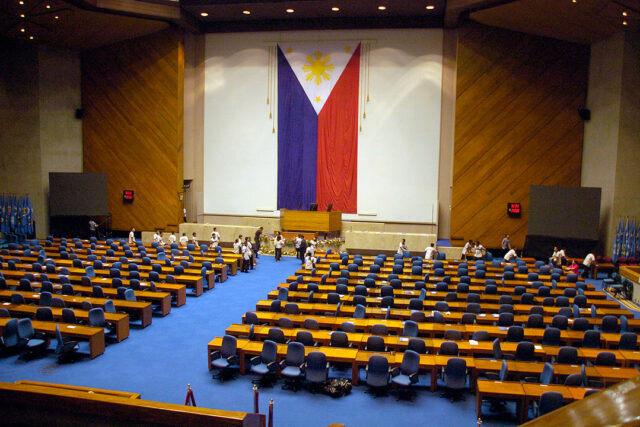
Senate not pressured to pass economic ‘Cha-cha’ — Pimentel

SENATE PRIB

By John Victor D. Ordoñez, Reporter

THE QUICK approval of economic Charter change (“Cha-cha”) for a plenary vote at the House of Representatives will not pressure the Senate to speed up its own deliberations on its version of the bill, the Senate minority leader said at the weekend.

“Nope. We are independent,” Senate Minority Leader Aquilino Martin “Koko” D. Pimentel III told BusinessWorld in a Viber message when asked if the House committee’s swift approval of Resolution of Both Houses No. 7 (RBH 7) would affect the Senate’s timeline in deciding on Resolution of Both Houses No. 6’ (RBH 6).

Last week, congressmen said that the pressure is on Senate President Juan Miguel F. Zubiri to pass RBH 6 as he would need 18 votes in favor of the measure seeking to ease constitutional provisions on foreign ownership in education, public utilities, and advertising.

The House Committee of the Whole on March 6 approved RBH 7 which seeks to liberalize foreign restrictions in the current Charter. The measure was filed on Feb. 19.

“Obviously, they (lawmakers) need to synchronize their efforts, meaning, both chambers should primarily agree on the amendment proposals to deliberate on. Meaning, both chambers should primarily agree on the amendment proposals to deliberate on.” Michael Henry L. Yusingco, a lawyer and constitutionalist said in a Facebook Messenger chat.

“But still, the Senate must not be pressured by the decision of the House of Representatives, and vice versa.”

The Senate plans on finishing the hearings and consultations on RBH 6 before President Ferdinand R. Marcos, Jr.’s address to Congress in July, Senator Juan Edgardo M. Angara told reporters after a hearing on the “Cha-cha” measure on March 5.

Commission on Higher Education (CHED) Chairman Prospero E. De Vera III earlier told congressmen and senators that opening up ownership in the sector would help colleges and universities become more globally competitive.

“The Constitution envisions both chambers to act on their own wisdom and discretion,” Mr. Yusingco said.

“For Congress to exercise its constituent power the right way, both chambers must vote on the same amendment proposals.”

Global coalition slams airstrikes

A GLOBAL human rights watchdog has condemned recent Philippine military airstrikes as part of a counterinsurgency operation along the border of the provinces of Camarines Sur and Quezon in southern Luzon that have adversely affected the livelihood of residents.

In a statement over the weekend, the International Coalition for Human Rights in the Philippines (ICHRP) said the military action “caused widespread fear to the residents in the area, affecting the livelihood of farmers.”

The group said the airstrike was carried out by the 81st Infantry Brigade of the Philippine Army in the early morning of March 4. It called for an immediate investigation to ensure the safety of civilians.

“In these cases, the military conveniently hides under the banner of its US-backed counterinsurgency program against communist rebels, to justify its disproportionate use of force that impacts civilians in the countryside,” the watchdog said. — John Victor D. Ordoñez

P64-M cigarettes seized in Tawi-Tawi

STOCK PHOTO | Image by Shaun Meintjes from Unsplash

COTABATO CITY — A unit of the Philippine Navy foiled last Saturday an attempt to deliver P64 million worth of cigarettes from Indonesia to Tawi-Tawi.

Local authorities reported that the watercraft carrying 2,000 cases of cigarettes with Indonesian brands, the M/L Yasmen, was intercepted a few miles off Manuk Mangkaw Island in Simunul, Tawi-Tawi by Navy personnel on a sea patrol.

The M/L Yasmen was impounded by the Navy unit in Tawi-Tawi, and the contraband was turned over to the office of the Bureau of Customs in Bongao, capital town of Tawi-Tawi.

Rear Admiral Donn Anthony L. Miraflor, Naval Forces Western Mindanao (NFWM) commander, said these operations are the result of multi-agency collaborations.

Brig. Allan C. Nobleza, director of the Police Regional Office-Bangsamoro Autonomous Region, said the Bangsamoro Autonomous Region in Muslim Mindanao’s (BARMM) Ministry of Transportation and Communications, Ports Management Authority are just two of the agencies who support efforts to address cigarette smuggling in the region. — John Felix M. Unson

Wage boards clustering proposed

Commuters line up at the MRT-3 North Avenue Station, March 28, 2022. — PHILIPPINE STAR/ MIGUEL DE GUZMAN

A LAWMAKER is asking the House Committee on Labor and Employment to consider his idea of clustering the Regional Tripartite Wages and Productivity Boards (RTWPB) for a progressive scaling of wage rates.

“The clustering I suggest groups together regions that are economically interdependent because of the mobility of labor, goods, and capital among them,” Manila Rep. Joel R. Chua told BusinessWorld in a Viber message.
He said this would allow regions with low wage rates to catch up with the region with the highest pay rate in the cluster.

However, Foundation for Economic Freedom President Calixto V. Chikiamco said that “clustering negates the original intent of RTWPBs as each respective region have different cost and employment conditions” which should be considered in wage setting.

Similarly, Federation of Free Workers President Jose “Sonny” G. Matula buckled at the suggestion since their advocacy is focused on “a significant one-time wage hike to effectively stimulate the local economy.”

“We beg to disagree with clustering, and we go for P150 a day (minimum wage increase),” he said.

Mr. Chua recommended that RTWBs be clustered as the current regional wage systems are too complicated given the range of varying minimum wage rates in each region that businesses must adhere to.

“We have a complicated minimum wage system. Too many tiers — one for every region, and within some regions there are many tiers as well,” he said.

Earlier, members of the House introduced bills on increasing minimum wage rates due to inflation and the surge of prices on basic needs and commodities, which have decreased the real value of wages received by workers.

“Minimum wage increase at a national level is long overdue,” Party-list Rep. Raoul Danniel Manuel told BusinessWorld in a Viber message. “Prices have soared while the real value of wages has stagnated.”

Mr. Manuel, who is also a member of the House labor and employment committee, said that the across-the-board increase in the minimum wage would “enable the workers to purchase goods and services” which will help increase the circulation of money “in the economy and have a positive effect on small businesses.”

For Mr. Chikiamco, a legislated wage increases could induce “slower growth, higher unemployment, lower investment spending, and a wage-price spiral,” which would hurt the local economy.

He said the proposed minimum wage hike will only hurt workers in the informal sector from the effects of “spiraling inflation.”

“The legislated wage increase will only benefit only about 10% of our workforce. It won’t benefit informal workers like motorcycle-taxi drivers, market vendors, fishermen, ambulant cigarette vendors,” Mr. Chikiamo said. “On the contrary, these informal workers, which are 10 times more than the organized minimum wage earners, will suffer greatly from the spiraling inflation that a legislated wage increase will bring.”

For his part, Philippine Chamber of Commerce and Industry (PCCI) President George T. Barcelon told BusinessWorld that business groups are not supporting the proposed legislated wage hikes as they are “concerned” that the “effects will be negative” as some “micro, small and medium enterprises may not be able to afford such an increase.”

In response to the concerns of business groups, IBON Foundation Executive Director Sonny Jose Enrique “Sonny” A. Africa said that the wage hikes will only be inflationary if employers increase prices for their sold products and services instead of “giving this to workers out of their profits.”

“A P100 across-the-board wage hike is equivalent to just a 7.1% cut in profits across all establishment sizes,” Mr. Africa told BusinessWorld in a Viber message. On the other hand, a P350 across-the-board minimum wage hike is set to cut 25% of establishment profits.

“Big businesses, which employed 37% of workers in the formal economy in 2022, can shoulder legislated wage hikes,” Mr. Manuel said. “Small businesses can be assisted by the government through wage subsidies which are part of the bills we filed for wage hikes.” — Kenneth Christiane L. Basilio

House eyes 2nd reading approval of RBH 7 this week

BW FILE PHOTO

THE HOUSE of Representatives is looking to approve on second reading the Resolution of Both Houses (RBH) No. 7 by Wednesday, House Senior Deputy Speaker and Pampanga Rep. Aurelio D. Gonzales, Jr. said on Sunday.

Mr. Gonzales said the House plans to deliberate RBH No. 7 in three days, with its voting happening shortly after at Wednesday’s plenary session.

“In plenary, the proponents of the economic Charter changes will defend their proposals,” Mr. Gonzales said in a statement. “The plan is to have three days of debates, with the second-reading vote set shortly after the termination of discussions and the period for amendments on the third day.”

He said that the House is also intent on finishing RBH No. 7 on third and final reading before the Holy Week break.

The committee report of RBH No. 7 was approved “without amendment” last week amid extensive deliberation from lawmakers.

The proposed economic amendments included in RBH No. 7 would give Congress the flexibility needed to change foreign participation restrictions in the Constitution.

It specifically seeks to amend Articles 12, 14, and 16 of the Charter which stipulates foreign ownership restrictions to public utilities, educational institutions, and advertising.

“The ratification of the amendments will immediately send a powerful signal to investors that we want to attract more foreign investments in these sectors of the economy by changing those limitations down the road,” Mr. Gonzales said. — Kenneth Christiane L. Basilio

Baguio should strive to be a first-world city — Palafox

DOT.GOV.PH

BAGUIO CITY — Renowned Filipino urban planner and architect Felino “Jun” A. Palafox, Jr. is convinced that this Summer Capital of the country can become a first-world city by 2028 if it sets its sights on being a creative, inclusive, and livable city.

Speaking at a recent town hall meeting, Mr. Palafox lauded city officials for their target to achieve a 60% open space and green cover in the city, which is far better than Singapore’s 41% open space.

City Planning, Development and Sustainability Office (CPDSO) Coordinator Arch. Donna Tabangin led officials in presenting the city’s scheme for realizing the new vision “Baguio 2043 – A Creative, Inclusive and Livable City.”

The aim is to improve the city’s environmental carrying capacity and ultimately stop urban decay from being irreversible by 2043.

Palafox noted that the city’s ideals are aligned with the urban planning visions he has for the country and should strive to be a first-world city.

“I think you can do it with your visionary leadership, strong political will, good planning and design and excellent management,” he said.

Baguio City Mayor Benjamin Magalong said Mr. Palafox’s statement is a “challenge for us to step up and level up” in moving towards the achievement of the city’s goals to become a smart city by 2027, a resilient city by 2026 and a creative, inclusive and livable city by 2043. — Artemio A. Dumlao

Onshore wind deals signed for sites in Cagayan, Leyte

THE Department of Energy (DoE) has signed service contracts with a European renewable energy company which hopes to develop two 100%-owned onshore wind energy projects with a combined capacity of 440 megawatts (MW).

Mainstream Renewable Power secured service contracts for the 100-MW onshore wind project in Sta. Ana, Cagayan and the 340-MW onshore wind project in Panaon Island, Leyte, the DoE said in a statement on Sunday.

Each service contract has a 25-year operating period.

“The awards of these contracts represent an important milestone for Mainstream as we continue to grow our development footprint across the Philippines,” Mainstream General Manager for Asia-Pacific Eduardo Karlin said.

“We are committed to the Philippine market and well-placed to be part of the country’s energy transition and assist the government in reaching their targets of 35% renewable energy by 2030 and 50% by 2050,” he added.

Mainstream is a pure-play renewable energy company, with wind and solar assets in Europe, Latin America, Africa, and the Asia-Pacific.

It has been operating in the Philippines since 2017.

The company has a current partnership with Aboitiz Power Corp. to develop a 58-MW onshore wind project in Camarines Sur, which is due to enter commercial operations in 2026.

“Mainstream will be bringing in financial muscle and technological heft to work with our world-class workers throughout the construction and operational phases of all these projects, which means more employment for our people and livelihood opportunities in these areas,” Energy Secretary Raphael P.M. Lotilla said.

In 2022, the DoE amended the implementing rules and regulations of the Renewable Energy Act of 2008 to allow 100% foreign capital in renewable energy projects.

To date, it has issued 21 wind energy service contracts to foreign-owned companies and developers. Of the total, four are for offshore wind while 17 are for onshore wind.

Some of these companies are owned or partly owned by developers in Denmark, Belgium, France, and the Netherlands. — Sheldeen Joy Talavera

Tax credit grant for retailers honoring senior/PWD discounts referred to BIR

PHILSTAR FILE PHOTO

THE Department of Trade and Industry (DTI) said it has referred to the tax authorities proposals to grant tax credits to retailers honoring the expanded discount benefit to senior citizens and persons with disabilities (PWDs).

“It is not within DTI’s mandate to determine rules with respect to tax; that is why we referred this to the BIR (Bureau of Internal Revenue) for them to come up with either a revenue regulation on the tax treatment or if they will refer it to Congress to amend the law,” DTI Consumer Protection Group Assistant Secretary Amanda F. Nograles told reporters on Friday.

“It is clear that they want to have a tax deduction because if that happens, the burden will fall on the government,” she added.

Ms. Nograles said that Republic Act 9994, or the Expanded Senior Citizens Act of 2010, is “silent” with respect to the tax treatment of special discounts on basic necessities and prime commodities (BNPCs) for seniors and PWDs.

Business groups have raised concerns about the proposal of the government to raise the senior citizen and PWD discount for BNPCs to P500 a month.

On Thursday, the DTI released the draft administrative order for the “2024 Revised Rules on Granting Special Discounts to Senior Citizens and Persons with Disability on the Purchase of Basic Necessities and Prime Commodities.”

Under the draft, every senior citizen or PWD is entitled to a special discount of 5% of the regular retail price of BNPCs, but without exemption from the value-added tax.

“The total amount of special discount on their BNPC purchase shall not exceed P125.00 per week, without carryover of the unused amount,” the draft read.

“This special discount total amount shall be reviewed every five years by the concerned agencies, accounting for inflation, among others,” it added.

Ms. Nograles said that the publication of the draft order will allow the scheduling of the public consultation this week.

“We will collate all of the comments and try to reconcile everything. Hopefully, after that, we will come up with another revision of the joint administrative order, and if everything is good, it will be signed by the secretaries of the three departments,” Ms. Nograles said.

“We are aligned that our target is to publish the joint administrative order by the end of March, and it will be immediately effective,” she added. — Justine Irish D. Tabile

Clear rules seen needed for DoE emergency takeover of oil firms

By Sheldeen Joy Talavera, Reporter

THE Department of Energy (DoE) needs to come up with clear and specific rules outlining which occasions warrant the emergency takeover of oil companies, analysts said.

“The SC (Supreme Court) decision has sufficient bases under the constitution and relevant laws on the emergency powers of the President,” Pedro H. Maniego, Jr., senior policy advisor of the Institute for Climate and Sustainable Cities (ICSC), said in an e-mail interview.

“However, the emergency situations and times when the DoE can take over operations of oil companies must be specific and clear and within the directive issued by the President on the particular emergency,” he added.

In a statement last week, the DoE said it backed the SC ruling affirming its authority to temporarily take over the downstream oil industry in case of national emergency.

The DoE has said that is has committed to implementing Section 14 (e) of the Republic Act No. 8479 or the Downstream Oil Industry Deregulation Act of 1998 “as the public interest may require in times of national emergency.”

The commitment is “in accordance with the Constitution and the applicable laws and consistent with the President’s intent or instructions,” it said.

The provision states that “in times of national emergency, when the public interest so requires, the DoE may, during the emergency and under reasonable terms prescribed by it, temporarily take over or direct the operation of any person or entity engaged in the industry.”

“At the practical level, I believe the government’s only value-added contribution lies in facilitating access to oil supply through government-to-government agreements, similar to what was done in the 70s,” ICSC Energy Transition Advisor Alberto Dalusung III said.

Gerry C. Arances, executive director of Center for Energy, Ecology, and Development, said that the SC’s decision serves as a reminder that “ensuring the protection of public welfare is a responsibility of the government, especially during times of crisis.”

“Small public utilities group (SPUG) areas like Mindoro, Palawan, and Marinduque remain dependent on diesel for power generation, so this news is just as crucial a safeguard for power consumers in these regions as the transport sector,” he said in a Viber message.

He noted that the Energy department should ensure the resilience of the power and transport sector in emergencies “by hastening the shift to indigenous renewable energy, and by working with other government agencies to strengthen mass transportation systems.”

DTI sees Japan FTA talks as possible venue for tariff cuts on hybrid vehicles

REUTERS

THE Department of Trade and Industry (DTI) said that it is open to discussing the expansion of tariff incentives for hybrid vehicles through free trade negotiations with Japan.

“We are open to discuss this under the context of the Philippines-Japan negotiations or the general review of the Philippines-Japan free trade agreement (FTA),” Trade Undersecretary and Board of Investments Managing Head Ceferino S. Rodolfo told reporters on Friday.

Mr. Rodolfo made the remarks after the National Economic and Development Authority (NEDA) said that it will review the extension and expansion of Executive Order (EO) 12 to include e-motorcycles and hybrid vehicles.

Trade Secretary Alfredo E. Pascual said that the agreement in place involves the review of the EO after one year.

“That review is now ongoing. In fact, it has already progressed to the point that we might be able to reach a decision soon. But I cannot pinpoint exactly when because there is still a process of consultation with the other agencies,” he said.

President Ferdinand R. Marcos, Jr. signed EO 12 in February 2023 which imposed zero tariffs on various types of electric vehicle (EV) in order to promote green transport and cut carbon emissions. Prior to the order, tariffs for some EVs had ranged from 5% to 30%.

“The reason why we reduced the tariff on four-wheel pure EVs is to have the critical mass of EVs and make the setting up of charging stations a feasible business,” Mr. Pascual said.

“If we are going to include hybrid vehicles, it will not contribute to the attainment of that objective, as hybrid vehicles do not need charging stations because what charges the batteries of hybrid vehicles is their own internal combustion engine (ICE),” he added.

Mr. Rodolfo said that bringing down the tariff for hybrid vehicles to zero will defeat the purpose of pushing for the 5-year removal of the tariffs.

“The reason why the tariffs were removed is for EVs to enter the market and, in turn, encourage more investment in infrastructure,” he said.

“It is also important to build sufficient levels of market demand to justify domestic assembly. In terms of hybrid vehicles, we are quite far behind when it comes to the supply chain for ICE vehicles, especially if you compare it with our competitive advantage for the EVs, so we really would like to focus on the EVs,” he added.

He said that the Philippines mostly imports its hybrid vehicles from Japan, Thailand, and Indonesia, which are the leaders in the ICE vehicle market.

“Those are where the supply chains for ICE are, so if we bring down the tariffs for hybrid EVs to zero, our imports coming from those countries will go up,” he added.

Mr. Pascual said that hybrid vehicles currently enjoy a 50% deduction on excise tax, which could be to their advantage.

“If you are going to ask us, of course the objective is clear; it is unjustifiable. It is not that we don’t want it; it’s just that we have an objective that we want to realize,” he said.

“But over time, sure. That is why I said it could be, eventually, if there is already a free market. But we have to increase the population of EVs first,” he added.

On Wednesday, the Tariff Commission will be holding a public hearing for the review of the most-favored nation rates of EO 12, including possible expansion of product coverage. — Justine Irish D. Tabile

Empowering women in the workplace

IN BRIEF: 

• International Women’s Day reminds us of the progress made toward gender equality and social equity, but there is so much more that can be done.

• Women remain disproportionately underrepresented in leadership roles, particularly in the technology, information, and media industries.

• Studies show that diversity and inclusion at the top management level drives innovation, inspires employee productivity, and generates sustainable growth.

The theme for this year’s International Women’s Day (IWD) is Inspire Inclusion, which aims to cultivate belonging, relevance, and empowerment for all women — regardless of age, race, ethnicity, religion, ability, or sexuality. Furthermore, IWD is a global celebration of the cultural, socioeconomic, and political achievements of women. This day reminds us of the progress made toward gender equality and social equity; however, there is so much more that can be done.

A 2023 LinkedIn deep-dive study on gender representation leadership data worldwide, supported by the platform’s workforce data and research, shows that despite longstanding efforts to promote gender equality in the workplace, women remain disproportionately underrepresented in leadership roles. This is particularly true in the technology, information, and media industries. This gap not only hinders the potential of organizations to thrive but also perpetuates gender biases, underscoring the need for more inclusive practices.

One of the key pillars of IWD 2024 is promoting diversity in leadership. Therefore, there is a need to continue uplifting women, especially those in marginalized groups. By fostering inclusion, organizations can leverage diversity, improve decision-making, and innovate.

At SGV, women comprise over 60% of our 6,000-strong organization. In fact, as of December 2023, women make up half of our Partners and Principals combined. Inclusion means so much more than providing a physical space for women. It’s about ensuring that their voices are heard, amplified, and valued. In line with this, SGV continues its journey to accelerate gender equality by building an inclusive environment and fostering a culture of equal opportunity and meritocracy.

As we celebrate women in March, we see five areas where we can all support and empower women to enter, thrive, and lead in the world of business.

1. Encourage more women to go into business

Whether in small, medium, or large businesses, promoting entrepreneurship among women helps balance the economic playing field. Today, only 2% of venture capital funding globally is allocated to women-owned businesses. Women need support to grow and scale sustainable businesses, including access to networks, mentorship, and resources. SGV, for example, participates in EY’s Woman. Fast Forward movement, which offers women access to vital resources, support, and networks that can help them break barriers in the business world and attain leadership roles.

2. Bridge the gender gap in STEM

In the Philippines, women make up only 36.3% of the workforce in the science, technology, engineering and mathematics (STEM) industries, according to LinkedIn data cited in the World Economic Forum’s (WEF) Global Gender Gap Report 2023. This reflects the broader global trend where less than 30% of researchers are women. The industry has an underrepresentation of women at every seniority level, with the gap only widening for more senior positions.

The EY Ripples and Women in Technology initiative aims to change this story. The EY STEM App, a brainchild of this initiative, is a free, gamified platform developed for girls aged 13 to 18. SGV has launched this initiative locally, bringing the app to schoolgirls in different parts of the Philippines. It aims to inspire them to pursue STEM careers, contribute towards a knowledge-based economy, and become catalysts of change.

 3. Elevate women to the C-level

According to 2020 data from the World Economic Forum, the Philippines is only one of four countries where women outnumber men in senior and leadership roles. However, there is still a challenge in penetrating the upper part of the organizational ladder. A comprehensive national study, Women in the Philippine C-Suite released in 2021 by the Makati Business Club (MBC) in partnership with the European Union, UN Women, WeEmpowerAsia, and the Philippine Business Coalition for Women Empowerment (PBCWE), revealed that only 3% of C-suite positions are occupied by women. The study showed that women need different support mechanisms to guide them towards higher career paths. 

Consequently, there is a need for other models of leadership. Unlike ones that follow hierarchical structures and protocols, which often limit innovative input from the bottom up, future-fit leadership focuses on encouraging contributions from all levels of the organization. The future-fit leadership model empowers women to excel in C-level positions by harnessing their distinct leadership qualities and contributions to decision-making.

4. Champion gender diversity through meaningful partnerships

SGV supports concerted efforts to promote gender diversity, equity, and inclusivity in the business sector. In a similar vein, companies should explore connecting and engaging with like-minded organizations that share the same ideals. By sharing experiences and ideating ways to challenge the status quo, women can support each other in closing the gender gap.

In addition, the firm was a founding member of PBCWE, which unites highly respected Philippine companies in a shared commitment to be supportive employers for women through equitable and inclusive practices in the workplace.

5. Include men in the conversation

In 2021, SGV launched the #SheInspires series to showcase the inspiring journeys of accomplished women leaders. It also tackles critical yet often overlooked issues, such as single parenthood, unequal household duties, and burnout. Including men in the conversation could be instrumental in addressing these issues. For example, one of the #SheInspires sessions tackles the role of men in advancing gender equality in the workplace.

In addition, SGV actively participates in the Champion of Change Coalition, previously known as Male Champions of Change Philippines, where our SGV Country Managing Partner serves as a member. Since its launch in 2020, this initiative taps key male business and industry leaders to accelerate transformational changes to close gender gaps, advance the diversity and inclusion agenda, and champion women’s economic empowerment in their respective organizations and society at large.

PROMOTING INCLUSIVITY IN THE LONG TERM
Overall, an inclusive workplace drives innovation, inspires employee productivity, and generates sustainable growth. Moving forward, let us focus on creating safe spaces for women where their voices are heard, their insights and strategies take shape, and their achievements are celebrated. True to the theme of IWD 2024, by inspiring inclusion, we can build a better working world.

This article is for general information only and is not a substitute for professional advice where the facts and circumstances warrant. The views and opinions expressed above are those of the author and do not necessarily represent the views of SGV & Co.


Vivian C. Ruiz is the vice-chair and deputy managing partner of SGV & Co.

Lady Bulldogs thrash UE for 5th straight volley win

FACEBOOK.COM/WEARETHEUAAP

Games Wednesday
(Mall of Asia Arena)
10 a.m. — UST vs UP (men)
12 noon. — ADMU vs AdU (men)
2 p.m. — UST vs UP (women)
4 p.m. — ADMU vs AdU (women)

THE LADY Bulldogs cannot be stopped.

Rampaging National University (NU), since an opening-day loss, has been a team on mission ever since, posting a fifth straight with a 25-13, 25-19, 25-16 sweep of the University of the East (UE).

Rounding into midseason form at the UAAP Season 86 women’s volleyball tournament on Sunday at the Mall of Asia Arena, all Lady Bulldogs scored except for the liberos.

NU needed only 76 minutes to score the easy win as the Lady Warriors continued to struggle in the absence of suspended head coach Jerry Yee. Bella Belen scattered 11 points, 10 digs and five receptions for an all-around performance as the Lady Bulldogs improved to 5-1, just behind  University of Santo Tomas (5-0), the only team they have lost to.

Siyempre masaya kami dahil na-continue iyung winning streak and then na-field in lahat ng mga players namin. Nag-perform at nag-contribute sila lahat. We’re very happy with that,” coach Norman Miguel said.

The entire pack of the Lady Bulldogs ran roughshod over hapless UE with Vange Alinsug (9) and Aishat Bello (7) also putting up key numbers.

Nathasza Kaye Bombita, Alyssa Solomon and Arah Ella Panique chipped in five points apiece while six more players scored at least two points. Lams Lamina had nine sets as Shaira Mae Jardio tallied 13 digs and seven receptions.

NU, which made a comeback from an early 2-6 deficit in the second set as its only real challenge in the match, is thus primed for its anticipated finals rematch against De La Salle on Saturday.

Super rookie Casiey Monique Dongallo was the only Lady Warrior in double digits as they slipped to a fifth straight loss at 1-5. — John Bryan Ulanday