Home Blog Page 3437

DoE plans second round of bidding for microgrid system providers this year

PHILSTAR FILE PHOTO

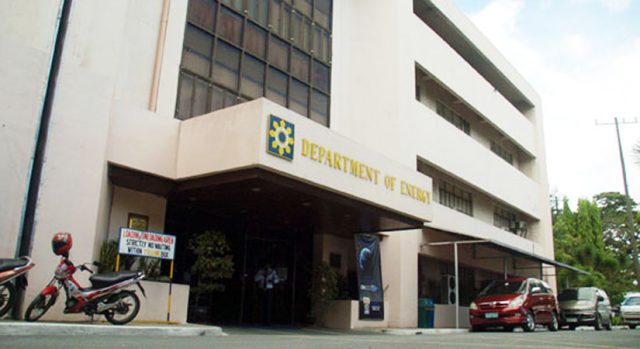
THE Department of Energy (DoE) on Wednesday said it targets to conduct a second round of bidding for microgrid systems service providers within the year.

This came after the DoE awarded the development of microgrid systems in eight unserved areas in the provinces of Cebu, Quezon, and Palawan to the Maharlika Consortium.

The Maharlika Consortium is composed of Maharlika Clean Power Holdings Corp., Singapore-based CleanGrid Partners Pte. Ltd., and Singapore-based renewable energy company WEnergy Global Pte. Ltd.

As the winning bidder of the first round, the consortium will provide 24/7 electricity services to the said areas through a hybrid microgrid system composed of solar photovoltaic, an energy storage system, and a diesel genset.

Such technologies will be built and operated not later than 18 months from the consortium’s execution of the microgrid systems service contract with the National Power Corp.

“The rates to be imposed in these areas will be subject to the approval of the Energy Regulatory Commission and will be provided with a subsidy under the Universal Charge for Missionary Electrification for a period of twenty (20) years,” the DoE said.

Under Republic Act No. 11646, or the Microgrid Systems Act of 2022, the Energy department is required to conduct a competitive selection process (CSP) for potential concessionaires seeking to serve off-grid areas.

In the first round, the bidding included 98 areas without electricity or with limited access, grouped into 49 lots in remote locations.

Out of nine prequalified bidders, only the Maharlika consortium submitted complete bid proposals.

The Energy department vowed to enhance the terms of reference and streamline the processes to encourage wider participation from private sector entities.

For the second round, the DoE will offer new areas and those that received no proposals during the first round.

“Economic and logistical considerations are carefully evaluated to ensure the inclusion of appropriate areas in the CSP and should align with the overarching objective of delivering sustainable and reliable energy solutions to communities in need while optimizing resource allocation,” the DoE said. — Sheldeen Joy Talavera

PHL PC shipments down 24.2% in 2023, to rebound this year

PHILSTAR

THE Philippine personal computer (PC) market saw a decline of 24.2% to 1.89 million units in 2023 from 2.5 million a year prior, but could rebound this year driven by the education sector, according to International Data Corp. (IDC).

“Despite the improved results in the fourth quarter of 2023 with a 10.5% annual increase recorded in that specific quarter, 2023 PC market registered a substantial decline of 24.2% with shipments,” IDC Philippines Associate Research Analyst for Devices Research Roben Dispo said in a statement on Monday.

IDC said the market’s drop last year was mostly due to the drop in purchases of the government sector during the first half due to procurement-related difficulties.

“As these challenges were resolved, it resulted in the surge in deals during the second half of 2023. Meanwhile, the private sector remained cautious about purchases, reflecting a negative outlook for the year,” it said.

“This cautious stance extended to the consumer market, which witnessed a decline in demand parallel with the decelerating trend in household spending,” IDC added.

Household spending grew by 5.6% in 2023, slower than 8.3% in 2022.

In 2023, Acer Group led the Philippine PC market with a 26.5% share, IDC said, citing data from its Worldwide Quarterly Personal Computing Device Tracker. This was down from its 26.4% market share in 2022.

Acer’s shipments decreased by 26.7% to 501,000 units in 2023 from 684,000 units a year earlier.

Meanwhile, Lenovo held a 21.5% market share in 2023, up from 17.9% previously as it sold 408,000 units, down 8.7% year on year.

HP, Inc. had a 12.8% share and shipped 243,000 units, while ASUS cornered 10.2% of the market with 194,000 units.

Lastly, Dell Technologies had a 7.6% market share as its shipments stood at 145,000.

“Even though both HP, Inc. and Lenovo’s share grew especially in the commercial segment, Acer remained unhinged at the top with consistent demand coming from the consumer segment,” IDC said.

For this year, the Philippine PC market may rebound and post growth as the education sector is expected to drive demand, Mr. Dispo said.

“Although inventory levels are still being managed carefully, vendors are likely to remain cautious amidst economic uncertainties and soft demand. Nevertheless, shipments are forecasted to rebound by 26.5% this year with growth driven by the education sector, as more than 490,000 laptops are expected to be delivered to the DepEd Computerization Program (DCP) via multiple deals which were announced since the end of last year,” he said.

DCP is a nationwide initiative that aims to deliver laptops to public high schools to enhance the teaching-learning process. — Aubrey Rose A. Inosante

Dealing with unintended consequences

STOCK PHOTO | Image by iiijaoyingiii from Pixabay

If memory serves me, the Philippines collects about P125 billion in annual revenues from fuel, in the form of excise and value-added taxes on oil and fuel products. It collects roughly the same amount from excise taxes on tobacco products and electronic cigarettes. And then maybe another P100 billion in excise tax on alcohol products. All told, these three taxes account for almost P300 billion in revenues every year, or roughly about 5% of the national budget for 2024.

Comes now the electronic era, the Digital Age, with motor vehicles running on internal combustion engines (ICE) being replaced by electric vehicles (EVs), and young smokers turning to electronic smoking devices such as heated tobacco and vapor products, also known as vape. There is no electronic alternative to liquor and beer to date. But just the same, in the long run, this “shift” to modern-day products can impact excise tax collection significantly.

On the positive side, tobacco alternatives are also taxed and account for over P500 million in revenues yearly. This covers excise taxes on heated tobacco and other vapor products, including all types of smoking devices and vaping products. As for fuel taxes, the shift to electric vehicles will most likely leave a big hole in government pockets. Add to this the fact that excise taxes on EVs are suspended until 2028, while hybrid vehicles are taxed only half the usual rate charged gas- or diesel-fed vehicles.

And this is where policy planning and regulatory calibration becomes more crucial. The obvious challenge for the Finance department is to source the revenues required to support the national budget of over P5 trillion for 2024, and then the succeeding years. And with prospects of declining excise tax revenues until 2028 at least, and the commitment to levy new taxes only as a last resort, then the pressure is truly on for fiscal planners.

Borrowing is not much of an option in the sense that any new debt today is surely a new tax tomorrow. After all, financing is available only to those willing to commit future revenues as debt payments. Even during a low-inflation and low-interest rate era, large deficits can be addressed only by a significant expansion in economic output and a consistently high rate of long-term economic growth. This is highly unlikely for any country, given the global boom-bust cycle.

Excise taxes are imposed for two major reasons: to generate revenues for the government; and, to address negative externalities or bad effects on society in general. For instance, cigarettes are taxed high to discourage people from smoking as the habit has negative effects on health. It also has public health costs implications when the state subsidizes the treatment of people with smoking-related illnesses. The same can be said for the environmental impact of oil use, and the health implications of emissions from motor vehicles using fossil fuel.

In the case of cigarettes and alcohol products, so-called “sin” products, rising excise taxes over the years have never really deterred consumption. Millions of people continue to smoke and drink alcohol. And many continue to die yearly from smoking- and alcohol-related illnesses, despite taxes and public health warnings. In the case of cigarette smoking, electronic alternatives have even emerged.

In terms of taxes, these electronic smoking devices have become a new source of government revenues, and somewhat make up for whatever taxes are being lost as smokers shift away from regular cigarettes and tobacco products and turn to digital vices. But in the case of EVs, with the suspension of excise taxes on electric vehicles, and the possibly dwindling consumption of fossil fuel over time, excise taxes might be eroding.

In the case of New Jersey, Governor Phil Murphy imposed an annual road tax of $250 on all EV owners, supposedly to offset the state’s loss in fuel tax revenue. The fee will go up by $10 every year until it hits $290 in 2028. And not unlike the Philippines, New Jersey now requires buyers and lessees of all new vehicles to advance four years in registration fees, including the new EV fee. Locally, we advance three years in registration fees for all new cars sold.

Some quarters see this high initial cost of EV ownership as a deterrent to the shift to EVs, particularly in New Jersey, especially given the fact that the new tax makes the cost of EV ownership even higher than that of comparable gasoline-fed motor vehicles. In addition, the state is also phasing out the sales tax exemption previously given to EVs. This is considering that New Jersey has been among the leaders in EV transition in recent years.

But the more important consideration, according to those opposed to the new EV tax, is that the annual EV fee of $250 is way beyond the potential losses from lower collections of fuel excise tax which are an average of $100 a year for popular car models sold in the state. In short, if the EV tax is intended to make up for lost revenues from fuel taxes, it should be at a level commensurate to the projected loss. Moreover, fuel is subject to excise but not sales tax in New Jersey, but electricity sold to EV owners for charging their cars is subject to a sales tax.

One can suspect that New Jersey imposed the EV tax to favor manufacturers of vehicles with internal combustion engines. However, many EV makers — perhaps other than Tesla — also produce hybrid vehicles. So, while the EV tax may skew the market towards ICE products in New Jersey, it may not necessarily be a significant benefit for ICE makers. But it can boost New Jersey tax collection as the state slowly moves towards going “green” by 2035.

New Jersey appears to be going overboard with its policy calibration, which may have its own set of unintended consequences. But I do believe there are lessons to be learned from its new initiative. With respect to EVs, fuel, and tobacco products, we need to be realistic about potential losses and start looking at ways to address them.

A balanced, wholistic, but practical approach may be necessary at this point, with today’s policies and regulations requiring “counterparts” that address unintended consequences in the future. Policy makers should thoroughly review these consequences through future scenarios, so they can also work on long-term mitigations.

Or, we can just bury our heads in the sand, wish our problems away, and hope for the best. Anyway, the present generation may not live long enough to suffer these consequences, and the future generation can always do the worrying about tomorrow. Policies and regulations as well as political decisions can therefore keep to their present cycle of six years.


Marvin Tort is a former managing editor of BusinessWorld, and a former chairman of the Philippine Press Council.

matort@yahoo.com

ACEN subsidiary completes sale of shares in Indonesian wind farm

UPC RENEWABLES INDONESIA

ACEN Corp.’s subsidiary and its joint venture partner have completed the sale of all their shares in an Indonesian wind farm, the Ayala-led company said on Wednesday.

ACEN Renewables International Pte. Ltd. (ACRI) and its partner UPC Renewables Asia Pacific Holdings Pte. Ltd. settled the sale of their shares in PT UPC Sidrap Bayu Energi to PT Barito Wind Energy, the company said in a regulatory filing. 

The acquisition of the wind farm includes PT UPC Operation and Maintenance Indonesia, which is essential in supporting Sidrap’s operations.

Located in South Sulawesi, Sidrap has a 75-megawatt (MW) capacity.

The transaction was valued at $102.2 million (about P5.8 billion), according to PT Barito Renewables Energy Tbk, the parent company of Barito Wind.

“With the completion of the acquisition of Sidrap, we are taking a significant step forward in our mission to drive sustainable energy growth in Indonesia,” Hedra Tan, chief executive officer of Barito Renewables, said in a statement.

“This strategic move not only adds a prominent wind energy asset to our portfolio but also reinforces our dedication to pioneering renewable energy solutions for a greener future,” he added.

In December last year, Barito Wind reached an agreement with ACRI and UPC to acquire 100% shares of the latter.

Barito Renewables is an Indonesian-based holding company focusing on long-term strategy to provide “cleaner and lower emission energy.”

Meanwhile, ACEN has approximately 4,700 MW of attributable capacity to date spanning the Philippines, Vietnam, Indonesia, India, and Australia. — Sheldeen Joy Talavera

Term deposit yields mixed before March inflation data

BW FILE PHOTO

YIELDS on the Bangko Sentral ng Pilipinas’ (BSP) term deposits were mixed on Wednesday amid expectations of faster March headline inflation.

The central bank’s term deposit facility (TDF) attracted bids amounting to P382.497 billion on Wednesday, above the P320 billion on the auction block as well as the P253.468 billion seen a week ago for a P250-billion offer.

Broken down, tenders for the seven-day papers reached P223.116 billion, higher than the P180 billion auctioned off by the central bank. This was also more than the P141.985 billion in bids for the P150-billion offer seen the previous week.

Banks asked for yields ranging from 6.53% to 6.5568%, a wider and lower band compared to the 6.5% to 6.57% recorded a week ago. This caused the average rate of the one-week deposits to go up by 0.32 basis point (bp) to 6.5454% from 6.5422% previously.

Meanwhile, bids for the 14-day term deposits amounted to P159.381 billion on Wednesday, higher than the P140-billion offering and the P111.483 billion in tenders for the P100 billion placed on the auction block last week.

Accepted rates for the tenor were at 6.5545% to 6.6% on Wednesday, wider than the 6.57% to 6.605% margin recorded a week ago. With this, the average rate for the two-week deposits inched down by 0.25 bp to 6.5878% from the 6.5903% logged in the prior auction.

The BSP has not auctioned off 28-day term deposits for more than three years to give way to its weekly offerings of securities with the same tenor.

The term deposits and the 28-day BSP bills are used by the central bank to mop up excess liquidity in the financial system and to better guide market rates.

TDF yields were mixed on Wednesday as the market anticipates an uptick in March inflation, Rizal Commercial Banking Corp. Chief Economist Michael L. Ricafort said in a Viber message.

Headline inflation likely picked up in March amid higher food, utility, and fuel prices, analysts said.

A BusinessWorld poll of 17 analysts conducted last week yielded a median estimate of 3.8% for March headline inflation.

If realized, this would be faster than the 3.4% print in February, but slower than the 7.6% rate recorded in the same month a year ago.

The consumer price index (CPI) would also be within the BSP’s 3.4%-4.3% estimate for the month.

This would mark the second straight month that inflation picked up on a monthly basis and the fourth straight month that the CPI was within the BSP’s 2-4% annual target.

The Philippine Statistics Authority will release March CPI data on Friday.

Mr. Ricafort added that TDF yields were mixed following the budget balance data released earlier this week.

The Bureau of the Treasury (BTr) on Monday reported that the National Government’s budget deficit ballooned by 54.81% to P164.7 billion in February from P106.4 billion a year earlier.

The budget balance swung back to a deficit from the P88-billion surplus in January amid a 22.14% jump in expenditures to P388.7 billion versus a 5.73% growth in revenues to P224 billion.

In the first two months of 2024, the fiscal deficit widened by 26.56% to P76.7 billion from P60.6 billion in the year-ago period. — Luisa Maria Jacinta C. Jocson

One of the oldest books in existence expected to fetch over $2.6 million at auction

SCHOYENCOLLECTION.COM

NEW YORK — A book from Egypt that was written at the dawn of Christianity and is considered one of the oldest books in existence will go up for auction in June in London.

The Crosby-Schoyen Codex — written in Coptic on papyrus around 250-350 AD and produced in one of the first Christian monasteries — has an estimated sale value of $2.6 million to $3.8 million, according to Christie’s.

“It’s right at that period, that transitional period, when papyrus scroll starts turning into codex form,” said Eugenio Donadoni, Christie’s Senior Specialist, Medieval and Renaissance Manuscripts. “So, books as we know them today. And what we have in this book is the earliest known texts of two books of the Bible.”

The 104 pages (52 leaves) were written by one scribe over a period of 40 years at a monastery in upper Egypt and are preserved behind plexiglass. The codex contains the first epistle of Peter and the Book of Jonah.

Mr. Donadoni attributed its preservation to Egypt’s dry climate, adding that only a handful of books from the 3rd and 4th centuries have survived to the present day.

“All the major finds of Christian manuscripts that we had in the 20th century and at the end of the 19th century are all concentrated in Egypt for those very precise climactic conditions,” he said.

The codex was discovered in Egypt in the 1950s and acquired by the University of Mississippi, where it remained until 1981. Norwegian manuscript collector Dr. Martin Schoyen acquired it in 1988 and is now auctioning it off with some other highlights of his Shoyen Collection, one of the largest private manuscript collections in the world.

The codex is on view at Christie’s New York from April 2 through April 9 and will be auctioned in London on June 11. — Reuters

Finding the right institutional framework for a blue economy

XAVIER SMET-UNSPLASH

THE IMPORTANCE of the blue economy for the Philippines was recognized by President Ferdinand R. Marcos, Jr. himself when in his Second State of the Nation Address (SONA) on July 24, 2023, he asserted, “The potential advantages of such enlightened policies extend to jobs and livelihood, with the unlocking of the development of the green and blue economies.”

Pertinently, the Department of Science and Technology recently launched Pagtanaw 2050, a strategy document which defines the blue economy as “an overarching operational area that highlights the Philippines’ inherently archipelagic nature and resources, pointing towards the sustainable use of marine resources — living and non-living — for the improvement of people’s livelihoods while preserving the overall health of our marine ecosystems.”

The blue economy encompasses multiple interdependent subsectors. These are traditional industries dependent on the marine environment such as fisheries, aquaculture, coastal tourism, and maritime transportation. For some coastal countries, the blue economy may also include seabed mining, marine biotechnology, offshore renewable energies, and ship building. Each subsector functions separately from the others, but there are common key elements that necessarily connect all of them to each other.

Proper governance of the blue economy involves a range of normative, regulatory, economic, and policy frameworks. It requires nurturing specialized linkages amongst various agencies within the National Government and streamlining relations with local governments. More crucially, it also entails managing international networks and obligations, such as those covered by the United Nations Convention on the Law of the Sea and the 2030 Sustainable Development Agenda and Goals.

President Marcos’ exhortation concerning the importance of the blue economy for the Philippines in his SONA effectively elevated the importance of House Bill (HB) No. 9662, or the Blue Economy Act. In fact, this bill is part of the list of priority legislations set by the Legislative-Executive Development Advisory Council. HB No. 9662 aims to establish an institutional framework for a blue economy and is expected to be passed within the year.

Notably, there have been similar bills filed before HB No. 9662, but none of them were treated with this level of urgency by Malacañang and Congress. Curiously, however, HB No. 9662 contains a significant departure from its previous iterations, which may adversely impact the country’s maritime ambitions.

All the bills filed in relation to devising an institutional framework for the blue economy are fully cognizant of this sector’s vital components. This is a testament to the technical, practical, and historical suitability of adopting the blue economy perspective. The major difference between HB No. 9662 and the previous bills is the very office tasked to manage the sector.

Most of the blue economy bills filed before HB No. 9662 prescribed the creation of a department level office to be responsible for the crafting and implementation of policies in this field. Meanwhile, HB No. 9662 merely proposes the renaming and reconstituting of the National Coast Watch Council, which was created by Executive Order No. 57 in 2011.

As per the bill, the revamped National Maritime Council’s functions will be expanded to include the formulation of an integrated strategy to promote blue economy and ecosystem-based management of coastal and marine resources.

The Executive Secretary is the head of this bolstered council with various department secretaries, such as those of the National Economic and Development Authority or NEDA, the Departments of National Defense, Environment and Natural Resources, Justice, Interior and Local Government, and Foreign Affairs, and the National Security Council, among others, as its members. The Bureau of Fisheries and Aquatic Resources is the only member which is not a department level office. But all the members essentially hold this particular posting in an ex officio capacity.

This means membership in the National Maritime Council is merely an additional responsibility for each of the members. Their job in the council is to be treated as an adjunct to their office’s principal mandate. Simply put, the blue economy will not be their main work.

On the other hand, a department level office would mean the exact opposite. A specifically designated department for the blue economy means an office completely and primarily dedicated to achieving the nation’s maritime ambitions.

Moreover, a department would be part of the president’s Cabinet. Its head, the department secretary, will be constantly and directly in touch with the Chief Executive through informal powwows and during regular Cabinet meetings. Hence, the quick resolution to any issues related to the blue economy is always within reach.

While the National Maritime Council will still be linked to the President, it will not be automatically part of the Cabinet. Hence, it will not have that direct and immediate line to the Chief Executive. Swift action to address blue economy related concerns may not always be possible.

But the main difference between a department and a council would be how decisions are reached. The former is a singular office devoted principally to making critical and strategic determinations for the blue economy sector. Whereas the latter is effectively just a committee of various offices given the additional task of taking cognizance of blue economy considerations.

Obviously, the department is in a better position to make appropriate and timely decisions than a council. A department secretary can have all the necessary information on hand to make the right call at any given moment. A council, with essentially part-time members, would more than likely take a long time to even just convene and would probably take ages to arrive at a resolution.

However, the issuance of Executive Order No. 57 (series of 2024) renaming and reconstituting the National Coast Watch Council to the National Maritime Council necessitates a recalibration in enacting HB No. 9662. With this new set up, the Marcos administration has effectively narrowed the scope of this office to maritime security. Therefore, it seems only sensible for lawmakers to make the corresponding change to the envisioned blue economy law.

The statute must establish a centralized decision-making authority because the blue economy is complex and multi-faceted. But the web of interactions inherently present within the sector also demands the whole-of-government mindset. And as shown here, a department level office is really the better fit to meet these good governance requirements.


Michael Henry Yusingco is a law lecturer, constitutionalist, and senior research fellow at the Ateneo Policy Center.


PAL targets to operate SAF-powered flights by 2026

FLAG carrier Philippine Airlines (PAL) said it is working to secure a green fuel supply deal as it aims to operate sustainable aviation fuel (SAF)-powered flights to Singapore by 2026.

“We are not using SAF yet but all our aircraft are SAF-capable. So, we can use SAF, maybe by 2026,” Stanley K. Ng, president and chief operating officer of PAL, said on the sidelines of the company’s media briefing on Tuesday.

Currently, PAL has no SAF-powered flights yet but the company is targeting to have at least 1% SAF blend for its Singapore flights by 2026.

The Singapore government will require flights departing from its airport to use at least 1% SAF by 2026.

SAF can help reduce emissions from air transportation as it is made from non-petroleum feedstock like agricultural waste and used vegetable oil.

For now, the company is in talks with potential suppliers to secure an agreement for its green fuel supply, Mr. Ng said, adding that the company is hoping to land the deal as early as 2025.

“Yes, we are [in discussions]. I always say we want to be sustainable. We want to have lesser carbon emissions. I hope as early as next year [we can have SAF supply], but if not it’s 2026,” Mr. Ng said.

Mr. Ng said the company struggles to secure SAF supply because of its limited supply.

“Even if we want to do more, we all know the constraint right now. It’s a limited supply. Even if you want to use SAF, it is really difficult to get,” he said.

In 2023, the Energy department said it was working on setting regulations on SAF utilization to accelerate its adoption in the aviation industry in the Philippines.

Last year, PAL signed a memorandum of understanding with low-carbon energy and services company ENGIE to explore the development and implementation of decarbonization projects such as SAF. — Ashley Erika O. Jose

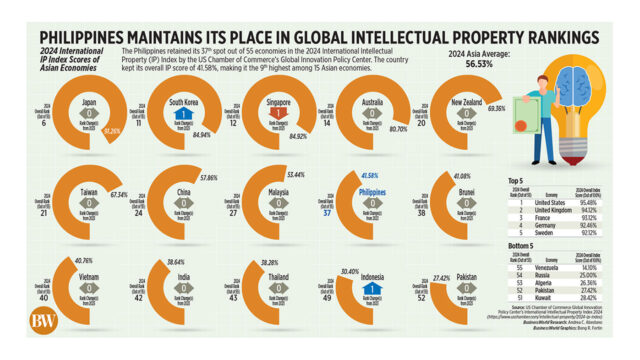
Philippines maintains its place in global intellectual property rankings

The Philippines retained its 37th spot out of 55 economies in the 2024 International Intellectual Property (IP) Index by the US Chamber of Commerce’s Global Innovation Policy Center. The country kept its overall IP score of 41.58%, making it the 9th highest among 15 Asian economies.


Philippines maintains its place in global intellectual property rankings

Mylo Speech Buddy app to expand language support

FACEBOOK.COM/MYLOSPEECHBUDDY

SPEECH DEVELOPMENT platform Mylo Speech Buddy will add more languages to its educational videos for children with speech delays and those diagnosed with autism spectrum disorder (ASD).

The company is looking to expand the app’s languages to include Arabic and accented English, Mylo, Inc. President and Chief Executive Officer Vincent Rocha said during a launch event on Tuesday.

“Although it is difficult, we are trying to work on [languages in] the Association of Southeast Asian Nations as well, but it is not yet final,” Mr. Rocha added.

He said these plans will be backed by the $30,000 funding from local and angel investors. The 10-month-old company has secured $80,000 in financing since its launch.

“We have experienced challenges, but again, moving forward, we’ve already validated that people are willing to pay for the app. The next step is scale and to develop the product as well,” Mr. Rocha said.

As part of their expansion plans, he said the company targets to reach 120,000 downloads on Apple’s App Store and Google Play Store in 2024 from the current 18,000 downloads.

Mr. Rocha, who has a child with ASD, released the application globally in July 2023.

Mylo Speech Buddy aims to provide clear enunciation guidance for children using the video modeling method.

It is not meant to be a substitute for regular speech therapy and requires total supervision from parents, Mr. Rocha noted.

Mylo Speed Buddy is offering free subscription in April in celebration of Autism Awareness Month.

Francis M. Dimalanta of the Philippine Society of Developmental and Behavioral Pediatrics said at the event that people with ASD find social communication challenging.

Mr. Dimalanta noted that there is no single experience of autism, with some individuals being categorized as “low functioning” as anxiety, depression, and attention deficit hyperactivity disorder can frequently occur along with ASD.

“Assistive technologies can be a game changer for children with autism in terms of communication, and very many children process visual information,” he said.

According to data from the US Centers for Disease Control and Prevention, there are 1.2 million diagnosed cases of autism in the Philippines and 75 million worldwide. — Aubrey Rose A. Inosante

Asialink gets P300-million credit line from Taiwan’s Cathay United Bank

Asialink gets P300-million credit line from Taiwan’s Cathay United Bank
ASIALINK Finance Corp. has tapped Taiwan’s Cathay United Bank for a P300-million credit line to boost its resources in support of its client expansion plans.

“This latest partnership will allow us to sustain growth in our customer base. One of our strengths has always been our partner network, and the support we have been getting from our partners in Taiwan has just been tremendous,” Asialink President and Chief Operating Officer Eillen B. Mangubat said in a statement on Wednesday.

Asialink signed the partnership with Cathay United in March.

Cathay United is the third Taiwanese bank to provide credit support to Asialink, following CTBC Bank Philippines and Yuanta Savings Bank, the financing firm noted.

Asialink said its partnerships with these Taiwanese banks could allow individual lenders and small companies to gain access to traditional sources of funding.

“We are strategically expanding our network by actively seeking partnerships with both institutional entities and individual lead generators. This initiative is geared towards broadening our outreach and diversifying the sources that contribute to our lead generation efforts,” AsiaLink Chief Executive Robert B. Jordan, Jr. said.

Asialink released over P12.6 billion in loans in 2023. This was driven mainly by its growing customer base as the company recorded over 29,500 new borrowers.

The financing firm previously said it expects to sustain its growth in new borrowers and loans this year through partnerships with institutional entities and individual lead generators. — A.M.C. Sy

Maryse Conde, Caribbean chronicler of colonialism, dies at 90

THEBOOKERPRIZES.COM

PARIS — Guadeloupe-born author Maryse Conde, who wrote about colonialism, slavery, and the French-Caribbean diaspora, died in southern France at the age of 90.

Often cited as a potential winner of the Nobel prize for literature, Ms. Conde was awarded the New Academy Prize in Literature in 2018, created after the Swedish Academy postponed that year’s literary Nobel in the aftermath of a rape scandal.

“A literary giant, Maryse Conde paints a picture of sorrow and hope, from Guadaloupe to Africa, from the Caribbean to Provence. In a language of struggle and splendor, unique and universal,” French President Emmanuel Macron wrote on X.

The New Academy said at the time that Ms. Conde’s work “describes the ravages of colonialism, and the post-colonial chaos in a language which is both precise and overwhelming.”

Ms. Conde won international acclaim with her bestselling 1984 epic Segu and its sequel, Children of Segu (1985), which charts the life of a family at the Mali royal court through several generations as it experiences the arrival of Islam and later, Christianity, the slave ships and slavery in Brazil.

Segu won Ms. Conde several awards, including a Fulbright scholarship, and she went on to teach literature at Columbia University, New York, several other US universities and at the Sorbonne in Paris.

In later novels, including I, Tituba: Black Witch of Salem and The Beautiful Creole, she explored race relations, feminism and the struggles of the Black Caribbean diaspora in the Western world.

Born Boucolon in Pointe-a-Pitre in what she later described as “an embryonic black bourgeoisie” family — her mother ran her own schools for girls, her father founded a bank — she married Guinean actor Mamadou Conde in 1958, with whom she had four children before they separated in 1969.

In 1982, she married her English translator Richard Philcox.

She died on Monday night at a hospital in Apt, southern France, Philcox told Agence France-Presse on Tuesday.

French Foreign Trade and Language minister Franck Riester said Ms. Conde was a leading light of French literature and theater.

Quoted from her I, Tituba on X, he said: “The dead only die if they die in our hearts.” — Reuters

ADVERTISEMENT
ADVERTISEMENT