Home Blog Page 3212

Filipinos now spending more on home redesign post-COVID

The coronavirus pandemic has prompted many Filipinos to redesign certain areas of their home. — REUTERS

By Joseph L. Garcia, Senior Reporter

THE GLOBAL coronavirus pandemic has forced Filipinos to rethink spaces and redesign certain areas of their home to make these more work-friendly.

Business establishments such as restaurants have also renovated their spaces so they can offer more immersive and multisensory experiences to customers while fostering human connection.

“The pandemic highlighted the need for adaptable living and working spaces that prioritized the health and safety of users,” Carla Mae Leonor, director of public relations at the Philippine Institute of Interior Designers, said in an interview.

“With this come solutions that ensure flexibility, incorporating movable partitions, multifunctional furniture and convertible rooms to accommodate changing needs, such as remote work and distance learning,” she added.

After being stuck at home for a long time, consumers are also seeking out experiences that can’t be replicated at home, the interior designer said.

“From immersive and multisensory dining to events and spaces that foster human connection, these brought about new hospitality spaces that provide bubble-type sanctuaries that provide resort-style amenities within a controlled space,” she said.

Some restaurants also offer dining experiences that include immersive and multi-sensory features that foster human connection, she added.

Architect Carlos Cham noted that in the first two years of the pandemic in 2020 and 2021, his company Cham-Candelaria, Inc., which specialized in restaurant and residential clients, did not have any building projects.

“All construction was put on hold for the first two years,” he said in an e-mail. “Construction only resumed, with very strict protocols, when the situation became lighter, and the vaccines started coming out.”

Philippine building activity declined by 28.5% at the height of the pandemic in 2020, but started recovering in the following year by posting growth of 31.4%, according to data from the local statistics agency.

Philippine construction had a market size of $65.2 billion (P3.7 trillion) in 2023 and it is expected to achieve an average annual growth rate of more than 7% from 2025 to 2028, according to a GlobalData report in March.

The government’s focus on infrastructure and energy development will support market expansion in real terms this year, it added.

“Fine-tuning every inch of Filipinos’ homes has become a way of cocooning to make their spaces enjoyable,” Ms. Leonor said.

They have come to adopt themes such as outdoor living, “feel-good” designs and hospitality industry-inspired interiors.

The kitchen has likewise been converted from a workspace into a living space, with more interiors attuned to hosting, she added.

‘RITUALS AND HABITS’
“At-home entertaining will remain a popular choice for cautious consumers,” Ms. Leonor said.

Other changes include improvements to workspaces at home due to the work-from-home or hybrid setup spawned by the pandemic.

“Improvised workspaces are being replaced with comfortable long-term solutions,” she said.

She also cited the rise of pet-friendly buildings. “Resilient in the face of the economic downturn, the pet economy will continue to thrive,” she said, noting that new themes in interior design include making more pet-friendly spaces.

Mr. Cham said having open-air spaces for both residential and commercial projects has become a standard requirement.

“Minimalist designs are sought after not only due to the clean aesthetics but also for their practicality and function,” the architect said.

His clients also prefer more natural light and ventilation. “People really learned to appreciate this.”

Ms. Leonor cited the rise of health-friendly materials in interior spaces.

“While personal standards for health and safety can be subjective, there are guidelines that are followed by licensed interior designers,” she pointed out.

One of these is the use of smart materials that deter or destroy bacteria. “Protective materials have become central to everyday living as hygiene and protection were ramped up in light of the coronavirus pandemic.”

Consumers also no longer just protect themselves through clothing but also with the finishes that they use within their spaces, she said.

While these have mostly been used by the healthcare sector, since the pandemic, sanitizing and microbe-fighting materials are making the jump to the commercial and residential sectors.

Mr. Cham said clients who want to cut costs still use traditional concrete hollow blocks or reinforced concrete. Those who want faster construction time have turned to steel or pre-cast.

“Cost and time will always be the main factors,” he said. “It still depends on how clients would want to have it.”

Ms. Leonor said Filipinos should future-proof their spaces against future health catastrophes.

“Rethinking how we look at value also puts our minds in the right place when we design our spaces,” she said. “Hiring licensed and professional designers, for example, can ensure the best solutions are explored and the needs of the space and the users are considered in the process of designing solutions.”

Interior designers are up to date with the latest technologies and innovations and know best how to meet the needs of a client, whether they require special treatment to ensure safety, well-being and comfort, she said.

She likewise noted that antimicrobial and antiviral finishes and technology coming into the market can now be used.

People should choose suppliers with sustainability credentials to “ensure synthetic and chemical compounds do not just end in landfills or leach into wastewater post-purchase,” she added.

One can also go local, thanks to efforts to create bio-based plant- and protein-derived fibers, textiles and materials “that create healthier alternatives and promote the use of locally designed and locally made products.”

“The rituals and habits built during the pandemic have affected the preferences and priorities of consumers,” Ms. Leonor said. The past years highlighted the relationship between humans and the environment, and this shifted the appreciation of users for well-designed spaces and objects.

“The spaces we inhabit are extensions of ourselves and are therefore worth investing in,” she said. This perspective will be carried on beyond the post-pandemic recovery and will push interior designers to develop ways to make people safer and healthier and their lives more enjoyable, she added.

“Design will always continue to grow and adapt to users’ behaviors and needs,” Mr. Cham said.

DMCI Holdings looking to add copper, gold, coal mining assets

LISTED conglomerate DMCI Holdings, Inc. said it is exploring new copper, gold, and coal assets to boost its mining business.

“We’re currently looking at large mining assets, probably copper and gold, and maybe an additional coal mine in Mindanao, if possible, provided that it is open pit,” DMCI Chairman and President Isidro A. Consunji said during the company’s virtual annual stockholders’ meeting on Tuesday.

“Aside from that, we just intend to continue with our aggressive organic growth,” he added.

DMCI has presence in the mining sector through its subsidiary DMCI Mining Corp., which operates open-pit mines in Palawan and Zambales via units Berong Nickel Corp. and Zambales Diversified Metals Corp. The companies extract nickel ore, chromite, and iron laterite using surface mining techniques.

The conglomerate is also engaged in coal mining through Semirara Mining and Power Corp. (SMPC).

According to Mr. Consunji, one of the challenges faced by DMCI is securing permits for its nickel projects.

“Right now, we have various nickel assets that are not being operational, waiting for the perfection of the required operational licenses and permits. A lot of these projects are expected to be completed before the end of this year,” he said.

“Hopefully, two areas in particular, one in Zambales and one in Long Point, Palawan should be operational before the end of this year,” he added.

Mr. Consunji also said the sales of the conglomerate’s real estate unit, DMCI Homes, are expected to return to pre-pandemic levels by 2025.

He noted that DMCI Homes has some excess supply of finished units that are currently being sold.

 “At the moment, DMCI (Homes) sales are slightly below pre-pandemic level. But we expect by 2025 with the leisure projects and other upper and lower market segments, DMCI Homes will exceed pre-pandemic levels of sales,” he said.

 Mr. Consunji added that DMCI is focused on participating in the government’s infrastructure projects.

 “We expect DMCI to be in a strong competitive position to compete in these mega infrastructure projects. We see no reason why it cannot be competitive, given our track records in developing previous mega infrastructure projects.”

 On the recent acquisition of Cemex Holdings Philippines, Inc. (CHP), Mr. Consunji said that this will create synergy with the conglomerate’s other businesses.  

 DMCI, SMPC, and Dacon Corp. recently announced the acquisition of CHP for $305.6 million under a share purchase agreement. The transaction is expected to close before the end of 2024.

 DMCI bought the entire shares of Cemex Asia B.V. in Cemex Asian South East Corp. (CASEC), the majority owner of CHP with an 89.96% equity interest. Dacon has been appointed as the bidder for the mandatory tender offer to acquire the remaining 10.14% of the total issued and outstanding capital stock of CHP.

 Under the transaction, DMCI is set to acquire a 56.75% stake in CASEC, Dacon will secure 32.12%, and SMPC will purchase the remaining 11.13%.

 On Tuesday, DMCI stocks improved by 0.75% or eight centavos to P10.78 each. — Revin Mikhael D. Ochave

PHINMA Corp. to acquire Petra Cement for P500 million

LISTED conglomerate PHINMA Corp. said it will acquire cement manufacturer Petra Cement, Inc. for P500 million to strengthen its cement business.

The conglomerate, through its subsidiary Philcement Corp., signed a share purchase deal on May 20 with Petra Cement, PHINMA Corp. said in a stock exchange disclosure on Tuesday.

 “Philcement Mindanao Corp., a subsidiary of Philcement, will pay a consideration of P500 million in exchange for 100% of the outstanding shares of Petra Cement,” PHINMA Corp. said.

The transaction is expected to be closed by Dec. 31.

 The acquisition follows the manufacturing and sale agreement signed by Philcement and Petra Cement on Jan. 11.

 Philcement will operate Petra Cement’s plant in President Manuel A. Roxas, Zamboanga del Norte.

The agreement also covers the production, distribution, and retail of cement products.

 The plant has a cement grinding facility with a capacity of 500,000 metric tons per annum that caters to the Northern Mindanao market.

 “This is aligned with Philcement’s growth strategy and its promise to assure Filipino consumers with reliable, high quality supply of cement products under its legacy brand, Union Cement,” PHINMA Corp. said.

 Philcement is a 60% owned unit of PHINMA Corp. It has business interests in the production, importation, processing, distribution, and sale of cement products. It currently operates a cement processing facility in the Freeport Area of Bataan in Mariveles.

 Philcement Mindanao is a 70% owned subsidiary of Philcement.

 For the first quarter, PHINMA Corp. saw a 1.2% increase in its net income to P490.53 million as consolidated revenue surged by 14% to P5.45 billion led by its education business.

 PHINMA Corp. shares rose by 1.49% or 30 centavos to P20.45 each on Tuesday. — Revin Mikhael D. Ochave

Gold treasures reunited at the Ayala Museum

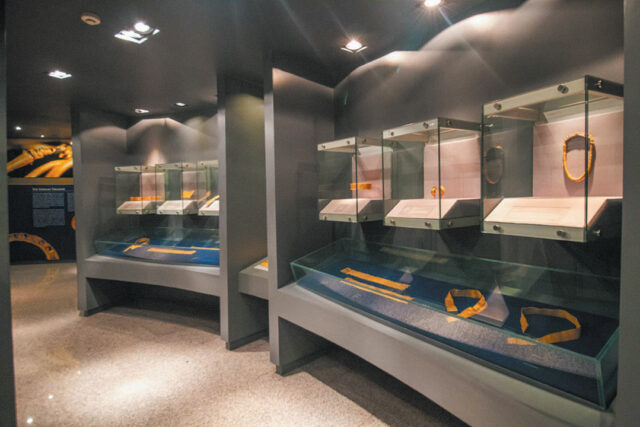
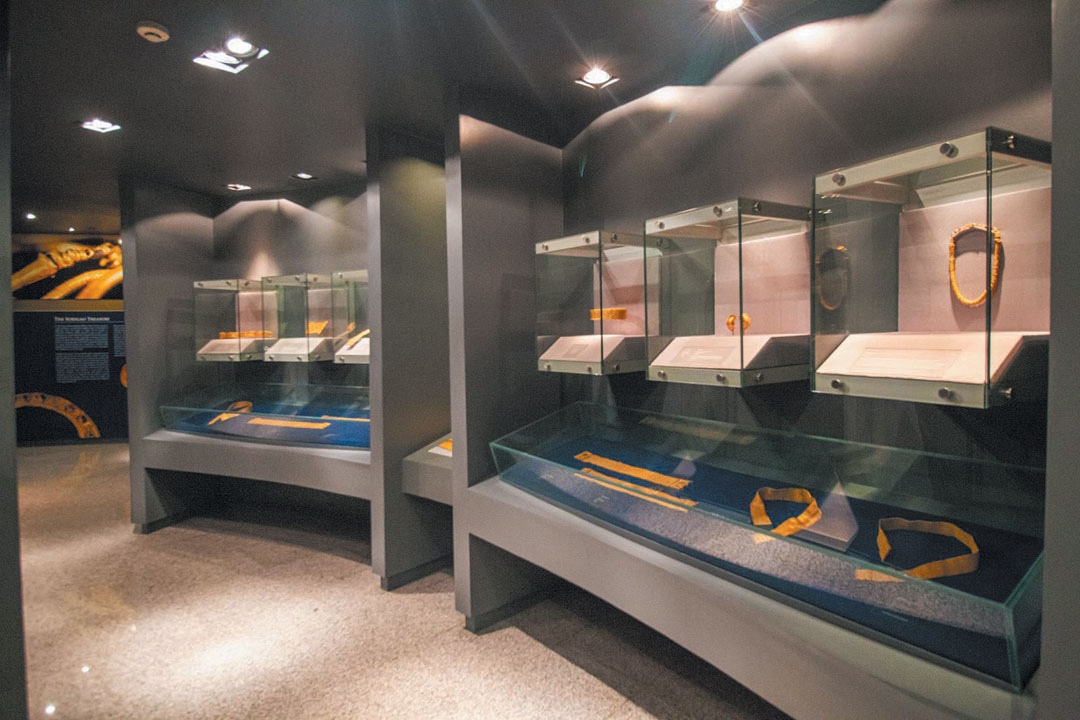
GOLD items displayed on white backgrounds are from the Ayala Museum’s collection while gold items on blue are from the Bangko Sentral ng Pilipinas. — AYALA MUSEUM

BELTS, necklaces, bangles, scale pans, and other golden items — 38 in all — from the Bangko Sentral ng Pilipinas’ (BSP) pre-colonial gold collection have been reunited with the Ayala Museum’s existing collection of gold. Forty-three years after being discovered in the same landfill, these objects can now be seen together again for the first time, at the exhibitionReuniting the Surigao Treasure” which officially opened on May 16.

At the exhibit launch, guests were ushered upstairs to the museum’s 4th floor in groups. Ayala Museum senior director Ma. Elizabeth “Mariles” Gustilo prefaced the visit by emphasizing the historical significance of the artifacts, and the exhibit’s timely opening for the museum’s 50th anniversary.

“Ayala Museum was established 50 years ago by the Filipinas Foundation, now known as the Ayala Foundation, to empower Filipinos through a deeper understanding of our traditions, art, history, and culture,” said Ms. Gustilo.

“We mark this milestone expression of love of country with what is appropriately something old, something borrowed, and something blue.”

The Philippines’ two priceless gold collections were reunited thanks to curator Dr. Florina Capistrano-Baker. The 38 gold items loaned from the BSP fill in gaps in the precolonial picture painted by the 1,000 artifacts on permanent display at the Ayala Museum.

ORIGINS OF THE TREASURE
The gold objects in the exhibition were uncovered on April 27, 1981.

Edilberto “Berto” Morales, a heavy machinery operator working on an irrigation project in Sitio Magroyong, barrio San Miguel, Surigao del Sur, unexpectedly unearthed golden objects scattered along a 100-meter stretch of landfill quarried from a nearby mountaintop.

“This accidental discovery, along with others recovered by other treasure hunters who collectively swooped into Magroyong, are collectively known as the Surigao Treasure,” explained Ms. Capistrano-Baker, at a tour of the newly mounted exhibit.

Though a few gold items were hacked apart and melted down by treasure hunters, many were saved through the efforts of Dr. Jaime Laya, then BSP governor, and private collectors National Artist for Architecture Leandro Locsin and his wife Cecilia, whose collection eventually went to the Ayala Museum.

“The Surigao collections at BSP and Ayala were recovered from a single culture area associated with the ancient kingdom of Butuan. They are twins separated at birth, now reunited,” Ms. Capistrano-Baker said.

To emphasize which objects belong to which collections, the items from the Ayala collection are displayed with a white background, while those from the BSP are shown on a blue background. When items from both collections are shown together, the pieces from each are shown with the corresponding color.

ITEMS THAT GO TOGETHER
The exhibition finally gets to tell a fuller story of precolonial Butuan.

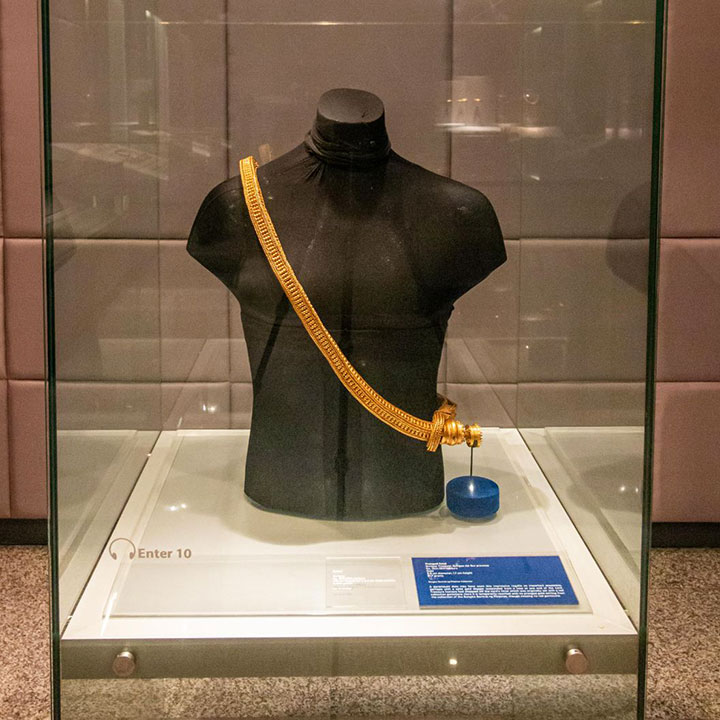
The most impressive object is a massive, four-kilogram gold chain believed to be a Hindu upavita, or sacred thread, a mainstay at the Ayala Museum. A pronged finial, or distinctive ornament, from the BSP’s collection now completes the chain at the waist.

“The finial was offered to Mrs. Locsin with the red gemstone, but she thought it looked like a bicycle bell and passed on it. But when she saw the chain, she realized they were meant to go together but couldn’t run after the finial anymore since it already went to BSP,” said Ms. Capistrano-Baker.

While now reunited, it unfortunately remains incomplete — the red gemstone has not been seen since it was offered to Mrs. Locsin.

Also paired together are intricately woven gold waistbands, seven of the belts from the BSP collection now joining multiple sashes and buckles from Ayala’s collection. They are solid proof of the power and opulence once found in ancient Butuan in northeastern Mindanao.

Other remarkable objects from BSP include a 4.5-meter long kamagi chain consisting of 12 necklaces connected end-to-end, weighing almost 1.5 kilograms, gold bangles set with semi-precious stones, and necklaces consisting of susô beads.

Ms. Capistrano-Baker pointed to a screen mounted in the exhibition, which shows a video documentary by Cheche Lazaro under Probe TV. There, she said, Mr. Laya recollects the journey of the treasure.

“When Mang Berto found the long kamagi chain, he wrapped it around his waist several times to hide it from coworkers, which ended up at the BSP. There’s also the gold bowl which he initially thought was a helmet, now part of the Ayala Museum’s collection,” she said.

Another interesting reunion is that of Ayala Museum’s gold balance scale that likely belonged to a rich merchant, and the BSP’s gold weighing scale pan. These are seen as evidence of the Butuan culture’s advanced trading with neighboring polities long before European contact.

“This extraordinary collaboration reunites in one exhibition for a limited time entwined treasures from the country’s two premiere gold collections, allowing us to lift the veil of collective amnesia and reclaim the contours of our half-forgotten precolonial past,” Ms. Capistrano-Baker said.

“Reuniting the Surigao Treasure” is now open to the public and will be on view at the Ayala Museum in Makati until 2027. — Brontë H. Lacsamana

Gov’t partially awards T-bonds

BW FILE PHOTO

THE GOVERNMENT made a partial award of the new Treasury bonds (T-bonds) it offered on Tuesday with a coupon rate above secondary market levels amid hawkish signals from the US Federal Reserve and as the peso touched the P58-per-dollar level, renewing inflation concerns.

The Bureau of the Treasury (BTr) raised just P22.717 billion via the fresh 20-year bonds it auctioned off on Tuesday, lower than the P30-billion program, despite total bids reaching P37.919 billion.

The bonds were awarded at a coupon rate of 6.875%. Accepted yields ranged from 6.6% to 6.95% for an average rate of 6.797%.

The coupon fetched for the tenor was 20.3 basis points (bps) higher than the 6.672% quoted for the 20-year bond at the secondary market prior to the auction, based on PHP Bloomberg Valuation Service Reference Rates data provided by the Treasury.

“The higher T-bond rate awarded today was primarily driven by hawkish policy guidance from various US Federal Reserve officials and the anticipated impact of the weaker peso on local inflation and interest rates,” a trader said in an e-mail on Tuesday.

The government partially awarded its T-bond offer amid higher bid yields, Rizal Commercial Banking Corp. Chief Economist Michael L. Ricafort likewise said in a Viber message.

Investors asked for higher rates amid the peso’s weakness as this could lead to increased import prices that could stoke inflation anew, Mr. Ricafort said.

“Most Fed officials also signaled a cautious stance recently.”

The peso on Tuesday closed at a near 19-month low of P58.27 against the dollar, slumping by 37 centavos from the previous day.

This was the local unit’s weakest close since it ended at P58.275 on Nov. 8, 2022 and was the first time it closed at the P58-per-dollar level since Nov. 10, 2022’s P58.19.

Year to date, the peso has lost P2.90 from its end-2023 close of P55.37. The peso’s record low is at P59 per dollar, which it last hit on Oct. 17, 2022.

Bangko Sentral ng Pilipinas (BSP) Governor Eli M. Remolona, Jr. on Tuesday said the peso’s weakening was mostly driven by a strong dollar after Fed officials signaled that they could delay cutting interest rates.

Mr. Remolona said they continue to monitor the foreign exchange market and will intervene if necessary to “smoothen excessive volatility and restore order during periods of stress.”

Federal Reserve officials are not ready to say inflation is heading to the central bank’s 2% target after data last week showed a welcome easing in consumer price pressures in April, with several on Monday calling for continued policy caution, Reuters reported.

Consumer prices cooled in April, and retail spending did not increase at all, two welcome signs that the economy may be losing some steam in the face of a policy rate that the Fed has held in the 5.25%-5.5% range since last July.

But Fed policy makers, stung by a string of higher-than-expected inflation readings for the three months prior, remain cautious and want to make sure pricing pressures are fully on track back to the Fed’s 2% target rate before starting to cut its benchmark interest rate.

The Fed’s next policy meeting is June 11-12. Traders in contracts tied to the central bank’s policy rate currently do not expect an interest rate cut until September.

Meanwhile, Philippine headline inflation quickened to 3.8% year on year in April from 3.7% in March. Still, this was slower than the 6.6% print in the same month a year ago.

For the first four months, the consumer price index averaged 3.4%, below the BSP’s 3.5% baseline forecast and within its 2-4% target for the year.

The BSP last week kept its policy rate unchanged at a 17-year high of 6.5% for a fifth straight meeting but signaled that it could cut borrowing costs as early as August or before the Fed following slower-than-expected April inflation.

The government wants to raise P210 billion from the domestic market this month, or P60 billion from Treasury bills and P150 billion via T-bonds. It borrows from local and foreign sources to help fund its budget deficit, which is capped at P1.48 trillion or 5.6% of gross domestic product for this year. — A.M.C. Sy with Reuters

SM Markets eyeing to launch 10-15 stores this year

BW FILE PHOTO

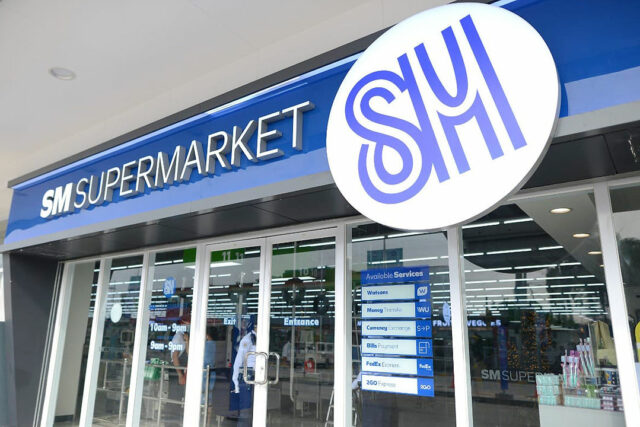
SY-LED SM Markets said it targets to open 10-15 new stores outside Metro Manila this year to expand into underserved areas and provide more product options to local communities.

Once the expansion is complete, SM Markets will have over 350 stores nationwide this year, with more than 70% outside the National Capital Region, SM Investments Corp. (SMIC) said in a statement on Tuesday.

SM Markets is the umbrella brand for SM Supermarket, SM Hypermarket, and Savemore Market.

 For the first half, SM Markets aims to open a total of seven stores, with upcoming store launches in Mati, Davao Oriental; Marilao, Bulacan; and Naujan, Mindoro.

It previously opened Savemore Siniloan, Laguna; Savemore Pantukan, Davao de Oro; Savemore Hotel Supreme, Baguio; and SM Supermarket, Caloocan.

 “This regional expansion is aligned with SM Markets’ commitment to reach more customers by bringing quality, affordable products, and exceptional service closer to more Filipino homes,” SMIC said.

 “The new grocery stores will introduce more options for local communities and at the same time, support homegrown micro, small, and medium enterprises by providing opportunities to showcase their products on the shelves and weekend markets,” it added.

 In 2023, SM Markets opened 12 stores in various areas such as Iloilo, Bataan, Leyte, and General Santos.

Among the new additions were two SM Cherry branches in Aklan and Rizal.

 To date, SM Markets has 66 SM Supermarkets, 54 SM Hypermarkets, and 223 Savemore Markets.

 “Service is at the heart of everything we do. As we grow, we see an opportunity to enhance lives by providing quality food and excellent service across the nation. From fresh produce to pantry staples and discoveries, we aim to ensure families have access to their daily essentials,” SM Supermarket President Jojo R. Tagbo said.

 SM Supermarket offers diverse food items in SM malls. SM Hypermarket combines a supermarket and a department store. Savemore Market provides grocery essentials and is accessible to communities nationwide.

 The SM Group’s retail operations consist of grocery stores, department stores, and specialty retail stores.

 For the first quarter, SMIC recorded a 6% increase in its consolidated net income to P18.4 billion as consolidated revenue climbed by 4% to P144 billion led by its banking business.

SMIC stocks dropped by 1.49% or P13 to P862 apiece on Tuesday. — Revin Mikhael D. Ochave

Big Bad Wolf moves to Parañaque

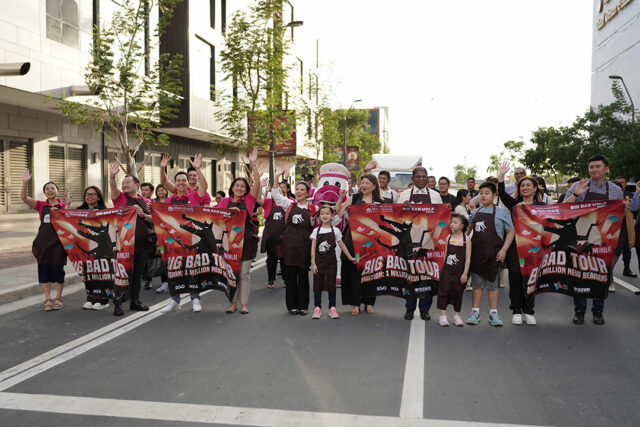
THE BIG BAD TOUR kicked off with a parade at Parqal on May 16.

FOLLOWING a big comeback in 2023 after the pandemic paused physical operations, the Big Bad Wolf Book Sale is set to return to Manila with 2 million books — this time at a bigger, newer venue. It will be held from May 24 to June 2 at Parqal Mall, Aseana City, in Parañaque City.

Like previous editions, this year’s aims to offer more bargains for bookworms of all ages, according to founder Jacqueline Ng.

“Big Bad Wolf is expanding. Of course, we took a step back during the pandemic when events were not allowed, but now we are back,” said Ms. Ng at the media launch on May 16.

“The mission of adding 1 million new readers never changed from when we started in 2009. It began with the goal to increase readership in Malaysia, but now we bring children’s books at a low price worldwide so that kids all over will read,” she added.

On the move to Parqal, the Big Bad Wolf team explained that the brand-new mall (a stone’s throw away from SM Mall of Asia and Ayala Malls Manila Bay) has a vast, sweeping space that many have yet to discover. It also boasts over 1,500 free parking slots.

The book sale aims to nurture literacy, enhance reading comprehension, and instilling a love of reading among Filipinos of all ages. It will go to six cities in the Philippines this year, though the exact locations are not yet final.

Fatima Aliah Dimaporo, the Department of Social Welfare and Development’s legislative affairs undersecretary, who attended the event, emphasized the correlation of poverty and literacy in the Philippines.

“There is a clear correlation between education and poverty reduction. Studies around the world showed that increasing access to education can lead to better opportunities,” she said.

“This is why we have implemented programs to aid the members of underprivileged communities through education, in collaboration with Big Bad Wolf and the Malaysian embassy.”

Like last year’s comeback edition, the book sale will no longer be open for 24 hours like it used to be pre-pandemic. Now it will run from 10 a.m. to midnight and there will be meet-and-greets with authors, storytelling sessions, and interactive events peppered throughout the day.

Ms. Ng told BusinessWorld that, despite digitalization, the overwhelming social media landscape, and post-pandemic economic upheavals, they are optimistic that Filipinos will remain big readers.

“So far, Filipinos really like to read, so we have no issue with any category. This market reads wide, and every genre is well-received, from fiction to non-fiction to children’s books,” she said.

Compared to the other five cities that the Big Bad Tour will go to this year, Manila also has the largest volume of books since it is the capital city. Major cities like Cebu and Davao are a close second.

Big Bad Wolf is also not concerned with the threat of e-books. Ms. Ng explained that big readers and curious readers will still prefer paper: “Customers who use e-books still have physical books as well. E-books are more for convenience, but they will have physical copies at home.”

She concluded with the effect that reading has on children.

“It’s not just about knowledge; it’s so much beyond that. For a child, reading really opens up their minds and teaches them creativity, passion, confidence. They start to ask questions, and that transforms their lives,” said Ms. Ng.

The book sale is collaborating with Metrobank, which offers a 0% three-month installment promo for purchases worth at least P3,000 for Metrobank cardholders.

The book sale takes place May 24 to June 2 at Parqal Mall in Parañaque. — Brontë H. Lacsamana

BSP coin machine collections reach P707.7 million

PHILSTAR FILE PHOTO

THE VALUE of coins collected by the Bangko Sentral ng Pilipinas (BSP) through its coin deposit machines (CoDMs) hit P707.7 million as of May 15, it said on Tuesday.

This was 9.1% higher than the P648.9 million worth of coins collected in April, the BSP said in a social media post.

A total of 193.9 million pieces of coins were deposited in the machines, up by 8% from the 179.6 million recorded a month ago.

There were also 174,656 transactions made through the machines as of May 15, the central bank said.

All denominations of the BSP Coin Series and New Generation Currency Coins Series are accepted by the deposit machines. Unfit and demonetized coins, foreign currency, and foreign objects are rejected by the CoDMs.

The value of coins deposited in the machines may be credited to an individual’s e-wallet account or converted into shopping vouchers.

The BSP and its retail partners launched the coin deposit machines in June last year to help promote efficient coin recirculation in the country.

The initiative aims to address the artificial coin shortage in the financial system and ensure that only fit and legal tender currency is available for public use.

There are currently 25 deposit machines available in the Greater Manila Area. They can be found in select retail establishments of the SM Store, Robinsons Supermarket and Festival Mall.

Central bank officials earlier said they are looking to roll out another 25 coin deposit machines within this year. — Luisa Maria Jacinta C. Jocson

Airline fuel surcharge unchanged for June 

STOCK PHOTO | Image by L.Filipe C.Sousa from Unsplash

AIR FARES are likely to remain steady as the Civil Aeronautics Board (CAB) keeps the fuel surcharge unchanged for June.

The fuel surcharge, which is added to the base fare, will be retained at Level 6 for June, CAB said in an advisory on Tuesday signed by CAB Executive Director Carmelo L. Arcilla.

At Level 6, the domestic passenger surcharge ranges from P185 to P665, while the international surcharge varies from P610.37 to P4,538.40.

The fuel surcharge has remained at Level 6 since March.

The last time the CAB downgraded the fuel surcharge was in February at Level 5 from Level 6 in January.

“Airlines wishing to impose or collect fuel surcharge for the same period must file its application with this office on or before the effective period, with fuel surcharge rates not exceeding the above-stated level,” Mr. Arcilla said.

A fuel surcharge may be collected by airlines based on the movements in jet fuel prices, based on a benchmark known as MOPS (Mean of Platts Singapore).

The applicable conversion rate for June is P57.26 to a dollar.

BusinessWorld has sought comments from local airlines. — Ashley Erika O. Jose

Artist of calado embroidery Araceli Dans, 95

LEON GALLERY FACEBOOK PAGE

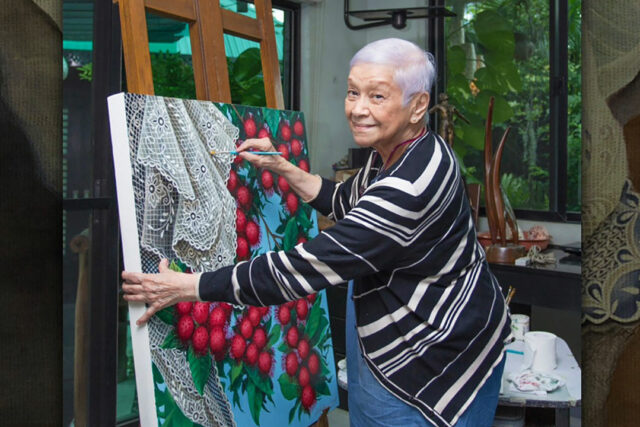
ARTIST Araceli Limcaco Dans, the Presidential Medal of Merit Awardee known for her paintings of intricate calado embroidery, died on May 18 at the age of 95. Her son Benjo confirmed the news in a Facebook post.

“Early on Saturday morning, my mom finally earned her angel wings and passed away. She leaves a void in our hearts that are also overflowing with so much love,” he said.

The wake is being held at the Arlington Memorial Chapel, Araneta Ave., Quezon City, with the inurnment scheduled for May 22 in the morning.

“It is true that our collective hearts have broken into a thousand pieces over you, but we don’t want to feel any other way because it is a small price for the experience of your love,” her son continued.

Born in 1929, Mrs. Dans was known for her realistic art. Her work caught the eye of National Artist Fernando Amorsolo, who became her mentor and allowed her to enroll at the University of the Philippines’ Fine Arts Department. There, she was among eminent artists like professor and sculptor Guillermo Tolentino (a National Artist for Sculpture) and classmates Napoleon Abueva (later designated a National Artist for Sculpture), Larry Alcala (National Artist for Visual Arts), and Juvenal Sansô, among others.

Her acclaimed works were the calado still life series in watercolor and oil featuring embroidered pineapple- or banana-fiber textiles, flowers, and household objects. Some of her paintings are displayed at the National Museum of Fine Arts.

Mrs. Dans was also a renowned art educator.

In 1950 she founded the Philippine Women’s University’s (PWU) Department of Fine Arts, which she headed for 13 years. In 1963, she moved to the Ateneo de Manila University, where she reorganized the grade school art program.

In 1968, she founded the Philippine Art Educators Association with her colleague Brenda Fajardo. She even developed a television series on art education targeting grade school children.

In a social media tribute, Leon Gallery described her as having “a unique affinity for capturing the human soul.” The gallery cited her diverse personal experiences during World War II as a driving force behind the themes in her art, spanning “deep emotions such as nostalgia, love, longing, and loss.

“Her effervescent style tugs at the heartstrings, silently narrating an ode that can melt even the hardest hearts,” said Leon Gallery.

Fellow artist Imelda Cajipe-Endaya gave her own Facebook tribute to Mrs. Dans. Referring to Mrs. Dans by her nickname “Cheloy,” Ms. Cajipe-Endaya said she was an “artist, teacher, mother, grandmother, friend to many, and an amazing leader in art and education.” — Brontë H. Lacsamana

Insurtech firm partners with Globe to offer cyber insurance

SWISS insurance technology (insurtech) firm discovermarket has entered the Philippine market through a partnership with Globe Telecom, Inc.

The company will launch its first insurance product in the country through an embedded personal cyber insurance product, discovermarket said in a statement on Tuesday.

“Having this partnership with Globe has been a great privilege for us… By providing a hassle-free and digital-first experience, we are able to help Globe provide innovative insurance products as a safeguard for their users,” discovermarket Chief Executive Officer and Founder Patrick Bühler said.

“As the digital presence of Filipino consumers continues to grow, it is crucial that there are comprehensive measures for everyone to be sufficiently protected from malicious cyberattacks,” Mr. Bühler added.

The insurtech company is based in Switzerland, with its regional headquarters for Southeast Asia located in Singapore, and provides embedded insurance solutions to over 200 million customers across different industries such as hospitality, agriculture, and telecommunications. 

The partnership allows discovermarket to offer customers embedded insurance products that aim to deter cybercrime.

The company cited Philippine National Police Anti-Cybercrime Group data, which showed cybercrime cases in the Philippines rose by 21.84% year on year to 4,469 in the first quarter.

Mark Pasaylo, head and director of Globe Platinum, said the partnership will allow the telco to offer digital protection solutions to its subscribers.

“The new embedded CyberInsurance products demonstrate Globe’s commitment to ensure the safety of our subscribers’ online presence, giving them peace of mind when they go about their various activities on their smart devices,” he added.   

The company’s cyber retail product covers Globe’s Platinum customers from online identity theft, online shopping fraud, and internet payment transactions fraud for up to P100,000.

The product also provides claims assistance service in the event of a cyber incident.

It will be made available to new and recontracting Globe Platinum subscribers under Plan 3799, Plan 4999, and Plan 7999, discovermarket said.

The insurtech aims to provide insurance coverage to underserved segments through low transaction costs, it said.

“discovermarket’s marketplace-as-a-service platform also functions as a one-stop marketplace for ecosystem partners seeking digital insurance solutions,” it said.

The company also aims to expand its reach in the Philippines, prioritizing the distribution of cyber products to both consumers and businesses. — A.M.C. Sy

Ayala Land generates P3.18B from block sale of AREIT shares

PROPERTY developer Ayala Land, Inc. (ALI) said it has raised P3.18 billion from a block sale of AREIT, Inc. shares as part of a property-for-share swap deal.

ALI and its wholly owned subsidiary Westview Commercial Ventures Corp. sold an aggregate of 98 million common shares of AREIT at P32.45 apiece to institutional investors, the listed property developer said in a stock exchange disclosure on Tuesday.

 “The transaction is 2x oversubscribed at the clearing price and was anchored by high-quality long-only institutional investors. The placement is in relation to ALI’s property-for-share swap transaction with AREIT,” ALI said. 

 AREIT is the real estate investment trust of ALI. The deal was done pursuant to a placement agreement with BPI Capital Corp. and UBS AG Singapore branch.

 “The proceeds from the block sale shall be settled on May 23, subject to the terms and conditions of the placement agreement. ALI and its subsidiary will submit the required reinvestment plan detailing the use of proceeds obtained from the block sale in due course,” ALI said.

 In June 2021, ALI announced that it had executed the deed of exchange for the property-for-share swap transaction with AREIT, Inc.

 The deal includes the issuance of ALI and its subsidiaries, Westview Commercial Ventures and Glensworth Development, Inc., 483,254,375 primary common shares of AREIT at P32 apiece in exchange for ALI’s properties valued at P15.46 billion altogether.

 The properties involved in the transaction include Vertis North Commercial Development, Evotech Buildings 1 and 2, Bacolod Capitol Corporate Center, Ayala Northpoint Technohub, and office condominium units at BPI-Philam Life Buildings in Makati and Alabang.

 On Tuesday, ALI shares fell by 2.36% or 70 centavos to P29 per share. — Revin Mikhael D. Ochave

ADVERTISEMENT
ADVERTISEMENT