ALT ART 2026, in partnership with BDO Private Banking, is set to return for its biggest edition yet, featuring works by over 300 artists and moving to a larger venue this weekend.
Led by ALT Collectives — a consortium of nine of the country’s premier galleries, namely Artinformal, Blanc, The Drawing Room, Galleria Duemila, Finale Art File, MO_Space, Underground, Vinyl on Vinyl, and West Gallery — the collective’s 4th edition will be held at the SMX Convention Center in Pasay City from Feb. 13 to 15.
The ALT Collective said the exhibition’s Project Spaces will continue to push conceptual possibilities, and this year will feature works by Christina Quisumbing Ramilo, Buen Calubayan, Julie Lluch, Kiri Dalena, Ben Brixx, Raffy Napay, MM Yu, Kolown and Christina Lopez, Mauro “Malang” Santos, Lesley-Ann Cao, and Iwan Effendi.
A dedicated space for multimedia artist Miguel Lorenzo Uy will also be showcased, co-presented by food brand Nagaraya.
The exhibition also introduces the Discoveries section, a new platform that focuses on emerging and critically engaged artistic practices. Designed to amplify fresh perspectives, the inaugural lineup is made up of JC Mariategue, Jomari T’leon, Joar Songcuya, Allyza Tresvalles, Eric Bico, Gelo Cinco, Joanolasco, Rhaz Oriente, and Marco Ortiga.
Vinyl on Vinyl gallery owner Gabby B. Dela Merced told BusinessWorld that the expanded venue, spanning 5,000 square meters, has allowed the collective to feature more artists and project spaces while offering greater freedom to experiment with the layout.
“Before, we only had, I think, four or five project spaces — a very selected number of artists that we collectively agreed upon. This time, each gallery had the opportunity to select a particular artist, so there’s a lot more personal voice that comes into the mix,” Ms. Dela Merced said at the sidelines of the ALT Art press conference on Monday.
The ALT Collective gave a walkthrough of the upcoming exhibition layout, which has been intentionally designed to create a cohesive flow that connects audience members with works presented by the artists from each gallery.
“We don’t call it a booth; we call it a space, because we’ve broken down the usual three-wall setting, which is very strict in terms of parameters,” she added.
Despite each gallery bringing its own approach and curatorial vision, Ms. Dela Merced said the collective found common ground in the exhibition’s overall programming.
During all public days, a conversation program is set to take place at the BDO Conversations Lounge, scheduled between 2 and 4 p.m. daily, during which time the stories behind the artworks will be discussed, alongside conversations on contemporary art and creative practices.
ALT ART 2026 tickets are available online at http://www.ticket2me.net/event/22773 and are priced at P250 for students and P500 for regular visitors. — Edg Adrian A. Eva
The One Lancaster Park project in Imus, Cavite. — ONELANCASTERPARK.COM.PH
MEGAWIDE Construction Corp. on Tuesday said the planned initial public offering (IPO) of its real estate unit PH1 World Developers, Inc. is still under consideration, but the company is waiting for favorable market conditions to secure an appropriate valuation.
“PH1’s IPO is still in the pipeline, but we will have to wait until it develops into a stable, sustainable, and value-generating real estate platform,” the company said in a statement.
This followed reports that the Megawide unit is planning to delay the IPO of its real estate arm.
The listed construction and engineering company said it is revisiting the planned IPO for PH1 World Developers, adding that going public is unlikely this year. The company noted it will likely explore other options to raise capital given the current soft property market conditions.
“There’s no need for the company to rush an IPO since it can easily tap alternative sources of capital,” China Bank Capital Corp. Managing Director Juan Paolo E. Colet said in a Viber message on Tuesday.
He added that it would be best to wait until valuations for real estate companies improve and market conditions become more favorable.
“In the meantime, PH1 can focus on boosting its project pipeline and executing its growth strategy,” Mr. Colet said.
For 2026, the Philippine Stock Exchange (PSE) expects four IPOs, a modest target after only two companies listed last year from an initial target of six.
The PSE said the IPOs they are anticipating this year include electronic wallet platform GCash and PNB Holdings Corp.’s (PHC) listing by way of introduction.
Listing by introduction allows a company to list its shares on the stock exchange without immediate capital raising. This method is often used when a listed issuer distributes an unlisted issuer’s securities as a property dividend to its shareholders.
In 2025, several companies shelved their IPO plans, including Hann Holdings, Inc., SM Prime Holdings’ real estate investment trust, and Razon-led Prime Infrastructure Capital, Inc.
The local bourse is expecting to raise around P170 billion to P175 billion in capital in 2026, higher than the P144.14 billion raised in total in 2025.
“We will wait for the right time to determine if an IPO is attractive. We would also want to make sure that the company is stable and has sustainable streams moving forward,” Megawide said, noting that there are several factors currently affecting the industry.
Megawide also said it may not be considering the bond market at the moment after raising P3 billion from its Series 7 preferred shares follow-on offering last year.
At the local bourse on Tuesday, shares in Megawide rose seven centavos, or 2.22%, to close at P3.23 apiece. — Ashley Erika O. Jose
The National Gallery Singapore hosts Southeast Asia’s most ambitious survey of French Impressionism
By Lito B. Zulueta
IMPRESSIONISM casts its luminous spell on Southeast Asia through Into the Modern: Impressionism from the Museum of Fine Arts, Boston, a major exhibition now on view at the National Gallery Singapore (NGS) until March 1.
Featuring masterworks by Claude Monet, Pierre-Auguste Renoir, Camille Pissarro, Edgar Degas, and other pivotal figures of 19th century French modern art, the show traces how Impressionism transformed the way artists saw light, modern life, and the everyday.
Following NGS’s 2017-2018 Musée d’Orsay exhibition, Colors of Impressionism, this new show is on a far grander scale, bringing together over 100 works by 25 artists — including an exceptional group of 17 paintings by Monet — making it Southeast Asia’s largest-ever exhibition of French Impressionism.
SWEEPING CHANGE Rather than presenting Impressionism as a self-contained style, Into the Modern frames the movement as a response to sweeping historical change. Organized into seven thematic sections, it traces how artists engaged with urbanization, new technologies such as photography, shifting social rhythms, and a renewed impulse to record nature in an increasingly industrial world.
The exhibition opens with “Seeking the Open Air,” which situates Impressionism in mid-19th century France, when railways and industrial expansion were rapidly reshaping the landscape. Artists associated with the Barbizon School, such as Théodore Rousseau, turned to outdoor painting as both aesthetic renewal and an early form of cultural preservation.
“Plein Air Impressionism” foregrounds the material conditions that enabled the movement. Portable easels, paint tubes, and lighter equipment freed artists from the studio, allowing them to capture light, weather, and fleeting perception directly.
In “Labor and Leisure on the Water,” rivers and coastlines emerge as social crossroads where traditional labor intersects with modern leisure, reflecting new patterns of mobility shaped by industrial life.
“Shared Ambitions” emphasizes the collective spirit of Impressionism, highlighting artistic networks, joint exhibitions, and shared experimentation rather than solitary rebellion.
Urban life comes into focus in “Modern Encounters,” where cafés, boulevards, and theaters are seen through the lens of the flâneur. Cropped compositions, informed by photography, convey the speed and anonymity of the modern city.
“Reimagining the Commonplace” elevates everyday scenes through radical framing and color. The exhibition concludes with “Monet — Moment and Memory,” a meditation on time and perception, where serial images turn fleeting impressions into enduring visual memory.
BEHOLD LIST Among the highlights of the Singapore exhibition is Rousseau’s Edge of the Woods (Plain of Barbizon near Fontainebleau) (c. 1850-1860), which anticipates Impressionism through its commitment to plein air observation. Painted directly from nature, it abandons academic idealization in favor of textured brushwork and shifting light, foregrounding atmosphere and immediacy.
Degas’ At the Races in the Countryside (1869) captures modern life through a cropped, almost photographic composition. Though Degas resisted the Impressionist label and preferred studio practice, the painting — shown at the first Impressionist exhibition — embodies the movement’s fascination with contemporary leisure, motion, and unconventional viewpoints.
Alfred Sisley’s The Loing at Saint-Mammès (1882) exemplifies Impressionism’s lyricism, using shimmering color and fluid brushstrokes to register fleeting light across water and sky.
Renoir’s Dance at Bougival (1883), by contrast, represents the movement at its most exuberant, with broken brushstrokes, warm light, and soft contours animating urban leisure and sensual pleasure.
In White Flowers in a Bowl (1885), Berthe Morisot demonstrates her mastery of still life, capturing the delicacy of petals, glass, and water through loose, fluid brushwork.
Pissarro’s Two Peasant Women in a Meadow (1893) reflects his sustained engagement with rural labor, while Monet’s The Water Lily Pond (1900) distills Impressionism into visual poetry, dissolving form into light, reflection, and color.
IMPRESSIONISM IN SINGAPORE, PHL In Singapore, the Nanyang art movement of the 1940s to the 1960s is often associated with Impressionism but is more accurately rooted in Post-Impressionism. Artists such as Georgette Chen and Liu Kang, both trained in Paris, absorbed the structural and expressive lessons of Cézanne, Gauguin, Van Gogh, and Matisse.
Chen emphasized volume, texture, and rhythmic brushwork, reflecting a Cézannian concern for form, while Liu’s mature Nanyang works used non-naturalistic color, flattened space, and bold outlines to merge Western modernism with Southeast Asian subjects.
In the Philippines, Impressionism had only an indirect impact, as academic realism prevailed during the American colonial period.
Modern European ideas entered largely through Victorio C. Edades, who encountered Impressionist and Post-Impressionist works while studying in the US, still enraptured by the 1913 Armory Show that displayed works by Cezanne and Gauguin.
Edades’ modernist advocacy at the University of Santo Tomas (UST) encouraged experimentation, shaping later artists such as Ibarra de la Rosa, who studied at UST and later taught at the Philippine Women’s University, where his students included Hermes Alegre, renowned for his Post-Impressionist women figures.
Impressionism thus reached the Philippines refracted through modernism rather than direct transmission.
Enhanced by contemporary exhibition design, archival materials, and interactive ARTelier spaces tracing Impressionism’s legacy in Southeast Asia, Into the Modern presents the movement not as a closed chapter but as an ongoing conversation.
LISTED aviation-support provider MacroAsia Corp. said its wholly owned subsidiary MacroAsia Properties Development Corp. has signed a 15-year lease agreement with the Mactan-Cebu International Airport Authority (MCIAA) for a land parcel at the airport to be used for aviation-related services.
In a regulatory filing on Tuesday, the company said the agreement is renewable for another 10 years, subject to the agreement of both parties and the terms and conditions set by the MCIAA board.
The land parcel, located in the Mactan-Cebu International Airport (MCIA) cargo area, covers 26,297 square meters, MacroAsia said.
MacroAsia’s core businesses include aircraft maintenance, airline catering, ground handling, property development, and water utilities.
For the first nine months of 2025, MacroAsia posted an attributable net income of P1.02 billion, up from P975.95 million in the same period a year earlier.
Gross revenues for the January-to-September period totaled P7.41 billion, a 5.71% increase from P7.01 billion in 2024.
By segment, in-flight catering services generated the largest share of revenues at P3.55 billion, followed by ground handling and aviation at P3.13 billion, water distribution at P538.9 million, and administrative fees at P187.2 million for the nine-month period.
At the local bourse on Tuesday, MacroAsia shares closed nine centavos higher, or 1.98%, at P4.64 apiece. — Ashley Erika O. Jose
DER LAUF DER DINGE (The Way Things Go) by Peter Fischli and David Weiss, a video work from 1987, is one of the works on view at MCAD’s Poets of Physics.
1 of 6
DER LAUF DER DINGE (The Way Things Go) by Peter Fischli and David Weiss, a video work from 1987, is one of the works on view at MCAD’s Poets of Physics.
Poets and physics exhibit opens at MCAD
THE Museum of Contemporary Art and Design (MCAD) Manila opens the exhibit Poets of Physics, presented as part of Benilde Open Design + Art, on Feb. 12 at MCAD. The exhibit brings together works by Aki Sasamoto, Bagus Pandega, David Medalla, Fischli and Weiss, and Ian Carlo Jaucian, artists whose practices engage scientific phenomena as collaborators in the creation of meaning, experience, and insight. Exemplifying this year’s Benilde Open Design + Art theme “Extension of Nature,” the exhibition engages with kinetic art and invention. Here, artists explore technologies that push the boundaries of artistic expression, creating responsive, adaptive, and thought-provoking artworks. As part of the exhibit, a “Conversation between Artists Bagus Pandega and Ian Carlo Jaucian” will be held on Feb. 14, 2 p.m., at the MCAD Multimedia Room. The artists will talk about the objects and interactions leading to the works that are part of the exhibition. On Feb. 21, 3-4 p.m., there will be an Art Circle VIP Tour.This exclusive Art Circle VIP Tour offers members access to the exhibition with an intimate viewing experience. On March 6, 10 a.m. to 5 p.m., there will be acelebration of DIY culture featuring works of students and faculty members of Benilde Industrial Design, as well as suppliers. On March 20, 6-8 p.m., there will be a performance of Elemento at the MCAD Ground Floor. Elemento ni Lirio Salvador is a collective of artists, poets, painters, and performance and sound artists who perform in art galleries, art conventions, bars, and even traditional rock-and-roll concert venues. Using instruments called sandatas, Elemento creates experimental music or sound. The Museum of Contemporary Art and Design is at the ground floor of De La Salle – College of St Benilde D+A Campus, Dominga St., Malate, Manila.
PPO focuses on romance
THE Philippine Philharmonic Orchestra (PPO) ushers in the season of romance with Concert VI: Romanza, an evening devoted to the language of romance expressed through music. The concert will be held on Feb. 13, 7:30 p.m., at the Samsung Performing Arts Theater in Circuit Makati. The PPO, under the baton of PPO music director and principal conductor Grzegorz Nowak, is joined by violin virtuoso Bartek Nizioł and pianist Junhee Kim. The evening’s repertoire starts with Mozart’s unfinished classic, Concerto for Violin and Piano in D major, K. Anh. 56/315f, which has been completed bythe PPO’s composer-in-residence, Jeffrey Ching. This newly realized version receives its world premiere in Concert VI: Romanza. The rest of the evening features Wieniawski’s Violin Concerto No. 2 in D minor, Op. 22, and Ravel’s Daphnis et Chloé: Suite No. 2. PPO concert tickets are available at TicketWorld and range in price from P1,500 to P3,000. Season subscribers get an exclusive 20% discount. E-mail salesandpromotions@culturalcenter.gov.ph or call the CCP Box Office (0931-033-0880) for details.
NCCA launches Art FriDates series
IN CELEBRATION of National Arts Month this February, the National Commission for Culture and the Arts (NCCA) is holding a series of cultural programs nationwide under the theme “Ani ng Sining: Katotohanan at Giting.” As part of the celebration, the NCCA is mounting Art FriDates, a series of cultural events scheduled every Friday of February, to be held at the Likhang Filipino Exhibition Halls, Center for International Trade Expositions and Missions (CITEM), Roxas Blvd. corner Sen. Gil J. Puyat Ave., Pasay City. The program serves as a platform for participating Local Government Units (LGUs) to showcase their distinct art forms, traditions, and cultural initiatives, with the aim of fostering artistic excellence and strengthening cultural appreciation. Art FriDates will feature the Province of Bulacan on Feb. 13, followed by Biñan, Laguna on Feb. 20, Quezon Province on Feb. 27, and Muntinlupa City on March 6.
ACC holds annual benefit auction
THE Asian Cultural Council Philippines Foundation, Inc. (ACC Philippines), in partnership with Leon Gallery, will hold its annual benefit art auction on Feb. 14 at the Leon Gallery in Makati City. The auction marks the first in a series of fundraising initiatives this year in support of the ACC Philippines Fellowship Program. The benefit auction will feature a selection of works by distinguished and emerging Filipino artists. Proceeds will directly support the ACC Philippines Fellowship Program, which enables Filipino artists, scholars, and arts professionals to pursue research, creative work, and cultural exchange projects in the Philippines and abroad. Bidding begins at 2 p.m. at Leon Gallery, Eurovilla 1, Rufino corner Legazpi Streets, Legazpi Village, Makati City. For auction details, visit www.leon-gallery.com. For more information on ACC programs and fellowships, visit www.asianculturalcouncil.org.
Ballet Manila collaborates with The Dawn
EXACTLY 40 years ago, Lisa Macuja Elizalde left behind a flourishing career at the Kirov Ballet (now Mariinsky Ballet) in Moscow and returned to the Philippines, going on to found Ballet Manila. She marks this milestone through Ballet Manila’s PRIMA Performance Season, a program of classical works that highlight the company’s Vaganova roots and its commitment to sustaining excellence while making ballet accessible to Filipinos. The landmark year also features a special collaboration with The Dawn, staged at Aliw Theater on Feb. 20 and 21, 8 p.m. Both Ms. Macuja Elizalde and The Dawn are icons of their generations, and this production links their parallel 40-year journeys through a fusion of ballet and rock music. The performance will showcase some of The Dawn’s most popular and iconic songs reimagined through dance, underscoring Ballet Manila’s continuing effort to make ballet relevant and accessible. The collaboration is part of the Ballet & Ballads series and produced by Manila Broadcasting Company. The rest of the season is composed of Sleeping Beauty on March 14 and 15, at the Aliw Theater, accompanied by the Manila Symphony Orchestra; Paquita on June 20 and 21; and La Bayadère on Aug. 22 and 23, featuring the return of guest artists Renata Shakirova and Kimin Kim of the Mariinsky Ballet, who made their Philippine debut in 2025 with Don Quixote. Other performances throughout the year include Ibong Adarna in Dumaguete in February and at Ateneo’s Areté in October, an international tour in Kuala Lumpur in September, and the Holiday Cheer Series in December. For the schedule of performances and celebration events, visit Ballet Manila’s website www.balletmanila.com.ph or Ticketworld page www.ticketworld.com.ph.
Films and music from Spain in February
THIS MONTH, Spanish cinema par excellence will be presented with the film series “Ciclo Goya de Honor: Gonzalo Suárez,” which pays tribute to the filmmaker awarded with the 2026 Goya Honorary Award by the Spanish Academy of Motion Picture Arts and Sciences. Every Tuesday in February at 2 p.m., a film of his will be screened at the Instituto Cervantes in Intramuros. These movies include El portero, El detective y la muerte, Remando al viento, and Epílogo, all selected by Suárez himself. Spanish organist Andrés Cea Galán performs at the Gala Night of the International Bamboo Organ Festival on Feb. 19. He will also offer a master class to organ students as well as a lecture on the history of Spanish organs on Feb. 21, aside from a recital on Feb. 23. Meanwhile, the Quezon City Film Commission (QCFC) partners with the Embassy of Spain by hosting the Goya Awards: International Film Screening Series from Feb. 20 to 22, featuring the works of Pedro Almodóvar, David Baute, Paula Ortiz, Jon Garaño and Aitor Arregi. The films are La habitación de al lado, Mariposas negras, La virgen roja, and Marco, all recipients of the most prestigious award in Spanish cinema. All screenings will be at Cinema 18 of Gateway Mall 2 in Quezon City. Aside from classical music, techo returns to Intramuros as UKNWN celebrates its 10th year on Feb. 21 at Puerta Real Gardens as its dancefloor with a guest DJ from Spain. The public may still enjoy three other on-going exhibits: Four Centuries of Spanish Engineering Overseas, a permanent exposition displayed at the Centro de Turismo in Intramuros; while the Ateneo Art Gallery is home to A Synergy of Ventures. The Post War Art Scene in commemoration of Fernando Zobel´s centennial birth as well as Mezcla: Interwoven Cultures and the Mantón de Manila at the Ayala Museum, with both of these exhibits running till late February.
PETA’s Ang Babae sa Septic Tank 4 tickets out soon
TICKET SELLING officially begins on Feb. 27 for the Philippine Educational Theater Association’s (PETA) biggest theatrical event of 2026, Ang Babae Sa Septic Tank 4: Oh Sh*t! It’s Live Sa Cheter!, with Metrobank credit cardholders enjoying exclusive first access to the production. After two blockbuster films and a hit series, the popular satire makes its long-awaited return, this time with sharper humor, bolder commentary, and all the chaos that can only happen in a live theater setting. Eugene Domingo reprises her role in this latest installment of the franchise. Written by Chris Martinez and to be directed by Maribel Legarda, Ang Babae Sa Septic Tank 4: Oh Sh*t! It’s Live Sa Cheter! will run for 50 shows from June 19 to Aug. 16 at the PETA Theater Center in Quezon City. Metrobank credit cardholders get exclusive presale access from Feb. 27 at 10 a.m. to March 3 at 11:59 p.m. via TicketWorld. A Waitlist Sale follows from March 4 at 10 a.m. to March 5 at 11:59 p.m., open to patrons who signed up last December, while the General Public Sale begins on March 6, 10 a.m. Ticket prices range from P1,800 to P3,500.
Japan’s financial markets are drawing renewed global attention as equities post one of their strongest advances in decades.
In October 2025, the Nikkei 225 index recorded a monthly advance of 16.6%, marking its strongest rise in 35 years and pushing deeper into record territory.
The surge coincides with the election of Sanae Takaichi as Japan’s first female prime minister, which intensified observations on Japan’s markets and policy direction.
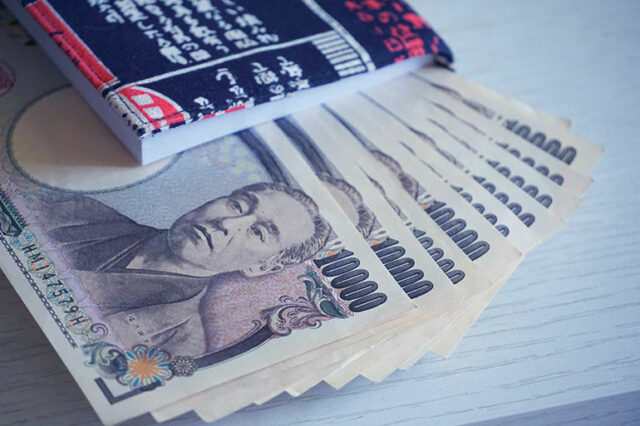
Foreign investors have responded decisively, as net purchases of Japanese cash equities reached about ¥5.4 trillion, roughly $35 billion, during 2025, according to the Tokyo Stock Exchange. During the year, equities in Japan ranked among the best-performing major markets in both local currency and US dollar terms.
Leadership as key economic factor
Ms. Takaichi assumed office after the Liberal Democratic Party lost its parliamentary majority in July 2025. She later formed an alliance with the Japan Innovation Party following a break with Komeito in October. While the alliance did not secure an outright majority, independent lawmakers supported her, providing 237 of 465 votes in the prime ministerial election.
The administration outlined key policy priorities aimed at easing inflation, strengthening energy security, and raising defense spending. Policy measures under consideration include the removal of the provisional gasoline tax, subsidies for electricity and gas fees, adjustments to income tax deductions, and a potential temporary consumption tax exemption on food and beverages for up to two years.
Japan also plans to restart nuclear power plants that were shut down after 2011 and accelerate the development of next-generation reactors and fusion technology. Defense spending is expected to reach 2% of gross domestic product (GDP), advancing earlier than the originally planned 2027 target.
Public support for the new government is strong, with approval ratings between 70% and 80%, among the highest in decades, according to J.P. Morgan. Economists say this level of political stability supports the execution of economic and market policies.
Ms. Takaichi’s economic stimulus measures include a ¥17.7-trillion package as part of a broader ¥21.3-trillion plan, prompting expectations that the Bank of Japan may raise its growth outlook.
Market indicators and investor confidence
The Tankan business conditions index for manufacturers rose to 15 in the final quarter of 2025, the highest reading since 2018. Small and medium manufacturers recorded the strongest gains, supported in part by lower US tariffs on Japanese goods, which were cut from 25% to 15%.
Exports to the United States rebounded in November, rising 8.8% from a year earlier after seven months of declines. Consumer confidence, meanwhile, reached its highest level since April 2025.
Japan’s labor market also remains favorable for both consumers and investors. Non-agricultural employment increased 0.9% from a year earlier in November, while the unemployment rate stayed at 2.6% for four consecutive months amid rising labor force participation.
Nominal contractual earnings grew 2.2% in November, up from 1.9% in September. Rengo, the largest labor union group, seeks a 5% wage increase in Spring 2026 negotiations, matching its request from the previous year. In 2025, average wage gains reached 5.25%.
According to the Ministry of Foreign Affairs, the government plans to train 2.3 million personnel to advance digitalization between fiscal years 2022 and 2026. Highly skilled foreign professionals are encouraged through preferential residency programs, including “J-Skip” and “J-Find.”
Photo by Fakhitah Shabirah | Unsplash
Focusing on innovation and business growth
Japan’s infrastructure and capital markets remain key attractions for international firms. The Tokyo Stock Exchange continues to rank as the world’s third-largest, while government incentives encourage research and development and patent filings.
Japan leads the Group of Seven (G7) in research and development spending, and hosts the largest number of researchers, which creates a robust environment for innovation.
Over the next decade, more than ¥150 trillion in public-private investment is planned for Green Transformation, supported by the issuance of GX Economy Transition Bonds worth ¥20 trillion.
The government also targets expanding the semiconductor sector and bioeconomy market for total sales of ¥15 trillion and ¥100 trillion by 2030, respectively.
Startups and established firms benefit from advanced technology infrastructure, open innovation platforms, and a highly skilled workforce in information technology and engineering disciplines.
Policies also favor foreign-capital companies, including supportive regulatory conditions and financial services, enabling Japan to serve as a regional business and financial hub.
Economic partnership agreements and free-trade agreements cover approximately 80% of Japan’s trade, enhancing access to international markets and increasing the appeal for foreign investors. Inbound mergers and acquisitions have grown fivefold since 2014.
According to Grant Thornton, Japan’s growth sectors include information and communications technology, life sciences, energy, advanced manufacturing, and tourism. Consequently, the Japan External Trade Organization (JETRO) reports that data centers, logistics, health care, and real estate continue to draw significant interest from foreign investors.
Foreign investment momentum
According to JETRO’s Invest Japan Report 2024, inward foreign direct investment (FDI) stock reached ¥50.5 trillion at the end of 2023, up 9.3% from the previous year, equivalent to about 8.5% of GDP.
Investment from the United States and Taiwan showed double-digit growth, driven by large semiconductor projects, including Taiwan Semiconductor Manufacturing Company’s second plant in Kumamoto and technology upgrades by Micron Technology, Inc. in Hiroshima.
JETRO added that the nation ranks first in Asia in the Foreign Direct Investment Confidence Index and among the top Group of 20 (G20) nations for political stability and governance.
The government aims to raise FDI stock to ¥100 trillion by 2030 through tax reforms, investment incentives, and programs focused on innovation, advanced manufacturing, and strategic sectors such as electric vehicles and semiconductors.
The Ministry of Foreign Affairs has expanded its global investment promotion network, establishing FDI task forces in major financial centers and hosting seminars to showcase Japan’s business environment.
Beyond market factors
Corporate governance reforms have reinforced Japan’s appeal to investors, according to Man Group. Companies have accelerated efforts to improve capital efficiency by selling non-core assets and reducing cross-shareholdings. Return on equity has also increased from approximately 8.4% to 9% in the last few years.
About 80% of companies listed on Japan’s prime market now submit capital improvement plans. A planned update to the Corporate Governance Code in mid-2026 is expected to target excess cash holdings, often seen by investors as a drag on company value.
Aside from this, the country has the lowest crime rate among G7 nations. Japan also provides public health insurance coverage for residents and hosts 115 International Baccalaureate World Schools.
Visitors frequently note the country’s cleanliness, and the World Economic Forum ranks Japan third globally and first in the Asia-Pacific region for travel and tourism development. — Mhicole A. Moral
THE Securities and Exchange Commission (SEC) has imposed a P50,000 administrative fine on Global Dominion Financing, Inc. for what it described as unfair and abusive debt collection practices.
In a statement on Tuesday, the SEC said its Financing and Lending Companies Department (FLCD) found Global Dominion to have violated Section 1 (A), (B), and (H) of SEC Memorandum Circular (MC) No. 18, Series of 2019, and Section 4.4 (A), (B), (H), and (I) of the implementing rules and regulations of Republic Act No. 11765, or the Financial Products and Services Consumer Protection Act (FCPA).
The order stemmed from a borrower’s complaint involving the actions of a financing firm’s third-party agents, who allegedly used tactics such as road intercepts and persistent text messages demanding immediate partial payments and issuing threats over delayed payments.
“According to FLCD, intercepting the borrower on the road in the absence of a court order or other lawful authority is not a legitimate collection practice and has the tendency to intimidate, restrain, or coerce,” the SEC said.
“Meanwhile, the text messages and communications sent to the complainant were deemed to be tantamount to pressure intended to deter regulatory recourse and undermine consumer protection mechanisms,” it added.
MC 18 and the FCPA prohibit abusive debt collection practices, including the use or threat of violence or criminal means to harm a person, reputation, or property; the use of insulting or profane language against borrowers; and contacting individuals in a borrower’s contact list, except for guarantors or co-makers.
“[Global Dominion] cannot evade administrative accountability by attributing the prohibited acts to collection agents or third-party providers,” the order dated Jan. 28 read.
“This allocation of responsibility accords with the FCPA IRR framework, recognizing solidary responsibility/solidary liability for regulated entities and their accredited third-party service providers engaged in marketing and transacting with financial consumers.”
Aside from the fine, the Commission directed Global Dominion to strictly comply with fair and lawful debt collection standards meant to protect consumers.
The SEC also warned that repeat violations could lead to heavier penalties, which may include higher fines, as well as the possible suspension or revocation of its authority to operate.
BusinessWorld sought comment from Global Dominion via e-mail but had not received a response as of press time. — Alexandria Grace C. Magno
Prophets of doom in the last century frantically warned the whole world about the so-called population bomb or the threat of overpopulation. Today, the greatest threat to humanity is exactly the opposite. Just listen to US billionaire Elon Musk. He has been very vocal about his concern with declining birth rates and what he sees as a looming “population collapse.” The declining population in many countries today is to Musk the major problem for the future of civilization, rather than overpopulation.
Musk says that most people wrongly think the world has too many people. He argues this view is outdated and that the bigger risk is too few people are being born. He is constantly tweeting that “population collapse due to low birth rates is a much bigger risk to civilization than global warming.” He has repeatedly insisted that there are not enough people in the world today and that if birthrates continue to fall, civilization will collapse. Whether in actual events or when communicating online, he is urging people to “have more babies,” arguing that low fertility threatens economic and social stability.
Musk has said that parents should aim for about three children to compensate for people who have none or only one, or else the population shrinks. It is actually a no brainer. If the mother and father die and they are not replaced by two children, the population will start declining. Musk points out that the fertility rate in many countries, especially in the developed world, is below the 2.1 children per fertile woman replacement level. He sees this as unsustainable in the long-term. Looking back at history, he attributed the fall of civilizations like ancient Rome to declining birthrates. He strongly rejects what was so-called “popular wisdom” propagated by international agencies like the World Bank that the planet is overpopulated. He refers to this propaganda as “the most nihilistic lie ever told,” arguing that declining birth rates pose the true existential threat. He has described population collapse as an existential problem and warned against allowing cultures or nations to “disappear” due to low fertility.
These dire warnings of one of the richest persons on earth could have not been more applicable than to the richest country in Asia, Japan. As the year 2025 ended, the international press was filled with news from Japan that the number of births in Japan is likely to come in below 670,000 — the lowest level since records began 1899, and 16 years earlier than projected by government forecasts. A Japanese demographer reported that the birth total for 2025 was likely to represent a 3% drop from 686,000 in 2024. This would mark the 10th consecutive year of record low birth rates. Japan is estimated to have been losing about 700,000 people every year.
Japan is not alone among rich countries in suffering from record low birth rates. As Valentina Romei reported in the Financial Times, birth rates in the world’s rich economies have more than halved since 1960 to hit a record low. The average number of children across 38 of the most industrialized countries has fallen from 3.3 in 1960 to 1.5 in 2022, according to a study by the Organisation for Economic Co-operation and Development (OECD). The fertility rate is now well below the replacement level of 2.1 children per woman in all the group’s member countries except for Israel. “This decline will change the face of societies, communities and families and potentially have large effects on economic growth and prosperity,” warned the Paris-based organization.
Declining populations obviously act as a drag on economic expansion. A most serious consequence will be labor shortages. Putting together rising life expectancy, low birth rates clearly put pressure on public finances as they leave fewer people contributing the tax revenues needed to pay for the rising costs of ageing populations. A lack of pupils is leading to massive closures of schools in these rich countries, especially in Japan. These countries are trying their best to implement family-friendly policies but, as was in the case of Asian countries like Singapore and Japan, these policies are unlikely to raise birth rates to replacement level. The lowest fertility rates were recorded in southern Europe (Spain and Italy) and Japan at about 1.2 children per woman, with South Korea having the birth rate at about 0.7. A fall in birth rates in countries with extensive policies to support families, such as Finland, France, and Norway, has been a big surprise. The OECD reported that “the second demographic transition,” a trend that marks the shift in attitudes towards greater individual freedom and alternative life goals and living arrangements, helped to explain the decline in family formation.
Countries in Asia and Africa that are still enjoying their respective “demographic dividend,” like the Philippines, Indonesia, and Nigeria, should study closely the lessons they can learn from the developed countries that are struggling to reverse their population decline and rapid ageing. Childlessness more than doubled in Italy, Spain, and Japan among women born in 1975 compared with women born in 1955. Some 20% to 24% of women in Austria, Germany, Italy, and Spain are childless among those born in 1975, with the figure rising to 28% in Japan. Mothers across the OECD on average had their first child at nearly 30 in 2020, up from the average of 26.5 in 2000. The figure rises to over 30 in Italy, Spain, and South Korea.
The most important lesson for those still enjoying the benefits of a young population is to remove all programs and policies that have the slightest semblance of the anti-birth measures popularized by the World Bank in the last century. Very early in the transition from large families to smaller families that are the natural results of higher per capita comes, the whole society — government, business, civil society and especially the academe — should be singing the praises for the institution of marriage and the benefits (psychological, social, and especially spiritual ) of having children.
It is very telling that between 1980 and 2019, as reported by columnist John Burn Murdoch of the Financial Times, most developed countries roughly tripled their real-terms per capita spending on child benefits, subsidized childcare, parental leave and other family-friendly policies. Tragically, they also saw their birth rates decline from 1.85 to 1.53 per woman. The main explanation given is that the decision to have children and how many in these high-income societies turn out to be due to more than financial incentives. Culture is more powerful than policy. For example, child rearing practices have an important impact on fertility rates. In 1965, mothers of young children in developed countries spent an average of just over an hour a day doing activities with their kids. By 2018 that had risen to three hours, and in Korea approaching four. Korea’s fertility rate has plummeted to 0.72, while in France, where parenting is much less hands on, birth rates have held up well and now stand at 1.8.
Early enough in current moves to actively involve parents in the education of their children, especially at pre-school and elementary school levels, there should be a concerted effort to enlighten parents about the prudent amount of time that they should devote to helping their children in their academic work and to avoid spoon feeding their children by spending an inordinate amount of time coaching their children. More important is their role in shaping values and character — in which the role of the parents is indispensable.
In the final analysis, the decision to have children and how many to have is based on the spiritual conviction proceeding from the religious belief that marriage and the resulting children from this “inviolable institution” (to use a phrase taken from the Philippine Constitution of 1987) are mandated by the Creator Himself.
(To be continued.)
Bernardo M. Villegas has a Ph.D. in Economics from Harvard, is professor emeritus at the University of Asia and the Pacific, and a visiting professor at the IESE Business School in Barcelona, Spain. He was a member of the 1986 Constitutional Commission.
Major flagship projects such as the Metro Manila Subway highlight Japan’s long-term investment in the country’s physical connectivity. — Department of Transportation | Facebook Page
Begun in post-war reconciliation and strengthened through decades of economic cooperation, political dialogue, and people-to-people exchange, the relationship between Japan and the Philippines stands as one of the most enduring and strategically significant partnerships in Southeast Asia.
In recent years, shifting geopolitical realities, economic restructuring, and regional security challenges have propelled both nations to deepen collaboration across economic, diplomatic, and defense domains.
This convergence underscores not only shared interests but also a collective vision for a stable, rules-based Indo-Pacific order.
Historical foundations and diplomatic evolution
Formal diplomatic relations between the Philippines and Japan were reestablished in 1956 following the signing of the Treaty of Peace and Reparations Agreement, which laid the groundwork for reconciliation and long-term cooperation. Since then, bilateral engagement has been characterized by trust-building measures, high-level political dialogue, and robust development assistance.
Japan’s sustained commitment to the Philippines’ post-war reconstruction and modernization established Tokyo as Manila’s most reliable development partner, a position it continues to hold.
Over the decades, the relationship matured from aid-based cooperation into a strategic partnership anchored in mutual economic growth, political alignment, and shared democratic values.
High-level exchanges have become institutionalized through bilateral mechanisms such as the Philippines-Japan High-Level Joint Committee on Infrastructure Development and Economic Cooperation, which regularly reviews development priorities and strategic initiatives.
Recent dialogues reaffirmed Japan’s role as the Philippines’ largest source of official development assistance (ODA), particularly in infrastructure, disaster risk reduction, and inclusive development programs.
Economic integration and trade
Economic cooperation constitutes the backbone of Japan-Philippines relations. A pivotal milestone was the signing of the Japan-Philippines Economic Partnership Agreement (JPEPA) in 2006, which entered into force in 2008.
As the Philippines’ first bilateral free-trade agreement, JPEPA liberalized trade in goods and services, strengthened investment flows, enhanced labor mobility, and improved regulatory frameworks.
Japan remains among the Philippines’ top trading partners and sources of foreign direct investment. Thousands of Japanese firms operate across key sectors, including manufacturing, electronics, automotive, agribusiness, information technology, and renewable energy.
These investments not only create employment but also support technology transfer, workforce development, and industrial upgrading, reinforcing the Philippines’ role within regional value chains.
Recent economic initiatives reflect a strategic realignment toward resilience and supply-chain diversification. Joint infrastructure investments, including railways, ports, and logistics corridors, are designed to enhance connectivity and trade efficiency.
The development of the Luzon Economic Corridor, supported by Japan, the Philippines, and the United States (US), illustrates this shift, advancing manufacturing and mineral processing, particularly nickel for battery technologies.
Infrastructure development and official development assistance
Japan’s ODA has been instrumental in improving the Philippines’ infrastructure landscape. Major flagship projects such as the North-South Commuter Railway, Metro Manila Subway, and regional airport modernization initiatives highlight Japan’s long-term investment in the country’s physical connectivity.
Beyond transportation, Japanese assistance extends to flood control systems, climate resilience, and healthcare development.
In conflict-affected Mindanao, Japan has played a leading role in peace-building and socioeconomic rehabilitation, supporting livelihood programs and institutional capacity-building in Bangsamoro Autonomous Region.
This multidimensional engagement reflects Japan’s broader “human security” approach, which emphasizes people-centered development and social resilience.
Security convergence
In response to rising geopolitical tensions in the Indo-Pacific, Japan and the Philippines have intensified defense and security cooperation. Central to this shift is the signing of the Reciprocal Access Agreement (RAA) in July 2024, Japan’s first defense pact with a Southeast Asian country.
The RAA complements existing trilateral cooperation involving the US and reflects shared concerns over maritime security and the rule of law in contested waters.
Recent defense agreements, including the Acquisition and Cross-Servicing Agreement, further enable logistical cooperation and operational readiness, particularly in humanitarian and disaster-relief missions.
Japan’s provision of maritime surveillance equipment, patrol vessels, and security infrastructure financing strengthens the Philippines’ capacity to safeguard its exclusive economic zone.
These measures, while defensive in nature, signal a growing strategic alignment aimed at preserving regional stability amid heightened tensions in the South China Sea.
The Reciprocal Access Agreement (RAA), Japan’s first defense pact with a Southeast Asian country, has officially entered into force last September 2025, following the ceremonial exchange of notes between the Department of Foreign Affairs and the Embassy of Japan in the Philippines. — Department of Transportation | Facebook Page
People-to-people exchanges and cultural connectivity
Over 340,000 Filipinos currently reside in Japan, contributing significantly to sectors such as healthcare, construction, agriculture, and manufacturing. Labor mobility arrangements under JPEPA have facilitated the deployment of Filipino nurses and caregivers, addressing demographic challenges in Japan’s aging society.
Tourism has likewise flourished, with over 800,000 Filipinos visiting Japan in 2024, marking a record high. Cultural diplomacy — spanning education, sports, creative industries, and language training — has deepened mutual understanding and social affinity.
These interactions foster a grassroots foundation for diplomatic goodwill and economic collaboration strengthening long-term bilateral resilience.
Trilateral and regional engagement
Beyond bilateral cooperation, Japan and the Philippines collaborate within broader multilateral and minilateral frameworks. Trilateral coordination with the US enhances maritime security, disaster preparedness, and infrastructure financing.
Meanwhile, exploratory dialogues involving India signal emerging opportunities for expanded regional partnerships that align economic growth with strategic stability.
Such multilateral engagements reflect a shared commitment to a rules-based international system, open markets, and sustainable development. By positioning their partnership within larger regional architectures, Japan and the Philippines amplify their collective diplomatic influence and economic leverage.
What lies ahead
In the midst of robust progress, challenges persist. Economic disparities, infrastructure financing gaps, regulatory complexity, and workforce skills mismatches require continued policy alignment and institutional reform.
Moreover, intensifying geopolitical competition in the Indo-Pacific necessitates careful diplomatic calibration to balance strategic interests while maintaining regional stability.
Nevertheless, the long-term outlook remains optimistic. Japan’s sustained investment in infrastructure, technology transfer, and human capital development positions the Philippines as a strategic hub within Southeast Asia. Concurrently, the Philippines’ economic dynamism, demographic dividend, and reform agenda offer Japan a reliable partner for diversification and regional engagement.
The evolving Japan-Philippines partnership exemplifies a comprehensive model of economic integration and diplomatic collaboration. Rooted in historical reconciliation, driven by economic interdependence, and reinforced by strategic convergence, the bilateral ties continue to expand in depth and complexity.
As regional uncertainties intensify, the partnership offers a stabilizing force rooted in shared values, mutual respect, and forward-looking cooperation. In navigating the opportunities and challenges of the 21st-century Indo-Pacific, Japan and the Philippines are positioned to shape a partnership that not only advances national interests but also contributes meaningfully to regional peace, prosperity, and resilience. — Krystal Anjela H. Gamboa
THE GOVERNMENT fully awarded the Treasury bonds (T-bonds) it offered on Tuesday as players moved to lock in still-high yields amid expectations of a rate cut by the Bangko Sentral ng Pilipinas (BSP) next week.
The Bureau of the Treasury (BTr) borrowed P30 billion as planned via the reissued 10-year bonds, with total bids for the tenor reaching P80.29 billion or more than double the amount on offer.
“The auction attracted strong demand,… underscoring the investors’ sustained appetite for government securities amid steady market conditions,” the Treasury said in a statement.
The full award brought the total outstanding volume for the series to P170 billion, it said.
The reissued bonds, which have a remaining life of seven years and six months, were awarded at an average rate of 5.859%. Accepted yields ranged from 5.8% to 5.875%.
The average rate of the reissued papers fell by 36.5 basis points (bps) from the 6.224% fetched for the series’ last award on Dec. 5, 2023 and was also 76.6 bps below the 6.625% coupon for the issue.
This was likewise 3 bps below the 5.889% fetched for the same bond series but 5.5 bps higher than the 5.804% quoted for the seven-year paper — the benchmark tenor closest to the remaining life of the issue — at the secondary market before Tuesday’s auction, based on the PHP Bloomberg Valuation ServiceReference Rates data provided by the BTr.
The Treasury fully awarded the reissued bonds as yields fetched were mostly in line with secondary market rates, Rizal Commercial Banking Corp. Chief Economist Michael L. Ricafort said in a Viber message.
Demand was also higher than the bids seen for the BTr’s latest offering of seven-year notes last month, showing strong market appetite as investors likely wanted to secure yields at their current levels before a potential rate cut at the Monetary Board’s Feb. 19 meeting amid benign inflation and weak economic growth, he said.
BSP Governor Eli M. Remolona, Jr. earlier said a cut is possible at their policy meeting next week if they see the need to support domestic demand.
This, after Philippine gross domestic product growth slowed to a five-year low of 4.4% last year, missing the government’s 5.5%-6.5% target due to the fallout from a corruption scandal that affected both public and private spending.
However, the central bank last week reaffirmed that it was nearing the end of its current easing cycle, with further cuts to be limited and data-dependent, even as the inflation outlook remains benign.
The Monetary Board has reduced benchmark rates by 200 bps since August 2024, bringing the policy rate to 4.5%.
Analysts have said that the BSP may have room to ease its policy stance further to help stimulate economic activity as inflation remains low despite an uptick in January.
Headline inflation accelerated to 2% in January from 1.8% in December but slowed from the 2.9% in the same month last year. This was the fastest in 11 months or since 2.1% in February 2025.
It was also faster than the 1.8% median forecast from a BusinessWorld poll of 18 economists, but was within the BSP’s 1.4%-2.2% estimate for the month.
Meanwhile, a trader said that the bond auction’s result was well within market expectations.
The trader noted that the offering saw low demand compared to the BTr’s recent bond auctions as the issue is “illiquid, on the run, and on the longer end in terms of tenor.”
The average yield fetched for the issuance was slightly higher than the prevailing secondary market rate for the seven-year tenor amid the upward trend in bond yields, the trader added.
The BTr wants to raise P308 billion from the domestic market this month, or P108 billion via Treasury bills and up to P200 billion through T-bonds.
The government borrows from local and foreign sources to help fund its budget deficit, which is capped at P1.647 trillion or 5.3% of gross domestic product this year. — Aaron Michael C. Sy
CENSORSHIP has been a constant in Ai Weiwei’s life. The 68-year-old Chinese dissident, whose activist art has made him among Beijing’s most prominent critics, has seen his films, sculptures, and other works restricted for their criticisms of China as well as his outspoken advocacy for human rights around the world.
Speaking with Reuters in London ahead of the Jan. 29 launch of his new book On Censorship, he discussed returning to China for the first time in a decade, the impact of artificial intelligence (AI) on freedom of expression, and what he sees as the erosion of free speech in the West.
This conversation has been edited and condensed for clarity.
Q: You’ve experienced censorship in China in many forms, including having your exhibitions canceled and your name and artistic contributions erased online. What similarities, if any, have you observed in the West?
A: In China, censorship relates to red lines. You cannot cross some red lines. It’s about state policy and discussions (about) state power. It’s also related to what they would call minority or religious issues, which can be very sensitive, so people would not touch those topics. If touched, it could cause you different levels of damage. But in the West, especially now, you also see censorship everywhere — not necessarily just from the state but from companies, from institutions, from schools or museums.
Q: You argue in your book that the “right not to be watched no longer exists.” As the world becomes increasingly reliant on artificial intelligence, do you see these technologies worsening surveillance — or could they help counter it?
A: It’s like you are playing a (game of) poker — the other side knows what you are hiding in your hands, so how can you play the game? It’s not possible, because they always know what you have. The sense of privacy is essential for personal life, in relationships; we need a corner to just be ourselves. Technology has completely destroyed that. When we have lost a sense of privacy, then what really happens? It means we have lost humanity, because we are no different from one another. We are just numbers.
Q: British Prime Minister Keir Starmer was the latest European leader to visit China last week as Britain seeks to reset relations. How do you view these kinds of visits, given ongoing tensions over issues like Hong Kong, espionage accusations, and cyberattacks?
A: Globally, politics is like a chess game. (It’s about) how to balance power. The tendency of European leaders to go to China will (increase), and China’s policy has been tested and is more acceptable in international relations than the US, because the US just wants to (pursue) American interests, and (that’s) not so acceptable by its own partners in Europe. I think Britain’s head of state made a very good move (to go to China). It’s not just about business interests; (it’s) very rational and practical to see China as a state of its potential.
Q: Would you want Western leaders to bring up issues such as censorship when he or she goes to China?
A: Ten or 20 years ago, when (then-President Barack) Obama (went) to China, I warned that every deal you make (will) hurt the human rights condition(s) in China. I (thought) they should openly denounce that. But today I changed my mind completely. I will say the West is not even in the position to accuse China. (They must) check on their record, what they did on international human rights, freedom of speech.
Q: You recently returned to China for the first time in a decade. How did it feel to be back?
A: It’s a very strange feeling because you’re going back somewhere you’re so familiar with, but at the same time it’s so different now because China has become a very powerful state in the international (setting). It’s a very strange feeling.
(But when you are) in a state like China, you miss discussion(s) on a higher ideological or philosophical level. You cannot discuss anything in a meaningful way, because certainly people are not used to it, and they know that (could lead) to a problem.
Q: Aside from being questioned at length at Beijing airport, I understand your stay was largely trouble-free. Why do you think that was? Has China become more accepting of your work and your views?
A: The way they treat(ed) me was very courteous. I just told them, very humbly, (that) I wanted to see my mum. That was my purpose to come back. So they acted very friendly. I would say the trip was smooth.
I don’t think (they are more accepting of my work). I think they have more confidence in dealing with me because they know me better. I just have ideological differences, and I argue about social justice, human rights, freedom of speech, so somehow they understand me. That’s what I hope.
Q: Your work has consistently challenged authority. Do you expect it to become harder to produce such work in the years ahead?
A: Challenging the powerful and challenging authority is not a total life. You hope you don’t have to do that all the time, but we all have to be alert about this. It doesn’t matter if it’s in the West or in a democratic society — we can see it’s deteriorating fast.
It’s obviously getting harder (to work) if you want to touch (on) those so-called sensitive issues, and it’s a test and a challenge (to) your integrity. Do you want to give up your integrity for obvious profit or (do) you want to still say: “I’m a person (who will) protect human integrity”?
Q: What message would you give to younger generations of artists who may want to follow in your footsteps, but fear the risks to their reputation or safety?
A: I did it only because my nature is like that, but I don’t encourage everybody to do that because I don’t know if you can pay the cost of losing the means to survive. And to speak the truth very often (it means putting yourself) in an extremely difficult situation.
If I fight so relentlessly, the only hope is that the next generation does not have to do the same thing(s) I do.
Q: Is there anything that gives you hope?
A: If people act (to) protect their own consciousness and to protect very essential rights, I think that is the only possibility (for us to) remain as individuals that can be associated with humanity. Otherwise, we are going to, in this fully developed technical world, easily disappear. — Reuters
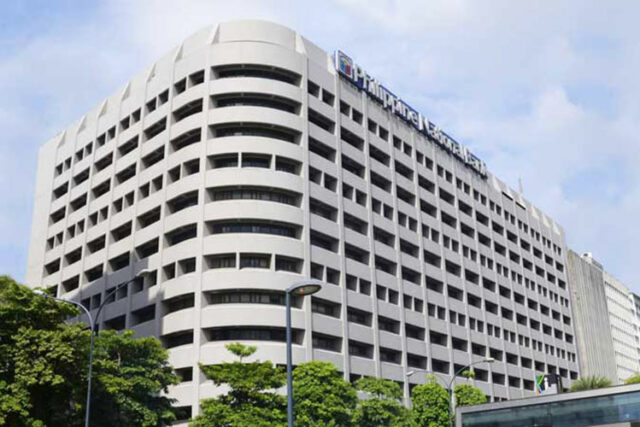
PNB HOLDINGS Corp. (PHC), the real estate arm of Philippine National Bank (PNB), said it plans to add more retail spaces at PNB Makati Center to support demand from corporate, wellness, and lifestyle tenants.
In a statement on Tuesday, the company said it is converting a portion of the ground floor of PNB Makati Center along Ayala Avenue to accommodate food and beverage (F&B) and retail concepts.
“With a solid tenant pipeline strengthened by wellness providers, service-oriented businesses, and upcoming dining concepts, PHC expects sustained demand for retail spaces into 2026,” the company said in a statement on Tuesday.
The company said the move comes as Ayala Avenue, at the heart of the Makati central business district (CBD), continues to evolve into a more lifestyle-driven and experience-oriented hub.
“As the Makati CBD continues to modernize, PHC remains committed to developing future-ready spaces that support the district’s progressive transformation and elevate the overall tenant experience,” it added.
The latest data from real estate services firm CBRE Philippines showed that in Makati City, about 36% or 136,028 square meters (sq.m.) of office supply is aged 10 years and older, 32% or 117,869 sq.m. is aged six to 10 years, while 32% or 119,598 sq.m. is less than five years old.
PNB Makati Center has maintained a 94% occupancy rate, PHC said.
The entry of new tenants such as homegrown fitness brand BeFit and Maxicare Healthcare Corp. aligns with the growing demand for health-oriented amenities in modern workplaces, the company said.
PHC also owns two other prime assets — the PNB Financial Center in Pasay City and a high-value commercial lot along Buendia Avenue corner Paseo de Roxas. — Beatriz Marie D. Cruz