Home Blog Page 2969

After assassination attempt, Trump and Biden seek calm, unity

Donald Trump and Joseph R. Biden are seen in this file photo of a presidential campaign debate in Cleveland, Ohio, US, Sept. 29, 2020. — OLIVIER DOULIERY/POOL VIA REUTERS

 – Donald Trump arrived on Sunday in Milwaukee, where he will be formally nominated as the Republican presidential candidate later this week after surviving an assassination attempt that has aggravated an already bitter U.S. political divide.

President Joe Biden, a Democrat, ordered a review of how a 20-year-old man with an AR-15-style rifle got close enough to shoot at Trump from a rooftop on Saturday. Trump, as a former president, has lifetime protection by the U.S. Secret Service.

Mr. Trump, 78, was holding a campaign rally in Butler, Pennsylvania – a key state in the Nov. 5 election – when shots rang out, hitting his right ear and leaving his face streaked with blood. His campaign said he was doing well.

“That reality is just setting in,” Mr. Trump told the Washington Examiner on Sunday. “I rarely look away from the crowd. Had I not done that in that moment, well, we would not be talking today, would we?”

One person in the crowd was killed and two others wounded before Secret Service agents fatally shot the suspect.

Both Mr. Trump and Mr. Biden on Sunday sought calm and unity.

Mr. Trump is due to accept his party’s formal nomination at the Republican National Convention with a speech on Thursday. He pumped his fist in the air several times as he descended the stairs from his plane after arriving in Milwaukee.

“This is a chance to bring the whole country, even the whole world, together. The speech will be a lot different, a lot different than it would’ve been two days ago,” Mr. Trump told the Washington Examiner.

Mr. Biden delivered a televised address from the Oval Office in the White House on Sunday.

“There is no place in America for this kind of violence, for any violence ever. Period. No exceptions. We can’t allow this violence to be normalized,” he said. “The political rhetoric in this country has gotten very heated. It’s time to cool it down.”

Mr. Biden and Mr. Trump spoke to each other on Saturday night after the shooting. First Lady Jill Biden also spoke with former First Lady Melania Trump on Sunday afternoon, said a White House official.

Mr. Trump and Mr. Biden are locked in a close election rematch, according to most opinion polls including by Reuters/Ipsos. The shooting on Saturday whipsawed discussion around the presidential campaign, which had been focused on if Mr. Biden, 81, should drop out following a halting June 27 debate performance.

The FBI said there were no known threats to the Republican convention – which kicks off on Monday – or anyone attending, while the Secret Service said they do not anticipate any changes to the security plan.

The convention will feature televised speeches by rising Republican stars and Mr. Trump’s choice for a yet-to-be-announced vice presidential running mate, while highlighting the party’s stance on such topics as abortion, immigration and the economy.


SUSPECT A NURSING HOME AIDE

The FBI identified Thomas Matthew Crooks of Bethel Park, Pennsylvania, as the suspect and said the shooting was being investigated as an attempted assassination.

FBI officials said on Sunday that the shooter acted alone. The agency said it had yet to identify an ideology linked to the suspect or any indications of mental health issues or found any threatening language on the suspect’s social media accounts.

Crooks was a registered Republican, according to state voter records, and donated $15 to a Democratic political action committee when he was 17. At the time of the shooting he was employed as a dietary aide at a nursing home. The Bethel Park Skilled Nursing and Rehabilitation Center said Crooks “performed his job without concern and his background check was clean.”

The gun – an AR-style-5.56 caliber rifle – had been legally bought, FBI officials said, adding they believed it had been purchased by the suspect’s father. The officials said “a suspicious device” was found in the suspect’s vehicle, which was inspected by bomb technicians and rendered safe.

The Secret Service denied accusations by some Trump supporters that it had rejected a campaign request for more security, saying that it recently “added protective resources and capabilities to the former President’s security detail.”

Hours after the assassination attempt, the Oversight Committee in the Republican-led US House of Representatives summoned Secret Service Director Kimberly Cheatle to testify at a hearing scheduled for July 22.

The shots on Saturday appeared to come from outside the area secured by the Secret Service, the agency said.

Butler County Sheriff Michael Slupe said Butler Township police officers had responded to a call about a suspicious person, but were unaware he was armed. He said one officer helped hoist another officer up to look on the roof. As the officer pulled himself up he was confronted by the shooter.

“The shooter heard him or saw him, he turns around with his rifle and of course the guy just lets go and he falls to the ground,” said Mr. Slupe. The shooter opened fire shortly afterwards, he said.


SPECTATOR KILLED PROTECTING FAMILY

The rally attendee killed on Saturday was identified by authorities as Corey Comperatore, 50, of Sarver, Pennsylvania. He died trying to protect his family from the hail of bullets, said Pennsylvania Governor Josh Shapiro.

“Corey was an avid supporter of the former president, and was so excited to be there,” Mr. Shapiro said, adding, “Political disagreements can never, ever be addressed through violence.”

Two people wounded in the shooting were in a stable condition on Sunday. Pennsylvania State identified them as David Dutch, 57, of New Kensington, Pennsylvania and James Copenhaver, 74, of Moon Township, Pennsylvania.

Residents of Bethel Park, where the suspected shooter lived, expressed shock at the news on Sunday.

“It’s a little crazy to think that somebody that did an assassination attempt is that close, but it just kind of shows the political dynamic that we’re in right now with the craziness on each side,” said resident Wes Morgan, 42, describing Bethel Park as “a pretty blue-collar type of area.”

While mass shootings at schools, nightclubs and other public places are common in the United States, the attack was the first shooting of a US president or major party presidential candidate since the 1981 attempted assassination of Republican President Ronald Reagan.

Americans fear rising political violence, Reuters/Ipsos polling shows, with two out of three respondents to a May survey saying they worried violence could follow the election.

After Mr. Biden defeated Mr. Trump in the 2020 election, Mr. Trump supporters stormed the US Capitol on Jan. 6, 2021, in a deadly riot fueled by Mr. Trump’s false claims that his loss was the result of widespread fraud. – Reuters

PANA Brand Academy 2024 marks milestone in marcom education

Philippine Association of National Advertisers (PANA) recently completed its PANA Brand Academy for this year, which participants said was fun, comprehensive, progressive, and relevant.

An essential platform for professional growth for 10 years now, PANA Brand Academy reached a significant milestone with a groundbreaking partnership with the Asian Institute of Management (AIM), offering the first-ever certificate course in the industry, which was attended by nearly 100 participants.

The said collaboration elevated the program’s prestige, offering attendees a unique blend of academic rigor and practical industry insights, with the added bonus of unparalleled discounted rates for those wishing to enroll in post graduate short courses in Marketing and Brand Management giving all finishers credit units and the highly regarded alumni status.

The program featured top-notch speakers, including new-generation industry personalities and world-class professors from AIM, providing unparalleled insights and expertise. Participants gained cutting-edge knowledge on brand building, marketing and advertising trends, strategies, and innovations, ensuring they are well-equipped to tackle contemporary challenges in the field. The diverse lineup of speakers brought fresh perspectives and inspired participants to think creatively and strategically about their brand building approaches.

In the progressive course outline, generative AI took the spotlight many times, alongside other phenomenal industry changes such as new media utilization, content creation, sustainability angles, and omnichannel platforms.

PANA thanks its venue sponsors Concepcion Industrial ConceptStore, Dentsu PH, Tiktok and AIM; case study sponsor Concepcion Industrial; and its event partners Truelogic, AdStandards Council, and 7Eleven. PANA also extends its appreciation to the Brand Academy committee headed by Chrissy Roa of Ayala Land, Inc. with Bea Atienza of Colgate-Palmolive, Mary Julie Balarbar of DLSU and the PANA Secretariat team

PANA invites interested learners to continue their journey towards marketing and advertising excellence with Brand Academy 2025. For more information, regularly visit PANA FB Page or www.pana.com.ph, or message email@pana.com.ph.


Spotlight is BusinessWorld’s sponsored section that allows advertisers to amplify their brand and connect with BusinessWorld’s audience by publishing their stories on the BusinessWorld Web site. For more information, send an email to online@bworldonline.com.

Join us on Viber at https://bit.ly/3hv6bLA to get more updates and subscribe to BusinessWorld’s titles and get exclusive content through www.bworld-x.com.

PEZA investments plunge in June

WORKERS make customized pet plushies at a factory in Angeles City, Pampanga, March 10, 2023. — REUTERS

THE PHILIPPINE Economic Zone Authority (PEZA) approved P8.65 billion worth of projects in June, 73.4% lower than a year ago.

In a statement over the weekend, the investment promotion agency said the PEZA Board approved 25 new and expansion projects at its June 28 meeting, up from 22 projects a year ago.

These projects are expected to contribute $416 million in export value and 5,881 direct jobs.

However, the amount of PEZA-approved investments in June was 73.4% lower than the P32.56 billion worth of investments approved in the same month last year.

Of the 25 projects, 22 are from locator companies and three from economic zone (ecozone) developers, PEZA said.

“These locator companies comprise 11 export manufacturing projects, followed by six projects in information technology and business process management (IT-BPM), three in domestic markets, one in facilities development, and one in logistics services,” it added.

Calabarzon was still the top investment destination in June, accounting for 15 projects. The other investment destinations were the National Capital Region, Region III (Central Luzon), Region V (Bicol Region), Region VII (Central Visayas), and Region XII (Soccsksargen).

LOWER INVESTMENTS
For the first half, PEZA said it approved P45.48 billion worth of investments, plunging by 43.6% from the P80.59 billion worth of investments approved in the same period last year.

The PEZA approved 120 projects which are expected to create over 25,000 jobs and generate $1.61 billion in export value.

“The new projects approved recorded an 18% increase from 102 to 120, with projected direct employment reaching a remarkable 64% uptick from 15,424 to 25,259 this year,” PEZA said.

PEZA Director-General Tereso O. Panga said that the approval of the 120 projects signals confidence in the country’s business environment and economic potential.

Creating more jobs for Filipinos signifies the agency’s proactive efforts in positioning the Philippines as a premier investment destination in Asia,” he said.

During the six-month period, PEZA said it approved five big-ticket projects worth P31.36 billion.

In June, it approved two projects worth P6.15 billion. A Malaysian company will set up a manufacturing and assembly facility for hair stylers, while a Japanese company will manufacture biomass fuel products, oxygen reducers, and activated charcoal made from coconut shells in General Santos City.

From January to June, the top investment sources were the Cayman Islands (P8.86 billion), Japan (P8.02 billion), Malaysia (P4.53 billion), Hong Kong (P1.62 billion), and Singapore (P1.27 billion).

The electronic manufacturing services sector attracted the most investments, accounting for P19.77 billion. This was followed by the ecozone development (P16.21 billion), IT-BPM industry (P2.89 billion), and automotive (P1.04 billion).

“Eastern European countries are also quite interested in the Philippines, with visits from Ukrainian, Polish, and Russian delegations conducting inquiries and site visits preparatory to investing in the country,” PEZA said.

PEZA is hoping to approve between P200 billion and P250 billion worth of investments this year. If realized, this will be at least a 15% growth from the P175.71 billion worth of investments approved in 2023. — Justine Irish D. Tabile

Debt service bill jumps in May

REUTERS

THE NATIONAL GOVERNMENT’S (NG) debt service bill jumped year on year in May due to a surge in interest payments, the Bureau of the Treasury (BTr) said.

Data from the Treasury bureau showed that debt payments rose by 40.64% to P68.98 billion in May from P49.05 billion in the same month a year ago.

Month on month, debt payments dropped by 57.34% from P161.7 billion in April.

The debt service refers to payments made by the government on its domestic and foreign debt.

The bulk (88.57%) of May’s debt service bill went to interest payments.

Interest payments went up by 47.78% to P61.1 billion in May from P41.34 billion in the same month a year ago.

Interest paid on domestic debt increased by 56% to P46.07 billion from P29.53 billion a year ago.

Meanwhile, interest payments to foreign creditors grew by 27.18% to P15.03 billion in May from P11.82 billion a year ago.

On the other hand, principal payments inched up by 2.34% to P7.88 billion from P7.7 billion last year.

Month on month, amortization plunged by 92% from P94.2 billion in April.

Broken down, amortization on domestic debt in May dropped by 96.8% to P85 million from P2.66 billion a year ago.

Principal payments on external debt increased by 54.51% to P7.8 billion in May from P5.05 billion last year.

FIVE MONTHS
In the first five months of the year, the NG’s debt service bill increased by 48% to P1.22 trillion from P819.53 billion in the year-ago period.

Amortization payments climbed by 51.73% to P895.13 billion in the first five months from P589.95 billion a year ago.

Principal payments on domestic debt reached P754.86 billion, while those on external debt amounted to P140.27 billion.

Meanwhile, interest payments in the January-to-May period jumped by 40.08% to P321.59 billion from P229.57 billion a year prior.

Broken down, interest paid on domestic debt stood at P231.38 billion, while interest payments for external debt reached P90.21 billion.

Rizal Commercial Banking Corp. Chief Economist Michael L. Ricafort said the higher debt payments in May could be due to the elevated interest rates and weaker peso.

“The higher debt servicing bill of the NG could be attributed to higher interest rates that increased borrowing costs/financing costs,” he said via Facebook Messenger.

Mr. Ricafort said the weaker peso exchange rate increased the peso equivalent of external debt and debt servicing.

The peso closed at P58.52 against the dollar as of end-May, depreciating by P0.94 from its P57.58 finish as of end-April.

The Bangko Sentral ng Pilipinas has kept the key policy rate at an over 17-year high of 6.5% since October 2023.

The higher debt payments could also reflect the wider budget deficit, Mr. Ricafort said.

The NG’s budget deficit in May widened 43.1% to P174.9 billion amid strong spending over revenues, BTr said. In the first five months of the year, the budget gap ballooned by 24.06% to P404.8 billion from P326.3 billion a year ago.

“There could also be some payment of some multilateral foreign debts, as well as some maturity of some local government securities/debts,” Mr. Ricafort said.

As of end-May, the NG’s debt hit a record high P15.35 trillion, with P10.44 trillion coming from domestic sources and P4.9 trillion from foreign sources. — Beatriz Marie D. Cruz

‘Larger-than-expected’ rate cuts likely — Nomura

BW FILE PHOTO

THE BANGKO SENTRAL ng Pilipinas (BPS) may deliver “larger-than-expected” rate cuts, with the possibility of up to 250 basis points (bps) worth of reductions until 2025, Nomura Global Markets Research said.

“Compared to our baseline, risks are skewed towards more easing in the Philippines and Thailand, less easing in India,” it said in a report.

In June, the Monetary Board kept its benchmark rate unchanged for a sixth straight meeting at 6.5%, the highest in over 17 years.

Nomura’s baseline forecast for the Philippines’ policy rate is at 5% at end-2025. However, its Modified Taylor Rule (MTR) estimates see the key rate slashed to as low as 4%.

According to the report, the MTR estimates to “quantify where Asian policy rates ‘should be.’”

Nomura’s baseline projection also anticipates the BSP to deliver a rate cut in October. It projects a total of 150 bps of cuts by the second quarter of 2025.

“However, the MTR suggests this would leave policy rates in restrictive territory, given an imminent fall in inflation to below the midpoint of the 2-4% target range, partly aided by lower rice prices.”

“The MTR suggests policy easing should begin in Q3 2024, with 250 bps of cumulative cuts to a terminal rate of 4% by Q2 2025,” it added.

BSP Governor Eli M. Remolona, Jr. has said that the central bank is on track to begin policy easing by August.

He said that the BSP could cut rates by up to 50 bps this year, with a 25-bp cut each in the third and fourth quarters.

The Monetary Board has raised rates by a cumulative 450 basis points (bps) from May 2022 to October 2023.

Nomura also noted the improved expectations of the US Federal Reserve cutting rates this year.

“The global backdrop has also become more conducive, with US core (consumer price index) inflation softening in June and setting the stage for the Fed to cut policy rates twice this year, in September and December, consistent with our US economics team’s baseline views,” it said.

US consumer prices fell for the first time in four years in June amid cheaper gasoline and moderating rents, firmly putting disinflation back on track and putting the Federal Reserve another step closer to cutting interest rates in September, Reuters reported.

Financial markets saw a roughly 85% chance of a rate cut at the Fed’s September meeting, compared with about a 70% chance seen before the report. Two rate cuts are anticipated this year.

Mr. Remolona earlier said that the BSP does not need to wait for the Fed before it begins cutting rates.

He said that while the BSP monitors the Fed’s moves, it is not a “decisive factor” in its own monetary decisions.

The Monetary Board’s (MB) next policy review is on Aug. 15. This is MB’s only meeting scheduled in the third quarter. It is also set to meet on Oct. 17 and Dec. 19, its last two meetings for the year. — Luisa Maria Jacinta C. Jocson

143 PPP projects in the pipeline — NEDA

A man is seen working on the rehabilitation of a portion of Commonwealth Avenue in Quezon City. — PHILIPPINE STAR/ MIGUEL DE GUZMAN

THE GOVERNMENT has 143 public-private partnership (PPP) projects valued at P3.095 trillion in the pipeline as of July, with new projects centered on health and waste management, the National Economic and Development Authority (NEDA) said.

“The number of pipeline projects has grown over these past few months. As of early July, we have 205 PPP projects, including those in local government units, under implementation and 143 projects in the pipeline,” NEDA Secretary Arsenio M. Balisacan was quoted as saying in a statement.

Nine PPP projects amounting to P65 billion were added to the pipeline as of July.

“We are also encouraged to note that more and more social infrastructure projects in health, water and sanitation, as well as solid waste management, are in the pipeline,” Mr. Balisacan added.

The National Government leans on support from the private sector in shouldering its budgetary and infrastructure project implementation shortfalls. It has passed several policies over the past months that seek to create an enabling environment for infrastructure development.

Republic Act No. 11966 or the PPP Code, which took effect in December last year, sought to increase private sector participation in financing, operating, and maintaining infrastructure projects.

Under the Marcos administration’s “Build Better More” program, the government has 185 infrastructure flagship projects (IFP) valued at P9.54 trillion in the pipeline.

Mr. Balisacan also said that 63 IFPs, including the Pasig-Marikina River channel improvement project, Central Luzon Link Expressway, and the Panguil Bay Bridge project, are currently underway.

The NEDA chief said 31 more IFPs have been approved for implementation, six are awaiting government approval, and 82 are in the preparation stage.

The government’s move to allow full foreign ownership in renewable energy projects as well as public utilities like telecommunications, domestic shipping, railways, subways, airlines, expressways, tollways and airports, is expected to increase foreign investments in infrastructure, Mr. Balisacan said.

To fast-track implementation of infrastructure projects, the NEDA chief said there is a need to streamline and enhance processes and speed up the acquisition of right of way.

In April, President Ferdinand R. Marcos, Jr. also signed Executive Order (EO) No. 59 to fast-track the processing of permits for infrastructure flagship projects.

“By expanding and upgrading our infrastructure, we aim to create enabling conditions for high-quality job creation for millions of Filipinos, raise the competitiveness of our local industries, diversify our growth drivers to strengthen economic resilience, and enhance regional connectivity by linking our leading and lagging regions,” Mr. Balisacan said.

Terry L. Ridon, a public investment analyst and convenor of think tank InfraWatch PH, said the pace of implementation of IFPs would depend on government agencies.

“With legislation and policy frameworks in place, faster infrastructure development will now be determined by capable leadership of infrastructure agencies,” he said in a Viber message.

“This leadership has not been apparent in the Transportation department with only one concluded PPP (Ninoy Aquino International Airport rehabilitation) by the President’s State of the Nation Address (in July.) The public is still waiting for its urgent action on the EDSA (Epifanio de los Santos Avenue) busway and MRT-3 (Metro Rail Transit Line 3) PPPs.”

In May, the PPP Center said that its evaluation of Megawide Construction Corp.’s unsolicited proposal for the EDSA busway system is nearing completion.

The Department of Transportation also said it is reviewing the terms of reference for the auction of MRT-3’s operations and maintenance contract by the first quarter of 2025.

Rizal Commercial Banking Corp. Chief Economist Michael L. Ricafort said the government has implemented several measures, including the establishment of “green lanes,” to attract more investors in the Philippines.

As of June 20, around P2.32 trillion worth of projects, mostly in renewable energy, have been approved to go through the “green lane” system, the Board of Investments said earlier.

The government, through EO No. 18, established the “green lane” in all government agencies to speed up the approval and registration process for priority or strategic investments. — B.M.D.Cruz

Hartwood Village: A human-centric design philosophy

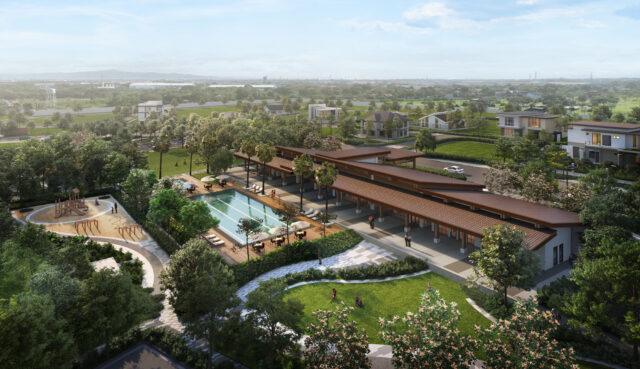
Hartwood Village’s Clubhouse. Artist’s Perspective.

Human-centric design places people at the heart of architectural innovation. It considers people’s lifestyle needs and aspirations, creating real estate solutions to build a better community living experience.  

Keeping its residents in mind, premier real estate developer Federal Land, Inc. integrates human-centric design principles into its latest residential development in Biñan, Laguna, Hartwood Village. By placing the well-being and satisfaction of its residents at the forefront of its masterplan, Hartwood Village becomes more than just a residential development—it becomes a breathtaking sanctuary where the community thrives.

The masterplan principles of Hartwood Village embody Federal Land’s commitment to redefining contemporary living experiences. From the intimate development scale to the careful circulation planning, every aspect is meticulously crafted to emphasize comfort and connection.

Development Scale

Hartwood Village is an 11.3-hectare horizontal residential development, with Phase 1 offering just 110 prime lots. It blends the tranquil allure of suburban living with seamless connectivity to urban conveniences. The intimate footprint allows for a village design that embraces the ethos of exclusivity, creating a haven where neighbors become friends, and every face is familiar. The small development scale fosters a small-town atmosphere, nurturing strong community bonds among neighbors.

Circulation

Hartwood Village is designed with five sub-neighborhood clusters. Each cluster comprises a mere 30 to 49 lots, ensuring that residents have the opportunity to know their neighbors, build trust, and encourage interaction. This sub-neighborhood structure also allows for an easy-to-navigate circulation plan.

Security

Security is paramount in any community, and Hartwood Village is designed with the safety and peace of mind of its residents. The development has a 24-hour security and CCTV surveillance system. Moreover, the small-scale development nurtures a close-knit environment where residents can easily be acquainted with fellow homeowners—an invaluable asset in an age where security is too often sacrificed at the altar of expansion.

Pedestrian Mobility

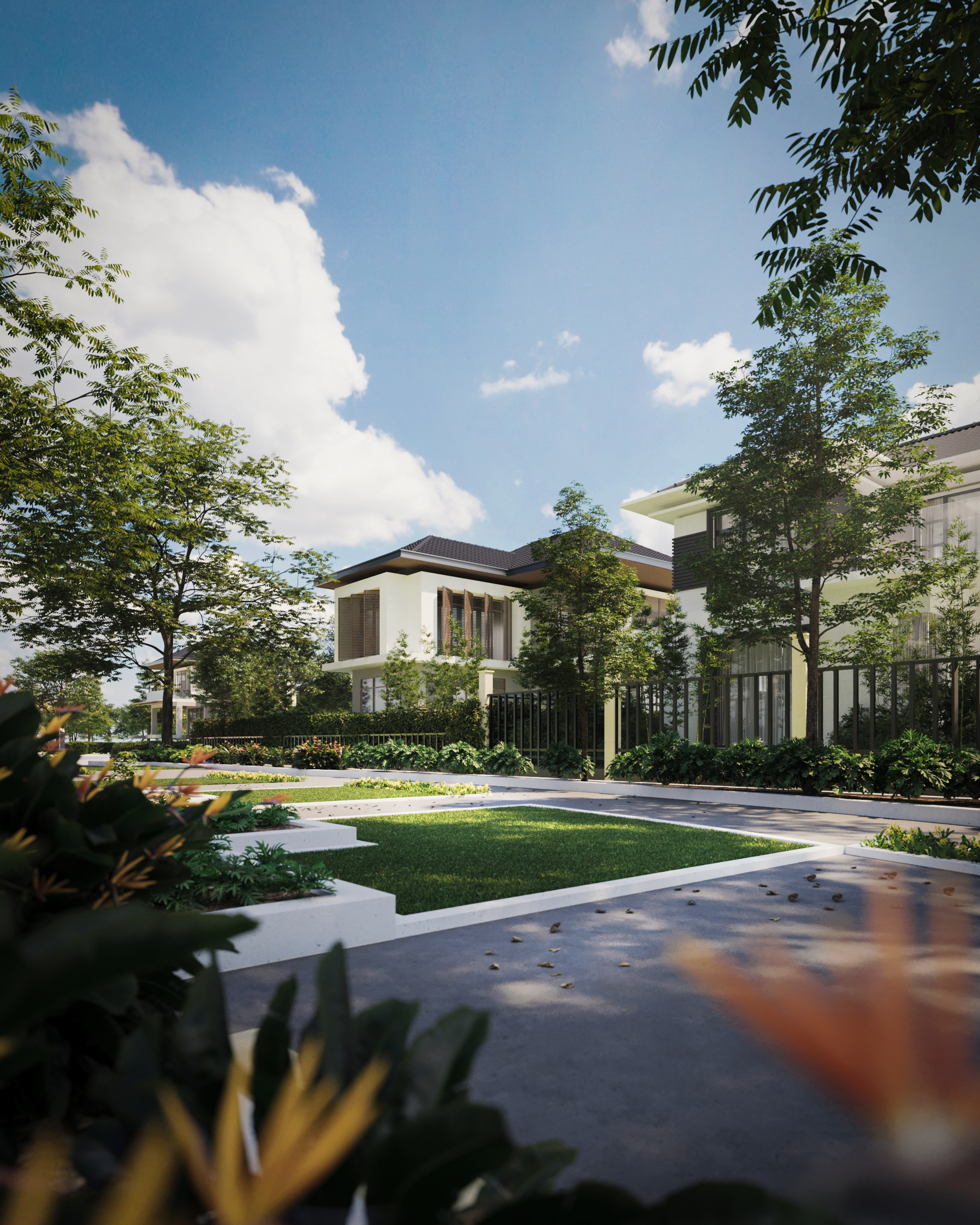
Hartwood Village’s Main Spine Road. Artist’s Perspective.

Navigating Hartwood Village’s roads will be a breeze, thanks to a thoughtfully planned Living Street Concept shaping the development’s thoroughfares—wide pavements with planting strips, safe bike lanes, and ample parking bays. Hartwood Village also limits its streetscape to four lanes for the main spine road and two lanes for the local roads and sub-neighborhoods, effectively moderating traffic flow to ensure that residents can move freely and safely, whether on foot or two wheels.

Parks and Open Spaces

Hartwood Village’s Great Lawn. Artist’s Perspective.

At Hartwood Village, nature takes center stage, providing residents with lush green spaces and tranquil parklets to unwind and connect with the great outdoors. There is always a space for greenery –  the Central Amenity Park, linkage parks connecting sub-neighborhood clusters, or pocket parks – within walking distance of every doorstep. Here, residents are invited to connect with nature and each other, fostering a sense of community that extends far beyond their front doors.

Hartwood Village’s Linkage Parks. Artist’s Perspective.

Masterplanned Community

Hartwood Village is part of Federal Land’s newest township development. Meadowcrest is a 48-ha multi-use, masterplanned community offering a distinct lifestyle and business environment that is intimate yet complete. Its quaint residential enclaves, commercial hubs, and lush green spaces are designed to support a multitude of functions that cater to the needs and aspirations of the residents.

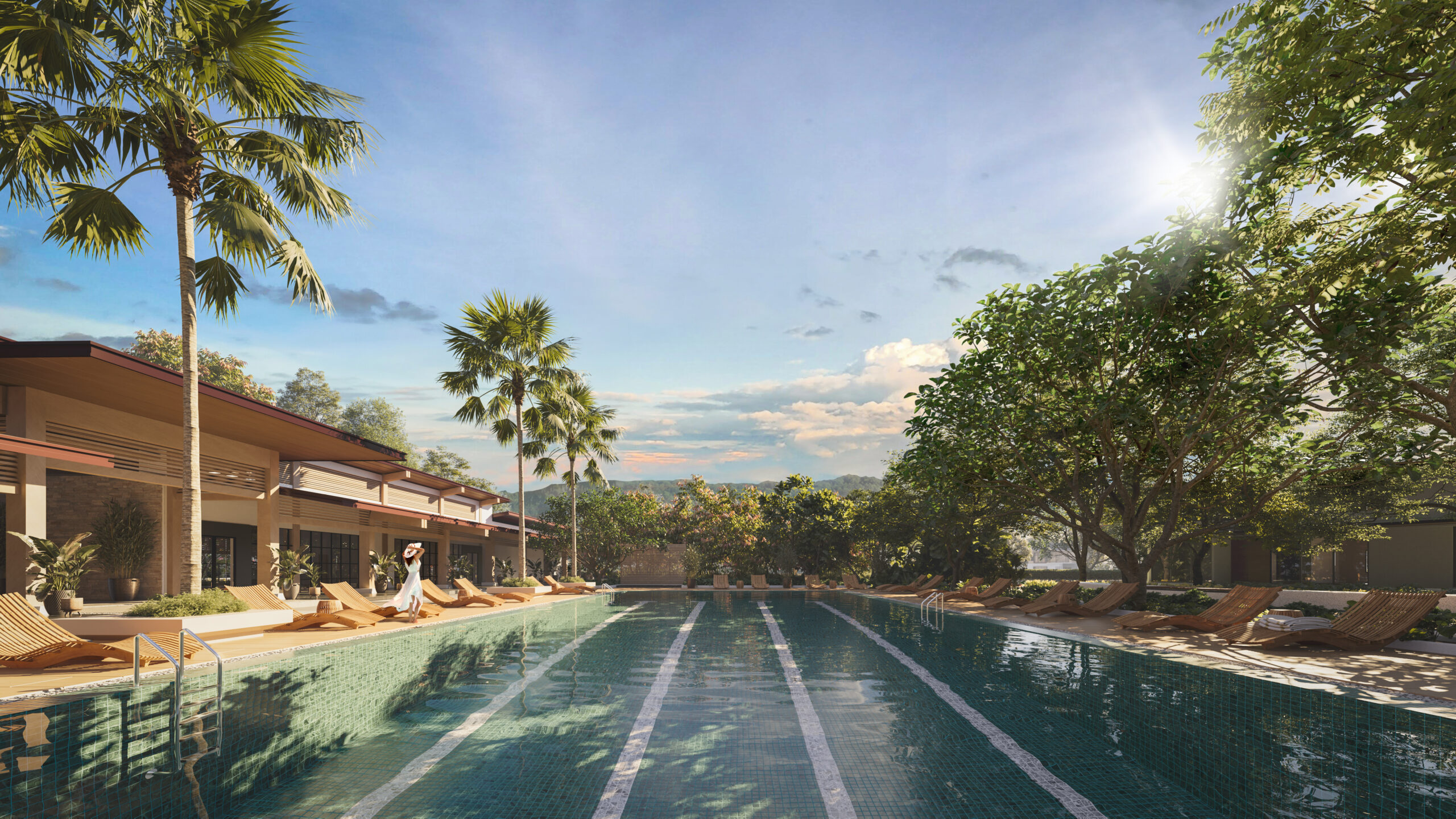
Hartwood Village’s Lap Pool. Artist’s Perspective.

The intimate footprint allows Meadowcrest to utilize the 15-minute urban planning concept through its walkable, human-scale design with integrated pedestrian and dedicated bike lanes amongst lush tree canopies, scenic landscaping, and dedicated parklets.

At Hartwood Village, human-centric design is not just a philosophy—it’s a way of life. By prioritizing the needs and aspirations of its residents, Federal Land crafts more than just a subdivision; it is a vibrant, thriving community where every individual is valued and every connection is cherished. 

Hartwood Village will be open to the public this July. To learn how you can reserve a premium residential lot at Hartwood Village and be one of the few residents of this rare community, visit www.federalland.ph or email invest@federalland.ph to book a private viewing at the Hartwood Village Visitor Center located on-site in Brgy. Malamig, Biñan, Laguna.


Spotlight is BusinessWorld’s sponsored section that allows advertisers to amplify their brand and connect with BusinessWorld’s audience by publishing their stories on the BusinessWorld Web site. For more information, send an email to online@bworldonline.com.

Join us on Viber at https://bit.ly/3hv6bLA to get more updates and subscribe to BusinessWorld’s titles and get exclusive content through www.bworld-x.com.

Fueling investments in Philippine data centers

Photo from Freepik

According to a report published by DataReportal, in partnership with Meltwater and We Are Social, the worldwide internet adoption reached 66.2% last January, marking a 0.9% increase over the previous year. The total number of social media user accounts, on the other hand, reached 5.04 billion, representing a 5.6% increase from the same period in the previous year.

This rapid proliferation of technology globally has led to the surge in the generation, collection, and utilization of data. Data, in its various forms, has become the foundation of technological innovation, allowing businesses, governments, and individuals to make informed decisions, improve efficiency, and create personalized experiences.

Often referred to as the “new oil,” data is driving technological advancements with its value. According to a report by the International Data Corp. (IDC), the global datasphere is expected to reach 163 zettabytes in 2025, ten times the level in 2016. To put this into perspective, one zettabyte equals a trillion gigabytes.

As a result, the digitalization has led to a surge in investments in data centers, as businesses and consumers generate vast amounts of data that requires secure storage and processing. In fact, a report from law firm Baker McKenzie mentioned that data centers are now a critical piece of digital infrastructure, forming the backbone of the technologies we use daily.

The country’s emerging investment magnet

Filipino internet users, according to DataReportal, exceed the global average in user engagement in online activities. In fact, the Philippines ranked first among 53 countries in terms of online music video consumption, second in online gaming, and second in watching educational videos.

The report also indicated that 73.4% of the total population in the Philippines were active social media users. Filipino social media users are also recognized as the fourth most engaged users, dedicating 40.2% of their internet time to social media platforms, exceeding the global average in social media usage.

Because of these figures, the country is experiencing significant growth in its data center market, with an estimated size of 497.18 megawatts (MW) in 2024, expected to reach 954.22 MW by 2029 at a compound annual growth rate (CAGR) of 13.93%, according to Mordor Intelligence. The market size is also poised to grow from USD 191.62 million this year to USD 447.5 million by 2029, with CAGR of 18.5% during the same period.

The information technology (IT) load capacity in the country, which refers to the energy consumed by servers and network equipment installed in data centers, is expected to reach 497.2 MW in 2024.

The total raised floor space for data centers is expected to be approximately 2.28 million square feet by the end of the year. This figure is anticipated to more than double to 5.3 million square feet by 2029. The Mordor Intelligence report suggested that the surge in digital purchases and the burgeoning online activity are the primary drivers behind this expansion.

Furthermore, the volume of installed racks in data centers across the Philippines is projected to increase significantly, with approximately 114,058 installed racks by the end of 2024 and 266,405 units by 2029.

On the other hand, the Department of Information and Communications Technology (DICT) is anticipating a fivefold increase in data center capacity by 2025, reaching around 300 megawatts.

Subsequently, a report by 2024 Arizton Advisory & Intelligence mentioned that the country is becoming an attractive destination for investors due to its growing data center market in Southeast Asia, driven by a cloud-first strategy, a favorable business environment, and a strong regulatory framework.

Among those in the business environment, broadband provider Converge ICT Solutions, Inc. (Converge) has announced its plan to invest up to P5 billion over the next three years for the establishment of data centers in the Philippines. These data centers will be aimed at housing the company’s planned digital platforms, in line with the increasing demand for innovative services in the digital age.

“The digital highway is already built, from business-to-consumer and business-to-business. What we need next are platforms, storage, and computing on top of the highway,” said Converge CEO and Co-Founder Dennis Anthony H. Uy in a statement.

According to Mr. Uy, the investment reflects the company’s anticipation of a growing demand for online services and the necessity of robust infrastructure to support these services in the evolving digital landscape.

Across the telecommunications industry, operators are actively establishing data centers to meet the increasing needs of tech giants like Amazon, Google, and Meta, continuously searching for new locations to accommodate their growing databases.

Pioneering sustainability initiatives amid growth

The DICT anticipates a significant surge in energy demand, specifically 400 MW-600 MW in the coming years to support the operations of hyperscale data centers. These facilities, known for their massive computing capabilities, require robust energy infrastructure to function efficiently.

Addressing this demand, the government plans to enhance its energy infrastructure, including increasing the number of submarine cables to 14 within the next two to three years. These cables are critical for ensuring reliable and high-speed connectivity, which is essential for data centers operating at scale.

The Department of Energy (DoE) is spearheading efforts to integrate “smart and green technologies” into the national power grid, optimizing the use of renewable energy sources such as solar and wind power.

Meantime, Converge is setting new benchmarks in the Philippine data center landscape with its sustainability initiatives.

Recently, the company has partnered with Super Micro Computer, Inc., (Supermicro), aimed at developing energy-efficient data centers. The two companies have signed a memorandum of understanding to begin developing an AI-powered “green” data center in the Philippines.

“Aside from being energy saving with its liquid cooling technology, Supermicro’s servers provide exceptional AI (artificial intelligence) computing capabilities and intensive deep learning tasks that will allow us to support and deploy many AI applications,” Converge’s Mr. Uy said.

Supermicro, based in California, USA, specializes in providing IT solutions for data centers, including energy-saving servers, storage systems, and software. With its leveraging liquid-cooling technology, Supermicro aims to reduce data center facility power consumption by up to 40%.

“These high-performing servers can handle immense AI and machine learning workloads but with the more efficient liquid cooling solution provided by Super Micro, the heat by-product will be controlled, reducing power consumption. We want to maintain our data center’s energy efficiency; so this is geared towards that,” Mr. Uy said. — Mhicole A. Moral

Mylo Speech Buddy, BCRemit, PAMMÉ awarded as top startups at ARISE Plus Ye! Boost Accelerator Program Cohort 3

Excellence in Filipino entrepreneurship was displayed when the ARISE Plus Ye! Boost Accelerator Program Cohort 3, funded by the European Union (EU) and led by the International Trade Centre (ITC), in partnership with the Department of Trade and Industry-Competitiveness Innovation Group (DTI-CIG) and QBO Innovation, recognized the most outstanding startups at its recently concluded Demo Day last June 25 at the Blue Leaf Pavilion, Taguig City.

Launched in 2021 and now on its third cohort, the ARISE Plus Ye! Boost Accelerator Program is a 14-week program aimed at providing internationalization support to youth-led startups.

The Demo Day, attended by a diverse audience of key partners, investors, and stakeholders, marked the culmination of the program for 12 business startups from various verticals.

Mylo Speech Buddy, the developer of a speech development app for children with autism and speech delays, clinched first place, securing a pitch prize of $2,500, or around P146,000.

“Our experience joining the ARISE Plus Ye! Boost Accelerator Program has been great. The support provided by QBO Innovation and the insights from ITC have been invaluable. I believe our win underscores the importance of the service we provide to the market. Our winnings will play a crucial role in our efforts to further grow the company and help more Filipino families,” said Mylo Speech Buddy founder Vincent Rocha.

BCRemit, a London-based fintech company founded by Pinoys empowering Overseas Filipino Workers (OFWs) with efficient money transfers, was awarded second place and received a $1,500 grant, or around P87,000.

“Our focus has been on penetrating more markets geographically to reach more migrant workers. The grant we won will fund our expansion plans to the United States,” said BCRemit Co-Founder and Director Gio Calma.

Lastly, fashion brand PAMMÉ, which crafts sustainable accessories from recycled plastic made by women deprived of liberty, secured third place with a $1,000 pitch prize, or about P58,000.

“The ARISE Plus Ye! Boost Accelerator Program has been remarkable. With its main focus on internationalization, I’m grateful that they have opened doors for us to explore global markets. At PAMMÉ, a fashion social enterprise, we take pride in this win,” shared PAMMÉ Founder Pamela Meija.

Other participating startups in the ARISE Plus Ye! Boost Accelerator Program Cohort 3 included: Capilli, a social enterprise creating eco-friendly products from upcycled human hair waste; Hibla Philippines, a social enterprise preserving Philippine weaving traditions; IndieCo, an SEO company blending human creativity with AI for business content; Nama Urban Farms, an urban agriculture startup cultivating nutritious produce; Nutricoach, Inc., a platform aiding dietitians in building and scaling nutrition clinics; Prezenter, a company that simplifies presentations in under 10 seconds, helping teachers put their lessons on Smart TVs; Reelist8, a proptech and shoppertainment marketplace for real estate transactions; REPAMANA, a circular fashion brand repurposing hotel textiles into new garments; and TERPCAP, Inc., an accessibility solutions provider for inclusive workplaces.

In addition to the cash prizes, the program, under the strategic partnerships facilitated by QBO Innovation, ITC, and DTI-CIG, will provide the top three winners opportunities to build stronger networks with EU partners and investors to support their global market expansion.

The judging panel who evaluated the startups’ pitches and shared valuable insights included Assistant Secretary Althea Karen Antonio of DTI Foreign Trade Service Corps (FTSC); Miguel Lopez, a youth entrepreneurship national expert at ITC; Shoraliah Macalbe, head of startup development at Ideaspace and QBO Innovation; Dara Ever Juan, head of PLDT Innovations Laboratory and Ecosystem Partnerships (Innolab); and Rodrigo Alarcon, studio director at ThinkPlace.

QBO Innovation, a division of Ideaspace that consults for and engages with government agencies, academic institutions, international development agencies, and private sector enterprises, provided support and guidance to the participating startups throughout the program via workshops and mentorship sessions.

Sustaining proper nutrition, a constant advocacy

Photo by jcomp on Freepik

Maintaining a healthy lifestyle involves taking care of your body, and a good way to achieve this is by eating well to provide the necessary nutrients. However, the world is full of people still struggling with nutritional issues.

Globally, food insecurity remains a threat to human lifestyle. Many are suffering driving conflict to healthcare, environment, and the economy. In the United Nations Children’s Fund’s (UNICEF) recent report, about 181 million of children globally are experiencing food poverty, which puts them at a 50% higher risk of suffering from malnutrition.

Among the countries, the Philippines is identified as one of the most food-insecure countries, accounting to 65% of children living in severe food poverty globally, with two million (18% of the population) children suffering from access to adequate food and nutrition.

According to the report, most children’s source of food mainly relies on breastfeeding and starchy foods like rice, wheat and corn. Most of them consume only two out of eight food groups, with less than 10% eating fruits and vegetables and less than 5% consuming nutrient-based foods.

Food insecurity poverty stems from more than the lack of affordable healthy foods —it is also worsened by inefficient food systems, unhealthy food consumption, and difficulty of forming good eating habits, the report noted. This made it more challenging for Filipinos to access proper nutrition and maintain good health.

“Nearly half (46%) of all cases of severe child food poverty are among poor households where income poverty is likely to be a major driver, while 54% — or 97 million children — live in relatively wealthier households, among whom poor food environments and feeding practices are the main drivers of food poverty in early childhood,” the report read.

Putting an end to food insecurity is a nationwide approach, and UNICEF urges different sectors to act upon it, beginning with improving food and health systems that caters to the nutrition needs of Filipinos. Not only should food systems become more affordable and accessible, but it should also be more diverse, nutritious, and healthier.

Meanwhile, for better health systems, the organization emphasized the need for educating families on better primary care practices, as well as increased support for community health and nutrition workers

“Children living in severe food poverty are children living on the brink. This can have an irreversible negative impact on their survival, growth, and brain development. Children who consume just rice and some vegetable soup a day are up to 50% more likely to experience severe forms of malnutrition,” Oyunsaikhan Dendevnorov, UNICEF Representative to the Philippines, said in a statement.

“Every child has the right to proper nutrition. When children are well-nourished, they can better learn, play, and engage in their communities, while also being more resilient in the face of illness and crises. Good nutrition is a fundamental driver of development and is essential for nation-building,” he said in another statement.

Nutritional programs in the Philippines

In response, much attention has been placed to transform and improve the overall health of Filipinos. Through the Philippine Plan Action for Nutrition (PPAN) 2023-2028, it is working towards making healthy and nutrient-rich foods more affordable and accessible, as well as fight all forms of malnutrition and improve food and health systems.

More importantly, the PPAN 2023-2028 is incorporating strategies that promote healthier diets, better eating practices, and access to quality services, focusing on food security and emphasizing the importance of improving nutrition behaviors among Filipinos.

“By placing nutrition at the forefront of our national agenda, we can ensure that it receives the attention and resources it deserves for comprehensive and sustainable improvements in nutrition outcomes,” Azucena M. Dayanghirang, executive director of the country’s National Nutrition Council (NNC), said in another statement.

Recognizing the significance of schools in fostering physical and mental health, the National Dairy Authority (NDA) and the Department of Education (DepEd) have joined forces in implementing feeding programs in schools. This year, the department launched a school-based milk feeding program in Quezon City. The campaign, named “Lakas sa Gatas,” aims to promote milk consumption among students and to support local dairy farmers.

With mothers and caregivers as key agents of children’s nutrition, the local government unit of Arteche in Eastern Samar launched the Sustainable Nutrition and Nanay Empowerment (Project Susan), an initiative that provide livelihood support for mothers and children. Project Susan is a 36-month program that offers relief distribution, health checkups, feeding programs for babies, and promotes nutrition awareness and healthy eating practices. This project strives to empower mothers and caregivers, cultivating a culture of good health and nutrition in households.

Meanwhile, spearheading on improving nutrition among the elderly, the Department of Science and Technology (DoST) introduced the “Healthy Aging Program for PinoY (HAPPY) Senior Citizens, dedicated to developing food products tailored to the nutritional needs of Filipino elders. More specifically, the program will offer food products made from mature green tomatoes (MGTs), packed with Gamma-aminobutyric acid, a neurotransmitter that helps in relaxation and benefits the immune and nervous systems.

On its 50th year this 2024, the Nutrition Month, with the NNC taking the lead in its observance, celebrates nutrition awareness and continuously improving nutrition with the theme: “Sama-sama sa Nutrisyong Sapat Para sa Lahat.”

This year’s Nutrition Month Campaign seeks to raise awareness on healthy diets, ensuring all Filipinos has access to nutritious, safe, and sustainable food. Some of the initiatives developed by PPAN include covering nutrition interventions for all ages and educating families and communities on proper nutrition.

“As we celebrate the 50th Nutrition Month, we call on all sectors of society to support the Philippine Plan of Action for Nutrition come alive in each and every barangay. We encourage local chief executives, and other partners to implement local nutrition action plans that reflect this vision. In this Nutrition Month, we are addressing the low awareness of the PPAN. NNC’s survey showed that about 40% of respondents were aware of the PPAN,” Ms. Dayanghirang said in a statement. — Angela Kiara S. Brillantes

Filrobotics Technologies, Inc. wins ‘Best Use of Technology Award’ at TECH PLANTER 2024 Demo Day

L-R: Kristine Dara Ever Juan, head of Innovations Lab and Ecosystem Partnerships (Innolab) at PLDT Enterprise; Engr. Mary Grace Ann Bautista, project staff and co-investigator of Agrotis Project (University of Santo Tomas); and Anthony James Bautista, PhD, founder of Filrobotics Technologies, Inc. and an associate professor of the University of Santo Tomas

PLDT Enterprise, the corporate arm of PLDT, in collaboration with PLDT’s Innovation Laboratory, PLDT Innolab, reaffirmed its commitment to fostering innovation and supporting startups at the TECH PLANTER in the Philippines 2024 Demo Day, held at the Frassati Building in the University of Santo Tomas.

The event provided a platform for emerging startups to present their groundbreaking technologies and solutions aimed at addressing important social issues through science and technology.

PLDT Enterprise awarded Filrobotics Technologies, Inc., led by founder Anthony James Bautista, PhD, with the “Best Use of Technology Award” for its development of the AGROTIS Navigation System, an autonomous navigation system for agricultural machinery designed to improve the working conditions of Filipino farmers.

Filrobotics Technologies will benefit from a one-year use of PLDT Innolab’s co-working laboratory, providing it with the space and resources to further develop its technology.

“Agriculture 5.0 is fast approaching, and we need to work harder together to cope with the ever-advancing technology,” said Mr. Bautista. “The accessibility and affordability of these technologies are improving, and our task now is to prepare and aid our farmers in adapting these tools.”

Filrobotics Technologies also received a P50,000 cash prize and an invitation to present at the TECH PLANTER Asia Final 2024.

TECH PLANTER, initiated by Leave a Nest, is a global platform that supports startups in various regions, including the ASEAN. The program in the Philippines aims to solve deep social issues using science and technology-rooted innovations.

Nurturing a Nation: NNC’s efforts in promoting nutrition and health awareness

Photo from www.facebook.com/nncofficial

Every child should have the proper nutrients and minerals that their body needs in order to survive and be healthy. Not only is it the responsibility of the parents to ensure that their child is nutritious, but of the state as well. The right to health is a fundamental principle guaranteed by the 1987 Constitution and the government has the duty to promote and instill health consciousness among its population.

In this regard, the Nation Nutrition Council (NNC) was established pursuant to Presidential Decree No. 491 as an attached agency to the Department of Health to be the Philippines’ highest policy-making and coordinating body on nutrition. The NNC oversees the implementation of the hunger mitigation program; formulates national food and nutrition policies; and coordinates planning, monitoring, and evaluation of the national nutrition program.

Among the initiatives launched by the council is the annually celebrated Nutrition Month. Now in its 50th year, the celebration was launched to promote healthy eating and raise awareness about nutrition. This year’s national campaign was kicked off in Koronadal City, South Cotabato with the theme “Sa PPAN (Philippine Plan of Action for Nutrition), Sama-Sama Sa Nutrisyong Sapat Para sa Lahat.”

To celebrate Nutrition Month this year, the NNC commenced a tree-planting activity, a “Nutri-parade” of more than 100 vehicles, and a community forum with local government units to share health practices in the city led by Assistant Secretary and Executive Director Dr. Azucena M. Dayanghirang.

Aside from Nutrition Month, the NNC also celebrates World Obesity Day on March 4 annually. This year’s celebration was held remotely and gathered a panel of experts to speak about obesity and the misconceptions surrounding the condition. In an effort to spread awareness to more Filipinos nationwide, a social media campaign was also launched using conversations and stories from people who have overcome obesity and overweight conditions.

Last month, the council organized the first General Assembly of the Scaling Up Nutrition (SUN) Movement Philippines in collaboration with the UN World Food Programme (WFP) Philippines and the United Nations Children’s Fund (UNICEF) Philippines. The assembly was held to serve as a platform for networking, collaboration, dialogue, and shared commitment towards healthier and nourished Filipinos.

“Since 2021, the SUN Movement has worked collaboratively to end malnutrition and all its forms led by countries and governments, supported by organizations and individuals. Collectively, to take actions that ensure every child, adolescent, mother, and family can realize their right to food and nutrition, reach their full potential, as well as shape sustainable and prosperous societies.” Ms. Dayanghirang said during the assembly.

Aimed to facilitate the sharing of knowledge and experiences in nutrition program management among local government units (LGUs), the NNC also holds sessions in Tagaytay City called Learning Hub for Enhanced and Revitalized Nutrition Program (LHEARN). Receiving the most prestigious award in nutrition given to cities, the Nutrition Honor Award, Tagaytay City’s LGU passes on its strategies and innovations for addressing malnutrition to other LGUs all over the country.

The council also conducts training programs for nutrition program officers, nurses, barangay health officials, and other local nutrition focal points. The four-day Operation Timbang (OPT) Plus Manual of Operations (MOP) and Data Quality Check (DQC) Protocol aims to teach health workers to identify children who are underweight, wasted and stunted, or obese; and to locate families with malnourished children. So far, the NNC has conducted eight training programs with the latest being held in Malaybalay City, Bukidnon.

Another workshop offered by the NNC is its e-learning course on Local Nutrition Program Management (eNPM). The online subject is designed to teach local nutrition-related and health workers in an LGU. Finishers of the course will receive a Certificate of Completion as well as Continuing Professional Development (CPD) credit units from the Professional Regulation Commission (PRC).

The council also holds the annual National Nutrition Awarding Ceremony to recognize outstanding LGUs and local nutrition focal points (LNFPs). During this year’s ceremony President Ferdinand R. Marcos Jr. urged the NNC and their stockholders to truly gain health outcomes and ensure adequate nutrition for every Filipino.

“I enjoin the NNC to align your initiatives with the Philippine Plan of Action for Nutrition for 2023-2028. May our awardees and their remarkable accomplishments, encourage everyone to further perform their duties with excellence, integrity, and transparency as we create a Bagong Pilipinas. Together, let us lay the building blocks of a healthier, more secure, and sustainable Philippines,” Mr. Marcos said during the event.

As the Philippines strives to combat malnutrition, the NNC spearheads the whole archipelago in promoting nutrition awareness, implementing national policies, and fostering collaboration among local government units which could lead to a healthier, stronger, and more nutritious generation of Filipinos. — Jomarc Angelo M. Corpuz

ADVERTISEMENT
ADVERTISEMENT