Home Blog Page 2957

Utilizing AI to boost career path


By leveraging and learning the basic skills and knowledge in AI, people can be who they want to be, co-founder and CEO of GevMe Veemal Gungadin said.

As early as now, Mr. Gungadin encouraged Filipino youth to educate themselves about the said technology and its tools to be more empowered in the future.

Interview by Almira Martinez
Editing by Jayson John D. Marinas

See related article: https://www.bworldonline.com/technology/2024/07/15/608238/leveraging-ai-to-upskill-workforce-in-the-philippines/

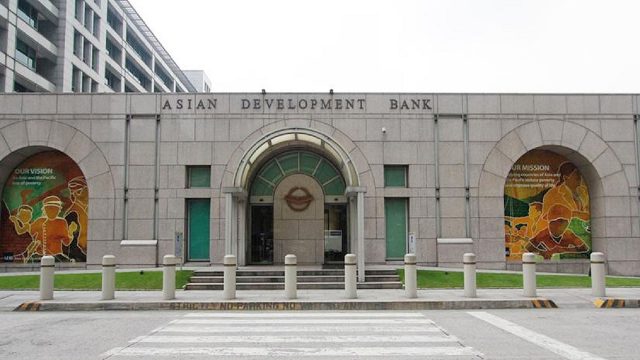
ADB slightly raises 2024 growth forecast for developing Asia

BW FILE PHOTO

 – The Asian Development Bank (ADB) slightly raised its growth forecast for developing Asia this year due to stronger domestic demand and export growth, but said downside risks from a series of important elections and geopolitical tensions remain.

Growth in developing Asia, which groups together 46 economies in the Asia-Pacific, is now expected to be 5.0% this year, the ADB said in a report on Wednesday, a touch higher than its 4.9% forecast in April. The region grew by 5.1% in 2023.

For 2025, the ADB maintained its growth forecast at 4.9%.

“Policy uncertainty related to elections in major economies, particularly the United States, clouds the outlook,” the ADB said, adding potential escalations in conflicts in the Middle East and Ukraine also posed challenges.

The ADB kept its 2024 and 2025 growth forecasts for China at 4.8% and 4.5% respectively, but noted a risk that a property slump there could deepen and lead to weaker growth prospects.

Official data on Monday showed China’s economy grew 4.7% in April-June from a year earlier, its slowest since the first quarter of 2023.

The ADB expects regional inflation to slow to 2.9% in 2024 from 3.3% last year, before nudging up to 3.0% in 2025.

GDP GROWTH 2022 2023 2024 2024 2024 2025 2025
DEC APR JULY APR JULY
Caucasus and Central Asia 5.2 5.3 4.6 4.3 4.5 5.0 5.1
East Asia 2.9 4.7 4.2 4.5 4.6 4.2 4.2
China 3.0 5.2 4.5 4.8 4.8 4.5 4.5
South Asia 6.6 6.9 6.0 6.3 6.3 6.6 6.5
India 7.0 8.2 6.7 7.0 7.0 7.2 7.2
Southeast Asia 5.7 4.1 4.7 4.6 4.6 4.7 4.7
Indonesia 5.3 5.0 5.0 5.0 5.0 5.0 5.0
Malaysia 8.7 3.7 4.6 4.5 4.5 4.6 4.6
Myanmar 2.4 0.8 n/a 1.2 n/a 2.2 n/a
Philippines 7.6 5.5 6.2 6.0 6.0 6.2 6.2
Singapore 3.8 1.1 2.5 2.4 2.4 2.6 2.6
Thailand 2.5 1.9 3.3 2.6 2.6 3.0 3.0
Vietnam 8.0 5.1 6.0 6.0 6.0 6.2 6.2
The Pacific 7.9 3.5 2.9 3.3 3.3 4.0 4.0
Developing Asia 4.3 5.1 4.8 4.9 5.0 4.9 4.9
INFLATION
Caucasus and Central Asia 12.9 10.2 8.4 7.9 7.6 7.0 6.8
East Asia 2.3 0.6 2.1 1.3 0.8 1.6 1.6
China 2.0 0.2 2.0 1.1 0.5 1.5 1.5
South Asia 8.0 8.4 6.7 7.0 7.1 5.8 5.8
India 6.7 5.4 4.2 4.6 4.6 4.5 4.5
Southeast Asia 5.3 4.1 3.5 3.2 3.2 3.0 3.0
Indonesia 4.1 3.7 3.0 2.8 2.8 2.8 2.8
Malaysia 3.4 2.5 2.7 2.6 2.6 2.6 2.6
Myanmar 27.2 22.0 n/a 15.5 n/a 10.2 n/a`
Philippines 5.8 6.0 4.0 3.8 3.8 3.4 3.4
Singapore 6.1 4.8 3.0 3.0 3.0 2.2 2.2
Thailand 6.1 1.2 2.3 1.0 0.7 1.5 1.3
Vietnam 3.2 3.3 4.0 4.0 4.0 4.0 4.0
The Pacific 5.2 3.0 4.5 4.3 4.3 4.1 4.1
Developing Asia 4.4 3.3 3.6 3.2 2.9 3.0 3.0

Reuters

US House Democrats, others protest virtual Biden nomination

GAGE SKIDMORE-COMMONS.WIKIMEDIA.ORG

 – At least three US House of Representatives Democrats were preparing to sign a letter protesting a plan to speed up the official party approval of President Joe Biden’s reelection bid, the lawmakers’ offices said on Tuesday.

The three lawmakers are among a growing number of Democrats upset by plans to hold a “virtual roll call” vote on Mr. Biden’s becoming the nominee as soon as July 21, instead of waiting for the Democratic National Convention being held on Aug. 19-22 in Chicago.

Democratic Representatives Susan Wild, Mike Quigley and Jared Huffman plan to sign the letter, representatives of each lawmaker said when contacted by Reuters.

“Stifling debate and prematurely shutting down any possible change in the Democratic ticket through an unnecessary and unprecedented ‘virtual roll call’ in the days ahead is a terrible idea,” said a copy of the draft letter seen by Reuters. “It could deeply undermine the morale and unity of Democrats.”

The virtual nomination was originally planned to beat an Ohio state deadline for placing candidates on the ballot for the Nov. 5 election that fell before the Democrats’ August convention. But Ohio extended the deadline, negating that obstacle, the letter to the DNC argued.

In response to criticism, DNC Chairman Jaime Harrison said on X that the Ohio extension would not take effect in time. He also disputed reports that he has said the virtual vote could happen as soon as next week. “The only thing you have heard us say is that we must get this done by August 5th to give us time to comply by August 7th,” he said.

Pass the Torch, Joe, a group pressuring Biden to drop out of the presidential race, accused the DNC in a statement of potentially engaging in “an undemocratic, and perhaps even Trumpian, maneuver,” deepening the Democrats’ internal bickering.

The latest effort follows a call by 19 congressional Democrats for Mr. Biden, 81, to end his campaign after his halting June 27 debate performance against Republican challenger Donald Trump.

Representative Adam Schiff, a California Democrat running for his state’s open Senate seat, who was not one of the 19, warned donors in a private meeting that his party would likely suffer major losses if Biden continued his reelection bid, the New York Times reported on Tuesday. A spokesperson for Schiff’s campaign declined to comment.

Last month’s debate raised concerns in the party about both Mr. Biden’s ability to beat Trump and his fitness to hold the high-pressure job for another four years.

Thirty-nine percent of Democratic respondents to a Reuters/Ipsos poll completed on Tuesday said they believed that Mr. Biden should end his White House run, a slightly higher reading than the 32% who said that in a Reuters/Ipsos poll days after the debate.

The letter from the three lawmakers has not yet been sent to the DNC and was being circulated widely among House Democrats, according to congressional sources.

Democrats fear that a poor performance by Mr. Biden in the Nov. 5 election could cost their party not only control of the White House but both chambers of Congress, setting the stage for a second Trump administration that would be able to pursue its policy goals with almost no Democratic opposition.

Republicans followed their party’s standard procedure in officially nominating Mr. Trump at their convention in Milwaukee on Monday.

If Mr. Biden were to drop out of his reelection campaign, the Democratic Party’s top choice is Vice President Kamala Harris for its presidential nominee, multiple sources have said.

Some Democrats, however, could insist on a more open process that would allow other potential candidates to vie for the nomination, less than three months before the general election. – Reuters

Cocogen wins at the Insurance Asia Awards 2024

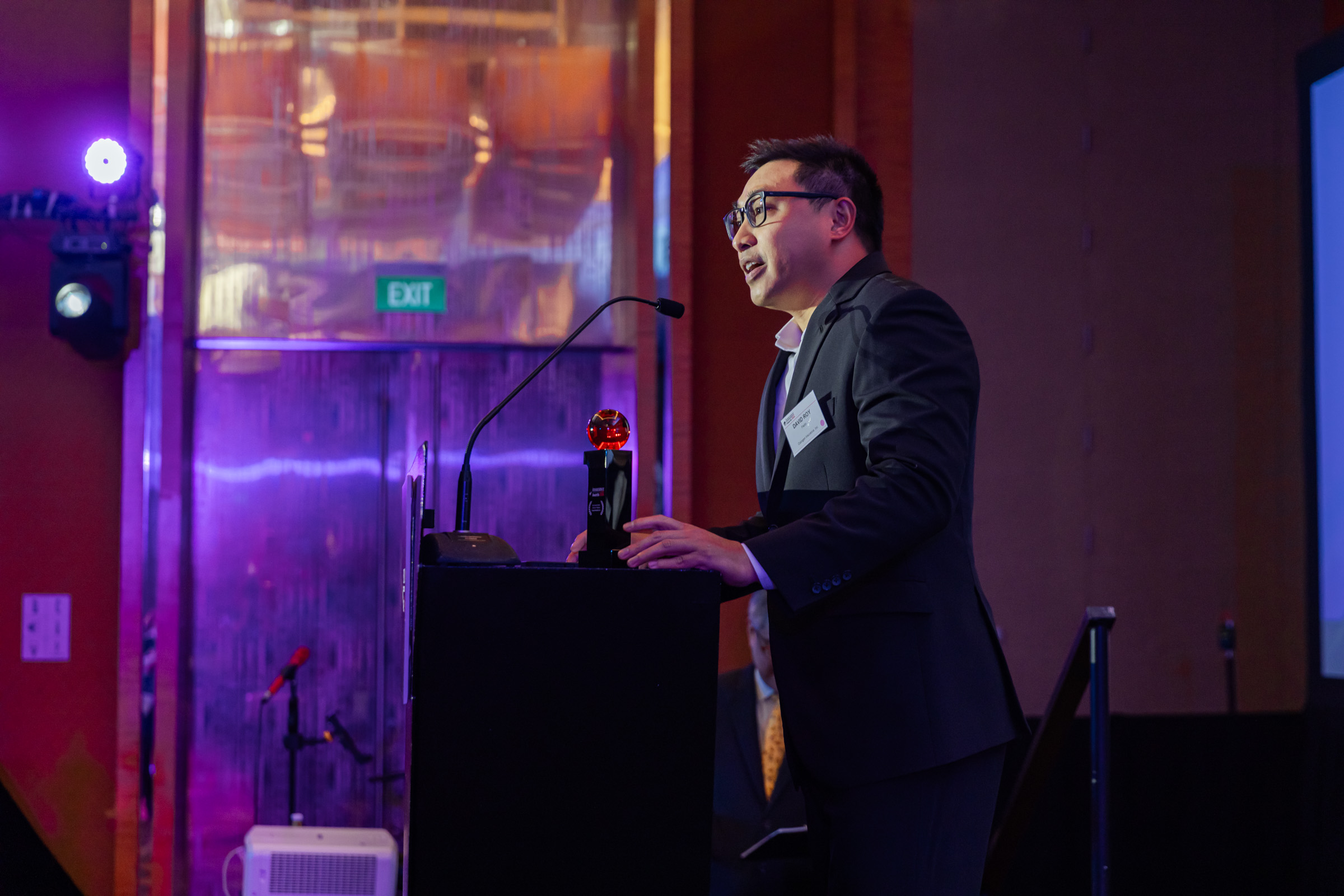
Cocogen President and CEO David Roy Padin, First Vice President Paolo Somera and Corporate Secretary Rhett Gaerlan represented Cocogen Insurance during the awards night.

As a testament to its unwavering commitment to the industry, Cocogen Insurance, Inc. received two recognitions from the Insurance Asia Awards 2024.

Cocogen was hailed as the Domestic General Insurer of the Year for the Philippines and bagged the New Product Innovation of the Year for HackGuard Personal Cyber Insurance.

President and Chief Executive Officer David Roy C. Padin, together with First Vice President for Corporate Finance and Strategy Division, Atty. Paolo S. Somera, and Corporate Secretary, Atty. Rhett D. Gaerlan, received the trophy during the awards night held at the Marina Bay Sands Expo and Convention Center in Singapore, July 9.

“At Cocogen Insurance, we aspire to transcend the conventional role of an insurance provider. Our vision is not only to be the top of mind and trusted ally during uncertainties, but we also strive to be part of the solution to societal issues we have today,” Padin stated in his acceptance speech.

Cocogen remains committed to provide innovative insurance solutions for the Filipino people. In recent years, the company launched new products relevant to the current demands for pets and cyber transactions. Aiming to be part of the solution in addressing the prevalence of cyberbullying in the Philippines, Cocogen included this as one of the coverage benefits of HackGuard.

Moreover, to help address the issue on the Philippines being number one in the World Risk Index (WRI) in 2023, Cocogen became the first non-life insurance company in the Philippines to be a member of ARISE Philippines, the private sector arm of United Nations Office for Disaster Risk Reduction (UNDRR).  Cocogen is committed to the initiatives of both institutions as an avenue in improving disaster resiliency and sustainable business practices in the Philippine setting.

“These accolades serve as a constant reminder of Cocogen’s duty to foster innovation in the industry and make an impact on the lives of its insureds. Cocogen will continue to be COmmitted, COmpassionate, and GENuine in making a difference in the Philippines,” shared Chief Strategy Officer Paolo Somera.


Spotlight is BusinessWorld’s sponsored section that allows advertisers to amplify their brand and connect with BusinessWorld’s audience by publishing their stories on the BusinessWorld Web site. For more information, send an email to online@bworldonline.com.

Join us on Viber at https://bit.ly/3hv6bLA to get more updates and subscribe to BusinessWorld’s titles and get exclusive content through www.bworld-x.com.

New UK government to set out plans in state opening of parliament

10 Downing Street, the Official residence of the Prime Minister of the United Kingdom. -- 10 Downing Street/Flickr

 – Britain’s new Prime Minister Keir Starmer will set out his first package of proposed laws on Wednesday, fleshing out how he will honor his election-winning pledge to rebuild the country after years of weak economic growth and political turmoil.

In a grand ceremony to mark the opening of the new parliament, King Charles will read out the laws which the government wants the House of Commons to approve first after Mr. Starmer’s centre-left Labour Party won a commanding majority in this month’s national election.

The package of more than 35 bills will focus on growing the economy, including reforms to make it easier to build homes and speed up the delivery of major infrastructure projects, improving transport, and creating more jobs.

“Now is the time to take the brakes off Britain,” Mr. Starmer said in a statement. “I am determined to create wealth for people up and down the country. It is the only way our country can progress.”

The King’s Speech, which is written by the government, will be read out by the monarch in parliament from 1030 GMT in a ceremony full of pomp and pageantry.

Mr. Starmer won one of the largest parliamentary majorities in modern British history on July 4, making him the most powerful national leader since former prime minister Tony Blair, but he faces a number of daunting challenges, including improving struggling public services with little room for more spending.

The speech, and a raft of information published by the government alongside it, is expected to stick closely to the promises Labour made during the election campaign, while giving a clearer picture of Mr. Starmer’s immediate priorities.


HOUSING, INFRASTRUCTURE

According to Downing Street, the government will announce on Thursday legislation to “speed up and streamline the planning process” to help address Britain’s acute housing shortage and the long delays that dog many infrastructure projects.

The government will also set out plans to gradually renationalize the passenger rail network and set affordable fares to draw people back on to trains.

The plan would shut private companies out of running passenger trains by folding each operator into state control when their contracts to run trains expire.

This decision would mostly reverse the privatization of the railways conducted in the 1990s by the then-Conservative government.

The government will announce legislation to devolve more powers to local communities after Mr. Starmer used his first week in power to meet mayors of major cities and representatives from the devolved nations of the United Kingdom. – Reuters


Musk says he will move SpaceX, X headquarters to Texas over frustration with California laws

TWITTER.COM/ELONMUSK

Elon Musk said on Tuesday he is moving the headquarters of two more of his companies – social media platform X and rocket company SpaceX – to Texas from California, citing a new gender-identity law there as the “last straw.”

With these steps, the billionaire, who last week endorsed Republican Donald Trump for US president, will have relocated Tesla and most of the businesses he controls or heads to Texas.

The world’s richest man, he changed his own residence in 2021 from California to Texas, where there is no state income tax on individuals.

A new California law that forbids school districts from requiring teachers to notify parents when a child changes gender identity or sexual orientation helped spur Tuesday’s announcement, Musk said.

“Because of this law and the many others that preceded it, attacking both families and companies,” Mr. Musk, who has a transgender daughter, said in explaining the decision on X – formerly Twitter – which he bought in 2022.

The CEO of SpaceX and Tesla in recent years has become outspoken on politics and often criticizes the Biden administration and Democrats’ positions on issues including transgender rights and immigration.

California voters have historically supported Democratic candidates while Texas is considered a reliable Republican stronghold.

Mr. Musk said SpaceX’s main office would move to an existing facility in Boca Chica, Texas, while X would move to Austin. But the extent to which jobs or facilities in California will transfer to Texas was unclear.

SpaceX has a sprawling headquarters near Los Angeles, a major aerospace hub where thousands of employees build the company’s workhorse Falcon 9 rocket, Dragon astronaut capsules and some Starshield satellites.

In 2021, Mr. Musk moved Tesla’s headquarters from California to Texas as well but said last year that California would remain its engineering hub.

He transferred SpaceX’s incorporation from Delaware to Texas earlier this year. This followed a Delaware judge’s decision invalidating Mr. Musk’s $56 billion compensation plan at electric vehicle maker Tesla. – Reuters

Every sTEP counts: The E-Waste Project’s 12th year in environmental service

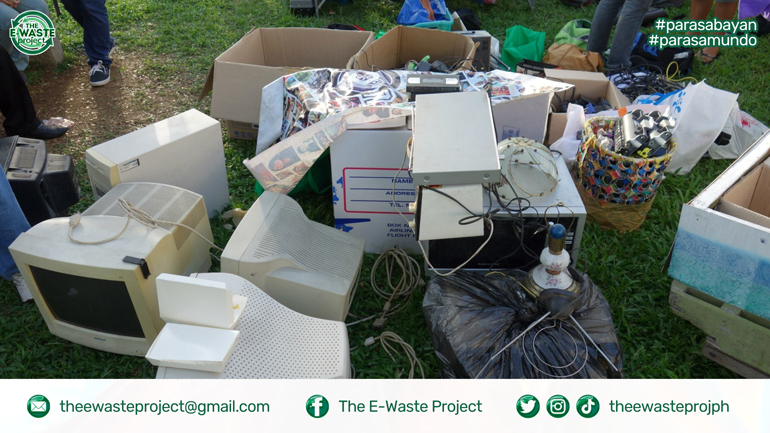
The E-Waste Project volunteers

With ever-advancing technology come the mounting piles of waste thrown out for each electronic upgrade we buy. Electronic waste (e-waste) has increasingly grown at an alarming rate reaching thrice the world’s population growth as of 2014, and presumably even higher with a decade gone by.

E-waste refers to obsolete or discarded electronic devices containing toxic chemicals such as dioxins, lead, and mercury. These substances pose harmful effects to human health when improperly disposed of, especially for pregnant women and children.

For over 12 years, The E-Waste Project (TEP) has been raising awareness for responsible e-waste management and disposal within the community through collection drives, webinars, and online campaigns. This project is an awareness program by UP Circuit designed to address the growing issue of e-waste in the country and educate people on how to tackle it. The initiative’s latest iteration in 2023 achieved its largest collection yet, amassing a total of 9,654 kilograms of electronic waste.

With hopes of a greater reach in their advocacy, The E-Waste Project will conduct their series of events this July 2024.

There will be two TEP Talks, which are online webinars aimed at educating and motivating individuals to identify and address the issues associated with improper e-waste disposal. The first TEP Talk will be held on July 20 with the topic “E-Waste and Health: Understanding the Risks.” On the other hand, the second webinar will take place on July 27, with the topic on “Reducing E-Waste: Tips for Minimizing Electronic Waste at Home.” Both TEP Talks will start at 2 p.m. via Zoom and will also be livestreamed on TEP’s Facebook Page. Interested attendees can join through the registration link posted on The E-Waste Project’s social media pages.

A great addition to the TEP projects, called TEP2F, was also introduced in June. Selected members of the team visited the Property Company of Friends, Inc. in Mandaluyong and Tzu Chi Scholars Summer Camp in Sta. Mesa to talk about the environmental impact of e-waste and its practical disposal solutions.

TEP will also be relaunching its in-person collection drive from July 21 to 27, 2024, at the Engineering Lawn, UP Diliman. Drop-off points are already available starting July 8 and will be open until the last day of the collection drive on July 27. The drop-off points are spread across the University of the Philippines-Diliman Campus and at the Buddhist Tzu Chi Campus in Sta. Mesa, Manila.

The E-Waste Project advocates for innovation that serves as a tool that we can leverage to enhance sustainability and protection rather than be the cause of more environmental problems. In its 12th year, the E-Waste Project continues to widen its reach through new events and greater influence with the help of all volunteers and participants.

There is a responsibility that comes with today’s advancements and every sTEP taken towards addressing this current problem is progress to a better and greener future. Para sa bayan, para sa mundo.

AMRO trims PHL growth forecasts

Vehicles are seen along the road in Quezon City, June 13. The Philippine economy is likely to grow by 6.1% this year, according to the ASEAN+3 Macroeconomic Research Office. — PHILIPPINE STAR/ MIGUEL DE GUZMAN

THE ASEAN+3 Macroeconomic Research Office (AMRO) trimmed its Philippine economic growth forecast for this year and in 2025, amid slowing external demand.

In its latest update, AMRO sees Philippine gross domestic product (GDP) expanding by 6.1% this year, slightly lower than the 6.3% in the April report.

Despite the downgrade, this is still faster than the 5.5% GDP growth in 2023, and within the government’s 6-7% target for this year.

AMRO'S ASEAN+3 GDP growth forecasts

“We have shaved down the growth for not just the Philippines but many of the countries in the region. The recovery in the external sector was weaker than expected,” AMRO Chief Economist Hoe Ee Khor said in a virtual briefing on Tuesday.

“We may revise (the forecast) upward in the second half if the data shows that the economy (grows) more strongly,” Mr. Khor said.

AMRO also downgraded its GDP growth forecast for 2025 to 6.3% from 6.5% in the previous report. This is within the government’s 6.5-7.5% goal for next year.

Mr. Khor said Philippine growth has been weakened by gaps in infrastructure.

“I think the government is very conscious of that and is trying to fill the gap. Unfortunately, fiscal space has been used up to some extent during the pandemic,” he said.

The Philippine government aims to spend P1.47 trillion on infrastructure this year. The Marcos administration has committed to maintaining high investments in infrastructure or around 5-6% of GDP from 2024 to 2025.

To complement domestic savings, the Philippines still has “a moderate business space” to attract more foreign investments. However, its economy remains one of the most restrictive in the region, Mr. Khor said.

“We think the policy measures by the government will continue to attract more investment, and also with the improvement in infrastructure gap, will help to lift the (Philippines’) growth potential,” he said.

Also, AMRO lowered its inflation forecast for the Philippines to 3.3% for this year from 3.6% in the April report. It raised its inflation projection to 3.1% for 2025 from 2.9% previously.

AMRO said the BSP may maintain a tight monetary policy until a downward trend in inflation is sustained.

Despite this, the Philippines is still projected to be the second-fastest growing economy among Association of Southeast Asian Nations (ASEAN) members this year, behind only Vietnam (6.3%).

Philippine growth is expected to be ahead of Cambodia (5.6%), Indonesia (5.2%), Malaysia (4.7%), Laos (4.5%), Brunei (4%), Thailand (2.7%), Singapore (2.4%), and Myanmar (1.8%).

AMRO sees the ASEAN+3 region, which includes China, Hong Kong, Japan and South Korea, expanding by 4.4% this year and 4.3% in 2025.

The ASEAN region is projected to grow by 4.8% this year and next year.

“External trade is set to return to positive territory this year, which will supplement strong domestic consumption and the continuing recovery in tourism,” AMRO said in the report.

AMRO said the global economy is expected to continue stabilizing next year, and monetary easing is seen to resume in major economies.

The think tank lowered its inflation forecast for ASEAN+3 (excluding Laos and Myanmar) to 2.1% for this year from 2.5% previously “due to softer-than-expected food prices in several economies and lower imported inflation.”

“Higher cost pressures could emerge in 2025 as economic momentum gains traction, but these are unlikely to trigger a large spike in ASEAN+3 inflation under the baseline scenario,” it said.

AMRO said the overall balance of risks to the outlook has improved since April, but several risks such as a spike in commodity and shipping prices and tighter-than-expected US monetary policy.

Other risks include a sharp slowdown in the US and Europe, weaker growth in China, and possible adverse spillovers from the US presidential election.

“The bad news is that the region’s outlook next year could be significantly affected by the outcome of the US elections. The good news is, the region has weathered similar shocks before,” Mr. Khor said.

The US presidential elections will be held on Nov. 5.

Also, AMRO said geopolitical tensions are becoming “more pertinent” for ASEAN+3 economies.

“The threat of geoeconomic fragmentation continues to rear its head as more economies announce trade controls or protectionist measures, following recent US tariff action against China. The ongoing shifts in global trade — including longer supply chains — can exacerbate the negative impact of these trade frictions, especially for ASEAN+3 economies, which are highly integrated in global trade,” AMRO said. — Beatriz Marie D. Cruz


Philippines likely to post one of the fastest growth rates in Asia this year, 2025 — IMF

PHILIPPINE STAR/EDD GUMBAN

THE PHILIPPINES will likely post the second-fastest growth in Asia this year and in 2025, the International Monetary Fund (IMF) said.

In its latest World Economic Outlook report, the IMF maintained its gross domestic product (GDP) growth forecast for the Philippines at 6% this year and 6.2% in 2025.

If realized, the Philippine economic growth would be the second fastest among selected Asian economies, after India’s 7.5% GDP growth forecast.

IMF's World Economic Outlook growth forecasts for select Asian economies

The Philippines’ growth forecast for 2024 is faster than China (5%), Indonesia (5%), Malaysia (4.4%), Kazakhstan (3.5%), and Iran (3.3%), the IMF said.

It would also surpass Thailand (2.9%), Egypt (2.7%), Korea (2.5%), Pakistan (2%), Saudi Arabia (1.7%), and Japan (0.7%).

“Asia’s emerging market economies remain the main engine for the global economy,” Pierre-Olivier Gourinchas, economic counsellor and the director of research of the IMF, said in a statement.

The IMF maintained its global growth projection at 3.2% in 2024 and 3.3% in 2025, “broadly unchanged” from the previous report’s forecasts.

The IMF cut the United States growth forecast to 2.6% this year, but kept the growth estimate at 1.9% for 2025.

“The forecast for growth in emerging market and developing economies is revised upward; the projected increase is powered by stronger activity in Asia, particularly China and India,” it said.

The IMF raised its forecasts for emerging market and developing Asia, which is seen to grow by 5.4% this year and by 5.1% in 2025.

The growth projection for China was also raised to 5% for this year, “primarily on account of a rebound in private consumption and strong exports in the first quarter.” China’s growth is expected to slow to 4.5% next year, and “to continue to decelerate over the medium term to 3.3% by 2029, because of headwinds from aging and slowing productivity growth.”

However, “prospects for the next five years remain weak, largely because of waning momentum in emerging Asia,” IMF said.

The IMF said risks to the outlook “remain balanced” although upside risks to inflation “stem from a lack of progress on services disinflation and price pressures emanating from renewed trade or geopolitical tensions.”

“The risk of elevated inflation has raised the prospects of higher-for-even-longer interest rates, which in turn increases external, fiscal, and financial risks,” it said.

“Prolonged dollar appreciation arising from rate disparities could disrupt capital flows and impede planned monetary policy easing, which could adversely impact growth. Persistently high interest rates could raise borrowing costs further and affect financial stability if fiscal improvements do not offset higher real rates amid lower potential growth.”

During its last policy meeting, the US Federal Reserve left interest rates unchanged at 5.25%-to-5.5%. Fresh projections from policy makers showed them dialing back expectations for rate cuts this year from three to just one, Reuters reported. — BMDC

BIR collection of withholding tax from online sellers starts

BW FILE PHOTO

By Beatriz Marie D. Cruz, Reporter

THE BUREAU of Internal Revenue (BIR) on Monday started collecting a withholding tax on online platforms and sellers.

At the same time, the BIR extended the transition period for digital financial service providers by another 90 days to mid-October.

BIR Commissioner Romeo D. Lumagui, Jr. said in a statement that electronic marketplace operators started imposing the withholding tax against sellers and merchants on July 15.

“We have already extended this by 90 days. No further extensions will be given,” he said.

A withholding tax is not a new form of tax, but an advance payment collected from the total income tax liability of an online seller.

Under Revenue Regulations (RR) No. 16-2023, a withholding tax of 1% will be imposed on one-half of the gross remittances by e-marketplace operators and digital financial service providers to the sellers or merchants for the goods and services paid or sold through their platforms or facilities.

In April, the BIR extended the transition period for another 90 days, or until July 14, in response to the request of the private sector.

This regulation covers marketplaces for online shopping, food delivery platforms, platforms to book lodging accommodations, and other similar online service or product marketplaces.

“The BIR aims to level the playing field between brick-and-mortar stores, which are regularly complying with their tax obligations, and online marketplaces,” Mr. Lumagui said.

“Whether their business is operated online or through physical stores, sellers and merchants have to pay their taxes.”

However, the BIR clarified that the tax will not be imposed if the annual total gross remittances to an online seller for the past taxable year has not exceeded P500,000; if the cumulative gross remittances to an online seller in a taxable year has not yet exceeded P500,000 or if the seller is duly exempt from or subject to a lower income tax rate pursuant to any existing law or treaty.

Eleanor L. Roque, tax principal of P&A Grant Thornton, said the BIR’s move would help capture the appropriate taxes from the online marketplace.

“If there is a discrepancy in the gross transactions and amount of withholding taxes, the online sellers will be asked to explain or reconcile the difference. This is the same process when the BIR audits any taxpayer,” she said in a Viber message.

Meanwhile, the BIR issued a circular that extended the transition period for digital financial service providers to comply with the withholding tax by another 90 days or until Oct. 12.

The transition period was supposed to have ended on July 14.

BIR said the extension was meant “to provide additional time to the digital financial services providers to finally complete their respective system adjustments for compliance with the requirements of Revenue Regulations 16-2023.”

The digital economy’s annual contribution to the country’s economic output fell as its growth slowed down in 2023.

In 2023, the digital economy’s share to the country’s gross domestic product (GDP) went down to 8.4% from 8.6% in 2022. This was its lowest share to GDP since 2018.

In terms of gross value added, the digital sector grew by 7.7% to P2.05 trillion last year from the P1.9 trillion recorded in 2022.

The country’s digital economy is projected to reach up to $150 billion by 2030, according to a 2023 report by Google, Temasek Holdings and Bain & Company.

BoI says investment approvals may hit P1.6T this year

Philippine flags line the road in the City of Dasmariñas in Cavite, June 2, 2023. — PHILIPPINE STAR/EDD GUMBAN

APPROVED investment pledges may hit P1.6 trillion this year, amid expectations of higher inflows of foreign direct investments (FDIs) and the pipeline of green lane-endorsed projects, a Trade official said.

Board of Investments (BoI) Managing Head and Trade Undersecretary Ceferino S. Rodolfo said the positive outlook stems from the central bank’s hike in projected FDI net inflows this year.

“(The Bangko Sentral ng Pilipinas) increased its projection to $9.5 billion despite the drop in net FDI in April, and considering that the overall January-April number is still up and the pipeline of projects is still up, we are thinking of adjusting the upper limit to P1.6 trillion,” he told reporters on the sidelines of the Tatak Pinoy Act Forum on Monday.

Latest BSP data showed FDI net inflows fell by an annual 36.9% to $556 million in April, the lowest level in 10 months.

This brought FDI net inflows in the January-to-April period to $3.525 billion, up 18.7% from $2.971 billion a year ago.

The BoI had previously set an internal target of approving P1.25 trillion to P1.5 trillion in investment pledges this year.

The latest figures from the BoI showed that investment approvals reached P950 billion in the first six months, representing 59.4% of the agency’s P1.6-trillion target for the year.

In 2023, the BoI approved P1.26 trillion worth of investment pledges.

Mr. Rodolfo said the pipeline of projects under the green lane has also added to the optimistic outlook for higher investments this year.

The government had established the green lane in all government agencies in order to speed up the approval and registration process for priority or strategic investments.

As of June 20, P2.32 trillion worth of projects were endorsed to its One-Stop Action Center for Strategic Investments since it was established last year.

“But the total projects that were registered out of that are only P1.31 trillion. So, in effect, we still have P1 trillion worth of projects that are not yet registered but are in the pipeline,” he added in mixed English and Filipino.

The majority or 65 of the projects certified for the green lane system are renewable energy (RE) projects with a combined cost of P1.95 trillion.

In its report, the BoI said that only 32 out of the 74 projects approved since last year are already registered with the BoI, with a total project cost of P1.31 trillion. The remaining 42 projects worth P1.02 trillion are still being eyed for registration.

Mr. Rodolfo said that BoI will remain very aggressive in promoting and converting projects in the pipeline to actual registration.

Last month, Trade Secretary and BoI Chairman Alfredo E. Pascual said that 65 projects worth around $19 billion have been realized so far from the deals secured during President Ferdinand R. Marcos, Jr.’s trips.

Of the projects initiated, 12 are already operating and are registered with an investment promotion agency. These are valued at $328 million.

Some 21 projects worth $1.6 billion have registered but are not yet operating, while 32 projects valued at $17 billion are in the process of registering.

The initiated projects account for 30% of the $61.3 billion worth of investment leads gathered during the President’s trips, which covers 201 projects. — Justine Irish D. Tabile

NexGen Energy stock price climbs 1.8% following market debut

By Revin Mikhael D. Ochave, Reporter

NEXGEN Energy Corp., a newly listed renewable energy (RE) company, saw its stocks rise by 1.79% or three centavos to P1.71 per share following its market debut on Tuesday, exceeding its initial price of P1.68 each.

NexGen Energy listed its initial public offering (IPO) on the Philippine Stock Exchange’s (PSE) Small, Medium, and Emerging (SME) Board, becoming the third company to go public this year, alongside OceanaGold Philippines, Inc. and Citicore Renewable Energy Corp.

Shares of NexGen Energy reached a high of P1.84 before settling at P1.71 by the end of its first trading day. The IPO listing of NexGen Energy brings the PSE closer to its target of achieving six public listings this year.

NexGen Energy successfully raised P504 million in gross proceeds from the IPO of its primary common shares, earmarked for the construction and development of solar projects in Zambales and wind projects in Cavite.

The company also plans to allocate a portion of the proceeds for further development and acquisition of RE projects.

NexGen Energy sold 300 million primary common shares and an additional 15 million shares from its overallotment option, both priced at P1.68 apiece.

The proceeds from the overallotment option were sold by Pure Energy Holdings Corp., NexGen Energy’s principal shareholder and parent company.

During the listing ceremony, PSE President and CEO Ramon S. Monzon urged companies to proceed with their IPO plans to stimulate market activity.

“I am often asked these days if companies with IPO plans are correct in waiting for better market conditions. My answer has consistently been that if your company has a good story and it needs capital to pursue its development or expansion plans, then that is the appropriate time to list your company,” Mr. Monzon said.

“The more companies that defer their IPO plans because of what they call poor market conditions, the more these poor market conditions become a self-fulfilling prophecy,” he added.

Mr. Monzon also said that NexGen Energy is the first RE company to list on the PSE’s SME board.

“This IPO serves as a timely reminder to other small companies that need to raise capital that the SME board is a very practical and feasible listing route,” he said.

NexGen Energy President and Chief Executive Officer Eric Peter Y. Roxas said in his speech that the IPO proceeds will help the company’s expansion plans.

“Although our IPO is a small issue, the funds raised will jump-start a basket of projects with our target of developing over 1,600 megawatts (MW) composed of several solar energy service contracts and 12 wind energy service contracts,” Mr. Roxas said.

“The synergy we have with our sister company, Repower Energy Development Corp. (REDC), will play an important factor in the completion of these projects,” he added.

Sought for comment, China Bank Capital Corp. Managing Director Juan Paolo E. Colet said in a Viber message that NexGen Energy’s public listing will encourage other RE or similarly sized companies to explore listing on the PSE.

“This comes on the back of an improving market backdrop, with the PSE benchmark index rising more than 8% since hitting its year-to-date low last June,” he said.

“We are pleased that the stock closed above its IPO price on its market debut. It appears that many short-term traders exited on the first day, but the bulk of NexGen Energy’s investors are strong hands who are confident about the company’s prospects,” he added.

Globalinks Securities and Stocks, Inc. Trader Mark V. Santarina said that NexGen Energy’s stock price is poised to benefit from improving economic conditions and the government’s RE push.

“The stock closed at P1.71, reflecting positive investor sentiment. RE companies are poised to benefit from the Philippine government’s target to increase the renewable energy share in the country’s energy mix,” Mr. Santarina said in a Viber message.

“NexGen Energy shares could benefit from improved economic conditions, especially if the Federal Reserve cuts rates by September,” he added.

Regina Capital Development Corp. Head of Sales Luis A. Limlingan said in a separate Viber message: “At this stage, there’s not enough technical analysis indicators, but hopefully it follows the market’s recent upswing.”

NexGen Energy operates through its subsidiaries SPARC-Solar Powered Agri-rural Communities Corp., 5hour Peak Energy Corp., and Airstream Renewables Corp., which currently produce 13.86 MW of capacity.

IPO proceeds aim to increase the company’s total capacity to 38.86 MW by the end of 2026.

ADVERTISEMENT
ADVERTISEMENT