Home Blog Page 295

Philippine Sports Commission and Hann Reserve join forces to shape golf’s future in the Philippines
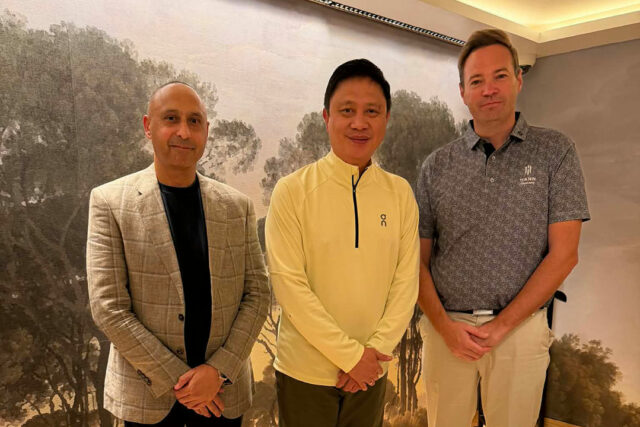
PSC CHAIRMAN Patrick Gregorio (center) with Hann Reserve General Manager Tim Neil (right) and Arosco Golf Promotions CEO Jaz Kanth.

NEW CLARK CITY, Tarlac — The Philippine Sports Commission (PSC) and Hann Reserve are exploring a groundbreaking alliance to nurture the next generation of Filipino golfers, setting the stage for grassroots athletes to rise to world-class standards.

Hann Reserve General Manager Tim Neil revealed plans for a Professional Golfers’ Association (PGA)-certified academy within the eco-luxury estate, designed to provide young golfers with elite training, scientific coaching, and holistic education.

PSC Chairman Patrick C. Gregorio welcomed the initiative, highlighting the synergy with the National Academy of Sports (NAS), located just two kilometers away from Hann Reserve inside New Clark City.

“We want NAS to strengthen linkages, so we can add more sports quickly. This proposed collaboration with Hann Reserve is exactly the kind of initiative that will help Filipino athletes thrive, not just locally but on the global stage,” said Mr. Gregorio.

Mr. Neil emphasized that the proposed partnership with PSC and NAS could extend beyond sports, integrating golf into broader educational and community programs.

“One of the key missions of the PGA is grassroots growth. Whether through our academy or community engagement, we’re committed to building golf from the ground up,” he said.

“As vice-chairman of NAS, I see this as a perfect collaboration. We have eight sports already, and archery will be added soon. Because of Hann Reserve’s program, golf should be next,’’ said Mr. Gregorio.

According to the PSC chief, NAS can offer free education, board and lodging, and allowances to these golf scholars under the care of Hann Foundation, Inc. Should the proposed partnership push through, the National Golf Association of the Philippines will likewise play a key role.

Hann Reserve spans 450 hectares in New Clark City and will feature three championship golf courses designed by Nicklaus Design, K.J. Choi, and Nick Faldo.

Complementing these are a PGA Performance Center and PGA Village, envisioned as hubs for elite training and international-standard competition.

Beyond showcasing the PSC’s sports tourism program through golf, Hann Reserve stands as a powerful testament to the rising investor confidence in New Clark City — a flagship development of the Bases Conversion and Development Authority.

“We’re not here to replicate, we’re here to reinvent,” Mr. Neil said. “Through the PGA Academy, we aim to create structured pathways that elevate golf development, while integrating education and wellness into a single ecosystem.”

With Hann Reserve’s ambitious development and PSC’s commitment to grassroots empowerment, the Philippines is poised to emerge as a competitive golf destination in Southeast Asia, where young athletes can dream big and thrive on the global stage.

Chris Paul exits NBA

The game had already moved on from Chris Paul long before he decided to step away from it for good. Still, the timing mattered to him, as it always did, on and off the court, and across eras. Which was why, when he announced his retirement late last week, the declaration came across as an exclamation point.

Paul leaves after 21 seasons as one of the most accomplished playmakers the National Basketball Association (NBA) has ever known: second all-time in assists and steals, a 12-time All-Star, and a fixture on All-NBA and All-Defensive teams through two decades. True, he failed to secure a championship that could well have ended any debate about his place in history. Then again, it can likewise be argued that a title is mere icing on the cake for a career that was all about orchestration.

Paul arrived in the league as a conductor among soloists. Even as offenses sped up and spacing widened, he insisted on control: of pace, of angles, of accountability. Coaches trusted him because he saw everything. Teammates trusted him because he demanded everything. And opponents respected him because he weaponized everything. NBA commissioner Adam Silver described him as “a true steward of the sport,” essentially capturing both his authority and his burden. He was not just running plays; he was enforcing standards.

Considering Paul’s contributions to the pro scene, it’s fair to consider the closing stretch of his career as largely undeserved. His return to the Clippers was supposed to signal a celebration. Instead, tensions escalated, and his relationship with principals deteriorated in full view of the public. He was sent home midseason, traded, waived, and ultimately orphaned. No doubt, the sharp contrast between the turbulent sequence and the precision with which he had hitherto imposed led him to formalize his exit.

Perhaps Paul was fated to experience a messy departure. After all, he had always resisted tidy framing. He willed the Hornets into relevance, pushed the Rockets to contention, got the supposedly rebuilding Thunder to thrive, and steered the Suns to the Finals. Everywhere he went, competence became a staple. Stability followed. Rings were far more elusive, but consistent competitiveness met expectations all the same.

And so Paul leaves with gratitude. By his own reckoning, he is relieved, fulfilled, and ready to settle down. For two decades, he mastered the art of arriving exactly when and where he was needed by the game. Now, for the first time since he was drafted fourth overall in 2005, the game will have to figure out where to go without him.


Anthony L. Cuaycong has been writing Courtside since BusinessWorld introduced a Sports section in 1994. He is a consultant on strategic planning, operations and human resources management, corporate communications, and business development.

Australia pledges $2.7 billion to progress nuclear submarine shipyard build

AUSTRALIAN Prime Minister Anthony Albanese — REUTERS

SYDNEY — Australia said on Sunday it would spend A$3.9 billion ($2.76 billion, $1 = 1.4138 Australian dollars) to progress construction of a shipyard that will help deliver nuclear-powered submarines under the trilateral AUKUS (Australia-United Kingdom-United States) defense pact with the US and Britain.

Announced in 2021, AUKUS is Australia’s largest-ever defense investment and will see US-commanded Virginia-class submarines based in Australia from 2027, several Virginia submarines sold to Australia from around 2030, and Britain and Australia building a new class of AUKUS nuclear-powered submarine.

Australian Prime Minister Anthony Albanese described the A$3.9 billion as a down payment to deliver the new shipyard in Osborne, a suburb of Adelaide in South Australia state.

“Investing in the submarine construction yard at Osborne is critical to delivering Australia’s conventionally armed, nuclear-powered submarines,” Mr. Albanese said in a statement.

Official projections put the total cost of the build at A$30 billion “over coming decades,” he said.

Osborne is where Australia’s ASC and Britain’s BAE Systems will jointly build Australia’s fleet of nuclear-powered submarines, the core component of the AUKUS pact. Until that work begins later this decade, the shipyard is where much of the maintenance is performed on the country’s existing Collins-class submarine fleet.

South Australian Premier Peter Malinauskas said the down payment would be spent on building enabling infrastructure for the shipyard. “This is just the beginning,” Mr. Malinauskas said in the statement.

In December, a Pentagon review of the AUKUS project found areas of opportunity to put the deal on the “strongest possible footing,” including ensuring that Australia is moving fast enough to build its nuclear submarine capacity. — Reuters

Trump, Netanyahu agreed US should press Iran to cut oil sales to China, Axios reports

US, Israel and Iran flags are seen in this illustration taken June 18, 2025. — REUTERS/DADO RUVIC/ILLUSTRATION

PRESIDENT Donald J. Trump and Israeli Prime Minister Benjamin Netanyahu agreed at a White House meeting on Wednesday that the US would work to reduce Iran’s oil exports to China, Axios reported, citing two US officials briefed on the issue. 

“We agreed that we will go full force with maximum pressure against Iran, for example, regarding Iranian oil sales to China,” Axios reported on Saturday, quoting a senior US official.

China’s foreign ministry did not immediately respond to a request for comment on Sunday, the first day of a national holiday for the Lunar New Year.

China accounts for more than 80% of Iran’s oil exports. Any reduction in that trade would mean lower oil revenue for Iran.

US and Iranian diplomats held nuclear talks through Omani mediators last week in an effort to revive diplomacy, after the US president positioned a naval flotilla in the region as the American military prepares for the possibility of sustained, weeks-long operations against Iran. — Reuters

China is the real threat, Taiwan says in rebuff to Munich speech

XANDREASWORK-UNSPLASH

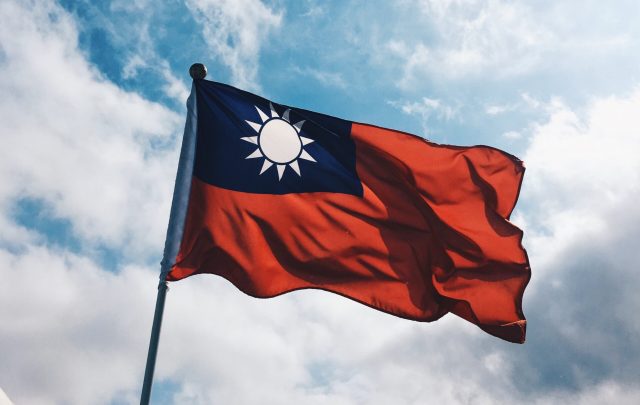
TAIPEI — China is the real threat to security and is hypocritically claiming to uphold United Nations (UN) principles of peace, Taiwan Foreign Minister Lin Chia-lung said on Sunday in a rebuff to comments by China’s top diplomat at the Munich Security Conference.

China views democratically governed Taiwan as its own territory, a view the government in Taipei rejects, saying only Taiwan’s people can decide their future.

Chinese Foreign Minister Wang Yi, addressing the annual security conference on Saturday, warned that some countries were “trying to split Taiwan from China,” blamed Japan for tensions over the island and underscored the importance of upholding the UN Charter.

Taiwan’s Mr. Lin said in a statement that whether viewed from historical facts, objective reality or under international law, Taiwan’s sovereignty has never belonged to the People’s Republic of China.

Mr. Lin said that Mr. Wang had “boasted” of upholding the purposes of the UN Charter and had blamed other countries for regional tensions.

“In fact, China has recently engaged in military provocations in surrounding areas and has repeatedly and openly violated UN Charter principles on refraining from the use of force or the threat of force,” Mr. Lin said. This “once again exposes a hegemonic mindset that does not match its words with its actions.”

China’s military, which operates daily around Taiwan, staged its latest round of mass war games near Taiwan in December.

Senior Taiwanese officials like Mr. Lin are not invited to attend the Munich conference.

China says Taiwan was “returned” to Chinese rule by Japan at the end of World War II in 1945 and that to challenge that is to challenge the post-war international order and Chinese sovereignty.

The government in Taipei says the island was handed over to the Republic of China, not the People’s Republic, which did not yet exist, and hence Beijing has no right to claim sovereignty.

The republican government fled to Taiwan in 1949 after losing a civil war with Mao Zedong’s communists, and the Republic of China remains the island’s formal name. — Reuters

Iran open to compromises to reach nuclear deal with US, minister tells BBC

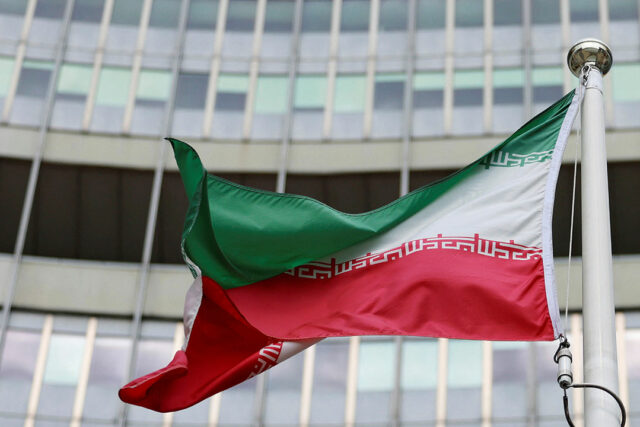
THE Iranian flag flutters outside the IAEA headquarters in Vienna, Austria, June 9, 2025. — REUTERS/LISA LEUTNER

IRAN is ready to consider compromises to reach a nuclear deal with the United States if Washington is willing to discuss lifting sanctions, Iran’s Deputy Foreign Minister Majid Takht-Ravanchi told the BBC in an interview published on Sunday.

Iran has said it is prepared to discuss curbs on its nuclear program in return for the lifting of sanctions but has repeatedly ruled out linking the issue to other questions including missiles.

Mr. Takht-Ravanchi confirmed that a second round of nuclear talks would take place on Tuesday in Geneva, after Tehran and Washington resumed discussions in Oman earlier this month.

“(Initial talks went) more or less in a positive direction, but it is too early to judge,” Mr. Takht-Ravanchi told the BBC.

A US delegation, including envoys Steve Witkoff and Jared Kushner, will meet with the Iranians on Tuesday morning, a source had told Reuters on Friday, with Omani representatives mediating the US-Iran contacts.

Iran’s atomic chief said on Monday the country could agree to dilute its most highly enriched uranium in exchange for all financial sanctions being lifted. Mr. Takht-Ravanchi used this example in the BBC interview to highlight Iran’s flexibility.

The senior diplomat reiterated Tehran’s stance that it would not accept zero uranium enrichment, which had been a key impediment to reaching a deal last year, with the US viewing enrichment inside Iran as a pathway to nuclear weapons.

Iran denies seeking such nuclear weapons.

During his first term in office, Mr. Trump pulled the US out of a 2015 Iran nuclear agreement, known as the Joint Comprehensive Plan of Action, the signature foreign policy achievement of former Democratic President Barack Obama.

The deal eased sanctions on Iran in exchange for Tehran limiting its nuclear program to prevent it from being able to make an atomic bomb. — Reuters

About 20,000 attendees expected at PHL hot air balloon fiesta

Dozens of colorful hot air balloons take flight on Friday at the 26th Philippine International Hot Air Balloon Fiesta in New Clark City, Capas, Tarlac. — PHILIPPINE STAR/WALTER BOLOZOS

The Bases Conversion and Development Authority (BCDA) said the hot air balloon fest to be held over the Valentine’s weekend in Tarlac is estimated to attract about 20,000 attendees, boosting the province’s economy.

“We are expecting, if the weather forbids and gets better, six or seven thousand [attendees per day],” BCDA Vice President for Investment Promotions and Marketing Erwin Kenneth R. Peralta told reporters on the sidelines of a briefing on Thursday.

The Philippine International Hot Air Balloon Fiesta (PIHABF), now in its 26th year, will take place at New Clark City (NCC) in Tarlac on Feb. 13 to 15, 2026.

The event will feature 22 special-shaped balloons to be flown by international pilots from the United States, the United Kingdom, Macedonia, Brazil, Switzerland, Belgium, among others.

From its launch in 1994 until 2018, the PIHABF was held in Clark, Pampanga.

“It usually averaged around max of 10,000 per day, that was the historical figure – more or less around 30,000 in three days… Because the 10,000 figure was in Clark, in the center of Clark,” Mr. Peralta said.

“Hopefully it offsets the distance from Clark Freeport Zone to New Clark City. The exits that we’ve opened and the roads that we’ve built guarantees everyone has access with car, with public transportation,” he added.

The BCDA will also offer free shuttle services in SM City Clark, Clark International Airport, Bamban Cloverleaf, and Capas Municipal Hall from 5:00 AM to 10:30 P.M to attract more participants.

“Transportation was a key factor, that was a big concern last time. Now, we are offering free shuttle services,” he said.

“They just need to board, because they can purchase the ticket on-site. Some still don’t have tickets because they don’t know how to purchase online,” he added.

Beyond the festivity, the PIHABF is also seen as a means to help small businesses in the province.

“The food stalls, the amount of jobs that are generated for this weekend alone is huge…We will have a lot of food from Tarlac that you will experience and taste. It’s giving jobs to the restaurant owners,” he said.

“There are also hotels in Capas that they could also stay which is nearer compared to Clark Freeport Zone. That’s the effect of an event like this,” he added.

The North Luzon Expressway (NLEX) Corporation has warned motorists of heavy traffic during the three-day event scheduled from 6 a.m. to 7:30 p.m.

BCDA IN SPORTS TOURISM
In line with hosting the country’s longest-running aviation sports event, the BCDA disclosed that it will focus on sports tourism by developing NCC as the sports capital of the Philippines.

“As you can see, our stadium is internationally accredited…We also have an expansion, a partnership with the Philippine Sports Commission for a 20-hectare property for tennis, for multi-sports development in New Clark City,” Mr. Peralta said.

“It took us 20 years or more to develop BGC (Bonifacio Global City) so, it will be a little bit longer, but hopefully in my lifetime, our lifetime, we could see the full development of New Clark City,”  he added.

The BCDA, in partnership with the Department of Tourism (DoT), is set to sign a Memorandum of Understanding (MoU) in March for sports development initiatives. — Almira Louise S. Martinez

Unilab Foundation, ULAP join forces to accelerate local implementation of universal healthcare

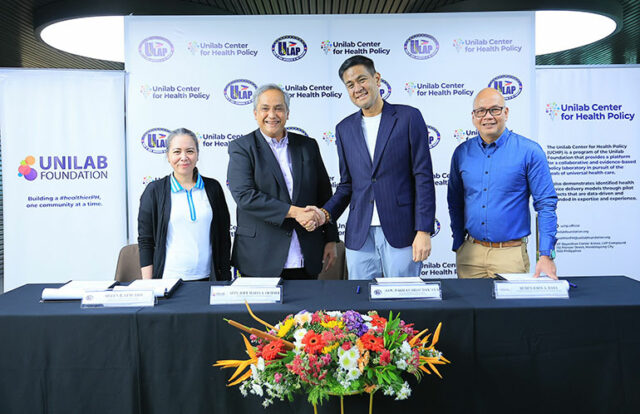
Present during the signing of the MoU between Unilab Foundation and ULAP are (from left to right) ULAP Executive Director Aileen Leycano, Unilab Foundation Executive Director Atty. Jose Maria Ochave, ULAP National President and Quirino Governor Dakila Carlo “Dax” Cua, and UCHP Program Director Ruben John Basa.

The Unilab Foundation, through its research and policy arm Unilab Center for Health Policy (UCHP), has partnered with the Union of Local Authorities of the Philippines (ULAP) to jointly identify and address barriers to the effective and accelerated implementation of the Universal Health Care (UHC) Act at the local level.

Formalized with the recent signing of a memorandum of understanding (MoU), the partnership will tackle fragmented policies, processes, proficiencies, and systems hindering the ability of local government units (LGUs) to implement UHC reforms. This is aligned with the mandate to empower LGUs so that the devolution of the healthcare delivery function from the national government does not lead to the inconsistent implementation of health services across different localities.

UCHP and ULAP will also pilot programs in selected LGUs to demonstrate the practical implementation of UHC at the local level, with the intent of using lessons from the ground to inform national policy, and of replicating best practices in more areas.

“[This MoU] reflects our shared understanding that Universal Health Care is ultimately realized when governance meets execution which is at the local level, and that this cannot be done by government alone. We need the support of all stakeholders,” said ULAP National President and Quirino Governor Dakila Carlo “Dax” Cua.

ULAP National President and Quirino Governor Dakila Carlo “Dax” Cua says the government needs the support of all stakeholders to successfully implement universal healthcare.

“Many challenges we face today are structural and systemic. No single institution can address problems in isolation. This is why partnerships matter. We are hopeful that this partnership will continue to grow, expanding from policy and systems, strengthening toward deeper collaboration and service delivery models, innovation, and efforts that deliberately reach the unreached and underserved Filipino, particularly in communities where access to quality healthcare remains most fragile,” he added.

For his part, Unilab Foundation Executive Director Atty. Jose Maria Ochave said UCHP’s role is to partner with government leaders to help them achieve their vision for their constituents.

“Our role is to show that certain things can work and can be implemented. But the ones who can really move the needle is still government. The ones who can move the needle the most in the coming years will be the local government because that is where governance is felt the most by the people,” he said.

The UCHP is a program of the Unilab Foundation that empowers LGUs to become self-reliant and successful implementers of UHC by supporting policy development, enabling evidence-based decision-making, and providing holistic technical assistance that strengthens local execution.

Recently, the UCHP commissioned a study which found that a large portion of local health budgets goes to personnel salaries, leaving little funds for actual health programs and services. The study was lauded by the Department of Budget and Management as a valuable tool in its campaign to maximize local resources.

UCHP also recently partnered with the local government of Ormoc City to develop and implement a UHC-aligned primary care service delivery framework for geographically isolated and disadvantaged communities.

BNP sweeps Bangladesh election, Tarique Rahman set to become PM

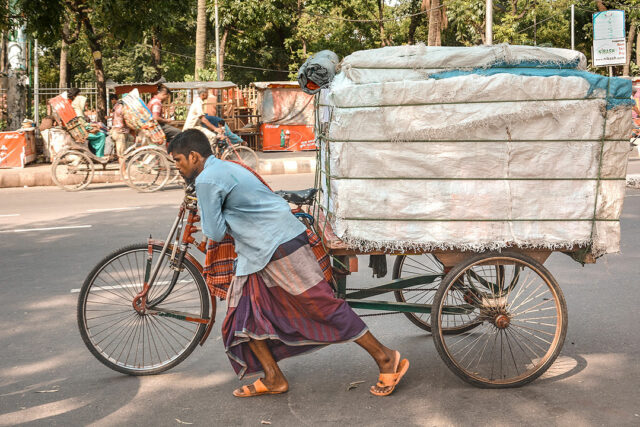
A MAN pushing a loaded trishaw in Dhaka, Bangladesh. — ADLI WAHID-UNSPLASH

DHAKA — Bangladesh’s opposition Bangladesh Nationalist Party (BNP) won a landslide parliamentary election on Friday, returning to power after nearly two decades and positioning party leader Tarique Rahman to become prime minister as the country emerges from months of unrest and economic disruption.

Mr. Rahman, the son of former premier Khaleda Zia who returned to Dhaka in December after nearly two decades abroad, faces immediate challenges in restoring political stability, reviving investor confidence and rebuilding key industries – including the garment sector – after prolonged turmoil that followed the collapse of former Prime Minister Sheikh Hasina’s government last year.

The latest counts in a vote viewed as the South Asian nation’s first truly competitive election in years gave the BNP and its allies at least 212 of the 299 seats up for grabs, local TV channels said. The opposition Jamaat-e-Islami and its allies won 70 seats in the Jatiya Sangsad, or House of the Nation.

The Election Commission put the BNP at 181 seats, the Jamaat-e-Islami at 61 and others at 7, with full official results expected in the next few hours.

Results in several seats are still being processed and the full result is expected within hours, the commission said, though the gazette notification will take a few more days, which could delay the swearing-in of the new government.

Under the constitution, the new government cannot be sworn in unless the gazette notification reporting the results is released.

The BNP thanked its supporters soon after election trends became clear and called for special prayers on Friday for the nation and its people.

“Despite winning … by a large margin of votes, no celebratory procession or rally shall be organized,” the party said in a statement.

The National Citizen Party (NCP), led by youth activists who played a key role in toppling Ms. Hasina, won just five of the 30 seats that it contested. The NCP was part of the Jamaat-led alliance.

A clear outcome had been viewed as key for stability in the Muslim-majority nation of 175 million after months of deadly anti-Hasina unrest disrupted everyday life and industries including garment manufacturing. Bangladesh is the No. 2 exporter of garments in the world.

“A strong majority gives the BNP the parliamentary strength to pass reforms efficiently and avoid legislative paralysis. That alone can create short-term political stability,” said Selim Raihan, an economics professor at the University of Dhaka.

In its manifesto, the BNP promised to prioritize job creation, protect low-income and marginal households and ensure fair prices to farmers.

“If the factories run regularly and we get our wages on time, that’s what matters to us. I just want the BNP government to bring back stability so more orders come to Bangladesh and we can survive,” Josna Begum, 28, a garment worker and mother of two, told Reuters.

Indian Prime Minister Narendra Modi, Pakistan Prime Minister Shehbaz Sharif and the US ambassador to Bangladesh, Brent T. Christensen, were among the first to congratulate Mr. Rahman on his party’s victory.

BNP SUPPORTERS CELEBRATE OVERNIGHT
The Islamist Jamaat-e-Islami conceded defeat late on Thursday night once trends became clear, but said in a statement on Friday that it was “not satisfied” with the process and asked its followers to remain patient.

The party won its highest-ever tally of 70 seats in Parliament, contesting for the first time since it was banned in 2013 after its registration was cancelled. A court in Bangladesh said the party’s constitution went against secularism. The ban was lifted after Ms. Hasina’s ouster.

Now in exile in New Delhi, Ms. Hasina long dominated Bangladesh politics along with Mr. Rahman’s mother, while his father was a leading independence figure who ruled from 1977 until 1981 before he was assassinated.

The BNP win with more than 200 seats is one of its biggest, surpassing its 2001 victory with 193, although Ms. Hasina’s Awami League, which ruled for 15 years and was barred from contesting this time, secured a bigger tally of 230 in 2008.

But elections of other years were boycotted by one of the main parties or were contentious.

Overnight, throngs of supporters cheered and shouted slogans at the BNP headquarters in Dhaka as the scale of the party’s landslide became clear.

Turnout exceeded the 42% of the last election in 2024, with media reports saying nearly 60% of registered voters participated in the election on Thursday.

More than 2,000 candidates, many independents among them, were on the ballot, which featured a record number of at least 50 parties. Voting in one constituency was postponed after a candidate died.

Broadcaster Jamuna TV said more than 2 million voters chose “Yes” while more than 850,000 said “No” in a referendum on constitutional reforms held alongside the election, but there was no official word on the outcome.

The changes include two-term limits for prime ministers and stronger judicial independence and women’s representation while providing for neutral interim governments during election periods and setting up a second house of the 300-seat parliament. — Reuters

In Karachi, sober raves offer Gen Z a new kind of nightlife

KARACHI — Under neon lights at an indoor sports club in Karachi, twenty-somethings drifted between glowing courts and a DJ booth, dancing with coffee cups and iced tea in hand.

No alcohol. No drugs. And the music ended promptly at 10 pm.

In Pakistan, a growing number of Gen Z are opting for “sober socializing”, joining a global trend as young people increasingly opt for healthier lifestyles.

Here, though, the shift carries an added appeal: Drinking alcohol is illegal for Muslims, who make up the vast majority of Pakistan’s population.

PARTYING WITHOUT THE POUR
They are increasingly turning their backs on the party scene of the past, which often involved underground venues because of the presence of alcohol and drugs, and the risk of running afoul of authorities.

“In Karachi, we don’t have many places to just exist socially,” said Zia Malik, a software entrepreneur attending the event. “This gives you that without having to hide.”

“I have visited some underground parties,” he added. “You cannot feel secure.”

At the sports club, crowd numbers were capped. Between breaks in dancing, revelers played padel, a cross between squash and tennis popular in Pakistan.

The event’s organizer, experiential platform 12xperience, had local government approval to host a public party without alcohol.

CREATING A SAFE SPACE
Cameras – both wall-mounted and on drones – monitored the crowd to enforce the no-alcohol policy and to deter fights or harassment, organizers said.

“Without guardrails, you’re just recreating the same risks people are trying to escape,” said Mohammed Usman, founder of 12xperience.

“This is about creating a space where people feel safe,” he said. “Without alcohol, without drugs, without chaos.”

Events like this are popping up across the city of nearly 19 million in growing numbers, mainly at sports facilities and coffee shops, but also at venues such as art galleries and co-working spaces.

Euromonitor data shows Pakistan’s soft drinks market grew more than 27% between 2020 and 2025, and hot drinks – a category that includes coffee – expanded by a similar margin.

While that mirrors a global trend in young people drinking less, Pakistan’s shift has outpaced mature markets such as the United States and Britain, where non-alcoholic beverage volumes have grown only modestly.

PARTYING WITHIN ISLAMIC BOUNDARIES
Sociologist Kausar Parveen said the change shows how young Pakistanis have put a modern spin on adapting to the country’s Islamic norms, rather than being a sign they are rejecting them.

“They are not going beyond religion, but reframing how social life happens,” said Mr. Parveen, an associate professor at the University of Karachi.

Women-only events are also increasing in popularity, in a country where gender mixing carries cultural stigmas.

“For a lot of women, nightlife comes with conditions of who’s there, how late it runs, how visible it is,” said comedian and influencer Amtul Bajwa, who was hosting the women-only desi music night at her cafe in Karachi, Third Culture Coffee.

“This was about creating a space where women could relax without negotiating those things.”

OPTIONS OPEN ONLY TO WOMEN
Pakistani and Indian music played as women danced without reservations to desi tracks, and the event ended at 9pm sharp.

“You don’t have to worry about who’s watching,” said Fatima, who did not share her last name because her parents did not know she was attending. “Ending early makes it easier to get home.”

Ms. Bajwa has also hosted a number of coffee raves for both genders, and recently held a silent disco at her cafe, but said there is particular demand for women-only events.

Price is something of an issue: tickets typically cost between 3,000 and 7,000 Pakistani rupees ($10.73 to $25.04) in a country where entry-level monthly salaries tend to be 30,000 to 40,000 rupees, making a single night out a significant expense.

Even so, sober raves have become a significant – and very visible – outlet for Pakistan’s youth.

At the sports club, well-dressed lifestyle bloggers and social media influencers posted photos and videos in real time, something unlikely at parties involving alcohol.

“It’s more available to the masses,” said Shah Zaib, a 27-year-old data analyst attending his third such event.

“I love the fact that it’s not underground anymore.” — Reuters

Malaysia forms special committee to probe anti-corruption chief, says communications minister

KUALA LUMPUR — Malaysia’s government will form a special committee to investigate allegations against the country’s anti-corruption chief, the communications minister said on Friday, following a media report alleging a breach of shareholding laws.

The task force will be led by the country’s Chief Secretary to the Government Shamsul Azri Abu Bakar, Communications Minister Fahmi Fadzil said during his weekly press conference.

Earlier this week, Bloomberg cited a corporate filing from last year as saying that Malaysia’s Anti-Corruption Commission (MACC) chief Azam Baki held 17.7 million shares in a financial services company that were currently worth about 800,000 ringgit ($205,000), well above the 100,000 ringgit limit allowed for public servants.

Bloomberg in a later report on Thursday said that MACC officials were also helping a group of businessmen to seize control over companies, citing internal documents and interviews with witnesses. Reuters has not independently verified the report.

“After the investigation is completed, it will be reported back to the Cabinet for any follow-up action. This is an effort to ensure the aspects of transparency and integrity of the investigation process,” Mr. Fahmi said.

Mr. Fahmi did not specify which allegations would be investigated.

Mr. Azam said earlier that he was willing to be investigated by a government committee amid calls for him to step down, adding that he had “nothing to hide” as all his financial and asset declarations have been made according to public service laws.

“I am confident that the truth will prevail through a fair and independent process,” he said in a statement.

The report prompted opposition lawmakers and civil society groups to renew demands for Mr. Azam’s resignation and call for major reforms to the anti-graft agency, including the removal of the prime minister’s power to appoint the MACC chief.

Mr. Azam’s trading activities faced similar scrutiny in 2022 over allegations that he owned millions of shares in two publicly listed companies in 2015 and 2016.

The securities regulator said at the time it was unable to determine whether he had broken the law. — Reuters

ALT Art 2026 highlights nine emerging artists and stunning art pieces

Photo by EDG ADRIAN A. EVA

ALT Art 2026, running until February 15, is highlighting nine emerging artists for the first time in a dedicated gallery space.
Dubbed the “Discoveries Section,” the showcase features young and new artists selected from each gallery under the exhibition organizer, ALT Collectives, giving their works a platform to be seen.

“So each gallery chooses an artist to feature. They believe in the work these artists do, showcasing excellence in craft, technique, execution, subject matter—you name it,” Carlomar A. Daoana, art tour correspondent for ALT Art 2026, told BusinessWorld during the exhibition’s preview on Thursday.

Allyza Tresvalles, 26, one of the featured artists under Finale Art File gallery, shared that ALT Art 2026 marked her first solo performance and debut at an art fair.

“I think it’s very hard for local artists from the provinces to get this kind of spotlight, so I’m very grateful,” said the Lucban, Quezon native.

Her works blend traditional crafts such as weaving, pottery, and metalwork with Filipino spiritual and pre-colonial iconography.

One piece, Sungkaan, symbolizes the extractive and undervalued labor faced by weavers in her hometown, drawing a comparison to a traditional Filipino board game.

Other artists in the Discoveries Section include JC Mariategue, Jomari T’Leon, Joar Songcuya, Eric Bico, Gelo Cinco, Joanolasco, Rhaz Oriente, and Marco Ortiga, contributing to a total of over 300 artists featured at ALT Art 2026.

Among the other works capturing visitor attention is Lindsey James “Lindslee” Lee’s Weight of the Day, a lifelike sculpture placed along the gallery passage.

The piece depicts a familiar scene: “a father ending a tough workday with a bottle of beer,” while sitting on a monoblock chair, the artist noted.

Now in its fourth edition, ALT Art 2026 is presented in partnership with Banco de Oro (BDO) Private Banking and is held at the SMX Convention Center in Pasay City.

Tickets are available online, priced at ₱250 for students and ₱500 for regular visitors.— Edg Adrian A. Eva

ADVERTISEMENT
ADVERTISEMENT