Home Blog Page 2933

Vista Land subsidiary eyes 5-year dollar notes issuance

VILLAR-LED property developer Vista Land & Lifescapes, Inc. announced on Monday that its wholly owned subsidiary is considering a five-year, dollar-denominated, fixed-rate notes issuance as part of its fundraising efforts.

Vista Land’s VLL International, Inc. may issue senior unsecured fixed-rate notes under its $2-billion medium-term note program, the property developer said in a regulatory filing on Monday.

“The net proceeds will be used for refinancing, working capital, investment, and other general corporate purposes,” Vista Land stated.

Vista Land will act as the guarantor of the proposed issuance, while the subsidiary guarantors will include Brittany Corp., Camella Homes, Inc., Communities Philippines, Inc., Crown Asia Properties, Inc., Vista Residences, Inc., and Vistamalls, Inc.

The initial price guidance is set at 9.500%, with the settlement date on July 29 and the maturity date on July 29, 2029.

Vista Land has engaged DBS Bank Ltd. and HSBC as the joint global coordinators, joint bookrunners, and joint lead managers for the proposed issuance. KIS Asia was also named as a joint bookrunner and joint lead manager.

Union Bank of the Philippines has been appointed as the domestic lead manager for the proposed issuance.

VLL International approved the $2-billion medium-term note program on Dec. 29 last year.

Vista Land recorded an 11% increase in first-quarter net income to P3 billion, as consolidated revenue improved by 11% to P10 billion.

The property developer has earmarked a capital expenditure budget of P30 billion this year, with 98% allocated for the construction of residential units and land development. The remaining 2% is budgeted for land acquisition and the construction of investment properties.

Vista Land has business interests in residential and commercial property development through its units, such as Camella Homes, Communities Philippines, Crown Asia, Brittany, Vista Residences, and Vista Malls.

On Monday, Vista Land shares rose by 2% or three centavos, ending at P1.53 per share. — Revin Mikhael D. Ochave

A Brown sees growth via new property, power sector investments

LISTED A Brown Co. Inc. (ABCI) said it is expecting further growth as the company expands with new investments in the property and power sectors.

The company’s subsidiary Vires Energy Corp. is developing a 450-megawatt (MW) liquefied natural gas power project in Simlong, Batangas City, ABCI said in an e-mailed statement on Monday.

ABCI also said that its subsidiary Northmin Renewables Corp. is progressing with the Misor Wind Power and Bukidnon Wind Power projects and is preparing to start the wind monitoring campaign later this year.

Next month, the company’s subsidiary Irradiation Solutions, Inc. (ISI) will commence the commercial operations of its electron-beam and cold storage facility in Tanay, Rizal. ISI is expected to contribute to ABCI’s bottom line starting next year.

“The support and trust of our financial partners, brokers, sales producers, and all stakeholders were crucial to our success in 2023, and we look forward to sharing our achievements with you in 2024,” ABCI Chief Executive Officer and President Robertino E. Pizarro said.

Other ABCI affiliates in the power sector include Palm Concepcion Power Corp., which operates a coal-fired power plant in Iloilo, and Peakpower Energy, Inc., which is engaged in bunker-fired power projects.

Meanwhile, ABCI has a pipeline of township development launches, such as the 280-hectare Mountain Pines Farm Estates in Bukidnon, which plans for an 18-hole golf course, and the 300-hectare Epic Mountain estate in Tanay, Rizal.

ABCI will also launch vertical residences, including Coral Bay Suites’ The Royale and The Navy Towers in Misamis Oriental, and Highlands Fairway Suites in Butuan.

The company, a Mindanao-based property developer, has interests in other sectors such as power generation, public utilities, and agribusiness.

For the first quarter, ABCI recorded a 29% decline in net income to P79.4 million from P111.95 million last year. Revenue for the January to March period increased by 22% to P287.63 million, while costs and expenses rose by 81% to P133.23 million.

ABCI shares fell by 1.56% or one centavo, finishing at 63 centavos each on Monday. — Revin Mikhael D. Ochave

The shared vision of the Philippines and Japan

Trade and cultural exchanges between the Philippines and Japan have a rich history that dates back to the pre-colonial period. Historical records reveal that Japanese merchants traded goods such as pottery, silk, and other valuable items with Filipinos, who reciprocated by exporting products like pearls, gold, and hardwood.

The relationship between the two countries was severely damaged when Japan occupied the Philippines during World War II, but since then, both countries worked to rebuild their relationship.

In 1951, the Philippines signed the San Francisco Peace Treaty, also known as the Treaty of Peace with Japan, to legally resolve the issues between Japan and the Philippines with regard to reparations, material restitution, and the right to claim for war damage.

Strengthening bilateral relations

Japan and the Philippines share common goals of promoting peace and economic stability in the Asia-Pacific region, which has become increasingly important given the rising assertiveness of China.

In 2011, the Philippines and Japan agreed to increase consultations and exercises between their coast guards and navies, resulting in the signing of a strategic partnership pact a year later to strengthen the Philippines’ maritime security.

Recently in 2021, Japan’s Air Self-Defense Force conducted its first bilateral exercise with the Philippines, using a single C-130 transport aircraft. The two countries are also in talks about a potential Visiting Forces Agreement and a reciprocal access agreement. These agreements would permit the rotation of Japanese ground troops through the Philippines for training exercises.

This relationship also boosts the economic development of both nations. The Philippines-Japan Economic Partnership Agreement (PJEPA), which has established a framework for trade, investment, and labor mobility between the two countries, was signed on Sept. 9, 2006, and entering into force on Dec. 11, 2008. This is the first bilateral free-trade agreement of the Philippines.

During President Ferdinand R. Marcos, Jr.’s visit to Japan in February 2023, the Philippines secured over $13 billion worth of agreements and pledges from the Japanese government and business leaders. These commitments are expected to generate around 24,000 direct jobs and boost the purchasing power of Filipinos in the medium term.

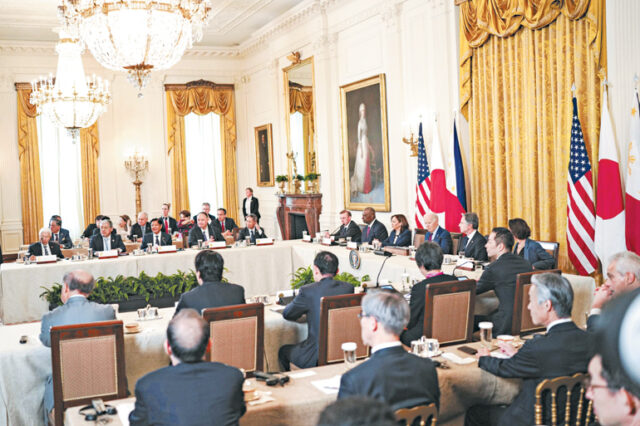
Last April, the leaders of Japan, the Philippines, and the United States met for the first trilateral summit. They launched the Luzon Economic Corridor, a partnership for global infrastructure and investment that will support connectivity between key economic hubs in the Philippines. The three countries also committed to accelerating investments in high-impact projects, including rail, port modernization, clean energy, and semiconductor supply chains.

Filipino and Japanese lawmakers also renewed their commitment to enhancing relations back in June, focusing on cooperation that opens opportunities for both nations. The initiative aims to foster closer ties through legislative exchanges and mutual support in various sectors, including economic growth and security cooperation.

As recently as this month, the two countries signed a significant Reciprocal Access Agreement (RAA), allowing the mutual deployment of military troops in each other’s countries, amid rising tensions with China. The agreement, which awaits parliamentary ratification, aims to facilitate military cooperation and disaster response.

According to the Foreign Policy Research Institute, the growing security partnerships between the Philippines and Japan are significant for several reasons, as both countries are archipelagic nations that have experienced increasing security pressure, aiming to bolster deterrence in the Western Pacific and safeguard their maritime interests.

Moreover, the partnership is seen as a natural extension of the two countries’ long-standing alliances with the United States. Hence, it has been welcomed by the US, which views it as a positive development in the region.

Reports also showed the recent partnerships of the Philippines and Japan have entered what is often referred to as a “golden age,” reflecting the deepening of their strategic and economic connections.

Security partnerships

Japan and the Philippines have taken significant steps to deepen their ties and bolster maritime security in the region.

Amid China’s growing maritime assertiveness in the West Philippine Sea, the two countries have rapidly upgraded their security cooperation, with Japan providing military aid to enhance the Philippines’ maritime security capabilities. The Philippines, on the other hand, has been a vocal supporter of Japan’s growing security role in the region, seeing it as a counterbalance to China.

Japan announced its donation of 10 ships valued at US$11 million to the Philippine Coast Guard in 2013. This aid was believed to be a diplomatic message to China.

In 2016, the Philippines entered into a Defense Equipment and Technology Transfer Agreement with Japan, allowing Tokyo to provide defense equipment to Manila. This included the construction and delivery of 10 44-meter Parola-class patrol boats for the Philippine Coast Guard between 2016 and 2018.

Japan also transferred excess defense equipment to the Philippines, including three retired TC-90 trainer aircraft from the Japan Maritime Self-Defense Force in 2017. The countries resolved a similar situation involving the transfer of excess spare parts from Japan’s Ground Self-Defense Force to restore seven UH-1 utility helicopters for the Philippines.

Since then, Japan and the Philippines have conducted regular coast guard and naval exercises, focusing on anti-piracy drills and addressing “unplanned encounters at sea.” Japanese warships have frequently visited the Philippines, and the Philippines has allowed Japanese military aircraft to refuel in the country since the mid-2010s.

A strong economic relationship

Japan’s post-war reconstruction was supported by the Philippines, and in return, Japan has become a vital partner in the Philippines’ economic development.

According to the Department of Trade and Industry, overall trade between the two countries increased by 19%, rising from $115.99 billion to $137.96 billion. By 2019, Japan had solidified its position as the Philippines’ second-largest trading partner, with total trade amounting to $21.38 billion

In terms of investments, there was a significant increase in approved investments from Japan, surging 146.7% from $260.81 million before the PJEPA to $438.64 million after PJEPA.

Japan’s Official Development Assistance and private sector investment exceeded the pledge of ¥600 billion made in the 2023 Japan-Philippines Joint Statement.

Japan is also currently the biggest investor in the Philippine Economic Zone Authority (PEZA), contributing to 28% of total investments, which resulted in P798 billion, $16.3 billion in exports, and the creation of 342,845 direct jobs across 877 PEZA-registered business enterprises.

Meanwhile, the Philippine government and the Japan International Cooperation Agency (JICA) signed a $2-billion loan agreement to construct a railway system between the Tutuban railway station in Manila and Malolos, Bulacan. This project is set to become the country’s largest railway system. — Mhicole A. Moral


Atlas Mining says first-half income jumped to P2.07B

ATLAS Consolidated Mining and Development Corp. on Monday reported a net income of P2.07 billion for the first half amid higher metal prices and better ore production.

In a disclosure to the local bourse, the company reported that its net income more than doubled compared to the P803 million for the same period last year.

Atlas Mining said that its first-half revenues increased by 23% to P12.48 billion from P10.13 billion a year ago.

The company’s subsidiary, Carmen Copper Corp., recorded increases in gold and copper production and shipments in the six months to June.

Carmen Copper’s gold production went up by 37% to 17,711 ounces from the previous year’s 12,925 ounces.

Copper output, on the other hand, increased by 6% to 45.19 million pounds from 42.93 million pounds a year ago.

Copper prices rose by 5% to $4.13 per pound compared to $3.95 per pound in 2023.

The gold price increased by 14.42% to $2,216 per ounce from $1,937 per ounce in the same period last year.

The company said that it had shipped 44.74 million pounds of copper during the period, 6% higher than the 42.37 million pounds in 2023.

It also noted that it had shipped 16,565 ounces of gold, a 37% increase from 12,112 ounces a year ago. — A.H. Halili

Sustainability Leadership: An emerging country perspective

UPKLYAK-FREEPIK

“A sustainability leader is someone who inspires and supports action towards a better world.”

— University of Cambridge Institute for Sustainability Leadership

Why do we need sustainability leadership now?

As the Philippines races to become a rapidly growing economy in the Asia-Pacific region despite continuing geopolitical tensions and human development challenges, there is a need for leaders across the private, public and civil society spaces at all levels to practice sustainability leadership.

With my continuing engagement with Stanford University’s Distinguished Careers Institute, I have had the privilege of working with Bill Barnett, a business and environmental sustainability expert, and Pamela Matson, an inter-disciplinary sustainability scientist. Their insights are key in this piece.

5 KEY POINTS OF SUSTAINABILITY LEADERSHIP

Sustainability leadership from an emerging country perspective entails five key points:

1. The definition of sustainability must be reframed.

Matson defined sustainability as “a realization that our ability to prosper now and in the future requires increased attention not just to economic and social progress but also to conserving Earth’s life support systems: the fundamental environmental processes and natural resources on which our hopes for prosperity depend.”

From a “global south” perspective, we have heard pushback on this idea, with some saying that economic and social progress (the people) must be prioritized rather than the environment (planet). The harshest critics even go to the extent of questioning why developing countries need to share the burden of protecting the environment when their share of pollution is relatively small compared to the developed markets. This is not to mention the fact that these nations are late entrants in their human development journeys.

In the Philippine milieu, “wicked” challenges, such as income inequality and social injustice, remain and the ideals of political reform, national cohesion, and moral/spiritual renewal seem to be elusive. Sustainability leaders include these in their broader agenda.

2. Leadership is critical in the context of this reframed definition.

In the Philippines, while there may be companies with sustainability practices driven by either their own meaningful and significant initiatives from within or their global sustainability policies (with the latter mainly driven by global/regional headquarters), some organizations are struggling to incorporate sustainability as part of their business strategy. Worse, a few others may even resort to having sustainability programs for its sheer public relations value. As a case in point, some businesses appoint CSOs (Chief Sustainability Officers) which either add significant value or create necessary “optics.” A few other enterprises may have significant knowledge gaps that impede their entry into this relatively white space, and some have a narrow view (e.g., purely environmental without consideration for promoting the social good) that severely restricts their capacity to create real broad-based impact for all their stakeholders.

That is why leadership is critical to ensure that a company’s sustainability policy and practice leads to the actions that result in sustainable development for the benefit of all its stakeholders.

3. Clarity on outcome: shared prosperity.

Upgrading an existing sustainability function or establishing one requires clarity on the organizational outcomes hoped to be achieved.

According to Matson, it is inclusive social well-being. Over at the Management Association of the Philippines (MAP), Shared Prosperity, as embodied in a Covenant, may well be the outcome that we seek. A movement called Diwa-Kapwa, led by some MAP members, CEOs, and human resources leaders, actively champions organizations that place people first. As a result, extraordinary performance is generated by these companies. Shared Prosperity for all stakeholders naturally follows.

4. Sustainability Leadership must focus on technical, behavioral, and moral dimensions.

Organizations with developed sustainability functions design and implement relevant sustainability solutions that are an integral part of their business strategy. These solutions seek to address a particular social, economic, or environmental problem that is in the company’s radar. According to Barnett, it is critical that in the crafting of these solutions, technical, behavioral, and moral lenses must be adopted.

There is a tendency to view it solely from a technical point of view. Innovative solutions are arrived at by applying science and using new knowledge. Some notable examples include electric vehicles, the green revolution in the 20th century, and removing the ozone depleting chlorofluorocarbons (CFCs). With the advent of game-changing solutions, we must also be vigilant for any unintended consequences.

From a behavioral perspective, the sustainability challenges faced have been the result of organizational and individual behaviors in the past that did not serve the common good. Policies and practices that promote positive behaviors must be implemented to ensure that sustainable development becomes a reality with the help of the citizenry and all sectors involved. Take the case of Manila’s Pasig River — factories in the past have dumped waste into this river (organizational behavior) and some informal settlers may have utilized the river and its tributaries as their personal cesspools (individual behavior). Future sustainable solutions need to drive new positive behaviors.

The moral lens could not be underestimated as well. Effective sustainability solutions require effective governance, which I believe is already gaining traction in a lot of areas in government. But there is room to further grow. If some provincial or local government units wish to drive a higher level of direct investment, the proverbial “red tape” must be eliminated and the ease of doing business must be embedded.

5. Sustainability Leadership incorporates management excellence.

Leaders drive for results, outcomes, and completion of deliverables. But this is not enough. To enable long-term success, sustainability leaders equally push for the development of institutional capabilities of the organization that they are a part of. Capabilities include having a vision, competent and committed people, a culture of excellence, a forward-looking innovative mindset, openness to game-changing technologies, agile organizations, and efficient routines and workflows. While we have usually placed this under the bucket of management excellence, McKinsey goes to the extent of calling it “organizational superpowers.”

QUO VADIS?
Certainly, the world will be a better place with sustainability leaders around. In the Philippines, they could catapult the country into a steeper growth trajectory.


Dr. Ramon “Mon” B. Segismundo is a member of the Management Association of the Philippines’ Shared Prosperity Committee. He is a 2023-2024 fellow of Stanford University’s Distinguished Careers Institute. He holds a Doctorate in Business Administration from Singapore Management University. He is CEO of Singapore-based OneHRX.

map@map.org.ph

rbsegismundo@onehrx.com

Gov’t fully awards T-bills amid robust demand

BW FILE PHOTO

THE GOVERNMENT made a full award of the Treasury bills (T-bills) it offered on Monday even as rates continued to inch up as it saw strong demand from the market, with investors looking to lock in high yields before the Bangko Sentral ng Pilipinas (BSP) and US Federal Reserve start their respective monetary easing cycles.

The Bureau of the Treasury (BTr) raised P20 billion as planned from the T-bills it auctioned off on Monday as total bids reached P47.372 billion, or more than twice the amount on offer.

Broken down, the BTr borrowed P6.5 billion as programmed from the 91-day T-bills as tenders for the tenor reached P14.86 billion. The three-month papers were quoted at an average rate of 5.743%, 2.6 basis points (bps) above the 5.717% seen last week. Accepted rates ranged from 5.724% to 5.755%.

The government likewise made a full P6.5-billion award of the 182-day securities as bids for the tenor reached P15.01 billion. The average rate for the six-month T-bill stood at 5.991%, up by 1.3 bps from the 5.978% fetched last week, with accepted rates at 5.98% to 5.998%.

Lastly, the Treasury raised the planned P7 billion via the 364-day debt papers as demand totaled P17.502 billion. The average rate of the one-year debt inched up by 0.9 bp to 6.081% from the 6.072% quoted for the tenor last week. Accepted yields were from 6.05% to 6.095%.

At the secondary market before the auction, the 91-, 182-, and 364-day T-bills were quoted at 5.7355%, 6.0223%, and 6.1053%, respectively, based on PHP Bloomberg Valuation Service (BVAL) Reference Rates data provided by the Treasury.

T-bill yields rose in line with market expectations as investors continued to price in potential rate cuts from the BSP, a trader said in a phone interview.

“Treasury bill average auction yields were again slightly higher week on week, similar to the weekly rise in the comparable PHP BVAL yields,… as investors lock in longer-term tenors ahead of a possible 25-bp policy rate cut as early as August and another 25-bp cut by the fourth quarter, as reiterated by local monetary authorities, and also amid more dovish signals by some Fed officials recently,” Rizal Commercial Banking Corp. Chief Economist Michael L. Ricafort said in a Viber message.

BSP Governor Eli M. Remolona, Jr. last month said the central bank may deliver its first rate cut in over three years at the Monetary Board’s Aug. 15 review — the only policy meeting scheduled this quarter — as they expect inflation to continue easing this semester.

The Monetary Board could slash borrowing costs by 25 bps this quarter and by another 25 bps in the fourth quarter, he added.

The BSP last month kept its policy rate at a 17-year high of 6.5% for a sixth straight meeting after raising interest rates by 450 bps from May 2022 to October 2023 to help tame red-hot inflation.

Mr. Remolona also said the better-than-expected June inflation print gives policy makers “a bit more scope for easing” in their August meeting.

Headline inflation eased to 3.7% in June from 3.9% in May. This was within the BSP’s 3.4-4.2% forecast for the month, and also marked the seventh straight month that inflation settled within the central bank’s 2-4% annual target.

For the first six months, the consumer price index averaged 3.5%, slightly faster than the BSP’s 3.3% full-year forecast.

Meanwhile, top Federal Reserve officials last week said the US central bank is “closer” to cutting interest rates given inflation’s improved trajectory and a labor market in better balance, remarks that set the stage for a first reduction in borrowing costs in September, Reuters reported.

Fed Governor Christopher Waller and New York Fed President John Williams both noted the shortening horizon toward looser monetary policy, with Mr. Waller highlighting it in a speech at the Kansas City Fed and Mr. Williams voicing it in a Wall Street Journal interview.

Separately, Richmond Fed President Thomas Barkin said he is “very encouraged” that declines in inflation had begun to broaden. “I’d like to see that continue,” he told a business group in Maryland.

The remarks are the latest in a rush of commentary from top US central bank officials — including Fed Chair Jerome H. Powell — to note their increased confidence that the disinflationary trend that began last year is continuing, despite a short-lived bump in inflation earlier this year.

More Fed policy makers have suggested they are getting increasingly comfortable that the pace of price increases is more firmly on track back down to 2%, after higher-than-expected readings earlier in the year.

Mr. Powell also said that inflation readings over the second quarter of this year “add somewhat to confidence” on its downward path, suggesting a start of an easing cycle may not be far off.

On Tuesday, the BTr will offer P25 billion in reissued 20-year Treasury bonds (T-bonds) with a remaining life of 19 years and 10 months.

The Treasury wants to raise P215 billion from the domestic market this month, or P100 billion through T-bills and P115 billion via T-bonds.

The government borrows from local and foreign sources to help fund its budget deficit, which is capped at P1.48 trillion or 5.6% of gross domestic product for this year. — AMCS with Reuters

The post-pandemic cosplay boom

IT IS common nowadays to see people wearing costumes of animated characters, superheroes, and video game characters in and around malls and convention centers. These people, called cosplayers (from the short form of “costume play”), range from hobbyists and animé enthusiasts to professional hosts and performers.

While the word cosplay was coined in Japan in 1984, referring to a niche in Japanese pop culture, it has quickly spread to other parts of Asia and even the Western world. In the Philippines, it has been around since the 2000s.

Following the COVID-19 pandemic, a plethora of mall events, pop-up markets, and fan conventions have been regularly held by multiple organizers, all catering to an apparent boom in fan culture.

THE NORMALIZATION OF FAN CULTURE
“When we first started organizing events in 2005, we knew there was a big market, but we didn’t expect to be overwhelmed by the growth we see now,” said Bryan Uy, an organizer at Ozine Events, in an interview with BusinessWorld at the sidelines of their pre-Tanabata Festival in Ayala Malls Manila Bay.

Ozine Events is the company behind local animé and cosplay conventions such as Ozine Fest and Otaku Expo, the latter of which will be held from Aug. 31 to Sept. 1 in SM Megamall.

While fan culture has existed for a while, Mr. Uy recalled the boom that occurred in the pandemic. He mentioned the game Genshin Impact and the animé series Spy x Family as examples of media that were major hits at that time.

“When we brought back our events after the lockdowns, we thought it would be the same people attending but just a bit more. Nagulat kami na ang daming nag-post na debut nila sa event namin (We were surprised to see posts online saying their cosplay debuts were at our events),” he said.

His brother Dennis and he started Ozine in 2005, one of the few animé magazines created in the 2000s when interest in animé was not yet mainstream. The company eventually expanded to include events.

These days, the Otaku Expo Tanabata Festival easily attracts thousands of Filipino cosplayers and otakus — “a person having an intense or obsessive interest especially in the fields of animé and manga,” according to the Merriam-Webster dictionary. Last year’s iteration at SM Megamall’s Megatrade Hall saw 170 artists put up tables selling their works and merchandise, causing Ozine to expand the event to three halls instead of the original two to accommodate the crowd.

Halatang excited lahat lumabas at magpunta ulit sa events pagkatapos ng pandemic (It was obvious that everyone was excited to go out and go to events again after the pandemic),” said Mr. Uy.

Justin Daniel, a cosplay hobbyist who specializes in military-themed characters, is one of those who started dressing up post-pandemic, in 2022. He explained that many of them began going to events because of the new friendships built on shared interests online.

“I attend plenty of cosplay events,” he told BusinessWorld via Messenger. “As long as they’re within Metro Manila, I commute my way there.”

He is one of many cosplayers who attended both Ozine’s pre-Tanabata Festival in Ayala Malls Manila Bay and Cosplay.ph’s Animé and Cosplay Expo in Mall of Asia’s SMX Convention Center, held in the same weekend of July 20 and 21 (the two venues are just two kilometers away from each other).

“More and more people are comfortable with this hobby and what’s fun is we make new friends along the way,” Mr. Daniel added.

PASSION AND PROFIT
Ozine’s Mr. Uy said they organize free mall events and themed cosplay conventions throughout the year — pop idol, ’90s retro, school-themed, Halloween, circus-themed — to cater to many niches.

“Depending on the venue and sponsors, we get around 40 to 60 sellers,” he said. As an artist himself, he observed that entrepreneurs are getting younger and smarter. “I’m happy they sell their art so well at a young age, to the point that my own booth at our events can barely even reach their sales.”

With Ozine’s 20th anniversary coming up next year, he said that fans can expect bigger and better versions of the usual, like mall events, cosplay competitions, auctions, and even band contests. Malls now approach them to hold their events at their venues, knowing the crowds and business these bring.

“For us, when we see people having fun, we also feel the joy all over again. If you’re always thinking about making money, it won’t grow and it won’t work. We do this because we’re passionate,” Mr. Uy said.

Aire Xie, a cosplayer since 2012, started out as a hobbyist until her friends urged her to make money from her photoshoots and prints. Since 2023, she has been setting up booths at conventions, including AcadArena’s CONQuest, Cosplay.ph’s Cosplay Mania, and Ozine’s Otaku Expo.

In an online interview with BusinessWorld, she admitted that cosplay is expensive — the cost of a costume ranges from a minimum of P3,000 to five digits at the professional level — making it a privilege to do.

“Cosplayers were already kind of accepted before the pandemic, but it was not something you would see regularly in malls. Now, it’s more common to see people [walking] around in wigs and costumes for fun, and for professional cosplayers to be paid to do hosting and performing gigs,” she said.

With social media and streaming platforms now the norm, people are more aware and appreciative of animé, video games, superheroes, comics, and, of course, cosplay.

This has made the market more competitive, though it also provides opportunities to turn the hobby into a career, according to Ms. Xie. She cited celebrities like Myrtle Sarrosa as well as cosplayers who left their daytime jobs to pursue their hobby full-time, like Charess and Kitz Cua.

“There’s a lot of hype now. Cosplay is seen as cool,” she said. — Brontë H. Lacsamana

CEB adds Japan routes; ALI confirms talks for AirSWIFT

CEBUPACIFICAIR

CEBU PACIFIC (CEB) continues its international route expansion after launching its flight to Osaka from Cebu, the budget carrier announced on Monday.

“With Japan being a top-of-mind destination for many Filipino travelers, the new route will surely give them the opportunity to visit one of the country’s dynamic cities. We also hope that this launch can encourage more travelers from Japan to explore the beauty of the Philippines,” Cebu Pacific President and Chief Commercial Officer Alexander G. Lao said in a media release on Monday.

Cebu Pacific, operated by Cebu Air, Inc., will start offering flights to Osaka from Cebu on Oct. 15, four times a week: Tuesday, Thursday, Saturday, and Sunday. The budget carrier also flies between Narita and Cebu.

With the addition of the Cebu-Osaka route, the budget carrier is further strengthening its frequencies to Japan.

Currently, Cebu Pacific offers daily flights to Manila-Fukuoka-Manila; Manila-Nagoya-Manila; and Manila-Osaka-Manila; and twice daily between Manila and Narita, and Manila and Osaka. The carrier also operates four times weekly between Clark and Narita.

To date, Cebu Pacific offers flights to 35 domestic and 25 international destinations in Asia, Australia, and the Middle East.

Earlier this month, the budget carrier announced that it would order up to 152 A321 New Engine Option (NEO) aircraft valued at P1.4 trillion from European planemaker Airbus, marking the largest aircraft order in the Philippines.

The company’s aircraft order, which is anticipated to start arriving by 2028, is expected to boost its operations as it is also considering adding new routes and increasing its frequencies.

In a regulatory filing on Monday, Cebu Air said it is exploring possible partnerships with Ayala Land, Inc. (ALI), but noted that nothing has been agreed upon to date.

“Cebu Pacific is always on the lookout for opportunities to grow and expand its network, including partnerships with other parties,” Cebu Air said.

On Monday, The Philippine Star reported that Cebu Pacific is in talks to acquire AirSWIFT Transport, Inc., formerly Island Transvoyager, Inc., a unit of Ayala Land, Inc.

“We confirm that Ayala Land is exploring opportunities with Cebu Pacific to improve our offerings. Should this discussion result in an agreement, then the proper public disclosures will be made,” Ayala Land said in a Viber message. — Ashley Erika O. Jose

Biden finally shows true leadership in passing the torch

RAWPIXEL

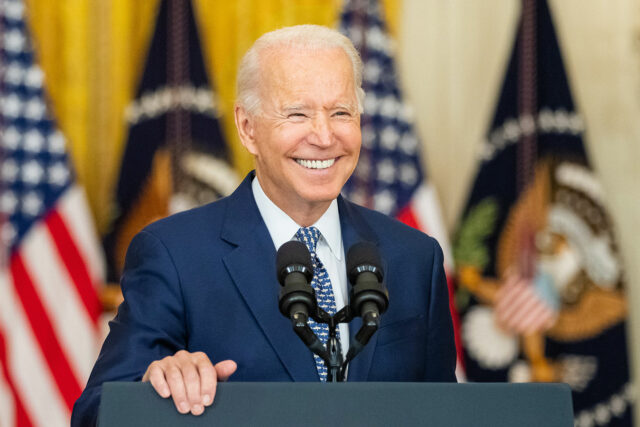
JOSEPH ROBINETTE BIDEN, Jr., the 46th president of the United States, stepped out of the 2024 election so the Democratic Party could try to ensure in the four short months between now and November that Donald Trump doesn’t become the 47th.

And in a shambolic, dangerous political era in which Trump, shrouded in a haze of faux patriotism and strength, has vaulted anarchy, venom, and gibberish onto the global stage, Biden’s act of selflessness and grit is welcome — and, in its own way, epic.

It also opens the door to the creation of a Democratic ticket that could inject new life and energy into a campaign that has lost momentum and enthusiasm to Republicans in the weeks since Biden’s disastrous debate performance and an assassination attempt on Trump upended expectations about the race. The odds, polls, political, and financial machinations and an endorsement from the president favor Vice-President Kamala Harris to assume Biden’s mantle.

If it is Harris, her savvy and strategic selection of a running mate will be crucial. She could tilt toward any number of viable and capable Democrats. Governor Josh Shapiro of Pennsylvania comes to mind. So do Governor Gretchen Whitmer of Michigan and Senator Mark Kelly of Arizona. If Harris fancies something dramatic and seismic, amid complaints about national partisan divides, she could do the unexpected and select former Representative Liz Cheney of Wyoming as her running mate. Imagine that: A former prosecutor and the principled Republican leader of Congress’ Jan. 6 hearings taking on Trump, a twice-impeached convicted felon and sexual predator who is untethered by a sense of public duty or rationality.

This should have happened in a more orderly fashion, and Biden could have set the wheels in motion a year ago. As it turned out, it took his humiliating debate belly flop in June to reveal him publicly as too diminished to continue campaigning. It also took weeks of arm-twisting by leading members of the Democratic Party, and courageous public statements from a handful of others, to persuade Biden to finally step aside.

But he did step aside. In the grander scheme of things, three weeks may not seem like such a long time. There’s another valuable lesson here. The Democratic Party’s leaders have shown they are more willing to do the right thing — seeking the ouster of a sitting president as their standard-bearer — than the Republican Party’s leadership, which has acquiesced and caved to Trump at every turn over the last nine years, no matter how unlawful or heinous his transgressions.

Party leaders usually reflect their voters, however. Survivors in both parties spend a lot of time reading the needs and sentiments of their constituents. Only so much steel and righteousness can be expected of them if their voters want something else. Still, Democrats such as Representatives Nancy Pelosi and Hakeem Jeffries and Senator Chuck Schumer emerge from this historic moment as infinitely more responsible and mature than Republican weathervanes and cowards such as Senator Minority Leader Mitch McConnell and House Speaker Mike Johnson.

During the Republican National Convention in Milwaukee last week, GOP stars and onetime Trump critics such as former United Nations Ambassador Nikki Haley and Governor Ron DeSantis of Florida took center stage at the Fiserv Forum to enthusiastically kiss Trump’s ring. And Trump, looking down from his box seat like a Roman emperor at the Colosseum, soaked up those and other demonstrations of amnesia and fealty, knowing they would compel other Republicans to bend the knee.

Democratic voters want something else, and enough pressure was brought to bear on the White House that Biden could no longer ignore it. Voters had repeatedly shown their willingness to support a president who has delivered a booming economy, national security, and a respect for civil society despite a broader lack of enthusiasm for him. They weren’t willing to let him hang on simply because he wanted to hang on — particularly when it was overwhelmingly evident that he couldn’t beat Trump and that his candidacy might torpedo countless other Democrats in down-ballot races.

Republican operatives who had suddenly grown indignant about the prospect of Biden leaving the race have suggested that they would align with Democrats and sue to stop it from happening. Heritage Foundation President Kevin Roberts told me and a gathering of other journalists at a Bloomberg News event in Milwaukee last week that he was offering his perspective on relevant legalities to anyone interested. While it’s unlikely that any legal challenge will gain traction, it’s a measurement of how weakened Biden had become that even Trump supporters wanted him to stay on the ballot.

Biden’s White House advisers have repeatedly noted that the president couldn’t stand down because it would subvert the intentions of voters who cast their ballots for him during the Democratic primaries earlier this year. But those voters hadn’t seen the June debate, and it certainly stunned enough of them to make late winter and spring ballots inexact barometers of their faith in Biden.

Biden, 81, has been in the political arena for 52 years. When he writes, as he did in his letter announcing he was dropping out of the race, that he has a “heartfelt appreciation” for the American people for the “faith and trust” they have placed in him for decades, he means it.

Biden is flawed, just like each and every one of us. He’s also been an honorable public servant who has looked after the country’s interests for a very long time. He’s now capped off his estimable career by passing the torch to others who can offer voters meaningful alternatives to Trump, an unhinged authoritarian and geriatric carny act who shouldn’t be trusted with the powers and responsibilities of the presidency.

Bravo.

BLOOMBERG OPINION

Harvesting the fruits of a deepening international partnership

Photo from pco.gov.ph

In April, the Philippines, the United States, and Japan have recently announced a significant partnership for the development of the Luzon Economic Corridor. The move aims to accelerate investments in critical sectors like railways; modernized ports; clean energy and semiconductor supply chains and deployments; and agribusiness, among others, bringing these high-impact projects into the future.

Unveiled during the historic trilateral summit of President Ferdinand R. Marcos, Jr. with US President Joe Biden and Japanese Prime Minister Fumio Kishida at the White House in Washington, D.C., the planned development of the Luzon Economic Corridor is the latest addition to the Partnership for Global Infrastructure and Investment (PGII) founded by the G7 countries and marks the first such initiative in the Indo-Pacific region.

This, however, was only the continuation of a deepening relationship between the three countries since the start of the Marcos administration. In 2023, the first-ever meeting of the national security advisors (NSAs) of the United States, Japan, and the Philippines took place in Tokyo, with the United States reaffirming its “ironclad alliance commitments” to both countries. All three NSAs agreed to enhanced trilateral cooperation and response capabilities since then.

The joint statement issued by Messrs. Marcos, Biden, and Kishida highlighted the importance of this collaboration, stating, “Our three nations are proud to partner on the first Partnership for Global Infrastructure and Investment corridor in the Indo-Pacific. Today, we are launching the Luzon Economic Corridor, which will support connectivity between Subic Bay, Clark, Manila, and Batangas in the Philippines.”

“The Luzon Corridor is a demonstration of our enhanced economic cooperation, focused on delivering tangible investments across multiple sectors. Japan, the Philippines, and the United States are also partnering to expand cooperation and investments in other areas of the Philippines.”

Furthering the alliance is the US International Development Finance Corp.’s intention to open a regional office in the Philippines to facilitate further investments across the country. Japan, meanwhile, through the Japan International Cooperation Agency (JICA), will continue to support connectivity in the area, including rail and road projects, as they have in the past.

Messrs. Marcos, Biden, and Kishida also emphasized the need for close coordination in dealing with “economic coercion,” aiming to promote enduring, inclusive economic growth and resilience in their countries and the broader Indo-Pacific region.

“We are pursuing economic projects that advance our shared objectives: promoting broad-based and sustainable economic growth, and investing in resilient, reliable, and diversified supply chains,” the joint statement said.

Strengthening Philippines-Japan economic and security relations

Japan has long been an ally to the Philippines particularly in economic, security, and social development through the Philippines-Japan Economic Cooperation Agreement (PJEPA), which entered into force in 2008 and acts as the cornerstone of the bilateral relationship. Notably, the PJEPA is the first and only bilateral economic treaty signed by the Philippines, a symbol of its unique relationship with Japan.

For instance, in 2021, Japan was the Philippines’ second-largest trading partner and its third-largest export market. Japan has also provided Manila with consistent development assistance like concessional loans to finance important infrastructure and capacity-building projects, social safety-net programs, education, agriculture, and science and technology support.

This partnership was enhanced even further with the establishment of the Japan-Philippines High-Level Joint Committee on Infrastructure Development and Economic Cooperation in 2017, and again with both countries agreeing to accelerate negotiations on a Reciprocal Access Agreement (RAA) that facilitates procedures and sets guidelines for military forces visiting partner countries for training and joint exercises.

Part of the security cooperation between the two nations include humanitarian assistance and disaster relief. Historically, Japan had been instrumental in the recovery efforts during natural disasters like Super-Typhoon Yolanda (international name: Haiyan) in 2014.

Back then, Japan had sent its largest international emergency relief team to the Philippines, comprising of approximately 1,200 personnel) alongside Self-Defense Force destroyers, transport ships, supply ships, helicopters, and transport aircraft. This cooperation eventually led to the signing of “Terms of Reference” for HA/DR cooperation in February 2023.

Japan has also played a crucial role in peace-building and social-sector development in Mindanao through initiatives like the Japan-Bangsamoro Initiatives for Reconstruction and Development (J-BIRD). Launched in 2006, J-BIRD is a comprehensive initiative aimed at socioeconomic development in Mindanao. Japan’s commitment to providing aid even during times of heightened tension has earned the trust of various actors, including armed rebel organizations.

An example is in 2008 when Western aid organizations withdrew their employees due to the deadlocked peace process with rebel forces at the time, leading to a deterioration in security.

On the other hand, JICA stayed and expanded its staff, winning the confidence of MILF locally. This is one of the reasons that led to the decision to hold the first meeting between the President of the Philippines and the leaders of MILF in Japan in 2014.

Last year, President Marcos and Prime Minister Kishida also announced several economic agreements, including Tokyo’s pledge to provide ¥600 billion in development aid and private-sector investment to the Philippines through the end of fiscal 2023, with the sum aimed at supporting projects that would help the Philippines attain Upper Middle Income Country status by 2025.

Included in the agreements is a loan provided by Japan worth ¥377 billion for the development of the Philippines’ North-South Commuter Railway and its extension. Mr. Kishida also reiterated that they are ready to grant an additional loan for further maintenance and rehabilitation of the Metro Rail Transit Line 3.

Cooperation in agriculture, cybersecurity and people-to-people exchanges are also included in the deals, as well as the promotion of health care-related projects.

As these efforts continue to progress, the partnership between the Philippines and Japan is poised to become even more robust, contributing to the overall stability and prosperity of the Indo-Pacific region. It is an optimistic sign for both countries as the strengthening collaboration of the two nations opens up opportunities that could bear fruit even in the far future. — Bjorn Biel M. Beltran

GoTyme Bank expects deposits to reach P20B

GOTYME BANK expects its deposits to hit over P20 billion by yearend as it plans to launch more loan products and add more kiosks, its top official said.

“We’ll end up with over P20 billion this year,” GoTyme Bank President and Chief Executive Officer Nathaniel D. Clarke told reporters last week.

The Gokongwei-led digital bank last week said it booked P17.3 billion in deposits to date as its customers reached 3.7 million amid an increase in monthly transactions.

Mr. Clarke said Gotyme Bank is looking at launching a quick-response or QR code-based credit card early next year.

He said they will not be launching a physical credit card yet as this kind of product takes more time to develop due to its complexity and with the current credit card interest rate cap currently set at 3%.

Meanwhile, Mr. Clarke said their loan product that was launched through a pilot last year in partnership with early wage access provider PayMongo has been performing “above expectations,” with credit losses being manageable.

The product will exit the pilot phase soon, he said, which will allow GoTyme Bank to approve more loans to merchants. The bank will add bigger partner merchants this semester, he added.

GoTyme Bank is also looking to expand its loan book through new product offerings following their acquisition of SAVii in May, Mr. Clarke said.

SAVii, previously known as Uploan, is a financial technology salary lender with a loan book of over P3 billion.

“I think the bigger growth from a lending perspective though in the next year will come through our shareholders’ acquisition of SAVii,” Mr. Clarke said. “We’re going to be partnering with them to expand salary lending but also expand our payroll account offering because they have about 150 corporates and they serve over half-a-million employees.”

GoTyme Bank is also awaiting regulatory approval to roll out cryptocurrency and equity investment features on its app, he added.

“We have both local and international partners for crypto and shares. We’ve actually already developed the product. We’re just waiting for regulatory approval, so I can’t give a timeline because it’s out of our hands now. It’s ready to go,” Mr. Clarke said.

GoTyme Co-CEO and Chief Commercial Officer Albert Raymund O. Tinio added that the digital bank is looking to roll out 100 more kiosks by the end of the year.

“It’s an expansion outside of supermarket and retail. What we’ve seen is that we’re getting very good traction in office buildings and outside of the Gokongwei ecosystem as well. We’re seeing a lot of excitement and traction in new customers in large office buildings that house business process outsourcing (BPO) workers,” Mr. Clarke added.

The digital bank partnered with Accenture last year and with Concentrix last month, and is set to announce another BPO partnership soon, he said. — AMCS

Manila prime office cost down 3.2% in Q2, 3rd cheapest in APAC

ANDREY ANDREYEV-UNSPLASH

MANILA, which remained the third-cheapest prime office market among 23 cities in the Asia-Pacific (APAC) region in the second quarter (Q2), saw a 3.2% decline in occupancy cost compared with the same period last year, according to real estate consultancy Knight Frank.

The average prime office cost in Manila was $27.93 per square foot for the second quarter, down from $28.28 per square foot in the previous quarter, data from the latest Knight Frank Asia-Pacific Office Markets report showed.

Manila’s decline of 3.2% slightly exceeded the regional average decrease of 3.1% during the period.

Knight Frank: Manila 3<sup>rd</sup> cheapest prime office cost in Asia Pacific in Q2

“The average rents fell in Manila as downward adjustments from older prime projects outweighed rental increases for the period,” the firm said.

Knight Frank noted that Manila saw a vacancy rate of 11% in the second quarter and is expected to experience further rent declines in its 12-month outlook.

Kuala Lumpur ($17.99) was the cheapest, followed by Jakarta ($22.99). Rounding out the bottom six were Phnom Penh ($34.13), Guangzhou ($34.38), and Bengaluru ($36.35). The most expensive were Hong Kong ($154.76), Singapore ($118.93), and Sydney ($97.42).

Meanwhile, APAC’s vacancy rate stabilized at 14.8%, halting an upward trend that had been ongoing since the third quarter of 2022.

The consultancy firm said that Brisbane recorded the highest year-on-year rental growth rate at 8.1%, while Beijing saw the largest drop, falling 11.1% in the second quarter of 2024.

In APAC, prime rents continued to decline, reflecting ongoing challenges impacting the occupier market.

“The downward trend has persisted for two consecutive years. Mainland Chinese cities remain the primary drivers of this decline, with rents there decreasing by 10.8% year on year,” the consultancy firm said.

The firm anticipates that APAC’s prime office sector will remain tenant-favorable in 2024.

“The current trend reflects a business cycle downturn. Major office sectors, such as finance and technology, continue to downsize amid ongoing uncertainty in the business environment,” said Tim Armstrong, global head of occupier strategy and solutions at Knight Frank.

“This selective approach will likely keep demand for office spaces restrained.”

Mr. Armstrong added that lease renewals will remain popular, while companies may also consider consolidating their office spaces due to falling rents, prompting a flight-to-quality move.

The report said that the APAC Grade A office inventory stands at 189 million square meters (sq.m.), with 11.3 million sq.m. of new supply expected in 2024. Knight Frank anticipates a 6% increase in office inventory this year.

“No doubt, occupiers face a slate of competing factors, balancing new office culture and ESG objectives against business considerations,” Mr. Armstrong said.

He noted that despite reduced capital expenditure, occupiers are encouraged to stay aware of the region’s ample supply pipeline to explore quality options and capitalize on current conditions by securing favorable rates.

“Given that new supply is expected to tighten due to high interest rates impacting future construction,” he added. — A.R.A. Inosante

ADVERTISEMENT
ADVERTISEMENT