Home Blog Page 2914

Integrating AI into hiring processes

STOCK PHOTO | Image by Gerd Altmann from Pixabay

By Dannah Majarocon

WE are in a very interesting stage in the evolution of the workplace, with the various generations working cohesively together. You have your boomers, Gen Xers, millennials, and Gen Zs. In response to the diverse needs and varying levels of advancement among these groups, we have seen countless business processes follow suit. From highly automated operations to artificial intelligence (AI)-assisted tasks, the landscape has undergone a remarkable transformation, one that we all saw coming.

The hiring process is no stranger to this change as we see more hirers embrace the hybrid approach and utilize technological advancements while integrating face-to-face interactions. We have seen how these digital tools have made recruitment processes more efficient, if not quick.

Likewise, jobseekers’ perspectives have also changed. We’ve observed in the past years that Filipino candidates are increasingly valuing factors beyond mere salary. They’re now considering other factors in order to stay happy and healthy in a role. In our Future of Work Report, work arrangements, social responsibilities, DE&I efforts (diversity, equity, and inclusion), and other benefits are impacting candidate affinity, especially for younger jobseekers.

All these work trends, workforce dynamics, and hiring practices will cascade into 2024. We are now ushering in a new age for both hirers and job seekers and a new age of how we work. Candidates likewise will have different sets of expectations and needs. Furthermore, the coexistence of multiple generations in the workplace encourages hirers to innovate and redefine their approach to seeking candidates.

THE EMERGENCE OF AI IN HIRING
The use of Artificial intelligence (AI) isn’t technically new, but we have seen how it’s been disruptive in the sense of how businesses operate nowadays. Hirers who know how to utilize AI get a step ahead as they get to focus on more complex, more strategic, and more growth-driven activities rather than mundane, repetitive tasks.

AI-powered tools have revolutionized recruitment by making the process faster and more efficient. One of the best examples include the short-listing of candidates on a job platform like JobStreet by SEEK; this helps hirers save time compared to manually scanning all applications. Additionally, with the data-driven job-matching capability of our job platform, AI can provide hirers with access to thousands of high-quality candidates. Likewise, jobseekers have better chances of finding opportunities that match their profiles through the help of AI.

As efficient as it sounds though, we need to understand that AI still can’t operate on its own. There still needs to be some type of human intervention. For instance, in looking for a candidate to fill a creative role or one with highly interpersonal experience, AI can select candidates with the most relevant background, but it may fall short of assessing the candidate’s overall capability as it lacks the soft skills needed to do so. That is why the interview process is still necessary for evaluation.

Ultimately, we have to have the capacity to understand what AI brings to the table and where we can come in to address its limitations so that we learn how to fully maximize it.

INTEGRATING AI INTO JOB PLATFORMS
We at JobStreet by SEEK are actively adapting to the emerging trends and changes in the job market. The technology upgrades, including AI integration, that we’ve recently done and are still working on are things that aim to trans-form the company into a completely reliable platform that candidates and hirers can go to for anything career-related.

As a digital platform, we needed openness to be able to accept and really understand what AI is for. In understanding and appreciating this, we get to find opportunities of how we get to maximize it.

After years of planning and exploration, we’ve successfully applied AI to provide better matches, better advice, and better experience to our users. We’ve started taking into consideration the activities of our candidates in the platform, so it can truly recommend opportunities based on their behaviors and beyond their career profile. They can now enable profile visibility for hirers and get insight-driven career insights at their fingertips. On the hirers’ side, we also apply the same. If a candidate’s profile is fit for their posted role given the data points that our algorithm looks into, we have applied a Top Candidate badge for the hirers to be able to shortlist faster and better. These are just some of the enhancements we have implemented for now as we’re continuously learning how to integrate AI into our platform to better cater to the ever-changing needs of hirers and candidates.

Needless to say, technology in general plays a significant role in today’s environment. The digital space moves at such an exponential speed, and hirers need to leverage efficiency tools such as AI in their recruitment processes to drive progression in their respective companies.


Dannah Majarocon is the managing director, Philippines, of JobStreet by SEEK.
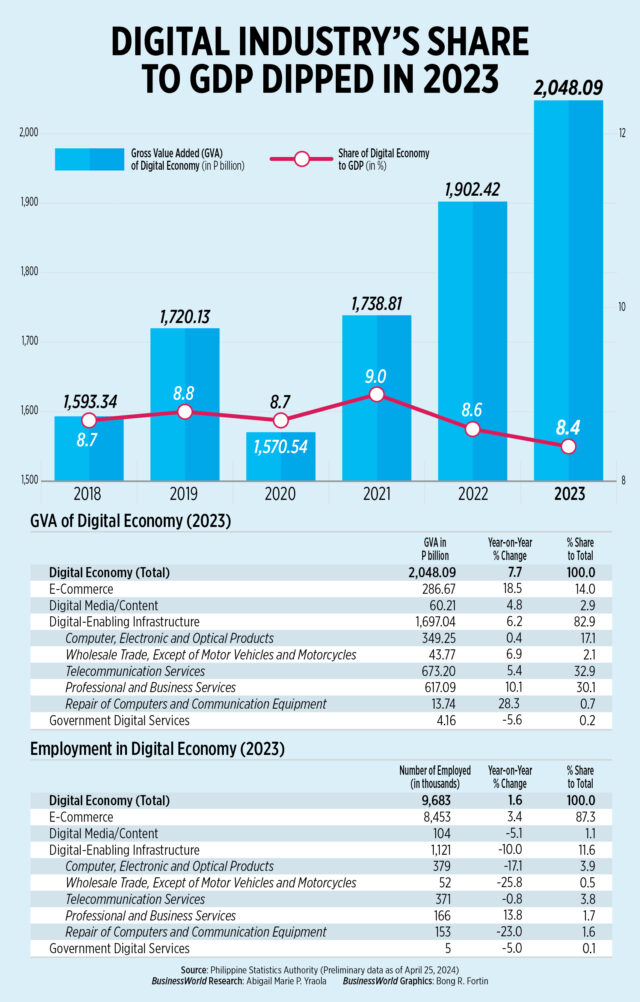
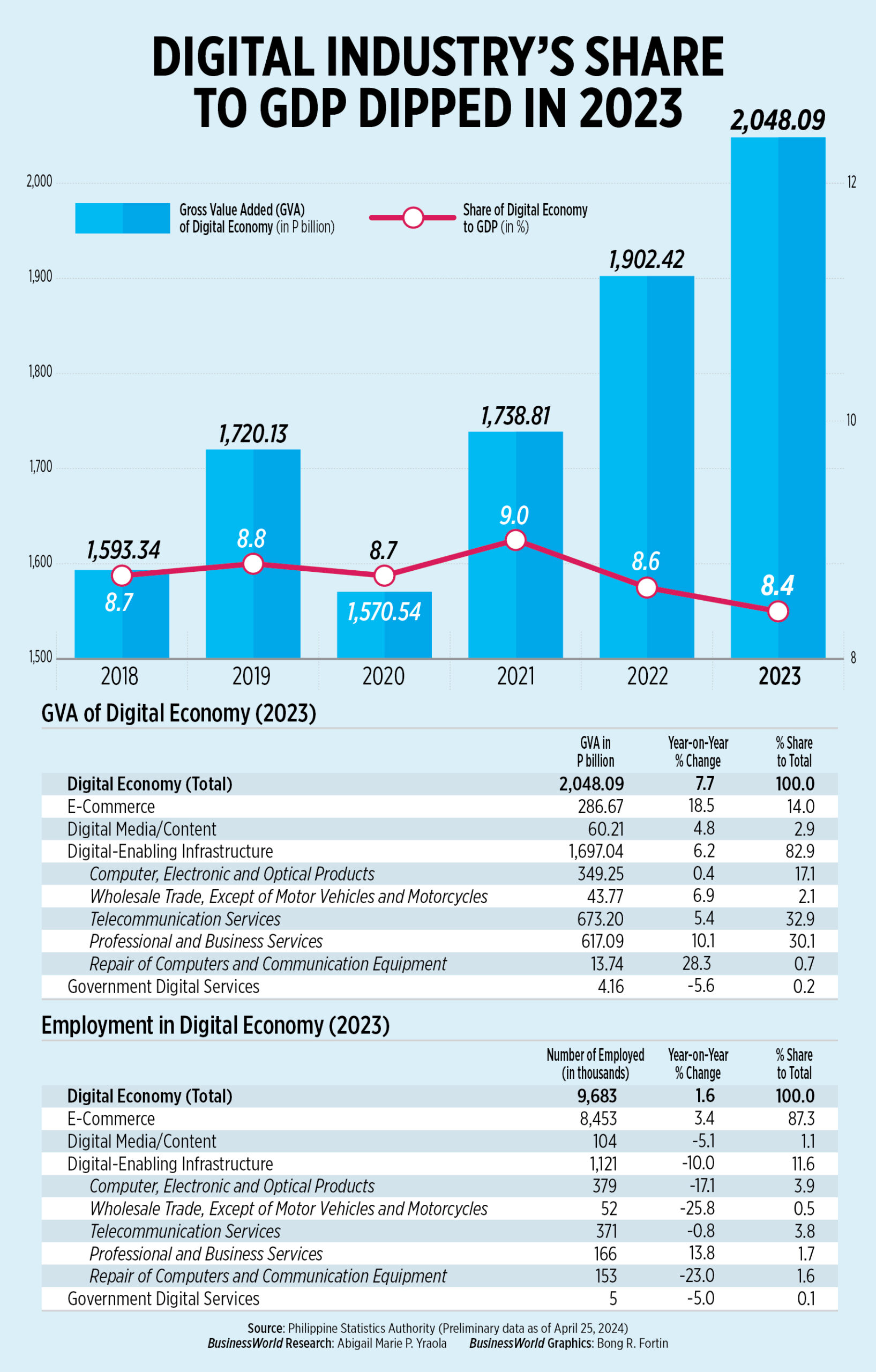
Digital industry’s share to GDP dipped in 2023

The digital economy’s annual contribution to the country’s economic output decreased as its growth slowed down in 2023, the Philippine Statistics Authority (PSA) reported on Thursday. Read the full story.

SMC SLEX expansion seen completed by yearend

SAN MIGUEL Corp. (SMC) said the expansion of South Luzon Expressway (SLEX) is now 70% complete and will be finished by yearend.

“The SLEX expansion will be a significant boost to the Cavite, Laguna, Batangas, Rizal, and Quezon (Calabarzon) region, which currently generates almost 20% of the country’s GDP (gross domestic product),” SMC President and Chief Executive Officer Ramon S. Ang said in a statement on Thursday.

The expansion of SLEX is being undertaken by SMC’s unit SMC SLEX, Inc., which is targeting to widen the expressway to six lanes on each side from the current four sides.

The project will improve the traffic flow and provide a seamless connectivity between southern and northern Luzon, SMC said.

“The expanded expressway will offer faster, safer, and more convenient travel for southern residents, including those who commute to Metro Manila. It will also facilitate the influx of investments in the region and help in de-congesting Metro Manila,” it said.

SMC SLEX, the tollway unit of SMC, has allocated a total of P12 billion for its capital expenditure budget in 2023 to fund its projects, including the construction of the Batangas-to-Lucena expressway and for the repair and maintenance of SLEX. — Ashley Erika O. Jose

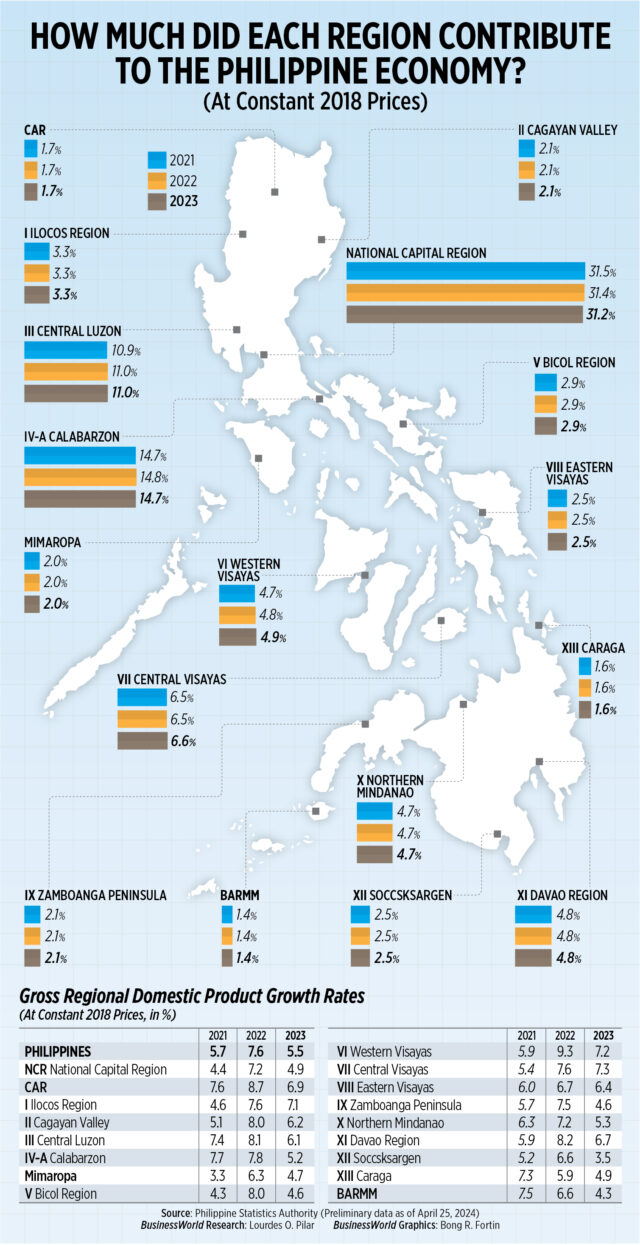
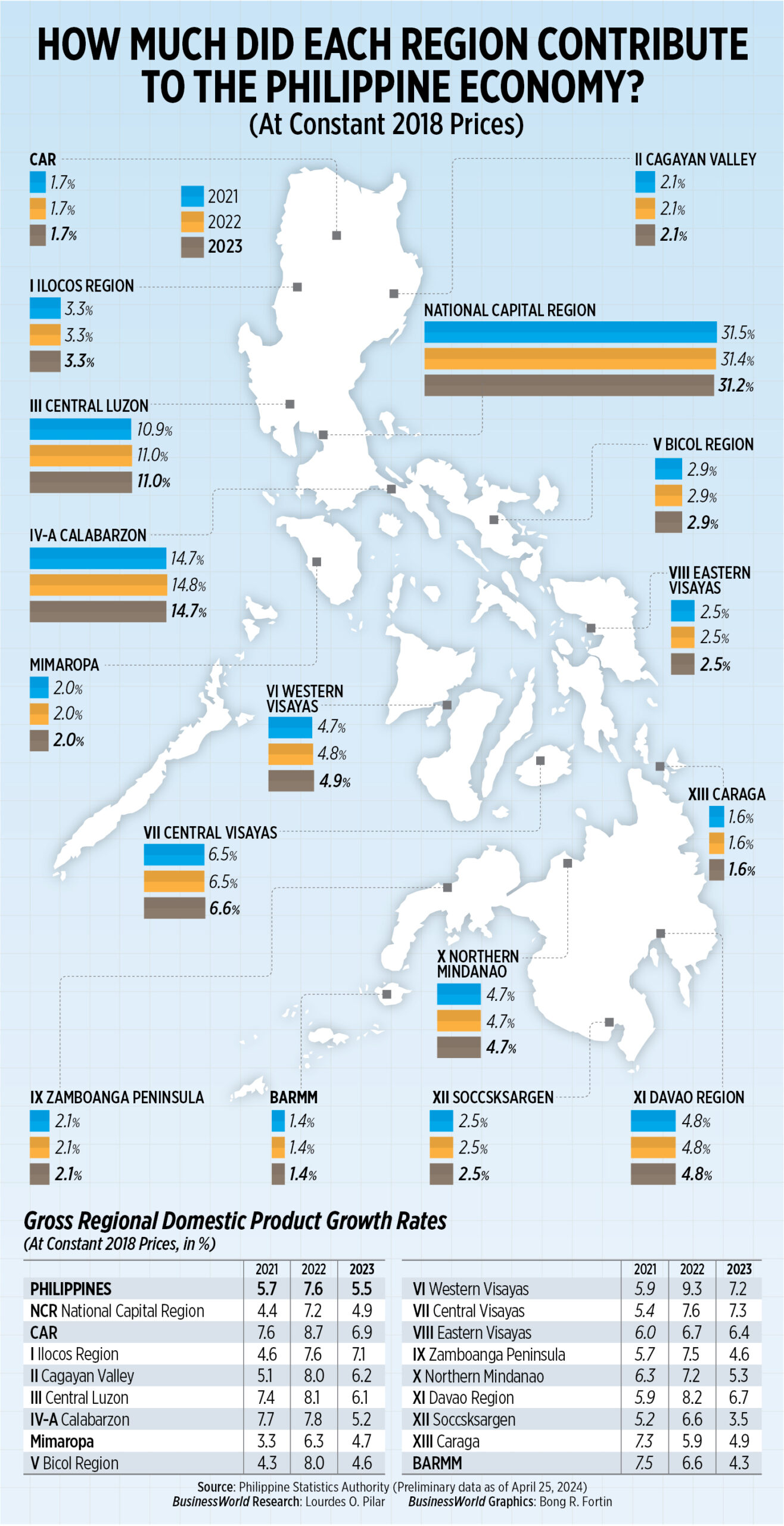
How much did each region contribute to the Philippine economy?

METRO MANILA’S economic output expanded by 4.9% in 2023, the slowest pace in two years, due to base effects and weaker output of key sectors, the Philippine Statistics Authority (PSA) said on Thursday. Read the full story.

SEC introduces new cornerstone guidelines to boost investor participation in IPOs

THE Securities and Exchange Commission (SEC) has introduced new guidelines aimed at enhancing investor involvement in initial public offerings (IPOs) within the local market.

Memorandum Circular No. 8, issued on April 11, outlines these guidelines for cornerstone investors in IPOs, the SEC said in a statement on Thursday.

Cornerstone investors are those who commit to purchase a fixed number of shares to get a guaranteed allocation at the final offer price of an IPO.

“Such investors have been shown to stimulate investor demand in an IPO, and have been seen to boost confidence and deliver a positive signal to the market,” the SEC said.

Under the new guidelines, cornerstone investment agreements will be integral to an issuer’s registration statement submitted to the SEC. These agreements must specify the allocation guaranteed to cornerstone investors and be signed prior to the IPO pricing event.

“The cornerstone investor shall firmly commit to purchase the shares, provided that the final offer price falls within the preferred range as agreed upon,” the SEC said.

“The issuer must likewise disclose in its final prospectus certain details about its cornerstone investors, including the number of participating cornerstone investors and their respective profile descriptions; the number and type of securities proposed to be issued or offered to such investors; and other information relevant to the investment,” it added.

The SEC said a cornerstone investor may also have representation in the board of the registered issuer, provided that it owns only the minimum required number of shares for election.

“Information provided to such investors will be the same as what is made available to the public or those contained in the final prospectus,” it noted. — Revin Mikhael D. Ochave

Ensuring safety and health at work in a changing climate

sol-unsplash

(This column marks World Day for Safety and Health at Work 2024.)

CLIMATE change is having serious impacts on the safety and health of workers in the Asia and the Pacific region.

From blistering heatwaves to dangerously poor air quality, workers bear the brunt of its effects, frequently finding themselves with no choice but to continue working, without adequate protection or recourse, even if conditions are hazardous.

Heat stress is perhaps the most obvious challenge. As temperatures soar, those working outdoors in agriculture, construction, fishing, and transport are particularly vulnerable, facing heightened risks of heat-related illnesses such as heatstroke.

However, indoor workers are at risk too, especially where they are exposed to sources of heat or poor ventilation. Factories, food processing plants, brick kilns, or warehouses can all be as dangerous to workers as toiling under the hot sun.

Better regulations, enforcement, mitigation strategies, training, and awareness can all make a difference. The empowerment of workers, allowing them to stop working due to extreme heat without the fear of losing wages or their jobs, is crucial.

Air pollution exacerbated by climate change heightens the risk of respiratory illnesses. In cities like Beijing, New Delhi, and Bangkok poor air quality is a daily reality, posing significant health risks for workers exposed to pollutants.

Ideally, the root causes need to be addressed. But for a delivery driver or streetside vendor spending all day breathing in this toxic soup, awareness, protective equipment, and — wherever possible — adaptations to working patterns are needed to help minimize the impact.

Beyond heat stress and air pollution, the increasing frequency and intensity of extreme weather events present additional challenges for workplace safety and health.

From cyclones and floods to droughts and wildfires, natural disasters disrupt businesses, endanger workers and inflict significant economic losses.

One example is the garment industry where a recent study by Cornell University’s Global Labor Institute found that extreme heat and flooding could cost the sector $65 billion in export revenue and 950,000 jobs by 2030.

In the aftermath of disasters, recovery efforts must prioritize the safety and well-being of workers, ensuring access to essential services, protective equipment, and psychosocial support.

Not all workers are impacted the same. Those who are vulnerable, informal workers, migrants and the marginalized suffer most. Women are also disproportionately affected. Long standing inequalities and limited access to resources hinders their ability to adapt to changing environmental conditions.

In the face of these challenges, there is an urgent need for coordinated action to safeguard the safety and health of workers in a changing climate.

The starting point must be robust regulatory frameworks which are essential to enforce safety standards and protect workers from climate-related hazards.

In 2022, the International Labor Conference agreed to include “a safe and healthy working environment” in the ILO’s framework of fundamental principles and rights at work. This carries profound implications for policy and practice.

Governments are now compelled to enact and enforce laws that mandate workplace safety and health measures, adequate rest breaks, and access to personal protective equipment, particularly in high-risk industries.

While some countries in the region such as China, India, Singapore, Thailand, and Vietnam have implemented laws and guidelines to address excessive heat in the workplace, protection for workers against other climate change impacts remain fragmented.

There is a real need for comprehensive legislation that integrates climate resilience into existing Occupational Safety and Health frameworks, risk assessments, and preventive measures.

Furthermore, social dialogue between governments, employers, and workers’ representatives as well as researchers and experts in the field is essential for crafting effective policies that are practical and adaptable at the workplace level. Coordination among government departments coupled with knowledge transfer and capacity building, is critical for ensuring policy coherence and implementation. Occupational safety and health initiatives should also be integrated into broader public health campaigns.

At the same time, raising awareness and building capacity among workers and employers will help foster a culture of prevention and resilience. Training programs on heat stress prevention and management, emergency prepar-edness, and occupational health can empower workers to protect themselves and their colleagues from climate-related risks.

Trade unions have a key role in this process. By advocating for the rights of workers and ensuring their voices are heard they can help champion workplace safety and advocate for fair and equitable policies that drive positive change.

As we mark World Day for Safety and Health at Work in 2024, let us reaffirm our commitment to protecting the safety and health of workers in the face of a changing climate. By taking decisive action and investing in cli-mate-resilient workplaces, we can build a future where safety, health, and sustainability go hand in hand, leaving no one behind in the pursuit of a safer, healthier world for all.


Chihoko Asada-Miyakawa is the ILO Assistant Director General and Regional Director for Asia and the Pacific.

Cutting-edge cars revving up the automotive market

Clockwise from top left: Hyundai Elantra, Hyundai IONIQ 5 N, Changan CS15 and Toyota Land Cruiser 250 Series

Innovation in the automotive industry is driving the limits of performance, safety, and sustainability to new heights. The reopening of the economy after the COVID-19 pandemic in 2020 and the gradual increase in mobility were significant factors in the industry’s recovery.

In particular, the first quarter of 2024 has brought positive developments in sales, production, and technological adoption.

According to the Chamber of Automotive Manufacturers of the Philippines, Inc. (CAMPI) and Truck Manufacturer Association (TMA), the local vehicle sales from January to March 2024 increased by 12.7%.

The report also stated that vehicle sales shot up to 109,606 units for the first quarter of 2024 from 97,284 units sold during the same period last year.

In a statement, CAMPI President Rommel Gutierrez said that the performance of the industry in first quarter keeps it on track to achieve its full year target of selling 468,300 units.

Subsequently, the introduction of new car models and technologies has contributed to the increase in car sales in the Philippines this year.

According to a report published by McKinsey & Company, technological advancements have the potential to improve every aspect of the mobility industry’s value chain, from engineering and logistics to marketing and sales, research and development, procurement, manufacturing, and product development. The availability of these advanced features has increased the demand for cars, contributing to the increase in car sales.

Because of emerging technologies, car enthusiasts are eagerly anticipating the latest releases from some of the biggest names in the automotive industry.

Hyundai Elantra

Hyundai has updated the Elantra for the 2024 model year, with a mid-cycle refresh that includes updates to its exterior and interior design, new features, and improved safety technology.

The vehicle has been designed with a focus on fuel-efficiency and aerodynamics, which helps to improve fuel efficiency and reduce wind noise.

The 2024 Hyundai Elantra is available in a range of powertrain options, including a 2.0-liter four-cylinder engine, a hybrid powertrain, and the high-performance Elantra N. The base engine produces 147 horsepower (hp) and is paired with a CVT, while the hybrid system delivers 139 hp and impressive fuel economy.

The Elantra N boasts a 2.0-liter turbocharged inline-four engine, with 276 hp and 289 pound-feet of torque, and comes paired with a six-speed manual or an eight-speed dual-clutch automatic transmission.

The 2024 Hyundai Elantra also features a redesigned front end, with a “shark-nose” styling, sharper lines, and thinner LED running lights. The front fenders have crisper lines, and the rear of the car now features a U-shaped silver element around the diffuser.

The Elantra N receives tweaks to its grille, front fascia, side sills, and rear wing, along with 19-forged wheels and Michelin Pilot Sport 4S tires.

Hyundai has also introduced new colors for the Elantra lineup, including ecotronic gray, ultimate red, amazon gray, and exotic green for the N-line.

Hyundai IONIQ 5 N

The 2024 Hyundai IONIQ 5 is an impressive electric vehicle that is making waves in the market. Along with the Elantra, the IONIQ 5 boasts excellent styling, design, and performance.

One of the standout features of the IONIQ 5 is its above-average electric range, which is complemented by its 800-volt architecture that allows for fast charging. The energy consumption of the vehicle is also competitive, with the entry-level version offering 110 miles per gallon of gasoline-equivalent (MPGe): 306 watt hours per mile (Wh/mi), the Long Range Rear-Wheel Drive (RWD) offering 114 MPGe: 296 Wh/mi, and the Long Range All-Wheel Drive (AWD) version offering 99 MPGe: 340 Wh/mi.

The 2024 IONIQ 5 comes with several standard features, including rear seat side airbags, rear outboard seatbelt pretensioners, steering wheel haptic feedback for lane-keeping and blind-spot warning systems, and in-car Wi-Fi capability.

The IONIQ 5’s cabin is spacious, bright, and airy, with a minimalist design that doesn’t compromise functionality. The touch-sensitive buttons and electronic shifter are well-executed, and the moveable center console in the limited trim adds to the overall convenience.

Changan CS15

Changan Automobile, a Chinese car manufacturer, entered the local automotive market in the Philippines in 2020 and has quickly gained attention by introducing a range of attractive models like the CS35 Plus, CS75 Plus, and the flagship premium crossover CS95. This year, Changan launched the latest CS15 compact sports utility vehicle (SUV).

The Changan CS15 is equipped with a 1.5-liter gasoline engine that produces 170 hp, mated to a five-speed manual or automatic gearbox. This powertrain provides efficient performance, ensuring a smooth and enjoyable driving experience. The vehicle’s exterior boasts a modern and sharp design, with 17-inch alloy wheels and a ground clearance of 190mm. Its dimensions of 4,135mm in length and 1,740mm in width provide ample space for both passengers and cargo. The CS15 also offers a cargo capacity ranging from 230 liters to 1,100 liters.

Safety is a top priority for Changan, and the CS15 includes features like four airbags, stability control, and ISOFIX anchors for child seats. Rear parking sensors and a tire pressure monitoring system are also included, ensuring a secure and protected journey for all passengers.

Changan backs the CS15 with a 5-year (or 150,000-km) warranty and a complimentary checkup within the first 5,000 km, providing peace of mind and exceptional ownership experience.

Toyota Land Cruiser 250 Series

The Toyota Land Cruiser has always been recognized as a symbol of toughness, durability, and off-road capabilities, and the all-new 2024 Land Cruiser 250 Series has kept its reputation in the market with its improved features.

The 2024 Land Cruiser 250 Series has a fresh new look that pays tribute to its predecessors. The vehicle boasts boxy lines, a flat roof, short overhangs, and the iconic “TOYOTA” grille. The design is not only aesthetically pleasing, but it also comes with premium features such as a full-time four-wheel-drive system with center- and rear-locking differentials.

The 2024 Land Cruiser 250 Series is equipped with Toyota’s latest hybrid powertrain. The hybrid system combines a 2.4-liter turbocharged engine with an electric motor, ensuring maximum performance and efficiency. This high-end hybrid system produces 326 hp and 465 lb.-ft. of torque while delivering an EPA-estimated 23 combined mpg rating.

Moreover, the 2024 Land Cruiser 250 Series features an innovative yoke-style steering wheel that replaces traditional accelerator and brake pedals with hand-operated controls mounted on the right side of the wheel. This design makes the Land Cruiser accessible to drivers with lower limb impairments, provides a more comfortable entry and exit, and enables a more relaxed driving position. — Mhicole A. Moral

Low-cost options to celebrate worker achievements

Without spending much money, how do we celebrate promotions and performance milestones in the company? What would be the best way of doing it? — Lemon Lime

A cost-effective way of celebrating significant worker accomplishments is by having, first and foremost, an objective and clear-cut performance management policy. That’s a universal standard. If you don’t have it, by-passed workers and other aggrieved people will surely malign any modest or elaborate celebration you may put up.

In other words, your first consideration is to have a strong policy that may or may not include a celebration protocol matching the company’s budget.

Successful companies understand the value of a reward system that attracts the people they want in the long term. They hire only those who fit into their culture and their own style for a reason. But that’s not all. In general, they follow certain philosophies that are often ignored in other organizations. These are:

Above-industry average pay package. They want their high-potential workers to be paid high salaries and extraordinary benefits that go beyond industry practice. That’s why they are keen in following the latest developments in and out of the industry.

Promotion from within. They develop workers so they can be promoted as soon as the need arises. It is good business sense to promote people from within as it is expensive to hire outsiders. At the same time, it demoralizes incumbents.

Job Security. Job security is an inexpensive way to improve employee morale and productivity. Job security is sacrosanct, unless companies are suffering from serious, irreversible losses.

Sharing the profit. This can be called in so many ways like a productivity gain-sharing scheme, profit-sharing, or a stock ownership plan. Whatever you call it, what’s important is to link the reward to employee accomplishment and productivity.

Empowerment. Allowing employees to participate in problem-solving and decision-making is not only a universal principle, but makes practical business sense. Management cannot do everything. Therefore, it’s best to engage people by listening to their ideas.

BUDGET STRATEGIES
Now that we’re done with the fundamentals, your next approach is to celebrate the big wins with certain inexpensive strategies that should make the experience memorable. For convenience, let’s call these people “high achievers”:

One, put up standee banners of high achievers. People love to see their names and photos up there in the company’s main lobby and cafeteria. Do this every month to foster internal competition, highlighting the work of teams and individual workers. It is imperative that their accomplishments be singled out.

Two, allow flexibility in the high achievers’ schedules. If possible, allow them to choose their work hours. The whole idea is to continue focusing on results, rather than physical presence in the office. This may include work-from-home schemes or flextime.

Three, encourage high achievers to be their own bosses. This is related to number two. This means allowing them to work outside of the rigid constraints of the organization, if only to cultivate their creativity. This must be subject to certain limitations.

Four, feature the work of high achievers’ in the company newsletter. Likewise, highlight their achievements via the intranet or similar platforms where other workers can emulate them. Having this on record perpetuates their work as good examples.

Five, recommend the high achievers to foreign scholarships. There are many weeklong programs that are fully-funded by multilateral agencies. These include the Japan-based Asian Production Organization and Asian Overseas Technical Scholarship.

Six, assign high achievers to be subject matter speakers. This is related to number five above. Have them share what they learned from attending management programs in other countries and identify all possible opportunities or network that may come out of it.

Last, allow the high achievers to choose their assignments. This gives them opportunities to learn and perform other tasks in other departments for one to two years so they can be strong candidates for higher posts in the future.

MORE THAN A PAYCHECK
The above list is incomplete. They are mere examples. You can create your own path to match the culture and resources of your organization. However, you must remember that the work environment and the degree to which it is being nurtured by management may either enable or inhibit people in getting their work done.

It could be as simple as sprucing up a drab workplace, which can make a big difference. Also, protecting workers from an and unhealthy environment is equally important. It may cost the organization little money, but it will be resources very well spent.

In general, energizing people need not be expensive. They want to be treated kindly. That may sound obvious, but you’ll wonder why a lot of employers don’t understand it. My hope is that with this advice, you will come to believe that what and how you communicate with your workers is as important as what you pay them.


Bring Rey Elbo’s Kaizen Problem-Solving Workshop to your management teams. Contact him via Facebook, LinkedIn, X or e-mail elbonomics@gmail.com or via https://reyelbo.com.

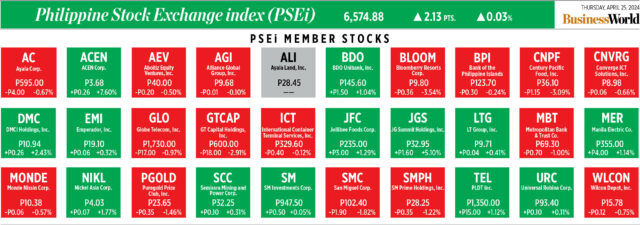
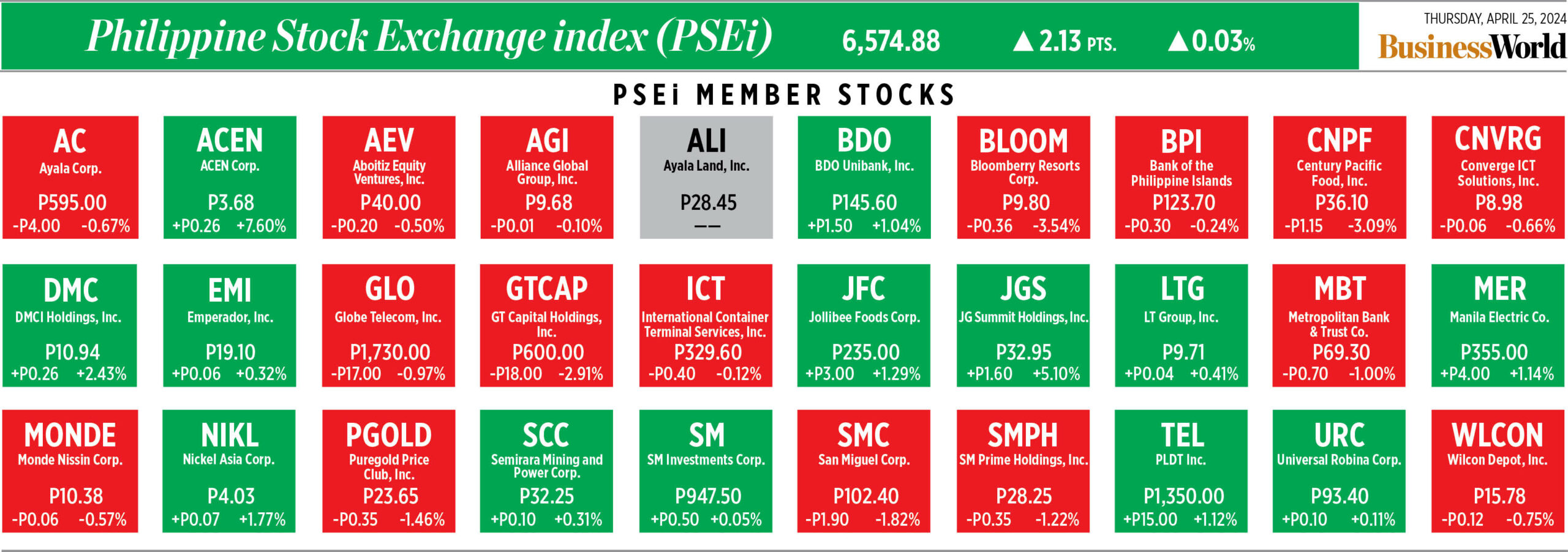
How PSEi member stocks performed — April 25, 2024

Here’s a quick glance at how PSEi stocks fared on ThursdayApril 25, 2024.


Philippines, US to deepen work vs ‘foreign information manipulation’

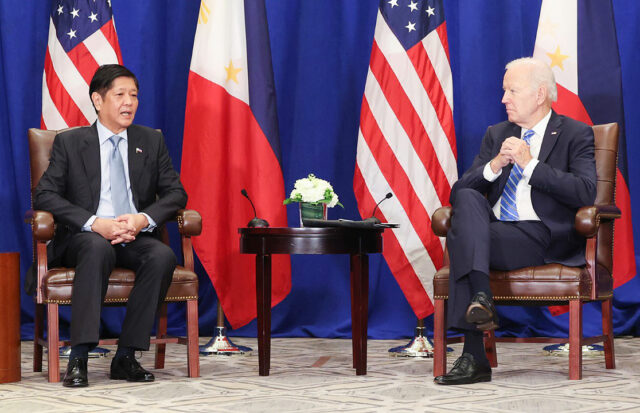
PRESIDENT Ferdinand R. Marcos, Jr. and US President Joseph R. Biden hold a bilateral meeting on September 22, 2022 in New York, USA. — OFFICE OF THE PRESS SECRETARY

SENIOR officials from the Philippines and United States have agreed to set up dialogues on cyber-digital space and democracy, while deepening collaboration on countering fake foreign narratives, according to a joint statement posted on the US Department of State website.

Officials from both sides, who met in Washington, D.C. on April 22 and 23, said they have agreed to boost their cooperation against “foreign information manipulation.”

The State Department’s Global Engagement Center, which tackles propaganda and disinformation, defines the practice as efforts by a foreign government to promote “biased information.”

It linked the term to China in a 2023 report, accusing it of suppressing “critical information that contradicts its desired narratives” on issues including the dispute in the South China Sea.

The parties also opposed any threat or the use of force against the territorial integrity or political independence of any state, alluding to China’s growing assertiveness in the waterway.

They also “reaffirmed the importance of peace and stability across the Taiwan Strait,” while committing to advance a free, safe and open Indo-Pacific region that is “inclusive, prosperous, secure and based on international law.”

The parties likewise agreed to continue talks on finalizing additional sites in the Philippines and enforcing their Enhanced Defense Cooperation Agreement (EDCA), with the US Defense department committing to invest $128 mil-lion in infrastructure.

They will also continue discussions on prepositioning United States Agency for International Development (USAID) disaster relief commodities for Philippine civilian disaster response authorities at key EDCA sites.

The Philippines and US are also expected to conclude a “general security of military information agreement” by yearend, according to the statement.

Philippine and US officials agreed to meet in Manila around September or October for a maritime dialogue.

Security analysts on Wednesday criticized the paltry share of the Philippines in the United States’ $95-billion (P5.5 trillion) aid package — mostly military assistance to Ukraine, Israel and Taiwan and US partners in the In-do-Pacific region — saying Manila should demand more as it deals with China, the world’s biggest naval power.

The Philippines will get $500 million in aid under a US Senate-approved bill, compared with $61 billion for Ukraine’s efforts against Russia’s invasion and $26 billion for Israel and humanitarian aid for civilians in conflict zones around the world.

The Philippine share is part of the $8.12 billion allotted to “counter communist China” in the Indo-Pacific region.

With a 79–18 vote in the US Senate, the proposed package that President Joseph R. Biden is expected to sign this week is seen as a bipartisan victory, getting support from most Democrats and traditional Republi-cans wary of ultra-nationalist sentiments among their ranks.

The House passed its version of the proposed package on Saturday in the form of individual bills combined for Senate action.

President Ferdinand R. Marcos, Jr. in February said the Philippines was on the frontline of a battle for regional peace as it faces China’s growing assertiveness in the South China Sea.

China claims the waterway almost in its entirety, including waters that fall within the Philippines’ exclusive economic zone.

It continues to block resupply missions at Second Thomas Shoal, where Manila grounded a World War II-era ship in 1999 to assert its sovereignty, by firing water cannons at much smaller Philippine boats.

President Ferdinand R. Marcos, Jr. has expanded US access to four more military sites in the Philippines on top of the five existing ones.

He told foreign journalists in Manila this month that he does not plan to expand US access to military bases in the Philippines.

Mr. Marcos met with US President Joseph R. Biden and Japanese Prime Minister Fumio Kishida in the nations’ first trilateral summit in Washington this month. — J.V.D. Ordoñez

Congressmen seek probe of US missile system use in Balikatan war games

DVIDS/ LANCE CPL. ISAIAH CAMPBELL

By Kenneth Christiane L. Basilio

A GROUP of militant lawmakers on Wednesday filed a resolution seeking to investigate the missile system brought by the United States in the country for annual war games, saying it could potentially be carrying nuclear warheads.

“These Balikatan exercises need transparency because we don’t know if these Tomahawk missiles have nuclear warheads, which is against our Constitution,” Party-list Rep. France L. Castro said in a statement in Filipino.

The US brought a mid-range missile system for the Balikatan or shoulder-to-shoulder military exercises with the Philippines that started this week.

“There is a need for transparency on Enhanced Defense Cooperation Agreement sites as well as the equipment… the US brings into the Philippines as Tomahawk cruise missiles may carry… nuclear warheads,” according to House Resolution No. 1688.

“The deployment of such missile systems not only endangers the lives of Filipinos but also… undermines peace and stability in the region,” political activist Antonio L. Tinio said in the same statement.

China has expressed “grave concern” over the move to bring the missile system into the country.

“The US move exacerbates tensions in the region and increases the risk of misjudgment and miscalculation,” China Foreign Ministry spokesman Lin Jian told a news briefing last week.

The United States is using the annual drills to advance its military interests in the Asia-Pacific region, according to the resolution.

“The Balikatan exercises only exacerbate warmongering and seek provocation against China,” Ms. Castro told BusinessWorld in Filipino in an interview on Wednesday.

Don Mclain Gill, who teaches international relations at De La Salle University in Manila, said the war games improve the interoperability of the Philippine military with its allies.

“With or without China, such drills would have continued,” he told said in a Facebook Messenger chat this week. “However, China’s intensified belligerence in the West Philippine Sea adds more importance to Balikatan given the Philippines ‘ defense-oriented policy.”

Ms. Castro said the House should prioritize the probe.

The Senate and House of Representatives have separately passed several bills that seek to boost Philippine claims in the South China Sea, including one that defines the maritime boundaries of the country.

Also approved was a measure that seeks to encourage investments in the country’s local defense industry.

Political analysts said these measures could help deter Chinese military expansionism in the waterway.

“Lawfare needs a proper perspective,” Joshua Bernard B. Espeña, vice-president at the Manila-based International Development and Security Cooperation, said in a Facebook Messenger chat.

“It is not a silver bullet, but rather one of the many tools,” he added, referring to the use of legal action to cause problems for an opponent.

The government of President Ferdinand R. Marcos, Jr. is “clearly using international law and international relations as tools to assert our position,” Michael Henry Ll. Yusingco, a policy analyst and senior research fellow at the Ateneo de Manila University Policy Center, said via Messenger chat.

“He is clearly making an effort to internationalize the West Philippine Sea issue, which means putting the 2016 arbitral ruling at the very center of our position,” he added.

China has ignored the decision by a United Nations-backed court in the Hague voiding its expansive claims in the South China Sea.

Almost half of Pinoy families feel poor — SWS poll

PHILSTAR FILE PHOTO

ALMOST half of Filipino families feel poor, mostly unchanged from December, according to a Social Weather Stations (SWS) poll.

SWS noted that based on the March poll, 46% of the families or about 12.9 million thought they were poor, compared with 47% or about 13 million in December. It added that 30% rated themselves as borderline poor, while 23% said they were not.

“Compared with December 2023, the percentage of poor families hardly changed from 47%, while borderline families barely moved from 33%, and not poor families rose slightly from 20%,” the pollster said.

SWS said there was a slight decrease in the self-rated poverty figure in Mindanao and Metro Manila, while it rose in the Visayas and steadied for the rest of Luzon.

“As of March 2024, the percentage of self-rated poor families was highest in the Visayas at 64%, followed by Mindanao at 56%, Balance Luzon at 38% and Metro Manila at 33%,” it added.

In December, self-rated poverty was 61% in Mindanao 37% for Metro Manila, 58% for the Visayas and 39% for the rest of Luzon.

Meanwhile, the borderline fell in the Visayas to 25% from 35%, and hardly changed in Metro Manila at 27% from 29%, at 31% from 34% for the rest of Luzon and at 35% from 32% for Mindanao.

At the same time, Filipinos who thought they were not poor rose in Metro Manila to 41% from 35%, while it hardly changed at 30% from 27% for the rest of Luzon, at 11% from 7% for the Visayas and at 9% from 6% for Mindanao, SWS said.

SWS interviewed 1,500 adults on March 21-25 for the poll, which had an error margin of ±2.5 points. — Norman P. Aquino