Home Blog Page 2876

Filinvest Development sets up to P25-billion capex budget for 2024
GOTIANUN-LED conglomerate Filinvest Development Corp. (FDC) has allocated between P20 billion and P25 billion for its capital expenditure (capex) budget this year.

FDC Chief Finance Officer Brian T. Lim said during a briefing last week that 60% of the budget would go to real estate, 15% to renewable energy, another 15% to hospitality, and the remaining 10% to other businesses.

“We will fund this year’s capex through internally generated funds,” he said. FDC invested P13 billion in capex last year, he added.

FDC’s ongoing renewable energy projects include a 20-megawatt (MW) solar energy project in Misamis Oriental and a 12-MW solar energy project in Cebu, FDC President and Chief Executive Officer Rhoda A. Huang said.

“The commercial operations for the solar projects will happen in the next 10 to 12 months,” she said.

Ms. Huang said that FDC’s expansion in the hospitality segment include the ongoing construction of the 200-room hotel in Baguio City under the Grafik brand, which will open in the first quarter of 2025.

FDC is also renovating and expanding its Crimson Mactan Hotel, she added.

“Mactan was hard hit by Typhoon Odette. Then refurbishing happened and then we’re looking at expansion,” Ms. Huang said.

In terms of digitalization projects, FDC Chief Operating Officer Ysmael V. Baysa said the conglomerate has ongoing projects to improve its enterprise resource plan (ERP).

“Right now, we have several ERP systems across the conglomerate. We want to convert into just one. We’re also enhancing our purchasing segment, project management system, and the management report and analysis and planning system…,” he said.

“The (improvement) project started as early as 2021, on the conceptualization. The projects have been ongoing,” he added.

Meanwhile, Ms. Huang said that FDC is securing approval for a preferred shares listing as part of the conglomerate’s fundraising efforts. 

“It will not be early. If ever, it (preferred shares listing) will be late fourth quarter or first quarter of 2025 because we have funding in place for the purposes of the budgeted capex for 2024. We will be opportunistic,” she said.

“It is early. We want to see the developments for the purposes of the capex budget utilization,” she added.

In January, FDC raised P10 billion from the first tranche of its P32 billion three-year bond program.

The net proceeds will be used to partially finance our maturing bond redemption and capital expenditure, including financing for equity investments in renewable energy, water, hospitality, and digitalization projects.

FDC has presence in the real estate sector through Filinvest Land, Inc. and Filinvest Alabang.

The conglomerate is also in the power and hospitality sectors through FDC Utilities, Inc. and Filinvest Hospitality Corp., respectively.

It is also engaged in the banking sector via East West Banking Corp., as well as in the sugar and infrastructure segments.

FDC saw a 58% jump in its 2023 attributable net income to P8.9 billion. The conglomerate’s total revenues and other income increased by 31% to P92.8 billion.

Shares of FDC were last traded on April 5 at P5.50 apiece. — Revin Mikhael D. Ochave

Louis Vuitton totes and Dior micro bag can save luxury

Clockwise from above: THE LV Neverfull, a mini Dior Book Tote with strap, a re-issued quilte leather Little Stam bag from Marc Jacobs, Loewe’s Petal raffia basket bag, and Prada’s robot keychain

By Andrea Felsted

IN 2007, Louis Vuitton introduced a new spacious bag in its trademark monogram. Meant as a seasonal beach carry-all, the Neverfull, as it was known, became an instant hit. Part of the appeal was that it was relatively affordable. I purchased one in 2010, and it cost around £600 ($760). Not cheap for a coated canvas bag, but around a quarter of the price of a classic Chanel.

That was a time when many people — either through rising wealth in China and the US, or diligent saving (like this columnist) — became able to buy into designer names that previously only catered to the very rich. Today, after several years of sharp price increases (a large Neverfull now costs £1,450) and the luxury industry flatlining, brands must once again democratize their customer bases.

The European giants have long been good at this. Take Kering SA’s Gucci for example: It wasn’t just its rejuvenation under former creative director Alessandro Michele eight years ago that turbo-charged sales. It also sold bags well under £1,000 and belts as relatively affordable ways to buy into the new Gucci. This helped it capture first the flourishing Chinese middle class and then young Americans flush with pandemic stimulus checks and crypto gains.

Now Gucci, like its peers, is trying to move upmarket. In one respect, this makes sense. The US aspirational luxury consumer, under pressure from inflation and rising interest rates, has retrenched, while Chinese buyers remain cautious. Meanwhile, sales growth at Hermes International SCA and Brunello Cucinelli SpA, which cater to the 1%, has outpaced rivals. Those more exposed to the middle class, such as Kering and Britain’s Burberry Group Plc, have struggled.

But with every brand courting the rich, luxury groups are leaving the lower echelons to the more premium fast-fashion players, led by Inditex SA’s Zara, as well as a diminishing number of companies still catering to this segment, such as jeweler Pandora A/S and Hugo Boss AG. The bling behemoths must reconnect with the cohort they have priced out — but in a way that doesn’t destroy their desirability.

The most obvious route is through categories such as eyewear, beauty, and fragrance that have long served as entry points. Even Hermes, best known for the Birkin, with a midsize bag costing around £8,000, sells beauty products, fragrance, scarves, ties, and costume jewelry.

Another way to make products more affordable is to simply shrink them. Small leather goods are already becoming a more important part of the range. Mini bags can be sold for less than larger items. Indeed, houses including LVMH’s Dior have produced slightly cheaper “micro” versions of popular models (as well as even less pricey pouches), sparking a raft of TikTok videos on just how much, or little, buyers can fit into them.

More affordable collections, known as secondary or diffusion lines, which were popular in the noughties, are a no-no. But there may be room for some limited-edition capsules. There could be some blurring of brand boundaries in other ways too.

Take Marc Jacobs, owned by LVMH. It has recovered from years of underperformance, thanks to its logo Tote bags, which start at about £200. It has also reissued some of its leather bags, including its best known, the Stam, which sells for the mid-range $1,495, as well as a few styles from its now defunct Marc by Marc Jacobs secondary line. It’s not hard to see it delving further into what it dubs the M(archives), particularly if the Tote becomes ubiquitous.

Another option is offering more unusual products, which don’t feel like trading down. A case in point is Loewe’s raffia baskets. These start at around £400, much less than its leather bags that typically cost between £2,000 and £3,000. The distinctive accessories, which have spawned a raft of high-street imitations, have only made the LVMH-owned brand designed by Jonathan Anderson more coveted. Other novelties, such as Prada’s robot keychains and even Louis Vuitton’s chocolates (on sale in France and recently Singapore), can stretch houses even further.

Companies could even start offering secondhand pieces, following Rolex SA’s lead and certifying pre-owned products for sale on their own websites.

Given that selling secondhand goods requires specialist skills and logistics, they could also partner with resale sites such as The RealReal, Inc. Kering has gone a step further already, investing in rival platform Vestiaire Collective.

Such an approach can prevent customers unable to afford new products from defecting to more affordable brands — such as Tapestry, Inc.’s Coach, which has found success with its Tabby bag. This also establishes relationships with aspiring luxury shoppers, who may be interested and able to buy new items later on.

There were rumors last year that the Neverfull was being discontinued or could only be purchased via a wait list. These proved false, and the bag remains a bestseller. That’s fortunate for me, as it’s still one of my go-tos.

The luxury giants should take note. With LVMH set to generate little sales growth from its fashion-and-leather-goods division in the first quarter, they need styles such as the Neverfull more than ever.  Bloomberg Opinion

Solar Philippines, Indonesian partner sign $14-M loan for Bali solar farm

LEVISTE-LED Solar Philippines Power Project Holdings, Inc. and its partner in Indonesia have signed a $14-million (P792 million) loan deal for a 25-megawatt (MW) solar farm project in East Bali.

PT Medcosolar Bali Timur, Solar Philippines’ joint venture with Indonesian oil and gas firm Medco Energi (Medco), signed the loan agreement with Bank Negara Indonesia (BNI), the company said in a statement over the weekend.

“This project is in line with Medco Power’s mission to create long-term value in renewable energy,” Solar Philippines said.

Medco is the largest independent oil and gas exploration and production company in Indonesia.

The implementation of the solar project began last year. It is estimated to cost $20 million and is funded by a combination of BNI’s credit facility and equity invested by Medco and Solar Philippines.

The two companies formed the joint venture to submit a bid in the first competitive auction for utility-scale solar of Indonesia’s state utility PLN.

Solar Philippines owns 49% of PT Medcosolar Bali Timur. It also owns 49% of PT Medco Solar Bali Barat, which is developing another 25-MW solar farm in West Bali.

This brings the total capacity of the joint venture of Solar Philippines and Medco in Bali to 50 MW.

The joint venture plans to energize the first 25 MW by the end of 2024, while the next 25 MW is scheduled by 2025.

“Indonesia has one of the world’s lowest solar capacity per capita, with an estimated total 500 MW of solar operating in a country of 279 million people,” Solar Philippines said.

“This is due to low power prices, and the scarcity of land in the most populous island of Java, with challenges similar to developing solar in Luzon,” it added. — Sheldeen Joy Talavera

A ‘ruffian’ bag is the star of Givenchy’s collection

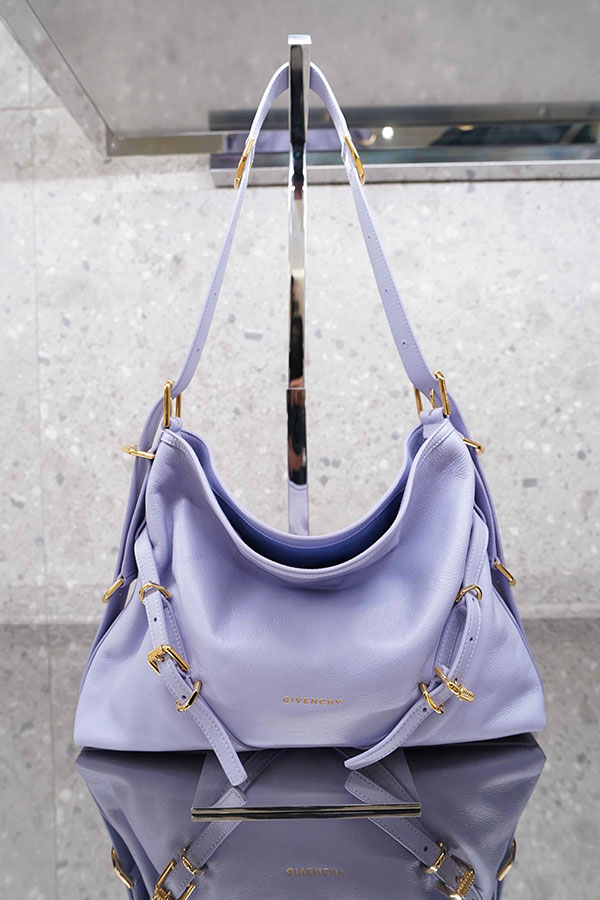
A BAG from the Givenchy Voyou Collection, a highlight for Spring Summer 2024.

GIVENCHY’s Spring/Summer 2024 line has finally hit stores in the Philippines, after a debut last September in the grounds of L’École Militaire in Paris. The collection was shown to media guests at the Givenchy boutique in Greenbelt on April 3.

Stars of the collection include the Voyou bag (which translates to “ruffian”), slouchy and comfortable. Its new incarnation in the S/S 2024 viewing shows it with sliding chain straps and etched hardware buckles. The bag’s shape echoes throughout clutches and totes.

Meanwhile, the brand has a new 4G buckle (literally four Gs, as in the French brand’s initial, joined together). This is seen on buckles of pumps and sandals, embossed on a sandal, and in various chains seen in other bags.

Another bag that might cause interest is the sharp Cut Out, shaped like a classic hobo but plunging to a deep V in the center. This is also marked with the 4G chain, giving it a sophisticated touch.

The same 4G pattern is also seen making up the heels of pumps.

“For the Spring Summer 2024 Womenswear Collection, Givenchy reflects on a collective comprehension of elegance as shaped by the genetics of its own heritage and a present-day desire for simplicity,” said a statement from the maison. “Elegance is instinctive. An inherent sensibility, it is founded in codes that seduce our shared sense of sophistication: the drape of a chiffon dress, the curve of a sculpted neckline, the grace of a hand-painted flower.”

In the Philippines, Givenchy is exclusively distributed by Stores Specialists, Inc., and is located at Shangri-La Plaza Mall East Wing, Greenbelt 4, and Solaire Resort Entertainment City. — JLG

YGG Pilipinas Roadtrip to visit local communities starting this April

Yield Guild Games (YGG) Pilipinas, a growing community of gamers, creators and traders supporting Web3 adoption in the Philippines, will be going on its annual “Roadtrip” from April to July as part of its efforts to bring Web3 closer to Filipino communities.

Six locations will be visited over four months, beginning in Batangas (April 13 at Aquamarine Recreational Center) and followed by Baguio (April 27 at Baguio Ayala Land Technohub, Camp John Hay), Cebu (May 18 at Ayala Malls Central Bloc), Davao (June 1 at Ayala Malls Abreeza), Bacolod (June 22 at Ayala Malls Capitol Central), and Manila (July 6 at Ayala Malls Manila Bay). Attendees will be able to learn more about Web3, play fun and exciting new Web3 games, and meet other members of the community.

Each leg of the Roadtrip will be jam-packed with meet-and-greets, game demos, show matches, and a live version of the Discord show Crypto Fiesta. Web3 Metaversity, the online learning platform led by YGG Pilipinas, will conduct sessions at the event to educate attendees about cryptocurrency, blockchain, and trading fundamentals. Attendees will receive a quest card to keep track of the booths they will visit in the Experience Zone. Participating exhibitors include Web3 games Arena of Faith (AOF) and Sipher, game developer Delabs Games, game asset manufacturer BreederDAO, crypto exchange Coins.ph, and Web3 mobile infrastructure Jambo. The popular farming game Pixels will also be showcased in a stage demo during the Batangas and Baguio legs of the Roadtrip.

“Web3 gaming has opened many possibilities for people living with low income in the Philippines. Many of our kapwa Filipinos were able to bounce back after the pandemic because of Web3 games, and it was a small barangay in Nueva Ecija that started this now global movement. We want to ensure that every community in the Philippines has an opportunity to participate in this economy. The YGG Pilipinas Roadtrip is one of the ways we can teach new, future-oriented skills to the young, tech-savvy people in our provinces. Anyone, regardless of who they are or where they live, can access Web3. Our kababayan from the provinces could be the next leaders, founders and creators in this emerging industry,” said YGG Pilipinas Country Head Mench Dizon.

The event will be easy to spot, as there will be a YGG Jeep prominently parked at the venue and decked out in YGG Pilipinas themes. The first leg in Batangas will feature YGG Pilipinas Campaign Director John Sedano and YGG Pilipinas Community Lead Spraky in attendance as Web3 Metaversity mentors, along with other community leaders and key opinion leaders. There will be a 45-minute stage program, which will dive deep into the topic “Building Communities and Finding Careers in Web3” with speakers YGG Pilipinas Community Manager Syl, YGG Scholarship Manager and Coordinator Kuya Kevs, and Web3 content creator Munchies.

The Baguio leg will feature Spraky and YGG Lead Game Ambassador Miccolo as Web3 Metaversity mentors. There will be a separate area with two 30-minute sessions focused on the topic “Leading a Community That Matters,” where Spraky will join fellow speakers, YGG Head Coach and Asset Manager Nate and YGG Guild Advancement Program (GAP) Ambassador and Web3 content creator Kookoo. Information on other legs will be posted on YGG Pilipinas’ social media channels in the coming weeks.

The YGG Pilipinas Roadtrip is being held with the support and collaboration of the Department of Information and Communications Technology (DICT). In addition to its national-level partnership with the DICT, the YGG Pilipinas Roadtrip has also partnered with DICT Region IV-A and DICT Cordillera Administrative Region. These industry partnerships will enable more students to participate in the Roadtrip through the mobilization of the DICT’s regional offices. The DICT will also work with LGUs for additional support, including through the Sanggunian ng Kabataan, as well as assist with social media and local promotions.

Coins.ph, one of the leading crypto exchanges in the Philippines, is a platinum sponsor and the official exchange partner for the event, while Ayala Malls is its official venue partner. Other platinum sponsors are Delabs Games and Stables. Gold sponsors are Sipher, Arena of Faith, BreederDAO and Jambo, which is also the event’s official smartphone partner. Carv.io and OP Games are the event’s silver sponsors. Other partners include BitPinas, The Sandbox, and over 20 communities and guilds from different regions of the Philippines.

PAL says passenger volume may soar by up to 20% this year

PHILIPPINE STAR/EDD GUMBAN

FLAG CARRIER Philippine Airlines (PAL) said it expects passenger volume to rise by up to 20% this year.

“We are projecting about 10%-20% growth,” Stanley K. Ng, president and chief operating officer of PAL, said on the sidelines of the company’s media briefing last week. 

Last year, the airline company carried a total of 14.7 million passengers, marking a 58% increase from the 9.3 million passengers recorded in 2022.

“We anticipate to again increase passenger carriage this year,” Cielo C. Villaluna, PAL spokesperson, said in a Viber message. 

Data provided by the company showed that it managed to mount a total of 105,294 flights last year, 35.8% higher than the 77,533 total flights in 2022.

For this year, PAL is working to strengthen its global and local network, the company said, adding that it also plans to upgrade its existing aircraft and add more fleet in the next few years.

PAL operates a total of 78 aircraft and the company expects to add one more, operating a total of 79 aircraft by yearend.

The airline plans to buy at least 22 aircraft, which will be delivered between 2025 and 2029, the company’s  General Counsel Carlos Luis L. Fernandez said. 

PAL is also set to operate nonstop Manila-Seattle flights three times a week beginning Oct. 2.

Aside from Seattle, which the company considers a promising market, PAL is looking to explore more Asian and local destinations. However, some long-haul flights it plans to offer will be on hold for now until the arrival of its aircraft order.

Last year, PAL Holdings, Inc., the listed operator of PAL, saw its attributable net income more than double to P16.81 billion driven by heightened passenger volume and route expansions.

Its 2023 income is considered to be the company’s highest in history, PAL said in a previous media release. 

The company’s passenger revenue increased by 37% to P160 billion in 2023 from P114 billion in 2022, boosting the company’s overall revenues. — Ashley Erika O. Jose

Scenes from #MIAS2024

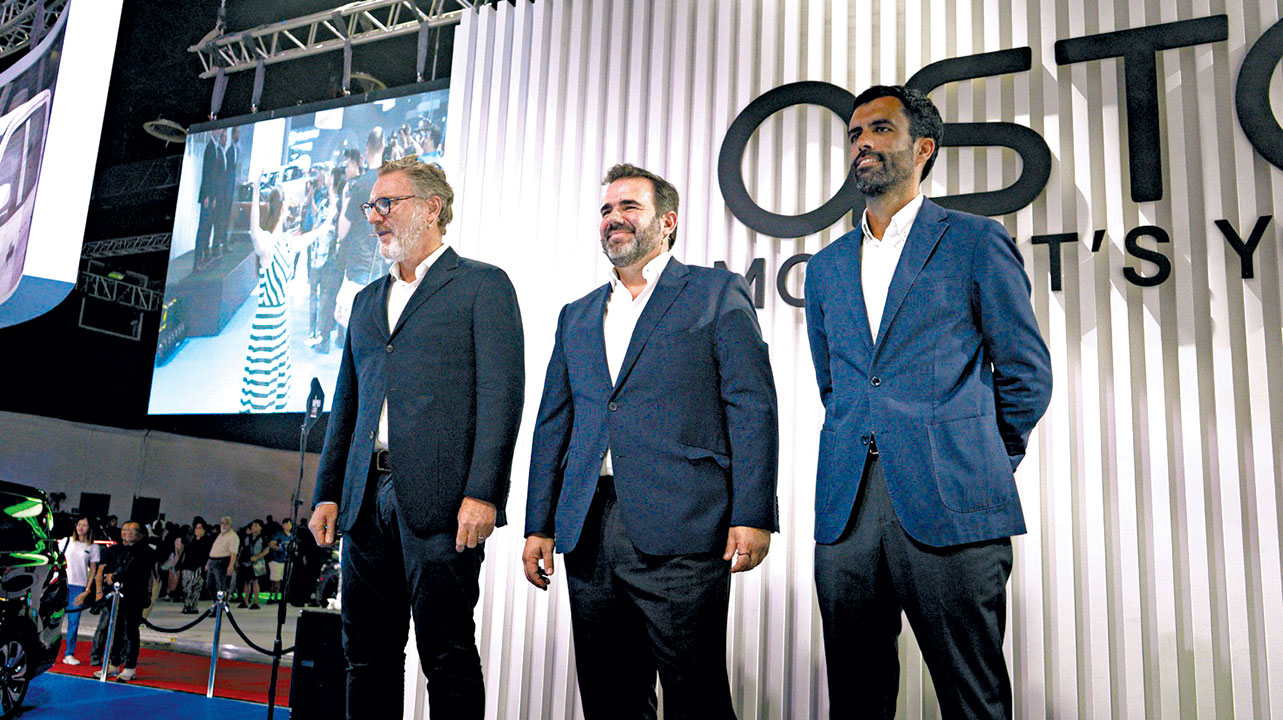
The confetti starts to fall on organizers, auto executives, and VIP guests as the Manila International Auto Show (MIAS) 2024 opens at its main location at the World Trade Center Metro Manila. — PHOTO BY KAP MACEDA AGUILA


The country’s premier annual mobility extravaganza opens its doors at two venues for the first time

The 19th edition of the Manila International Auto Show (MIAS) revved up, for the first time, in two venues last Thursday — its traditional haunt at the World Trade Center Metro Manila, and a new “extension” at the SMX Convention Center. Visitors only needed to pay for admittance once and had access to free shuttles that took them to and back from either venue.

“Velocity” was front and center at both locations, and while we work on a more thorough report for next week, we present you a front-row seat to the sights on opening day. Enjoy! — Kap Maceda Aguila

Style (04/08/24)


Banana Republic holds online sale

BANANA Republic Philippines marks its 5th anniversary with a week-long sale online. From April 8 to April 14, online shoppers at bananarepublic.com.ph will find exclusive daily offers and discounts. April 8 sees 50% off on tops, and the next day will have a 50% off offer on bottoms. Women’s items go on sale for 50% off on April 10, while the same 50% discount applies to men’s items on April 11. From April 12 to 14, all the site’s offerings go on sale at 50% off.


Kathryn Bernardo is Lancôme PHLs’ 1st brand ambassador

FRENCH beauty brand Lancôme has named actress Kathryn Bernardo as its brand ambassador in the Philippines. In selecting their first ambassador for the country, Lancôme Philippines said they sought an individual who would embody and amplify their ethos of empowerment, happiness, and authentic beauty. “More than just a brand representative, this person needed to be a resilient, confident woman whose essence reflected Lancôme’s belief in happiness as a source of beauty. She would set an example for Filipinas to dream big and speak up about their beliefs. With these considerations in mind, Lancôme Philippines found the perfect fit in multi-hyphenated actress Kathryn Bernardo,” said Son Ha Nguyen, Division General Manager for L’Oréal Luxe, in a company statement.


2nd chances for prisoners through fashion enterprise

REPAMANA, a company founded by De La Salle-College of Saint Benilde (DLS-CSB) alumni,  upcycles textile waste from discarded hotel linens to ready-to-wear garments and renewed hotel amenities. Repamana was founded by Darius “Dars” Jireh Juson, Allesandra Gutierrez, and DLS-CSB Multimedia Arts student Earl Marquez. The company recently  launched Chapter 0: Origins, a capsule collection of elevated pambahay or house dresses. With empowerment as one of the core elements of its social mission, the brand has likewise trained 20 women Persons Deprived of Liberty (PDLs) in dress and accessory making. The trio is accepting donations so they can continue to organize more kits for the next batches of sewing and pattern-making workshops. Pre-loved or brand-new pins and pin cushions, tape measures, zippers, bobbins and bobbin cases, footers, thread, needles, seam rippers, tailor’s chalks, and rulers are welcome. To support the advocacy of Repamana, visit instagram.com/repamana.


K-Beauty Hangout in SM Aura

THE KOREAN Cultural Center in the Philippines and Korea Tourism Organization Manila Office, in collaboration with Jenny House, Amorepacific Philippines, and SM Aura, announce their first beauty event, the K-Beauty Hangout, which will be held on April 12, 10 a.m. to 6 p.m., at the Level 3 Atrium of SM Aura in BGC, Taguig. Admission is free, and participants are invited to immerse themselves in the world of K-beauty through various booths and a lecture by a makeup artist from Jenny House, Korea, a beauty salon whose customers include celebrities like Son Yejin from K-drama Crash Landing On You, and Park Shin-hye from Doctor Slump.


Ever Bilena presents dupes

THE YOUNGER generation isn’t ashamed of using dupes: affordable and worthy substitutes to more expensive offerings from more prestigious brands. Local brand Ever Bilena is presenting a few selections that may replace more expensive makeup staples. The EB Matte Colorlock Lippie (P295) is positioning itself against a P2,000 lipstick from a brand that gives its products sexually charged names. The Careline Tinted Mint Balm (P275) can supposedly be a dupe for a tinted lip balm (P1,800) from a cheekily named New York brand. The Chuchu Beauty Lipstacks (P299) go up against a Korean brand’s lip crayon (P995), while the Nichido Final Powder (P150) aims to sub for a celebrity makeup artist’s namesake offering (P2,000). The Spotlight Serum Cushion Foundation (P895) with 4x Hyaluronic Acid, Sunflower Oil, Ceramides and SPF 50+ PA++++ protection is going head-to-head with a Korean brand’s cushion foundation (P2,500).


Hada Labo hydrates on a hot summer

TO maintain that soft, velvety, mochi-mochi look for all throughout the summer, Japanese skincare brand Hada Labo presents a hydrating line of products. Specifically formulated to replenish and retain moisture, skin is kept refreshed and radiant even with the summer sun out in full force. Hydrate with the bestselling Hada Labo Hydrating Rich Face Lotion. Made for normal to dry skin, the brand’s flagship product uses five types of hyaluronic acid to deeply penetrate the skin and prevent moisture loss. Acting as a humectant, it has the ability to hold up to 100 times its weight in water. For those with combination to oily skin, check out Hada Labo Hydrating Light Face Lotion that offers the same hydrating benefits but with a lighter, watery, and non-greasy texture. To get the most out of Hada Labo face lotions, pour an appropriate amount onto the palm of the hand, then pat (not rub) the lotion onto damp skin until fully absorbed. Use twice daily right after cleansing. The non-greasy Hada Labo Hydrating Water Cream is meant for normal to combination skin and includes botanicals like squalane and peony root extract. For normal to oily skin, Hada Labo Hydrating Water Gel is designed to be quickly absorbed into the skin and leave it with a soft finish, and it comes with ceramides and vitamin B3 to further nourish the skin. These are formulated to improve the skin’s hydration at a deeper level while preventing moisture loss. They also include aloe vera, known to soothe the skin after sun exposure. Hada Labo is available at Watsons stores, or through watsons.com.ph and the official Mentholatum store on Lazada and Shopee.

Rice imports top 1 million MT in late March

REUTERS

PHILIPPINE rice imports have amounted to 1.07 million metric tons (MT) as of late March, according to the Bureau of Plant Industry (BPI).

Rice shipments during the period were up 33% from 2023’s first quarter total.

Shipments between March 1 and 27 amounted to 304,407.18 MT.

The US Department of Agriculture (USDA) has estimated that Philippine rice imports would increase to 4 million MT this year. The estimate, if borne out, would be 11.7% higher than the 3.58 million MT imported in 2023.

However, the Department of Agriculture (DA) said that the imports are unlikely to hit USDA forecast levels due to better-than-expected domestic production. The DA is targeting a palay (unmilled rice) harvest at above 20 million MT.

Agriculture Secretary Francisco P. Tiu Laurel, Jr. said that the estimated import number was a “worst-case scenario” in the event that domestic rice output proves to be severely affected by El Niño.

The BPI reported that Vietnam remained the country’s top supplier of rice as of late March, accounting for 59.6% of all imports or 638,989.35 MT.

In January, the Philippine and Vietnam signed a memorandum of understanding giving the Philippines a quota of 1.5 million to 2 million MT of rice annually for five years.

Thailand supplied 248,618.43 MT during the period, or 23.2% of the total, followed by Pakistan with 119,278.5 MT or 11.1% of the total.

Other top sources of rice were Myanmar and China which shipped 58,060 and 3,900 MT of rice imports, respectively.

The government has also expressed interest in coming to a similar supply arrangement with Cambodia.

Rice shipments from Cambodia amounted to 1,620 MT in the year to date.

President Ferdinand R. Marcos, Jr. has said that such deals would improve supply at a time when the domestic crop is threatened by droughts and dry spells brought on by El Niño.

Agricultural damage and losses topped P2.63 billion with rice and corn as the most affected crops, the DA reported. — Adrian H. Halili

Make Manila livable

AUTHOR biking through Lopez Jaena People’s Street in Pasig City. — @PASIG RIVER BIKE.MP4

I was born and raised in Metro Manila. If Cebu is known for its Sinulog Festival and Davao is known for its fruits, Manila is known all over the world for its bumper-to-bumper traffic (Yu 2024). Although my family lived in different cities as I was growing up, we eventually settled in the little triangle east of Manila enclosed by the rivers Pasig, Marikina, the Taytay floodway, and Laguna Lake. Here, bridges and riverbanks come alive with the laughter of children when the sun is low. When the sun is high, old trees provide shade for resting Grab drivers and busy street vendors. Narrow creeks are flanked by people-sized walkways; where there are streets instead of creeks, children’s games take up both lanes. In this small triangle east of Metro Manila, the streets are not just livable, they are alive.

It’s no small wonder therefore that Pasig City pioneered People’s Streets — non-critical streets that are closed to traffic every Sunday. The people, mostly children, made it so de facto, such that the government had no choice but to follow de jure. So, when Ramon Ang proposed to build an expressway above the Pasig River in the name of easing traffic, I joined the ranks of young people who strongly opposed it. We would sooner have parks along the Pasig River than a looming outcrop of concrete that we would never be able to see above. While Cheonggyecheon in Seoul taught us that we can tear down an expressway to revive a river, the Pasig teaches us that we don’t have to build one in the first place. Pasig City also teaches us that children can take up entire streets if they want to.

TO MAKE A CITY LIVABLE MEANS TO DESIGN IT FOR CHILDREN.
It isn’t impossible, you know. Amsterdam’s residents weren’t always whizzing around on bicycles. In the 1970s, it took blockades of people lying on the street to lobby for the Amsterdam we know today. But did you know that these protests were not for the sake of bike riders but rather for the safety of children on the road? Known as the “Stop de Kindermoord” or “Stop Killing Children” movement, it was a reaction to the growing number of children who died each year due to motor vehicle accidents. Our good mayors of Metro Manila went to Amsterdam last year to study its world-class transportation system. They must have learned that to make world-class roads means giving those roads back to children and keeping cars as far away from them as possible.

Besides Amsterdam, the Global Designing Cities Initiative (GDCI) documented the transformation of public spaces in different cities in the world. In case studies, the roads in front of the schools look just like any other road in Metro Manila today. But simply by protecting the sidewalks and painting the space to make it look more like a school, the Justin Kabwe Primary School in Zambia, for example, was able to reduce average vehicle speed in the area by half, which resulted in the reduction of serious injuries to children by 26% in just six months.

Also, it turns out that when we design a city for children and their caregivers, it becomes a lot more livable for the rest of us. That means build, build, building away from cars and allowing children as small as 95 cm (3’ 11”) freedom of movement and places to rest and socialize. Not surprisingly, it’s a lot cheaper too — for example, building a protected bike lane instead of a new road can save the government P26.79 million per kilometer (AltMobility 2022) and would better protect the 290,000 bike commuting children in Metro Manila (Social Weather Station 2022).

TO DESIGN A CITY FOR CHILDREN MEANS TREATING CARS AS THE LAST RESORT FOR MOBILITY.
My husband and I weren’t planning to bike to our wedding. At first, we chose a venue accessible by bike and public transport for our guests’ sake. I’ve been to too many weddings where I could only attend via carpooling with strangers, and we wanted our guests to be free to come and go as they pleased. However, our car was “coding” on the day of the wedding. Fortunately, my husband and I had been bike commuters for longer than we’d been together, so it was natural for us to default to the saddle of our bicycles. After all, the venue we chose was surrounded by the few bike lanes that still existed in “post-pandemic” Metro Manila.

By now, you may have guessed that our little life has always been free from cars. We traveled a lot, which meant our romance was not incubated in the quiet intimacy of a car. We found intimacy instead in trains and buses, even as we were shoulder to knee with other people. Traveling made us realize that all roads lead to Cubao — accessible via public transportation from anywhere in the Philippines — so we eventually decided to build a home here. And although we recently became car owners, we still bike to work and ride the jeep on date nights.

For the wedding, we had our photos taken on one of those Pasig River bridges. Our photographer had us ride our bicycles up and down several times. Although we tried, we could never be alone; in every shot, there were people walking on the road or basking in the golden hour. Just so.

If ever we’re blessed with children, I want them to know that our dream of a livable Manila is one that was built for them.


Tara Abrina is a monitoring and evaluation consultant for the Action for Economic Reforms, an environmental economics researcher with the University of the Philippines, and a bike commuter based in Metro Manila.

Converge eyes virtual reality gaming business

LISTED CONVERGE ICT Solutions, Inc. is looking at cloud and virtual reality gaming as possible expansion routes for the fiber internet service provider.

“In the future, maybe virtual reality, we can also enter that, also cloud gaming,” Converge Chief Executive Officer (CEO) Dennis Anthony H. Uy told reporters on the sidelines of a media event in Pasig City last week.

“We have started some gaming partners already with some content,” he added.

He noted the gaming industry in the Philippines is exclusive to the high-income segment due to the requirements that games demand to achieve maximum performance.

The internet provider offers the FiberX Gamechanger fixed broadband plan that is dedicated for gamers and gaming enthusiasts. It offers high-prioritization access and high internet speed plans.

Converge said  that it operates the biggest fiber-to-the-home network in the Philippines, with more than 7.9 million ports as of end-2023.

The network is equipped with 10 gigabits per second passive optical networks (GPON) technology.

“Converge selected the better version of 10GPON called XGS-PON, which is symmetric. The upload and download are done at the same speed. This is important because many of the applications today actually require more upload than download. The reality of the Metaverse for example, requires a lot of bandwidth, data transfer to the cloud, and augmented reality and virtual reality,” Converge Chief Operations Officer Jesus C. Romero said in a separate statement.

In 2023, Converge recorded a 22.3% jump in its net income to P9.1 billion as consolidated revenues climbed by 5% to P35.4 billion.

The internet provided had 2,128,052 subscribers as of end-2023. This is comprised of 2,013,216 postpaid subscribers and 114,836 prepaid subscribers.

Converge shares were last traded on April 5 at P9.23 per share. — Revin Mikhael D. Ochave

Daily divine driver

PHOTO BY KAP MACEDA AGUILA

Got P29.5 million handy? Ferrari has your next carriage ready

By Kap Maceda Aguila

FERRARI FORMALLY replaces the now-scuttled GTC4Lusso T with another V8-banger front-engine coupe.

That Ferrari is the Roma Spider, said to be a daily driver that possesses F1-car virtues. Speaking to “Velocity” during the model’s recent local launch at the Velocità Motors, Inc. (official Ferrari distributor) showroom on EDSA, Velocità General Manager Japheth Castillo said, “The Ferrari Roma Spider is a GT car. It’s a two-plus-two, with a 3.9-liter V8 engine that produces 612 horsepower. It takes 3.4 seconds to get from zero to 100kph.” Eighty percent of the 760Nm total torque is available at 1,900rpm.

The sports car is positioned as a “take on the chic, pleasure-seeking Italian lifestyle of the 1950s and ’60s,” and adds a soft top — the first in the Ferrari range on a front-engine car in more than half a century after 1969’s 365 GTS4.

The Maranello-headquartered supercar brand reported that the Roma Spider gets best-in-class weight/power ratio on account of not just its soft top but an all-aluminum chassis. Its V8 mill, on the other hand, has been recognized as Engine of the Year four consecutive times. Drivers access the performance via an eight-speed DCT known for fast shifting, and “excellent standards of comfort and mechanical efficiency.”

“This is a vehicle that encapsulates Ferrari’s brand, which offers power and exhilarating driving performance and, at the same time, comfort,” stressed Mr. Castillo. “This car is a good daily driver. The difference between this car and the other vehicles that Ferrari offers is that the others are track cars, while this is one you can use on the road. It’s very comfortable.”

Design-wise, Ferrari went with a traditional long hood, which complements a “spare silhouette of the flanks.” The front fascia gets a shark-nose effect. Mr. Castillo admitted that the rear seating is “very compact.” He added, “You’ll have to move the front seats pretty much forward. Being designed as a sports car, legroom at the back is not generous, but it does allow you an additional two people to enjoy the ride with you and the front passenger.”

The Roma Spider stretches 4,656 millimeters, is 1,974-mm wide, and stands 1,306-mm tall. It’s fitted with a mixed set (245/35 ZR 20s and 285/35 ZR 20) of tires. Maximum speed is rated at more than 320kph.

Ferrari in the Philippines is expected to get a boost with the opening of large facility just a few meters from EDSA — Connecticut corner Florida Streets in Northeast Greenhills, San Juan City, to be exact. “We will be officially inaugurating it this month,” declared the executive. “Then we can invite more people to come and experience Ferrari. It will be a 3S (sales, service, and spare parts) establishment; we can accommodate servicing at the basement of our Velocità building.”