Home Blog Page 282

4th impeachment complaint versus VP Duterte sent to House Speaker

Vice President Sara Z. Duterte-Carpio announces her intention to run for president during a press conference in Mandaluyong City, Feb. 18, 2026. — PHILIPPINE STAR/MIGUEL DE GUZMAN

By Adrian H. Halili, Reporter

A FOURTH impeachment complaint against Vice-President (VP) Sara Duterte-Carpio has been sent to the Office of the Speaker after it was received by the House of Representatives.

House Secretary-General Cheloy E. Velicaria-Garafil said her office received the 72-page complaint at 6:34 p.m. on Wednesday and transmitted it on Thursday to Speaker Faustino G. Dy III, in line with House rules.

“The Office of the Secretary General’s role is purely ministerial, confined to receiving and transmitting pleadings and documents filed with the House,” she said in a statement.

Lawyer Nathaniel G. Cabrera filed the complaint on Feb. 19. It alleges that the Vice-President failed to fully disclose assets in her statement of assets, liabilities and net worth (SALN) and may have amassed wealth disproportionate to her lawful income.

Mr. Cabrera is seeking a forensic review of bank records, property transfers and other financial documents to determine whether public funds were converted into private assets and whether her declared net worth accurately reflects her financial position.

The complaint was endorsed by Deputy Speaker Francisco Paolo P. Ortega V and Manila Rep. Bienvenido “Benny” M. Abante, Jr., who heads the House Committee on Human Rights.

It alleges that certain assets, bank accounts, cash holdings and property transactions were omitted, understated or not fully reflected in the Vice-President’s SALNs.

Mr. Ortega said the allegations warrant congressional scrutiny but stressed that endorsement of the complaint does not amount to a finding of guilt.

“This is not a conviction,” he said in a separate statement. “This is a process. When there are sworn statements about large cash transfers and serious red flags in asset declarations, the House cannot look away.”

He added that a declared plan to run for President in 2028 would not affect impeachment proceedings.

“The Constitution is not suspended because someone declares candidacy,” he said. “If there is nothing to hide, transparency should not be feared.”

Mr. Ortega also cited unresolved issues surrounding confidential and intelligence funds as part of broader governance concerns.

Three earlier verified complaints alleging unexplained wealth, misuse of public funds and threats against the President and his family are awaiting plenary action.

Under the Constitution, impeachable offenses include culpable violation of the Constitution, treason, bribery, graft and corruption, other high crimes and betrayal of public trust. Ms. Duterte has denied wrongdoing.

The Vice-President was impeached by the House last year after more than a third of lawmakers backed a complaint that was sent to the Senate. The Supreme Court later voided the proceedings, ruling that constitutional rules were violated when earlier complaints were bypassed.

Ms. Duterte on Wednesday said she would run for President in 2028, becoming the first major political figure to declare her intention to seek the country’s top post amid an escalating feud with President Ferdinand “Bongbong” R. Marcos, Jr.

The 1987 Constitution limits Mr. Marcos to a single six-year term, and he has yet to endorse a successor.

Before announcing her presidential ambition, Ms. Duterte said running with Mr. Marcos in 2022 was a mistake, accusing him of failing to fulfill his campaign promises and of being complicit in what she described as a large-scale corruption scheme involving the 2025 national budget.

The rift between Mr. Marcos and Ms. Duterte has widened in recent months following policy disagreements and political tensions between their camps.

The political dispute has also unfolded against the backdrop of the arrest of her father, former President Rodrigo R. Duterte, by the International Criminal Court over charges of crimes against humanity related to his anti-drug campaign.
Minority senators seek due process safeguards on possible ICC warrants

PHILIPPINE STAR/ GABRIEL BONJOC

SENATORS from the minority bloc have filed a resolution urging Philippine authorities to ensure Filipinos are first afforded due process in local courts before being surrendered to international tribunals, amid reports of possible arrest warrants from the International Criminal Court (ICC).

“It is the sense of the Senate of the Philippines to protect all Filipinos against extraordinary rendition and guarantee them a reasonable time prior to their surrender by or extradition from the Philippines to seek redress from the courts and avail of legal remedies,” Senate Minority Leader Alan Peter S. Cayetano said in a statement, citing Senate Resolution No. 307. A copy of the resolution was not immediately available.

Mr. Cayetano said compliance with international arrest orders must still pass through the country’s legal system.

“If the interpretation is that when there is an arrest order from the ICC or any international court, we will immediately pick it up and take it to another country, it is very dangerous,” he said. “This is not just a matter of one person — it is a matter of our sovereignty and our constitutional framework.”

The resolution comes after the ICC identified several high-profile figures as co-perpetrators in former President Rodrigo R. Duterte’s anti-drug campaign. Among those named were Senators Ronald “Bato” M. dela Rosa and Christopher Lawrence “Bong” T. Go, both allies of Mr. Duterte.

The former President was arrested last year by the International Criminal Police Organization following an ICC warrant and is detained in The Hague, Netherlands, facing charges of crimes against humanity. The Philippines withdrew from the ICC in 2018, with its exit taking effect in 2019.

The minority bloc said the naming of Mr. Go and Mr. dela Rosa in ICC documents makes them vulnerable to extradition without a hearing, stressing that the state must ensure access to legal remedies before any surrender.

“Due process and the rule of law should not be sacrificed at the altar of a blind pursuit of justice,” according to the statement.

Also mentioned in court documents were former Justice Secretary Vitaliano N. Aguirre II; former Philippine National Police chiefs Vicente D. Danao, Jr., Camilo P. Cascolan and Oscar D. Albayalde; ex-National Bureau of Investigation chief Dante A. Gierran; and former Philippine Drug Enforcement Agency head Isidro S. Lapeña.

Mr. Aguirre and Mr. Go have denied the allegations. Mr. dela Rosa has not attended Senate sessions since Nov. 11, 2025, when reports of a possible warrant first surfaced. The ICC has yet to issue arrest warrants against the senators. — Adrian H. Halili

House aims to pass anti-dynasty bill before July SONA

BW FILE PHOTO

THE House of Representatives is moving to pass a bill banning political dynasties by the end of March, aiming to include the measure in President Ferdinand R. Marcos, Jr.’s State of the Nation Address (SONA) in July, a lawmaker said on Thursday.

Lanao del Sur Rep. Ziaur-Rahman Alonto Adiong, who heads the House Suffrage and Electoral Reforms Committee, said congressional leaders are pressed for time to complete discussions on the long-pending measure, which the Marcos administration has flagged as a priority.

“The leadership wants this measure to be done before the Lenten break because they want the anti-political dynasty bill to be part of the SONA of the President,” he told reporters.

Congress is scheduled to adjourn by March 20 and will resume sessions on May 4.

House Senior Deputy Minority Leader Edgar R. Erice said the law must be enacted before 2027 to allow the Commission on Elections to draft implementing rules ahead of the 2028 elections.

Both the House and Senate are conducting public consultations on measures to bar members of political dynasties from seeking public office. Mr. Adiong said stakeholders’ inputs are key to shaping a “responsive and reflective version” of the law.

Senator Loren Regina B. Legarda filed the seventh anti-dynasty bill, Senate Bill No. 1854, which seeks to prevent spouses and relatives within the second civil degree of national or local officials from running in the same district, province, or city. The measure also bars simultaneous or successive candidacy of related people across levels of government.

“This proposed act does not seek to punish families, nor curtail the right of citizens to vote,” Ms. Legarda said in the bill’s explanatory note. “It aims to level the political playing field, expand meaningful electoral choice and restore the primacy of merit, competence and accountability in public service.”

Senate Electoral Reforms Chairperson Ana Theresia Hontiveros-Baraquel said the committee would review all seven bills, considering kinship limits, scope of prohibition and whether the ban should apply simultaneously or successively.

President Marcos has made curbing political dynasties a priority after public backlash over alleged funneling of billions of pesos to congressional districts, making the bill a key part of his governance reform agenda.

Efforts to pass anti-dynasty legislation in previous Congresses stalled, largely due to the Legislature’s dominance by political families.

Eight in 10 lawmakers belong to dynasties, according to the Philippine Center for Investigative Journalism. — Adrian H. Halili

Education reforms focus on retention, morale

PHILSTAR FILE PHOTO

PRESIDENT Ferdinand R. Marcos, Jr. on Thursday pledged that no public school teacher would retire at the entry-level rank as his administration rolled out expanded promotion pathways and billions of pesos in benefits for educators.

The move highlights the government’s focus on teacher retention amid persistent learning challenges.

Speaking at the mass oath taking of newly promoted teachers and school heads under the Expanded Career Progression system in San Jose del Monte, Bulacan, Mr. Marcos said the program addresses years of stalled promotions in the public school system.

“I will not allow your sacrifices to go unrewarded,” he told educators from Bulacan and Pampanga in Filipino. He added that additional senior positions would be opened to ensure no teacher retires as a Teacher I.

The ceremony marked the third batch of promotions under the program, following previous oath takings in Ilocos Norte and the National Capital Region. A total of 1,991 personnel were promoted or reclassified, including teachers advancing from Teacher II to Teacher VII and Master Teacher I to Master Teacher III, as well as school principals moving up from Principal I to Principal IV.

The initiative aims to create more career tracks for teachers and school heads, addressing longstanding barriers such as limited plantilla positions and administrative requirements.

Mr. Marcos said the reforms are part of a broader push to strengthen human capital, stressing that national progress depends on preparing the next generation.

The Philippines faces a learning crisis, with the 2022 Programme for International Student Assessment (PISA) ranking Filipino students 76th out of 81 countries. Results from the 2025 PISA assessment, conducted in 208 schools nationwide, are expected in September.

Education remains a priority for the Marcos administration, with a record P1.34-trillion budget for 2026 — more than 4% of economic output — covering basic education, state universities and colleges and technical-vocational programs.

In addition to promotions, teachers benefit from the Service Recognition Incentive, a P7.37-billion allocation for qualified personnel, a P10,000 annual teaching allowance for school years 2025 and 2026 and a P7,000 medical allowance that started last year. The Yaman ng Kalusugan Program brings free medical services directly to teachers.

Acknowledging teachers’ heavy workloads, which include classroom instruction, elections and community duties, Mr. Marcos called them among the hardest-working public servants. He urged the newly promoted educators to continue shaping students’ academic skills and character.

“Long after the lessons are over, what your students will remember most is how you made them believe in themselves,” he said. — Chloe Mari A. Hufana

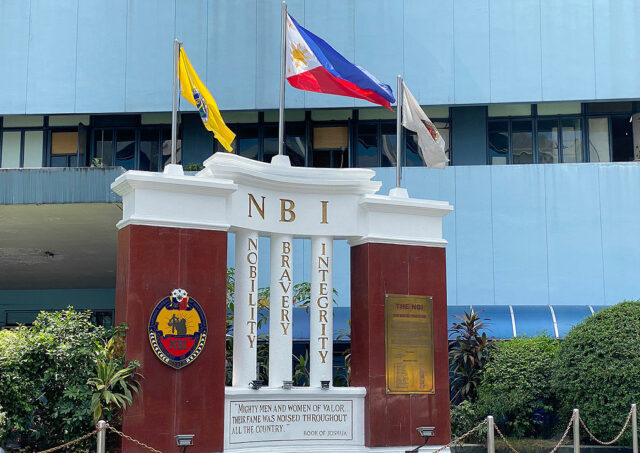
Marcos names new NBI director

NBI FACEBOOK PAGE

PRESIDENT Ferdinand R. Marcos, Jr. appointed lawyer Melvin A. Matibag, a former Cabinet secretary of his predecessor Rodrigo R. Duterte, as director of the National Bureau of Investigation (NBI).

Malacañang confirmed the move on Thursday but did not elaborate on why incumbent Director Angelito DLP. Magno was fired.

“The trust is there. [Mr. Marcos] saw that Atty. Melvin Matibag could be trusted and could work for the government, but the main reason hasn’t been shared with me in detail yet,” Palace Press Officer Clarissa A. Castro told a news briefing in Filipino.

Mr. Matibag was a Cabinet member of the Office of the President under Mr. Duterte in 2022.

He was also the secretary general of the Partido Federal ng Pilipinas-Laban, Mr. Duterte’s political party.

He is set to take his oath before Mr. Marcos.

The move comes as a feud between the administration and the Duterte clan escalates following Mr. Duterte’s daughter, Vice-President Sara Duterte-Carpio’s announcement of her intention to run as president in 2028 on Wednesday. — Chloe Mari A. Hufana

Sea row deepens Duterte-Marcos rift

PHILSTAR FILE PHOTO

CLASHING strategic visions of how the Philippines should navigate its dispute with China sets another crack between President Ferdinand R. Marcos, Jr. and Vice-President Sara Duterte-Carpio, while affecting alliance structures and investor perception, the GlobalSource Partners said.

GlobalSource country analysts Diwa C. Guinigundo and Wilhelmina C. Mañalac said the dispute in the South China Sea introduces a “fundamentally different dimension” to the Marcos-Duterte divide.

“Such divergence affects alliance structures around the United States or China; defense posture against big power bullying; investor perceptions about strategic peace and viability; and regional credibility,” the analysts said in a Feb. 18 report.

The Duterte prioritized bilateral engagement and economic cooperation with China while downplaying enforcement of the Philippines’ arbitration victory.

By contrast, Mr. Marcos took on a more assertive stance, focusing on sovereignty defense through legal claims, rhetorical and operational pushback against coercion, and efforts to rally international support.

“Unlike prior conflicts, it concerns the Philippines’ position within an evolving regional order shaped by great-power competition and maritime security realities,” they added. — Aubrey Rose A. Inosante

PHL drafting sustainability blueprint

THE Philippine government is drafting a strategic blueprint to manage the country’s economic shift toward a more sustainable and climate-resilient future, under the Philippine Just Transition Framework (JTF).

The Department of Environment and Natural Resources (DENR), through the Just Transition Technical Working Group, said the framework sets out the guiding principles and institutional foundations needed to support a fair transition across policy, regulation, and investment as the economy adjusts to global low-carbon trends.

The 28-page draft was developed based on consultations with government agencies, labor groups, employers, civil society organizations, academic institutions, and private sector stakeholders after it was released for public comments from Feb. 3-9.

The multi-agency roadmap defines the national mission as a “transformative, people-centered shift to a low-carbon, energy-secure, and climate-resilient economy that prioritizes equity, inclusivity, and balance” throughout the transition process.

The policy document cautions that a business-as-usual approach — one that fails to keep pace with the global low-carbon transition — could reduce projected gross domestic product (GDP) growth by up to three percentage points and increase unemployment by 2040.

To address these risks, the framework evaluates three potential development pathways and concludes that a managed “just transition” would deliver the most favorable economic outcomes for the Philippines.

Based on assessments by the Climate Change Commission and the DENR, following this pathway could raise real GDP by more than 16% by 2040.

The draft further projects that a coordinated transition strategy could reduce poverty levels, lifting more than 12 million people above their current economic status by 2050 compared with present trends.

“A just transition requires a whole-of-economy, whole-of-society, and whole-of-government approach and can only be achieved through the meaningful and effective participation of all stakeholders,” the document read.

The technical working group notes that small and medium enterprises, which employ a large portion of the workforce, face a significant “capacity gap” and limited ability to invest in green technologies, leaving them at heightened risk during the transition to low-carbon industries without targeted support.

To address potential labor displacement, the roadmap proposes the creation of an “Early Warning System” to identify at-risk workers and direct them toward reskilling and upskilling programs. The JTF estimates that these targeted interventions could increase female labor force participation by 24 percentage points by 2050 compared with a decarbonization-only scenario.

The framework also addresses public transport modernization, underscoring the need to protect the livelihoods of jeepney drivers and operators through concessional financing and technical assistance.

The 16-agency working group notes that successful implementation will depend heavily on securing stable and predictable access to international climate finance and technology. — Erika Mae P. Sinaking

Marcos to visit Naga City on Feb. 21

FORMER Vice-President Maria Leonor “Leni” G. Robredo greets President Ferdinand “Bongbong” R. Marcos, Jr. as former Senator Paolo Benigno A. Aquino IV looks on at a holding area before the President inaugurated a 12,000-capacity sports arena in Sorsogon province. — PCO

PRESIDENT Ferdinand R. Marcos, Jr. will join Naga City Mayor and former Vice-President Ma. Leonor “Leni” G. Robredo on Feb. 21 for a flood control initiative in Naga, a rare public appearance that comes as speculation mounts over her potential role in the administration’s 2028 presidential plans.

Palace Press Officer Clarissa A. Castro confirmed the meeting in a news briefing on Thursday.

“The Oplan Kontra Baha has already been launched in Naga City by the President. Department of Public Works and Highways personnel are currently busy clearing the city’s canals and esteros. The President will visit these sites and will be accompanied by Naga City Mayor Leni Robredo,” she said in Filipino.

She said there are no talks yet about Mr. Marcos courting the former vice-president to be the administration’s bet against Vice-President Sara Duterte-Carpio’s presidential bid in 2028.

“It’s still too early to discuss who will run in 2028,” she added, noting Mr. Marcos is focused on improving the country’s weak economy and addressing the flood control scandal.

Ms. Robredo and Mr. Marcos were rivals for the vice-presidency in 2016 and the presidency in 2022.

On Wednesday, Ms. Duterte announced her intention to run as president in the 2028 polls amid escalating political tensions between the country’s two prominent families. — Chloe Mari A. Hufana

Credit perception improves outside Greater Capital Region

ORIGINAL BACKGROUND PHOTO FROM FREEPIK

FILIPINOS living outside the capital improved their product knowledge and confidence in credit offerings last year, boosting their scores in TransUnion’s 2025 Credit Perception Index (CPI).

The respondent’s CPI score — measured through knowledge, trust, and favorability toward credit and other financial products — stood at 73 outside the Greater Capital Region (GCR) in 2025, up from 71 in 2024.

“Filipinos outside the capital region are making notable strides, driven by sizable gains in both knowledge and trust of credit products,” TransUnion Philippines President and Chief Executive Officer Peter Faulhaber said.

GCR refers to the economic zone composed of Metro Manila, Central Luzon, and Calabarzon.

“This progress shows that more consumers are ready and willing to participate in the credit economy, reflecting a meaningful shift in how Filipinos understand and engage with financial products,” he added.

TransUnion cited sizable gains in the index to improved product trust with an 11-point increase and a 6-point increase in product knowledge.

This likely reflects ongoing public and private efforts to expand credit awareness, education, and access across the country, TransUnion noted.

In addition, TransUnion said the new report showed that intent to use credit is now closer between consumers within and outside the capital.

Data showed that 44% of respondents expressed interest in using credit cards, close to the 36% of those outside the capital.

Meanwhile, 40% indicated a preference for borrowing from traditional banks versus 37% beyond the capital. — Aubrey Rose A. Inosante

Comelec urged to probe Discaya’s Pasig bid

PHILSTAR FILE PHOTO

PASIG CITY Mayor Victor “Vico” N. Sotto on Thursday asked the Commission on Elections (Comelec) to investigate his 2025 mayoral rival, Cezarah Rowena C. Discaya, for allegedly hiding the true cost of her campaign.

In a nine-page complaint-affidavit, Mr. Sotto accused Ms. Discaya of election overspending and perjury, claiming her official expenditure report was “false in a material respect.”

The mayor pointed out a glaring gap between the candidate’s lavish campaign, which featured massive billboards, celebrity-studded rallies, and professional digital ads, and the modest P895,000 she declared in her Statement of Contributions and Expenditures.

“Respondent made no declaration as to the digital advertisement purportedly paid by her,” Mr. Sotto wrote in the complaint, adding that her report failed to account for a single centavo in billboard rentals or high-production events.

Cornelio F. Samaniego III, legal counsel of Ms. Discaya did not immediately reply to a Viber chat seeking comment.

Based on official voter counts, Ms. Discaya’s spending was legally capped at roughly P1.39 million, a limit Mr. Sotto believes was easily shattered by her high-visibility operations across the city.

The complaint alleges that by submitting a deficient report under oath, the respondent not only skirted spending limits but also committed perjury under the Revised Penal Code.

Mr. Sotto secured a landslide victory against Ms. Discaya, who is currently under investigation in connection with anomalous multibillion-peso flood control projects. — Erika Mae P. Sinaking

Dairy agency eyes program expansion in Romblon to increase local milk supply

THE National Dairy Authority (NDA) said it is exploring the expansion of its dairy programs in Romblon in an effort to increase local milk production and support government feeding initiatives.

In a statement on Thursday, the NDA said it recently held an exploratory meeting with Romblon officials, including 14 of the province’s 17 mayors, and Rep. Eleandro Jesus F. Madrona to discuss plans for local dairy development.

NDA Administrator Marcus Antonius T. Andaya said developing the local dairy industry would help secure a more reliable milk supply, create livelihood opportunities for farmers, and improve the nutrition of women and children in Romblon.

“Three groups will benefit from this program — the children, mothers, and our farmers,” he was quoted as saying in the statement in Filipino.

The NDA said local officials expressed interest in using idle lands for dairy and corn silage production to ensure a year-round feed supply for cattle.

The agency said it will work closely with participating municipalities to identify suitable sites, provide technical assistance, distribute planting starter kits, and train prospective dairy farmers.

According to the NDA, expanding dairy production is crucial as demand for locally produced milk increases, particularly from the Department of Education’s (DepEd) milk feeding program, which now serves 4.6 million learners.

“Government partners such as the DepEd and other institutions are now looking to source local milk, while local chief executives also want milk for their own feeding programs,” Mr. Andaya said.

The NDA said it is adopting a “proactive model” of dairy expansion by directly engaging local government units to encourage investments in dairy development.

In 2025, local milk production reached 43.4 million liters, marking the highest output on record and raising national milk sufficiency to 2.22%. — Vonn Andrei E. Villamiel

BARMM residents, other Muslim communities begin Ramadan fasting season

COTABATO CITY — Residents of the Bangsamoro Autonomous Region in Muslim Mindanao (BARMM) and other southern cities and provinces started their month-long Ramadan fasting season at dawn on Thursday.

Muslims fast from dawn to dusk during the Ramadan, which is a holy month in Islam, and focus on reparations for wrongdoings and reconciliation with adversaries as a religious obligation.

Fasting during the Ramadan is one of the five fundamentals of the Islamic faith, which include absolute belief in Allah, praying five times a day facing west, giving of alms to the poor and, for those who can afford the cost of travel, a pilgrimage to Makkah in Saudi Arabia, seat of the Islamic faith, even just once in a lifetime.

Two non-Muslim local executives, Governor Emmylou T. Mendoza of Cotabato and her counterpart in South Cotabato, Reynaldo S. Tamayo, Jr. separately told reporters on Thursday that they will expand their humanitarian programs for their Muslim constituents during the Ramadan as interfaith peacebuilding thrusts in support of the national government’s peace overture with southern Moro communities.

Mr. Tamayo, now in his third term as South Cotabato governor and is presiding chairperson of the multi-sector Regional Peace and Order Council 12, said he has requested the Police Regional Office 12 and the Army’s 6th Infantry Division to secure worship sites, where Muslims perform extensive worship rites during the Ramadan, which lasts between 28 to 30 days based on the lunar Hijrah calendar.

Three Muslim members of BARMM’s 80-seat parliament, John Anthony “Jet” L. Lim, Naguib G. Sinarimbo and Kadil M. Sinolinding, Jr. started their separate Ramadan humanitarian activities for Muslim constituents last Monday, all supported by their chief minister, Abdulraof A. Macacua.

Mr. Macacua issued on Wednesday a memorandum for all ministries and support agencies under the BARMM government directing fasting employees and their officials to work straight from 7:30 a.m. until 3:30 p.m. from Monday to Friday so that they can leave their offices early and have enough time to prepare for their iftar, or first meal after a day-long fast.

Mr. Sinolinding, who is overseeing the Ministry of Health-BARMM, said all of their emergency response operations will continue as usual during the Ramadan season.

“We have organized teams of mixed Muslim and non-Muslim emergency responders to work together during the Ramadan,” Mr. Sinolinding said.

Bangsamoro Labor and Employment Minister Muslimin G. Sema, who is chairman of the Moro National Liberation Front (MNLF), said members of the MNLF in all provinces and cities in BARMM will support the Ramadan security missions of the police and the military.

“Ramadan is a holy month in Islam. The Moro National Liberation Front shall help the police and military and local government units make it peaceful,” Mr. Sema said.

Lt. Gen. Donald M. Gumiran, commander of the Western Mindanao Command, said they appreciate the commitments of the MNLF, the Moro Islamic Liberation Front, the provincial officials in Cotabato and South Cotabato provinces, and BARMM’s top official, Mr. Macacua, to cooperate in maintaining law and order in predominantly Muslim communities for the whole duration of the Ramadan.

“Our units in the Bangsamoro region, in Region 9 and in Region 12 shall also embark on community projects for Muslim communities during the month-long fasting season,” Mr. Gumiran said. — John Felix M. Unson